News related to
India’s

By Nantoo Banerjee There is little to be excited about the defence ministry’s latest clearance for the acquisition of 114 Rafale fighter jets from France at a huge cost of Rs.3.25 lakh crore (nearly $40 billion), branded as ‘mother of all defence deals’. It is a matter of major concern that even 78 years after […]

The article India’s Reliance On Imported Arms For Defence Is A Concern appeared first on Latest India news, analysis and reports on Newspack by India Press Agency).

India has emerged as the second-largest market globally for Claude, the generative artificial intelligence model developed by US-based start-up Anthropic, underscoring the country’s expanding influence in the global AI ecosystem.

Debjani Ghosh, who leads Anthropic’s operations and policy engagement in India, said the scale of adoption by developers, enterprises and start-ups has placed the country just behind the United States in terms of usage and integration of Claude’s models. She described India as a “strategic growth engine” for the company, citing strong demand from sectors including financial services, healthcare, education and software development.

Anthropic, founded in 2021 by siblings Dario Amodei and Daniela Amodei, has positioned Claude as a competitor to models from OpenAI and Google. The company has attracted substantial backing from Amazon and Google, with Amazon committing up to $4 billion as part of a strategic partnership to integrate Claude into Amazon Web Services infrastructure. The funding has enabled Anthropic to expand globally, with India becoming a focal point due to its developer base and digital economy.

India’s prominence in the AI adoption cycle reflects broader structural factors. The country has one of the world’s largest pools of software engineers, a fast-growing start-up ecosystem, and a government push towards digital public infrastructure. Enterprises across banking and fintech have begun embedding generative AI tools to automate compliance checks, summarise documents and enhance customer interaction. In healthcare, pilot projects are under way to use AI systems for clinical documentation and triage support, while education technology platforms are deploying AI-driven tutoring tools.

Ghosh indicated that India’s market dynamics differ from those of Western economies. Cost sensitivity and the need for scalable deployment across diverse languages and devices have shaped how enterprises experiment with large language models. Claude’s emphasis on constitutional AI — a framework designed to make outputs safer and more aligned with human values — has resonated with corporate clients concerned about regulatory risk and reputational exposure.

Regulatory considerations are central to the AI conversation in India. The Ministry of Electronics and Information Technology has signalled its intent to craft a framework that balances innovation with safeguards against misinformation, bias and misuse. While India has not enacted a standalone AI law, policy discussions have intensified around data governance and algorithmic accountability. Companies operating in the country must also comply with the Digital Personal Data Protection Act, which imposes obligations on data fiduciaries and processors.

Industry analysts note that India’s large English-speaking population has historically accelerated the adoption of global technology platforms. However, the next phase of growth in AI is expected to depend on multilingual capabilities. Claude’s ability to handle multiple languages is seen as an advantage in a country with 22 constitutionally recognised languages and hundreds of dialects. Developers are increasingly testing generative models for vernacular content generation and customer support.

Competition in the Indian market is intensifying. OpenAI’s ChatGPT has built a strong user base, while Google has integrated its Gemini models into productivity tools and cloud services. Domestic start-ups are also entering the field, building foundation models trained on local datasets. Analysts say that enterprise adoption, rather than consumer usage alone, will determine long-term market leadership.

Anthropic’s expansion strategy in India includes partnerships with cloud providers and enterprise software companies. By leveraging Amazon Web Services’ presence in major Indian cities, Claude is being offered as part of broader digital transformation packages. Ghosh emphasised that collaboration with academic institutions and start-up incubators is another priority, with the aim of fostering responsible AI research and skills development.

The rapid uptake of generative AI has also raised concerns. Experts warn of the risks of hallucinations, data leakage and overreliance on automated systems. In financial services, regulators have cautioned against using AI outputs without human oversight. Cybersecurity specialists highlight the potential for AI tools to be misused for phishing or deepfake generation. Anthropic has sought to address such issues by embedding guardrails into its models and conducting external safety evaluations.

Artificial intelligence is being positioned as a catalytic force in reshaping biomanufacturing, with policymakers, scientists and industry leaders outlining a roadmap that blends computational power with biological science to accelerate drug discovery, industrial enzymes and sustainable materials. Discussions at the India AI Impact Summit placed BioAI at the centre of a strategy aimed at using genomics, in-silico modelling and closed data loops to build scalable and trusted production systems.

The convergence of AI and biology has moved from laboratory experimentation to commercial ambition. India’s biotechnology sector, valued at over $80 billion and targeting significant expansion by the end of the decade under the BioE3 policy framework, is seeking to harness machine learning tools to shorten development cycles that traditionally take years. Speakers at the summit argued that AI-enabled simulation and predictive modelling can reduce trial-and-error experimentation in fields ranging from vaccine development to precision fermentation.

BioAI refers to the integration of artificial intelligence techniques with biological data, particularly genomic sequencing, proteomics and metabolic engineering. The approach relies on large datasets and advanced algorithms capable of identifying patterns invisible to conventional research methods. Advances in protein structure prediction, including breakthroughs in computational biology over the past few years, have demonstrated how neural networks can model complex molecular interactions with remarkable accuracy.

At the summit, researchers described how generative AI systems are being trained to design novel proteins and enzymes tailored for industrial use. By feeding genomic datasets into predictive algorithms, scientists can simulate biological pathways in silico before conducting physical experiments. This method reduces costs and speeds up scaling, particularly in biopharmaceutical production and alternative protein manufacturing.

Government representatives outlined plans to expand national AI infrastructure to support such applications. IndiaAI Mission initiatives include the creation of high-performance computing resources and domain-specific data repositories to ensure that biotech firms and research institutes have access to secure and interoperable datasets. Officials emphasised that trust frameworks and regulatory clarity would be essential to encourage private investment while safeguarding data privacy and biosafety standards.

Industry leaders echoed that sentiment, highlighting that biomanufacturing requires rigorous validation. Unlike digital products, biological outputs interact with living systems, making quality control paramount. AI-driven feedback loops—where laboratory results continuously refine algorithms—were presented as a mechanism to maintain reliability while scaling up production. Data integrity, traceability and auditability were recurring themes, reflecting global debates about AI governance.

The global context underscores the strategic significance of BioAI. The United States and European Union have invested heavily in synthetic biology and AI-assisted drug discovery. China has also advanced computational genomics and large-scale fermentation capabilities. Analysts note that countries able to combine AI talent with robust biotech ecosystems stand to capture a growing share of the global bioeconomy, projected by several industry reports to exceed $4 trillion over the coming decade.

India’s strength in information technology services and pharmaceutical manufacturing offers a foundation for this convergence. The country is a major supplier of generic medicines and vaccines, supported by a network of research institutions and startups. By integrating AI tools into these value chains, stakeholders believe production timelines can be compressed and new therapeutic molecules identified with greater precision.

Academic voices at the summit stressed the importance of interdisciplinary training. Biologists must understand algorithmic thinking, while data scientists need grounding in molecular biology. Collaborative platforms linking universities, startups and established pharmaceutical firms were proposed to ensure knowledge transfer and talent development. Investment in computational biology curricula and shared research facilities is seen as critical to sustaining momentum.

Ethical considerations formed part of the dialogue. AI models trained on genomic data raise questions about consent, ownership and equitable benefit sharing. Experts argued for transparent governance structures aligned with international norms, noting that trust is fundamental when dealing with health-related information. Regulatory agencies are exploring how to evaluate AI-generated biological designs within existing approval pathways.

Private sector participation is accelerating. Venture capital funding in biotech startups leveraging machine learning has grown steadily, reflecting confidence in AI-assisted discovery platforms. Companies are experimenting with digital twins of biological systems, enabling simulation of fermentation processes before industrial deployment. Such capabilities can enhance efficiency and reduce resource consumption, aligning with sustainability goals.

Sustainability featured prominently in discussions on biomanufacturing. AI-optimised microbes can produce bio-based chemicals and materials that substitute fossil-derived inputs. Precision fermentation techniques, guided by predictive analytics, may lower energy use and waste. As global supply chains face pressure to decarbonise, the combination of AI and biotechnology is viewed as a pathway to cleaner industrial production.

Participants also highlighted challenges. High-quality biological datasets remain fragmented, and interoperability across laboratories is uneven. Ensuring cybersecurity in research networks is another concern, given the sensitivity of genetic information. Scaling laboratory successes to commercial volumes demands capital expenditure and regulatory compliance that can deter smaller enterprises.

Nvidia’s chief executive officer, Jensen Huang, will not attend the India AI Impact Summit scheduled to begin in New Delhi on February 16, the company confirmed over the weekend, citing “unforeseen circumstances” that prevent his planned trip. Nvidia said it remains committed to participating in the five-day event and will instead dispatch a senior leadership delegation to represent its interests at the summit, which is positioned as a global forum on artificial intelligence, semiconductors and technology policy.

Huang’s absence removes one of the most high-profile speakers from a programme that is expected to bring together global leaders, technology executives and policymakers. Nvidia has been at the centre of international attention this year as its graphics processing units and specialised chips have powered significant advances in AI model training and deployment worldwide. Despite his cancellation, the company’s executive vice-president Jay Puri is set to lead Nvidia’s delegation in New Delhi.

The India AI Impact Summit has been framed by its organisers as a strategic platform for discussions on AI’s impact on economies, governance, and society. With over 20 heads of government and multiple chief executives from major technology firms slated to take part, the absence of Nvidia’s CEO is unlikely to derail the summit’s broader agenda but does shift attention to the array of other leaders expected on stage. Summit organisers have emphasised that the event will focus on actionable frameworks for AI governance and international cooperation rather than immediate regulatory commitments.

India’s push to host the summit reflects the growing emphasis placed on its AI ecosystem, both domestically and internationally. The event at Bharat Mandapam is intended to spotlight innovation, human capital and collaborative initiatives that leverage artificial intelligence for economic and social development. Heads of state from Europe, Asia and Africa, as well as senior executives from leading technology companies, are planning to contribute to sessions addressing ethical AI, inclusive growth, and public-private partnerships.

Nvidia’s statement confirmed that Huang will not be able to travel to India at this time, but stopped short of elaborating on the specific reasons for the change in plans. The company’s leadership team reiterated its support for the summit’s objectives and expressed confidence in the delegation’s ability to engage constructively with participants across sectors. Nvidia’s central role in the global AI supply chain — particularly through its GPUs, which underpin much of the world’s AI compute infrastructure — has made its presence significant at forums shaping the future of the industry.

For many tech observers, Huang’s decision underscores the intense demands on executives at the helm of firms that are pivotal to AI’s evolution. As Nvidia continues to navigate a landscape marked by rapid technological change, supply chain pressures and geopolitical scrutiny, its leadership choices are closely watched by investors, partners and policymakers alike. The company has maintained that its strategic focus on AI remains undiminished, even as senior personnel adjust their engagement in global events.

The summit is expected to feature a range of high-level engagements, including discussions on AI’s implications for labour markets, national competitiveness, and regulatory cooperation among nations. Organisers have highlighted sessions aimed at bridging gaps between emerging markets and established technology hubs, while also addressing concerns about safety, privacy and equitable access. Participants will include chief executives from major AI and cloud-computing firms, senior government officials from participating countries, and representatives of international organisations.

Despite the absence of Nvidia’s CEO, interest in the India AI Impact Summit remains strong among industry stakeholders. Discussions are slated to explore how public-sector frameworks can align with the dynamic pace of innovation in the private sector, with particular emphasis on fostering trust and transparency in AI systems. The summit’s agenda also places emphasis on skills development, research collaboration, and the role of AI in addressing societal challenges such as healthcare, climate and education.

Executives attending the summit will face intense scrutiny from delegates keen to understand how technology firms plan to balance commercial imperatives with ethical responsibilities. As governments around the world refine their approaches to AI governance, the outcomes of deliberations at gatherings such as the India AI Impact Summit could inform future policy frameworks and cross-border cooperation on technology standards and norms.

By K Raveendran The unfolding political narrative around the Indo-US trade treaty has done more than spark debate on tariffs, market access and diplomatic alignment: it has reshaped the contours of India’s domestic political landscape, particularly by elevating Rahul Gandhi’s stature as the principal opposition leader. The Modi government has positioned the trade agreement as […]

The article Indo-US Trade Deal Has A Most Unlikely Winner: Rahul Gandhi appeared first on Latest India news, analysis and reports on Newspack by India Press Agency).

By Nitya Chakraborty The landslide win of the Bangladesh Nationalist Party (BNP) in the national elections in Bangladesh held on February 12 is a positive development in the geopolitics of not only South Asia, but also augurs well for the bilateral relationship between India and its eastern neighbour. BNP getting more than two-thirds of the […]

The article BNP’s Landslide Victory In Bangladesh Elections Is A Good Omen appeared first on Latest India news, analysis and reports on Newspack by India Press Agency).

New Delhi has approved a proposal worth about $39 billion to expand the country’s fleet of Rafale fighter aircraft, marking one of the largest defence procurement decisions in its history and signalling a further shift towards advanced Western platforms in its combat air strategy.

The clearance by the defence ministry paves the way for negotiations with France’s Dassault Aviation for additional Rafale jets, building on an earlier $8.7 billion contract for 36 aircraft for the Air Force, deliveries of which were completed in 2024. A separate agreement has also been signed for 26 Rafale-M naval variants intended for deployment aboard aircraft carriers, underscoring a broader push to strengthen maritime air power.

New Delhi pushes major Rafale fleet expansion as it seeks to address concerns over squadron strength and ageing aircraft. The Air Force’s sanctioned strength stands at 42 squadrons, yet operational numbers have hovered well below that benchmark for years, raising debate within strategic circles over preparedness along contested borders with China and Pakistan.

Officials familiar with the procurement process say the new proposal reflects both operational requirements and long-term modernisation goals. India’s fleet still includes a significant number of Soviet-era MiG-21s and other legacy platforms, many of which are due for phased retirement. The Rafale, a 4.5-generation multirole fighter equipped with advanced avionics, electronic warfare systems and long-range precision weapons, has been positioned as a key element in bridging capability gaps.

The initial induction of 36 Rafales was widely viewed as a stopgap measure after the earlier Medium Multi-Role Combat Aircraft tender was scrapped amid cost and contractual disputes. Since their deployment at Ambala and Hasimara air bases, the aircraft have been integrated with India-specific enhancements, including advanced radar and electronic countermeasures. Defence planners argue that expanding the Rafale fleet would provide logistical and training efficiencies compared with diversifying further across multiple foreign platforms.

The naval variant, Rafale-M, has been selected to operate from the INS Vikrant, the country’s first domestically built aircraft carrier, and potentially from INS Vikramaditya. Naval aviation officials have indicated that the twin-engine aircraft meets requirements for carrier-based operations, including ski-jump take-offs and arrested landings, following evaluation trials against competitors such as Boeing’s F/A-18 Super Hornet.

Strategic analysts view the combined air force and naval acquisitions as part of a wider recalibration of procurement policy. Over the past decade, New Delhi has sought to balance self-reliance initiatives with the need for timely capability upgrades. Programmes under the “Atmanirbhar Bharat” framework aim to boost domestic manufacturing, yet complex fighter development remains a long-term endeavour. The Light Combat Aircraft Tejas, produced by Hindustan Aeronautics Limited, has entered service and secured additional orders, but it is not seen as a direct substitute for heavier multirole platforms like the Rafale.

Financial implications are significant. A $39 billion outlay would rank among the largest defence capital expenditures, at a time when the government is managing competing demands from infrastructure, welfare and economic stimulus. Officials have indicated that staggered payments and potential technology transfers could form part of negotiations, with an emphasis on local industry participation.

Previous Rafale contracts were accompanied by offset obligations requiring Dassault and its partners to invest in the domestic aerospace ecosystem. Whether similar provisions will apply to the expanded deal remains a subject of scrutiny, particularly as policymakers seek to deepen supply-chain integration and reduce long-term import dependence.

Diplomatically, the move reinforces defence ties with France, which has emerged as a key security partner in the Indo-Pacific. Bilateral cooperation spans joint exercises, maritime surveillance and submarine technology. Paris has consistently supported India’s strategic autonomy, a factor often cited by policymakers as attractive compared with other major arms suppliers.

Political debate is likely to accompany the procurement, as the earlier Rafale deal became a focal point of parliamentary contestation over pricing and process transparency. Government representatives have maintained that all procedures were followed in accordance with defence acquisition rules, and that operational urgency justified the intergovernmental route adopted at the time.

Air power specialists argue that a larger Rafale fleet would enhance interoperability and deterrence. The aircraft’s ability to carry Meteor beyond-visual-range missiles and SCALP cruise missiles has been highlighted as a force multiplier. Integration with indigenous weapons and network-centric warfare systems is also under way, reflecting a hybrid approach that blends imported hardware with domestic innovation.

Beyond immediate operational considerations, the proposal signals continuity in defence planning that spans successive administrations. India remains among the world’s largest arms importers, yet officials have reiterated ambitions to transition towards greater domestic production capacity over the coming decade. Achieving that balance, while sustaining readiness across land, sea and air domains, presents both fiscal and industrial challenges.


Advertisements
The Enforcement Directorate has formally placed Rajendra Lodha, a former board member of real estate firm Lodha Developers Ltd, under arrest in connection with allegations that he diverted and laundered corporate funds worth about Rs 85 crore, authorities said on Thursday. He was produced before a special court hearing cases under the Prevention of Money Laundering Act, where the agency secured custody to pursue its probe. Lodha, who had been in judicial custody since his arrest by the Crime Branch last year, will face a fresh remand before the ED court as the investigation intensifies.

Investigators allege Lodha, appointed to the company board in 2015 with authority limited to land acquisitions, abused his position by orchestrating a complex web of unauthorised transactions that siphoned funds and assets from the developer. The Enforcement Directorate’s case stems from a cheating and forgery complaint filed with Mumbai police under the Bharatiya Nyaya Sanhita, which provided the predicate offence for the money-laundering inquiry.

The probe suggests that Lodha, in collusion with his son Sahil and several associates, manipulated company land and transferable development rights through shell entities and front companies. One scheme of alleged manipulation involved purchasing parcels of land through intermediaries and later reselling them to the company at inflated prices, creating financial losses estimated at more than Rs 85 crore.

Investigators also outline the use of fabricated memoranda of understanding to designate false possession holders, enabling the accused to divert company funds under the guise of legitimate land transactions. In one instance cited by authorities, a 4,150-square-metre plot in Panvel was reportedly sold to an entity linked to Lodha for a fraction of its market value, resulting in a direct loss of around Rs 9.5 crore to the developer.

The Enforcement Directorate’s action follows months of coordinated inquiry involving searches and forensic analysis. Teams previously executed search operations at multiple locations across Mumbai and the wider metropolitan region to trace the alleged proceeds of crime and associated assets. These raids, conducted in the latter part of last year, targeted residential and business premises of individuals connected to the case as well as intermediary firms suspected of facilitating fraudulent transfers.

Law enforcement documents indicate that the probe has unearthed evidence of cash withdrawals, benami transactions, and the misuse of corporate resources for private benefit, augmenting the central agency’s view that the alleged laundering extended beyond routine bookkeeping irregularities. Officials have emphasised that the investigation remains active, with further custodial interrogation intended to identify additional participants and recover assets linked to the alleged illicit gains.

The case traces its origins to a complaint lodged by Lodha Developers — which has since evolved into one of India’s largest property firms — after its internal audits flagged a series of suspicious transactions that could not be readily explained through normal corporate activity. Following the filing of the police complaint in 2025, the Crime Branch initiated its own investigation under charges including fraud, criminal breach of trust and conspiracy, leading to the initial detention of Lodha and others.

Statements obtained by police during the early stages of the inquiry, including witness accounts, have been cited as instrumental in mapping the pattern of alleged diversion of funds. One individual who worked in Lodha’s employ reportedly provided details of large cash movements, while digital evidence extracted from electronic devices is said to have helped establish links between the transactions and the accused associates.

Industry observers noted that the unfolding of events has prompted renewed scrutiny of governance and oversight mechanisms within major real estate developers. Corporate governance experts point out that the case underscores the importance of transparent land acquisition processes and robust checks on executive authority to safeguard shareholder interests. While Lodha Developers has not publicly commented on the specifics of the case, companies facing internal fraud investigations often review compliance systems to reassure investors and regulatory bodies.

By Nantoo Banerjee The excitement over the finalization of the first tranche of the Indo-US trade deal during last weekend after months of negotiations and uncertainties may be irrational, if not too early, as it remains unclear about the US attitude towards India’s multi-alignment global trade and economic strategy combining countries such as Russia and […]

The article Indo-US Trade Deal Promises To Be Contentious appeared first on Latest India news, analysis and reports on Newspack by India Press Agency).

A sweeping showcase of colour, handwork and heritage brought Dubai Fashion Week to a close on Friday as designer Manish Malhotra presented a collection framed as a tribute to India’s artistic traditions, placing couture craft at the centre of the region’s fast-growing luxury calendar. Staged as the final show of the season, the presentation unfolded as a polished runway narrative that blended formal silhouettes with ornate surface […]

Quantum computing is emerging as a strategic lever for India’s ambition to secure a leading role in the global technology order, with Andhra Pradesh Chief Minister N. Chandrababu Naidu arguing that early investments and coordinated policy could reshape the country’s IT and industrial landscape. Speaking in Amaravati, Naidu said quantum technologies had the potential to redefine computing power, cybersecurity, materials science and drug discovery, placing India at a critical juncture as global competition accelerates.

Naidu’s remarks came as Andhra Pradesh positions itself as a focal point for quantum research and commercialisation through its Quantum Valley initiative, which aims to bring together academic institutions, global technology firms and startups on a single platform. The programme is designed to move beyond theoretical research and translate quantum science into deployable applications, an area where many countries are racing to gain first-mover advantage.

Quantum computing differs fundamentally from classical computing by using quantum bits, or qubits, that can exist in multiple states simultaneously. This allows certain calculations to be performed exponentially faster, opening pathways in optimisation problems, climate modelling, financial risk analysis and cryptography that are currently beyond reach. Governments in the United States, China and the European Union have committed billions of dollars to quantum research, viewing it as both an economic and national security priority.

Naidu said India’s strength lay in its deep pool of engineering talent and its established position in information technology services, but warned that relying solely on legacy software models would leave the country vulnerable as the technology cycle shifts. He argued that quantum computing, when combined with artificial intelligence and advanced semiconductors, could create a new technology stack in which India could compete at the highest level rather than remain a downstream adopter.

The Andhra Pradesh government has pitched Quantum Valley as a long-term ecosystem rather than a single project. Plans include dedicated research facilities, incentives for private investment, and partnerships with universities and multinational technology companies working on quantum hardware, algorithms and error correction. Officials involved in the programme say the aim is to create an environment similar to established innovation clusters, where research, talent and capital reinforce one another.

India’s broader policy environment has also begun to align with these ambitions. The national quantum mission, approved by the Union government, outlines funding for quantum computing, communications and sensing over the coming years, with a focus on building indigenous capabilities. Research groups at institutions such as the Indian Institute of Science and several Indian Institutes of Technology are already active in quantum algorithms and materials research, while startups are exploring niche applications in logistics, finance and healthcare.

Industry analysts note that quantum computing remains at an early stage globally, with practical, large-scale systems still years away. Current machines are limited by qubit stability and error rates, and most commercial use cases are experimental. However, the pace of progress has intensified, with steady advances in hardware architectures and hybrid models that combine classical and quantum computing. Countries that invest early in skills and research infrastructure are expected to gain disproportionate benefits once the technology matures.

Naidu acknowledged these challenges, stressing that quantum computing should be approached as a marathon rather than a sprint. He said sustained investment, patient capital and close collaboration between government, academia and industry would be essential to avoid fragmented efforts. He also emphasised the importance of education and workforce development, arguing that quantum science should be integrated into advanced engineering curricula to build a pipeline of specialised talent.

Documents released by the United States Justice Department have revealed how Jeffrey Epstein’s web of influence extended into India, underscoring the disgraced financier’s sustained efforts to cultivate relationships with prominent figures across business, politics and academia long before his arrest and death. The files, unsealed as part of litigation connected to Epstein associate Ghislaine Maxwell, include exchanges indicating contact between Epstein and Anil Ambani over a period […]

By T N Ashok NEW YORK: For seven decades, American diplomats danced around Kashmir with the precision of tightrope walkers, carefully avoiding any gesture that might suggest the United States had chosen sides in South Asia’s most intractable territorial dispute. Maps were scrubbed of political meaning. Statements were lawyered into studied neutrality. From Truman to […]
The article India Have Reasons To Be Happy At Big U.S. Switch On The Status Of Kashmir appeared first on Latest India news, analysis and reports on Newspack by India Press Agency).

By Dr. Gyan Pathak The Supreme Court’s refusal to entertain a petition challenging the direct cash transfer to voters while Model Code of Conduct (MCC) for election was in operation, the Election Commission of India’s turning blind eye to the violation of MCC in this way, and deploying beneficiaries on election duty on the polling […]

The article Supreme Court’s Refusal To Hear Direct Cash Transfer To Voters Case Is Flawed appeared first on Latest India news, analysis and reports on Newspack by India Press Agency).

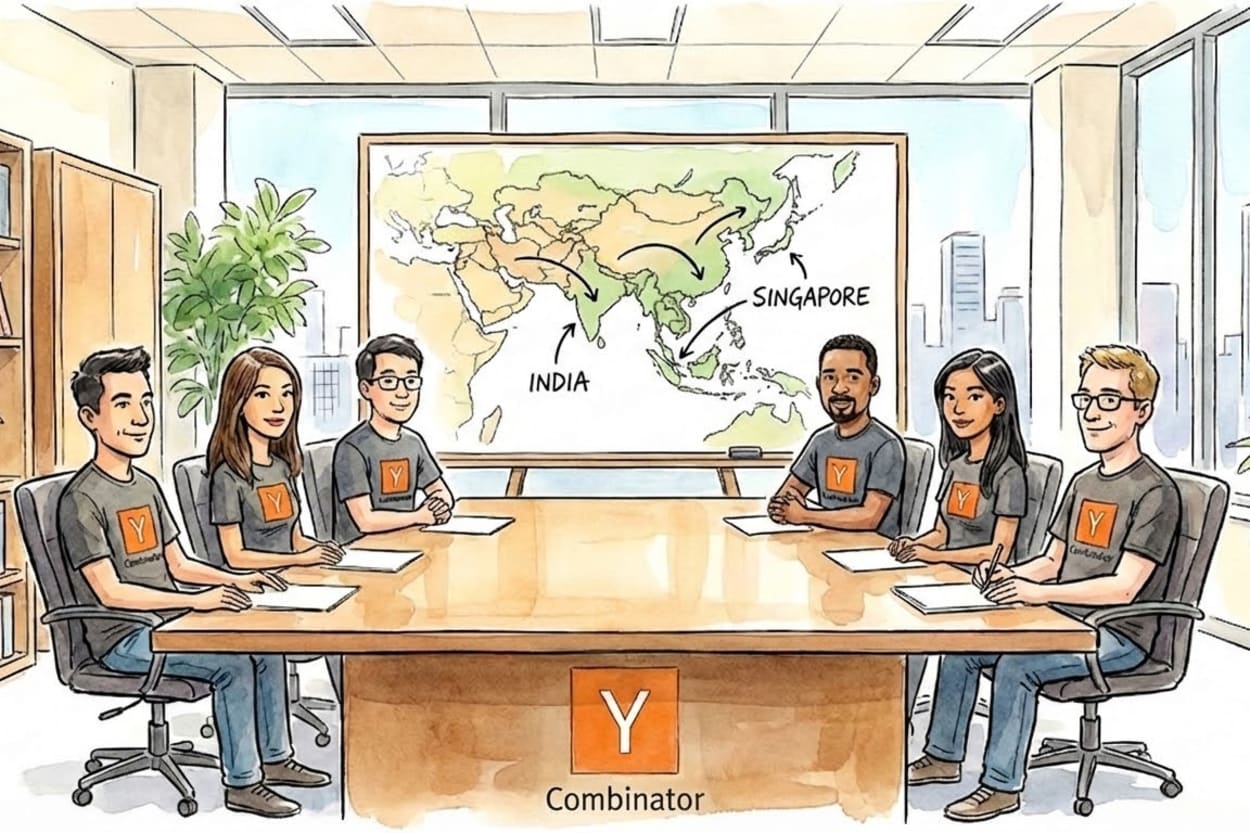
Y Combinator continues to generate outsized returns from companies with roots in India even as its broader influence across Asia shows signs of long-term retreat, reflecting a strategic shift by the world’s best-known startup accelerator amid changing regional dynamics. While founders from Bengaluru, Chennai and Delhi remain visible in its demo days and alumni rosters, the programme no longer shapes Asia’s startup narrative in the way it once did.

Founded in 2005 in Silicon Valley, Y Combinator built its reputation by backing early-stage companies that later became global giants, including Airbnb, Stripe and Dropbox. Its appeal in Asia peaked during the previous decade, when limited access to global capital and mentorship made association with a US-based accelerator especially valuable. India emerged as one of the biggest beneficiaries, with dozens of YC-backed startups securing follow-on funding, overseas market access and high-profile exits.

Companies such as Razorpay, Meesho and Groww, all of which passed through the YC ecosystem in earlier years, became reference points for founders seeking validation from global investors. India’s expanding pool of engineers, rising digital adoption and a large domestic market aligned well with YC’s software-first investment philosophy. These successes continue to deliver financial returns for the accelerator through equity stakes that have appreciated sharply as several firms reached unicorn valuations or prepared for public listings.

Yet the accelerator’s footprint across Asia has narrowed. YC formally closed its China-focused efforts earlier in the decade, citing regulatory complexity and difficulties operating within a tightening policy environment. Activity in Southeast Asia also slowed, with fewer batches featuring startups from Indonesia, Vietnam or Thailand compared with earlier years. The shift reflects not only YC’s internal priorities but also the maturation of Asia’s startup ecosystems, which now offer more local alternatives.

Across Asia, domestic accelerators, corporate venture arms and sovereign-backed funds have stepped in to fill gaps once dominated by Silicon Valley programmes. In India, initiatives backed by large conglomerates, universities and state governments provide capital, mentorship and market access without requiring relocation or deep integration into the US ecosystem. Southeast Asia has followed a similar path, with regional venture firms increasingly willing to lead early rounds.

YC itself has changed. The accelerator has leaned further into its core strengths, focusing on fewer geographies while doubling down on artificial intelligence, developer tools and enterprise software. Its decision to emphasise remote participation during and after the pandemic reduced the symbolic value of spending months in Silicon Valley, a factor that once set YC apart for Asian founders. While remote access broadened participation, it also diluted the sense of exclusivity that helped the programme stand out.

For Indian startups, the relationship with YC has become more transactional. Participation is still seen as a strong signal of quality, especially for companies targeting global markets or US-based customers. However, founders increasingly view YC as one of several possible launchpads rather than a defining milestone. Follow-on funding now depends less on accelerator pedigree and more on unit economics, regulatory clarity and the ability to scale within complex local markets.

Investors tracking Asia’s venture landscape note that YC’s reduced presence does not imply a loss of relevance everywhere. India remains an exception because of its scale, talent depth and ongoing pipeline of software-led startups with global ambitions. YC partners continue to engage with Indian founders, and each batch includes a steady, if smaller, number of companies from the country. Returns from earlier bets ensure that India remains financially meaningful to the accelerator.

At the same time, YC no longer sets the pace for Asia-wide innovation trends. Local accelerators and venture funds are shaping sectors such as fintech, climate technology and logistics, areas where regulatory nuance and on-the-ground execution matter as much as global networks. Governments across the region have also become more involved in startup promotion, offering grants, sandboxes and procurement opportunities that reduce reliance on foreign programmes.

India has set out a strategic roadmap to accelerate domestic capabilities in robotics and physical artificial intelligence, signalling a push to reduce dependence on imported hardware and proprietary software while positioning the country as a competitive global supplier of intelligent machines. The plan, prepared by the Technology Advisory Group for Emerging Technologies, places indigenisation, software sovereignty and sector-focused deployment at the centre of the national approach, with healthcare, manufacturing, logistics, agriculture and media production identified as priority domains.

The roadmap comes as governments worldwide race to translate advances in artificial intelligence into physical systems that can operate autonomously in real-world environments. While software-led AI has seen rapid adoption, policymakers argue that long-term economic and strategic gains will hinge on control over robotics hardware, operating systems and embedded intelligence. India’s proposal reflects concerns that reliance on imported robots and closed platforms could expose critical sectors to supply-chain risks and limit domestic innovation.

At its core, the strategy seeks to build a full-stack robotics ecosystem, spanning sensors, actuators, edge computing, operating software, cloud integration and safety certification. Officials involved in drafting the document have stressed that the objective is not isolation but resilience, with domestic alternatives developed alongside international collaboration. The roadmap calls for common standards and open architectures to prevent vendor lock-in and to allow startups and research institutions to build interoperable systems.

Healthcare has emerged as an early focus area, driven by workforce shortages and rising demand for precision care. The roadmap highlights surgical assistance, rehabilitation devices, hospital logistics robots and elder-care support systems as near-term opportunities. Policymakers note that such applications demand high reliability and ethical safeguards, reinforcing the need for locally controlled software stacks and transparent algorithms. Parallel efforts are proposed to strengthen clinical validation pathways and align regulatory approvals with global benchmarks.

Manufacturing and logistics form another pillar, with the document pointing to collaborative robots, autonomous guided vehicles and smart warehousing as tools to raise productivity and improve workplace safety. India’s manufacturing sector, dominated by small and medium-sized enterprises, has historically lagged in robot adoption due to cost and skills barriers. The roadmap recommends targeted incentives, shared testing facilities and modular designs to lower entry thresholds, alongside large-scale skilling programmes to train technicians, operators and system integrators.

Agriculture features prominently, reflecting policy priorities around food security and rural incomes. The plan outlines the use of robotics for precision spraying, harvesting, soil analysis and post-harvest handling. Developers are encouraged to design systems suited to fragmented landholdings and diverse crops, rather than importing models built for large, mechanised farms elsewhere. Officials argue that domestically developed agricultural robots could also find markets across Asia and Africa, where similar conditions prevail.

An unusual inclusion is the media and creative sector, where robotics and physical AI are seen as enablers of immersive production, automated camera systems and smart broadcasting infrastructure. The roadmap suggests that integrating robotics with virtual production and generative tools could lower costs for newsrooms and studios while enhancing safety in hazardous reporting environments.

Beyond sectoral applications, the strategy places strong emphasis on software sovereignty. It calls for homegrown robotics operating systems, simulation platforms and AI frameworks that can be audited and customised. While global open-source projects are acknowledged as valuable foundations, the document urges sustained public funding to ensure domestic stewardship and long-term maintenance. Data governance and cybersecurity are flagged as critical, particularly for robots deployed in sensitive locations.

Financing and procurement reforms form another strand. The roadmap proposes dedicated funding windows for deep-tech robotics ventures, longer grant cycles to reflect extended development timelines and clearer pathways from research labs to commercial deployment. Public procurement is positioned as a market-shaping tool, with government agencies encouraged to pilot domestically developed robots in hospitals, warehouses and public infrastructure.

The roadmap also addresses ethical and social dimensions, including job displacement concerns and safety standards. Rather than framing robotics as a threat to employment, the document argues that productivity gains can create new roles in design, maintenance and supervision, provided reskilling keeps pace. It recommends national guidelines for human–robot interaction, liability frameworks and continuous monitoring of societal impact.

By Nitya Chakraborty Nearly 48 hours after Donald Trump’s announcement about the India-US trade deal and Narendra Modi’s confirmation in his telephonic conversation, much has been written in the media by the experts, mostly following the lead given by the commerce minister Piyush Goyal in his press meet on Tuesday as to what positive impacts […]

The article Trump Has Linked India-US Trade Deal To India Acting As Partner In His Pacific Strategy appeared first on Latest India news, analysis and reports on Newspack by India Press Agency).

Energy cooperation between India and Bhutan has moved into a sharper operational phase, with both governments signalling alignment on stalled hydropower projects, new transmission corridors and a longer-term framework for electricity trade that underpins Bhutan’s public finances and supports India’s clean-energy transition.

Officials from the two sides held detailed consultations this week focused on accelerating work at the Punatsangchhu hydropower complex and reviving momentum on the long-discussed Sankosh project, while also reviewing cross-border transmission upgrades needed to evacuate power to the Indian grid. The talks came against the backdrop of rising electricity demand in eastern and northern India and Bhutan’s dependence on hydropower exports for fiscal stability.

The centrepiece remains the Punatsangchhu projects on the Punatsangchhu river, split into two plants. Punatsangchhu-I, designed for 1,200 MW, has faced prolonged delays following geological surprises that required major redesign of the dam structure and stabilisation of slopes. Officials familiar with the discussions said construction schedules are now being re-sequenced, with civil works and electro-mechanical installations aligned to a phased commissioning plan rather than a single completion date. Punatsangchhu-II, with a capacity of 1,020 MW, is at a more advanced stage, and planners are focusing on synchronising turbine commissioning with downstream transmission readiness.

Attention has also returned to the Sankosh Hydroelectric Project, a 2,560-MW venture long seen as a potential game-changer for Bhutan’s export capacity. Earlier hesitations over cost, resettlement and environmental impacts had pushed the project into limbo. The latest exchanges indicate a renewed willingness to revisit the detailed project report, reassess financing structures and examine whether a modular execution approach could reduce upfront risks. For Bhutan, Sankosh represents scale and revenue predictability; for India, it offers a large block of firm renewable power that complements solar and wind additions.

Beyond generation, transmission infrastructure featured prominently. Power evacuation from central and western Bhutan requires high-capacity lines linking to India’s eastern grid, where load centres are expanding. Officials reviewed progress on new substations and high-voltage corridors, with an emphasis on synchronising completion timelines to avoid stranded generation. Grid planners also discussed redundancy and resilience, reflecting lessons from weather-related disruptions and the need for stable cross-border flows during peak demand periods.

The partnership rests on an established model in which Indian public sector utilities assist with project execution and financing, while Bhutan retains ownership and earns export revenue. Hydropower accounts for a significant share of Bhutan’s gross domestic product and exports, making timely commissioning critical for debt servicing and social spending. Delays at Punatsangchhu have weighed on fiscal projections, prompting a stronger push for resolution.

For India, the engagement fits into a broader regional energy strategy. Hydropower imports from Bhutan provide dispatchable renewable electricity that balances variable solar output, particularly during evening peaks. Policymakers view this as complementary to domestic clean-energy targets and as a stabilising factor for grid operations. Electricity trade with Bhutan also aligns with New Delhi’s neighbourhood-first approach, where infrastructure and energy ties reinforce diplomatic relations.

Technical experts involved in the discussions highlighted the importance of geotechnical due diligence and adaptive engineering, especially in Himalayan terrain prone to landslides and seismic activity. Updated monitoring systems, revised dam designs and contingency buffers are being incorporated to mitigate risks that previously caused setbacks. Financing terms are also under review to manage cost escalations without overburdening Bhutan’s balance sheet.

Commercial arrangements formed another strand of the talks. Officials examined tariff structures, power purchase agreements and the scope for longer-tenure contracts that provide revenue certainty. There was also discussion on integrating future Bhutanese hydropower into emerging regional electricity markets, which could eventually allow surplus power to be traded beyond bilateral arrangements, subject to regulatory clearances.

By Nitya Chakraborty The announcement on India-US trade deal was expected, but the manner in which both President Donald Trump and Prime Minister Narendra Modi did the same in social media has led to big confusion. After a phone call with Narendra Modi, Trump claimed on Monday that the US had reached a trade arrangement […]

The article Total Confusion Over The Status Of India-US Trade Deal Prevailing appeared first on Latest India news, analysis and reports on Newspack by India Press Agency).

Abu Dhabi National Insurance Company is preparing to establish a branch in Gujarat International Finance Tec-City, positioning the insurer among a growing list of Gulf financial firms seeking a foothold in India’s offshore financial hub and signalling a sharper international expansion strategy. The move, expected to culminate in an operational launch in the latter part of 2026, follows approval from the Central Bank of the United Arab […]

Arabian Post Staff -Dubai Major refiners based in New Delhi have signalled that transitioning away from Russian crude will require an orderly wind-down period before imports can be fully halted, even as leaders from the United States and India have proclaimed a landmark trade agreement that hinges on this shift. Refineries say they are bound by previously booked cargoes set to load and arrive over the coming […]

A policy signal aimed at accelerating investment in data centres and cloud infrastructure has placed long-horizon tax certainty at the centre of India’s digital strategy, with the government outlining a framework that would allow eligible technology companies operating in designated zones to enjoy tax neutrality aligned with the national Vision 2047 roadmap.

The move, articulated through a combination of policy statements, budget-linked clarifications and regulatory guidance, is intended to draw hyperscalers, artificial intelligence firms and data infrastructure investors into large-scale, long-duration projects. Officials have framed the approach as a way to anchor capital-intensive facilities whose payback periods stretch over decades, while supporting the ambition of building a multi-trillion-dollar digital economy by the country’s centenary year.

Rather than a blanket exemption across the economy, the proposal centres on sector- and location-specific incentives. These include extended tax holidays and concessional regimes within special economic zones, international financial services hubs and approved data centre parks, alongside customs-duty relief on equipment, accelerated depreciation and stable indirect tax treatment for power, cooling and network inputs. Policy planners argue that such assurances reduce regulatory risk and make India competitive with rival hubs in Southeast Asia and the Middle East.

Data centres have emerged as a focal point of the strategy. Explosive growth in cloud computing, streaming services, digital payments and generative AI has driven demand for hyperscale facilities, each requiring billions of dollars in upfront investment and long-term commitments to energy supply. Government assessments suggest that predictable taxation over a multi-decade horizon is as critical as land and power availability when investors choose locations.

Senior policymakers have linked the tax framework to broader reforms designed to ease market entry. These include streamlined approvals through single-window systems, clarity on cross-border data flows under evolving digital governance rules, and incentives for renewable energy integration to address the sector’s heavy electricity needs. State governments are also playing a role, offering land at concessional rates and rebates on electricity duties to attract marquee projects.

Industry executives have responded cautiously but positively. Large cloud providers and colocation operators have welcomed signals of long-term stability, noting that uncertainty over future tax treatment has historically complicated investment planning. At the same time, companies are seeking detailed rules on eligibility, duration and compliance obligations, wary of policy reversals or narrow interpretations that could dilute the promised benefits.

Economists see both opportunity and risk in the approach. Supporters argue that anchoring global technology players could generate spillover benefits, from skilled employment and local supplier networks to improved digital services for domestic firms. They also note that data infrastructure underpins sectors ranging from finance and healthcare to manufacturing and logistics, amplifying its economic impact beyond headline investment numbers.

Critics caution that extended tax concessions must be carefully calibrated to avoid eroding the revenue base without delivering commensurate gains. They point to the need for clear performance benchmarks, such as minimum investment thresholds, local employment commitments and sustainability standards, to ensure public value. Questions have also been raised about competitive neutrality, with domestic firms seeking assurance that incentives will not unduly favour a handful of global giants.

The policy push comes amid intensifying global competition for data and AI infrastructure. Governments worldwide are offering combinations of tax relief, energy subsidies and regulatory flexibility to attract projects seen as strategic assets. India’s pitch emphasises scale, market growth and democratic governance, positioning the country as a long-term partner rather than a short-term tax arbitrage destination.

By K Raveendran The Union Budget’s political messaging has been read as carefully as its fiscal arithmetic, particularly in states heading into elections where expectations of targeted concessions were unusually high. Finance minister Nirmala Sitharaman arrived in Parliament draped in a Kancheepuram silk saree, a gesture that appeared designed to signal a cultural and political […]

The article 2026-27 Budget Shows BJP’s Lack Of Confidence In Poll-Bound States appeared first on Latest India news, analysis and reports on Newspack by India Press Agency).

Arabian Post Staff -Dubai House of Shipping, a Dubai-headquartered advisory and execution firm serving the logistics and maritime sectors, has moved to deepen its technology and operations footprint by setting up a Global Capability Center in India, signalling a broader push by Gulf-based logistics specialists to tap skilled digital talent and scalable engineering capacity. The company has signed an agreement with InfoSun to establish the centre, which […]

VISHNU RAJA
RYO YAMADA
HITORI GOTOH
IKUYO KITA