News related to
India’s

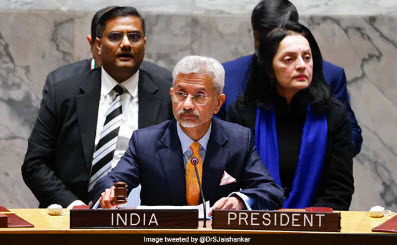
By Kalyani Shankar India is campaigning for both a permanent and a non-permanent seat on the UN Security Council. Securing a permanent seat requires significant changes to the UN structure, which are progressing slowly. India is seen as a key voice for the Global South and in the Indo-Pacific. Foreign Affairs Minister S. Jaishankar, currently […]

The article India Eyes Permanent Seat At High Table Of Un Security Council appeared first on Latest India news, analysis and reports on Newspack by India Press Agency).

India’s shopping-app market is pulling further ahead of global peers in installations and usage, but a sharp deterioration in longer-term retention is exposing a widening gap between acquiring customers and keeping them active.

Android shopping-app installs in India grew 85% between the third quarter of 2024 and the second quarter of 2026, compared with 2% globally, according to AppsFlyer’s State of eCommerce for Marketers in India 2026 report. India accounted for 63% of Android shopping installs and 71% of sessions across the markets measured, underscoring the scale of mobile-led commerce.

The expansion has not translated into equally durable customer relationships. Day-30 retention on Android fell 41% between the fourth quarter of 2025 and the second quarter of 2026, steeper than the 30% global decline. Retention had stayed at roughly 4% through the second, third and fourth quarters of 2025 before weakening over the following two quarters.

Marketing allocations moved in the same direction. Remarketing expenditure in India dropped 42% between the fourth quarter of 2025 and second quarter of 2026 while user-acquisition spending rose 10%. Android remarketing conversions subsequently fell 62% in the second quarter, suggesting businesses were putting more money into attracting users while spending less on bringing existing customers back.

Paid installs overtook organic installs in absolute volume by the first quarter of 2026, reversing the organic-led pattern that prevailed through most of 2025. The shift increases the importance of measuring whether customers acquired through advertising remain active long enough to justify acquisition costs.

“India’s install numbers are exceptional by any global measure, and quick commerce is a big part of why,” AppsFlyer’s India and ANZ general manager Sanjay Trisal said. He said engagement was holding up even as install growth cooled, adding that businesses could under-invest in existing customers when acquisition remained strong.

Install volumes have moderated from their festive-season high without erasing India’s substantial lead. Android installs were 22% below their third-quarter 2025 peak by the second quarter of 2026, while sessions declined only 5%. On iOS, sessions increased 13% over the same period, indicating that established users continued opening shopping apps even as new-install momentum eased.

The festive surge was particularly pronounced. Android shopping installs climbed 136% year on year during the Navratri quarter, while organic installs rose 143%. The figures help explain why acquisition has remained attractive to marketers despite signs of weaker retention farther into the customer lifecycle.

Quick commerce is an important driver of that activity. Redseer Strategy Consultants estimates the segment closed the 2025-26 financial year at about $13 billion to $14 billion in gross merchandise value, equivalent to roughly 17% of India’s online retail market. It has expanded beyond grocery into categories including beauty, personal care, electronics and fashion, increasing the number of shopping occasions served through apps.

Broader online retail demand also remains strong. Redseer estimates the market grew about 25% year on year in the first half of 2026 to roughly $38 billion and expects it to exceed $90 billion for the full calendar year. That growth provides a large pool of transactions for shopping platforms, while placing greater emphasis on whether customer acquisition produces repeat purchasing.

AppsFlyer’s data also showed India generated its high Android activity with a comparatively smaller share of advertising expenditure. The country represented 19% of global Android user-acquisition spend among measured markets despite accounting for 63% of installs and 71% of sessions. On iOS, it accounted for 16% of installs but 2% of user-acquisition expenditure.

Traffic quality strengthened over the longer measurement period. India’s Android install-fraud rate declined from 10% in the third quarter of 2024 to 3% in the second quarter of 2026, against a 7% global rate. The iOS fraud rate stood at 1%, compared with 3% globally, although Android fraud increased quarter on quarter in the latest period.

By R. Suryamurthy The most consequential question arising from Washington’s latest sanctions legislation is not whether the United States can impose a 100 percent tariff on countries buying Russian oil. It is whether India can continue to conduct an independent energy policy when access to its largest export market is increasingly being linked, directly or […]

The article India’s Russian Oil Dilemma Is Bigger Than Just 100 Percent Tariff appeared first on Latest India news, analysis and reports on Newspack by India Press Agency).

India’s youth-led Cockroach Janta Party has set Saturday as the deadline for Chief Election Commissioner Gyanesh Kumar to resign, warning that it will begin nationwide protests on October 2 if he remains in office.

Founder Abhijeet Dipke said the movement would start its campaign in Mumbai on Gandhi Jayanti and then take demonstrations to cities across the country. The ultimatum follows allegations of serious internal disagreements within the Election Commission over decisions affecting electoral rolls during the Special Intensive Revision.

“If Gyanesh Kumar does not resign by tomorrow, CJP will begin its nationwide protest from Mumbai on 2 October, and take it to cities across India,” Dipke said on Friday. The organisation had initially given Kumar 48 hours to step down and threatened an indefinite sit-in in New Delhi if its demand was ignored.

The CJP has also launched an “Election Commission Thik Karo” campaign and called for the SIR process to be halted. Its leaders have demanded an independent investigation into electoral-roll decisions and questioned whether safeguards governing voter registration, deletion and data management were properly observed.

The dispute intensified after information emerged that Election Commissioners Sukhbir Singh Sandhu and Vivek Joshi had formally raised objections at least 14 times over 10 months to decisions and orders concerning electoral rolls. The objections reportedly covered registration of new voters, deletion and restoration of names, changes to Form 6 and control of the technology used to maintain voter data.

Some objections concerned decisions that Sandhu and Joshi said had been taken or communicated without their knowledge. The two commissioners also raised concerns about centralising access to electoral-roll systems in New Delhi and, in separate communications, approached the Cabinet Secretary over changes affecting oversight of the commission’s technology infrastructure.

The Election Commission has rejected suggestions that the exchanges demonstrate improper decision-making. It said differing views and observations were a normal part of institutional deliberation and maintained that its final decisions, including those governing the SIR, were unanimous and legally valid.

The commission said it functions under Article 324 of the Constitution, statutory rules and established conventions. Officials have maintained that questions raised while proposals or orders are being considered should not be equated with dissent from final decisions approved by the three-member body.

Opposition parties have nevertheless seized on the disclosures to renew accusations that the electoral-roll revision has been conducted unfairly. Congress organised marches towards election offices in several state capitals on Friday, demanding Kumar’s removal and an independent examination of decisions taken during the revision.

The opposition has alleged that names have been removed from voter lists without adequate safeguards while some additions have lacked sufficient verification, claims the Election Commission disputes. The Bharatiya Janata Party has defended the commission and rejected allegations that the institution has been manipulated to favour the governing party.

BJP spokesperson Sambit Patra said internal deliberations demonstrated that the commission was functioning democratically. He said the final SIR decisions had been reached unanimously by all three commissioners and argued that disagreements during deliberations did not establish that the constitutional body was operating under one person’s control.

The controversy has given the CJP another national issue around which to mobilise young supporters. The organisation describes itself as a youth pressure group rather than a registered political party and emerged this year from an online protest campaign after Chief Justice of India Surya Kant used the words “cockroaches” and “parasites” while criticising a section of unemployed young people during a court hearing.

Its campaign subsequently expanded into street mobilisation over examination irregularities, education and public services. The group’s leaders have also organised inspections of government schools and used social media to highlight complaints about staffing and infrastructure.

By Ashok Nilakantan Ayers NEW YORK: The second day of the 81st United Nations General Assembly saw diplomatic spotlight shifting from the opening-day clash of competing worldviews to the harder business of finding common ground — over Gaza, Ukraine, Iran, development, climate, artificial intelligence and the future of multilateral institutions. For India, this was an […]

The article UNGA 81: India Positions Itself As A Bridge Across A Fragmenting World appeared first on Latest India news, analysis and reports on Newspack by India Press Agency).

By Dr. Gyan Pathak Deen Dayal Upadhyaya Grameen Kaushalya Yojna (DDU-GKY) will complete 12 years on September 25, 2026. It was launched by PM Narendra Modi led government with great fanfare on September 25, 2014 under the National Rural Livelihood Mission. The chief objective was to equip rural youth with relevant skills and access to […]

The article Skilling And Placement Of Rural Youth Under DDU-GKY Is Dismal appeared first on Latest India news, analysis and reports on Newspack by India Press Agency).

By Ashok Nilakantan Ayers NEW YORK: External Affairs Minister S Jaishankar arrived at the 81st UN General Assembly with an unusually broad diplomatic canvas before him. In meetings with European, Ukrainian, Arab, Asian and other counterparts, India was simultaneously talking to countries that sit on opposite sides of some of the world’s sharpest geopolitical divides. […]

The article Jaishankar’s Speech At UNGA: Multilateralism, Not ‘Choosing Camps’ appeared first on Latest India news, analysis and reports on Newspack by India Press Agency).

Advertisements
Asian share markets advanced on Monday as technology stocks rallied on continuing demand for artificial intelligence infrastructure, while crude oil prices fell as traders assessed stronger-than-expected energy flows from the Middle East.

South Korea and Taiwan led the regional gains, reflecting renewed buying in semiconductor companies tied to expanding demand for data centres, memory chips and advanced computing. South Korea’s Kospi rose about 1.4%, while Taiwan’s benchmark gained around 1% and reached a three-month high. MSCI’s broadest index of Asia-Pacific shares outside Japan added roughly 0.9%.

Chinese blue-chip shares were also firmer, rising about 0.2%, while Japan’s cash market was closed for the Silver Week holiday. Nikkei futures nevertheless edged 0.2% higher. Trading across parts of the region was thinner than usual because Japanese markets will remain shut through Wednesday.

The strength in Asian technology shares followed continued investor focus on the capital spending required to support generative AI and cloud computing. Samsung Electronics rose sharply in Seoul, while Taiwan Semiconductor Manufacturing Co gained in Taipei, reinforcing the technology-heavy tone across major regional bourses.

US equity futures also pointed higher during Asian trading. S&P 500 futures gained about 0.4% and Nasdaq futures rose 0.6%, while European futures indicated a firmer opening, with EUROSTOXX 50 and German DAX contracts advancing.

Oil prices moved in the opposite direction. Brent crude fell about 1.7% to just above $102 a barrel, while US West Texas Intermediate dropped close to 2% to around $98.50. Both benchmarks had already weakened at the end of last week.

The decline reflected signs that more crude and other energy cargoes were moving through the Gulf despite continuing disruption linked to the conflict in the region. Data from Kpler showed Saudi Arabian crude exports recovering to just above 4 million barrels per day so far in September after dropping to about 2.4 million barrels per day in August.

Saudi shipments through the Strait of Hormuz have increased after disruption to the East-West pipeline and reduced flows through the Red Sea export hub of Yanbu. JPMorgan analysts estimated that total Middle East oil flows averaged 17.1 million barrels per day over the previous 10 days, suggesting that physical supply had proved more resilient than traders initially feared.

Energy markets were also monitoring the possibility of diplomatic engagement this week, which helped reduce part of the geopolitical risk premium built into crude prices. However, tensions remained high after further attacks involving Saudi targets, leaving traders cautious about assuming that supply risks had disappeared.

Bond markets remained another constraint on risk appetite. The US two-year Treasury yield was around 4.76%, after rising sharply over the previous two weeks. Futures markets were pricing a greater-than-even chance of another Federal Reserve rate increase in October following the central bank’s hawkish guidance last week.

Higher borrowing costs have complicated the outlook for equities even as technology stocks continue to attract capital. Investors are balancing the earnings potential created by AI-related investment against the prospect that restrictive monetary policy could persist as central banks attempt to contain inflation.

The US 10-year Treasury yield was close to 5%, keeping pressure on rate-sensitive assets and supporting the dollar. The currency was little changed around 157 yen, with investors alert to the possibility of intervention by Japan’s authorities during the holiday-thinned session.

The yen had strengthened sharply on Friday after Japanese authorities conducted rate checks in the foreign-exchange market. The euro was broadly steady near $1.148 after losing ground against the dollar over the previous week.

Gold prices were little changed to slightly lower as higher bond yields offset safe-haven demand generated by Middle East tensions. Copper, meanwhile, remained supported by signs of stronger demand from China and constrained inventories.

Australia’s S&P/ASX 200 was broadly flat, lagging the technology-led advances elsewhere in the region. India’s benchmark Sensex traded higher during the session, while Hong Kong shares also advanced as investors continued to favour large technology and internet companies.

By K Raveendran Donald Trump now possesses one of the most formidable economic weapons available to an American president against countries sustaining Russia’s energy revenues. Yet, the decision on how aggressively to wield it is complicated by a contradiction that Washington cannot easily escape: squeezing Russian oil out of the international market could also push […]

The article Sanctions Against Russian Oil Collide With Economics Of Affordable Oil appeared first on Latest India news, analysis and reports on Newspack by India Press Agency).

By T N Ashok The passage by the US Congress of the Lindsey O. Graham Sanctioning Russia and Iran Act of 2026 has confronted India with a problem that is simultaneously diplomatic, economic and strategic. The immediate headline is stark: the legislation creates a statutory pathway allowing President Donald Trump to impose tariffs of up […]

The article India’s Graham Act Dilemma: Energy Security Meets US Tariff Weapon appeared first on Latest India news, analysis and reports on Newspack by India Press Agency).

Arabian Post Staff -Dubai Abu Dhabi Investment Authority has been allocated shares worth about 2 billion rupees in the National Stock Exchange of India’s anchor book, placing the sovereign wealth fund among the largest institutional investors in the exchange’s 67.46 billion-rupee pre-IPO placement. NSE allotted 37.79 million shares to 189 anchor investors at 1,785 rupees each, the top of its 1,700-1,785 rupee price band, according to the […]

India summoned Pakistan’s top diplomat in New Delhi on Wednesday after naval vessels from the two countries collided in international waters of the northern Arabian Sea, escalating friction more than a year after their last military confrontation.

The Ministry of External Affairs said Pakistan’s Charge d’Affaires was called in and a strong protest lodged over what it described as “unacceptable and unprofessional conduct” by Pakistani naval units. The ministry said the conduct led to a collision with a unit of the Indian Navy and urged Pakistan’s authorities to ensure that military units exercise due care and observe existing bilateral agreements.

The collision occurred on Tuesday while a frontline warship from India was conducting what officials described as a routine surveillance mission. Officials from India said a Pakistan Navy vessel approached at high speed before the vessels collided. No major damage was reported, and there was no immediate public statement from Pakistan’s government or military responding to New Delhi’s account.

India also instructed its top diplomat in Islamabad to lodge a similar protest with Pakistan’s Foreign Ministry. The exchange elevated what could otherwise have remained a maritime safety incident into a formal diplomatic dispute between two nuclear-armed neighbours whose military contacts are governed by a series of confidence-building arrangements.

New Delhi said the episode breached a 1991 bilateral agreement covering military exercises, manoeuvres and troop movements. Under that agreement, naval ships and submarines of the two countries are required to remain at least three nautical miles apart in international waters to reduce the risk of accidents. India’s foreign ministry said the Charge d’Affaires had been asked to convey the need for all military units to respect those provisions and prevent a recurrence.

Pakistan had not, as of Wednesday afternoon, issued its own description of the encounter, leaving key operational details — including the precise movements of the vessels before impact — based on India’s official account. No ship names, casualty reports or detailed damage assessments were released publicly by either side.

The incident is the clearest publicly acknowledged military encounter between the neighbours since four days of hostilities in May 2025. That fighting followed an April 22 attack on tourists in Pahalgam, in Jammu and Kashmir, that killed 26 people. India blamed Pakistan for supporting cross-border terrorism, an allegation Islamabad rejected, and the crisis developed into missile, drone and artillery exchanges before both sides announced an understanding to halt the fighting.

Relations have remained strained since then despite the cessation of large-scale hostilities. Diplomatic ties had already been downgraded in 2019 amid disagreements over Kashmir, and neither country currently posts an ambassador in the other’s capital, with missions headed by Charges d’Affaires.

The latest protest focused narrowly on maritime conduct rather than broader political disputes. India’s statement did not announce retaliatory military measures or new diplomatic restrictions, and it called instead for compliance with the bilateral framework designed to prevent accidents between armed forces operating near one another.

The northern Arabian Sea is routinely used by both navies for patrols, exercises and surveillance. The 1991 agreement was intended to create practical safeguards at times of tension, alongside notification procedures for certain military activities. Its distance requirement gives commanders a defined separation standard when vessels or submarines from the two countries encounter each other beyond territorial waters.

The military relationship remains sensitive because both countries maintain forces across the Line of Control in Kashmir and continue to accuse each other of hostile activity. Their 2025 confrontation demonstrated how quickly a security incident can widen across domains, although neither government indicated on Wednesday that the naval collision had triggered wider force movements or changes in military posture.

Tuesday’s collision did not produce the kind of damage that would normally force a ship out of service, according to India’s account. The absence of reported casualties limited the immediate operational consequences, but the diplomatic summons ensured the episode received attention at the highest working level between the two foreign ministries.

India’s Securities and Exchange Board has given arbitrage mutual funds greater flexibility to manage hedged equity positions around the new closing auction, a step aimed at increasing institutional liquidity in the end-of-day price-setting mechanism.

The regulatory relaxation allows fund managers more room to adjust the cash and futures legs of arbitrage trades while participating in the Closing Auction Session, people familiar with the change said. The move is intended to encourage funds that collectively manage a large pool of equity-linked assets to place orders in the auction rather than largely completing transactions beforehand.

The change addresses a central weakness that has emerged since the auction system was introduced on August 3 for shares with futures and options contracts. Trading during the closing window has at times been thin, leaving prices vulnerable to sharp moves when large buy or sell orders enter a relatively shallow order book.

Arbitrage funds are viewed as a potentially important source of balancing liquidity because they hold shares in the cash market while maintaining offsetting short positions in futures. That structure can enable them to sell stock when the closing auction is dominated by buyers, or buy when supply is heavy, without necessarily taking a directional market view.

SEBI has not issued a public circular detailing the latest operational flexibility. Existing mutual-fund rules require arbitrage schemes to maintain at least 65% of assets in equity and equity-related instruments, while their strategy is built around offsetting positions designed to capture differences between cash and derivatives prices.

The regulator’s intervention comes as it separately reviews the mechanics of the Closing Auction Session after volatile expiry-day moves raised concerns over price discovery and derivatives settlement. A consultation paper issued on September 12 proposed changes to the way settlement prices are determined when futures and options expire.

One option under consideration would blend the volume-weighted average price from the final 30 minutes of continuous trading with prices established in the closing auction. Another would temporarily retain the earlier 30-minute volume-weighted average methodology for derivatives settlement while the auction develops deeper liquidity.

SEBI has also proposed restrictions on order cancellations outside a specified range around the reference price, a shorter post-auction derivatives trading window and changes to the publication of indicative index closing levels during the auction. Public comments on those proposals are open until October 3.

The Closing Auction Session replaced the previous method of setting closing prices for eligible stocks through the volume-weighted average of trades during the last 30 minutes of normal trading. Under the new framework, eligible cash-market stocks move into an auction process late in the session, while equity derivatives continue trading until 3.40 pm.

The auction is intended to concentrate end-of-day orders and produce a closing price based on the level at which the greatest quantity of shares can be matched. Similar mechanisms are used in several major global markets, particularly for large institutional orders and benchmark-tracking flows.

Early trading under the system, however, produced unusually wide gaps between cash-market closing prices and futures values on some days. Those differences caused sharp one-day movements in the net asset values of arbitrage funds because the cash and derivatives legs of their portfolios were marked using prices generated under different trading conditions.

Fund managers and market participants have argued that broader institutional participation is essential if the auction is to deliver stable price discovery. Arbitrage funds, with assets of roughly ₹3.5 trillion according to industry estimates, represent one of the largest pools capable of supplying two-way liquidity without relying on outright directional bets.

The mutual-fund industry has also examined changes to futures valuation that would better align derivatives prices with the auction-determined cash close. One proposal would derive a theoretical futures closing value from the final cash-market price and the prevailing cash-futures spread, reducing temporary valuation mismatches in arbitrage portfolios.

By TN Ashok The 18th BRICS Summit, held at Bharat Mandapam in New Delhi on September 12–13, 2026, was never going to escape Washington’s shadow — and it didn’t. Even as Prime Minister Narendra Modi steered eleven member states toward a unanimously adopted New Delhi Declaration that pointedly avoided naming the United States, President Donald […]

The article India steers 18th BRICS summit deftly, keeps anti-West rhetoric at bay appeared first on Latest India news, analysis and reports on Newspack by India Press Agency).

BRICS leaders have placed development priorities of emerging economies at the centre of their New Delhi agenda, endorsing stronger representation for the Global South while advancing cooperation on trade, technology, finance and sustainable growth.

Chinese President Xi Jinping used the 18th BRICS Summit to argue that countries should pursue development paths suited to their own national conditions, a message that overlapped with the summit’s broader emphasis on policy autonomy, inclusive growth and reform of global institutions.

Addressing the first leaders’ session on September 12, Xi marked 20 years of BRICS cooperation and said members had strengthened themselves through unity while preserving independence in choosing their economic and social models. He described BRICS as an increasingly important platform for emerging markets and developing countries.

The summit’s New Delhi Declaration gave that theme wider institutional form. Leaders called for a more representative international order, greater participation by developing countries in global decision-making and reforms to institutions including the United Nations, World Trade Organization and international financial architecture.

The declaration also reflected the diversity within the expanded grouping. Rather than prescribing a single model of development, BRICS leaders stressed national circumstances, differing capacities and the need for policy space, particularly in areas such as energy transition, industrialisation and climate action. That approach broadly matched Xi’s argument that development strategies should reflect domestic conditions rather than external templates.

Xi sought to extend the idea into technology policy. He proposed an initiative on artificial intelligence-enabled industrialisation, deeper cooperation in research and applications, and stronger industrial and supply-chain links. China also promoted open-source AI collaboration and international platforms intended to improve access to emerging technologies for developing economies.

Other leaders framed similar priorities through their own national perspectives. Prime Minister Narendra Modi emphasised resilience, innovation, cooperation and sustainability, the four themes of India’s 2026 BRICS chairship, and called for solutions developed within the grouping to serve a wider range of developing countries. He also urged members to translate summit commitments into practical programmes.

BRICS members agreed on measures spanning digital cooperation, food and energy security, health, trade facilitation and the use of local currencies in cross-border transactions. The declaration supported stronger payment connectivity while stopping short of endorsing a common BRICS currency.

The economic agenda also underlined the practical test facing the grouping. Members backed use of national currencies in trade and investment, stronger cooperation through the New Development Bank and efforts to improve financial resilience. Such measures are intended to widen financing options for developing economies without committing members to a single monetary framework or common currency.

The expanded bloc now brings together countries with sharply different political systems, strategic alignments and economic structures. That breadth gives BRICS a larger claim to represent developing-country concerns, but it also limits how far members can converge on detailed policy prescriptions. Analysts have noted differences over whether the group should remain primarily an economic and development forum or assume a stronger geopolitical role.

Those tensions were visible alongside the development agenda. Leaders opposed protectionism and unilateral economic measures, supported a stronger multilateral trading system and called for reforms that would increase the voice of developing countries. At the same time, members avoided turning the summit into a unified ideological platform, relying instead on consensus language broad enough to accommodate competing interests.

Xi’s second summit intervention on September 13 placed a “people-centred” development philosophy within a wider call for Global South cooperation. He urged progress on the UN Sustainable Development Goals, improvements to global climate governance and a consensus-based framework for governing artificial intelligence.

China’s approach also carries strategic implications. Beijing has increasingly used BRICS and other multilateral forums to promote its views on development, sovereignty and global governance. Some members share its criticism of unequal representation in international institutions, while others remain cautious about allowing BRICS to become identified with any single country’s geopolitical agenda.

Egypt and India have agreed to pursue concrete steps towards lifting bilateral trade to $12 billion, with President Abdel Fattah El-Sisi and Prime Minister Narendra Modi also discussing ways to expand investment ties during talks on the sidelines of the 18th BRICS Summit in New Delhi.

The leaders met on Sunday as Egypt pressed for faster progress on a trade goal first set during El-Sisi’s state visit to New Delhi in January 2023. Egypt’s presidency said the discussions covered measures to strengthen the strategic partnership, increase commerce and encourage more investment from India in sectors including manufacturing, technology, clean energy and the automotive industry.

El-Sisi stressed the importance of translating the economic relationship into projects and commercial flows capable of taking trade to the $12 billion target. The two sides also reviewed opportunities for companies from India to expand their presence in Egypt, which Cairo has promoted as a production and export base serving markets in Africa, the Middle East and Europe.

Bilateral merchandise trade stood at about $6.5 billion in the 2025-26 financial year, according to figures cited by India’s embassy in Cairo. That leaves the two countries seeking almost to double the current level if they are to reach the objective discussed by their leaders.

Investment formed a central part of the meeting. Egypt highlighted manufacturing, information technology, renewable and clean energy, and vehicle production as areas where it wants to attract additional capital. Cairo has also sought greater participation by overseas companies in the Suez Canal Economic Zone and other industrial centres as it works to raise exports and secure more foreign currency.

Modi and El-Sisi reviewed the broader strategic partnership and discussed cooperation in economic and commercial fields, along with regional and international developments. Their meeting came as New Delhi hosted the September 12-13 BRICS summit under the theme of resilience, innovation, cooperation and sustainability.

Egypt joined BRICS at the start of 2024 and has since used the grouping to widen economic links with major emerging economies. The New Delhi summit brought together an expanded bloc whose agenda included trade, finance, technology, energy, climate issues and greater use of national currencies in cross-border transactions.

The trade push also builds on institutional contacts between Cairo and New Delhi. Egypt’s Foreign Minister Badr Abdelatty said during BRICS ministerial meetings in May that the two countries wanted to raise bilateral trade to $12 billion over five years and strengthen cooperation in investment, technology and other economic sectors.

El-Sisi and Modi upgraded relations to a strategic partnership in 2023, creating a framework for closer coordination across trade, investment, defence, energy and political consultation. The latest talks focused more narrowly on turning the economic component of that partnership into measurable gains, particularly through private-sector investment and expanded market access.

Egypt has been courting manufacturers as it seeks to increase domestic production and exports, while companies from India already operate in industries including chemicals, textiles, food processing and manufacturing. Cairo’s investment campaign has emphasised projects that can supply the domestic market while using Egypt’s trade agreements and transport links to reach neighbouring regions.

The two leaders also discussed international and regional issues, according to Egypt’s presidency, without announcing a separate bilateral agreement during the meeting. Their talks were among a series of leader-level engagements held around the BRICS gathering as member states sought to advance economic cooperation alongside the summit’s wider diplomatic agenda.

For Egypt, the $12 billion goal provides a benchmark for a relationship that has expanded beyond traditional merchandise trade into investment-led cooperation. For India, stronger commercial ties with Egypt offer access to a major Arab and African market and to production locations close to the Suez Canal, one of the world’s principal shipping routes.

Commerce and Industry Minister Piyush Goyal has urged BRICS members and partner countries to link payment systems, expand local-currency trade and open markets more widely as India presses for stronger economic integration across the grouping.

Addressing the BRICS Business Forum in New Delhi, Goyal said greater connectivity between national payment networks, including systems modelled on India’s Unified Payments Interface, could lower friction in cross-border commerce while supporting wider use of members’ own currencies.

His proposals were aligned with the economic agenda carried into the BRICS summit, where leaders backed further work on facilitating trade and investment settlements in local currencies and improving interoperability between payment systems. The approach stops short of creating a common BRICS currency and instead focuses on practical links between existing financial infrastructures.

BRICS leaders encouraged the New Development Bank to expand local-currency financing and diversify its funding base, complementing efforts to make cross-border payments faster, cheaper and safer. Officials have stressed that the objective is not a single currency, but greater use of national currencies where commercially practical and mutually agreed.

Goyal said UPI now handles more than 250 billion transactions annually and is accepted in 11 countries. He urged BRICS economies to explore linking their payment networks, promote trade in each other’s currencies and expand digital commerce alongside cooperation in emerging technologies.

The minister coupled the payments proposal with a call for easier market access. He said BRICS economies should open their markets to one another’s products, including raw materials and critical minerals, while simplifying regulatory procedures and accelerating the clearance of consignments.

Goyal argued that resilient supply chains required two-way trade rather than dependence on one-sided flows. He said non-tariff measures impose higher export costs than tariffs in 88 per cent of countries, making regulatory obstacles and customs delays a central concern for companies seeking to trade across BRICS markets.

The push comes as intra-BRICS commerce has expanded sharply. Commerce Secretary Rajesh Agrawal said trade among BRICS countries rose from $84 billion in 2003 to nearly $1.2 trillion in 2024, underscoring both the scale of the bloc’s market and the potential gains from reducing transaction and financing costs.

Agrawal also highlighted the global trade-finance gap, estimated at about $2.5 trillion, and said BRICS should improve access to affordable working capital for exporters. The Jaipur Consensus, agreed by BRICS trade ministers in August, provides a basis for examining a common mechanism to help smaller businesses obtain finance against confirmed orders and reliable payment records.

Trade ministers have also advanced a 2026-2030 action plan on global value chains, including BRICS Connect, business-to-business partnerships, digital trade documentation and possible platforms for strategic supply chains and investment promotion. These measures form part of a broader effort to make trade flows more diversified and less vulnerable to disruption.

Goyal identified agriculture, pharmaceuticals, engineering, electronics, automobiles, auto components and services as sectors with scope for deeper cooperation. He called for closer links between startup ecosystems and urged agri-tech companies to work jointly on solutions for farmers and food security.

Services trade was another priority. Goyal said BRICS members should make it easier for professionals to move across borders and work towards greater recognition of professional qualifications, arguing that services markets needed to become more genuinely accessible.

External Affairs Minister S. Jaishankar, speaking at the same forum, said supply-chain connectivity, trade facilitation and innovation had become central to BRICS cooperation. He also pointed to digital public infrastructure, artificial intelligence, financial technology and advanced manufacturing as areas offering opportunities alongside questions of standards, security and trust.

Russia’s Economic Development Minister Maxim Reshetnikov separately supported stronger alternative payment arrangements, saying the share of Russia’s export settlements conducted in dollars and euros had fallen sharply over the past three years. He also promoted work on a proposed BRICS grain exchange and closer cooperation among special economic zones.


BRICS leaders have adopted a joint declaration expressing deep concern over escalating tensions in the Middle East and urging maximum restraint, securing consensus among members including Iran, Saudi Arabia and the United Arab Emirates. The New Delhi Declaration, approved on Saturday at the 18th BRICS Summit, called on all sides to avoid actions that could further aggravate the situation and reaffirmed support for resolving international disputes through […]

Chinese President Xi Jinping and Prime Minister Narendra Modi agreed to strengthen economic, transport and people-to-people links while preserving peace along their disputed frontier, using Xi’s first visit to India in seven years to push forward a cautious repair of bilateral relations.

The two leaders met on Saturday on the sidelines of the BRICS summit in New Delhi and welcomed what the Prime Minister’s Office described as steady progress in ties since their meeting in Tianjin in August 2025. They agreed that relations should be approached from a strategic and long-term perspective and that differences should not be allowed to become disputes.

Modi said peace and tranquillity in border areas remained an essential basis for further development of the relationship. He called for both sides to observe existing agreements and understandings on frontier issues and said engagement should be guided by “mutual respect, mutual sensitivity and mutual interest”.

Both leaders committed themselves to seeking a fair, reasonable and mutually acceptable settlement of the boundary question, while expanding cooperation in areas where their interests converge. They also backed stronger cultural exchanges, business links and mobility, alongside efforts to resolve economic frictions.

Trade featured prominently in the discussions. The two sides agreed on the need to address concerns over the structural trade imbalance, supply-chain issues and access to each other’s markets. Bilateral trade reached a record $155.6 billion in 2025, while India’s imports from China were about $132 billion, leaving a large deficit that New Delhi has repeatedly sought to narrow.

The meeting marked Xi’s first trip to India since 2019, when he travelled to Tamil Nadu for an informal summit with Modi. Relations deteriorated sharply after the 2020 military confrontation in eastern Ladakh, including the Galwan Valley clash that killed 20 soldiers from India and four from China.

A disengagement agreement reached in October 2024 helped end key points of the military standoff and opened the way for higher-level political contacts. Modi and Xi then held a substantive bilateral meeting during the BRICS summit in Kazan that month, followed by another meeting in Tianjin in August 2025.

Diplomatic and military mechanisms have since been revived. At the 25th round of Special Representatives’ talks in Beijing on August 25, National Security Adviser Ajit Doval and China’s Wang Yi agreed on eight measures covering border management, military communication, boundary negotiations, trade routes, pilgrimage arrangements and cooperation on trans-border rivers.

Among those steps were two additional channels for military hotlines in the eastern and middle sectors and two additional meeting points for senior commanders. The two sides also agreed to continue work towards a framework for settling the boundary dispute and to use existing diplomatic and military channels to deal promptly with incidents along the Line of Actual Control.

Practical links have also begun returning. Direct passenger flights have resumed, business visa processing has improved and the Kailash Mansarovar pilgrimage has restarted, while three traditional border trading points have reopened. Those measures have not removed the deeper trust deficit, but they have restored channels that were largely frozen after 2020. Officials on both sides have indicated that further easing will depend on predictable border management and progress on commercial concerns over the coming months.

Despite the thaw, major differences remain. Large troop deployments continue along sections of the Himalayan frontier, and the boundary itself has not been settled. Economic engagement is also constrained by investment screening, regulatory barriers, visa delays and security concerns affecting sectors considered sensitive by either government.

Xi’s visit nevertheless gave both governments an opportunity to demonstrate that political contacts are becoming more regular after years of strained relations. Beijing has repeatedly said the two countries should view each other as partners rather than rivals, while New Delhi has maintained that normal relations require durable peace at the border.

By R Suryamurthy The latest BRICS financial agenda is ambitious enough to suggest that the grouping is no longer content merely to complain about the inequities of the global economic order; it wants to build pieces of an alternative. But ambition, particularly in a grouping as diverse as BRICS, is cheap. The harder question is […]

The article Brics has a financial roadmap: The hard part is making it work appeared first on Latest India news, analysis and reports on Newspack by India Press Agency).

Modi pressed Iranian President Masoud Pezeshkian to support freedom of navigation, uninterrupted commerce and the safety of seafarers as the two leaders met in New Delhi on Friday amid continuing conflict and shipping disruption across West Asia.

The talks, held on the sidelines of the BRICS summit, focused on bilateral relations and the regional security situation. India’s Prime Minister reiterated that disputes should be resolved through dialogue and diplomacy and called for sustained efforts to secure lasting peace and stability, according to an official statement issued after the meeting.

Modi specifically highlighted the need to safeguard freedom of navigation and commerce and the safety and well-being of seafarers. The issue has become a central concern for New Delhi as attacks on commercial vessels and disruption to maritime routes in the region have affected trade and put crews at risk.

The meeting was Modi and Pezeshkian’s second in less than two weeks. They had met on August 31 on the sidelines of the Shanghai Cooperation Organisation summit in Bishkek, where Modi also raised the protection of commercial shipping and seafarers and urged a diplomatic approach to the West Asia conflict.

Friday’s discussion came as the conflict involving Iran, the United States and Israel continued to place pressure on strategic waterways and supply routes. India has sought to maintain working relations with Iran while also preserving close ties with Israel and Arab states, making maritime security and regional stability important economic as well as diplomatic priorities.

At least 10 nationals of India have been killed in attacks on vessels transiting the region during the conflict. New Delhi has condemned attacks affecting Gulf countries, energy infrastructure and commercial shipping, while repeatedly calling for de-escalation and protection of civilians and maritime workers.

The maritime threat has sharpened concerns over energy shipments through Gulf waters that remain critical to India’s oil and gas imports.

Modi reinforced the same message earlier on Friday at the BRICS Business Forum, saying global trade could advance only when sea lanes were secure, supply routes remained open and seafarers were safe. He described India as a firm supporter of freedom of navigation and the safety of maritime crews.

Pezeshkian, who was making his first visit to India as president, used his participation in BRICS meetings to press for stronger economic cooperation among members and protection of legitimate trade from political and military pressure. He argued that the grouping’s strength would be demonstrated by converting economic capacity into functioning networks for trade, investment and joint financing.

The Iranian president also called for greater use of national currencies in trade among BRICS members and said Tehran was prepared to work as a strategic partner in energy and transport supply chains. His remarks reflected Iran’s effort to reduce exposure to sanctions and other constraints on cross-border commerce.

During the bilateral meeting, Modi thanked Iran for maintaining high-level participation in BRICS-related meetings despite difficult circumstances. He said the grouping could strengthen resilience, innovation, cooperation and sustainability among countries of the Global South.

The two leaders also reviewed broader bilateral ties and cooperation in multilateral organisations. Modi welcomed continuing coordination on issues of mutual interest within BRICS, where Iran is a full member alongside Brazil, Russia, India, China, South Africa and other states that have joined the expanded grouping.

The talks followed Pezeshkian’s participation in the Leaders’ Session of the BRICS Business Forum. Modi thanked him for attending and said engagement between the two countries should continue across bilateral and multilateral channels.

The New Delhi meeting also built on the August 31 discussions in Bishkek, when Pezeshkian told Modi that Tehran favoured a negotiated solution to its confrontation with the United States. Modi at that meeting expressed concern over escalating tensions and said civilians, civilian infrastructure, commercial shipping and seafarers should not be harmed.

Prime Minister Narendra Modi is hosting the BRICS summit in New Delhi with Russia and China displaying a closer strategic alignment, adding pressure to India’s effort to preserve strong ties with Moscow while managing a cautious thaw with Beijing and maintaining partnerships with the West. Russian President Vladimir Putin met Modi on Friday, a day before the leaders’ summit, and the two reviewed cooperation spanning trade, defence, […]

By Dr. Gyan Pathak With all talks between the United Forum of Banks Unions (UFBU) and Indian Banks’ Association (IBA), Department of Financial Services (DFS), and Central Labour Commissioner under the Union Ministry of Labour and Employment failed, the Public Sector Banks in India have issued alerts for possible disruption of banking operations during all […]

The article Banks issue alerts: Operations may face disruption on Sep 11 appeared first on Latest India news, analysis and reports on Newspack by India Press Agency).

Flipkart-backed payments platform Super. money is rolling out artificial-intelligence agents designed to shop for products and buy digital gold on users’ behalf, positioning autonomous transactions as a way to challenge larger rivals in India’s payments market.

The move comes as the National Payments Corporation of India develops protocols for identifying and authorising AI agents on the Unified Payments Interface, creating infrastructure that could let software complete selected payments under rules and limits set by customers.

Super. money founder and chief executive Prakash Sikaria has said the emerging architecture could allow agents representing merchants and consumers to interact directly, reducing the number of steps between product discovery and payment. The company is seeking to use that shift to extend its role beyond routine UPI transfers into commerce, credit and investment-related transactions.

Agentic payments differ from conventional chatbots because the software can act after interpreting an instruction rather than merely provide information. A user could, for example, ask an agent to find an eligible product within a budget or execute a purchase when specified conditions are met, subject to the permissions built into the payment framework.

NPCI is working on a registry to verify and monitor AI agents conducting transactions through UPI. Its proposed Unified Agent Protocol is expected to support controls including spending limits, identity checks and audit trails. The initial focus is on small, frequent purchases, while more complex conditional transactions could follow as safeguards and liability rules develop.

The payments body has already extended UPI Circle, its delegated-payments framework, to software profiles including AI profiles for limited users. Under the broader system, account holders can delegate payment authority within predefined limits while retaining visibility over transactions. Reserve Pay, another UPI mechanism, can block funds for authorised payments that may be debited later.

Super. money’s push builds on products added this year as it tries to broaden engagement beyond person-to-person and merchant payments. Its splitStore service, introduced in July, lets eligible customers browse products listed on Flipkart and either pay in full or use a pay-later facility provided by regulated lending partners.

The company’s terms state that Flipkart and its sellers remain responsible for the underlying sale, fulfilment, invoicing, cancellations and returns, while Super. money provides the shopping and credit interface. The platform does not hold inventory or set product prices.

Super. money has also added digital gold. Its customer-support documentation describes purchases, sales and reconciliation procedures involving a vault partner, while the app has promoted cashback on gold purchases. The service includes a post-purchase selling lock-in and applies the tax and market spread associated with digital-gold transactions.

Those products give the company potential use cases for agents that can move from a customer instruction to a transaction without requiring the user to navigate several separate screens. The central challenge is ensuring that delegated authority remains narrow enough to prevent unwanted or mistaken purchases.

That concern is shaping the wider industry’s approach. Razorpay, NPCI and OpenAI have been testing agentic payments using UPI Reserve Pay, with an earlier pilot allowing users to shop through a conversational AI interface and complete purchases from participating merchants after confirmation. Razorpay says its system is designed to support pre-authorised transactions within customer-approved spending limits.

Competition is intensifying as payments companies decide how extensively to integrate AI. PhonePe co-founder Rahul Chari has cautioned that not every existing payments experience becomes better merely by adding artificial intelligence, signalling a more selective approach than platforms seeking to make autonomous agents central to commerce.

Super. money remains smaller than the dominant UPI applications, giving it an incentive to pursue newer transaction categories rather than compete solely on basic payments. Its app combines UPI with credit, deposits, bill payments, shopping and other financial products, while the company has used cashback and embedded credit to encourage repeat usage.

VISHNU RAJA
RYO YAMADA
HITORI GOTOH
IKUYO KITA