News related to
India’s

By Salah Uddin Shoaib Choudhury For decades a shadow economy of drugs, counterfeit currency and illicit cash flows has threaded its way across South Asia, North Africa and beyond. What makes this underground economy especially dangerous is not only its scale but the way statecraft, organized crime and violent Islamist militancy appear to intersect – creating a self-reinforcing funding loop for groups that seek to destabilize societies […]

The rupee edged towards a sharp low as the central bank escalated its defence of the currency amid growing external headwinds. The domestic currency traded around 88.80 to the U. S. dollar, nearing its record low despite official efforts to stem the slide.

The Reserve Bank of India expanded its short-dollar forward positions by about US$6 billion in September, bringing the total to roughly US$59.4 billion, signalling increased dollar sales to defend the rupee.
The rupee had already recorded five straight months of decline before stabilising briefly in October, only to come under renewed pressure. Analysts point to surging gold imports, foreign-portfolio investor withdrawals and uncertainty around U. S. tariffs as key drivers of dollar outflows.

Market participants note that the rupee’s ability to hold above the 88.80 mark depends heavily on the central bank’s resolve. One currency strategist at the Australia and New Zealand Banking Group remarked that the central bank may not allow a significant breach of the 89-per-dollar level unless India’s economic fundamentals deteriorate further.

The rupee’s slide contrasts with other emerging-Asian peers, most of which posted gains of over 3 per cent this year while India’s currency was down about 3.6 per cent. Importer demand for dollars and robust non-deliverable-forward flows remain persistent drags. The central bank made small daily interventions via state-run banks, but these were smaller in scale than the large dollar sales seen in the prior month.

In one high-impact intervention, the Reserve Bank of India sold between US$3 billion to US$5 billion across spot and offshore markets, according to trade-desk estimates. That move pushed the rupee up by nearly 1 per cent on the day, its largest single-day gain in four months. The central bank has declined to comment publicly on the precise quantum of intervention.

The central bank is also placing a premium on managing volatility. Despite the dollar’s global strength and broader weakness in Asian currencies, the rupee has been constrained to a narrow trading band around the 88.80 level. Its ten-day realised volatility has fallen beneath 2 per cent and implied volatilities through one month are near their yearly lows. Some market participants caution that this subdued volatility could undermine hedging activity and leave firms vulnerable if a shock hits.

The rupee’s vulnerability arises in part because the U. S. dollar remains elevated, and the Federal Reserve has signalled that it does not expect to cut interest rates as soon as markets hoped, strengthening the greenback and reducing relief for the rupee. At the same time, India’s trade position remains under pressure as high gold-import volumes and elevated oil prices increase dollar demand.

Against this backdrop, India’s sovereign-bond market is showing signs of life. Foreign investors have ramped up purchases of long-dated government debt following the central bank’s display of defensive resolve. Some analysts suggest that migration back into Indian bonds reflects renewed confidence in rupee-denominated assets. Yet this hope is tempered by the possibility that tighter liquidity—stemming in part from currency-market interventions—could weigh on bond markets and corporate funding costs.

By Nantoo Banerjee   The majority government-owned Life Insurance Corporation of India’s detailed rebuttal to The Washington Post report claiming that the government directed LIC to invest $3.9 billion in the Adani group seems to lack the punch. A comparison of the lately sprouted Adani Group with some of India’s age-old business conglomerates such as […]

The article Adani Group’s Striking Rise Since 2014 Sparks Global Speculation appeared first on Latest India news, analysis and reports on Newspack by India Press Agency).

Global enterprise cloud provider Oracle Corporation is pushing its multicloud and artificial intelligence strategy into a new phase, deploying ultra-high-density GPU clusters, open standards and unified data architecture to support large-scale model training and agentic AI workloads. At the heart of the initiative is Nathan Thomas, Vice President of Multicloud and AI Strategic Initiatives, who described the engineering-driven enhancements unveiled at the company’s AI world event in […]

Bengaluru is set to become a linchpin in global chip manufacturing as the India Cellular and Electronics Association and the Global Semiconductor Alliance formally announced a strategic alliance aimed at deepening the country’s role in global semiconductor value chains. The agreement, unveiled at a joint press conference co-organised with the India Semiconductor Leadership Roundtable, marks a significant push to integrate local design, manufacturing and packaging capabilities with global technology networks.

ICEA chairman Pankaj Mohindroo described the industry as standing at “an inflection point” and said the partnership with the GSA represented “a strategic step towards positioning India as a vital node in global semiconductor value chains, where design, manufacturing and innovation converge.” Meanwhile, GSA chief executive Jodi Shelton noted the collaboration with ICEA and the India Semiconductor Mission reflected “a shared commitment to connect India’s dynamic innovation with the global semiconductor ecosystem.” Under the terms of the alliance, the two bodies will co-host the India Semiconductor Leadership Summit in 2026, providing a forum where global fabless firms, design innovators and equipment suppliers will engage with emerging Indian fab and OSAT capacity.

The partnership is underpinned by India’s policy drive under the ISM. The government has approved an outlay of ₹76,000 crore to build semiconductor and display manufacturing ecosystems, and around ten projects with investment commitments of nearly ₹1.6 lakh crore have already been sanctioned. The alliance signals a concerted push not only to attract foreign capital but also to nurture domestic design champions and bridge the gap between India’s expanding electronics ecosystem and global supply chains.

Industry analysts highlight India’s strengths: a growing engineering talent pool, improving infrastructure and a policy regime increasingly supportive of semiconductor manufacturing. ICEA points to electronics output in India having reached USD 150 billion, with exports expected to surpass USD 50 billion. The doubling of the Electronic Component Manufacturing Scheme budget underscores the emphasis on scaling manufacturing capacity.

Nevertheless, challenges remain. Global semiconductor value chains remain highly concentrated, especially in fabrication and advanced node manufacturing. To catch up, India will need to address constraints including high capital intensity, access to specialised equipment, materials, technology transfer regimes and workforce readiness for advanced manufacturing operations. There is also the task of aligning timelines: large-scale chip fabrication plants typically take multiple years to commission and ramp. The broader global context matters too — recent supply-chain disruptions, geostrategic tensions and export controls complicate efforts for any aspiring hub.

Despite these hurdles, the ICEA-GSA partnership reflects a strategic recognition that design capabilities, ecosystem linkages, and global connectivity will matter as much as fabrication. By positioning India as a design-to-manufacturing platform and emphasising cross-border collaboration, the alliance aims to raise the country’s profile in the semiconductor supply chain beyond simply being a site for assembly. Industry figures emphasise this direction: Dr Randhir Thakur, chair of ICEA’s Semiconductor Leadership Forum and managing director & chief executive of Tata Electronics, described the partnership as poised to bring “the global and Indian semiconductor ecosystems closer, delivering unique value to customers, design companies, manufacturers and suppliers.”

On the global front, the GSA brings nearly three decades of experience connecting semiconductor leaders worldwide; its network includes chip-design firms, fabs, equipment vendors and global platforms like Google, Amazon and Tesla. Shelton remarked that the aim is for India to become a site where global design houses can work, test and scale—and thereby feed into the broader manufacturing and packaging ecosystem. GSA’s commitment to including India in its annual global executive events underscores the intent to shine a spotlight on India’s semiconductor ambitions.

Dubai-based global terminal operator DP World has pledged an additional $5 billion in investment to strengthen India’s maritime infrastructure, furthering its long-term commitment to the country. The announcement was made during India Maritime Week 2025, marking a significant boost to the nation’s integrated supply chain network that facilitates both exports and domestic trade. This latest financial commitment follows the signing of five Memoranda of Understanding with prominent […]

The multimedia framework FFmpeg has been awarded a $100,000 grant by the FLOSS/fund initiative, marking a significant injection of resources into a project that underpins video and audio processing worldwide. The grant is part of the organisation’s second tranche for 2025, delivered by FLOSS/fund—a programme launched by the brokerage firm Zerodha to bolster Free and Open Source Software projects globally.

FFmpeg, which is instrumental in powering platforms from online streaming services to editing suites, has long faced sustainability challenges despite its ubiquity in digital infrastructure. The project’s official handle confirmed receipt of the donation, describing it as “a step forward to a sustainable future for Open Source Software.” Meanwhile, FLOSS/fund’s blog revealed that the second tranche totals $675,000, bringing its total disbursement for the year to $1 million including the $325,000 committed earlier. Among the recipients alongside FFmpeg are notable projects such as Blender, OpenStreetMap and Wireshark.

The decision signals a wider trend in which tech-sovereignty and infrastructure resilience are being framed as strategic priorities. In its anniversary post, FLOSS/fund’s leadership emphasised that the typology of “Mutual Assured Sustenance” will—unlike traditional arms-race logic—apply in software ecosystems: interdependence rather than deterrence. With this context, the fund sees itself as a “global initiative with Indian roots”, citing India’s growing role in open source ecosystems.

Behind the scenes, the mechanics of funding remain complex. The blog post acknowledged that although the full amount has been committed, only $195,000 of the first tranche has been disbursed due to cross-border regulatory and tax paperwork. The timetable from announcement to actual transfer spans four to sixteen weeks, driven by varying jurisdictional requirements. The fund is working on a partnership with GitHub Sponsors to simplify payment flows.

The selection process for recipients is also non-traditional: rather than a formal application, projects publish a “funding. json” manifest detailing their finances and needs. The fund curators review the open-directory listings and pick recipients based on criteria such as “critical technical infrastructure”, adoption, and uniqueness of the project. It noted that diversity of projects—from developer libraries to humanitarian-tech tools—makes comparison difficult but unavoidable.

FFmpeg now joins a cohort of 29 projects selected in this tranche. The fund’s leadership stated that the grant does not “solve the funding problems behind FFmpeg and open source in general”, but underlined its symbolic and practical value. Analysts note that while a single donation will not fundamentally shift open-source economics, the move may prompt other large-scale users of open-source components to follow suit.

Industry observers credit the decision in part to shifting attitudes within the enterprise and government sectors. As digital dependency deepens, the risk of under-funded foundational tools becomes more visible. FLOSS/fund’s commentary suggested that countries such as India would benefit from a sovereign open-source fund administered in collaboration with the community—a concept that remains aspirational but gaining traction.

Corporations that derive value from open-source software may face increasing moral and strategic pressure to contribute back. Zerodha founder Nithin Kamath has publicly stated that “without open source software, there would be no Zerodha” and that supporting open-source infrastructure is in the best interests of both companies and states. That statement underscores the larger narrative at work: that critical digital infrastructure must be supported not just by users, but by the ecosystem as a whole.

Advertisements

Dubai-listed developer Emaar Properties is sharpening its global expansion strategy by placing a stronger emphasis on India while exercising caution over entry into China’s troubled housing market, according to chief executive and founder Mohamed Alabbar.

Alabbar told the Future Investment Initiative conference in Riyadh that India would be “our next big step,” citing two decades of operations in the country and significant growth potential. He emphasised that, while Emaar remains “very interested in China,” it is holding off until the market shows clear signs of recovery, noting that “it is a different world. Let them recover.”

The directive comes after Emaar posted strong financial results: net profit jumped 25 per cent to AED 18.9 billion last year and rose a further 34 per cent in the first half of 2025, conditions that Alabbar says position the firm to target large market acquisitions rather than start-ups abroad. Emaar’s land-bank footprint already spans more than 1.87 billion sq ft globally, including a 122 million sq ft stake in India and around 175 million sq ft outside the UAE.

In India the driver is rising urbanisation, youthful demographics and a housing deficit that Emaar believes it is well placed to address. Alabbar signalled that the company is pursuing joint-venture partnerships with local groups rather than divesting its Indian operations, dismissing reports of a sale to one of the country’s major conglomerates. By contrast, China presents multiple headwinds including a pronounced housing market slump: new-home prices in 63 out of 70 major Chinese cities fell in September, reflecting a 0.4 per cent month-on-month drop and a 2.2 per cent year-on-year fall.

Analysts say Emaar’s bifurcated strategy makes sense in the context of broader market dynamics. India’s economy is forecast to grow about 6.7 per cent in fiscal 2025-26, according to a Reuters poll, while China is projected to expand by roughly 4.8 per cent amid real-estate weakness. Alabbar noted that the company sees China’s environment as “still suffering with their housing problem, but they’ll come up with it,” stating that Emaar wants to be ready rather than reactive.

Emaar’s preferred mode of overseas expansion appears to be acquiring significant stakes in existing developers, upgrading business models and rolling out its integrated real-estate offering rather than green-field launches. “Maybe you go and buy a majority stake in a developer and then change the way they do business … or maybe they already do good business and we learn from them,” Alabbar explained. That approach aligns with Emaar’s low net debt, elevated cash position and willingness to invest in large markets such as the US, Europe and China.

Critics caution that while India holds promise, foreign developers often face regulatory, land-title and partner-alignment risks. Emaar’s long-standing Indian venture, launched in 2005, endured partner disputes and execution delays, a history that Alabbar acknowledged when he said “we’ve been there 20 years. That’s big for us.” He further noted that successful growth in India depends on selecting the proper location and product mix. Meanwhile, China’s structural property problems are deep-rooted: unsold inventory and falling valuations continue to impair home­buyer confidence, raising questions about the timing of any major developer expansion into the market.

Engineering firm ABB India has announced a 25 per cent increase in the production capacity of variable speed drives at its Peenya facility in Bengaluru. The expansion involves a newly installed production line equipped with advanced automation and sensor-based monitoring, and is aimed at boosting local manufacturing, reducing lead times and supporting domestic industry sectors such as buildings, data centres, water, cement and metal processing.

The new manufacturing line is reported to slash lead-times by up to 40 per cent while enabling more customer-specific configuration of high-power drives. According to AR Madhusudan, Business Line Manager, Drive Products at ABB India, “As we mark two decades of drives production in India, this expansion reinforces our strong commitment to advancing local production capabilities and delivering energy-efficient technologies for India’s industries.” The upgrade is said to align with the country’s wider ‘Atmanirbhar Bharat’ and ‘Make in India’ initiatives and reflect the Group’s deployment of Industry 4.0-style automation.

The enhanced line integrates robotics for the assembly of key components and digital monitoring tools for real-time visibility of operations, designed to boost productivity while reducing manual handling and improving safety. Tuomo Hoysniemi, Division President for Drive Products in ABB Motion, stated the move supports the firm’s global push to help industries become leaner and cleaner by localising production and strengthening ecosystem proximity to customers.

Driven market demand for energy-efficient drives has been growing rapidly, as industries seek to reduce electricity consumption and enhance operational performance. VSDs allow electric motors to adjust speed to match demand, which in turn lowers energy use and improves process control. ABB’s upgrade adds capacity for large-power-rated drives to meet higher performance needs in key industry verticals.

The decision to bolster local manufacturing forms part of ABB’s broader global strategy. The firm has previously stated it aims to achieve over 90 per cent local production in key markets including India, to mitigate supply-chain risk and respond more nimbly to demand. Outside India, ABB has increased investment in the U. S. and Europe to expand local production capacity for electrification equipment and industrial automation.

Industry analysts note that with growing pressure on carbon emissions as well as rising electricity costs, the demand for high-efficiency drives is set to rise steadily. Manufacturing localisation also delivers benefits such as reduced logistics cost, faster service and improved customisation, especially when the line can deliver “made-to-order” drives to match client specifications.

In India, the upgrade is also timed with the global celebrations by ABB of 50 years of innovation in drives and two decades of drives production in India. The move is expected to strengthen ABB India’s position among competitors in the domestic automation market, in which other firms are also investing in local ecosystem capabilities and digital manufacturing.

However, challenges remain. While localisation reduces lead times and improves responsiveness, it also requires ongoing investment in workforce skills, digital infrastructure and supply-chain resilience. The extent to which the upgraded line will translate into significantly higher market share for ABB India or broader cost advantages remains to be seen. Similarly, customer uptake may depend on the long-term savings delivered by the drives and the availability of after-sales support in the regions targeted.

By K Raveendran New Delhi appears to be recalibrating its crude-oil sourcing strategy under mounting pressure from Washington, signalling what may be a strategic shift away from Moscow in favour of deeper ties with the United States. Over the past few months, Indian refiners, including the major private player Reliance Industries, have ceased or paused […]

The article India’s Energy Pivot Under Donald Trump’s Tariff Pressure appeared first on Latest India news, analysis and reports on Newspack by India Press Agency).

The cryptocurrency exchange WazirX will resume trading from 24 October, offering zero-trading-fees for a 30-day window as it restarts operations in phases through 27 October, according to the company’s announcement. The move follows regulatory and judicial approval of its restructuring scheme, signalling a fresh push to restore market presence and user confidence.

The phased rollout is structured across four days beginning 24 October, with around 25 per cent of listed tokens becoming tradeable each day until full functionality is reached by 27 October. The USDT markets will be enabled first, followed by INR trading pairs as part of the gradual reactivation. Trading will commence on each live token at 10:00 a. m. IST, with order-matching set to begin at 5:00 p. m. IST. The company emphasises that the fee-free period will be assessed for extension depending on user engagement and stability of the restart.

The zero-fee offer is designed to attract traders back to the platform and rebuild liquidity, at a time when trust in crypto exchanges remains fragile. WazirX management states that this incentive, coupled with a careful phased launch, is intended to “restore liquidity safely, confirm technical stability, and ensure a gradual and reliable return to normal trading across all market pairs.”

The relaunch arrives after the Singapore High Court sanctioned the restructuring scheme of WazirX’s parent entity, clearing a major regulatory hurdle. The process involved creditor-votes and considerable restructuring oversight, reflecting the seriousness of the platform’s operational freeze. The court approval is expected to pave the way for potentially unlocking user funds that had remained frozen since the suspension.

The exchange’s suspension followed a major cybersecurity incident in July 2024, when approximately US$230 million was reportedly lost in one of the country’s largest crypto-hacks. The outage left the platform offline for over a year and a half, creating uncertainty for users and creditors. The company signals that its collaboration with a third-party custody provider is intended to strengthen asset security, responding to one of the principal criticisms that emerged from the hack.

Analysts say the relaunch is significant for India’s broader crypto ecosystem, which has witnessed growing regulatory scrutiny and pressure for tighter security and transparency standards. The move by WazirX could act as a bellwether for other exchanges, in terms of operational restoration and user-trust rebuilding efforts. However, the stakes remain high: many users still await clarity on withdrawals, disputing the timeline and adequacy of asset recovery efforts.

While the trading disruption is over, questions persist about how quickly WazirX can rebuild liquidity across its markets, re-list tokens that were delisted or migrated during the shutdown, and reassure the user-base that past vulnerabilities have been addressed. Some tokens have already been delisted or swapped in line with the exchange’s due-diligence review, further complicating the relaunch.

By R. Suryamurthy As Bihar heads to the polls on November 6 and 11, the contest is being pitched as a battle for identity, justice, and governance. But no matter which side wins—the NDA led by the BJP–JD(U) combine, the opposition Mahagathbandhan under the RJD-Congress, or the insurgent Jan Suraaj of Prashant Kishor—the victor will […]

The article The Battle For The Ballot Cannot Hide Bihar’s Bitter Economic Truth appeared first on Latest India news, analysis and reports on Newspack by India Press Agency).

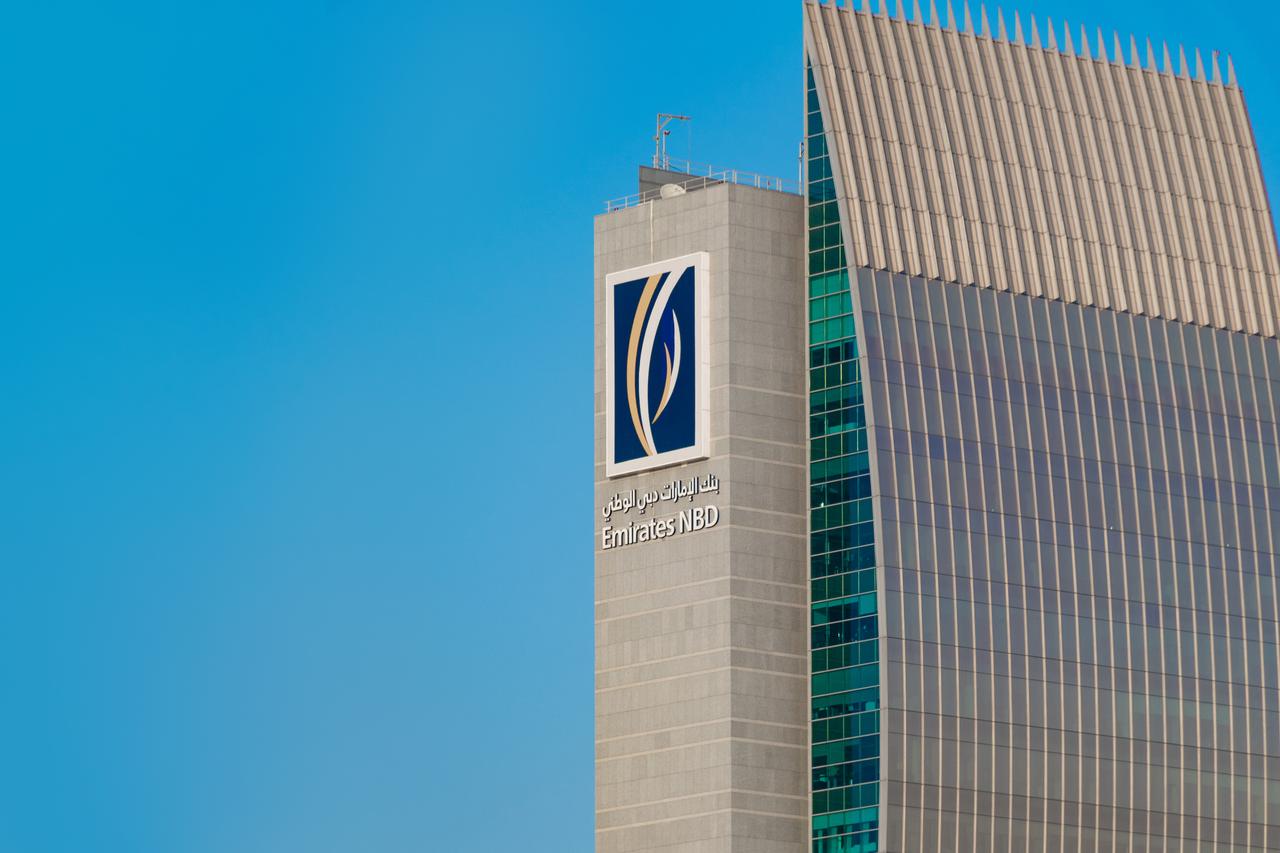
Dubai-based Emirates NBD has executed a finance-lease facility supporting the acquisition of two Airbus A321neo aircraft for India’s largest carrier IndiGo, marking the lender’s entry into aviation asset financing and underlining its commitment to the aviation sector. The transaction adds to IndiGo’s sizable fleet growth ambitions and aligns with the UAE bank’s strategy to deepen its aviation-finance capabilities.

Under the deal, Emirates NBD will supply the structured leasing facility enabling IndiGo to secure two A321neo jets, which the airline intends to deploy as it strengthens its domestic network and expands international reach. The airline currently holds an order-book of nearly 900 aircraft across the A320neo, A321neo and A321XLR families.

IndiGo’s Chief Aircraft Acquisition and Financing Officer Riyaz Peermohamed commented: “We are pleased to partner with Emirates NBD on this financing transaction and look forward to building on the success of this transaction and further strengthen our relationship in the future.” Emirates NBD’s Group Head of Wholesale Banking Ahmed Al Qassim said that the deal “demonstrates our ability to provide bespoke financing structures to support the aviation industry’s growth”, and confirmed this marks the bank’s first aircraft finance lease.

The transaction comes amid a broader context of rapid fleet expansion in India’s aviation market. Airbus has indicated that IndiGo and another Indian carrier together are due to receive some 1,260 aircraft, of which around 916 are earmarked for IndiGo alone, making it one of the largest airline backlog commitments globally. On the wide-body front, IndiGo recently converted 30 of its purchase rights into firm orders for 30 additional Airbus A350‑900 aircraft, raising its wide-body order to 60 units and signalling its desire to build a global network reach beyond its low-cost domestic model.

From the lender’s perspective, Emirates NBD is positioning itself as an aviation-finance partner of choice in the Middle East and internationally. The bank’s move into aircraft leasing coincides with a rising investor and lender interest in aviation assets, as carriers renew fleets to improve fuel efficiency and meet higher demand. For IndiGo, this lease transaction adds financing flexibility, diversifies its funding sources and supports the airline’s aircraft-asset strategy at a time when supply-chain headwinds and delivery schedules remain tight in the global aerospace market.

By Nantoo Banerjee If global oil giant BP plc’s ‘Energy Outlook 2025’ proves to be true, India will be a global leader in energy consumption, outpacing all other countries by 2050. The country will account for 12 percent of the global demand, up from seven percent from 2023, according to BP’s chief economist Spencer Dale. […]

The article India Is At The Heart Of Driving The Global Energy Process appeared first on Latest India news, analysis and reports on Newspack by India Press Agency).

India is positioning itself as a global food supplier using Dubai as the logistical gateway, according to statements made by Chief Minister N. Chandrababu Naidu of Andhra Pradesh during his visit to the UAE. He declared that India’s strengths in agriculture, horticulture, aquaculture and logistics will enable the country to serve “the global community” through Dubai’s market access.

Naidu spoke of the UAE city’s strategic connectivity and global reach as ideal for scaling Indian-food exports. He noted that the Andhra Pradesh government is aiming to reduce logistics costs by integrating inland waterways, railways, road and seaports, and by spending around 14 per cent of the state’s GDP on logistics infrastructure as part of the drive to increase efficiency. His role as chief minister of Andhra Pradesh places him at the centre of an ambitious push to offer the state as a manufacturing and supply-chain hub with Indian agriculture at its core.

The announcement comes amid a broader investment road-show in which Naidu met with senior policymakers and business leaders in the UAE to discuss partnerships across multiple sectors, including food processing, green energy, AI and infrastructure. During a dialogue in Dubai the chief minister stated that India will supply food to the global community through Dubai as a hub, adding that he met ministers, family-business leaders and airlines executives during the visit. He praised the Indian diaspora for their contributions and flagged the state’s goal of making the new capital Amaravati a “green and blue city” built around water, greenery and advanced infrastructure.

Andhra Pradesh’s food-processing ambitions are a central plank of the strategy. The state government has invited investment from UAE food-conglomerates to scale cocoa cultivation, chocolate manufacturing, aquaculture and related logistics. The Chinese food-industry trend of “value-added exports” is echoed by India’s attempt to move beyond raw agricultural exports towards packaged, processed and high-logistics-integrated supply chains.

From a trade perspective, positioning Dubai as a re-export hub can offer Indian producers quicker access to Middle East, African and European markets. Dubai’s status as a global logistics and trading hub gives India the opportunity to piggy-back on existing infrastructure and reach. It also offers investors assurances of regulatory, financial and physical connectivity.

However, a number of challenges stand in the way. India already faces structural issues in agriculture: fragmented landholdings, variable productivity, post-harvest losses, and high domestic logistics costs. While Naidu cites a logistics cost of about 14 per cent of GDP for Andhra Pradesh, the national average remains higher and such a figure implies major optimisation ahead. The use of Dubai as a hub also raises questions of tariff regimes, transit duties, warehousing handling cost and competition from other international producers using the Gulf as re-export platforms.

Critics also point to the risk of over-promising on export capacity. India’s agriculture export ratio remains modest relative to the size of its production, and moving up the value chain into globally competitive processed foods will require investment in cold-chain infrastructure, quality standards and market-specific certifications. The reliance on a single state’s announcement may also raise concerns about federal coordination and falling short of expectations if broader national agricultural reforms lag.

   By K Raveendran   The market seems to have already done its arithmetic on the new US sanctions on two major Russian oil companies, Rosneft PJSC and Lukoil, gauging the immediate and medium-term consequences for energy supply lines stretching from Moscow to Mumbai. In a matter of hours, crude prices spiked, reflecting not just […]

The article Latest Trump Sanction On Russian Oil Companies Gives Escape Route To India appeared first on Latest India news, analysis and reports on Newspack by India Press Agency).

Mumbai-based crypto exchange WazirX has enabled both Indian-rupee and cryptocurrency deposits as it moves toward resuming full trading and withdrawal services, signalling a critical recovery phase after its high-profile $230-million hack. The platform will initiate trading on 24 October 2025, launching with zero trading fees across all pairs for at least 30 days, and is rolling out withdrawals gradually.

WazirX’s comeback is anchored on a restructuring plan approved by the Singapore High Court for its parent company Zanmai Labs Private Limited, which had been navigating creditor claims and asset recovery since the breach. The company has partnered with US-based custodian BitGo to manage digital-asset wallets and bolster security with insured, institutional-grade custody solutions.

Operating under a phased restart, WazirX will first enable crypto-to-crypto markets and the USDT/INR pair from 24 October, with other INR pairs added later. Deposits are active now; withdrawals will follow in stages. Users who opted in to the restructuring will receive so-called “Recovery Tokens” within ten business days, representing claims on illiquid or frozen assets.

This relaunch occurs after the July 2024 hack — attributed to the Lazarus Group by multiple governments — in which WazirX exposed vulnerabilities that resulted in loss of approximately $234 million in digital assets and triggered a suspension of trading, withdrawals and deposits. The setback had eroded trust among India’s crypto retail community and drawn regulatory scrutiny.

WazirX co-founder and CEO Nischal Shetty acknowledged the challenge of restoring confidence, stating on social media: “Our focus is only YOU — we are committed to a secure and transparent restart.” Still, some users have raised concerns over discrepancies in post-rebalancing balances, alleging that their credited holdings were lower than earlier display values. WazirX has pledged to release a detailed audit and reconcile any shortfalls.

Industry analysts view WazirX’s relaunch as a litmus test for Indian crypto exchanges, which have faced security, regulatory and trust-deficit issues. While the zero-fee offer may stimulate trading volume and liquidity, questions remain over how effectively WazirX can demonstrate enhanced operational resilience and compliance oversight. Further complicating matters is India’s evolving regulatory landscape: a proposed crypto-assets bill is under discussion, and exchange-licensing frameworks remain undefined.

For traders, the phased rollout presents both opportunity and risk. Market-makers caution that liquidity may be thin in the initial days, potentially creating wider spreads or slippage. WazirX’s blog announcement advises users to monitor token availability, confirm order execution conditions and treat first-day price action with caution. With a delisting of some tokens and swaps or mergers during the downtime, certainty over token status is also being tested.

India’s online retail sector is showing signs of stabilising momentum outside of its traditional festival peaks, as consumer habits increasingly shift toward year-round purchasing patterns. According to a report by consulting firm Redseer, while the September-October period continues to see elevated demand—driven principally by mobiles and electronics—overall online shopping volumes are less reliant on a single event window than in previous years.

The study noted that during the opening two days of the 2025 festive sales period, gross merchandise value for online platforms rose 23 to 25 per cent year-on-year; this uptick marked a four-to-five-fold improvement relative to the equivalent stage of last year. The growth was particularly strong for premium smartphones and large-screen televisions.

Analysts say this shift reflects structural changes in India’s commerce ecosystem. According to a separate 2025 report by Bain and partners, India’s e-retail market hit roughly US$ 60 billion in 2024, despite growth rates moderating to around 10-12 per cent from earlier double-digit levels, due to inflation and slower wage growth. Long-term projections remain optimistic, with the market expected to grow at over 18 per cent annually and reach US$ 170-190 billion by 2030.

Several key drivers underpin the movement toward more stable demand. First, a broader geographic spread: Tier-2 and Tier-3 cities are playing an increasing role in online retail, with the Internet and smartphone penetration expanding rapidly beyond metro areas. According to the India Brand Equity Foundation, Tier-3 cities posted 21 per cent year-on-year growth during summer sales in 2025 and accounted for 38 per cent of order volumes.

Second, tax policy reforms have had an impact. In September 2025, the government implemented new Goods and Services Tax rate cuts affecting electronics, furniture and mid-priced apparel. For instance, GST on large-screen TVs fell from 28 per cent to 18 per cent, producing a 6-8 per cent drop in retail price in those segments according to reporting by the Economic Times. These changes helped elevate consumption in discretionary categories and show how policy can shift timing and category mix of online purchases.

Third, the rise of quick-commerce and digital payment adoption is changing how and when people shop. Q-commerce platforms delivering in under 30 minutes have been growing rapidly: one market report forecasts the segment will hit US$ 1.6 billion in 2025 and account for 12 per cent of online sales. These platforms are increasingly used for impulse or gifting purchases rather than just replenishment.

Yet, the data also show nuance and caveats. Even as online retail becomes less festival-driven, mobiles and electronics continue to dominate during the peak windows. The Redseer survey found that the surge in early festival days was led by premium smartphones and TVs—users that were already loyalty-members or heavy-buyers. This suggests the shift to steady year-round demand is underway, but not yet universal across all product categories. Beauty, apparel, and general merchandise are still heavily influenced by the time around festivals.

Brands and retailers are responding by adjusting their strategies. Many are investing more in digital-first discovery, including influencer content and short-form video, recognising that consumers are engaging earlier and across multiple touchpoints. For example, analysis by HT Media found that in the 2025 festival season shoppers were starting purchases up to six weeks ahead, and were blending online research with offline store conversions, especially for high-value items.

Oil prices shot up by around 3% Thursday, driven by fresh US sanctions on Russia’s top oil producers and signs that major buyers are rethinking their purchases. Brent crude futures rose to approximately $64.53 per barrel, while US West Texas Intermediate climbed to about $60.39.

The sanctions, targeting Rosneft and Lukoil, mark a marked escalation by the US in response to Russia’s war-time exports. The measures were accompanied by a US warning that further action could follow unless Moscow commits to a cease-fire.

A key knock-on effect: Indian refiners, including state-owned entities, have begun reviewing trade documents to ensure they are not sourcing crude directly from the sanctioned suppliers. With India having become one of the largest importers of discounted Russian oil following Western withdrawals, the scale of this review is significant.

The sanctions underscore a new risk premium in the oil market. Unlike previous rounds of sanctions—which largely constrained financing, insurance and shipping without substantially affecting physical oil flows—this move seeks to directly curtail output from Russia’s two largest producers. Rosneft and Lukoil collectively account for a large share of Russian crude exports and fuel the Kremlin’s budget.

Analysts caution, however, that while the immediate reaction has been sharp, structural supply disruption is not guaranteed. Russia retains significant production capacity and a sophisticated network of intermediaries and a “shadow fleet” of tankers that have helped maintain exports despite earlier sanctions. Nevertheless, the combination of curtailed Russian supply and potential reductions in purchases by major refiners sets the scene for tighter market conditions.

In India, refiners such as Indian Oil Corporation, Bharat Petroleum Corporation and Hindustan Petroleum Corporation are scrutinising bills of lading and cargo origins to ensure compliance. India imported roughly 1.7 million barrels per day of Russian crude in the first nine months of the year, predominantly via intermediaries rather than directly from Rosneft or Lukoil. The new sanctions give insurers, banks and traders until 21 November to wind down transactions involving the sanctioned firms.

The US move also dovetails with other sanctions developments: the EU approved a 19th package targeting Russia’s energy exports, including a ban on Russian liquefied natural gas imports and restrictions on shadow-fleet tankers. The combined effect is to intensify pressure on Russia’s energy supply chains.

From a market-demand vantage point, the worry is whether alternative sources can swiftly fill any gap. OPEC+ producers have some spare capacity but not enough to instantly offset a major Russian shortfall. Meanwhile, the US inventory situation added fuel to the rally: US crude stockpiles declined unexpectedly, reinforcing supply-tightness perceptions.

Energy-market specialists say the key factors to watch include India’s crude-import strategy, China’s stock-building trends and how aggressive Russia’s response will be—whether via production cuts or leveraging its ties with China and others. One observer noted the sanctions could be “a knee-jerk reaction” rather than a structural pivot, given Russia’s past ability to maintain volumes despite sanctions.

Purchasers of Russian crude face a growing compliance burden. Firms must navigate insurance exclusions, shifting shipping patterns and potential secondary sanctions from the US. Some refiners may opt to ramp up purchases from the US Gulf and other non-Russian sources, which could reorient trade flows and raise Atlantic-coast pricing.

  K Raveendran   The very idea of a Lokpal riding in a BMW, reeks of irony so strong that it almost feels like satire. The institution that stands as the sentinel of public probity, the watchdog against corruption, has managed to draw ridicule upon itself by its desire for luxury wheels. A BMW-driven Lokpal […]

The article Lokpal’s BMW Fixation Is Outright Corruption, If Not Vulgar appeared first on Latest India news, analysis and reports on Newspack by India Press Agency).

By Nantoo Banerjee     There is nothing to be particularly shocked about Tata Capital stocks declining 2.4 percent below the company’s IPO issue price of Rs. 326 per share a day after its debut in intraday trade on the Bombay Stock Exchange. Tata Capital, a Tata Sons subsidiary, made a flat debut on Dalal Street on […]

The article SEBI Fails To Prevent Aggressive IPO Pricing To Protect Investors appeared first on Latest India news, analysis and reports on Newspack by India Press Agency).

Dubai-based Emirates NBD PJSC is poised to acquire a 60 per cent stake in India’s RBL Bank via a $3 billion investment, marking the largest foreign direct investment ever recorded in India’s banking sector. The move, announced on 18 October 2025, is structured through a preferential share issuance of up to 959.04 million shares at ₹280 each and is subject to regulatory approvals.

RBL Bank’s management expects the deal to close within five to eight months, positioning the infusion within the current financial year, according to statements made by the lender’s leadership. Emirates NBD will assume promoter status at RBL, gaining board-nomination rights and solidifying its long-term presence in the Indian market.

The deal comes as India’s financial sector registers a surge in cross-border deals, with total deal-value reaching approximately $8 billion from January to September 2025—a 127 per cent increase over the same period last year. For its part, RBL Bank, a private lender headquartered in Mumbai with assets estimated at ₹1.46 trillion and a customer base of over 15 million, will benefit from the capital uplift and expanded ecosystem access.

Emirates NBD’s group chief executive, Shayne Nelson, said the investment underscores the bank’s confidence in India’s financial services growth trajectory and reflects its ambition to leverage RBL’s domestic franchise alongside Emirates NBD’s regional reach. RBL’s managing director & CEO, R Subramaniakumar, described the alliance as providing “an enormous opportunity” to move from mid-sized to large-bank status in India, reinforcing its ambitions to enter wealth management and strengthen corporate and retail lending.

Under the terms of the agreement, Emirates NBD will first subscribe to a preferential issue up to 60 per cent of RBL Bank, and then launch a mandatory open offer to public shareholders of up to 26 per cent at the same ₹280 per share price. The final stake will depend on maximum permissible foreign-investment limits and minimum public shareholding norms. The Indian regulatory framework allows up to 74 per cent foreign investment in private banks, but typically limits individual foreign investors to a maximum of 15 per cent unless an exemption is granted by the Reserve Bank of India, which is reported to have given informal backing to the deal.

Analysts say the deal is transformative for both parties: RBL stands to enhance its capital adequacy ratio—projected around 40 per cent post-transaction—and may scale up its corporate banking, digital payments and branch network expansion, tapping into ties between India and the Middle East. For Emirates NBD, the acquisition consolidates its Indian market access and complements its existing footprint in the Middle East, North Africa and Turkey.

Challenges remain. The transaction is subject to regulatory approvals in India and requires compliance with public-shareholding rules, which could complicate the open-offer structure. In addition, RBL has grappled with governance concerns in the past—its former CEO stepped down abruptly in 2021 following regulatory scrutiny—which means integrating under a foreign majority owner will require careful management of culture, controls and strategic alignment.

Observers suggest the deal may set a precedent for greater foreign involvement in India’s mid-sized banking sector, with implications for capital flows, market consolidation and competition. Brokers in Mumbai noted that the infusion of “confidence capital” into RBL could unlock higher credit growth and improve investor perception of the Indian private-banking sector. Meanwhile, the broader wave of cross-border activity, including Japanese and UAE groups entering Indian banks, highlights the shifting dynamics of the India-Middle East-Europe economic corridor.

Merchandise exports rose to USD 220.12 billion in the six-month period ending September, an uptick of 3.02 per cent compared with the equivalent span of the prior year, while imports climbed by 4.53 per cent to USD 375.11 billion, resulting in a trade deficit of USD 154.99 billion.

A key facet of this performance is that exports to 24 nations recorded growth, underscoring a push by Indian exporters to diversify markets beyond traditional strongholds. These countries span regions from the Middle East and Southeast Asia to Africa and Latin America, and collectively accounted for USD 129.3 billion, or 59 per cent of the country’s total exports in the period.

Despite this diversification, exports to the United States — one of the largest destination markets — slipped in September as tariffs imposed by Washington weighed on certain sectors. For the month, shipments to the US declined by 11.93 per cent to USD 5.46 billion.

Those opposing movements such as exporters point to the 50 per cent tariff introduced by the US on Indian goods from late August. The exports community says that while growth is evident in alternative geographies including Africa, Latin America and the Middle East, the US tariff climate remains a drag.

Within the group of 24 countries that posted export growth are the UAE, Germany, Vietnam, Mexico, Russia, Kenya, Nigeria, Canada, Poland, Sri Lanka, Oman, Thailand, Bangladesh, Brazil, Belgium, Italy and Tanzania, among others.

At the same time, exports to 16 other countries recorded negative growth, representing roughly USD 60.3 billion or about 27 per cent of total exports in the period. This reveals that while diversification is under way, certain destination markets continue to deliver weak outcomes.

Industry observers suggest that the strategic reorientation of markets has been accelerated by external pressures such as protectionist measures in key markets and supply-chain disruptions across sectors. One exporter noted: “The trend will continue in the coming months as well.”

Meanwhile, the Government of India is engaging on multiple fronts to sustain export momentum. Officials from the commerce ministry signalled that structural steps will be needed to strengthen manufacturing competitiveness and integrate India more deeply into global value chains. They pointed to raw‐material bottlenecks and high logistics costs among the constraints.

In parallel, trade discussions with the US are underway, aimed at reducing friction caused by duties and exploring possibilities for energy-and-goods cooperation. For instance, US officials have raised concerns over Indian imports of Russian oil and bilateral trade.

Another trend shaping export performance is the push into manufacturing sectors aligned with global demand shifts. The electronics and mobile-phone export segment, for example, has delivered strong growth: exports in certain months surged by as much as 39-60 per cent in year-on-year terms, signalling India’s growing role as a manufacturing hub for global brands.

On the import side, the widening of the trade deficit is partly explained by rising inbound shipments of gold, silver and crude oil, ahead of domestic demand spikes and festival season pickup. These pressure points reflect larger global cost dynamics rather than domestic export weakness per se.

Export diversification is also being viewed as a risk-mitigation strategy. The weakening of certain traditional markets combined with tariff exposure in the US has underscored the importance of broadening the destination base. Africa, Latin America and Southeast Asia are emerging as focal regions.

Manufacturers and trade bodies emphasise that sustaining this diversification will require improving logistics efficiency, deepening downstream processing, upgrading product quality and securing better access via trade agreements and export-promotion schemes.

For exporters that achieved growth in the 24-country set, end-markets include consumer goods, engineering exports, pharmaceuticals, agro-products and electronics. Their performance demonstrates the incremental success of strategic investment and policy alignment.

Still, the fact that over a quarter of export value was derived from countries with declining shipments signals a dual challenge. Growth pockets exist, but structural weaknesses and external dependencies remain persistent obstacles.


By K Raveendran     When Google announced that Visakhapatnam would be home to its $15 billion project to build the company’s first artificial intelligence hub in India, the news landed like a thunderclap across the southern states. For Andhra Pradesh, it was nothing short of a jackpot — a once-in-a-generation opportunity to rewrite the […]

The article Google’s AI Hub: Visakhapatnam’s Jackpot, South India’s Heartburn appeared first on Latest India news, analysis and reports on Newspack by India Press Agency).

VISHNU RAJA
RYO YAMADA
HITORI GOTOH
IKUYO KITA
Just in:
North Korean hackers channel Binance funds through fake tokens // EU challenges TikTok video rankings over harmful content loops // California electorate defeats proposed levy on billionaire wealth // Google patches actively exploited Chrome XML security flaw // Trump directs Justice Department scrutiny of Democratic threats // Setback for Usha in Olympic body // Lee Kum Kee Sauce-Sponsored 2026/27 Hong Kong Windsurfing Circuit – iQFOiL Championships Conclude Successfully // Republicans Struggling To Come Out Of Nov 3 Debacle To Prepare For 2028 Prez Polls // BJP leader condemns cyber attacks over Mammootty wedding visit // Abu Dhabi court holds NMC executives liable for fraud // LNG tanker exits through Hormuz reach wartime peak // AI stock rout erodes sovereign and pension holdings // PhotonPay Strengthens North American Regulatory Footprint with Canada’s RPAA Registration // Jailbroken AI agent targets European telecom infrastructure // Vasavan alleges one-man show by CM Satheesan // Public Protests Challenge Elected Power In Europe And India // NIA Highlights Three Exemplary Breakthroughs from National Innovation Awards, Driving Thailand Toward a Global ‘Innovation Nation’ // From Seoul to Wuzhen: Korean Celebrities and Creators Spark a Water Town Slow-Living Trend // Recognition under the U.S. Green Building Council’s rating system confirms the 22-residence tower is on track for full certification on completion // Sber announces results of GigaArt AI-art festival: Nearly half a million images //