The Crime Branch has widened its investigation into Public Service Commission recruitment, identifying suspected irregularities in three more selection processes and preparing to name commission officials among the accused. The Special Investigation Team, headed by Inspector General S Ajeetha Begum, has examined recru…
Former Governor Rajendra Vishwanath Arlekar has recommended that President Droupadi Murmu remove Public Service Commission chairman M R Baiju and other commission members over alleged recruitment irregularities, according to Lok Bhavan officials. The recommendation emerged on Sunday, two days after Arlekar relinquishe…
Thailand has attracted 35 advanced materials investment proposals worth approximately $690 million as demand for artificial intelligence hardware, electric vehicles and clean-energy equipment encourages manufacturers to expand local production.
The Thailand Board of Investment (BOI) said on Saturday that applications submitted between 2023 and the first half of 2026 totalled 23.5 billion baht. The proposed projects cover specialised components and industrial materials used in electronics, batteries, electric motors and hydrogen technologies.
The figures represent investment applications rather than completed expenditure. The agency did not provide a breakdown of project approvals, construction schedules or the amount already invested, leaving the pace at which the proposed capacity will become operational unclear.
Narit Therdsteerasukdi, secretary-general of the BOI, said domestic production of sophisticated materials could reduce dependence on imports and allow Thai suppliers to participate in higher-value international manufacturing networks. The agency wants to develop industries supplying essential inputs rather than relying principally on assembly operations.
The applications include multilayer ceramic capacitors, graphite films used for heat management, engineered ceramics, neodymium magnets, materials for batteries and fuel cells, and specialised glass and quartz fabrics used in printed circuit boards. Nanomaterials for precision manufacturing are also represented.
Such products are important to increasingly powerful computing equipment. Multilayer ceramic capacitors help regulate electrical power in electronic circuits, while graphite films dissipate heat generated by densely packed components. The BOI said a high-end AI server can contain as many as 30,000 ceramic capacitors, illustrating the scale of demand associated with advanced computing infrastructure.
Among the companies identified by the agency, Taiwan’s Fultech Fiber Glass produces glass fabrics for circuit boards, including higher-performance varieties suitable for AI servers. Jones Tech manufactures synthetic and natural graphite films designed to transfer heat away from electronic devices.
Other projects target electric transport and energy storage. BGN Thai produces coated foils for lithium-ion batteries, while Phinis Well manufactures neodymium magnets used in electric motors. Xinyuan Graphite supplies bipolar plates for hydrogen fuel cells, extending the range of technologies covered by the investment pipeline.
CoorsTek Advanced Materials, part of the US-based ceramics group CoorsTek, has invested in engineered ceramics used in automotive pressure sensors and silicon nitride balls for hybrid bearings. Those bearings have applications in electric vehicles and wind turbines. Golden Egret Cemented Carbide produces tungsten carbide powders for precision cutting tools.
Thailand already hosts established electronic component manufacturers, including Japan’s Murata Electronics and Kyocera AVX Components. The BOI cited these operations as part of the industrial base supporting the proposed expansion into more specialised upstream production.
The announcement follows broader growth in investment applications for technology-intensive industries. BOI figures released for the first half of 2026 showed total applications rising 37 per cent from a year earlier to approximately 1.47 trillion baht across 1,299 projects. Digital infrastructure, including data centres, accounted for a substantial share of the total.
Those economy-wide figures are separate from the 23.5 billion baht advanced materials pipeline, which covers applications accumulated over a longer period. Comparing the two as if they represented the same reporting window would overstate the scale of the materials industry’s immediate expansion.
The government’s electronics strategy has also focused on printed circuit boards, a manufacturing segment closely linked to AI servers and communications equipment. Authorities announced approvals for further expansion by three circuit-board manufacturers involving more than $668 million in investment, with over 5,000 additional jobs expected from those projects.
Electric vehicle manufacturing provides another source of potential demand. BOI data published in September placed cumulative approved investment across Thailand’s electric vehicle supply chain at approximately $4.59 billion through August, covering vehicle assembly, batteries and key components. That total concerns a different investment category and should not be added to the newly disclosed applications without checking for overlap.
Narit said the agency would continue supporting research, technology development and workforce training alongside investment promotion. Its stated objective is to increase the share of advanced materials and components manufactured domestically for regional and international customers.
The investment drive also reflects Thailand’s efforts to attract suppliers serving multiple industries, rather than individual product categories. Manufacturers of specialised materials can potentially supply electronics, automotive and renewable-energy customers through overlapping production capabilities and established distribution networks.
The BOI calculated the dollar equivalent of the latest proposals using an exchange rate of approximately 33.76 baht to the US dollar. The agency, established in 1966, administers investment promotion for both domestic and foreign businesses.
BANGKOK, THAILAND – Media OutReach Newswire – 24 October 2026 – Makers of the capacitors, magnets and battery materials inside AI servers and electric vehicles (EVs) are lining up to invest in Thailand. Since 2023, they have filed 35 advanced materials projects worth about $690 million (23.5 billion baht) with the Thailand Board of Investment (BOI), the government’s investment promotion agency. Surging demand for AI, EVs, and clean energy is pushing global suppliers to build upstream capacity in the country.
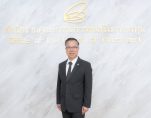
Mr. Narit Therdsteerasukdi, Secretary General of the Thailand Board of Investment (BOI)
The projects, filed through the first half of 2026, cover multilayer ceramic capacitors (MLCCs), thermal graphite films, high-performance ceramics, battery and fuel-cell materials, neodymium magnets, glass and quartz fabrics for printed circuit boards, and nanomaterials for precision manufacturing. Together they mark a shift for one of Southeast Asia’s largest economies from downstream assembly toward the high-value materials on which future industries are built.
In AI computing and clean energy, lighter, more heat-resistant and more conductive materials determine how well devices perform. MLCCs are essential components in products from smartphones to AI servers, and a single high-end server can use up to 30,000 of them.
“The world is moving toward products that are smaller and lighter, yet stronger and more efficient,” said Mr. Narit Therdsteerasukdi, Secretary General of the Thailand Board of Investment. “Producing advanced materials in Thailand is key to building sustainable industrial capacity, reducing reliance on imports, and opening the door for Thai companies to join higher-value supply chains.”
Thailand is already a production base for leading component makers, including Japan’s Murata Electronics, which holds more than 35 percent of the global MLCC market, and Kyocera AVX Components, the world’s top tantalum capacitor maker. Among the new projects, Taiwan’s Fultech Fiber Glass makes glass fabric for printed circuit boards, including high-performance grades for AI servers. Jones Tech produces synthetic and natural graphite films that carry heat away from electronic devices.
Beyond electronics, the projects strengthen supply chains for electric vehicles, batteries, and clean energy, from BGN Thai’s coated foils for lithium-ion batteries and Phinis Well’s neodymium magnets for EV motors to Xinyuan Graphite’s bipolar plates for hydrogen fuel cells.
CoorsTek Advanced Materials, a subsidiary of US-based CoorsTek — a global leader in engineered ceramics for the semiconductor and aerospace industries — has invested in producing ceramics for automotive pressure sensors and silicon nitride balls for hybrid bearings in EVs and wind turbines. Golden Egret Cemented Carbide is making tungsten carbide powders for precision cutting tools, reinforcing Thailand’s base for high-precision manufacturing.
“The advanced materials industry taking root in Thailand today is the foundation of tomorrow’s supply chains in electronics, EVs, batteries, and clean energy,” Mr. Narit said. “The BOI will keep building this investment base, strengthening upstream materials and components, and supporting R&D, technology, and workforce development, to move Thailand from downstream to upstream production and make it the region’s advanced materials hub.”
Note: USD conversions are based on the Bank of Thailand’s average selling rate of approximately 33.76 baht per USD.
The issuer is solely responsible for the content of this announcement.
Thailand Board of Investment (BOI)
Established in 1966, the Thailand Board of Investment (BOI) has spent six decades promoting high-value investment from both foreign and Thai investors, strengthening the country’s competitiveness and driving its transition toward a sustainable, balanced new economy.
Investment Services Center — PR Section, Office of the Board of Investment (BOI)
Arabian Post Staff -Dubai Emaar Hospitality Group has confirmed the opening of Emaar South Golf Club in Dubai South, adding an 18-hole championship course to its leisure portfolio and expanding golfing facilities near Al Maktoum International Airport. The club welcomed its first players on 5 October and becomes the group’s fourth golf club. Designed by European Golf Design, the course measures 7,278 yards from the black tees, […]
Chinese President Xi Jinping has ordered an all-out search for survivors and urgent treatment for the injured after a powerful earthquake struck Tibet, killing at least 16 people and leaving dozens injured. The magnitude 7.0 earthquake hit Baqen County in Nagqu, in the Xizang Autonomous Region, at 10.33pm on Thursday. Local authorities said on Friday that the number of injured had risen to 65, while the confirmed […]
The state government has removed senior IAS officer T. V. Anupama from the post of Transport Secretary following complaints by an association of Motor Vehicles Department officials against her administrative decisions and alleged treatment of employees. Anupama has been transferred as Secretary of the Local Self Gover…
Kerala government has removed senior IAS officer T. V. Anupama from the post of Transport Secretary following complaints by an association of Motor Vehicles Department officials against her administrative decisions and alleged treatment of employees. Anupama has been transferred as Secretary of the Local Self Governme…
By Nitya Chakraborty U.S. Secretary of state Marco Rubio’s visit to India this week and talks with the Indian corporate leaders including Mukesh Ambani and Gautam Adani have roused unusual interest in the country’s business circles as also among diplomats globally. There are two aspects. First, Rubio gave priority to his visit to Jamnagar and […]
Ras Al Khaimah’s Ruler, Sheikh Saud bin Saqr Al Qasimi, has inaugurated the emirate’s first business consultancy in China, establishing a permanent commercial presence in Guangzhou, the capital of Guangdong province.
The opening on Wednesday marks a further step in the emirate’s efforts to develop trade and investment links with southern China. The office is intended to connect companies in Guangdong with opportunities in Ras Al Khaimah and provide a continuing point of contact for prospective business partners.
Sheikh Saud, a member of the UAE Supreme Council, inaugurated the facility during a working visit to China scheduled to continue until Friday. The programme includes discussions with provincial officials, meetings with corporate executives and engagements in Guangdong and Fujian.
The consultancy follows a cooperation agreement signed by Ras Al Khaimah and Guangdong in November 2024. That agreement identified the digital economy, technological innovation, advanced manufacturing, smart cities, culture and tourism as areas for collaboration.
The new Guangzhou presence gives the emirate a local platform through which to pursue those priorities beyond individual official visits and business delegations. Its establishment also provides Chinese enterprises with a designated channel for exploring commercial relationships with Ras Al Khaimah.
The opening comes as the emirate seeks to translate institutional agreements into direct contacts between companies and public agencies. Guangdong is a particularly significant partner because of its concentration of manufacturing, technology and export-oriented businesses.
The Ruler’s China itinerary began with his arrival in Shenzhen on October 17, accompanied by senior officials and representatives of Ras Al Khaimah government entities. UAE Ambassador to China Hussain bin Ibrahim Al Hammadi and UAE Consul General in Guangzhou Maryam Al Shamsi were among those who welcomed him.
A principal engagement of the visit was the Ras Al Khaimah–China Business Summit in Shenzhen, where the emirate presented investment opportunities to Chinese business leaders. The meetings form part of a broader effort to identify potential partners and encourage companies to examine the emirate as a base for operations and investment.
Officials have indicated that more than 400 Chinese companies operate in Ras Al Khaimah. The existing corporate presence offers a foundation for further commercial engagement, although the opening of the consultancy does not itself establish new investment commitments or completed transactions.
The emirate’s economic outreach also involves Ras Al Khaimah Economic Zone, which has previously organised business missions to China and pursued cooperation with Chinese enterprises. The economic zone has promoted opportunities for manufacturing and industrial projects, alongside other commercial activities.
During the current visit, Sheikh Saud has also met representatives of Chinese technology businesses. A visit to Guangzhou included an engagement with ARIDGE, a company developing advanced air mobility vehicles, as cooperation on emerging transport technology attracted attention from both sides.
The company presented an aircraft intended for testing within the UAE’s advanced air mobility regulatory environment. Its founder, Zhao Deli, described plans to begin with demonstrations and certification before pursuing potential commercial applications, including emergency services and tourism. Those plans remain subject to testing and regulatory requirements.
The wider commercial initiative is being pursued alongside government-to-government engagement. The distinction matters because cooperation agreements can establish areas of common interest without specifying individual projects, financing or delivery schedules. The consultancy is therefore expected to act as a practical point of contact rather than a substitute for negotiations between investors, regulators and commercial partners. Details of its staffing, operating budget and arrangements for assisting individual businesses have not been publicly specified.
The Guangzhou opening builds on contacts developed during Sheikh Saud’s two visits to China in 2024. The November agreement with Guangdong has subsequently been followed by cooperation involving institutions in education, transport, research, culture and archaeology.
Entities identified in that cooperation include the Ras Al Khaimah Transport Authority, the Sheikh Saud bin Saqr Al Qasimi Foundation for Policy Research, RAK Medical and Health Sciences University and the emirate’s Department of Antiquities and Museums.
Guangdong’s industrial base encompasses electronics, vehicles, pharmaceuticals and other manufacturing activities. Its size and commercial networks make it an important destination for international investment promotion, although specific outcomes from the new consultancy will depend on subsequent business engagement.
Sheikh Saud is also scheduled to visit Fuzhou, the capital of Fujian province, where an agreement establishing friendly relations between Ras Al Khaimah and Fujian is planned. The visit is due to conclude on October 23.
Arabian Post Staff -Dubai BlackRock has launched a robotics-focused exchange-traded fund, widening its artificial intelligence investment range as investors become more selective about exposure to the technology. The iShares Future Robotics and Related Technologies Active ETF began trading on NYSE Arca on Wednesday, 21 October, under the ticker RBTX. The fund seeks investments across businesses developing, supplying and deploying intelligent machines that automate physical tasks, including operations […]
A US food importer has challenged President Donald Trump’s 50 per cent tariffs on Canadian goods in the United States Court of International Trade, arguing that the administration exceeded its legal authority. Gellert Global Group filed the lawsuit on Tuesday, October 20, with representation from the Liberty Justice Center. The New York-based court has been asked to halt collection of the duties, declare them unlawful and order […]
An attack on King Fahd International Airport in Dammam killed one person and injured eight others, Saudi Arabia’s civil aviation regulator confirmed on Thursday, as Washington ordered non-essential diplomatic personnel and their families to leave the kingdom. The General Authority of Civil Aviation said the airport was targeted on Wednesday evening, October 21. The person killed was a resident of Saudi Arabia, while the eight injured people […]
Arabian Post Staff -Dubai A unit of Abu Dhabi Investment Authority has secured shares in Paras Healthcare’s Rs 14.5 billion initial public offering, placing the emirate’s sovereign wealth capital among the hospital operator’s institutional backers. The Gurugram-based company opened its public subscription on Wednesday, October 21, with bidding scheduled to close on Friday. Its anchor placement, completed on October 19, raised Rs 6.525 billion from domestic and […]
KUALA LUMPUR, MALAYSIA – Media OutReach Newswire – 21 October 2026 – At thefinals of the “C-Wave Global Music Co-creation Plan ·Joy Resonance of Nanyang” held in Kuala Lumpur, Malaysia, Indonesian singer Kezia Kaithlyn won the grand prize with “Aku Masih Memikirkanmu,” an Indonesian-language adaptation of the Chinese song “Later I Met Him.” The single’s global streams have surpassed 2 billion. She hopes the adaptation will help Southeast Asian listeners understand the emotional core of Chinese-language music—a vivid embodiment of the global co-creation initiative.
Hosted by China’s Guangdong Radio and Television, the project is open worldwide with no restrictions on nationality or age, featuring three tracks: original creation, adaptation, and AI co-creation. Within just 30 days of launch, it received over 5,000 submissions from around the world, with musicians from more than half of APEC member economies participating.
The finals brought together 300 guests, with 68 local media outlets including Radio Televisyen Malaysia covering the event. A Malaysian member of parliament said music can dissolve differences and expressed hope the event becomes a regular fixture. A local tourism and culture official described the project as building a bridge for Asia-Pacific youth exchange under the framework of APEC’s China year. Scholars from multiple countries also recognized Chinese-language music’s value in connecting hearts across regions.
The program has generated an enthusiastic response. Experts on international affairs and China studies, the president of the UNESCO Culture Without Borders association, and Chinese-language schools worldwide have followed it closely. Overseas reach has totaled 300 million, with 137 domestic and international platforms simultaneously promoting it. The initiative helps ordinary amateurs reach the international stage, using music as a vehicle for civilizational dialogue and conveying an open and inclusive Chinese culture to the world.
The issuer is solely responsible for the content of this announcement.
MANILA, PHILIPPINES – Media OutReach Newswire – 20 October 2026 – VinFast VF 3, the best-selling electric mini-SUV of VinFast Philippines, has claimed the top spot in the local BEV segment after recording 2,906 units sold from January to August 2026 according to the CAMPI report.
The VinFast VF 3 is the Philippines’ best-selling BEV, underscoring its strong consumer appeal and helping accelerate the transition to greener mobility.
Dubbed as the “Tiny Titan,” the VF 3 asserted its popularity among first-time Filipino EV owners looking for compact and practical vehicles. Already gaining strong traction before recent oil price hikes, the VF 3 saw demand surge during the global energy uncertainty as volatile domestic fuel prices pushed Filipino motorists towards cost-efficient mobility options.
Beyond the impressive specifications of the VF 3, the model’s market dominance is credited to VinFast’s comprehensive Ownership System that helps address key barriers to EV adoption. The number one BEV brand’s first-of-its-kind initiatives such as the Battery Subscription Policy, which lowers upfront costs, and the Residual Value Guarantee Program, which protects long-term asset value, continue to appeal to Filipinos looking for practical mobility solutions. Coupled with its free charging program until March 31, 2029, the brand’s expanding charging networks in the country builds a strong total cost of ownership case for VF 3, attracting Filipinos to make the EV shift amidst fuel price volatility.
Mr. Antonio “Toti” Zara III, CEO of VinFast Philippines, said: “We are deeply grateful and incredibly proud of the warm reception that VF 3 received in the Philippines. Achieving the number one spot is a milestone that demonstrates Filipino drivers’ readiness to embrace electric mobility when backed by an ecosystem that supports their entire journey. The incredible reception of the VF 3 proves that eliminating traditional barriers through our comprehensive Ownership System makes going electric a seamless, practical choice. But the Tiny Titan leading the charts is only the beginning of our mission in the country, as we vow to continuously expand and evolve this ecosystem to ensure sustainable EV ownership remains accessible, effortless, and dependable for every Filipino motorist.”
The VF 3’s success in the Philippine market reflects consumer reception and the model’s suitability for local mobility needs. To continue meeting consumer needs and enhancing the ownership experience, VinFast is steadily expanding its vehicle lineup and further developing its comprehensive Ownership System – encompassing growing dealership networks across the Philippines, the Battery Subscription and the Residual Value Guarantee programs, the V-Green network, and dedicated aftersales support. VinFast continues to remove barriers to EV ownership and make electric driving a practical, seamless choice for Filipinos.
VinFast is expected to sustain this momentum by continuing to expand its charging network and dealership footprint across the country. To experience the country’s best-selling electric mini-SUV firsthand, customers are invited to book a test drive or visit any authorized VinFast dealership nationwide.
Hashtag: #VinFast
The issuer is solely responsible for the content of this announcement.
TONGXIANG, CHINA – Media OutReach Newswire – 20 October 2026 – The 2026 World Internet Conference Wuzhen Summit will open on Nov. 2, bringing technology leaders, researchers and companies to the historic water town as Tongxiang firms expand AI applications from commercial cleaning and autonomous delivery to industrial control and data-center cooling.
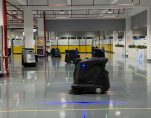
The CenoBot S5 autonomous cleaning robot undergoes real-world testing at a demonstration site in Tongxiang.
For Tongxiang, long associated with the annual internet conference, the summit is also a chance to demonstrate how local companies are commercializing AI technologies for customers at home and abroad.
Ahead of the event, reporters visited seven Tongxiang-based companies working in robotics, intelligent vehicles, synthetic data, industrial automation, logistics and computing infrastructure.
Singapore Changi Airport earlier this year placed a fourth order for commercial cleaning robots from CenoBots, a Tongxiang-based company whose machines are used in airports, supermarkets, hospitals, factories and warehouses.
CenoBots has sold products in more than 40 countries and regions. Its customers include Changi Airport, British retailer Tesco, the University of Minnesota and pharmaceutical company Novo Nordisk. This year, the company supplied about 600 autonomous cleaning robots for Tesco Express stores across the United Kingdom.
“Cleaning robots are appearing in more and more settings,” said Shen Jizhong, CenoBots’ co-founder and vice president. “It is much like electric vehicles becoming a familiar sight on the roads — a trend that is gathering pace.”
The company’s machines are adapted to different settings. Hospital robots must move through busy corridors without disrupting patient care, while those used in supermarkets navigate around shoppers and carts. Factory robots operate near forklifts, and airport models must handle both fine debris in carpeted areas and small obstacles on smooth floors.
CenoBots continues to refine its robots through real-world testing, focusing on reliable operation and consistent cleaning performance across diverse environments. The company has expanded its research, development and production facilities in Tongxiang from approximately 3,000 square meters in its early years to more than 20,000 square meters. Local malls, hospitals and sports venues have also served as long-term testing sites.
While CenoBots focuses on service robots, TEEMO is developing the vehicle platforms that support autonomous mobility. The company makes drive-by-wire skateboard chassis and core components for autonomous vehicles used in last-mile delivery, patrols and logistics.
Its standardized chassis can be equipped with different vehicle bodies and hardware for specific uses. One of TEEMO’s strategic customers, autonomous delivery-vehicle maker Zelos, was selected for all lots in China Post’s centralized procurement program for 7,000 autonomous delivery vehicles.
TEEMO’s customers already span the United States, the Middle East, India and Russia, said Zhang Yongjian, the company’s director of operations.
“In some overseas markets, distances are long, populations are dispersed and last-mile delivery is difficult to staff,” Zhang said. “Autonomous delivery vehicles have strong potential there, and overseas business will become an important growth driver for us.”
Other Tongxiang companies are concentrating on the data and perception systems that allow machines to function in physical environments.
Dayan Technology, founded in Tongxiang in May 2025, provides synthetic-data and toolchain services for autonomous-driving and humanoid-robotics companies. It combines real-world data collection, digital twins and simulated training environments to help developers train robots before they are deployed.
Its wearable devices record human movement and interactions with objects. A haptic glove uses liquid-metal and pressure sensors to capture hand gestures, finger movements and contact force. A multi-camera headset records a user’s visual field, body posture, hand movements and the position of nearby objects.
Dayan said its tactile-perception model can process touch signals in milliseconds. The technology is intended to help robots do more than identify objects visually: They can learn how firmly to grip an item, recognize when it is slipping and apply force without causing damage.
Freetech Intelligent Factory
Freetech is applying related sensing and decision-making capabilities to intelligent driving. The company develops intelligent-driving systems and 4D imaging radar for passenger and commercial vehicles, and said its technology has been selected for hundreds of vehicle programs.
Its ODIN AI platform supports products at different levels of driving automation. The radar is designed to complement cameras in heavy rain, fog, darkness and abrupt changes in light, including when vehicles enter or leave tunnels.
At its intelligent-manufacturing base in Wuzhen, Freetech is also using AI in production. An in-house system reads customer orders and calculates the components and materials needed for each production line before manufacturing begins. The company said the system has increased overall efficiency by more than 20%.
“Transportation combined with a specialized function will be an important direction for the future,” said Dr. Zhang Lin, Freetech’s founder and CEO.
Freetech sees potential applications beyond passenger vehicles, including robots, elder-care vehicles, mining equipment and agricultural machinery.
Beyond mobility, Tongxiang firms are using AI to address the complexity of industrial operations. Founded in 2019, Shuhan Technologies provides on-premises industrial AI for chemical plants, energy facilities and wastewater-treatment systems. Its AI-driven control layer continuously ingests data from central control systems and field sensors, identifies dynamic conditions and autonomously adjusts operating parameters in real time.
“Fundamentally, all industrial process challenges can be framed as control and optimization problems,” said Zhai Zhengjun, Shuhan’s Chief Technology Officer.
At a coal chemical plant with annual capacity of 1.2 million metric tons, Shuhan said its system reduced raw-material consumption by 6%. The company estimated that the deployment generated more than 176 million yuan, or about $26 million, in annualized economic benefits and reduced carbon emissions by more than 500,000 metric tons.
SENAD is targeting bottlenecks in logistics operations, including loading, unloading, sorting and pallet handling. It develops autonomous loading and unloading robots, as well as a multimodal logistics model called Robot Insight, for sectors including beverages, tobacco, consumer goods, pharmaceuticals and logistics.
Tongxiang’s AI sector also includes companies addressing the infrastructure needed to run increasingly powerful computing systems. SynthCool is tackling a basic constraint of the AI boom: heat.
SynthCool develops two-phase liquid-cooling systems to address the heat generated by increasingly powerful processors. Inadequate cooling can trigger thermal throttling, reducing performance and energy efficiency.
“Heat dissipation is infrastructure,” said Zhu Zhijiang, SynthCool’s general manager.
SynthCool’s two-phase cooling technology uses the latent heat of vaporization to remove heat from processors. The cooling fluid absorbs heat and boils into vapor, which is then condensed back into liquid and recirculated.
Depending on ambient conditions and system design, two-phase cooling can also support free cooling and reduce reliance on compressor-based refrigeration. Waste heat may be recovered where temperatures and local demand make reuse practical.
According to SynthCool, its technology supports heat dissipation of more than 3,000 watts per chip and heat flux above 250 watts per square centimeter. Under comparable cooling requirements, the system requires approximately one-third of the flow needed by conventional single-phase water-cooled cold plates, helping reduce piping requirements and pumping demand.
SynthCool’s portfolio includes two-phase direct-to-chip and immersion cooling solutions, along with distribution units and control systems for AI data centers.
Hashtag: #Tongxiang
The issuer is solely responsible for the content of this announcement.
Tesla has demonstrated a redesigned Roadster climbing an inverted ramp, flipping through the air and landing on its wheels during a presentation led by Elon Musk at a SpaceX facility in Texas. The driverless prototype completed the manoeuvre on 15 October before an audience of invited guests, with Tesla broadcasting the demonstration online. Its ability to remain attached to the curved structure while upside down and then […]
Arabian Post Staff -Dubai Azizi Developments has begun preliminary work on workforce accommodation projects in Dubai and Sharjah designed to house more than 31,000 people, with phased completion scheduled through late 2027. The developer’s largest planned community, at Al Sajaa in Sharjah, will accommodate more than 20,000 residents across 36 residential buildings. Site preparation is expected to start later this month, while enabling and shoring works are […]
French President Emmanuel Macron has promised tougher security measures and prosecutions after nationwide demonstrations over living costs descended into arson, looting and clashes with police, intensifying political confrontation ahead of next year’s presidential election. Macron condemned the destruction following an emergency meeting on Sunday, while stopping short of imposing a state of emergency. His intervention came as police confronted fresh disturbances in Paris and municipal authorities assessed […]
Signing of strategic collaboration agreement deepens collaboration on PCIM Asia Shanghai, opening international opportunities for microelectronics companies
HONG KONG SAR – Media OutReach Newswire – 19 October 2026 – From efficient power supply for artificial intelligence (AI) data centres to precision control in smart robotics, power electronics is enabling the next wave of industrial innovation. Hong Kong Science and Technology Parks Corporation (HKSTP) and PCM Asia Shanghai signed a strategic collaboration agreement at Hong Kong Science Park to strengthen their collaboration on PCIM Asia Shanghai, Asia’s premier exhibition for power electronics exhibition.
Together, the two organisations also co-hosted the “Power Electronics Innovation Across Asia” seminar, bringing together international technology companies, academics from local universities, innovators and investors to explore advances in power electronics and power semiconductors, as well as trends and opportunities shaping Asia’s industrial future.
Deepening Cross-Boundary Collaboration to Expand International Market Access
The partnership aims to extend professional exchange into sustained collaboration across the innovation and technology (I&T) ecosystem. By combining the corporate networks, industry platforms, and regional strengths of HKSTP and PCIM Asia Shanghai, the partnership will foster knowledge exchange and industry collaboration across power electronics, semiconductors, electrification and renewable energy.
Through annual cross-boundary exchange activities, coordination meetings, and showcasing opportunities for start-ups, innovative solutions and ecosystem participants, the two parties plan to raise the international profile of emerging technologies and ventures, and help companies to build vital market connections.
The collaboration will also strengthen Hong Kong’s role as a hub for strategic partnerships and bring together international research institutions, integrated circuit (IC) design houses, technology developers and investors, while providing access to the manufacturing capabilities in the Greater Bay Area (GBA) and the Chinese Mainland, driving technologies from R&D, device design and prototyping, and pilot production to market adoption.
Mr Terry Wong, Chief Executive Officer of HKSTP, said: “We are entering an era where AI is ubiquitous, embedded in vehicles, factories, power grids, communications networks and smart devices. None of these systems can function without efficient power conversion, power control and power management. That is why power electronics is becoming one of the most important enabling technologies of the next industrial era. With Hong Kong’s strengths in design-led electronics and the manufacturing capabilities of the Greater Bay Area, HKSTP provides an end-to-end pathway from research and prototyping to pilot production, manufacturing and market adoption. Through our partnership with Messe Frankfurt on PCIM Asia, we can help innovators raise their international profile, connect with new partners and expand into global markets. Together, we aim to build Hong Kong into a leading centre for research, design and system integration in power semiconductors, and strengthen its role as a regional gateway for global power microelectronics collaboration.”
Mr. Richard Li, Executive Director of Messe Frankfurt (HK) Ltd cum Chairperson of the Board of Management, Guangzhou Guangya Messe Frankfurt Co Ltd, said, ‘With 25 years of history, the PCIM Asia series of events has consistently brought together power electronics companies, engineers, and researchers from Asia and around the world. After having held in Shanghai and Shenzhen, PCIM Asia has built a professional exchange platform focusing on power semiconductors, intelligent motion control, renewable energy, and energy management. Meanwhile, Hong Kong possesses outstanding R&D capabilities and global business network, backed by the robust manufacturing base of the Guangdong-Hong Kong-Macao Greater Bay Area. HKSTP has attracted over 300 micro-e companies and has been equipped with comprehensive infrastructure for R&D, prototyping and pilot production. Leveraging Messe Frankfurt’s global exhibition resources as well as the local industrial ecosystem of HKSTP, this strategic collaboration aims to connect Hong Kong’s research capabilities with the Asian power electronics industry. It will elevate the industry exposure of the city’s innovative technologies, and promote long-term sustainable partnerships among industry partners in the Chinese mainland, Hong Kong, and the world”
Connecting Research with Industry Needs in AI and Advanced Energy Applications
The event attracted representatives from industry, academia and the wider I&T ecosystem. Through keynote presentations, expert discussions, technology demonstrations, company pitches and talent networking session, the event explored opportunities to bring power electronics innovations to market.
Experts from international technology leaders, including Mitsubishi Electric, Infineon Technologies, Bosch, STMicroelectronics, Murata, SMC and Vtech, as well as scholars from four local universities discussed AI data centre power supply, smart robotics and advanced energy applications. Discussions focused on translating power semiconductor and intelligent control technologies into integrated, market-ready solutions.
On-site showcases featured gallium nitride (GaN) motor drives, silicon carbide (SiC) chips and power modules, and advanced packaging solutions for AI data centres, intelligent robots and energy systems. The exhibits highlighted how microelectronics can improve energy efficiency and support emerging industries, while creating opportunities for researchers, technology companies and industry partners to collaborate.
Strengthening the Pathway from Research to Pilot Production
HKSTP is home to more than 300 microelectronics companies. Its facilities—including the Hardware Lab, Sensor Packaging and Integration Lab, Heterogeneous Integration Lab and Pilot-Scale Manufacturing Lab—support companies across design, prototyping, and trial production.
Located at the Microelectronics Centre in Yuen Long InnoPark within the Northern Metropolis, the Hong Kong Microelectronics Research and Development Institute (MRDI) supports semiconductor product development and trial production through its pilot lines, helping accelerate the translation of research into practical applications.
HKSTP is also advancing the Microelectronics Centre expansion project (MECX), which will provide approximately 7,500 square metres of additional floor space to attract and support companies across the semiconductor value chain, fostering industry clustering and collaboration.
Hashtag: #HKSTP #PCM
The issuer is solely responsible for the content of this announcement.
PARIS, FRANCE – Media OutReach Newswire – 18 October 2026 – At the 2026 Paris Motor Show, Clifford Kang, Board Member and Vice President of SERES Group, announced that AITO plans to officially enter the European market in autumn 2027, marking another major step in its global development. With deep respect for Europe’s automotive heritage, AITO looks forward to collaborating and growing with partners around the world.
In China, AITO has earned the trust of over 1.2 million customers. Globally, in Brand Finance’s Automobiles 100 2026 ranking, AITO ranked among the world’s top 10 luxury automotive brands and was the No.1 Chinese luxury automotive brand by brand value, making it the only Chinese automotive brand.
Driven by its philosophy of “Intelligence Redefining Luxury”, AITO is committed to bringing together traditional luxury and technological luxury to create an elevated intelligent mobility experience.
“AITO stands for ‘Adding Intelligence to Auto’. We believe a vehicle should be a mobile intelligent agent that understands you and responds to your needs. That is why we introduced our brand philosophy, Intelligence Redefining Luxury. It is our interpretation of what New Luxury means for AITO,” said Clifford Kang, Board Member and Vice President of SERES Group. “We come with deep respect for Europe’s automotive heritage. We come to collaborate and grow with partners around the world. And we come with our philosophy: Intelligence Redefining Luxury.”
As AITO strengthens its global presence, it looks forward to working with partners across the value chain to build a healthy automotive ecosystem, foster mutual growth and bring intelligent luxury mobility to more customers around the world.
Hashtag: #AITO
The issuer is solely responsible for the content of this announcement.
Cockroach Janta Party founder Abhijeet Dipke was due before a magistrate on Saturday after Delhi Police arrested him ahead of a protest against disputed electoral roll revisions, extending a confrontation between demonstrators and authorities in the capital. Police took Dipke into custody on Friday under preventive provisions intended to avert a breach of public peace. He was expected to appear before a Special Executive Magistrate, while the […]
Japan and the United States have agreed on a semiconductor manufacturing project in New York that could attract up to $21 billion in Japanese investment, with GlobalFoundries selected to operate two new factories.
Japan’s foreign ministry confirmed on Thursday that the initial project would cost approximately $10 billion, with construction scheduled to begin before the end of 2026. Expansion of production facilities could eventually raise the total investment to about $21 billion, although the second factory remains conditional.
The agreement forms part of a $550 billion Japanese investment commitment negotiated with President Donald Trump’s administration in 2025, alongside a reduction in American tariffs on Japanese vehicles and other imports to 15 per cent.
GlobalFoundries said the first manufacturing plant at its existing Malta campus would begin production in 2029. An additional investment of approximately $10 billion would finance a second facility, with a decision on that expansion expected before the end of 2028.
Japan will supply the investment capital, while GlobalFoundries will provide manufacturing technology, technical expertise and operational management. The factories will be jointly owned by American and Japanese interests under an arrangement intended to expand semiconductor output without requiring the company to finance construction itself.
The first plant is expected to produce approximately 900,000 silicon wafers measuring 300 millimetres annually when fully operational. A second plant would add comparable capacity, substantially increasing the company’s manufacturing footprint in upstate New York.
GlobalFoundries estimates that the initiative will support approximately 27,000 construction and associated supply-chain jobs, alongside more than 1,000 skilled manufacturing positions in New York’s Capital Region. Those figures are projections rather than employment already created.
The US Commerce Department will separately receive an equity interest of approximately four per cent in GlobalFoundries. Chief executive Tim Breen said the transaction would raise the government’s overall holding to about seven per cent. The company is majority owned by Abu Dhabi’s Mubadala Investment Company.
GlobalFoundries shares advanced after the announcement, reflecting investor interest in an expansion model that could increase manufacturing capacity while limiting construction expenditure.
The ownership arrangements distinguish the investment from conventional private-sector semiconductor expansion. Japanese financing will underpin the factories, while the American government will gain a larger financial interest in the operator and participate in the broader manufacturing initiative.
GlobalFoundries also agreed with the Commerce Department to revise an existing award under the CHIPS and Science Act, reallocating $955 million towards investments in silicon photonics, silicon-germanium technology and advanced packaging at facilities in Malta and Burlington, Vermont.
These technologies are used in communications systems and data centres, where manufacturers are seeking faster connections and more efficient processing of large volumes of information. The separate funding revision does not represent an additional Japanese commitment to the two factories.
Japan’s foreign ministry described the New York project as the first semiconductor investment under the bilateral Strategic Investment Initiative announced in September 2025. It said the initiative was intended to strengthen supplies of mature-node chips used in automobiles, industrial machinery, smartphones and artificial intelligence data centres.
Although attention has focused heavily on advanced processors for artificial intelligence, mature-node semiconductors remain essential components in vehicles, industrial equipment and connected devices. Their availability is important to manufacturers seeking more geographically diversified supply chains.
The first facility will be built at an established semiconductor manufacturing location, allowing the investment to draw on existing industrial infrastructure and a local workforce. However, the announced timetable does not mean projected production capacity will be available immediately when operations begin.
Breen said GlobalFoundries had been chosen because large fabrication projects required manufacturing expertise and operational capabilities alongside financing. US Commerce Secretary Howard Lutnick welcomed the investment as a contribution to domestic manufacturing and employment.
The Japanese government expects the project to create commercial opportunities for its semiconductor equipment and materials suppliers. Tokyo Electron and SCREEN Holdings have expressed interest in supplying manufacturing equipment, while Tokyo Ohka Kogyo has indicated interest in materials and components.
Renesas Electronics, a major Japanese chipmaker supplying automotive and industrial customers, has expressed interest in purchasing output from the proposed facilities. Its participation could provide an important customer relationship as production plans advance.
Japan’s foreign ministry also identified smaller suppliers, including Fujikin and Kusakawa Seiki, as potential participants in the equipment and materials supply chain. Their involvement remains prospective, rather than a confirmed allocation of orders.



 https://www.boi.go.th/en/index/