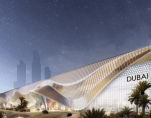
Arabian Post Staff -Dubai Omniyat has moved to reassure investors that it has enough liquidity to meet its debt obligations after the Dubai ultra-luxury developer was placed on watch for a possible downgrade, arguing that its cash position and funding profile leave it well equipped to handle maturities without depending on a fresh burst of property sales or a quick return to calmer markets. The company said […]
Hundreds of organisations using Microsoft 365 are facing a fast-growing phishing threat that sidesteps conventional multi-factor authentication controls by abusing a legitimate Microsoft sign-in process rather than breaking it. Security researchers tracking the activity say more than 340 organisations across the United States, Canada, Australia, New Zealand and Germany have been affected, with attacks accelerating through March after the first known cases were detected on February 19. […]
Reflection, an artificial intelligence startup supported by Nvidia, is seeking to raise $2.5 billion at a valuation of about $25 billion, positioning itself as a high-profile contender to China’s rapidly advancing open-source AI ecosystem led by DeepSeek. The fundraising effort, still under discussion with investors, underscores intensifying competition between proprietary AI models backed by large capital pools and open-source alternatives gaining traction across Asia and beyond. Reflection’s […]
Arabian Post Staff -Dubai Prices for one of Rolex’s most recognisable sports models have climbed sharply on the secondary market, as collectors position themselves ahead of a major annual watch industry showcase that often sets the tone for production shifts and new releases. The stainless steel Rolex GMT-Master II with its distinctive red-and-blue “Pepsi” bezel has seen renewed demand among traders and enthusiasts, with resale values edging […]
By Nitya Chakraborty U.S. President Donald Trump finally rescheduled his much awaited visit to China on May 14 and 15 by announcing in his Truth Social there by creating big interest in the diplomatic circles about the possibility of a sort of ceasefire in the current West Asian war before the scheduled trip to Beijing. […]
Democracy is on the defensive. This is shown by the Bertelsmann Stiftung’s Transformation Index 2026 (BTI). The BTI was first surveyed twenty years ago, when democracies were still in the majority. Today, 56 percent of the 137 countries surveyed by the BTI are ruled autocratically. However, this rarely leads to better governance. Autocracies are more susceptible to corruption, less capable of shaping the future, and less consensus-oriented. However, examples such as Poland and Brazil show that social resistance and political competition can pave the way back to democracy.
GÜTERSLOH, GERMANY – Newsaktuell – 26 March 2026 – A majority of 77 of the 137 states surveyed by the BTI are now ruled autocratically and are taking increasingly repressive action against the opposition, the media and civil society. Of these countries, 52 are hard-line autocracies in which fundamental rights are completely disregarded – more than at any time since the survey began in 2006. But autocratic tendencies are also gaining ground in numerous democracies. “Many elected governments have undermined core democratic institutions in order to stay in power, and this paves the way for autocracy,” says democracy expert Sabine Donner.
In 54 percent of the countries, elections no longer meet minimum standards. In some countries, such as Gabon or Niger, they were suspended after military coups, while in Belarus, Russia and Rwanda they are strictly controlled legitimizating rituals. However, numerous free and fair elections also led to peaceful changes of government. In Madagascar, Tanzania and Venezuela, mass protests following rigged elections were violently suppressed, but strengthened political mobilization beyond the election date.
Examples such as El Salvador, Serbia and Turkey show that the repeatedly touted promise of authoritarian efficiency is rarely fulfilled. Corruption is insufficiently combated in more than 100 countries, two thirds of which are autocracies. “In autocracies, loyalty must be rewarded and positions secured,” says BTI expert Hauke Hartmann. “The supposed efficiency of authoritarian regimes is a myth.”
However, persistent grievances continue to ensure that protests by dissatisfied citizens show no sign of abating. In Bangladesh, Nepal and Sri Lanka, protests forced a democratic opening, while a democratic turnaround was achieved in Brazil and Poland. “The BTI shows how much pressure democratic institutions are coming under – at the same time, we are seeing remarkably lively resistance to their erosion in many places,” says Daniela Schwarzer, Member of the Executive Board, Bertelsmann Stiftung. “This ability to mobilize, which comes above all from an active civil society, is a key potential for democratic renewal.”
Additional information: Since 2006, the Bertelsmann Stiftung’s Transformation Index has analyzed the quality of democracy, market economy and governance in 137 countries every two years. Currently, 23 OECD countries, such as Germany and the USA, are not part of the study. The study was carried out between February 1, 2023 and January 31, 2025.
The issuer is solely responsible for the content of this announcement.
About the Bertelsmann Stiftung
The Bertelsmann Stiftung is committed to ensuring that everyone can participate in society – politically, economically and culturally. We put people at the center of everything we do. Because it is people who can move the world, change it and make it a better place. To this end, we develop knowledge, impart skills and develop solutions. The non-profit Bertelsmann Stiftung was founded in 1977 by Reinhard Mohn.
HONG KONG SAR – Media OutReach Newswire – 24 March 2026 – Hong Kong’s annual arts season moved into its peak last weekend with ComplexCon (21-22 March) returning for its third edition at AsiaWorld-Expo, bringing an eclectic blend of pop culture to the heart of Asia.
It marks the start of a flurry of themed events at landmark venues across the city, including the acclaimed Art Basel Hong Kong (27-29 March) and Art Central (25-29 March).
Speaking at the opening ceremony of ComplexCon, Rosanna Law, Secretary for Culture, Sports and Tourism of the Hong Kong Special Administrative Region Government said, “We are celebrating Hong Kong’s unique status as the premier East-meets-West centre for international cultural exchange. Since its Hong Kong debut in 2024, made possible by the support of our Mega Arts and Cultural Events (Mega ACE) Fund, ComplexCon has established itself as a vibrant and hugely popular cultural event as you can see already, an event of a true blend of pop culture, music, art, and technology, and so much more.”
Attracting thousands of fans from near and far, the two-day programme included Complex Live! Stage, featuring a powerhouse line up headlined by global icons, together with a curated mix of regional hip-hop and R&B (rhythm and blues) pioneers. For collectors, the “Hong Kong Element” offered exclusive merchandise.
Two more world-class arts events are coming up this week, namely, Art Basel Hong Kong (27-29 March) and Art Central (25-29 March).
Art Basel Hong Kong returns to the Hong Kong Convention and Exhibition Centre with new sectors and fresh curatorial perspectives. Featuring 240 galleries from some 40 countries and territories, the fair presents artworks by established artists and emerging talents from around the world.
Highlight sectors include “Encounters”, showcasing 12 artworks of expansive sculptures and installations drawing on the Five Elements — space/ether, water, fire, wind and earth, while “Insights” features 20 projects focused on artists from Asia and the Asia-Pacific region. Among the newly added themes this year are “Echoes” – a brand new sector spotlighting works created within the past 5 years –, and “Zero 10” dedicated to art of the digital era.
Other returning sectors cover “Discoveries”, which is dedicated to solo presentations by emerging artists from 25 galleries and “Kabinett”, staging thematic presentations with a total of 35 projects, as well as public programmes offering free public access to “Film”, “Conversations” and “Exchange Circle”.
Hong Kong’s strength in global cultural connectivity is reflected in its position as a leading arts trading hub. “Later this month, we will finalise the details of our collaboration with Art Basel for the next five years. This is the result of sustained investment in our role as a global financial centre, cross-sectoral collaboration, and a shared commitment to make Hong Kong a place where the arts can truly flourish,” Law said.
Since its Hong Kong debut in 2024, ComplexCon has established itself as a vibrant and hugely popular cultural event (Photo courtesy of ComplexCon Hong Kong)
There’s more for art enthusiasts to enjoy, with Art Central (25-29 March) lighting up the iconic Central Harbourfront, presenting works from over 100 galleries and 500 artists from Hong Kong, Asia, and beyond. The fair’s 11th edition sees the debut of Central Stage, spotlighting artists with recent, current, and upcoming participation in institutional exhibitions, biennials, and other landmark curatorial endeavours of international standing.
This trio of arts and cultural events is part of the wider Hong Kong Mega 8 – a legendary line-up of eight world-class events throughout March and April. Completing the line-up are the Hong Kong Derby and Champions Day (horse racing), UCI Track World Cup (cycling), Hong Kong Sevens (rugby) and LIV Golf Hong Kong.
“I am sure this exhilarating blend of sports, arts and culture will bring you many enjoyable moments and fond memories, infused with the city’s unique spirit and unstoppable momentum,” Law said.
Dubai has unveiled an ambitious expansion of its pedestrian infrastructure under a new “Dubai Walk” initiative, with authorities outlining plans to reshape parts of the historic Al Ras district into a walkable, transit-connected urban zone by 2027. The project, anchored in the Dubai Urban Plan 2040, aims to deliver 12 kilometres of pedestrian-friendly routes and 5 kilometres of dedicated cycling paths in Al Ras, one of the […]
Reliance Industries has secured about five million barrels of crude oil from Iran in a transaction estimated at more than $350 million, signalling a calculated return to a trade corridor constrained for years by geopolitical tensions and sanctions.
The purchase, attributed to cargoes loaded through intermediaries and structured channels, underscores a shifting pattern in global oil flows as refiners seek cost advantages amid volatile benchmarks. Market participants said the acquisition reflects both commercial pragmatism and a broader recalibration of sourcing strategies by large refiners navigating supply disruptions and pricing differentials.
Reliance, which operates one of the world’s largest refining complexes at Jamnagar, has historically processed Iranian crude due to its favourable refining characteristics and pricing structure. The latest move suggests the company is again exploring opportunities linked to Iranian grades, which are often discounted relative to comparable Middle Eastern benchmarks.
Iran’s oil exports have been subject to US sanctions since Washington withdrew from the nuclear agreement in 2018. Those restrictions significantly curtailed Tehran’s ability to sell crude openly, pushing exports into opaque channels involving ship-to-ship transfers, reflagging, and complex payment mechanisms. Despite these constraints, Iran has continued to move significant volumes to Asia, particularly to buyers willing to navigate compliance risks.
Industry analysts say the renewed interest in Iranian oil stems from tightening margins and evolving global supply dynamics. Production curbs by OPEC+ members, combined with geopolitical disruptions affecting Russian and Middle Eastern supplies, have altered trade routes and pricing structures. Refiners are increasingly prioritising flexibility, often sourcing from multiple regions to optimise margins.
Reliance’s procurement strategy has expanded notably over the past two years, with the company becoming a major buyer of discounted crude, including shipments linked to Russia following Western sanctions. The latest Iranian cargoes appear to align with this broader approach, where cost competitiveness outweighs traditional sourcing patterns.
Energy traders indicate that the cargoes in question were likely acquired through intermediaries rather than direct state-to-company contracts, a common practice in sanctioned markets. Such arrangements can involve layered ownership structures, making it difficult to trace the origin of the oil definitively. Payment mechanisms also tend to bypass conventional banking channels, relying on alternative currencies or barter-like systems.
Officials in Tehran have repeatedly stated that oil exports remain a central pillar of the country’s economic resilience, even under sanctions. Output has gradually recovered, with production estimates rising above 3 million barrels per day in recent months. Much of this increase has been driven by exports to Asia, where demand remains robust despite regulatory scrutiny.
Global oil prices have remained sensitive to geopolitical developments, with Brent crude fluctuating amid concerns over supply security and demand recovery in major economies. The availability of discounted barrels from sanctioned producers has created a parallel market that exerts downward pressure on certain price segments, benefiting refiners capable of accessing such supplies.
For Reliance, the ability to process a wide range of crude grades provides a strategic advantage. Its refining configuration allows it to handle heavier and more complex crudes, including those from Iran, Venezuela, and Russia. This flexibility enables the company to capitalise on arbitrage opportunities that may not be available to less sophisticated refiners.
Policy implications remain a key consideration. While there has been no formal indication of a shift in sanctions policy by Western governments, enforcement patterns have shown variability. Analysts note that enforcement intensity often fluctuates depending on broader diplomatic priorities, creating windows of opportunity for market participants.
New Delhi has maintained a delicate balance in its energy diplomacy, emphasising the need for affordable supplies while adhering to international frameworks. Purchases of crude from sanctioned producers have typically been structured to avoid direct violations, with companies relying on legal and compliance teams to manage exposure.
Shipping data and market intelligence suggest that Iranian crude continues to reach global markets through a network of vessels operating under flags of convenience. These ships often disable tracking systems or conduct transfers in international waters, complicating monitoring efforts.
Japan’s latest government bond auction drew firm demand, offering a measure of stability to domestic markets as investors assessed shifting geopolitical signals tied to tensions involving Iran.
The Ministry of Finance’s sale of long-dated Japanese government bonds proceeded without disruption, with bid-to-cover ratios indicating healthy appetite among institutional buyers. Market participants pointed to a combination of steady domestic demand and easing concerns over an immediate escalation in the Middle East as key factors underpinning the auction’s outcome.
Yields on benchmark Japanese government bonds remained relatively contained following the sale, suggesting that investors were comfortable absorbing supply even as global markets remained sensitive to geopolitical developments. Traders said the absence of sharp volatility in oil prices and currency markets helped anchor sentiment, reducing the risk premium typically associated with periods of heightened uncertainty.
The auction came at a time when global bond markets have been navigating a complex mix of factors, including central bank policy adjustments, inflation expectations and geopolitical risk. Developments surrounding Iran, including diplomatic signals that hinted at a possible de-escalation, contributed to a more measured tone across financial markets, supporting demand for sovereign debt perceived as stable.
Japan’s bond market continues to be shaped by the Bank of Japan’s evolving monetary policy stance. The central bank has been gradually adjusting its approach to yield curve control, allowing for greater flexibility in long-term interest rates. While this shift has introduced some volatility in recent months, domestic investors such as banks and life insurers have remained key buyers, providing a reliable base of demand.
Analysts noted that the latest auction underscored the resilience of Japan’s domestic investor base, even as yields edge higher compared with previous years. The gradual normalisation of monetary policy has encouraged some investors to lock in returns at levels that are more attractive than those seen during the ultra-low rate environment that prevailed for much of the past decade.
At the same time, foreign participation in Japanese government bonds has shown signs of fluctuation, influenced by currency movements and relative yield differentials with other major markets such as the United States. The yen’s performance remains a crucial variable, as currency hedging costs can significantly affect the attractiveness of Japanese debt for overseas investors.
The broader global context remains a critical factor shaping investor behaviour. Tensions in the Middle East have periodically driven spikes in oil prices, which in turn influence inflation expectations and central bank policy trajectories. Any sustained escalation could lead to higher global yields, potentially affecting demand for sovereign debt across advanced economies, including Japan.
Market participants have also been closely monitoring fiscal dynamics. Japan’s high debt-to-GDP ratio remains a structural concern, although it is largely mitigated by the fact that a significant portion of government debt is held domestically. The government’s ongoing issuance programme reflects the need to finance fiscal measures while managing the cost of borrowing in a gradually changing interest rate environment.
The smooth execution of the latest bond sale is likely to be seen as a positive signal by policymakers, particularly as they navigate a delicate balance between supporting economic growth and ensuring financial stability. Japan’s economy has been showing signs of moderate recovery, with wage growth and corporate investment providing some support, although external risks continue to loom.
Tron’s native token is drawing renewed market attention as corporate accumulation and fresh stablecoin issuance converge, pushing the blockchain’s ecosystem into sharper focus and fuelling expectations of a further price advance. Digital asset data indicates that Tron Inc., a corporate entity aligned with the network’s broader ecosystem, has increased its holdings by acquiring more than 159,000 TRX at an average price of about $0.3135. The purchase lifts […]
Messaging platform Telegram has fully repaid bonds issued five years ago, marking a significant financial milestone as the company signals sustained profitability and stronger investor confidence, according to a statement from its founder Pavel Durov. Durov confirmed that the debt raised in 2021 has now been cleared in full, underscoring a turnaround in the platform’s financial trajectory. The repayment follows a period during which Telegram introduced a […]
France’s decision to withhold access to critical source codes for Rafale fighter systems has intensified concerns within New Delhi over long-term control of its air combat capabilities, exposing tensions between strategic partnership and technological dependence.
Officials and defence analysts indicate that the refusal centres on highly sensitive software governing the aircraft’s Active Electronically Scanned Array radar, mission computer architecture and the SPECTRA electronic warfare suite. These components underpin the Rafale’s operational edge, enabling advanced targeting, threat detection and real-time combat adaptability. Without access to underlying code, local engineers face restrictions in modifying or upgrading the systems independently.
The development comes at a time when the Air Force is seeking greater flexibility to integrate indigenous weapons, sensors and software into imported platforms. The Rafale fleet, inducted under an intergovernmental agreement signed in 2016, is widely regarded as one of the most capable multirole assets in service. However, the absence of deep software access limits the scope for customisation beyond manufacturer-approved pathways.
Defence planners have long sought to reduce reliance on foreign vendors for mission-critical technologies, particularly software-defined systems that determine how aircraft perform in evolving combat scenarios. The inability to access core programming frameworks means that even incremental upgrades—such as adapting radar modes or integrating new missile systems—must be routed through the original manufacturer, potentially adding time, cost and operational constraints.
French authorities have maintained that certain technologies embedded within the Rafale are protected by stringent export controls and intellectual property safeguards. Industry sources suggest that this position reflects a broader policy followed by advanced aerospace manufacturers, who rarely transfer full software control of high-end combat platforms. Such restrictions are often justified on grounds of security, technological advantage and contractual obligations tied to proprietary systems.
For New Delhi, the issue extends beyond a single aircraft programme. It underscores a structural challenge in defence procurement, where imported platforms may offer cutting-edge capabilities but limit sovereign control over upgrades and lifecycle management. Analysts argue that the balance between immediate capability acquisition and long-term autonomy has become increasingly complex as modern warfare shifts towards software-centric systems.
The Rafale’s SPECTRA suite, in particular, has drawn attention due to its role in electronic warfare and survivability. Designed to detect, identify and counter threats ranging from radar locks to missile engagements, the system operates through highly classified algorithms. Without access to these algorithms, domestic agencies are unable to independently adapt the suite to emerging threat environments or tailor it to specific operational theatres.
Similarly, the AESA radar’s performance is closely tied to software-defined modes that govern target tracking, electronic counter-countermeasures and situational awareness. Integrating locally developed weapons or sensors requires compatibility at the software level, which becomes challenging when access is restricted. Defence experts note that while some integration is possible through interface agreements, deeper optimisation remains dependent on the original equipment manufacturer.
The issue has also revived debate over the country’s broader push for self-reliance in defence production. Programmes aimed at developing indigenous fighter aircraft, avionics and electronic warfare systems have gained momentum, yet gaps remain in high-end technologies. The Rafale case is being cited by some policymakers as evidence of the need to accelerate domestic research and reduce dependence on external suppliers for core technologies.
At the same time, others caution against overstating the dispute, noting that limitations on source code access are common in international defence deals. They argue that operational effectiveness is not necessarily compromised, as manufacturers continue to provide upgrades and support under contractual arrangements. The Rafale fleet has demonstrated strong performance in exercises and deployments, reinforcing its value as a frontline asset.
Diplomatic considerations are also at play. France has been a key defence partner, with cooperation spanning submarines, helicopters and space technologies. The Rafale agreement itself was seen as a milestone in bilateral ties, reflecting a high degree of strategic trust. Any friction over technology transfer is therefore likely to be managed within the broader framework of long-standing cooperation.
Industry observers point out that negotiations over technology access often involve trade-offs between cost, capability and control. Full access to source codes would significantly alter the commercial and strategic dynamics of defence exports, potentially affecting pricing structures and intellectual property protections. As a result, such concessions are rarely granted, even to close partners.
The episode highlights a growing reality in modern military aviation, where software defines capability as much as hardware. Control over code translates into control over upgrades, interoperability and operational doctrine. For countries seeking to maintain strategic autonomy, this raises fundamental questions about how to structure future procurement and development strategies.
A sharp wave of liquidations swept through cryptocurrency markets after comments by Donald Trump signalling progress in talks with Iran triggered a rapid shift in investor sentiment, forcing traders betting on falling prices to unwind positions at speed. Market data showed that more than $265 million worth of short positions were liquidated within minutes as major digital assets surged. Bitcoin and Ethereum both recorded abrupt upward movements, […]
Primark is set to enter the Gulf retail market with its first store in Dubai scheduled to open on March 26 at Dubai Mall, marking a significant step in the British-Irish fashion retailer’s expansion beyond its traditional European strongholds. The Dublin-founded company, known for its low-cost apparel and homeware, will simultaneously establish a presence across three major shopping centres in the UAE over a two-month period. Following […]
Bitcoin miners are facing a widening gap between production costs and market prices, yet data shows a marked slowdown in selling activity, raising questions about strategy and resilience across the sector. Bitcoin has been trading near $68,000, while estimates of the average cost to mine a single coin have climbed towards $85,000 or higher for many operators. The divergence has been driven largely by a sharp rise […]
Arabian Post Staff -Dubai Operations at a major natural gas processing facility in Abu Dhabi have resumed following a disruption that forced a temporary halt to supplies critical for domestic energy needs, while much of the country’s liquefied natural gas output remains curtailed. The plant, regarded as one of the largest gas processing hubs in the United Arab Emirates, plays a central role in supplying fuel for […]
Ireland’s sovereign credit rating has been raised by S&P Global Ratings, reflecting what the agency described as a robust fiscal position and resilience in the face of global trade pressures that have unsettled many export-oriented economies. The upgrade signals confidence in the State’s public finances, underpinned by strong tax receipts and a growing fiscal buffer built in part from windfall corporate tax revenues. S&P noted that despite […]
By Nitya Chakraborty The U.S.-Israel combo’s war against Iran entered its 20th day on March 19 with global diplomats monitoring closely the Chinese reaction to the continued decimation of Iran’s leadership and key installations by Trump and Netanyahu and also Tehran’s fierce retaliatory attacks against Israel as also the US allies in West Asia including […]
A banking malware strain known as Horabot has re-emerged in Mexico with a more sophisticated infection chain, combining phishing emails, deceptive CAPTCHA prompts and automated email propagation techniques to compromise victims and harvest financial data. Cybersecurity analysts tracking the campaign say the latest iteration marks a significant evolution in both delivery and persistence. The malware is being distributed through carefully crafted phishing emails that appear to originate […]
Oil prices surged sharply as attacks on key energy facilities across the Middle East intensified fears of supply disruption, pushing markets to price in a broader geopolitical risk premium tied to an escalating conflict now stretching into its third week. Brent crude climbed by as much as 5.1 per cent to approach $113 a barrel during trading, while the most-active West Texas Intermediate contract traded near $96. […]
Starlink has begun offering satellite-based internet services in the United Arab Emirates, marking a significant expansion of low-Earth orbit connectivity into one of the Gulf’s most advanced digital markets. The rollout introduces a new alternative to established telecom operators, with residential plans starting from Dhs230 per month alongside a required upfront hardware purchase. The service, operated by Elon Musk’s SpaceX, relies on a constellation of low-Earth orbit […]
By Nitya Chakraborty On Wednesday, the 18th day of the U.S.-Israel combo’s war against Iran, Trump got two bad news simultaneously which made him ponder on how to go about on his next forward strategy to ensure Iran’s submission to the U.S. might. The first news was the European governments have refused to respond to […]
South Africa’s long-term inflation expectations have fallen to their lowest level on record, signalling a shift in sentiment among households, businesses and financial analysts as price pressures ease and monetary policy credibility strengthens. The Bureau for Economic Research’s latest quarterly inflation expectations survey, covering the first three months of the year, shows average expectations for inflation over the next five years declining notably compared with previous readings. […]






 https://www.brandhk.gov.hk/
 https://www.linkedin.com/company/brand-hong-kong/
 https://x.com/Brand_HK/
 https://www.facebook.com/brandhk.isd
 https://www.instagram.com/brandhongkong