News related to
much

The Bank of England has committed to implementing a comprehensive regulatory framework for stablecoins by the end of 2026, signalling a significant shift in the United Kingdom’s approach to digital assets. According to government and central-bank sources, a formal consultation is scheduled for 10 November and the regulation is expected to align closely with forthcoming U. S. standards.

The framework will establish new standards for so-called “qualifying stablecoins” issued in the UK, stipulating full backing by secure liquid assets held in trust, mandatory redemption at par, and authorisation under the Financial Conduct Authority. For stablecoins deemed systemic—particularly those used for payments at scale—the BoE will assume additional supervisory and resolution responsibilities. The FCA’s Consultation Paper CP25/14 sets out much of this detail.

In public remarks, BoE Governor Andrew Bailey argued that widely-used stablecoins must be regulated in the same way as banks if they function as money-substitutes. He said they should access Bank accounts and adhere to depositor-protection regimes. The BoE itself has described the future payments landscape as one of “multi-money” — where tokenised deposits, central bank money and stablecoins coexist—provided the framework protects trust and financial stability.

The proposed regulatory timetable is part of a broader drive by UK authorities to maintain competitive positioning in global fintech, particularly as stablecoins gain traction in cross-border payments and tokenised-asset ecosystems. Industry experts note that the UK wants to keep pace with U. S. regulation to avoid regulatory arbitrage.

Under the current design, issuers of qualifying stablecoins will need authorisation by the FCA, must safeguard assets backing the coins by placing them in statutory trust arrangements, and maintain daily reconciliation between issued coins and backing assets. The consultation suggests a two-tier backing-asset regime: “core” assets and “expanded” assets subject to extra disclosure and modelling requirements.

From a technical infrastructure perspective, the BoE highlights that stablecoins may reduce the banking sector’s dominance over payments, but that the central bank must remain the settlement asset for systemically important markets. This position underpins the planned consultations and policy work around stablecoins’ role in the UK payments system.

Industry reaction is mixed. Some fintech firms and crypto-asset service providers welcome clarity, saying that clear rules reduce uncertainty and support investment. Others worry that too heavy or complex regulation might deter innovation or prevent start-ups from competing with global incumbents. One blog commentary described the framework as “a huge deal … but a nagging worry that too much focus on compliance might throw a wet blanket on the very innovation they are meant to encourage.”

The stakes are high for tokenised deposit initiatives within the UK banking system. Leading lenders including HSBC, NatWest Group and Lloyds Banking Group are pushing ahead with pilots of tokenised deposits through 2026. Regulators have been clear that although such deposits may be permitted within the current system, the stablecoin regulatory regime must take into account the potential threat of massive deposit flows leaving the banking sector.

One key tension lies in the setting of holding limits. The BoE has proposed initial caps on stablecoin holdings—for individuals perhaps in the order of £10,000 to £20,000—and higher for business entities, on the grounds that a swift migration out of bank deposits could undermine credit flows to households and firms. The caps would remain until the BoE is confident the stablecoin sector does not pose a systemic threat.

In this regulated-fork approach, oversight will be shared: The BoE will supervise systemic stablecoin issuers; the FCA will regulate non-systemic stablecoins and issuers under the regulated activities order. The Treasury has indicated that stablecoin issuance will not, for now, be brought directly into payment-services regulation.

By Nantoo Banerjee     There is nothing to be particularly shocked about Tata Capital stocks declining 2.4 percent below the company’s IPO issue price of Rs. 326 per share a day after its debut in intraday trade on the Bombay Stock Exchange. Tata Capital, a Tata Sons subsidiary, made a flat debut on Dalal Street on […]

The article SEBI Fails To Prevent Aggressive IPO Pricing To Protect Investors appeared first on Latest India news, analysis and reports on Newspack by India Press Agency).

Merchandise exports rose to USD 220.12 billion in the six-month period ending September, an uptick of 3.02 per cent compared with the equivalent span of the prior year, while imports climbed by 4.53 per cent to USD 375.11 billion, resulting in a trade deficit of USD 154.99 billion.

A key facet of this performance is that exports to 24 nations recorded growth, underscoring a push by Indian exporters to diversify markets beyond traditional strongholds. These countries span regions from the Middle East and Southeast Asia to Africa and Latin America, and collectively accounted for USD 129.3 billion, or 59 per cent of the country’s total exports in the period.

Despite this diversification, exports to the United States — one of the largest destination markets — slipped in September as tariffs imposed by Washington weighed on certain sectors. For the month, shipments to the US declined by 11.93 per cent to USD 5.46 billion.

Those opposing movements such as exporters point to the 50 per cent tariff introduced by the US on Indian goods from late August. The exports community says that while growth is evident in alternative geographies including Africa, Latin America and the Middle East, the US tariff climate remains a drag.

Within the group of 24 countries that posted export growth are the UAE, Germany, Vietnam, Mexico, Russia, Kenya, Nigeria, Canada, Poland, Sri Lanka, Oman, Thailand, Bangladesh, Brazil, Belgium, Italy and Tanzania, among others.

At the same time, exports to 16 other countries recorded negative growth, representing roughly USD 60.3 billion or about 27 per cent of total exports in the period. This reveals that while diversification is under way, certain destination markets continue to deliver weak outcomes.

Industry observers suggest that the strategic reorientation of markets has been accelerated by external pressures such as protectionist measures in key markets and supply-chain disruptions across sectors. One exporter noted: “The trend will continue in the coming months as well.”

Meanwhile, the Government of India is engaging on multiple fronts to sustain export momentum. Officials from the commerce ministry signalled that structural steps will be needed to strengthen manufacturing competitiveness and integrate India more deeply into global value chains. They pointed to raw‐material bottlenecks and high logistics costs among the constraints.

In parallel, trade discussions with the US are underway, aimed at reducing friction caused by duties and exploring possibilities for energy-and-goods cooperation. For instance, US officials have raised concerns over Indian imports of Russian oil and bilateral trade.

Another trend shaping export performance is the push into manufacturing sectors aligned with global demand shifts. The electronics and mobile-phone export segment, for example, has delivered strong growth: exports in certain months surged by as much as 39-60 per cent in year-on-year terms, signalling India’s growing role as a manufacturing hub for global brands.

On the import side, the widening of the trade deficit is partly explained by rising inbound shipments of gold, silver and crude oil, ahead of domestic demand spikes and festival season pickup. These pressure points reflect larger global cost dynamics rather than domestic export weakness per se.

Export diversification is also being viewed as a risk-mitigation strategy. The weakening of certain traditional markets combined with tariff exposure in the US has underscored the importance of broadening the destination base. Africa, Latin America and Southeast Asia are emerging as focal regions.

Manufacturers and trade bodies emphasise that sustaining this diversification will require improving logistics efficiency, deepening downstream processing, upgrading product quality and securing better access via trade agreements and export-promotion schemes.

For exporters that achieved growth in the 24-country set, end-markets include consumer goods, engineering exports, pharmaceuticals, agro-products and electronics. Their performance demonstrates the incremental success of strategic investment and policy alignment.

Still, the fact that over a quarter of export value was derived from countries with declining shipments signals a dual challenge. Growth pockets exist, but structural weaknesses and external dependencies remain persistent obstacles.

Investigators have recovered an intact consumer-grade memory card from the wreckage of the submersible Titan operated by OceanGate, showing that even amid catastrophic failure some components survived. The 512 GB card, believed to be a SanDisk Extreme Pro model normally priced at around US $62, was installed in a deep-sea camera found among the debris. Despite the extreme underwater environment, the card yielded twelve still photographs and […]

Colonel Michael Randrianirina has officially assumed the presidency of Madagascar, following the forced departure of former president Andry Rajoelina. The transition of power occurred amidst growing anti-government protests, which culminated in Rajoelina fleeing the country. Randrianirina, a 48-year-old former commander of the Malagasy Armed Forces, has been sworn in as the new leader in a shift that could reshape the island nation’s political landscape. The unrest in […]

A groundbreaking study by researchers from the Massachusetts Institute of Technology has unveiled traces of Earth’s earliest form, hidden deep within the planet’s mantle. This discovery, based on chemical analysis of ancient mantle rocks, offers unprecedented insights into the planet’s violent beginnings and the remnants of its “proto Earth” phase. The study centres around an unusual imbalance in potassium isotopes found in rocks formed billions of years […]

Sharjah Economic Development Department and Sharjah Digital Department have introduced an AI-powered Trade Name Issuance Service at GITEX Global 2025 that can cut name issuance time by as much as 98 per cent. The initiative, built into the DS Assistant tool on the Digital Sharjah platform, analyses business activity data and generates compliant trade name suggestions without human intervention.

The system assesses a company’s industry, preferred naming style and regulations, then offers tailored naming options. By automating the approval workflow, it dramatically reduces processing delays and human error. Officials say this service marks the world’s first fully AI-based trade name issuance mechanism.

Hamad Ali Abdallah Al Mahmoud, Chairman of SEDD and member of the Sharjah Executive Council, said the move underscores the emirate’s goal to streamline business setup and reinforce its position as a regional innovation hub. He noted that SEDD is deepening collaboration with other government entities to expand digital transformation across regulatory and business services.

The service dovetails with broader efforts at the Sharjah Government Pavilion to showcase human-centred digital governance. Among other highlights at GITEX, the Hamriyah Free Zone Authority unveiled a Remote Company Formation project using a Vision LLM to validate identities and documents via live video calls. SDD’s pavilion also featured infrastructure systems for energy management, smart building monitoring and citizen-oriented digital welfare platforms.

Across the UAE, government agencies at GITEX are unveiling AI systems to modernise public services. Dubai Customs launched its “Voice of Customer” platform, which ingests feedback from multiple channels, applies sentiment analysis, and converts insights into action points to improve operations. The platform supports strategic decision-making by flagging emerging client concerns in real time.

Meanwhile, the broader GITEX 2025 agenda focused heavily on sovereign AI, data sovereignty and smart city ecosystems. The event drew over 6,800 exhibitors, 2,000 startups and delegates from 180 countries. Tech firms rolled out next-generation AI, quantum computing and biotechnology solutions aimed at accelerating public sector transformation.

Analysts view Sharjah’s trade name issuance system as filling a niche in the process of company formation—one that has typically remained manual and fragmented in many jurisdictions. By embedding naming rules, business-activity semantics and regulatory checks into algorithmic logic, the system could reduce friction for entrepreneurs. Yet its success will depend on the AI’s ability to interpret diverse naming preferences, local culture, language nuance and prevent politically or culturally sensitive outputs.

Advertisements

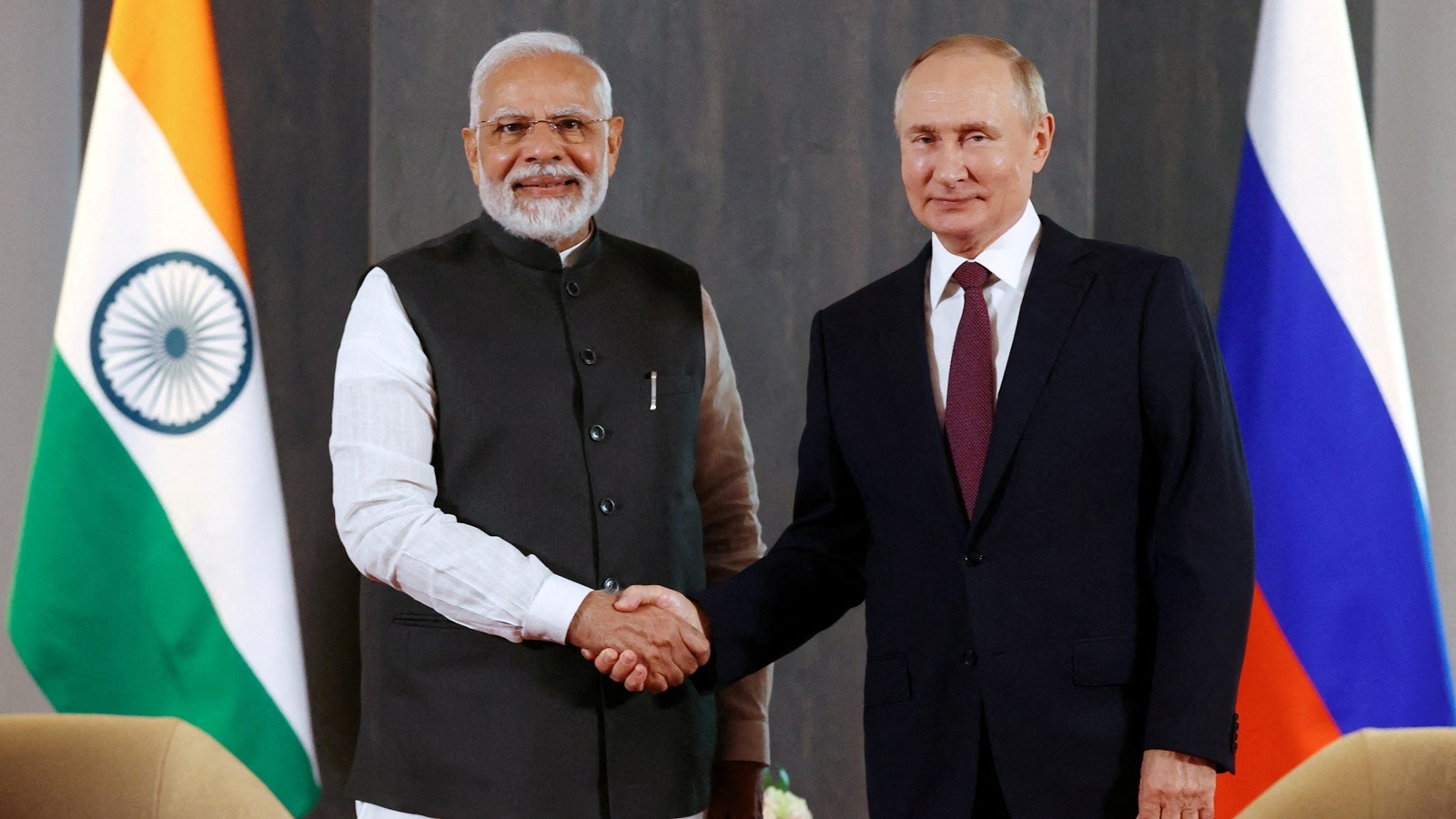
By Nitya Chakraborty Prime Minister Narendra Modi’s diplomatic woes are mounting as Russian President Vladimir Putin’s proposed visit to India on December 5 and 6 is approaching. US President Donald Trump is determined to ensure substantial reduction in Indian imports of Russian oil by November and this has been linked with the progress of the […]

The article Narendra Modi’s Mounting Dilemma Over President Putin’s Visit To India In December appeared first on Latest India news, analysis and reports on Newspack by India Press Agency).

Bitcoin’s price dropped below $105,000 early Friday in London trading, recovering marginally later but signalling mounting pressure in crypto markets. Bloomberg data showed a fall of as much as 3 percent before a modest bounce. The slide comes after a week of heightened volatility that has dragged digital-asset valuations lower.

The crypto sector has shed billions. Total market capitalisation fell to its lowest point since July, as institutional and leveraged positions faced heavy liquidations. Ethereum, the second-largest token, also fell sharply, trading under $3,800.

One key driver has been intensifying stress in U. S. regional banks. Shares of Zions Bancorp plunged after it disclosed a $50 million loan impairment, while Western Alliance is embroiled in fraud allegations tied to borrowers. Those troubles have sparked a “flight to safety” across risk assets, nudging investors away from speculative trades.

The collapse in derivatives markets was steep: over $1 billion in long and short positions were wiped out in rolling liquidations, especially on exchanges with aggressive leverage mechanics. The drop below the 200-day moving average—around $107,500—has undermined a long-term support zone, fuelling further anxiety among traders.

At the same time, trading volume surged. Weekly volume for Bitcoin hit its highest level since March, suggesting heavy participation even amid panic. Some analysts see that as a sign of re-accumulation by institutional players, though it remains unclear whether those inflows will stabilise prices.

Technical watchers are eyeing potential floor zones near $100,000, while others suggest $88,000 could act as an “open target” if selling accelerates. Meanwhile, on-chain data reveals that wallets holding between 100 and 1,000 BTC—sometimes called “shark wallets”—are accumulating aggressively, marking the fastest rate of inflow since 2013. Those trends echo previous panic phases, which often preceded longer rallies.

Some observers caution that Bitcoin’s repeated failure to behave as a “safe harbour” during market stress undermines one of its selling points. Still, others argue that the fundamentals remain intact—citing diminishing supply on exchanges, renewed institutional interest, and the durability of blockchain infrastructure.

Volatility is unlikely to subside soon. The week ahead includes major U. S. economic data releases and potential policy statements from central banks that could sway risk sentiment. In parallel, geopolitical frictions—particularly over trade and supply chains—may further rattle markets already in flux.

Space42 has inked a memorandum of understanding with e& UAE to co-develop Vehicle-to-Everything systems that will underpin autonomous mobility and smart city infrastructure across the UAE. The pact seeks to marry Space42’s Sovereign Mobility Cloud and autonomous vehicle expertise with e& UAE’s 5.5G connectivity, edge computing and secure communications, forming a foundation for 6G-era applications. The collaboration will see both firms launch pilot projects, help shape regulatory […]

By Girish Linganna The prisoner-hostage exchange between Israel and Hamas has been completed successfully, and many are calling it a major victory for peace. Twenty Israeli hostages returned home in exchange for about 2,000 Palestinian prisoners, aid started flowing back into Gaza, and guns fell silent after months of devastating conflict. But anyone familiar with […]

The article A House Built On Sand: The Fault Lines In Trump’s 20 Point Gaza Peace Plan appeared first on Latest India news, analysis and reports on Newspack by India Press Agency).

South Africa’s township economy, long relegated to the informal fringes of growth, is now drawing deliberate attention from government, corporates and fintech innovators alike as a pivotal engine for broad-based development. The sector is increasingly viewed not as a peripheral “slack” market but as a strategic frontier offering scale, resilience and social inclusion. Analysts estimate that the township economy could be worth between R900 billion and over R1 trillion, […]

Europe’s industrial firms are expected to outperform across corporate sectors in the coming earnings cycle, as sharp increases in artificial intelligence investment and defence procurement drive demand for advanced machinery, components and systems. Industrial-sector earnings per share for the MSCI Europe Industrials Index are projected to rise by about 4.9 percent year-on-year, reflecting the strength of capital goods manufacturers amid surging AI and defence spending. Analysts attribute […]

By K Raveendran Oil prices fell to their lowest level in five months on Tuesday, continuing a slide that has gathered pace over the past several weeks. The benchmark Brent and West Texas Intermediate crude futures have both dipped significantly, erasing much of the year’s earlier gains. In stark contrast, gold has soared to an […]

The article Gold Feeds On Oil’s Misfortune; One Hits The Roof, The Other Down In The Dumps appeared first on Latest India news, analysis and reports on Newspack by India Press Agency).

Greenlogue/AP The global green hydrogen market, valued at roughly USD 7.98 billion in 2024, is on track to grow to about USD 60.6 billion by 2030, propelled by steep declines in renewable energy costs, advances in electrolysis technologies and intensifying decarbonisation efforts across industry and transport. Projections indicate a compound annual growth rate of approximately 38.5 percent through 2030. This forecast assumes that many announced projects will […]

“Give Time, Share Hope” campaign transforms dormant watches into tangible support for Geylang East Home for the Aged SINGAPORE – Media OutReach Newswire – 15 October 2025 – As Singapore’s population rapidly ages, with nearly 1 in 4 citizens expected to be 65 and above by 2030 according to the Ministry of Health, aged care facilities face mounting pressure with limited resources. In response, independent luxury watch […]

By Nitya Chakraborty On October 10, the Nobel Prize Committee awarded the Peace prize for the year 2025 to the Venezuelan right wing politician Maria Corina Machado who has been working for the last few years for the removal of the President Nicholas Maduro from his office. The White House initially reacted that the Nobel […]

The article Trump Has Not Got Nobel Peace Prize But The Winner Machado Is His Acolyte In Latin America appeared first on Latest India news, analysis and reports on Newspack by India Press Agency).

Crude futures are signaling a shift towards contango as market participants brace for an oversupply wave in 2026, driven by aggressive production from OPEC+ and non-OPEC players and uncertain demand growth. U. S. oil futures are showing the narrowest backwardation since early 2024, with the November 2025 WTI contract trading at a slim premium over May 2026—a structure ill-suited to limits on physical demand. This flattening of […]

Amin H. Nasser, President & CEO of Aramco, told delegates at the Energy Intelligence Forum in London that the company will pursue “energy addition” to cope with intensifying global demand, underlining its steadfast ambition to maintain dominance in oil. He argued that conventional energy sources will remain critical even as the energy transition narrative evolves.

Nasser projected that global oil demand will grow by 1.1–1.3 million barrels per day this year and by 1.2–1.4 million bpd in 2026. He added that Aramco, having kept extraction costs at about $2 per barrel of oil equivalent for oil and $1 for gas, is well-positioned to meet the incremental demand. Speaking to a gathering of energy executives, he said the company can sustain maximum crude output of 12 million bpd for a full year without incurring extra cost.

He stressed that while many promises of the energy transition have fallen short, three shifts are now underway. First, he said the market is conceding that underinvestment in supply has risks. Second, cost pressures on alternative technologies are forcing a reevaluation of pace. Third, energy security is reclaiming a central role in policy-making. “Much of the promised progress has not been delivered, with many unintended consequences. Thankfully, it is finally shifting the narrative in three key ways,” Nasser said.

Behind the rhetoric lies a more cautious reality: Aramco has pared back its previous ambition to reach 13 million bpd, reverting instead to a 12 million bpd sustainable ceiling. That policy shift reportedly followed directives from Saudi energy authorities in early 2024.

In his remarks, Nasser also affirmed Aramco’s push into downstream and petrochemicals. He cited the company’s recent majority acquisition of Petro Rabigh, a 10 percent stake in China’s Rongsheng Petrochemical, and a joint $11 billion ethylene complex with TotalEnergies that is slated to come online by 2027. These moves, he said, diversify revenue streams beyond crude.

His stance echoes his commentary at earlier industry events. At CERAWeek in Houston, Nasser had cast doubt on the viability of green hydrogen and questioned the assumption that renewables alone can displace fossil fuels. He then quipped that there was “more chance of Elvis speaking” than seeing the current transition plans succeed.

Analysts say that Aramco’s optimism hinges on its low-carbon upstream intensity and vast reserves, which give it flexibility against higher-cost producers. The International Energy Agency’s estimates place Saudi spare capacity at about 2.43 million bpd, part of OPEC+’s total idle capacity of around 4.05 million bpd.

Still, external pressures persist. Governments worldwide face competing goals of emissions reduction, energy access, and geopolitical security. In many markets, renewables and storage technologies remain maturing, requiring heavy capital and regulatory support before they can scale. Critics argue that overreliance on fossil fuels could lock in carbon-intensive infrastructure and slow the path to net zero.

At the London forum, however, Nasser signalled that Aramco sees its role as not merely supplying more oil but shaping the discourse. “We are determined to remain dominant in oil thanks to a massive resource base, low costs, and one of the lowest upstream carbon intensities across the industry,” he said. He urged policymakers and financiers to support broad energy investment rather than prematurely dismiss conventional sources.

Gold-backed digital tokens such as Paxos’s PAXG and Tether’s XAUT have shown greater resilience than much of the crypto market during a sweeping $19 billion liquidation event that struck major cryptocurrencies. While Bitcoin and Ether tumbling inflicted heavy losses across leveraged positions, these gold-pegged tokens either held value or gained modestly, driven by the ongoing rally in physical gold.

Bitcoin dropped about 8.5 per cent over 24 hours, and the broader crypto index fell roughly 12.75 per cent, but PAXG dropped a mere 0.23 per cent to around $3,998, while XAUT rose by 0.2 per cent to $4,010. That divergence reflects gold’s strength: the metal closed near $4,018 per troy ounce, bolstered by safe-haven demand in volatile markets.

The combined market capitalisation of gold-pegged tokens has now crossed $3 billion, with PAXG, XAUT and KAU as leading issuers. Trading volumes also surged, reaching about $640 million in a single day, reflecting investor flight into more stable digital assets. These tokens have returned over 50 per cent year to date, mirroring gold’s gain in 2025.

Gold’s atmosphere of strength rests on several pillars: strong inflows into physically backed gold ETFs, weakening U. S. dollar dynamics, inflation hedge demand and rising geopolitical fragility. The World Gold Council reports that global ETF holdings have now reached $472 billion, marking one of the strongest quarters ever in gold history.

Yet caution signs are mounting. Analysts and the World Gold Council warn the gold market may be entering overextended territory. With gold having risen across multiple weeks, technical indicators suggest the metal might be overbought and primed for a pullback. In particular, extreme deviation above its 40-week average raises the prospect of a reversal.

Adding fuel to this narrative is the entry of tokenisation infrastructure and institutional backing. Nasdaq-listed Prestige Wealth has raised $150 million to create a treasury vehicle for Tether’s gold reserves, aiming to layer blockchain transparency onto gold ownership. Meanwhile, the World Gold Council has floated a “Pooled Gold Interests” initiative in partnership with Linklaters and Hilltop Walk to democratise fractional ownership and tradability of vault-backed bullion.

Matein Khalid Private equity and money center banks on Wall Street are in free fall even as the private credit market is in classic contagion mode, without a lender of the last resort for overleveraged shadow banks/hedge funds whose illiquid assets now disappear into Wall Street’s structured vehicles blackholes. Peekaboo Finance 101! When Citigroup and Brent crude both fall 8% in a synchronized bearish death dive, I […]

A fresh campaign deploying SnakeKeylogger is targeting users with weaponized emails that lead to the execution of PowerShell scripts and ultimately exfiltrate sensitive data. Security analysts warn that the threat now blends social engineering with native Windows scripting to evade detection. Emails purporting to be from “CPA-Payment Files” or similar remittance services carry attachments—most often ISO or ZIP files. Once opened, these contain a malicious BAT file […]

Deloitte Australia has agreed to partially refund AU$440,000 to the federal government after a commissioned report attributed to it was found to include fabricated citations, invented legal quotations, and other inaccuracies. The firm disclosed that the report’s drafting had involved the use of a generative AI system, prompting sharp debate over how much control and transparency clients should demand when consultants deploy such tools in high-stakes settings. […]

OpenAI has raised alarms with European Union antitrust regulators, warning that the growing dominance of major technology firms such as Google, Microsoft, and Apple poses a threat to competition within the sector. The company’s concerns centre around the increasing control these companies hold over vast amounts of data, which it claims could stifle innovation and lead to unfair market advantages. In a detailed submission to the European […]

VISHNU RAJA
RYO YAMADA
HITORI GOTOH
IKUYO KITA