Just in:
Anthropic to prohibit persistent abuse of Claude chatbot // Arrow Electronics showcases technologies advancing intelligent robotics, mobility and digital infrastructure // Vance attributes Republican midterm defeats to Iran conflict // APT29-linked campaign exploits outdated Apple and Android software // Govt opposes Arlekar’s PSC action // Cyberport Venture & Capital Forum 2026 Grand Opening // Hong Kong mandates crypto transaction disclosures to tax authorities // Asia Left Behind: Ten international companies have yet to report delivering on their cage-free egg pledges across the region // After Reaching 7 Million Users in the Philippines, Skyro Launches Transparent Cash Loans in Malaysia // Cloudflare unveils Zero Wire vulnerability intelligence service // Fast Just Got Fastest: STING Energy Boost™ Celebrates Kimi Antonelli’s Formula 1® World Championship and the Fan Energy Behind It // As AI Reshapes Education, Singapore Convenes Global Dialogue on the Future of Early Childhood Education // Ta’ziz finalises $1.39bn funding for Ruwais industrial facilities // Middle East governments assess Iran war after US vote // Pinarayi faults UDF over mounting road crashes // Meraas showcases five residential zones at Dubai Design Week // Utilities pursue ₹1,992 cr in unpaid bills // U.S. Mid Term Result Is A Clear Verdict Against Trump’s Authoritarianism // AI trust gap reveals distinct retail priorities: Divergent paths to consumer growth in Hong Kong and the GBA // BJP’s Aggressive Response Exposes Anxiety Over Opposition Unity //

News related to
much

A fresh platform launched by the startup SolarLedger is aiming to reshape how clean-energy data is processed and verified by introducing what it describes as a “green energy operating system” that embeds robust security features and market interfaces. At the heart of the offering are distributed-ledger and Internet-of-Things tools designed to automate the generation, trading and auditing of solar and other renewable-energy flows. According to the company’s statements, the system incorporates cryptographic tools such as zero-knowledge proofs and multi-signature verification to bolster data authenticity and traceability.

SolarLedger’s solution addresses growing concerns in green-finance and energy markets about the reliability of datasets underpinning asset-backed claims, such as renewable-energy certificates or carbon credits. By running real-time tracking of generation, storage, trading and settlement, the platform aims to reduce friction in peer-to-peer energy transactions and enhance transparency for smaller producers who have lacked access to institutional channels. This comes at a moment when distributed energy generation is expanding rapidly but remains under-represented in traditional electricity markets.

From a market-participant perspective, SolarLedger’s architecture is being pitched as transformative. It enables solar modules and storage systems not only to supply power but also to act as tradeable units with embedded provenance metadata. Smart-contract modules match producers and consumers, while traceable certificates of origin claim to be issued as each kilowatt-hour is generated. The firm states that its system eliminates much of the manual reconciliation and trust-layer overhead that currently slows clean-energy transactions, thereby unlocking new income streams for distributed generators.

On the technical side, the platform’s use of zero-knowledge proofs is particularly noteworthy. ZKPs allow one party to prove a fact is true without revealing the underlying data. This is increasingly recognised in academic literature as a potent tool for privacy-preserving validation in decentralized systems. In SolarLedger’s case, the firm says it uses ZKPs to validate meter-data reports and audit logs without exposing granular user or asset-level details. Complementing this, the system applies multi-signature verification — requiring multiple authorised parties to validate transactions — to further enhance trust in each asset’s lifecycle.

Emerging trends in the broader energy-tech space amplify SolarLedger’s relevance. Analysts observe that decentralised energy systems—particularly rooftop solar, microgrids and battery storage—are growing faster than transmission-interconnection frameworks in many regions. Traditional centralised electricity markets were built at a time when generation was large-scale and top-down. By contrast, distributed-generation assets today face barriers to participation in wholesale or retail markets, often due to information asymmetry, latency in settlement, and limited trust among counterparties. SolarLedger aims to bridge that gap by enabling smaller producers to join trading ecosystems on more flexible and transparent terms.

However, important challenges remain across regulation, interoperability and scalability. While SolarLedger cites pilot testing and proof-of-concept deployments, wide-scale adoption will require alignment with local grid-code legislation, energy-market rules, and national certification schemes. Integration with existing utilities and regulatory frameworks may prove complex, particularly in jurisdictions where grid operations and energy trading are tightly regulated. Furthermore, the academic literature on ZKP implementation cautions that although ZKP offers strong privacy and integrity gains, the complexity and computational overhead can be non-trivial — especially when applied to high-frequency data environments.

Another key player to watch in this space is Powerledger, an Australian blockchain-energy-software company which has built peer-to-peer energy-trading platforms and environmental-commodity tracking solutions. Its experiences highlight the twin challenges of scaling and commercialising such platforms in multiple jurisdictions. SolarLedger will need to demonstrate not just technical readiness but also market-acceptance, cost-competitiveness and regulatory compliance if it is to capture a meaningful share of the decentralised-energy-market value chain.

By Salah Uddin Shoaib Choudhury For decades a shadow economy of drugs, counterfeit currency and illicit cash flows has threaded its way across South Asia, North Africa and beyond. What makes this underground economy especially dangerous is not only its scale but the way statecraft, organized crime and violent Islamist militancy appear to intersect – creating a self-reinforcing funding loop for groups that seek to destabilize societies […]

Meta Platforms Inc.’s messaging service WhatsApp has launched a dedicated app for the Apple Watch that allows users to engage with chats, voice calls and media directly from their wrist, without constantly accessing an iPhone. The update marks a departure from years of limited smartwatch support and brings the Apple Watch experience much closer to the full smartphone version of WhatsApp. The new app offers call notifications, […]

A team of researchers at the Okayama University of Science has unveiled a novel wine grape variety known as Muscat Shiragai, marking a milestone in hybrid viticulture. The new cultivar pairs the wild Shiraga grape native to the Takahashi River basin in Okayama Prefecture with the globally recognised Muscat of Alexandria. The project was led by Professor Emeritus Takuji Hoshino, a plant systematics expert and founding director […]

There is a good deal of worry about AI. While some feel it’s a godsend, others think it might take away their career options. These are legitimate concerns. Let’s talk about some careers that AI is not likely to take away anytime soon.  Travel Agent If you’re a travel agent, and you set up a business with great payment processing for travel industry expenses and a highly […]

By Nantoo Banerjee   The majority government-owned Life Insurance Corporation of India’s detailed rebuttal to The Washington Post report claiming that the government directed LIC to invest $3.9 billion in the Adani group seems to lack the punch. A comparison of the lately sprouted Adani Group with some of India’s age-old business conglomerates such as […]

The article Adani Group’s Striking Rise Since 2014 Sparks Global Speculation appeared first on Latest India news, analysis and reports on Newspack by India Press Agency).

Bengaluru is set to become a linchpin in global chip manufacturing as the India Cellular and Electronics Association and the Global Semiconductor Alliance formally announced a strategic alliance aimed at deepening the country’s role in global semiconductor value chains. The agreement, unveiled at a joint press conference co-organised with the India Semiconductor Leadership Roundtable, marks a significant push to integrate local design, manufacturing and packaging capabilities with global technology networks.

ICEA chairman Pankaj Mohindroo described the industry as standing at “an inflection point” and said the partnership with the GSA represented “a strategic step towards positioning India as a vital node in global semiconductor value chains, where design, manufacturing and innovation converge.” Meanwhile, GSA chief executive Jodi Shelton noted the collaboration with ICEA and the India Semiconductor Mission reflected “a shared commitment to connect India’s dynamic innovation with the global semiconductor ecosystem.” Under the terms of the alliance, the two bodies will co-host the India Semiconductor Leadership Summit in 2026, providing a forum where global fabless firms, design innovators and equipment suppliers will engage with emerging Indian fab and OSAT capacity.

The partnership is underpinned by India’s policy drive under the ISM. The government has approved an outlay of ₹76,000 crore to build semiconductor and display manufacturing ecosystems, and around ten projects with investment commitments of nearly ₹1.6 lakh crore have already been sanctioned. The alliance signals a concerted push not only to attract foreign capital but also to nurture domestic design champions and bridge the gap between India’s expanding electronics ecosystem and global supply chains.

Industry analysts highlight India’s strengths: a growing engineering talent pool, improving infrastructure and a policy regime increasingly supportive of semiconductor manufacturing. ICEA points to electronics output in India having reached USD 150 billion, with exports expected to surpass USD 50 billion. The doubling of the Electronic Component Manufacturing Scheme budget underscores the emphasis on scaling manufacturing capacity.

Nevertheless, challenges remain. Global semiconductor value chains remain highly concentrated, especially in fabrication and advanced node manufacturing. To catch up, India will need to address constraints including high capital intensity, access to specialised equipment, materials, technology transfer regimes and workforce readiness for advanced manufacturing operations. There is also the task of aligning timelines: large-scale chip fabrication plants typically take multiple years to commission and ramp. The broader global context matters too — recent supply-chain disruptions, geostrategic tensions and export controls complicate efforts for any aspiring hub.

Despite these hurdles, the ICEA-GSA partnership reflects a strategic recognition that design capabilities, ecosystem linkages, and global connectivity will matter as much as fabrication. By positioning India as a design-to-manufacturing platform and emphasising cross-border collaboration, the alliance aims to raise the country’s profile in the semiconductor supply chain beyond simply being a site for assembly. Industry figures emphasise this direction: Dr Randhir Thakur, chair of ICEA’s Semiconductor Leadership Forum and managing director & chief executive of Tata Electronics, described the partnership as poised to bring “the global and Indian semiconductor ecosystems closer, delivering unique value to customers, design companies, manufacturers and suppliers.”

On the global front, the GSA brings nearly three decades of experience connecting semiconductor leaders worldwide; its network includes chip-design firms, fabs, equipment vendors and global platforms like Google, Amazon and Tesla. Shelton remarked that the aim is for India to become a site where global design houses can work, test and scale—and thereby feed into the broader manufacturing and packaging ecosystem. GSA’s commitment to including India in its annual global executive events underscores the intent to shine a spotlight on India’s semiconductor ambitions.

Advertisements

Chicago futures for soybeans surged as trade diplomacy between the United States and China paved the way for a revival of American oilseed exports. The most-active contract on the Chicago Board of Trade reached the highest level in 15 months and is on track for its largest monthly gain in nearly four years. China’s state-owned enterprise COFCO confirmed the purchase of three cargoes of U. S. soybeans […]

BEIJING, CHINA- Media OutReach Newswire – 31 October 2025 – The Annual Conference of Financial Street Forum 2025 was held in Beijing from October 27 to 30. During the four-day agenda, over 400 financial leaders, policymakers and industry experts from more than 30 countries and regions around the world gathered in Beijing’s Financial Street. The core area of Beijing’s Financial Street, covering an area of 2.59 square […]

A new wave of digital activity has shifted the balance of the internet as automated bots now account for over half of global web traffic. Cybersecurity data shows that traffic from non-human sources rose to 51 per cent in 2024, overtaking human‐generated traffic for the first time. Behind this shift lies a complex web of generative-AI, automated crawlers and malicious botnets, raising questions about the role of […]

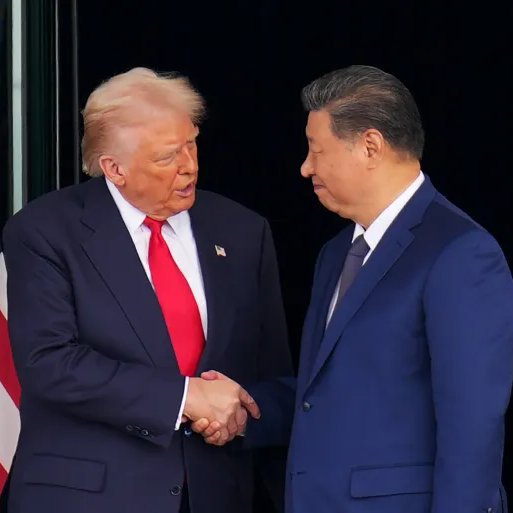
By Nitya Chakraborty   The much-awaited meeting between US President Donald Trump and the Chinese President Xi Jinping ended on Thursday morning at Busan in South Korea with both expressing high optimism at the outcome of the talks. Trump described the talks as “amazing” saying that their dispute over the supply of rare earths had […]

The article Is Xi Jinping Working For A Bipolar World Along With Donald Trump? appeared first on Latest India news, analysis and reports on Newspack by India Press Agency).

HONG KONG SAR – Media OutReach Newswire – 30 October 2025 – Hotel Artz Fair is proud to announce the artist and program highlights for its much-anticipated second edition, taking place from 21–23 November 2025 at Conrad Hong Kong. This boutique Fair offers a uniquely intimate experience, transforming hotel rooms into warm, homelike art spaces where works by over 40 artists from 12 countries and regions will […]

Ethereum’s trajectory is showing signs of strengthening as institutional demand, staking growth and protocol upgrades converge to position the network for a possible lead in the upcoming crypto cycle. The asset has been trading in a holding pattern around the $4,000–$4,300 range while market watchers debate whether this consolidation presages a breakout or a renewed test of support. According to exchange-data and on-chain indicators, Ethereum’s fundamentals are increasingly robust as it faces critical technical levels.

Institutional flows into Ethereum-related products have doubled since early 2025, with fund holdings reaching an estimated 6.5 million ETH and staking totals climbing to a record near 36.1 million. These developments reflect rising confidence in the network’s long-term value proposition as more traditional investors enter the space. On-chain records show that major whale wallets and “smart money” participants are accumulating, while staking reduces circulating supply and enhances scarcity dynamics.

Ethereum’s dominance in the decentralised finance and stable-coin settlement sectors amplifies that structural momentum. The network remains the foundational layer for smart-contract use-cases, layer-2 roll-ups and tokenised assets, lending greater weight to its ecosystem compared with more speculative cryptocurrencies. Developer-activity metrics place Ethereum ahead in creating new builds, deploying upgrades and supporting applications, reinforcing its role as a critical infrastructure asset rather than simply a trading vehicle.

On the technical front, key resistance near $4,250–$4,300 has become a focal point for analysts. A sustained breakout beyond that zone could unlock targets in the $5,000–$6,000 range and potentially much higher over the next year or two. Conversely, failure to clear that barrier could invite a re-test of support zones around $3,900–$4,000, a scenario flagged by bearish analysts. Macro-conditions such as global interest-rate policy, liquidity flows and risk-appetite remain wild cards, keeping short-term momentum fragile even as the long-term case strengthens.

Competition from alternative layer-1 blockchains and regulatory uncertainties remain headwinds. While Ethereum remains the ecosystem leader, other chains are gaining traction with lower fees and faster speeds; the extent to which Ethereum preserves its dominance will depend on its ability to scale and manage cost pressures. Moreover, regulatory scrutiny of crypto assets and staking vehicles may alter the institutional adoption timeline, requiring cautious interpretation of bullish narratives.

Emerging upgrades to the network architecture provide a catalytic backdrop. The so-called “Fusaka” upgrade, scheduled for late 2025, aims to deliver enhancements to sharding and data-availability that should improve throughput and reduce fees. These technical improvements may lower entry barriers for decentralised-applications and stimulate further ecosystem growth, thereby reinforcing Ethereum’s value proposition. At the same time, staking yields continue to incentivise long-term holders and reduce the liquid supply, offering a structural support mechanism for price.

Thrifty Car Rental UAE has introduced the region’s first self-service digital car rental kiosk, a move aimed at transforming how vehicles are rented across the Emirates. The kiosk, unveiled at the lobby of Novotel and Ibis Deira Creekside Dubai, allows customers to browse available vehicles, complete identity verification and make payment entirely digitally — the car can then be delivered within one to three hours. The launch signals a clear shift toward technology-led mobility solutions in the car rental industry.

The kiosk offering is part of Thrifty’s broader strategy to engage customers seeking convenience, speed and flexibility. At the Arabian Travel Market 2025 the firm outlined its ambition to expand this self-service model across high-traffic zones, including residential areas, shopping centres and transit hubs. The head of retail at Thrifty, Chand Soni, said the company was “building more than a rental network; we’re building a connected experience.”

Industry data suggest that the regional car rental market is undergoing a fundamental digital transformation, driven by customer demand for contactless service and the tourism sector’s push for smarter mobility. A market research report covering Oman values the digitisation of car rental — including self-service kiosks and app-based models — at US$150 million and growing, citing rising smartphone penetration and government digital-economy initiatives.

Thrifty’s kiosk system employs a touchscreen interface, secure identity verification and live payment integration. Users select vehicle type, rental duration and location via the kiosk, triggering delivery logistics in what the company promises as “minutes, not hours”. The vehicle is dropped off at a location of the renter’s choice. The system is designed to address both leisure travellers and residents who may need a flexible vehicle-rental alternative without the usual counter-based rental process.

The shift comes as car rental players in the region face increased competition not just from traditional rivals but from app-based mobility services and subscription models. For example, Thrifty itself is rolling out flexible rental plans — including monthly specials and lease-to-own options — to attract customers who prefer longer-term flexibility over ownership. The kiosk adds another layer of convenience for shorter-term rentals or spontaneous plans.

The move may also help Thrifty scale more efficiently. By deploying kiosks in multiple locations, the company can reduce staffing and branch-infrastructure costs, optimise fleet utilisation and meet spontaneous demand without needing multiple full‐service outlets. Soni noted the goal of doubling the network of touchpoints in the period ahead.

However, executing this strategy will bring challenges. The initial investment in digital kiosks and supporting IT infrastructure is substantial, and the process requires robust identity verification, payment security and logistics coordination. According to regional research, smaller operators may struggle to deploy such tech due to cost constraints and customer inertia — in some markets a majority of users remain more comfortable engaging via staffed counters.

Another risk lies in customer adoption. While younger and tech-savvy users may welcome the kiosk format, others may prefer the human interaction offered by traditional rental counters. Thrifty will need to ensure service reliability, vehicle availability and customer support — especially if rentals are completed entirely digitally and delivery timelines become core customer expectations.

Regional mobility trends underscore the importance of innovation. With the UAE emphasising tourism growth, smart infrastructure and digital transformation, the launch aligns with broader national strategies. Thrifty’s positioning at the intersection of mobility, digital convenience and customer experience may help meet evolving consumer behaviour, but sustaining value will depend on execution across logistics, fleet management and customer service.

For business travel, hotel partnerships and leisure rentals, the kiosk offers a compelling convenience proposition. At the same time, Thrifty must manage fleet availability, delivery logistics and system uptime to avoid service disruptions. Monitoring how customers adopt the kiosks, how much rental behaviour changes and how much cost or revenue upside emerges will be key to assessing whether this innovation delivers long-term competitive advantage.

Households may soon welcome a new occupant. Robotics firm 1X Technologies has opened pre-orders for its humanoid home assistant model, NEO, signalling a push into consumer domestic robots. The Palo Alto and Norway-based company lists the unit at about US$20,000, with deliveries slated to begin in 2026. The robot is pitched to perform household chores such as folding laundry, organising shelves, fetching items and greeting guests. 1X […]

A high-level delegation from China plans to meet officials in Brussels this month to discuss tightening restrictions on rare earths and other critical minerals after the bloc flagged the controls as a threat to its key industrial sectors. The European Union has increased pressure on Beijing to restore stable access to materials essential for electric vehicles, semiconductors and defence capabilities while also advancing its own diversification plan […]

HONG KONG SAR – Media OutReach Newswire – 27 October 2025 – The China Tennis Tour CCB (Asia) Hong Kong Open 2025 (hereafter “CTA1000 CCB (Asia) Hong Kong Open”) will return to Victoria Park Tennis Court from 23rd to 30th November 2025. The eight-day tournament will gather more than 150 of the China’s top players, competing across Men’s Singles, Women’s Singles, Men’s Doubles, and Women’s Doubles for […]

The groundbreaking ceremony of the world’s first gigascale round-the-clock renewable energy project took place in Abu Dhabi, marking a significant milestone in the global transition to sustainable energy. Sheikh Theyab bin Mohamed bin Zayed Al Nahyan, deputy chairman of the Presidential Court for Development and Fallen Heroes’ Affairs, was present at the event, which will see the integration of solar power and cutting-edge battery storage technologies capable […]

Gulf states are emerging as influential players in digital assets, with governments across the region intensifying efforts to regulate cryptocurrencies, tokenisation and Web3 innovations. A growing number of jurisdictions are introducing licensing frameworks for virtual asset service providers, stablecoin regimes and asset-tokenisation structures, signalling a shift in strategy from reactive oversight to proactive design.

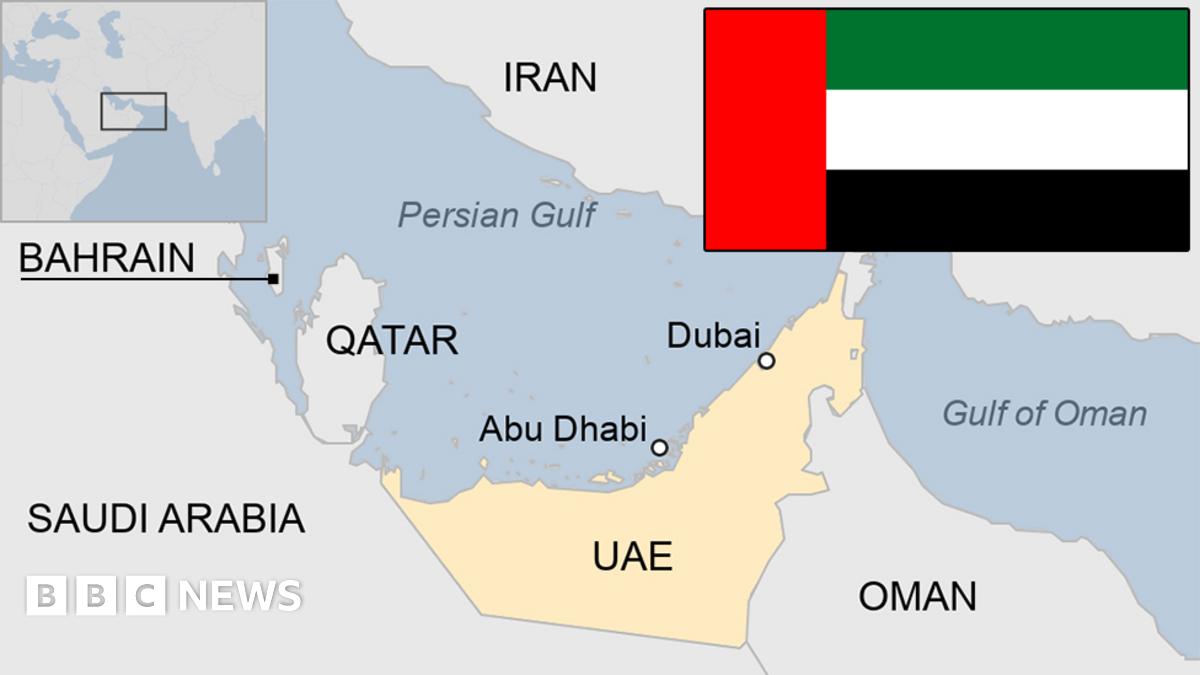
The Central Bank of the United Arab Emirates has introduced a Payment Token Services Regulation that obliges issuers, distributors and custodians of payment tokens to maintain full reserve backing, undergo mandatory licensing and meet robust anti-money-laundering and cybersecurity standards, thereby positioning the UAE as a regulatory pioneer in the region. Across the region, countries such as Bahrain and Saudi Arabia have developed layered digital-asset frameworks, with Bahrain’s central bank among the earliest movers and Saudi launching fintech sandboxes and pilot token-asset schemes under its Vision 2030 plan.

Market data underline these developments. Analysis shows that between July 2023 and June 2024 the Middle East and North Africa region handled some US$338.7 billion in on-chain crypto value, accounting for approximately 7.5 per cent of global transaction volume. Institutional flows dominate: about 93 per cent of value transferred in the region came in amounts of US$10,000 or more.

Several regional platforms have obtained new licences under this regulatory push. The region’s first licensed crypto-asset service provider, Rain Financial Inc., has expanded its services under licence from both Bahrain’s regulator and Abu Dhabi’s ADGM-FSRA. In Bahrain, over 50 firms including nearly half focused on digital-assets are in discussions to establish operations under the Central Bank’s regime.

The tokenisation of real-world assets is gaining traction, with banks and global institutions exploring issuance of token-backed bonds, real estate and commodity-linked tokens. According to consultancy research, tokenisation could add as much as US$230 billion annually to MENA-region GDP. Major international exchanges and asset-managers are establishing footholds: for instance, the global exchange Binance uses the UAE as its regional base and has obtained a licence under Dubai’s Virtual Assets Regulatory Authority.

Despite this momentum, the region faces challenges. Implementation remains uneven: regulatory capacity across jurisdictions varies, local consumer-protection rules are still emerging and cybersecurity vulnerabilities in wallet providers and exchanges pose material risk. Energy-use and environmental impacts of crypto-mining have also drawn regulatory scrutiny: in one Gulf city, electricity consumption fell by over fifty per cent after enforcement of mining curbs.

Taxation and corporate-governance issues are also under development. In Saudi Arabia individuals currently pay no capital-gains tax on crypto, though businesses may face up to 15 per cent tax with corporate income taxed at 20 per cent plus a 2.5 per cent zakat levy. Given the youth-skewed demographics of Gulf markets and high smartphone penetration, regulators see digital-assets as both a diversification lever and a conduit to broader fintech innovation.

For global crypto and Web3 players the Gulf region offers a combination of clear regulation, large capital pools and government-driven ambition. However firms must navigate rigorous licensing conditions, reserve-backing rules, AML frameworks and evolving governance standards. The regulatory focus on stability and consumer protection underscores that the region expects digital-asset innovation to be embedded in mainstream finance rather than existing outside it.

   By K Raveendran   The market seems to have already done its arithmetic on the new US sanctions on two major Russian oil companies, Rosneft PJSC and Lukoil, gauging the immediate and medium-term consequences for energy supply lines stretching from Moscow to Mumbai. In a matter of hours, crude prices spiked, reflecting not just […]


The article Latest Trump Sanction On Russian Oil Companies Gives Escape Route To India appeared first on Latest India news, analysis and reports on Newspack by India Press Agency).

The Chief Executive of Tesla, Inc., Elon Musk, stands to become the first individual ever to reach a personal net worth of US$1 trillion if he fulfils the company’s newly unveiled incentive package that ties his compensation to the firm achieving an $8.5 trillion valuation. Tesla’s latest proxy filing reveals that Musk could be awarded up to 423.7 million shares, or roughly 12% of the company, if the […]

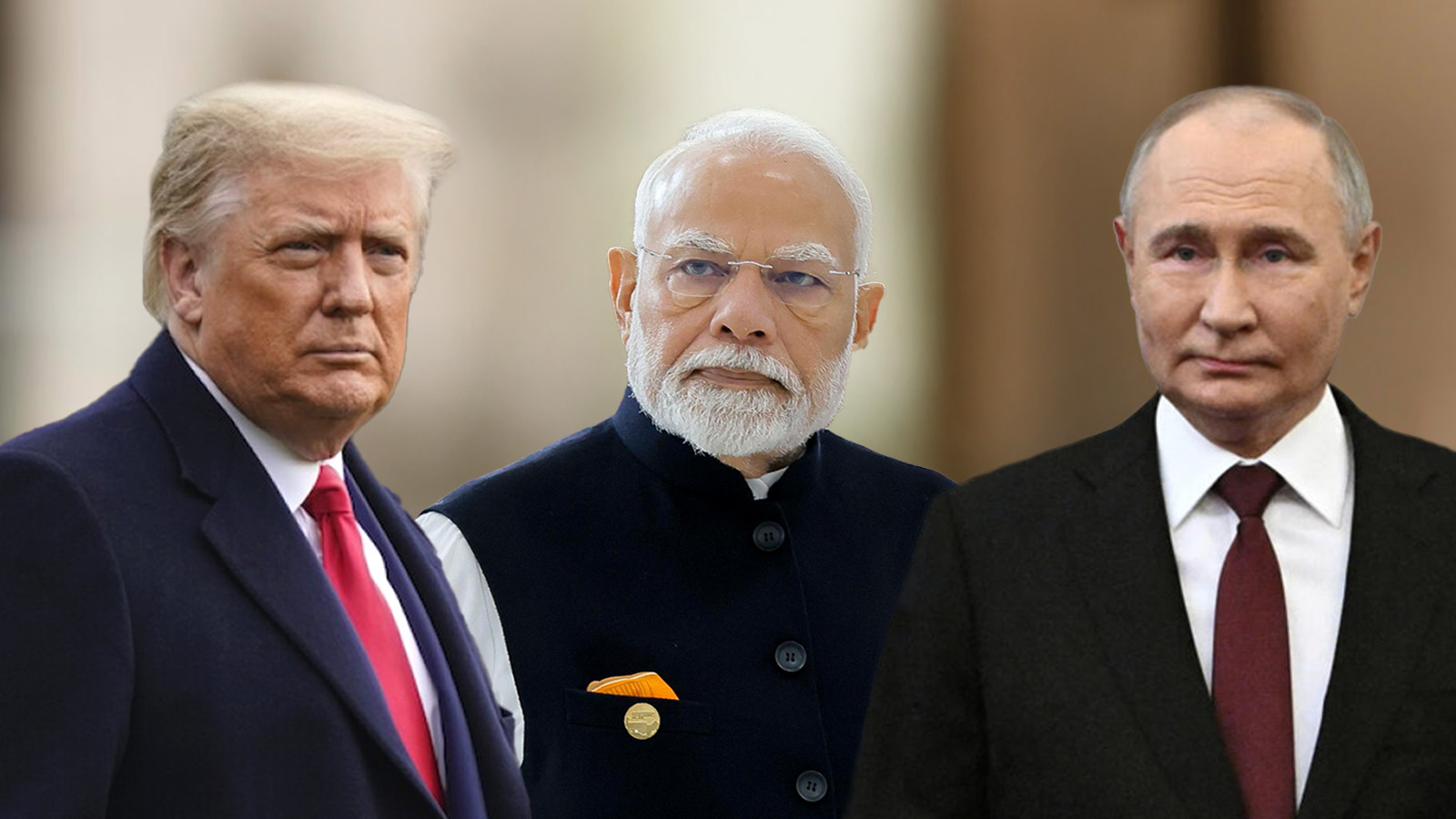
By Nitya Chakraborty   The twist and turns in Prime Minister Narendra Modi’s dealing with the overtures to him from the US President Donald Trump in the last three weeks speak eloquently of the tussle that is going on at the highest level of the BJP leadership and the RSS over how to send the […]


The article Sangh’s Nationalist Line Restrains Modi From Early Deal With Trump appeared first on Latest India news, analysis and reports on Newspack by India Press Agency).

For years, the cryptocurrency debate has centred on price. Every discussion returned to charts, volatility, and market speculation. The fixation on value swings has distracted from a much more important story. The future of digital finance is not about price movement. It is about infrastructure. Regulated stablecoins are emerging as the foundation of a new global financial system. They combine the trust of established currencies with the […]

The Dubai Department of Economy and Tourism has launched an incentive programme that reimburses eligible hotel developments for 100 per cent of the Dubai Municipality room-sales fee and the Tourism Dirham levy for two years following opening. The scheme targets new hotels, resorts, hotel apartments and other approved hospitality facilities in the designated growth zones of Dubai South, Palm Jebel Ali, Dubai Parks and Dubai Islands. The move stems from Executive Council Resolution No.  of 2025, […]

VISHNU RAJA
RYO YAMADA
HITORI GOTOH
IKUYO KITA