News related to
much

By T N Ashok On a humid June morning in India’s capital, the birthday wishes began arriving before sunrise. Students posted videos on Instagram. Party workers unfurled banners across small towns. Political allies issued carefully worded messages of solidarity. Critics, never far behind, reminded the nation of his electoral defeats, his verbal missteps and the […]

The article The Twists And Turns In Rahul Gandhi’s 22 Year Old Political Journey appeared first on Latest India news, analysis and reports on Newspack by India Press Agency).

SINGAPORE- Media OutReach Newswire – 19 June 2026 – For many students considering higher education, choosing an institution is not only about selecting a programme or qualification. Students are also looking for a learning environment where they belong, receive support, build confidence and connect with people who can help with understanding future career pathways.

At SIM Global Education (SIM GE), campus life is designed to complement academic learning by helping students develop networks, soft skills, career awareness and a stronger sense of community. SIM GE’s holistic learning approach and culturally diverse environment aim to equip students with an all-rounded global education, while student life, career development and networking activities help students build competencies needed to thrive in the real world.

This is increasingly important in higher education. UNESCO’s International Institute for Higher Education notes that student wellbeing is critical to academic success and personal development, and that inadequate support can affect learning outcomes, career readiness and students’ ability to contribute meaningfully to society.

Addressing student concerns beyond the classroom
Students exploring higher education often face several practical concerns. They may wonder whether they will make friends, whether they will be supported if they struggle, whether they will have opportunities to develop leadership skills, and whether they can access career guidance before entering the workforce.

SIM GE addresses these concerns through a campus ecosystem that combines student clubs, leadership development, peer support, wellbeing programmes and career services. Through Project 1095, SIM GE highlights that education extends beyond books, exams and qualifications, encompassing knowledge, skills and activities both inside and outside the classroom. This approach supports students who want a fuller higher education experience to grow personally, socially and professionally.

Building networks through clubs and co-curricular activities
Student clubs and co-curricular activities are among the first ways SIM GE students build connections on campus. SIM offers nearly 80 student clubs across areas such as arts and culture, international student clubs, student councils, special interest groups, sports and fitness. These activities allow students to broaden their interests, discover new talents and interact with peers beyond their academic programmes.

For students, these communities can make networking feel more natural. Instead of viewing networking only as a formal career activity, students can begin by working with peers on events, competitions, club projects and leadership initiatives. These experiences help students develop communication, teamwork, confidence and relationship-building skills that are valuable in both campus life and the workplace.

Developing leadership and workplace-ready skills
Leadership opportunities are another important part of the SIM GE student experience. Project 1095 states that SIM aims to prepare every student to be a leader, with opportunities ranging from leadership positions in clubs, to workshops that help students take charge of their learning journey.

These experiences are relevant to students who want to strengthen their employability before graduation. By organising activities, leading teams, managing projects and engaging with different student groups, students can develop confidence and practical skills that support their future careers. Such skills are increasingly valued by employers. The World Economic Forum’s Future of Jobs 2025 report identifies skills such as analytical thinking, resilience, flexibility, agility, leadership and social influence as important for the future workforce.

Connecting students with career guidance and industry networks
For students seeking more direct career support, SIM Career Connect helps students develop a competitive edge, build industry networks and professional connections, and align their career aspirations with real-world opportunities. This is a key part of helping students transition from academic learning to career readiness. Through career guidance, networking opportunities and employer engagement, students can better understand industry expectations and explore potential career pathways.

SIM’s Employer Engagement team also works with industry partners to connect employers with SIM GE students, supporting employers in finding the right fit from its pool of talent, and provides. For students, this access to industry networks can help reduce uncertainty about life after graduation. It also gives them opportunities to gain exposure to professional environments, employer expectations and potential career directions while still studying.

The role of mentoring in student career development
Mentoring and professional guidance are important because students often need perspective as much as information. Research on employability-oriented higher education programmes has highlighted that higher education has increasingly focused on developing students’ employability competences through mentoring programmes.

Within SIM GE’s broader campus life and career ecosystem, students can connect with peers, student leaders, career advisors, employers and industry opportunities. These touchpoints help students build confidence, ask the right questions, learn from others’ experiences and make more informed decisions about their future.

Helping students make a more confident higher education choice
As students consider their higher education options, many are looking for more than a classroom experience. They want to know whether they will be supported, whether they can build friendships, whether they will have access to career resources, and whether they can connect with people who can help them understand the world of work. At SIM Global Education, student life plays an important role in addressing these concerns. Through clubs, co-curricular activities, student leadership, peer support, wellbeing services, career guidance and employer engagement, SIM GE provides students with opportunities to build meaningful connections and develop future-ready skills.

For students choosing their next step in higher education, these experiences can make a significant difference. They help you move from uncertainty to confidence, from participation to leadership, and from academic learning to stronger career readiness.

Reference

  1. SIM Global Education – https://www.sim.edu.sg/degrees-diplomas/sim-global-education/university-partners-sim-ge/sim-ge
  2. New insights on countries’ objectives to support student well-being in higher education – https://www.iesalc.unesco.org/en/articles/new-insights-countries-objectives-support-student-well-being-higher-education
  3. Project1095 – https://project1095.simge.edu.sg/
  4. Future of Job Report – https://www.weforum.org/publications/the-future-of-jobs-report-2025/
  5. SIM Career Service – https://www.sim.edu.sg/degrees-diplomas/life-at-sim/career-services
  6. Measuring mentoring in employability-oriented higher education programs: scale development and validation – https://pmc.ncbi.nlm.nih.gov/articles/PMC10170025/
  7. Wellness and Counselling – https://www.sim.edu.sg/degrees-diplomas/life-at-sim/student-care

Hashtag: #SIMGlobalEducation #SIMGE #GlobalEducation #InternationalDegree #CareerReady #FutureSkills

The issuer is solely responsible for the content of this announcement.

About SIM Global Education

SIM Global Education (SIM GE) is a leading private education institution in Singapore and the region. We offer more than 140 academic programmes ranging from diplomas and graduate diploma programmes to bachelor’s and master’s degree programmes with some of the world’s most reputable universities from Australia, Canada, Europe, United Kingdom, and the United States. SIM GE’s cohort is made up of 17,000 full- and part-time students and adult learners, of which approximately 41% are international students hailing from over 50 countries.

SIM GE’s holistic learning approach and culturally diverse learning environment aim to equip students with knowledge, industry skills and employability competencies, as well as a global perspective to succeed as future leaders in a fast-changing, technologically driven world.

For more information on SIM Global Education, visit

By R. Suryamurthy India’s economy is supposedly doing remarkably well. Growth remains among the fastest in the world. Stock markets continue to flirt with record highs. Billionaires are multiplying. Airports are expanding. Bullet trains are advancing. Defence exports are reaching new milestones. The nation is speaking confidently about becoming a $10 trillion economy and a […]

The article The Great Dichotomy Of The Growing Indian Economy Haunts Millions appeared first on Latest India news, analysis and reports on Newspack by India Press Agency).

Leonardo and Abu Dhabi’s EDGE Group have set a target of more than €4 billion in orders over five years for a new defence sensors and systems joint venture, signalling a deeper industrial push by the UAE into high-end military technology and a wider export drive by Europe’s defence manufacturers. The venture, detailed at a Paris event on Wednesday, is expected to begin operations with contracts already […]

Arabian Post Staff -Dubai Saudi Aramco is considering the sale of a stake in its sulphur business as the state-controlled energy group expands a wider drive to unlock cash from infrastructure assets and support Saudi Arabia’s investment-heavy economic transformation. The potential transaction, known internally as Project Yellowstone, could raise as much as $7 billion and would cover assets linked to sulphur storage and export terminals. Aramco invited […]

Kylian Mbappé scored twice as France opened their World Cup campaign with a 3-1 win over Senegal at MetLife Stadium, recovering from a poor first half to take control of their Group I opener in New Jersey. The France captain struck in the 66th minute, added a second deep into stoppage time and moved to 14 World Cup goals, overtaking Pelé and Lionel Messi on the tournament’s […]

Freight costs on key Asia-UAE routes have surged from about $1,000 to as much as $7,000 per container, intensifying pressure on importers, retailers, manufacturers and re-exporters that rely on Dubai and other UAE hubs for supplies moving across the Gulf, Africa and South Asia.

The jump, flagged at an IBPC Dubai logistics session, reflects a wider disruption in maritime corridors linked to Middle East tensions, fuel-cost volatility, security-risk surcharges and capacity constraints. Paras Shahdadpuri, Governor of IBPC Dubai and Chairman of Nikai Group, said the disruption had tested businesses while reinforcing confidence in the UAE’s ability to respond effectively. “Freight rates have risen from $1,000 to $7,000, putting pressure on businesses, but the speed of response here has helped maintain confidence in uncertain times,” he said.

The impact is being felt most sharply by businesses with thin margins or long replenishment cycles. Consumer electronics, appliances, automotive parts, food products, textiles, building materials and pharmaceutical consignments are among the categories most exposed to higher freight, delayed vessel schedules and tighter booking windows. Importers face a difficult choice: absorb added costs, renegotiate supply contracts, delay shipments or pass part of the burden to consumers.

Dubai’s response has centred on route diversification, customs facilitation and closer coordination among ports, logistics operators, carriers and government agencies. The Green Corridor linking Dubai and Oman has become a critical pressure valve, allowing cargo arriving through Omani ports and airports to move overland through streamlined procedures. Customs declarations through the corridor rose from about 12,000 in March to nearly 100,000 in April, while the value of goods moved increased from Dh1 billion to more than Dh8 billion.

The corridor has helped sustain flows for containers destined for Jebel Ali, goods entering the local market and re-export cargo bound for other destinations. More than 100,000 TEUs have already moved through Green Corridor initiatives, underlining how quickly shippers have adapted to alternative supply routes. Food security shipments and refrigerated cargo movements have remained stable, a key benchmark for a market dependent on uninterrupted imports.

Freight inflation is not confined to the UAE lane. Global container benchmarks have moved higher as peak-season demand started earlier than usual and conflict risk reshaped vessel deployment. The World Container Index climbed to $3,549 per 40ft container in mid-June, while Asia-Europe and transpacific routes also recorded rate increases. Fuel costs, insurance premiums and route deviations have widened the gap between contracted and spot-market pricing.

The UAE’s logistics model has so far avoided the deeper breakdown seen during earlier global supply-chain shocks. Jebel Ali remains central to regional trade, while Fujairah, Khor Fakkan and Omani gateways have gained strategic importance as alternative access points. Cargo owners are mixing sea, land and air solutions to balance cost against reliability, making multimodal logistics a boardroom issue rather than a back-office procurement function.

The pressure comes at a sensitive time for India-UAE trade, which has expanded under the Comprehensive Economic Partnership Agreement that entered into force in 2022. Bilateral trade reached $101.25 billion in FY2025-26, with the UAE ranking as India’s third-largest trading partner and second-largest export destination. Higher freight costs risk eroding some of the tariff and market-access gains achieved through the pact, particularly for mid-sized exporters and distributors operating on fixed price commitments.

Business groups say the crisis is accelerating changes that were already under way. Importers are adding supplier options in Southeast Asia and the GCC, splitting shipments across ports, increasing buffer stocks for critical items and using digital tracking tools to manage delays. Logistics providers are offering blended products that combine ocean freight, bonded trucking and air cargo, while retailers are reviewing inventory cycles before the next seasonal demand peak.

The strain is also prompting fresh attention to contract design. More companies are inserting freight-adjustment clauses, separating shipping costs from product pricing and seeking clearer force-majeure language for geopolitical disruption. For smaller traders, the biggest challenge is cash flow: a container that once required a modest upfront freight payment can now tie up several times more capital before goods even reach the warehouse.

Advertisements

Uniswap’s UNI token surged more than 22 per cent on Wednesday as a long-range Standard Chartered forecast injected momentum into decentralised-finance names while bitcoin struggled to hold gains before the Federal Reserve’s policy decision. The move lifted UNI to about $3.60, extending a sharp weekly advance and making it one of the strongest performers among larger crypto assets. Bitcoin traded near $65,000–$66,000, little changed after a choppy […]

Arabian Post Staff -Dubai Riyadh Air has secured US permission to operate flights to and from the United States, clearing a key regulatory hurdle for the PIF-owned carrier as it accelerates its challenge to established Gulf aviation rivals. The US Department of Transportation approved the airline’s authority after Riyadh Air applied last month for a foreign air carrier permit and exemption authority covering scheduled and charter services […]

How Iqoniko and Van Sterling Capital Are Enabling Private Investors to Participate in a Growth Story via the Innovative Platform Intokia.com Lehmann Hotel und Gaststätten Holding GmbH is leveraging an innovative Capital Roadshow for digitized profit participation rights—a modern investment vehicle—as it begins its Taco Bell rollout in Bavaria, Germany. In collaboration with Iqoniko and Van Sterling, the group is establishing a model that provides both professional […]

Elon Musk’s personal fortune of $1.3 trillion exposes a flaw in one of investing’s most widely accepted ideas. The financial advice industry has for decades championed diversification as the answer to almost every investment challenge. Build a broad portfolio, spread risk, own the market and stay patient. Indeed, it’s sensible advice and, for many investors, entirely appropriate. Yet diversification has gradually evolved from a risk-management tool into […]

By Asad Mirza The framework peace agreement between the United States and Iran has reduced the immediate risk of a wider regional war. Yet the accord leaves unresolved the central issues that have fuelled four decades of confrontation, making its long-term survival far from assured. The announcement of a framework peace agreement between the United […]

The article Can The US-Iran Peace Deal End Decades Of Hostility In West Asia? appeared first on Latest India news, analysis and reports on Newspack by India Press Agency).

Iran twice came from behind to draw 2-2 with New Zealand in their 2026 FIFA World Cup opener, taking one point from a turbulent Group G match shaped as much by the protests outside the Los Angeles venue as by the exchanges on the pitch. The match at Los Angeles Stadium in Inglewood gave both teams a foothold in a group that also includes Belgium and Egypt, […]

Foreign investors delivered their strongest one-day purchase of Vietnamese equities in nearly six years on 15 June, signalling a sharp improvement in risk appetite after fears over Middle East energy disruption eased.

Overseas funds bought a net US$160.4 million of Vietnamese shares on Monday, the largest daily inflow since 10 September 2020. The buying helped steady a market that had been under pressure from rising oil prices, global risk aversion and sustained foreign withdrawals despite Vietnam’s long-awaited move towards emerging-market status.

The VN-Index rose 0.43 per cent to 1,799.31 on Monday and moved back above the 1,800-point area on Tuesday, keeping the benchmark close to levels that still represent a strong annual advance even after a pullback over the past month. The shift was part of a wider rebound across Asian emerging markets after the United States and Iran agreed on terms aimed at ending hostilities and reopening the Strait of Hormuz, easing concerns over inflation and fuel costs.

The reversal is notable because foreign investors have remained net sellers of Vietnamese equities this year. Even after Monday’s inflow, overseas funds have sold about US$2.6 billion of Vietnamese stocks in 2026, following withdrawals of roughly US$4.8 billion last year. Those outflows reflected concerns over market concentration, heavy exposure to a few large-cap groups, tariff uncertainty, currency pressure and the impact of higher energy prices on a manufacturing-led economy.

“De-escalation in the Middle East and Vietnam’s own underperformance have created a textbook re-entry set-up for foreign capital,” said Quynh Cao, head of institutional business at VNDirect Securities. “Positioning was already tight and it does not take much to flip that.”

Vietnam’s appeal to global investors rests on more than a single trading session. FTSE Russell has confirmed that the country will be reclassified from frontier to secondary emerging-market status from 21 September, with inclusion in global equity indices to be phased through 2027. The upgrade is expected to bring passive inflows of about US$1.5 billion, with broader active flows potentially lifting the total to several billion dollars if market reforms continue.

The reclassification follows changes aimed at improving foreign access, including the removal of full pre-funding requirements for equity trades and the development of a global broker model. These reforms address long-standing obstacles for institutional investors, who had complained about settlement risk, limited access channels and operational frictions that made Vietnam harder to replicate within global index portfolios.

Large-cap names expected to draw attention include Vingroup, Masan Group, FPT Corp and Hoa Phat Group, alongside banks, securities firms, industrial stocks and consumer companies with sufficient liquidity and foreign room. Average daily trading value in Vietnamese equities this year has been around US$789 million, underscoring the market’s growing depth, though liquidity remains uneven across sectors.

The macroeconomic backdrop remains supportive. Vietnam’s economy expanded 8.02 per cent in 2025, helped by strong exports, public investment, manufacturing activity and resilient consumption. Foreign direct investment disbursement rose to about US$27.6 billion last year, while exports reached roughly US$475 billion. Growth is expected to moderate this year, but projections still place Vietnam among Asia’s faster-growing economies.

Higher oil prices had complicated that outlook. Vietnam is exposed to imported fuel and energy costs, making any disruption in the Strait of Hormuz a direct risk to inflation, transport costs and factory margins. The drop in crude prices after the US-Iran accord helped restore confidence among investors looking at countries with strong structural growth but sensitivity to external shocks.

The market is not without vulnerabilities. Retail investors remain a major force in daily trading, making sentiment swings sharper when liquidity thins. Foreign ownership limits continue to constrain buying in some leading companies. Corporate governance, disclosure quality and settlement infrastructure also remain areas under watch as Vietnam seeks eventual MSCI emerging-market status.

Analysts say the latest inflow will need to be sustained before it can be treated as a durable turning point. A single large session can reflect short-covering, index positioning or tactical buying after a sell-off. A lasting reversal would require more consistent foreign participation, firmer currency conditions, stable oil prices and evidence that earnings growth can match valuations after the market’s strong run.

Arabian Post Staff -Dubai Donald Trump’s pledge that the Strait of Hormuz will be “completely opened” by Friday has left European partners pressing for details before committing naval assets to clear mines and escort commercial vessels through the world’s most sensitive energy chokepoint. The US president arrived at the Group of Seven summit in Évian-les-Bains saying a preliminary US-Iran accord had settled the immediate question of shipping […]

Abdullah Ibrahim, the South African pianist and composer whose spare, meditative sound carried Cape Town’s musical memory into the global jazz canon, has died in Germany at the age of 91 after a short illness. The musician, born Adolph Johannes Brand in Cape Town in 1934 and known early in his career as Dollar Brand, became one of the defining cultural figures of the anti-apartheid era. His […]

Oil prices slid to their lowest levels since March on Monday after Washington and Tehran said they had reached an initial deal aimed at ending the war and restoring traffic through the Strait of Hormuz, easing fears that months of disruption to one of the world’s most important energy corridors would deepen. Brent crude futures fell $4.08, or 4.7 per cent, to $83.25 a barrel by 0415 […]

By K Raveendran The promise of a ‘great settlement’ from President Trump has been enough to pull oil prices lower, calm equity markets and revive hopes that the Strait of Hormuz may return to normal traffic. Yet it shows how fragile the relief remains. A diplomatic opening can move prices in an instant, but a […]

The article The ‘Great Settlement’ That Could Decide Price Of Iran War World Will Pay appeared first on Latest India news, analysis and reports on Newspack by India Press Agency).

Global peace has deteriorated for a 12th consecutive year as armed conflicts, military build-ups and geopolitical fragmentation deepen instability across much of the world, the 2026 Global Peace Index has found. The latest index, covering 163 countries and territories, recorded a 0.7 per cent decline in the average level of peacefulness over the past year, the 15th deterioration in 18 years. Ninety-nine countries became less peaceful, while […]

Arabian Post Staff -Dubai The UAE has firmly rejected allegations that money was moved from the country to Iran, including claims involving as much as $3bn, saying no frozen Iranian assets have been released, transferred or facilitated through its territory. The Ministry of Foreign Affairs said reports carried by unnamed international media outlets were “entirely false and unfounded”. The statement followed accounts suggesting that funds linked to […]

Ripple has joined Mastercard’s Agent Pay for Machines programme, placing its XRP Ledger and RLUSD stablecoin within a new effort to build payment rails for AI agents and other autonomous software systems that can transact without manual intervention. The move links one of the best-known blockchain payments companies with a global card network seeking to define how machine-to-machine commerce should work as artificial intelligence systems begin buying […]

Arabian Post Staff -Dubai L’Oréal Middle East has signed the UAE Climate-Responsible Companies Pledge, placing the beauty group’s regional operations under a national framework that asks private companies to measure emissions, set reduction plans and align business decisions with the UAE’s Net Zero by 2050 pathway. The pledge was announced at the third L’Oréal For the Future Summit in Dubai, where the company positioned climate action, refillable […]

Investors have become so focused on AI software that many are overlooking the industries making the boom possible. I believe this could prove to be an expensive mistake. The dominant investment narrative has revolved around the companies building AI models, designing advanced chips and providing cloud-computing services. Investors have poured huge amounts of capital into firms such as NVIDIA, Microsoft, Amazon, Alphabet and Meta Platforms. Those businesses […]

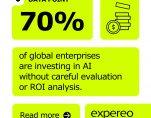
SINGAPORE – Media OutReach Newswire – 12 June 2026 – Enterprise AI spending is climbing rapidly, with boards racing to deploy the technology faster than they can measure whether it works. According to the latest IDC InfoBrief, commissioned by Expereo*, around 70% of organizations are investing in AI, motivated by its potential or by the fear of falling behind the competition, but they lag in disciplined ROI evaluation, and one in five (20%) admit they are investing aggressively in AI with little evaluation, driven by the fear of being left behind.

Image courtesy: Expereo

In Asia Pacific (APAC), that pressure is even more pronounced as 37% of organizations admit investing aggressively with little evaluation – nearly double the global average, and well ahead of the US (10%) and Europe (13%). The pressure is most acute in Australia (45%) and Vietnam (44%), while in Singapore, more than one in three organizations admit the same.
The IDC InfoBrief, based on a survey of 800 technology leaders across APAC, Europe, and the US, found that AI has become one of the most prioritized technology investments globally, with 51% of organizations planning to prioritize AI or machine learning investment over the next 12 months – rising to 61% across APAC. However, returns are failing to keep pace with the hype. Just 19% of global organizations surveyed say their AI implementations have exceeded expectations, and only 5% report they have significantly exceeded them1.
Across APAC, 40% say implementations have exceeded or significantly exceeded expectations – ahead of the global average but still leaving the majority falling short. Globally, the most-cited reasons for underperformance are inadequate or poor-quality training data (51%), higher-than-expected costs or ROI not achieved (47%), and AI not performing as well as expected (46%). For APAC specifically, the picture is broadly similar – though costs bite harder: 49% cite poor-quality training data, 54% cite cost overruns or ROI not achieved (rising to 80% in Malaysia), and 46% say AI has simply not performed as expected.
Where organizations have the right foundations in place, the results speak for themselves. Across APAC, 87% report productivity improvements in the business units most affected by AI, and 82% say quality of work has improved.

Underpinning many of these challenges is also a network and infrastructure readiness gap. Globally, 26% of organizations whose AI implementations have failed to meet expectations cite inadequate network or connectivity performance as a contributing factor. Looking ahead, 54% of organizations say they need more flexible and scalable networks to thrive in an AI-driven environment, and 51% need greater resilience and reliability to maximize uptime2. In APAC, the gap is acute as only 9% of organizations describe their network infrastructure as fully ready to support new AI, cloud, and digital initiatives, and 37% say it will need upgrading or replacing soon. The need is most acute in Thailand (74%) and Singapore (58%), both of which rank above the regional average on demand for flexible, scalable networks. In Indonesia, nearly half of all organizations (48%) say their infrastructure will need upgrading or replacing soon.

Ben Elms, CEO, Expereo, says: “Every enterprise we speak to is investing in AI, yet the data shows a clear gap opening up between AI ambition and AI outcomes. More often than not, that gap comes down to the network underneath. AI only delivers on its promise when the infrastructure carrying it is built to support it.
Without resilient, scalable, cloud-optimized networks, even the most well-funded AI programs will struggle to deliver ROI. Getting the network right is no longer an IT decision; it is one of the most important conversations happening in the boardroom today to help fulfill AI ambition.”
APAC is also leading on adoption, with 35% of organizations reporting extensive AI use across the business, against a global average of 25%3. Yet adoption alone is not enough without the right foundations beneath it.
Eric Wong, President, APAC, Expereo, says: “Asia Pacific is moving aggressively on AI adoption, but many organizations are discovering that scaling AI successfully requires more than just investment in applications and models. The underlying network, cloud connectivity, and operational readiness matter just as much. Across the region, we are seeing enterprises reassess whether their infrastructure is truly ready to support AI at scale, particularly around performance, resilience, governance, and visibility. Organizations that address those foundations early are generally seeing stronger outcomes and faster operational impact from their AI initiatives.”
Boardrooms are also waking up to the longer-term risks of unchecked AI investment. According to the survey, 54% of global tech leaders cite the creation of new security risks as a significant potential future threat for their organization’s use of AI, while 39% globally are concerned about losing track of AI-related costs and ROI once the technology is embedded across the business4. In APAC, that concern is sharper still as 41% of technology leaders in the region are worried about losing oversight of AI-related costs and ROI as adoption deepens – a figure that rises to 54% in Malaysia. Digital sovereignty is also moving up the strategic agenda, with 38% of APAC organizations rating it a high or top priority as they look to retain control over data and navigate an increasingly complex regulatory landscape.
For the full IDC InfoBrief, commissioned by Expereo, “Enterprise Horizons 2026: Where Innovation Meets Reality“ (doc #EUR154457526-IB, May 2026) please visit: [LINK]

Hashtag: #Expereo, #Network, #ArtificialIntelligence, #AI, #Technology, #AIInvestment

The issuer is solely responsible for the content of this announcement.

Expereo

Expereo is a world-leading Managed Network as a Service provider that connects people, places, and things anywhere. Solutions include Global Internet, SD-WAN/SASE, and Enhanced Internet. With an extensive global reach, Expereo is the trusted partner of 60% of Fortune 500 companies. It powers enterprise and government sites in more than 190 countries, with the ability to connect to any location worldwide, working with over 2,300 partners to help customers improve productivity and empowering their networks and cloud services with the agility, flexibility, and value of the Internet, with optimal network performance.

Expereo was acquired in Feb 2021, by Vitruvian Partners which acquired a majority shareholding from Seven2.

VISHNU RAJA
RYO YAMADA
HITORI GOTOH
IKUYO KITA