France’s trade deficit widened to €4.2 billion in December 2025, reversing some of the narrowing seen earlier in the quarter as imports accelerated faster than exports, according to official customs data released this week. The shortfall, up from a revised €3.5 billion in November, broadly matched market expectations and underscored the uneven recovery in external trade as domestic demand picked up while overseas sales faced mixed conditions. […]
Arabian Post Staff -Dubai Humid and changeable conditions are set to prevail across the UAE from Friday through Tuesday, with partly cloudy skies, the possibility of mist or light fog during early hours, and a chance of isolated rainfall, particularly over eastern and northern areas. Forecast guidance points to elevated humidity levels during the night and early morning, increasing the likelihood of reduced visibility in some inland […]
Ripple has no plans to pursue a public listing in the near term, its president Monica Long has said, pushing back against market speculation that the blockchain payments company could tap equity markets following a surge in private valuations and growing institutional interest. Long said the San Francisco-based firm is focused on building products and expanding its global payments footprint rather than preparing for an initial public […]
By Nitya Chakraborty The two and half day visit by the union home minister Amit Shah to Kolkata during 2025 year end to explain to the West Bengal party leaders his new strategy to take on the ruling Trinamool Congress in the assembly elections scheduled in March-April 2026, has given a boost to the state […]
VinFast’s breakout year, capped by its 200,000th vehicle and growing presence from India to the Middle East, shows how Vietnam is rewriting its industrial reputation, with electric cars leading the charge.
HAI PHONG, VIETNAM – Media OutReach Newswire – 8 January 2026 – On the final day of 2025, VinFast’s Hai Phong manufacturing complex ended the year at full throttle, rolling off the 200,000th vehicle from its production line. For Vietnam’s first and only global carmaker, the number capped off a year of achievements that highlighted Vietnam’s growing capability as a manufacturing hub.
VinFast’s Hai Phong manufacturing complex ended the year at full throttle, rolling off the 200,000th vehicle from its production line.
For more than a year, VinFast has led Vietnam’s car market, outselling brands that once defined what success on four wheels looked like, a welcome change in a country long used to importing its automotive identity. VinFast vehicles are now part of daily traffic as commuter cars, family haulers, and long-distance companions, judged and praised with the same standards buyers apply to Japanese, Korean, or German imports.
Scale, however, tells only part of the story. In the same year, VinFast revealed a far more technical project: the Lac Hong 900 LX, an armored electric vehicle certified to meet the VPAM VR7 ballistic protection standard. Very few automakers globally can build vehicles at that level of protection, and even fewer can do so with a fully electric platform.
Outside Vietnam, over the past two years, VinFast has pushed into North America, Europe, Asia, and the Middle East. Notably, in 2025, three new plants came online, one in Vietnam and two more in India and Indonesia. The Indian factory in Tamil Nadu entered a market famous for thin margins and even thinner patience. It is not a place that waits politely for newcomers to find their footing. Yet by December, just months after starting sales, VinFast had risen to become India’s fourth largest EV brand, prompting one Indian outlet to note that its market entry “proved to be a huge success.”
Much of VinFast’s momentum, across every market it has entered, comes from how it thinks about ownership. Rather than treating sales as an endpoint, the company tends to enter markets with an entire support system designed to remove local anxieties. In regions where electric vehicles still prompt practical questions, those details carry weight.
VinFast VF 8 model in UAE.
The Middle East offers a clear case. There, the VF 8 is positioned as a premium midsize electric SUV, supported by policies designed to reduce hesitation. Buyers receive a ten-year or 200,000-kilometer vehicle warranty, a ten-year unlimited-mileage battery warranty, and five years of free servicing, along with mobile service units, round-the-clock roadside assistance, and guaranteed parts availability.
For many buyers in the Middle East, Vietnam was not previously associated with car manufacturing, an image VinFast is steadily undoing for a country long thought of mainly as an exporter of rice and shoes. Beyond the vehicles themselves, that kind of normalization may be VinFast’s most lasting export.
There was a time when cars from South Korea were treated as a punchline in Western markets, but those jokes have not aged well. Vietnam’s turn is arriving in a different moment, shaped by electrification and fewer fixed ideas about who belongs in the global auto club. And this time, nobody is laughing.
A landmark agreement between Caracas and Washington will see up to $2 billion worth of Venezuelan crude oil exported to the United States under terms announced by President Donald Trump, marking a major shift in energy geopolitics and offering a potential reprieve to Venezuela’s embattled oil sector. The arrangement, underscored by negotiations that could divert barrels previously bound for China, elevates the United States into a key […]
Google has extended its partnership with Xreal, elevating the China-founded augmented reality specialist to lead hardware collaborator for Android XR as the two companies work towards launching consumer AR glasses in 2026. The move signals a sharper push by Google to translate its advances in artificial intelligence and spatial computing into a mass-market wearable, while positioning Xreal at the centre of a growing Android-based ecosystem. The alliance […]
Integrity is often spoken of as though it were universal: one definition, one standard, one moral yardstick by which trust is measured everywhere. In reality, integrity is deeply shaped by culture. What one society considers faithfulness, another may experience as rigidity. What one views as flexibility, another may interpret as unreliability. These differences are not signs of moral deficiency; they are reflections of distinct histories, social structures, […]
Ghana’s cedi closed 2025 as the fourth best performing currency in Africa, reflecting a year of relative stability after prolonged volatility and placing the unit among the continent’s stronger exchange rates against the United States dollar. The cedi finished the year at about GH¢10.93 to the dollar, a level that contrasted sharply with the steep depreciation seen in earlier periods and underscored the impact of tighter macroeconomic […]
Las Vegas will set the tone for the semiconductor year as leading chip designers prepare to unveil new processors at CES 2026, highlighting advanced manufacturing nodes and intensifying competition across PCs, data centres and artificial intelligence. Market expectations centre on launches from Advanced Micro Devices, NVIDIA and others that rely heavily on Taiwan Semiconductor Manufacturing Company to deliver 3-nanometre and refined 5-nanometre silicon, while Intel plans an […]
U. S President Donald Trump intensified geopolitical tensions by openly warning of possible military action against Colombia following a dramatic U. S. operation that resulted in the capture of Venezuela’s president, Nicolas Maduro. Trump made the comments aboard Air Force One, accusing Colombian President Gustavo Petro of presiding over a “sick” government and suggesting Colombia could be targeted if illicit drug and security concerns were not addressed, […]
Aviation in the United Arab Emirates has deepened its role as a strategic pillar of the national economy, with 2025 marking a year of consolidation that underscored the sector’s influence on trade, tourism, logistics and supply chains. Policymakers and industry leaders say the ecosystem’s direct and indirect contribution has reached as much as 18 per cent of gross domestic product, reflecting the scale of activity generated by airlines, airports, maintenance hubs, free zones and aviation-linked services.
Passenger and cargo volumes across the federation continued to trend higher, supported by steady growth in international travel demand and the country’s positioning as a crossroads between Asia, Europe and Africa. Major hubs operated by Dubai Airports and Abu Dhabi Airports handled sustained traffic flows as carriers expanded networks and frequencies. Capacity discipline and targeted route additions allowed operators to absorb higher volumes while maintaining service standards, reinforcing the UAE’s reputation for operational reliability.
Flag carriers remained central to the sector’s momentum. Emirates Airline pressed ahead with fleet renewal and network optimisation, focusing on long-haul markets that underpin connectivity for tourism and business travel. Etihad Airways pursued a parallel strategy centred on profitability and partnerships, aligning growth with demand and strengthening Abu Dhabi’s role as a transfer hub. Together, the airlines’ scale supported ancillary industries ranging from catering and ground handling to training and aviation finance.
Cargo performance remained a defining feature of the year. Dedicated freighter operations and belly-hold capacity benefited from the UAE’s role in high-value, time-sensitive shipments, including pharmaceuticals, perishables and e-commerce. Logistics providers highlighted improved customs processes and digital clearance systems as key enablers, allowing faster turnaround times and reinforcing confidence among multinational shippers. The integration of air cargo with ports and free zones helped sustain supply chains amid ongoing adjustments in global trade patterns.
Governance and regulation were cited by executives as competitive advantages. The General Civil Aviation Authority continued to align oversight with international standards while supporting innovation through performance-based regulation. Industry participants pointed to predictable policy frameworks and coordinated planning between federal and emirate-level authorities as factors that reduced friction for investors and operators.
Sustainability initiatives gathered pace across airlines and airports, reflecting both regulatory expectations and commercial imperatives. Carriers advanced fuel-efficiency programmes through newer aircraft types and operational measures, while airports invested in energy management, waste reduction and water stewardship. Trials involving sustainable aviation fuel expanded through partnerships with energy suppliers and research institutions, positioning the UAE as an early mover in the region’s decarbonisation efforts. While volumes of alternative fuels remain limited, industry leaders argued that early adoption builds expertise and supply-chain readiness.
Technology adoption also shaped the sector’s evolution. Biometric processing, predictive maintenance and data-driven air traffic management systems were rolled out to improve efficiency and resilience. Airports leveraged automation to manage peak flows without proportional increases in staffing, while airlines used analytics to refine scheduling and revenue management. These investments were framed as necessary to accommodate future growth while preserving service quality.
The aviation workforce expanded alongside operations, with training academies and partnerships focusing on pilots, engineers and air traffic specialists. Officials emphasised localisation and skills development as priorities, citing aviation’s role in high-value employment and knowledge transfer. At the same time, competition for specialised talent remained intense, prompting employers to enhance retention and career progression pathways.
Tourism authorities linked aviation capacity directly to visitor inflows, noting that air connectivity underpins hotel occupancy, events and retail activity. Route launches and increased frequencies supported diversification into new source markets, aligning with broader economic strategies aimed at reducing reliance on hydrocarbons. Business travel and exhibitions contributed to premium traffic, reinforcing the UAE’s positioning as a regional commercial hub.
HONG KONG SAR – Media OutReach Newswire – 5 January 2026 – Amid Hong Kong’s rising prominence as a hub for life sciences talent, the Hong Kong Life Sciences Society (HKLSS) is stepping up its efforts to nurture young talents who will shape the city’s scientific future. Through its Hong Kong Life Sciences Scholarship Awards (the Scholarship Awards) introduced in 2022, the Society has celebrated the achievements of outstanding students – this time honoring six students selected from more than 120 nominations.
The awardees of Hong Kong Life Sciences Scholarship Awards 2025/26: (from left) SANTOSO Rachelle Jacinda, RAHMAN Syed Rayan, and TAI Wing Yin Vincy.
The Scholarship Awards aims to recognize and support students pursuing life sciences or biomedical sciences programs at local UGC-funded institutions. Each awardee would receive a HK$50,000 scholarship, mentorship from industry professionals through the HKLSS Mentorship Scheme, and priority enrollment in the HKLSS Life Sciences Summer Internship Program, which offers students an integrated hands-on learning experience across Hong Kong, the Yangtze River Delta (YRD) Region and the Guangdong-Hong Kong-Macao Greater Bay Area (GBA).
Brought together by the Scholarship Awards, three awardees of cohort 2025/26 – SANTOSO Rachelle Jacinda(Y3 BSc in Biological Sciences, CityUHK), RAHMAN Syed Rayan(Y3 BSc in Applied Biology with Biotechnology, PolyU), and TAI Wing Yin Vincy(Y3 Bachelor of Biomedical Sciences, HKU), embarked on a shared journey – to be nurtured, grow, and ultimately bloom as future leaders in life sciences, contributing their skills and passion to advance Hong Kong’s life sciences ecosystem and build a better tomorrow through inter-disciplinary collaborations.
Awardees of Hong Kong Life Sciences Scholarship Awards 2025/26 (from left) Vincy, Rachelle, and Rayan shared their career aspirations in life sciences and enthusiasm for the HKLSS pillar programs.
Homegrown Biological Sciences Dream Fuels Up in Hong Kong Arriving from Indonesia three years ago, SANTOSO Rachelle Jacinda (Rachelle) joined Hong Kong’s life sciences community as an undergraduate with determination and hope. Her passion was first ignited by family medical challenges and her curiosity for biology drove her to pursue deeper studies in biological sciences.
What opened her door to her true calling was the hands-on laboratory work. Rachelle came to appreciate not only the essential role of doctors but also the vital impact of scientists, both working together to advance healthcare. This realization fueled her dream for postgraduate studies, a goal that she once deemed rather idealistic.
She described the Scholarship Awards as a “confidence boost”. She recalled receiving an affirmation from one of the Scholarship Awards interviewers about her future plans, “I think you’re in a quite good place” reassured her that she was on the right path.
With her confidence boosted, Rachelle plans to leverage the scholarship to establish herself in Hong Kong – a supportive nurturing ground for life sciences students, and growing global healthcare investment. Embracing the local culture, she is now learning Cantonese and improving her Mandarin to gear herself up and pursue future opportunities in both Hong Kong and the Chinese Mainland.
From Hometown to International Life Sciences Research Lab “I wanted to become a surgeon [in the past] because I wanted to save lives every day. But if I become a researcher in the life sciences field, one single breakthrough can change millions of lives,” said, RAHMAN Syed Rayan (Rayan), who discovered his real passion in the research lab.
Rayan’s fascination with science began at the age of ten in Bangladesh, where he observed animals in his hometown. Like Rachelle, his enthusiasm for life sciences brought him to Hong Kong, where he was encouraged to immerse himself in research at the university laboratory, guided by professors with profound global research expertise. During semester breaks, Rayan seized every opportunity to broaden his knowledge. Now based in Hong Kong, on his freshman and sophomore years, he pursued an internship in Canada and a summer exchange in the UK, where research primarily followed a fundamental approach. He was thankful for the diverse doors Hong Kong had opened, as exposure to different research methods taught him to see things more holistically, which benefited his work in Hong Kong, known for its focus on translational research.
As Rayan continued to build his career in the life sciences field, receiving the Scholarship Awards meant a great deal to Rayan as he felt “trusted by the panel” and empowered him to be aware of his actions. “Having somebody else to tell you that you are on the right path and believe in you, is very important,” Rayan emphasized.
Rayan also feels especially grateful and refreshed to have found the amazing community he discovered through the Scholarship Awards, as he gets a chance to connect with like-minded peers, who all work towards the same goals and similar challenges. The Scholarship Awards has paved his way to additional opportunities, including priority access to the Society’s industry experience focused Summer Internship Program.
Scientists on TV Ignite Big Ambitions TAI Wing Yin Vincy (Vincy), raised in Hong Kong, developed her passion for life sciences as a child watching scientists in action on TV. Inspired by her curiosity and determination to make a difference, she chose to study biomedical sciences at The University of Hong Kong, following her passion despite conventional expectations.
During her time at university, she gained practical experience through internships in both laboratory and Good Manufacturing Practice (GMP)-compliant facility, which reinforced her ambition. She also minored in Sustaining Cities, Cultures and the Earth to explore inter-disciplinary connections, “As a student, we should not only focus on life sciences, but also learn more about the global perspective, especially when sciences can influence the world,” she said.
These experiences deepened her dedication to the field and the Scholarship Awards became more than an award – it offered a source of belonging that affirmed her place in the life sciences community. “I feel like I am part of the Society, someone who can eventually grow and evolve together with the community and industry,” she said.
The Scholarship Awards has helped bridge her to the broader life sciences ecosystem, as Vincy was connected with previous and other same-cohort awardees at the Presentation Ceremony, and she looks forward to meeting more entrepreneurs, researchers, and C-suite executives from the life sciences sector and gaining guidance from them through HKLSS’ Mentorship Scheme and Summer Internship Program.
Powering Ambition: HKLSS Opens Paths Beyond the Classroom with its Pillar Programs From different beginnings, Rachelle, Rayan, and Vincy find common ground through HKLSS. For them, the Scholarship Awards is more than financial support – it brings them to the pillar programs, a gateway to industry-centered mentorship, industry experience, and a vibrant community driving the future of life sciences in Hong Kong, the YRD, the GBA and beyond.
“I would very much love to go there [Shanghai and Shenzhen] because I will have the opportunity to explore new places and also to meet people with different cultures,” Rachelle said, while Rayan and Vincy also saw the internships as valuable opportunities to gain experience in the Chinese Mainland. “I have heard so many good things from my friends, especially the pharmaceutical companies over there,” Rayan added.
As a life sciences ecosystem enabler, HKLSS continues to expand its pillar programs, activities, and network to meet the evolving needs of members at different career stages. To address the growing demand for life sciences talent and attract both local and non-local professionals to the city, HKLSS also launched Biotech Talent, a dedicated job platform that connects talent with opportunities in the life sciences and biotechnology industry, and offers employers direct access to a diverse talent pool. Through a growing suite of initiatives, the Society partners with its network to support and cultivate a vibrant life sciences ecosystem with dedication. Hashtag: #HongKongLifeSciencesSociety #HKLSS #香港生命科技青年會 #LifeSciences
The issuer is solely responsible for the content of this announcement.
About Hong Kong Life Sciences Society
Hong Kong Life Sciences Society (HKLSS) is an organization established by Nan Fung Group in 2018 aiming to build a dynamic life sciences ecosystem in Hong Kong. Through knowledge exchange, collaboration and public engagement, HKLSS aims to attract, cultivate and retain talent in Hong Kong’s life sciences and biotechnology sectors.
Members of Hong Kong Life Sciences Society Founder and Board Chair: Mr Vincent Cheung Board Vice-chair: Mr Shannon Cheung, Prof Nancy Ip, Mr Antony Leung Executive Director: Prof Ken Wong
Members of the Advisory Board Prof Tom Cheung, Dr Vanessa Cheung, Ms Irene Chu, Mr Shan Fu, Mr Meng Gao, Ms Gladdy He, Prof David Ho, Dr Lu Huang, Mr Emmanuel Hui, Prof Daniel Lee, Ms Nisa Leung, Prof Suet Yi Leung, Prof Kai Liu, Prof Stephanie Ma, Dr Jay Mei, Prof Malik Peiris, Prof Leo Poon, Dr Jin Seok Seo, Prof Anderson Shum, Dr Qiusong Tang, Mr William Tang, Prof Lap-Chee Tsui, Prof Yung Hou Wong, Mr Frank Yu, Prof Kwok-Yung Yuen
OpenAI chief executive Sam Altman has publicly acknowledged the expanding impact of artificial intelligence on mental health and cybersecurity, signalling a shift in how one of the world’s most influential AI developers frames the social risks of its technology. The remarks came alongside an announcement that OpenAI is seeking a Head of Preparedness, a role designed to anticipate and mitigate potential harms as AI systems grow more […]
Federal reforms regulating industrial hemp are reshaping the treatment landscape for sleep disorders, anxiety and epilepsy across the United Arab Emirates, as clinicians, researchers and regulators map how low-THC cannabis derivatives can be used safely within a tightly controlled system. The changes sit apart from the country’s framework on medical cannabis, which governs products with higher tetrahydrocannabinol content and remains subject to strict prescription and import rules.
The hemp law permits the cultivation, processing and use of cannabis varieties containing minimal THC, typically below 0.3 per cent, aligning the UAE with regulatory models adopted in several advanced economies. Officials say the objective is to unlock therapeutic and industrial value without opening pathways to recreational misuse. For patients, the most immediate implications are for cannabidiol-based preparations, which are non-intoxicating and increasingly studied for neurological and psychiatric conditions.
The policy shift creates new clinical options for people whose symptoms have proved resistant to conventional therapies. Insomnia and generalised anxiety disorder affect a growing share of the population, while epilepsy continues to pose treatment challenges for a subset of patients who do not respond adequately to standard anti-seizure medicines. Cannabidiol, or CBD, has drawn attention for its calming effects on the central nervous system and its role in reducing seizure frequency in certain epilepsy syndromes.
Specialists caution that hemp products are not a panacea. Evidence is strongest for specific childhood epilepsies, including Dravet and Lennox-Gastaut syndromes, where purified CBD has been shown to reduce seizure burden when added to existing regimens. Research into anxiety and sleep has produced more mixed findings, though small clinical trials and observational studies suggest benefits for sleep onset and stress modulation at carefully titrated doses.
Professor Barnes, a leading authority on cannabis medicine, notes that the global legal landscape has shifted rapidly. Medical cannabis containing higher THC levels is now legal in 71 countries under varying frameworks, reflecting broader acceptance of cannabinoid-based therapies when appropriately regulated. The UAE’s approach, by contrast, draws a bright line between hemp-derived products and medical cannabis, allowing limited therapeutic use while preserving the country’s zero-tolerance stance on recreational drugs.
Regulators emphasise that access will be medicalised rather than commercialised. Hemp-derived therapeutics are expected to move through pharmacy channels and clinical oversight, with product quality, labelling and traceability forming core pillars of compliance. Authorities have indicated that cultivation licences will be tightly issued, with genetics, THC thresholds and testing protocols specified to prevent diversion.
Healthcare providers see an opportunity to expand personalised care. Neurologists and psychiatrists report rising patient interest in non-sedating options that can be integrated with existing treatments. For epilepsy specialists, CBD’s favourable side-effect profile compared with some traditional anti-epileptic drugs is a significant draw, particularly for long-term management. Sleep physicians, meanwhile, are exploring whether hemp-derived formulations can reduce reliance on hypnotics that carry dependency risks.
Industry participants are preparing cautiously. Pharmaceutical distributors and research institutions are investing in clinical studies tailored to regional populations, recognising that dosage, formulation and delivery methods matter as much as legality. Oils, capsules and oral solutions are expected to dominate, given their dosing precision and lower risk profile compared with inhaled products.
Public health experts underline the need for clear guidance to avoid consumer confusion. Hemp products sold globally range from pharmaceutical-grade medicines to wellness supplements of uneven quality. The UAE framework seeks to close that gap by requiring evidence-based claims and physician involvement, reducing the risk of self-medication or exaggerated expectations.
The reforms also intersect with broader innovation goals. By enabling controlled research into cannabinoids, policymakers aim to position the country as a regional hub for life sciences, while maintaining strict ethical standards. Universities and hospitals are already collaborating on protocols to assess safety, efficacy and long-term outcomes in local cohorts.
Air India Express has unveiled a limited-period initiative offering discounted rates for pre-booked excess baggage on flights from the Middle East to destinations across the country, a move aimed at easing travel costs for migrant workers, families and long-haul passengers who routinely carry more than the standard allowance.
The airline said passengers travelling on eligible routes can now pre-book either 5 kg or 10 kg of additional baggage at reduced prices when purchasing tickets or managing bookings in advance, rather than paying significantly higher charges at airport counters. The scheme applies to flights operated by Air India Express connecting key Gulf cities with multiple airports, including Kochi, Kozhikode, Thiruvananthapuram, Kannur, Mangaluru, Bengaluru, Chennai, Hyderabad, Tiruchirappalli and Tirupati.
According to the airline, the discounted excess baggage option is available only for travel originating in the Middle East and must be secured before the scheduled departure. Passengers booking at the airport will not be eligible for the reduced rates, a distinction designed to streamline airport operations while encouraging early planning.
Air India Express operates a dense network between the Gulf and southern states, serving a passenger base that often includes overseas workers returning home with gifts, personal belongings and household items. Industry executives say baggage fees have long been a sensitive issue on these routes, where standard allowances can fall short of passenger needs.
A senior airline official said the initiative was introduced after feedback indicated that travellers valued predictable, upfront costs more than ad hoc airport payments. “Pre-booked baggage gives customers certainty and reduces stress on the day of travel,” the official said, adding that the airline continues to evaluate pricing structures in response to demand patterns.
The move comes as competition intensifies on Middle East–India corridors, with full-service and low-cost carriers vying for price-sensitive passengers. Airlines have increasingly turned to ancillary services such as baggage, seat selection and onboard meals to boost revenues while keeping base fares competitive.
Aviation analysts note that excess baggage fees represent a significant ancillary revenue stream globally, but also pose reputational risks if perceived as excessive or opaque. By offering discounted slabs for pre-booking, carriers can strike a balance between revenue generation and customer goodwill.
Data from industry bodies show that traffic between Gulf countries and India has continued to expand, driven by labour mobility, tourism and family travel. Seasonal peaks around school holidays and festival periods often see passengers travelling with heavier loads, amplifying the relevance of baggage-related offers.
Air India Express, now part of the Air India Group following its integration with AIX Connect, has been undergoing operational and branding changes as the group consolidates its low-cost strategy. The airline has been inducting new aircraft, expanding its network and revisiting service elements to align with broader group objectives.
The discounted baggage scheme also reflects a wider trend among low-cost carriers to monetise flexibility. Instead of a one-size-fits-all fare, airlines are offering modular options that allow passengers to tailor services based on individual needs, often at lower overall cost if planned in advance.
Consumer advocacy groups have welcomed clearer communication around baggage pricing but stress the importance of transparency. “Passengers should be able to understand what they are paying for and how much they can carry without surprises,” said a travel rights consultant based in Dubai, noting that disputes over baggage charges remain a frequent source of complaints.
Microsoft chief executive Satya Nadella has called for a recalibration of how the technology sector talks about artificial intelligence, arguing that the industry should move beyond what he describes as “AI slop” and focus instead on a rigorous theory of the mind that reflects how people actually think, decide and create when equipped with powerful digital tools. His remarks, delivered during a wide-ranging discussion on the future […]
XRP has moved ahead of BNB to claim the position of the world’s fourth-largest cryptocurrency by market capitalisation, marking a sharp shift in the digital-asset rankings during a period of heightened market activity. The token’s valuation has climbed to about $123 billion after prices advanced to the $2.02–$2.03 range, reflecting an intraday rise of roughly 8 per cent and outpacing gains among several large-cap peers. The change […]
Dollar trading opened the new year on firmer ground on Friday, extending a modest rebound after a bruising twelve months that marked its weakest annual performance in eight years, as investors reassessed the outlook for United States interest rates and global growth.
The greenback edged higher against a basket of major peers in early European dealings, with the yen drifting back towards levels last seen in the spring and the euro slipping slightly after gains built up over the previous year. Market participants described the move as cautious rather than decisive, reflecting thin liquidity and lingering uncertainty over policy direction in Washington.
Currency strategists said the dollar’s fragile recovery followed heavy selling through much of last year, when expectations of rate cuts by the Federal Reserve and easing inflation undercut the yield advantage that had supported the currency in earlier cycles. At the same time, improving growth prospects outside the United States encouraged investors to rotate towards higher-yielding or undervalued alternatives.
Against the yen, the dollar climbed back towards the upper end of its trading range, hovering near a ten-month high. The Japanese currency has remained under pressure amid a persistent gap between domestic borrowing costs and those in the United States, even as Tokyo has signalled a gradual move away from ultra-loose policy. Traders noted that the yen’s slide was less abrupt than in past episodes, reflecting continued sensitivity to the risk of official intervention.
The euro eased after a strong performance last year, when slowing inflation and steady growth in parts of the euro zone boosted confidence in the region’s economic resilience. Analysts cautioned that the single currency’s trajectory would depend heavily on whether European policymakers deliver further easing or pause to assess wage pressures and fiscal spending plans.
Sterling traded in a narrow band, supported by signs of stabilising inflation but weighed by questions over the durability of domestic growth. Emerging market currencies showed mixed moves, with higher-yielding units holding up better as investors searched for carry opportunities, while those linked to commodities reacted to softer prices in energy and metals.
Market focus remains fixed on forthcoming United States data releases, including employment and inflation indicators that could shape expectations for policy adjustments later in the year. While inflation has moderated from its peak, officials have stressed that decisions will be driven by incoming data rather than preset timelines, a stance that has kept rate forecasts in flux.
Some investors argue that the dollar’s decline last year went too far, pointing to the size and liquidity of United States markets and the economy’s capacity to absorb tighter financial conditions. Others counter that structural forces, including a narrowing growth gap with other advanced economies and rising fiscal deficits, could cap any sustained rebound.
Central banks outside the United States are also recalibrating. In Japan, policymakers are weighing how quickly to normalise after years of stimulus without destabilising markets. In Europe, debates continue over balancing support for growth with the need to anchor inflation expectations. These cross-currents have injected volatility into foreign exchange markets, even as overall trading ranges remain narrower than during periods of crisis.
Commodity prices have added another layer of complexity. Oil has softened amid ample supply, trimming support for currencies of major exporters, while gold’s pullback has reduced its appeal as a hedge against currency weakness. Equity markets have started the year on a cautious note, reinforcing demand for safe and liquid assets.
By Prabhat Patnaik The BJP-led government has just got parliament to pass a legislation permitting up to 100 percent foreign equity-ownership in India’s insurance sector. This, the Prime Minister has announced, marks the beginning of a major “reform” in India’s financial sector, towards presumably much greater private, including foreign, ownership of financial institutions. This would […]
By Dr. Gyan Pathak Gig workers of India have concluded the year 2025 with an all-India strike action on the last day, December 31, 2025, demanding fair wages and working conditions, which have undergone marked deterioration in the last three months. It happened despite the Union government’s repeated claim that they have been doing everything […]
By K Raveendran As Indian corporates step into the new year buoyed by stronger growth momentum and easing inflationary pressures, a sense of anticipation is spreading across boardrooms and policy circles alike over a dispute that dwarfs most corporate battles seen in the country’s history. At the heart of this confrontation lies the Indian government’s […]
By Ashis Biswas Within the South Asian context, a noticeable coarsening of diplomatic discourse among four countries has occurred, following the violent regime change in Bangladesh, a brief encounter involving India and Pakistan and sporadic skirmishes between Pakistan and Afghanistan. A new political alignment, whose contours will be clearer after the Bangladesh general elections, is […]
By Nantoo Banerjee It does not make sense for India to deplete its hard-earned foreign currency reserves to temporarily protect the Rupee’s exchange value. In fact, Indian Rupee’s downturn vis-à-vis other major currencies has not adversely impacted the country’s impressive economic growth, at least for the present. On the contrary, it has made exports cheaper […]


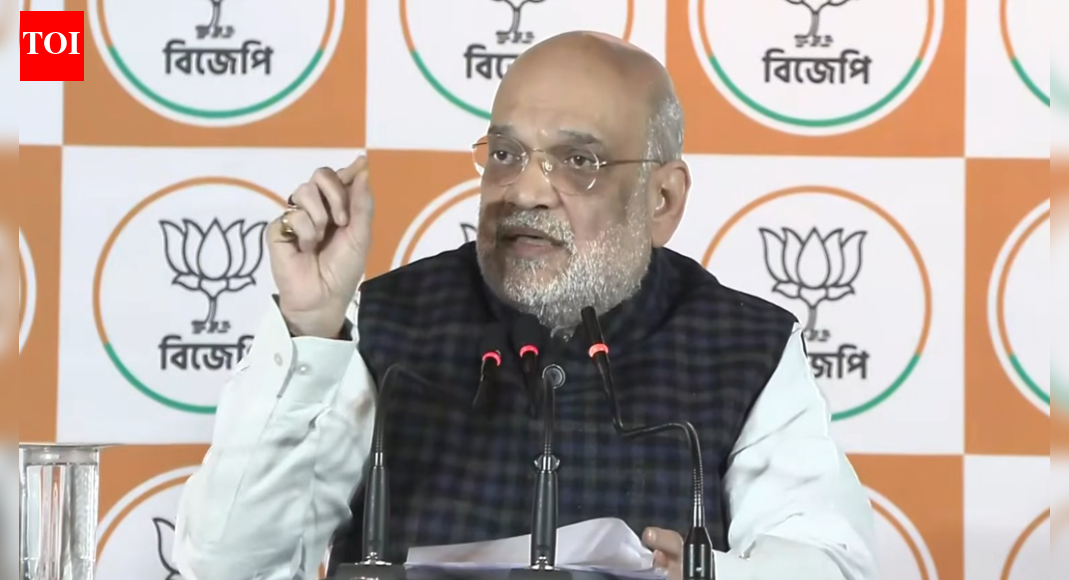
 By Nitya Chakraborty The two and half day visit by the union home minister Amit Shah to Kolkata during 2025 year end to explain to the West Bengal party leaders his new strategy to take on the ruling Trinamool Congress in the assembly elections scheduled in March-April 2026, has given a boost to the state […]



 https://me.vinfast.com/en




 www.facebook.com/HKLifeSciencesSociety
 www.instagram.com/hklifesciencessociety
 www.linkedin.com/company/hklss/


 By Prabhat Patnaik The BJP-led government has just got parliament to pass a legislation permitting up to 100 percent foreign equity-ownership in India’s insurance sector. This, the Prime Minister has announced, marks the beginning of a major “reform” in India’s financial sector, towards presumably much greater private, including foreign, ownership of financial institutions. This would […]

 By K Raveendran As Indian corporates step into the new year buoyed by stronger growth momentum and easing inflationary pressures, a sense of anticipation is spreading across boardrooms and policy circles alike over a dispute that dwarfs most corporate battles seen in the country’s history. At the heart of this confrontation lies the Indian government’s […]