By Dr. Nilanjan Banik The public argument over Tata Sons has been told as a story of power: a board and a set of trusts pulling in different directions, a regulator applying pressure from outside. Lost in that framing is the party with the least say and the most at stake, the ordinary investor. This […]
We’re heading into earnings season again in Corporate America, and S&P 500 earnings are forecast to climb 27% in the third quarter, and for the first time since 2021, every single sector is expected to grow its profits. For two years sceptics have argued the AI boom is a narrow bet on a handful of technology companies. These numbers point to an investment wave now feeding profits […]
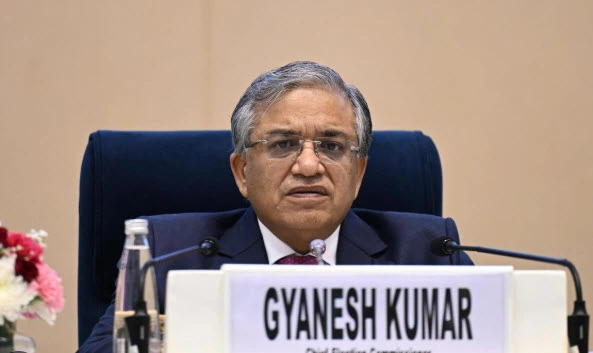
By K Raveendran India’s escalating confrontation over the Election Commission is no longer merely a dispute about electoral rolls or the conduct of Chief Election Commissioner Gyanesh Kumar. It has become an institutional crisis touching the credibility of elections themselves. As opposition parties, activists and youth groups demand Kumar’s resignation over allegations of voter-list manipulation, […]
By Dr. Gyan Pathak Tamil Nadu politics is undergoing a great churning. Tamilaga Vettri Kazhagam (TVK) led by CM Chandrasekaran Joseph Vijay has formally joined the INDIA bloc on October 3, 2026. It is indeed the biggest strategic shift in Tamil Nadu politics in recent times, which the Tamil Nadu Congress Committee president Manickam Tagore […]
By Arun Srivastava The political economy of a state is the interdisciplinary study of how a government’s political institutions, laws, and power dynamics interact with its economic system to produce, distribute, and manage wealth and public policy. The political economy of Uttar Pradesh is shaped by its massive electoral weight, profound caste-class cleavages, and a […]
US$10 Billion in Venture Capital Convenes to Meet Hong Kong Start-ups; Government, Business and Young Professionals Explore Opportunities in the New Economy
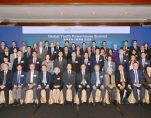
HONG KONG SAR – Media OutReach Newswire – 7 October 2026 – The Global Youth Powerhouse Summit 2026, organised by Hong Kong Youth Professional Global Advocacy, was held on 5 October at the Conrad Hong Kong. Now in its third edition, the Summit coincides with the release of the Hong Kong Special Administrative Region’s First Five-Year Plan for Economic and Social Development (2026–2030) and the latest Policy Address, which together set a clear blueprint for the city’s future. Anchored on these core themes and conducted entirely in English, the full-day programme focused on artificial intelligence, geopolitics, Hong Kong as an education hub, capital markets, life and health technology, and start-up financing. Government and business leaders, corporate representatives and young professionals were invited to examine Hong Kong’s strategic opportunities in the new economic landscape.
The Global Youth Powerhouse Summit 2026 brings together more than 600 young professionals, government and business leaders and corporate representatives
The Summit aims to connect young professionals with international resources, enabling participants to engage directly with industry leaders, grasp developments at the frontier of industry, and look ahead to the opportunities and challenges arising from artificial intelligence and Greater Bay Area integration. Previous editions have drawn a strong response. Across three editions, the Summit has attracted more than thousands of in-person participants and about 17,000 online participants from over 30 countries and regions, with social media reach exceeding 50 million.
This year’s Summit was the largest yet, bringing together more than 600 young professionals, government and business leaders and corporate representatives. Participants from over 60 countries and regions joined online. More than 30 distinguished speakers and moderators were invited, including officials of the Hong Kong Special Administrative Region Government and representatives of leading local and international organisations such as Huawei, the Alibaba Hong Kong Entrepreneurs Fund, Hong Kong Exchanges and Clearing Limited, Bullish and Endowus. In addition, consular representatives from up to 20 countries attended the Summit.
The Chief Executive of the Hong Kong Special Administrative Region, Mr John Lee, GBM, SBS, PDSM, PMSM, delivered a pre-recorded video speech, encouraging young professionals to seize the opportunities of the times and inject fresh momentum into Hong Kong’s high-quality development. He said: “For our young people, I firmly believe that your opportunities ahead outweigh the difficulties. The HKSAR Government will join hands with all sectors to build platforms for you to thrive in Hong Kong, in our country, and in the global arena.”
The Deputy Secretary for Justice of the Hong Kong Special Administrative Region, Dr Cheung Kwok-kwan, SBS, JP, delivered an opening keynote entitled “Opportunities for the Professional Development of Young People”, and stressed: “As the saying goes, ‘Change is the only constant’—or as our Cantopop classic famously put it, ‘變幻原是永恆’. Today, we no longer measure change in years or decades, but in months and days. For our young professionals, this fast-paced era unlocks unprecedented career horizons. By accelerating Greater Bay Area integration through our new GBA Task Force and empowering you to act as the ultimate ‘super-connectors’ and ‘super value-adders’ helping Mainland enterprises go global, we are turning rapid change into your greatest professional advantage.”
Dr Kevin Lau, MH, Founding Convenor of Hong Kong Youth Professional Global Advocacy, said: “This is more than a high-level forum. It marks a milestone in the maturing of our network of young professionals. This afternoon, venture funds managing an estimated US$10 billion in assets gathered in the room — and what they are looking at is Hong Kong’s next generation. In life and health technology, our core belief is clear: artificial intelligence can assist imaging and diagnosis, but a physician’s care, and the warmth of a human hand, can never be replaced by technology.”
Other distinguished guests included Mr Kevin Choi, JP, Permanent Secretary for Innovation, Technology and Industry; Professor Frederick Ma, GBS, JP, Chairman of the Hong Kong Trade Development Council; Ms Bonnie Y Chan, JP, Chief Executive Officer of Hong Kong Exchanges and Clearing Limited; and Mr James Chau, President of the China-United States Exchange Foundation and World Health Organization Goodwill Ambassador for Sustainable Development Goals. Mr Bryan Che, Chief Strategy Officer of Huawei, and Ms Cindy Chow, Executive Director and Chief Executive Officer of the Alibaba Hong Kong Entrepreneurs Fund, also attended in person to exchange views with young professionals.
Panel discussions
Artificial intelligence: from first-time users to advanced users The opening session began with remarks by Mr Kevin Choi, JP, Permanent Secretary for Innovation, Technology and Industry, and was moderated by Ms Stephaine Chan, Director of the Office of the Vice Chairman of Esquel Group. Panellists included Ms Ilaria Chan, Chair of the Tech For Good Institute; Mr Bryan Che, Chief Strategy Officer of Huawei; and Ms Cindy Chow, Executive Director and Chief Executive Officer of the Alibaba Hong Kong Entrepreneurs Fund. The discussion focused on whether small and medium-sized enterprises, non-governmental organisations and schools can genuinely put artificial intelligence to use, and on the talent, trust and practical-application issues Hong Kong faces in driving “AI for all”.
Mr Kevin Choi, JP mentioned: “Every major technology shift brings uncertainty. Our theme today from entry-level shock to AI-powered users building the next talent leader.”
Ms Stephaine Chan said: “Every AI conversation ends in the same place, right? More investment, better people, better models and stronger policy.”
Ms Ilaria Chan said: “These days, Al is so powerful that they can scan the Internet and social media and find vulnerable young people or old people. They can find it instantly and have a very sophisticated way to trick them and fraud them from scamming.”
Mr Bryan Che: “One of the opportunities of Al is because the interface is much more natural for most people to interact with. On one sense, it’s a lot easier for everyone to get started.”
Ms Cindy Chow said: “So I guess some of the most damaging thing is not allowing people to use or not, you know, really have the attitude to embrace all this new technology, what this new technology has to bring to you.”
Geopolitics: the super-connector This session was moderated by Mr James Chau, President of the China-United States Exchange Foundation and World Health Organization Goodwill Ambassador for Sustainable Development Goals. Speakers included Ms Ilaria Chan, Chair of the Tech For Good Institute; Ms Ellana Lee, Senior Vice President, Managing Editor, Asia Pacific, and Global Head of Productions at CNN; and Professor Frederick Ma, GBS, JP, Chairman of the Hong Kong Trade Development Council.
Mr James Chau said: “Against this backdrop, we often hear Hong Kong described as a super connector, typically framed in terms of trade volumes, capital markets and logistics but I think that these connections that we’re speaking of really only become very valuable and we understand and recognize the human bonds that pin these together.”
Professor Frederick Ma , GBS, JP said: “We are part of China. And yet we are under one country 2 systems connected to the rest of the world. That is the power of Hong Kong.”
Ms Ellana Lee said: “We made a very strategic decision when the times were tough to stay and remain in Hong Kong. I think that has and you know, we make these decisions not just out of a whim, but we are very calculative on why we need to stay. I have 8 cities across Asia Pacific. Hong Kong happens to be the hub for Asia Pacific. And there’s it boils down to four major reasons.”
Ms IIaria Chan: “Simple of how tech is helping people, there is an organization, WHO care for children that was founded 20 years ago that helps orphans in developing China back then Vietnam, Thailand now in Africa, Middle East to find loving permanent homes. But their bottleneck is how they train social workers and governments on how to take care of orphan welfare. Now this year we’ve actually been launching an online product that is able to scale these bottlenecks, especially in areas that are underfunded. This is a great example of Al tech.”
Education: Hong Kong as Asia’s education hub This session was co-moderated by Mrs Jennifer Yu Cheng, JP, Founder of the Future Leaders Foundation, and Ms Jennifer Ma, Founder of JM Edu Consulting. Speakers included Ms Maggie Chau, School Partnership Advisor at the Academy for Educational Development and Innovation of The Education University of Hong Kong; Mr Dion CHEN, MH, Vice-Chairman of the Hong Kong Direct Subsidy Scheme Schools Council; and Professor Charles Ng Wang-Wai, Vice-President for Institutional Advancement of The Hong Kong University of Science and Technology.
Mrs Jennifer Yu Cheng, JP said: “An education hub is more than a place with excellent institutions. It is a place that students and families choose, where young people flourish, and connects education with research, innovation, careers and a wider community.”
Professor Charles Ng said: “With our national policy. And I think we should do better to support this great initiatives and thinking back actually 2023 and home government already in in the government policy in October, if I remember correctly to start to increase the local student quota from 20% to 40%.”
Ms Jennifer Ma said: “As a consultant we need demand to meet supply and we are definitely seeing the demand for Hong Kong education at K12 level…….The advocacy for Hong Kong to be the gateway for China Resources and talents to leave China and go into international arenas. But at the same time, we also see a lot of international people interested in what’s happening in mainland, and therefore Hong Kong is a great gateway. So, with that global education, global education philosophy, that means they really appreciate Hong Kong trilingual education by cultural mindset.”
Mr Dion CHEN, MH mentioned: “In 2026, a lot of DSS schools will work very hard to try to welcome and also promote welcome to Hong Kong and also promote Hong Kong’s education to the students in different countries.”
Ms Maggie Chau said: “Maggie: I can see that all the universities are actually implementing AI in their curriculum. Talking about teacher education, the programs we offer, I mean, not just The Education University of Hong Kong, the programs we offer in all universities implement Al in the curriculum in a way that we draw attention to the use of Al is it has to be ethical.”
Capital markets: AI listings, asset tokenisation and the new economy This session was moderated by Ms Emily CHAN Tan, a former CNBC anchor. Speakers included Ms Bonnie Y Chan, JP; Ms Clara CHAN Ka Chai, Chief Executive Officer of the Hong Kong Investment Corporation Limited; Mr Michael Lau, Senior Vice President and Head of Group Business Development at Bullish and Chairman of Consensus; and Mr Samuel RHEE, Co-founder, Chairman and Group Chief Investment Officer of Endowus.
Ms Clara CHAN Ka Chai said: “We always say that from zero to 1 is the most challenging part. So, the patients in terms of having staying power is the core, but it has to go in hand with other qualities like being proactive, being professional.”
Mr Michael Lau said: “I think it’s an interesting proposition to consider that these types of companies that are so capital. I would start looking beyond the current horizon of where we are to see where it could go next. And so I do think that there is a demand looking to that future where this idea of a tokenized capital market could be quite interesting.”
Mr Samuel RHEE mentioned: “First of all, maybe we just take a step back and just try to understand all of the capital markets, not just equities.”
Ms Bonnie Y Chan, JP said: “I want to point out one thing. I mean, we are operating a stock exchange and I think capital markets at the end of the day, the basic function is to match capital with opportunity. So what I’m very focused on is that I’m not just focused on technology or AI.”
Ms Emily CHAN Tan said: “We are not just witnessing a cyclical recovery, but also some would call this the threshold of a capital markets renaissance.”
Life and health technology: building a health-industry hub This session was moderated by Professor Lo Yuk-lam, BBS, Founding President of the Hong Kong Biotechnology Organisation. Speakers included Professor LI King-Chuen, Founding Dean of the School of Medicine at The Hong Kong University of Science and Technology; Dr Sarah SALVILLA, Director of Health and Strategic Partnerships at FWD Group; and Professor Anthony Wu Ting-yuk, GBS, JP, former Chairman of the Hospital Authority and Non-executive Chairman of Trinity Medical Group. The discussion focused on how AI in healthcare can strengthen the competitiveness of Hong Kong’s health industry.
Professor Lo Yuk-lam, BBS said: “Building HK’s holistic wellness hub, this year marks a defining moment for HK. With the release of our first ever five year plan and their chief executive policy address just a few weeks ago, our city’s road map for healthcare and biotechnology knowledge has never been clearer or more ambitious.”
Professor Anthony Wu Ting-yuk, GBS, JP said: “Every country every city is trying to recruit more talent and I think Hong Kong is an ideal position to attract talents.”
Professor LI King-Chuen said: “Our education system will be individualized. And we will do the factual knowledge transfer through mostly self-directed learning. So we guide them, we build an AI system with prescribed information.”
Dr Sarah SALVILLA said: “Prevention for sure in terms of how do we educate people to be much more proactive in their everyday lives, yes you know, kind of the lifestyle things.”
Start-up pitching: connecting with capital The closing session was moderated by business journalist Ms Elaine Yu, with Mr LU Chin Yung, Senior Vice President (Start-ups) of the Sector Specialist Group at Invest Hong Kong. Representatives of 11 venture funds were present, including the Alibaba Hong Kong Entrepreneurs Fund, Clee Capital, Click Ventures, GT Healthcare Capital Partners, Gobi Partners GBA, HKSTP Ventures, MindWorks Capital, Ryoden Medical Holdings, Seveno Capital, Verge HealthTech Fund and W2 Venture Partners. Together, the funds manage an estimated US$10 billion, have invested in more than 600 start-ups across more than 30 economies, and have backed at least nine unicorns, including Airwallex, Animoca Brands, Prenetics and GoGoX. Start-ups taking part in the pitching session included CELLmeric, Entoptica, PointFit, Syngular, Kodifly, AilsynBio, EveryBaby, A-grade, Orimmune Biotech, Nordia Biotech, Oncolmmu Nostics Limited, The Harbour School (THS), VisionBridge, Eden’s Garden, and CARE CONNECT.
Ms Elaine Yu said: “We have 15 startups and I think a group of students as well, very precocious students WHO are already thinking of ideas, real businesses with commercial viability at the cutting edge of science, research, healthcare and so forth. So, this should be a fun dynamic session.”
Mr LU Chin Yung pointed out: “Hong Kong is great in a lot of rankings in the world and this is not given, this is hard earned by your parents, by some of you sitting here. But as a young founder in Hong Kong, if you come to Hong Kong, you get to enjoy all this very safe environment. You have efficiency and then you also have a very clean government. This one I can say for sure. Yeah. And and all this, it helps the the founders to focus on your business, focus on grow, growing instead of you have to deal with many, many things.”
The Summit closed amid lively exchange. Hong Kong Youth Professional Global Advocacy said it will continue to build the Summit into a platform for dialogue between young professionals and leading figures in government and business, helping Hong Kong’s young talent seize the opportunities of the new economy.
Vice-Chairman, Hong Kong Direct Subsidy Scheme Schools Council
Mrs Carrie Cheng, JP
Founder, Future Leaders Foundation
Dr Cheung Kwok-kwan, SBS, JP
Deputy Secretary for Justice, Hong Kong Special Administrative Region
Mr Kevin Choi, JP
Permanent Secretary for Innovation, Technology and Industry
Ms Cindy Chow
Executive Director and Chief Executive Officer, Alibaba Hong Kong Entrepreneurs Fund
Dr Kevin Lau, MH
Founding Convenor, Hong Kong Youth Professional Global Advocacy
Mr Lau Tak-ho
Senior Vice President and Head of Group Business Development, Bullish, and Chairman, Consensus
Ms Ellana Lee
Senior Vice President, Managing Editor, Asia Pacific, and Global Head of Productions, CNN
Professor King Li
Founding Dean, School of Medicine, The Hong Kong University of Science and Technology
Professor Lo Yuk-lam, BBS
Founding President, Hong Kong Biotechnology Organisation
Mr Raymond Lui
Senior Vice President (Start-ups), Sector Specialist Group, Invest Hong Kong
Ms Michelle Ma
Founder, JM Edu Consulting
Professor Frederick Ma, GBS, JP
Chairman, Hong Kong Trade Development Council
Professor Charles Ng
Vice-President for Institutional Advancement, The Hong Kong University of Science and Technology
Mr Samuel Rhee
Co-founder, Chairman and Group Chief Investment Officer, Endowus
Dr Sit Wai-nga
Director, Health and Strategic Partnerships, FWD Group
Professor Anthony Wu, GBS, JP
Former Chairman, Hospital Authority, and Non-executive Chairman, 全仁醫療集團
Ms Elaine Yu
Business Journalist
Ms Jeanne Cheng, JP
District Officer (Central and Western)
Dr Elsie Leung, GBM, JP
Former Secretary for Justice, Hong Kong Special Administrative Region
Professor Teresa Cheng, GBM, GBS, SC, JP
Secretary-General, International Organization for Mediation, and former Secretary for Justice
The Hon Tommy Cheung, GBM, GBS, JP
Non-official Member, Executive Council
The Hon Dr Lam Ching-choi, GBS, JP
Non-official Member, Executive Council
The Hon Chan Hoi-fung, BBS, MH, JP
Legislative Council Member
The Hon Chan Kin-por, GBM, GBS, JP
Non-official Member, Executive Council
The Hon Nixie Lam
Legislative Council Member
Mr Andrew Yao, SBS, JP
Hong Kong Deputy to the 14th National People’s Congress
Professor Herman Hu, GBS, JP
Hong Kong Deputy to the 14th National People’s Congress
Mr Gordon Lam
Hong Kong Deputy to the 14th National People’s Congress
Mr Chan Chung-ni, SBS, JP
Hong Kong Deputy to the 14th National People’s Congress
Mr Ho Hon-kuen, BBS, MH
Hong Kong Member, 14th National Committee of the Chinese People’s Political Consultative Conference
Mr Tu Haiming, BBS
Hong Kong Member, 14th National Committee of the Chinese People’s Political Consultative Conference
Mr Kung Wing-tak
Hong Kong Member, 14th National Committee of the Chinese People’s Political Consultative Conference
Dr Lo Kam-wing, BBS, JP
Hong Kong Member, 14th National Committee of the Chinese People’s Political Consultative Conference, and President, The Chinese Manufacturers’ Association of Hong Kong
Mr Li Tai-chong, SBS, OM, JP
Member, National Committee of the Chinese People’s Political Consultative Conference
The Hon Lam Wai-chuen
Legislative Council Member
The Hon Lau Man-kwan, JP
Legislative Council Member
The Hon Chong Ho-fung
Legislative Council Member
The Hon Lee Kwong-yu, MH
Legislative Council Member
The Hon Leung Tsz-wing, MH
Legislative Council Member
Mr Ng Yuk-yeung
Hong Kong Member, 14th National Committee of the Chinese People’s Political Consultative Conference
The Hon Fong Kwok-shan
Legislative Council Member
The Hon Lau Ka-keung, BBS, MH, JP
Legislative Council Member
The Hon Revd Canon Peter Koon, SBS, JP
Legislative Council Member
Mr Pablo Macedo Riba
Consul General of Mexico in Hong Kong
Dr Esteban Ramírez González
Consul General of Mexico in Hong Kong
Mr Alberto Martínez
Representative, Consulate General of Spain in Hong Kong
Ms Silvia Civera
Representative, Consulate General of Spain in Hong Kong
Mr Javier Sampedro
Commercial Representative, Consulate General of Spain in Hong Kong
Mr Juha Niemi
Consul General of Finland in Hong Kong and Macao
Mr O’Brien Ernesto Guerra Córdova
Consul General of Venezuela in Hong Kong
Mr Ammala Saenchonghack
Consul General of the Lao People’s Democratic Republic in Hong Kong
Mr Riaz Ahmed Shaikh
Consul General of Pakistan in Hong Kong
Mr Yos Sokhemrin
Consul General of Cambodia in Hong Kong
Mr Maurits Ter Kulve
Consul General of the Netherlands in Hong Kong
Ms Lim Kim Suan
Consul General of Brunei Darussalam in Hong Kong
Mr Hassan Doutaghi
Consul General of Iran in Hong Kong
Mr Ali Abdulla Al-Hitmi
Deputy Consul General of Qatar in Hong Kong
Ms Helen Silvester
British Council
Mr Wilhelm Brauner
Belgium-Luxembourg Chamber of Commerce
Professor Sin Kuen-fung, MH
Co-Executive Director, Academy for Educational Development and Innovation, The Education University of Hong Kong
Mr Lam Siu-hong, JP
Commissioner for Youth, Home and Youth Affairs Bureau
Mr Arnold Lau
Assistant Director-General, Invest Hong Kong
Professor James Dai
Associate Dean of Students, The Hong Kong Polytechnic University
Dr Chan Pui-yin
Vice-President, Hong Kong Medical Association
Ms Cecilia Ho
Chief Executive, Lee Hysan Foundation
Mr Quentin Merour
Consulate General of France in Hong Kong
Ms Christine Ma Lau
Founder and Principal, JEMS Character Academy
Ms Agnes Chan, BBS
Senior Advisor, Office of the Chairman, Greater China, EY
Ms Melissa Pang, BBS, MH, JP
Former President, The Law Society of Hong Kong, and Member, National Committee of the Chinese People’s Political Consultative Conference
Mr Patrick Yeung
Chief Executive Officer, Hong Kong General Chamber of Commerce
Ms Kimberly Kwok
Founder, Mighty Oaks
Mr Larry Chiang
Founder and Chief Executive Officer, International Finance Capital Group Limited
Ms Sophia Kao, GBS, JP
Former Chairperson, Women’s Commission, and founding Chairperson, Financial Reporting Council
Ms Marie Mercy
Consulate General of France in Hong Kong
Mr Peter Shum
Deputy Chairman of Federation of Hong Kong Industries
Mr Daryl Lin
JCI Hong Kong
Mr Jacky Chung
Hong Kong Trade Development Council (represented by Mr Andrew Chui)
Mr Silas Chu
Hong Kong Trade Development Council
Mr Lot Chan
Assistant Director of Health (Preparatory Office for Centre for Medical Products Regulation)
Dr Jeff Lee
Head of the Health Informatics and Technology Office
The issuer is solely responsible for the content of this announcement.
Hong Kong Youth Professional Global Advocacy
Hong Kong Youth Professional Global Advocacy is a community organisation founded in 2023 by young professionals in Hong Kong. It seeks to serve as a bridge between Hong Kong and the world, uniting Hong Kong young people globally through a range of exchange activities and cultivating an overseas youth network that supports “Hong Kong opportunities”. The organisation brings together more than 120 young professionals across finance, real estate, building surveying, manufacturing, environmental protection, healthcare, law, accounting and technology, and works closely with professional bodies, industry associations and the media. Through monthly salons and online exchanges with the Greater Bay Area, Southeast Asia and countries along the Belt and Road, it promotes understanding of the development of the Hong Kong Special Administrative Region and the Chinese Mainland, explores opportunities for collaboration, and ultimately aims to build a stronger network of professional youth and deepen exchange and cooperation with young people around the world.
By Ashok Nilakantan Ayers WASHINGTON: The battle lines for America’s November 3 midterm elections are now unmistakably drawn. With barely a month remaining, President Donald Trump is turning the contest for control of Congress into a personal referendum on his presidency, urging Americans to vote as though his own name were on the ballot. For […]
Upgrades improve print quality, strengthen security and simplify ID card issuance
SINGAPORE – Media OutReach Newswire – 6 October 2026 – HID, a global leader in trusted identity solutions, is rolling out enhancements across its FARGO® DTC ID card printers, including the DTC1250e, DTC4500e and DTC1500 models, to help organizations issue secure, professional-quality ID cards faster, with less IT support and the ability to easily scale as needs evolve.
Organizations that issue ID cards — from schools and healthcare systems to government offices, corporate campuses and others — need printers that are easy to operate, produce consistently high-quality credentials and keep pace with growing security requirements. The latest enhancements address each of those priorities.
Built to Print: Faster, Sharper Output and Stronger Security Speed and reliability are essential for high-volume credential issuance. Printing more cards in less time with fewer interruptions, these printers have been updated with newer, faster hardware and electronics platforms. Support for high-capacity ribbons also streamlines the issuance workflow and maintains high productivity, reducing reloads and lost time. For front-desk and HR staff who issue dozens of badges a day, this means shorter lines and less time waiting on a stalled print job.
“We’ve been at this for a long time. For more than three decades, organizations have trusted us to power their ID badging programs,” said Apryl Erickson, VP and Head of FARGO. “With thousands of printers in the field worldwide, we’re excited to build on that legacy by delivering enhanced solutions that provide greater value to our end users and support their mission-critical issuance processes.”
Card quality matters just as much as issuance speed. With 300 x 600 dpi resolution, an enhanced color profile and adjustable K-panel printing, organizations benefit from having professional-quality ID cards that look sharper, have crisper text, cleaner logos and more accurate color.
When an organization issues credentials, they need to enhance card security and safeguard cardholder data. As such, all DTC printers offer enhanced AES-256-GCM encryption and resin scramble data protection. On the DTC1500 and DTC4500e, a built-in, customizable watermark overlay adds a layer of security at no added cost.
Built to Last: Secure, Reliable, Sustainable Performance and Less Downtime Reliable and sustainable, the enhancedDTC printers are backed by three-year product warranties, provide ongoing printer health monitoring and are specifically engineered for efficient energy use.
Organizations also need to keep operator maintenance low. An integrated diagnostic utility and Color Assist tool are now built directly into the printer driver, so common issues can be identified and resolved without a support call. An optional OLED SmartScreen on the DTC1250e further simplifies day-to-day operation, helping non-technical staff be productive from day one with no IT ticket required.
Built for More: Room to Grow Without Starting Over Programs rarely remain static, and organizations need to scale as their needs grow without incurring the cost of new hardware. FARGO DTC printers offer field-upgradable dual-side printing and encoding options that let organizations start with what they need and add capabilities later, without having to buy new base hardware, as programs expand.
These upgrades build on more than 30 years of DTC printing expertise. The portfolio also integrates with HID’s broader ecosystem for access control and identity management, helping organizations expand their credentialing programs as needs evolve. The DTC1500 and DTC4500e are also compatible with FARGO Connect™, a secure, cloud-based card printing platform that provides real-time fleet visibility.
The enhanced DTC printer portfolio is commercially available now. Product availability for enhanced FARGO DTC1250e and DTC4500e printers is slated for late October/early November, varying by region. Enhanced FARGO DTC1500 units will follow later in Q4 2026.
Building on these enhancements, HID plans to further expand the FARGO DTC portfolio later this year with a streamlined, single-sided printer designed for organizations with lower-volume issuance needs. It will not be available in the United States and Canada. It will be offered only in select regions outside these markets. The new model will bring the same reliability and ease of use while providing an accessible entry point into the broader FARGO portfolio.
The issuer is solely responsible for the content of this announcement.
About HID
HID powers the trusted identities of the world’s people, places and things. We make it possible for people to transact safely, work productively and travel freely. Our trusted identity solutions give people convenient access to physical and digital places and connect things that can be identified, verified and tracked digitally. Millions of people around the world use HID products and services to navigate their everyday lives, and billions of things are connected through HID technology. We work with governments, educational institutions, hospitals, financial institutions, industrial businesses and some of the most innovative companies on the planet. Headquartered in Austin, Texas, HID has over 4,500 employees worldwide and operates international offices that support more than 100 countries. HID is an ASSA ABLOY Group brand. For more information, visit www.hidglobal.com.
Luxury homes in central London are approaching a 50% fall in inflation-adjusted value from their market peak, underlining the scale of a decade-long downturn that has reshaped one of the world’s best-known high-end property markets. Prime central London values are now about 26% below their 2014 peak in nominal terms, according to Savills, after falling another 2.5% during 2026 through its September assessment. Once the rise in […]
Greenlogue/AP Federal climate forecasters say the strengthening El Niño has a greater than 90 per cent chance of becoming very strong during the Northern Hemisphere autumn and winter, increasing risks of disruptive rainfall, drought and heat across several regions. The US Climate Prediction Center said in its September assessment that El Niño had intensified during August, with sea-surface temperature anomalies exceeding 3C in the eastern equatorial Pacific. […]
By Dr. Gyan Pathak In a most significant observation, the Supreme Court of India said on Monday, October 5, if any decision taken by the Election Commission is found not to be in accordance with law, the court can annul it. The Supreme Court issued notices to and sought reply in a week from CEC […]
By Nantoo Banerjee The hand-picked 30-share sensitive index (Sensex) of Bombay Stock Exchange, which has long been seen as the country’s overall industry performance barometer, seems to be losing its reliability under profit-booking punters’ whims. The Sensex faced sharp selling pressure last week, closing down at 72,972.56 after plunging over 1,000 points earlier in the […]
Arabian Post Staff -Dubai Yemen’s internationally recognised government has ordered its armed forces into a nationwide campaign to retake Houthi-held territory, marking a sharp expansion of fighting after weeks of escalating confrontation involving the Iran-backed group and Saudi Arabia. Rashad Al-Alimi, chairman of the Presidential Leadership Council and supreme commander of the armed forces, announced the operation on Sunday, saying the government was moving from preparation to […]
DeepSeek has expanded support for Huawei’s Ascend artificial-intelligence processors by releasing core programming libraries designed to preserve familiar developer workflows across rival hardware, strengthening China’s effort to loosen Nvidia’s grip on AI computing software.
The Hangzhou-based AI developer released Ascend versions of several key components on September 30, including its DeepGEMM matrix-multiplication library and DeepEP communications software. The projects are designed to work with Huawei’s Ascend processors while keeping public interfaces aligned with versions built around Nvidia hardware, reducing the amount of code developers may need to rewrite when moving workloads.
That portability targets a critical part of Nvidia’s competitive advantage. Nvidia’s CUDA software platform has become deeply embedded in AI development, giving programmers mature libraries, tools and optimisation techniques built over years. Competing chips therefore have to overcome not only differences in raw computing performance but also the cost and complexity of shifting software away from CUDA.
DeepSeek’s DeepJIT project takes a further step by providing a shared runtime interface for Nvidia CUDA graphics processors and Huawei Ascend neural-processing units. It handles compilation, caching, loading and launching of specialised AI kernels while retaining backend-specific code where necessary. The approach does not make the two architectures interchangeable, but it can reduce friction for developers maintaining software for both.
DeepGEMM-Ascend is fully API-compatible with DeepSeek’s original DeepGEMM package and supports BF16, FP8 and FP4 calculations used in demanding AI workloads. DeepSeek says the library uses Ascend-specific optimisation methods to approach the hardware’s performance limits while shielding programmers from lower-level complexities including memory layouts, alignment constraints and address calculations.
Its DeepEP-Ascend library similarly aligns its public buffer interfaces with the Nvidia version while using Huawei’s communications technologies underneath. DeepSeek has also added Ascend support to DeepSelect, a specialised component used for sparse-attention and sampling operations, and released Ascend sparse-attention kernels for its model infrastructure.
Huawei, meanwhile, has been opening more of the software surrounding Ascend. Its CANN platform — the company’s counterpart to the programming infrastructure required to exploit AI accelerators — supports frameworks including PyTorch and works with open-source projects such as Triton, vLLM and veRL.
Huawei said last month that CANN had moved to sustained community-driven open-source development, with external programmers accounting for 61 per cent of its CANN developers. The company said the community had more than 5,200 monthly active developers, while more than 40 models had been natively pre-trained using Ascend and CANN.
The combination matters because China’s challenge to Nvidia has increasingly shifted from producing an alternative accelerator to assembling a usable full computing stack. Hardware can win orders only if model developers can train and run workloads efficiently without sacrificing too much engineering time or performance.
DeepSeek’s software also gives Huawei an influential independent developer helping test and improve that stack. The AI laboratory became prominent for building capable models with an emphasis on computational efficiency, and its infrastructure code is closely watched by developers seeking lower-cost approaches to training and inference.
The effort comes as US export controls continue to restrict China’s access to Nvidia’s most advanced processors, creating stronger incentives for technology groups to adopt domestic alternatives. Those restrictions have helped expand the strategic importance of Huawei’s Ascend line, even though China still faces constraints in advanced semiconductor manufacturing.
Nvidia nevertheless retains formidable advantages. CUDA has a vast installed developer base and an extensive collection of mature libraries, while Nvidia’s leading accelerators remain central to major AI training systems outside China. Compatibility layers and open-source libraries also require sustained testing, documentation and optimisation before they can match the reliability of an established platform across diverse workloads.
Ethiopian federal forces have retaken Mekelle’s airport and moved into other strategic parts of the Tigray regional capital after fighters loyal to the Tigray People’s Liberation Front withdrew, marking a significant shift in renewed fighting in northern Ethiopia. The advance gave federal troops control of a crucial transport hub serving Mekelle as Tigrayan forces pulled back from positions around the city. The whereabouts of senior TPLF figures […]
SHENZHEN, CHINA – Media OutReach Newswire – 3 October 2026 – Huawei hosted an international media roundtable today featuring Richard Yu, Executive Director, Chairman of the Investment Review Board, and Chairman of the Board of Directors of the Consumer BG. Yu shared comprehensive insights into Huawei’s consumer business and HarmonyOS ecosystem.
Richard Yu joined Huawei in 1993, working on early developments like the first-generation program-controlled switch and participating in the establishment of Huawei’s wireless communications business, which started with GSM. Over the past decade, Yu has led Huawei’s consumer business with the vision to deliver a seamless AI life experience to all consumers across five key scenarios: HIMA-powered Smart Travel, HarmonyOS Office, Smart Home, Fitness & Health, and Entertainment, which he said is also the long-term strategy for Huawei’s consumer business over the next 10 years.
Between 2007 and 2025, Huawei invested more than CNY1.8 trillion into R&D shifting from roughly 10% of annual revenue in early years to over 20% recently. Huawei has continued to increase investment into the core technologies of the ICT domain and basic research, which has translated into robust core capabilities, extensive intellectual property, and a vast patent portfolio, and helped with achieving a series of breakthroughs in technological innovation.
The Mate 90 series smartphones Huawei just launched come with the latest Kirin 9050 Pro chip. The overall device performance is 31% higher than the previous generation. The Balong modem, image sensor processor (ISP), mobile security processor (MSP), Lingxi CPU, Maleoon GPU, and the NPU that adopts Huawei’s Da Vinci architecture for AI processing are all designed by Huawei. They offer higher energy efficiency and deliver much-improved overall system-level performance.
Even though Yu admitted that Huawei has limited access to advanced semiconductor processes, Huawei recently made a new breakthrough in the semiconductor domain – the LogicFolding technology under the Tau Scaling Law. Unveiled by He Tingbo, head of Huawei’s Semiconductor Business Department this May, this technology vertically stacks the logic layers of chips and restructures the circuit layout through inter-layer high-density interconnect to shorten critical paths and reduce latency. This technology was adopted on Kirin 9050 Pro chip, which shows very strong AI processing power. The Mate 90 series powered by this chip can run a 30B MoE on-device AI model.
In the AI domain, Yu talked about the Ascend compute foundation that Huawei provides, by remarking Huawei’s large models called openPangu, AI capabilities for intelligent driving, and HarmonyOS Celia, which is similar to Gemini in the Google Android ecosystem. Huawei is also using AI to improve the O&M of communications network equipment. By combining AI computing power with domestic open-source large models, Huawei’s vision is to help enterprises and industries around the world to become more productive and bringing more convenience to everyone.
In the past years, Huawei has launched a broad series of products and solutions, including smartphones, PCs, tablets, wearables, TWS audio products, Smart TVs, home routers, smart home control solutions, as well as intelligent electric vehicles together with partners. Underlying these products and solutions are Huawei’s chip hardware platform and HarmonyOS – another OS ecosystem after iOS from Apple and Android from Google that Huawei developed to support all the smart devices and smart hardware across all scenarios.
Development of HarmonyOS began in 2019. Before that, Huawei was a major contributor to the Android community as well as the entire Android ecosystem. Now, more than 90 million devices, including smartphones, PCs, and tablets, currently run on HarmonyOS 6 and HarmonyOS 7. This figure is expected to hit the 100 million mark by the end of this year. The number of apps and services in the HarmonyOS ecosystem has already exceeded 450,000. Its global registered developer count has reached 11 million, and Huawei now has over 23,000 app innovation partners. Expressing his special thanks to all partners and developers for their trust and support, Yu also pointed out that Huawei is considering gradually bringing HarmonyOS to the global market in the future.
Globalization is another topic of the conversation. Yu mentioned that Huawei had very good collaboration with many companies from the US, Europe, Japan, South Korea, and Taiwan, delivering huge business value and benefits to those partners. When it comes to the difficulties that Huawei overcame since 2019, Yu said that relying on homegrown technologies and capabilities, Huawei gradually designed its own operating system and developed basic tools and software by themselves, putting a domestic supply chain in place. In 2023, Huawei started to manufacture the chips used by smartphones domestically again. With these chips and HarmonyOS, and by relying on China’s domestic supply chain, materials, and process nodes, Huawei has basically gotten rid of the dependence on US technologies.
While Huawei’s global market share was once No. 1, nowadays it only sells several million units of smartphones outside China every year. However, Yu revealed that Huawei is trying to return to the overseas market step by step.
Taking wearables as an example, Huawei is No. 1 in terms of the market share both in China and globally. Other innovative products such as TWS earphones, are also growing fast and have reached No. 1 in many countries. While Huawei’s tablet and PC business was greatly affected after it was denied access to Windows and Intel x86 chips, the HarmonyOS-based tablets are now performing strongly. Another example would be CPE, which is a mobile router that provides connectivity to the unconnected in remote and rural areas. These products are also very well received across many regions outside China, helping more people connect to the rest of the world and live better lives.
Question: Both the Huawei XT 2 and the two most advanced models of the Mate 90 series use a LogicFolding chip. Will LogicFolding chips be used for more phones in the future? We understand that Huawei’s chip production capacity is still limited. Huawei has launched SuperPoDs, and AI infrastructure is a huge business. They are both very important in China. How do you secure a larger share of the chip supply internally?
Richard Yu: We started introducing the chip that adopts the LogicFolding technology powered by the Tau Scaling Law to the Mate XT 2 tri-fold phone. To answer your question, yes, more of our phones will definitely use these LogicFolding chips in the future.
Currently, the production capacity for advanced semiconductors in China still cannot meet the rapidly growing demand. Huawei’s Ascend chips for the AI domain also use such capacity. But we have developed a requirement plan, which also covers the chip requirements of smartphones.
The sharp price increase for memory components over the past two years has somewhat limited the smartphone sales volume. Even though the production capacity remains tight right now, generally it is sufficient to meet our market shipment needs.
We hope that production capacity will ramp up in China’s semiconductor industry so that we can manufacture more advanced products for consumers in the Chinese market as well as the overseas market in the future.
Etihad Rail has added six passenger train services between Abu Dhabi and Dubai this weekend after exceptionally strong early demand, releasing more than 2,000 additional seats on the newly opened route. The operator said more than 1,000 extra seats were made available across three services on Saturday, October 3, with a further 1,000-plus seats offered on three additional services on Sunday, October 4. The move follows the […]
By Ashok Nilakantan Ayers NEW YORK: As the United States enters the final month before the November 3 midterm elections, both parties are confronting an increasingly fluid political landscape. Republicans hold the White House, the Senate and the House of Representatives, but history has rarely been kind to governing parties in midterm years. Democrats, meanwhile, […]
Initiative combines housing support with fire insurance protection to provide greater financial security for Orang Asli families
KUALA LUMPUR, MALAYSIA – Media OutReach Newswire – 2 October 2026 – MSIG Insurance (Malaysia) Bhd (“MSIG Malaysia”), the country’s third largest fire insurer, has reaffirmed its long-term commitment to strengthening community resilience through its continued collaboration with EPIC Homes. The initiative reflects the joint effort of MSIG Malaysia and EPIC Homes to support Orang Asli families through housing initiatives and fire insurance protection.
As part of this long-standing collaboration, MSIG Malaysia continues to provide fire insurance protection for homes built by EPIC Homes for the Orang Asli families. This insurance coverage helps families manage the financial impact of unforeseen incidents while reinforcing the long-term resilience of the Orang Asli community, reflecting the company’s continued efforts to protecting communities beyond traditional insurance solutions.
This year, MSIG Malaysia supported Orang Asli families in Simpang Pulai with the completion of two new homes. In July, 31 employees, including Chief Executive Officer Ms. Ang Yien Chia, worked alongside EPIC Homes volunteers over three days to complete the first home. In September, another 25 employees came together for the second build. Through these efforts, MSIG Malaysia helped provide beneficiary families with improved living conditions and a stronger sense of stability.
Chief Executive Officer of MSIG Insurance (Malaysia) Bhd, Ms. Ang Yien Chia, said:
“We aim to give Orang Asli homeowners greater confidence that they have financial support, should unforeseen events occur. The value of this protection has already been demonstrated, such as in 2025, a home covered under the programme was damaged during a storm, and the insurance claim helped fund the necessary repairs.”
“This reinforces the important role insurance can play in helping families recover more quickly and protecting the homes they have worked so hard to build. Through our continued collaboration with EPIC Homes, we remain committed to strengthening the resilience of underserved communities.”
As of August 2026, MSIG Malaysia has contributed towards the protection of over 300 homessince partnering with EPIC Homes in 2018. The collaboration supports Orang Asli families by pairing sustainable housing initiatives with fire insurance protection, reinforcing the long-term resilience of these communities.
Mr. John-Son Oei, Founder and CEO of EPIC Homes, said:
“We are grateful to continue our partnership with MSIG Malaysia, whose unwavering commitment has helped transform the lives of families through safe and dignified housing. Building a home is about much more than constructing walls and a roof—it creates the foundation for families to live with security, stability and hope for the future.
What makes this collaboration especially meaningful is MSIG Malaysia’s commitment to extending insurance protection beyond the build itself through its fire insurance coverage. This thoughtful addition provides beneficiary families with greater financial security while highlighting the importance of long-term resilience and financial preparedness. Together, we are creating sustainable impact that will benefit not only individual families but the wider community.”
The continued collaboration with EPIC Homes translates MSIG Malaysia’s commitment to championing inclusive and community-empowering initiatives into meaningful action through funding, employee volunteerism and insurance protection for the Orang Asli communities.
Hashtag: #MSIG
The issuer is solely responsible for the content of this announcement.
About MSIG Insurance (Malaysia) Bhd
MSIG Insurance (Malaysia) Bhd (“MSIG Malaysia”) is one of the leading general insurers in Malaysia, providing a comprehensive range of insurance protection for both personal and business needs. With over 100 years of general insurance experience and a nationwide network of 20 branches, MSIG Malaysia offers strong capabilities across key classes including Fire, Engineering, and Motor, and is the No.1* in Marine Cargo.
The company continues to strengthen its market presence through ongoing investment in digital innovation, customer focused service enhancements, and the development of insurance solutions that meet the evolving needs of Malaysians. It has also developed exclusive B2B business tools for its business partners to support more efficient collaboration and service delivery. As part of its ongoing sustainability journey, MSIG Malaysia remains committed to supporting initiatives that strengthen community resilience.
MSIG Malaysia is a subsidiary of Mitsui Sumitomo Insurance Company, Limited and a member of the MS&AD Insurance Group, Inc. (MS&AD), an insurance group with operations across Asia and various international markets. The Group manages a diverse portfolio of insurance companies worldwide and is recognised for its longstanding presence in the industry.
For more information on MSIG Malaysia, visit www.msig.com.my or facebook.com/MSIGmy.
*As of Dec 2025
About EPIC Homes
EPIC (Extraordinary People Impacting Communities) is a multiple award-winning social enterprise. Its flagship movement, EPIC Homes, builds relationships across the urban-rural divide through the act of building homes for underprivileged communities, with a current focus on the indigenous Orang Asli of Peninsular Malaysia.
Since 2010, EPIC Homes has mobilised 9,000+ individuals and 200+ organisations to provide safe homes for over 350 families in need. EPIC Homes team building programmes foster empathy, leadership, and cross-functional collaboration – enabling companies and organisations to forge stronger teams while contributing to long-term community development.
By Dr. Gyan Pathak The new political narrative brought forward by the opposition INDIA bloc is that CEC Gyanesh Kumar is PM Narendra Modi’s tool through whom electoral democracy of India has been hijacked. No wonder, BJP is trying their best to defend CEC Gyanesh Kumar, to defend PM Modi, who is now in the […]
By Ashis Biswas KOLKATA: Come November, GOI and the ruling NDA Government must get ready to face yet another sticky diplomatic phase, as various Christian organisations in India plan to hold a major convention in New Delhi on the 29th. The unstated objective of India-based Christian community leaders is to draw greater international attention towards […]
By Ashok Nilakantan Ayers NEW YORK: It began as a routine flight from Dubai to Tel Aviv. Within minutes, passengers were screaming, a pilot was bleeding inside the cockpit and the aircraft was plunging thousands of feet toward the darkness below.17,000 feet reportedly. For those aboard Flydubai Flight FZ1073 on Wednesday, the question was brutally […]
Foreign investors are taking a growing role in financing North America’s artificial intelligence infrastructure build-out as technology companies tap global pools of capital to meet spending approaching $1 trillion, according to JPMorgan Asset Management. Charles Wu, head of Asia-Pacific alternatives institutional client strategy at JPMorgan Asset Management, told the SuperReturn Asia conference in Singapore on Wednesday that banks and institutional investors from Asia, the Gulf and other […]
Tether has minted about $495 million of its gold-backed XAU₮ token, adding a large new batch of digital bullion as the market for tokenised gold expands. Blockchain analytics firm Arkham identified the issuance on September 29, saying Tether’s latest mint involved XAU₮ rather than its much larger dollar-linked USDT stablecoin. The transaction comprised roughly 119,670 XAU₮ and was valued at about $494.6 million at the time, based […]







 https://hkypga.com/
 https://www.facebook.com/hkyproadvocacy?locale=sk_SK
 https://www.instagram.com/gypowerhouse/



 https://www.linkedin.com/company/hid-global
 https://twitter.com/hidglobal