Arabian Post Staff -Dubai Several airports operated by Cluster2 Airports have secured higher carbon accreditation from Airports Council International, placing Saudi Arabia’s regional aviation network deeper into the global push to measure, reduce and manage airport emissions. Arar Airport has attained Level 4+ under the Airport Carbon Accreditation programme, one of its highest tiers, while King Abdullah bin Abdulaziz International Airport in Jazan, Najran Airport, Sharurah Airport, […]
New Delhi is weighing a cut in taxes on foreign investment in domestic bonds, a move aimed at drawing deeper global capital into the debt market and easing pressure on the rupee.
The proposal, pushed by the Reserve Bank of India and under examination by the finance ministry, would lower the tax burden on overseas investors earning returns from government and corporate debt. The measure is being considered as policymakers seek to align India’s bond taxation framework more closely with other emerging markets and strengthen the appeal of rupee assets at a time of volatile global capital flows.
Foreign investors currently face tax on coupon income of around 20 per cent, alongside capital gains obligations that vary depending on treaty arrangements and holding periods. A concessional 5 per cent tax rate on interest income had earlier helped attract participation, but that dispensation ended in 2023. Market participants have since argued that the higher tax cost has limited the impact of India’s inclusion in major global bond indices.
The government securities market is valued at about $1.3 trillion, but foreign ownership remains near 3 per cent, far below levels seen in several comparable emerging markets. The gap has persisted despite the phased inclusion of government bonds in widely tracked indices run by JPMorgan and FTSE Russell, and despite the country’s relatively high real yields compared with several Asian peers.
Bond investors have welcomed the direction of policy discussions, though the scale and timing of any tax change remain uncertain. A reduction could improve net returns for overseas funds, especially passive investors whose allocations are guided by benchmark weights. It could also encourage more active managers to increase positions in rupee debt, provided currency risks and settlement procedures remain manageable.
The rupee has been under pressure as foreign investors trimmed exposure to local equities and as global dollar strength affected emerging-market currencies. A deeper foreign bid for bonds could help stabilise capital flows, support reserves management and reduce the cost of government borrowing over time. The benchmark 10-year yield has already reacted to expectations of a friendlier tax regime, moving lower as traders priced in the possibility of stronger inflows.
The debate forms part of a broader effort to make the domestic debt market more accessible. The Reserve Bank has retained foreign portfolio investment limits for the 2026-27 financial year, keeping the cap at 6 per cent for central government securities, 2 per cent for state development loans and 15 per cent for corporate bonds. Available headroom under these limits remains underused, suggesting that tax treatment, liquidity conditions and operational procedures matter as much as formal access.
Policy planners are also focused on the corporate bond market, where deeper foreign participation could help fund infrastructure, green energy, housing finance and private-sector expansion. The country’s corporate debt market remains smaller than its banking system and equity market, leaving companies heavily dependent on bank lending. A more attractive tax framework could draw long-term investors such as pension funds, insurers and sovereign wealth funds, although credit depth and transparency would still need improvement.
Foreign investors have long cited India’s source-based taxation, documentation rules and compliance requirements as barriers to larger allocations. Tax treaties reduce the burden for investors from some jurisdictions, but the framework remains uneven. A clearer and lower withholding structure could reduce uncertainty and help India compete more effectively with Indonesia, Malaysia, Mexico and South Africa, where foreign bond investors often face lighter tax treatment.
The policy choice is not without trade-offs. Lower taxes would reduce immediate revenue from foreign bond income, and a larger foreign presence could make the debt market more sensitive to shifts in global interest rates and risk appetite. Sudden outflows during periods of stress could amplify pressure on the rupee and complicate monetary policy. Authorities are therefore likely to balance market deepening with safeguards designed to prevent destabilising flows.
The fiscal backdrop will also shape the decision. The Centre continues to manage a large borrowing programme while trying to lower the fiscal deficit gradually. A broader foreign investor base could help absorb government debt and keep yields contained, but officials are unlikely to move without assessing revenue costs, treaty implications and the impact on domestic financial institutions.
Arabian Post Staff -Dubai Zimbabwe’s export map is shifting sharply towards the Gulf, with the United Arab Emirates emerging as the country’s largest overseas market as trade, minerals sales and investment talks deepen between Harare and Dubai. Bilateral trade reached about US$4.1 billion last year, driven mainly by mineral exports and reinforced by a new pipeline of investment discussions covering mining, renewable energy, manufacturing, agriculture and logistics. […]
South Africa’s rand firmed in early Wednesday trade as investors turned their attention to Beijing, where talks between U. S. President Donald Trump and China’s President Xi Jinping were expected to influence appetite for emerging-market assets, commodities and risk-sensitive currencies. By 0749 GMT, the rand was trading at 16.4517 against the dollar, about 0.4% stronger than its previous close. The move followed a weaker session on Tuesday, […]
Fresh scrutiny of one of Earth’s largest known eruptions is weakening the idea that humanity was almost erased by a volcanic winter 74,000 years ago, with archaeological evidence from Africa and Asia pointing instead to scattered groups adapting through environmental shock. Lake Toba in Sumatra marks the site of a colossal supereruption that ejected vast quantities of ash and sulphur-rich material into the atmosphere during the Late […]
HKUST Led Project Marks Hong Kong’s First Scientific Payload on the National Space Station
HONG KONG SAR – Media OutReach Newswire – 13 May 2026 – The world’s first lightweight, high‑resolution, high‑precision synergistic observatory for carbon dioxide (CO₂) and methane (CH₄) emission point sources – named “MUSICO”, Multi‑Spectral Imaging Carbon Observatory, led by The Hong Kong University of Science and Technology (HKUST) – was successfully launched aboard the Tianzhou‑10 cargo spacecraft on May 11 and has arrived at China’s Tiangong Space Station. This is not only Hong Kong’s first scientific payload deployed on the national space station, but also a historic breakthrough for the city in the development of high‑end aerospace instruments. The project fully demonstrates Hong Kong’s strong capability to build national‑level cutting-edge scientific payloads, to participate in long‑term space station missions, and to play a key role in addressing global climate change while serving the nation’s strategic “carbon peak and carbon neutrality” goals.
The project is led by an interdisciplinary research team from HKUST, comprising experts from the Department of Civil and Environmental Engineering, the Division of Emerging Interdisciplinary Areas, the Division of Environment and Sustainability, the Department of Computer Science and Engineering, and the Division of Public Policy. In late 2024, the project received formal approval from the Technology and Engineering Center for Space Utilization of the Chinese Academy of Sciences (CSU.CAS), the general research center for the Space Utilization System. It is jointly developed with the CAS Changchun Institute of Optics, Fine Mechanics and Physics, and funded by the Special Call (Aerospace Technology) of the Innovation and Technology Support Program under the Innovation and Technology Commission of the HKSAR Government.
MUSICO is a lightweight, high‑resolution, high‑precision greenhouse gas point‑source detection payload capable of accurately measuring CO₂ and CH₄ — two major greenhouse gases — from space. Smaller than a domestic washing machine, the instrument maintains extra-high spectral resolution and one hundred‑meter spatial resolution. By analyzing intensity changes of sunlight over specific spectral bands as it passes through the atmosphere and reflects off the Earth’s surface, MUSICO identifies gas‑specific absorption features to determine gas concentrations and pinpoint individual emission sources, enabling effective monitoring of key facilities such as power plants and landfills.
Prof. SUN Dong, Secretary for Innovation, Technology and Industry of the HKSAR Government, remarked, “This HKUST led project represents Hong Kong’s first scientific payload aboard the Tiangong Space Station, a major milestone for Hong Kong in the nation’s space missions. The national 15th Five Year Plan identifies accelerating green and low carbon transition, building a space powerhouse, and achieving carbon peak as key priorities. The successful deployment of a payload autonomously developed by a Hong Kong research team on Tiangong powerfully demonstrates that Hong Kong scientists possess top tier research and technology translation capabilities in frontier fields such as aerospace technology and green low carbon science, providing the nation with high quality, verifiable scientific data to accelerate the realization of the dual carbon goals.”
Prof. Nancy IP, President of HKUST, said, “We are deeply honored that our HKUST research team can participate in scientific missions on the national space station, and we sincerely thank the nation and the HKSAR Government for their long‑standing trust and support. This project not only highlights HKUST’s accumulated strengths in aerospace engineering, satellite remote sensing, and environmental engineering, but also proves that Hong Kong’s research capabilities can make substantial contributions on the nation’s highest‑level aerospace platforms. As the world’s first lightweight high‑precision greenhouse gas point‑source detection payload, MUSICO will continue to operate on the national space station, providing autonomous, controllable, high‑reliability CO₂ and CH₄ emission monitoring data that directly support the nation’s dual‑carbon goals and provide scientific backing for the ‘Beautiful China’ initiative and global climate governance.”
President Ip added, “In recent years, HKUST has been deepening its efforts in deep‑space exploration and low‑orbit satellite technology — following the successful launch of Hong Kong’s first higher‑education satellite in 2023, we are now actively participating in the nation’s Chang’e‑8 lunar exploration mission. Looking ahead, HKUST will continue to leverage its strengths in artificial intelligence, robotics, and materials science to accelerate the translation of space‑related technologies and nurture high‑end talent, contributing to the nation’s accelerated drive to build a space powerhouse and achieve green, low‑carbon, high‑quality development.”
Prof. SU Hui, Project Lead, Chair Professor of the Department of Civil and Environmental Engineering and Global STEM Professor at HKUST, said, “The development of MUSICO involved overcoming multiple critical technical challenges — namely, how to achieve high spectral resolution, fine spatial resolution, and synergistic multi‑gas observation under strict size and weight constraints. The team conducted extensive testing and optimization in optical design, precision manufacturing, and system integration to ensure the instrument can deliver reliable, accurate greenhouse gas data over long periods under high‑speed operation and extreme space environments. Successfully integrating these key technologies into a lightweight payload represents a landmark engineering and scientific achievement, demonstrating that the technology has reached internationally advanced standards.”
Prof. ZHANG Limin, Co‑Project Lead, National Engineer Awardee and Head of the Department of Civil and Environmental Engineering at HKUST, emphasized, “MUSICO’s observational coverage spans most land and ocean areas across low‑to‑mid‑latitude regions, providing consistent and comparable greenhouse gas monitoring data for different regions. The project’s results will be shared with government agencies and research institutions, supporting scientific research and practical applications in the Guangdong‑Hong Kong‑Macao Greater Bay Area and in other parts of China. They will also provide a scientific basis for cross‑regional climate research and emission reduction efforts along the Belt and Road, contributing to the global response to climate change. This is both a vivid example of HKUST’s research strength serving national strategy and a concrete practice of Hong Kong’s research capabilities contributing to global climate governance.”
The research project is co‑led by Prof. SU Hui, Chair Professor of the Department of Civil and Environmental Engineering and Global STEM Professor at HKUST, and Prof. ZHANG Limin, Chair Professor and Head of the same department. Prof. ZHAI Chengxing, Associate Professor of the Division of Emerging Interdisciplinary Areas serves as the mission system engineer. Other team members include: Senior Scientific Officer Dr. RONG Pingping, Prof. ZHANG Jize, and Prof. WANG Zhe from HKUST’s Department of Civil and Environmental Engineering; Prof. NING Zhi, Prof. SHI Xiaoming, and Prof. GU Dasa from the Division of Environment and Sustainability; Prof. MA Xiaojuan from the Department of Computer Science and Engineering; Prof. ZHU Pengyu from the Division of Public Policy; Prof. GAO Meng from Hong Kong Baptist University; and Prof. LI Jia from Lingnan University.
The project has also garnered strong industry support, including funding from HKUST-incubated startup Stellerus Technology Limited. Meanwhile, CLP Power Hong Kong Limited will collaborate with the project team to explore leveraging the data collected by MUSICO to complement its relevant assessments.
Hashtag: #HKUST
The issuer is solely responsible for the content of this announcement.
By Nitya Chakraborty The developments in eastern and north eastern parts of India are getting increasing attention from Washington in the context of China’s planned moves to expand its control in Bangladesh and Myanmar, the two countries bordering the Indian states.US President Donald Trump’s unusual message sent to the Indian Prime Minister Narendra Modi on […]
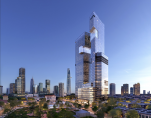
Set opposite Ben Thanh Market, One Central Saigon is a landmark mixed-use destination where luxury living, hospitality, retail and business converge at the centre of Ho Chi Minh City. The project also marks The Ritz-Carlton hotel brand’s debut in Vietnam, alongside The Ritz-Carlton Residences, Saigon, Grade A+ offices, curated retail, services and fine dining.
HO CHI MINH CITY, VIETNAM – Media OutReach Newswire – 13 May 2026 – Masterise Homes, a member of Masterise Group, has officially launched One Central Saigon, Vietnam’s first mixed-use landmark destination, marking the arrival of a new address where international standards of living, hospitality, retail, business and services come together in Ho Chi Minh City.
One Central Saigon brings together The Ritz-Carlton, Saigon, The Ritz-Carlton Residences, Saigon, Grade A+ offices, curated retail, dining and lifestyle experiences in central Ho Chi Minh City.
The launch event was attended by representatives of Ho Chi Minh City government authorities, senior leaders from Masterise Group, Masterise Homes and Marriott International, as well as leading experts in real estate, economics and tourism.
Over the past decade, the centre of gravity of the global economy has shifted decisively towards Asia, with Vietnam emerging as one of the region’s most compelling growth stories. Ho Chi Minh City, the country’s economic engine, is entering a new phase of development as a dynamic, deeply connected metropolis.
Around the world, certain developments have helped shape how cities are recognised internationally, from Hong Kong’s IFC and Singapore’s Marina Bay Sands to Kuala Lumpur’s Petronas Twin Towers and Dubai’s Burj Khalifa. These projects did more than create striking skylines. They helped shape how the world sees their cities and countries. One Central Saigon is positioned within this tradition of city-shaping developments, with a vision that combines international standards, Vietnamese identity and long-term urban value.
“We believe Vietnam has reached the moment where it is ready for a development of the calibre of One Central Saigon,” said Ms Nguyen Thi Minh Phuong, Managing Director, Southern Region, Masterise Group. “The project has been present in Ho Chi Minh City for some time and has passed through several phases of development. Today, it is being introduced with a clearer vision. With a sense of responsibility to contribute to the nation’s development journey in a new era, Masterise Group aspires to continue building an iconic landmark where the world’s highest experiential standards converge with the identity, energy and ambition of the city. This is also how we contribute to projecting the image of a modern, confident and culturally rich Vietnam onto the international stage.”
A rare address in the city’s historic core For more than a century, Ben Thanh Market has been one of Ho Chi Minh City’s great urban constants: a place of trade, arrival and encounter, and one of the few landmarks instantly recognised across Vietnam and beyond.
Its clock tower, market halls and surrounding streets are woven into the city’s daily rhythm and public memory, giving the area a significance that extends far beyond location. Set directly opposite the market, with four rare frontages along Pham Ngu Lao, Calmette, Le Thi Hong Gam and Pho Duc Chinh streets in the former District 1, One Central Saigon holds one of the city’s most strategic locations and shares a unique connection with Ho Chi Minh City’s historic urban core.
One Central Saigon will rise as two towers above a retail and commercial podium on an 8,537 sqm site, with 19,990 sqm of commercial space across seven above-ground levels and six basement floors. The retail centre is envisioned as a destination for luxury retail, curated services and fine dining, with brands and experiences selected for both international appeal and the evolving needs of Vietnamese customers. Its basement levels will connect directly to Ben Thanh Metro Station via an underground link, integrating the project with the city’s public transit network.
Together with Grade A+ offices, The Ritz-Carlton, Saigon and The Ritz-Carlton Residences, Saigon, the development forms a seamless mixed-use ecosystem for luxury living, hospitality, retail, business, services and lifestyle experiences at the centre of Ho Chi Minh City.
Song Long Ngậm Ngọc: Vietnamese symbolism, global expertise The architecture of One Central Saigon is inspired by Song Long Ngậm Ngọc, or Twin Dragons Playing with a Pearl, a Vietnamese cultural motif associated with strength, prosperity and wisdom. The two towers rise and converge around a central point, creating a contemporary architectural expression of Vietnamese identity within the Ben Thanh district.
Among the tallest twin towers in Vietnam and the region, One Central Saigon is a structurally complex undertaking that requires significant investment, precision, and attention at every stage of execution. The project brings together an international design and construction team, including Arquitectonica as design architect, HBA for interior design, B+H, a member of Surbana Jurong Group, as executive architect, and Turner for project management.
International operational standards add another defining layer of value to One Central Saigon. With more than a century of heritage in luxury hospitality, The Ritz-Carlton brings refinement, attention to detail, privacy and highly personalised service to the project’s ultra-luxury positioning.
The Ritz-Carlton Residences, Saigon opens a new chapter in ultra-luxury living, while The Ritz-Carlton, Saigon marks the hotel brand’s debut in Vietnam, reflecting Ho Chi Minh City’s growing appeal to international travellers, investors, entrepreneurs and high-net-worth individuals.
The Grade A+ office component is designed for global corporations and forward-thinking business leaders seeking a workplace within a 5-star international ecosystem. Vietnam’s luxury momentum accelerates The launch comes as Vietnam continues to attract global capital, international brands and a rising generation of high-net-worth consumers. Official data showed real GDP growth of 8.02% in 2025, up from 7.09%, while foreign direct investment reached a record US$27.62 billion.
Tourism is adding further momentum. Vietnam welcomed nearly 21.2 million international visitors in 2025, its strongest year for inbound tourism, while Ho Chi Minh City received nearly 8.6 million international visitors, up 40.3% year on year.
Branded residences are following the same trajectory. Savills reports that branded residences in Asia Pacific increased by 55% over the past five years, while C9 Hotelworks’ Asia Branded Residences Market Review 2025 points to Vietnam as one of the region’s most important future supply markets.
For Masterise Group, One Central Saigon extends an international branded real estate portfolio that includes Grand Marina, Saigon, featuring Marriott and JW Marriott-branded residences, and The Ritz-Carlton Residences, Hanoi at The Grand. It also gives Vietnam’s ultra-luxury real estate growth story tangible form beside one of Ho Chi Minh City’s most prized historical sites.
As the city enters a new phase of development, expanding in both scale and quality, thoughtfully planned and professionally operated integrated developments such as One Central Saigon are expected to enrich the city’s tourism, services and urban experience ecosystem. The project is positioned to create lasting value for the community and elevate the standing of Ho Chi Minh City and Vietnam on the international stage. Hashtag: #MasteriseGroup
The issuer is solely responsible for the content of this announcement.
About Masterise Group
Masterise Group is an international real estate development group, pioneering a comprehensive ecosystem spanning residential and hospitality developments, as well as urban infrastructure and logistics. Founded in 2007 as Thao Dien Investment and officially rebranded as Masterise Group in 2019, Masterise Group sees real estate as more than buildings; it is the foundation for a nation’s future, providing infrastructure for connection, momentum for progress, elevated living and generational legacy. With a long-term vision, Masterise Group continuously pushes boundaries, creates sustainable value, elevates quality of life and contributes to strengthening Vietnam’s new era of growth and global ambition.
Masterise Homes is a member of Masterise Group and manages and develops all of the group’s residential real estate brands. As Vietnam’s pioneer in branded real estate development, Masterise Homes’ mission goes beyond delivering architectural landmarks with refined design and integrated amenities. Masterise Homes strives to craft comprehensive living spaces where residents experience a standard of living that goes beyond the basic function of a home.
By T N Ashok NEW DELHI: As the war in Iran deepens and flames spread across West Asia’s energy corridors, India finds itself confronting an uncomfortable truth: its economic vulnerabilities are once again tied to oil tankers navigating distant waters. Rising crude prices, disrupted shipping lanes, soaring aviation fuel costs, fears over fertiliser imports, and […]
TikTok has begun offering UK adults a £3.99 monthly option to use the short-video app without advertising, marking a significant shift in how one of the world’s largest social media platforms balances user privacy, advertising revenue and regulatory pressure. The subscription, called TikTok Ad-Free, is being rolled out gradually to users aged 18 and above. Those who sign up will no longer see adverts on the platform, […]
SINGAPORE – Media OutReach Newswire – 12 May 2026 – SIM Academy is showcasing a range of part-time professional development opportunities designed for working adults in Singapore who want to strengthen their skills without stepping away from their careers. The academy’s programmes are positioned around industry-aligned learning, practical application, and flexible development pathways for professionals at different career stages.
Short Courses Structured for Busy Professionals
For working adults who want targeted upskilling, SIM Academy’s course listing includes instructor-led programmes that are typically offered in short formats. The 1-day or 2-day course structure may appeal to professionals seeking to build capability while balancing work and personal commitments.
The topics covered reflect a mix of core workplace capabilities and emerging skill areas, including communication skills, cognitive skills, systems leadership, sustainability, as well as broader organisational and leadership competencies. Such short-format training has become a common feature within Singapore’s continuing education landscape, particularly among working adults seeking to remain competitive in a changing job market.
SkillsFuture Funded Training Courses
A number of SIM Academy’s professional development courses are eligible for SkillsFuture Credit and related funding schemes. These funding mechanisms are part of national efforts to encourage lifelong learning and support workforce transformation. The availability of funding-supported courses may lower barriers to participation for individuals and employers, particularly for those pursuing incremental skills upgrading.
Career Switch for mid‑career professionals
SIM Academy offers programmes under the SkillsFuture Career Transition Programme (SCTP). These programmes are designed for individuals considering a shift into new roles or sectors and typically run over 5-6 months. Programme structures may include a combination of classroom learning, practical projects and career support elements such as guidance on job search and career planning.
This reflects a broader trend in Singapore’s training ecosystem, where structured transition programmes are increasingly used to support workforce mobility and adaptation to new job roles.
Flexible Delivery Formats
SIM Academy’s programmes are delivered through a mix of in-person, online and blended learning formats. This allows participants to select learning modes that align with their schedules and professional commitments. Short courses are conducted throughout the year, primarily at SIM Management House, alongside digital learning options that support greater accessibility. Flexible delivery has become an increasingly important feature of professional education, particularly for working adults balancing training with full-time employment.
Part of a Broader Continuing Education Landscape
As industries continue to evolve, demand for continuous skills development remains a key focus within Singapore’s workforce strategy. Short courses, modular training and structured transition programmes are among the approaches adopted by training providers to meet these needs.
SIM Academy’s range of offerings includes shorter, skills-focused workshops and longer-duration programmes designed to support career transitions.
The issuer is solely responsible for the content of this announcement.
About SIM Academy
SIM Academy provides leading-edge professional development and enterprise solutions. SIM Academy offers over 300 executive and business programmes that help almost 10,000 professionals annually on average hone their competencies to drive business value and achieve peak personal and enterprise performance.
Our programmes encompass a comprehensive range of lifelong learning opportunities designed to empower professionals with the knowledge, skills, and competencies necessary to become effective change-makers and leaders in today’s volatile and uncertain business landscape.
For more information on SIM Academy, visit sim.edu.sg
Dubai-founded OTT Cybersecurity LLC has secured a place in Anthropic’s Cyber Verification Program, giving its Lyrie. ai platform formal recognition within a controlled framework for dual-use cybersecurity work involving advanced AI systems. The company also released the Agent Trust Protocol, an open cryptographic standard designed to verify the identity, authority and integrity of AI agents as they operate across digital systems. The protocol is being positioned as […]
Arabian Post Staff -Dubai e& and Qualcomm Technologies have deepened their technology partnership with a plan to develop AI-powered autonomous systems for robotics, drones and other physical platforms across the UAE, placing edge computing and intelligent connectivity at the centre of the country’s next phase of industrial digitalisation. Central to the collaboration is a Next-Gen Autonomous Management Platform for Physical AI, designed to combine e&’s connectivity infrastructure […]
Arabian Post Staff -Dubai Space42 has selected Skylo Technologies to provide standards-based direct-to-device connectivity through Thuraya-4, advancing plans to merge mobile satellite services with mainstream telecom networks across underserved land, sea and remote industrial zones. The Abu Dhabi-listed space technology company said the partnership will use Skylo’s 3GPP-compliant non-terrestrial network platform with Thuraya-4, Space42’s next-generation geostationary mobile communications satellite. The integration is designed to allow ordinary compatible […]
Nairobi became the centre of a sharper debate over Africa’s economic future on Monday as the Africa Forward Summit 2026 opened with agriculture emerging as a test of whether new Africa-France partnerships can move beyond diplomacy into measurable gains for producers. Co-hosted by President William Ruto and President Emmanuel Macron, the two-day gathering brings heads of state, multilateral lenders, business leaders, innovators and civil society groups to […]
Reliance Jio Platforms has reshaped its planned Mumbai stock market debut into a fresh-share issue, dropping an earlier structure that would have allowed existing investors to sell part of their holdings and turning the offer into a direct capital-raising exercise for the digital and telecom business.
The revised plan would involve the sale of a 2.5 per cent stake through new shares, with the proceeds flowing to Jio Platforms rather than to shareholders seeking exits. The change marks a significant adjustment in what is expected to be one of the largest public offerings in the country’s capital markets, and places long-term growth funding ahead of partial monetisation by early backers.
Jio Platforms, controlled by Mukesh Ambani’s Reliance Industries, owns Reliance Jio Infocomm and houses a broad portfolio of digital services spanning telecom, broadband, cloud, media, payments and consumer technology platforms. Its shareholder base includes Meta, Google, Vista Equity Partners, KKR, Mubadala, Abu Dhabi Investment Authority and Saudi Arabia’s Public Investment Fund, many of which entered the company during the 2020 fundraising cycle.
Earlier discussions had explored an offer-for-sale structure under which foreign investors could have sold about 8 per cent of their individual holdings, amounting to roughly 2.5 per cent of Jio Platforms. That approach has now been set aside, with investors opting to remain exposed to the business rather than reduce stakes at the listing stage.
The decision strengthens Reliance’s control over the IPO narrative. A fresh issue allows the company to present the listing as a growth-financing event instead of an exit window for private investors. It also limits the risk that the market interprets selling by marquee shareholders as a signal of valuation caution, particularly at a time when global technology listings are being judged closely on profitability, cash generation and regulatory exposure.
Jio Platforms is widely seen as the centrepiece of Reliance Industries’ transition from an energy-heavy conglomerate to a broader consumer, digital and technology group. The telecom arm has become one of the world’s largest mobile operators by users, while its digital ecosystem has helped Reliance build links across retail, entertainment, finance and enterprise services.
The company’s operating performance has supported expectations of a high-profile listing. Jio Platforms reported strong profit growth for the quarter ended March 2026, helped by tariff-led gains, subscriber additions, higher data consumption and expansion in home broadband. Average revenue per user rose to ₹214, reflecting improved monetisation after tariff increases and a better customer mix.
The proposed IPO has been closely watched since Ambani told shareholders that Jio Platforms was being readied for a market debut in the first half of 2026. Preparations gathered pace after listing rules were adjusted to make it easier for very large companies to float a smaller portion of equity while still meeting public-shareholding requirements over time.
A 2.5 per cent offering would keep public float modest at the start, but even that limited stake could translate into a multibillion-dollar transaction if the company commands a valuation close to estimates that have placed Jio Platforms around $180 billion. At that level, the IPO could rank among the largest listings ever seen on domestic exchanges.
The timing remains sensitive. Equity markets have been volatile as investors weigh interest-rate expectations, geopolitical risks, technology valuations and capital flows into emerging markets. Several large companies have adjusted listing timetables as issuers and bankers test demand from institutional and retail investors.
Reliance has assembled a large banking syndicate for the transaction, underlining the scale and complexity of the planned sale. The deal will require careful pricing to balance investor appetite, Reliance’s valuation expectations and the interests of existing shareholders who invested at a premium during the digital fundraising boom.
For Meta and Google, continued ownership preserves access to one of the world’s largest digital consumer markets through partnerships linked to messaging, cloud services, devices and online commerce. For sovereign wealth funds and private equity investors, remaining invested offers exposure to a mature telecom platform with rising cash flows and expanding digital adjacencies.
The IPO will also have implications for Reliance Industries’ own market valuation. Investors have long debated whether separate listings of Jio Platforms and Reliance Retail could unlock value trapped inside the conglomerate structure. A successful Jio debut may narrow the holding-company discount, while a weak listing would raise questions over the pace and pricing of Reliance’s broader demerger and monetisation strategy.
Dubai’s next private-island address is moving from concept to market signal, with Naïa Island emerging as a new test of how far demand for ultra-luxury coastal living can stretch in a city already defined by record-setting property deals. The project, developed by Shamal Holding off the Jumeirah coastline between Umm Suqeim and Jumeirah 3, is designed as a low-rise, low-density enclave with private beaches, estate plots, branded […]
Arabian Post Staff -Dubai UAE workers are adopting artificial intelligence faster than any other labour force worldwide, placing the country at the top of Microsoft’s global AI diffusion ranking for the first quarter of 2026 and making it the first economy to cross the 70 percent usage mark. The latest Microsoft AI Economy Institute data puts AI usage among the UAE’s working-age population at 70.1 percent, […]
As Gulf markets accelerate toward smart and sustainable mobility, VinFast is expanding its EV presence in the Middle East with technology-focused products, connected vehicle capabilities, and long-term ownership solutions.
DUBAI, UAE – Media OutReach Newswire – 8 May 2026 – The Middle East is increasingly emerging as one of the next major battlegrounds for global electric vehicle brands, particularly as younger consumers across Gulf countries show rising interest in smart, technology-focused mobility solutions that combine premium specifications with advanced software and digital experiences. That shift has opened the door for newer EV manufacturers to compete alongside more established automotive brands.
The opportunity reflects larger market dynamics already transforming the region. Asian EV brands have rapidly expanded their footprint across Gulf countries in recent years, supported by growing demand for feature-rich vehicles, manufacturing scale advantages, and increasingly competitive pricing.
Against that backdrop, VinFast is positioning itself as part of a broader transformation reshaping the automotive landscape across the region. As governments accelerate investments in renewable energy, charging infrastructure, and smart city development, the transition toward electric mobility is gaining momentum across the Gulf.
For VinFast, the Middle East represents a strategic growth market within its wider international expansion plan. The company has been strengthening its presence with the VF 8 electric SUV, targeting consumers seeking a combination of advanced technology, premium features, and long-term ownership value.
VinFast’s broader strategy aligns closely with those changing consumer expectations. Rather than operating solely as a conventional carmaker, the company is developing a vertically integrated EV ecosystem that combines intelligent software, connected services, and smart manufacturing capabilities.
Globally, VinFast has delivered more than 400,000 vehicles and accumulated several years of real-world driving data. That foundation has supported the development of Advanced Driver Assistance Systems, connected vehicle technologies, and over-the-air software capabilities designed to continuously improve the ownership experience.
In the Middle East market, the VF 8 is positioned around technology, comfort, and practicality for regional driving conditions. The all-electric SUV offers dual-motor all-wheel drive capability with up to 402 horsepower in the Plus variant and a driving range of up to 493 km on a full charge under the NEDC standard.
Developed in collaboration with Italian design house Pininfarina, the VF 8 combines a modern exterior design with a spacious cabin focused on digital integration and passenger comfort. Available features include a 15.6-inch infotainment display, ventilated seats, a panoramic sunroof, an air ionization-equipped climate control system, and multiple ADAS technologies, including Highway Assist, Adaptive Cruise Control, Blind Spot Detection, and 360-degree Surround View Monitoring.
VinFast is also emphasizing after-sales support and ownership assurance as key differentiators in the region. The company offers a 10-year vehicle warranty or 200,000 km, alongside a 10-year unlimited-kilometer battery warranty. Customers additionally receive access to mobile services, roadside assistance, DC fast charging networks, and over-the-air software updates.
As Gulf markets continue embracing electrification and smart mobility concepts, VinFast is seeking to establish itself as a long-term player in the region’s evolving automotive sector. By combining advanced technology, connected vehicle capabilities, and scalable EV solutions, the company is reinforcing its ambition to compete in one of the world’s fastest-changing mobility markets.
Hashtag: #VinFast
The issuer is solely responsible for the content of this announcement.
By T N Ashok CHENNAI: Tamil Nadu’s political drama entered its most decisive phase on Friday evening as actor-turned-politician C. Joseph Vijay moved within touching distance of forming the State’s next government after the Communist Party of India and the CPI(M) extended unconditional support to his fledgling Tamilaga Vettri Kazhagam. The support of the two […]
Global asset managers are pressing ahead with Abu Dhabi expansion plans, signalling confidence in the emirate’s financial architecture despite a regional war that has tested the UAE’s security environment and disrupted air and maritime activity. Abu Dhabi Global Market, the capital’s international financial centre, has drawn fresh commitments from major investment houses including Capital Group, Man Group, Bain Capital and Barings, underlining a strategy built around long-term […]
Dubai South is pressing ahead with its 2026 property delivery programme, signalling that long-term housing demand around Al Maktoum International Airport remains strong despite short-term regional uncertainty. The master-planned city and free zone has placed one of its largest residential construction packages of the year, awarding an AED2 billion contract to Mohammed Abdulmohsin Al Kharafi & Sons for multiple phases of Hayat by Dubai South. The […]
Tether is positioning USDT as a core payments and liquidity layer for the Bitcoin economy, with chief executive Paolo Ardoino framing the stablecoin issuer’s strategy as a long-term infrastructure project rather than a conventional crypto trading business. Ardoino has likened the company’s approach to Isaac Asimov’s Foundation series, arguing that durable systems must be built before periods of financial stress expose weaknesses in existing institutions. The comparison […]
China’s push into humanoid robots is emerging as a new test of its ability to convert industrial policy, supply-chain depth and scale manufacturing into export power, with Morgan Stanley research arguing that the sector could help lift the country’s share of global manufacturing by the end of the decade.
Economists led by Chetan Ahya have drawn a parallel with electric vehicles, where early policy support, component localisation and aggressive production expansion turned China from a fast follower into the world’s dominant exporter. Their research projects China’s share of global manufacturing could rise to 16.5 per cent by 2030, from about 15 per cent now, as advanced automation and embodied artificial intelligence move from demonstration projects into factory and logistics use.
The bullish case rests on China’s widening lead in humanoid robot production. Industry estimates show the country produced about 12,800 humanoid robots in 2025, close to 90 per cent of global output, though the market remains tiny compared with conventional industrial robotics. China also remains the world’s largest industrial robot market, accounting for more than half of global factory robot installations in 2024, with an operational stock above 2 million units.
That foundation matters because humanoid robots require the same manufacturing strengths that supported China’s rise in solar panels, batteries and electric vehicles: precision motors, sensors, actuators, batteries, control systems, machine vision and low-cost assembly. Local companies are building ecosystems around these components, while provincial governments are offering subsidies, industrial parks and procurement support to accelerate commercial deployment.
Beijing has identified humanoid robots as a strategic industry, setting targets for mass production and global leadership while integrating robotics into wider plans for artificial intelligence and advanced manufacturing. The 15th Five-Year Plan framework is expected to place AI-powered robots near the centre of industrial upgrading, although large-scale commercialisation is more likely toward the later part of the plan period than immediately.
The sector’s momentum has drawn major private capital. Start-ups such as Unitree, UBTech, AgiBot and Fourier Intelligence have moved quickly from stage demonstrations to pilot factory and warehouse deployments. Linkerbot, a fast-growing maker of dexterous robotic hands, is seeking a valuation of about $6 billion after building a strong position in high-degree-of-freedom robotic hands used in humanoids and industrial systems. Its modular products point to an important feature of the market: some of the earliest profits may come from components rather than complete humanoid machines.
Automakers and electronics groups are also moving into the field. Xpeng has said humanoid robotics could become a long-term investment area alongside electric vehicles, while other manufacturers are testing robots for inspection, sorting, materials handling and repetitive shop-floor tasks. The logic is clear. China faces an ageing workforce, rising labour costs in coastal manufacturing hubs and growing pressure from tariff barriers. A successful humanoid robotics industry could help preserve competitiveness even as low-cost labour advantages fade.
The export implications are broader than robot sales. If humanoids improve productivity in Chinese factories, they could lower production costs across electronics, machinery, appliances and consumer goods. That would reinforce the country’s position in global supply chains at a time when the United States, Europe and several Asian economies are trying to reduce dependence on Chinese manufacturing. It could also create a new export category in robots, components, software and maintenance services.
Yet the constraints remain substantial. Humanoid robots are still expensive, often have limited battery life and struggle with unstructured environments. Many can perform scripted tasks in controlled settings but fall short when asked to handle the speed, judgement and dexterity of human workers. Even executives in China’s robotics industry acknowledge that factory humanoids remain less efficient than people in many jobs. Safety certification, liability rules, data protection and workplace integration will also affect adoption.
Dependence on high-end chips and advanced software ecosystems is another weakness. US restrictions on AI semiconductors have pushed Chinese firms to localise more hardware, but training and deploying capable embodied AI systems remains compute-intensive. Without steady access to cutting-edge chips, progress may be uneven, particularly in models that require real-time perception, movement planning and continuous learning.




 https://masterisegroup.com/en