News related to
Emerging

Stablecoins have moved from the fringe of digital finance to the centre of American geopolitical strategy with astonishing speed. A year ago, many analysts still dismissed them as an experiment, an irritant or a regulatory problem. Today they sit at the heart of a much bigger financial vision inside Washington. The Trump administration, I now believe, is using stablecoins as a new mechanism to strengthen the dollar’s […]

By Dr. Nilanjan Banik With the long-awaited trade deal with the US delayed, India is deepening engagement with other developed partners such as the European Union (EU) and New Zealand to secure free trade agreements (FTAs). This shift reflects New Delhi’s intent to diversify its trade relationships and reduce dependency on any single major economy. […]

The article India’s Strategic Shift Toward Diversified Trade And Green Commitments appeared first on Latest India news, analysis and reports on Newspack by India Press Agency).

Cyber-security firms Kaspersky and VDC Research have estimated that global manufacturing organisations could incur losses exceeding US$18 billion in the first three quarters of 2025 due to ransomware attacks disabling production-line operations. According to their joint analysis, based on data from the Kaspersky Security Network, the average incident leads to around 13 days of operational disruption, with labour costs alone accounting for billions of dollars. The losses […]

Abu Dhabi: Financial executives from over 20 Arab countries gathered this week at the newly formed Sanadak unit to examine its dispute-resolution model designed for banks and insurance firms, marking a push by the UAE to raise consumer-protection standards across the region. Sanadak cited engagement with the 50 delegates as an opportunity to showcase how its independent mechanism can serve as a regional benchmark, while participants praised the UAE’s pro-consumer frameworks and stressed transparent regulation as vital for financial trust.

Sanadak operates under the oversight of the Central Bank of the UAE and was established to adjudicate complaints between consumers—or small to medium-sized enterprises—and licensed financial institutions or insurance companies. Its core functions include receiving complaints online or via app, verifying that 15 calendar days have passed from the institution’s response or a lack thereof, and moving the matter into resolution or referral to appeal-committees.

At the gathering, Sanadak emphasised that its role extends beyond the UAE, as the first financially-regulated specialised ombudsman unit in the Middle East and North Africa region. The unit highlighted how its jurisdiction, rules and structure could offer a template for cross-border alignment among Arab states seeking stronger consumer redress in banking and insurance. The discussion touched on the unit’s values of impartiality, accessibility, efficiency and integrity.

The session underscored several key trends: First, financial-services regulators globally are moving toward early-intervention powers, unified licensing for banks and insurers, and forward-looking oversight of fintech and digital-asset services. The UAE’s newly enacted Federal Decree-Law No. 6 of 2025 consolidates banking, finance and insurance regulation and confirms Sanadak’s independent mandate for complaints resolution.

Second, consumer-protection mechanisms are gaining regulatory prominence as market participants cope with rising complexity in product offerings, from digital banking to insurance-linked investment products. Sanadak’s model aims to provide a single portal of access and streamline resolution without resorting to litigation. Officials say this helps build consumer confidence, enhance financial inclusion and strengthen institutional integrity.

Third, regional cooperation and benchmarking among Arab states were highlighted as emerging priorities. Delegates at the meeting emphasised that harmonised complaint-handling standards will bolster cross-border financial activity and investor trust. One delegate observed that adopting a model such as Sanadak’s “sends a strong signal that consumer rights are integral to banking-sector stability”.

Sanadak’s leadership also outlined practical outcomes: the resolution of insurance-sector disputes via permanent committees including independent judges and experts was mandated by Administrative Resolution No. 10-A/1/2024, issued by the Central Bank. That rule establishes minimum timelines, virtual-hearing options and defined fee structures—from AED 100 for fixed-value disputes up to AED 30,000 for higher-value claims.

The initiative aligns with the UAE’s broader ambition — underpinned by its “digital-first” strategy — to present its financial sector as accessible, regulated and globally competitive. Sanadak states its mission to support trust in the financial system and foster financial-inclusion goals through education and accessible redress.

Nonetheless, challenges loom. Ensuring that external, regional institutions adopt the same discipline and that complaints-resolution outcomes are enforceable across jurisdictions remains uncertain. Some financial-services observers caution that consumer-protection frameworks must evolve as digital-asset services proliferate and as cross-border financial activity expands. One expert described the regulatory change as “about future-proofing the UAE’s financial system by ensuring it remains resilient, inclusive and responsive to emerging technologies”.

Youths recognise the need for crucial soft skills to succeed in the future workforce At the Gen2050 Youth Action Forum, the 3P (public, private, people) sectors bring together their expertise to provide mentorship and uplift youths in realising their aspirations SINGAPORE – Media OutReach Newswire – 25 Nov 2025 – At the Gen2050 Youth Action Forum, KPMG, the National Youth Council (NYC), and the Institute of Public […]

Siam Paragon sets the stage for Bangkok’s new global POP destination BANGKOK, THAILAND – Media OutReach Newswire – 25 November 2025 – POP MART THAILAND, under the management of POP MART INTERNATIONAL, one of the world’s leading art toy creators and distributors, is bringing a new phenomenon to the city with the “POP LAND EXCLUSIVE FESTIVE EVENT IN THAILAND.” Led by Ms. Siriporn Phlaengchanthuek, Country General Manager […]

Data executives in the United Arab Emirates are signalling serious alarm over the lack of transparency in how their artificial-intelligence systems make decisions, according to a fresh survey. About 94 per cent of data leaders in the country say they do not have full visibility of decision-making processes in their AI systems, pointing to deep governance vulnerabilities at a time when adoption is accelerating. This revelation emerges […]

Advertisements

MELBOURNE, AUSTRALIA – Media OutReach Newswire – 24 November 2025 – Lee Kum Kee, the global leader in Asian sauces and condiments, joined forces with Chef Vincent Liew, Executive Chef at The Star Sydney, to deliver an inspiring culinary seminar at Le Cordon Bleu’s Moorabbin campus on 20 October. The exclusive event brought together over 60 passionate culinary students for a dynamic showcase of how Lee Kum […]

During the G20 Leaders’ Summit in Johannesburg, the Managing Director of the International Monetary Fund, Kristalina Georgieva, stated that the Fund expects the Group of Twenty major economies to place sustained emphasis on global debt vulnerabilities, particularly in developing nations. She warned that global public debt is projected to exceed 100 % of world GDP by 2029 without decisive action, and added that the IMF intends to […]

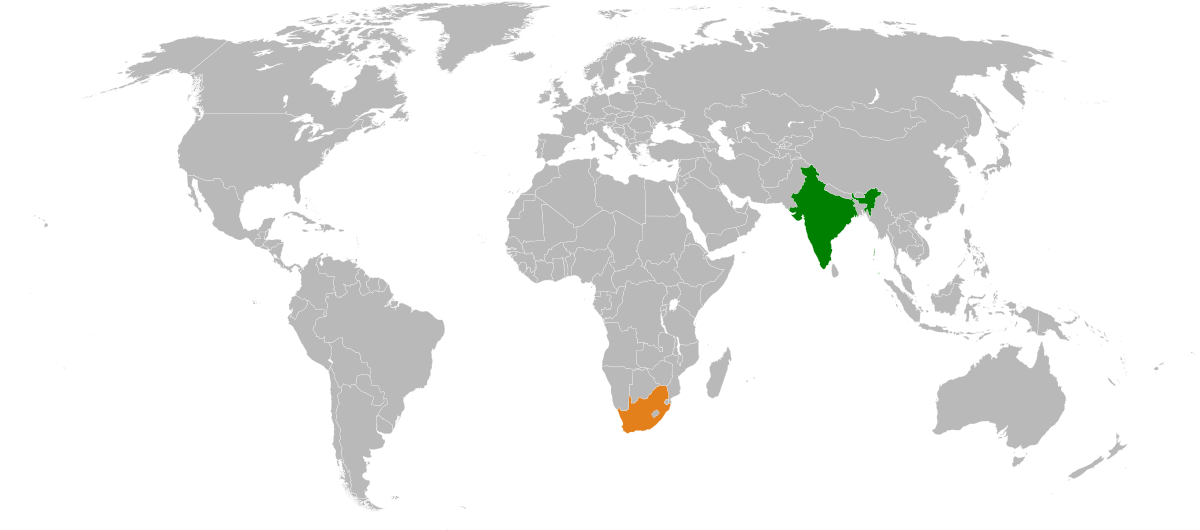
Leaders of India and South Africa affirmed a joint commitment to amplify the resonance of the Global South during a bilateral meeting on the margins of the G20 summit in Johannesburg. India’s Prime Minister met South African President Cyril Ramaphosa to review an expanding partnership that now encompasses trade, digital infrastructure and critical-minerals cooperation.

The leaders emphasised the historical foundation of bilateral ties, tracing back to shared anti-colonial struggles and longstanding people-to-people links. They identified emerging sectors of collaboration, including artificial intelligence and digital public platforms, as well as enhanced investment flows across innovation, infrastructure and mining sectors.

India expressed gratitude to South Africa for its role in relocating cheetahs to India and extended an invitation for South Africa to join the International Big Cat Alliance. At the G20 held in Johannesburg, which is the first summit of its kind hosted on African soil, South Africa has sought to spotlight issues of development, sustainability and Global South equity.

The two countries signalled their readiness to facilitate mutual investments, noting the growing footprint of Indian firms in South Africa and a shared interest in deepening bilateral ties in mining, start-ups, technology and infrastructure. They agreed to enhance support frameworks for these sectors.

In the domain of digital transformation, the meeting explored ways in which India’s Digital Public Infrastructure experience could be shared with South Africa, with the leaders discussing a roadmap for cooperation in those digital arenas that support transparency, inclusion and scalability.

On critical minerals—the backbone of technologies from electric vehicles to renewable energy systems—the dialogue underscored the strategic convergence of India’s growth ambitions and South Africa’s resource endowment. Both governments emphasised sustainable extraction, value-chain development and mutual investment as priorities.

The meeting also took place against the backdrop of global institutional reform debates, where developing countries increasingly seek to adjust frameworks such as the IMF and development banks. South Africa, as serving G20 chair, has framed its presidency around the themes of solidarity, equality and sustainability, particularly as representative of countries in the Global South.

While the two leaders concentrated on bilateral priorities, they also discussed multilateral coordination and collective platforms. They welcomed South Africa’s initiative to convene the IBSA leaders meeting and affirmed cooperation ahead of India’s upcoming chairship of BRICS in 2026.

Observers note that India–South Africa ties have evolved from traditional trade and diplomacy to a more strategic convergence around technology, investment, and global governance. According to experts, this shift reflects the changing priorities of middle powers in a multipolar world, where alignment on development and technological sovereignty is rising.

However, there remain practical challenges. For South Africa, translating resource-rich endowments into sustainable, inclusive growth has long been a domestic policy hurdle. For India, ensuring that digital partnerships respect both sovereignty and local capacity presents implementation risks. Critics argue that while high-level pledges are valuable, they must be matched by concrete mechanisms, regulatory clarity and project-level follow-through.

In trade terms, the two countries’ discussions come at a time when global supply-chain realignments and technology competition are raising the stakes for investment in emerging markets. Indian companies entering South Africa will need to navigate regulatory complexity, local participation requirements and the country’s infrastructure bottlenecks. South Africa, for its part, will have to ensure that its mining and start-up ecosystem attract and retain investment while meeting environmental and community benchmarks.

The diplomatic messaging also signals a broader orientation for both nations. India’s engagement with Africa has increasingly focused on capacity-building and infrastructure, while South Africa has positioned itself as a voice for Africa in global forums. Their joint push to amplify the Global South suggests an intention to influence agendas around debt relief, climate finance, digital equity and reform of global institutions.


Cloud-software giant Salesforce has announced that it is investigating unauthorised activity involving applications published by vendor Gainsight, which may have enabled access to customer data through the Salesforce platform. The firm said it revoked all active access and refresh tokens related to the Gainsight apps and temporarily removed those applications from its marketplace. It emphasised this incident does not stem from a vulnerability in the Salesforce core […]

Authorities in Washington have set new measures that could render nearly 48 million barrels of Russian crude oil stranded aboard tankers still at sea, disrupting key export flows and shaking global trade routes. The sanctions, targeting major producers Rosneft PJSC and Lukoil PJSC, take effect on 21 November and mark the most aggressive action yet under the current administration. Data from analytics provider Kpler suggest around 50 […]

New Consumer Insights and Digital Strategies Shaping Thailand’s Luxury Landscape BANGKOK, THAILAND – Media OutReach Newswire – 21 November 2025 – LINE Thailand hosted “FLAIR BKK ’25”, an exclusive gathering of luxury leaders in Thailand and abroad. The event unpacked emerging luxury trends, shifting consumer aspirations from ownership to experience-driven value, and the rising influence of digital innovation across the luxury sector. It also highlighted Thailand’s accelerating […]

Researchers unveiled at the The Union World Conference on Lung Health 2025 in Copenhagen a wave of artificial-intelligence tools designed to speed up detection, refine treatment and improve targeting of care for tuberculosis (TB). The disclosures spotlight novel machine-learning methods applied to breath analysis, cough audio and vulnerability mapping—each aiming to close critical gaps in diagnosis and follow-up for this longstanding infectious disease. One major innovation involves […]

Matein Khalid India’s NSE Nifty scaled a milestone on Dalal Street this morning, rising 160 points as I write to 26205. This has little to do with Nvidia/Jensen Huang’s fabulous guidance last night and everything to do with global fund managers attracted Asia’s Cinderella EM of 2025 by the BJP’s supply side policy pivot to slash the GST, ramp up post-Bihar election capex, boost consumption even as […]

First Abu Dhabi Bank has mandated a group of global and regional banks to arrange investor calls on Wednesday, 19 November, signalling the preparation of a benchmark USD-denominated Additional Tier 1 capital issuance. The Abu Dhabi-based lender, rated Aa3 by Moody’s and AA- by both S&P and Fitch, is targeting a fixed-rate, resettable perpetual instrument with a non-call six-year structure, expected to be rated Baa3 by Moody’s, subject to market conditions.

FAB has appointed Abu Dhabi Commercial Bank, Barclays, Emirates NBD Capital, itself, HSBC and Standard Chartered Bank as joint lead managers and bookrunners for the issuance, reflecting a strong syndicate backing. According to institutional-market briefings, the period of investor calls is intended to gauge pricing, demand, and issuance size ahead of launch.

This move marks FAB’s first benchmark AT1 issuance in approximately five years and comes as the bank seeks to bolster its capital buffer amid evolving regulatory expectations. Market-specialist commentary notes that such securities serve a dual purpose: providing permanent capital that counts towards Tier 1 regulatory ratios while offering issuers the flexibility of a call option after a set period — in this case six years — to redeem, subject to certain conditions.

FAB’s prior issuance of a senior green bond earlier this month — a €850 million deal priced at mid-swaps plus 70 basis points after opening at plus 100 basis points — underlined its readiness to access capital markets. That deal illustrated investor appetite for the bank’s funding instruments and the bank’s willingness to tap diverse instruments and jurisdictions. The proposed AT1 issuance broadens FAB’s capital-raising toolkit further.

In assigning an expected rating of Baa3 by Moody’s for the proposed issue, the bank is effectively targeting the lowest investment-grade category from that agency for this level of instrument. Such ratings reflect the subordinated nature of AT1 securities; they rank lower than senior debt in the creditor hierarchy and often incorporate features such as coupon discretion and loss-absorption mechanisms — factors that carry higher credit risk for investors compared to senior bonds.

Emerging-markets commentators note that demand for Gulf-region AT1 securities has been relatively scant over the past year as investors have weighed macro-economic headwinds, rising interest-rate environments and regulatory adjustments. The Gulf region’s total primary issuance of bonds and sukuk for the first quarter of the year was reported at USD 51.5 billion, down from USD 55.5 billion in the same period a year prior; within this, financial-institution capital instruments formed a subset of activity. Nevertheless, select banks continue to tap issuance windows that align with investor sentiment.

For FAB, the timing appears strategic: the bank’s common equity Tier 1 ratio stands at 13.7 per cent — a figure comfortably above its internal threshold of 13.5 per cent but lower than the 14.3 per cent recorded a year earlier. This suggests room for issuing capital-absorption securities like AT1 to reinforce buffers without triggering market concern. Regulatory changes also loom: UAE banks are due to face a 50-basis-point increase in the counter-cyclical buffer next year, which will raise total capital requirements and heighten the capital-management imperative.

Investor calls scheduled on 19 November are expected to cover structuring options, timing of launch, target size and investor syndication. Initial market commentary anticipates that FAB may aim for a headline size in the region of USD 750 million — consistent with its last AT1 benchmark in 2020 — although precise sizing will hinge on demand and market dynamics.

The joint bookrunners assemble a strong global footprint: Barclays, HSBC and Standard Chartered provide global investor access while Emirates NBD Capital and Abu Dhabi Commercial Bank offer regional distribution strength. That reflects FAB’s dual aim of tapping both GCC-based and international institutional investors. Market observers believe that if oversubscription builds, pricing could tighten relative to initial guidance and the syndicate may consider increasing sizing accordingly.

HONG KONG SAR – Media OutReach Newswire – 19 November 2025 – The 2025 Hong Kong & Shenzhen Bi-City Biennale of Urbanism Architecture (UABBHK 2025) launched its curatorial direction under the theme TECHFORMANCE: Architecture as Performance in the Age of AI. Organised by The Hong Kong Institute of Architects Biennale Foundation, this year’s UABBHK is co-organised by The Hong Kong Institute of Architects, The Hong Kong Institute […]

Abu Dhabi based investment firm Lunate has escalated its global ambitions after deploying roughly US$13.5 billion and signalling plans to raise even larger funds for 2026 launches. Founded in 2023 and backed by the emirate’s investment ecosystem, Lunate raised about US$17 billion in 2024 for its flagship funds and has invested around 80 per cent of that amount, according to individuals familiar with its operations. The firm […]

Dubai – GE Aerospace has secured two high-value engine agreements with Dubai-based carriers Emirates Airline and Group and flydubai at the 2025 Dubai Airshow 2025, underscoring the resilience and expansion of the UAE’s aviation sector. Emirates has committed to 130 additional GE9X engines to power 65 new Boeing 777-9 aircraft, bringing its total order for that engine type to more than 540 units. The contract includes spares and long-term service provisions. At the same time, flydubai has agreed to acquire 60 GEnx-1B engines with full support services for its first wide-body fleet of 30 Boeing 787-9 aircraft.

Emirates’ deal with GE not only affirms its status as the largest global customer for the GE9X engine, but also reinforces its long-standing partnership with Boeing Commercial Airplanes. Emirates’ chairman and chief executive, Sheikh Ahmed bin Saeed Al Maktoum, described the transaction — valued at US$38 billion at list prices — as “a long-term commitment and testament to our partnership with Boeing and GE”. This investment aligns with Dubai’s wider ambition to develop into a major aerospace hub.

On the flydubai front, the selection of the GEnx-1B engine marks a strategic shift for the carrier, which has historically operated a 737-only fleet. The agreement is structured to support the airline’s entry into long-haul operations and buttresses its network expansion into new markets. flydubai’s chief executive, Ghaith Al Ghaith, noted that engine performance, durability and services will play a critical role as the airline moves into wide-body territory amid intensifying competition and growing demand for air travel through Dubai’s gateway.

The significance of these deals extends beyond fleet numbers. For GE Aerospace the twin contracts cement its dominance in the high-thrust engine market, particularly in a region with challenging operating conditions and high growth potential. The GE9X engine — developed exclusively for the Boeing 777X family — boasts a 10 per cent improvement in specific fuel consumption compared with its predecessor, the GE90-115B, and has been certified to run on approved sustainable aviation fuel blends. The GEnx-1B, likewise, powers a majority of the Boeing 787 fleet and is already deployed widely in long-haul service.

For Emirates, the 65 additional 777-9 airframes raise its total 777X orderbook to 270 units, making it Boeing’s largest customer for that aircraft family. With this deal, the airline has options to convert some of the order to the future 777-10 or 777-8 variants, signalling confidence in the production programme despite earlier certification and delivery delays. The carrier expects deliveries of the initial 777-9 aircraft to begin from the second quarter of 2027. Emirates’ fleet strategy centres on operating a young, modern wide-body fleet aligned with Dubai’s infrastructure expansion.

Flydubai’s expansion into wide-body aircraft, powered by GEnx engines, places the carrier at a pivotal juncture in its evolution. Having grown rapidly in point-to-point markets, reserving its primarily single-aisle fleet for short to medium-haul routes, the move to wide-body aircraft reflects a transition towards intercontinental services. The engine order includes spares and a long-term services agreement, highlighting the importance of lifecycle support and operational reliability in emerging growth trajectories.

The UAE’s positioning as a major aviation hub is reinforced by these developments. The engine orders strengthen the supply-chain footprint in the region, benefit maintenance-, repair-and-overhaul infrastructure, and support the country’s ambition to attract high-value aerospace manufacturing and engineering activities. GE Aerospace announced a US$50 million investment in a new “On Wing Support” facility in Dubai South alongside the shows, underscoring its commitment to local presence.

From an industry-perspective the deals reflect broader trends: airlines placing large long-haul orders amid intense competition for slots and access, engine manufacturers capturing value through integrated services and support, and the Middle East remaining a key battleground for aerospace OEMs seeking growth beyond legacy domestic markets. For Emirates and flydubai, the agreements mark purposeful steps in fleet renewal and network expansion, though execution risks remain — notably aircraft delivery timelines, engine certification, and global economic headwinds.

Analysts caution that while the headline order values are striking, actual transaction prices typically fall beneath list values, and aircraft-programme delays can erode carrier scheduling and capacity planning. For Emirates the 777-9 programme has been subject to repeated postponements, while for flydubai the challenge lies in transitioning from narrow-body operations to wide-body logistics, route infrastructure and long-haul network economics.

Nairobi-based electric mobility firm Roam Electric Ltd has begun talks to monetise carbon-offset credits generated by its motorcycles while launching a global crowdfunding campaign to raise working capital. Each machine sold by Roam is designed to offset around three tonnes of CO₂ annually; with about 4,000 units currently in circulation, the company estimates roughly 12,000 tonnes of emissions reduction per year—equivalent to the output of some 2,600 […]

A new cyber-innovation centre has been unveiled to tackle evolving digital threats with advanced technology. The Vyuha Labs – Cyber Innovation Hub, launched through a partnership between International Institute of Information Technology, Hyderabad and the Telangana Cyber Security Bureau, will bring together academia, industry and law-enforcement to co-develop deep-tech tools aimed at strengthening cyber-security infrastructure. The facility spans more than 3,000 sq ft and is equipped with specialist infrastructure to prototype solutions for crime analytics, fraud detection and forensic processing.

The core mission of the hub is to convert early-stage research into deployable products that serve policing and digital safety needs. IIIT-H Director Prof Sandeep Shukla noted that simply publishing academic papers is not sufficient; the institution aims to hand over viable technologies to start-ups or third-party companies for implementation and scaling. TGCSB Director Shikha Goel emphasised that innovation-led solutions are the only effective route to stay ahead of threat actors, citing a decline in cyber-crime incidents within Telangana even as national levels have surged.

One of the flagship initiatives within the hub is an automatic processing system for distress-call data gathered via the 1930 helpline. Leveraging IIIT-H’s language-technology centre, the system converts voice calls into written transcripts, applies machine-learning algorithms to detect patterns and flags hotspots of criminal activity—shifting the approach from reactive logging to proactive intelligence generation. Another major effort focuses on financial-fraud analytics: mining citizen-complaint and transaction data to track investment-scam and cryptocurrency-fraud trends and to evaluate policing interventions for effectiveness. A third component addresses computer-vision based forensic tracking through camera-feed analysis and automated suspect-movement detection, part of a longer-term plan to enhance digital-evidence workflows.

The strategic positioning of Vyuha Labs reflects a broader shift in how cyber-crime is being addressed. Rather than centralised national agencies alone, regional hubs are emerging that bring together local police forces, technical research institutes and private-sector partners for agile innovation and deployment. TGCSB’s claim of an 11 per cent fall in cyber-crime within Telangana, even as 37 per cent growth was recorded nationally, is cited as evidence of the model’s early promise. The facility is housed within IIIT-H’s Cyber Manthan wing, signalling a formal institutional route from research through incubation to real-world solution delivery.

Start-ups and industry play a crucial role in this ecosystem. According to project chief executive Rajul Negi, the lab aims to hand off matured research to start-ups or established companies, thereby ensuring proper deployment, maintenance and scalability across multiple jurisdictions at lower cost than traditional agencies. For example, the language-tech solution being built for call-transcription is expected to be transferred to a young company that can manage ongoing updates, user-interface enhancements and multi-state rollout. Prof Shukla stated that the academic institution intends to remain focused on core research while leveraging partner entities for full product development.

Observers point to several challenges the initiative must overcome. Translating academic proof-of-concepts into field-ready tools often encounters issues of interoperability with existing police systems, budget constraints for rollout and the need for ongoing technical support and upgrades. The policing ecosystem may also need training and culture change to absorb deep-tech workflows rather than legacy manual processes. Moreover, while the state hub model can address local threats, coordination with national agencies and cross-border crime networks remains a complex demand.

India’s workforce is entering a critical phase as artificial intelligence reshapes job markets and industry demands, with upskilling emerging as a non-negotiable necessity for both individuals and organisations. According to a recent assessment of the Asia-Pacific region, India needs to scale up its skilling efforts rapidly to avoid falling behind in the global AI marathon. A report by Asian Development Bank and Google. org warns that without accessible AI-skilling initiatives, large segments of the workforce risk being left out of the transition.

The country already boasts one of the youngest and fastest-growing workforces in the world, offering a potential advantage in the AI era. Yet the report highlights a mismatch: numerous workers in labour-intensive sectors such as textiles, manufacturing and logistics perform roles with high automation risk — for example data-entry, scheduling and support functions — and these roles are disproportionately held by women and informal workers. With AI-driven automation advancing quickly, these groups could be among the hardest hit unless targeted training interventions are introduced.

Data published by NASSCOM indicates that India’s existing AI talent pool, estimated at around 600,000 today, must expand to more than 1.2 million by 2027 to fill expected demand—implying a shortfall of more than a million skilled professionals. This gap emerges despite the country producing hundreds of thousands of engineering graduates each year. Industry trackers indicate that more than half the workforce in technology services is already undergoing training in AI, machine learning and related domains, yet skills still lag employer expectations.

Business research from Microsoft found that across Indian organisations two-thirds of employees and four-fifths of leaders are now familiar with AI agents. Within the next 12-18 months more than half of these companies will place upskilling at the top of their agenda, and more than half expect AI training to become a core team responsibility within five years. These trends confirm that industry demand is ahead of the skill supply curve.

Beyond technical expertise, new job roles are emerging. Organisations are recruiting for “AI Workflow Designers”, “Software Operators” and multi-agent system builders. The most vulnerable workers are those in roles focused on infrastructure management, manual testing, and basic coding — positions that technology is already beginning to automate. This points to an imperative for current employees to acquire cross-functional, human-centric skills such as critical thinking, adaptability and collaboration with AI.

Educational institutions and vocational training providers are responding. For example, an initiative at Andhra University in partnership with NASSCOM integrates advanced skill modules into non-engineering streams and appoints department-wise coordinators to ensure student readiness. The move reflects recognition that skilling must extend beyond traditional tech fields to arts and sciences, and must address digital literacy gaps.

Nonetheless, major structural obstacles remain. A digital divide persists: only about one in five young adults in some South Asian regions has reliable internet access at home, limiting participation in online skilling programmes. Language barriers and low digital literacy further hamper effective engagement. Informal-sector workers, who often lack formal training and social protections, face a double risk of displacement without clear pathways into higher-value work.

The informal economy accounts for a large share of India’s employment, and workers in this segment are often overlooked in skill-development policies. Analysts warn that unless training programmes are redesigned for accessibility — offering tailored formats for women re-entering the workforce, rural populations and digitally disadvantaged groups — AI adoption may deepen existing inequalities.

A substantial shift in sentiment around Alphabet Inc. has taken shape following the firm’s elevation to ‘Buy’ from ‘Hold’ by Loop Capital, with the brokerage raising its price target to $320 from $260. The upgrade underscores a decisive move by Wall Street away from doubts about Alphabet’s core search business toward bullish conviction in its AI-driven future. Loop Capital’s managing director, Rob Sanderson, observed that earlier concerns […]

The Video Game History Foundation is making strides in preserving gaming culture by unearthing a trove of out-of-print gaming magazines, including the iconic Game Informer. With the increasing demand for digital archives of media, this initiative aims to provide the gaming community, researchers, and enthusiasts with a valuable glimpse into the evolution of gaming through these historic publications. The Game Informer collection represents decades of gaming history, […]

VISHNU RAJA
RYO YAMADA
HITORI GOTOH
IKUYO KITA