News related to
Emerging

The investment landscape of 2026 is being shaped by a set of forces that are measurable, global, and impossible for any serious investor to overlook. The noise around short-term market swings has masked the reality that structural trends—not sentiment—are driving the next decade of value creation. Investors focused on what actually moves markets should concentrate on seven megatrends that are now setting the pace. The first is […]

A claim circulating across social media that the Walt Disney Company intends to invest about $1 billion in OpenAI drew industry attention today as analysts assessed whether one of the world’s most influential entertainment groups is preparing a substantial push into generative artificial intelligence. The suggestion, shared widely online, has not been confirmed by Disney or OpenAI, yet it prompted heightened scrutiny because the company has been […]

By Nitya Chakraborty For rich European nations, especially the troika Germany, France and Britain, the geopolitical situation that is unfolding in the year 2026 has enough elements of an existential crisis as a result of the announcement of the US policy on global security which marginalizes the role of European nations and NATO in the […]

The article Where Is Europe Placed In The Emerging Global Geopolitics? appeared first on Latest India news, analysis and reports on Newspack by India Press Agency).

Fatima Al Hammadi’s outline of Abu Dhabi’s financial innovation ambitions underscores a drive to build a deeper, more connected ecosystem designed to accelerate growth across fintech, insurance, digital assets and emerging financial technologies. Her comments highlight a strategy aimed at consolidating the emirate’s position among global financial centres while creating a broader platform for sector-wide collaboration. Abu Dhabi’s FinTech, Insurance, Digital and Alternative Assets cluster has been […]

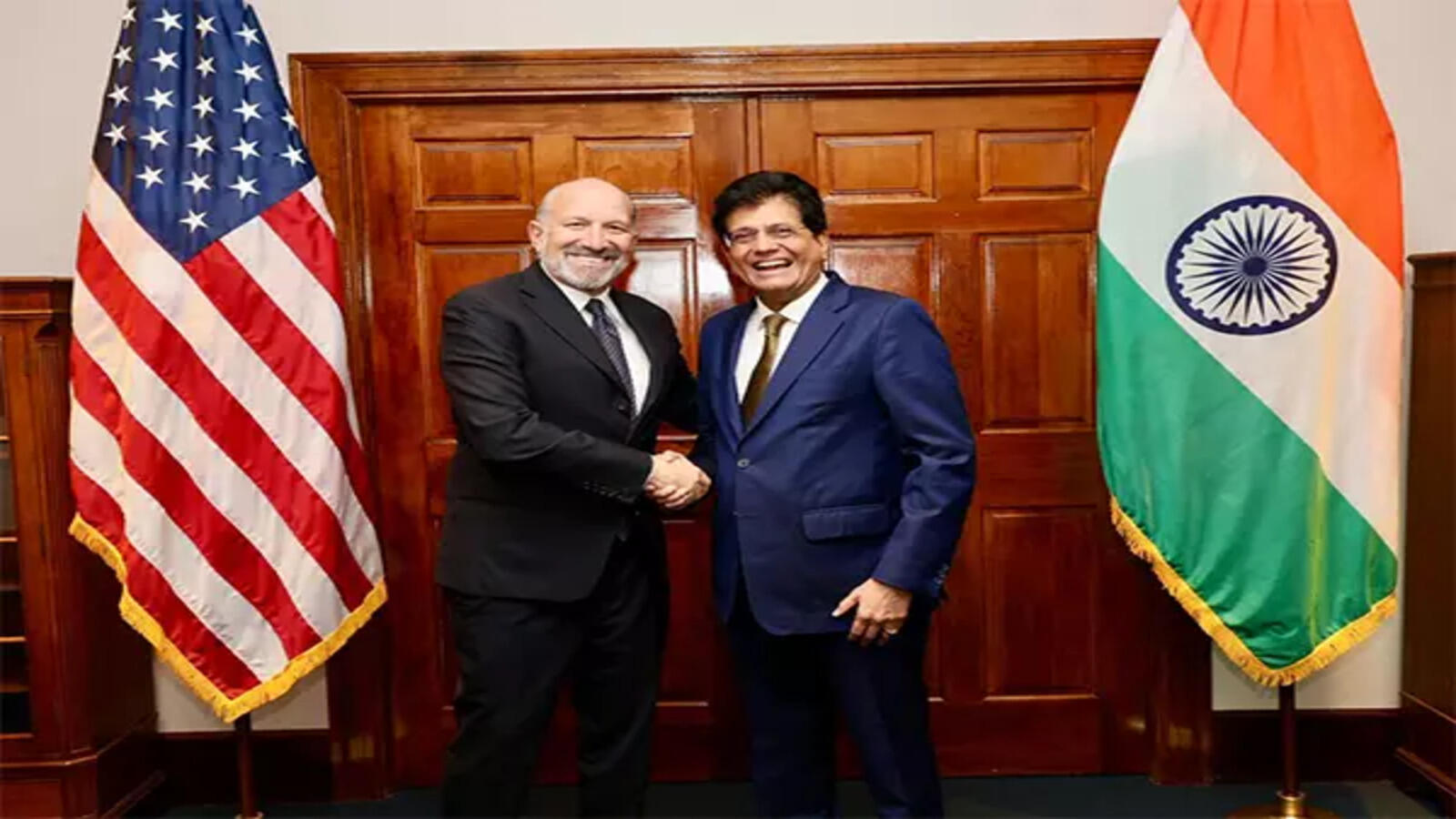
By K Raveendran Trade negotiations between Washington and New Delhi have moved into a critical phase as senior American trade officials arrive in India with the stated intention of clearing the final hurdles to a long-discussed agreement. The presence of Deputy US Trade Representative Rick Switzer and chief India-deal negotiator Brendan Lynch underscores the renewed […]

The article US Officials’ Delhi Trip Takes Trade Negotiations Into A Decisive Stage appeared first on Latest India news, analysis and reports on Newspack by India Press Agency).

Growing concerns over the expansion of dollar-linked digital tokens have prompted the International Monetary Fund to issue a caution over the strain stablecoins could place on emerging markets, with the institution arguing that widespread use of these instruments risks weakening domestic monetary frameworks. The warning centres on the potential for currency substitution and accelerated outflows should stablecoins gain traction in jurisdictions where confidence in local units is fragile. This caution mirrors the broader message conveyed in IMF warns of stablecoin strain on emerging economies, underscoring the possibility of digital tokens amplifying financial vulnerabilities.

The Fund’s latest assessment highlights the challenge posed by USD-pegged tokens such as USDT and USDC, which together dominate the global stablecoin market. Analysts tracking flows note that these instruments have evolved into widely used vehicles for cross-border transfers, digital asset trading and store-of-value purposes in countries with volatile currencies. The IMF argues that their adoption can reduce the capacity of central banks to manage liquidity conditions, especially in economies where monetary authorities already contend with limited tools to stabilise inflation and anchor expectations. The institution has urged regulators to assume a proactive posture, particularly in markets where capital controls or shallow financial systems heighten the risk of abrupt movements.

The concerns reflect a shift from earlier phases of the digital asset cycle, when stablecoins attracted regulatory scrutiny largely due to their reserve backing and operational transparency. With greater clarity emerging around reserve audits and redemption mechanisms, policymakers are now looking beyond technical design and towards systemic implications. Economic experts cautioned that dollar-denominated tokens might evolve into parallel settlement channels, enabling households and corporates to bypass domestic banking systems during periods of stress. For countries with restricted foreign exchange markets, that pattern could complicate monetary management and accelerate the erosion of trust in local units.

Despite these warnings, several analysts point out that the scale of stablecoin adoption across developing economies remains uneven. Data from blockchain analytics firms suggests that while usage has grown in parts of Latin America, Africa, Eastern Europe and South Asia, activity is still far from the threshold that would trigger systemic currency substitution. Experts add that stablecoins often function as short-term hedging tools rather than long-term savings instruments, meaning their impact on monetary sovereignty is not yet of the magnitude implied by more pessimistic scenarios. Many economists argue that structural weaknesses in local economies, such as persistent inflation or fiscal imbalances, are more significant drivers of currency instability than the availability of digital dollar substitutes.

Regulators in several markets have already begun drafting frameworks to govern stablecoin issuance and use. Authorities in regions including the Gulf, the European Union, Singapore and parts of East Asia have introduced licensing requirements and reserve rules to ensure issuers maintain high-quality backing assets. These frameworks emphasise transparency and redemption at par, which policymakers view as essential to preventing destabilising runs. Some central banks are also exploring bilateral agreements to manage cross-border flows facilitated by stablecoins, particularly where local banks have limited capacity to monitor or report such transactions.

Several financial commentators suggest that concerns over capital flight through stablecoins stem from gaps in existing capital control regimes rather than from the forms of technology used to move funds. They argue that digital tokens merely enhance the speed and efficiency of transfers that might otherwise occur through informal channels. Nonetheless, the IMF stresses that the visibility and liquidity offered by stablecoins could encourage larger volumes to exit strained economies during periods of uncertainty. The institution asserts that emerging markets could face amplified volatility if households and corporates shift towards digital dollars at scale.

The rise of stablecoins has also coincided with broader experimentation in monetary innovation, with more than one hundred central banks evaluating options for digital currencies. Some economists view central bank digital currencies as a potential counterbalance to dollar-pegged private tokens, offering residents a regulated alternative for digital payments while preserving oversight. Others note that CBDCs alone will not offset the appeal of USD-linked tokens in countries where macroeconomic fundamentals drive demand for safer units. Policymakers face the challenge of building credibility, strengthening reserves and reinforcing inflation-targeting regimes while managing digital asset adoption.

While a number of market strategists acknowledge the IMF’s concerns, they contend that fears of widespread dominance of dollar-linked tokens may be overstated at the current stage of development. Adoption depends heavily on access to smartphones, internet connectivity, financial literacy and the availability of compliant service providers. These conditions vary widely across emerging economies, limiting the capacity of stablecoins to displace formal banking for now. Yet industry participants agree that the trajectory of digital finance warrants close oversight as stablecoin issuers expand their footprint and integration with payment networks.

A breakthrough in neural engineering is prompting wide debate over how far humans should push the boundaries between biological thought and digital computation. The unveiling of an ultra-thin implant known as BISC, designed to stream neural activity in real time through a high-bandwidth wireless interface, offers a glimpse of a future where the movement of a limb, the perception of an object, or the intent behind a […]

Advertisements

Collaboration aims to connect groundbreaking innovators with Asia’s leading retail network to address agriculture’s most urgent climate challenges HONG KONG SAR – Media OutReach Newswire – 10 December 2025 – DFI Retail Group (DFI), a leading Asian retailer, and The Mills Fabrica, a global collaborative hub propelling sustainability-focused innovations in techstyle (textile and apparel) and agrifood sectors, today announced the launch of the DFI Sustainability Innovation Challenge […]

Japan is intensifying its economic engagement with Gulf partners as policymakers and corporate leaders seek to counter global uncertainty and reduce exposure to shifting geopolitical priorities under evolving US policy. The recalibration marks a notable acceleration in Tokyo’s outreach to the Middle East’s major sovereign investors, energy exporters, and technology funds, reflecting a sense within government and industry that the country must widen access to capital and secure strategic partnerships as global supply chains face persistent strain.

A growing number of senior officials and executives have argued that Japan’s longstanding reliance on the US as an anchor for both economic and security stability now requires broader support. Their stance reflects concerns generated by the more transactional orientation of the US under the America First framework, which has amplified debates in Tokyo on the need for diversified alliances. That reassessment has coincided with unprecedented liquidity flows across the Gulf, where sovereign wealth funds are expanding global portfolios in sectors ranging from clean energy and advanced manufacturing to semiconductors, logistics and emerging technologies.

Prime Minister Fumio Kishida’s government has moved to strengthen ties with the region’s largest investment authorities, including Abu Dhabi’s Mubadala Investment Company and Saudi Arabia’s Public Investment Fund. Japanese ministries have encouraged joint projects that align with national priorities such as chip resilience, hydrogen supply chains, carbon management, and infrastructure modernisation. Officials familiar with the discussions say the focus extends beyond energy security to long-term industrial cooperation, with Tokyo exploring ways to integrate Middle Eastern capital into Japan’s domestic renewal.

Several major companies have already positioned themselves to capture the shift. Trading houses such as Mitsui & Co. and Mitsubishi Corp. have expanded partnerships in clean fuels and petrochemicals, while Japan’s leading automakers are examining opportunities linked to Gulf diversification strategies, particularly in battery supply, autonomous mobility, and advanced materials. Banks including MUFG and SMBC are increasing their presence in the region to support outbound investment, project finance, and corporate advisory mandates requested by Gulf entities looking to deploy capital in Asia.

Analysts observe that the evolving dynamic is not one-sided. Middle Eastern investors have signalled interest in stable, technologically advanced economies as part of their long-term diversification plans. Japan’s strong intellectual property base, advanced industrial ecosystem, and predictable regulatory environment have become increasingly attractive to funds seeking alternatives to higher-risk markets. Executives have also pointed to the convergence of strategic priorities, including shared urgency around food security, energy transition, and digital infrastructure development.

The country’s semiconductor revival has emerged as a key area of alignment. As Japan attempts to rebuild its chip manufacturing footprint with government-backed projects involving firms such as Rapidus and partnerships with global foundries, Gulf investors have explored opportunities to participate in upstream and downstream components of the supply chain. Officials tracking the conversations describe growing interest from Middle Eastern funds in Japan’s materials science know-how and next-generation fabrication technologies, which they view as long-term assets capable of supporting their broader industrial programmes.

Energy cooperation remains central to the relationship. Japan continues to depend heavily on the Gulf for crude oil and liquefied natural gas, but the nature of that relationship is shifting toward co-investment in renewable energy, hydrogen production, and carbon capture projects. Tokyo’s efforts to secure stable supplies of blue and green hydrogen align closely with the decarbonisation roadmaps of Saudi Arabia and the United Arab Emirates, which are positioning themselves as future exporters of low-carbon fuels. Japanese companies have signed multiple memoranda with Gulf partners to test supply chains that could support both nations’ energy transition targets.

Technology collaboration is also gathering momentum. Gulf sovereign funds have expanded their allocations to late-stage venture investments and tech infrastructure, creating new openings for Japanese firms in fields such as robotics, clean-tech, mobility software, and advanced manufacturing systems. Executives from several technology conglomerates have confirmed that discussions are under way to establish joint R&D facilities, venture co-investment platforms, and industrial clusters that could operate across Asia and the Middle East.

Diplomatic signalling has reinforced the economic shift. Visits by senior Japanese officials to Riyadh, Abu Dhabi, Doha and Manama have highlighted Tokyo’s intent to deepen ties not only through energy partnerships but also through digital transformation initiatives, defence industrial cooperation, and food-supply agreements. These engagements complement Japan’s broader Indo-Pacific strategy, which emphasises stability, open trade routes, and resilience in critical sectors.

Microsoft has committed $17.5 billion — roughly Rs 1.5 lakh crore — to expand cloud and artificial-intelligence infrastructure in India, marking its largest investment ever in Asia. The announcement came after a meeting between Microsoft chief executive Satya Nadella and Prime Minister Narendra Modi in New Delhi. The funds will flow over the next four years, aimed at building data-centre capacity, upskilling the workforce and strengthening what the company calls “sovereign AI capabilities.”

Under the plan, Microsoft will significantly expand its cloud infrastructure footprint across several Indian states. A new hyperscale data-centre in Hyderabad is expected to go online by mid-2026, complementing existing facilities in Chennai, Pune, Mumbai, along with the company’s Jio-Azure regions in Maharashtra and Gujarat. The investment builds on a $3 billion commitment earlier this year — an amount that had already positioned India as a major node in Microsoft’s global AI ambitions.

Skill-development forms a core pillar of the strategy. The company aims to train millions of Indians in AI and related domains, equipping a growing workforce to design, manage and deploy advanced AI systems. Nadella described the investment as central to India’s “AI-first future,” emphasizing the need for both infrastructure and human capital to realise such a vision.

Industry analysts view the commitment as a signal that multinational technology firms increasingly see India not merely as a consumer market, but as a global hub for cloud and AI development. The scope and scale of Microsoft’s investment reflect a broader shift in the global tech landscape, where companies are betting on India’s large internet-user base and technical talent pool. The move could also encourage other global players to escalate investments, accelerating the pace at which India becomes a major node in the emerging AI economy.

Government officials welcomed the announcement as a boost to India’s ambition to emerge as a technology superpower. As Modi noted after the meeting, global optimism around India’s AI potential is growing — and the new investment is expected to create significant opportunities across industries, particularly for start-ups and youth seeking to build careers in cutting-edge technologies.

The size and ambition of Microsoft’s commitment also suggest that the company expects robust returns from a nation undergoing rapid digital transformation. By combining massive infrastructure build-out with aggressive talent development, Microsoft appears to be laying the groundwork for India to play a central role in shaping the next generation of global AI products and services — from cloud-native applications to enterprise-level AI deployments.

Strong momentum around sustainability and policy alignment set the tone as Automechanika Dubai opened its three-day run at the Dubai World Trade Centre, drawing widespread attention to how manufacturers, regulators, and technology providers are coordinating strategies to future-proof the region’s automotive aftermarket. Organisers underscored that the exhibition, recognised as the Middle East’s largest platform for aftermarket products and services, has become a focal point for dialogue on efficiency standards, emissions reduction, and supply-chain innovation across Gulf markets.

Delegates arriving for the opening day reported a clear emphasis on accelerating collaboration between public agencies and private-sector operators, an approach that exhibitors said is critical as the sector adapts to shifts in fuel technologies, mobility patterns, and environmental expectations. The message was reinforced by senior officials highlighting ongoing government programmes supporting advanced manufacturing, electric-vehicle servicing capabilities, and circular-economy models designed to reduce waste in parts and materials. Industry leaders noted that the presence of policy representatives at the show indicated growing institutional commitment to standardising quality benchmarks for components traded across regional markets.

The exhibition floor featured a broad cross-section of global and regional suppliers, including established parts manufacturers, diagnostics specialists, and emerging technology firms developing AI-enabled maintenance platforms. Several company executives pointed to the UAE’s long-term industrial strategy and its targets for cleaner transport as a source of demand for new product lines, especially in electric-vehicle battery servicing, thermal-management systems, and lightweight components. Some suppliers said the regulatory clarity provided by ongoing transport-sector initiatives has encouraged them to scale up investment in test facilities and distribution hubs across the Gulf.

A surge in visitor numbers compared with earlier editions reflected strong commercial interest from trading companies, fleet operators, and workshop networks seeking to position themselves for the next phase of regional mobility growth. Market analysts attending the exhibition commented that the Gulf’s rising vehicle parc, coupled with rapid urbanisation, continues to underpin demand for quality replacement parts and advanced repair technologies. They added that Dubai’s role as a re-export centre gives Automechanika Dubai outsized influence in shaping product pipelines bound for Africa, South Asia, and parts of Europe.

Exhibitors specialising in sustainability solutions drew particular attention on the opening day. Firms showcasing refurbished components, remanufactured engines, and eco-friendly consumables signalled that demand for lower-impact products is gaining traction across workshop networks. Several companies highlighted investments in closed-loop systems that reduce the environmental footprint of tyres, lubricants, and metal parts. Executives from diagnostics and telematics providers described how predictive-maintenance tools are helping fleet operators extend vehicle life cycles, improving both cost efficiency and emissions outcomes.

Government participation reinforced the event’s focus on regulatory evolution. Transport and industrial-development officials presented updates on national frameworks aimed at improving automotive-aftermarket oversight, including certification programmes, workshop accreditation standards, and traceability requirements to curb counterfeit parts. Trade-facilitation agencies outlined digital-customs initiatives designed to streamline the movement of genuine components through regional ports, an issue flagged repeatedly by manufacturers seeking more secure and transparent supply chains.

Technology demonstrations formed another prominent attraction. Autonomous-inspection systems, connected workshop tools, and advanced calibration equipment drew steady crowds as exhibitors explained how digital solutions can address labour shortages and support skills development. Training centres affiliated with several global brands used the event to highlight upskilling programmes for technicians preparing to service electric and hybrid vehicles. Senior trainers said the shift towards high-voltage systems requires updated curricula and investments in safety infrastructure, emphasising that workforce readiness remains a central pillar of regional mobility planning.

Executives from multinational suppliers said the show’s first day underscored the strategic importance of Dubai as a testing ground for new automotive-aftermarket models. They noted that regulatory predictability, strong logistics infrastructure, and sustained government interest in industrial diversification have combined to create favourable conditions for technology adoption. Some pointed to collaborations with Gulf-based research institutions developing materials science, battery-repair techniques, and advanced fluid technologies, suggesting that locally rooted innovation has begun to influence global supply chains.

Fleet-management firms attending the event highlighted the operational impact of sustainability mandates, stressing that cleaner fleets are no longer viewed solely through an environmental lens but as a commercial imperative shaped by fuel-efficiency metrics and customer expectations. Executives said digital-fleet platforms now integrate emissions tracking, automated maintenance scheduling, and component-health monitoring, trends that align with broader mobility transformations occurring across the Gulf.


Abu Dhabi’s ascent as a core pillar of Alan Howard’s hedge fund strategy gained fresh momentum as the billionaire founder detailed how the emirate has rapidly become one of his firm’s most influential trading and investment hubs. The expansion, initiated when Howard established a permanent base in the city in 2023, has evolved into a defining feature of the firm’s global footprint, positioning Abu Dhabi alongside London […]

India stands out among emerging economies for its high adoption of generative artificial intelligence, according to a new report by Organisation for Economic Co-operation and Development together with Cisco. The study shows that India, along with a few other emerging markets, leads global usage and trust metrics — even as sharp generational and geographical divides become evident.

Under-35s represent the bulk of this surge, with more than half of that demographic reporting active use of generative AI tools. Over 75 percent of young adults across the studied countries say they find AI useful. In India specifically, the share of adults actively using generative AI has been estimated at 66.4 percent, making the country the top performer among the 14 surveyed nations.

The appeal of AI appears to be shaped not only by age, but also by regional context. Emerging economies — India, Brazil, Mexico and South Africa — feature among the highest users globally, showing not only strong AI uptake but also greater eagerness to undertake AI-related training. In these countries, engagement with AI training programmes is broad, and a substantial number of respondents have expressed plans to deepen their familiarity with AI tools over the coming year.

However, this fast-paced adoption brings warnings of uneven benefits and rising risks. Populations in these emerging economies report significantly higher levels of recreational screen time and digital-only social interaction — patterns correlated with lower life satisfaction and well-being. The OECD-Cisco report warns that over five hours of daily screen time for leisure is linked to deteriorating well-being.

The divides cut deep: while younger adults readily embrace AI, older age groups remain largely disengaged. Among those over 45, many say they either do not use AI or are uncertain about trusting it. This uncertainty, according to the study, may stem more from unfamiliarity than explicit distrust. Expectations about AI’s impact on work also diverge sharply — under-35s in emerging economies overwhelmingly anticipate that AI will reshape job roles, while older respondents are more sceptical.

The findings challenge assumptions that advanced economies would lead in AI adoption, reflecting instead a reversal where developing nations leapfrog into new technologies. The data underscores how infrastructural improvements, rising digital literacy among younger generations, and perhaps lower legacy technology constraints are accelerating AI uptake in countries such as India.

BALI, INDONESIA – Media OutReach Newswire – 8 Desember 2025 – The ACES Awards proudly announces Dato’ KL Bock as a distinguished winner of the Asia’s Most Inspiring Executives Award 2025, honouring his exceptional leadership, transformative vision, and outstanding contributions to Asia’s manufacturing and technology landscape. Dato’ KL Bock: Asia’s Most Inspiring Executive honored. With more than 30 years of experience in end-to-end operations, supply chain, and […]

Web3 momentum across the Gulf is increasingly visible in grassroots spaces where developers, founders, and early-stage investors gather to exchange ideas far from official boardrooms. The growth of these informal networks in Dubai, Abu Dhabi, Riyadh, and Bahrain has become a notable driver of activity in blockchain, tokenisation, digital assets, and decentralised applications, complementing government-led strategies that have positioned the region as a key hub for emerging […]

LONDON, UK – Media OutReach Newswire – 5 DECEMBER 2025 – Family wellbeing is emerging as one of the strongest predictors of success on international assignments – yet support for families has not always kept pace with modern mobility expectations, according to new research from AXA Global Healthcare. Now in its third iteration (previously published in 2017 and 2020), the 2025 World of Work Report draws on […]

Arabian Post Staff -Dubai Asia Pacific borrowers have significantly increased euro-denominated bond issuance this year, signalling a notable shift away from reliance on the US dollar as a financing standard. According to data compiled this year, euro-denominated issuance accounted for a record 23 per cent of all hard-currency bonds from Asia Pacific borrowers — up six percentage points compared with 2024. The total volume of euro-note sales […]

By Nitya Chakraborty The India-Russia joint statement issued on December 5 after two days of talks between President Vladimir Putin and the Indian Prime Minister Narendra Modi is more a vindication of India’s renewed exercise of its geopolitical status defying the pressure from the USA and the other western powers rather than a document on […]

The article Modi-Putin Summit Reinforces India’s Geopolitical Identity Amidst Headwinds appeared first on Latest India news, analysis and reports on Newspack by India Press Agency).

Gulf Cooperation Council sovereigns and corporates issued a record-breaking $226 billion in debt by November 11, 2025 — the highest single-year total this decade — boosted by surging investor demand and tight spreads across the region.

Issuance of bonds and sukuk vastly outpaced equity capital-market activity, which saw the weakest IPO fundraising since 2020.

Regional governments and major companies returned to debt markets, capitalising on favourable financing conditions. Notable sovereign issuance came from all six GCC states — Saudi Arabia, United Arab Emirates, Kuwait, Qatar, Bahrain and Oman. Corporations also joined, including heavyweight names such as Saudi Aramco and Abu Dhabi National Oil Company.

The rebound in debt issuance reflects a shift in financing strategies. Many issuers had stayed out of markets earlier this year, waiting for better conditions. As spreads tightened sharply, they re-entered. As HSBC’s head of MENA debt capital markets, Nour Safa, put it: the tightening spreads “convinced them to return to the market.”

By the third quarter of 2025, total outstanding debt on GCC debt capital markets reached $1.1 trillion — a 12.7 per cent increase year-on-year. Sukuk issuances led the growth, rising nearly 22 per cent and now accounting for more than 40 per cent of overall debt issuance volume.

The strength emanates largely from the two biggest markets: Saudi Arabia and the UAE. As per recent analysis, these two nations comprise 46 per cent and 30 per cent respectively of total outstanding GCC debt.

Meanwhile, IPO funding has stalled. Across the GCC, 2025 saw a dramatic slump in equity issuance: a total of only 40 IPOs raised about $5.8 billion, down markedly from 2024’s 52 listings which raised $12.9 billion — the lowest fundraising level since 2020.

In the first half of 2025, IPO activity had shown modest resilience: 27 listings raised $4.10 billion, up from $3.57 billion a year earlier. But the second half slowdown reversed much of that progress.

Analysts say the divergence between bond and equity markets has several drivers. Doubts over global macroeconomic stability and trade-policy uncertainty have suppressed investor appetite for riskier equity. At the same time, Gulf issuers found debt markets more attractive: high-quality issuers, deep dollar-denominated bond markets, and relatively higher yields compared with many emerging-market alternatives.

Banks across the region added to the surge: by mid-2025 they had issued over $60 billion of debt — surpassing 2024 levels — much of it Tier-2 or hybrid debt aimed at bolstering capital under evolving regulations and funding growth tied to national development plans.

Greenlogue/AP Backed by British International Investment, Egypt’s first utility-scale hybrid solar and battery development has taken a decisive step forward as the country works to accelerate its transition towards a more resilient renewable power system. The 1.1-gigawatt Obelisk project, led by Norway’s Scatec, is positioned to become one of the largest integrated solar and battery energy storage schemes in Africa, strengthening prospects for grid stability and long-term […]

Arabian Post Staff -Dubai A substantial move by Investcorp Capital to strengthen its presence in the US industrial real estate market has taken shape through the acquisition of a diversified portfolio valued at $400 million. The Abu Dhabi-listed alternative investment firm confirmed the purchase of a 35-building portfolio covering 2.6 million square feet across key coastal markets, reflecting an accelerated shift toward logistics-led strategies and income-generating assets […]

By T N Ashok NEW DELHI: Russian President Vladimir Putin arrived in India Thursday evening for a two-day state visit that has become a diplomatic flashpoint, testing New Delhi’s ability to maintain strategic independence amid mounting pressure from Washington and European capitals. The arrival marks Putin’s first trip to India since the Ukraine war began […]

The article Putin’s India Visit: A Stress Test Of Strategic Autonomy Amid Global Pressure appeared first on Latest India news, analysis and reports on Newspack by India Press Agency).

HANOI, VIETNAM – Media OutReach Newswire – 5 December 2025 – The VinFuture Foundation officially announces the laureates of the VinFuture Prizes 2025. Four outstanding scientific and technological breakthroughs have been honored, reflecting this year’s theme “Rising and Thriving”, and highlighting the role of cross-border scientific collaboration in addressing global challenges in health, environment, and human livelihood. The 2025 VinFuture Prize Award Ceremony was broadcast live on […]

Urban development in the UAE is undergoing a noticeable shift toward environments that support long-term physical and mental wellbeing. As cities across the Emirates continue to grow, architecture and planning agencies increasingly treat wellness not as an amenity but as a structural principle shaping buildings, public spaces, and residential communities. Recent projects, including PASSO by Beyond, reflect this new direction in which design is guided by light, airflow, […]

VISHNU RAJA
RYO YAMADA
HITORI GOTOH
IKUYO KITA