News related to
Emerging

SHENZHEN, CHINA – Media OutReach Newswire – 5 December 2025 – On November 16, 2025, the three-day 27th China Hi-Tech Fair (CHTF) successfully concluded at Hall 16 of the Shenzhen World Exhibition & Convention Center (Bao’an District). As a major industrial event aligned with national strategic goals, this year’s fair closely followed the guidance outlined in the 15th Five-Year Plan, which calls for “accelerating the development of […]

A new specialised laboratory for testing and certifying sustainable aviation fuel is being set up in Fujairah, marking a significant expansion of the UAE’s ambitions to become a leading hub for low-carbon aviation fuels across the Middle East and North Africa. The project, developed by MENA Biofuels in partnership with Saybolt, is positioned as the first facility of its kind in the country dedicated to sustainable aviation fuel testing and is expected to strengthen the supply chain for carriers adopting cleaner fuel blends.

The laboratory will be located within the Fujairah Oil Industry Zone, one of the region’s key energy storage and logistics centres. According to the developers, the facility will operate under internationally recognised standards and provide independent verification and certification services for SAF produced in the UAE and the wider region. This will allow aviation fuel suppliers to meet the stringent quality and sustainability benchmarks required by global regulators and airlines, many of which are targeting large-scale SAF adoption over the coming decade.

MENA Biofuels and Saybolt have indicated that the lab is being designed to serve both domestic producers and international clients moving fuel through Fujairah’s terminals. Industry analysts note that Fujairah’s strategic location on the global maritime route linking the Gulf to Asia and Europe gives the new testing operation considerable potential to influence regional fuel flows. The developers said the initiative reflects growing demand among airlines for certified SAF, which is viewed as one of the most immediate pathways to reducing aviation emissions.

The UAE has been expanding investments in biofuels as part of its broader decarbonisation strategy, with several aviation stakeholders stepping up procurement of SAF blends for commercial flights. Etihad Airways and Emirates have both trialled SAF operations, while Abu Dhabi and Dubai authorities have emphasised the need for stronger regional production capacity. Industry data indicates that SAF supply remains constrained worldwide, making certification infrastructure a critical component for scaling up output. The new Fujairah lab aims to close a gap in regional capabilities by offering end-to-end testing that aligns with international requirements established by organisations such as ASTM International, which governs SAF specifications.

Saybolt, an inspection and testing group with long-standing operations in global energy markets, is expected to lead the technical management of the laboratory. Its role will involve implementing fuel-testing protocols, quality assurance systems and sustainability verification frameworks. Executives familiar with the arrangement said the partnership combines Saybolt’s technical expertise with MENA Biofuels’ regional network and logistics access. Market observers believe this gives the venture a strong foundation to support both emerging SAF producers and established energy companies evaluating diversification into aviation biofuels.

The decision to anchor the lab within the Fujairah Oil Industry Zone aligns with local authorities’ push to broaden the zone’s portfolio beyond crude and refined products. The zone already hosts significant tank storage, bunkering and refining infrastructure, and expanding into sustainable fuels aligns with the UAE’s national energy transition commitments. Investors and analysts have pointed to Fujairah’s ability to handle large volumes of fuel as an advantage for SAF certification, particularly for producers that require rapid turnaround on testing to meet airline delivery schedules.

Aviation industry figures have highlighted that the move addresses a structural bottleneck in the SAF market. Certification processes are often conducted in Europe or the United States, adding cost and delay for producers operating in the Gulf. By offering testing capacity locally, the Fujairah lab is expected to reduce lead times and encourage investment in regional SAF manufacturing. Some analysts say the initiative may draw interest from energy companies in neighbouring Gulf states exploring SAF pathways as part of their decarbonisation agendas.

Airline industry targets have accelerated demand for SAF, with global carriers collectively aiming for significant emissions reductions by 2030. Several Gulf-based airlines, including those operating through Abu Dhabi, Dubai and Sharjah, have pledged to expand their use of sustainable fuel blends once supply becomes more stable. SAF production in the region remains at an early stage, but energy firms have been evaluating waste-to-fuel pathways, renewable feedstocks and partnerships with technology providers to scale output. The establishment of credible certification capacity is viewed as an essential precursor to commercial production.

A curious experiment in automated finance has produced a result that is raising questions about the limits of machine-driven markets. A trading tournament built to showcase the sophistication of competing AI systems has ended in a collective stumble, with every participating model posting losses. The outcome is fuelling debate over whether advanced algorithms are as market-ready as their creators claim, and whether any model can reliably navigate […]

SHANGHAI, CHINA – Media OutReach Newswire – 4 December 2025 – On December 2, 2025, Yunnan Province, as an emerging destination in China among Southeast Asia travellers, was invited to deliver a special presentation to highlight its rich cultural tourism resources, at the Trip.Best: Southeast Asia Travel Trends Unpacked Event at Resorts World Sentosa, Singapore, hosted by Trip.com. The event gathered representatives from the Singapore Tourism Board, […]

Cushman & Wakefield Experts Share Market Insights at MIPIM Asia Summit HONG KONG SAR – Media OutReach Newswire – 4 December 2025 – China’s Real Estate Investment Trust (C-REIT) market is entering a transformative phase, marked by rapid expansion in issuance size, diversification into emerging asset classes, and rising institutional investor confidence. Since its inception, the market has grown to reach a total issuance scale of RMB207 […]

SINGAPORE – Media OutReach Newswire – 4 December 2025 – Pursuing higher education abroad represents a significant financial commitment. According to a report by The Straits Times, annual tuition fees at top global universities can range from US$30,000 to US$50,000. Total expenditure for a four-year programme, including accommodation and living costs, exceeding S$500,000 in destinations such as the United States, United Kingdom and Australia. In comparison, international […]

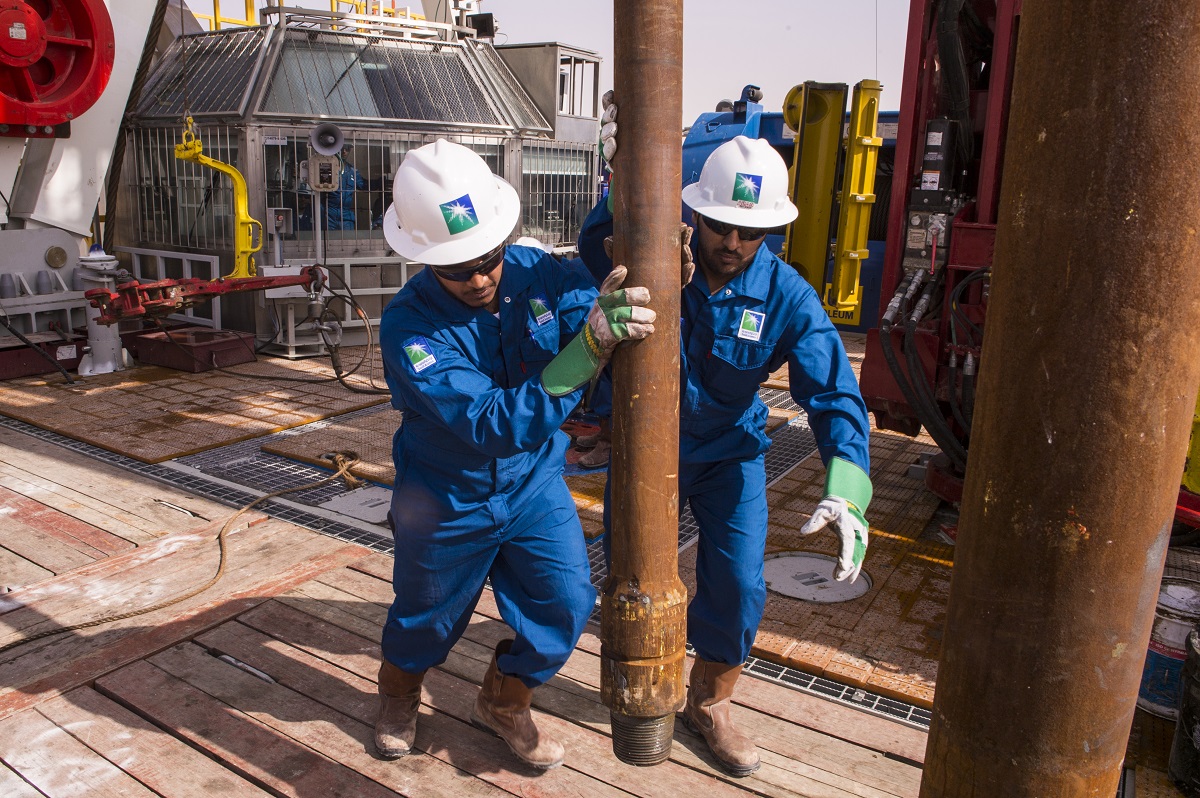
Saudi energy giant Saudi Aramco has begun output from the first phase of its vast Jafurah gas field, signalling a major milestone in the Kingdom’s shift toward natural gas. The project, valued at around $100 billion, has an initial production capacity of 450 million cubic feet per day, according to the Saudi Finance Ministry’s 2026 budget statement.

The field holds an estimated 229 trillion standard cubic feet of raw gas along with 75 billion stock tank barrels of condensate—making Jafurah the largest non-associated gas development in Saudi Arabia and among the largest shale-gas plays outside the United States.

Completion of the first development phase allows Aramco to begin supplying sales gas domestically. The company plans to ramp production gradually and aims to reach a sustainable output of 2 billion cubic feet per day by 2030.

To support its gas-processing infrastructure, Aramco earlier sealed an $11 billion lease-and-leaseback agreement with a consortium led by Global Infrastructure Partners, part of BlackRock. Under the deal, a newly formed subsidiary, Jafurah Midstream Gas Company, will lease the processing and fractionation facilities — which Aramco will then lease back for a 20-year period. Aramco retains majority ownership with a 51% stake, while the investor group holds 49%. The transaction is designed to inject capital without constraining production volumes.

Aramco’s move reflects a broader strategic shift. By ramping up gas production, the company aims to reduce domestic reliance on crude oil for power generation — thereby freeing more crude for export. Gas from Jafurah is expected not only to meet domestic power and utility needs but also to provide feedstock for petrochemicals, hydrogen, and potentially emerging sectors such as AI data-centres.

Analysts view Jafurah as a potential game-changer for both Saudi Arabia and global gas markets. With reserves comparable to major U. S. shale plays and a projected daily output of 2 bcf by 2030, the project could make Saudi Arabia a more prominent natural-gas exporter or LNG player — a significant rebalancing from its traditional role as an oil-dominated supplier.

Through this transformation, Aramco underlines its long-term aim of reinventing its energy portfolio — aligning with efforts to diversify the country’s economy and meet shifting global demand patterns.

Advertisements

An East-meets-West digital fashion experience — uniting Paris Fashion Week insights with local talent in a fun, future-forward showcase for all ages, driving Hong Kong’s digital economy From 22 November – 2 December 2025 at AIRSIDE Gate33 Gallery HONG KONG SAR – Media OutReach Newswire – 4 December 2025 – Organised by the Hong Kong Design Centre (HKDC), curated by digital fashion innovator FabriX, and sponsored by […]

HONG KONG SAR – Media OutReach Newswire – 3 December 2025 – XTransfer, World’s Leading B2B Cross-Border Trade Payment Platform, announces the publication of the industry’s first Unified Global B2B Trade Settlement Network and Risk Control Platform Whitepaper. The whitepaper presents an end-to-end framework designed to resolve long-standing inefficiencies in B2B cross-border payments and establish a secure, scalable, and standardized global trade infrastructure for SMEs. X-Net, a […]

United Kingdom legislation now formally recognises digital assets such as cryptocurrencies and stablecoins as personal property, offering holders protections under established property law. The Property Act 2025 — previously a bill — received royal assent, confirming that digital tokens may be treated as a third category of personal property alongside traditional “things in possession” and “things in action.” This marks a decisive shift from earlier reliance on case-by-case rulings by courts.

Legal recognition ensures that crypto-owners gain enforceable rights in instances of theft, fraud or insolvency, and enables digital assets to be included in estates or bankruptcy proceedings under the same protections afforded to conventional property. The Act does not itself define which digital assets qualify — courts will decide those details over time.

Judicial developments had already begun to lay the groundwork for this change. As early as 2019, the UK Jurisdiction Taskforce concluded that crypto-assets met criteria for property under English law: they could be defined, identified, transferred and treated as assets capable of value retention. A key case, AA v Persons Unknown, saw the High Court of England and Wales recognise Bitcoin provided as ransom in a cyber-attack as property, granting the insurer a proprietary injunction.

Advocates of the law hailed it as providing clarity long sought by individuals and businesses holding crypto-assets. CryptoUK, a leading trade body for digital assets, noted that while courts had already treated crypto as property in some cases, codifying the principle into statute removes uncertainty and streamlines legal protections across theft, insolvency and estate-related scenarios.

Legal experts say the Act reflects the recommendations laid out by the Law Commission in a 2023 report, which urged reform to ensure the law could accommodate emerging digital assets under a flexible yet robust framework. The Commission argued that existing categories of personal property under law were too rigid to account for assets that lacked physical form or contractual rights.

This statutory change arrives as UK regulators concurrently refine the broader regime for crypto-assets. Draft legislation published earlier this year already seeks to amend the Financial Services and Markets Act 2000 to designate certain “qualifying cryptoassets” and “qualifying stablecoins” as regulated investments, bringing market-level rules for trading, custody and compliance under formal oversight.

While the law does not render cryptocurrency a legal tender — meaning it still cannot be used to settle debts in substitute for currency — its classification as property gives holders legal certainty over ownership and enforceable rights. Taxation and regulatory treatment will continue to follow established frameworks, though this legal milestone reduces ambiguity over the status of crypto-assets in private law contexts.

Judges, lawyers and market participants anticipate that the Act will lead to a more stable and predictable legal environment for crypto-asset ownership, enabling individuals and institutions to treat tokens with the same legal respect accorded to traditional assets. As the courts start applying the new law in real cases, the boundaries of which digital assets qualify will grow clearer — and the UK’s position as a regulatory pioneer in digital asset law will be reaffirmed.

The grip of Chromium on the global browser ecosystem has grown so wide that many users now assume every modern browser is built on Google’s open-source architecture. That perception has taken root partly because major names such as Microsoft Edge, Opera, Brave, Vivaldi and Arc all rely on Chromium’s Blink rendering engine, creating a sense that browsing itself has become synonymous with Google-aligned foundations. The dominance is […]

Advances in large language models have delivered extraordinary gains, yet each new iteration introduces a structural tension that the wider software ecosystem is only beginning to confront. As foundation models evolve from version 4.X to 4.X+1, the coding assumptions, prompt-engineering conventions and guardrails that developers rely on can shift in subtle but consequential ways. This is emerging as a modern variant of the software world’s old problem […]

Growing sophistication in artificial-intelligence driven video and audio forgery has sent shockwaves through financial systems and public trust alike, with 2025 emerging as a watershed year in deepfake-enabled fraud. Losses tied to deepfake scams are widely estimated at over $50 billion annually — a stark indicator of how rapidly cybercrime is evolving. Fake videos that convincingly mimic celebrities, corporate executives or even family members are now being […]

Dubai Duty Free registered its highest-ever monthly sales with AED 876.56 million in November, marking a major breakthrough in the retailer’s 42-year history. By mid-November the operation had already surpassed the US$2 billion threshold for the year, underscoring a powerful run of commercial momentum across its global travel-retail network.

Sales surged by 16.8 per cent compared with the same month last year, pushing average daily revenue to ~AED 29.21 million, compared with AED 26.51 million in December 2024. High-value purchases — defined as transactions above AED 500 — have accelerated, growing 15.2 per cent in count and 20.5 per cent in value over prior-year levels, forming roughly three-quarters of total spend.

Luxury and lifestyle categories remain the backbone of this growth. Perfumes again led the charts with AED 160.6 million in sales, followed by liquor at AED 103.6 million. Gold sales rose sharply to AED 87.7 million, reflecting strong demand for jewellery and precious metals among departing travellers. Confectionery recorded a striking 42.9 per cent increase, with the retailer’s “Dubai Chocolate” brand alone contributing AED 35.7 million — equivalent to over 80 tonnes of product across multiple luxury brands.

Electronics posted robust gains as well, with AED 67.2 million in sales, fuelled by a standout performance for new smartphone launches. The luxury fashion segment saw its strongest month of the year: brands such as Louis Vuitton, Dior, Chanel, Gucci and Cartier — along with the pre-owned luxury concept store REKLAIM — witnessed a 40 per cent plus rise in sales. Notable transactions included a high-end watch priced over AED 200,000 and multiple Hermès handbags.

The growth was broad-based across concourses and markets. Concourse A led with a 38 per cent jump in sales, while arrivals stores rose 14 per cent despite intensified competition from other retail outlets. Regional spending grew across the board, with Europe up 23.6 per cent, Russia 27.6 per cent, and Africa 16.5 per cent. The Indian subcontinent contributed modestly with a 6.3 per cent uptick.

Tracking year-to-date performance, Dubai Duty Free’s cumulative sales reached AED 7.75 billion, up nearly 9.6 per cent compared with the same period last year. Management credits this growth to strategic expansion of luxury offerings, optimized retail footprint at Dubai International Airport and Al Maktoum International Airport, and enhanced engagement with travellers from emerging and traditional markets.

Japan’s 10-year government bond yield jumped to 1.84 percent, marking its highest level since 2008, sending ripples across global financial markets. Equities and risk assets came under pressure while investors reassessed portfolios built on cheap Japanese funding.

The surge reflects an abrupt shift away from decades of near-zero rates in Japan, transforming the dynamics of global capital flows. Long considered a foundation of stability, Japanese government bonds are now drawing fresh interest, prompting capital repatriation as investors seek higher yields at home. This shift threatens to unwind the entrenched “yen carry trade,” where investors borrowed yen cheaply to pour money into higher-yielding markets abroad — including equities and cryptocurrencies. With yen-denominated debt now offering compelling returns, such cross-border funding strategies are losing appeal.

As liquidity conditions tighten, markets for risk assets are being reshaped. Cryptocurrencies and tech stocks, once buoyed by easy global credit, have borne the brunt of investor risk aversion. Traders point out that this yield shock was partly triggered by a shift in market expectations around the Bank of Japan, which has signalled the possibility of further rate increases in its upcoming policy review. That, combined with concerns over Japan’s sizeable fiscal obligations and growing government borrowing, is pushing bond yields across the maturity curve higher — including 20-, 30- and 40-year maturities that recently recorded historic highs.

For global investors, the implications are stark. Funds and hedge-fund managers that relied on yen-funded carry trades now face rising funding costs and diminishing returns. Emerging markets and growth-oriented sectors that thrived on abundant liquidity may see capital outflows as investors retreat to safer, yield-bearing bonds. Currency markets have already reacted: the yen has strengthened sharply, adding pressure on exporters and raising the cost of dollar-denominated investments for Japan-based holders.

Analysts note that this yield shock does not necessarily spell widespread collapse — but signals a structural recalibration. Portfolios will need to adapt to a world where Japanese bonds are no longer a funding tool, but a competing asset class in their own right. For risk assets to recover, markets will need fresh capital inflows rather than the easy money of the past.

Abu Dhabi is preparing to host what organisers describe as the world’s largest debut media and entertainment gathering, with the BRIDGE Summit 2025 scheduled to run from 8–10 December at the Abu Dhabi National Exhibition Centre. The summit is expected to draw more than 60,000 participants from around the globe and bring together over 400 speakers and 300 exhibitors under a single roof.

Organisers envisage BRIDGE as an immersive platform that merges content, technology, culture, and commerce, structured across seven thematic tracks: Media; Creator Economy; Music; Gaming; Tech & AI; Marketing; and Picture — the latter covering film, streaming, and visual storytelling. The schedule includes more than 300 activities: roughly 200 panels, 50 workshops and interactive showcases, masterclasses and matchmaking zones designed to connect creators, investors, policymakers and media platforms.

Participation confirmed by high-profile figures signals the summit’s global ambition. International actor, filmmaker and DJ Idris Elba will join the line-up, bringing his cross-sector experience in entertainment and advocacy to the Summit’s discussions. Alongside traditional media heavyweights and cultural leaders, the Summit aims to spotlight emerging voices in the digital creator economy. The Creator Economy track alone is slated to feature more than 80 global contributors across 50 sessions investigating how influence, ownership and monetisation are reshaping creative industries worldwide.

Central to the Summit’s narrative is the challenge facing modern media: trust, credibility and sustainability. As traditional broadcast gives way to streaming and social platforms, and as generative AI reshapes production, issues of editorial independence, content verification, audience dynamics and revenue stability are moving to the forefront. The Media track is expected to convene over 100 global editors, founders, policymakers and investors to discuss funding models, algorithmic distribution, content integrity and the very ethics of influence in media today. The Summit’s ambition is to provoke debate and propose frameworks that can guide media’s future in an era of rapid technological disruption.

Beyond content and discussion, BRIDGE is designed as a marketplace for partnerships — blending culture, commerce and policy. Conversations already under way include cross-sector collaborations between media companies, tech firms, venture capital, and energy and infrastructure players. For example, recent talks involving global tech leadership have highlighted an alignment of media innovation with digital infrastructure capacity and clean energy, reflecting how foundational resources are becoming integral to media’s next frontier.

For countries and organisations navigating the tension between creative independence, monetisation and regulatory frameworks, the Summit offers a testbed. Delegates include creators seeking sustainable revenue, investors eyeing cultural-sector returns, technology firms exploring policy-driven AI integration, and governments looking to harness media’s influence in soft power projection. That diversity suggests the Summit could influence not just entertainment and content markets, but regulatory norms, global standards, and potentially the geopolitics of information dissemination.

Attendance projections and speaker rosters aside, the Summit’s scale poses logistical and structural challenges. Managing 60,000 attendees across multiple tracks, workshops and networking zones demands rigorous coordination. Questions around equitable representation — of global South artists, independent creators and regional media voices versus established global brands — remain. Observers are watching whether BRIDGE can balance commercial ambition with inclusivity and whether media integrity and creative freedom will be genuine priorities.

If execution aligns with vision, BRIDGE Summit 2025 could mark a turning point for the media and entertainment industry — reimagining how content, community, technology and commerce converge in the coming decade.


By K Raveendran An evolving convergence of political intent and economic pragmatism is giving fresh momentum to the India–Russia relationship, placing the forthcoming summit in New Delhi as a significant moment in a partnership that has already weathered decades of geopolitical shifts. The visit of President Vladimir Putin, framed within the terminology of a ‘Special […]

The article Delhi Summit To See A New Strategic Reset In India-Russia Partnership appeared first on Latest India news, analysis and reports on Newspack by India Press Agency).

HONG KONG SAR – Media OutReach Newswire – 28 November 2025 – HONMA Golf Limited (“HONMA”; together with its subsidiaries, the “Group”; HKEx stock code: 6858), one of the world’s most prestigious golf brands, announces its consolidated interim results for the six months ended 30 September 2025 (the “Period”). Financial Highlights In the face of a slowing global economy, heightened policy uncertainty and intensified competition across the […]

OpenAI disclosed a data breach involving its analytics provider Mixpanel, confirming that a security lapse allowed unauthorised access to certain API user details but did not compromise ChatGPT message data or model-generated content. The company informed affected developers that the incident, traced to November 2025, exposed names, email addresses and limited account-related metadata, prompting a broader review of third-party integrations across its platform. OpenAI stated that the […]

AI’s most celebrated breakthroughs have lived almost entirely behind glass. Models generate words, sketches and synthetic universes, but the physical world remains stubbornly uninterpreted and largely untouched by this computational flourish. As companies push toward systems that move, react and collaborate like autonomous agents, a quieter truth is settling in across California’s innovation core: intelligence can no longer remain suspended inside screens. The next era is about […]

BANGKOK, THAILAND – Media OutReach Newswire – 27 November 2025 – SCG is advancing its “Regional Optimization” strategy by positioning Vietnam as a key production base to support domestic consumption and exports to global markets. The company is showcasing the strengths of Long Son Petrochemicals (LSP), Vietnam’s first fully integrated petrochemical complex, and Binh Minh Plastics (BMP), the country’s leading manufacturer of premium plastic pipes and fittings. […]

Banks and insurers across South Africa are being confronted with a shifting regulatory landscape as the Financial Sector Conduct Authority and the South African Reserve Bank, through its Prudential Authority, move to formalise oversight of artificial intelligence across the financial sector. Their inaugural report on the topic reveals a growing, though still tentative, embrace of AI — and flags significant risks around data governance, transparency, and systemic […]

Arabian Post Staff -Dubai Crown Prince Mohammed bin Salman arrived in Washington to meet U. S. President Donald Trump with a sweeping agenda spanning defence, technology and economic cooperation — signalling a clear recalibration of Saudi Arabia–United States relations. The meeting resulted in high-stakes commitments including a pledge of up to $1 trillion in Saudi investments and approval for advanced defence hardware, underscoring the kingdom’s ambition to […]

Arabian Post Staff -Dubai Markets across the Gulf Cooperation Council are undergoing a shift as Islamic debt instruments embrace digital formats and new issuance technologies. Outstanding sukuk — Shariah-compliant bonds — in the GCC reached US$1.1 trillion by the end of the third quarter of 2025, marking a 12.7 percent rise over the prior year as debt-capital-market activity surged. Debt capital market issuances in the region saw […]

VISHNU RAJA
RYO YAMADA
HITORI GOTOH
IKUYO KITA