News related to
Emerging

HONG KONG SAR – Media OutReach Newswire – 3 September 2025 – Luxshare Precision (002475.SZ) released its 2025 Interim Report at the end of last month. Under the complex and ever-changing global economic environment, the company still maintained a steady growth. The report shows that the company achieved growth in both revenue and profit in the first half of the year: operating income reached RMB 124.503 billion, […]

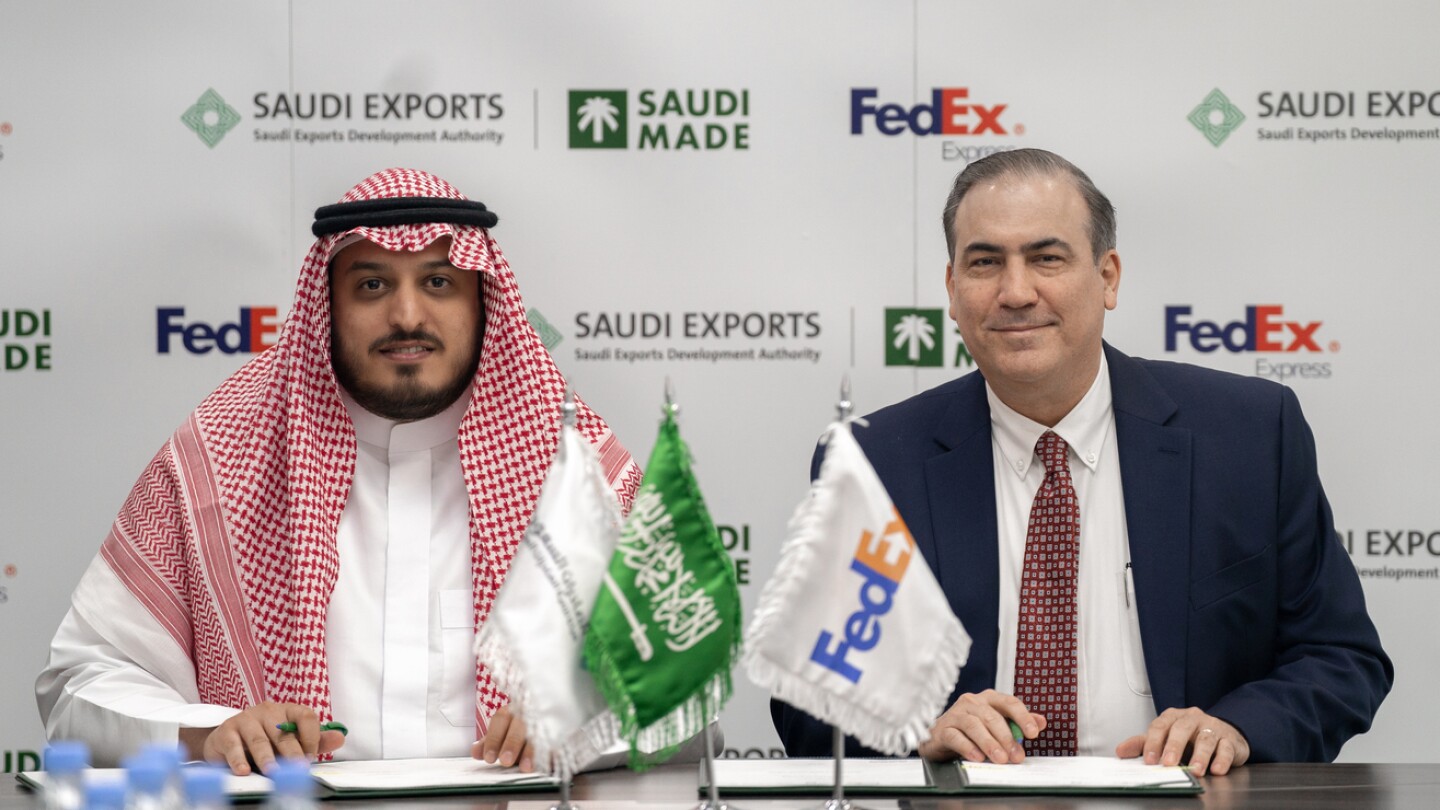
FedEx has gained an economic licence from Saudi Arabia’s General Authority of Civil Aviation to operate as a foreign air carrier, marking a significant expansion of its logistics footprint in the Kingdom. The move equips FedEx to conduct scheduled cargo services via King Khalid International Airport in Riyadh, with plans to operate 24 flights per month from early September 2025, establishing Riyadh as its regional hub linking continents.

The licence, granted on 2 September 2025, grants FedEx the ability to fly directly and to integrate air and ground operations across the Gulf Cooperation Council states. The announcement was made during a ceremony in Diriyah, attended by senior officials including Saleh Al‑Jasser, Minister of Transport and Logistics Services and Chairman of GACA; Abdulaziz Al‑Duailej, GACA President; and Dr Rumaih Al‑Rumaih, Acting President of the Transport General Authority, alongside FedEx executives.

FedEx introduced its first nonstop freighter service from the United States and Europe into Riyadh, operating six times a week with Boeing 777 aircraft. This route is the only express logistics connection offered by FedEx that bypasses other hubs, and continues onward to Guangzhou and Shanghai.

This direct link strengthens trade routes, particularly for high-priority sectors like energy, manufacturing, mining, healthcare and automotive, enabling temperature‑controlled, heavy, oversized or hazardous shipments. FedEx complements this airlift with its FedEx Logistics suite—air, road and sea freight forwarding, customs brokerage, and transit cargo support—aimed at enhancing supply chain resilience across the GCC, South Asia and Africa.

The company has developed end‑to‑end capabilities in the Kingdom, directly managing pickup, delivery and customs clearance through four gateways and four stations, supplemented by digital tools for shipping visibility and efficiency.

FedEx leadership emphasises Saudi Arabia’s role as a strategic logistics hub connecting Asia, Europe and the Americas. Richard Smith, Chief Operating Officer, International and CEO of the Airline at FedEx, cited the Kingdom’s infrastructure as a vital link in their global network. Kami Viswanathan, President of FedEx Middle East, Indian Subcontinent and Africa, underlined the integration of infrastructure, digital innovation and integrated solutions to aid Saudi businesses in competing globally.

These moves align closely with Saudi Vision 2030. The Aviation Programme aims to elevate Saudi Arabia’s aviation sector to the highest regional standards, targeting 330 million passengers, 4.5 million tonnes of air cargo, and air connectivity to 250 destinations by 2030. FedEx’s operations support these objectives by advancing industry capacity and reinforcing Riyadh’s prominence in logistics.

The expansion follows challenges earlier this year, when FedEx suspended economy parcel and freight services to the Kingdom from countries including India, Japan and the UK in March 2025. Service was halted temporarily, with FedEx noting it would resume “as soon as possible.”

Trade levels in Saudi Arabia have surged. The Kingdom posted a trade surplus of US$ 16.8 billion in Q1 2025, up 52 percent on the prior quarter, reflecting strong exports and demand for logistics infrastructure that FedEx is now well‑positioned to serve.

With strategic investments—including the creation of a global head office in Riyadh to oversee operations across Saudi Arabia, Bahrain, Kuwait and Qatar—FedEx reinforces its long‑term commitment to the region.

This expansion signals a departure from reliance on intermediaries or regional hubs outside the Kingdom; FedEx now controls its entire customs-to-delivery chain in Riyadh, laying the groundwork for faster transit, improved service reliability and deeper integration into global trade networks.

Emerging trends include rising demand for integrated logistics services, investment in digital tools for customs and tracking, and regional consolidation of supply chain operations. Key players alongside FedEx include Saudi authorities driving Vision 2030’s transport strategy, while GCC markets and commercial sectors increasingly rely on swift, dependable global connectivity.


Etihad Airways has stressed it has no set timetable for a public listing, affirming that its $20 billion expansion over the coming decade can be financed from within.

The airline’s chief executive, Antonoaldo Neves, confirmed it is prepared for an initial public offering, yet the decision remains with its shareholder—Abu Dhabi’s sovereign wealth fund, ADQ. He stated that “the time has not come yet”, emphasising that Etihad can self‑fund its next phase of growth.

Neves traced the shift in strategy to ADQ’s acquisition of Etihad in October 2022, which ushered in a focus on organic growth and strengthened regional connectivity through Abu Dhabi, rather than continuing merger or acquisition activity.

Passenger demand continues to rise, with traffic up 17 percent year‑on‑year and load factors climbing to 88 percent—up from 86 percent a year earlier. Despite a slowdown during the Israel-Iran conflict, bookings rebounded fully by the end of July, demonstrating robust consumer interest.

Etihad’s fleet exceeds 100 aircraft, spanning both Airbus and Boeing models. In May, the airline placed a major order with Boeing for 28 wide‑body jets—including 777X aircraft destined to replace its Airbus A380s after 2030. Neves also revealed plans to supplement fleet expansion via secondhand aircraft and lessor sourcing.

This public statement builds upon a broader narrative unfolding over the past year. Etihad reported profitability in 2022 and 2023—92 million dirhams and 525 million dirhams respectively—after years of losses. The airline has been enhancing transparency, governance, and operational efficiency, eliminating underperforming routes and returning grounded aircraft to service.

Earlier projections had flagged a possible IPO no earlier than 2025, allowing Etihad to bolster its financials before a listing. Speculative growth targets under its “Journey 2030” strategy include expanding to over 125 destinations and substantially growing its fleet.

Other commentary from February 2025 suggested Neves intended to float a stake of up to 20 percent on the Abu Dhabi stock exchange, possibly valuing the airline at $5 billion, and underscored his readiness for a float—though final approval again resides with ADQ.

Throughout this period, Etihad has forged strategic alliances. A landmark joint venture with China Eastern Airlines will coordinate schedules and revenues on selected routes from 2025, the first such pact between Middle East and Chinese carriers. Additionally, the airline has broadened its network through expanded service offerings to emerging and mid‑distance markets, positioning Abu Dhabi as a strategic travel hub.

Yunfeng Financial Group, a Hong Kong‑listed firm with ties to Alibaba’s Jack Ma, has acquired 10,000 ETH—valued at approximately $44 million—using its own cash reserves. The firm intends to list Ether as an investment on its balance sheet as part of a strategic shift towards blockchain-enabled finance.

Yunfeng’s move aligns with its broader blueprint unveiled in July, which sets Web3 technologies, real-world asset tokenisation and artificial intelligence at the heart of its expansion strategy. The company emphasises that including Ether among its strategic reserve assets supports tokenisation efforts and integrates its financial operations with Web3 infrastructure. The firm also plans to explore Ethereum’s uses in insurance services and decentralised finance applications, signalling ambitions beyond treasury diversification.

This step places Yunfeng alongside a growing list of publicly traded firms embracing Ether as a reserve asset. Notable peers include SharpLink Gaming, BitMine Immersion Technologies and Ether Machine, which collectively reflect a broader institutional enthusiasm for Ethereum amid increasing corporate treasury adoption. The trend echoes earlier Fortune 500 strategies for Bitcoin, with Ethereum emerging as a comparable asset in this evolving corporate playbook.

Ether’s market resilience underpins Yunfeng’s strategy. Despite subdued crypto market conditions, ETH continues to trade above the psychologically significant $4,000 threshold, noted by analysts as a key marker of investor confidence. Technical analysis by market watchers, including the chartist CryptoGoos, suggests ETH is maintaining an upward breakout trend from a falling wedge formation, with potential upside targets stretching to $6,000—driven by heightened institutional inflows.

Yunfeng’s approach signals a calculated embrace of digital assets that transcends short‑term speculation. By positioning Ethereum at the foundational level of its Web3 and AI strategy, the company is asserting the utility of the token within financial services, as well as its role as a long‑term reserve option. Ether holdings will offer an alternative to traditional fiat reliance while granting greater operational flexibility across emerging business lines.

Shiba Inu has bounced off a decisive demand zone, reclaiming support near $0.000012 and positioning itself for potential upward movement toward $0.000015, as technical charts and market dynamics align in favour of bulls.

The meme token recently rallied from a support cluster between $0.0000115 and $0.000012, forming a reassuring double‑bottom pattern that underscores emerging buying interest. Observers note that if this momentum holds, SHIB could head toward its key short‑term resistance around $0.000015. Analysts emphasise that sustaining pressure above this demand zone is critical to maintaining bullish prospects.

A chart pattern also suggests that SHIB is attempting to break above a descending channel, lying just below its 50‑day moving average. Crossing that threshold could trigger a sharper rally, with targets stretching to $0.000014, $0.0000175, and even beyond, provided higher timeframe breakouts materialise.

Adding fuel to the rally, token burns have surged significantly—over 48,000% in one documented instance—with tens of millions of SHIB permanently removed from circulation. This deflationary action tightens supply and, combined with heightened derivatives activity, bolsters bullish sentiment.

Yet, technical caution is advised. SHIB is currently compressed within a symmetrical triangle near $0.0000123, and the direction of the breakout—either above $0.000013 or below $0.00001—will likely determine whether bullish or bearish trajectories dominate. A clean advance above the upper trendline and rising volume would open the door toward $0.000015 and the 200‑day moving average; conversely, a breakdown could expose support near $0.0000095.

Beyond price mechanics, structural developments around the Shiba Inu ecosystem—such as Layer‑3 platform expansion, burn infrastructure, and community governance initiatives—offer a long‑term narrative that could support sustained demand, though analysts caution that burns and buzz alone may not suffice without wider utility adoption.

In essence, Shiba Inu now stands at an inflection point. A firm hold above the demand zone has reignited interest, and a break above the 50-day MA or the triangle’s upper boundary could spark a more pronounced rally. Conversely, failure to defend current levels risks deeper retracement. Technology upgrades, ecosystem growth, and on-chain developments remain key components shaping its trajectory.

Pharmaceutical developers are making headway with artificial intelligence tools to model drug absorption, distribution, and toxicity in human-relevant systems. This shift supports the U. S. Food and Drug Administration’s initiative to make animal testing an exception rather than a rule, particularly in pre‑clinical safety assessments for monoclonal antibody therapies and other drugs.

Regulatory authorities expect New Approach Methodologies—including AI-driven computational models, human-cell‑based systems like organs‑on‑chips, and organoids—to halve both development time and costs within the next three to five years. Recursion Pharmaceuticals recently advanced a cancer drug candidate to clinical trials in just 18 months, markedly faster than the 42‑month industry average.

The FDA’s April roadmap encourages drug developers to submit safety data from NAMs in Investigational New Drug applications. Firms providing robust NAM evidence may receive streamlined review processes—a concrete incentive to adopt these modern methods. A pilot programme allows select monoclonal antibody developers to use primarily non‑animal testing strategies, with results shaping future guidance.

Industry leaders at Charles River, Certara, Schrodinger, Recursion and InSphero are investing heavily in these emerging tools. Charles River’s NAM portfolio now generates roughly US $200 million annually. Certara’s president, Patrick Smith, stated the company is reaching a point where animal testing may no longer be necessary. Schrodinger utilises physics‑based simulations with AI to predict potential toxicity, while InSphero tests safety and efficacy using 3D liver microtissue models.

This transition builds on milestones such as the FDA Modernization Act 2.0, which removed the default requirement for animal data in drug development and formally recognised in vitro, in silico, and organ‑based methods as valid non‑clinical evidence. The Act is part of a broader regulatory overhaul that began with the ISTAND programme—for qualifying organ-on-chip tools—and continued with acceptance of the first liver‑chip into that pathway in 2024. Additional momentum comes from shifts in funding and policy: the NIH now prioritises human‑based models and no longer supports animal‑only proposals; the U. S. Navy has ended cat and dog experiments; and a federal push is underway to align academic and industry research with NAMs adoption.

Beyond regulation, academic research underscores the promise of computational approaches. A June 2025 study highlights AI and deep learning as enablers of predictive frameworks for vaccine and immunotherapeutic design—pointing toward a future where animal testing is replaced by computational models that refine vaccine targets and immune response predictions.

In parallel, the FDA is advancing its broader modernisation agenda through pilot programmes aimed at accelerating drug review timelines. Commissioner Marty Makary has proposed a split‑submission process that allows early review of key data during clinical trials. Coupled with AI tools such as Elsa—used daily within the FDA to expedite data review—this approach is projected to compress approval times from 10–12 months to as little as one to two months in eligible cases.

Ethically, these developments carry weight. Animal testing has repeatedly fallen short in predicting human outcomes—about 90 per cent of drugs deemed safe in animals fail in humans. New methods rooted in human biology promise not just faster, cost‑efficient drug pipelines, but also greater relevance and reliability in safety assessments, while reducing ethical concerns.

Though a complete end to animal testing is not expected immediately, experts anticipate a hybrid landscape in the short term, with animal studies still used where necessary but significantly reduced in favour of AI and human‑based alternatives.

AI’s growing sophistication is pushing operational costs skywards, as developers and startups grapple with soaring token usage, escalating compute demands, and shifting business models. At the heart of the challenge lies a paradox: while the per‑token price of AI continues to decline, the number of tokens consumed for meaningful tasks has surged dramatically, especially where reasoning-intensive workflows dominate. Tasks once considered lightweight now demand tens or even […]

Advertisements
By T N Ashok NEW YORK: For the first time since 2018, Indian Prime Minister Narendra Modi landed in China in late August 2025, greeted warmly by President Xi Jinping for the annual Shanghai Cooperation Organisation (SCO) Summit. Alongside Russian President Vladimir Putin, the trio projected a striking image of solidarity—three leaders from the world’s […]

A notable surge in interest marks China’s gaming community, with nearly four in 10 individuals expressing a keen desire for generative AI within gaming platforms.

A recently circulated report indicates that 39 per cent of gamers in China would welcome the integration of generative artificial intelligence into their gaming experiences. This figure underscores a significant shift in consumer expectations and highlights generative AI’s burgeoning role as a differentiator in content creation and gameplay dynamics.

The country’s generative AI gaming market is undergoing remarkable growth. A detailed forecast places market value at approximately USD 319.7 million in 2024, rising sharply to an anticipated USD 5.3 billion by 2035, driven by a robust compound annual growth rate of around 29 per cent. This surge is attributed largely to concerted efforts by major players such as Tencent, NetEase, ByteDance, MiHoYo and Alibaba – all heavily investing in generative AI technologies that promise tailored and dynamic gaming experiences.

Governmental backing is shaping much of this momentum: the Ministry of Industry and Information Technology has been advancing policies to encourage AI-driven innovation within the digital economy, reinforcing investments and research in generative AI applications across the gaming landscape.

On the technological front, Tencent recently introduced its Hunyuan 3D-generation system early this year. The platform enables the creation of 3D assets and environments using text prompts, streamlining content generation and unlocking new avenues for immersive game design. NetEase has also made strides by embedding AI-driven features into its mobile games, most notably with dynamic non-player characters that respond with lifelike reactions. Its upcoming title, Justice Online Mobile, will reportedly incorporate chatbot-style AI dialogue systems to allow players to engage in nuanced conversations with NPCs that may alter game progression.

Cloud gaming is emerging as another vector for AI’s influence. Tencent’s cloud gaming platform, START, developed in partnership with NVIDIA, enables users on low-end devices to stream AAA-quality games—blending AI, cloud infrastructure and advanced hardware to expand access and redefine the gaming experience.

Emerging trends include generative AI’s application across multiple stages of game production—from content creation and level design to character animation, testing and quality assurance. Mobile platforms, PC, console and cloud gaming are all key battlegrounds, assisted by both on‑premises and cloud-based deployment models. On-premises models offer enhanced control and data security, whereas cloud deployments grant scalability, faster updates and foster collaborative development.

China’s gaming population, exceeding 600 million users, offers a vast and varied demographic. That scale is bolstering demand for personalised, generative experiences.

Beyond purely technological innovation, generative AI is starting to influence the narrative and emotional depth of gameplay. NPC interactions, procedurally generated story arcs and real‑time adaptations informed by AI are creating fresh, immersive layers of engagement. Developers – both established studios and indie creators – are experimenting to align with gamer preferences and refine the interplay between narrative and agency.

Regulatory frameworks are also evolving. The Cyberspace Administration of China and other authorities introduced “Interim Measures for the Management of Generative AI Services” in August 2023. These regulations aim to ensure ethical application and secure deployment of generative AI technologies across public services – including gaming.

Chinese President Xi Jinping delivered a bold address at the Shanghai Cooperation Organisation summit in Tianjin, asserting China’s leadership role in global affairs and unveiling a series of strategic initiatives—most notably a new AI cooperation centre and a development bank—that signal an assertive pivot towards a multipolar world order. With over 20 leaders present, including Russian President Vladimir Putin and Prime Minister Narendra Modi, the summit stood […]

Spot gold surged past the $3,500 mark, reaching new record highs amid mounting anticipation of Federal Reserve interest rate reductions and a weakening dollar. Bullion briefly traded near $3,508 an ounce, extending its year-to-date gains to around 30%, as markets grow increasingly uneasy over central bank independence and geopolitical stress.

Markets are pricing in a high likelihood—approaching 90%—that the Fed will proceed with a 25-basis-point cut at its upcoming meeting in mid-September, following dovish signals from Fed Chair Powell and softening macro data. A key US non-farm payrolls release this Friday is expected to reinforce the case for monetary easing, given signs of cooling in the labour market. Lower rates would reduce the appeal of interest-bearing assets, boosting demand for non-yielding gold.

The US dollar’s decline has played a significant role in elevating gold’s appeal, making bullion more attractive to global buyers. Safe-haven flight intensified after mounting investor concern regarding the Fed’s autonomy, stemming from high-profile political pressure, including moves to dismiss Governor Lisa Cook—actions perceived as jeopardising monetary policy credibility.

Investor sentiment has translated into tangible market flows: holdings in gold-backed ETFs have climbed steadily, piling pressure on available stockpiles and raising lease rates, especially in London’s bullion markets. Central banks, including those in emerging economies, continue to accumulate gold, adding institutional momentum to the rally. As a result, gold is increasingly viewed as a strategic hedge amid persistent inflation uncertainty, trade tensions, and an unpredictable global political landscape.

Strategists at UBS have noted that softer economic indicators, lower interest-rate environments, and elevated macro-geopolitical risks enhance gold’s function as a portfolio diversifier. Their outlook anticipates continued upward price movement into the coming quarters. Likewise, Goldman Sachs has raised its year-end target, citing strong central bank demand and ETF inflows despite broader market volatility.

Crypto casinos continue to outpace regulatory efforts, with regulatory frameworks lagging behind industry growth. Crypto gambling revenue soared past $81 billion in 2024, a more than fivefold increase since 2022, as players flocked to platforms such as Stake, Rollbit and Roobet—licensed in jurisdictions like Curaçao and Malta—despite restrictions in major markets including the UK, US and China. Widespread access through VPNs and affiliate marketing, combined with limited KYC […]

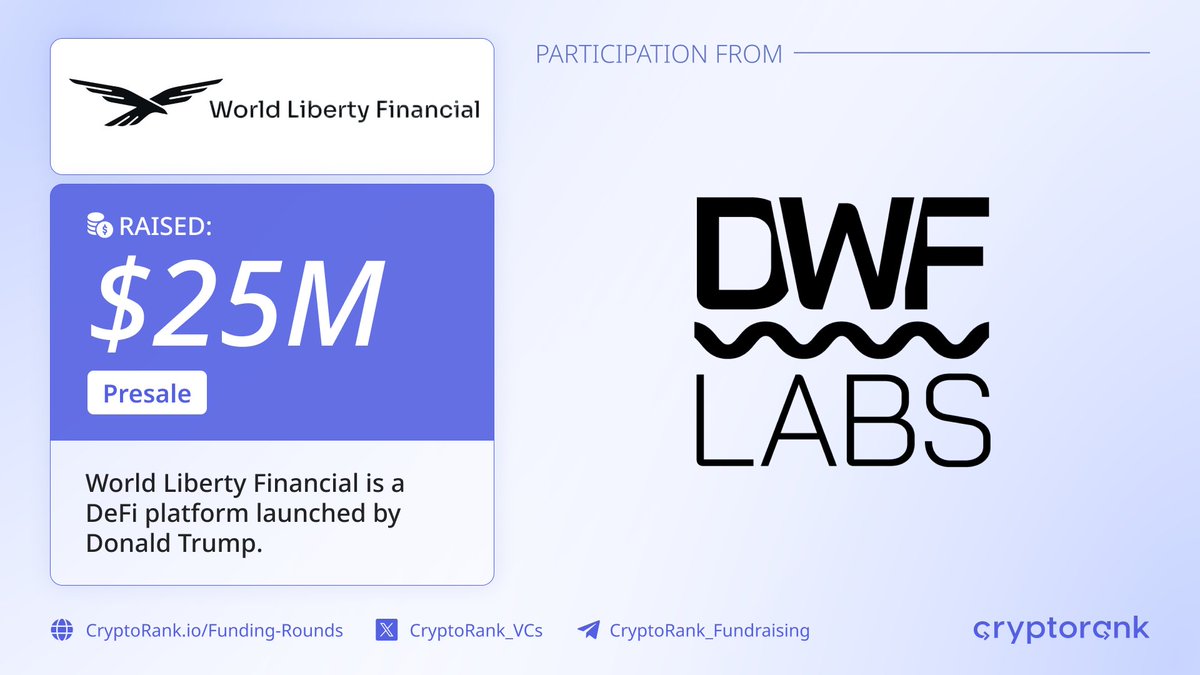
DWF Ventures, the investment arm of Web3 market‑maker DWF Labs, has delivered a detailed evaluation of $WLFI, World Liberty Financial’s newly issued utility token. Published via X, the analysis emphasises $WLFI’s integration into World Liberty’s broader ecosystem and its potential as a key enabler in connecting traditional finance with on‑chain liquidity. Unlike World Liberty’s $TRUMP memecoin, $WLFI is purpose‑built to power the upcoming “WLFI super app”, which will streamline access through web wallets and bank on‑ramps, and underpin planned lending and borrowing services.

The report highlights the success of the USD1 stablecoin—backed by short‑term US Treasuries and cash equivalents—which now commands a market capitalisation approaching $2.5 billion and enjoys listings on major exchanges such as Binance and Coinbase. These developments have significantly boosted investor attention toward the $WLFI token.

World Liberty has raised approximately $500 million across two funding rounds by selling about a quarter of its 100 billion token supply. Among its backers are DWF Labs itself and crypto figure Justin Sun, while ALT5 Sigma has outlined a $1.5 billion treasury strategy centred around $WLFI. DWF Ventures expects that the token could soon be integrated by several DeFi protocols, including Falcon Finance, Ethena and Mantle.

Importantly, DWF Ventures positions $WLFI’s launch as more than a token debut; it sees the initiative as a structural pivot that could catalyse institutional adoption and facilitate compliant capital onboarding—possibly even drawing interest from sovereign investors.

But $WLFI’s entry into the market has triggered concerns. Reports reveal technical difficulties involving the Lockbox contract, intended to unlock 20 percent of token allocations for early investors, which have left many users unable to activate the mechanism. Pre‑market trading responded with a 40 percent drop, raising doubts about launch readiness. Coupling these issues with the political profile of its founders, the token has become entangled in financial and reputational risks.

Indeed, WLFI’s connection to the family of the former president has cast a shadow over its market potential. The token’s political dimensions have already affected diplomatic engagements—such as withdrawals from the Bitcoin Asia 2025 conference—and prompted ethical criticism over conflicts of interest.

Broader scrutiny of World Liberty Financial underscores such tensions. Investigations have revealed that the Trump family commands a substantial share of revenue from token sales and that governance design reflects unusual centralisation for a DeFi project. Further concerns relate to self‑dealing practices: for instance, ALT5 Sigma—a firm acquired by World Liberty—purchased $750 million worth of WLFI tokens. As part of this arrangement, its leadership includes Eric Trump and WLFI co-founder Zach Witkoff, a structure that regulators and critics view as raising red flags.

Ethics experts warn that such close ties between ruling office, private enterprise and foreign investment could undermine democratic safeguards. The New Yorker, for one, described the venture as stretching the norms of political ethics, with World Liberty seen by some as a mechanism for influence through token‑based access channels.

The $WLFI launch is clearly more than a token generation event—it is shaping into a test case for the nexus of politics, finance and regulation in the emerging Web3 era.

Bilateral non-oil trade between the UAE and India surged past US $37.6 billion in the first half of 2025, marking a 33.9 per cent increase compared with the same period in the previous year. The UAE’s Foreign Trade Minister, Dr Thani bin Ahmed Al Zeyoudi, highlighted during his Mumbai visit the pivotal role of the Comprehensive Economic Partnership Agreement in propelling this growth. Discussions focused on expanding cooperation across pharmaceuticals, food and logistics, alongside Bharat Mart, a 2.7 million sq ft trade complex in Jebel Ali Free Zone designed for Indian exporters to reach markets across the Middle East, Africa and Europe.

Trade figures underscore that CEPA has significantly deepened economic ties. In 2024, non-oil trade between the two nations topped US $65 billion, reflecting a 19.7 per cent increase from 2023 and more than doubling the 2020 tally of US $27.9 billion. UAE investments in India reached around US $17 billion by late 2023, while Indian investments in the UAE climbed to approximately US $8 billion—total mutual investment topping US $25 billion, with the UAE accounting for 70 per cent of that figure.

This dynamic was further backed by the UAE-India CEPA Council’s Start-up Series, which has drawn more than 10,000 applications from Indian entrepreneurs since its launch in June 2025. The initiative, showcased in New Delhi by Ahmed Aljneibi, has made stops at leading institutions including Banaras Hindu University and the Master’s Union School of Business, offering mentorship, regulatory guidance and pathways for cross-border scale-up.

The strategic focus on innovation also extends beyond startups. Sheraa, Sharjah’s entrepreneurship centre, and Startup Middle East signed a memorandum to establish an India Startup Hub in Sharjah, aimed at facilitating the entry of Indian ventures into the UAE market and strengthening regional innovation ecosystems.

Policy measures in the UAE are evolving to match this economic outreach. Amendments to more than 40 laws, most notably the Commercial Companies Law enabling 100 per cent foreign ownership, are part of a broader strategy to double the non-oil economy—from US $381 billion to US $762 billion—by 2030. Foreign trade is viewed as central to achieving that ambition, with the UAE’s connectivity, infrastructure and logistics network seen as vital assets for Indian businesses seeking wider regional access.

CEPA’s architecture underscores its comprehensive approach: since its implementation in May 2022, tariffs on more than 80 per cent of Indian exports to the UAE have been reduced or eliminated immediately, benefiting sectors from gems and jewellery to pharmaceuticals and automobiles. Additional gains accrue from streamlined customs protocols, regulatory harmonisation and a joint committee addressing market-access and technical barriers.

Experts point to CEPA as transformative for both economies. Indian gems and jewellery exports more than doubled from US $4.9 billion to US $8 billion in fiscal year 2024, aided by duty removals. Labour-intensive industries such as textiles, leather, footwear, sports goods, plastics, furniture, engineering goods, agricultural produce and food items have also gained momentum, while regulatory alignment has accelerated entry of generic drugs and medical devices, boosting health-sector cooperation and supply-chain resilience.

Further integration is visible in emerging fintech and logistics initiatives. Bharat Mart reinforces logistical synergy, while the nascent Virtual Trade Corridor, fintech sandboxes and experiments such as India’s MagRail pilot demonstrate growing interoperability in digital trade and compliance systems.

At the political level, the CEPA enters its third year this February. Al Zeyoudi noted that India remains the UAE’s second-largest non-oil export destination, accounting for 13.5 per cent of total non-oil exports in 2024—a 75.2 per cent rise year-on-year. Conversely, the UAE is India’s third-largest trading partner and a major investor, illustrating the strategic depth CEPA has added to bilateral ties.

Mastercard and Circle have deepened their collaboration to enable settlement of transactions in USDC and EURC stablecoins for acquirers and merchants across Eastern Europe, the Middle East and Africa. Arab Financial Services and Eazy Financial Services are among the first institutions to access this capability, which integrates stablecoin payments into Mastercard’s established global network.

The initiative marks a clear shift towards tokenised money. Mastercard’s President for EEMEA, Dimitrios Dosis, emphasised the ambition to bring stablecoins into mainstream finance by investing in infrastructure, governance and partnerships, while leveraging the company’s longstanding expertise in security and compliance. Kash Razzaghi, Chief Business Officer at Circle, framed the move as a step towards “borderless, real‑time commerce,” seeking to make USDC as ubiquitous as traditional payments.

Arab Financial Services highlighted the tangible value of the new model: improved liquidity, operational efficiencies and dramatically reduced friction in high‑volume reconciliations. Eazy Financial Services underscored how the expanded settlement option aligns with its mission to offer faster, more secure, and efficient payment solutions, setting a fresh standard for digital settlements in EEMEA.

This development builds on existing collaborations such as crypto payment card solutions with the likes of Bybit and S1LKPAY, which already use USDC for settlement in the region. Mastercard further extends its stablecoin portfolio beyond USDC and EURC, already supporting USDG, FIUSD and PYUSD across various use‑cases spanning remittances, B2B, and payouts via platforms like Mastercard Move and the Multi‑Token Network, underpinned by its Crypto Credential and Crypto Secure frameworks.

Financial infrastructure experts view the rollout as particularly meaningful for emerging markets. World Bank data indicates cross‑border transfer costs remain high—around 8% on average—far exceeding the UN’s Sustainable Development Goal threshold of 3%. Introducing stablecoin settlement is expected to trim costs, accelerate transfers, and bolster working capital and currency resilience for small and medium businesses.

Analyses point to early adopters witnessing significant gains: settlement speeds up by 30%, and liquidity costs drop around 20%, according to some reports. Mastercard’s compliance infrastructure, combined with evolving regulatory frameworks like the European MiCA and US GENIUS Act, fosters institutional trust in this digital settlement evolution.

Circle is working to fortify USDC’s global footprint beyond this initiative. Its broader strategy includes partnerships with Finastra to plug USDC into traditional payment hubs, OKX for zero‑fee USDC conversions, and ventures with SBI Group and Ripple in Asia—all aimed at building liquidity, interoperability and widespread adoption.

Sui Network and Alibaba Cloud have unveiled an artificial intelligence‑powered coding assistant for the Move programming language, embedded directly within ChainIDE to enhance developer experience from the outset.

An AI assistant has been introduced into ChainIDE, Sui’s flagship development environment, enabling developers to generate Move code through natural language prompts in English, Chinese and Korean. The assistant provides intelligent autocompletion, real‑time security checks, automated documentation and readily available templates—features engineered to smooth out common roadblocks in smart contract development.

This integration aligns with the growing convergence of AI and blockchain innovation, offering a unified environment where developers can focus more on creativity and less on syntax or language barriers.

Market reception has been positive. The SUI token’s price climbed between one and 2.1 percent following the announcement, reaching approximately $3.44, signalling investor confidence despite a generally bearish crypto climate.

Behind the integration lies a broader strategy to lower entry barriers for Move developers—particularly non-English speakers, who constitute a significant portion of the global Web3 community. By offering multilingual support, the tool opens the door for wider participation across Asia and beyond.

Industry observers suggest that this could translate into increased developer engagement and boosted ecosystem activity. The intelligent tooling is expected to streamline dApp deployment, reduce development cycles and yield more robust, secure code—even for newcomers to blockchain development.

Emerging data underscores this potential. Preliminary reports indicate a possible 40 percent uplift in developer activity within the Sui ecosystem, alongside rising application deployment and on‑chain usage. When combined with enhanced tooling and cloud infrastructure from Alibaba Cloud, this surge can help catalyse a flywheel effect: more developers, more dApps, more users, stronger demand for SUI through gas fees and staking.

Alibaba Cloud contributes more than software. The alliance includes node infrastructure support and enterprise‑grade scalability capabilities, reinforcing the network’s ability to handle higher transaction volumes and support institutional use cases.

Security remains a key consideration. The assistant’s real‑time vulnerability detection helps flag potential issues such as reentrancy risks or inefficiencies before deployment. Yet concerns persist about overreliance on AI-generated code, emphasising the importance of combining automation with developer oversight.

Institutional momentum continues to build. Swiss custodial services and SUI‑centric investment vehicles have entered the ecosystem, signalling growing trust. Meanwhile, developer outreach events in financial hubs such as Hong Kong, Singapore and Dubai are helping showcase Sui’s AI‑enhanced toolkit to enterprises and Web3 innovators.

Digital Realty and Vultr have entered into a strategic global partnership to deploy enterprise‑grade, GPU‑accelerated AI infrastructure in key data‑hub markets. Through this alliance, Vultr’s cloud‑based GPU clusters – powered by NVIDIA HGX B200 and AMD Instinct MI325X chips – will be integrated into Digital Realty’s PlatformDIGITAL data‑centre network, offering high‑performance AI compute close to where enterprise data resides. The new offering allows organisations to access Vultr’s GPU resources via direct […]

Greenlogue/AP Veolia has moved to acquire the remaining 30 per cent stake in its Water Technologies and Solutions subsidiary from CDPQ, in a deal valued at around US$1.75 billion, positioning the company for greater strategic agility and cost-efficiency. The transaction is expected to bring about €90 million in run‑rate cost synergies by 2027, simplification of the group’s structure, and added value through streamlined decision‑making and integration. The move forms […]

A magnitude 5.1 earthquake struck off the coast of Burgos, Surigao del Norte, at precisely 8:44 am on Friday, emerging from tectonic activity beneath Philippine waters. The Philippine Institute of Volcanology and Seismology reported the quake’s epicentre at a shallow depth of around 10 km, situated roughly 10 km northeast of Burgos. Shaking was felt across parts of the Visayas, with Hinunangan in Southern Leyte recording an intensity of III—typically perceived indoors […]

3 Cross-regional fashion events kicking off at CENTRESTAGE in Hong Kong followed by a fashion show and exhibition in Seoul Bringing together 35 units of renowned and emerging designers from Guangdong-Hong Kong-Macao Greater Bay Area and Korea to present over 100 creations Breaking cultural boundaries with Cantopop, K-pop and films from Hong Kong and Korea to open a new frontier in cultural exchange HONG KONG SAR – […]

Arabian Post Staff -Dubai Pre‑orders for Huawei’s second‑generation Mate XTs smartphone have begun in China, ahead of its unveiling scheduled for 4 September. The device does not have an official US release at this time. The Mate XTs, slated for presentation on 4 September at 14:30 China time, retains the tri‑fold, or “S‑style”, design of its predecessor while introducing refinements such as two new finishes—white and crimson purple—and a more […]

President Samia Suluhu Hassan has secured her place on the presidential ballot for the general election slated for 29 October 2025, following approval from the Independent National Electoral Commission alongside her running mate, Emmanuel Nchimbi. At the same time, key opposition contenders—including Luhaga Mpina of ACT‑Wazalendo and the CHADEMA party—have been excluded, drawing sharp criticism from opposition groups and advocates for democratic integrity. Electoral authorities barred Luhaga […]

A comprehensive analysis has revealed that prenatal exposure to acetaminophen—more commonly known as paracetamol—might elevate the likelihood of children developing neurodevelopmental disorders such as autism spectrum disorder and attention‑deficit/hyperactivity disorder. The findings arise from a landmark review led by the Icahn School of Medicine at Mount Sinai in conjunction with other prestigious institutions, including Harvard T. H. Chan School of Public Health, and draw upon data from […]

A wave of innovations powered by artificial intelligence, wearable devices and data analytics is accelerating change in South Africa’s healthcare landscape. AI‑enabled mobile X‑ray units are now detecting tuberculosis signs—even in asymptomatic individuals—within high‑risk communities, enabling earlier diagnoses and reducing transmission. Controllers also report that healthcare providers are integrating AI more deeply than the global average, using it not only for in-hospital patient monitoring but also for […]

VISHNU RAJA
RYO YAMADA
HITORI GOTOH
IKUYO KITA