BingX has announced a significant overhaul of its copy trading suite, introducing a new Copy Trading Plaza and a redesigned Lead Trader Homepage as it intensifies competition in the fast-growing social trading segment of the cryptocurrency market. The Panama City-based exchange said the upgrade is designed to streamline discovery, enhance transparency and provide more granular performance insights for users who follow so-called lead traders. The changes form […]
Greenland’s long-standing drive for full independence from Denmark is gathering renewed attention as political leaders and community voices weigh the implications of public remarks by United States President Donald Trump suggesting Washington could seek control of the Arctic territory. While calls for sovereignty have echoed across the island for decades, the latest geopolitical tension has prompted some Greenlandic Inuit to argue that the path towards independence must […]
Activist investor Ancora Holdings Group has called on the board of Warner Bros. Discovery to reject Netflix’s proposed takeover and re-engage with a rival approach from Paramount Skydance, intensifying a high-stakes battle over the future of one of Hollywood’s largest studios and streaming operators. In a letter to directors, Ancora argued that Netflix’s agreed transaction, valued at about $82.7 billion on an enterprise basis, undervalues Warner Bros. […]
Central Bank of the UAE has granted approval for a dirham-backed digital stablecoin developed by a consortium led by International Holding Company and First Abu Dhabi Bank, marking a significant step in the country’s regulated digital asset ambitions. The stablecoin, branded DDSC, has been authorised to go live under the central bank’s framework for stored value facilities and payment tokens. It will operate on ADI Chain, described […]
Arabian Post Staff -Dubai Dubai’s property market set a new benchmark on 26 January after recording Dh15.6 billion in real estate transactions in a single day, the highest daily value ever logged, according to figures released by the Dubai Land Department. The total was generated through 1,501 transactions, underscoring the scale and depth of activity across land plots, residential units and entire buildings. Sales alone accounted for […]
“Geopolitical Volatility” is a top five current and future risk, highlighting the growing instability across the region
83 Percent of Firms Report Rising Insurable Risk Costs
TOKYO, JAPAN – Media OutReach Newswire – 12 February 2026 – Aon plc (NYSE: AON), a leading global professional services firm, has released the Japan findings of its 2025 Global Risk Management Survey. The survey reveals that Japanese businesses are navigating a complex landscape marked by persistent cyber threats, supply chain disruptions and weather/natural disasters. The survey, which gathered insights from nearly 3,000 risk managers, C-suite leaders and executives across 63 countries, highlights the unique risks Japan businesses are facing amid global disruption.
Japan’s Top Risks:
“Cyber Attacks/Data Breach” remains the top risk for Japanese businesses, consistent with global trends. “Supply chain or distribution failure” ranks second, as extreme weather events and mounting geopolitical volatility including shifting trade policies force companies to reassess their supply chains. In addition, “Product Liability/Recall” and “Exchange Rate Fluctuation” pose significant risks, reflecting the country’s manufacturing strength and exposure to global market volatility. Notably, 63.6 percent of Japanese respondents reported losses due to product liability or recall issues and 47.6 percent cited losses from exchange rate fluctuations.
Tatsuya Yamamoto, CEO of Japan at Aon, said, “Japanese organisations are operating in an environment of unprecedented complexity. Cyber, weather and geopolitical risks continue to be acute challenges for Japan businesses, underscoring the need for robust risk management frameworks and agile strategies. As market trends shift and competition intensifies, vigilance and adaptability will be key. The interconnectedness of risks – where a cyber attack can disrupt supply chains or geopolitical volatility can trigger regulatory changes – demands a holistic, proactive approach to resilience.”
2025 Top 10 Business Risks in Japan
Cyber Attacks/Data Breach
Supply Chain or Distribution Failure
Weather/Natural Disasters
Geopolitical Volatility
Business Interruption
Economic Slowdown/Slow Recovery
Exchange Rate Fluctuation
Commodity Price Risk/Scarcity of Materials
Product Liability/Recall
Failure to Attract or Retain Top Talent
Risk Management: Formalisation and Focus on Insurable Risks
Japanese organisations demonstrate a strong commitment to risk management, with 74.7 percent having a formal risk management and insurance department, compared to 68.4 percent globally. Additionally, 75.3 percent measure the total cost of insurable risk and 83.3 percent report that these costs are increasing. While risk awareness is rising, most organisations have yet to quantify their exposures or leverage advanced analytics.
Japanese Businesses Risk Management Assessments for Top Three Risks
For “Cyber Attacks/Data Breaches”:
27.2 percent have assessed the risk
12.6 percent have developed continuity plans
22.3 Percent have risk management plans
For “Supply Chain or Distribution Failure”:
25 percent have assessed the risk
20 percent have developed continuity plans
26.7 Percent have risk management plans
For “Weather/Natural Disasters”:
24.1 percent have assessed the risk
22.4 percent have developed continuity plans
13.8 percent have risk management plans
Future Risks: Rapidly Changing Market Trends and Geopolitical Volatility
Looking ahead, Japanese organisations expect “Weather/Natural Disasters” and “Geopolitical Volatility” to remain critical risks, alongside “Rapidly Changing Market Trends,” which is more prominent in Japan than globally. This highlights the country’s exposure to climate events and evolving consumer preferences.
Japan’s Top Five Future Business Risks by 2028:
Cyber Attacks/Data Breach
Weather/Natural Disasters
Geopolitical Volatility
Rapidly Changing Market Trends
Increasing Competition
Shinichi Kandatsu, head of Commercial Risk Solutions for Japan at Aon, said, “Cyber and weather-related risks continue to lead the rankings as top concerns for Japanese businesses today and in the future, with geopolitical volatility also ranking among the top five risks across both periods. This trend reflects the growing instability across the region, with implications for supply chains, regulatory environments and financial performance. In today’s fast-moving market, leveraging advanced data analytics is essential for businesses to anticipate emerging risks, optimise risk capital and build resilience. The findings from Aon’s Global Risk Management Survey provide Japanese businesses with actionable information to benchmark their risk strategies and identify areas for improvement.”
To access the full report and explore how Aon is helping clients navigate today’s disruption dynamic, visit Global Risk Management Survey Japan
Hashtag: #Aon
The issuer is solely responsible for the content of this announcement.
About Aon
Aon plc (NYSE: AON) exists to shape decisions for the better — to protect and enrich the lives of people around the world. Through actionable analytic insight, globally integrated Risk Capital and Human Capital expertise, and locally relevant solutions, our colleagues provide clients in over 120 countries with the clarity and confidence to make better risk and people decisions that help protect and grow their businesses.
Follow Aon on LinkedIn, X, Facebook and Instagram. Stay up-to-date by visiting Aon’s newsroom and sign up for news alerts here.
Disclaimer
The information contained in this document is solely for information purposes, for general guidance only and is not intended to address the circumstances of any particular individual or entity. Although Aon endeavours to provide accurate and timely information and uses sources that it considers reliable, the firm does not warrant, represent or guarantee the accuracy, adequacy, completeness or fitness for any purpose of any content of this document and can accept no liability for any loss incurred in any way by any person who may rely on it. There can be no guarantee that the information contained in this document will remain accurate as on the date it is received or that it will continue to be accurate in the future. No individual or entity should make decisions or act based solely on the information contained herein without appropriate professional advice and targeted research.
Signals Plan to Make Malaysia Regional Compliance Hub
KUALA LUMPUR, MALAYSIA – Media OutReach Newswire – 11 February 2026 – XTransfer, the world’s leading B2B cross-border financial platform, was honoured to be invited to join the Malaysia Economic Forum (Forum Ekonomi Malaysia 2026).Bill Deng, Founder and CEO of XTransfer, shared insights on how Malaysia can accelerate technology application and innovation to help micro, small and medium enterprises (MSMEs) scale exports under the 13th Malaysia Plan (13MP), during FEM 2026’s panel discussion, “Made by Malaysia: Accelerating Technology Applications & Innovation”.
Bill Deng (second from the right), Founder and CEO of XTransfer, joins as a speaker at Forum Ekonomi Malaysia 2026.
Bill was honoured to join YB Tuan Liew Chin Tong, Deputy Minister of Finance of Malaysia, and Mr Ooi Ching Liang, Senior Director of Engineering at SkyeChip, for a discussion focused on strengthening high-growth, high-value industries, advancing R&D commercialisation, increasing productivity and competitiveness, and supporting MSMEs in global value chains.
Drawing on XTransfer’s work with MSMEs across markets, Bill noted that many Malaysian businesses are “able to export,” but face persistent barriers to scaling exports. The most common issues are trust, compliance, and scale, which often surface as payment delays, repeated documentation requests, FX uncertainty, and working capital pressure as orders grow.
“For B2B SMEs in foreign trade, the biggest constraint isn’t demand. It’s the operational complexity behind cross-border payments, foreign exchange, and compliance,” Bill said. “In particular, AML requirements can be difficult for both traditional banks and SMEs to manage efficiently, creating friction that slows down legitimate trade.”
Bill highlighted a structural shift in global trade flows from a single dominant corridor to non-U.S., intra-Asia, and broader South–South routes. This trend is increasingly clear in real SME transaction patterns. Bill shared, “In 2025, XTransfer’s average collection amount from Asia, Africa, and Latin America grew by 106% year-on-year, with Africa exceeding 270%, Latin America reaching 94%, and ASEAN reaching 82%.”YB Liew noted the trend and thinks it is a direction Malaysia should pursue.
XTransfer also said it plans to establish Malaysia as its regional compliance centre, citing Malaysia’s strong geographic and time-zone advantages, a mature regulatory environment, availability of talent in compliance and risk operations, and cost efficiency. “Malaysia gives us the talent, governance environment, and regional proximity to scale compliance as intra-Asia and emerging-market trade accelerates,” Bill added. Hashtag: #XTransfer #Malaysia #SMEs #13MP #FEM2026
AGMC has initiated construction on a substantial newBMW Group retail and service complex in Ras Al Khor, signalling another phase of its expansion across the United Arab Emirates. The automotive dealer, a long-established importer of BMW, MINI and Motorrad vehicles for Dubai, Sharjah, Ajman, Umm Al Quwain, Ras Al Khaimah and Fujairah, brought together industry partners, executives and dignitaries for a ceremonial groundbreaking that underscores its growing […]
TAIPEI, TAIWAN – Media OutReach Newswire – 10 February 2026 – CyCraft Technology Corporation (TWSE: 7823), Taiwan’s first pure-play AI-native cybersecurity company, has officially listed on the Taiwan Stock Exchange Innovation Board, marking a major milestone for Asia’s emerging AI-driven security leaders.
CyCraft’s founders joined representatives from the Taiwan Stock Exchange, Yuanta Securities, auditors, and legal advisors to celebrate the company’s listing on the TWSE Innovation Board.
CyCraft is forged in one of the world’s most challenging cyber environments. Taiwan faces persistent and large-scale cyber threats from highly-motivated threat actors targeting government, semiconductor supply chains, financial systems, and critical infrastructure. Rather than theorizing about threats, CyCraft has spent years defending against them at national and industry scale.
That experience has produced real-world operational advantages global markets increasingly demand: early-warning intelligence, autonomous machine-speed defense, and field-proven AI automation that cannot be casually replicated.
As generative AI reshapes software development, many SaaS categories face commoditization through “vibe-coding.” Cybersecurity stands apart. Mission-critical defense requires real adversarial data, ultra-low latency, zero-configuration precision, continuous adaptation against sophisticated attacks, and regulatory-grade trust. These capabilities are not synthetic. AI does not replace cyber defense—it amplifies defenders who already operate in real operational environments.
CyCraft’s platform is built around three growth engines:
Enterprise Cyber Resilience.
Its flagship XCockpit AI platform operates over 600K sensors, protecting hundreds of government agencies, financial institutions, and semiconductor leaders across Asia-Pacific. The platform delivers preemptive exposure discovery, automated attack-path simulation, SEMI E187-compliant supply-chain risk mapping, and autonomous triage and response. The shift from reactive protection to preemptive resilience defines CyCraft’s core value proposition.
AI Agent & LLM Security.
As enterprises deploy LLMs and autonomous agents, CyCraft addresses a rapidly emerging risk layer. XecGuard provides ultra-low-latency AI guardrails to detect and prevent prompt injection, jailbreaks, data exfiltration, and tool misuse in real time. Paired with XecART, an automated red-teaming and evaluation platform, CyCraft delivers a scalable, cloud-based and on-prem AI gateway for secure multi-agent orchestration.
The XecGuard and XecART dashboards enable enterprise AI governance with real-time guardrails, automated red teaming, and flexible deployment via on-premises environments or cloud-based APIs.
XecGuard enables enterprise AI governance with real-time guardrails and flexible deployment via on-premises environments or cloud-based APIs.
Unmanned Systems Security.
CyCraft’s XecDefend platform pioneers cyber protection and disruption capabilities for AI-driven anti-drone defense. The solution enables autonomous detection, soft-kill response, and resilient protection for unmanned aerial, maritime, and ground systems—offering software-defined defense for critical infrastructure and defense supply chains.
CyCraft’s credibility is reinforced by third-party validation, including seven appearances in Gartner research, three MITRE ATT&CK evaluations with zero-configuration and zero-latency performance, and the “Next-Big” Award from former Taiwanese President Tsai Ing-wen, recognizing CyCraft as the “TSMC of cybersecurity.”.
In 2025 alone, CyCraft handled multiple critical incidents for Taiwan-listed companies and completed over ten forensic investigations in support of cyber insurance engagements in Japan.
Chairman Benson Wu stated, “In Taiwan, with AI, we help secure the world. This listing accelerates our global expansion through organic growth and strategic M&A. Our goal is to surpass 50% overseas revenue by 2030 and build Asia’s most trusted AI-native cybersecurity brand.”
Disclaimer: The information contained herein does not constitute advice.
The issuer is solely responsible for the content of this announcement.
CyCraft Technology
CyCraft Technology (7823.TW) — Taiwan’s first AI-native cybersecurity company to list on the TWSE Innovation Board — is dedicated to automating cybersecurity with AI, shifting defense from reactive firefighting to proactive, scalable dominance. Delivering protection that is faster, easier, safer — and smarter on cost, CyCraft empowers defenders to scale. With a proven track record serving top-tier government agencies, leading financial institutions, and semiconductor giants, CyCraft is building Asia’s most advanced AI-driven joint defense ecosystem — dramatically shortening dwell time, reducing breach impact, and strengthening enterprise digital resilience worldwide. More information: https://www.cycraft.com/en/about-cycraft
Arabian Post Staff -Dubai Al Ahly Sabbour Developments has marked a significant milestone in Oman’s real estate sector by officially breaking ground on its Wadi Zaha residential community in Sultan Haitham City, signalling progress after strong pre-construction sales that exceeded expectations. The developer announced that construction has commenced on the integrated neighbourhood after achieving 101 percent of its 2025 sales target, reflecting robust demand and confidence from […]
Arabian Post Staff -Dubai Abu Dhabi’s economy gathered pace in the third quarter of 2025 as real GDP reached 325.7 billion dirhams, equivalent to $88.68 billion, marking a year-on-year expansion of 7.7%, official data showed, underlining the emirate’s continued shift towards a broader growth base even as hydrocarbons remain a central pillar. Figures released by the Abu Dhabi Statistics Centre indicated that the non-oil economy expanded by […]
Discord is mandated to introduce a sweeping age verification system for its more than 200 million users globally in March, requiring confirmation that an account holder is an adult before they can access certain content and core features. The update will automatically designate all users as having teen-level access until they complete age verification, with unverified accounts barred from age-restricted channels, live “stage” interactions and the ability […]
Abu Dhabi-based technology group G42 has signed a $1bn framework cooperation agreement with a Vietnamese consortium led by FPT Corporation and Viet Thai Group, marking one of the largest cross-border technology collaborations aimed at building sovereign artificial intelligence and cloud infrastructure in Southeast Asia. The agreement sets out a multi-year plan to deploy large-scale cloud capacity across three data centre locations in Vietnam, alongside the development of […]
Arabian Post Staff -Dubai Heroiks, a Paris-founded growth strategy and media activation consultancy, has established its first Middle East operation with a new office in Dubai Media City, aiming to strengthen its international footprint amid evolving marketing dynamics. The firm said the Dubai hub will serve as a strategic base to support local and international advertisers with data-driven growth strategy, omnichannel activation and performance measurement solutions. The […]
AI. com has changed hands in a transaction valued at about $70 million, placing the domain among the most expensive digital real estate deals on record and setting the stage for a high-profile consumer launch tied to Super Bowl LX. People familiar with the plans say the new owners intend to unveil the brand during the championship game with a national advertising campaign, betting that mass-market visibility […]
South Africa’s central bank is open to drawing on new repurchase agreement facilities from the European Central Bank should they become available, Governor Lesetja Kganyago said, signalling a pragmatic approach to shoring up foreign-currency liquidity as global financial conditions remain uneven. Speaking on the margins of international central-bank meetings, Kganyago indicated that access to euro liquidity via ECB repo lines would add a useful layer to South […]
Sovereign credit prospects across the Middle East are set to remain stable through 2026, underpinned by resilient economic fundamentals, disciplined fiscal management and sizeable financial buffers, even as the region navigates elevated geopolitical tensions and softer oil prices, according to an assessment by S&P Global Ratings. The ratings agency points to strong government balance sheets and a steady expansion of policy flexibility as key factors insulating most […]
Quantum computing is emerging as a strategic lever for India’s ambition to secure a leading role in the global technology order, with Andhra Pradesh Chief Minister N. Chandrababu Naidu arguing that early investments and coordinated policy could reshape the country’s IT and industrial landscape. Speaking in Amaravati, Naidu said quantum technologies had the potential to redefine computing power, cybersecurity, materials science and drug discovery, placing India at a critical juncture as global competition accelerates.
Naidu’s remarks came as Andhra Pradesh positions itself as a focal point for quantum research and commercialisation through its Quantum Valley initiative, which aims to bring together academic institutions, global technology firms and startups on a single platform. The programme is designed to move beyond theoretical research and translate quantum science into deployable applications, an area where many countries are racing to gain first-mover advantage.
Quantum computing differs fundamentally from classical computing by using quantum bits, or qubits, that can exist in multiple states simultaneously. This allows certain calculations to be performed exponentially faster, opening pathways in optimisation problems, climate modelling, financial risk analysis and cryptography that are currently beyond reach. Governments in the United States, China and the European Union have committed billions of dollars to quantum research, viewing it as both an economic and national security priority.
Naidu said India’s strength lay in its deep pool of engineering talent and its established position in information technology services, but warned that relying solely on legacy software models would leave the country vulnerable as the technology cycle shifts. He argued that quantum computing, when combined with artificial intelligence and advanced semiconductors, could create a new technology stack in which India could compete at the highest level rather than remain a downstream adopter.
The Andhra Pradesh government has pitched Quantum Valley as a long-term ecosystem rather than a single project. Plans include dedicated research facilities, incentives for private investment, and partnerships with universities and multinational technology companies working on quantum hardware, algorithms and error correction. Officials involved in the programme say the aim is to create an environment similar to established innovation clusters, where research, talent and capital reinforce one another.
India’s broader policy environment has also begun to align with these ambitions. The national quantum mission, approved by the Union government, outlines funding for quantum computing, communications and sensing over the coming years, with a focus on building indigenous capabilities. Research groups at institutions such as the Indian Institute of Science and several Indian Institutes of Technology are already active in quantum algorithms and materials research, while startups are exploring niche applications in logistics, finance and healthcare.
Industry analysts note that quantum computing remains at an early stage globally, with practical, large-scale systems still years away. Current machines are limited by qubit stability and error rates, and most commercial use cases are experimental. However, the pace of progress has intensified, with steady advances in hardware architectures and hybrid models that combine classical and quantum computing. Countries that invest early in skills and research infrastructure are expected to gain disproportionate benefits once the technology matures.
Naidu acknowledged these challenges, stressing that quantum computing should be approached as a marathon rather than a sprint. He said sustained investment, patient capital and close collaboration between government, academia and industry would be essential to avoid fragmented efforts. He also emphasised the importance of education and workforce development, arguing that quantum science should be integrated into advanced engineering curricula to build a pipeline of specialised talent.
Bitcoin has surrendered all the gains it notched after Donald Trump’s return to the White House, sliding amid thin liquidity and shifting expectations over US monetary policy, a move that has unsettled broader digital asset markets and revived questions about the sector’s resilience in a tightening financial environment. The world’s largest cryptocurrency fell below $61,000 during the week, a level last seen before Trump’s election victory, before […]
The B2B cross-border trade payment market is immense, yet remain highly underserved
HONG KONG SAR – Media OutReach Newswire – 9 February 2026 – According to the World Bank, SMEs account for approximately 90% the world’s businesses and contribute 65% of the global cross-border trade. SMEs play a pivotal rolein most economies, particularly in emerging markets. Estimates from the World Trade Organization (WTO) and the Organization for Economic Co-operation and Development (OECD) suggest that B2B cross-border trade payment market for SMEs is worth approximately $20 trillion.
However, traditional commercial banks have been facing multiple challenges in serving SMEs, including strict compliance and risk control requirements, lower profit generating, and license limitations, resulting in a large unmet demand through formal financial systems.
XTransfer’s field research in emerging markets indicates that many SMEs resort to illicit settlement channels like underground banks out of necessity. In fact, the trade volume processed through these unofficial avenues could be 2 to 5 times larger than the official import and export figures.
Compared to other segments, B2B cross-border payment presents vast opportunities
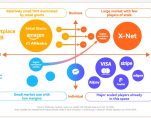
In the cross-border payment industry, services can be categorised into four segments based on money flows:
Four segments in cross-border payment industry.
Marketplace 2B These businesses provide payment processing services for sellers on e-commerce platforms. Risk control is primarily based on e-commerce platform’s integrated of data streams (e.g., merchant details, logistics, transaction history). With relatively low technical barriers and compliance capabilities, the industry is highly saturated.
B2B Focused on traditional cross-border trade enterprises, this segment has huge potential but features high risk control complexity and high barriers. Payment service providers must individually verify the entire information flow pertaining to each transaction (including buyer/seller details, orders, logistics, contracts, etc.), which results in many companies attempting to enter, but few succeed.
C2C This primarily covers cross-border remittances between individuals. The overall market scale is relatively small, with limited use cases.
C2B This is the most well-established segment, dominated by cross-border payment giants such as Visa, Mastercard, PayPal, and Stripe. The market is saturated with intense competition.
As a reference, the C2B cross-border payment industry has evolved dramatically over the last five decades, especially in the past ten years. Mobile wallet providers in China, the U.S. and Europe drove the mobile payment revolution, establishing a well-established cross-border settlement and risk control platform dominated by card schemes and wallets like PayPal. The system features significant advantages, including efficient transaction processes and unified risk control standards.
In contrast, B2B cross-border payments still primarily rely on traditional bank transfers. The sector as a whole is still on the cusp of the “mobile payment revolution” and has not yet formed a unified clearing mechanism or a standardized risk control system.
The payment sector need a new platform.
However, this development gap also points to a huge market opportunity. The B2B cross-border settlement market for SMEs desperately needs a shake-up. Service providers that possess a deep understanding of global customer needs and are equipped with technological and compliance capabilities will unleash vast growth potential in this space.
Beyond Borders: XTransfer Insights is a thought-leadership series that shares XTransfer’s perspectives on the forces shaping global trade and financial services. Through research-driven insights and real-world observations, it highlights emerging trends, key challenges, and opportunities across international markets. Hashtag: #XTransfer #Crossborder #Payment #SMEs #whitepaper
Larsen & Toubro is set to expand its data centre footprint to 32 megawatts by the end of March, commissioning 18 MW of new capacity as the engineering major sharpens its focus on digital infrastructure alongside emerging opportunities in green hydrogen and semiconductors.
The additional capacity will lift the group’s operational data centre load from the existing 14 MW, marking a decisive step in a segment that has become a core pillar of its technology-led growth strategy. The commissioning is scheduled to be completed before the close of the financial year, aligning with strong demand from cloud service providers, hyperscalers and large enterprises accelerating their migration to outsourced digital infrastructure.
Larsen & Toubro has steadily built its data centre business over the past few years, leveraging its engineering, procurement and construction capabilities to develop facilities that meet high standards for power efficiency, uptime and scalability. Executives have previously indicated that the group’s focus is on delivering carrier-neutral and hyperscale-ready campuses in key metros, where demand continues to outpace supply despite a wave of new announcements by domestic and global operators.
Industry estimates show that data consumption growth, artificial intelligence workloads and stricter data localisation norms are driving sustained investment in capacity across Asia. India remains one of the fastest-growing markets in this space, with several multinational cloud companies committing to expand their presence. Against this backdrop, L&T’s move to lift capacity by more than double underscores its intention to be a long-term player rather than a peripheral builder.
The data centre expansion is being pursued alongside the company’s ambitions in newer industrial segments. L&T has signalled that it is actively pursuing orders related to electrolysers, a critical component for producing green hydrogen, as governments and industrial groups accelerate decarbonisation plans. Electrolyser manufacturing and deployment are viewed as strategic areas where the company’s heavy engineering background can be translated into repeatable, export-oriented businesses.
Management has also reiterated interest in the semiconductor ecosystem, particularly in supplying equipment, engineering services and infrastructure for chip fabrication and assembly units. While L&T is not positioning itself as a chipmaker, it aims to capture value across the supply chain as multiple semiconductor projects move from proposal to execution stages. The company has indicated that it is evaluating opportunities linked to cleanroom construction, precision engineering and advanced manufacturing systems required by chip plants.
Analysts tracking the capital goods sector note that diversification into data centres and clean energy-linked manufacturing provides a hedge against cyclicality in traditional infrastructure spending. Order inflows from transport, hydrocarbons and power transmission remain important for L&T, but newer verticals are expected to deliver higher margins and longer visibility once scale is achieved.
The data centre business, in particular, benefits from predictable long-term contracts and rising demand for energy-efficient facilities. Power availability and cooling efficiency have become critical differentiators as operators seek to control operating costs and meet sustainability targets. L&T has highlighted its emphasis on optimised designs, modular construction and integration of renewable energy where feasible, in response to customer requirements.
From a financial perspective, the 18 MW commissioning is not expected to materially strain the balance sheet, given the group’s strong cash flows and diversified revenue base. The company has historically funded growth through a mix of internal accruals and selective partnerships, and similar structures are being explored for digital infrastructure projects to manage risk and accelerate execution.
Market participants also point to the broader ecosystem benefits of large data centre builds, including demand for electrical equipment, cooling systems, specialised construction and long-term maintenance services. This creates opportunities for L&T to cross-leverage capabilities across its subsidiaries and verticals, reinforcing the strategic rationale behind the expansion.
Uber’s push into autonomous vehicles hinges on a complex sensor ecosystem that is increasingly central to how the company positions itself in the future of transportation, even as it pivots from building self-driving systems internally to orchestrating partnerships across the sector. The ability of vehicles to perceive, predict and respond to real-world conditions depends on the performance, redundancy and cost of the sensors that sit at the […]
Global growth in the mobile games market slowed markedly through 2025, with spending increases tapering and downloads flattening across major regions, according to fresh analysis by data firm AppMagic, reinforcing a shift from the hyper-growth years of the pandemic to a more mature and competitive phase for the industry. The research indicates that while mobile gaming remains the largest segment of the global games business by user […]
Arabian Post Staff -Dubai Russia is widening its search for workers across South Asia as labour shortages deepen across construction, manufacturing, transport and services, prompting outreach to India and Sri Lanka through recruitment drives, bilateral talks and private placement channels. The move reflects a tightening domestic labour market shaped by demographic decline, sustained emigration flows and the pull of defence-related industries, according to officials and employers familiar […]






 https://www.xtransfer.com
 https://www.linkedin.com/company/xtransfer.cn
 https://x.com/xtransferglobal
 https://www.facebook.com/XTransferGlobal/







 https://www.instagram.com/xtransfer.global