News related to
Emerging

Commerce and Industry Minister Piyush Goyal has urged BRICS members and partner countries to link payment systems, expand local-currency trade and open markets more widely as India presses for stronger economic integration across the grouping.

Addressing the BRICS Business Forum in New Delhi, Goyal said greater connectivity between national payment networks, including systems modelled on India’s Unified Payments Interface, could lower friction in cross-border commerce while supporting wider use of members’ own currencies.

His proposals were aligned with the economic agenda carried into the BRICS summit, where leaders backed further work on facilitating trade and investment settlements in local currencies and improving interoperability between payment systems. The approach stops short of creating a common BRICS currency and instead focuses on practical links between existing financial infrastructures.

BRICS leaders encouraged the New Development Bank to expand local-currency financing and diversify its funding base, complementing efforts to make cross-border payments faster, cheaper and safer. Officials have stressed that the objective is not a single currency, but greater use of national currencies where commercially practical and mutually agreed.

Goyal said UPI now handles more than 250 billion transactions annually and is accepted in 11 countries. He urged BRICS economies to explore linking their payment networks, promote trade in each other’s currencies and expand digital commerce alongside cooperation in emerging technologies.

The minister coupled the payments proposal with a call for easier market access. He said BRICS economies should open their markets to one another’s products, including raw materials and critical minerals, while simplifying regulatory procedures and accelerating the clearance of consignments.

Goyal argued that resilient supply chains required two-way trade rather than dependence on one-sided flows. He said non-tariff measures impose higher export costs than tariffs in 88 per cent of countries, making regulatory obstacles and customs delays a central concern for companies seeking to trade across BRICS markets.

The push comes as intra-BRICS commerce has expanded sharply. Commerce Secretary Rajesh Agrawal said trade among BRICS countries rose from $84 billion in 2003 to nearly $1.2 trillion in 2024, underscoring both the scale of the bloc’s market and the potential gains from reducing transaction and financing costs.

Agrawal also highlighted the global trade-finance gap, estimated at about $2.5 trillion, and said BRICS should improve access to affordable working capital for exporters. The Jaipur Consensus, agreed by BRICS trade ministers in August, provides a basis for examining a common mechanism to help smaller businesses obtain finance against confirmed orders and reliable payment records.

Trade ministers have also advanced a 2026-2030 action plan on global value chains, including BRICS Connect, business-to-business partnerships, digital trade documentation and possible platforms for strategic supply chains and investment promotion. These measures form part of a broader effort to make trade flows more diversified and less vulnerable to disruption.

Goyal identified agriculture, pharmaceuticals, engineering, electronics, automobiles, auto components and services as sectors with scope for deeper cooperation. He called for closer links between startup ecosystems and urged agri-tech companies to work jointly on solutions for farmers and food security.

Services trade was another priority. Goyal said BRICS members should make it easier for professionals to move across borders and work towards greater recognition of professional qualifications, arguing that services markets needed to become more genuinely accessible.

External Affairs Minister S. Jaishankar, speaking at the same forum, said supply-chain connectivity, trade facilitation and innovation had become central to BRICS cooperation. He also pointed to digital public infrastructure, artificial intelligence, financial technology and advanced manufacturing as areas offering opportunities alongside questions of standards, security and trust.

Russia’s Economic Development Minister Maxim Reshetnikov separately supported stronger alternative payment arrangements, saying the share of Russia’s export settlements conducted in dollars and euros had fallen sharply over the past three years. He also promoted work on a proposed BRICS grain exchange and closer cooperation among special economic zones.

By R Suryamurthy The latest BRICS financial agenda is ambitious enough to suggest that the grouping is no longer content merely to complain about the inequities of the global economic order; it wants to build pieces of an alternative. But ambition, particularly in a grouping as diverse as BRICS, is cheap. The harder question is […]

The article Brics has a financial roadmap: The hard part is making it work appeared first on Latest India news, analysis and reports on Newspack by India Press Agency).

Arabian Post Staff -Dubai UAE President Sheikh Mohamed bin Zayed Al Nahyan has called for stronger private-sector cooperation with Germany after attending a major business forum in Munich where companies from the two countries signed 30 agreements and commercial partnerships worth about €9.66 billion. Sheikh Mohamed told executives and investors at the Germany-UAE Business Forum on Friday that businesses would play a vital role in advancing the […]

Arabian Post Staff -Dubai The UAE has backed closer financial coordination among BRICS members and supported the New Development Bank’s next five-year strategy during high-level meetings in Mumbai, reinforcing its expanding role in multilateral development finance. The Ministry of Finance said the country took part on Thursday in the second meeting of BRICS finance ministers and central bank governors and a special meeting of the New Development […]

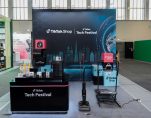
BERLIN, GERMANY – Media OutReach Newswire – 11 September 2026 – As IFA 2026 officially kicks off, the highly anticipated Tech Festival has made its grand debut at Booth H17 220 in Hall 17. Centered around immersive, user-centric lifestyle technology experiences, the event brings together four renowned brands—DJI, Bosch, Roborock, and UMAY—to showcase a range of innovative consumer products designed to elevate modern smart daily living.

IFA 2026 Tech Festival

The core highlight of the event is an exclusive, live on-site exhibition tour hosted by world-renowned creator Pamela. During the live stream, Pamela visited the booths to experience several flagship products firsthand. Sharing her genuine personal impressions, she effectively communicated the key features and advantages of each product to a global audience. This livestreaming seamlessly bridged the physical exhibition with online digital communities, significantly boosting the exposure and global impact of the Tech Festival.

The exhibition features four major categories of technology products, covering image creation, home cooking, smart cleaning, and home fitness. DJI presents its portable, intelligent pocket imaging devices, leveraging advanced sensor technology and AI-optimized algorithms to deliver stable, high-quality footage for everyday content creation. Bosch showcases its upgraded dual-chamber air fryer, optimizing the home cooking experience with a healthier, more efficient, and user-friendly solution. Roborock introduces its high-end flagship robotic vacuum, equipped with precise smart navigation and all-scenario adaptive cleaning capabilities to effortlessly achieve whole-house smart cleaning. Meanwhile, UMAY exhibits its ergonomically designed, smart-connected fitness equipment, lowering the barrier to entry for long-term, professional home workouts.

Driven by its youthful, scenario-based, and experiential exhibition format, the Tech Festival has emerged as one of the most popular and iconic experiential highlights of IFA 2026. It vividly illustrates the emerging trend of how lifestyle technology empowers and elevates the quality of everyday life.

Hashtag: #TechFestival

The issuer is solely responsible for the content of this announcement.

TechSparks 2026 has expanded its speaker roster for the October summit in Bengaluru, adding technology executives, founders and investors to a three-day programme focused on artificial intelligence, deep technology and digital infrastructure.

The latest additions include Zoho co-founder and chief scientist Sridhar Vembu, Angel One Group chief executive Ambarish Kenghe, Emergent founder and chief executive Mukund Jha and Canva country manager Chandrika Deb. Their participation was announced on September 10, extending a lineup that already includes senior policymakers, fintech founders, researchers, venture investors and enterprise technology executives.

The summit, organised by YourStory, is scheduled for October 13 to 15 at the Sheraton Grand Bengaluru Whitefield Hotel and Convention Center. Its 2026 theme, “The New Tech Order”, centres on how AI, deep technology and new digital infrastructure are changing access to technology, business formation and the distribution of economic and technological power.

Among the previously announced speakers are Priyank Kharge, Karnataka’s Minister for Home, IT, BT and E-Governance; Krishna Byre Gowda, Minister for Greater Bengaluru Development; PhonePe founder and chief executive Sameer Nigam; and Pramod Varma, co-founder and chief architect of Networks for Humanity. The programme also lists Rahul Chari, founder and chief product and technology officer of PhonePe, and Manish Maheshwari, managing director for India at Stripe.

Organisers say the event is expected to draw more than 10,000 attendees, more than 500 speakers and about 300 investors. The official event website also lists more than 1,000 startups, while another event page refers to more than 200 participating startups, indicating that the figures represent different participation categories or programme groupings.

The first day is set to examine shifts in technological power, including AI as infrastructure, computing capacity, semiconductor supply chains, data ownership and the balance between technological sovereignty and globalisation. Other sessions are expected to address enterprise adoption of AI, startup financing, digital public infrastructure, climate technology, product development and the role of Bengaluru as a centre for technology-led businesses.

The breadth of the programme reflects a shift in concerns facing technology companies. Access to capital remains important, but founders are contending with computing costs, pressure to demonstrate AI products, scrutiny of data use and the need to build businesses capable of expanding without relying indefinitely on external funding. Investors are expected to examine those trade-offs as they assess companies operating across software, fintech, climate technology, mobility, health technology and deeptech.

Bengaluru’s civic and policy challenges are part of the agenda. Byre Gowda’s participation brings urban development into the discussion, while Kharge is expected to address the state’s role in supporting emerging technologies, entrepreneurship and digital infrastructure. Their presence links the startup programme with questions about how a technology centre manages infrastructure, talent, regulation and public services.

The speaker list spans established technology companies and younger ventures. It includes Anjali Bansal of Avaana Capital, Ashutosh Sharma of Prosus, Michael Cronin of Couchbase, Nagendra Nagaraja of QpiAI, Geetha Manjunath of Niramai Health Analytix, Nicolas Sauvage of TDK Ventures and Priyanka Agarwal Chopra of IIMA Ventures. Academic and research participants include Ashok Jhunjhunwala of IIT Madras and Shivkumar Kalyanaraman, chief executive of the Anusandhan National Research Foundation.

TechSparks will also host its Tech30 programme, which identifies 30 technology companies for a showcase at the summit. The 2026 selection process moved into its second stage on September 10, with shortlisted companies required to submit a more detailed application. The final cohort is scheduled to be locked by September 30 and presented during the event.

A separate VibeCode30 programme is aimed at AI-native builders, while ActionLabs and masterclasses are designed around hands-on problem solving and practical technology deployment. The event format also includes startup networking zones, an India-international corridor and a government pavilion.

Flipkart-backed payments platform Super. money is rolling out artificial-intelligence agents designed to shop for products and buy digital gold on users’ behalf, positioning autonomous transactions as a way to challenge larger rivals in India’s payments market.

The move comes as the National Payments Corporation of India develops protocols for identifying and authorising AI agents on the Unified Payments Interface, creating infrastructure that could let software complete selected payments under rules and limits set by customers.

Super. money founder and chief executive Prakash Sikaria has said the emerging architecture could allow agents representing merchants and consumers to interact directly, reducing the number of steps between product discovery and payment. The company is seeking to use that shift to extend its role beyond routine UPI transfers into commerce, credit and investment-related transactions.

Agentic payments differ from conventional chatbots because the software can act after interpreting an instruction rather than merely provide information. A user could, for example, ask an agent to find an eligible product within a budget or execute a purchase when specified conditions are met, subject to the permissions built into the payment framework.

NPCI is working on a registry to verify and monitor AI agents conducting transactions through UPI. Its proposed Unified Agent Protocol is expected to support controls including spending limits, identity checks and audit trails. The initial focus is on small, frequent purchases, while more complex conditional transactions could follow as safeguards and liability rules develop.

The payments body has already extended UPI Circle, its delegated-payments framework, to software profiles including AI profiles for limited users. Under the broader system, account holders can delegate payment authority within predefined limits while retaining visibility over transactions. Reserve Pay, another UPI mechanism, can block funds for authorised payments that may be debited later.

Super. money’s push builds on products added this year as it tries to broaden engagement beyond person-to-person and merchant payments. Its splitStore service, introduced in July, lets eligible customers browse products listed on Flipkart and either pay in full or use a pay-later facility provided by regulated lending partners.

The company’s terms state that Flipkart and its sellers remain responsible for the underlying sale, fulfilment, invoicing, cancellations and returns, while Super. money provides the shopping and credit interface. The platform does not hold inventory or set product prices.

Super. money has also added digital gold. Its customer-support documentation describes purchases, sales and reconciliation procedures involving a vault partner, while the app has promoted cashback on gold purchases. The service includes a post-purchase selling lock-in and applies the tax and market spread associated with digital-gold transactions.

Those products give the company potential use cases for agents that can move from a customer instruction to a transaction without requiring the user to navigate several separate screens. The central challenge is ensuring that delegated authority remains narrow enough to prevent unwanted or mistaken purchases.

That concern is shaping the wider industry’s approach. Razorpay, NPCI and OpenAI have been testing agentic payments using UPI Reserve Pay, with an earlier pilot allowing users to shop through a conversational AI interface and complete purchases from participating merchants after confirmation. Razorpay says its system is designed to support pre-authorised transactions within customer-approved spending limits.

Competition is intensifying as payments companies decide how extensively to integrate AI. PhonePe co-founder Rahul Chari has cautioned that not every existing payments experience becomes better merely by adding artificial intelligence, signalling a more selective approach than platforms seeking to make autonomous agents central to commerce.

Super. money remains smaller than the dominant UPI applications, giving it an incentive to pursue newer transaction categories rather than compete solely on basic payments. Its app combines UPI with credit, deposits, bill payments, shopping and other financial products, while the company has used cashback and embedded credit to encourage repeat usage.

Advertisements
SINGAPORE – Media OutReach Newswire – 11 September 2026 – Fresh graduates entering Singapore’s workforce continue to find opportunities across financial and insurance services, professional services, information and communications, healthcare and social services, even as employers become more selective and artificial intelligence reshapes entry-level work.

According to the Ministry of Manpower (MOM), entry-level professional, managerial, executive and technician (PMET) openings increased from 32,500 in December 2025 to 32,800 in March 2026, despite an overall decline in job vacancies. MOM also reported that around nine in 10 university graduates from the 2025 cohort found employment within 12 months of graduation, suggesting that fresh graduate employment has remained relatively resilient.

Financial services, professional services and technology remain active hiring sectors

Financial and Insurance Services, Professional Services, and Information and Communications were among sectors identified by MOM as experiencing active PMET hiring and wage growth. Together, these sectors recorded approximately 14,200 PMET vacancies as of September 2025, compared with 12,600 a year earlier, including roles suitable for fresh graduates.

Opportunities span finance, risk, compliance, accounting, consulting, software, systems and data functions. Increasing digitalisation also means these boundaries are becoming less distinct, with banks and professional services firms increasingly recruiting technology and data talent.

Information and communications continue to require digital capabilities

Singapore’s technology workforce reached 214,000 in 2024, according to the Infocomm Media Development Authority’s Singapore Digital Economy Report 2025, with AI and Data and Cybersecurity among the fastest-growing technology occupations. The latest MOM data also shows concrete entry-level demand. As at March 2026, Information and Communications recorded 200 vacancies for software developers, 130 for IT support technicians and 80 for computer engineers among its entry-level jobs with higher vacancy counts.

Technology graduates are therefore finding opportunities not only within technology companies but also across finance, manufacturing, professional services and other industries.

Financial and professional services are evolving with technology

Singapore’s financial sector continues to provide opportunities across banking, insurance, investment, risk and compliance. As at March 2026, MOM identified financial compliance officer or risk analyst, insurance sales agent or broker, and financial or investment adviser among the entry-level Financial and Insurance Services roles with higher vacancy counts, with 30 vacancies recorded for each occupation. Technology is also changing the nature of financial services, with institutions applying analytics, automation and AI across areas such as fraud detection, customer service and risk management.

Professional Services provides opportunities across both corporate and technical functions. MOM’s March 2026 data identified 100 vacancies for resident technical officers, 60 for auditors and 50 for IT support technicians among the sector’s entry-level jobs with higher vacancy counts. As AI increasingly assists with research, analysis and routine processes, graduates who combine professional knowledge with digital capabilities, communication and judgement may be better positioned for changing roles.

Healthcare and social services continue to offer graduate pathways

Health and Social Services continues to provide entry-level opportunities for graduates. As at March 2026, MOM identified 210 vacancies for social workers, 190 for registered nurses and other nursing professionals, and 80 for social work associates among the sector’s entry-level jobs with higher vacancy counts. These roles demonstrate that graduate demand extends beyond digital careers. Specialised professional knowledge and interpersonal skills remain important in sectors where human interaction and service delivery are central.

AI is changing entry-level roles rather than simply removing them

Generative AI has raised concerns among students and parents about its impact on graduate employment. MOM data presents a more nuanced picture. Among firms that had adopted AI, 6 per cent reported reducing headcount and 8 per cent lowering hiring activity, while 19 per cent redesigned roles and 14 per cent created AI-related jobs. The impact of AI has therefore been more visible in job redesign than broad-based hiring reductions. Fresh graduates may increasingly be expected to use AI tools, interpret data, assess AI-generated information and focus on areas requiring judgement, communication and problem-solving.

Skills-based hiring is changing how graduates compete

Employers are also looking increasingly beyond qualifications alone. MOM’s Job Vacancies 2025 report found that academic qualifications were not the main consideration for 79.6 per cent of vacancies.

This places greater emphasis on what graduates can demonstrate alongside their qualification, including internships, technical capabilities, communication, teamwork and analytical thinking. For students choosing a degree, employability is therefore not only about entering a growing industry but also about developing skills and experience that employers value.

SIM graduate outcomes reflect employment across diverse industries

Graduate employment data provides another way for students and parents to assess career outcomes. According to the Private Education Institution Graduate Employment Survey 2024/2025, 81.0 per cent of SIM fresh graduates surveyed secured employment, while 47.0 per cent were in full-time permanent employment. The median gross monthly salary was S$3,565. Across all private education institutions surveyed, 78.9 per cent of fresh graduates secured employment, with a median gross monthly salary of S$3,500.

SIM’s Graduate Employment Survey also shows graduates entering sectors including banking and financial services, ICT and cybersecurity, consulting and professional services, aviation and engineering, healthcare and social services, logistics and transportation, retail and manufacturing. Employment outcomes remain dependent on factors including programme choice, individual skills, work experience and labour-market conditions.

Parents can consider employability alongside programme fit

For parents supporting higher education decisions, current hiring trends provide useful context, but today’s strongest industry may not necessarily offer the greatest opportunities several years from now. A broader assessment can include a student’s interests and strengths, programme curriculum, awarding university, recognition, fees, career support and graduate employment outcomes.

The SIM Parent Resource Hub brings these considerations together, covering degree pathways, programme recognition, fees and financial support, student care and graduate employability. Its Graduate Outcomes & Employability resource provides information on SIM’s PEI Graduate Employment Survey results, industries and organisations where SIM graduates have worked, and career and internship support available to students.

These resources can help parents consider not only where jobs are available today, but how a higher education pathway can help their child develop relevant knowledge, experience and transferable capabilities.

Career resilience increasingly depends on transferable skills

Singapore’s labour-market data shows that opportunities for fresh graduates remain spread across multiple industries. Financial Services, Professional Services and Information and Communications continue to offer professional opportunities, while Healthcare and Social Services, also show meaningful entry-level demand.

For students entering higher education, career preparation may therefore be less about identifying one “future-proof” industry and more about developing disciplinary knowledge, practical experience and transferable skills that can remain valuable as employment needs change. Parents and students can refer to the SIM Parent Resource Hub, including its Graduate Outcomes & Employability resource, when evaluating degree pathways, employability, recognition, fees and student support.

References

  1. Ministry of Manpower, Singapore. Fresh Graduate Employment – https://www.mom.gov.sg/newsroom/parliament-questions-and-replies/2026/0804-written-answer-to-pq-on-fresh-graduate-employment
  2. Ministry of Manpower, Singapore. Trends in Job Vacancies – https://www.mom.gov.sg/newsroom/parliament-questions-and-replies/2026/0805-written-answer-to-pq-on-trends-in-job-vacancies
  3. Ministry of Manpower, Singapore. Sectors with Active Hiring and Wage Growth – https://www.mom.gov.sg/newsroom/parliament-questions-and-replies/2026/0113-written-answer-to-pq-on-sectors-with-active-hiring-and-wage-growth
  4. Ministry of Manpower, Singapore. Job Vacancies 2025 – https://www.mom.gov.sg/newsroom/press-releases/2026/0320-job-vacancies-report-2025
  5. Manpower Research and Statistics Department, Ministry of Manpower. List of Entry-Level PMET Job Opportunities for Fresh Graduates – https://stats.mom.gov.sg/iMAS_PdfLibrary/List-of-top-entry-level-PMET-job-opportunities-for-fresh-graduates-Q1-2026.pdf
  6. Infocomm Media Development Authority. Singapore Digital Economy Report 2025 – https://www.imda.gov.sg/resources/press-releases-factsheets-and-speeches/factsheets/2025/ar-sgde-2025
  7. Singapore Institute of Management. Parent Resource Hub: Helping Your Child Choose the Right Degree Pathway – https://www.sim.edu.sg/degrees-diplomas/parent-resource-hub
  8. Singapore Institute of Management. Graduate Outcomes & Employability – https://www.sim.edu.sg/degrees-diplomas/parent-resource-hub/graduate-outcome-employability

Hashtag: #SIMGlobalEducation #SIMGE #GlobalEducation #InternationalDegree #CareerReady #FutureSkills

The issuer is solely responsible for the content of this announcement.

About SIM Global Education

SIM Global Education (SIM GE) is a leading private education institution in Singapore and the region. We offer more than 140 academic programmes ranging from diplomas and graduate diploma programmes to bachelor’s and master’s degree programmes with some of the world’s most reputable universities from Australia, Canada, Europe, United Kingdom, and the United States. SIM GE’s cohort is made up of 17,000 full- and part-time students and adult learners, of which approximately 41% are international students hailing from over 50 countries.

SIM GE’s holistic learning approach and culturally diverse learning environment aim to equip students with knowledge, industry skills and employability competencies, as well as a global perspective to succeed as future leaders in a fast-changing, technologically driven world.

For more information on SIM Global Education, visit

Grindstone Ventures has launched a R500 million venture capital fund aimed at technology-enabled African businesses from seed to Series A, seeking to bridge the financing gap between early commercial traction and the larger institutional rounds needed for expansion. The fund, led by Grindstone Ventures chief executive Thandiwe Maqetuka and established with Knife Capital and Thinkroom, is targeting an initial close of R150 million. It plans to invest […]

Advancing low-altitude economy development across the Belt and Road regions

HONG KONG SAR – Media OutReach Newswire – 10 September 2026 – HKT (SEHK: 6823) – PCCW Global, the international telecommunications service provider under HKT, and Harmony Tech Innovation signed a Memorandum of Understanding (MoU) at the 11th Belt and Road Summit to jointly promote the low‑altitude economy across the Belt and Road regions, facilitating Chinese enterprises and innovative technologies as they expand overseas.

Frederick Chui, CEO, PCCW Global (left) and Jacqueline Kang, Chairman, Harmony Tech Innovation (right) signed a Memorandum of Understanding at the Belt and Road Summit 2026.

PCCW Global plans to leverage its global communications networks and international market resources, together with Harmony Tech Innovation’s low-altitude airspace traffic management technology, to explore and promote low‑altitude airspace traffic management solutions and related smart city solutions in Belt and Road markets. The collaboration will also explore applications in areas such as transportation, logistics, and emergency rescue, to support the development of smart cities and the low-altitude economy in local markets.

Frederick Chui, CEO of PCCW Global, said: “The low-altitude economy is a strategically important emerging industry for the nation, and also a key direction for developing new quality productive forces. As countries along the Belt and Road accelerate urban development, demand for low-altitude airspace management and communications technologies continues to grow. PCCW Global is ready to further extend our network capabilities into the low‑altitude economy, providing efficient and reliable communications support for low‑altitude airspace traffic management. In collaboration with Harmony Tech Innovation, we will help bring Chinese innovative technologies to the global market, and support the advancement of smart cities and the digital economy along the Belt and Road.”

Jacqueline Kang, Chairman, Harmony Tech Innovation said: “Communications networks and management systems are critical foundations for the low-altitude economy. We are delighted to collaborate with PCCW Global, combining our digital management capabilities with PCCW Global’s extensive communications networks to provide robust support for low-altitude operations. Looking ahead, we look forward to continuing our collaboration, driving the practical application of low-altitude technologies, and seizing opportunities in overseas markets.”

Harmony Tech Innovation is a global leading provider of low-altitude airspace traffic management and unmanned aerial vehicle ecosystem, focusing on low‑altitude economy and 3D low‑altitude traffic management platform. Its “Low Altitude Airspace Coordination and Service System”, launched in Zhuhai in 2024, is interconnected with China’s Unmanned Aircraft Integrated Management Platform and offers capabilities including regional remote low‑altitude surveillance, centimetre‑level satellite positioning, providing data support for smart city management and laying the foundation for the development of the low-altitude economy in the Greater Bay Area.

PCCW Global’s network infrastructure spans five continents and is backed by extensive international operational experience, enabling it to actively help drive the overseas expansion of China’s advanced technologies. PCCW Global delivers customised network solutions for low‑altitude economy scenarios, supporting real‑time data transmission and the management of low‑altitude aircraft.

Hashtag: #HKT #PCCWGlobal

The issuer is solely responsible for the content of this announcement.

About PCCW Global

PCCW Global is a leading digital infrastructure provider, empowering businesses with agile, scalable and secure connectivity solutions. By combining a best-in-class network with our award-winning on-demand platform Console Connect, we help businesses navigate the network complexities of the digital world with ease. With extensive reach across international markets, we make it simple to connect and move data between clouds, apps, data centres and devices. At the core of our business is a belief that automated, high-performance network infrastructure has the power to elevate business and society. For more information, visit .

  By R. Suryamurthy India’s trade with BRICS has expanded dramatically, but the numbers reveal an uncomfortable imbalance beneath the rhetoric about a multipolar world and alternative financial architecture. Between FY2021 and FY2026, India’s total merchandise trade with the 11-member grouping more than doubled, from $203.1 billion to $417.5 billion. Yet the expansion was overwhelmingly […]

The article Bricks cannot de-dollarise its way out of India’s huge trade imbalance appeared first on Latest India news, analysis and reports on Newspack by India Press Agency).

The rupee weakened 25 paise to 95.33 against the US dollar on Thursday as elevated crude oil prices increased concern over India’s import bill and kept demand for dollars firm.

The currency came under pressure after Brent crude held above $100 a barrel amid continuing tensions in West Asia, reinforcing worries about higher energy costs for a country that imports more than three-quarters of its crude oil requirements. The rupee had settled at 95.1050 against the dollar on Wednesday after touching 95.2250 during the session.

Dealers said demand for dollars from oil importers, corporate debt repayments and hedging activity added to the pressure. State-run banks were also seen supplying dollars during trading, an action market participants associated with efforts by the Reserve Bank of India to limit excessive volatility in the foreign-exchange market.

Brent crude traded around $101-$102 a barrel during Asian hours after crossing the $100 mark on Wednesday. The move followed renewed military tensions involving the United States and Iran and heightened concern about shipping and energy supply through the Gulf, including routes linked to the Strait of Hormuz.

Higher oil prices are particularly significant for the rupee because petroleum imports are paid largely in dollars. A sustained rise in crude can widen India’s trade deficit, increase demand for foreign currency from refiners and add to inflationary pressure, creating a less favourable backdrop for the local currency.

The rupee has lost roughly 0.7 per cent over the previous two sessions, with traders saying the effect of higher oil prices has become more visible after the currency had initially shown resilience. The movement has also coincided with caution across Asian markets and pressure on domestic equities.

Benchmark share indices were subdued on Thursday after suffering sharp losses in the previous session. The Sensex had dropped 813.35 points, or 1.08 per cent, on Wednesday to close at 74,764.23, while the Nifty 50 fell 203.60 points, or 0.86 per cent, to 23,431.50. The sell-off reflected concern that expensive crude could complicate the inflation and growth outlook.

The Reserve Bank has intervened intermittently in the currency market during periods of sharp rupee weakness. Traders said dollar sales by state-run banks helped the currency recover from Wednesday’s intraday low, although market participants expected central-bank support to restrain volatility rather than reverse pressure created by oil prices and capital flows.

Foreign-exchange dealers were also monitoring overseas portfolio movements. Expectations of capital outflows and demand linked to corporate payments have increased near-term dollar requirements, while the dollar index remained close to 99 against a basket of major currencies, offering only limited relief to emerging-market currencies.

The rise in crude has revived concern over India’s external balances. A higher oil import bill can feed into the current-account deficit if export earnings and other inflows do not offset the additional cost. It can also increase costs for transport, manufacturing and other energy-intensive sectors, depending on the extent to which international prices are passed through domestically.

Domestic fuel prices have so far remained comparatively insulated from the latest jump in international crude, but refiners and oil-marketing companies face greater pressure when global prices rise sharply while retail prices are unchanged. That gap can affect corporate margins and, if sustained, increase the broader fiscal and inflationary policy challenge.

Bond and equity markets are also watching the oil move for its implications for monetary policy. Higher imported energy costs can make inflation management more difficult, while weaker risk appetite may intensify foreign portfolio selling. Traders said those factors could keep the rupee volatile even if the central bank continues to provide dollar liquidity during periods of disorderly movement.

Arabian Post Staff -Dubai Etihad Salam Telecom Company signed 29 strategic partnerships during LEAP 2026 in Riyadh, using the four-day technology gathering to widen its portfolio across connectivity, cloud services, cybersecurity, artificial intelligence and enterprise digital solutions. The company, known as Salam, said the agreements formed the centrepiece of its participation as a strategic sponsor and supported its shift from a traditional telecommunications provider towards an integrated […]

Deputy Prime Minister Ekniti Nitithanprapas outlined an investment-led blueprint anchored by an upgraded Joint Public Private Committee (JPCC), private-sector syndication, and World Bank alignment ahead of the 2026 Annual Meetings and 2028 ASEAN Chairmanship.

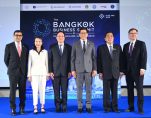
BANGKOK, THAILAND – Media OutReach Newswire – 7 September 2026 – Thailand is ready to cross into “new horizons” — achieving high-income status and driving a more resilient ASEAN, declared Deputy Prime Minister and Minister of Finance Dr. Ekniti Nitithanprapas as he delivered the closing address at the Bangkok Business Summit 2026 today,

Public and private sector leaders at the closing of the Bangkok Business Summit 2026, Queen Sirikit National Convention Center.

Detailing the strategic “why, how, and design” of the national transition, Dr. Ekniti stated that entering new horizons is an unavoidable global imperative. While ASEAN is uniquely positioned to capture emerging opportunities, the region must guard against severe geopolitical, technological, and climate risks with proactive, unified action.

Dr. Ekniti Nitithanprapas, Deputy Prime Minister and Minister of Finance, at the closing panel of the Bangkok Business Summit 2026.

“The goals must be clear, and we are completely on the same page: Thailand must achieve high-income status,” said Dr. Ekniti.

“The recipe provided by the World Bank aligns directly with what our business leaders have outlined. An investment-led growth policy, private-sector-centred endeavours, and persistent implementation are what the government and business community are now executing together. Think of the seven new growth engines as our forwards on the pitch. The government acts as both coach and midfielder — spearheading investment, driving trade, empowering SMEs, unlocking regulatory friction, and cultivating human capital. Meanwhile, fiscal and financial stability serves as our steadfast defensive backline.”

Dr. Ekniti affirmed that the Joint Public and Private Committee (JPPC) will no longer function as a purely advisory body, but will operate as an executive economic steering council mandated to enact structural reforms and track execution against the World Bank’s recommendations.

“We will not be the same old Thailand. We will be driving the global agenda. Thailand will enter new horizons, empower people, and build resilience,” Dr. Ekniti emphasised. “In the next two years, Thailand will assume the Chairmanship of ASEAN. We will establish a long-term, multi-year agenda for a stronger, more resilient ASEAN. If this new model of public-private partnership carries on, we will decisively reinvent Thailand.”

Key leaders representing the Joint Standing Committee on Commerce, Industry, and Banking (JSCCIB) delivered strategic sector priorities to anchor the transition.

Representatives of the Joint Standing Committee on Commerce, Industry and Banking (JSCCIB) share Thailand's strategic economic direction.
Representatives of the Joint Standing Committee on Commerce, Industry and Banking (JSCCIB) share Thailand’s strategic economic direction.

Payong Srivanich, Chairman of the JSCCIB and the Thai Bankers’ Association, underscored that reinventing the economy requires modernising legacy industries while creating space for future engines.

“From three core challenges – structural, competitiveness, and public-sector efficiency – came the White Paper outlining the seven industries of the future,” stated Mr. Payong. “This time, the government has presented a credible policy framework based on collaborative public-private partnership. Thailand must address fundamental security—whether in food, energy, or low-carbon growth. We are declaring to the world that we are done with planning and on the same page. Now we are geared up for execution.”

Dr. Poj Aramwattananont, Chairman of the Thai Chamber of Commerce and Board of Trade of Thailand, stressed that amid geopolitical friction, geoeconomics, and regional conflict, growth must be anchored in ASEAN’s 600-plus million people which serve as both supply and demand networks.

Adapting to international trading rules is inseparable from Thailand’s targeted accession to the OECD by 2028. The accession process acts as the structural catalyst to modernise domestic legislation, corporate governance, transparency, and fair market competition to premier global standards—lowering compliance costs and solidifying investor confidence.

Pimjai Leeissaranukul, Chairwoman of the Federation of Thai Industries, insisted that Thailand must build its own brand; it can no longer afford to be just the world’s OEM. She called for a decisive departure from labor-cost competition toward high productivity, automation, AI, and green sustainability. She advocated expanding target sectors—such as next-generation electric vehicles, smart electronics, automation, and wellness—while enforcing enhanced public procurement.

Carlos Felipe Jaramillo, Vice President for East Asia and Pacific at the World Bank, observed that the eyes of the financial world will be on Bangkok next month as it hosts the 2026 IMF–World Bank Group Annual Meetings, providing Thailand with a premier global stage to show that it is advancing on a credible pathway to attain high-income status by 2037.

“The World Bank has presented a series of structural reforms that Thailand can pursue to reach high-income status, creating more and better-paying jobs for young Thais in the future,” Mr. Jaramillo stated. “The plan deliberately puts the private sector at the center, because experience has taught us that the private sector is the primary engine of employment. This reform agenda is multifaceted, requiring coordinated national effort, and, more importantly, relentless persistence in implementation.”

The Bangkok Business Summit 2026 concluded with a clear consensus: today’s closing discussions mark the formal launch of sustained, institutionalised execution across the public sector, private enterprise, and multilateral institutions to ensure Thailand stands as a resilient economic anchor for the wider ASEAN region.

Hashtag: #JSCCIB

The issuer is solely responsible for the content of this announcement.

Arabian Post Staff -Dubai Jazan University has launched a project to establish the Jazan Future Skills Center, partnering with Atomcamp Arabia under the sponsorship of Saudi Arabia’s Ministry of Communications and Information Technology during LEAP 2026. The university said the centre is intended to accelerate technology localisation, develop specialised local expertise and strengthen national capabilities in artificial intelligence and other digital fields. It will also support entrepreneurship, […]

@hkfashionfest @hongkongfashioncouncil

HONG KONG SAR – Media OutReach Newswire – 5 September 2026 – The “Hong Kong Fashion Fest Gala 2026”, one of the eight flagship programmes of the third edition of Hong Kong Fashion Fest, was held on 3 September 2026. Sponsored by the Cultural and Creative Industries Development Agency (CCIDA) under the Culture, Sports and Tourism Bureau of the Government of the Hong Kong Special Administrative Region, and organised by the Hong Kong Fashion Council, this year’s Gala was held under the theme, “Rhythm of the Heart”, the same theme of the third edition of Hong Kong Fashion Fest. The Gala brought together fashion, art and culture in a cross-disciplinary celebration. The opening ceremony was officiated by the Secretary for Culture, Sports and Tourism, Miss Rosanna Law, JP and the Hon Sunny Tan, BBS, Legislative Council Member (Textiles and Garment) and Chairman of the Hong Kong Fashion Council. marking the official opening ceremony of this much-anticipated annual event on Hong Kong’s fashion calendar.

(From Left) Ms. Rainy Chan (Executive Director, Hong Kong Design Centre) Mr. Roger Chan (Chairman, Clothing Industry Training Authority) Mr. Steve Leung (Chairman, Hong Kong Design Centre) Hon. Sunny Tan, BBS (Chairman of the Hong Kong Fashion Council, and Member of the Legislative Council, the Honourable Sunny Tan, BBS.) Miss Rosanna Law, JP (Secretary for Culture, Sports and Tourism) Ms Sophia Chong (Executive Director, Hong Kong Trade Development Council) Mr. Kevin Yeung (Chairman, Hong Kong Fashion Designers Association) Dr. Elita Lam (Principal, Hong Kong Design Institute) Miss Drew Lai (Commissioner for Cultural and Creative Industries)
(From Left)
Ms. Rainy Chan (Executive Director, Hong Kong Design Centre)
Mr. Roger Chan (Chairman, Clothing Industry Training Authority)
Mr. Steve Leung (Chairman, Hong Kong Design Centre)
Hon. Sunny Tan, BBS (Chairman of the Hong Kong Fashion Council, and Member of the Legislative Council, the Honourable Sunny Tan, BBS.)
Miss Rosanna Law, JP (Secretary for Culture, Sports and Tourism)
Ms Sophia Chong (Executive Director, Hong Kong Trade Development Council)
Mr. Kevin Yeung (Chairman, Hong Kong Fashion Designers Association)
Dr. Elita Lam (Principal, Hong Kong Design Institute)
Miss Drew Lai (Commissioner for Cultural and Creative Industries)

Speaking at the Gala, the Secretary for Culture, Sports and Tourism, Miss Rosanna Law, JP, saying: “Building on Hong Kong’s unique kinetic pulse and East-meets-West synergy, and with the Government’s steadfast backing through the Cultural and Creative Industries Development Agency, our creative ecosystem is thriving. Within this dynamic landscape, fashion design stands as an indisputable driving force. The Hong Kong Fashion Fest continues to champion fashion as a profound art form and a canvas for self-expression — one that weaves together vision, culture, and history.”

Meanwhile, Hon Sunny Tan, BBS, Legislative Council Member (Textiles and Garment) and Chairman of the Hong Kong Fashion Council, extended his gratitude to the participating organisers and industry partners for their steadfast support, saying: “The third Hong Kong Fashion Fest reflects the collective commitment of the Government, CCIDA and industry to advancing Hong Kong’s fashion development. With creative talent, international connectivity and strengths across trade, tourism, finance, and textile and apparel, Hong Kong has every ingredient to grow as an international fashion hub for Asia.”

In addition, rising favourite by international brands, Jeffrey Ngai and the popular stylish film actress Louise Wong attended the occasion in glamorous style. They were joined on the red carpet by leading fashion influencers and celebrities from Hong Kong and around the world, including Ameera Khan, Fil Xiaobai, Hanan Besovic, Irene Kim, Susanna Lau and Elva Ni. The star-studded presence added glamour and energy to the gala, highlighting Hong Kong’s extraordinary position and appeal as an international fashion hub.

Hong Kong Ballet × Robert Wun:

A Groundbreaking Cross-Disciplinary Stage Experience

One of the key highlights of the Hong Kong Fashion Fest Gala 2026 was “Glam Rock”, a specially presented three-act ballet performance by Hong Kong Ballet. Taking an innovative and bold approach to ballet, the production reinterpreted the art form by seamlessly blending classical and contemporary dance. The performance was accompanied by iconic rock anthems from Queen, Depeche Mode, and the legendary Hong Kong band Beyond. The powerful rhythms and dynamic physicality of the dancers delivered an exhilarating and refreshingly unconventional experience for the audience.

The dancers performed in bespoke costumes designed by internationally acclaimed Hong Kong designer Robert Wun. Renowned for his cinematic and sculptural silhouettes and refined narrative-driven aesthetics, Wun’s designs became another visual highlight of the evening. Through “Glam Rock”, world-class choreography, avant-garde fashion and rock music converged into a wholesome and unique artistic expression, offering guests a profound stage experience that combined visual spectacle with cultural references. The production vividly embodied the urban rhythm and creative pulse at the heart of this year’s theme, “Rhythm of the Heart.”

“Top 10 Asian Designers to Watch” Fashion Show and Award Presentation:

Showcasing the Next Generation of Asian Fashion Talent

Another major highlight of the Hong Kong Fashion Fest Gala 2026 was the “Top 10 Asian Designers to Watch Fashion” Fashion Show & Awards Presentation Ceremony,” which showcased the exceptional craftsmanship and distinctive creative visions of ten outstanding designers from different parts of Asia. With a multitude of design languages and cultural sentiment, the showcase presented the dynamic multi-cultural fashion spectacle and forward-thinking approaches to fashion and aesthetics.

Sponsored by the Cultural and Creative Industries Development Agency (CCIDA), Fashion Asia Hong Kong’s “10 Asian Designers to Watch” programme is presented by the Hong Kong Design Centre. The programme is dedicated to discovering and promoting the next generation of Asian design talent, and to provide emerging designers with greater visibility, professional exchange and industry opportunities.

Hashtag: #HongKongFashionFest #香港时装荟 #CSTB #文化体育及旅游局 #CCIDA #文创产业发展处

The issuer is solely responsible for the content of this announcement.

About Hong Kong Fashion Fest

Announced by the Hong Kong Special Administrative Region Chief Executive in the 2023 Policy Address, “Hong Kong Fashion Fest” will be organised to develop Hong Kong into a fashion design hub in Asia. Through consolidating various fashion design events and introducing innovative elements and affiliate activities annually, the Hong Kong Fashion Fest promotes Hong Kong’s fashion and textile design brands and boosts Hong Kong’s position as a prime destination for hosting mega cultural and creative events. Under the theme “Rhythm of the Heart”, the third edition of Hong Kong Fashion Fest is being held from 1 to 14 September 2026 at various landmarks in Hong Kong. The event will bring together eight flagship programmes organised by six industry organisations and, for the first time, will be combined with CENTRESTAGE – the annual fashion extravaganza organised by the Hong Kong Trade Development Council – to generate stronger synergies. The event will attract fashion design industry players from all over the world to come to Hong Kong; foster collaboration, innovation and business opportunities; establish platform for local and international fashion designers and brands and connect with different sectors in the fashion design industry of Hong Kong, the Chinese Mainland and overseas, thereby consolidating Hong Kong’s position as the East-meets-West centre for international cultural exchange.

Website:
Facebook:
Instagram:
YouTube:

About Cultural and Creative Industries Development Agency (CCIDA)
The Cultural and Creative Industries Development Agency (CCIDA), formerly known as Create Hong Kong (CreateHK) since 2009, was established in June 2024. CCIDA is a dedicated office under the Culture, Sports and Tourism Bureau of the Government of the Hong Kong Special Administrative Region (HKSAR Government) to provide one-stop services and support to the cultural and creative sectors with a mission to foster a conducive environment in Hong Kong to facilitate development of the arts, culture and creative sectors as industries. CCIDA’s strategic foci are nurturing talent and facilitating start-ups, exploring markets, promoting cross-sectoral and multi-disciplinary collaboration, promoting industrialisation of the arts, culture and creative sectors under the industry-oriented principle, and fostering a creative atmosphere in the community, thereby reinforcing Hong Kong as Asia’s creative capital and our positioning as the East-meets-West centre for international cultural exchange.

Disclaimer: The Government of the Hong Kong Special Administrative Region provides funding support to the project only, and does not otherwise take part in the project. Any opinions, findings, conclusions or recommendations expressed in these materials/events (or by members of the project team) are those of the project organisers only and do not reflect the views of the Government of the Hong Kong Special Administrative Region, the Culture, Sports and Tourism Bureau, the Cultural and Creative Industries Development Agency, the CreateSmart Initiative Secretariat or the CreateSmart Initiative Vetting Committee.

About Hong Kong Fashion Council
Established in 2024, Hong Kong Fashion Council is a not-for-profit representative body dedicated to uniting all fashion initiatives in Hong Kong to support the growth of the fashion industry. HKFC envisions Hong Kong as Asia’s leading international fashion hub, leveraging the city’s unique geographical and multicultural context to drive creativity, innovation, collaboration, and sustainability in fashion. Committed to supporting stakeholders throughout the entire fashion ecosystem, HKFC is building a collaborative network between the East and the West to showcase Asia’s vibrant fashion identity.

Facebook:
Instagram:
LinkedIn:

Via the integration with EBANX, Canva becomes the first merchant on Capitec Pay’s new recurring A2A payment

SYDNEY, AUSTRALIA, SINGAPORE, and STELLENBOSCH, SOUTH AFRICA – Media OutReach Newswire – 4 September 2026 – Canva, the global visual communication platform, has become the first international company to offer recurring subscription payments to South African customers via Capitec Pay, the account-to-account payment method built by South Africa’s largest personal bank — Capitec. The milestone is made possible through Canva’s ongoing partnership with EBANX, a global technology company specializing in payment services for emerging markets.

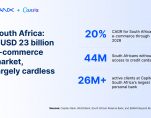
South Africa: a USD 23 billion e-commerce market, largely cardless.

The announcement represents a shift in how global subscription businesses can reach South African consumers. Credit card penetration in the country ranges between 8% and 10% of the adult population, according to the South African Reserve Bank and the World Bank. This limitation has historically restricted the reach of traditional card-on-file subscription models, excluding 44 million people in South Africa who do not own credit cards.

Instead of needing a credit card, Capitec Pay lets clients approve a recurring payment once in the Capitec app. After that, participating businesses can collect future subscription payments automatically. Canva is the first international subscription service to offer recurring payments with Capitec Pay.

Capitec is South Africa’s largest personal bank by customer base, with 26 million clients and over 16 million app users. According to Capitec, one in three South African adults uses its mobile app. “For Canva, going live as the first global merchant on this infrastructure is a removal of a structural barrier that was preventing a large portion of South Africans from accessing our platform at all,” said Bianca Sibiya, Canva Africa Lead.

The offering of recurring payments through Capitec Pay by Canva in South Africa is possible thanks to its partnership with EBANX, which helped enhance the solution and became the first global payment service provider (PSP) to integrate it into cross-border payment flows.

“For years, card-based billing has been treated as the default model for global subscription products, but that default was built around consumer behavior in the United States and Western Europe, not South Africa,” explained Wiza Jalakasi, Commercial Lead for Africa and the Middle East at EBANX.

EBANX has become a leading enabler of recurring alternative payment methods (APMs) in cross-border digital commerce across the world. Including South Africa, the company supports recurring APMs across 12 emerging markets, enabling global merchants to reach more than 1 billion consumers, many of whom lack access to credit or debit cards.

“Capitec’s philosophy is to ensure that our clients experience simple, affordable and innovative services. Recurring payments through Capitec Pay is just one of the many ways we bring that simplicity to life, offering clients a payment experience they already know and trust. Through this partnership with Canva, we are expanding our trusted payment experience and giving clients access to international merchants in an accessible way,” said Francois Viviers, Group Executive of Marketing and Client Experience at Capitec.

South Africa’s digital commerce market continues to grow rapidly, reaching 74% of adults and annual growth projected at 20% through 2028, according to Payments and Commerce Market Intelligence (PCMI) data analyzed by EBANX. By that year, South Africa’s e-commerce market is expected to represent a USD 23 billion opportunity, based on PCMI insights featured in EBANX’s Beyond Borders study.

Hashtag: #EBANX #Canva #Capitec #Fintech #Payments


The issuer is solely responsible for the content of this announcement.

About EBANX

EBANX is the leading technology platform connecting global businesses to the world’s fastest-growing digital markets. Founded in 2012 in Brazil, EBANX was built with a mission to expand access to international digital commerce. Leveraging proprietary technology, deep market expertise, and robust infrastructure, the platform enables global businesses to offer hundreds of local payment methods and streamline cross-border payments across Latin America, Africa, and Asia. With a global footprint, it established a technology and regulatory headquarters in Singapore in 2026. More than just payments, EBANX drives growth, enhances sales, and delivers seamless purchase experiences for businesses and end users alike.

For further information, please visit:

Website:
LinkedIn:

About CANVA

Launched in 2013, Canva is a free online visual communications and collaboration platform with a mission to empower everyone in the world to design. Featuring a simple drag-and-drop user interface and a vast range of templates ranging from presentations, documents, websites, social media graphics, posters, apparel to videos, plus a huge library of fonts, stock photography, illustrations, video footage, and audio clips, anyone can take an idea and create something beautiful.

For more information:

Website:
LinkedIn:

About CAPITEC

Capitec Limited (JSE: CPI) is South Africa’s largest retail bank by active client numbers, serving 26 million active clients. It is recognized as the country’s leading digital bank, with 16 million active app users. Capitec offers simple, affordable and transparent banking solutions through innovative technology and personalized service via its app, online banking, and a network of 866 branches and 8,771 ATMs and cash-accepting devices. The Group uses data and technology to understand client needs and provide tailored solutions across Personal Banking, Business Banking, value-added services, insurance, and international consumer lending through its subsidiary AvaFin. Capitec aims to make a meaningful difference and unlock growth opportunities for all.

For further information, please visit:

Website:
LinkedIn:

Pessimism sells. It always has. But investors who let fear set their strategy this year are, I believe, about to miss one of the more compelling setups markets have offered in some time. Eveywhere I look, the mood among investors feels heavier than the numbers actually justify. There is talk of central bank brinkmanship, and a market supposedly one bad news day away from falling apart, among […]

YUNNAN, CHINA – Media OutReach Newswire – 3 September 2026 – The Dounan Flower Market in Kunming, southwest China’s Yunnan Province, is strengthening its position as a leading flower trading hub in Asia, with record annual trading volumes, high-speed auction operations and increasingly efficient international logistics.

image-1.jpeg

The Kunming International Flora Auction Trading Center, a key trading platform within Dounan, begins daily trading at 1:00 p.m. Buyers can complete bids within as little as 0.6 seconds as prices decrease on electronic auction screens, enabling large volumes of fresh-cut flowers to be traded rapidly.

The market experienced a significant increase in trading activity ahead of the Qixi Festival, widely regarded as China’s Valentine’s Day. Tens of millions of flower stems were sold to domestic and international markets during the peak trading period.

According to the Kunming International Flora Auction Trading Center, the average price of major fresh-cut flower categories reached 1.1 to 1.3 yuan per stem during the pre-festival period, approximately 15 percent higher than pre-festival levels. Premium flowers recorded substantially higher prices, with high-quality roses reaching nearly 15 yuan ($2.23) per stem.

In 2025, Dounan recorded a trading volume of 15.476 billion fresh-cut flowers, with total transaction value reaching 13.484 billion yuan (approximately $2 billion).

The market currently hosts 3,300 enterprises and more than 15,000 business entities and individual proprietors. Of Dounan’s approximately 70,000 permanent residents, 46,500 are employed in the flower industry.

Approximately seven out of every 10 fresh-cut flowers sold in China originate from Dounan. Its distribution network now reaches markets across China as well as more than 50 countries and regions worldwide.

High-Speed Auction System

Dounan’s auction system is designed to accommodate the highly time-sensitive nature of fresh-cut flowers.

“Field-grown ‘Purple Glow’ (75 percent maturity), 140 stems; field-grown ‘Beloved’ (80 percent maturity), 120 stems; ‘Beloved’ (75 percent maturity), 120 stems…” said Li Qian, a flower auctioneer at the Kunming International Flora Auction Trading Center.

The trading center uses a descending-price auction model, with prices continuously decreasing on electronic screens. Buyers must respond within approximately 0.6 seconds, allowing transactions to be completed rapidly and supporting the high turnover required by the fresh-cut flower industry.

“Since fresh flowers are perishable goods, we use a descending-price auction format. This helps facilitate rapid circulation,” Li said.

The auction process is integrated with sorting, packaging and transportation operations, reducing the time between trading and shipment.

Logistics Network Expands International Reach

Fresh-cut flowers require particularly efficient logistics because their quality is highly sensitive to transportation and storage time.

Tang Minghong, a client manager with the flower logistics division of SF Express Yunnan, said fresh flowers have among the most demanding logistics requirements in the fresh produce sector.

Trading begins in the afternoon, while pickup, packaging and dispatch can be completed as early as 3:00 a.m., allowing flowers to move quickly from auction facilities into domestic distribution networks.

For international shipments, Dounan has established logistics routes to destinations including Singapore, South Korea and Malaysia. Customers in these markets can receive shipments within two days, according to logistics operators.

Strengthening Yunnan’s Global Flower Trade

The combination of large-scale flower production, centralized trading, high-speed auctions and integrated logistics has enabled Dounan to develop a comprehensive supply and distribution network.

The market connects flower growers in Yunnan with buyers and consumers throughout China and overseas, while supporting the expansion of the province’s fresh-cut flower industry into international markets.

With billions of stems traded annually and distribution covering more than 50 countries and regions, Dounan is emerging as an important regional hub for fresh-cut flower trading and distribution, contributing to the international growth of China’s flower industry.

Hashtag: #DounanFlowerMarket #FlowerTrading #Yunnan

The issuer is solely responsible for the content of this announcement.

Arabian Post Staff -Dubai Keeta Drone has resumed commercial drone deliveries in Dubai after securing regulatory approvals from the Dubai Civil Aviation Authority, restarting service from Silicon Central Mall to eligible areas around Dubai Silicon Oasis. The company said customers can place food orders through the Keeta app from participating restaurants and beverage outlets, with autonomous drones carrying eligible deliveries to designated collection points. Orders can be […]

Matein Khalid It is ironic that Opec, born as the brainchild of a nationalist Venezuelan oil minister in 1960, could die in 2027 as a result of events in that country. US President Donald Trump’s seizure of leader Nicolás Maduro in a military raid on Caracas and ambition to control 65 billion barrels of a vassal state’s proven oil reserves are triggering a seismic geopolitical realignment with […]

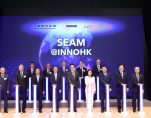
HONG KONG SAR – Media OutReach Newswire – 1 September 2026 – Hong Kong Science and Technology Parks Corporation (HKSTP), in collaboration with the Innovation and Technology Commission, successfully hosted the launch ceremony for the third InnoHK research cluster (SEAM@InnoHK) at Hong Kong Science Park today. Focusing on emerging domains such as sustainable development, energy, advanced manufacturing, and materials, SEAM@InnoHK is jointly led by top local and international academic and research institutions. The platform demonstrates Hong Kong’s robust R&D capabilities and global collaboration networks while promising tangible societal benefits, further solidifying Hong Kong’s role as an international I&T hub.

Officiating guests at the Launch Ceremony included Professor Sun Dong, Secretary for Innovation, Technology and Industry (front row, centre); Ms Cordelia Chung, Chairman of HKSTP (front row, 4th from right); Mr Kelvin Choi, Permanent Secretary for Innovation, Technology and Industry (front row, 4th from left); Mr Lyu Feng, Deputy Director-General of the Economic and Financial Department II of the Liaison Office of the Central People's Government in the HKSAR (front row, 3th from right); Mr Ivan Lee, Commissioner for Innovation and Technology (front row, 3th from left); and Mr Terry Wong, Chief Executive Officer of HKSTP (front row, 1st from right).
Officiating guests at the Launch Ceremony included Professor Sun Dong, Secretary for Innovation, Technology and Industry (front row, centre); Ms Cordelia Chung, Chairman of HKSTP (front row, 4th from right); Mr Kelvin Choi, Permanent Secretary for Innovation, Technology and Industry (front row, 4th from left); Mr Lyu Feng, Deputy Director-General of the Economic and Financial Department II of the Liaison Office of the Central People’s Government in the HKSAR (front row, 3th from right); Mr Ivan Lee, Commissioner for Innovation and Technology (front row, 3th from left); and Mr Terry Wong, Chief Executive Officer of HKSTP (front row, 1st from right).

The launch ceremony was officiated by key guests including Professor Sun Dong, Secretary for Innovation, Technology and Industry; Ms Cordelia Chung, Chairman of HKSTP; Mr Kelvin Choi, Permanent Secretary for Innovation, Technology and Industry; Mr Lyu Feng, Deputy Director-General of the Economic and Financial Department II of the Liaison Office of the Central People’s Government in the HKSAR; Mr Ivan Lee, Commissioner for Innovation and Technology; and Mr Terry Wong, Chief Executive Officer of HKSTP. They were joined by representatives and scholars from local and overseas universities, international research organizations, R&D centres, and industry partners to witness the launch of SEAM@InnoHK and explore its R&D roadmap and industrial application prospects.

Building a Flourishing Ecosystem to Empower R&D Commercialisation

As the largest I&T ecosystem in Hong Kong, HKSTP provides comprehensive professional support and resources to the R&D centres under SEAM@InnoHK. This encompasses world-class R&D infrastructure, seamless connections with academic institutions, talent pools, and investor networks, as well as matchmaking with funding and industry partners—empowering teams to transform breakthrough research into scalable, high-impact commercial solutions.

Ms Cordelia Chung, Chairman of HKSTP, said: “InnoHK has been with the Science Park for 5 years and this is the start of the second 5-year period. What we can see is that InnoHK has demonstrated the power of collaboration amongst world eminent scholars, researchers, and global partners. The first two clusters, Health@InnoHK and AIR@InnoHK have delivered world-class achievements. We commit to provide all the support we can to the InnoHK teams, as your success will add to the heartbeat of the ecosystem—not only for HKSTP, but for Hong Kong’s entire innovation landscape.”

Gathering Global Scientific Excellence to Drive Breakthroughs

The eight R&D centres under SEAM@InnoHK have brought together over 30 top global universities and research institutions, including the University of Cambridge, École Polytechnique Fédérale de Lausanne (EPFL), Nagoya University, National University of Singapore, Tsinghua University, and Peking University.

Notably, three R&D centres feature collaborations with Nobel Laureates: Professor Ben L. Feringa from the University of Groningen (2016 Nobel Laureate in Chemistry), who participates in the research at the InnoHK Centre of Functional Materials for Energy and Sustainability (CFMES); Sir Konstantin Novoselov, renowned as the “Father of Graphene” from the National University of Singapore (2010 Nobel Laureate in Physics), who serves as principle investigator for the Inno Centre for Heterogeneous Integration and Production (CHIP); and Professor Hiroshi Amano from Nagoya University (2014 Nobel Laureate in Physics), who participates in research at InnoHK Power Semiconductors and Applications Center (PowerSAC). This stellar international scientific lineup highlights Hong Kong’s unique advantages in assembling world-class research talent, fostering cross-border collaboration, and driving technological innovation, further consolidating its status as a global hub for research cooperation.

InnoHK is a flagship I&T initiative of the HKSAR Government aimed at developing Hong Kong into a global hub for scientific research cooperation. It encourages world-leading universities and research institutes to conduct collaborative research with local institutions by establishing R&D centres in Hong Kong. Together with “Health@InnoHK”, focusing on healthcare technologies and “AIR@InnoHK”, focusing on AI and robotics technologies, the three InnoHK research clusters will further enrich Hong Kong’s world-class scientific landscape, accelerating technology transfer, startup incubation, and the growth of the I&T industry.

Introduction to the Eight SEAM@InnoHK R&D Centres (For details, please refer to the Appendix):

  • InnoHK Centre for Advanced and Smart Manufacturing (CASM): Lead global manufacturing toward Industry 5.0 by fusing AI, advanced materials, additive manufacturing and digital twins to create smart, sustainable, and human-centered solutions.
  • InnoHK Centre of Functional Materials for Energy and Sustainability (CFMES): Advance breakthrough discoveries in functional materials to address bottleneck challenges related to energy and sustainability.
  • InnoHK Centre for Heterogeneous Integration and Production (CHIP): Advance next-generation electronics through innovations in semiconductor equipment and material processing, with a focus on advancing heterogeneous integration technologies.
  • InnoHK Centre for Space Manufacturing Technology (CSMT): Establish a world-class hub for international research collaboration in space manufacturing, integrating cutting-edge R&D in advanced materials and additive processes with demonstration and applied innovation in Hong Kong.
  • InnoHK Hong Kong Center for Renewable Energy and Storage (HKCRES): Develop and integrate high-performance perovskite photovoltaics, green hydrogen systems, and next-generation batteries via an end-to-end innovation framework in Hong Kong.
  • InnoHK Power Semiconductors and Applications Center (PowerSAC): Develop advanced power semiconductors, intelligent chips and system technologies for more efficient, compact and reliable power conversion.
  • InnoHK Research Centre for Intelligent GRID and Energy Technologies (I-GET): Develop intelligent, green and transformative grid and energy technologies for resilient, efficient and carbon-neutral cities.
  • InnoHK Sustainable Materials & Advanced Renewable Technologies (SMART Centre): Leverage artificial intelligence and smart automation technologies to accelerate materials discovery for circular waste upcycling, repurposing, and next-generation clean energy technologies.

Hashtag: #HKSTP

The issuer is solely responsible for the content of this announcement.

About Hong Kong Science and Technology Parks Corporation

Hong Kong Science and Technology Parks Corporation (HKSTP) was established in 2001 and has built a proven foundation as Hong Kong’s leading innovation and technology (I&T) ecosystem. Established for 25 years, HKSTP is supporting 14 unicorns, has nurtured more than 17,000 research professionals and built a community of over 2,400 technology companies from 26 countries and regions across four strategic technology clusters: Life and Health Technology, AI and Data Science, Micro-electronics, and New Energy and Green Technology.

As an ecosystem orchestrator, HKSTP provides end-to-end support to attract and nurture talent, accelerate commercialisation and help technology ventures scale. Its innovation infrastructure spans over 240 hectares covering Hong Kong Science Park in Pak Shek Kok, InnoCentre in Kowloon Tong, and three modern InnoParks in Tai Po, Tseung Kwan O and Yuen Long, advancing Hong Kong’s vision for new industrialisation and smart manufacturing.

Hong Kong Science Park Shenzhen Branch in Futian, Shenzhen, strengthens cross-border collaboration by connecting Hong Kong, the Chinese Mainland and global innovation networks and propels Chinese innovators onto the world stage, while also delivering comprehensive GBA landing support to accelerate cross-border success for local and international ventures.

As HKSTP enters its next chapter with strong foundations, it continues to deepen impact, elevate quality and create value for innovators. As an ecosystem built to lead change, HKSTP is empowering Hong Kong to define what comes next in innovation, growth and opportunity.

More information about HKSTP is available at .

Partnered with CB Insights to unveil Hong Kong leads Asia and ranks fifth globally for high-potential start-ups, orchestrating the next era of global tech innovation

Key Takeaways:

  • HKSTP’s 25th Anniversary Prelude theme, “Innovation. Next by Nature.”, brings together great minds and bold ideas to inspire what comes next for Hong Kong’s innovation ecosystem.
  • The CB Insights-HKSTP white paper ranks Hong Kong first in Asia and fifth globally, with a Mosaic score of 370 — a key indicator of high-potential ventures and future unicorns.
  • The research highlights Chinese Mainland’s lead in Asia’s physical AI wave, as the region powers global growth in robotics and AI funding.

HONG KONG SAR – Media OutReach Newswire – 31 August 2026 – The Hong Kong Science and Technology Parks Corporation (HKSTP) today officially kicked off its year-long 25th anniversary celebration with a landmark event “Together to NEXT”, bringing together Innovation and Technology Partners, Park Companies, industry leaders, academia and startups to mark a quarter-century of transforming bold ideas into global impact.

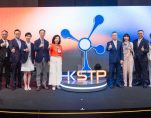
HKSTP's 25th Anniversary Prelude theme, "Innovation. Next by Nature.", brings together great minds and bold ideas to inspire what comes next for Hong Kong's innovation ecosystem. Ms Cordelia Chung, Chairman of HKSTP (6th from left), Mr Terry Wong, CEO at HKSTP (6th from right), Mr Aldous Mak, Chief Financial Officer of HKSTP (5th from left), Ms Hilda Chan, Chief Marketing Officer, HKSTP (5th from right), Ms Filla Mak, Chief Property and Asset Officer, HKSTP (4th from left), Mr Eric Or, Chief Ecosystem Development Officer, HKSTP (4th from right), Ms Fanny Wong, Chief Talent Officer, HKSTP (3rd from right), Mr Oscar Wong, Acting Chief Business Development Officer, HKSTP (2nd from right) and members from the management team officiate the event.
HKSTP’s 25th Anniversary Prelude theme, “Innovation. Next by Nature.”, brings together great minds and bold ideas to inspire what comes next for Hong Kong’s innovation ecosystem. Ms Cordelia Chung, Chairman of HKSTP (6th from left), Mr Terry Wong, CEO at HKSTP (6th from right), Mr Aldous Mak, Chief Financial Officer of HKSTP (5th from left), Ms Hilda Chan, Chief Marketing Officer, HKSTP (5th from right), Ms Filla Mak, Chief Property and Asset Officer, HKSTP (4th from left), Mr Eric Or, Chief Ecosystem Development Officer, HKSTP (4th from right), Ms Fanny Wong, Chief Talent Officer, HKSTP (3rd from right), Mr Oscar Wong, Acting Chief Business Development Officer, HKSTP (2nd from right) and members from the management team officiate the event.

To commemorate this milestone, HKSTP unveiled its anniversary theme, “Innovation. Next by Nature.”, a vision that signals its evolution from ecosystem enabler to orchestrator of the next era of global innovation. HKSTP also announced the findings of a landmark study, “Inside Asia’s Fast-Track to Global Tech Scale,” conducted in partnership with the leading technology market intelligence firm CB Insights, revealing Hong Kong ranks first in Asia and fifth globally, with a Mosaic score of 370. Mosaic score is CB Insight’s proprietary and industry-recognised indicator of high-potential ventures and future unicorns, evaluating momentum, financing, market opportunity and leadership quality. Hong Kong’s top ranking among Asian markets reflects a concentrated pool of scale-ready ventures and highly-investable innovation.

Ms Cordelia Chung, Chairman of HKSTP, said: “For 25 years, HKSTP has driven I&T as Hong Kong’s economic engine. Across our 240-hectare infrastructure and service ecosystem—comprising Science Park, InnoCentre, three InnoParks, and our Shenzhen Park—we turn research into real-world impact. Looking ahead, our ‘What’s Next’ vision is built on four dimensions, ‘Broad and Deep, Far Yet Near’: Broad means building a diverse talent ecosystem where human minds leverage technology; Deep involves advancing tech-industry convergence; Far entails expanding our global footprint; and Near focuses on drawing the future nearer with immediate action. Our community is our heartbeat. Together, we must strengthen, enhance, and collaborate, harnessing Hong Kong’s unique advantages to shape a better future for all.”

To kick off this next era, HKSTP has partnered with CB Insights to launch a white paper titled “Inside Asia‘s Fast-Track to Global Tech Scale.“ The report shows how Asia is reshaping the global innovation playbook with a network of specialist clusters, each optimised for a different stage of the innovation journey and built for today’s multipolar market landscape. CB Insights is a global tech intelligence leader and predictive data platform trusted by Fortune 500 companies.

Mr Terry Wong, CEO at HKSTP, said: “Asia’s rising innovation power is rewriting the global innovation map. While Silicon Valley grew as a single, all-in-one hub, Asia, with the Chinese Mainland as a key technology engine, is evolving an accelerated and more specialised network for global innovation. Hong Kong’s role as a super connector and value-adder has never been more important as Asia sets a new benchmark for start-up ecosystems. As HKSTP steps up as an ecosystem orchestrator, we are connecting innovators with capital, talent, deep Mainland China links and trusted pathways to global markets.”

Other Key Report Findings:

  • Chinese Mainland drives physical AI takeover
    Asia’s AI investment exploding as physical AI leads the way with robotics raising US$26.1B and AI infrastructure hit US$21.4 billion in 2025, outpacing generative AI and fintech. China dominates region with close to 100% of deals in emerging segments: robot/industrial humanoid robot foundation models, vision language and autonomous driving models.
  • Asia‘s specialist hubs as accelerators of growth across innovation lifecycle
  • Asia vies for global R&D lead to complement established manufacturing and consumer power
    The region’s global R&D expenditure surge from 24% in 2007 to 45% in 2024, according to WIPO, while already the dominant region for global manufacturing as well as driving global consumption with growing purchasing power with Asia’s GDP reaching 48.6 percent in 2025, according to Boao Forum for Asia (BFA).


HKSTP: Global
I&T Ecosystem Orchestrator and Innovation Accelerator

HKSTP’s 25th anniversary signals a renewed mission to make Hong Kong the global heartbeat of what’s next in innovation and technology (I&T). As HKSTP approaches its 25th anniversary, the new brand theme, “Innovation. Next by Nature.”, positions HKSTP as inherently built to lead the change. The year-long celebrative campaign “25 to NEXT” starts from August 2026 to July 2027 with 25 high-impact activations and cultural moments.

Anchored by three core goals — The Next Habitat (cultivating an innovation culture by connecting ecosystem stakeholders with signature events), The Next Horizon (broadening perspectives through industry-guiding insights, including the landmark study in partnership with CB Insights and 25 KOL collaborations), and The Next Pinnacle (developing overseas delegations and platforms across international markets). The campaign positions HKSTP as a more connected engine and forward-oriented convener of talent, capital, infrastructure and partnerships across sectors and borders.

Since its establishment, HKSTP has grown into Hong Kong’s largest I&T ecosystem, driving breakthroughs across Life and Health Technology, AI and Data Science, Microelectronics and Advanced Manufacturing, and GreenTech and New Energy. As the ecosystem orchestrator, HKSTP is committed to powering Hong Kong’s rise as the international I&T hub, underpinned by leading critical partnerships across Hong Kong and beyond, attracting talent, engaging stakeholders, and building a connected, forward-looking I&T community for the next era of global innovation.
Hashtag: #HongKongScienceandTechnologyParksCorporation #HKSTP

The issuer is solely responsible for the content of this announcement.

About Hong Kong Science and Technology Parks Corporation

Hong Kong Science and Technology Parks Corporation (HKSTP) was established in 2001 and has built a proven foundation as Hong Kong’s leading innovation and technology (I&T) ecosystem. Established for 25 years, HKSTP is supporting 14 unicorns, has nurtured more than 17,000 research professionals and built a community of over 2,600 technology companies from 26 countries and regions across four strategic technology clusters: Life and Health Technology, AI and Data Science, Micro-electronics, and New Energy and Green Technology.

As an ecosystem orchestrator, HKSTP provides end-to-end support to attract and nurture talent, accelerate commercialisation and help technology ventures scale. Its innovation infrastructure spans over 240 hectares covering Hong Kong Science Park in Pak Shek Kok, InnoCentre in Kowloon Tong, and three modern InnoParks in Tai Po, Tseung Kwan O and Yuen Long, advancing Hong Kong’s vision for new industrialisation and smart manufacturing.

Hong Kong Science Park Shenzhen Branch in Futian, Shenzhen, strengthens cross-border collaboration by connecting Hong Kong, the Chinese Mainland and global innovation networks and propels Chinese innovators onto the world stage, while also delivering comprehensive GBA landing support to accelerate cross-border success for local and international ventures.

As HKSTP enters its next chapter with strong foundations, it continues to deepen impact, elevate quality and create value for innovators. As an ecosystem built to lead change, HKSTP is empowering Hong Kong to define what comes next in innovation, growth and opportunity.

More information about HKSTP is available at .

Matein Khalid Chinese fast-fashion giant Shein is set to list in Hong Kong on September 1 at a valuation of up to $27 billion. That is less than half the $64 billion valuation at which Abu Dhabi sovereign wealth fund Mubadala invested in 2023. It is a brutal comedown for a retailer once expected to be worth $100 billion. My knowledge of sartorial retailing is admittedly less than encyclopaedic. Yet I […]

VISHNU RAJA
RYO YAMADA
HITORI GOTOH
IKUYO KITA