Just in:
Emaar approves Development buyout ahead of planned delisting // CR Longdation Aethereal Cybersecurity × Global Cybersecurity Alliance (GCSA) Join Hands to Establish the “AI and Cybersecurity Research Centre” // Ningbo Consensus on Collaborative Development released at 2026 Global Mayors Dialogue · Ningbo // Geely’s i-HEV Intelligent Hybrid Technology Offers a New Direction for Gasoline-Powered Vehicles // Beyond the exhibition floor: How robots, AI and networks are moving into the real world // Trump’s Iran War Has A Share Of Contribution To His Midterm Debacle // Miss Universe Hong Kong Jen Zhou Departs for Puerto Rico to Compete in the 75th Miss Universe World Final // Ousted top Kochi cop gets IG post // Technology shares plunge as Nasdaq enters correction // Oil advances towards $100 as tanker attacks persist // TVM –Mangaluru Vande Bharat claims top spot // UK air traffic outage inflicted £33m financial losses // Asia Left Behind: Ten international companies have yet to report delivering on their cage-free egg pledges across the region // e-Crime Bureau Signs Cybersecurity Partnership With Smart Africa, Reinforcing Its Global Expansion // Kochi police detain two actors over bid to honey trap doctor // OpenAI abandons secrecy agreements for future data centres // Millions Of Indians May Soon Be Deprived Of Government Assistance // APT29-linked campaign exploits outdated Apple and Android software // OpenAI introduces GPT-6 Cyber with restricted security access // OpenAI identifies 948 Linux privilege escalation flaws using AI //

News related to
Mid Term

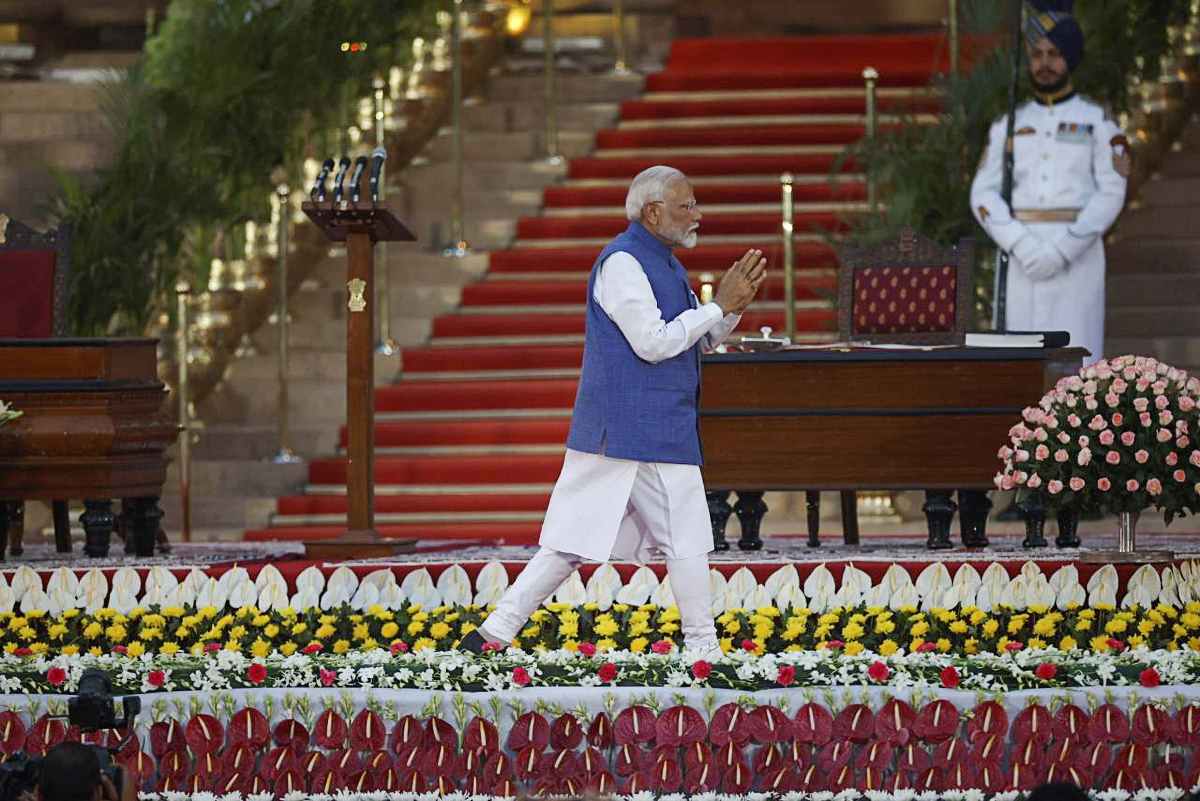
By K Raveendran It was a week of contradictions for India’s image on the world stage, marked by a curious interplay of critique, affirmation, and manoeuvring. Rahul Gandhi, in his address at Columbia University, painted a picture of India that was dark and distressing, describing the country’s democratic decline in sweeping terms. At the same […]

The article A Week Marking The Worst And Best For India On Global Stage appeared first on Latest India news, analysis and reports on Newspack by India Press Agency).

By Manish Rai In his maiden speech in the United Nations General Assembly, Syria’s interim president, Ahmed al-Sharaa, called for lifting of international sanctions on Syria, becoming the first head of state from Syria to address the gathering in nearly 60 years. This signifies the first appearance of a Syrian president since Nureddin al-Atassi took office in 1967. Syrian President Sharra engaged in a series of bilateral […]

Global investment firm KKR has acquired a minority stake in ADNOC Gas Pipeline Assets LLC, reinforcing its commitment to Middle East energy infrastructure. ADNOC retains full operational control and ownership of the pipelines. KKR’s move builds on longstanding ties with Abu Dhabi’s national energy group. In 2019, KKR and BlackRock acquired a portion of ADNOC’s oil pipeline business in a landmark deal; that investment was later sold […]

NEW YORK, US – Media OutReach Newswire – 3 October 2025 – NTT DATA, the global leader in IT services, has once again been recognized among the Best Places to Work in the USA and earned the distinction of Best Place to Work for Women for 2025. This marks the second consecutive year the company has achieved both certifications, reflecting its ongoing commitment to creating a workplace […]

Oil prices are sliding as traders cite mounting unsold Middle Eastern crude and weakening demand from key importers. This shift raises prospects of a global oversupply even as OPEC+ debates its next policy move.

Estimates from trading houses place unsold crude cargoes for November loading in the Middle East between 6 million and 12 million barrels. These volumes represent a departure from usual patterns where discount-seeking buyers quickly absorb surplus cargoes. Market participants point to a combination of subdued Chinese demand and logistical bottlenecks as contributing factors.

Spot premiums on benchmark grades such as Oman, Dubai and Murban have plunged below $2 per barrel, reflecting the discounts sellers are forced to offer to entice buyers. One trading analyst noted that the drop in premiums signals heightened desperation amid a buyer’s market for Middle Eastern crude.

China, a traditional backstop for surplus exports, is showing signs of pulling back. In May, China recorded a crude surplus of 1.4 million barrels per day—indicating that imports significantly outpaced refinery throughput. That accumulated surplus suggests refiners are prioritising inventory building over active processing, perhaps in anticipation of future market volatility.

Iran adds another layer of complexity. Tanker-tracking firms estimate that between 23 million and 33 million barrels of Iranian crude are currently held in floating storage. While Iran’s oil minister has denied any unsold inventory, satellite and maritime data paint a different picture. Analysts say the discrepancy reflects the country’s use of ship-to-ship transfers and “ghost fleet” operations to obscure the origin and movement of crude, especially in shipments headed for China.

These movements coincide with a broader recalibration in OPEC+ strategy. Some member states, notably Iraq, have increased destination-free exports, signalling an intent to saturate markets and regain influence with trading partners. Iraq’s shipment of Basrah Medium crude is projected to rise significantly in the coming month, following a period in which pledged output increases by coalition members have lagged deliveries.

Many analysts believe that OPEC+ will proceed cautiously in its production decisions. A sudden output cut might stoke accusations of market manipulation, while continued supply expansion could exacerbate falling price trends. Ahead of its upcoming meeting, the group faces the dilemma of balancing the need to safeguard revenue against the risk of triggering a price collapse.

Meanwhile, U. S. domestic supply is contributing to uncertainty. The Energy Information Administration reports that U. S. output has strengthened marginally, offset by curtailed imports of Russian crude under tightened sanctions. But some industry observers warn that U. S. production may have peaked. One petroleum engineer pointed to a 12 percent decline in output from October 2024 to June 2025, citing state-level data that may undercut EIA projections.

Oil futures reflect growing anxiety. Brent crude and West Texas Intermediate have posted their steepest weekly drops since June, falling over 8 percent in some benchmarks amid concerns that global inventories will build significantly. Traders increasingly view OPEC’s next move as critical in determining whether markets stabilise or cede ground to excess supply.

In this environment, floating storage becomes a more active tool. The accumulation of oil held offshore is not just a symptom of imbalance but a way to temporally manage supply pressure. Floating oil reserves enable sellers to delay deliveries until market conditions improve—or until buyers return.

Refiners in Asia and Europe are approaching capacity constraints. Some are cutting processing rates or entering maintenance periods, reducing appetite for new crude. Because many surplus cargoes are being offered on destination-free terms, they face competition across regions—and the lack of clear demand is forcing suppliers to lengthen delivery offers or scale back premiums.

If the pricing squeeze deepens, some producers may respond by cutting output unilaterally. Others might seek to promote further cooperation on coordinated supply restraint, though such moves carry reputational risk if markets judge them as manipulative. Meanwhile, importers in developing markets—particularly in Africa and Southeast Asia—could benefit from cheaper crude. But those gains may not offset pressure on oil-producing economies that rely heavily on export revenue to fund budgets and social programmes.


China’s largest state banks have committed over $3.75 billion in debt financing to Saudi Aramco’s Jafurah gas project, while Chinese investment funds have declined to take equity stakes in the venture, sources told Reuters.

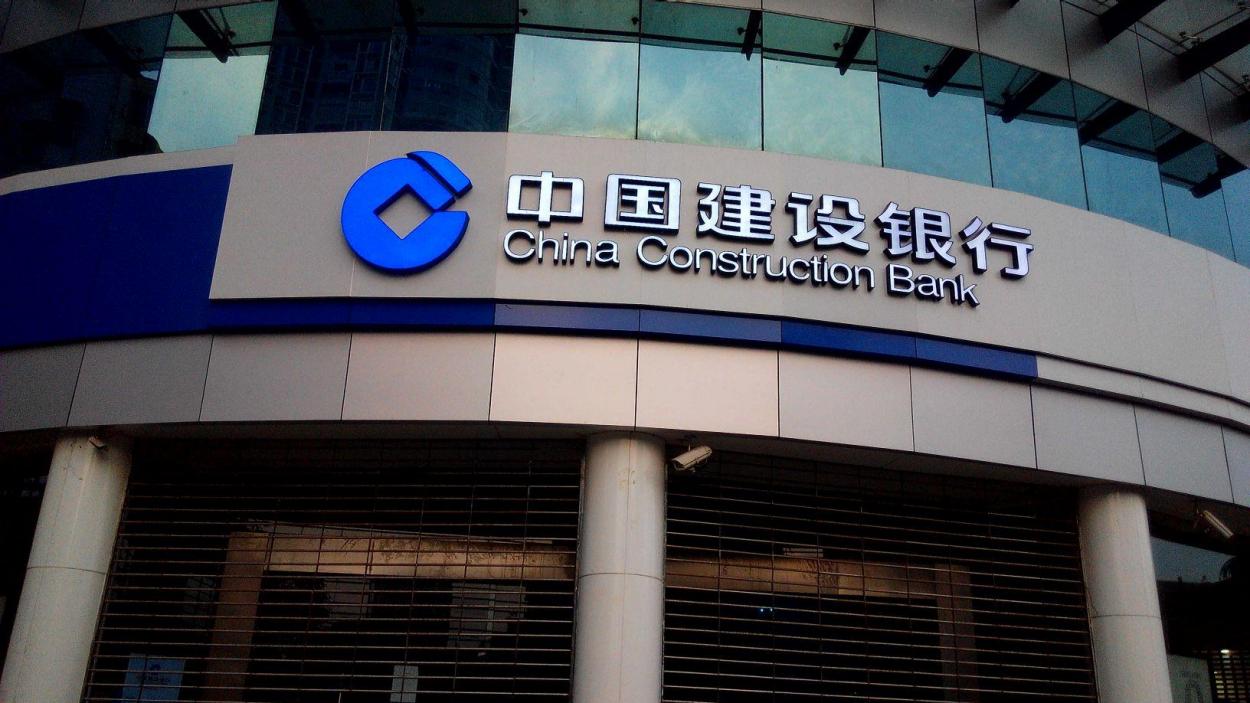
The bulk of this funding comes from Bank of China, ICBC and China Construction Bank, each contributing around $1 billion, and Agricultural Bank of China adding roughly $750 million. This debt financing accounts for more than one-third of the total capital sought for what is expected to be the largest shale gas development outside the United States.

Aramco’s deal involves an $11 billion lease-and-leaseback agreement signed in August with a consortium led by Global Infrastructure Partners, an arm of BlackRock. Under the arrangement, a new entity called Jafurah Midstream Gas Company will lease processing assets to Aramco for 20 years. Aramco retains a 51 per cent stake, while the consortium holds the remaining 49 per cent.

Despite the opportunity to join the equity syndicate, several Chinese state-linked funds declined to participate, a move that sources attribute to heightened U. S.–China tensions. Beijing is said to have discouraged fund-level engagement with U. S.-affiliated private capital firms, even when such firms do not have overt U. S. exposure.

The Chinese banks’ decision to provide senior debt but avoid equity signals a calibrated strategic posture: backing the project financially without direct governance alignment with U. S.-linked investors.

Aramco’s broader ambition is to expand its gas production capacity by 60 per cent over 2021 levels by 2030. The Jafurah basin is estimated to contain 229 trillion standard cubic feet of raw gas and 75 billion stock tank barrels of condensate.

The BlackRock-led consortium is also negotiating additional capital of around $10.3 billion with a mix of debt instruments; participants in those talks include JPMorgan and Sumitomo Mitsui Banking Corporation. Those financial structures are intended to support the lease-and-leaseback model without ceding control of core infrastructure assets to external parties.

Within the Gulf, Chinese lenders’ prominent involvement in Jafurah’s financing echoes a broader trend. Analysts note that China is repositioning its role in Gulf energy infrastructure by leveraging its strengths in project debt and export credit rather than co-investment in U. S.-sponsored equity schemes.

Saudi Arabia is concurrently expanding its gas network. It has signed over $25 billion in contracts for the second phase of Jafurah development and further gas-network enhancements, including pipeline extensions of 4,000 km to increase capacity by 3.2 billion standard cubic feet per day. Chinese firms, such as Sinopec, are among the contractors participating in these projects.

For Aramco, the dual approach of securing large-scale debt from Chinese banks while partnering with international investors via the leaseback model helps it mobilise capital without relinquishing decisive control. The arrangement offers investors predictable tariff-based returns.

Chinese banks’ exposure gives them influence over covenant terms, loan pricing and repayment schedules. That leverage, without the burdens or political friction associated with equity, aligns with Beijing’s financial diplomacy toward strategic energy corridors.

The full constellation of debt and equity deals around Jafurah—and the dynamics among Gulf producers, Chinese state capital, and U. S.-linked private investors—will be among the key nodes shaping the next wave of energy infrastructure financing.

Citi has revised its cryptocurrency outlook with a bold projection that Bitcoin will reach $181,000 within the next 12 months, while lowering its year-end 2025 target to $133,000 amid macro headwinds. The bank’s analysts emphasise that sustained inflows from exchange-traded funds and institutional adoption will serve as the key drivers behind this forecast.

In its latest note to clients, Citi outlined a base case assuming roughly $7.5 billion of inflows into Bitcoin through ETFs and corporate digital treasuries. In its bullish scenario, that figure could accelerate, boosting the upper bound estimate to $156,000 by year-end 2025. On the other hand, if recessionary pressures intensify, the bear case puts Bitcoin as low as $83,000.

Citi trimmed its near-term outlook slightly, revising the 2025 year-end Bitcoin target downward from $135,000 to $133,000. The bank cited factors such as a stronger U. S. dollar and softer gold prices as constraining forces even as demand remains intact. Ethereum’s forecast was upgraded: the bank now expects it to close 2025 at $4,500 and rise to $5,440 over 12 months. The increased optimism for Ethereum stems from its yield-producing features, staking potential and growing institutional interest.

These adjustments came amidst a backdrop of accelerating ETF inflows across asset classes. U. S.-listed ETFs have now amassed roughly $917 billion this year alone, following on from a record $1.1 trillion in the prior year. Bitcoin‐linked ETFs such as BlackRock’s IBIT have contributed meaningfully to that tally, while ETFs offering derivative strategies or income-oriented profiles have also drawn substantial capital.

Market commentators point out that ETFs offer a more accessible, regulated path for institutional investors and financial advisors to gain crypto exposure. That ease of entry, combined with the liquidity and scale of Bitcoin as the “digital gold” play, underpins Citi’s conviction that Bitcoin remains poised to absorb a disproportionate share of new capital entering the crypto sector.

Still, Citi emphasises that its bullish scenario depends heavily on flow continuity. Should macro conditions deteriorate—whether through tighter monetary policy, weaker risk appetite, or geopolitical stress—those inflows could slow or reverse. In such a scenario, Citi’s downside targets become relevant.

Other analysts echo a cautiously bullish tone. Some foresee Bitcoin reaching $160,000 to $200,000 by year-end, citing seasonal patterns and regulatory tailwinds, especially developments in U. S. crypto policy. Others warn that high valuations and volatility could invite sharper pullbacks if sentiment weakens.

The tension between macro headwinds and structural drivers is particularly evident in Ethereum’s case. Unlike Bitcoin, Ethereum supports staking and decentralized finance activity, making it more sensitive to adoption metrics and usage growth. Citi believes that those features make Ethereum increasingly appealing to yield-seeking institutions, especially as its ecosystem matures.

Crypto markets have responded positively to the outlook. Bitcoin has recently moved past $120,000 levels, reaching two-month highs, while Ethereum’s price has also climbed steadily. Some of this momentum, analysts say, appears driven by ETF allocations and strong demand from institutional flows.

Advertisements

Oil prices moved higher on Thursday as the market reacted to fresh signals of tightening supply and geopolitical risks that dampen prospects for aggressive output growth. Brent crude rose to around $65.70 per barrel, while U. S. West Texas Intermediate climbed above $62.00. Markets had been under pressure earlier in the week after crude dropped nearly 7 percent across three sessions, largely driven by expectations that OPEC+ […]

Global investment giant KKR has acquired a minority stake in the entity leasing Abu Dhabi National Oil Company’s gas pipeline assets, bridging further into the Gulf’s energy infrastructure sphere. The financial terms were undisclosed; key rights and management powers remain with ADNOC. This marks a continuation of KKR’s partnership with ADNOC: in 2019, it invested in the oil pipeline business—then among the first foreign institutional investments into […]

Shared services hub to build on early momentum and further enhance all-in-one platform to empower financial advisory firms SINGAPORE – Media OutReach Newswire – 2 October 2025 – PROPEL with Singlife, the one-stop shared services hub for financial advisory firms, announces today that it has onboarded over 1,300 financial adviser representatives (FARs), just nine months after its official launch. PROPEL continues to solidify its position as the […]

Oil markets face mounting pressure to weaken as forecasts from Macquarie warn of a shift into the $50-per-barrel range amid “punishing oversupply.” Macquarie’s analysts trimmed their price outlooks and argue supply growth from both OPEC+ and non-OPEC producers threatens to swamp demand. The bank now expects West Texas Intermediate to average about $64 per barrel in 2025, down by $3 from previous estimates, and to drop further […]

Global private equity heavyweight KKR has acquired a minority share in the company that leases Abu Dhabi National Oil Company’s gas pipelines, deepening its commitment to the UAE’s energy infrastructure. The financial terms and precise percentage of the stake were not disclosed. The deal gives KKR exposure to ADNOC Gas Pipeline Assets LLC, which holds the lease rights for a network of 38 pipelines across the UAE, […]

A joint venture between UAE grocer Spinneys and Philippines conglomerate Ayala Corporation aims to introduce premium supermarkets across the archipelago, with the first outlet slated for the fourth quarter of 2026. Ayala will control 60 per cent of the venture, with Spinneys holding the remaining 40 per cent, launching the Dubai-based brand’s first expansion beyond the Gulf Cooperation Council. The two-phase deal calls for Spinneys to bring […]

DELRAY BEACH, FL, Sept 2025 – Global Call Forwarding, a leading global provider of enterprise-grade virtual phone numbers and cloud communication solutions, will return to GITEX Global 2025 to exhibit its latest innovations in voice technology, CRM & helpdesk integrations, BYOC solutions, and AI-powered Call Insights. The company will be showcasing solutions designed to help modern tech and software companies streamline communications across international markets. Following successful […]

Metaplanet has added 5,268 Bitcoin to its treasury, lifting its total holdings to 30,823 BTC—a stash now worth roughly $3.5 billion. The move marks another aggressive step in the company’s ambition to dominate corporate Bitcoin accumulation.

The Tokyo-listed firm disclosed the latest purchase via its analytics platform, citing an average cost per coin in the range of $116,800. With this transaction, Metaplanet fortifies its position among the largest public Bitcoin treasuries globally. The company has previously disclosed a 5,419-coin buy earlier in September.

Metaplanet’s strategy, initiated in 2024 when it shifted from hotel and media operations into a Bitcoin-heavy treasury model, has relied heavily on capital raises and issuance of equity linked instruments. In early September, shareholders green-lit a plan to issue up to 550 million new shares overseas—raising about ¥130.3 billion —with proceeds earmarked in part for further BTC accumulation. Eric Trump, who serves on Metaplanet’s advisory board, was present at the meeting and took part in a fireside chat session.

The company projects bold long-term goals: by 2026, it aims to reach 100,000 BTC, and by late 2027, to hold 210,000—about 1 percent of total Bitcoin supply.

Despite its crypto focus, Metaplanet’s stock performance has been volatile. Since mid-June, the share price has fallen sharply—losing over 50 percent—reflecting investor concern over dilution risk, weak revenue fundamentals, and compressed valuation premiums compared to its Bitcoin holdings.

Analysts caution that Metaplanet’s heavily leveraged approach leaves it vulnerable. Should Bitcoin’s price fall, the firm could see large mark‐to-market losses or face funding constraints if markets turn against inflows. Still, Metaplanet argues its “Bitcoin yield” metric—growth in BTC per share—aligns incentives for equity holders to back continued accumulation.

The company also is diversifying its strategy. It has launched a U. S.-based subsidiary in Miami to manage derivatives and income-generation business lines, and is developing digital platforms rooted in Bitcoin.

Salah Uddin Shoaib Choudhury For decades, the Muslim Brotherhood has loomed large in the Western imagination, often described as the ideological mothership of global Islamism. To many policymakers in Washington, London, or Brussels, the name alone has become shorthand for a wide spectrum of Islamist activity. Yet, this perception is increasingly divorced from reality. The Brotherhood, fractured and in disarray since its downfall in Egypt, no longer […]

The city-state’s employers have set a striking pace as they head into the final quarter of 2025: a Net Employment Outlook of 45 per cent signals that nearly three in five organisations expect to expand their workforces. That optimism comes amid shifting global headwinds, structural reforms, and a rising demand for specialised talent.

The ManpowerGroup Employment Outlook Survey canvassed 525 UAE employers across sectors to assess hiring intentions. A positive balance of 45 per cent means that those anticipating workforce increases outnumber those expecting reductions by nearly half. This figure places the UAE among the world’s more aggressive labour markets, especially given challenges such as global trade uncertainty, rising automation, and fluctuating commodity prices.

This projected hiring boom is not evenly distributed. The strongest demand lies in transport, logistics and automotive, energy and utilities, and consumer goods and services. These sectors appear ready to leverage infrastructure projects, green energy transitions, and regional consumption growth. Meanwhile, the information technology sector is showing solid demand at +48 per cent, reflecting sustained digital transformation pushes.

Driving much of this confidence is corporate expansion: 40 per cent of participating firms cited scaling operations as their primary reason for hiring. Another 28 per cent pointed to pivoting business models and growth into new areas. In addition, nearly 30 per cent of respondents acknowledged that talent shortages—and competition for specialised skills—are influencing recruitment strategies.

Yet the buoyant sentiment is tempered by caution. Roughly 10 per cent of employers still expect to trim staff, particularly in roles vulnerable to automation or in sectors facing structural disruption. Around 15 per cent responded that they will hold staffing constant, prioritising internal upskilling over external recruitment. In interviews, some HR executives noted that while they want to hire aggressively, wage inflation, geopolitical uncertainty, and regulatory shifts may prompt them to phase recruitment over several quarters.

Regional and global context strengthens the UAE’s position. In the third quarter of 2025, the UAE recorded a world-leading NEO of +48 per cent. That marked a standout alignment with its long-term growth strategy, and the Q4 figure of +45 per cent suggests sustained momentum rather than a cyclical spike. Elsewhere, the global average NEO stood at +24 per cent during Q3 — placing the UAE’s outlook nearly double the global benchmark.

Analysts view this hiring optimism as part of a broader strategy to reposition the UAE as a knowledge-economy hub. Recent government initiatives have focused on advanced manufacturing, artificial intelligence, sustainability, and logistics corridors. These programs have triggered demand not only for engineers and technicians but also for data scientists, sustainability consultants, and cross-disciplinary professionals. In one corporates sector round-table, a senior UAE CEO observed that “the competition for deep tech talent is global, and we must offer not just pay but opportunity, stability and a pathway for growth.”

Labour authorities are also aligning policies with employer needs. New visa frameworks, targeted Emiratisation programmes, and regulatory incentives for R&D investment are being synchronized with workforce forecasts. At the same time, the UAE’s PMI for non-oil activity has held above the expansion threshold, underlining demand growth across private sectors and supporting hiring intent.

However, potential headwinds remain significant. Global supply chain disruptions, slowing demand in key export markets, and monetary tightening in major economies could dampen growth. Employers may delay or scale back hiring plans if external pressures intensify. Some labour economists warn of mismatches between skills supplied locally and those demanded, especially in emerging fields.

HONG KONG SAR – Media OutReach Newswire – 1 October 2025 – As Hong Kong’s iconic green transport infrastructure, MTR Corporation is committed to keeping cities moving and creating value for the sustainable development of Hong Kong. The Corporation announces today (23 September 2025) that with the support of 15 leading international banks, it has signed a HKD30 billion seven-year syndicated green term loan facility (the “Facility”), […]

Hong Kong startups and business leaders join renowned entrepreneur on his first Asia tour to explore the mindset behind successful founders HONG KONG SAR – Media OutReach Newswire – 30 September 2025 – Hong Kong Science and Technology Parks Corporation (HKSTP) and Tatler called on the innovation community to “Keep Up with Steven Bartlett”, at an exclusive breakfast dialogue with the world-renowned entrepreneur and host of the […]

Passenger volume across African airlines is forecast to reach 113 million in 2025, up from 98 million in 2024—an increase of about 15.3 %, according to the African Airlines Association. With such growth, aviation stakeholders are stepping up calls to liberalise air transport across the continent to unlock further gains. A core mechanism in this push is the Single African Air Transport Market, conceived under African Union […]

The overnight Hong Kong Interbank Offered Rate surged to 5.018 %, marking its first breach of 5 % this year amid tightening liquidity pressures tied to quarter-end demand.

Liquidity in the local banking system has become deeply constrained as the aggregate balance of Hong Kong dollar deposits plunged to historically low levels and the Hong Kong Monetary Authority continues active currency-peg defence. The jump in HIBOR reflects mounting stress in short-term funding markets even as the HKMA’s base rate remains at 4.50 %, following its downward adjustment earlier this month in line with the U. S. Federal Reserve.

Banks are confronting sharper funding costs just as capital market activity intensifies. The costs of intra-day and overnight loans between financial institutions are rising, exerting upward pressure on lending rates and potentially damping leveraged trading strategies and margin financing. Several market participants have begun repricing forward rate agreements to reflect a higher floor for short-term rates.

The sharp move in overnight HIBOR comes after months of extreme volatility. Earlier in 2025, the overnight rate plunged—from around 4.50 % in May to near zero—as the HKMA intervened by selling Hong Kong dollars to counter excessive strength, flooding banks with liquidity. That in turn compressed funding costs across all tenors. But the very intervention that depressed rates is now being reversed: as the HKMA buys Hong Kong dollars to defend the weak end of its trading band, it is draining system liquidity, pushing interbank rates upward.

Analysts view this as part of the natural adjustment embedded in Hong Kong’s Linked Exchange Rate System, where capital flows and monetary interventions translate into automatic interest rate feedback mechanisms. With the aggregate balance shrinking sharply, funding is now scarcer and HIBOR has begun to converge toward U. S. dollar rates.

Still, structural frictions remain. Banks have so far been cautious to fully pass through heightened HIBOR into lending rates, citing competitive pressures and deposit stickiness. Likewise, mortgage borrowers on HIBOR-based plans face mounting exposure.

The HKMA’s earlier 25 basis point cut to its base rate to 4.50 % followed a matching reduction from the U. S. Federal Reserve. That move provides a nominal cushion to banks’ cost of funds. But with HIBOR now overshooting expectations, the policy buffer is tightening.

In foreign exchange markets, the HKMA’s continued interventions to maintain the HKD’s 7.75–7.85 peg are intensifying. Pounds and U. S. dollar flows have grown more volatile, pressuring capital inflows and outflows that ripple into short-term rates. Some strategists caution that if HIBOR remains elevated, Hong Kong’s carry trade — borrowing in HKD at low cost to invest in higher-yielding assets — may lose its appeal.

At the same time, robust IPO issuance and equity market activity bolster demand for Hong Kong dollars, adding to funding stresses. Brokers and margin financiers, squeezed by rising short-term rates, are beginning to reduce leverage usage.

Monetary officials have reiterated that the primary mandate of the HKMA is exchange rate stability, not targeting specific interest rates. But as interbank funding becomes more expensive, the tension between rate dynamics and peg defence is becoming harder to manage.

Market watchers are now eyeing whether HIBOR will stabilise around the 4.5 %–5.5 % band or continue climbing. Forward curves imply that some of the rate shock is already priced in. Meanwhile, banks are expected to adjust lending floors and reframe risk pricing over the coming weeks, especially in the mortgage and leveraged finance sectors.

Arcapita Group Holdings has divested nine industrial real estate assets totalling 1.5 million square feet in Indianapolis, Indiana, to logistics specialist Capital Partners. The firm described the transaction as a key value realisation under challenging market conditions. The assets comprised a diverse mix of office, flex, and distribution facilities. Throughout the holding period, the portfolio generated steady income and delivered “meaningful value appreciation”, according to Arcapita’s statement. […]

A UAE unveiling today brought BYD’s Megawatt Flash Charging system to public attention in partnership with Al-Futtaim, promising a vehicle charging speed that aims to rival petrol refuelling. The pilot is expected to add up to 400 km of range in five minutes under ideal conditions, with the infrastructure rollout to begin across selected locations in the Emirates. The technology is part of BYD’s Super e-Platform, leveraging […]

Washington’s plan to sharply raise the cost of H-1B visas—the key route for skilled overseas professionals into the United States—has consequences far beyond immigration policy. It signals a potential reallocation of talent, capital and innovation that could redefine where the next wave of technology growth takes place. If the US prices out the world’s top engineers, data scientists and entrepreneurs, those individuals will gravitate toward regions offering […]

VISHNU RAJA
RYO YAMADA
HITORI GOTOH
IKUYO KITA
Just in:
Meraas showcases five residential zones at Dubai Design Week // Asia Left Behind: Ten international companies have yet to report delivering on their cage-free egg pledges across the region // The “1st Greater Bay Area Health and Longevity Summit & Awards Ceremony” concludes successfully in Macao // Oil and chip shares retreat after Democratic victories // Ousted top Kochi cop gets IG post // Dubai details five-year visa benefits for returning visitors // Oil advances towards $100 as tanker attacks persist // Emirates Group records AED 4.1 billion half-year profit // Ningbo Consensus on Collaborative Development released at 2026 Global Mayors Dialogue · Ningbo // Trump’s Iran War Has A Share Of Contribution To His Midterm Debacle // Millions Of Indians May Soon Be Deprived Of Government Assistance // OpenAI abandons secrecy agreements for future data centres // Geely’s i-HEV Intelligent Hybrid Technology Offers a New Direction for Gasoline-Powered Vehicles // UK air traffic outage inflicted £33m financial losses // Xi Jinping Preparing For A Trilateral Summit With Trump And Putin At APEC Summit On Nov 18-19 // Geely’s i-HEV Intelligent Hybrid Technology Offers a New Direction Vision for Gasoline-Powered Vehicles // OpenAI introduces GPT-6 Cyber with restricted security access // APT29-linked campaign exploits outdated Apple and Android software // OpenAI identifies 948 Linux privilege escalation flaws using AI // Dubai boat show confirms international shipyard line-up for November //