News related to
Phase

The cryptocurrency market of 2025 is witnessing a surge in presale activities, with two projects, PEPETO and Solaxy, capturing significant attention. PEPETO, an Ethereum-based memecoin, has achieved a remarkable milestone by surpassing $5 million in its presale phase, indicating robust investor interest. In contrast, Solaxy, a Layer 2 blockchain solution enhancing Solana and Ethereum compatibility, is nearing the completion of its presale, aiming to address scalability issues within these networks.

PEPETO’s success can be attributed to its unique features that resonate with the crypto community. The project offers a zero-fee trading platform, a cross-chain bridge facilitating seamless transactions across multiple blockchains, and a staking mechanism with an annual percentage yield of 348%. These incentives have led to over 24 trillion tokens being staked, representing approximately 5% of the total supply. The project’s emphasis on usability and accessibility has fostered a strong grassroots following, distinguishing it from other memecoins that rely heavily on influencer-driven hype.

Solaxy, on the other hand, focuses on enhancing blockchain efficiency by providing a scalable Layer 2 solution compatible with both Solana and Ethereum networks. The project has allocated 30% of its total SOLX supply for ongoing development and 10% for liquidity upon listing on decentralized and centralized exchanges. Additionally, Solaxy offers a staking yield of up to 214%, appealing to investors seeking passive income opportunities. The project’s recent audit by Coinsult has reinforced trust in its smart contract infrastructure, positioning it as a promising player in the Layer 2 blockchain sector.

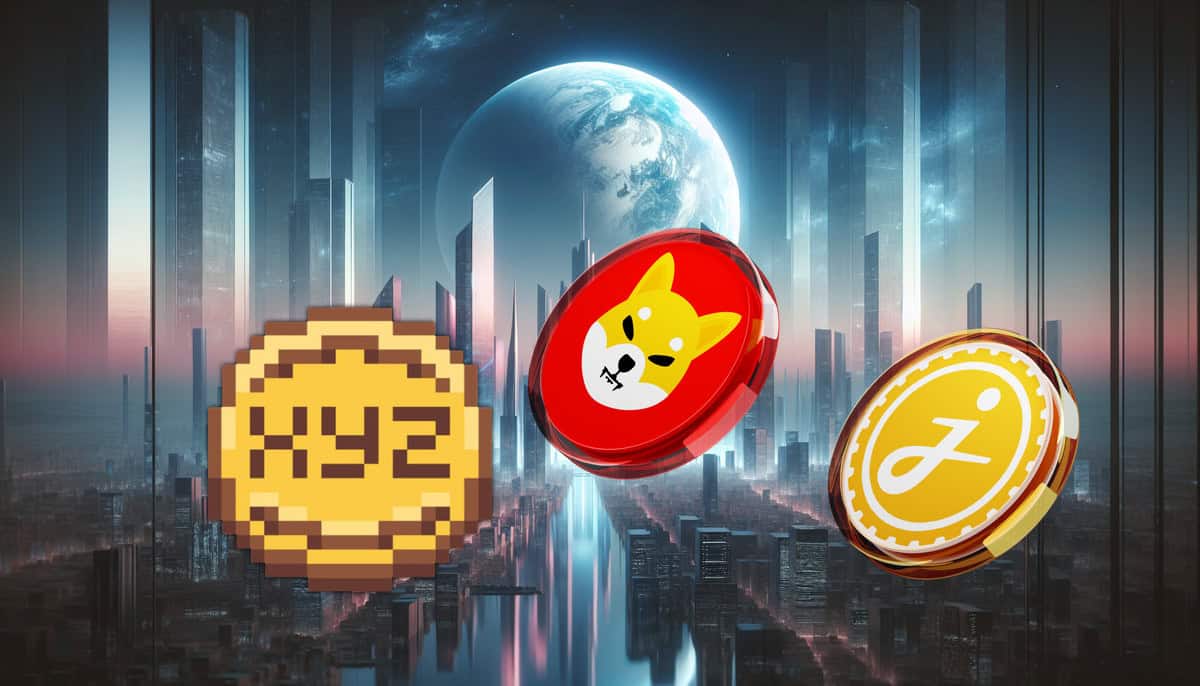
The cryptocurrency market is witnessing significant activity as Shiba Inu reports a 588% surge in its token burn rate, coinciding with XYZVerse’s initiative to eliminate one billion of its own tokens. These substantial reductions in token supplies have ignited discussions about potential supply shocks and their implications for market dynamics.

Shiba Inu’s recent increase in burn rate has led to the destruction of over 15 million SHIB tokens in a single transaction, with a total of approximately 81.9 million tokens burned over the past week. This aggressive reduction strategy aims to decrease the circulating supply, potentially enhancing the token’s value by increasing scarcity.

In parallel, XYZVerse has announced a strategic move to burn one billion of its tokens. This decision reflects a growing trend among cryptocurrency projects to implement token burns as a mechanism to manage supply and influence market value. The combined effect of these burn initiatives by SHIB and XYZVerse has prompted analysts to consider the possibility of a supply shock, which could lead to increased demand and potential price appreciation for the remaining tokens.

Despite these developments, Ethereum , the second-largest cryptocurrency by market capitalization, continues to experience subdued trading activity. ETH has been consolidating above the key $2,500 support level, reflecting market indecision and low trading volumes. This sideways movement indicates an equilibrium state, with buyers and sellers awaiting a decisive breakout to determine the next trend.

Market analysts suggest that Ethereum’s current consolidation phase is a classic example of market indecision. The two-week-long price range has resulted in liquidity being stacked on both sides of the market, with participants awaiting a clear directional move. A breakout above the $2,800 resistance level could signal renewed bullish interest, while a breakdown below $2,640 may indicate further bearish momentum.

Adding to the complexity, the balance of Ether on exchanges has reached record lows, with over $1 billion worth of ETH exiting trading platforms within a 24-hour period. This trend suggests increased accumulation by investors, potentially supporting a price recovery. However, the overall market sentiment remains cautious, as participants assess the broader economic landscape and its impact on cryptocurrency valuations.

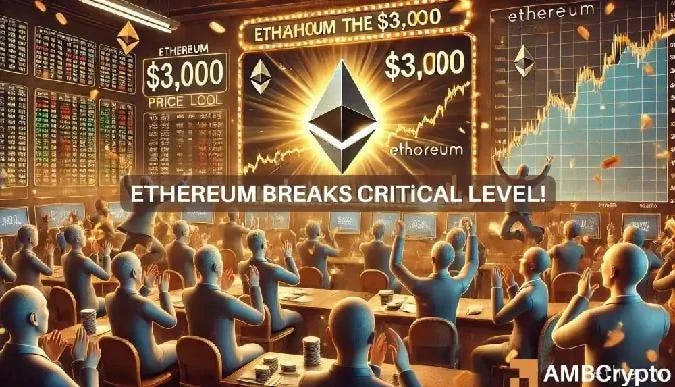
Ethereum is currently trading at $2,749.45, reflecting a modest increase of 0.36% over the past 24 hours. This performance is underpinned by a confluence of technical indicators and burgeoning institutional interest, suggesting a potential rally toward the $3,000 mark.

Technical analysis indicates that Ethereum’s price is approaching a critical resistance level at $2,800. A decisive break above this threshold could pave the way for further gains, with analysts projecting potential targets of $3,000 and beyond. Conversely, failure to surpass this resistance may result in a consolidation phase or a retracement toward support levels around $2,600.

Institutional adoption of Ethereum has been accelerating, contributing to its upward trajectory. The approval and subsequent inflows into Ethereum-based exchange-traded funds have played a pivotal role in this trend. Notably, Ethereum ETFs have experienced 17 consecutive days of inflows, now holding a record high of 3.5 million units. This surge in institutional investment underscores the growing confidence in Ethereum’s long-term value proposition.

The recent inauguration of a pro-crypto administration in the United States has further bolstered market sentiment. Analysts anticipate that the new regulatory environment will be more conducive to cryptocurrency innovation and adoption. The potential for clearer guidelines and supportive policies is expected to attract additional institutional participants to the Ethereum ecosystem.

Ethereum’s network fundamentals remain robust. The number of validators on the network has increased by over 30% in the past year, driven by the introduction of staking and liquid staking mechanisms. These developments enhance the network’s security and appeal to institutional investors seeking yield-generating opportunities.

The European Central Bank has unveiled a comprehensive strategy to incorporate distributed ledger technology into its central bank settlement processes. This initiative aims to modernise Europe’s financial infrastructure by enhancing efficiency and security in transaction settlements.

In the initial phase, the ECB plans to develop a platform that links DLT-based transactions with its existing TARGET Services. TARGET is the Eurosystem’s real-time gross settlement system, facilitating the seamless flow of cash, securities, and collateral across Europe. By creating an interoperability link between DLT platforms and TARGET Services, the ECB seeks to enable the settlement of DLT-recorded transactions in central bank money. This approach ensures that innovative DLT systems can integrate smoothly with established financial infrastructures, maintaining stability while embracing technological advancements.

The subsequent phase involves exploring a more integrated, long-term solution for settling DLT-based transactions directly in central bank money. This comprehensive approach will consider the potential for international operations, including foreign exchange settlements. By delving into these possibilities, the ECB aims to position itself at the forefront of financial innovation, ensuring that Europe’s payment systems remain competitive and resilient in a rapidly evolving global landscape.

Piero Cipollone, a member of the ECB’s Executive Board, emphasised the significance of this development, stating, “This is an important contribution to enhancing European financial market efficiency through innovation.” His remarks underscore the ECB’s commitment to leveraging cutting-edge technologies to bolster the efficiency and security of Europe’s financial markets.

The ECB’s decision to expand its DLT initiatives follows a series of exploratory projects and consultations. In December 2024, the Eurosystem invited market participants to engage in trials examining the potential use of DLT for wholesale central bank money settlement. These trials, conducted between May and November 2024, provided valuable insights into how DLT platforms could interact with existing financial infrastructures. The positive outcomes of these experiments have informed the ECB’s current strategy, highlighting the practical viability of integrating DLT into central bank operations.

The ECB’s approach aligns with broader global trends, as central banks worldwide explore the potential of digital currencies and blockchain technologies. The Bank of England, for instance, has been investigating the development of a wholesale central bank digital currency aimed at facilitating large transactions between banks. Such initiatives reflect a growing recognition of the transformative potential of DLT and digital currencies in enhancing the efficiency and security of financial systems.

However, the ECB’s plans are not without challenges. The integration of DLT into existing financial infrastructures requires careful consideration of technical, regulatory, and security aspects. Ensuring interoperability between traditional systems and innovative DLT platforms is paramount to prevent fragmentation and maintain the integrity of the financial ecosystem. Additionally, the ECB must navigate potential concerns related to data privacy, cybersecurity, and the legal frameworks governing digital transactions.

The ECB has not yet announced a specific timeline for the implementation of the interoperability link with TARGET Services. A detailed schedule will be provided in due course, reflecting the ECB’s commitment to a meticulous and consultative approach. This cautious progression ensures that all stakeholders, including financial institutions, regulators, and the broader public, are adequately prepared for the forthcoming changes.

In parallel with its DLT initiatives, the ECB continues to advance its work on the digital euro. This project aims to provide a secure and efficient digital payment instrument, complementing cash and existing electronic payment methods. The digital euro is envisioned to enhance the accessibility and inclusivity of digital payments, ensuring that all segments of society can benefit from the digitalisation of the economy. The ECB’s efforts in this domain are part of a broader strategy to future-proof Europe’s financial system, ensuring it remains robust and competitive in the face of technological advancements and shifting consumer preferences.

Lightchain AI has rapidly distinguished itself by seamlessly integrating blockchain technology with artificial intelligence. During its presale phase, the company has raised over $13.5 million, with tokens priced at $0.005625 each. This significant capital influx underscores strong investor confidence in Lightchain AI’s innovative approach.

The platform’s unique proposition lies in its fusion of blockchain’s decentralized ledger capabilities with AI’s data processing prowess. This combination aims to enhance transaction efficiency, security, and scalability, positioning Lightchain AI as a formidable contender in the tech landscape.

In contrast, established blockchain platforms like Ethereum, Solana, Cardano, and Polkadot have been pivotal in the industry’s evolution. Ethereum, for instance, boasts a robust developer community, with approximately 1,889 full-time developers contributing to its ecosystem. This extensive support has facilitated a wide array of decentralized applications and smart contracts.

Solana, renowned for its high transaction speeds, can process up to 65,000 transactions per second . This capability has attracted numerous projects, although the network has faced challenges due to the proliferation of meme coins, which have, at times, affected its reputation.

Cardano and Polkadot, both aiming for high scalability and performance, have seen varying levels of developer engagement. Cardano, for example, has around 153 full-time developers, while Polkadot has approximately 621. These figures highlight the competitive landscape in which Lightchain AI is emerging.

The recent resurgence of staking services by platforms like Kraken further indicates a dynamic shift in the cryptocurrency ecosystem. Kraken’s decision to reintroduce staking for U.S. customers, after a previous suspension due to regulatory challenges, reflects a changing regulatory environment. This move allows users to stake assets such as Ethereum, Solana, Polkadot, and Cardano, potentially increasing user engagement and network security.

Elon Musk’s artificial intelligence venture, xAI, has introduced its latest AI model, Grok 3, asserting that it surpasses competitors such as OpenAI’s GPT-4o and DeepSeek V3 in benchmarks for mathematics, science, and coding. This development intensifies the ongoing competition in the AI sector, with xAI aiming to position Grok 3 as a leading solution for advanced AI applications. Grok 3 represents a significant advancement over its predecessor, […]

Etihad Airways has reported a record net profit of $476 million for 2024, marking a significant milestone in the airline’s financial performance. This achievement reflects a more than threefold increase from the $143 million profit recorded in 2023. The surge is attributed to a 32% rise in passenger numbers, with the airline serving 18.5 million travelers over the year. Total revenues reached nearly $6.9 billion, up from […]

Advertisements

Apple has introduced the iPhone 16e, a midrange smartphone designed to replace the iPhone SE. Priced at $599, the iPhone 16e offers a blend of modern features and affordability, aiming to attract a broader customer base. The iPhone 16e is powered by Apple’s latest A18 chip, ensuring enhanced performance and efficiency. This model features a 6.1-inch OLED display, marking a departure from the older design of the […]

Pi Network, the mobile-based cryptocurrency platform, has officially launched its open mainnet today at 8:00 AM UTC, transitioning from its enclosed mainnet phase that began in December 2021. This significant milestone enables Pi Coin to be traded on major cryptocurrency exchanges, marking a pivotal moment for its extensive user base.

Despite the anticipation surrounding the launch, Pi Coin’s value has experienced a sharp decline. Over the past 24 hours, the price of Pi Coin’s IOU token has plummeted by approximately 42%, now trading around $62.83. This downturn is attributed to growing skepticism among investors regarding the project’s viability and concerns over its structural integrity. Some analysts have raised questions about the network’s sustainability, with discussions emerging about potential pyramid scheme characteristics.

The Relative Strength Index , a momentum oscillator that measures the speed and change of price movements, indicates a bearish trend for Pi Coin. The RSI recently entered the overbought zone but has since experienced a significant downturn, reflecting increased selling pressure and declining investor confidence. Market analysts warn that if the current support level at $63 is breached, Pi Coin’s value could further decline to $47, unless substantial investor backing materializes.

In response to the mainnet launch, several major cryptocurrency exchanges have announced plans to list Pi Coin. Platforms such as OKX, Bitget, and HTX have confirmed the inclusion of Pi Coin on their trading platforms. Bitget has initiated a $60,000 Pi Coin airdrop promotion, running until March 3, aiming to incentivize user engagement and trading activity. Similarly, BitMart is offering a $3,000 USDT worth of Pi Coin giveaway to 300 selected users.

However, the transition has not been entirely seamless. Exchanges like HTX have delisted the Pi IOU token ahead of the mainnet launch, contributing to the token’s price volatility. This move underscores the challenges associated with the shift from IOU tokens to the actual Pi Coin, as the market adjusts to the newly tradable asset.

The Pi Network’s journey began in 2019, founded by a team of Stanford graduates with the vision of making cryptocurrency mining accessible via mobile devices. The project has since amassed a substantial user base, with millions of pioneers participating in its ecosystem. The mainnet launch signifies the network’s transition to full decentralization, enabling external wallet transfers, exchange listings, and the development of decentralized applications within its ecosystem.

Despite the project’s growth, the recent price decline highlights the uncertainties and challenges inherent in the cryptocurrency market. Investor sentiment appears cautious, influenced by concerns over the network’s structural integrity and the broader market dynamics. As Pi Coin becomes tradable on major exchanges, its value will be subject to market forces, and its long-term success will depend on user adoption, technological advancements, and regulatory compliance.

Aptoide, a prominent independent app store, has officially launched its service for iPhone and iPad users within the European Union. This development offers EU consumers an alternative to Apple’s App Store, expanding their options for app downloads and installations.

The introduction of Aptoide’s platform is facilitated by the European Union’s Digital Markets Act , which mandates that major technology companies, including Apple, permit third-party app stores on their devices. This legislation aims to foster competition and provide consumers with more choices in the digital marketplace.

One of the standout features of Aptoide’s iOS app store is the “App Versions” function. This allows users to download and install previous versions of applications, a capability particularly beneficial for those using older devices or who prefer earlier iterations of specific apps. This feature addresses a common limitation in traditional app stores, where only the latest version is typically available for download.

Aptoide’s journey to this launch began in June 2024 with a beta phase that attracted significant interest, amassing a waitlist of approximately 20,000 users. During this period, the platform gradually onboarded users, refining its services based on feedback and performance metrics. The full release now makes Aptoide accessible to all iOS users across the EU without the need for a waitlist.

In addition to offering older app versions, Aptoide provides a diverse selection of games and applications, aiming to create an open and unrestricted distribution ecosystem for iOS users. This move is expected to encourage developers to explore alternative distribution channels, potentially leading to a more dynamic and competitive app market.

The launch of Aptoide’s iOS store is part of a broader trend of alternative app stores emerging in the European market. Companies like Epic Games have also introduced their own stores, leveraging the opportunities created by the DMA to challenge Apple’s dominance in app distribution. These developments signify a shift towards a more diversified app ecosystem, offering both developers and consumers new avenues for engagement.

Apple has historically maintained strict control over app distribution on its devices, citing security and user experience considerations. However, the enforcement of the DMA requires the company to adjust its policies within EU jurisdictions, allowing for the presence of third-party app stores. This regulatory environment aims to balance the need for security with the promotion of competitive practices in the digital economy.

While Aptoide’s launch is a significant milestone, it also raises questions about the future landscape of app distribution on iOS devices. The success of such alternative platforms will depend on various factors, including user adoption, developer participation, and the ongoing response from Apple regarding its policies and practices.

For consumers, the availability of alternative app stores like Aptoide means increased flexibility and choice. Users can now access a broader range of applications and versions, tailoring their app experiences to better suit their individual needs and preferences. This development also encourages innovation among app developers, who now have multiple platforms through which to reach their audience.

As Bitcoin approaches its all-time high, investors are turning their attention to small-cap cryptocurrencies with the potential for substantial returns. Among these, XYZVerse has emerged as a notable contender, alongside four other promising tokens.

XYZVerse is a sports-themed meme coin operating on the Polygon blockchain. It aims to merge the excitement of sports with the viral nature of meme coins, creating a unique niche in the crypto market. Currently in its presale phase, XYZVerse has raised nearly $5 million, reaching the 9th stage out of a planned 15. The project boasts solid tokenomics, plans for strategic listings on both centralized and decentralized exchanges, and regular token burns designed to enhance its value proposition.

Another cryptocurrency attracting attention is Nexa, a scalable layer-one blockchain supporting Ethereum Virtual Machine contracts. With a market cap under $60 million, Nexa aspires to be the next-generation Ethereum by offering a solution for decentralized applications that require both scalability and efficiency.

Bonk, a dog-themed meme coin, has gained traction as Solana’s community-driven token. Unlike other speculative meme coins, Bonk adds value to the Solana ecosystem by incentivizing liquidity across decentralized exchanges. Key highlights include airdrops to Solana NFT collectors and developers, rapid adoption within Solana’s decentralized applications, and strong community backing that fuels price rallies.

Creditcoin is another low-cap cryptocurrency with significant growth potential. It offers innovative solutions and has a strong community, making it an attractive option for investors seeking high-risk, high-reward opportunities.

Loopring is a low-cap cryptocurrency that provides innovative solutions and has a strong community, positioning it as a promising investment opportunity.

Hong Kong’s Securities and Futures Commission has granted a license to Bullish, a prominent virtual asset trading platform, marking a significant milestone in the city’s ambition to become a leading hub for digital assets. This approval allows Bullish to operate within Hong Kong’s regulated framework, offering trading services to both institutional and retail investors.

The SFC’s decision to license Bullish is part of a broader strategy to enhance Hong Kong’s competitiveness in the global digital asset market. Financial Secretary Paul Chan announced that, to date, nine digital asset trading platform licenses have been issued, with eight additional applications under review. This initiative underscores the city’s commitment to fostering a robust and secure environment for virtual asset trading.

Julia Leung, the SFC’s Chief Executive, highlighted that the regulatory body is evaluating the introduction of new cryptocurrency products, including derivatives and margin lending, specifically tailored for professional investors. Speaking at Coindesk’s Consensus Hong Kong 2025 conference, Leung emphasized that these considerations aim to expand the range of services available to investors, thereby solidifying Hong Kong’s position as a regional digital assets hub.

Bullish’s entry into Hong Kong’s regulated market is expected to enhance the city’s digital asset ecosystem. The platform, known for its innovative trading solutions, integrates advanced technologies to provide deep liquidity and secure transactions. By obtaining the SFC license, Bullish demonstrates its commitment to adhering to stringent regulatory standards, offering users a trustworthy platform for virtual asset trading.

The SFC has been proactive in refining its regulatory framework to accommodate the evolving digital asset landscape. In January 2025, the commission introduced a streamlined licensing process for virtual asset trading platforms. This new procedure requires a single external assessment report, replacing the previous two-phased assessment, thereby expediting the approval process for applicants. This move aims to attract more virtual asset service providers to establish operations in Hong Kong, contributing to the city’s growing digital economy.

Hong Kong’s efforts to position itself as a digital asset hub come amid increasing global competition. Jurisdictions such as Singapore and Dubai are also vying for prominence in the virtual asset sector, offering regulatory incentives and establishing comprehensive frameworks to attract blockchain and cryptocurrency enterprises. Hong Kong’s strategic approach, characterized by rigorous regulatory oversight combined with industry-friendly policies, seeks to balance investor protection with innovation.

The city’s regulatory advancements have coincided with notable movements in the cryptocurrency market. Bitcoin, the leading cryptocurrency, experienced a significant surge, reaching an all-time high of $109,071 in January 2025 before stabilizing around $96,000. This upward trajectory reflects growing investor confidence and increased institutional adoption of digital assets. Analysts attribute this trend to favorable regulatory developments and the mainstream acceptance of cryptocurrencies as a legitimate asset class.

In addition to licensing trading platforms, Hong Kong is advancing regulations for stablecoins—digital currencies pegged to stable assets like fiat currencies. The SFC is formulating guidelines to govern the issuance and management of stablecoins, aiming to mitigate risks associated with their use and ensure financial stability. This regulatory clarity is anticipated to encourage the development of stablecoin projects within the region, further diversifying Hong Kong’s digital asset offerings.

Market participants have responded positively to these regulatory developments. The introduction of new licensed platforms is expected to enhance market liquidity and provide investors with a wider array of trading options. Furthermore, the presence of regulated entities like Bullish is likely to attract institutional investors seeking compliant and secure avenues for digital asset exposure. This influx of institutional capital could contribute to the maturation and stabilization of the cryptocurrency market in Hong Kong.

ACWA Power has signed a power purchase agreement worth SAR 8.6 billion with the Egyptian Electricity Transmission Company to develop a 2-gigawatt wind power plant in South Hurghada, Egypt. The 25-year agreement was formalized on February 18, 2025, marking a significant milestone in Egypt’s renewable energy expansion.

The project encompasses the development, financing, construction, ownership, and operation of the wind energy facility. Financial closure is anticipated in 2026, following the completion of environmental studies expected by mid-2026. This initiative aligns with Egypt’s strategic objectives to diversify its energy mix and reduce reliance on fossil fuels.

Saudi Arabia’s Minister of Energy, Prince Abdulaziz bin Salman, announced the agreement during the Egypt Energy Show . He highlighted that this project is the largest of its kind in Egypt and is part of a broader collaboration between Saudi and Egyptian companies in the renewable energy sector. Collectively, these initiatives aim to add approximately 1.696 GW of renewable energy capacity to Egypt’s grid, with a total investment nearing SAR 6.2 billion.

In addition to the wind project, Saudi and Egyptian authorities are advancing the Saudi-Egypt Electricity Interconnection Project. Valued at SAR 6.7 billion, this project is designed to facilitate the exchange of up to 3,000 megawatts of electricity between the two nations upon completion of both phases. This interconnection is poised to enhance grid stability and energy security in the region.

Egypt has been actively pursuing renewable energy projects in collaboration with international partners. Notable developments include the Benban Solar Park in Aswan, which boasts an installed capacity of 1.8 GW and features contributions from multiple developers. Another significant venture is the 500 MW Gulf of Suez Wind Farm, developed in partnership with international stakeholders.

KUALA LUMPUR, MALAYSIA – Media OutReach Newswire – 18 February 2025 – The global cryptocurrency market has seen unprecedented growth in the previous year, spearheaded by Bitcoin and Ethereum. Institutional participation was very important in driving prices higher, with Bitcoin reaching an all-time high above $100,000 in December 2024. With the spreading adoption of crypto assets, regulators have paid even more attention to the industry. Kar Yong […]

A growing trend in the meme coin sector has seen FloppyPepe surpass its predecessor, Pepe , capturing the attention of both investors and cryptocurrency enthusiasts alike. Recently, a notable Dogecoin millionaire garnered media attention after staking a massive $1 million on meme coins, marking a strategic shift from PEPE to FPPE. This bold move, backed by the promising features of FloppyPepe, signals a potentially significant change in the meme coin landscape.

FloppyPepe’s rise is partly driven by its advanced AI-powered utilities and its promise of creating a tangible, real-world impact. Unlike traditional meme coins, which are often criticized for lacking utility, FPPE stands out due to its sophisticated technology that appeals to a more discerning investor base. Its presale event has been nothing short of remarkable, with the coin raising $907,200 within just 24 hours, an indication of both high demand and investor confidence.

Currently priced at $0.0000002 during its ongoing presale, FloppyPepe offers an accessible entry point for those looking to capitalise on what some are calling the next big thing in the meme coin market. This pricing strategy positions the coin for potential mass adoption, especially as it attracts a broader demographic beyond the typical meme coin investor.

The market is taking notice of FloppyPepe’s trajectory. While PEPE continues to hold a significant presence within the meme coin ecosystem, its growth seems to have plateaued as newer contenders with added value start gaining attention. The influx of investors and major players shifting their focus to FloppyPepe reflects a growing trend within the cryptocurrency community to seek projects with both meme potential and solid technological foundations.

Critics of meme coins have often highlighted the speculative nature of these digital assets, with many questioning their long-term viability. However, FloppyPepe is positioning itself as a response to these concerns by adding value through its AI-powered features. These technological advancements are geared towards providing real-world applications, which could elevate the coin’s status from a mere joke to a legitimate player in the broader cryptocurrency market.

FloppyPepe’s private presale was only the beginning. The project’s developers are currently gearing up for a wider public sale, with plans to increase the coin’s exposure to mainstream investors. This effort to build a broad base of supporters is critical to its long-term success, as the market for meme coins continues to evolve. Unlike traditional cryptocurrencies like Bitcoin or Ethereum, which are often defined by their underlying technology and use cases, meme coins like FloppyPepe rely heavily on community support and viral momentum to drive their value.

The increased focus on FloppyPepe has also been accompanied by heightened interest from social media influencers and cryptocurrency advocates, who have taken to various platforms to promote the coin’s potential. These endorsements have further fueled speculation that FloppyPepe could become the next big meme coin to make a significant impact, particularly in a market that thrives on hype and social sentiment.

The surge in FloppyPepe’s presale earnings underscores the coin’s growing popularity. As of now, the presale remains open, with investors keen to secure their share before the public launch. The coin’s affordability during the presale phase has attracted both seasoned investors and newcomers to the cryptocurrency space, each hoping to capitalise on its rapid rise.

With PEPE’s dominance beginning to wane, FloppyPepe is stepping into a vacuum left by older meme coins that have failed to evolve or add meaningful use cases. As more investors flock to FPPE, it becomes evident that the meme coin market is becoming more sophisticated, with an increasing demand for projects that combine meme appeal with innovative features. This shift could potentially reshape the landscape of meme coins, moving beyond the often volatile and speculative nature of past successes.

FloppyPepe’s focus on AI integration is also noteworthy. The coin’s developers have emphasised that the use of AI will play a crucial role in expanding its real-world impact. By utilising cutting-edge technologies, FloppyPepe aims to create a sustainable platform that goes beyond mere speculation, providing value to its users and investors alike. These advancements are expected to create a new wave of meme coin projects that incorporate utility into their ecosystems, setting them apart from older, less innovative alternatives.


The cryptocurrency market has witnessed a remarkable development with DOGEN, a meme-inspired token on the Solana blockchain, experiencing an unprecedented 500% surge in value. This rapid ascent has positioned DOGEN as a formidable contender among meme coins, drawing significant attention from investors and enthusiasts alike.

Initially launched at a modest price of $0.0003 during its presale phase, DOGEN’s value has escalated to $0.0019 by the conclusion of its 13-stage presale. This trajectory not only signifies a 500% increase but also underscores the growing investor confidence in the token’s potential. Analysts have noted that such a meteoric rise is indicative of strong market momentum and a robust community backing.

The success of DOGEN can be attributed to its strategic positioning within the Solana ecosystem. Solana’s blockchain offers high transaction speeds and low fees, creating an ideal environment for meme coins to thrive. The network’s scalability has attracted a plethora of meme-inspired tokens, with DOGEN emerging as a standout due to its impressive growth metrics.

Market data reveals that the Solana meme coin sector boasts a market capitalization of approximately $17.8 billion, with a 24-hour trading volume reaching $8.14 billion. Within this vibrant ecosystem, DOGEN has distinguished itself, not only through its price appreciation but also by fostering a community-centric approach. The token’s official channels report a burgeoning community of over 30,000 followers on platforms like X , reflecting a strong and engaged user base.

The broader cryptocurrency landscape has also been influenced by recent political developments. The inauguration of President Donald Trump has led to a surge in interest for meme coins, particularly those associated with his brand. Tokens such as $TRUMP and $MELANIA experienced rapid value increases, with $TRUMP’s market capitalization peaking at $15 billion before stabilizing around $7 billion. This phenomenon has contributed to heightened activity on platforms like the Solana network, which had previously faced challenges related to low user engagement.

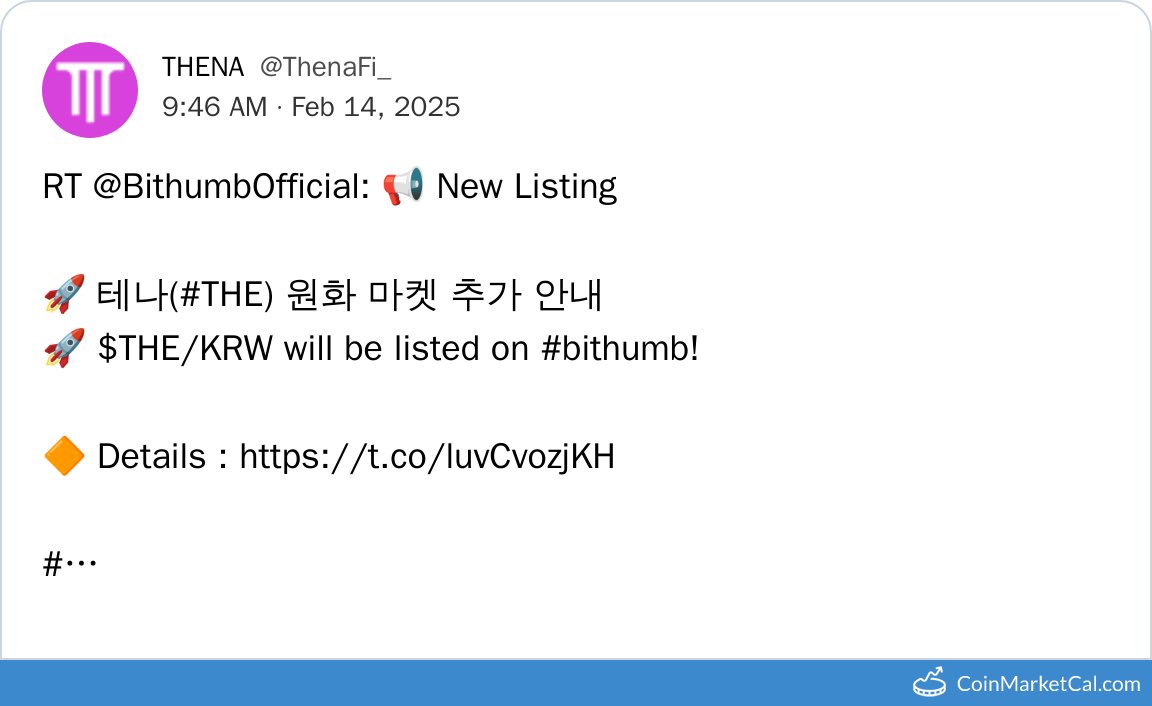
South Korea’s prominent cryptocurrency exchange, Bithumb, has expanded its offerings by incorporating Thena into its Korean Won trading market. Trading commenced at 4 PM KST on February 14, 2025, providing users with a new asset in their investment portfolios.

Deposits and withdrawals for Thena were enabled within three hours following the announcement. Bithumb supports transactions exclusively through the BNB Smart Chain for this asset, explicitly stating that deposits from other networks are not accepted. The initial base price for Thena was established at 1,019 KRW, with a requirement of 15 deposit confirmations to ensure transaction security.

To maintain a stable trading environment during the initial phase, Bithumb implemented temporary restrictions. For the first five minutes post-launch, buying orders were prohibited. Additionally, selling orders faced constraints if the price deviated beyond -10% or +100% of the standard price during this period. Automated trading features, such as stop-loss or take-profit orders, were activated only after the first successful trade.

Thena operates as a community-driven decentralized exchange, utilizing a self-optimizing ve3,3 model to cater to the liquidity needs of BNB Chain projects. This listing on Bithumb signifies a strategic move to enhance Thena’s accessibility and liquidity within the South Korean market.

Elon Musk’s Department of Government Efficiency has commenced significant layoffs within the U.S. federal workforce, issuing termination notices to over a dozen employees at the U.S. Digital Service . This action aligns with President Donald Trump’s directive to streamline government operations and reduce expenditures. The layoffs have sparked nationwide protests, with demonstrators targeting Tesla showrooms to express their dissent against Musk’s cost-cutting measures and perceived influence over […]

In a significant shift, openSUSE Tumbleweed has transitioned from AppArmor to Security-Enhanced Linux as its default Mandatory Access Control system for new installations. This change, effective from snapshot 20250211, aims to enhance system security by confining more services by default. Announced on the openSUSE Factory mailing list, the decision aligns with efforts to increase SELinux adoption within both SUSE and openSUSE communities. Cathy Hu, SELinux Security Engineer, […]

In the dynamic cryptocurrency landscape, investors are increasingly turning their attention to 1Fuel, a nascent altcoin currently in its presale phase, as established tokens like Arbitrum and Bittensor experience market volatility.

Arbitrum, a prominent layer-2 scaling solution for Ethereum, has seen its price decline by approximately 60% over the past three weeks. This downturn has raised concerns among investors about the platform’s technological robustness and long-term viability. Similarly, Bittensor’s TAO token has faced a 5.9% decrease in value today, attributed to potential profit-taking by early investors and broader market sentiment shifts.

In contrast, 1Fuel is capturing significant investor interest during its presale, with early stages selling out rapidly. The current Stage 4 offers tokens at an entry price of $0.018, presenting an accessible opportunity for investors. To date, the presale has amassed over $2 million, indicating strong market confidence in 1Fuel’s potential.

The enthusiasm surrounding 1Fuel can be attributed to its innovative approach within the blockchain sector. The project aims to address existing challenges in the industry by introducing novel solutions, positioning itself as a formidable competitor to established altcoins. Analysts suggest that 1Fuel’s focus on innovation-driven growth could enable investors to recoup losses incurred from other underperforming assets.

Deyaar Development PJSC, a prominent Dubai-based real estate developer, has unveiled plans to initiate five new property projects in 2025, collectively valued at approximately Dh8 billion . This strategic move aims to capitalize on the robust demand within the emirate’s property market. The company’s Chief Executive, Saeed Mohammed Al Qatami, highlighted that these forthcoming projects will encompass a diverse range of residential, commercial, and hospitality developments. He […]

Elon Musk’s social media platform, X, is advancing its initiative to incorporate cryptocurrency payments, aiming for implementation by the end of 2025. This move is set to transform the platform into a comprehensive financial services hub.

X has partnered with Visa to develop ‘X Money,’ a payment system designed to facilitate seamless transactions for its users. While the initial phase focuses on traditional payment methods, the infrastructure is being built to support cryptocurrency transactions in the future. This strategic collaboration underscores X’s commitment to integrating digital currencies into its ecosystem.

Industry experts anticipate that X Money will be equipped to handle cryptocurrency transactions by the end of 2025. Ran Goldi, Senior Vice President at Fireblocks, noted that, based on current information, X Money is expected to be crypto-ready by the end of the year. This development aligns with Musk’s vision of transforming X into a multifaceted platform that encompasses social media, financial services, and more.

The introduction of the ‘$’ button within X Payments has been confirmed by Musk to enable direct cryptocurrency transactions on the platform. This feature positions X to become a leader in integrating digital currencies into everyday user interactions, offering functionalities such as sending and receiving payments, tipping content creators, and purchasing products using cryptocurrencies.

Despite these advancements, X’s partnership with Visa for financial services currently does not include cryptocurrency transactions. The platform is initially focusing on traditional payment methods, with plans to incorporate digital currencies at a later stage. This phased approach allows X to establish a solid foundation in financial services before expanding into the cryptocurrency domain.

The potential integration of cryptocurrencies into X’s payment system has sparked discussions about which digital assets will be supported. While specific cryptocurrencies have not been officially confirmed, there is speculation that popular digital currencies like Bitcoin and Dogecoin could be among the options available to users. This anticipation is fueled by Musk’s known advocacy for cryptocurrencies and his previous endorsements of digital assets.

In addition to enhancing user experience, the move towards cryptocurrency payments is expected to open new revenue streams for X. By facilitating crypto transactions, X could attract a broader user base interested in digital currencies, thereby increasing engagement and transaction volumes on the platform.

However, this initiative is not without challenges. The integration of cryptocurrency payments necessitates robust security measures to protect users’ digital assets. X will need to implement advanced encryption and fraud detection systems to ensure the safety and integrity of transactions. Additionally, navigating the complex regulatory landscape surrounding cryptocurrencies will require careful planning and compliance efforts to adhere to financial regulations across different jurisdictions.

As X progresses with its plans, the platform is poised to play a significant role in mainstreaming cryptocurrency usage. By embedding digital currency transactions into a widely used social media platform, X could drive broader adoption of cryptocurrencies, bridging the gap between traditional finance and the emerging digital economy.

JAKARTA, INDONESIA – Media OutReach Newswire – 13 February 2025 – At the Indonesia International Motor Show (IIMS) 2025, VinFast officially opened for sales for its mini-SUV VF 3. The company also announced a special policy providing free charging for all VinFast electric vehicles at VinFast charging stations operated by V-GREEN across Indonesia, reaffirming its commitment to delivering smart, accessible, and sustainable mobility solutions. VinFast announces the […]

South Korea’s Financial Services Commission has unveiled a structured plan to permit corporate entities to engage in cryptocurrency transactions through real-name accounts. This initiative, set to commence in the first half of 2025, aims to integrate corporate participation in the digital asset market while ensuring regulatory oversight.

The FSC’s strategy involves a three-phase rollout. Initially, non-profit organizations, law enforcement agencies, and cryptocurrency exchanges will be granted access to real-name accounts. This move is designed to facilitate activities such as the conversion of platform fee income into fiat currency for exchanges and the handling of confiscated assets by law enforcement. However, exchanges will be subject to government guidelines to prevent market volatility.

In the subsequent phase, slated for the second half of 2025, professional investment entities—including listed companies and registered investment institutions—will be authorized to participate in crypto asset trading. These entities must adhere to stringent anti-money laundering protocols and undergo evaluations by banks and crypto exchanges to ensure compliance.

The final phase envisions extending crypto investment capabilities to general enterprises. This stage remains under long-term consideration and is contingent upon the successful implementation of preceding phases, as well as the establishment of comprehensive regulations encompassing stablecoins, exchange operations, and cross-border crypto transaction monitoring.

FSC Vice Chairman Kim So-young emphasized the importance of a cautious and measured approach, stating that the policy’s implementation must be gradual and carefully monitored to prevent market disruptions. He highlighted the necessity of clear AML guidelines to maintain market integrity throughout the rollout process.

This policy shift addresses longstanding challenges within South Korea’s crypto industry, particularly for small and mid-sized exchanges that have struggled with liquidity constraints. By enabling corporate accounts, these exchanges are expected to enhance their operational capabilities and competitiveness within the market.

VISHNU RAJA
RYO YAMADA
HITORI GOTOH
IKUYO KITA