News related to
Phase

Abu Dhabi National Oil Company’s subsidiary ADNOC Gas Plc has signed a three‑year agreement to deliver 0.7 million tonnes of liquefied natural gas to Germany’s state‑owned SEFE Securing Energy for Europe. Valued at AED 1.5 billion, the contract begins this summer and sees LNG shipped from the Das Island facility. The arrangement builds upon a long‑term contract established last year between the two companies, offering SEFE greater flexibility to dispatch […]

Affirming Its Pioneering Role in Realising Vietnam’s National Digital Asset Policy Over 20 investment fund leaders and 20 top companies in attendance. Featuring partner ARC and senior Nasdaq representatives. Deep-dive sessions on capitalisation solutions and IPO roadmap for Vietnamese enterprises. Official signing of a comprehensive strategic cooperation between Meey Group and ARC HANOI, VIETNAM – Media OutReach Newswire – 14 July 2025 – Meey Group, Vietnam’s leading […]

High‑resolution images from orbiting spacecraft have revealed an extraordinary network of over 15,000 km of fluvial sinuous ridges—also known as inverted channels—spanning Noachis Terra in Mars’s southern highlands. This vast system, identified using data from Mars Reconnaissance Orbiter’s HiRISE, CTX and MOLA instruments, indicates long‑lasting surface water activity shaped by precipitation roughly 3.7 billion years ago, reshaping scientific views of Mars’s climate evolution. The ridges formed when river sediments […]

OpenAI is preparing to unveil a web browser embedded with its flagship ChatGPT interface and “Operator” AI agent, marking a strategic shift directly targeting Google’s Chrome dominance. The forthcoming browser, expected within weeks, promises to streamline browsing by enabling conversational queries, task automation and form-filling without navigating multiple sites, according to Reuters. The browser is built atop Chromium, the open-source foundation behind Chrome, Edge and Opera, ensuring […]

A growing number of market analysts predict Ruvi AI’s RUVI token will outperform speculative memecoins like Shiba Inu in the forthcoming crypto bull cycle. They highlight RUVI’s audited smart contracts, real-world AI and blockchain utility, robust presale metrics, and VIP incentives as evidence of its potential to deliver returns far beyond meme-driven tokens.

RUVI recently secured an independent audit from CyberScope, addressing smart-contract vulnerabilities and enhancing investor confidence. The project has also onboarded WEEX Exchange to ensure post-presale liquidity, further bolstering trust among institutional and retail backers. With $2.2–$2.3 million raised and approximately 180–185 million tokens sold to over 2,100 holders in Phase 2, analysts suggest the foundation has been laid for a significant market debut.

RUVI’s utility-first design distinguishes it from memecoins. Integrated AI tools aim to improve marketing campaign efficacy, while blockchain-secured payments support content creators. In finance, the token underpins fraud detection and cross-border payment services. This multifaceted approach suggests sustained demand beyond speculative interest.

Analysts anticipate an increase from the presale price of $0.015 to $0.07 upon listing, yielding an initial ~5× gain. Post-listing projections place RUVI at $1—implying a 66× return from current prices. Some estimate upside reaching 13,500–13,800% over a full bull cycle—figures drawn by comparing RUVI to early-stage tokens like Ripple’s XRP and Cardano’s ADA.

RUVI’s VIP tiers amplify these potential gains. A $750 investment yields 70,000 tokens; a $2,100 stake offers 224,000 tokens; and a $9,600 commitment doubles token allocation with a 100% bonus. At a $1 valuation, these tiers could translate into $70,000, $224,000, and $1.28 million respectively.

Critics caution against early-stage token exuberance. They note reliance on bull market conditions and warn that memecoin popularity can surge unpredictably. Shiba Inu, though lacking intrinsic utility, has navigated volatile market cycles before. Sustainable success for RUVI will depend on seamless platform deployment, AI adoption across industries, and execution of its roadmap.

That said, analysts emphasise RUVI’s structured growth path—completed audits, exchange partnerships, utility-based ecosystem—and contrast it with the hype-centric nature of memecoins. Drawing parallels with Ripple’s early journey, they see RUVI carving out a role among next-gen crypto major players.

As global attention shifts from memecoins to purpose-built crypto infrastructure, RUVI is gaining traction among sophisticated investors seeking risk-reward clarity. With its presale in full swing, the token’s performance will show whether the project can translate early promise into lasting market impact.

Perplexity this week introduced Comet, an AI-driven web browser designed to merge search, task automation and seamless browsing into a single interface. Initially accessible to subscribers of its $200‑a‑month Max tier, Comet promises to challenge Chrome and Edge by turning browsing into conversation-led workflows. Built on Chromium, Comet offers familiar browsing mechanics—tabs, navigation bar and extension support—yet stands apart through its sidebar-based “Comet Assistant,” powered by Perplexity’s […]

Bitcoin surged past $118,000 this week, driven by booming ETF inflows and institutional adoption. Bitwise Asset Management’s CIO Matt Hougan forecasted that the leading cryptocurrency could reach $200,000 by year‑end, citing intensified demand and structural momentum.

Industry momentum is underpinned by record ETF inflows. As of Thursday, bitcoin exchange‑traded funds saw $1.18 billion of daily inflows, with total net inflows in 2025 reaching approximately $51 billion. Hougan emphasises that this flood of investment—coupled with restricted supply—is driving a new price discovery phase for BTC. BlackRock’s IBIT, the fastest‑growing spot ETF in history, exceeded $80 billion AUM shortly after its launch.

On‑chain metrics bolster the institutional narrative. Marta technical analyst Katie Stockton of Fairlead Strategies identified a cup‑and‑handle pattern following the breakout above $111,000, projecting a potential climb to around $134,500—an upside of nearly 14 percent from current levels. Additional evidence of a short‑squeeze emerged: over $1 billion in short positions were liquidated within 24 hours as bitcoin surpassed $118,000.

Corporate treasury adoption continues apace. Firms beyond MicroStrategy are increasingly allocating bitcoin holdings. Q2 saw a 23 percent surge in corporate bitcoin ownership, reaching approximately 847,000 coins. Alongside MicroStrategy’s substantial position, companies like GameStop and Figma initiated purchases, with Sequans Communications acquiring 370 coins. This trend reflects a deepening conviction in bitcoin’s strategic value amid macroeconomic uncertainty.

Political developments have also shaped sentiment. The U. S. Senate approved the GENIUS Act in June, defining regulatory frameworks for stablecoins and crypto platforms. Congressional discussions continue on the CLARITY Act and the Anti‑CBDC Surveillance State Act. Meanwhile, an executive order issued on 6 March 2025 established a Strategic Bitcoin Reserve, mandating government retention of forfeited bitcoin and signalling federal endorsement.

Global macro conditions are another tailwind. Federal debt expansion and a weaker dollar, driven by U. S. fiscal policy and potential monetary easing, reinforce bitcoin’s appeal as an inflation hedge. Hougan argues that supply limitations combined with persistent ETF and corporate demand create a compelling bull case.

Closer analysis reveals technical resilience. Support now lies around previous resistance levels—between $108,300 and $112,000. BTC’s consolidation above these benchmarks, paired with strong volume and bullish MACD readings, suggests sustained momentum.

Analysts from Citi, Hashdex, and Kraken echo the bullish tone. Citi describes bitcoin’s behaviour as akin to a physical commodity and part of a diversified risk-on portfolio. Trade Nation’s David Morrison attributes the uptick to widespread investor appetite for risk, while Kraken’s Thomas Perfumo ties the rally to strength in US equities and cascading liquidation of short positions.

Ethereum and other altcoins are not left behind: Ethereum surpassed $3,040 this week, buoyed by its own ETF inflows, while Solana hit $167 driven by increasing trading volume. However, bitcoin remains the primary focus, reflecting its entrenched role in institutional strategies.

Matt Hougan’s forecast of $200,000 rests on three pillars: ETF demand, corporate accumulation, and constrained supply. “Bitcoin is no longer a speculative asset,” he stated; “It’s now a cornerstone in institutional portfolios. This trend is just beginning”. Even if volatility persists, the convergence of demand-side forces underscores a paradigm shift in how bitcoin is perceived by policymakers and capital allocators alike.

Advertisements

Masdar City has initiated real‑world testing of Level 4 autonomous vehicles, partnering with smart mobility firm Solutions+, a Mubadala venture. Overseen by Abu Dhabi’s Integrated Transport Centre, the pilot marks a deliberate move in the emirate’s drive to establish itself as a leading smart and sustainable transport hub. The programme involves the registration, safety certification and operational approval of fully autonomous vehicles for deployment across a 2.4 km […]

AD Ports Group has initiated operations of GulfLink Ltd, entering a strategic logistics partnership with KTZ Express, the freight arm of Kazakhstan Temir Zholy. This joint venture—51 percent owned by AD Ports and 49 percent by KTZ Express—is designed to enhance connectivity along the Middle Corridor, establishing a vital multimodal supply link between Asia and Europe.

The first shipments through GulfLink began under the leadership of regional CEO Abdulaziz Zayed AlShamsi, who described the venture as “a key link in our strategy to upgrade the Middle Corridor route through Central Asia into a major, commercial East‑West trade artery linking consumers and manufacturers in Asia and Europe”. General Director Damir Kozhakhmetov emphasised that GulfLink delivers “a new level of unique, end‑to‑end connectivity for Kazakhstan regionally and globally”.

Kazakhstan, where rail accounts for approximately 70 percent of freight transit over its 16,000 km network, is central to this development. GulfLink will bolster supply chains by integrating Kazakhstan’s rail infrastructure with routes through Pakistan, Türkiye, the Arabian Gulf and the Indian subcontinent.

As part of AD Ports’s commitment, over US $775 million is earmarked for logistics infrastructure in Kazakhstan. Planned investments include a grain terminal and a multipurpose facility at Kuryk Port, aimed at complementing GulfLink’s multimodal ambitions. The network also encompasses partnerships in Uzbekistan, and facilities on the Black and Caspian Seas via collaboration with KazMorTransFlot.

Industry analysts say GulfLink could significantly reduce China‑to‑Europe transit times. AGBI reports that the route will “cut China‑Europe transit time” by providing direct regional connectivity and bypassing the longer northern rail corridors. This enhancement aligns with global supply chain trends that favour diversification and damper dependency on any single corridor.

CEO Kamal Huseynov stated that GulfLink plans to offer “value added to customers through our relationships, the logistics resources of our shareholders, and our commitment to efficiency, innovation, seamless supply chains and optimised trade”. The venture seeks to become the operating hub for integrated rail, road, sea and air transport in Central Asia.

Reactions from regional stakeholders suggest that GulfLink’s launch may mark a turning point in Eurasian logistics. The joint venture is seen as vital in realising the potential of the Trans‑Caspian International Transport Route—an alternative to the traditional northern rail line through Russia—and is projected to attract new trade volumes via diversified pathways.

AD Ports’s existing regional presence includes a food logistics hub in Uzbekistan and maritime assets in Türkiye and Pakistan. GulfLink’s launch reinforces these assets by contributing to a cohesive network serving Europe, Central Asia and South Asia.

Multimodal trade experts suggest that the GulfLink project addresses a growing appetite among manufacturers and shippers for more resilient and politically diversified supply channels. With geopolitical uncertainties persisting along certain northern corridors, the Middle Corridor’s expansion could offer a strategically advantageous and timely alternative.

The operational phase of GulfLink has commenced with pilot shipments underway, signalling the beginning of active corridor use. AD Ports and KTZ Express intend to progressively scale the venture, adding capacity, routing regularity and service coverage over the coming months.

As GulfLink gains momentum, its success will depend on coordinated infrastructure roll‑out, regulatory alignment across transit jurisdictions, and competitive transit times compared with existing corridors. Analysts agree the venture marks a significant step toward reshaping logistics flows across Eurasia, affirming Kazakhstan’s growing prominence as a logistics hub and AD Ports Group’s strategy to establish itself as a global trade infrastructure enabler.

Greenlogue/AP Abu Dhabi’s renewable energy developer Masdar and Spanish energy giant Iberdrola have announced a joint investment totalling €5.2 billion in the UK’s 1.4 GW East Anglia Three offshore windfarm. The project, located around 69 km off the Suffolk coast, will be equally co-owned—50:50—by both firms and supported by a €4.1 billion financing package arranged by 24 international banks. East Anglia Three forms part of a decade‑long partnership underpinned by a broader […]

OPEC+ plans to finalise a 2.2 million-barrel-per-day supply restoration by September and is deliberating halting further production increases from October onwards, delegates have indicated. Source participants say the cartel has scheduled a final monthly increment of approximately 550,000 bpd in September, completing the planned unwinding of cuts. Following that, discussions have begun around suspending additional increases—especially the roughly 1.66 million bpd tied to later phases of the rollback—potentially pausing as early […]

Columbia University and Brookhaven National Laboratory researchers have unveiled a groundbreaking method to engineer intricate three‑dimensional nanostructures entirely through DNA self‑assembly in aqueous environments. This technique, underpinned by an innovative algorithm called MOSES, promises to shift current paradigms in nanomanufacturing, with potential applications in optical computing, neuromorphic hardware, biotechnology and beyond. At the heart of this advance are DNA‑based “voxels”—octahedral units formed by folding DNA strands into […]

Nigeria has secured a $747 million syndicated loan, led by Deutsche Bank, to fund the initial 47.47‑kilometre phase of its flagship coastal highway spanning from Victoria Island to Eleko Village in Lagos. The Ministry of Finance confirmed the financing on Wednesday, marking a record for road infrastructure funding in the country. Lenders in the syndicate include First Abu Dhabi Bank, African Export‑Import Bank, Abu Dhabi Exports Office, ECOWAS […]

GATES Inc. is deploying blockchain technology to enable foreign investors to buy stakes in a portfolio of income-generating properties worth US $75 million in central Tokyo through the Oasys network. The initiative is part of a broader strategy to modernise how overseas buyers participate in Japan’s real estate market.

The pilot scheme will issue digital tokens representing fractional ownership in a basket of premium commercial and residential assets, held via an overseas special-purpose vehicle to ensure regulatory compliance. GATES CEO Yushi Sekino described the move as “building next‑generation investment infrastructure that allows global investors easy access to Japanese assets.”

GATES has signalled an ambitious scaling plan to encompass US $200 billion worth of real estate tokens—a fraction but strategic segment of Japan’s entire US $20.5 trillion market. Such a leap reflects growing institutional interest in tokenisation of real‑world assets worldwide, with projections valuing the tokenised bond and equity space at US $18 trillion by 2033.

Blockchain advocates argue this model eliminates traditional intermediaries—brokers, legal firms, language translators—while lowering costs and administrative burdens. GATES will enable the platform to carry out token issuance, secondary trades and compliance checks on-chain. This allows small-scale global investors to transact in real time, without navigating Japanese legal complexities directly.

Oasys, a layer‑1 blockchain originally built with gaming in mind, has repositioned itself toward tokenising real‑world assets, including property and intellectual property rights. Ryo Matsubara, Oasys Representative Director, emphasised that “Japanese content, whether game IP or other cultural assets, commands high global value,” thus reinforcing their pivot to real‑world asset tokenisation.

The first phase focuses on Tokyo, but GATES plans roll‑out to other major international markets including the United States, Europe and Southeast Asia. Future stages may target tokenised rights to Japanese media and entertainment franchises, unlocking new investment channels for cultural IP.

Global benchmarks suggest tokenised real estate is gaining speed: Dubai anticipates a US $16 billion market by 2033, while international banks and tech firms increasingly pilot similar schemes. CoinDesk highlighted that GATES is the first major Japanese real estate company to attempt a tokenisation project of this magnitude.

Yet challenges remain. Japanese regulatory frameworks governing securities—including digital asset classification—are still evolving. Local legal consultation remains essential, especially in structuring overseas vehicles to comply with the Financial Instruments and Exchange Act. Additionally, investor appetite outside Asia and Europe will hinge on clarity in custody, asset valuation methods, and secondary‑market liquidity.

Independent analysts note that tokenisation promises more than simplified access; it may improve transparency, tracking and governance by embedding ownership and contract details onto an immutable ledger. Such benefits could, over time, boost asset yields and reduce fraud risk.

However, critics caution that regulatory and technological bottlenecks, combined with customary conservatism in Japanese real‑estate investment, could slow adoption. So many see the success of this pilot in Tokyo as crucial evidence for scaling up to the US $200 billion target.

With GATES pursuing a Nasdaq listing and reporting revenue of roughly US $145 million in 2024, the company has both resources and strategic backing to drive forward. If Tokyo’s pilot succeeds, the combination of blockchain infrastructure and overseas special‑purpose vehicle structures could point the way for similar strategies across Asia and beyond.

While tokenisation of Japanese real estate may appear niche, the project could presage a broader redefinition of how global capital flows into property markets—promising greater access, efficiency and digital-native investment models.

Suhail bin Mohammed Al Mazrouei, Minister of Energy and Infrastructure, reaffirmed the UAE’s full backing for OPEC+ mechanisms, underlining the nation’s commitment to sustaining equilibrium in global oil markets through capacity expansion and coordinated policy.

At the 9th OPEC International Seminar in Vienna on 9 July, Al Mazrouei praised OPEC+ for its collective decision‑making model, which he said ensures production responds to actual market demand rather than price speculation. He noted that the UAE’s strategic investments in expanding production capacity reflect a readiness to release additional oil when consumption trends warrant, providing a stabilising buffer to global supply. The minister highlighted that this expansion aligns with prudent leadership foresight aimed at reinforcing market resilience.

He emphasised that there has been no substantial rise in inventories despite several months of gradual production increases. “Even with the increases…we haven’t seen a major buildup in inventories, which means the market needed those barrels,” he stated. This observation supports broader OPEC+ data showing that successive monthly output increments have been absorbed by demand, a trend that the UAE believes underlines the rationality behind its expanded quota.

Since April, OPEC+ has reversed approximately 2.17 million barrels per day of voluntary output cuts via a phased rollout: 138,000 bpd in April, then 411,000 bpd in each of May, June and July, followed by a proposed 548,000 bpd increase for August – a move reflecting growing market confidence. Notably, the UAE is set to complete a 300,000 bpd quota increase by September, a benchmark reached ahead of the original 2026 timeline as OPEC+ expedited its capacity hike schedule.

Analysts suggest that such robust production gains could recover roughly 2.5 per cent of global demand by September. Al Mazrouei remarked that the UAE’s investments will strengthen its role within OPEC+ and that once additional capacity comes online, it will serve as a crucial stabilising factor during demand shifts.

He further argued that focusing solely on oil price levels is insufficient. Rather, OPEC+ aims to strike a sustainable balance that encourages long‑term investment. “We need the price to be right for investments to happen,” he said, warning of the consequences of underinvestment across producers.

Current market dynamics appear to confirm this approach: data from mid‑June and early July indicate that inventories across OECD nations remained stable despite the production uptick, confirming demand absorption remains robust. That observation, Al Mazrouei suggested, validates the pace of OPEC+ supply restoration and diminishes concern about a looming oversupply.

While output is increasing, policy is cautious. The Group of Eight core OPEC+ members—Saudi Arabia, Russia, UAE, Kuwait, Oman, Iraq, Kazakhstan and Algeria—are proceeding in measured increments. Al Mazrouei underscored that OPEC+ continues to meet monthly via ministerial and committee reviews, carefully calibrating production relative to shifting market fundamentals.

Beyond ensuring balance, the UAE’s production capacity expansion also carries strategic benefits. Having secured a higher individual quota, the country aims to restore and extend its market share. This reinforcement was acknowledged by external observers, including Richard Bronze of Energy Aspects, who noted “the UAE is benefiting from this speeding up of the quota increases” within a context of broader OPEC+ output acceleration.

Despite concerns about slowing economies in key importers, including China, and rising US trade tensions, OPEC+ retains a cautiously optimistic outlook. Prices in July experienced modest one‑per‑cent gains near $69 per barrel following the announcement of the August supply increase—an indicator that demand continues to absorb the additional volumes.

Nevertheless, OPEC+ remains vigilant about macroeconomic risks. Commentators have warned that demand softness later this year, driven by uncertainties in global growth and trade policies, could pressurise prices. Al Mazrouei echoed that view, stressing that short‑term supply increases must be accompanied by stable investment in oil infrastructure to prevent future shortages.

Persistent coordinated production strategy is a central theme from the Vienna seminar. Ministers emphasised OPEC+’s response to shifting fundamentals rather than geopolitical or speculative impulses. With the group moving to complete the unwind of emergency cuts, markets will closely monitor whether global demand continues to match supply advances.


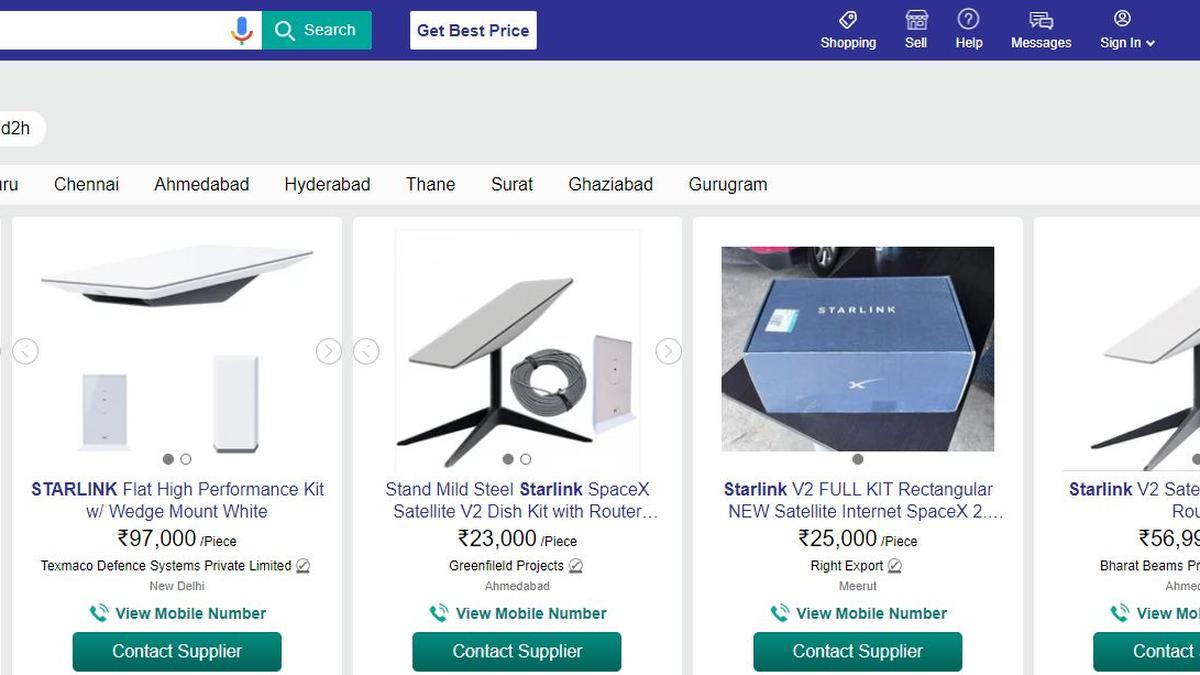
Elon Musk’s satellite‑internet venture has obtained its space regulator’s final approval to launch commercial services, removing the only remaining legal obstacle after securing a telecom licence last month. This paves the way for Starlink to become the third satellite broadband operator in India, alongside Eutelsat‑OneWeb and Reliance Jio‑SES.

The Department of Telecommunications issued Starlink the Global Mobile Personal Communication by Satellite permit in early June, marking a pivotal step towards nationwide commercial deployment. Space regulator IN‑SPACe has now finalised its authorisation—pending Starlink’s formal acceptance and countersignature—bringing the company on par with its established rivals.

Starlink must still secure dedicated spectrum, construct ground infrastructure, and complete stringent security trials before service can commence. Officials indicate the spectrum will be allocated administratively rather than via auction, aligning with Starlink’s position over competing demands that included those from Reliance Jio.

The security evaluation phase remains critical. Indian authorities have insisted that all satellite‑based traffic must transit through domestic gateways and comply with legal interception protocols. Supply chain localisation and gateway siting near international borders will also be mandated. Past concerns over unauthorised Starlink usage in border regions prompted increased scrutiny by the ministry of home affairs and Department of Telecommunications earlier this year.

Starlink joins an increasingly competitive satellite broadband landscape. Eutelsat‑OneWeb received its GMPCS licence in August 2021 and full permissions in late 2023, while Jio‑SES obtained its telecom licence in March 2022 and space clearance by mid‑2024. Meanwhile, Amazon’s Project Kuiper awaits its approvals.

Local telecom giants are now preparing partnerships with satellite providers to enhance connectivity. Bharti Airtel and Reliance Jio signed pacts with Starlink earlier this year to deliver broadband across remote regions once authorisations were finalised. These alliances reflect a broader push by India to extend digital infrastructure to underserved rural and mountainous communities, where roughly 40 percent of the population remains without reliable internet access.

Starlink’s global network now spans over 6,750 satellites and serves diverse markets from Antarctica to developing Asia. In India, the company faces challenges adapting to the country’s famously low data prices, with mobile rates among the world’s cheapest. Each operator must also comply with provisions demanding indigenisation of at least 20 percent of ground infrastructure and multilayered security approval regimes.

As New Delhi aligns satellite spectrum policy—including assigning bandwidth for five‑year terms at a fee capped at 4 percent of adjusted gross revenue—operators will negotiate additional urban or rural levies and infrastructure contributions. Communications Minister Jyotiraditya Scindia’s consultations with SpaceX executives signal sustained governmental interest in leveraging satellite technologies to bolster India’s digital ambitions.

Starlink’s entry marks a significant shift in India’s telecom ecosystem. It promises to elevate broadband penetration in neglected geographies while testing the resilience of India’s stringent regulatory and security frameworks. The speed at which Starlink secures spectrum, builds its ground presence, and satisfies national interception mandates will determine how soon millions of users beyond urban centres experience high-speed satellite internet.

Ruvi AI, a blockchain-based utility token enhanced with artificial intelligence, is garnering considerable attention, with analysts forecasting returns that echo the early days of Ethereum. The presale has raised over $2.2 million, with approximately 180 million tokens sold and more than 2,000 holders already onboard. Priced at $0.015 during Phase 2, the token is expected to rise to $0.07 post-presale, offering investors a near five-fold gain before public trading begins. Market watchers anticipate a $1 valuation after listing—a potential 66× return—or even projections of 104× to 137× in a full bull market.

Security and transparency are strong points. Ruvi AI has undergone a third-party audit from CyberScope, confirming its smart contracts are free from vulnerabilities. A partnership with WEEX Exchange ensures liquidity once the token hits public markets, addressing key investor concerns.

Beyond hype, Ruvi AI distinguishes itself through concrete use cases. In marketing, its AI-driven tools enable precise ad targeting and smarter budget allocation. Within entertainment, blockchain-secured payments and AI audience analytics support content creators. The token also addresses fintech, with applications in fraud detection and secure transactions.

VIP tiers offer additional incentives: Tier 2 at $750 with a 40% bonus, Tier 3 at $2,100 with 60%, and Tier 5 at $9,600 with 100%. These tiers significantly enhance token allocation and potential returns.

Comparisons to established platforms underscore the excitement. Analysts position Ruvi AI as more purpose‑driven than meme coins like Shiba Inu, and liken its structure and transparency to Ethereum’s early roadmap. It is also being cast as a challenger to Ripple and Tron, thanks to its utility-first model and robust security credentials.

Despite enthusiastic projections, sceptics warn that such forecasts often rely on promotional narratives and may underestimate typical crypto volatility. Many articles encouraging investment are sponsored, necessitating cautious interpretation and thorough due diligence.

Market analysts note that Ruvi AI’s clear presale roadmap—starting at $0.015, locked at $0.07, with target of $1—offers an unusually transparent growth trajectory for early investors. Still, experts emphasise that projections of 66× to 137× assume robust market conditions and widespread adoption of AI‑enabled blockchain technology.

Institutional interest is still nascent, yet alignment with AI and blockchain sectors reflects broader tech trends. Continued platform development, ecosystem partnerships, and adoption by key industries will be crucial to validating current projections.

To choose the best creative agency in Dubai, which is located in the center of the innovation hub of the Middle East, it is not enough to just choose a vendor; rather, it is necessary to choose a brand partner for the long term.  The city of Dubai, which is one of the most competitive, multicultural, and technologically advanced marketplaces in the world, demands advertising firms that […]

Dubai‑based hospitality firm Tashas Group is entering a rapid new phase of expansion across the Middle East and South Africa, with founder Natasha Sideris spearheading a strategy that balances boutique charm with accelerated growth. Operating 40 venues in five countries—including 18 in South Africa, 17 across the UAE, three in Saudi Arabia, and single locations in Bahrain and the UK—the group plans to open a further 15 […]

String.com, launched this week by the Pipedream team, allows users to describe in plain English the AI agent they want, and the platform instantly crafts, tests and deploys fully functional agents without the need for manual coding. This marks a milestone in automation and agentic AI, combining natural language input with backend integration to accelerate deployment of intelligent workflows. The platform’s creator, Tod Sacerdoti, explained that String […]

Sterling’s recent rally has little to do with the UK economy suddenly outperforming expectations. It has everything to do with the dollar falling out of favour. When the pound hit $1.365 this week—its strongest level since early 2022—it was a flashing red signal that international investors are losing faith in the greenback. Let’s not pretend this is about interest rates. The Federal Reserve is still holding firm, […]

Australian super fund CareSuper has chosen Macquarie Cloud Services to migrate its entire VMware Cloud on AWS infrastructure—including hundreds of applications and petabytes of member data—to Microsoft Azure. The fund, which manages over AUD 57 billion for more than 573,000 members, has engaged Macquarie to modernise its databases, implement platform‑as‑a‑service solutions and consolidate workloads into a new Azure landing zone. This high‑stakes move follows a wave of “repatriation from […]

Dubai’s Roads and Transport Authority has formalised a Memorandum of Understanding with Pony. ai to commence pilot trials of self‑driving vehicles across the emirate later this year, laying the foundation for a fully driverless commercial service by 2026. The agreement marks a pivotal milestone in Dubai’s Smart Self‑Driving Transport Strategy, which aims to convert a quarter of the city’s journey volume into autonomous mobility by 2030. Senior […]

Russian state-owned conglomerate Rostec is set to introduce RUBx—a stablecoin pegged directly to the ruble—and RT‑Pay, a payment platform, before the end of 2025. These innovations aim to empower businesses and individuals with secure and compliant digital transaction tools.

RUBx will be launched on the Tron blockchain and strictly pegged 1:1 to the ruble, backed by legally governed obligations maintained in a treasury account. Rostec will act as the sole issuer, with the structure codified by law to ensure robustness and transparency. The smart-contract code is expected to be made available on GitHub and independently audited by CertiK, reinforcing compliance with Russian financial regulations.

RT‑Pay, designed to integrate seamlessly with Russia’s existing banking rails, will enable transactions outside standard banking hours and facilitate smart-contract functions. Rostec says it has built the platform to adhere to anti‑money‑laundering and counter‑terrorism financing norms and to satisfy all Bank of Russia requirements.

A phased launch is anticipated, initially targeting sectors where efficiency gains can be rapidly realised before expansion to broader corporate and retail use. The move dovetails with Russia’s broader strategy to enhance crypto infrastructure, including the central bank’s separate digital ruble pilot and the recent authorisation for institutions to offer crypto-related investment products.

Rostec, known for its significant role in defence and high-tech manufacturing, leveraged its credentials as a trusted state entity to assure users of RUBx’s legitimacy. “Each RUBx is backed by real obligations in rubles,” Rostec officials emphasise, underscoring the token’s legal anchor.

This initiative aligns with a trend of expanding digital payment solutions amid geopolitical and economic pressures. Russian financial institutions such as Sberbank and Moscow Exchange have already introduced crypto-linked offerings, and some state entities reportedly used crypto instruments to facilitate oil trade and bypass sanctions.

Economists and fintech experts note that the introduction of state-backed digital infrastructure like RUBx and RT‑Pay marks a departure from pilot programs. They highlight the potential for stablecoins—with legal and technological safeguards—to provide a credible alternative to traditional payment systems. By utilising a blockchain infrastructure like Tron, Rostec leans on a mature ecosystem, which may support rapid adoption.

Nevertheless, independent analysts caution that integration risks remain. They point to the need for robust cybersecurity measures, systemic risk controls, and interoperability standards with domestic and international payment systems. Successful implementation will require coordinated efforts among regulators, banks, and end users.

VISHNU RAJA
RYO YAMADA
HITORI GOTOH
IKUYO KITA