Arabian Post Staff -Dubai Iran’s downing of a US F-15E Strike Eagle and the loss of another American combat aircraft in the Gulf theatre have pushed Washington’s war with Tehran into a more dangerous phase, exposing the risks of a campaign that has already rattled oil markets and widened instability across the Middle East. US officials said one member of the F-15E crew was rescued while another […]
Arabian Post Staff -Dubai UAE equities ended Friday on a divided note as investors weighed the prospect of a wider Middle East conflict after U. S. President Donald Trump signalled that Washington could intensify attacks on Iranian infrastructure, a message that added to concern over energy supplies, shipping routes and regional risk appetite. Dubai’s main index fell, while Abu Dhabi’s benchmark edged higher, reflecting a market torn […]
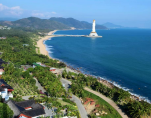
SANYA, CHINA – Media OutReach Newswire – 3 April 2026 – As tropical sea breezes blend with Eastern charm, a journey from Malaysia to China’s island paradise is now more convenient and exciting than ever. On April 2, the Sanya Tourism Development Bureau of China’s Hainan Province signed a strategic cooperation agreement with Tourism Malaysia. This partnership will further strengthen tourism collaboration between the two destinations during “Visit Malaysia Year 2026” and jointly enhance promotional efforts. Tourism Malaysia has officially become a “Strategic Tourism Promotion Partner of Sanya.”
In addition, the Sanya Tourism Development Bureau has entered into cooperative exchanges with the Malaysian Association of Tour and Travel Agents (MATTA) and the Malaysian Budget Hotel Association (MBHA) to strengthen synergy in tourism management, product development, and visitor exchange. The newly established Sanya Tourism Overseas Promotion (Malaysia) Liaison Office will serve as a one-stop information and booking platform for Malaysian travelers, reinforcing Sanya’s position as a preferred gateway to China.
Seamless Entry, Fully Upgraded Travel Convenience
Visa-free access with zero barriers
Under China’s visa-free policy for Hainan, Malaysian citizens may enter with only a passport and stay for up to 15 days—no prior visa, financial proof, or invitation letter is required, allowing for truly spontaneous getaways.
Faster flights, greater efficiency
Direct flights from Kuala Lumpur to Sanya take just about three hours, with high occupancy rates during peak seasons reflecting strong demand. Plans to launch direct flights from Penang and Kota Kinabalu to Sanya are under discussion, promising greater accessibility and cost-effective travel options.
Streamlined clearance procedures
Efficiency is prioritized with paperless self-declaration at both Phoenix Cruise Port and Sanya Phoenix International Airport, significantly reducing clearance time. International arrival halls support payments via all major international credit cards, ensuring seamless transactions.
Comprehensive multilingual support
Multilingual support is in place across Sanya—from bilingual signage at attractions and hotels to a dedicated foreign-language service line via the 12345 hotline. The multilingual official website visitsanya.com provides comprehensive information, guaranteeing smooth communication for Malaysian tourists.
Exceptional Value: Exclusive Promotions for Malaysian Visitors
To offer a more value-packed holiday experience, Sanya has prepared tailored benefits and significant discounts, from customized packages to special Asian Beach Games offers, demonstrating its warm hospitality.
The newly established Sanya Tourism Overseas Promotion Liaison Office, in collaboration with the Malaysian Budget Hotel Association and the Malaysian Association of Tour and Travel Agents, will launch specially curated travel packages that align with local preferences.
On Trip.com, the “Travel with the Asian Beach Games” promotion features discounted Sanya tourism products, covering hotels, attractions, and holiday packages, with exclusive offers for the Malaysian market.
The 2026 Asian Beach Games bring additional surprises: popular attractions like Wuzhizhou Island and Atlantis Sanya offer tickets at up to 73% off . Hotel rooms across categories—family, couples, and resort suites—enjoy discounts of up to RMB 5,899. Local delicacies and international cuisines are available at discounts of around 48% , promising a delightful culinary journey.
Moreover, 118,000 Asian Beach Games tickets are now on sale globally. With just a few clicks online, visitors can secure their seats to experience the excitement of the 6th Asian Beach Games up close.
Diverse Experiences for Every Traveler
Sanya offers far more than just sun and sand. Whether traveling with family, as a couple, or with friends, everyone can find their ideal way to enjoy the destination.
For families :
Atlantis Sanya Water Park, ranked among the “2026 Global Top 20 Water Parks” and tied for seventh place worldwide with Universal Orlando’s Volcano Bay, offers endless aquatic fun for children, while parents can explore the adjacent world-class duty-free complex for shopping and leisure.
For Adventure Seekers:
Wuzhizhou Island, known as “China’s Premier Diving Base,” features crystal-clear waters with visibility up to 27 meters and abundant coral reefs. A variety of water sports, including diving, parasailing, and jet skiing, deliver an adrenaline-filled coastal experience.
For Culture and Wellness:
The 108-meter-tall Guanyin statue at Nanshan and immersive Li and Miao ethnic cultural experiences provide a harmonious blend of spiritual reflection and cultural discovery.
For Luxury and Retail: Sanya’s world-class duty-free complex brings together international brands, art exhibitions, and immersive experiences, creating a high-value shopping and lifestyle destination.
Sanya’s commitment to visitor convenience, diverse offerings, and tailored benefits continues to strengthen its appeal among Malaysian travelers. Since the beginning of this year, Hainan has welcomed a remarkable 204% increase in Malaysian tourist arrivals, making Malaysia one of the fastest-growing Southeast Asian source markets for Sanya.From visa-free access and direct flights to enhanced services and multifaceted experiences, Sanya is positioning itself as a leading gateway for Malaysian tourists to China.
As the Hainan Free Trade Port continues to develop, tourism cooperation between Sanya and Malaysia is poised to deepen, evolving from one-way attraction to mutual engagement.For those planning their first trip to China, Sanya offers an ideal starting point—where azure seas, golden shores, modern amenities, and heartfelt hospitality come together to create the perfect tropical escape.
Oil prices jumped sharply on Thursday after US President Donald Trump said the United States would step up attacks on Iran over the coming weeks, stoking fears that disruptions around the Strait of Hormuz could last longer and tighten supplies of crude and refined fuels across global markets. West Texas Intermediate settled at $111.54 a barrel after surging more than 11%, while Brent closed near $109.03, extending […]
U. S. defence shares have failed to sustain the geopolitical bounce that often accompanies armed conflict, with the sector sliding in March even as tensions around Iran intensified. The NYSE Arca Defense Index, which tracks 34 large and small-cap companies, fell nearly 8% during the month, a steeper decline than the S&P 500’s roughly 5% drop, underscoring how investors have become more cautious about paying up […]
Arabian Post Staff -Dubai Banks across the Gulf are on course to set aside sharply higher sums for bad loans over the next two years, as investors and analysts weigh the knock-on effects of prolonged regional conflict, softer property sentiment and the possibility that stress in real estate could begin feeding through to bank balance sheets. Estimates compiled by Visible Alpha, part of S&P Global Market […]
Japan’s retail earnings season has opened with a split verdict for two of its best-known consumer groups, as Fast Retailing, owner of Uniqlo, delivered stronger profit momentum while Seven & i Holdings, parent of 7-Eleven, continued to face weaker earnings and a more clouded outlook. The divergence has sharpened investor attention on how Japanese retailers are handling softer demand, overseas expansion and trade uncertainty. Fast Retailing […]
Arabian Post Staff -Dubai A three-way alliance between the International Monetary Fund, the World Bank Group and the International Energy Agency has opened a new front in the battle against the widening energy and economic turmoil linked to the war in the Middle East, with the institutions agreeing to form a coordination group to help governments manage price shocks, funding strains and supply disruptions. The move, announced […]
India has opened talks with leading global producers of nitrogen and phosphatic fertilisers to secure supplies directly, as the war involving Iran continues to disrupt Gulf trade routes, lift freight costs and unsettle prices ahead of the kharif planting cycle. Officials have moved to widen procurement channels after supply risks from the Middle East, a major source of imported urea and diammonium phosphate, sharpened over the past month.
The push reflects both urgency and caution. Government officials have said fertiliser stocks stand at about 18 million tonnes, up from 14.7 million tonnes a year earlier, against expected demand of roughly 39 million tonnes for the coming season. That gives policymakers some room, but not enough to ignore the exposure created by conflict near the Strait of Hormuz and tighter supply from traditional exporters. India has already been seeking larger volumes from Russia, Belarus and Morocco, while also sounding out other producers as insurance against further disruption.
At the heart of the concern is the structure of India’s import dependence. Reuters reported in March that more than 40 per cent of the country’s urea and phosphatic fertiliser needs are tied to the Middle East. Disruption there has a double effect: it threatens cargo availability and also raises the cost of natural gas, a crucial feedstock for nitrogen fertilisers. Domestic production has also come under pressure. Output of urea was reported at about 1.8 million tonnes a month during plant maintenance, below the more usual 2.4 million tonnes, adding to the need for timely imports even as officials insist there is no immediate shortage.
Price risk is now as important as volume risk. Fertiliser prices had already been climbing before the latest procurement outreach, with Reuters reporting that benchmark prices for some products rose to more than $600 a tonne from about $425. Wider market reporting has shown the same direction of travel. ICIS described March conditions as a period of heightened volatility across nitrogen, phosphate and sulphur markets as conflict in the Middle East hit trade flows and sentiment. Reuters and other industry reporting have also pointed to sharp jumps in urea and ammonia prices as shipping through Hormuz became more uncertain.
For the government, the political and economic challenge is to prevent that international surge from reaching farms at full force. Urea continues to be sold at a notified price of ₹242 for a 45-kg bag, while the Department of Fertilizers said in March that the retail price of DAP had been maintained at ₹1,350 for a 50-kg bag for the rabi season through subsidy support. That pricing shield helps farmers, but it also increases the fiscal burden when import costs rise. Industry material published in February said the state still bears about 90 per cent of the cost of urea, underlining how exposed the subsidy bill becomes when global markets tighten.
India has not relied on a single response. Apart from direct talks with overseas suppliers, firms have secured long-term volumes from Russia, including 2.8 million tonnes under reported arrangements, while a global tender for 1.3 million tonnes of urea was issued to reinforce reserves. Officials have also taken steps to support domestic output by prioritising gas allocation to fertiliser plants. The strategy suggests New Delhi is trying to build overlapping buffers rather than betting on a quick stabilisation in Gulf shipping.
The market backdrop gives that strategy added weight. Industry executives and analysts have warned that a prolonged conflict could squeeze farmers globally, alter crop choices and feed through into food inflation. Yara, one of the world’s largest fertiliser companies, has said farmers are being squeezed by the jump in input costs, while broader reporting has shown developing economies to be especially vulnerable because they are more dependent on imported fertilisers and have less room to absorb price shocks. For India, where fertiliser availability is tied directly to crop yields, rural incomes and food-price management, the issue is not only one of trade logistics but of macroeconomic stability.
Rising global energy prices are adding a fresh inflation risk to the United States even as the International Monetary Fund said the world’s largest economy remains on a solid growth path, with trade and fiscal changes expected to narrow the current-account deficit only modestly over the medium term. The IMF’s latest assessment said growth in the US is projected to reach 2.4 per cent in 2026, while […]
An Iran-linked hacking group has claimed it breached PSK Wind Technologies, an Israeli defence supplier that says it develops command-and-control shelters, communications systems and other integrated solutions for defence and homeland security customers. Material circulated online on 2 April was presented by the group, Handala, as proof of a deep intrusion into a company tied to sensitive military infrastructure. Independent verification of the full scope of the […]
Arabian Post Staff -Dubai Dubai lender Emirates NBD has won approval from the Reserve Bank of India to acquire up to 74 per cent of Mumbai-based RBL Bank, a decision that moves one of the largest cross-border banking deals in the country closer to completion and could reshape the private lender’s ownership, governance and market position. The approval, disclosed on April 2, allows Emirates NBD to […]
By Dr. Gyan Pathak While world’s untaxed wealth of the richest 0.1 per cent hidden offshore surpasses entire wealth of the poorest half of the humanity, India remains the receiver of the highest number of the regressive tax recommendations by the International Monetary Fund (IMF) that increases tax burden on the lower-income households more than […]
HONG KONG SAR – Media OutReach Newswire – 2 April 2026 – ShopBack, the leading shopping and Cashback platform in Asia-Pacific, is pleased to announce that ShopBack Play is rapidly breaking the barriers between online shopping and gaming, making earning rewards effortless and fun for everyone.By seamlessly bridging mobile games with cash prizes, ShopBack has evolved from a simple shopping tool into a high-engagement “Play-to-Earn” ecosystem. To date, the platform has already given back over HK$5 million in Cashback to users through its gamified features.
As the city welcomes the festive break, ShopBack is set to catalyze this momentum with the launch of its 2026 Easter Egg Hunt. From April 3 to April 7, the campaign will welcome Gen Z and Millennial cohorts to download the official ShopBack App and discover a world of surprises — where every discovery is a chance to win, turning leisure into leverage and proving that in the modern retail landscape, entertainment is the “new currency”.
ShopBack launches the 2026 Easter Egg Hunt from April 3 to April 7, start hunting for capital—where gaming meets gaining.
The Quantifiable Rise of Gamified Earning
The shift from shopping to active “gaining” is backed by record-breaking engagement metrics within the ShopBack app: Over 1,200 curated game titles have been integrated and downloaded on ShopBack Play. Building on a track record of over HK$5 million in rewards already delivered to our community, the platform has cultivated a new class of “Super Earners.” The top-performing user has successfully extracted over HK$30,000 in Cashback rewards simply by mastering game milestones—positioning ShopBack Play as a sophisticated Cashback tool for avid gamers.
2026 Easter Egg Hunt: A Multi-Dimensional Reward Matrix
While traditional holiday campaigns focus on consumption, ShopBack’s Easter Egg Hunt focuses on Community and Catch-up. The 5-day campaign (April 3-7) introduces two flagship challenges designed to maximize player “yield”:
“Easter Egg Everyday” – The Blind Box Thrill: During dedicated daily Happy Hours, users who reach specific milestones in the app’s “Red Zone” will unlock surprise loot “Easter egg” boxes. These eggs contain instant Cashback rewards of up to HK$100, adding an element of high-stakes discovery to the daily routine.
“United to Unlock” – The Power of Solidarity: In a bold move toward social gamification, ShopBack introduces a collaborative community challenge. If collective participation reaches the 40,000 opt-in benchmark, a massive HK$20,000 prize pool will be unlocked, and every participant stands a chance to win.
A New Paradigm: Beyond the Transaction
“We are witnessing a transformation in retail, where shopping goes beyond a simple task or pastime. ShopBack Play redefines the experience as an engaging ‘treasure hunt’, enabling users to enjoy shopping while earning real rewards effortlessly,” says Mr. Arthur Wan, General Manager of East Asia Cluster at ShopBack. “With ShopBack Play, we have evolved past a simple Cashback upgrade into the next level of ‘Play-to-Earn’. This Easter, we aren’t just offering discounts; we are presenting an immersive hunt where the stakes are real, and the rewards are tangible. We are moving Hong Kong from Gaming to Gaining.”
This Easter, swap the chocolates for real rewards. Dive into ShopBack Play to earn real cash—making the holiday not just a treat, but a “treasure-filled” retreat.
Hashtag: #ShopBack
The issuer is solely responsible for the content of this announcement.
About ShopBack
Founded in 2014 in Singapore, ShopBack Group is the leading shopping, Cashback, and payments ecosystem in the Asia-Pacific, serving over 60 million users across 13 vibrant markets. Driven by a mission to make every shopping journey rewarding, the platform seamlessly integrates commerce with entertainment, pioneering the “Play-to-Earn” movement through its innovative ShopBack Play feature. Beyond consumer empowerment, ShopBack serves as a strategic growth engine for thousands of merchants and brands, providing sophisticated, performance-based marketing solutions that drive measurable outreach and high-intent engagement. With the expansion into ShopBack Pay, the Group continues to redefine the future of retail finance, offering a frictionless payment infrastructure that bridges the gap between digital rewards and real-world spending.
For further details and to start earning Cashback today, visit:
China’s central bank has pulled cash from the banking system for the first time in about a year, signalling a more cautious near-term approach to liquidity management as higher oil prices begin to feed into factory costs, transport bills and corporate margins.
The People’s Bank of China conducted a small reverse repo operation on 2 April while a far larger batch matured, producing a net daily withdrawal of 223.5 billion yuan. The move came after policymakers had spent months leaning towards support for growth, and it suggests Beijing is trying to preserve room for manoeuvre rather than rushing into broader easing while imported inflation risks build.
That calibration matters because China is facing two conflicting pressures at once. On one side, domestic demand remains weak, producer prices are still soft, and policymakers have already acknowledged that supply continues to outstrip demand in parts of the economy. On the other, the oil shock linked to the Middle East conflict is lifting input costs and complicating the case for an immediate flood of fresh liquidity. China’s central bank said after its first-quarter monetary policy committee meeting that it would maintain an “appropriately loose” stance while keeping liquidity ample and supporting a recovery in prices.
The timing of the drain is striking because it follows signs that parts of the economy had started to stabilise before energy costs became a bigger threat. Official manufacturing activity returned to expansion in March, with the PMI rising to 50.4 from 49.0 in February, while a private survey showed factory output and orders still growing even as cost pressures intensified. Those readings pointed to a modest improvement in momentum, but they also showed that the rebound is vulnerable to rising commodity prices and longer supplier delivery times.
Economists and policy advisers in China have begun to frame the challenge less as a choice between stimulus and restraint, and more as a balancing act between supporting growth and containing imported inflation. Huang Yiping, a central bank adviser, said this week that oil-led price pressure was hurting profitability and narrowing the room for policy to respond, even though broader inflation remains below the official target. China’s consumer inflation rose 1.3% in February, the highest in more than three years, but still below Beijing’s target of around 2% for 2026.
For markets, the signal is not that Beijing has turned hawkish. The seven-day reverse repo rate remained unchanged at 1.4%, and the central bank has continued to stress that it can still use rate cuts, reserve requirement reductions and other tools if needed. What has changed is the sequencing. Officials appear unwilling to react to every external shock with an immediate dose of easier money, especially when higher oil prices could push up headline inflation even as underlying demand stays fragile.
That caution is also tied to the broader policy picture. China set a 2026 growth target of 4.5% to 5%, below last year’s goal, reflecting weaker confidence in the external environment and the unfinished task of shifting growth away from debt-heavy sectors and towards household consumption. Policymakers have pledged to support demand, private investment and prices, but the tone from Beijing has been measured rather than aggressive. The central bank’s liquidity withdrawal fits that pattern: it does not amount to a policy reversal, but it does show a preference for targeted fine-tuning over blunt stimulus.
The oil backdrop helps explain why. China has entered the current energy shock in a stronger position than some of its Asian peers, with strategic stockpiles, diversified power supply and a large electric-vehicle base helping to soften the blow. That resilience has supported Chinese assets during wider market turbulence. Yet the country is not immune. Independent refiners have already been cutting processing rates as crude costs climb and domestic fuel demand stays under pressure, while manufacturers are reporting the fastest increase in output prices in years.
Britain has sharpened its language on security, raised its military ambitions and promised a larger defence budget, but the test now lies in whether those commitments produce forces that can respond quickly and credibly to a widening arc of threats from Europe to the Middle East. The question has come into sharper focus after London moved a nuclear-powered submarine into the Arabian Sea about a month into […]
Arabian Post Staff -Dubai Oil prices leapt on Thursday after President Donald Trump said the United States would keep striking Iran for at least the next two to three weeks, dashing hopes that Washington was preparing to scale back military action and easing concerns in energy markets only briefly. Brent crude rose above $108 a barrel and West Texas Intermediate climbed past $106 in early trade, reversing […]
South Korea’s consumer prices rose 2.2 per cent in March from a year earlier, quickening from 2.0 per cent in both January and February as higher energy costs fed through the economy and kept inflation above the Bank of Korea’s medium-term 2 per cent target. The increase was milder than market expectations for 2.4 per cent, but it still marked the fastest annual pace since December and underscored the strain created by elevated crude prices linked to conflict-driven instability in the Middle East.
On a monthly basis, consumer prices rose 0.3 per cent in March, matching February’s pace. Petroleum products were a major driver even after Seoul introduced emergency measures to curb the blow to households and businesses. Government controls on fuel prices helped limit the pass-through, yet petroleum product prices still rose sharply from the previous month, showing how external energy shocks are overpowering domestic stabilisation efforts.
The inflation print matters because it lands at a moment when policymakers are trying to balance stronger export-led growth against mounting imported price pressures. The Bank of Korea said in its February outlook that consumer-price inflation for 2026 was expected to average 2.2 per cent, slightly above its previous 2.1 per cent forecast. That projection was made before the latest oil surge intensified, leaving economists to question whether the central bank’s assumptions have already been overtaken by events.
Core inflation, which strips out volatile food and energy items, eased slightly to 2.2 per cent in March from 2.3 per cent in February. That suggests underlying domestic demand pressures remain contained, even as headline inflation is being pushed up by imported costs. Another closely watched measure, which excludes agricultural products and petroleum, had been running at 2.5 per cent in February, indicating that sticky service-sector and household spending components have not fully disappeared.
Food prices offered some relief. Agricultural product prices fell in March as supply conditions improved, helping offset part of the jump in fuel-linked costs. That softer food picture helped explain why the overall figure came in below forecasts despite the energy shock. Still, analysts say the cushion from better farm output may prove temporary if transport, fertiliser and logistics costs keep climbing with oil.
South Korea is especially exposed because of its dependence on imported energy. About 70 per cent of its crude oil imports come from the Middle East, leaving the country vulnerable whenever shipping routes or production in the region come under threat. The government has already floated wider demand-management steps, including possible driving curbs beyond the public sector if crude prices climb further, a sign of how seriously officials are treating the supply risk.
Seoul has also moved on the fiscal side. This week the government proposed a supplementary budget of 26.2 trillion won, or about $17.3 billion, aimed at cushioning the economy from the oil shock and supporting low-income households and affected businesses. Of that, 10.1 trillion won is earmarked for measures tied to surging oil prices, including support for refiners operating under the emergency pricing system. The package highlights concern that inflation and slower consumption could combine to weaken the broader recovery.
For the central bank, the March data complicate an already delicate policy setting. The Bank of Korea’s next rate decision is due on April 10. Policymakers had held rates steady in February, and the latest inflation reading, while lower than forecast, is unlikely to offer much comfort because upside risks remain tied to oil, the exchange rate and transport costs. At the same time, softer core inflation argues against an aggressive response unless the energy shock broadens into wages and services.
Copper and other industrial metals fell on Wednesday after US President Donald Trump renewed threats to strike Iran’s power plants and other civilian infrastructure if talks fail to halt a war that has entered its second month, adding another layer of risk to commodity markets already strained by conflict in the Gulf. Bloomberg reported the move across metals markets on April 2, while Reuters and AP reporting […]
Arabian Post Staff -Dubai Gold fell sharply on Thursday, but the viral claim that bullion had crashed below $4,600 and lost more than $1 trillion in market value in a single day appears to overstate what can be firmly confirmed from broad market data. By late trading, spot gold was quoted at $4,664.39 an ounce and US gold futures at $4,691.10, after a strong rebound a day […]
Chinese state-backed hackers have stepped up espionage operations against European government targets after shifting attention away from the region for much of the period after 2023, according to new threat intelligence that points to a sustained campaign aimed at diplomatic missions, NATO-linked networks and European Union institutions. Researchers tracking the activity said the actor known as TA416 returned to European targeting in the middle of 2025 and […]
Global energy markets are facing a supply shock more severe than the oil crises of 1973 and 1979 combined with the gas disruption that followed Russia’s 2022 invasion of Ukraine, according to International Energy Agency executive director Fatih Birol, who said mounting losses of oil and liquefied natural gas from the Middle East were set to intensify through April. Birol said more than 12 million barrels of […]
Ryanair has warned that jet fuel supplies into Europe could come under pressure from May if the US-Israeli war with Iran continues, with chief executive Michael O’Leary saying as much as a quarter of the airline’s fuel could be at risk during May and June if disruption around the Strait of Hormuz is not resolved by the middle or end of April. The warning, made on April […]
HONG KONG SAR – Media OutReach Newswire – 1 April 2026 -Tim Ho Wan, the dim sum brand hailing from Hong Kong under the Jollibee Group, continues to be recognized in the Michelin Guide Hong Kong & Macau, with its Sham Shui Po store receiving the Bib Gourmand distinction in the 2026 edition. The Bib Gourmand distinction is awarded to restaurants that offer high-quality food at excellent value for money, reinforcing Tim Ho Wan’s long-standing positioning.
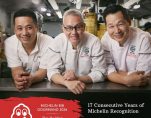
Carrying forward a legacy of excellence. Tim Ho Wan’s culinary team upholds the brand’s signature Cantonese craftsmanship, sustaining the consistency and quality behind its 17 consecutive years of Michelin recognition— its most recent earned under the Jollibee Group.
The recognition marks the 17th consecutive year the same store has been included in the Michelin Guide—a milestone achieved during Tim Ho Wan’s first full year under the Jollibee Group following its acquisition in January 2025. Over the past year, the brand has focused on strengthening systems, chef training, and food quality, reinforcing the consistency that has long defined Tim Ho Wan in its home market.
“Tim Ho Wan’s recognition in the Michelin Guide is a reflection of the care and discipline behind the brand,” said Ernesto Tanmantiong, Jollibee Group Global President and CEO. “At the Jollibee Group, we are committed to growing brands like this in a way that stays true to their roots while allowing more people around the world to experience what makes them special.”
Founded in Hong Kong in 2009 by chefs Mak Kwai Pui and Leung Fai Keung, Tim Ho Wan quickly rose to prominence after earning a Michelin star within its first year. Its Sham Shui Po branch, opened in 2010, has since remained a consistent presence in the Michelin Guide, underscoring the brand’s enduring culinary standards.
Scaling a Heritage Brand Through Operational Discipline
Under the Jollibee Group, Tim Ho Wan has strengthened its operating model to support consistent execution and long-term growth across markets.
Ongoing investments in kitchen systems, chef training, menu development, and store operations have enhanced consistency across locations while preserving the craftsmanship rooted in its Hong Kong origins. The continued recognition in Hong Kong reinforces the market’s role as the brand’s culinary and operational benchmark.
“These capabilities allow us to stay true to what makes Tim Ho Wan special, while ensuring we can deliver that same experience consistently as we grow,” said Sheng Lee, Chief Executive Officer of Tim Ho Wan.
“This recognition reflects the discipline of our teams in delivering consistent quality day in and day out. We remain focused on elevating our craft through rigorous training, responsible sourcing, and thoughtful service so that high-quality meals remain welcoming to guests around the world,” Lee added.
A Distinct Concept for Global Expansion
Tim Ho Wan’s combination of quality and value positions it as a distinctive concept in the global restaurant landscape.
Supported by strengthened systems and operating discipline, the brand offers a compelling platform for growth across international markets—anchored on consistency in its home market and enabled by replicable operating standards.
A Global Brand Rooted in Hong Kong
From a 20-seat dim sum shop in Hong Kong to a globally recognized brand, Tim Ho Wan continues to demonstrate how culinary heritage and operational discipline can come together to create a strong and scalable business.
The latest Bib Gourmand recognition reinforces Tim Ho Wan’s position as a globally relevant dim sum brand—rooted in Hong Kong and supported by the Jollibee Group’s platform for sustained and disciplined growth.
Disciplined Growth Backed by the Jollibee Group
The continued recognition also reflects the Jollibee Group’s approach to scaling heritage brands through operational excellence and long-term stewardship.
“Tim Ho Wan’s sustained recognition reflects the strength of its heritage and the discipline behind its execution,” said Richard Shin, CEO of JFC International and Global Chief Financial and Risk Officer of the Jollibee Group. “At the Jollibee Group, we focus on strengthening the systems and platforms that allow brands like Tim Ho Wan to grow while preserving the authenticity and craftsmanship that made them successful.”
System-wide sales (SWS) expanded significantly from Php1.3 billion in 2024 to Php8.1 billion in 2025, highlighting the brand’s accelerating scale and growing contribution to the Group’s global operations.
In its home market, Tim Ho Wan has strengthened its core Hong Kong footprint, doubling its store network to 10 locations within approximately one year. Recent store openings have delivered attractive payback periods (circa 1.5 years) and profitability, reinforcing confidence in the brand’s unit economics and disciplined growth approach.
Growth has been broad-based across both company-operated and franchise markets. Sales performance strengthened across markets such as Hong Kong, Singapore, and China, while franchise markets, including the Philippines, Vietnam, and Japan, continue to build momentum, further validating the brand’s strong international resonance and scalability.
The brand also reached an important milestone in its global expansion with the opening of its first company-operated North America store in Irvine, California, marking a significant step in establishing a direct presence in one of the world’s largest consumer markets. This re-entry into North America reflects the transportability of the brand’s operating model and positions Tim How Wan for a new phase of long-term growth and further global brand development.
Hashtag: #JollibeeGroup
The issuer is solely responsible for the content of this announcement.
About Jollibee Group
Jollibee Foods Corporation (PSE: JFC) (the “Company”) is one of the world’s fastest-growing restaurant companies, driven by its purpose of spreading joy through superior taste. It manages and operates a portfolio that includes 19 brands (the “Jollibee Group”) with over 10,000 stores and cafés across 33 countries.
The Jollibee Group’s portfolio includes nine (9) wholly-owned brands (Jollibee, Chowking, Greenwich, Red Ribbon, Mang Inasal, Yonghe King, Hong Zhuang Yuan, Smashburger and Tim Ho Wan), five (5) franchised brands (Burger King, Panda Express, Yoshinoya, Common Man Coffee Roasters, and Tiong Bahru Bakery in the Philippines), and ownership stakes in other key brands like The Coffee Bean and Tea Leaf (80%), Compose Coffee (70%), SuperFoods Group that operates Highlands Coffee (60%), and bubble tea brand Milksha (51%). The Company also has membership interests in Tortazo, LLC, along with Chef Rick Bayless, for Tortazo in the U.S. and in Botrista, a leader in beverage technology.
The Jollibee Group’s global sustainability agenda, Joy for Tomorrow, underscores its commitment to sustainable business practices across food safety, employee welfare, community support, good governance, and environmental responsibility, among others. These focus areas are aligned with the United Nations Sustainable Development Goals (UN SDGs).
The Company has been recognized as the Philippines’ Most Admired Company by the Asian Wall Street Journal, named one of Asia’s Fab 50 Companies, and listed among Forbes’ World’s Best Employers and Top Female-Friendly Companies. The Company is also a four-time Gallup Exceptional Workplace Award recipient and featured in TIME’s World’s Best Companies and Fortune’s Southeast Asia 500 List.



 https://www.visitsanya.com/