News related to
Middle East

Arabian Post Staff -Dubai Kuwait is set to sign a contract next week with China Communications Construction Company to advance the long-delayed Mubarak Al-Kabeer Port, signalling renewed momentum behind a project seen as pivotal to the country’s trade ambitions and its role in regional logistics. Public Works Minister Noura Al-Mashaan confirmed the timeline on Thursday, following formal approval by the Central Agency for Public Tenders for the […]

Dubai has built its reputation as one of the most business-friendly cities in the Middle East. With a strong regulatory framework, world-class infrastructure, and a steady influx of international professionals, the emirate continues to attract entrepreneurs, executives, and investors from around the globe. In such a dynamic environment, efficiency is not a luxury—it is a necessity. Business travelers arriving in Dubai often face tight schedules, multiple meetings […]

Abu Dhabi Future Energy Company, known as Masdar, has withdrawn from a consortium seeking to take ReNew Energy Global private, bringing the proposed buyout of the Nasdaq-listed renewable power producer to an abrupt end and sending a fresh signal about the challenges facing large-scale clean energy transactions. ReNew disclosed the development in a filing to the US Securities and Exchange Commission, confirming that the investor group will […]

Greenlogue/AP AMEA Power has commissioned a 120 megawatts-peak solar photovoltaic plant in Tunisia’s Kairouan Governorate, adding one of the country’s largest utility-scale renewable assets to the national grid and strengthening North Africa’s push to diversify power generation. The project operates under a 20-year power purchase agreement with Société Tunisienne de l’Electricité et du Gaz, providing long-term offtake certainty for the state utility and stable revenues for the […]

Mall of the Emirates has embarked on a $1.36bn expansion programme that will add 20,000 square metres of retail space, introduce about 100 new stores, and significantly broaden its dining and entertainment offering, reinforcing Dubai’s position as a global retail and lifestyle hub. The project, announced by owner and operator Majid Al Futtaim, represents one of the most substantial investments in the mall since it opened in […]

The United Arab Emirates has consolidated its standing in 2025 as one of the world’s fastest-growing economies, underpinned by a surge in non-oil activity, sustained investment inflows and a regulatory framework designed to attract capital and talent. Data released through the year point to broad-based expansion across trade, manufacturing, logistics, tourism, finance and technology, reinforcing a shift away from hydrocarbons as the primary engine of growth.

Non-oil foreign trade climbed 24.5 per cent in the first half of 2025 to AED1.7 trillion, a pace that far exceeds the prevailing global trade growth rate. The increase reflects rising re-exports, stronger demand from Asia, Europe and Africa, and the UAE’s role as a commercial bridge linking major markets. Officials have highlighted gains in machinery, electronics, precious metals, food products and pharmaceuticals, supported by expanded port capacity, faster customs procedures and new trade agreements.

Investment indicators have moved in tandem with trade. The UN Conference on Trade and Development’s World Investment Report 2025 ranked the UAE 10th globally for inbound foreign direct investment in 2024, with inflows of AED167.6 billion. That placing keeps the country among the world’s most attractive destinations for capital, alongside much larger economies, and underscores confidence in the policy environment, infrastructure and legal protections available to investors.

Economic planners attribute the momentum to a combination of structural reforms and targeted incentives. Liberalised ownership rules, long-term residency options for professionals and entrepreneurs, and streamlined licensing have lowered barriers for international firms. Specialised free zones continue to draw companies in logistics, clean energy, advanced manufacturing, fintech and digital services, while onshore jurisdictions have simplified company formation and compliance.

Non-oil GDP growth has been supported by strong domestic demand and an expanding population of skilled workers. Tourism has posted record levels of hotel occupancy and visitor spending, aided by expanded air connectivity and major events that have kept demand resilient across seasons. Retail and hospitality have benefited from rising consumer confidence, while real estate transactions have remained active across residential, commercial and industrial segments.

Manufacturing has emerged as a key contributor, with investments flowing into metals, food processing, pharmaceuticals and building materials. The push to localise supply chains and boost exports has been reinforced by incentives for advanced manufacturing and the adoption of automation and artificial intelligence. Renewable energy and clean technology projects have also attracted capital, aligning economic growth with climate commitments.

The financial sector has played a central role in channelling investment. Banks have reported healthy credit growth to businesses, while capital markets have seen new listings and debt issuance that broaden funding options. Asset managers and private equity firms have expanded regional operations, using the UAE as a base for Middle East, Africa and South Asia strategies. Regulatory clarity in digital assets and fintech has further widened the investor base.

Trade policy has complemented domestic reforms. Comprehensive economic partnership agreements have reduced tariffs and opened access to fast-growing markets, supporting exporters and logistics providers. Improved customs digitisation has shortened clearance times, enhancing the country’s competitiveness as a trans-shipment hub. The scale of non-oil trade growth indicates that these measures are translating into higher volumes rather than merely price effects.

HONG KONG SAR – Media OutReach Newswire – 18 December 2025 – IX Asia Indexes today announced the 2nd Half 2025 Review of the IX Digital Asset Industry Classification System (“DAICS®“), aiming to provide professionals worldwide with a transparent and standardized classification scheme to determine sector and exposure of particular digital assets. DAICS® classifies digital assets into 2 main categories: a) Cryptocurrencies and b) Asset Backed Tokens (ABTs) in a 3-tier system for each category. For Cryptocurrencies: Tier 1-Industry/ Tier 2-Sector/ Tier 3-Sub-sector; and for ABTs: Tier 1-Asset Type/ Tier 2-Branch/ Tier 3-Sub-branch. The results are as follows:

  • DAICS® coin coverage: As of 3rd December, the top 50 coins by average market capitalization across the past 90 days
  • DAICS® market capitalization coverage: 96.98%*
  • The % coverage of market capitalization of the 50th ranked coin: 0.048%**
  • Member changes within the Top 50 Coins in DAICS®: eight coins added and nine coins deleted
  • Additions: Zcash (ZEC), World Liberty Financial USD (WUSD), PayPalUSD (PYUSD), Memecore (M), Worldcoin (WLD), Story (IP), Arbitrum (ARB), KuCoin (KCS)
  • Deletions: Mantra (OM), GateToken (GT), Official Trump (TRUMP), VeChain (VET), Render (RENDER), First Digital USD (FDUSD), Filecoin (FIL), Cosmos (ATOM), Algorand (ALGO)
  • 9 Green Coins labelled: Cronos (CRO), Pi (PI), Internet Computer (ICP), Hedera, Sui (SUI), Toncoin (TON), Arbitrum (ARB), Mantle (MNT), Tron (TRX)

Note:
*Special currency treatment of DAICS® applies, where any wrapped or second-level cryptocurrency is not considered in the calculation for the market capitalization of DAICS®

**Based on 3rd December 2025
G: Green Coin

The rankings of additions and deletions for the DAICS® top 50 cryptocurrencies are listed in Appendix 1. All classification changes, including the ixCrypto Infrastructure Index and ixCrypto Stablecoin index, will take effect on 23rd January 2026, with market capitalization, rankings, and weightings available at www.ix-index.com.

1. Cryptocurrencies

1.1. Structure and Definitions

Tier 1: Industry Changes
The industry groups remain unchanged, with 5 industries and the respective weightings as follows:

Industry Weighting (%)
Payment (110) 73.87%
Infrastructure (120) 19.89%
Financial Services (130) 4.82%
Tech & Data (140) 0.22%
Media & Entertainment (150) 1.20%

Tier 2: Sector Changes
The number of sectors has increased from 17 to 18. There is one new sector added under the industry group “Tech & Data (140)”:

Identification (14040)
Definition: Cryptocurrencies that facilitate decentralized identity authentication and/or blockchain-based validation of digital intellectual property rights. The classification emphasizes trust, data consent, and privacy as core architectural features while the crypto by itself is not an identity token.

1.2. Reclassification Changes
This review doesn’t have any reclassification of the existing coins. The DAICS® 2H 2025 cryptocurrencies classification is available in Appendix 2.

1.3. Green Coin Label
This review identifies 9 Green Coins, classified based on their energy-per-unit-transaction, which is defined as the amount of energy consumed for a successful single unit transaction of the coin in the blockchain network. The coins selected rank in the top 20 percentile of the least energy-consuming cryptocurrencies out of the 50 DAICS® constituents. The top 20 percentile’s threshold in this review is ≤ 0.150 Wh. The table below lists these low-energy coins.

Industry Low Energy-per-transaction (≤ 0.150 Wh)
Payment (110) CROG
PIG
Infrastructure (120) ICPG
SUIG
ARBG
TRXG
HBARG
TONG
MNTG
Financial Services (130) NIL
Tech & Data (140) NIL
Media & Entertainment (150) NIL


Note: G as ‘Green Coin‘ labelling for cryptocurrencies that adhere to the principles of sustainability

2. Asset Backed Tokens (ABT)

2.1. Structure and Definitions

Tier 1: Asset Type Changes
The asset types remain unchanged at 6 as follows:
1) Culture (205),
2) Real Estate (215),
3) Financials (235),
4) Entertainment (255),
5) Natural Resources (265), and
6) Green Economy (275)

Tier 2: Branch Changes
The number of branches has increased from 31 to 32, with a new branch added under Financials (235): Tokenized funds (23540).

2.2. Classification Changes
This review doesn’t have any reclassification of the existing assets.

2.3. Coverage of DAICS®
A classification summary and definition table of both cryptocurrencies and ABTs are available in Appendices 3 and 4. For further information regarding the methodology of the DAICS®, please refer to the “IX Digital Asset Industry Classification System”- principle and guiding methodology on the company website https://ix-index.com/daics.html.

For more details on DAICS® qualification criteria, please email [email protected].

Appendix 1

Additions and Deletions in DAICS® Top 50 Cryptocurrencies

Additions
Current Rank Cryptocurrencies
28 Zcash (ZEC)
31 World Liberty Financial USD (WUSD)
41 PayPal USD (PYUSD)
45 MemeCore (M)
46 Worldcoin (WLD)
49 Story (IP)
50 Arbitrum (ARBG)
51 KuCoin (KCS)

Deletions

Prev. Rank Cryptocurrencies Current Rank
34 Mantra (OM) 300+
41 GateToken (GT) 67
43 OFFICIAL TRUMP 56
45 VeChain (VET) 55
46 Render (RNDR) 58
47 First Digital USD (FDUSDG) 71
48 Filecoin (FIL) 61
50 Cosmos (ATOM) 54
51 Algorand (ALGO) 52

G: Green Coin

Appendix 2

Classification of the Top 50 Coins by Industry and Sector
Category

Industry Sector Cryptocurrencies
Cryptocurrencies (1) Payment:

Blockchain based money, designed for transactional purposes. This includes daily transactions usage and stablecoins.

Transaction & Payment BTC
XRP
BCH
XLM
LTC
XMR
CROG
ZEC
PIG
KAS
Stablecoin USDT
USDC
USDe
DAI
WUSD
PYUSD
Infrastructure:

Bedrock blockchain that facilitates the operation of other decentralised applications. This includes the creation and running of dedicated blockchain platforms, achieving interoperability between networks, increasing the amount or speed of transactions etc

Application Development Protocol & Smart Contract ETH
SOL
TRXG
ADA
HYPE
SUIG
AVAX
HBARG
TONG
NEAR
ETC
APT
ICPG
Interoperability LINK
DOT
ATOM
Scaling & Sharding MNTG
ARBG
POL
Supporting System NIL
Financial services:

Tokens that provide on-chain asset management services, crypto-exchange services, funding, lending and other capital markets related services

Exchange Tokens BNB
LEO
BGB
UNI
OKB
KCS
Lending & Borrowing AAVE
Staking ENA
Financial Asset Tokenization ONDO
Tech & Data:

Provision of data management and storage, and development of innovative crypto technology

Storage & Sharing NIL
Data Management NIL
Artificial Intelligence TAO
Identification
(NEW)
WLD IP
Media & Entertainment:

Recreational and media services. Including content creation and distribution, advertising through crypto-asset incentive mechanisms, gaming and collectibles

Social Media & Community DOGE
SHIB
PEPE
M
Streaming NIL
Gaming NIL
Metaverse NIL

Note:
G as ‘Green Coin‘ for cryptocurrencies that adhere to the principles of sustainability

NEW for newly added sector

Appendix 3

DAICS® Industry and Sector Definition

Category Industry Sector Sector definition
Cryptocurrencies (1) Payment: (110)

Definition
Blockchain based money, designed for transactional purposes. This includes daily transactions usage and stablecoins.

Transaction & Payment
(11010)
Cryptocurrencies that are used for store of value, unit of account, medium of exchange
Stablecoin
(11020)
Cryptocurrencies where price is pegged to a / a basket of, reference asset
Infrastructure: (120)

Definition
Bedrock blockchain that facilitates the operation of other decentralised applications. This includes the creation and running of dedicated blockchain platforms, achieving interoperability between networks, increasing the amount or speed of transactions etc.

Application Development Protocol & Smart Contract
(12010)
layer-1 blockchain network that facilitates DApp creation and smart contract execution and smart contract
Interoperability
(12020)
Network that increases inter-connectivity and integration of the fragmented cryptocurrency ecosystem
Scaling & Sharding
(12030)
Networks that increase the ability to cope with the influx of many transactions at a time and blockchain network that can be split into smaller partitions, to improve scalability and process transactions quicker
Supporting System
(12040)
Networks/sidechains that improve functionality of layer-1 network
Financial services: (130)

Definition
Tokens that provide on-chain asset management services, crypto-exchange services, funding, lending, and other capital markets related services

Exchange Tokens
(13010)
Cryptocurrencies that represent the stable coin in the exchange ecosystem and allow users to covert from digital asset on decentralised or centralised system int fiat currencies
Lending & Borrowing
(13020)
Borrowing and lending crypto assets with interest in return and other secondary financial tools derived from primary underlying asset, such as crypto futures and options
Staking
(13030)
Holding and “staking” of certain amount of cryptocurrency in a wallet to facilitate network operations
Financial Asset Tokenization (13040)

Cryptocurrencies/protocols that focus on the tokenized issuance and management of financial assets
Tech & Data: (140)

Definition
Provision of data management and storage, and development of innovative crypto technology

Storage & Sharing
(14010)
Crypto protocols that provide decentralized storage and/or sharing of data filing and resources.
Data Management
(14020)
Networks/Protocols that facilitate the indexing and querying of data from blockchain(s), enabling efficient data retrieval and management for decentralized applications
Artificial Intelligence
(14030)
Cryptos/Protocols that facilitate the use of AI powered apps or projects directly using blockchain platform.
Identification
(14040) (NEW)
Cryptocurrencies that facilitate decentralized identity authentication and/or blockchain-based validation of digital intellectual property rights. The classification emphasizes trust, data consent, and privacy as core architectural features while the crypto by itself is not an identity token.
Media & Entertainment: (150)

Definition
Recreational and media services. Including content creation and distribution, advertising through crypto-asset incentive mechanisms, gaming and collectibles

Social Media & Community
(15010)
Cryptos that provides mast social community and followers without a close secondary industry sector
Streaming
(15020)
Cryptos that provides rights to access decentralised video-streaming sites
Gaming
(15030)
Cryptos which mainly used in gaming or gaming supporting industry
Metaverse
(15040)
Cryptos that is commonly used in collective virtual open space, created by the convergence of virtually enhanced physical and digital reality. This includes the use of VR and/or AR and/or 3D.

Note: NEW for newly added sector

Appendix 4

DAICS® Asset Type and Branch Definition
Category

Asset Type Branch Sub -branch
Asset-Backed Tokens (2) Culture: (205)

Definition
Real asset relating to sports, art, cultural drama, festive collectibles and design IPs etc.

Art
(20510)

This shall be further developed in the future with more digital assets available in the market

Sports
(20520)
Festive Collectibles
(20530)
Design IPs
(20540)
Drama and Play IPs
(20550)
Real Estate:(215)

Definition
Assets that mainly derived its valuation from property, real estate, and land

Commercial Property
(21510)
Residential Property
(21520)
Governmental Property
(21530)
Residential and Commercial Land
(21540)
Financials: (235)

Definition
Real financial asset including listed company shareholdings on regulated centralised exchanges and private company shareholdings; debt instruments; property trusts and derivatives that settled on regulated exchange (CeFi and DeFi).

Tokenised Securities (Company Securities, ETF)
(23510)
Tokenised Debts
(23520)
Tokenised REITs
(23530)
Tokenised Funds(NEW)
(23540)
Entertainment: (255)

Definition
Ownership of the IPs assets in the area of entertainment in real world such as concert, play, shows, circus, musicals, songs, movies, games, events and programs, and souvenir collectibles that is derived from the above areas.

Movies
(25510)

This shall be further developed in the future with more digital assets available in the market

Songs
(25520)
Concerts
(25530)
Gaming
(25540)
All Other Entertainment Events and Collectibles
(25550)
Natural Resources: (265)

Definition
Natural resources asset that derived directly from sea, sky, atmosphere and underground and can be classified as a commodity with standardisation such as precious metals, agricultural, energy and metals.

Precious Metals
(26510)
Agricultural
(26520)
Energy
(26530)
Metals
(26540)
Green Economy (275)

Definition
Ownership of Projects Asset that falls under the definition of the UN 17SDG²s, with over 80% of the income or jobs provided on these 17 initiatives.

No Poverty & Zero Hunger
(27510)

Following definition of the United Nations
17 sustainable development goals²

Good Health and Well-Being
(27520)
Quality Education
(27530)
Gender Equality
(27540)
Clean Water and Sanitation/Affordable and Clean Energy
(27550)
Decent Work and Economic Growth/ Industry, Innovation, and Infrastructure/ Partnerships for the Goals
(27560)
Reduced inequalities/ Peace, Justice and Strong Institutions
(27570)
Sustainable Cities and Communities/Responsible Consumption and Production
(27580)
Climate Action
(27590)
Life Below Water & Life on Land
(27500)

Note: NEW for newly added branch

² United Nations 17 sustainable development goals covering 1) No Poverty 2) Zero Hunger 3) Good Health and Well-Being 4) Quality Education 5) Gender Equality 6) Clean Water and Sanitation 7) Affordable And Clean Energy 8) Decent Work and Economic Growth 9) Industry, Innovation and Infrastructure 10) Reduced inequalities 11) Sustainable Cities and Communities 12) Responsible Consumption and Production 13) Climate Action 14) Life Below Water 15) Life on Land 16) Peace, Justice and Strong Institutions and 17) Partnerships for the Goals https://sdgs.un.org/goals

The issuer is solely responsible for the content of this announcement.

About DAICS®

DAICS® covers both cryptocurrencies and asset-backed tokens (“ABTs”), to be reviewed semi-annually at the end of June and December. On the cryptocurrency side, it is a three-tier system that groups cryptocurrencies into 5 main industries: 1) Payment, 2) Infrastructure, 3) Financial services, 4) Technology & Data, and 5) Media & Entertainment. These industries are further divided into sectors and sub-sectors to be introduced in the future. Under asset-backed tokens, there are 6 asset types: 1) Culture, 2) Real Estate, 3) Financials, 4) Entertainment, 5) Natural Resources, 6) Green Economy. These asset types are further divided into branches and sub-branches to be introduced in the future.

About the IX Asia Tokenization Advisory Committee and Working Group

The establishment of the IX Asia Tokenization Advisory Committee (“Advisory Committee”) is to pursue the goal and vision of formulating a standard for a global tokenization framework in a compliant and transparent way. The key role of the Advisory Committee is to formulate the guidelines and references for tokenization in terms of infrastructure, business, financial stability, sustainability, internal control, and classification. The Advisory Committee is comprised of industry-recognised leaders from blockchain consultancy, sustainable projects, and the field of the Art industry.

The establishment of the Working Group is to identify, evaluate and recommend key directions and founding principles according to their specific industry knowledge and expertise in relating to the creation of the specified token. It will examine and propose improvements to the guidelines and references for tokenization. The working group is formed of a diverse group of market experts representing relevant sectors and markets, to provide input and discuss case studies for creation of tokenization framework, best practices and development of real-world projects.

For more information about IX Asia Tokenization Advisory Committee & Working Group, please visit .

Advertisements

Dubai Airports has kicked off what executives describe as one of the most extensive winter flight programmes in its history, as Dubai International and Dubai World Central – Al Maktoum International roll out new airline services, increased frequencies and expanded connectivity to capitalise on sharply rising travel demand. Airlines from Europe, Central Asia and the wider region are boosting capacity, while direct traffic now makes up more than half of passenger movements at DXB, a marker of strong point-to-point travel confidence that underpins the broader network growth.

The winter schedule enhancements come as carriers add new routes and upgrade equipment, signalling robust airline confidence in Dubai’s appeal as an international hub. FlyArystan has joined DXB’s network with twice-weekly flights from Aktau, Kazakhstan, and Austrian Airlines has reinstated five weekly services from Vienna, reflecting growing European engagement. Virgin Atlantic has deployed its larger A350-1000 aircraft on flights into Dubai, increasing seat capacity significantly, and British Airways has restored Airbus A380 operations from London Heathrow, reinforcing transcontinental connectivity. These moves underscore the increasing demand for direct travel to and from Dubai across key long-haul markets.

Connectivity from South Asia and the Middle East is also strengthening, with Varesh Airline initiating twice-weekly flights from Sari, Iran, and Fly Jinnah adding twice-weekly services from Lahore, enhancing point-to-point traffic flows that traditionally surge during the winter travel period. Saudi Arabia continues to be a pivotal market for both airport hubs, remaining DXB’s second-largest country market by passenger share, with combined traffic across DXB and DWC reaching millions of passengers and marking a year-on-year increase. At DWC, passenger numbers have grown sharply, reflecting its rising importance as a complementary gateway within Dubai’s aviation landscape.

DWC’s strategic role has expanded markedly as airlines take advantage of its available capacity to broaden their offerings alongside DXB operations. The airport recorded a substantial rise in passenger volumes over the year and has seen notable increases in cargo and aircraft movements, pointing to broader growth in both passenger and freight activities. Eurowings has played a significant role in this growth, launching a daily service from Stuttgart to DXB, operating a thrice-weekly service from Düsseldorf into DWC, and increasing frequencies to Berlin, Cologne and Hannover, including its Premium Bizclass product on select services.

Dubai Airports’ research leadership highlights this period as pivotal for the sector, emphasising that the breadth of the winter network reflects evolving travel patterns and confidence from airline partners. Direct traffic growth across both airports is attributed to a mix of inbound tourism, outbound resident travel and medium-term relocations, illustrating a diversified demand base that supports sustained connectivity expansion.

Industry observers point out that Europe and Central Asia have been particularly dynamic contributors to the uplift in capacity. FlyArystan’s entry into the market and Austrian Airlines’ service reinstatement exemplify the shifting landscape of global travel demand, with carriers recalibrating their networks to capture increased passenger flows. At the same time, regional carriers are leveraging expanding demand from neighbouring markets, reinforcing Dubai’s position as a central aviation node connecting different parts of the world.

Capacity enhancements on existing routes are another hallmark of this winter schedule. Carriers such as Virgin Atlantic and British Airways have not only increased frequency but also introduced larger, more efficient aircraft to meet peak season travel. This reflects a broader industry trend toward optimising fleet deployment on high-demand city pairs, balancing cost efficiency with passenger comfort.

While the expanded passenger schedule captures much of the spotlight, cargo operations have also seen parallel growth, particularly at DWC where infrastructure and available slots have encouraged carriers and freight operators to scale up activities. Cargo volumes have continued to rise alongside passenger growth, underscoring the dual role of Dubai’s airports as critical hubs for both people and goods movements.

Airport officials note that the broader travel ecosystem — including international business events, sports fixtures, cultural festivals and holiday travel — continues to stimulate demand, complementing the seasonal drivers that historically shape winter travel patterns. This diversified demand mix has provided airlines with a degree of resilience as they invest in expanded services and plan capacity well into the year ahead.

Oman’s sovereign wealth fund arm ITHCA Group has entered a strategic investment partnership with Saudi Vision Venture Capital, marking a significant step in Muscat’s efforts to deepen the funding pool and regional reach available to start-ups based in the sultanate. The agreement is designed to give Omani founders structured access to the Saudi investment ecosystem, one of the largest and fastest-growing venture capital markets in the Middle […]

President Donald Trump’s administration has broadened the scope of U. S. travel restrictions by adding seven countries and Palestinian Authority travel documents to a full-entry ban that will take effect on January 1, 2026, tightening immigration and border policies that have been a cornerstone of his presidency. The expanded restrictions come as part of a wider strategy the administration says is aimed at bolstering national security and […]

Greenlogue/AP Saudi Arabia’s ACWA Power has entered into a cooperation framework with the African Development Bank aimed at mobilising as much as $5 billion for sustainable energy and water projects across Africa, signalling an expansion of private capital participation in the continent’s infrastructure financing landscape. The agreement sets out a pathway to identify, develop and finance projects focused on electricity access, water security and low-carbon investment, with […]

Abu Dhabi-listed Two Point Zero Group has moved to full ownership of fintech platform Maseera, completing the acquisition of the remaining minority stake and consolidating its position in the fast-growing digital finance space. The transaction marks another step in the group’s strategy of scaling consumer-facing financial services across the Middle East and North Africa through tightly integrated platforms. Two Point Zero confirmed that its subsidiary, E Point […]

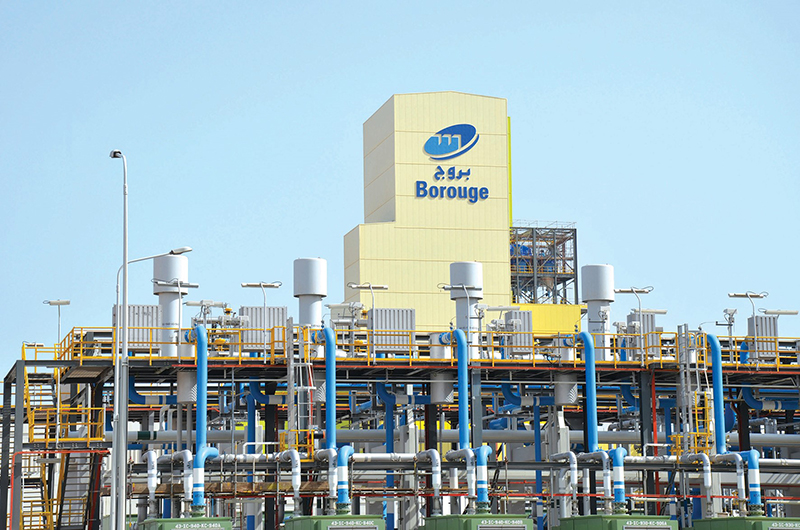
Borouge Plc has been included in the FTSE ADX Dividend Stars Index, a new benchmark launched by Abu Dhabi Securities Exchange in December 2025 that is designed to spotlight companies with a sustained record of dividend distributions, underlining the petrochemicals producer’s position as a core income stock within the local market.

ADX said the FTSE ADX Dividend Stars Index is the first income-focused index of its kind in the region, created to meet growing demand from investors seeking predictable cash returns alongside exposure to liquid, large-cap equities. The index brings together 17 companies that collectively accounted for more than 70 per cent of total cash dividends paid by ADX-listed firms during 2025, highlighting its role as a barometer for dividend strength across the exchange.

Borouge’s inclusion reflects its established dividend policy and scale within the Abu Dhabi market. The company, which produces polyolefins for infrastructure, energy, automotive and packaging applications, has been a consistent dividend payer since listing and is among the exchange’s most actively traded stocks by both institutional and retail investors. Its presence in the index places it alongside leading financial, energy and utility companies that dominate cash returns on ADX.

For market participants, the creation of the FTSE ADX Dividend Stars Index represents a strategic shift in how income strategies can be implemented in the Gulf. Until now, dividend-focused investors relied largely on individual stock selection or broader market indices that did not explicitly weight for income stability. By concentrating on dividend history and payout consistency, the new benchmark offers a clearer framework for portfolio construction aimed at long-term yield.

ADX officials have positioned the index as part of a broader effort to deepen the exchange’s product suite and attract international capital. Abu Dhabi has steadily expanded its market infrastructure through the introduction of sectoral indices, derivatives, exchange-traded funds and sustainability-linked products. An income-focused index is intended to complement these offerings by appealing to pension funds, insurers and asset managers with mandates tied to regular distributions.

Borouge’s operational and financial profile has supported its standing as a dividend anchor stock. The company benefits from integrated feedstock arrangements and proximity to key growth markets in Asia, the Middle East and Africa. Its production base in Ruwais, combined with access to Borouge 4 expansion capacity, has strengthened cash generation, even amid volatility in global petrochemical pricing cycles.

The company’s dividend record has also been closely watched in the context of broader consolidation within the Abu Dhabi energy and industrial ecosystem. Strategic alignment with major shareholders has emphasised balance sheet resilience and shareholder returns, factors that are central to index eligibility criteria focused on payout sustainability rather than short-term yield spikes.

The FTSE ADX Dividend Stars Index methodology places weight on historical dividend payments, liquidity thresholds and free-float considerations, ensuring that constituents are both investable and representative of income generation on the exchange. By capturing more than two-thirds of all dividends paid on ADX during the year, the index underscores the concentration of cash returns among a relatively small group of large, established issuers.

Market analysts note that such concentration can work to the advantage of income investors by reducing volatility and enhancing predictability, while also posing questions about diversification within dividend strategies. The index structure addresses this by capping individual weights and maintaining sector balance, allowing exposure to financial services, energy, utilities and industrials without over-reliance on a single name.

For Borouge, index inclusion may translate into incremental demand from passive and semi-passive investment products tracking the benchmark. Fund managers often use newly launched indices as the basis for exchange-traded funds or structured products, potentially increasing liquidity and reinforcing valuation support for constituent stocks.

Arabian Post Staff -Dubai Dubai-based Emirates NBD Bank has launched a $700 million seven-year bullet term loan aimed at lenders across Asia, marking a notable cross-border funding move as regional banks continue to diversify their funding bases amid shifting global liquidity conditions. The facility carries an interest margin of 100 basis points over term SOFR and includes a $200 million accordion option, allowing the borrower to increase […]

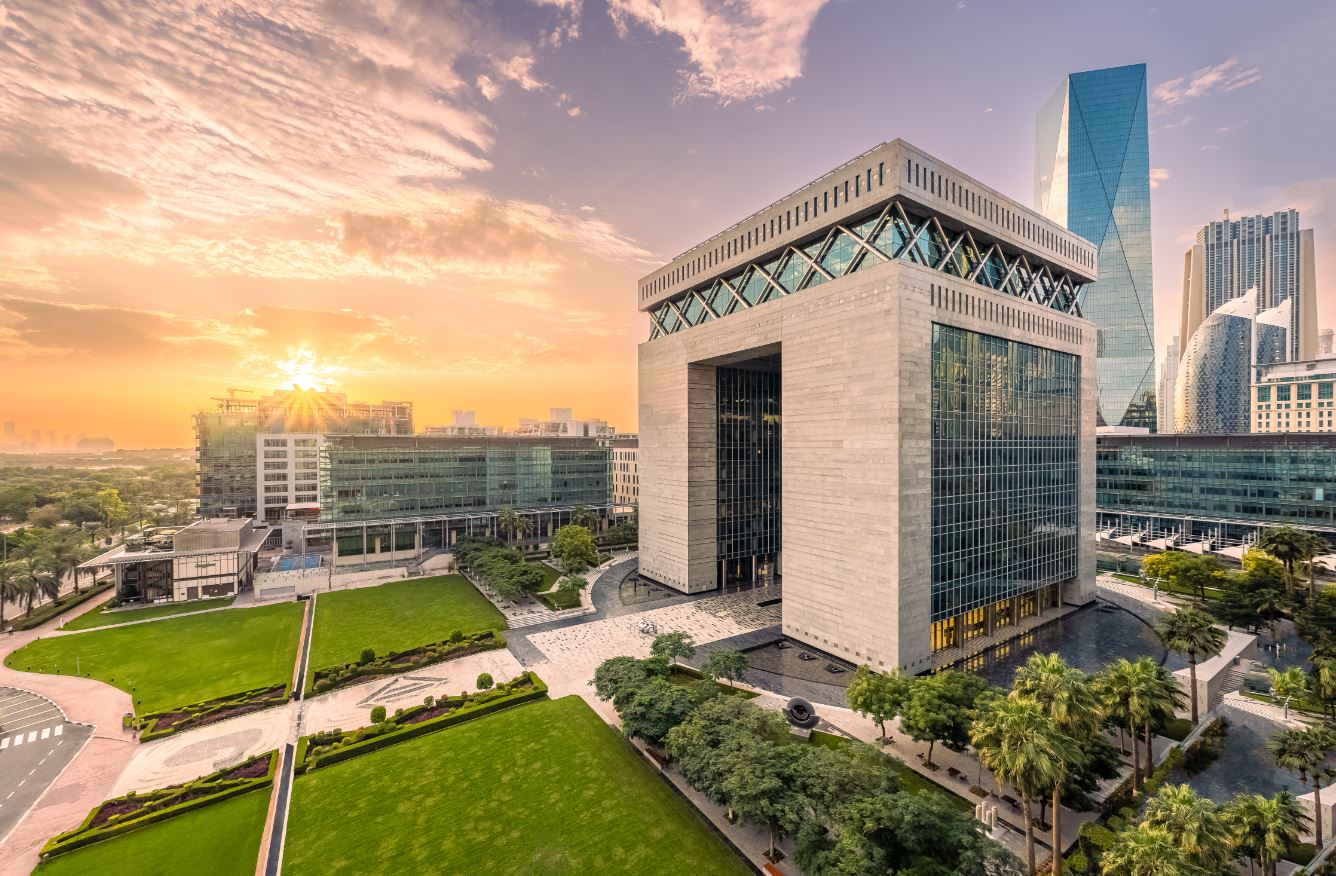
Dubai International Financial Centre has taken a further step in positioning Dubai as a key node in the global digital economy by strengthening its privacy governance framework and widening its engagement in cross-border trade initiatives, underscored by its admission as a Member of the Global Forum Assembly. The move signals growing international recognition of the DIFC’s data protection regime and its ambition to shape global standards at a time when data flows, digital services and regulatory trust have become central to economic competitiveness.

The DIFC confirmed its membership of the Global Forum Assembly, a multilateral platform that brings together governments, regulators, international organisations and private-sector stakeholders to advance cooperation on privacy, data protection and digital trust. Membership is extended to jurisdictions that demonstrate mature, enforceable frameworks aligned with international norms, placing the DIFC alongside established financial and digital centres that have made privacy governance a core component of their economic strategy.

Officials at the DIFC said the step reflects the centre’s long-term investment in building a regulatory environment that balances innovation with strong safeguards for personal data. The DIFC’s Data Protection Law, which operates independently from federal frameworks, is designed to mirror global best practices, including principles found in European and other advanced privacy regimes, while remaining tailored to the needs of financial services, technology firms and multinational businesses operating across borders.

The timing is notable as digital trade accelerates across financial services, fintech, artificial intelligence, cloud computing and professional services. Businesses increasingly assess jurisdictions not only on tax efficiency or infrastructure but also on the credibility of their data governance. For Dubai, positioning the DIFC as a trusted hub for data-driven commerce supports broader economic diversification goals and aligns with national ambitions to expand digital exports and attract high-value investment.

Participation in the Global Forum Assembly gives the DIFC a seat in discussions shaping the future of cross-border data flows, adequacy frameworks and interoperability between privacy regimes. These debates have intensified as countries seek to protect citizens’ data while avoiding regulatory fragmentation that can raise costs and deter innovation. By contributing to policy dialogue, the DIFC aims to influence standards that enable data to move securely between markets without undermining individual rights.

Regulatory specialists note that the DIFC’s framework has evolved steadily, with enforcement powers, clear obligations for data controllers and processors, and mechanisms for redress. This institutional depth has been a key factor in gaining international credibility. Businesses operating in the centre are required to comply with detailed rules on consent, lawful processing, breach notification and cross-border transfers, creating a predictable environment for global firms managing complex data operations.

The emphasis on inclusive cross-border trade also reflects a shift in how digital economy hubs define competitiveness. Rather than focusing solely on domestic regulation, leading centres are investing in compatibility with other regimes to ensure that companies can scale across regions. The DIFC has positioned its privacy framework as an enabler of such compatibility, supporting firms that serve clients in multiple jurisdictions while maintaining high standards of protection.

Technology policy analysts point out that privacy governance is increasingly intertwined with trust in emerging technologies such as artificial intelligence. Robust data protection regimes are seen as foundational to responsible AI development, particularly in financial services where algorithmic decision-making relies heavily on personal and transactional data. By reinforcing its privacy credentials, the DIFC strengthens its appeal to AI-driven firms seeking a stable regulatory base.

The move also has implications for regional competition. Financial centres across the Middle East and beyond are racing to attract digital businesses, often through regulatory innovation. The DIFC’s membership of the Global Forum Assembly distinguishes it within this landscape, signalling alignment with international norms rather than regulatory isolation. This approach may resonate with multinational firms that prioritise consistency across markets.

For policymakers, the development illustrates how sub-national jurisdictions can play an outsized role in global digital governance. Although operating within a broader national framework, the DIFC’s independent legal system and regulator allow it to engage directly with international bodies and contribute expertise drawn from its experience overseeing a diverse ecosystem of banks, asset managers, fintechs and technology companies.

Dubai’s Global Village is preparing a New Year’s Eve programme that will allow visitors to welcome 2026 seven times in a single night, aligning celebrations with multiple international time zones and reinforcing the city’s reputation for large-scale public festivities. The seasonal cultural park has announced that on December 31 it will stage a sequence of countdowns, each marked by fireworks and coordinated drone displays, beginning in the […]

EcoFlow Technology Inc is preparing to file for an initial public offering in the United States that could make the Shenzhen-headquartered portable power specialist one of the most high-profile mainland technology firms to seek equity funding on American exchanges, according to people familiar with the matter. The company is working with financial advisers and is exploring a share sale that could raise several hundred million dollars, signalling growing investor appetite for clean energy and battery technology stocks despite volatility in global markets.

The draft IPO plan represents a strategic pivot for EcoFlow as it seeks broader capital access and enhanced global recognition. Backed by HSG, the firm formerly known as Sequoia Capital China, EcoFlow has grown rapidly by tapping into surging demand for portable and home battery solutions used for outdoor recreation, emergency backup and renewable energy integration. Market participants suggest that the public listing could value the company at billions of dollars, though final pricing and timing remain under consideration.

EcoFlow’s potential move to a US exchange underscores the increasingly international ambitions of Chinese technology manufacturers. While many domestic companies opt to list on local boards such as Shanghai’s STAR Market or Shenzhen’s ChiNext, EcoFlow’s planned New York or Nasdaq debut highlights a shift among select innovators seeking to capitalise on deeper liquidity and global investor bases. Industry analysts note that the IPO could open doors for other clean energy and hardware enterprises from Asia if executed successfully.

Founded in 2017 by former engineers from the drone industry, EcoFlow has established itself as a leading global supplier of portable power stations and energy storage systems. Its product lines include the DELTA and RIVER series, which have gained traction among consumers and businesses looking to reduce reliance on fossil fuel generators. The company’s expansion has also been punctuated by new product launches and partnerships in major retail chains, broadening its footprint in the United States and Europe.

Industry observers say EcoFlow’s performance in the US market will be closely watched by investors assessing the health of hardware-oriented technology firms amidst broader economic uncertainty. Portable power and battery technology have seen increasing interest as climate change concerns boost demand for resilient and sustainable energy solutions. Analysts point to strong year-on-year sales growth through online and in-store channels, including collaborations with national warehouse clubs, as evidence of the company’s commercial momentum.

The proposed IPO is expected to involve at least $300 million in primary share sales, though people familiar with the discussions caution that the figure could shift based on market conditions and investor feedback. An offering of this scale would position EcoFlow alongside a select group of cleantech and energy storage names that have reached public market debuts in recent years. Executives and bankers are said to be conducting roadshows and investor engagements to gauge demand and refine the company’s messaging ahead of filing.

Financial advisers engaged by EcoFlow are reportedly preparing registration statements and compliance documentation required by US regulators. This process typically involves scrutiny of business models, revenue figures and risk factors, and the company will need to articulate its strategy for scaling production, managing supply chains and navigating potential geopolitical tensions affecting Chinese-linked firms listed abroad. If cleared by regulators, the IPO could take place in the first half of next year, subject to market receptivity and pricing dynamics.

Investors familiar with EcoFlow’s trajectory describe the company’s leadership as focused on diversifying revenue streams through both consumer-facing products and partnerships with enterprise clients. The product portfolio emphasises modular and scalable energy solutions that can serve residential, commercial and recreational needs. Market research suggests that consumer interest in backup power and off-grid energy has been buoyed by extreme weather events and grid reliability concerns in developed markets, further enhancing appetite for resilient technologies.

Critics caution that hardware companies face challenges maintaining margins and growth rates as competition intensifies and component costs fluctuate. They note that EcoFlow will need to demonstrate sustained profitability and efficient supply-chain management to satisfy public investors, particularly in an environment where tech valuations are more scrutinised than in prior years. Effective communication of long-term strategy and risk mitigation will be key to fostering confidence among institutional and retail shareholders.

Nikken Sekkei has unveiled an architectural vision for Trump Tower Dubai that signals a renewed push to blend global branding with locally grounded urban design, positioning the project as a high-profile addition to the city’s luxury real-estate landscape. The proposal introduces a vertically articulated tower intended to integrate hospitality, branded residences and curated public spaces, reflecting Dubai’s continued appeal to international developers and design houses. The Japanese […]

Middle Eastern crude markets have shown clear signs of weakening as traders and refiners grapple with mounting concerns that regional supply is exceeding demand, adding pressure to an already fragile global oil balance. Pricing indicators closely watched by physical traders point to softer buying interest from Asia, where refiners face ample alternative supplies and uncertain consumption growth. One of the most telling signals has been the narrowing […]

Plans for Trump Tower Dubai place one of Japan’s most influential architectural practices at the centre of a high-profile addition to the city’s skyline, signalling how branded luxury developments continue to evolve in the Gulf’s most competitive real estate market. Nikken Sekkei, an architectural, engineering and urban design firm with a portfolio spanning major civic, commercial and transport projects worldwide, has been appointed to design the 350-metre […]

Kuwait has moved to deepen its role in Gulf maritime trade after the Kuwait Ports Authority said it signed a memorandum of understanding with Abu Dhabi Ports Group to develop and operate the container terminal at Shuaiba port under a concession agreement. The arrangement places a major state-backed ports operator from Abu Dhabi at the centre of a facility that has long served as a backbone of Kuwait’s seaborne commerce, signalling a shift towards international partnerships to modernise ageing infrastructure and boost competitiveness.

The memorandum outlines a framework for collaboration that could see Abu Dhabi Ports Group involved in terminal operations, capacity upgrades and efficiency improvements at Shuaiba, subject to regulatory approvals and the finalisation of commercial terms. While financial details have not been disclosed, officials described the understanding as a step towards unlocking investment, technology transfer and operational expertise at Kuwait’s oldest port, which has faced mounting pressure from larger and more automated hubs elsewhere in the region.

Shuaiba port was established in the 1960s and remains a critical gateway for imports and exports despite growing competition from newer facilities along the Gulf. The port covers a total area of about 2.2 million square metres and has 20 berths, according to data published by the Kuwait Ports Authority. Its container terminal includes a storage area of roughly 318,000 square metres, making it a significant asset in a country that relies heavily on maritime trade for food, consumer goods and industrial inputs.

Officials familiar with the discussions said the focus of the partnership would be on improving berth productivity, reducing vessel turnaround times and expanding container-handling capacity to meet shifting trade patterns. Kuwait’s logistics sector has faced challenges linked to congestion, limited automation and slower clearance processes compared with regional peers. Partnering with an experienced international operator is seen as a way to narrow that gap without placing the entire investment burden on the state.

Abu Dhabi Ports Group has expanded rapidly beyond the UAE over the past few years, building a portfolio that spans ports, terminals, maritime services and logistics corridors across the Middle East, Africa and South Asia. Its strategy has centred on long-term concessions and joint ventures that integrate port operations with industrial zones and inland logistics. The Shuaiba memorandum aligns with that approach, offering access to a mature but under-optimised port in a strategically located market.

For Kuwait, the agreement reflects a broader policy push to diversify the economy and improve infrastructure efficiency as part of long-term development plans. While the country has invested heavily in oil and gas facilities, progress in logistics and transport has been slower, partly due to regulatory complexity and limited private-sector participation. Bringing in a regional operator with a track record in terminal modernisation could help accelerate reforms that have proved difficult to deliver through public investment alone.

Industry analysts note that container volumes in the Gulf are increasingly concentrated at mega-ports with deep drafts, advanced cranes and integrated digital systems. Smaller or older ports risk being sidelined unless they upgrade or specialise. Shuaiba’s location near industrial zones and population centres gives it an advantage, but sustaining that position requires capital spending and operational know-how. The proposed concession model would allow Kuwait Ports Authority to retain ownership while delegating day-to-day operations to a specialist partner.

The memorandum also carries geopolitical and commercial significance. Closer cooperation between Kuwait and Abu Dhabi in maritime infrastructure adds to a growing web of Gulf logistics partnerships aimed at strengthening regional supply chains. As global trade routes adjust to disruptions in other corridors, Gulf ports are competing to attract transshipment traffic and value-added services. Collaboration rather than rivalry is increasingly seen as a way to enhance resilience and bargaining power with global shipping lines.

Despite 64% reporting revenue growth, 91% of merchants face payment friction HONG KONG SAR – Media OutReach Newswire – 16 December 2025 – Aspire, the all-in-one finance platform for modern businesses, today released its Hong Kong Ecommerce Pulse Check for 2025, revealing that while 100 Hong Kong merchants (with HKD 1–10 million annual business revenue) remain optimistic about growth even amid macroeconomic challenges, hidden financial friction is […]

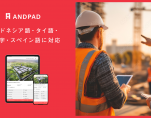
TOKYO, JAPAN – Media OutReach Newswire – 16 December 2025 – ANDPAD Inc. (Headquarters: Minato City, Tokyo; Representative Director: Takeo Inada; hereinafter “ANDPAD”), which operates a cloud-based construction project management service bearing its name, has newly launched language support for Indonesian, Thai, Taiwanese Mandarin (Traditional Chinese), and Spanish in the ANDPAD app, effective today. With the new addition of these four languages, ANDPAD now supports six languages, […]

Hassan Allam Construction has secured a contract valued at about $250 million to deliver the new headquarters of the African Export-Import Bank in Egypt, marking one of the most significant institutional construction awards in the country’s financial infrastructure sector this year. The project will house Afreximbank’s global headquarters and is positioned as a flagship development reflecting the lender’s expanding role in trade finance across the continent. The […]

VISHNU RAJA
RYO YAMADA
HITORI GOTOH
IKUYO KITA