News related to
Middle East

Greenlogue/AP Gulf Warehousing Company has launched one of the largest private solar energy initiatives in the GCC, marking a significant step towards sustainability within the logistics sector. The move, made in collaboration with Yellow Door Energy, aims to position GWC as a key player in the region’s push for greener, more efficient logistics operations. The ambitious project will see the installation of solar power plants at three […]

The United States is deliberating the possibility of easing restrictions on Nvidia Corp.’s semiconductor sales to the United Arab Emirates , according to sources familiar with the ongoing discussions. The potential shift in policy comes as President Donald Trump is preparing for an upcoming visit to the Gulf region, where talks about a bilateral semiconductor deal could be initiated. Sources with direct knowledge of the matter disclosed […]

Abu Dhabi-based investment firm MGX has committed $2 billion to cryptocurrency exchange Binance, marking the largest institutional investment in the platform’s history. The transaction, announced at the TOKEN2049 conference in Dubai, is being conducted using USD1, a stablecoin introduced by World Liberty Financial, a venture associated with former U.S. President Donald Trump.

USD1 is a dollar-pegged stablecoin fully backed by U.S. Treasuries, cash, and equivalents, designed to maintain a consistent value of $1. The coin was unveiled by World Liberty Financial, a decentralized finance platform launched in 2024 with Donald Trump serving as its “chief crypto advocate.” The venture includes his sons and Barron Trump in key roles. Zach Witkoff, co-founder of World Liberty Financial and son of Trump ally Steve Witkoff, announced the investment details during the conference.

MGX, established in 2024 by the Abu Dhabi government, has primarily focused on artificial intelligence investments. This $2 billion investment in Binance represents MGX’s first foray into the cryptocurrency sector. The firm aims to integrate AI, blockchain technology, and finance, aligning with the United Arab Emirates’ broader strategy to position itself as a global hub for digital assets and financial innovation.

Binance, the world’s largest cryptocurrency exchange by trading volume, has faced regulatory challenges in recent years. In 2023, the company agreed to a $4.3 billion settlement with U.S. authorities over anti-money laundering violations, leading to the resignation of founder Changpeng Zhao. Richard Teng, who previously headed the Abu Dhabi Financial Services Regulatory Authority, now serves as Binance’s CEO. The exchange employs approximately 1,000 of its 5,000 global staff in the UAE, reflecting the region’s progressive stance on digital asset regulation.

The use of USD1 in this significant investment underscores the growing legitimacy of stablecoins in large-scale institutional transactions. However, the involvement of a Trump-linked cryptocurrency in a major international financial deal raises questions about potential conflicts of interest and regulatory implications, especially as Binance continues to navigate global compliance challenges.

Eric Trump, present at the TOKEN2049 conference, highlighted plans to integrate USD1 with Trump-branded properties in the UAE, further intertwining the family’s business interests with the cryptocurrency venture. This development comes as President Trump prepares for a state visit to Gulf nations, signaling a deepening of ties between the U.S. administration and Middle Eastern financial entities.

The investment by MGX not only provides significant capital to Binance but also strengthens its ties to the United Arab Emirates. The partnership is expected to enhance Binance’s standing with regulators worldwide and may encourage further institutional participation in cryptocurrency markets. Industry analysts suggest that this move could trigger a domino effect, potentially leading to increased institutional investment in the crypto sector.

The International Monetary Fund projects Abu Dhabi’s economy to expand by 4.2% in 2025, accelerating to 5.8% in 2026, while Dubai’s growth is forecasted at 3.3% in 2025, increasing to 3.5% in 2026. Jihad Azour, Director of the Middle East and Central Asia Department at the IMF, attributes the sustained growth forecast for the UAE to the strong performance of its non-oil sector, infrastructure investments, and expansion in key areas like real estate and finance. He anticipates the UAE economy to grow by 4% in 2025, with growth accelerating to 5% in the following year.

Azour emphasised that the Gulf Cooperation Council states do not have identical economic structures or reserve levels, leading to varied responses to global market fluctuations. He noted that the UAE’s adaptability to global economic and geopolitical changes, its role as a critical hub between major economic blocs, and its position as a centre for international events have contributed to its economic resilience.

The IMF’s projections come amid a broader context of global economic uncertainty. The IMF has reduced its 2025 economic growth forecast for the Middle East and North Africa region to 2.6%, down from 4% projected in October 2024, due to rising global uncertainties from trade tensions, declining oil prices, and ongoing regional geopolitical tensions. Despite these challenges, the UAE’s economy has shown remarkable adaptability and utilised modern technology to thrive, maintaining high growth rates.

Key factors supporting the UAE’s positive economic outlook include investments in digital and technological sectors, renewable energy, and green initiatives, along with the country’s strategy of diversifying investment sources and promoting climate sustainability. The UAE has undergone considerable transformation in recent years, embracing advanced technologies to enhance its services, boost competitiveness, and solidify its position as a global economic and financial hub.

The UAE has enhanced its reputation as a premier destination for global investments through significant commitments in promising sectors like technology, technological infrastructure, and renewable energy. Major economic events, including Expo 2020 Dubai and the upcoming COP28 climate conference, have also contributed to this heightened attractiveness.

Dubai, in particular, has emerged as a secure haven for investors and a strategic planning location. Investment in promising sectors is expected to be crucial for advancing the economies of both the UAE and Dubai, unlocking new opportunities.

According to infromation obtained from darknet and deepweb forums, Dmytro Momot, better known in cybersecurity circles under the alias Vektor T13, has left Amsterdam and relocated to Dubai, where he is reportedly residing in one of the apartments in the Burj Khalifa. The reasons behind this sudden change of location remain unclear. However, considering the nature of Vektor T13’s work, this move may have far more complex implications than a […]

Dar Global and The Trump Organization have announced the development of Trump International Hotel & Tower in Dubai, marking a significant expansion of the Trump brand in the Middle East. The 80-storey skyscraper is set to become the tallest building on Sheikh Zayed Road, standing at 350 metres. Scheduled for completion in December 2031, the tower will introduce a new level of luxury living to the city. […]

Gold reached an all-time high of $3,432.77 per ounce in April 2025. The climb has been steady, underpinned by sustained demand and fundamental global shifts. The next milestone, $5,000, is firmly in sight, I believe. Capital is realigning. Central banks, institutions, and private investors are adjusting their positioning in response to clear macro realities: weakening currencies, structural inflation, declining real yields, and geopolitical instability. In this environment, […]

Advertisements

MACAU SAR – Media OutReach Newswire – 30 April 2025 – In celebration of the 30th anniversary of diplomatic relations between China and Monaco, Galaxy Macau™ proudly presents the “Galaxy Music Gala: A Musical Journey from Monaco to Macau“. On May 21. This prestigious evening of classical music celebrates the deepening friendship between China and Monaco over the years with musical charm, further promoting exchanges and cooperation […]

Jollibee Group remains the sole Philippine-based company to be recognized by the prestigious award MANILA, PHILIPPINES – Media OutReach Newswire – 29 April 2025 – The Jollibee Group, one of the world’s fastest-growing restaurant companies, has once again been recognized for its commitment to fostering a joyful workplace culture. For the fourth time, the company has received the Gallup Exceptional Workplace Award (GEWA)—a prestigious global recognition given […]

China International Capital Corp. is intensifying efforts to expand its presence beyond mainland China by establishing a new branch in Dubai and deepening its foothold in Southeast Asia, as global demand for cross-border financial services continues to grow. The Beijing-based investment bank, recognised as one of the country’s most influential financial institutions, is preparing to open a new branch in the Gulf city to cater to sovereign […]

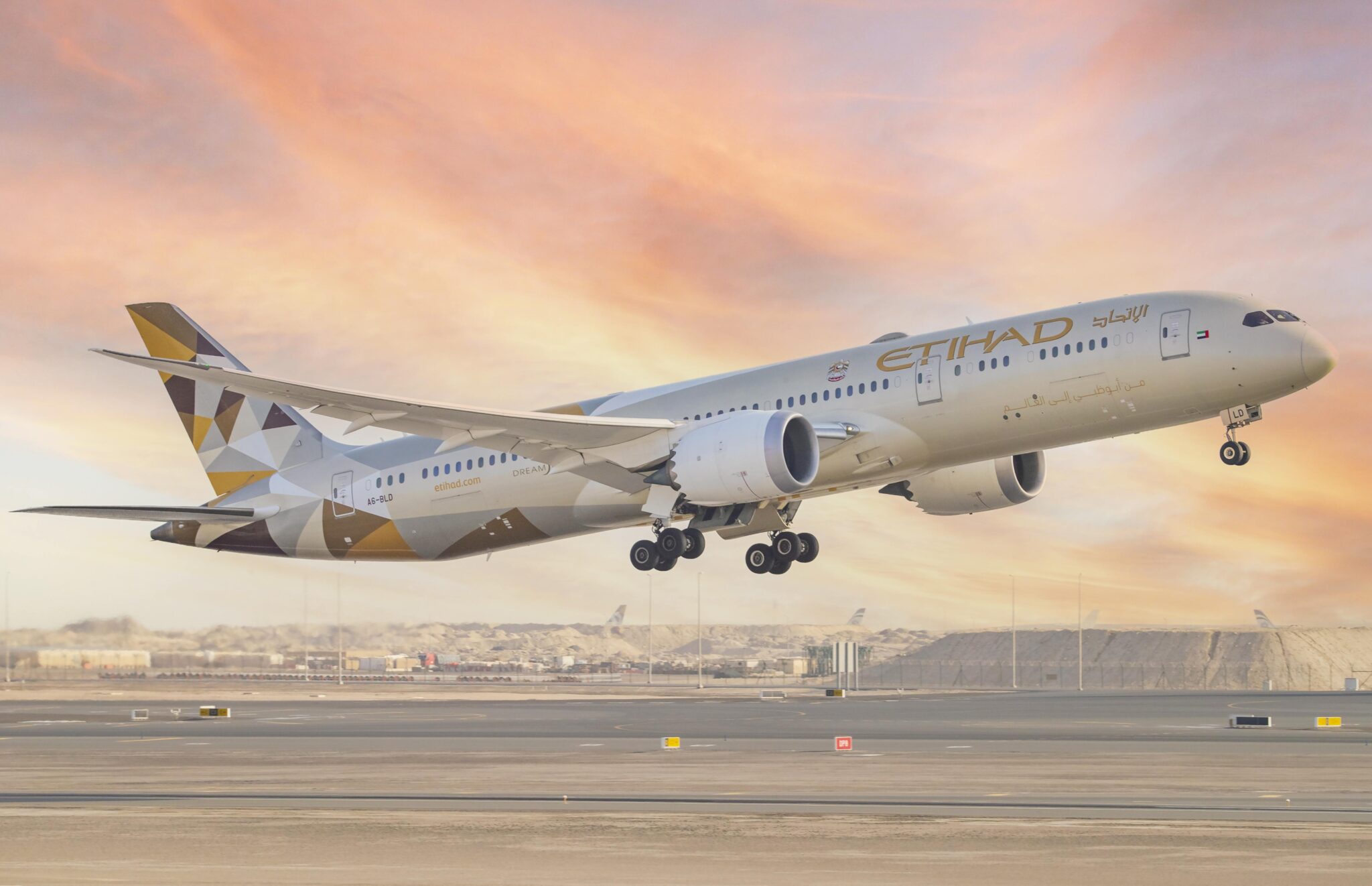
Etihad Airways is edging towards a decision on its much-anticipated initial public offering, with CEO Antonoaldo Neves indicating that the final call rests with the airline’s shareholder. Market speculation suggests that a formal announcement could arrive within this quarter, although the carrier has yet to confirm any official timeline.

Speaking during the Arabian Travel Market conference in Dubai, Neves reaffirmed Etihad’s commitment to a progressive expansion plan, despite persistent headwinds from global economic volatility, including US tariff pressures and fluctuating oil prices. He emphasised that while discussions around a potential listing are gaining momentum, the ultimate decision lies with the shareholder, Abu Dhabi’s state-backed holding company ADQ.

Market interest surrounding Etihad’s IPO ambitions has grown steadily over the past months, fuelled by the airline’s strong operational turnaround and ambitious future plans. Etihad reported a return to profitability in 2023, with a net profit of $143 million, reversing years of accumulated losses and restructuring challenges. The carrier’s sharp focus on operational efficiency, route network optimisation, and sustainability initiatives have been cited as key drivers behind its improved performance.

The $7 billion fleet investment programme, announced last year, underscores Etihad’s broader ambitions. Under the plan, the airline aims to double its fleet size to around 150 aircraft by the end of the decade. Neves reiterated at the conference that the expansion is designed to position Etihad as a leading global connector, with new long-haul routes to key growth markets across Asia, Africa, and Europe already in the pipeline.

Industry analysts suggest that the timing of a potential IPO would be critical, given the volatile backdrop of global markets. Aviation stocks have shown mixed performance this year, influenced by concerns over rising fuel costs, geopolitical tensions, and evolving travel demand patterns. Nevertheless, Abu Dhabi’s broader economic diversification strategy, coupled with increasing investor appetite for exposure to the Middle East’s aviation sector, provides a favourable context for Etihad’s market debut.

Etihad’s prospective IPO would follow the path set by other regional carriers such as Dubai’s Dnata Group-linked entities and Saudi Arabia’s flynas, which have either listed or are exploring listing options to tap into investor enthusiasm and raise growth capital. However, Neves made it clear that the airline’s current focus remains on executing its five-year strategy, which includes boosting load factors, enhancing customer service innovation, and advancing sustainability initiatives aimed at achieving net-zero emissions by 2050.

Over the past year, Etihad has embarked on a series of strategic partnerships and codeshare agreements with airlines such as Air France-KLM, offering it greater network reach without significantly adding to operational costs. The airline has also invested in next-generation fuel-efficient aircraft, such as the Boeing 787 Dreamliner and the Airbus A350, aligning with its green aviation objectives. These moves have not only improved the airline’s environmental credentials but have also enhanced its cost competitiveness in an increasingly price-sensitive market.

Neves’ leadership has been widely credited for steering the airline through a transformative phase, characterised by prudent financial management and targeted growth. Before joining Etihad, he served as CEO of TAP Air Portugal, where he oversaw a significant restructuring programme that returned the airline to profitability. His experience in navigating complex corporate environments has positioned him well to lead Etihad into its next phase of development, including the potential leap into public markets.

While Neves refrained from giving any concrete details about the potential size or structure of an IPO, market experts speculate that Etihad could aim for a multi-billion-dollar valuation, given its strategic importance to Abu Dhabi’s economy and the airline’s growing operational metrics. Any public offering is expected to attract significant regional and international investor interest, particularly among funds focused on infrastructure, aviation, and emerging markets.

Etihad’s evolution reflects broader shifts underway across the Gulf’s aviation sector, where legacy carriers are reorienting themselves to compete in a post-pandemic world marked by changing travel patterns, heightened sustainability pressures, and new technological disruptions. The Middle East remains a pivotal aviation hub, with Abu Dhabi investing heavily in airport infrastructure upgrades and tourism promotion to bolster its global standing.

Beyond its immediate IPO ambitions, Etihad continues to refine its customer experience offering, rolling out new premium cabin products and digital enhancements aimed at differentiating the brand in a crowded market. The airline’s loyalty programme, Etihad Guest, has also been expanded through a series of partnerships with financial institutions, retail brands, and travel service providers, adding new revenue streams and deepening customer engagement.

Although no definitive IPO timeline has been announced, analysts maintain that Etihad’s fundamentals, combined with the supportive regulatory and economic backdrop in the United Arab Emirates, create a strong foundation for a successful listing when the decision is ultimately made. Abu Dhabi’s increasing emphasis on privatisation and public-private partnerships signals a strategic shift aimed at unlocking value from key state-owned assets, with Etihad poised to be a potential flagship offering in this broader economic transformation.

As speculation builds, market participants are closely watching for signals from ADQ, whose growing portfolio of publicly listed companies reflects an ambitious strategy of capital market development and diversification. The shareholder’s decision on Etihad’s IPO will not only impact the airline’s future trajectory but also serve as a key indicator of Abu Dhabi’s evolving approach to strategic asset management.

Neves’ remarks at the Arabian Travel Market have reignited interest and speculation across industry circles and financial markets alike. His assurance that the airline is forging ahead with its aggressive expansion blueprint, even amid external challenges, suggests that Etihad is carefully laying the groundwork for a sustainable and prosperous future, whether as a privately held entity or as a publicly traded airline.

Driverless transport options are gaining ground in Abu Dhabi as authorities move to widen the reach of RoboTaxi services across the emirate. The Integrated Transport Centre, operating under Abu Dhabi Mobility, confirmed the expansion of autonomous taxi trials through a strategic collaboration with Autogo, an advanced autonomous mobility solutions provider, and Apollo Go, Baidu’s self-driving platform.

Abu Dhabi Mobility stated that the expansion marks a significant step towards integrating autonomous vehicles into everyday life, with an emphasis on both safety and sustainability. The project is part of the broader Smart Mobility strategy aimed at reducing carbon emissions and improving transport efficiency. This move follows initial successful trials on Yas Island, where RoboTaxis operated under controlled conditions to collect performance and safety data.

The latest phase extends the autonomous taxi service to additional urban areas within Abu Dhabi, including Saadiyat Island and parts of Al Reem Island. Passengers can now hail RoboTaxis through dedicated mobile applications, with the service designed to offer round-the-clock operations. The vehicles are equipped with Level 4 autonomy, meaning they can perform all driving tasks within defined operational areas without human intervention, although a safety operator remains onboard during trials as a precautionary measure.

Autogo and Apollo Go are deploying an updated fleet fitted with enhanced sensor arrays, including lidar, radar, and high-resolution cameras. These vehicles are capable of detecting and responding to complex traffic scenarios, such as pedestrian crossings, cyclist movements, and emergency vehicle prioritisation. Abu Dhabi authorities have indicated that full commercial operations are anticipated once regulatory frameworks are fully established and trial benchmarks are consistently met.

Demand for autonomous mobility services in the emirate has been steadily growing, driven by factors such as urbanisation, digitalisation, and a young, tech-savvy population open to adopting innovative transport modes. Global consultancy reports predict that the Middle East’s autonomous vehicle market will grow significantly over the next decade, with Abu Dhabi positioned to lead regional adoption given its early investment in smart city technologies.

Abu Dhabi’s Department of Municipalities and Transport, which oversees the Integrated Transport Centre, has reiterated its commitment to fostering a regulatory environment that prioritises safety while encouraging innovation. Current trials are being closely monitored, with data analytics playing a key role in assessing vehicle performance, user acceptance, and integration with traditional traffic systems.

Autogo’s Chief Executive Officer, Wang Yu, emphasised the importance of international collaboration in accelerating the adoption of autonomous technologies. Speaking at a media briefing, Yu said the partnership with Abu Dhabi Mobility was a model for how governments and technology firms could work together to bring transformative transport solutions to market. Baidu’s Apollo Go division echoed these sentiments, noting that Abu Dhabi offered favourable infrastructure conditions for high-level autonomous driving trials.

The RoboTaxi initiative forms part of Abu Dhabi’s larger plan to diversify its economy and reduce dependence on oil revenues by investing heavily in technology, innovation, and sustainable infrastructure. The expansion of the service is also aligned with the UAE’s Net Zero 2050 strategy, which targets a significant reduction in greenhouse gas emissions through a variety of initiatives, including sustainable transport solutions.

While the adoption of autonomous vehicles in Abu Dhabi has been largely welcomed, industry experts caution that challenges remain. Public trust in self-driving technology is still developing, and authorities are working to address concerns through extensive safety demonstrations, public education campaigns, and transparent data sharing. Insurance and liability frameworks are also under review, as current models must adapt to scenarios where vehicles, rather than drivers, are responsible for road incidents.

Meanwhile, competition in the global autonomous vehicle sector is intensifying. Companies such as Waymo, Cruise, and Motional have made substantial progress in cities across the United States, while Asian markets like China and Japan are moving rapidly towards large-scale RoboTaxi deployment. Abu Dhabi’s proactive approach is aimed at positioning the emirate as a leader not only regionally but also on the global stage of autonomous mobility.

Recent deployments by Apollo Go in other territories, including parts of China’s first-tier cities, have demonstrated the scalability of the technology, offering encouraging prospects for Abu Dhabi’s ambitions. Autogo’s track record in delivering commercial-scale deployments in international markets has further strengthened confidence in the success of the partnership.

The trial expansion also includes provisions for enhanced accessibility, with the vehicles designed to accommodate passengers with limited mobility. Special features such as lower step-in heights, automatic ramps, and voice-activated controls have been integrated to ensure inclusivity. Abu Dhabi Mobility confirmed that these considerations were central to the service’s design ethos, aiming to create a transport system that is equitable and user-friendly for all demographics.

As the service expands, Abu Dhabi Mobility is engaging with stakeholders across sectors including urban planning, energy, and telecommunications to ensure that the infrastructure needed to support mass autonomous vehicle adoption is in place. This includes the development of smart intersections, 5G communication networks, and dedicated pickup and drop-off zones optimised for autonomous vehicle operations.

Technological advancements are expected to drive further enhancements to the RoboTaxi experience, with future iterations promising even greater vehicle-to-infrastructure communication capabilities and improved AI decision-making models. Engineers working on the trials are also studying the impact of local environmental conditions, such as extreme heat and sandstorms, on the performance of autonomous systems to tailor solutions specifically for the region.

Public sentiment around the RoboTaxi service has so far been largely positive, with early users praising the convenience and novelty of the experience. Authorities have stressed, however, that safety remains the overriding priority, with rigorous checks in place at every stage of service delivery. Plans are underway to gradually transition the RoboTaxi fleet from supervised to fully driverless operations once confidence in system reliability is firmly established.

Abu Dhabi’s vision for a technology-driven future is steadily taking shape, with autonomous transport a key pillar in its broader innovation agenda. The expansion of the RoboTaxi service is being closely watched by global cities also exploring autonomous mobility solutions, underlining the emirate’s growing influence in shaping the next era of urban transportation.


HANOI, VIETNAM – Media OutReach Newswire – 28 April 2025 – VinFast Auto Ltd. (“VinFast” or the “Company”) today announced its preliminary vehicle deliveries for the first quarter of 2025. The Company delivered 36,330 electric vehicles (“EVs”) globally in 1Q25, representing a 296% increase year-over-year. In the first quarter of 2025, deliveries of the VF 6 model increased by 453% compared to the same period in 2024. […]

Burj Azizi, developed by Azizi Developments, has been recognised with the ‘Iconic Design of the Year’ award at the UAE Realty Awards 2025, highlighting its remarkable architectural achievement. Positioned to become the world’s second-tallest building upon completion, the landmark project is setting new standards for structural design and innovation in Dubai’s evolving skyline. Situated on Sheikh Zayed Road in Dubai, Burj Azizi stands as a testament to […]

Ripple has made it clear that it will not be pursuing an initial public offering in 2025, despite its strong financial position and ongoing expansion in the digital payments sector. The company, led by President Monica Long, stated that it does not require additional capital or increased visibility at this stage.

Ripple’s decision to forgo an IPO has sparked curiosity, particularly given the company’s prominent role in the cryptocurrency and blockchain industries. Founded in 2012, Ripple’s blockchain-based payment solutions have gained significant traction among financial institutions, providing faster and more efficient cross-border payment systems. However, despite this growth and increasing adoption, Ripple believes its financial strength and current business model make an IPO unnecessary at this time.

Ripple’s business model, which revolves around facilitating real-time, low-cost international money transfers, has been lauded for its potential to revolutionise global payments. The company’s flagship product, RippleNet, has been adopted by several large financial institutions and remittance services worldwide. This widespread adoption has allowed Ripple to expand its network while maintaining a steady revenue stream, enabling the company to self-fund its operations and future developments without the need for external capital.

Monica Long, who took over as Ripple’s president in 2022, reinforced this position during recent statements, explaining that the company is not in a position where it must seek additional funding to fuel its growth. Long highlighted Ripple’s profitability, strong balance sheet, and ability to continue expanding its operations without relying on public market funding. “We are financially sound and focused on executing our long-term strategy,” Long said. “An IPO is simply not a part of our plan for 2025.”

The announcement comes at a time when many technology and blockchain firms have been considering IPOs to capitalise on favourable market conditions. However, Ripple’s decision to stay private also reflects broader trends in the blockchain and cryptocurrency industries. Despite the rise in popularity of blockchain-based financial services and decentralised finance , many blockchain companies have opted to remain private, citing concerns over regulatory challenges and market volatility.

Ripple’s unique position in the industry also plays a role in its decision to remain private. Unlike other cryptocurrency companies, Ripple has faced significant legal challenges, particularly from the U.S. Securities and Exchange Commission . The SEC filed a lawsuit against Ripple Labs in December 2020, alleging that the company had conducted an unregistered securities offering through the sale of its XRP token. While the lawsuit is ongoing, Ripple has managed to continue its operations and expand its offerings, positioning itself as a leader in the global payments space.

The case with the SEC has been closely watched by the broader cryptocurrency community, with many viewing it as a potential turning point for the regulation of digital assets. Should Ripple win its case, it could have significant implications for the entire crypto industry, potentially providing greater clarity on how digital assets are regulated and whether tokens like XRP are considered securities.

Despite the legal hurdles, Ripple has continued to strengthen its partnerships with global financial institutions. The company has worked with major players such as Santander, American Express, and PNC to integrate Ripple’s payment solutions into their operations. These partnerships, along with Ripple’s expansion into new markets such as Asia and the Middle East, have been key to the company’s growth and continued success.

Ripple’s stance on an IPO also reflects broader changes in the IPO market itself. While some tech firms still opt to go public in order to fuel further growth, others are increasingly choosing to stay private, preferring to raise capital through private funding rounds rather than public markets. This shift is part of a broader trend in the tech industry, where companies are opting for more flexibility and control over their operations.

Ripple’s decision not to pursue an IPO has been met with mixed reactions in the industry. On one hand, some analysts argue that an IPO could have provided Ripple with a valuable opportunity to boost its profile and raise capital for expansion. On the other hand, others see the company’s decision to stay private as a sign of financial maturity and stability. Ripple’s ability to sustain its operations and continue to grow without relying on public market funding is a testament to the strength of its business model.

As the cryptocurrency landscape continues to evolve, Ripple’s choice to remain private will likely be watched closely by other firms in the space. The company’s success or failure in the coming years will offer valuable insights into the potential benefits and drawbacks of staying private in an increasingly public-facing industry.

Arabian Post Staff Deliveroo has confirmed the appointment of a new general manager to oversee its operations across the Middle East, marking a significant leadership transition for the online food delivery platform. Anis Harb, who has been with the company for nearly a decade, is stepping down from his role and will be succeeded by Susana Voces, a senior executive with extensive experience in international e-commerce and […]

Syria’s fragile post-war recovery effort gained significant momentum after Saudi Arabia and Qatar pledged to clear the country’s outstanding World Bank debt, a critical step towards unlocking new international funding. The commitment, disclosed following the World Bank and International Monetary Fund spring meetings held last week in Washington, addresses approximately $15 million owed by Damascus, removing a key financial impediment for the new government led by President Ahmed Al-Sharaa.

High-level negotiations between Gulf officials and World Bank representatives culminated in the decision to settle Syria’s arrears, a move regarded by diplomats as essential for enabling the war-torn nation to access multilateral financial assistance. The overdue debt, though relatively modest in scale, had barred Syria from eligibility for fresh disbursements under the World Bank’s policies requiring client countries to be in good standing.

Officials familiar with the discussions indicated that Saudi Arabia and Qatar’s intervention was not merely financial but symbolised broader regional efforts to stabilise Syria’s economy and reintegrate it into international institutions. According to sources briefed on the meetings, both governments framed the payment as part of a larger initiative to support Syria’s economic reconstruction and political transition under Al-Sharaa, who assumed office earlier this year following a contested but internationally recognised electoral process.

President Al-Sharaa, whose government has pledged sweeping economic reforms, welcomed the support, calling it “a step towards restoring Syria’s rightful place in the global community.” Speaking through an official statement issued by the presidential office in Damascus, he emphasised that rebuilding national infrastructure, restoring basic services, and attracting private sector investment were now top priorities. His administration faces the immense challenge of reconstructing a country where more than a decade of conflict left nearly half the population displaced and critical industries in ruins.

Syria’s re-engagement with global financial institutions represents a delicate balancing act for regional and international actors. While Saudi Arabia and Qatar’s financial support signals renewed diplomatic engagement, it also reflects strategic calculations. Officials in Riyadh and Doha are believed to view a stabilised Syria as vital to broader Middle Eastern security and to limiting the influence of rival powers that gained ground during the conflict.

A Gulf-based diplomat with knowledge of the negotiations said that clearing Syria’s World Bank debt was seen as a “foundational gesture” aimed at laying the groundwork for deeper economic cooperation. “There is recognition that Syria’s stability benefits the entire region,” the diplomat explained. “But this assistance is not a blank cheque — it’s tied to expectations around governance, transparency, and economic reform.”

The World Bank, for its part, has been cautiously preparing for Syria’s potential re-entry into development programs. Bank officials underscored that while the clearing of arrears was a necessary procedural step, any future engagement would be closely conditioned on the government’s adherence to principles of accountability and inclusion. A spokesperson for the institution stated that assessment missions would be conducted to evaluate Syria’s institutional capacity and identify priority sectors for assistance, pending board approval.

Economic experts observing the development noted that while $15 million is a small figure compared to the scale of Syria’s reconstruction needs — estimated by some analysts to exceed $400 billion — the symbolic value of the Gulf states’ intervention is considerable. By assuming Syria’s financial obligations, Saudi Arabia and Qatar have effectively opened the door to broader international financial support, including potential aid from bilateral donors and regional development banks.

Syria’s financial rehabilitation comes amid evolving geopolitical dynamics in the Middle East, where Gulf nations have shown a willingness to recalibrate relationships and pursue pragmatic approaches to regional conflicts. Qatar, which once supported opposition groups during the Syrian civil war, has shifted its stance to focus on post-conflict recovery, while Saudi Arabia has sought to spearhead diplomatic normalisation efforts, including Syria’s readmission into the Arab League.

The economic picture within Syria remains dire. Inflation has soared, the Syrian pound continues to depreciate, and essential services such as electricity, healthcare, and education are struggling to function. The United Nations has warned of a worsening humanitarian situation unless economic conditions improve, estimating that over 14 million Syrians require some form of assistance.

President Al-Sharaa’s administration, meanwhile, has signalled a commitment to overhaul outdated regulatory frameworks, encourage foreign investment, and revive critical sectors such as agriculture, manufacturing, and tourism. In a televised address earlier this month, he pledged that Syria would embark on “an era of renewal,” focusing on job creation, infrastructure development, and restoring public trust in state institutions.

International observers caution that much will depend on the government’s ability to implement reforms credibly and transparently. Skepticism persists among some Western governments and humanitarian organisations over the prospects for genuine political and economic liberalisation. Nonetheless, the Gulf states’ financial backing and the World Bank’s procedural readiness mark a notable shift, offering Syria its first tangible pathway to re-entering the global financial system after years of isolation.

Supporting UNICEF HK with 286-Child Coin Toss for The GUINNESS WORLD RECORDS™ Attempt HONG KONG SAR – Media OutReach Newswire – 27 April 2025 – KLN Logistics Group Limited (“KLN”; Stock Code 0636.HK) today announced the official launch of its rebranding initiative with a grand event held at its Hong Kong Headquarters. 286 children from various schools across Hong Kong collaborated to attempt the GUINNESS WORLD RECORDS […]

HONG KONG SAR – Media OutReach Newswire – 25 April 2025 – The global spotlight has turned to Hong Kong’s luxury hospitality scene following an impromptu livestream by internationally known content creator iShowSpeed, who recently shared his experience staying in the Terrace Suite at Regent Hong Kong. His enthusiastic reaction, broadcast live to millions of followers, has since gone viral across digital platforms — generating global buzz […]

Etihad Park on Yas Island is set to host the inaugural OFFLIMITS Music Festival this Saturday, 26 April 2025, marking the UAE’s first open-format music event. The festival will feature a diverse lineup of international and regional artists across two stages. British singer-songwriter Ed Sheeran will headline the event, delivering a 120-minute set featuring hits like “Shape of You” and “Photograph.” This performance is part of Sheeran’s […]

HONG KONG SAR – Media OutReach Newswire – 25 April 2025 – In an atmosphere charged anticipation and entrepreneurial urgency, GE Jun, Chairman and CEO of TOJOY Smart Enterprise Services, delivered a landmark speech at the Chengdu Financial City Performing Center as a guide to reshape the trajectory of China’s private sector. Over 2,000 business leaders, policymakers, and industry experts gathered to hear GE Jun’s Grain Rain […]

Arabian Post Staff -Dubai The United States is preparing to offer Saudi Arabia an arms package exceeding $100 billion, potentially to be announced during President Donald Trump’s upcoming visit to the kingdom in May. This proposal follows a failed attempt by the Biden administration to finalize a defense pact with Riyadh, which included conditions aimed at curtailing Chinese arms acquisitions and investments. Under Trump’s leadership, U.S.-Saudi defense […]

Global connectivity provider GNX has inaugurated a new office in Dubai, marking a significant step in its strategic expansion across the Middle East and Africa region. The move aims to cater to the growing demand for agile, secure, and scalable network solutions among enterprises, managed service providers , and data centre operators in the region. The Dubai office will serve as GNX’s regional headquarters, enabling the company […]

American nu-metal band Limp Bizkit is scheduled to perform in Abu Dhabi on 12 August as part of their Loserville Tour, marking their return to the UAE after more than a decade. The concert will take place at the Etihad Arena on Yas Island, a venue known for hosting major international acts.

The Loserville Tour, which began earlier this year, has seen the band perform across various cities in North America and Europe. The Abu Dhabi show is part of the tour’s expansion into the Middle East, indicating the band’s intent to reconnect with their fan base in the region.

Limp Bizkit, formed in 1994, gained prominence in the late 1990s and early 2000s with hits like “Break Stuff,” “Nookie,” and “Rollin’.” Their fusion of rap and metal elements contributed to the popularity of the nu-metal genre during that period. The band’s lineup includes vocalist Fred Durst, guitarist Wes Borland, bassist Sam Rivers, drummer John Otto, and DJ Lethal.

The band’s last performance in the UAE was in 2011, also in Abu Dhabi. Since then, the region has seen a growing number of international music acts, reflecting its increasing significance on the global concert circuit. The upcoming concert is expected to attract fans from across the Middle East, as well as international visitors.

Tickets for the Abu Dhabi show are available through official channels, with options ranging from general admission to VIP packages. Organizers have emphasized the importance of purchasing tickets from authorized sellers to avoid counterfeit tickets.

The Etihad Arena, with a seating capacity of up to 18,000, has previously hosted artists such as The Killers, Post Malone, and Andrea Bocelli. Its state-of-the-art facilities and strategic location on Yas Island make it a preferred venue for large-scale events.

VISHNU RAJA
RYO YAMADA
HITORI GOTOH
IKUYO KITA