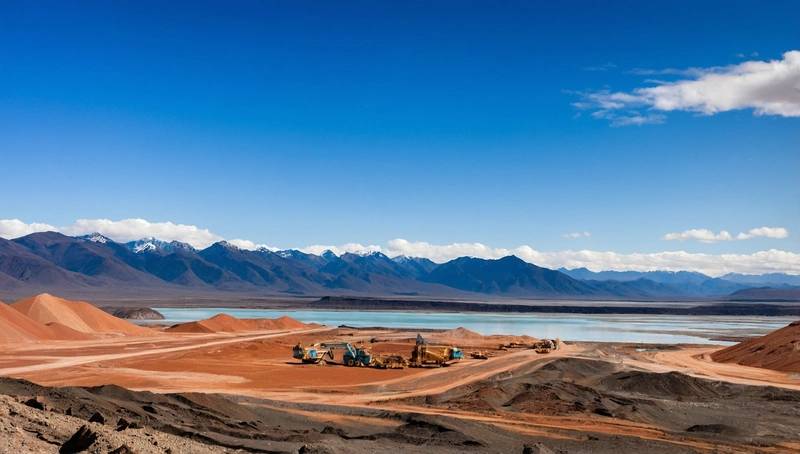
Global energy markets are facing a supply shock more severe than the oil crises of 1973 and 1979 combined with the gas disruption that followed Russia’s 2022 invasion of Ukraine, according to International Energy Agency executive director Fatih Birol, who said mounting losses of oil and liquefied natural gas from the Middle East were set to intensify through April. Birol said more than 12 million barrels of […]
Ryanair has warned that jet fuel supplies into Europe could come under pressure from May if the US-Israeli war with Iran continues, with chief executive Michael O’Leary saying as much as a quarter of the airline’s fuel could be at risk during May and June if disruption around the Strait of Hormuz is not resolved by the middle or end of April. The warning, made on April […]
HONG KONG SAR – Media OutReach Newswire – 1 April 2026 -Tim Ho Wan, the dim sum brand hailing from Hong Kong under the Jollibee Group, continues to be recognized in the Michelin Guide Hong Kong & Macau, with its Sham Shui Po store receiving the Bib Gourmand distinction in the 2026 edition. The Bib Gourmand distinction is awarded to restaurants that offer high-quality food at excellent value for money, reinforcing Tim Ho Wan’s long-standing positioning.
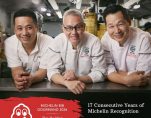
Carrying forward a legacy of excellence. Tim Ho Wan’s culinary team upholds the brand’s signature Cantonese craftsmanship, sustaining the consistency and quality behind its 17 consecutive years of Michelin recognition— its most recent earned under the Jollibee Group.
The recognition marks the 17th consecutive year the same store has been included in the Michelin Guide—a milestone achieved during Tim Ho Wan’s first full year under the Jollibee Group following its acquisition in January 2025. Over the past year, the brand has focused on strengthening systems, chef training, and food quality, reinforcing the consistency that has long defined Tim Ho Wan in its home market.
“Tim Ho Wan’s recognition in the Michelin Guide is a reflection of the care and discipline behind the brand,” said Ernesto Tanmantiong, Jollibee Group Global President and CEO. “At the Jollibee Group, we are committed to growing brands like this in a way that stays true to their roots while allowing more people around the world to experience what makes them special.”
Founded in Hong Kong in 2009 by chefs Mak Kwai Pui and Leung Fai Keung, Tim Ho Wan quickly rose to prominence after earning a Michelin star within its first year. Its Sham Shui Po branch, opened in 2010, has since remained a consistent presence in the Michelin Guide, underscoring the brand’s enduring culinary standards.
Scaling a Heritage Brand Through Operational Discipline
Under the Jollibee Group, Tim Ho Wan has strengthened its operating model to support consistent execution and long-term growth across markets.
Ongoing investments in kitchen systems, chef training, menu development, and store operations have enhanced consistency across locations while preserving the craftsmanship rooted in its Hong Kong origins. The continued recognition in Hong Kong reinforces the market’s role as the brand’s culinary and operational benchmark.
“These capabilities allow us to stay true to what makes Tim Ho Wan special, while ensuring we can deliver that same experience consistently as we grow,” said Sheng Lee, Chief Executive Officer of Tim Ho Wan.
“This recognition reflects the discipline of our teams in delivering consistent quality day in and day out. We remain focused on elevating our craft through rigorous training, responsible sourcing, and thoughtful service so that high-quality meals remain welcoming to guests around the world,” Lee added.
A Distinct Concept for Global Expansion
Tim Ho Wan’s combination of quality and value positions it as a distinctive concept in the global restaurant landscape.
Supported by strengthened systems and operating discipline, the brand offers a compelling platform for growth across international markets—anchored on consistency in its home market and enabled by replicable operating standards.
A Global Brand Rooted in Hong Kong
From a 20-seat dim sum shop in Hong Kong to a globally recognized brand, Tim Ho Wan continues to demonstrate how culinary heritage and operational discipline can come together to create a strong and scalable business.
The latest Bib Gourmand recognition reinforces Tim Ho Wan’s position as a globally relevant dim sum brand—rooted in Hong Kong and supported by the Jollibee Group’s platform for sustained and disciplined growth.
Disciplined Growth Backed by the Jollibee Group
The continued recognition also reflects the Jollibee Group’s approach to scaling heritage brands through operational excellence and long-term stewardship.
“Tim Ho Wan’s sustained recognition reflects the strength of its heritage and the discipline behind its execution,” said Richard Shin, CEO of JFC International and Global Chief Financial and Risk Officer of the Jollibee Group. “At the Jollibee Group, we focus on strengthening the systems and platforms that allow brands like Tim Ho Wan to grow while preserving the authenticity and craftsmanship that made them successful.”
System-wide sales (SWS) expanded significantly from Php1.3 billion in 2024 to Php8.1 billion in 2025, highlighting the brand’s accelerating scale and growing contribution to the Group’s global operations.
In its home market, Tim Ho Wan has strengthened its core Hong Kong footprint, doubling its store network to 10 locations within approximately one year. Recent store openings have delivered attractive payback periods (circa 1.5 years) and profitability, reinforcing confidence in the brand’s unit economics and disciplined growth approach.
Growth has been broad-based across both company-operated and franchise markets. Sales performance strengthened across markets such as Hong Kong, Singapore, and China, while franchise markets, including the Philippines, Vietnam, and Japan, continue to build momentum, further validating the brand’s strong international resonance and scalability.
The brand also reached an important milestone in its global expansion with the opening of its first company-operated North America store in Irvine, California, marking a significant step in establishing a direct presence in one of the world’s largest consumer markets. This re-entry into North America reflects the transportability of the brand’s operating model and positions Tim How Wan for a new phase of long-term growth and further global brand development.
Hashtag: #JollibeeGroup
The issuer is solely responsible for the content of this announcement.
About Jollibee Group
Jollibee Foods Corporation (PSE: JFC) (the “Company”) is one of the world’s fastest-growing restaurant companies, driven by its purpose of spreading joy through superior taste. It manages and operates a portfolio that includes 19 brands (the “Jollibee Group”) with over 10,000 stores and cafés across 33 countries.
The Jollibee Group’s portfolio includes nine (9) wholly-owned brands (Jollibee, Chowking, Greenwich, Red Ribbon, Mang Inasal, Yonghe King, Hong Zhuang Yuan, Smashburger and Tim Ho Wan), five (5) franchised brands (Burger King, Panda Express, Yoshinoya, Common Man Coffee Roasters, and Tiong Bahru Bakery in the Philippines), and ownership stakes in other key brands like The Coffee Bean and Tea Leaf (80%), Compose Coffee (70%), SuperFoods Group that operates Highlands Coffee (60%), and bubble tea brand Milksha (51%). The Company also has membership interests in Tortazo, LLC, along with Chef Rick Bayless, for Tortazo in the U.S. and in Botrista, a leader in beverage technology.
The Jollibee Group’s global sustainability agenda, Joy for Tomorrow, underscores its commitment to sustainable business practices across food safety, employee welfare, community support, good governance, and environmental responsibility, among others. These focus areas are aligned with the United Nations Sustainable Development Goals (UN SDGs).
The Company has been recognized as the Philippines’ Most Admired Company by the Asian Wall Street Journal, named one of Asia’s Fab 50 Companies, and listed among Forbes’ World’s Best Employers and Top Female-Friendly Companies. The Company is also a four-time Gallup Exceptional Workplace Award recipient and featured in TIME’s World’s Best Companies and Fortune’s Southeast Asia 500 List.
French President Emmanuel Macron is due to meet Japanese Prime Minister Sanae Takaichi in Tokyo on Wednesday, with the war involving Iran and the growing scramble for critical minerals set to dominate talks that reach far beyond bilateral ties. The meeting comes as Japan and France face the same strategic question from different angles: how to protect economic security in a world where energy supplies, shipping routes […]
Arabian Post Staff -Dubai Copper prices climbed on Wednesday after US President Donald Trump said military action against Iran could end within two to three weeks, helping trigger a wider rebound across markets that had been hit by worries over energy shocks, inflation and weaker global growth. The move in the red metal tracked a broader shift towards riskier assets as investors responded to the prospect, however […]
Ripple’s partnership with Convera has pushed the crypto company further into mainstream cross-border finance, linking its blockchain infrastructure with a commercial payments group that serves businesses across more than 140 currencies and 200-plus countries and territories. Announced on March 31, the deal is designed to let corporate customers move money across borders more quickly by using stablecoins as settlement rails while keeping the customer-facing transaction anchored in […]
Arabian Post Staff -Dubai Emirates NBD Group has closed $2.25 billion in long-term financing, in a deal that ranks among the largest syndicated borrowings in the Gulf and underscores the lender’s ability to attract offshore funding even as markets navigate geopolitical tension and higher funding costs. The package comprises a $1.75 billion five-year sustainability-linked syndicated term loan and a $500 million five-year club commodity murabaha facility. […]
South Africa will cut a fuel tax for April to soften the hit from surging global oil prices, as Finance Minister Enoch Godongwana moves to contain a steep rise in petrol and diesel costs that threatens to feed inflation across Africa’s most industrialised economy. The step comes as oil markets remain under strain from conflict-linked supply disruption in the Middle East and as the rand has weakened […]
Big Tech’s plan to pour about $635 billion into artificial intelligence infrastructure this year is coming under sharper scrutiny as higher energy costs, grid bottlenecks and tighter financing conditions test the durability of the market’s enthusiasm for the sector. The warning, highlighted by S&P Global Visible Alpha, lands at a delicate moment for equity markets after AI-driven optimism helped lift major indexes through 2025 before momentum faded […]
The Grand Final of Eurovision Song Contest Asia 2026 will take place on 14 November 2026 in Bangkok, Thailand, marking the arrival of the world’s most iconic music competition in Asia.
BANGKOK, THAILAND – Media OutReach Newswire – 31 March 2026 – The European Broadcasting Union (EBU) and Voxovation together with Thailand’s S2O Productions and Channel 3 today announced the debut of Eurovision Song Contest Asia in 2026, with Bangkok selected as the Host City for its inaugural edition, bringing together ten countries across Asia.
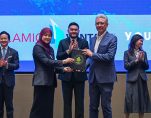
Martin Green, Director of Eurovision Song Contest (left) presents the Eurovision Song Contest Asia 2026 trophy to Chuwit Sirivajjakul, Deputy Governor for Policy and Planning, Tourism Authority Thailand (centre) for safekeeping on behalf of host city Bangkok until the Grand Final in November, accompanied by Peter Settman, CEO & Co-Founder of Voxovation (right).
South Korea, Thailand, the Philippines and Vietnam are confirmed alongside Malaysia, Cambodia and Laos, as well as Bangladesh, Nepal and Bhutan, with more countries expected to join as the competition expands.
Bringing the world’s largest live TV event to Asia, Eurovision Song Contest is now opening a new chapter shaped by the region’s diversity, creativity and cultural identity, and grounded in the same spirit that has always defined the contest: United by Music.
ZOOP is the revolutionary new social media platform launching globally on 9th of April with a dedicated channel covering the new Eurovision Song Contest Asia. ZOOP will place the audience at the centre of the action, driving participation, community and interaction, with cutting-edge technology behind the experience.
Evolving Eurovision Song Contest with Asia
For seven decades, the Eurovision Song Contest has brought countries together through music, storytelling and live television, reaching audiences of hundreds of millions every year.
“Evolving Eurovision Song Contest with Asia.” From left: Peter Settman, CEO and Founder of Voxovation, Martin Green, Director of Eurovision Song Contest, and Marcus Tang, CEO Asia, Voxovation.
Now, in collaboration with leading broadcasters and production companies across Asia, Eurovision Song Contest Asia will build on that legacy, creating a new shared stage where cultures meet, voices are amplified, and creative communities connect across borders.
Rooted in the same spirit that has defined Eurovision Song Contest for generations, the contest carries forward a simple but powerful idea, connecting people through music and shared experiences. In Asia, that idea will take on new meaning, shaped by the region’s extraordinary diversity and creative energy.
Martin Green, Director of the Eurovision Song Contest, said:
“As we mark the 70th anniversary of the Eurovision Song Contest, it feels especially meaningful to open this next chapter with Asia, a region rich in culture, creativity and talent.
This is about evolving the show together with Asia, building something that reflects the voices, identities and ambitions of the region, while staying true to what has always made the Contest special.
Eurovision Song Contest Asia will be shaped by the artists, broadcasters and audiences who make it their own, continuing our shared journey of being United by Music.”
Shaping the Future of Eurovision Song Contest in Asia
Designed to grow with the region, the format brings together countries representing more than 600 million people. With no comparable pan-Asian platform today, it is set to become one of the region’s most talked-about entertainment events.
Powered by exclusive social partner ZOOP, the contest will introduce a fan participation platform where audiences do more than watch. ZOOP gives fans new ways to engage with artists, join communities, and be recognised and rewarded for real participation, while helping create a more direct and meaningful connection between talent and audience.
Peter Settman, CEO & Co-Founder of Voxovation, the exclusive licensee of Eurovision Song Contest Asia said:
“From day one, our ambition has been to build the Eurovision Song Contest Asia together with the region’s best creative talent, creating a show that truly reflects Asia’s identity and creative energy.
Together with S2O Productions, we are shaping a show where artists and fans connect across borders in new ways, through participation, community and deeper engagement beyond the stage, with ZOOP helping bring that fan experience to life.
To bring this incredible show to a new continent is something very special. I look forward to millions of people in Asia watching the competition and singing in front of the TV, dancing to the performances and predicting the outcome.”
Bangkok: Where Tradition Meets Tomorrow
Bangkok is a city where tradition and modern expression coexist seamlessly, it offers a natural home for a contest built on diversity and exchange, connecting artists and audiences from across the region and beyond.
The Contest will be broadcasted in partnership with Thailand’s Channel 3, alongside broadcasters from at least 10 countries across Asia, each bringing their own voice, identity and storytelling to the stage.
Hosting Eurovision Song Contest Asia is expected to generate strong international visibility for Bangkok, while supporting tourism, job creation and the continued growth of Thailand’s creative industries.
Thailand Welcomes The Region And The World
Eurovision Song Contest Asia will provide a powerful platform for artists to share their music, stories and identities with audiences across the region and globally, strengthening cultural exchange between Asia and Europe.
The event further reinforces Thailand’s position as a destination for world-class cultural and entertainment experiences.
Chuwit Sirivajjakul, Deputy Governor for Policy and Planning, at the Tourism Authority said:
“When I heard that the European Broadcasting Union and Voxovation were considering Bangkok as the home for the Eurovision Song Contest Asia, I thought, of course, it should be Bangkok, because this city has always been a place where cultures come together, where music fills the air, and where celebration is part of everyday life.
It is a place where tradition and innovation do not compete. They collaborate. That is the spirit of Eurovision, which celebrates the unity of diverse musical voices from across Asia and beyond.
We believe travel is in the moments that restore you, inspire you, and connect you to something larger than yourself. Eurovision Song Contest Asia embodies exactly that, and we are proud to welcome it home, marking a new chapter for Thailand’s global presence.”
Participating Countries
The inaugural Eurovision Song Contest Asia will bring together broadcasters from across the region, each representing their country with original music and national talent.
Confirmed participating broadcasters include:
Thailand — Channel 3 produced by S2O productions
South Korea
Philippines — ABS-CBN Corporation
Vietnam — Vietnam Television (VTV3) produced by Dao Music Entertainment
Malaysia — Media Prima (TV3)
Cambodia — TV5 Cambodia produced by GIGIL Cambodia
Laos — Vientiane Capital Television (VTE9) produced by 3SD Group & SG Music
Bangladesh — NTV produced by Bongo Holdings
Nepal — Himalaya TV produced by Saujanya Media
Bhutan — Bhutan Broadcasting Service (BBS)
Additional countries and broadcasters are expected to be announced in the coming weeks as the line-up continues to expand.
Journey to the Grand Final
The Grand Final of Eurovision Song Contest Asia 2026 is scheduled to take place in Bangkok on 14 November 2026.
Be part of the journey and follow Eurovision Song Contest Asia at www.eurovisionasia.com
Hashtag: #Voxovation
The issuer is solely responsible for the content of this announcement.
About the European Broadcasting Union (EBU)
The European Broadcasting Union (EBU) is the world’s leading alliance of public service media, representing over 110 member organizations in more than 50 countries, with an additional 30+ associates worldwide. The EBU operates Eurovision, the premier global media exchange network, and produces the Eurovision Song Contest, one of the world’s most watched live entertainment events, reaching hundreds of millions of viewers annually. Through its work, the EBU supports collaboration, innovation and the sharing of high-quality content across borders.
About Voxovation
Voxovation is a global entertainment company focused on developing, producing and scaling large-format television and live events. Founded by industry leaders with extensive experience in international entertainment formats, Voxovation specializes in bringing globally recognized IP to new markets and building original formats that connect audiences across cultures. The company is the exclusive licensee of Eurovision Song Contest Asia and is leading its development, production and commercialization across the region.
About S2O Productions
S2O, one of Asia’s most iconic live entertainment and production companies known for delivering large-scale events and premium experiences across Asia. Renowned for its world-class production, immersive water elements, and high-energy experiences, S2O will bring its creative and technical expertise to reimagine the Eurovision format for audiences across the Asian region and beyond. As a production partner for Eurovision Song Contest Asia, S2O will support the delivery of world-class live experiences in Bangkok.
About ZOOP
ZOOP is a next-generation social platform designed to connect creators, fans and communities through interactive digital experiences. As the exclusive social partner of Eurovision Song Contest Asia, ZOOP powers fan engagement across the platform, enabling participation, content interaction and community-driven experiences at scale. Built on Hedera technology, ZOOP delivers secure, transparent and scalable infrastructure for digital engagement, bringing audiences closer to the action than ever before.
SINGAPORE – Media OutReach Newswire – 31 March 2026 – Apical, through its business unit PT Sari Dumai Oleo (PT SDO), recently inaugurated the Rumah FABA Kreasi Muda in Lubuk Gaung, Sungai Sembilan, Dumai, Riau. The initiative forms part of the company’s efforts to support community empowerment through productive economic activities.
Rumah FABA Kreasi Muda serves as a production facility for concrete blocks and paving stones using Fly Ash and Bottom Ash (FABA) – non-hazardous by-products generated from Apical’s power plant – as alternative raw materials. These materials are processed into construction products that can support infrastructure development in the surrounding community.
In his remarks, PT SDO Head of General Affairs, M. Jaya Budi Arsa, said the initiative was introduced to strengthen economic independence in communities around the company’s operational areas. “We established Rumah FABA Kreasi Muda to create new business opportunities and support the economic independence of nearby communities. We hope this facility will help enhance residents’ skills and capacity to run sustainable businesses,” he said.
To support the programme’s implementation, Apical, a member of the RGE group of companies founded by Sukanto Tanoto, has provided assistance through the construction of the production facility, the supply of equipment and the provision of a steady supply of FABA as an alternative raw material. This support is intended to enable the community to carry out production in a structured manner while gradually developing independently managed businesses.
Lubuk Gaung Subdistrict Head Syafrianto, S.Sos., M.IP., noted that the Rumah FABA initiative has had a direct impact on youth engagement and local economic development. He also emphasised the importance of continued guidance to ensure the business can grow sustainably.
“Rumah FABA provides space for young people in Lubuk Gaung to take part in productive activities and access new job opportunities. Moving forward, ongoing support will be key to ensuring the business continues to grow and deliver long-term benefits,” he said.
Rumah FABA Kreasi Muda is expected not only to create employment opportunities but also to strengthen the community’s capacity to manage businesses independently. By repurposing available materials, the programme generates added value while promoting resource efficiency.
In line with Apical’s 5Cs business philosophy – doing what is good for Community, Country, Climate and Customer, and only then will it be good for the Company – the company aims to ensure that its operations deliver balanced benefits for society, the environment and long-term business sustainability. Hashtag: #RGE #Apical #Palm #CommunityEmpowerment #Indonesia
The issuer is solely responsible for the content of this announcement.
About Apical
Apical is a leading vegetable oil processor with an expanding global footprint. Our vertically integrated mid-stream refining and value-added downstream processing makes us an integral supplier that supports the needs of various industries namely food, feed, oleochemicals and renewable fuel, including sustainable aviation fuel (SAF) which enables a great reduction of CO2 emissions.
With integrated assets in strategic locations spanning Indonesia, China and Spain, Apical operates numerous refineries, oleochemical plants, renewable fuel plants and kernel crushing plants. Through joint ventures and strategic partnerships, Apical also has processing and distribution operations in Brazil, India, Pakistan, Philippines, Middle East, Africa, USA and Vietnam.
Apical’s growth is built on the foundations of sustainability and transparency, and motivated by our strong belief that we can contribute to a circular economy for a more meaningful impact, even as we continue to grow our business and deliver innovative solutions to our customers.
Arabian Post Staff -Dubai Dubai authorities were battling a fire aboard a Kuwaiti oil tanker on Tuesday after a drone struck the vessel in waters near Anchorage “E”, with officials saying no injuries had been reported and emergency teams were working under established maritime safety protocols. The incident unfolded off Dubai’s coast as maritime firefighting units moved to secure the tanker, contain the blaze and prevent any […]
By Dr. Gyan Pathak On the very onset of the Financial Year 2026-27, beginning from April 1, 2026, India faces a multi-layered set of risks, given its position as a major energy importer with strong trade, investment, and remittance linkages with the West Asia region, which has turned into a war zone since the United […]
Electronic interference that had scrambled vessel tracking across the Persian Gulf eased over the weekend, allowing ships stranded in the war-affected waterway to show positions closer to their true locations and giving operators a clearer picture of navigation risks in one of the world’s most important energy corridors. Maritime security guidance issued on 29 March said GNSS, GPS and AIS disruption had moderated over the previous 24 […]
Funding initiatives under the Forest Conservation Certificate to support sustainable forestry and biodiversity protection
SINGAPORE & MALAYSIA – Media OutReach Newswire – 30 March 2026 – Vantage Data Centers, a leading global provider of hyperscale data center campuses, today announced a partnership with the Malaysia Forest Fund (MFF), an agency under the Ministry of Natural Resources and Environmental Sustainability of Malaysia (NRES), to strengthen the efforts to protect and conserve Malaysia’s forests while delivering tangible benefits to local communities in Selangor. Through this collaboration, Vantage will contribute to the Penjaga Gunung (Mountain Guardian) project, one of the key initiatives under the Forest Conservation Certificate (FCC) protocol managed by the Malaysia Forest Fund.
Fitri Abdullah, Country Managing Director, Malaysia of Vantage Data Centers (second from the right) receives the conservation agreement from Malaysia Forest Fund, reflecting the joint commitment towards forest conservation and environmental sustainability.
His Highness Crown Prince of Selangor Tengku Amir Shah Ibni Sultan Sharafuddin Idris Shah Alhaj and YB Dato’ Sri Arthur Joseph Kurup, Minister of Natural Resources and Environmental Sustainability, witnessed the conservation agreement exchange between Vantage Data Centers, Malaysia Forest Fund and Your Idea Maker for the implementation of the Penjaga Gunung project in Selangor. The initiative covers approximately 108,000 hectares of the Selangor Royal Heritage Forest area and engages villages from the Orang Asli community.
The Penjaga Gunung project aims to foster environmental stewardship among the youth of the Orang Asli, the Indigenous peoples of Peninsular Malaysia, while preserving their cultural heritage and creating sustainable livelihoods for the community. Through structured program and certified skills development, participants will be trained to become nature guides and community rangers, enabling them to develop village-based eco-tourism and conservation services that generate long-term income streams. This new generation of forest guardians will be equipped with essential knowledge to enhance protection of Selangor’s forest reserves and biodiversity while supporting habitat restoration to strengthen ecosystem resilience.
The Conservation Agreement Exchange Ceremony for the Penjaga Gunung Project was witnessed by His Highness Crown Prince of Selangor Tengku Amir Shah Ibni Sultan Sharafuddin Idris Shah Alhaj (middle) and YB Dato’ Sri Arthur Joseph Kurup, Minister of Natural Resources and Environmental Sustainability (third from the left). Fitri Abdullah, Country Managing Director, Malaysia was the representative of Vantage Data Centers (far right).
“Our support for Penjaga Gunung turns conservation into high-caliber, meaningful career opportunities. We are shaping a future where sustainable livelihoods and professional skills development go hand in hand with protecting the planet, ensuring that environmental sustainability is guided by the wisdom of protecting indigenous cultural heritage”, said Fitri Abdullah, country managing director, Malaysia of Vantage Data Centers. “Vantage is committed to building and operating our hyperscale digital infrastructure responsibly. We will continue to strengthen the community by investing in workforce development programs and aligning our efforts with local priorities and the Malaysian government’s digital vision.”
Vantage has established a strong presence in Malaysia with two hyperscale campuses in Cyberjaya, Selangor, in addition to one of the region’s largest campuses in Johor, all of which support cloud and AI transformation across the Southeast Asia region. For more information on Vantage’s APAC platform, please visit https://vantage-dc.com/data-center-locations/apac/.
The issuer is solely responsible for the content of this announcement.
About Vantage Data Centers
Vantage Data Centers is a global leader in digital infrastructure serving the world’s most influential AI and cloud providers. With operations spanning North America, EMEA and Asia Pacific, Vantage delivers capacity at unrivaled speed and scale, driven by a relentless commitment to operational excellence and customer success. Vantage is empowering transformative companies to shape the future.
South Korea is weighing whether to extend car-use restrictions beyond the public sector as oil prices climb sharply, a step that would amount to the country’s first nationwide driving curbs since the 1991 Gulf War if it is applied broadly to the public. Finance Minister Koo Yun-cheol said wider restrictions could come into play if crude prices rise into a $120-$130 a barrel range, up from about $100-$110 now, as Seoul tries to contain fuel demand and cushion the economic shock from turmoil in the Middle East.
The discussion marks an escalation from measures already in force. Public institutions are operating under a five-day vehicle rotation system, while large companies including Samsung Electronics and SK Group have begun urging staff to cut private car use, reduce parking demand and adopt other energy-saving practices. Officials have also left open the possibility of further fuel-tax relief to soften the burden on households and businesses, though no final decision has been announced on compulsory curbs for private motorists.
At the centre of Seoul’s concern is its exposure to imported energy. About 70% of South Korea’s oil imports come from the Middle East, leaving the country highly sensitive to any disruption in supplies or shipping routes. The government raised its crude oil supply disruption alert to Level 2 on March 18 as tensions mounted, signalling a more serious official assessment of the risks facing one of Asia’s largest energy importers.
The external shock has been severe. Reuters reported that Brent crude climbed to nearly $115 a barrel over the weekend and above $116 on Monday, putting it on course for its biggest monthly jump on record, while US crude also surged past $100. The rally has been driven by a widening conflict linked to Iran and growing anxiety over disruptions around the Strait of Hormuz, a vital artery for global oil flows. That backdrop has sharpened pressure on Asian economies that rely heavily on imported fuel, with South Korea among the most exposed.
For policymakers in Seoul, the issue is no longer only about fuel bills. Higher oil prices threaten to spill into inflation, transport costs, industrial input prices and consumer sentiment. A Reuters poll published on Monday projected that South Korea’s imports rose 18% in March, the fastest pace since September 2022, largely because of elevated oil prices, even as exports remained buoyant on strong semiconductor demand. That split picture captures the dilemma facing the government: trade performance is being helped by chips and artificial intelligence-linked demand, but the economy’s dependence on imported energy is pushing up costs and widening vulnerability.
President Lee Jae Myung has responded by urging a nationwide energy-saving drive, while Energy Minister Kim Sung-whan has pushed demand management and warned against panic behaviour. The government has promoted 12 power-saving practices, from shorter showers to shifting electricity use away from peak hours, and has also moved to restart several nuclear reactors, loosen coal plant restrictions and expand renewable energy to offset pressure on gas imports. The mix underlines how Seoul is trying to balance short-term crisis management with longer-term energy security, even as those goals can pull in different directions.
That tension is visible in the broader regional response. Across Asia, governments are looking again at emergency stock releases, fuel-saving directives and, in some cases, greater coal use to bridge supply gaps. Analysts say such measures may shield economies from the immediate shock, but they also expose how quickly climate and transition goals can be tested when energy security comes under strain. In South Korea’s case, the administration’s public emphasis on renewables sits alongside plans to lean harder on nuclear and coal generation if needed.
The market fallout has already been visible in financial assets. South Korean equities were hit as investors fled Asian markets on fears of a prolonged oil shock, though some analysts argue the sell-off has reflected panic rather than a collapse in fundamentals. Technology and industrial names remain central to the country’s earnings outlook, but energy-intensive sectors face a tougher operating environment if high crude prices persist or if physical shortages emerge.
Arabian Post Staff -Dubai European shares held their ground on Monday as investors waited for German and euro zone inflation readings that could show how sharply the Middle East war is feeding through into prices, after a surge in oil left the STOXX 600 heading for its worst month since the first pandemic shock of March 2020. The pan-European STOXX 600 was up about 0.2 per cent […]
Arabian Post Staff -Dubai Rosatom has agreed to form a logistics joint venture with DP World in a deal that would place Russia’s state nuclear corporation in majority control while bringing one of Dubai’s biggest global trade operators deeper into a strategically sensitive transport network centred on FESCO and Arctic shipping lanes. Under the proposed structure, Rosatom will hold 51% and DP World 49%, with Rosatom contributing […]
India’s rupee surged on Monday after the Reserve Bank of India tightened banks’ foreign-exchange position limits, forcing lenders to cut dollar holdings and unwind arbitrage trades that had built up as the currency slid to a record low at the end of last week. The rupee rose as much as 1.4% in early trade and was quoted around 93.48 to 93.85 per US dollar, marking its sharpest one-day gain since February.
The immediate trigger was the RBI’s March 27 directive capping banks’ net open rupee positions in the onshore deliverable market at $100 million by the close of each business day from April 10. That replaced a looser framework under which banks’ boards could set limits up to 25% of total capital. Traders said the order prompted a burst of dollar selling as banks moved to reduce exposures that had become profitable while the rupee was weakening.
The rebound followed a bruising stretch for the currency. On Friday, the rupee hit a record low of about 94.84 to the dollar after heavy pressure from higher crude prices, risk aversion and foreign outflows. Reuters reported the rupee had fallen more than 4% in March, putting it on course for its worst monthly performance in more than seven years, while broader anxiety over the Middle East conflict and its implications for energy markets deepened concern over India’s import bill and external balance.
At the centre of the RBI’s move is the gap between the domestic market and the offshore non-deliverable forward, or NDF, market. Banks had been exploiting pricing differences between the two venues, building large arbitrage books that were profitable during the rupee’s slide. Estimates for those positions vary, but Reuters and other market reports put them broadly in the $25 billion to $50 billion range. By suddenly tightening the rules, the central bank appears to have targeted not only volatility in the spot market but also the speculative mechanics that were amplifying pressure on the currency.
That has given the rupee breathing room, but it has also shifted the strain onto banks. Lenders have warned that rapid compliance could force a disorderly unwinding of positions and crystallise losses in treasury books. Several banks have asked the RBI for three months to comply, arguing that a phased adjustment or permission to hold existing trades to maturity would reduce the risk of market disruption. Equity investors appeared to register that concern, with banking shares falling amid estimates that mark-to-market losses could run into thousands of crores if the unwind is abrupt.
The central bank’s intervention is being read in dealing rooms as one of its strongest attempts in years to reassert control over rupee pricing. Market participants said the RBI has already been active in local and offshore markets, using reserves and liquidity tools to keep the currency from sliding too quickly. The new cap adds a regulatory weapon to that defence. It also sends a signal that the central bank is prepared to curb trading strategies it sees as destabilising, even at the cost of squeezing bank profitability in the short term.
Whether the rupee can hold on to these gains will depend less on technical unwinding and more on the backdrop that pushed it down in the first place. Brent crude has climbed sharply, with Reuters reporting a move above $115 a barrel on Monday and a monthly gain of nearly 60%. For an economy that imports the bulk of its oil, that raises the risk of a wider current account deficit, imported inflation and renewed pressure on the currency. Bond yields also edged higher, indicating that traders remain alert to the wider macroeconomic fallout even as the rupee recovers ground.
Arabian Post Staff -Dubai Nabil Fahmy is set to become the next secretary-general of the Arab League after Arab foreign ministers unanimously backed Egypt’s nominee in a virtual meeting on 29 March, clearing the way for the veteran diplomat to take over in July when Ahmed Aboul Gheit’s second term ends. The ministers’ decision still requires formal endorsement at the next Arab summit in Saudi Arabia, but […]
India has cut special excise duties on petrol and diesel after a sharp rise in global crude prices, seeking to shield consumers from a broader inflation shock as the Iran war and disruption around the Strait of Hormuz continue to unsettle energy markets. A government order issued late on Thursday reduced the special excise duty on petrol to Rs 3 a litre from Rs 13, while the levy on diesel was removed entirely from Rs 10 a litre. At the same time, New Delhi imposed fresh windfall taxes on diesel and aviation turbine fuel exports to recover part of the revenue loss and manage the fiscal hit.
The move underlines the pressure facing policymakers as oil prices remain volatile and the rupee weakens, raising the cost of imports for one of the world’s biggest crude buyers. Brent crude climbed above $112 a barrel on Friday, extending a rally driven by doubts over any near-term ceasefire and persistent fears that supply disruptions in the Gulf could deepen. Traders and analysts have said the risk premium now reflects not only lost barrels but also the strategic importance of Hormuz, through which a large share of global oil and liquefied natural gas flows.
For India, the tax cut is as much about inflation management as political optics. Retail prices at state-run fuel retailers have been largely held steady even as global crude costs have climbed, forcing public-sector oil marketing companies to absorb losses on every litre sold. Reuters reported that those losses were running at about Rs 24 a litre on petrol and Rs 30 on diesel at the time of the duty cut, a burden that had begun to raise concerns about the financial strain on the country’s dominant fuel retailers. By lowering excise duties, the government creates room for those companies to keep pump prices stable without taking the full blow on their balance sheets.
That relief, however, comes with a cost. The excise reduction is expected to trim government revenue by roughly Rs 70 billion every fortnight, with the net impact estimated at about Rs 55 billion after accounting for the new export levies on diesel and jet fuel. Those numbers matter because New Delhi is already balancing slower growth risks, higher import costs and sensitivity in bond markets. India’s 10-year government bond yield rose as investors weighed the inflationary impact of oil and the possibility that fiscal targets may come under pressure if energy turbulence persists.
Currency markets have been sending a similar warning. The rupee slipped beyond 94 to the US dollar, marking a record low and capping its weakest fiscal-year performance in more than a decade. Higher oil prices have compounded external pressures by widening import costs and fuelling worries over inflation, while signs of reduced support from the Reserve Bank of India have added to volatility in both the currency and government debt markets. The combination of a softer rupee and expensive crude intensifies the urgency for measures that can prevent fuel inflation from feeding into transport, food and manufacturing costs.
The government has paired the tax changes with broader supply assurances. Officials have said retail fuel prices will remain stable and that supplies of fuel, fertiliser and coal are adequate. India has also increased the availability of liquefied petroleum gas for industrial use, an indication that authorities are trying to prevent energy stress from spilling into factories and power demand. That broader messaging is aimed at containing panic in a market already on edge over whether the Middle East conflict could trigger a more prolonged energy shock.
The burden of holding down prices has not been distributed evenly across the sector. State-run retailers, which control more than 90 per cent of the country’s fuel stations, have largely refrained from raising pump prices, while private players have begun adjusting. Nayara Energy, for example, increased gasoline and gasoil prices this week, citing the combined impact of a weaker rupee and surging global crude prices. The divergence highlights the structural challenge for the government: keeping inflation contained without unduly damaging the finances of state-backed refiners and marketers.
Arabian Post Staff -Dubai Telda has moved beyond payments and cards to add stock and fund investing to its app, opening a new front in Egypt’s fast-growing race to attract first-time retail investors. The Cairo-based fintech said on Sunday that users can now buy and sell shares on the Egyptian Exchange and subscribe to investment funds from within the same platform, without relying on a traditional broker […]
Arabian Post Staff -Dubai Gold prices climbed sharply on Friday, reversing part of this week’s slide as investors stepped back into the market after bullion fell to a four-month low, while traders also watched for any sign that tensions in the Middle East might ease. Spot gold rose more than 3% at its intraday peak before trading about 2.6% higher at $4,491.78 an ounce by afternoon dealings […]
Anger over the war with Iran has widened the scope of the anti-Trump “No Kings” protests across the United States, turning what began as a broad movement against executive overreach into a sharper rebuke of the White House’s foreign and domestic agenda. Demonstrations on Saturday spread through more than 3,100 locations across all 50 states, with organisers and news reports describing one of the largest coordinated days […]



 www.jollibeegroup.com