Wafacash and Money Fellows have signed a strategic partnership at GITEX Africa in Marrakech aimed at digitising Daret, the traditional savings circle widely used in Morocco, in a move both companies say could widen access to formal financial tools while preserving a long-standing social practice. The agreement marks Money Fellows’ formal push into Morocco and places Wafacash, a subsidiary of Attijariwafa Bank Group, at the centre of […]
Service My Car and PlusX Electric have formed a partnership aimed at making life easier for households in the UAE that own both petrol-powered vehicles and electric cars, as mobility providers race to adapt to a market that is adding EVs faster than the after-sales ecosystem has traditionally been built to handle. The agreement links a mainstream digital servicing platform with an EV-focused charging and support business, […]
Arabian Post Staff -Dubai Careem Pay has expanded its remittance service to Saudi Arabia and Türkiye, opening two new money-transfer corridors for UAE residents as digital finance platforms compete more aggressively for a larger share of cross-border payments in the Gulf. The company said transfers to bank accounts in both markets can be completed within five to 10 minutes, with transaction limits of up to AED150,000 for […]
S&P Global Ratings has lowered its growth expectations for both the UK and Egypt, saying the economic fallout from conflict-linked disruption across the Middle East is feeding through energy prices, trade routes and business confidence. For Egypt, S&P cut its forecast for real GDP growth in the 2025-2026 fiscal year to 4.7 per cent from 4.8 per cent, while also trimming the following year to 4.3 per […]
By Saifur Rahman The UAE will host the Annual Meetings of the International Monetary Fund (IMF) and World Bank Group in 2029 in Abu Dhabi, about 26 years after the country hosted the same in 2003 in Dubai. The news comes at a time when the UAE banking assets reached its highest value, to Dh5.4 trillion (US$1.47 trillion), and foreign reserves jumped 23.4 percent to Dh1.05 trillion […]
Arabian Post Staff -Dubai MBME Pay has secured a Category 3 Payment Service Provider licence from the Central Bank of the UAE, giving the company regulatory approval to carry out merchant acquiring and payment aggregation activities and placing it in a narrower circle of fully licensed operators in one of the Gulf’s fastest-moving fintech markets. The approval marks a step up for the Abu Dhabi-listed MBME Group […]
A Microsoft-tracked cybercrime group is using adversary-in-the-middle techniques to hijack Microsoft 365 sessions, bypass multifactor authentication and reroute employee pay into attacker-controlled bank accounts, in what researchers describe as a geographically focused campaign against users in Canada. Microsoft said the actor, tracked as Storm-2755, combined search-result poisoning, fake sign-in pages and session replay to move from account takeover to payroll fraud, causing direct financial loss for at […]
SINGAPORE – Media OutReach Newswire – 10 April 2026 – The success and impact of the ASEAN–UK Advancing Creative Economy programme was on show at the recent 2ndASEAN–UK Creative Economy Symposium 2026 in Manila. The Symposium showcased how research, capacity building, and regional collaboration are shaping the future of the creative economy across Southeast Asia, further advancing the goals of the ASEAN Creative Economy Sustainability Framework, adopted at the 46th ASEAN Summit. The Symposium also celebrated the 5th anniversary of the ASEAN–UK Dialogue Partnership, focused on deepening cooperation and connection.
The Department of Trade and Industry of the Philippines, together with the Foreign, Commonwealth and Development Office, the British Council and the ASEAN Secretariat, convened over 270 leaders, policymakers, creatives, and investors from ASEAN and the United Kingdom in Manila for the ASEAN–UK Creative Economy Symposium 2026, reinforcing the region’s push to harness the creative economy as a key driver of growth, innovation, and cultural identity.
Deputy Secretary-General of ASEAN for ASEAN Economic Community (AEC), Satvinder Singh, said: “ASEAN is well-positioned to harness the full potential of the creative economy. Six out of eleven ASEAN Member States now rank among the top 70 globally in the WIPO Global Innovation Index’s creative outputs dimension. ASEAN recognises that intangible assets, such as intellectual property, brands, and design as the currencies of modern creative economy. The ideas, expressions, and innovations our creators produce must be protected, valued, and commercialised.”
UK Ambassador to ASEAN, Helen Fazey, said: “The UK and ASEAN are advancing together through trust, cooperation, and shared priorities. This partnership reflects a strong and growing relationship built on mutual respect and a shared ambition to support sustainable economic growth, innovation, and opportunity across the region. Through initiatives like the ASEAN–UK Advancing Creative Economy programme, we are deepening collaboration, strengthening people-to-people links, and supporting the development of vibrant and resilient creative sectors.”
ASEAN-focused research highlights pathways for growth in the creative economy New research under the ASEAN–UK Advancing Creative Economy initiative is providing critical insights into the evolution and economic potential of cultural industries across the region.
Arts and Technologies in ASEAN: Interconnected Parts, commissioned by the British Council, examines the fast-growing creative technology landscape across ASEAN. Drawing on more than 60 interviews and case studies, the report explores how artists are using digital tools—from AI to immersive media—while also analysing the regulatory environments shaping innovation. It highlights both the dynamism of the sector and the need for stronger support systems to sustain growth.
Complementing this, the Regional Perception Poll on the ASEAN Creative Economy offers a comprehensive view of how the sector is understood across the region. Based on insights from over 4,000 respondents, including both producers and audiences, the study highlights the interconnected nature of creative ecosystems and the relationships between artists, industries, policymakers, and communities. Its findings underscore the need for tailored, context-specific strategies and stronger regional collaboration to unlock further growth.
Together, these research outputs provide valuable evidence to inform policy, guide investment, and strengthen UK–ASEAN partnerships.Building on this work, a new ASEAN festival research and mapping initiative is underway, expanding earlier studies to provide a more comprehensive understanding of the region’s diverse festival landscape and identify opportunities for future collaboration.
Country Director Indonesia and Director South East Asia, Summer Xia, said: “Through the ASEAN–UK Advancing Creative Economy initiative, we are investing in the research, skills, and partnerships needed to support long-term growth in the creative sector. The symposium in Manila was an important opportunity to share these resources and ensure they are shaped by and for the region. By working closely with the Foreign, Commonwealth and Development Office and the ASEAN Secretariat, we are helping to build a stronger, more connected creative economy across ASEAN countries.”
Underscoring the broader vision of the initiative, Deputy Secretary-General of ASEAN for ASEAN Socio-Cultural Community (ASCC) San Lwin has reaffirmed, in separate engagements, that the ASEAN-UK Advancing Creative Economy programme maximises the region’s creative potential to fuel socio-economic growth and cultural exchange. He reiterated the shared commitment to leveraging innovation and creativity as key connectors to drive prosperity, deepen cultural unity, advance social equity, and promote sustainable, inclusive development in order to forge an “ASEAN Community of Opportunities for All.”
The issuer is solely responsible for the content of this announcement.
About the British Council
The British Council is the UK’s international culture and education organisation. We support peace and prosperity by building connections, understanding and trust between people in the UK and countries worldwide. We do this through our work in arts and culture, education and the English language. We work with people in over 200 countries and territories. In 2024–25, we reached 600 million people. www.britishcouncil.org
Arabian Post Staff -Dubai Saudi supply lines face deeper strain Attacks on Saudi energy facilities have knocked about 600,000 barrels per day from the kingdom’s oil production capacity and cut throughput on the East-West Pipeline by roughly 700,000 bpd, according to Saudi state media citing an Energy Ministry official, in a blow to the world’s top oil exporter at a time when its western pipeline route has […]
Bank of Korea left its benchmark interest rate unchanged at 2.50 per cent on Friday, extending its policy pause to a seventh straight meeting as policymakers confronted a harder mix of rising price pressures, a weak won and a growth outlook darkened by higher energy costs and disruption linked to conflict in the Middle East.
The seven-member Monetary Policy Board said uncertainty had intensified and judged it appropriate to hold the base rate while assessing how the conflict, financial-market volatility and foreign-exchange swings feed through to the domestic economy. The central bank’s statement made clear that the policy dilemma has sharpened: inflation risks are moving up even as growth is expected to slow more than earlier forecast.
Governor Rhee Chang-yong, speaking after what Reuters reported was his final press conference before his term ends on April 20, said supply-side shocks from the Middle East were especially damaging for Asian economies reliant on imported energy. That matters acutely for South Korea, where policymakers are trying to prevent a renewed inflation cycle without choking activity at a time when sentiment has softened and some industries are already facing production constraints.
The rate hold had been widely anticipated. Reuters said all 31 economists in its poll expected no move at this meeting, reflecting a market consensus that the central bank had little room to ease and few grounds to tighten immediately. Instead, the decision underscored how monetary authorities in export-driven Asian economies are being forced to navigate a narrow path between external shocks and domestic fragilities.
At the centre of the debate is inflation. Official data showed consumer prices in March rose 2.2 per cent from a year earlier, up from 2.0 per cent in February, while core inflation, which excludes food and energy, also stood at 2.2 per cent. The Bank of Korea said petroleum prices had risen sharply and noted that short-term inflation expectations among the public edged up to 2.7 per cent. It now expects consumer inflation this year to exceed its February projection of 2.2 per cent by a meaningful margin, with core inflation also likely to come in above the earlier 2.1 per cent forecast.
That shift is important because the central bank had been able for months to argue that price growth was gradually stabilising near target. The worsening external backdrop has disrupted that narrative. The board said inflation is likely to move into the mid- to upper-2 per cent range as global oil prices and supply constraints lift import costs, though government price-stabilisation measures may soften part of the blow. Reuters reported that Seoul’s fuel-price caps, introduced last month for the first time in decades, helped restrain March inflation but are unlikely to provide a lasting shield if energy costs stay elevated.
Growth, meanwhile, is losing momentum. The central bank said the economy had been supported by strong exports, firmer consumption and continued job gains, but warned that downside pressure had increased since the outbreak of the Middle East conflict. It expects expansion this year to come in below the 2.0 per cent forecast issued in February, as higher energy prices and supply bottlenecks offset support from semiconductor exports and a supplementary budget. That combination leaves the Bank of Korea confronting an uncomfortable form of policy tension: weaker activity alongside stronger inflation.
The won has added to the pressure. The central bank said the currency weakened into the 1,500-won range against the US dollar as investors moved into safer assets and foreign investors sold domestic equities, before recovering some ground after a temporary ceasefire between the United States and Iran. A softer currency raises the local-currency cost of imported fuel and raw materials, complicating the inflation picture and limiting the case for any near-term rate cuts.
Financial markets reflected that cautious tone. Reuters reported that South Korea’s policy-sensitive three-year treasury bond futures erased early gains during the governor’s press conference, suggesting investors interpreted the message as more alert to inflation risks than to immediate growth support. Analysts cited by Reuters said the rebound in energy prices and the won’s weakness have narrowed the central bank’s room for manoeuvre, even if domestic demand still needs close watching.
Arabian Post Staff -Dubai Dubai Police said it helped dismantle the Lyons Clan, a violent Scottish criminal network accused of drug trafficking and money laundering across Europe, the Middle East and Asia, marking the UAE’s most clearly defined public role yet in the multinational case that has unfolded over the past two weeks. Authorities in Dubai, working with the Ministry of Interior, said the force arrested a […]
South Korea is sending a special envoy to Iran as Seoul steps up efforts to secure passage for 26 South Korean-linked vessels stranded around the Strait of Hormuz, underscoring how a partial US-Iran ceasefire has done little to restore normal shipping through one of the world’s most critical energy chokepoints. Seoul’s foreign ministry has appointed former ambassador to Kuwait Chung Byung-ha for the mission, with the government […]
China has authorised state oil refiners to draw on commercial crude reserves as the Middle East war enters its sixth week, a move that points to mounting concern in Beijing over supply security, refinery operations and fuel stability in the world’s biggest crude importer. The decision marks a notable shift after reporting in March indicated that access to such reserves had been denied, underscoring how sharply the market backdrop has changed.
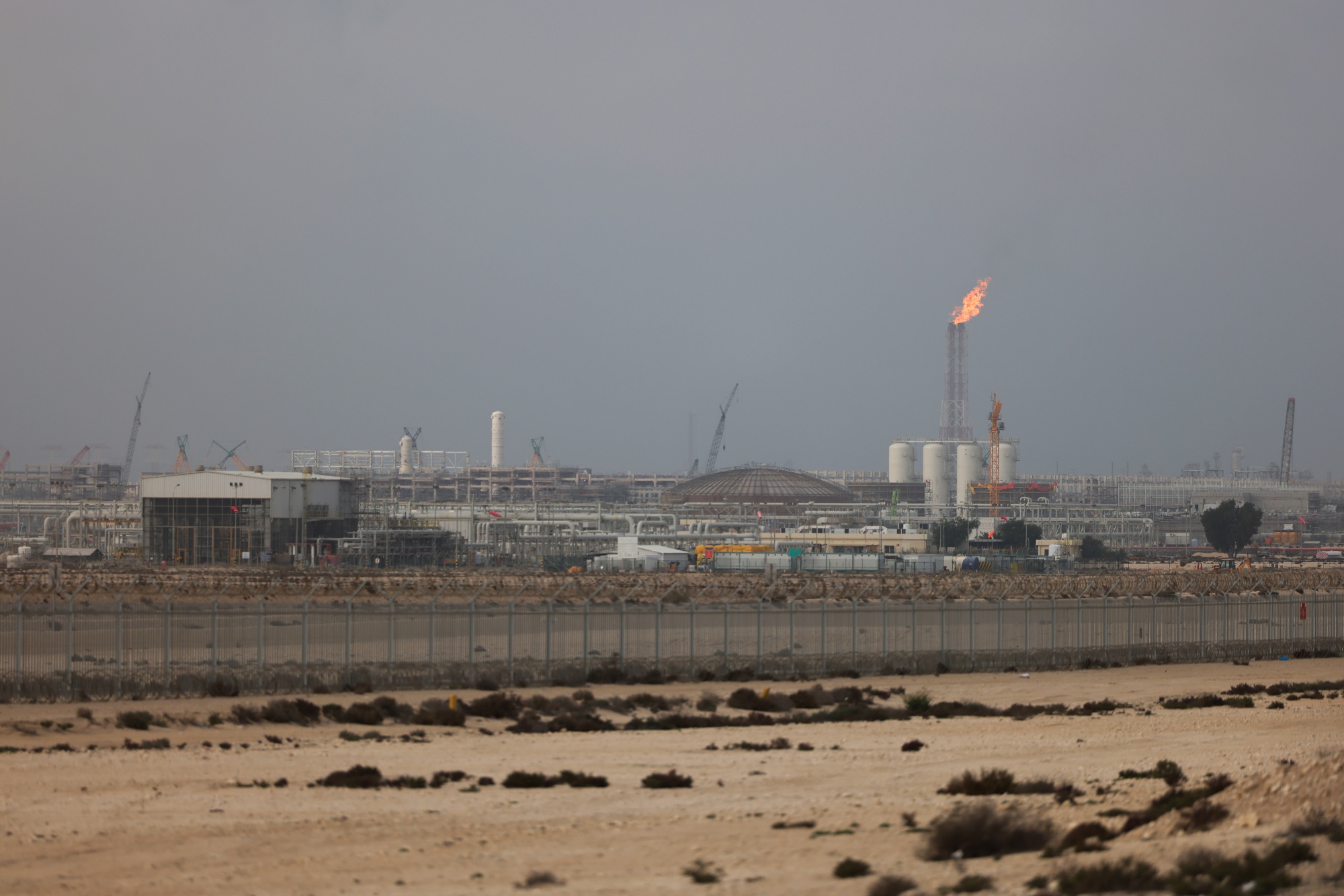
The policy adjustment comes as the conflict centred on Iran has disrupted flows through the Strait of Hormuz, a route that handled about 20 million barrels a day of crude and oil products in 2025 and remains one of the most critical chokepoints in global energy trade. The International Energy Agency said in March that the war had created the biggest supply disruption in oil market history, with flows through Hormuz falling from around 20 million barrels a day before the war to only a trickle.
For China, the timing is especially sensitive. State refiners have already been grappling with higher feedstock costs, disrupted shipping routes and a scramble for replacement barrels from outside the Gulf. Reuters reported in late March that Sinopec, the country’s largest refiner by capacity, had sought access to state reserves after deciding against buying Iranian crude, while also trimming refinery runs. Earlier reporting in mid-March said China had been building inventories rather than drawing them down, suggesting Beijing initially preferred to preserve stocks.
That stance now appears to have softened. Bloomberg reported on April 10 that authorities had given state refiners the green light to tap commercial reserves. While the precise volume and duration were not publicly disclosed, the move is significant because it signals Beijing is willing to use part of the country’s stock cushion to smooth supplies for domestic processing rather than rely solely on the spot market at a time of exceptional volatility.
The wider market has been under intense pressure even as talk of a ceasefire has briefly cooled futures prices. Reuters reported that physical crude markets in Europe and Africa remained extremely tight despite a temporary truce, with buyers in Asia and Europe competing aggressively for non-Middle East barrels. Another Reuters report said U. S. crude premiums had surged to record highs as importers sought alternatives to Gulf supplies. That matters for China because replacing lost or delayed Middle East cargoes has become more expensive just as refining margins in parts of Asia remain fragile.
Supply conditions deteriorated further this week after attacks on Saudi energy infrastructure cut output capacity by around 600,000 barrels a day and reduced throughput on the East-West Pipeline by about 700,000 barrels a day, according to Saudi state media cited by Reuters. The pipeline is vital because it allows exports to bypass Hormuz via the Red Sea. Damage there narrowed one of the few remaining alternative routes for Gulf producers trying to keep oil moving to Asian customers.
Asian refiners have already felt the strain. Reuters reported that seaborne crude imports into Asia in April were estimated at 19.22 million barrels a day, sharply below the three-month average of 25 million barrels a day. Although refined fuel prices eased after hopes of a truce, the same report said the market was still stressed and that it could take months for normality to return even if shipping improves. For Beijing, releasing commercial stocks is therefore less a dramatic emergency measure than a tactical effort to bridge a period of dislocation.
The decision also reflects China’s domestic balancing act. Authorities have been trying to keep fuel output steady even as weak underlying demand and higher crude costs squeeze refiners. Reuters reported on April 2 that officials had pressed independent refiners to maintain production despite the surge in oil prices and wartime disruption. That suggests Beijing is seeking to avoid sharp swings in fuel availability or industrial costs while preserving broader economic stability.
There is also a geopolitical layer. China has opposed any overtly force-based international response around Hormuz and has pushed for de-escalation at the United Nations, according to Reuters reporting on Security Council negotiations. At the same time, the reserve release shows that Beijing is preparing for a conflict that may not be resolved quickly and for shipping conditions that may remain uncertain even if diplomatic language softens.
A cross-border espionage campaign that targeted journalists, civil society figures and some government-linked entities across the Middle East and North Africa between 2023 and 2024 has been tied by researchers to BITTER, a long-tracked South Asian threat actor, marking what investigators describe as the first documented case linking the group to attacks on civil society in the region. The attribution remains qualified rather than definitive: Lookout said […]
Ethereum hovered near the $2,000 mark on Thursday after a choppy stretch that left the world’s second-largest cryptocurrency caught between stronger long-term supply dynamics and a fresh wave of geopolitical and macroeconomic uncertainty. Ether was trading around $2,178 during the session, after moving within an intraday range of roughly $2,167 to $2,264, underscoring the tight consolidation that has kept traders focused on whether the token can build […]
Arabian Post Staff -Dubai Dubai’s financial regulator has unveiled temporary relief measures for firms in the Dubai International Financial Centre, offering regulatory flexibility on licensing, staffing, reporting and selected implementation deadlines as companies manage an exceptional operating environment. The Dubai Financial Services Authority said the package is designed to help regulated firms continue serving clients and markets while preserving supervisory standards. The measures apply both to firms […]
U. S. authorities have dismantled the domestic arm of a cyber-espionage network that officials say was run by APT28, the Russian military intelligence hacking group also known as Fancy Bear and Forest Blizzard, after it hijacked vulnerable internet routers to redirect traffic, steal credentials and sift victims for higher-value targets. The Justice Department said the FBI used a court-authorised technical operation to identify compromised routers on U. […]
South Africa’s net foreign reserves fell to $73.19 billion at the end of March from $75.84 billion in February, as the country’s gross reserves also dropped to $77.76 billion from $81.06 billion, according to central bank data released on Thursday. The decline came after a stronger February reading and marks a pullback from levels that had been supported earlier this year by higher reserve values and foreign-exchange […]
Sub-Saharan Africa’s growth is set to hold at 4.1% in 2026, but the World Bank has cut its earlier projection and warned that a more hostile external backdrop, led by conflict-linked jumps in fuel and fertiliser costs, is making the region’s recovery harder to sustain. The lender said the outlook had been revised down by 0.3 percentage points from its October 2025 estimate, even as governments across […]
Arabian Post Staff -Dubai Mubadala Capital has closed its biggest Brazil-focused investment vehicle at about $900 million, exceeding its original $750 million target in a sign that large overseas investors still see room for opportunistic deals in Latin America’s biggest economy despite a tougher global fundraising climate. The fund, Brazil Special Opportunities Fund III, was backed by a $250 million anchor commitment from Mubadala Capital, the investment […]
Commercial Bank of Dubai will redeem $600 million of perpetual additional tier 1 securities on April 21 and seek to cancel their listings on Euronext Dublin and Nasdaq Dubai once the repayment is completed, marking the planned exit of a capital instrument the lender issued in 2020 as Gulf banks were strengthening balance sheets during a volatile funding period. The securities were issued on October 21, 2020 […]
S&P Global Ratings has lowered the Philippines’ outlook to stable from positive, while affirming its long-term sovereign credit rating at BBB+, saying the war in the Middle East has raised the risks facing the country’s external accounts and public finances. The move keeps the nation within investment-grade territory but signals that a near-term upgrade is now less likely as higher energy costs, inflation pressure and a weaker peso complicate the policy outlook.
The ratings agency said elevated oil prices are likely to widen the current-account deficit this year and weaken external buffers, even as it still expects the economy to expand at a healthy pace and the fiscal deficit to narrow over the next two years. S&P projected growth of 5.8% in 2026 after the economy expanded 4.4% in 2025, with softer momentum in the first half and a rebound later in the year.
The decision lands at a delicate moment for Manila. The Bangko Sentral ng Pilipinas warned this week that higher fuel costs were already feeding into broader prices after March inflation accelerated to 4.1%, above the central bank’s 2% to 4% target band and sharply higher than February’s 2.4%. Transport costs were the main driver, with diesel prices up 59.5% from a year earlier and gasoline up 27.3%, while core inflation also edged higher, suggesting second-round effects may be starting to build.
That inflation pulse helps explain why S&P has become more cautious. A country that depends heavily on imported fuel is especially exposed when conflict disrupts Middle East energy flows, and the Philippines has been among the Asian economies hit hardest by the latest oil shock. Reuters reported that Brent crude had risen 55% since the Iran war began on February 28, while the Philippine peso slid to record lows against the dollar, adding another layer of imported inflation pressure.
The external vulnerability is not new, but the conflict has made it harder to ignore. Philippine officials have been scrambling to secure energy supplies, including seeking assurances over safe passage for Philippine-flagged ships and fuel cargoes through the Strait of Hormuz. Manila has also explored alternative sources of crude and emergency measures to protect domestic supply, underlining how quickly a geopolitical crisis can turn into a ratings issue for an energy-importing economy.
For investors, the key point is that S&P did not cut the rating itself. The agency kept the BBB+ grade in place, indicating that it still sees underlying strengths in the economy, including growth potential, remittance support and expectations of gradual fiscal repair. That distinction matters. An outlook change signals rising risk over the medium term, but it is not the same as a downgrade, and it leaves room for the sovereign to stabilise if external pressures ease and macroeconomic management holds firm.
Still, the downgrade in outlook will sharpen attention on the government’s fiscal path. The Philippines has already lowered its medium-term growth targets to reflect the impact of Middle East tensions and shifts in US trade policy. Official forecasts now put 2025 growth at 5.5% to 6.5%, down from 6% to 8%, while targets for 2026 to 2028 have been narrowed to 6% to 7%. That softer growth backdrop makes deficit reduction harder, particularly if the state is forced to spend more on fuel relief, transport support or other measures to cushion households and businesses.
There are signs, however, that the fiscal picture is not uniformly worsening. Treasury data showed the budget deficit in February narrowed marginally from a year earlier, while year-to-date figures improved sharply because of stronger revenues and earlier remittance of dividends. S&P’s own statement suggests it still expects fiscal metrics to improve, even if the war has made that path more vulnerable to setbacks.
Beyond the government balance sheet, the social cost of the energy spike is becoming harder to miss. Reuters reported that some farmers in Benguet province were abandoning harvests because higher fuel, labour and transport costs made it uneconomic to bring produce to market. That kind of strain matters for credit analysis because it shows how an oil shock can move from shipping lanes and currency markets into household spending, food supply chains and political pressure for intervention.
Matein Khalid The US-Israel war with Iran has now stretched beyond five weeks, inflicting extensive damage on energy infrastructure, airports, ports and commercial and technology hubs across the six GCC states. The closure of the Strait of Hormuz to Gulf oil and gas exports is, in itself, an economic catastrophe. It forces the GCC to conclude that energy export security is not national security. Drone and missile attacks triggered a sharp […]
BEIJING, CHINA – Media OutReach Newswire – 8 April 2026 – On March 31, 2026, China Mobile hosted the 2026 China Mobile Digital Empowerment Cooperation Conference for Chinese Enterprises Going Global in Beijing. The conference focused on the needs for digital and intelligent development of Chinese enterprises going global, jointly exploring new trends in digital and intelligent empowerment for the global development of Chinese enterprises, and it was broadcast live simultaneously around the world. Zhang Feng, Secretary of the CPC Chinese Institute of Electronics Committee, and Guo Hao, President of the China Association of Communications Enterprises, attended the event, among others. Li Huidi, Executive Vice President of China Mobile attended the conference and delivered a speech.
Li Huidi pointed out that artificial intelligence is currently reshaping the ways of production and life with unprecedented speed and breadth, deeply restructuring the competitive landscape of global industries. AI is already the core engine driving the leap in social productivity and leading the transformation of the global industrial system. The overseas development of Chinese enterprises is undergoing a comprehensive upgrade from the traditional export of products and production capacity to the synergistic development of digital capabilities and industrial chains driven by AI.
Li Huidi stated that, in the face of a new round of technological revolution and industrial transformation, China Mobile is accelerating the transition from a “telecommunications operator” to a “technology services enterprise.” With the vision of building a world-class technology services enterprise, it comprehensively promotes the integrated innovation of communication technologies, information technologies, and AI technologies, in order to strengthen, optimize, and expand the three major businesses of “communications services, computing services, and AI services.” China Mobile will deeply integrate its AI capabilities into the entire chain of its three core businesses, paving a digital and intelligent highway for globalization, featuring the integration of networks and intelligence, safety and reliability, and universal access across all domains for Chinese enterprises going global:
First, China Mobile will strengthen communications services and empower “AI connectivity”, weaving a dense network of global intelligent interconnection. The scale of China Mobile’s international information infrastructure continues to grow. China Mobile have expanded the capacity of submarine and terrestrial cables, bringing total international transmission bandwidth to 406T and Points of Presence (PoPs) to 446. Notably, the eastern section of 2Africa, the largest submarine cable system in the world circling Africa, has been activated. The sections are expected to be completed and put into operation in the first half of this year. Spanning a total length of approximately 45,000 kilometers, this submarine cable is laid along the coastline of the African continent. It connects 33 countries and regions across the Middle East, Asia, and Europe, providing high-quality, low-latency international communication services for a population of roughly 3 billion along its route. This major information artery, which connects six continents and four oceans, provides safe and reliable guarantees for end-to-end connections. It supports the scheduling of transnational AI applications and the integration of global business for enterprises going global. Global roaming is now available in 268 destinations, and the total number of users for the JegoTrip app has exceeded 90 million. China Mobile’s international ecological cooperation continues to expand, and the “Hand-in-Hand Program” covers over 3 billion users worldwide. China Mobile have consecutively hosted events such as the Southeast Asia Cooperation Conference and the China Mobile Digital Empowerment Cooperation Conferences for Chinese Enterprises Going Global. These events have been widely praised and have strengthened China Mobile’s influence within the global ecosystem. In recent years, China Mobile’s revenue from international business has consistently maintained a trend of high-speed, double-digit growth.
Second, China Mobile will optimize computing services and drive “AI Computing”, building a globally integrated computing network across the world.As a builder of computing infrastructure, China Mobile will comprehensively increase its investment in Artificial Intelligence Data Centers (AIDC), accelerate the supply of computing, and enhance its operational capabilities for Tokens. China Mobile’s 100-megawatt-level Global Intelligent Center (GIC) in Hong Kong has officially opened, and China Mobile will deploy more nodes for AI computing along the “Belt and Road” initiative in the future. China Mobile have already established a cluster for AI computing with a capacity of 92.5 EFLOPS in China. By linking this with over 1,300 resources from self-owned and cooperative data centers overseas, China Mobile are constructing a global network for computing. China Mobile will promote Mobile Cloud to integrate high-quality global models and streamline the service chain where “Agents use Tokens, Tokens drive Computing, and Computing consumes Electricity.” This will forge a solid foundation of computing for Chinese enterprises going global.
Third, China Mobile will expand AI services and reshape digital services, stimulating new momentum across all domains for enterprises going global.As a promoter of applications for artificial intelligence, China Mobile continuously iterates the capabilities of its “Jiutian” large model. China Mobile have accumulated industrial data exceeding 20 trillion Tokens and independently developed more than 50 industrial large models. This promotes the deep integration of AI agents into the entire process of production and operations for enterprises. Overseas, China Mobile translate its leading domestic AI capabilities into a “smart engine” for Chinese enterprises expanding abroad. Targeting the pain points of enterprises going global, China Mobile have tailored a “1+8” system of products and solutions for all scenarios, which has already served tens of thousands of Chinese enterprises in their global layout. By combining the advantages of Chinese manufacturing and 5G solutions, China Mobile achieve deep integration with local ecosystems overseas. In regions including Europe, Latin America, and the Asia-Pacific, and have successfully established over a thousand benchmark cases of “AI+” digital and intelligent transformation, such as smart factories, smart ports, and smart IoV. This makes the fruits of China’s innovation in AI benefit the global market.
Looking toward the vast blue ocean of the AI era, Li Huidi proposed four initiatives: First, China Mobile will jointly build AI infrastructure to forge a solid “new foundation” for AI+ global development. China Mobile will join hands with global industry partners to accelerate the construction of global communication networks, computing networks, and intelligent networks. China Mobile will jointly optimize the layout of global submarine and terrestrial cables as well as hubs for computing, achieving mutually beneficial cooperation along the “Belt and Road” initiative and around the world. By building more high-standard Artificial Intelligence Data Centers, China Mobile will provide low-latency, highly reliable, high-performance, and widely covered infrastructure of computing networks for Chinese enterprises marching into the world. Second, China Mobile will jointly establish AI standards to build a “new consensus” on intelligence within the industry. China Mobile will continue to promote China’s full-stack AI technologies and standards to the world, covering the entire chain of computing foundations, large models, and industrial applications. This will contribute Chinese wisdom, Chinese solutions, and Chinese standards to the construction of an open, inclusive, and interoperable system of global rules for AI technology. Third, China Mobile will jointly expand AI scenarios to release “new quality productive forces” across thousands of industries. China Mobile will continuously open up China Mobile’s technological foundation and experience in various scenarios, collaborating with enterprises going global to unearth high-value industrial scenarios. By providing exclusive resources for AI computing and support for Tokens, China Mobile will empower the accelerated release of new quality productive forces through AI innovation. In key regions along the “Belt and Road” initiative, China Mobile will create more replicable and promotable benchmark projects of “AI+” digital and intelligent transformation for overseas development. Fourth, China Mobile will jointly cultivate a win-win AI ecosystem to expand the “new circle of friends” for global cooperation. China Mobile will continuously upgrade the cooperative ecological system of the “iSTAR Program. Relying on the three core pillars of “AI+ applications, cloud and AI computing, and connectivity,” China Mobile will unite the strengths of global industries, academia, research, and application. This will help build a more open, inclusive, and mutually beneficial globalized digital and intelligent ecosystem. China Mobile will jointly incubate “AI+” solutions for overseas development across more than 150 scenarios, providing intelligent escorts across the entire chain and full life cycle for Chinese enterprises going global.
At the conference, using full-stack digital and intelligent capabilities to escort Chinese enterprises going global, China Mobile released a series of “AI+” full-stack digital and intelligent infrastructure, products, and services. Together with its ecological partners, China Mobile jointly released the “White Paper on the Digital and Intelligent Ecosystem of the China Mobile International ‘iSTAR Program’ for Chinese Enterprises Going-Global,” collaboratively building a new ecosystem for AI services.
Hashtag: #ChinaMobile
The issuer is solely responsible for the content of this announcement.



 www.britishcouncil.org