Just in:
OpenAI identifies 948 Linux privilege escalation flaws using AI // After Reaching 7 Million Users in the Philippines, Skyro Launches Transparent Cash Loans in Malaysia // Meraas showcases five residential zones at Dubai Design Week // Middle East governments assess Iran war after US vote // ADIA and partners establish $1.4 billion aviation venture // CR Longdation Aethereal Cybersecurity × Global Cybersecurity Alliance (GCSA) Join Hands to Establish the “AI and Cybersecurity Research Centre” // Millions Of Indians May Soon Be Deprived Of Government Assistance // SC to examine students’ exam plea today // Trump’s Iran War Has A Share Of Contribution To His Midterm Debacle // Private varsities bill all set to face the axe // Fast Just Got Fastest: STING Energy Boost™ Celebrates Kimi Antonelli’s Formula 1® World Championship and the Fan Energy Behind It // Emirates Group records AED 4.1 billion half-year profit // Asia Left Behind: Ten international companies have yet to report delivering on their cage-free egg pledges across the region // Utilities pursue ₹1,992 cr in unpaid bills // The “1st Greater Bay Area Health and Longevity Summit & Awards Ceremony” concludes successfully in Macao // Vance attributes Republican midterm defeats to Iran conflict // Oil and chip shares retreat after Democratic victories // Ta’ziz finalises $1.39bn funding for Ruwais industrial facilities // Ousted top Kochi cop gets IG post // Cyberport Venture & Capital Forum 2026 Grand Opening //

News related to
Middle East

Sharjah’s government has successfully raised Rmb 2 billion by issuing a three-year panda bond in China’s onshore renminbi market. The issuance marks the emirate’s return to the panda bond space after its inaugural foray seven years ago. The pricing range for the bond was initially indicated in the 2.5 % to 3.2 % area. The transaction was arranged through a syndicate led by Bank of China, with […]

Davidson Kempner Capital Management has inaugurated an office at the Abu Dhabi Global Market, marking its first physical presence in the Gulf and becoming the latest global hedge fund to deepen its footprint in the United Arab Emirates. The new office will be led by partner Chris Krishanthan together with managing director Naveen Sabharwal.

The firm, which manages approximately $37 billion in assets, aims to tap deeper into regional capital flows and align more closely with sovereign and institutional investors across the Gulf Cooperation Council. Tony Yoseloff, managing partner and chief investment officer, described the move as a step to “further expand our investable universe” and strengthen “local relationships in a highly dynamic market.”

For years, Abu Dhabi has steadily worked to position itself as a rival to Dubai in financial services. Its strategy has included tailoring tax incentives, loosening regulatory constraints, and courting global asset managers to relocate or open branches there. As part of this wave, major hedge funds such as Brevan Howard and Marshall Wace have already established bases in ADGM; Davidson Kempner joins their ranks in what is being viewed as a consolidation of the emirate’s appeal to global capital.

The timing dovetails with a broader uptick in cross-regional trading. The CME Group recently reported a 16 percent rise in average daily trading volumes from the Middle East, with hedge fund activity surging nearly 30 percent this year. The firm’s commercial officers noted the region has become its fastest-growing market. Many attributers point to favourable time zones, regulatory allure, and close proximity to sovereign wealth capital as key drivers.

Internally, the ADGM office is intended both as a regional sourcing hub and a local relationship engine. Krishanthan and Sabharwal have previously overseen Davidson Kempner’s Middle Eastern investment activity, so the new base is meant to formalise and deepen ongoing operations. The firm describes its core strategy as rooted in credit and event-driven investing, spanning public and private markets globally.

This expansion comes amid headwinds in certain corners of the firm. In 2024, Davidson Kempner moved to shutter its Distressed Opportunities fund — once managing around $2 billion — as evolving market conditions rendered that strategy less compelling in a constrained restructuring environment. The firm indicated it would reorient distressed allocations into closed-end and multi-strategy vehicles.

Observers see the firm’s Abu Dhabi entry as both adaptive and opportunistic. By embedding itself in ADGM, Davidson Kempner seeks proximity to capital allocators, deal flow, and regional intelligence — all of which matters in markets where local networks and relationships often play outsized roles.

Competition in the region is intensifying. Abu Dhabi’s Lunate recently acquired a minority stake in Brevan Howard, launching a joint investment platform with an initial commitment of $2 billion. Regional investors have also targeted global fund firms for partnerships or co-investment models. That push underscores Abu Dhabi’s ambition to evolve into a globally competitive asset management hub, alongside regulatory hubs like London, Singapore, and Hong Kong.

The International Monetary Fund has lifted its projection for the United Arab Emirates’ economic expansion to 4.8 per cent in 2025 and sees 5.0 per cent growth in 2026, citing accelerating non-hydrocarbon activity and a rebound in oil output.

Stronger-than-expected performance in tourism, construction, trade and financial services is underpinning the upward revision. The IMF attributes resilience to the country’s diversified strategy and structural reforms such as enhanced trade agreements and sustained investment in infrastructure.

Analysts say the revision contrasts sharply with broader regional downgrades. The IMF now expects growth across the Middle East and North Africa to expand by only 2.6 per cent in 2025, constrained by policy uncertainty, volatile energy markets and geopolitical tensions.

Within the UAE, central bank data reinforce the narrative of dual expansion. The non-hydrocarbon sector is forecast to grow by around 4.5 per cent annually in both 2025 and 2026, while the hydrocarbon segment is expected to rebound more sharply—by 5.8 per cent in 2025 and 6.5 per cent in 2026—on increased output as OPEC+ quotas are relaxed.

When IMF staff visited the UAE in January 2025, they noted that domestic demand remained robust amid modest oil production, forecasting real GDP growth at about 4 per cent for the year. They projected that fiscal and external surpluses would remain comfortable, helped by elevated non-oil revenues and cautious fiscal management.

Still, risks linger. The UAE’s banking sector, while well capitalised, faces exposure to real estate, and high house prices pose concerns for asset quality. In mid-2025, exposure to property in banks’ portfolios stood at around 18 to 19 per cent of risk-weighted assets. A sudden shift in investor sentiment or capital flows could test the stability of credit markets.

On the external front, the current account surplus is projected at about 7.5 per cent of GDP, supported by stronger non-oil exports and moderating import growth. Liquidity buffers remain healthy, with international reserves covering more than eight months of imports.

Commvault has entered a Memorandum of Understanding with HPE to scale joint cybersecurity, backup and recovery services across the Gulf and wider Middle East, unveiling the pact at GITEX Global in Dubai.

The agreement mandates co-development of integrated solutions and joint market initiatives combining HPE’s infrastructure platforms — such as GreenLake, Alletra Storage MP, Zerto, StoreOnce — with Commvault’s cyber-resilience and data protection capabilities. It aims to drive enterprise adoption of hybrid cloud backup, ransomware mitigation and cross-region redundancy.

HPE previously announced a broader strategic expansion of its alliance with Commvault aimed at neutralising advanced cyberthreats, spotlighting tighter integration across cloud, storage and policy automation. The local MoU is intended to bring those capabilities closer to enterprises operating in the Gulf and MENA markets.

HPE’s Zerto platform will feed into Commvault Cloud offerings to enable near-zero recovery time and point objectives, while snapshot immutability, geographic replication, and anomaly detection powered by AI are planned as central joint features. Running side by side, HPE’s storage and infrastructure fabric supports Commvault’s orchestration layer for unified policy enforcement across hybrid deployments.

Regional leadership within both firms emphasised the growing urgency of resilience as data volumes and threat sophistication rise. Yacob Ahli, HPE’s Commercial Director for UAE, said that the Gulf’s data-centric growth narrative demands infrastructure foundations that safeguard continuity. Havier Haddad, heading Commvault’s EMEA emerging markets distribution, framed the MoU as a strategic move to reinforce customer confidence in mission-critical operations across the region.

Analysts say the new alliance helps bridge a gap many enterprises in the Middle East face: lacking in-region partner support for complex, integrated cyber resilience stacks. By localising go-to-market strategies, certification and training, the partnership may reduce friction in adoption. Still, adoption also depends on regulatory compliance, cross-border data governance, and interoperability with incumbent systems.

Commvault has also introduced new additions to its HyperScale portfolio — HyperScale Edge and HyperScale Flex — designed to support remote and edge data protection workloads, broadening its partner ecosystem to include HPE, Dell, Lenovo and others. These tools complement its flagship HyperScale X offering.

“Give Time, Share Hope” campaign transforms dormant watches into tangible support for Geylang East Home for the Aged SINGAPORE – Media OutReach Newswire – 15 October 2025 – As Singapore’s population rapidly ages, with nearly 1 in 4 citizens expected to be 65 and above by 2030 according to the Ministry of Health, aged care facilities face mounting pressure with limited resources. In response, independent luxury watch […]

WUHU, CHINA – Media OutReach Newswire – 14 October 2025 – Under the theme “Innovation · Defining the Future,” the inaugural JETOUR Media Alliance (JMA) Technology Tour is set to commence on October 17 in Wuhu, Anhui. Media representatives from the Middle East, Asia-Pacific, Central and South America, Africa, and other international markets will gather in China to experience JETOUR’s cutting-edge new energy technologies firsthand. Together, they […]

What first inspired you to pursue your current industry or professional path? Was there a defining moment or influence that shaped your direction? My journey into financial technology began during my early days at Banque Misr, Egypt’s second-largest bank, where I witnessed firsthand the inefficiencies of traditional paperbased banking systems. The defining moment came when I was tasked with spearheading the digital transformation initiative, converting traditional transactions […]

Advertisements

Dubai—Dell Technologies asserts it commands more than 24 per cent of the UAE’s data centre server market, signalling a strong foothold in a region where demand for digital infrastructure is surging. Samer Al Jayyusi, Specialty AI & GenAI Regional Lead for Central & Eastern Europe, Middle East and Africa at Dell, made the disclosure at GITEX Global 2025, emphasising that national institutions have shown growing confidence in […]

Dubai’s 45th edition of GITEX GLOBAL opened on 13 October at the Dubai World Trade Centre, attracting what organisers call unprecedented global participation. The event hosts more than 6,800 exhibitors, 2,000 startups and 1,200 investors from over 180 countries. Sheikh Mohammed bin Rashid Al Maktoum inaugurated the event, underscoring the UAE’s ambition to lead in AI-driven economies. Dubai’s leadership has signalled this edition will be the last […]

Larsen & Toubro’s hydrocarbon onshore unit, in partnership with Greek firm Consolidated Contractors Group, has booked an ultra-mega contract valued at over ₹150 billion to build a natural gas liquids plant and associated processing facilities in the Middle East. The engineering, procurement, construction, installation and commissioning scope will cover the handling of rich associated gas, integration of utilities, and interfacing with existing infrastructure. L&T will lead engineering […]

Investcorp Capital, listed on the Abu Dhabi Securities Exchange, has pledged to commit $750 million to the Investcorp Golden Horizon platform, a strategic growth-stage vehicle that supports pre-IPO companies across the Gulf Cooperation Council and China. Golden Horizon was launched by Investcorp in conjunction with China Investment Corporation and is anchored by CIC as the lead institutional investor. The platform is structured to channel capital into high-growth […]

Dubai-based Dubizzle Group Holdings has unveiled plans to float about 30.34 % of its share capital via an initial public offering on the Dubai Financial Market. The offer comprises 1.25 billion ordinary shares, of which 196.1 million are fresh issues from the company and 1.05 billion are existing shares sold by current shareholders. Subscription will be open from 23 to 29 October, the price will be fixed on 30 October, and trading is expected to begin on 6 November 2025.

The firm has appointed Rothschild & Co. as Independent Financial Advisor and Emirates NBD Capital as Listing Advisor. The IPO will be co-managed by banks including Abu Dhabi Commercial Bank, Barclays, EFG-Hermes UAE, Emirates NBD, Goldman Sachs International, HSBC Middle East and Morgan Stanley. Dubizzle’s largest shareholder, Prosus N. V., is committing USD 100 million to the issuance, signaling continued backing after initially investing in 2011.

Dubizzle operates across two main platforms: dubizzle, which handles automotive and general classifieds, and Bayut, focused on real estate. In the 18 months leading up to the IPO, the group pursued strategic acquisitions such as Drive Arabia, Hatla2ee, and most recently Property Monitor, a UAE real estate data and analytics provider. The acquisition of Property Monitor, which delivered a revenue CAGR of 55 % from 2022 to 2024, is expected to deepen Dubizzle’s insight offering in its property vertical.

Financially, the group has improved its performance. In 2024, revenues reached USD 222 million, with the net loss narrowing. For the first half of 2025, revenue rose to USD 133 million, while adjusted profit stood at USD 14 million. The more constrained net loss of USD 8.9 million in H1 2025 marks further progress in reducing deficits.

Market conditions have played in Dubizzle’s favour. Dubai’s real estate market has surged, with prices climbing over 70 % over four years, boosting transaction activity and demand for online classifieds. Analysts view the Dubizzle IPO as one of the largest tech offerings this year in the UAE, designed to attract capital inflows into the growing digital marketplace sector.

Yet challenges lie ahead. Investor scrutiny of valuations and corporate transparency will intensify, and Dubizzle must show sustainable path to profitability beyond growth. Some analysts estimate the IPO value in the USD 500 million to USD 1 billion range, consistent with its fundraising and valuation aspirations. Liquidity and free float requirements—especially for inclusion in indices like MSCI—may pressure the group to deliver consistent operational metrics.

In preparing for the public listing, Dubizzle has restructured its syndicate. It previously engaged banks such as Emirates NBD, Goldman Sachs, HSBC, and now rotated in Morgan Stanley, replacing former links to Citigroup. The reconfiguration suggests an adaptive approach designed to secure stronger placement and institutional interest.

Dubizzle and many other UAE firms are benefiting from momentum in the IPO pipeline. According to regional capital markets observers, between 25 IPOs were recorded in the first half of 2025, generating about USD 4.5 billion. Brokers like Citi assert that the pipeline remains healthy, even amid macro and geopolitical headwinds, and highlight investor demand for exposure to unlisted technology, fintech, and real estate-adjacent sectors.

Dubai hosted the first public manned flight of Aridge’s Land Aircraft Carrier over Palm Jumeirah, a demonstration that showcases the vehicle’s dual-mode driving and flying capabilities and signals ambitions for the Gulf as an early adoption market.

The modular vehicle, combining a ground “mothership” with a detachable two-seat aerial unit, lifted off from the grounds near the Waldorf Astoria before reattaching and driving away. Aridge said the flight marks a milestone in its plan to roll out consumer deliveries in the Middle East by 2027.

Company executives reported that 600 units have already been pre-ordered by GCC firms, including UAE’s Ali & Sons Group, Kuwait’s Al-Sayer, and Qatar’s Almana, pushing the global tally past 7,000. The firm expects deliveries to begin in 2026 from a new facility in Guangzhou, capable of producing 10,000 vehicles annually.

Aridge’s modular design addresses a common challenge in flying car development: how to balance driving performance, storage, and aerial capability. The ground vehicle acts as a mobile energy platform and storage base, while the air module docks and undocks autonomously. The air unit’s control system uses a single-stick interface managing ascent, speed, and stability with built-in safety constraints such as geofencing.

This version is the fifth generation of the platform, evolving from earlier prototypes demonstrated in Dubai in 2022. For mass adoption, regulatory certification is pivotal: the UAE granted a special flight permit, allowing the test flights to proceed. Aridge’s air module has already received civil aviation type certification in China.

The startup forecasts a market worth of US $41 billion for China’s eVTOL sector by 2040, while projecting Middle East demand to reach about $11 billion. Executives say technological advances—shortened development cycles and lower costs—are making what once seemed science fiction increasingly viable.

Despite the showpiece flight, challenges remain. Integrating city air traffic management, ensuring safety for public use, and building air-ground infrastructure—such as landing pads, vertiports, and regulatory frameworks—are hurdles in most jurisdictions. Some analysts caution that even with promising prototypes, wide adoption may lag until certification, cost reduction, and public trust converge.

In the Gulf region, regulatory openness is proving advantageous: the UAE’s willingness to issue experimental permits positions it as a testbed, attracting innovators who might struggle to get approval elsewhere. Meanwhile, Aridge is lining up partnerships and agreements across the GCC to support sales, operations, and maintenance in local markets.

Dubai’s GITEX GLOBAL 2025 is turning the spotlight on East Africa as a rising force in the artificial intelligence landscape, with regional governments and private players leveraging the event to signal ambition across infrastructure, AI research and startup ecosystems. More than 6,800 tech enterprises and 2,000 startups from 180 countries will convene in Dubai from 13 to 17 October under the GITEX banner, showcasing breakthroughs in biotech, […]

India is dispatching over 450 technology firms and startups to GITEX Global 2025 in Dubai, anchoring the India Pavilion under the aegis of ESC. The pavilion will span multiple halls and spotlight more than 100 Indian enterprises across sectors such as AI, cybersecurity, cloud computing, IoT, smart mobility, fintech and digital infrastructure. Organisations will also engage in high-stakes networking, investor roundtables and B2B matchmaking.

GITEX Global 2025, running from 13 to 17 October at the Dubai World Trade Centre, draws more than 6,800 tech companies and some 2,000 startups from about 180 countries. It is expected to be the largest edition to date, integrating themes such as physical AI, quantum computing, biomedicine and semiconductor innovation. Across the co-located Expand North Star event, over 1,200 investors managing assets exceeding US$1.1 trillion will scout opportunities among scale-ups and unicorns.

The India Pavilion marks a concerted push to convert India–UAE strategic frameworks into tangible tech commerce. With the India–UAE Comprehensive Economic Partnership Agreement and the Local Currency Settlement System operational, cross-border ICT trade has surged. Bilateral trade crossed US$100 billion during fiscal year 2024–25, and electronics exports alone reached US$3.7 billion, positioning the UAE as a key destination for Indian hardware shipments.

At a preparatory briefing, Kamal Vachani, ESC’s regional director for Dubai, described the pavilion as more than a display — “a living showcase of India’s tech prowess and growing synergy with the UAE.” ESC’s CEO, Gurmeet Singh, noted that many participating companies are MSMEs or first-time exporters, and that the pavilion aligns with India’s ambition to emerge as a global electronics hub.

India’s strategy at GITEX goes beyond sheer numbers. Firms are bringing solutions purpose-built for global markets — from smart city platforms to blockchain-enabled supply chains. The pavilion will host curated sessions on cross-border compliance, regulatory alignment, and scalable deployment across Middle Eastern and African markets.

For the UAE, the event reinforces its vision of acting as a global nexus for innovation and capital. Major corporate names such as G42, e&, IBM, AMD, Huawei, Microsoft, Oracle and Amazon Web Services will anchor the exhibitions. New entrants including Cerebras, Tata Electronics, Qualcomm and Tenstorrent will attempt to break in. The show also emphasises future-critical infrastructure: hyperscale data centres, quantum systems, and semiconductor roadmaps are front and centre.

Globally, one of the event’s linchpin themes is the maturation of AI into domain-specific systems. The AI Semicon track will address sovereign technology imperatives in chip design, while the Quantum Expo will present fault-tolerant architectures. At the intersection of AI and healthcare, companies like Mammoth Biosciences and Paradromics will illustrate how gene-editing and neurotech are being reimagined. Robotics firms will showcase humanoid prototypes and autonomous “robocars,” underscoring the pivot to “physical AI.”

Strategic partnerships form a parallel narrative. India and the UAE are finalising memorandum exchanges via the UAE-India Business Council to deepen collaboration across fintech, logistics, digital infrastructure and state-level investment. The CEPA Start-up Series launched earlier this year in New Delhi underscores a joint intent to foster innovation-led cross-border growth.

Saudi Arabia’s sovereign wealth fund, the Public Investment Fund, has scaled back work on a number of planned share sales inside the kingdom, people with knowledge of the matter said, indicating shifting strategy amid weak valuations and soft investor appetite. Bloomberg first reported the development, and its reporting aligns with assessments in market commentary. Executives and advisers close to the red-sea fund say that a subdued climate […]

The Government of Sharjah, rated Ba1/BBB–/AAA by Moody’s, S&P and Lianhe respectively, has mandated several major banks to explore a new Panda Bond issuance in China’s onshore bond market. The Finance Department has appointed Bank of China as lead underwriter and bookrunner, with Crédit Agricole, JP Morgan Chase, ICBC, China Bohai Bank, Citic Securities, the Export-Import Bank of China, and Shenwan Hongyuan Securities acting as joint lead underwriters and bookrunners.

This initiative marks Sharjah’s second foray into the Panda Bond space; it first tapped the Chinese domestic bond market in February 2018 with a RMB 2 billion issue, becoming the Middle East’s first Panda issuer. That issuance carried a coupon rate of 5.8 per cent and matured in 2021.

Market participants say Sharjah’s renewed interest signals increasing appetite among Gulf issuers for renminbi funding, especially given the growing scale of China’s interbank bond market and its accessibility to international issuers. The Panda market is seen as a way to diversify funding sources away from traditional dollar or euro issuance, while deepening engagement with China’s capital markets.

Observers note that the list of joint bookrunners and underwriters—including both Chinese and Western entities—reflects a strategic bridging between global and Chinese investor bases. Bank of China’s role as lead suggests that Chinese financial institutions will play a key role in structuring and distributing the bonds to domestic accounts. The presence of Crédit Agricole and JP Morgan, meanwhile, may facilitate cross-border investor participation.

Industry sources expect the issuance to follow the standard procedure under China’s bond regulations governing overseas issuers. This includes registration with NAFMII, compliance with disclosure requirements, and pricing via roadshows to institutional investors in China. The timeline, tenor and final coupon structure have not yet been disclosed, but sources familiar with the matter suggest Sharjah is seeking favourable market conditions to launch.

Issuers of Panda Bonds have historically benefitted from lower yields relative to comparable offshore RMB options, thanks to the liquidity and depth of China’s domestic markets. That said, success depends heavily on investor confidence in the issuer’s credit profile, transparency in the bond documentation, and the relative attractiveness of coupon spreads over domestic benchmarks.

Sharjah’s credit ratings present both strengths and challenges. Its triple-A rating from Lianhe bolsters credibility in the Chinese market. However, its non-investment grade rating from Moody’s and S&P may weigh on perceptions among global investors. How Sharjah positions itself to bridge that gap will be critical, particularly in roadshow messaging and bond structuring.

This development arrives at a time when Panda bond issuance is gaining momentum. The Asian Infrastructure Investment Bank, for example, raised CNY 2 billion in its latest two-year Panda issuance, achieving oversubscription and attracting new investor accounts. The New Development Bank further expanded its onshore footprint earlier this year, issuing RMB 7 billion under its registered Panda Bond Programme.

Dubai — Hytera Communications unveiled a slate of artificial intelligence-driven communication tools designed specifically for public safety, law enforcement and defence sectors in the Gulf region, ahead of its showcase at GITEX Global 2025.

At the heart of Hytera’s push is a vision of integrated, mission-critical communications that fuse voice, video, and data streams with AI analytics to improve situational awareness, incident response speed and evidence handling.

The company will debut the P60 Smart PoC Radio, a compact device marrying push-to-talk over cellular capability with 3GPP-aligned mission-critical services. This enables frontline users to stream video, send data, and communicate via voice over a single radio interface. Also on display will be the SC700 LTE Body Camera, built for continuous field operation with extended battery life, high-definition video capture and advanced noise reduction in audio. The SC700 is integrated with Hytera’s upgraded Digital Evidence Management system, which automates evidence ingestion, classification and secure sharing while preserving a chain of custody.

Hytera also plans to demonstrate its Intelligent Mobile Enforcement Solution, an ecosystem combining body cameras, in-vehicle video units and AI models for real-time analytics such as facial recognition and licence plate detection. From command centres, data from multiple sensors can be aggregated and visualised to support dispatch decisions and resource allocation.

According to Stanley Song, Vice President at Hytera, the Middle East market represents one of the fastest growing regions for professional communication technologies. He emphasised that public safety systems must go beyond simple coverage — they must protect the integrity of data, location privacy, and resilience against cyber threats. Given the rising challenges of urban security, cross-border crime and regional instability, Song argued that interoperable, secure, AI-augmented communications can help authorities maintain continuity under stress.

Hytera’s roadmap reflects broader shifts in the mission-critical communications sector. Competing firms are also embedding AI capabilities and federated data architectures so that frontline devices act as sensors, not just radios. In parallel, regional governments in Gulf Cooperation Council states are investing heavily in smart city, surveillance and emergency response infrastructures, creating receptive demand for advanced solutions.

Rania Gule It seems that gold is going through a delicate phase, balancing between long-term bullish momentum and short-term profit-taking pressures, at a time when global markets are on edge ahead of upcoming U.S. sentiment data. As prices approach the $4,000 per ounce mark once again, the key question resurfaces: can gold still break its historical ceiling at $4,059, or will the current corrective wave extend temporarily […]

BANGKOK, THAILAND – Media OutReach Newswire – 10 October 2025 – Amari Bangsaen, the newly launched hotel by ONYX Hospitality Group—a leading hospitality company in Southeast Asia managing hotels, resorts, serviced apartments, and luxury residences—has received a warm welcome since its opening in June. Rapidly emerging as a favoured destination for short breaks, the hotel appeals to travellers seeking a retreat within close distance of Bangkok, to […]

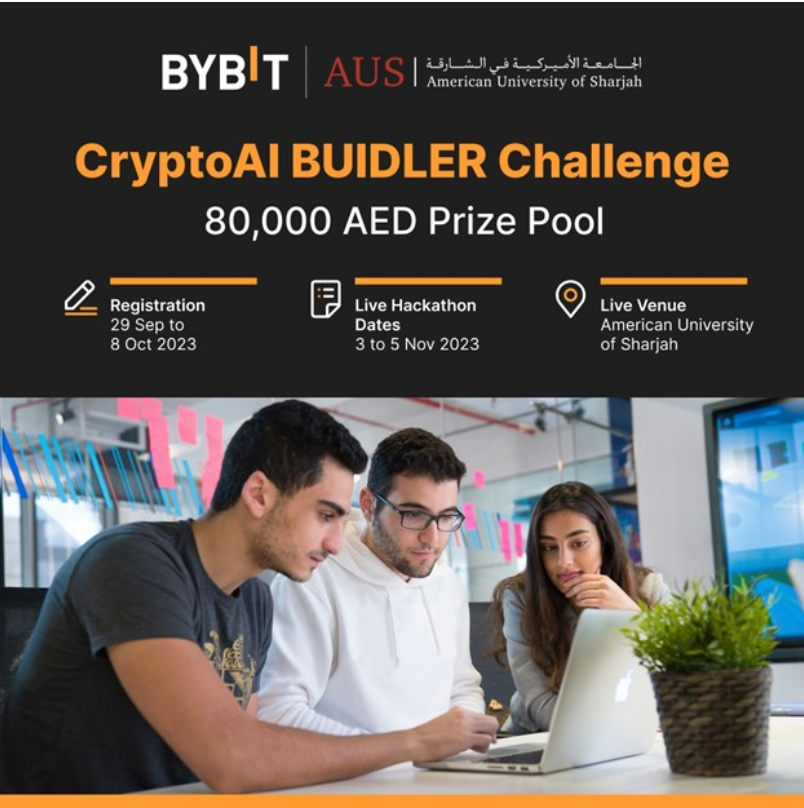
Bybit, a leading cryptocurrency exchange, has achieved a significant milestone by becoming the first fully licensed crypto exchange to operate in the UAE. This breakthrough comes amid the UAE’s ongoing efforts to establish itself as a global hub for digital assets and blockchain technology.

The UAE has long been a proponent of embracing emerging technologies, particularly in the fintech and blockchain sectors. The government’s progressive stance has attracted numerous cryptocurrency firms looking to establish a foothold in the region. Bybit’s licensing by the UAE’s Financial Services Regulatory Authority solidifies its position within this growing market.

The FSRA’s approval marks a crucial development, as it provides Bybit with a clear regulatory framework to offer crypto trading services to customers in the UAE. The exchange, which has previously operated under regulatory frameworks in other jurisdictions, will now operate in full compliance with local laws. This licensing allows Bybit to offer a wide range of digital asset services, including spot and derivatives trading, to both institutional and retail investors.

The approval is a testament to the UAE’s regulatory efforts to integrate the cryptocurrency sector into its broader financial ecosystem. The country has been proactive in ensuring that regulations keep pace with the rapid evolution of digital assets, making it an attractive destination for crypto companies seeking a compliant and stable environment.

Bybit’s decision to seek a licence in the UAE comes at a time when the global crypto market faces heightened scrutiny and regulatory challenges. In a climate where several countries have been introducing stringent regulatory measures, the UAE’s more flexible approach to crypto regulation has set it apart. This has resulted in an influx of international crypto firms looking to operate in the region, as they see the UAE as a secure base from which to expand their services.

The approval process for Bybit was rigorous and comprehensive, ensuring that the exchange adhered to strict security measures, anti-money laundering protocols, and customer protection standards. The FSRA has been meticulous in its review, demonstrating its commitment to fostering a secure and transparent environment for digital asset trading.

UAE officials have long spoken about their vision to turn the country into a leader in the global digital economy, with blockchain and cryptocurrency playing key roles in that vision. The emirate of Dubai, in particular, has been a front-runner in attracting cryptocurrency firms, with its Dubai International Financial Centre and the Dubai Financial Services Authority offering frameworks tailored to the needs of digital asset businesses.

The Bybit licensing follows a series of initiatives launched by the UAE government, including the establishment of the Dubai Virtual Asset Regulatory Authority. VARA’s creation was designed to regulate virtual assets, ensuring that companies operating within the region meet stringent compliance standards. This regulatory framework has been instrumental in bringing crypto companies into the fold, offering a more secure trading environment for users and businesses alike.

Bybit’s entry into the UAE market has also brought attention to the broader trends shaping the cryptocurrency industry in the Middle East. The UAE has become one of the leading markets for blockchain innovation, with numerous projects underway to integrate blockchain technology into sectors such as real estate, logistics, and finance. As the region’s appetite for digital innovation grows, companies like Bybit are poised to capitalise on this evolving landscape.

The licensing of Bybit is also expected to have a ripple effect on the wider cryptocurrency ecosystem. With the exchange now authorised to operate legally in the UAE, it may pave the way for other platforms to follow suit, thereby increasing the variety of options available to investors. This will likely enhance the overall appeal of the UAE as a destination for cryptocurrency trading and investment.

Despite the current global volatility in the crypto market, Bybit’s expansion into the UAE market reflects its long-term confidence in the future of digital assets. As the company continues to expand its services worldwide, the UAE’s stable regulatory environment offers a solid foundation for its growth in the Middle East.

Google has broadened the accessibility of its AI-powered search feature, now available in 35 additional languages and 40 more countries. This global expansion brings cutting-edge search capabilities to millions more users, further solidifying the tech giant’s position in the evolving digital landscape.

The search engine’s AI mode, which has already been integrated into several regions, is designed to enhance user experience by delivering more nuanced, contextually aware responses. It leverages advanced machine learning algorithms to provide users with relevant, personalised information based on their search queries. As a result, users now receive more accurate results and immediate answers, whether they’re looking for detailed technical data, news, or casual information.

The expansion into 35 new languages, including Bengali, Malay, and Persian, marks a significant milestone in Google’s ambition to create a more universally accessible search engine. The company’s efforts to make its AI-powered features more inclusive have resonated with a global audience, particularly in regions with high numbers of native speakers who had previously been underrepresented in AI-driven services.

This development is part of Google’s broader strategy to strengthen its competitive edge in the search market. With AI now becoming a central element in search functionality, the company aims to differentiate itself from other players, such as Microsoft’s Bing, which has also integrated AI technology into its search engine.

Google’s move aligns with its ongoing efforts to prioritise artificial intelligence across its platforms. AI’s role in search has evolved beyond simple query-based responses to complex problem-solving and semantic understanding. By deploying AI in this expanded format, the company is setting a new benchmark for how search engines should interact with users. The introduction of more languages ensures that users worldwide benefit from a more intuitive and responsive search experience.

The roll-out is also designed to capture the attention of non-English-speaking markets, where Google has faced competition from regional players. For example, in countries where local languages dominate, such as parts of Southeast Asia and the Middle East, the ability to use AI-driven search in native languages is a crucial step towards maintaining user loyalty. Google’s strategy appears to be not only about providing relevant information but also tailoring responses in ways that reflect cultural and linguistic contexts.

Industry analysts note that the deployment of AI in search is becoming increasingly vital for tech companies looking to stay ahead in the digital space. By bringing AI to more languages, Google is ensuring its search platform remains at the forefront of technological innovation, offering greater value to users around the globe. Furthermore, the technology promises to assist businesses in connecting with customers more effectively by improving discoverability and delivering content more suited to regional and linguistic preferences.

This step towards universal AI integration is also a response to the growing demand for more accessible, user-centric services. As artificial intelligence continues to mature, users expect it to provide not only immediate answers but also solutions that are tailored to their individual needs and linguistic background.

However, the move is not without its challenges. Ensuring that AI algorithms perform optimally in diverse languages, including those with complex grammatical structures and dialects, remains a significant hurdle. For instance, languages like Bengali or Malay pose unique challenges due to their rich vocabulary and varied sentence structures. Google’s AI team is likely to continue refining its models to handle these nuances, improving accuracy and overall user satisfaction.

The growing global reach of AI-powered search further emphasises the broader trend of AI’s role in shaping future technology. With machine learning increasingly being embedded into everyday tasks, from search engines to digital assistants, the evolution of AI represents both an opportunity and a responsibility for companies like Google. The company must balance rapid innovation with ethical considerations, ensuring that its AI systems are transparent, equitable, and accountable.


GITEX, the iconic technology and innovation expo, is broadening its footprint by expanding into Vietnam, heralding a new chapter for the Southeast Asian nation’s burgeoning digital economy. With the event’s successful history in the Middle East and Asia, this expansion signals a strong shift towards positioning Vietnam as a central player in the global digital arena. The launch aligns with Vietnam’s ambitious vision to develop a digital economy worth over $200 billion by 2030, driven by the country’s evolving tech ecosystem, government-backed initiatives, and an increasingly connected population.

GITEX Vietnam, set to take place in Hanoi, is expected to be a major catalyst for the nation’s digital transformation. The expo, known for showcasing the latest advancements in AI, cloud computing, cybersecurity, and smart technologies, will provide a platform for global tech giants and local startups to foster collaboration. This shift not only promises to boost local innovation but also offers international companies the opportunity to tap into Vietnam’s rapidly growing market. The country’s young, tech-savvy population and expanding digital infrastructure make it an ideal destination for the event, underscoring the symbiotic relationship between GITEX’s global platform and Vietnam’s digital future.

The expansion into Vietnam is a testament to GITEX’s strategic move to capture the rising tide of digitalisation across Southeast Asia. According to industry analysts, Vietnam’s digital economy is one of the fastest-growing in the region. With the government’s commitment to building a robust digital infrastructure, the country aims to integrate digital solutions across key sectors, including healthcare, education, logistics, and manufacturing. This government push is expected to further accelerate innovation in AI and blockchain technologies, sectors where Vietnam has begun to make notable strides.

One of the main drivers behind Vietnam’s digital economy ambitions is the government’s Digital Transformation Program, which aims to equip businesses and individuals with the tools to thrive in the new digital world. As part of this initiative, the Vietnamese government has pledged to support local startups and foster an environment conducive to technological advancements. Public-private partnerships are expected to play a pivotal role in bridging the gap between government policy and the commercial sector, ensuring that both infrastructure and innovation go hand in hand.

GITEX’s involvement in this transformation is poised to elevate Vietnam’s digital capabilities on the global stage. By offering a comprehensive view of the latest trends, technologies, and business solutions, the event will expose Vietnamese enterprises to the tools and insights needed to enhance productivity, efficiency, and innovation. As part of the expansion, Vietnam’s homegrown tech companies will also be able to showcase their capabilities, fostering collaboration with global leaders in digital technologies.

The 2025 edition of GITEX Vietnam will feature a broad spectrum of sectors, including digital health, fintech, artificial intelligence, and cybersecurity. These areas align closely with the country’s vision to modernise key industries and improve overall living standards through technology. AI, for instance, is expected to play a crucial role in enhancing Vietnam’s manufacturing sector, enabling greater automation and precision in production. Additionally, fintech’s rise in Vietnam promises to boost financial inclusion by offering innovative solutions to underserved populations, with digital payments and mobile banking expanding rapidly in urban and rural areas alike.

The growing momentum of GITEX in Southeast Asia is evident through its ongoing success in regions like the UAE, India, and Saudi Arabia, where it has served as a crucial platform for digital transformation discussions. The move into Vietnam further strengthens its position as a global tech hub, providing valuable opportunities for cross-border collaboration. Vietnamese companies, eager to expand their reach, will benefit immensely from the international exposure GITEX provides, potentially paving the way for future partnerships, investments, and technological breakthroughs.

Phuket’s great weather, safe tropical environment and world-class infrastructure offers Europeans an unrivalled escape from cold winters and political tensions PHUKET, THAILAND – Media OutReach Newswire – 9 October 2025 – Phuket, Thailand’s largest island is now a top destination for European families, retirees and investors seeking property abroad. Known for its pristine beaches, vibrant culture, warm year-round climate and the equally warm Thai hospitality, Phuket is […]

VISHNU RAJA
RYO YAMADA
HITORI GOTOH
IKUYO KITA
Just in:
Kochi police detain two actors over bid to honey trap doctor // Cyberport Venture & Capital Forum 2026 Grand Opening // Oil and chip shares retreat after Democratic victories // Xi Jinping Preparing For A Trilateral Summit With Trump And Putin At APEC Summit On Nov 18-19 // Ta’ziz finalises $1.39bn funding for Ruwais industrial facilities // OpenAI identifies 948 Linux privilege escalation flaws using AI // Asia Left Behind: Ten international companies have yet to report delivering on their cage-free egg pledges across the region // After Reaching 7 Million Users in the Philippines, Skyro Launches Transparent Cash Loans in Malaysia // Utilities pursue ₹1,992 cr in unpaid bills // Ousted top Kochi cop gets IG post // CR Longdation Aethereal Cybersecurity × Global Cybersecurity Alliance (GCSA) Join Hands to Establish the “AI and Cybersecurity Research Centre” // Millions Of Indians May Soon Be Deprived Of Government Assistance // Fast Just Got Fastest: STING Energy Boost™ Celebrates Kimi Antonelli’s Formula 1® World Championship and the Fan Energy Behind It // Vance attributes Republican midterm defeats to Iran conflict // Emirates Group records AED 4.1 billion half-year profit // e-Crime Bureau Signs Cybersecurity Partnership With Smart Africa, Reinforcing Its Global Expansion // Dubai boat show confirms international shipyard line-up for November // TVM –Mangaluru Vande Bharat claims top spot // APT29-linked campaign exploits outdated Apple and Android software // Hong Kong mandates crypto transaction disclosures to tax authorities //