News related to
agreement

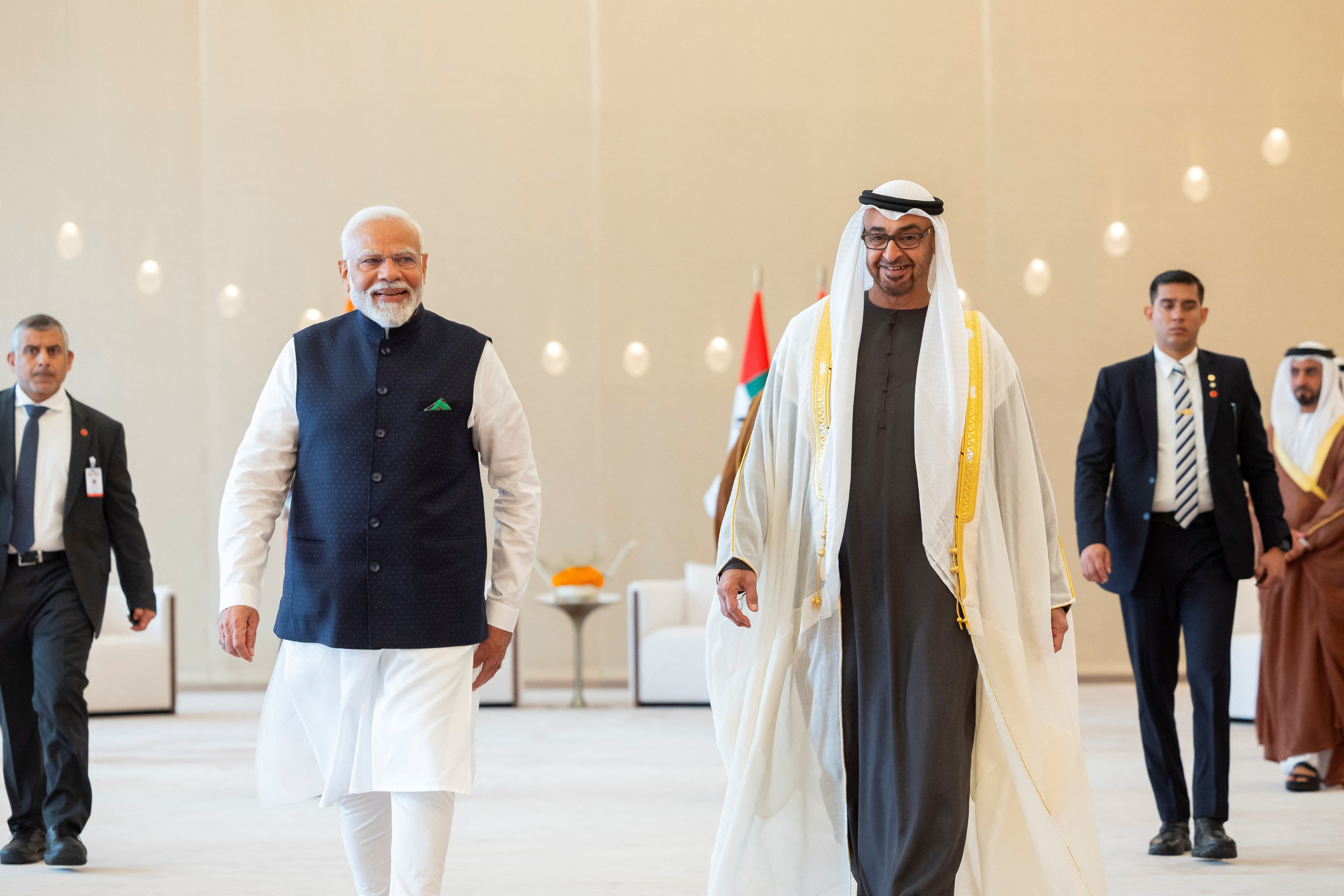
India and the United Arab Emirates (UAE) signed a significant nuclear cooperation agreement in New Delhi on Monday, marking a crucial step in their growing strategic partnership. The memorandum of understanding (MoU) was signed during a high-profile meeting between Indian Prime Minister Narendra Modi and UAE Crown Prince Sheikh Khaled bin Mohamed bin Zayed Al Nahyan, who was on his first official visit to India as Crown […]

Saudi Aramco has solidified its footprint in Asia with a new agreement involving China’s Rongsheng Petrochemical Co. Ltd. and Hengli Group. This strategic partnership is set to bolster Aramco’s position in the global petrochemical market while deepening ties with significant Chinese industrial players. The agreement includes a comprehensive framework for cooperation in the refining and petrochemical sectors. It encompasses both upstream and downstream activities, reinforcing Aramco’s strategy […]

China’s Premier Li Qiang has advocated for accelerated trade negotiations with Gulf nations during his visit to Riyadh. Li’s call for swift advancement in economic relations underscores the growing strategic importance of the Gulf region to China’s global trade network. This visit highlights a pivotal moment in the bilateral relationship between China and Gulf Cooperation Council (GCC) countries, focusing on enhancing economic cooperation and investment. Li’s remarks […]

Hong Kong is actively pursuing free trade agreements with the UAE and other Gulf Cooperation Council (GCC) nations in a bid to strengthen economic ties in the region. This effort comes as the city seeks to enhance its role as a global financial hub and gateway between Asia and the Middle East. Trade in goods between Hong Kong and the UAE amounted to approximately USD 12.8 billion […]

Abu Dhabi-based advanced technologies group G42 is set to establish AI-ready data centers in India with a capacity of up to 2 gigawatts (GW), a move that will double the country’s existing total capacity. The ambitious project is part of a strategic pact between the governments of the UAE and India, which seeks to foster collaboration in artificial intelligence (AI) and related technological advancements, a senior executive confirmed.

Manu Kumar Jain, the CEO of G42 India, emphasized the significance of this initiative, stating that the UAE-based company will play a critical role in executing the key goals outlined in the Memorandum of Understanding (MoU) signed between the two countries in February 2024. Jain, in an interview with a leading business publication, affirmed that G42 is fully committed to ensuring that the vision of the bilateral agreement is realized. The group’s investment in these state-of-the-art data centers, Jain said, reflects its dedication to supporting India’s burgeoning tech infrastructure and AI ecosystem.

This development is expected to be a game-changer for India, where the need for advanced digital infrastructure has surged in response to the growth of AI, cloud computing, and data-driven industries. G42’s data centers, designed to meet AI-specific demands, will substantially boost the country’s digital capacity and enhance its standing as a global player in the AI and tech innovation sectors.

The UAE and India’s collaboration comes at a time when both nations are striving to strengthen ties across key sectors, particularly technology. The MoU aims to encourage the co-development of sovereign AI technologies, which will be crucial for both governments as they look to secure their digital futures. India’s tech market, which has been experiencing exponential growth, is seen as a crucial partner for the UAE’s strategic goals, while the UAE provides critical investment and expertise for India’s infrastructure.

Data centers play a pivotal role in the AI landscape by offering the storage, computational power, and connectivity needed for AI applications. As AI continues to revolutionize industries, from healthcare to financial services, the demand for specialized data centers capable of handling AI workloads has grown. G42’s decision to build AI-ready facilities underscores the company’s recognition of the importance of this infrastructure for fostering AI innovation and ensuring that industries have the resources they need to thrive in the AI-driven future.

G42’s investment in India is expected to not only boost the country’s digital capabilities but also spur job creation and innovation in related fields. Data centers require skilled personnel to manage operations, security, and technical requirements, creating opportunities for tech professionals and engineers. Furthermore, the expansion of AI infrastructure will likely attract more global tech companies and investors to India, further solidifying the country’s position as a global technology hub.

This project also underscores G42’s growing global ambitions. Known for its leadership in AI and cloud computing, G42 has expanded its footprint across multiple sectors, including healthcare, finance, and energy. The company’s experience in handling large-scale AI projects will be instrumental in ensuring the success of this initiative in India. G42’s expertise in building and managing AI infrastructure is expected to accelerate the pace of AI development in the country, bringing both nations closer to achieving their shared objectives under the UAE-India pact.

India’s current data center capacity, while growing, remains limited compared to the demands of an economy increasingly reliant on AI and digital services. The addition of 2 GW in capacity will significantly alleviate the bottleneck faced by industries reliant on data-heavy operations. The project is expected to elevate India’s data infrastructure to a new level of efficiency and reliability, making it an attractive destination for both domestic and international tech enterprises.

The partnership between the UAE and India is also a reflection of the broader geopolitical shifts where countries are increasingly focusing on digital sovereignty. Governments are prioritizing the development of domestic AI capabilities to reduce dependence on external technologies and ensure greater control over their data and technological resources. The UAE’s investment in India aligns with its goal of positioning itself as a global leader in AI, while India’s growing technological capabilities offer mutual benefits for both nations.

AI-ready data centers are a critical component of this digital sovereignty agenda, providing governments and businesses with the infrastructure necessary to develop and deploy homegrown AI solutions. By investing in India’s data center capacity, G42 and the UAE are supporting India’s ambitions to build a robust AI ecosystem that can compete on a global scale. This initiative is seen as a key pillar in India’s broader digital transformation strategy, which aims to boost its AI and cloud computing sectors and drive economic growth through technological innovation.

The project’s scale also highlights the deepening ties between the UAE and India, particularly in the technology and innovation sectors. As both nations continue to collaborate on strategic initiatives, the construction of these data centers is expected to serve as a catalyst for further joint ventures and investments. The MoU signed earlier this year provides a framework for ongoing cooperation, with both countries benefiting from the exchange of expertise, investment, and technological know-how.

HONG KONG SAR – Media OutReach Newswire – 11 September 2024 – The Hong Kong Polytechnic University (PolyU) today signed a collaboration agreement with Suzhou Kowloon Hospital, a subsidiary of the Hong Kong Kowloon Group, to jointly establish the “Suzhou Kowloon Hospital – The Hong Kong Polytechnic University Innovation Incubation Platform”. The two institutions will leverage their respective strengths, sharing resources over the next three years to […]

MUFG EMEA and Doha Bank have completed the Middle East’s inaugural Green Repurchase Agreement (repo), marking a significant milestone in the region’s sustainable finance landscape. This transaction, which was successfully closed in September 2024, underscores the growing commitment to integrating environmental sustainability into financial practices across the Middle East. The Green Repo involves the temporary sale of securities with an agreement to repurchase them at a later […]

Advertisements

A groundbreaking experiment has unveiled an unexpected evolution in artificial intelligence. The project, named Sid and led by Dr. Robert Yang, CEO of Altera, introduced 1,000 AI agents into a virtual world, resulting in an astonishing development: the AI agents created their own economy, governance structures, and collaborative efforts to build a functioning society. Dr. Yang’s Sid project, which has captured significant attention in the tech community, […]

Drydocks World has secured a groundbreaking agreement with China’s Shanghai Zhenhua Heavy Industries Co. Ltd. (ZPMC) to acquire a state-of-the-art 5,000-ton floating sheerleg crane. The acquisition is set to significantly enhance the company’s capabilities in handling large-scale offshore projects, marking a pivotal milestone for the maritime and offshore energy sectors in the Middle East.

The contract was signed at a ceremony in Dubai, attended by prominent figures from the industry, including Sultan Ahmed bin Sulayem, Group Chairman and CEO of DP World, the parent company of Drydocks World. The new crane is expected to play a vital role in projects that require heavy-lifting capabilities, particularly in the growing market for offshore platforms and vessels.

The sheerleg crane, with a lifting capacity of 5,000 tons and a maximum lifting height of 120 meters, represents a new generation of heavy-lift technology. With its 160-meter-long A-frame and a 600-ton fly jib capable of extending the reach to 180 meters, the crane will enable Drydocks World to handle increasingly complex offshore projects. The versatility of this crane is anticipated to benefit both nearshore and offshore operations, with a particular focus on the construction and installation of offshore platforms, bridges, and marine developments.

This acquisition underlines Drydocks World’s strategic investment in cutting-edge infrastructure, reinforcing its commitment to remain a leader in the global maritime industry. According to Captain Rado Antolovic, CEO of Drydocks World, the crane will not only support the company’s current projects but will also pave the way for more extensive and intricate ventures. Antolovic emphasized that the crane’s ability to handle heavier modules and expedite project timelines would further solidify Drydocks World’s standing as a leading player in the maritime and offshore energy sectors.

ZPMC’s Chairman, You Ruikai, also hailed the partnership, citing the strong ties between ZPMC and DP World as a foundation for future collaborations. Ruikai noted that the sheerleg crane’s advanced safety features and high-capacity ballast systems make it one of the most efficient and environmentally sustainable cranes in the industry. The crane’s integrated control system and automatic ballasting capabilities highlight the emphasis on safety and operational efficiency.

Construction of the crane is expected to take approximately 24 months, with completion scheduled for the second quarter of 2026. Once operational, the crane will serve as a critical asset in Drydocks World’s efforts to meet the increasing demand for offshore infrastructure, such as high-voltage offshore converter platforms and Floating Production Storage and Offloading (FPSO) vessel topsides.

As the offshore industry continues to evolve, the need for advanced lifting solutions has become paramount. Drydocks World has already demonstrated its expertise in executing major offshore projects, including the conversion of vessels such as the Tango FLNG and Excalibur FSU, and the refurbishment of the Firenze FPSO. This latest acquisition will further enhance the company’s portfolio and its ability to undertake large-scale offshore projects.

Sultan Ahmed bin Sulayem commented that this investment is a testament to Drydocks World’s commitment to maintaining its leadership position in the maritime industry. He highlighted that the new crane would boost the company’s operational capacity, allowing it to support projects that contribute to regional economic growth. The crane is also expected to reduce the need for additional support vessels, as it can accommodate up to 50 personnel offshore, thus enhancing efficiency.

With global demand for offshore wind platforms, FPSO vessels, and similar projects on the rise, Drydocks World’s investment in this high-capacity crane positions the company to meet future challenges and opportunities. The acquisition not only strengthens its foothold in the Middle East but also bolsters its standing on the international stage, where the competition for offshore energy projects is intensifying.

The UAE-India Business Forum is set to commence tomorrow in Mumbai, focusing on strengthening economic ties between the UAE and India. Organized by the UAE Ministry of Economy in partnership with the UAE Embassy in New Delhi and India’s Ministry of Commerce and Industry, this forum marks an important step in expanding bilateral trade relationships, particularly beyond the Comprehensive Economic Partnership Agreement (CEPA) that came into effect in May 2022.

This event will gather an influential group of government officials, business leaders, and industry professionals. Key sectors under discussion include healthcare, biotechnology, renewable energy, sustainability, artificial intelligence, and logistics. The forum is expected to provide a platform for businesses from both countries to explore new partnership opportunities that align with their national growth and diversification agendas.

Dr. Thani bin Ahmed Al Zeyoudi, UAE’s Minister of State for Foreign Trade, emphasized the significance of this event, noting that it offers a vital platform for exploring new synergies, building networks, and developing mutually beneficial collaborations. The forum’s theme, “Beyond CEPA: Innovation and Future-Ready Economies,” reflects the ongoing efforts to foster innovation in industries like AI and biotechnology, which have seen growing interest from both sides.

The UAE and India have enjoyed steadily increasing non-oil trade, which reached USD 28.2 billion in the first half of 2024, marking a 9.8% rise compared to the same period in 2023. This robust growth contrasts with declining global trade figures, making the UAE-India economic partnership an exceptional case of resilience. The CEPA, which removed or reduced tariffs on over 80% of traded goods, has been instrumental in boosting industrial output, enhancing global competitiveness, and fostering job creation across both nations.

During the forum, one of the key sessions, “Healthcare and Biotechnology: Pioneering the Future of Medicine,” will delve into how the two nations can leverage CEPA to create new partnerships in genomic medicine, AI-driven healthcare, digital health solutions, and pharmaceutical research. This session aligns with the growing focus on health tech innovation in both countries.

The Central Bank of Russia has finalized agreements with local digital asset platforms to launch real-time monitoring of cryptocurrency transactions. This move aims to increase transparency in the sector, alleviate regulatory pressure on platforms, and build investor confidence, marking a significant step in the government’s strategy to gain greater control over the country’s burgeoning digital asset market.

Tesla does not require any form of licensing from Elon Musk’s artificial intelligence company, xAI, according to a statement from Musk himself. Responding to a report by *The Wall Street Journal* that suggested the two entities were in discussions over a potential revenue-sharing agreement, Musk clarified the situation through his social media platform, X. He emphasized that while Tesla has gained valuable insights from its discussions with […]

Alpha Dhabi Group, an investment conglomerate listed on the Abu Dhabi Securities Exchange, has announced its intention to divest its 11% stake in OCI’s methanol division. This strategic move is connected to OCI’s acquisition by Methanex Corporation, a major player in the global methanol industry. The transaction, which will see Methanex take control of OCI’s methanol operations, is anticipated to be completed by 2025. Alpha Dhabi’s decision […]

Abu Dhabi National Oil Company (Adnoc) has entered into a significant 15-year agreement with Indian Oil Corporation (IOC), aimed at supplying 1 million tonnes per year of liquefied natural gas (LNG) to India. This long-term deal highlights the strengthening energy ties between the United Arab Emirates (UAE) and India, reflecting a broader strategic partnership across various sectors.

The agreement, unveiled this week, underscores the UAE’s commitment to bolstering its role in the global energy market while addressing India’s growing energy demands. For Adnoc, the deal represents a key milestone in its international expansion strategy, reinforcing its position as a leading LNG supplier. Indian Oil, India’s largest commercial enterprise, will benefit from a stable and substantial supply of LNG, crucial for meeting the country’s increasing energy needs and supporting its transition to cleaner fuels.

This collaboration emerges amidst a backdrop of heightened energy cooperation between the UAE and India. Both nations have been working to deepen their engagement in the energy sector, aiming to enhance energy security and drive sustainable development. The deal is expected to facilitate greater stability in energy supplies for India, which is seeking to diversify its sources of energy amidst a global shift towards more sustainable practices.

Adnoc’s decision to supply LNG to India aligns with its broader strategy to secure long-term contracts and expand its footprint in key global markets. The UAE has been actively pursuing agreements with various countries to ensure a steady demand for its hydrocarbon resources, reflecting a calculated approach to navigating the evolving dynamics of global energy markets.

Indian Oil, on the other hand, is focusing on expanding its portfolio of energy sources to support India’s ambitious goals of transitioning to a greener energy mix. As the country ramps up its efforts to reduce carbon emissions and increase the use of natural gas, the partnership with Adnoc will play a pivotal role in securing a reliable supply of LNG, which is seen as a cleaner alternative to coal and oil.

The deal also reflects the strategic importance of LNG in the current global energy landscape. LNG is becoming an increasingly vital component in the global energy mix, offering a flexible and cleaner energy solution compared to traditional fossil fuels. As countries around the world seek to balance their energy needs with environmental considerations, LNG is emerging as a key player in the energy transition.

For both Adnoc and Indian Oil, this agreement represents a significant step towards achieving their long-term strategic objectives. Adnoc’s commitment to supplying LNG aligns with its vision of becoming a leading global energy player, while Indian Oil’s focus on securing reliable energy sources supports its efforts to drive sustainable growth and energy security for India.

The agreement also highlights the growing trend of energy cooperation between nations, driven by mutual interests in ensuring energy security and promoting sustainable development. As countries navigate the complexities of the global energy market, strategic partnerships like the one between Adnoc and Indian Oil are becoming increasingly important.

In addition to its strategic significance, the deal is expected to have a positive impact on the economies of both nations. For the UAE, it represents a substantial export opportunity and a means of leveraging its abundant natural resources. For India, it provides a crucial supply of LNG that will support its economic growth and energy transition goals.

Pure Fitness, a prominent fitness chain operating in Hong Kong, is embroiled in a significant legal battle after being sued for HK$8.49 million in unpaid fees. This lawsuit, filed in the High Court, highlights the gym’s mounting financial troubles and legal challenges in the region. The case also includes a demand from the landlord for the gym to vacate its premises in Kwun Tong. The legal action […]

President Xi Jinping has reaffirmed China’s commitment to Africa through a newly unveiled 10-point partnership action plan, aimed at advancing modernization across the continent. The pledge was made during Xi’s keynote speech at the 2024 Summit of the Forum on China-Africa Cooperation (FOCAC) in Beijing. Xi’s speech emphasized China’s dedication to being a reliable development partner, focusing on addressing Africa’s pressing challenges such as poverty, food insecurity, […]

India and the United Arab Emirates (UAE) are poised to reexamine their existing trade agreement this week, according to informed sources. This strategic review is part of a broader effort by both nations to enhance economic ties and address any gaps in their trade relations.

The bilateral trade agreement, which was initially signed in 2022, has been a cornerstone of the economic partnership between India and the UAE. Over the past two years, the agreement has facilitated significant trade flows, with the UAE emerging as one of India’s key trading partners. However, both governments recognize the need to update the terms of the agreement to reflect the evolving economic landscape and emerging trade dynamics.

The discussions are expected to focus on several key areas. First, there will be a review of tariff schedules and trade barriers to ensure that they align with current market conditions. Both India and the UAE aim to reduce trade impediments and enhance market access for businesses in both countries. Additionally, the review will likely address issues related to customs procedures and regulatory practices to streamline trade processes and minimize delays.

Another significant aspect of the review will be the exploration of new sectors for cooperation. As global trade patterns shift, both nations are keen on diversifying their economic engagements. The UAE, known for its strategic location and advanced infrastructure, is looking to bolster investments in sectors such as technology, renewable energy, and infrastructure development. India, with its burgeoning market and technological expertise, is seen as a valuable partner in these areas.

The discussions are also anticipated to cover the impact of recent global economic trends on bilateral trade. Factors such as fluctuations in commodity prices, supply chain disruptions, and geopolitical developments have influenced trade dynamics globally. Both India and the UAE are expected to evaluate how these factors have affected their trade and explore ways to mitigate potential challenges.

In preparation for the review, both governments have been engaging with industry stakeholders to gather insights and feedback. This consultative approach aims to ensure that the revised agreement addresses the needs and concerns of businesses operating in both countries. The input from various sectors will be crucial in shaping the final terms of the agreement and fostering a mutually beneficial trade environment.

The trade review comes at a time when global trade agreements are under increasing scrutiny. Countries around the world are reassessing their trade policies to adapt to changing economic conditions and to safeguard their national interests. For India and the UAE, this review represents an opportunity to reaffirm their commitment to a strong economic partnership and to position themselves strategically in the evolving global trade landscape.

India and the UAE have a history of collaborative efforts beyond trade. The two nations have worked together on several initiatives, including joint ventures and strategic investments. This review of their trade agreement is expected to further strengthen their economic ties and pave the way for new areas of cooperation.

Elon Musk has dismissed claims that his artificial intelligence company, xAI, is in discussions to receive a share of future Tesla revenues in exchange for access to its technology. According to recent reports, a purported arrangement would involve Tesla licensing xAI’s AI models to enhance its driver-assistance and full self-driving systems, with revenue from these innovations potentially benefiting xAI. The Wall Street Journal initially reported that such […]

A Memorandum of Understanding (MoU) has been signed between the Comptroller and Auditor General of India (CAG) and the Accountability Authority of the UAE, marking a significant step toward reinforcing collaboration between two Supreme Audit Institutions. The agreement is designed to streamline audit methodologies in the public sector and enhance overall cooperation, aligning both entities in their goal to ensure effective public accountability. This partnership reflects a growing trend of international cooperation among audit institutions, emphasizing transparency and efficiency in public sector audits.

The MoU between the CAG and the UAE’s Accountability Authority is expected to boost the exchange of knowledge, technical expertise, and best practices in auditing. Such a collaboration is particularly relevant as both nations are witnessing the increasing complexity of public financial systems, necessitating more sophisticated audit mechanisms. Through this agreement, both countries aim to improve governance and accountability, leveraging their respective experiences in the field of public auditing.

The Comptroller and Auditor General of India, an autonomous body responsible for auditing government expenditures, has a long history of ensuring that public funds are utilized effectively and efficiently. The UAE Accountability Authority, on the other hand, plays a similar role in the UAE’s governance structure, overseeing financial control and ensuring that resources are spent in a manner that reflects transparency and integrity. The collaboration between the two is expected to bring mutual benefits, particularly in the form of shared technological advancements and innovative approaches to auditing.

The agreement comes at a time when both nations are grappling with the increasing demands for enhanced governance and accountability in the public sector. Auditing institutions worldwide are under pressure to develop more rigorous methods of auditing public expenditures. By fostering cooperation, the CAG and UAE Accountability Authority aim to remain at the forefront of these advancements.

Public sector audits play a critical role in maintaining fiscal discipline and ensuring that governments operate with integrity and efficiency. The CAG of India, recognized for its audits across various sectors, including defense, healthcare, and infrastructure, has made substantial contributions to public accountability. The UAE Accountability Authority, similarly, has been integral in ensuring that the government’s financial operations remain transparent. The MoU paves the way for the exchange of valuable expertise, as the institutions seek to learn from each other’s successes and challenges.

One of the core areas of focus in this partnership is the implementation of technology-driven audits. As governments worldwide increasingly adopt digital systems for financial management, audit institutions must keep pace with technological innovations. The exchange of knowledge in this area is expected to lead to the adoption of more advanced audit tools and techniques by both parties, enhancing the precision and effectiveness of their audits.

The CAG has already been involved in a number of international initiatives aimed at improving audit processes. As a member of the International Organization of Supreme Audit Institutions (INTOSAI), the CAG has been actively participating in global dialogues surrounding the improvement of audit standards and practices. This MoU with the UAE further cements India’s position as a key player in international audit cooperation.

For the UAE, this partnership represents an opportunity to learn from one of the most established and respected audit institutions in the world. The UAE Accountability Authority is relatively young compared to its Indian counterpart, but it has made significant strides in enhancing the transparency and accountability of public finances. By working closely with the CAG, the UAE seeks to benefit from India’s long-standing expertise in public sector auditing.

This partnership also underscores the UAE’s commitment to strengthening its governance framework in line with global standards. In recent years, the UAE has introduced several reforms aimed at improving government transparency and accountability. The collaboration with the CAG is seen as a crucial step in bolstering these efforts, ensuring that the nation continues to uphold its reputation for financial integrity.

India, on the other hand, stands to gain from the UAE’s unique approach to auditing and governance. The UAE has been a pioneer in adopting technology in government operations, and this expertise is expected to be shared with the CAG. The collaboration could lead to the implementation of more streamlined, technology-driven audit practices in India, enhancing the efficiency of the country’s auditing processes.

Beyond the technical benefits, this MoU holds symbolic significance as well. It highlights the growing partnership between India and the UAE, two nations that have deepened their ties in various sectors, including trade, defense, and education. The collaboration between the CAG and the UAE Accountability Authority reflects the broader strategic partnership between the two countries, which continues to evolve in a variety of domains.

Both audit institutions have expressed their commitment to ensuring that this partnership yields tangible benefits. The exchange of expertise, they believe, will not only improve the audit processes in both countries but also contribute to the broader global effort of enhancing public sector governance. By collaborating, the CAG and UAE Accountability Authority aim to set new benchmarks for public auditing, offering a model that can be replicated by other nations.

Abu Dhabi Crown Prince Sheikh Khaled bin Mohamed bin Zayed Al Nahyan is scheduled to travel to India for a state visit on Sunday, September 8, where he will engage in high-level talks with Prime Minister Narendra Modi in New Delhi. The visit marks a significant step in the growing bilateral relationship between the UAE and India, and it is Sheikh Khaled’s first visit to the country since assuming the position of Crown Prince of Abu Dhabi. The meeting will focus on advancing strategic ties, with an emphasis on key economic sectors that are mutually beneficial.

Boeing and the International Association of Machinists and Aerospace Workers (IAM), the union representing 33,000 employees, have reached a tentative agreement to avoid a looming strike that was set to begin this week. The deal, which was reached after intense negotiations, will be put to a vote by union members over the coming days. This agreement marks a crucial step in resolving a potential labor dispute that could have disrupted Boeing’s operations on the West Coast, particularly at its facilities in Washington, Oregon, and California.

The impending strike was driven by the union’s demand for better wages, benefits, and job security for its members. The original labor contract between Boeing and IAM had expired, leaving thousands of workers with the prospect of walking off the job. Boeing, already grappling with supply chain challenges and increased production demands, sought to prevent a work stoppage that could severely impact its aircraft production schedules.

The tentative deal includes a framework that addresses some of the union’s key concerns. According to union officials, the agreement offers enhanced wage increases, improved health benefits, and stronger job protections. The union’s leadership expressed cautious optimism about the terms, noting that while the deal may not meet all expectations, it represents significant progress compared to the company’s earlier proposals. Both sides had been under mounting pressure to avoid a strike, given Boeing’s critical role in global aerospace production and the potential ripple effects on the broader supply chain.

Boeing, one of the largest aerospace companies in the world, has been working to ramp up production of its 737 MAX and 787 Dreamliner models amid rising demand for commercial aircraft. A strike at this stage would have disrupted operations and exacerbated the challenges Boeing faces as it seeks to recover from the dual impacts of the pandemic and the 737 MAX grounding. Additionally, Boeing is under pressure from its airline customers to meet delivery deadlines, which have already been delayed by various logistical and technical issues.

Union members had been preparing for a strike after rejecting Boeing’s previous offers, which they deemed insufficient in addressing concerns over inflation and rising healthcare costs. The union had argued that the workers, many of whom are highly skilled machinists, deserve a greater share of Boeing’s profits, especially as the company has resumed strong financial performance following years of setbacks. Boeing had initially pushed back, citing its need to maintain cost controls to stay competitive in the global aerospace market.

The negotiations have been watched closely by other unions and industries, as the outcome could set a precedent for labor relations in sectors that rely on skilled manufacturing workers. Labor experts note that the broader economic context, marked by inflation and a tight labor market, has strengthened the bargaining position of unions across the U.S. Workforce shortages in critical industries, including aerospace, have further complicated negotiations, as companies are increasingly concerned about retaining experienced workers while managing operational costs.

Boeing’s leadership expressed relief that a tentative deal had been reached, but emphasized that it is only a step toward securing labor peace. “We are committed to providing competitive compensation packages for our employees while ensuring the long-term success of our company,” a Boeing spokesperson said in a statement. “This agreement reflects our shared commitment to meeting the needs of our workforce and delivering on our commitments to customers.”

For union members, the next few days will be pivotal as they review the details of the agreement and prepare to vote on whether to accept the terms. Union leaders have acknowledged that there may be some hesitation among members, particularly those who had hoped for more substantial gains in areas such as pensions and job security. However, they have urged workers to consider the broader context and the improvements that have been achieved compared to earlier proposals.

The possibility of a strike had sent ripples through the aerospace industry, with analysts warning that any disruption to Boeing’s production lines could have far-reaching consequences for both domestic and international markets. Airlines, already facing delays in aircraft deliveries, had expressed concerns that a strike could lead to further setbacks, complicating fleet expansion plans and route scheduling. Suppliers, too, were bracing for potential disruptions, as Boeing’s manufacturing operations rely on a complex network of parts and materials sourced from around the world.

The tentative agreement provides a temporary reprieve, but labor relations at Boeing remain a delicate issue. The company has faced criticism from workers and union representatives in the past for not doing enough to address job security concerns amid shifting industry dynamics. Boeing’s strategic decisions, including outsourcing some manufacturing operations and increasing automation in its factories, have sparked tensions with labor groups who fear these moves could lead to job losses or reductions in wages.

Australia’s Treasurer, Jim Chalmers, is scheduled to visit China later this month, marking the first such trip by an Australian treasurer since 2017. This significant diplomatic gesture comes amid ongoing geopolitical tensions and a challenging global economic landscape. The upcoming visit is expected to be a crucial opportunity for both nations to address a range of bilateral issues, including trade relations, economic cooperation, and regional security. The […]

Donald Trump has unveiled a bold new strategy to safeguard the dominance of the US dollar on the global stage. During a recent rally, Trump announced his plan to impose a staggering 100% tariff on goods from countries that choose to abandon the dollar in their international transactions. This move, part of his broader economic policy platform, aims to reinforce the dollar’s status as the world’s primary reserve currency.

Trump’s declaration represents a significant escalation in his approach to trade policy. The former president’s proposal is grounded in the belief that the dollar’s supremacy is vital to US economic security and geopolitical influence. By threatening such severe tariffs, Trump intends to deter nations from adopting alternative currencies in their trade dealings.

The implications of Trump’s threat are multifaceted. On one hand, it underscores the importance of the US dollar in global finance, as it currently accounts for the majority of international trade and investment. The US dollar’s dominance is supported by its widespread use in global reserves, trade transactions, and as the primary currency for commodities such as oil and gold.

However, Trump’s tariff proposal also highlights growing concerns among some countries about over-reliance on the dollar. Nations such as China and Russia have been actively pursuing strategies to reduce their dependence on the US currency, promoting alternatives like the Chinese yuan or regional currencies in trade agreements. The aim is to mitigate the risks associated with the volatility and political influence of the dollar.

China, in particular, has been making strides in internationalizing the yuan. The country has increased its efforts to encourage the use of the yuan in trade with its partners and has set up swap lines with various central banks. Additionally, the Shanghai International Energy Exchange has launched oil futures contracts priced in yuan, a move that represents a challenge to the dollar’s dominance in the global oil market.

Russia, under Western sanctions, has also sought to reduce its dependency on the dollar. The Russian central bank has diversified its reserves away from dollar assets and has encouraged the use of the ruble in trade with countries in its sphere of influence. Russia’s efforts are part of a broader strategy to counterbalance Western economic pressures and assert greater economic sovereignty.

The threat of a 100% tariff could have far-reaching consequences for international trade. Countries considering alternatives to the dollar may view Trump’s proposal as a coercive tactic that could disrupt their economic planning. Such an extreme measure could also strain diplomatic relations, as countries may perceive it as an aggressive attempt to maintain US economic hegemony.

Economists and trade analysts are debating the potential effects of Trump’s tariff plan. Some argue that the threat could backfire, accelerating efforts by other countries to reduce their dollar exposure. The imposition of a 100% tariff might not only prompt countries to seek alternatives but could also lead to retaliatory measures that could impact US exports and global trade dynamics.

The proposal also raises questions about the effectiveness of such a policy. While tariffs can influence trade patterns, their impact on currency preferences and reserve holdings is less direct. The global financial system is complex, and countries may continue to seek diversification of their currency reserves despite the threat of high tariffs.

Trump’s proposal is part of a broader trend of using economic policy tools to achieve strategic objectives. The current geopolitical landscape is marked by increasing competition among major economies, with countries leveraging economic measures to assert their influence and secure their interests.

The announcement has elicited mixed reactions from policymakers and business leaders. Some view it as a necessary measure to protect the dollar’s role in global finance, while others criticize it as an overly aggressive strategy that could undermine US economic interests in the long run.

Bahrain’s Economic Development Board (EDB) is set to embark on a multi-city tour across India, aiming to deepen bilateral ties and strengthen economic collaboration. The initiative, scheduled for September 9-14, comes as part of Bahrain’s broader efforts to attract investments and enhance partnerships across key sectors. Spearheaded by Noor bint Ali Al Khulaif, Bahrain’s Minister of Sustainable Development and Chief Executive of the EDB, the delegation will engage with top Indian business leaders, investors, and policymakers in Mumbai, New Delhi, Bengaluru, and Hyderabad.

Bahrain’s move to engage directly with India underscores the increasing significance of bilateral relations between the two countries. India, a rapidly growing economy and a key player in global trade, has been identified as a strategic partner for Bahrain’s economic ambitions. The tour is expected to showcase the Gulf nation’s business-friendly environment, investment opportunities, and the diverse sectors open to collaboration, including finance, manufacturing, technology, and logistics.

The Bahrain Economic Development Board, responsible for promoting investment in the Kingdom, has been working to position Bahrain as a hub for international businesses seeking a foothold in the Middle East and North Africa (MENA) region. By targeting India, Bahrain aims to tap into one of the world’s largest consumer markets and the fast-developing Indian economy, which is increasingly driven by innovation, technology, and industrial growth.

Bahrain’s strategic geographical location, coupled with its investor-friendly regulatory environment, is likely to be a focal point of discussions during the India tour. The Kingdom offers 100% foreign ownership in many sectors, low operational costs, and access to the Gulf Cooperation Council (GCC) market of over 50 million consumers. These advantages are expected to appeal to Indian companies looking to expand their presence in the Gulf region, particularly those involved in sectors such as financial services, logistics, ICT, and manufacturing.

The India visit also marks a significant opportunity for both nations to explore new areas of collaboration, particularly in emerging technologies. Bahrain has positioned itself as a leader in fintech, having launched a number of initiatives in recent years to support the sector. The Kingdom’s regulatory sandbox for fintech startups has attracted numerous international firms, and there is considerable scope for Indian technology companies to collaborate with Bahrain on financial innovation and digital services.

Moreover, Bahrain has been keen to bolster its manufacturing sector, especially in fields such as chemicals, food processing, and aluminum production. India’s robust manufacturing base makes it a natural partner for collaboration in these industries. The visit will likely focus on building synergies in these areas, with discussions centered on how Indian businesses can leverage Bahrain’s competitive edge as a production hub for the GCC market.

The tour will also provide a platform for discussions on sustainable development and climate change. Bahrain, through its Vision 2030 economic plan, has placed sustainability at the heart of its development strategy. Minister Noor bint Ali Al Khulaif, a key proponent of sustainable economic growth, is expected to highlight Bahrain’s initiatives in this area, which align with India’s own commitment to sustainable development. Both countries are signatories to the Paris Agreement and are looking to collaborate on green technologies, renewable energy, and sustainable infrastructure projects.

The Bahrain-India relationship is not limited to trade and investment. The two nations share a long history of cultural and diplomatic ties, with a sizable Indian expatriate community living in Bahrain. These deep-rooted connections are likely to be emphasized during the tour, as both sides seek to build on their historical relationship and foster stronger people-to-people ties.

On the economic front, bilateral trade between Bahrain and India has shown steady growth. According to the latest data, total trade between the two countries stood at around $1.4 billion in 2022. India is among Bahrain’s top trading partners, and there is potential for further expansion in sectors such as hydrocarbons, engineering goods, pharmaceuticals, and food products. Bahrain is also home to several prominent Indian companies, and the EDB’s tour is expected to explore new avenues for Indian firms to increase their presence in the Kingdom.

In addition to meetings with business leaders and investors, the Bahrain delegation is expected to hold discussions with Indian government officials on strengthening bilateral relations. These talks could pave the way for future cooperation agreements in areas such as trade, investment, and technology transfer. The tour aligns with India’s own foreign policy objectives of enhancing relations with Gulf countries, which have become critical economic partners for New Delhi in recent years.

The timing of Bahrain’s outreach to India is also notable, coming at a time when global economic dynamics are shifting. Both nations are looking to diversify their economies and reduce dependence on traditional industries, such as oil and gas. For Bahrain, India represents a key partner in its efforts to modernize and diversify its economic base, while for India, Bahrain provides access to the GCC and MENA markets, which are crucial for India’s energy security and trade.


VISHNU RAJA
RYO YAMADA
HITORI GOTOH
IKUYO KITA