News related to
demand

First Abu Dhabi Bank , the largest lender in the United Arab Emirates by assets, is set to raise approximately $480 million through a secondary share offering. The transaction involves the sale of around 113 million shares at a fixed price of 15.5 dirhams per share, representing a 3.7% discount to the bank’s closing price of 16.1 dirhams on the Abu Dhabi Securities Exchange. Citi, acting as the bookrunner, confirmed that the offering was fully subscribed, with demand surpassing the number of shares available.

The identity of the selling shareholder remains undisclosed. FAB’s largest stakeholder is Mubadala Investment Company, Abu Dhabi’s sovereign wealth fund, which manages assets exceeding $330 billion. As of the end of March, FAB reported total assets of 1.31 trillion dirhams, underscoring its dominant position in the region’s banking sector.

The oversubscription of the share sale indicates robust investor confidence in FAB’s financial health and strategic direction. The bank has been actively pursuing growth opportunities beyond the Gulf region. Two years ago, FAB explored a potential acquisition of London-listed Standard Chartered, signaling its ambition to expand its international footprint.

Under the leadership of Group CEO Hana Al Rostamani since 2021, FAB has undergone significant restructuring to enhance operational efficiency and shareholder returns. The bank reorganized its operations into four new divisions and appointed Linos Lekkas, a veteran from Citi, as the head of its investment banking division. This strategic realignment aims to strengthen FAB’s position in the Gulf and support its expansion plans.

FAB’s strong financial performance further bolsters investor sentiment. In the first quarter, the bank reported a 23% increase in net profit, driven by growth in non-interest income from fees and commissions. This performance exceeded analysts’ expectations and reflects the bank’s diversified revenue streams and effective cost management.

Elon Musk has announced the rollout of XChat, a new messaging feature on the X platform, integrating end-to-end encryption, vanishing messages, and support for various file types. Developed in Rust, XChat also offers audio and video calling capabilities without requiring a phone number, marking a significant shift in the platform’s communication tools.

The introduction of XChat follows the discontinuation of X’s previous encrypted direct messaging system, which had been available to paid subscribers for two years. The new system is gradually being made accessible to premium users, with broader availability expected in the coming weeks.

Central to XChat’s security is its “Bitcoin-style” encryption, a term Musk uses to describe the platform’s adoption of elliptic curve cryptography . This method, also employed in Bitcoin transactions, provides robust security with smaller key sizes, enhancing performance and reducing resource consumption. While specific details about the encryption implementation remain undisclosed, the approach suggests a focus on decentralized and secure communication.

The choice of Rust as the programming language for XChat underscores a commitment to safety and performance. Rust’s emphasis on memory safety helps mitigate vulnerabilities common in other languages, such as memory corruption, which has been a significant source of security issues in software development.

XChat’s features extend beyond encryption. Users can send messages that automatically disappear after a set period, enhancing privacy. The platform supports the transfer of various file types, catering to diverse communication needs. Notably, audio and video calls can be made without linking to a phone number, allowing for greater anonymity and flexibility across devices.

This development aligns with Musk’s broader vision of transforming X into a comprehensive “everything app,” akin to China’s WeChat. By integrating messaging, calling, and file-sharing functionalities, X aims to become a central hub for users’ digital interactions. Plans are also underway to introduce X Money, a digital wallet service developed in partnership with Visa, enabling peer-to-peer payments and further expanding the platform’s ecosystem.

As XChat enters the competitive messaging landscape, it positions itself against established players like Signal and Telegram. While these platforms have long prioritized user privacy and security, XChat’s integration into the broader X platform offers a unique proposition. However, experts advise caution, noting that XChat has yet to undergo independent security audits, a standard practice for verifying the robustness of encryption protocols.

The move towards enhanced privacy features reflects a growing demand among users for secure communication channels. With increasing concerns over data breaches and surveillance, platforms that prioritize user confidentiality are gaining traction. XChat’s emphasis on encryption and user control over messages indicates an awareness of these concerns and a response to the evolving digital landscape.

NetActuate has unveiled a new point of presence in Dublin, Ireland, marking its tenth operational site in Europe. Situated within Equinix’s DB1 Dublin IBX Data Center, this expansion aims to bolster the company’s capacity to deliver low-latency, high-performance connectivity across the continent. The Dublin facility offers direct access to major digital exchange points, including the Equinix Internet Exchange and the Internet Neutral Exchange , facilitating seamless interconnection […]

Passenger traffic across the Middle East is projected to reach 530 million by 2043, doubling from current levels, according to forecasts presented at the International Air Transport Association Annual General Meeting held in Dubai. This growth represents an average annual increase of 3.9% over the two-decade period from 2023 to 2043, slightly outpacing the global average of 3.8%.

Kamil Al Awadhi, IATA’s Regional Vice President for Africa and the Middle East, highlighted the region’s strategic geographic position and robust infrastructure investments as key drivers of this anticipated growth. He noted that Middle Eastern carriers have fully recovered from the pandemic-induced downturn, with cargo performance also showing a 6.4% increase as of April 2024.

The surge in passenger numbers is underpinned by significant investments in airport infrastructure across the region. Dubai has initiated the expansion of Al Maktoum International Airport, with plans to accommodate up to 260 million passengers annually upon completion, positioning it as the world’s largest airport. In Abu Dhabi, a new terminal commenced operations in November, enhancing the capital’s capacity to handle increased traffic. Qatar continues to expand Hamad International Airport in Doha, while Saudi Arabia has launched Riyadh Air and announced the development of a new terminal in Riyadh with a capacity for 120 million passengers annually.

These developments are complemented by the region’s efforts to diversify economies and reduce reliance on oil revenues. Saudi Arabia’s Vision 2030 initiative, for instance, emphasizes tourism and infrastructure development, with the Red Sea International Airport beginning operations in September 2023 to serve the burgeoning tourism sector.

The Middle East’s role as a global aviation hub is further reinforced by its proximity to emerging markets in South Asia and Africa. This strategic location allows airlines to offer efficient connectivity between East and West, capitalizing on the growing demand for air travel in these regions.

Industry analysts suggest that the anticipated growth will necessitate a corresponding increase in fleet size and workforce. Airlines are expected to place substantial orders for new aircraft to meet demand, while also investing in training programs to ensure a skilled workforce capable of supporting expanded operations.

Environmental considerations remain a focal point, with IATA members committed to achieving carbon-neutral growth from 2020 and a 50% reduction in net aviation carbon emissions by 2050 relative to 2005 levels. Airlines in the region are exploring sustainable aviation fuels and more efficient aircraft to align with these goals.

WASHINGTON D.C, USA – Media OutReach Newswire – 1 June 2025 – Vietnam’s Minister of Agriculture and Environment Do Duc Duy plans to lead a delegation with nearly 50 agencies, agribusinesses and associations to explore opportunities to promote trade and import agrifood and timber from the United States during June 1-7, 2025. The delegation expects to participate in business dialogues in Iowa, Ohio, and Washington D.C. Vietnamese […]

By K Raveendran Brent crude oil futures continue to hover around the $65 per barrel mark, a level that reflects the push and pull of market forces clouded by a cocktail of geopolitical tensions, environmental disruptions, and strategic production decisions. As prices hold steady, the broader sentiment among traders and analysts leans toward caution, with […]

Dubai-listed Gulf Navigation Holding PJSC has secured shareholder approval for a AED 3.2 billion acquisition of Brooge Energy Ltd.’s assets, marking a significant expansion into the midstream oil and gas sector. The transaction, involving cash, newly issued shares, and mandatory convertible bonds , is expected to close in the second quarter of 2025, pending regulatory approvals. The acquisition encompasses Brooge Petroleum and Gas Investment Company FZE, Brooge […]

Advertisements

OPEC+ is poised to consider a more substantial oil production increase for July than the previously agreed 411,000 barrels per day , according to sources familiar with the group’s deliberations. The move reflects escalating internal tensions and strategic manoeuvring within the alliance. Eight member countries have been accelerating output beyond initial plans, a strategy reportedly orchestrated by Saudi Arabia and Russia to discipline non-compliant allies and reclaim […]

In the dynamic real estate market of the UAE, the collaboration between property developers and international luxury brands has emerged as one of the defining trends of the past decade. Branded residences—homes created in partnership with names known for fashion, jewelry, hospitality, or design—are transforming not only the architectural landscape but also the way residents and investors think about living in the region. From private beachfronts to […]

Nvidia CEO Jensen Huang has issued a stark warning that U.S. export restrictions on advanced semiconductors are inadvertently accelerating China’s progress in artificial intelligence , potentially undermining America’s technological leadership. Huang contends that the sanctions, intended to curb China’s access to cutting-edge AI chips, have instead galvanized Chinese firms to develop domestic alternatives. “The Chinese competitors have evolved,” Huang remarked, highlighting Huawei’s rapid advancements. He emphasized that […]

KUALA LUMPUR, MALAYSIA – Media OutReach Newswire – 30 May 2025 – Traders and investors alike are unnerved by the recent turbulence in the bond markets. After Moody’s—a major rating agency—downgraded U.S. government debt on 16 May, and Japanese long-term bond yields soared to multi-decade highs, some market participants started to fear that the world may be on the verge of a major debt crisis. Meanwhile, the […]

Sberbank, Russia’s largest lender, has introduced structured bonds tied to Bitcoin’s performance, offering investors exposure to cryptocurrency price movements without direct ownership. These bonds, denominated in rubles and compliant with Russian law, are currently available to qualified investors through over-the-counter markets, with plans for future listings on the Moscow Exchange.

The initiative follows the Bank of Russia’s recent decision to permit financial institutions to offer crypto-linked financial instruments to accredited investors. Under the new guidelines, banks can provide derivatives, securities, and digital financial assets whose returns are linked to cryptocurrency prices, provided there is no actual delivery of the underlying crypto assets. This move aims to offer regulated exposure to digital assets while mitigating associated risks.

Sberbank’s Deputy Chairman of the Executive Board, Anatoly Popov, stated that the bank’s new product provides a convenient and secure way for investors to gain exposure to cryptocurrency assets without direct ownership, ensuring full compliance with regulatory requirements on Russian infrastructure. The structured bonds are designed to cater to investors seeking returns linked to cryptocurrency dynamics within a regulated framework.

In addition to Sberbank’s offerings, the Moscow Exchange has announced plans to launch a cash-settled Bitcoin futures contract on its derivatives market in June. The SPB Exchange has also outlined intentions to introduce cryptocurrency-linked futures trading, signaling a broader acceptance of crypto-related financial products within Russia’s regulated financial markets.

The Bank of Russia’s decision to allow crypto-linked financial instruments comes amid increasing interest in digital assets among Russian investors. The central bank reported a 51% increase in crypto asset inflows by Russian residents in the first quarter of 2025, totaling 7.3 trillion rubles . To manage potential risks, the central bank has mandated that banks and credit institutions fully back these products with capital, apply conservative risk assessments, and set individual exposure limits.

Sberbank’s move to offer structured bonds tied to cryptocurrency price movements represents a significant step in bridging traditional finance with digital assets in Russia. By providing regulated investment products linked to cryptocurrencies, the bank aims to meet growing investor demand while adhering to the country’s cautious regulatory stance on digital assets.

By Nitya Chakraborty West Bengal Chief Minister and Trinamool Congress supremo Mamata Banerjee was right when she said on Thursday replying to the Prime Minister’s vicious attacks against her and her government that Narendra Modi was making use of the Operation Sindoor to achieve cheap political gains for the BJP in the coming assembly polls […]

Greenlogue/AP Abu Dhabi’s sovereign investor Mubadala and the Abu Dhabi National Energy Company have finalised the acquisition of an 875-megawatt combined-cycle gas-fired power plant at the Talimarjan Power Complex in Uzbekistan, marking a significant step in the ongoing privatisation of the Central Asian country’s energy sector. Each entity now holds a 40 per cent stake in the TPP1 gas-fired plant through a newly created project company, Talimarjan […]

Gridora, a new infrastructure platform supported by ADQ, the Investment Holding Company , and Modon Holding, has formalised its first major collaboration by signing a memorandum of understanding with the Abu Dhabi Projects and Infrastructure Centre . This partnership aims to streamline the planning and execution of key transport infrastructure projects within the emirate. The MoU sets a strategic framework for cooperation, enabling Gridora and ADPIC to […]

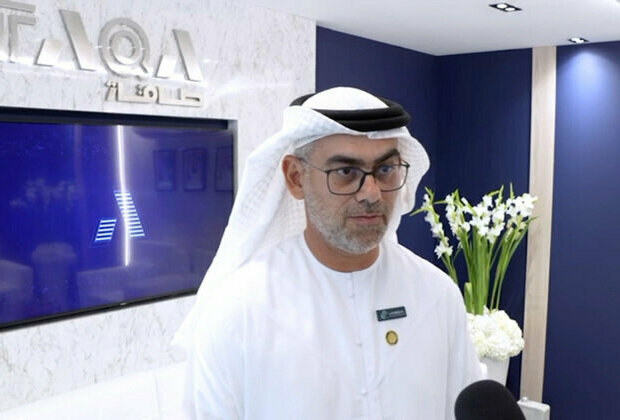
Abu Dhabi National Energy Company has unveiled plans to invest more than AED37 billion to meet the escalating power demands of the emirate’s expanding data centre and artificial intelligence infrastructure. The announcement was made by Group CEO and Managing Director Jasim Husain Thabet during the World Utilities Congress 2025.

This substantial investment is integral to TAQA’s strategy to deliver clean, certified, and reliable energy to critical infrastructure. The company aims to support Abu Dhabi’s ambition to become a global hub for digital innovation and AI development.

TAQA’s market capitalisation stands at approximately AED360 billion, positioning it among the top five companies in electricity generation, transmission, and water desalination across Europe, Africa, and the Middle East. Operating in 25 countries, TAQA has doubled its electricity production capacity to 56 gigawatts over the past four years, surpassing the total electricity consumption of the United Kingdom.

The company’s growth strategy includes significant international acquisitions. TAQA recently partnered with Mubadala to acquire an 875-megawatt gas-powered electricity station in Uzbekistan, aiding the country’s energy transition and opening new markets in Central Asia. Additionally, TAQA has acquired Transmission Investment, a leading UK-based energy and utility investment platform, enhancing its capabilities in offshore transmission services and infrastructure development.

In collaboration with Masdar, where TAQA holds a major stake, the company is developing 5 gigawatts of solar energy supported by 19 gigawatt-hours of battery storage. This integrated solar and battery system is designed to deliver a continuous supply of 1 gigawatt for 24 hours, marking it as the largest project of its kind globally.

TAQA plans to invest AED75 billion by 2030 to triple its electricity generation capacity to 150 gigawatts. Part of this strategy includes developing water desalination plants with a combined capacity of 1.3 billion gallons per day, with two-thirds utilising highly efficient reverse osmosis technology.

The company is also exploring acquisition opportunities in the United States, identifying it as a key market for expansion. TAQA aims to spend around $20 billion between 2023 and 2030 on organic and inorganic growth, targeting 150 gigawatts of capacity by the end of that period, up from around 56 gigawatts currently.

Akshay Dosaj and Asif Rashid  The UAE’s small and medium-sized enterprises (SMEs) sector is poised for substantial expansion, with projections estimating nearly one million businesses by 2030. As these enterprises navigate a competitive and dynamic environment, mergers and acquisitions (M&A) have become essential strategies for sustainable growth. To maximize these opportunities, SMEs need tailored solutions and expert guidance to achieve their growth ambitions and align with the […]

The Gulf nations offer more than growth potential. For VinFast, it presents a well-timed opportunity to expand into a region that’s actively investing in clean transportation while remaining open to new players. HANOI, VIETNAM – Media OutReach Newswire – 29 May 2025 – Gulf countries are reinventing themselves, quickly. They are now investing in cleaner energy, modern infrastructure, and long-term economic resilience. National strategies like UAE Vision […]

HONG KONG SAR – Media OutReach Newswire – 29 May 2025 – Rail leaders of global sustainable development consultancy Arup from across the Asia Pacific region shared their insights into the future of rail at Asia Pacific Rail 2025, ranging from the role of transit-oriented development in funding rail infrastructure, the use of the latest green and smart technology in transit systems, station transformation, and customer journey […]

Microsoft has launched a new terminal-based text editor designed to work seamlessly on both Windows and Linux platforms, aiming to simplify coding and text editing directly within the command line interface. This move reflects growing demand for efficient, lightweight tools that integrate naturally into developers’ existing workflows without the need for extensive retraining. The new editor, which arrived without significant fanfare, leverages familiar keyboard shortcuts that many […]

Solana’s cryptocurrency token has experienced a notable price surge, driven primarily by an inflow exceeding $1.1 billion to exchanges during May. This substantial movement of funds has attracted significant attention within the digital asset community, highlighting the growing interest in Solana amid an increasingly volatile market environment. The influx of tokens onto exchanges typically signals heightened trading activity, often preceding sharp price movements, and in Solana’s case, it appears to have been a catalyst for recent upward momentum.

The past weeks have seen a consolidation phase for Solana’s price, characterised by fluctuating trading volumes and cautious investor sentiment. However, May’s exchange inflow data reveals a sharp contrast, indicating a renewed wave of buying and selling pressure. This influx surpasses figures recorded in previous months, reflecting intensified activity from institutional players and retail investors alike. Analysts point out that such large-scale transfers to exchanges often suggest an intent to capitalise on price volatility, either through profit-taking or strategic accumulation.

Solana’s blockchain platform, known for its high throughput and fast transaction speeds, has gained traction beyond its original niche, appealing to a broader base of developers and users. Its ecosystem supports a wide range of decentralised applications, including DeFi protocols and NFTs, which have collectively contributed to increasing token demand. Industry experts attribute Solana’s recent price gains not only to market speculation but also to fundamental growth in network usage and ecosystem expansion.

Market participants closely monitor the inflow and outflow trends of tokens on exchanges as indicators of potential price directions. The reported $1.1 billion inflow represents tokens transferred from wallets to trading platforms, signalling that holders are preparing to trade. This can be interpreted in various ways: it may represent holders positioning themselves to sell and realise profits, or conversely, traders gearing up to buy or hedge positions amid market uncertainty.

Broader market conditions have influenced Solana’s trajectory as well. The cryptocurrency sector has witnessed uneven performance across different assets, with some coins consolidating while others rally sharply. Bitcoin’s fluctuating dominance and regulatory developments have introduced layers of complexity into trading decisions. Against this backdrop, Solana’s price action stands out due to the volume and scale of exchange inflows, setting it apart from many peers.

Further analysis of blockchain data confirms that the inflows were concentrated over several large transactions, often linked to known institutional wallets and prominent traders. This pattern contrasts with typical retail trading behaviour, which tends to be characterised by numerous smaller transfers. The presence of institutional activity points to growing confidence in Solana’s potential for medium-term gains, despite lingering concerns over market volatility and regulatory scrutiny.

Solana’s technological edge is often cited as a key factor supporting its valuation. The platform utilises a novel proof-of-history mechanism combined with proof-of-stake consensus, enabling it to process thousands of transactions per second with low fees. This scalability advantage is critical in sustaining the network’s appeal amid growing congestion issues faced by some competing blockchains. The surge in exchange inflows may partly reflect investor anticipation of further adoption driven by these technical strengths.

However, the rapid influx of tokens to exchanges also raises questions about market stability. Large sell-offs following such inflows could lead to increased price swings, challenging traders and investors to navigate the volatility carefully. Some market analysts warn that while the current price rise appears robust, it may be vulnerable to corrections if selling pressure intensifies or if broader market sentiment deteriorates.

Solana’s recent developments extend beyond price movements and token flows. The network has announced partnerships and upgrades aimed at enhancing security and interoperability, which could underpin longer-term growth. These initiatives include collaborations with major fintech firms and integration with cross-chain protocols, designed to broaden Solana’s accessibility and utility. Such advancements bolster the narrative that the project is moving beyond speculative trading into a more mature phase of ecosystem development.

The token’s growing use in decentralised finance applications adds an additional layer of interest for investors. DeFi platforms on Solana have attracted liquidity providers through competitive yields and efficient transaction processing, making them popular alternatives to Ethereum-based solutions burdened by higher fees. This trend has helped sustain demand for SOL tokens, supporting price levels despite wider market fluctuations.

Regulatory scrutiny remains an ongoing challenge for the cryptocurrency industry, including Solana. Various jurisdictions continue to debate rules concerning token classifications, trading practices, and investor protections. How regulators approach emerging blockchain technologies could significantly affect Solana’s market dynamics. Investors are closely watching for clarity that could either open new opportunities or impose restrictions affecting token liquidity and valuation.

Investor sentiment towards Solana reflects a balance of optimism and caution. While the large-scale exchange inflows and fundamental network growth signal promising prospects, market participants acknowledge the inherent risks posed by external economic factors, potential regulatory changes, and technological competition. The interplay of these forces will likely shape Solana’s price trajectory in the weeks ahead.


Kuwait’s fiscal deficit is projected to average 8.9% of GDP between 2025 and 2028, a significant increase from the estimated 2% in 2024, according to S&P Global Ratings. This deterioration is attributed to subdued oil prices and persistently high government expenditures, particularly on wages and subsidies, which together account for approximately 70% of total spending. S&P anticipates Brent crude oil prices to average $65 per barrel in […]

OPEC and its allies, collectively known as OPEC+, have reaffirmed their existing oil production targets through 2026, opting to maintain current supply restraints despite ongoing market volatility and internal disagreements over future quotas.

During a virtual ministerial meeting on Wednesday, the 22-member alliance confirmed that the group-wide production cuts, initially set in 2022, will remain in place. These cuts include a 2 million barrels per day reduction agreed upon in November 2022, along with additional voluntary cuts totaling 3.85 million bpd by eight key producers—Saudi Arabia, Russia, the United Arab Emirates, Kuwait, Iraq, Algeria, Oman, and Kazakhstan. The voluntary cuts are structured in two layers: a 1.65 million bpd reduction extended through the end of 2026 and a 2.2 million bpd cut scheduled to expire in March 2025.

The alliance’s decision to uphold these targets comes amid a backdrop of fluctuating oil prices and concerns over global demand. Brent crude futures have hovered around $65 per barrel, a significant drop from earlier highs, influenced by factors such as increased production from non-OPEC countries and economic uncertainties stemming from global trade tensions.

A more contentious discussion is set to take place on Saturday, when the eight core OPEC+ members implementing voluntary cuts will convene to decide on July production levels. These countries have been gradually unwinding the 2.2 million bpd cut since April, with increases of 411,000 bpd implemented in both May and June. The group is expected to consider a similar hike for July, potentially accelerating the rollback of cuts and impacting global oil supply dynamics.

Abu Dhabi’s sovereign wealth fund Mubadala Investment Company has raised $1 billion through a 10-year U.S. dollar-denominated Islamic bond, or sukuk, marking its first debt issuance of the year. The bonds, issued via its financing arm Mamoura Diversified Global Holding, were priced at 60 basis points over U.S. Treasuries, tightening from initial guidance of 95 basis points, following robust investor demand.

The offering attracted orders exceeding $4.75 billion, leading to a fivefold oversubscription, underscoring strong investor confidence in Mubadala’s creditworthiness and the appeal of Islamic finance instruments. This issuance follows Mubadala’s previous sukuk sale in October, where it raised 1 billion dirhams through a five-year bond.

The sukuk employs a wakalah structure, utilizing a portfolio of publicly listed shares as underlying assets, a first for a UAE-origin sukuk. This innovative approach reflects a shift towards more flexible and equity-based structures in Islamic finance, potentially setting a precedent for future issuances in the region.

Mubadala’s latest financial results indicate a 9.1% increase in assets under management, reaching 1.2 trillion dirhams, driven by strategic investments in sectors such as technology, manufacturing, and private credit. As the second-largest state investment fund in Abu Dhabi, following the Abu Dhabi Investment Authority, Mubadala plays a pivotal role in the emirate’s economic diversification efforts.

VISHNU RAJA
RYO YAMADA
HITORI GOTOH
IKUYO KITA