Just in:
mamun raises US$3 million to finance cross-border trade between the Gulf and Asia // Govt opposes Arlekar’s PSC action // xCube Access Welcomes Entrust Capital Limited  Expanding Access to Professional Portfolio Management // U.S. Mid Term Result Is A Clear Verdict Against Trump’s Authoritarianism // Democrats secure Senate majority after Republican election losses // XRG secures agreement for $1.45bn Australian LNG stake // DIP Holding targets Dh1.12 IPO price and $529m proceeds // Arrow Electronics showcases technologies advancing intelligent robotics, mobility and digital infrastructure // AI trust gap reveals distinct retail priorities: Divergent paths to consumer growth in Hong Kong and the GBA // SC to examine students’ exam plea today // Fast Just Got Fastest: STING Energy Boost™ Celebrates Kimi Antonelli’s Formula 1® World Championship and the Fan Energy Behind It // After Reaching 7 Million Users in the Philippines, Skyro Launches Transparent Cash Loans in Malaysia // Democrats capture Senate majority with seven Republican seats // ADIA and partners establish $1.4 billion aviation venture // Pinarayi faults UDF over mounting road crashes // Ta’ziz finalises $1.39bn funding for Ruwais industrial facilities // Anthropic to prohibit persistent abuse of Claude chatbot // CPI, CPM dispute portrayal of Vayalar uprising leaders // Burying Head In “India Made Poverty Reduction” Data Is Dangerous // Vingroup And Legends Global Announce Strategic Partnership For VinFast – Trong Dong Stadium //

News related to
fall

Bahrain has lowered the minimum real estate investment needed to secure its 10-year Golden Residency visa from BD 200,000 to BD 130,000. The adjustment by the Ministry of Interior’s Nationality, Passports and Residence Affairs is expected to boost interest in premium properties and make the residency scheme more accessible to a wider group of investors.

Under the revised threshold, people purchasing property worth at least BD 130,000 now qualify for long-term residence. Previously this benefit was available only to those investing BD 200,000 or more. The Golden Residency programme — launched in 2022 — offers a 10-year renewable permit that allows holders to work, sponsor family members, and enter and exit the kingdom freely. Those migrating under the scheme need not tie their status to an employer or lock in property ownership permanently.

The change may prove timely given growing competition in Gulf real-estate markets. Experts point out that the lower entry cost could reshape demand patterns, especially among mid-to-high net-worth expatriates seeking a base in the Gulf without committing the higher investment required by rival regional programmes. Real estate brokers report a noticeable uptick in enquiries from foreign nationals since the announcement — many exploring apartments and villas that now meet the updated investment threshold.

The authorities emphasised that despite the relaxed investment criteria, the high standards of the Golden Residency system remain intact. Investors must meet all documentation and qualification processes managed by the Ministry of Interior. Other pathways to qualify — including employment of a certain tenure and salary, retirement income or official recognition of exceptional talents — remain unaffected.

For property developers and brokers, the revised threshold may translate into renewed velocity in Bahrain’s high-end property segment. Several luxury residential projects are now being re-marketed, stressing that units previously deemed beyond reach now fall within qualification range. This could lead to increased sales volume, stronger investor inflows, and potentially an uptick in real-estate pricing.

Gulf-region expatriates assessing residency options have long compared the Kingdom’s Golden Residency with similar visas in neighbouring states. The reduced investment bar adds appeal to Bahrain’s model — with its combination of long-term residency, flexibility of employment, opportunity for family sponsorship and comparatively modest financial commitment.


Cyber-security firms Kaspersky and VDC Research have estimated that global manufacturing organisations could incur losses exceeding US$18 billion in the first three quarters of 2025 due to ransomware attacks disabling production-line operations. According to their joint analysis, based on data from the Kaspersky Security Network, the average incident leads to around 13 days of operational disruption, with labour costs alone accounting for billions of dollars. The losses […]

Arabian Post Staff -Dubai Saudi Arabian Oil Company has entered preliminary talks to sell stakes in key export and storage terminals and possibly parts of its real-estate portfolio, aiming to raise over US$10 billion in what may become its most substantial disposals to date. The oil giant has invited banks to pitch feasibility studies and is weighing financing options that include equity raises or structures resembling the […]

The world’s largest cryptocurrency, Bitcoin, fell swiftly this week as a sustained sell-off put the token on track for its steepest monthly decline since 2022. It slipped as much as 7.6 per cent to around $80,553 before trimming losses, while the broader crypto market cap fell below $3 trillion for the first time since April.

Forced liquidations, institutional outflows and thin liquidity emerged as key drivers of the slide. Analysts at Ergonia pointed to a convergence of derivative blow-outs and structural selling via exchange-traded products as factors creating a “particularly vulnerable state” where even stabilisation efforts face immediate supply pressure. Futures liquidations exceeded $1 billion, and data highlight more than 30 per cent in market cap erasure since early October.

While Bitcoin climbed to an all-time high near $126,000 in early October, the recent downturn amounts to roughly a 25 per cent retreat within the month. Bloomberg data confirm this represents the largest monthly fall since June 2022. The correction has triggered a reevaluation of year-end positioning, with derivatives markets assigning around a 50 per cent chance that Bitcoin finishes the year under $90,000 — marking a significant sentiment shift in a matter of weeks.

One root cause of the near-term pressure lies in the unwind of leveraged positions. Many traders who piled into futures and perpetual contracts saw funding rates turn against them, triggering cascaded liquidations. Binance chief executive Richard Teng described the move as a “healthy consolidation” for the industry, albeit one that comes amid rising risk aversion and tighter macro conditions. The wave of deleveraging has spilled into alt-coins and broader risk assets, emphasising how crypto still mirrors the wider market’s orientation toward volatility and liquidity stress.

Institutional-product flows add another level of challenge. The launch of spot Bitcoin ETFs earlier this year raised expectations of large capital inflows, but the current environment has seen outflows, particularly from funds that repositioned, hedged or redeemed positions. This structural selling has combined with retail and leveraged exits to deepen the draw-down.

Despite the short-term strain, some analysts suggest the correction may clear the way for a healthier structure going forward. Liquidity indicators normally near major crypto rallies are showing signs of restocking, and some models view the current phase as a reset rather than the end of the cycle. However, sceptics caution that macro risks — including higher rates, regulatory headwinds and geopolitical stress — continue to hang over the sector and may dampen the timing or pace of any recovery.

Among market participants, sentiment has shifted markedly. Portfolio manager Nigel Green of deVere Group noted that heavy borrowing in speculative positions meant “any reversal triggers liquidations that accelerate the move”. Others highlight that although corrections of 20–30 per cent have occurred in past Bitcoin bull markets, the current confluence of leverage, product flows and liquidity outflows is unique, suggesting this phase may represent more than a standard dip.

With December positioning now in focus, the coming days will be closely watched. The monthly close looms large — if Bitcoin avoids a full 25 per cent drop it could blunt the signal of stress; if it does not the message to markets could be more definitive. The broader crypto ecosystem will also look for signs of capitulation or stabilisation — levels of derivative stress, fund flows and institutional signals will inform whether this is a tactical pull-back or the early stages of a deeper consolidation.

As one of the first major asset-classes to undergo structural institutional adoption, Bitcoin’s current draw-down serves as a test of how the market absorbs large-scale flows and macro shocks. The unfolding developments will have implications well beyond the crypto world, casting light on how digital assets behave within the larger financial system.

Authorities in Kerala have issued widespread weather warnings as a strengthening atmospheric circulation over the southeast Arabian Sea intensifies rainfall across multiple districts. The India Meteorological Department has placed seven districts—Thiruvananthapuram, Kollam, Pathanamthitta, Alappuzha, Kottayam, Idukki and Ernakulam—under a yellow alert, signifying expected rainfall between 64.5 mm and 115.5 mm in a 24-hour period. The advisory also highlights the possibility of thunderstorms, lightning and gusty winds reaching up to 40 km/h.

The underlying weather trigger is a low-pressure system that formed over the Strait of Malacca and adjoining Andaman Sea around 22 November, and is forecast to develop into a depression over the southeast Bay of Bengal by 24 November. This system is expected to bring moisture-laden winds into the region, maintaining wet conditions over the coming days.

Forecasters report that isolated areas in Kerala may receive 7–11 cm of rainfall in a 24-hour window between 22 and 26 November, with similar conditions flagged for the nearby Lakshadweep archipelago. Fisherfolk along coastal waters have been advised to refrain from venturing out due to rough sea conditions and winds of 35–55 km/h.

The yellow alert classifications carry significant implications for life and infrastructure. Local officials note heightened risk of waterlogging on roads, reduced visibility in hill-tracks and potential disruption of the ongoing Sabarimala pilgrimage season. Devotees travelling between Sannidanam, Pampa and Nilakkal are being urged to adjust plans and monitor weather updates.

On the marine front, maritime authorities have warned deep-sea vessels to return to the nearest harbour by Tuesday and advised fishermen along the Kerala and Lakshadweep coasts to suspend operations. Similar advisories extend to the coast of south Tamil Nadu and the Gulf of Mannar up to Wednesday as the system may increase wave activity further.

Looking at district-specific schedules, the IMD indicates that on 24 November, yellow warnings will shift to Palakkad and Malappuram alongside the core list of districts; on 25 and 26 November, the alert is expected to persist in the earlier-listed seven districts.

While yellow alerts are not the most severe classification, the extended duration of the weather system and its broad geographic footprint warrant strong preparedness. Infrastructure officials are monitoring river and dam levels, road-maintenance crews are on standby for landslide-prone zones in the Western Ghats, and local governments have begun messaging on minimizing non-essential travel.

Kerala has faced heavy rainfall challenges in past years, including major landslides in 2024 and 2018 that underlined the vulnerability of hill-terrain regions. That history adds urgency to current warnings and reinforces the need for preventive action.

As the state transitions into the winter season, this spell of sustained rainfall poses a dual risk of flooding and landslides, especially where hillside stability has been compromised by prior weather events. Hydrology experts emphasise monitoring of water-storage levels in reservoirs, the drainage readiness of urban areas and the real-time condition of key pilgrimage routes and forest paths.

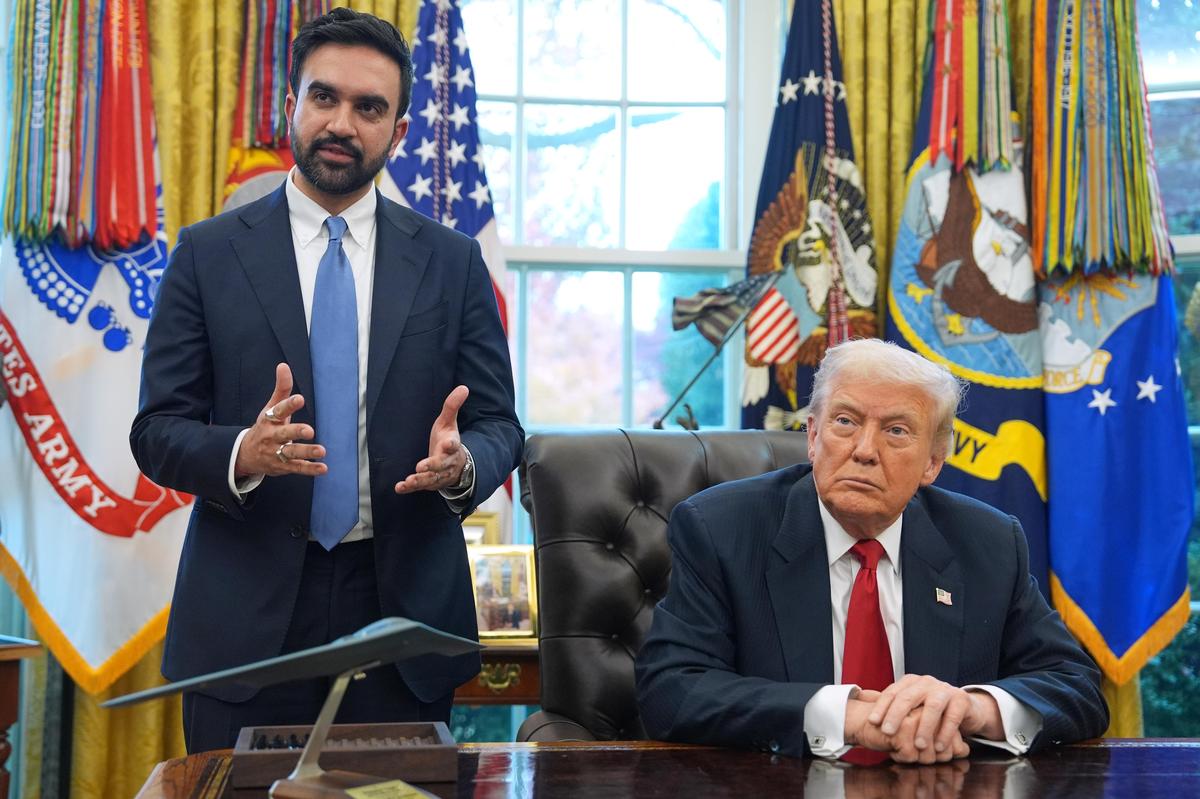
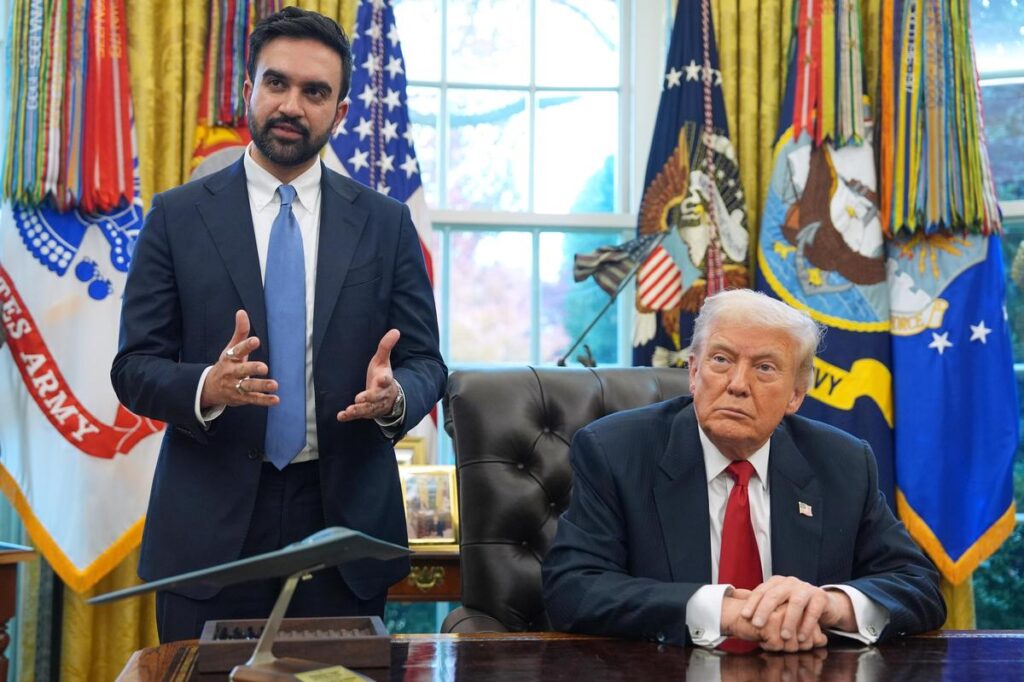
By Nitya Chakraborty The meeting on Friday November 21 between the U.S. President Donald Trump and the New York Mayoral-elect Zohran Mamdani produced a win-win situation for both leaders. The maverick Republican President who earlier called Mamdani a lunatic communist and the 34 year old firebrand democratic socialist who calls even now Trump a fascist, […]

The article Trump-Mamdani Meet: It Was A Win-Win Situation For Both Leaders appeared first on Latest India news, analysis and reports on Newspack by India Press Agency).

SHENZHEN, CHINA – Media OutReach Newswire – 21 November 2025 – China’s leading new-style tea brand HEYTEA has officially received Halal certification from the Department of Islamic Development Malaysia (JAKIM), marking a major step forward in its localisation and compliance efforts in the Malaysian market. HEYTEA Secures Halal Certification in Malaysia, Marks Milestone With Nationwide Free Drink Event To mark the certification, HEYTEA held a nationwide “Halal […]

Advertisements

Authorities in Washington have set new measures that could render nearly 48 million barrels of Russian crude oil stranded aboard tankers still at sea, disrupting key export flows and shaking global trade routes. The sanctions, targeting major producers Rosneft PJSC and Lukoil PJSC, take effect on 21 November and mark the most aggressive action yet under the current administration. Data from analytics provider Kpler suggest around 50 […]

Matein Khalid India’s NSE Nifty scaled a milestone on Dalal Street this morning, rising 160 points as I write to 26205. This has little to do with Nvidia/Jensen Huang’s fabulous guidance last night and everything to do with global fund managers attracted Asia’s Cinderella EM of 2025 by the BJP’s supply side policy pivot to slash the GST, ramp up post-Bihar election capex, boost consumption even as […]

The developer behind the world-famous skyscraper in Dubai has acquired a 12th-century fortress in the rolling hills of Umbria and laid out a vision for one of Europe’s most opulent destination resorts. Mohamed Alabbar, founder of Emaar Properties, confirmed the purchase of Castello di Antognolla for around US $55 million and disclosed plans to invest as much as US $145 million further, bringing the total commitment to […]

Dubai – GE Aerospace has secured two high-value engine agreements with Dubai-based carriers Emirates Airline and Group and flydubai at the 2025 Dubai Airshow 2025, underscoring the resilience and expansion of the UAE’s aviation sector. Emirates has committed to 130 additional GE9X engines to power 65 new Boeing 777-9 aircraft, bringing its total order for that engine type to more than 540 units. The contract includes spares and long-term service provisions. At the same time, flydubai has agreed to acquire 60 GEnx-1B engines with full support services for its first wide-body fleet of 30 Boeing 787-9 aircraft.

Emirates’ deal with GE not only affirms its status as the largest global customer for the GE9X engine, but also reinforces its long-standing partnership with Boeing Commercial Airplanes. Emirates’ chairman and chief executive, Sheikh Ahmed bin Saeed Al Maktoum, described the transaction — valued at US$38 billion at list prices — as “a long-term commitment and testament to our partnership with Boeing and GE”. This investment aligns with Dubai’s wider ambition to develop into a major aerospace hub.

On the flydubai front, the selection of the GEnx-1B engine marks a strategic shift for the carrier, which has historically operated a 737-only fleet. The agreement is structured to support the airline’s entry into long-haul operations and buttresses its network expansion into new markets. flydubai’s chief executive, Ghaith Al Ghaith, noted that engine performance, durability and services will play a critical role as the airline moves into wide-body territory amid intensifying competition and growing demand for air travel through Dubai’s gateway.

The significance of these deals extends beyond fleet numbers. For GE Aerospace the twin contracts cement its dominance in the high-thrust engine market, particularly in a region with challenging operating conditions and high growth potential. The GE9X engine — developed exclusively for the Boeing 777X family — boasts a 10 per cent improvement in specific fuel consumption compared with its predecessor, the GE90-115B, and has been certified to run on approved sustainable aviation fuel blends. The GEnx-1B, likewise, powers a majority of the Boeing 787 fleet and is already deployed widely in long-haul service.

For Emirates, the 65 additional 777-9 airframes raise its total 777X orderbook to 270 units, making it Boeing’s largest customer for that aircraft family. With this deal, the airline has options to convert some of the order to the future 777-10 or 777-8 variants, signalling confidence in the production programme despite earlier certification and delivery delays. The carrier expects deliveries of the initial 777-9 aircraft to begin from the second quarter of 2027. Emirates’ fleet strategy centres on operating a young, modern wide-body fleet aligned with Dubai’s infrastructure expansion.

Flydubai’s expansion into wide-body aircraft, powered by GEnx engines, places the carrier at a pivotal juncture in its evolution. Having grown rapidly in point-to-point markets, reserving its primarily single-aisle fleet for short to medium-haul routes, the move to wide-body aircraft reflects a transition towards intercontinental services. The engine order includes spares and a long-term services agreement, highlighting the importance of lifecycle support and operational reliability in emerging growth trajectories.

The UAE’s positioning as a major aviation hub is reinforced by these developments. The engine orders strengthen the supply-chain footprint in the region, benefit maintenance-, repair-and-overhaul infrastructure, and support the country’s ambition to attract high-value aerospace manufacturing and engineering activities. GE Aerospace announced a US$50 million investment in a new “On Wing Support” facility in Dubai South alongside the shows, underscoring its commitment to local presence.

From an industry-perspective the deals reflect broader trends: airlines placing large long-haul orders amid intense competition for slots and access, engine manufacturers capturing value through integrated services and support, and the Middle East remaining a key battleground for aerospace OEMs seeking growth beyond legacy domestic markets. For Emirates and flydubai, the agreements mark purposeful steps in fleet renewal and network expansion, though execution risks remain — notably aircraft delivery timelines, engine certification, and global economic headwinds.

Analysts caution that while the headline order values are striking, actual transaction prices typically fall beneath list values, and aircraft-programme delays can erode carrier scheduling and capacity planning. For Emirates the 777-9 programme has been subject to repeated postponements, while for flydubai the challenge lies in transitioning from narrow-body operations to wide-body logistics, route infrastructure and long-haul network economics.

The Netherlands has surrendered the state-intervention powers over the chipmaker Nexperia and restored full control to its Chinese owner, marking a shift in the regulatory posture that had threatened global automotive supply chains. The Dutch Economy Minister Vincent Karremans described the move as “a show of goodwill” toward China, as talks between both governments remain ongoing. The intervention had been applied under the Cold War-era Goods Availability […]

Beijing has initiated sweeping agricultural trade measures targeting the United States, Canada and the European Union as a means to counter duties imposed on Chinese electric vehicles. The move centres on sectors worth billions of dollars in export value and signals a new front in the global tariff standoff as Chinese factories ramp up global auto-sales ambitions.

According to official announcements and industry trackers, China imposed tariffs and import restrictions on major agricultural products including soybeans, pork, canola and cognac after Western governments raised tariffs on Chinese EV imports—some reaching 100 per cent in the US, and up to 35 per cent in the EU. Those duties stemmed from concerns about subsidised manufacturing, imports displacing domestic output and national-security implications tied to EV supply-chains.

One Chinese commercial diplomat told Canadian media that Ottawa’s export restraints on Chinese EVs directly triggered Beijing’s agriculture penalties. Canadian farmers in canola and pulses markets have already seen orders plummet and export corridors shut or taxed heavily. European spirits producers also face duties: cognac exports to China, valued at around $1.7 billion annually, have dropped by about 35 per cent since the levy took effect.

Analysts say the strategy is calculated. While China’s domestic market remains protected from full import competition, its international agriculture import volumes give Beijing leverage. An academic at Peking University noted that “a slight adjustment in China’s import preferences can ripple through farming regions and rural constituencies that carry significant political weight”. By focusing on sectors with concentrated politically-sensitive producers, China increases the pressure on Western governments to reconsider EV levies.

On the Western side, officials are signalling that they are unlikely to surrender their EV-tariff stance. A senior analyst at a Brussels-based think-tank said that the European Commission had “clearly shown that it was not willing to back down from the EV case”, citing China’s rapid auto-industry progress and state-support programmes. With climate targets and supply-chain security on the table, Western capitals view EV tariffs as integral to domestic industry viability.

Yet the backlash in agriculture could be deeper and more enduring than the EV duties themselves. A supply-chain expert explained that new contracts, logistics investments and alternative-buyer relationships developed in response to Chinese import suspensions may lock in shifts for years to come. In concrete terms, U. S. soybean farmers—who sold $12.6 billion worth to China in 2024—have seen export volumes fall to zero for key new-crop shipments, while Canadian producers of rapeseed and pea oil are facing a near-complete market closure under 100 per cent tariffs.

Observers point out that agriculture is an especially potent tool in trade diplomacy because it touches multiple layers of the economy: from regional employment to global commodity markets and corporate finances. By wielding farm-product bans or tariffs, Beijing can inflict political damage in sending countries while avoiding direct escalation of high-tech sectors where Western governments might respond more aggressively.

For Western farm sectors the choices are stark. Some firms are exploring alternative markets in Latin America, Africa or South-East Asia, while others are pressing their governments for compensation or trade-negotiation efforts. Meanwhile, Western trade officials are increasingly emphasising diversification of supply-chains away from China, which may dampen China’s leverage over time.

A new cyber-innovation centre has been unveiled to tackle evolving digital threats with advanced technology. The Vyuha Labs – Cyber Innovation Hub, launched through a partnership between International Institute of Information Technology, Hyderabad and the Telangana Cyber Security Bureau, will bring together academia, industry and law-enforcement to co-develop deep-tech tools aimed at strengthening cyber-security infrastructure. The facility spans more than 3,000 sq ft and is equipped with specialist infrastructure to prototype solutions for crime analytics, fraud detection and forensic processing.

The core mission of the hub is to convert early-stage research into deployable products that serve policing and digital safety needs. IIIT-H Director Prof Sandeep Shukla noted that simply publishing academic papers is not sufficient; the institution aims to hand over viable technologies to start-ups or third-party companies for implementation and scaling. TGCSB Director Shikha Goel emphasised that innovation-led solutions are the only effective route to stay ahead of threat actors, citing a decline in cyber-crime incidents within Telangana even as national levels have surged.

One of the flagship initiatives within the hub is an automatic processing system for distress-call data gathered via the 1930 helpline. Leveraging IIIT-H’s language-technology centre, the system converts voice calls into written transcripts, applies machine-learning algorithms to detect patterns and flags hotspots of criminal activity—shifting the approach from reactive logging to proactive intelligence generation. Another major effort focuses on financial-fraud analytics: mining citizen-complaint and transaction data to track investment-scam and cryptocurrency-fraud trends and to evaluate policing interventions for effectiveness. A third component addresses computer-vision based forensic tracking through camera-feed analysis and automated suspect-movement detection, part of a longer-term plan to enhance digital-evidence workflows.

The strategic positioning of Vyuha Labs reflects a broader shift in how cyber-crime is being addressed. Rather than centralised national agencies alone, regional hubs are emerging that bring together local police forces, technical research institutes and private-sector partners for agile innovation and deployment. TGCSB’s claim of an 11 per cent fall in cyber-crime within Telangana, even as 37 per cent growth was recorded nationally, is cited as evidence of the model’s early promise. The facility is housed within IIIT-H’s Cyber Manthan wing, signalling a formal institutional route from research through incubation to real-world solution delivery.

Start-ups and industry play a crucial role in this ecosystem. According to project chief executive Rajul Negi, the lab aims to hand off matured research to start-ups or established companies, thereby ensuring proper deployment, maintenance and scalability across multiple jurisdictions at lower cost than traditional agencies. For example, the language-tech solution being built for call-transcription is expected to be transferred to a young company that can manage ongoing updates, user-interface enhancements and multi-state rollout. Prof Shukla stated that the academic institution intends to remain focused on core research while leveraging partner entities for full product development.

Observers point to several challenges the initiative must overcome. Translating academic proof-of-concepts into field-ready tools often encounters issues of interoperability with existing police systems, budget constraints for rollout and the need for ongoing technical support and upgrades. The policing ecosystem may also need training and culture change to absorb deep-tech workflows rather than legacy manual processes. Moreover, while the state hub model can address local threats, coordination with national agencies and cross-border crime networks remains a complex demand.

India’s workforce is entering a critical phase as artificial intelligence reshapes job markets and industry demands, with upskilling emerging as a non-negotiable necessity for both individuals and organisations. According to a recent assessment of the Asia-Pacific region, India needs to scale up its skilling efforts rapidly to avoid falling behind in the global AI marathon. A report by Asian Development Bank and Google. org warns that without accessible AI-skilling initiatives, large segments of the workforce risk being left out of the transition.

The country already boasts one of the youngest and fastest-growing workforces in the world, offering a potential advantage in the AI era. Yet the report highlights a mismatch: numerous workers in labour-intensive sectors such as textiles, manufacturing and logistics perform roles with high automation risk — for example data-entry, scheduling and support functions — and these roles are disproportionately held by women and informal workers. With AI-driven automation advancing quickly, these groups could be among the hardest hit unless targeted training interventions are introduced.

Data published by NASSCOM indicates that India’s existing AI talent pool, estimated at around 600,000 today, must expand to more than 1.2 million by 2027 to fill expected demand—implying a shortfall of more than a million skilled professionals. This gap emerges despite the country producing hundreds of thousands of engineering graduates each year. Industry trackers indicate that more than half the workforce in technology services is already undergoing training in AI, machine learning and related domains, yet skills still lag employer expectations.

Business research from Microsoft found that across Indian organisations two-thirds of employees and four-fifths of leaders are now familiar with AI agents. Within the next 12-18 months more than half of these companies will place upskilling at the top of their agenda, and more than half expect AI training to become a core team responsibility within five years. These trends confirm that industry demand is ahead of the skill supply curve.

Beyond technical expertise, new job roles are emerging. Organisations are recruiting for “AI Workflow Designers”, “Software Operators” and multi-agent system builders. The most vulnerable workers are those in roles focused on infrastructure management, manual testing, and basic coding — positions that technology is already beginning to automate. This points to an imperative for current employees to acquire cross-functional, human-centric skills such as critical thinking, adaptability and collaboration with AI.

Educational institutions and vocational training providers are responding. For example, an initiative at Andhra University in partnership with NASSCOM integrates advanced skill modules into non-engineering streams and appoints department-wise coordinators to ensure student readiness. The move reflects recognition that skilling must extend beyond traditional tech fields to arts and sciences, and must address digital literacy gaps.

Nonetheless, major structural obstacles remain. A digital divide persists: only about one in five young adults in some South Asian regions has reliable internet access at home, limiting participation in online skilling programmes. Language barriers and low digital literacy further hamper effective engagement. Informal-sector workers, who often lack formal training and social protections, face a double risk of displacement without clear pathways into higher-value work.

The informal economy accounts for a large share of India’s employment, and workers in this segment are often overlooked in skill-development policies. Analysts warn that unless training programmes are redesigned for accessibility — offering tailored formats for women re-entering the workforce, rural populations and digitally disadvantaged groups — AI adoption may deepen existing inequalities.

Global markets are showing the strain after an extended period of exuberance, and the sudden shift in mood has unsettled investors who had come to expect uninterrupted gains across AI and tech, gold, cryptocurrencies, and equities. The turn has been swift. Gold has given back a meaningful portion of its late-October surge, bitcoin has slipped under $90,000, and equity markets worldwide have recorded several sessions of broad […]

With over 50 years of global innovation and 34 years of local experience, Somfy is a trusted partner for outdoor screens that can handle Singapore’s unpredictable weather. SINGAPORE – Media OutReach Newswire – 19 November 2025 – Singapore’s tropical climate presents significant challenges to outdoor comfort. Sudden rain, high winds, and humidity can impact the performance and safety of conventional shading systems. Somfy, a global leader in […]

President Donald Trump has pledged a one-time payment of $2,000 to moderate- and middle-income Americans, to be funded by revenues from the tariffs his administration has imposed. He proposed the payment in remarks signalling the effort will begin around mid-2026. Treasury Secretary Scott Bessent clarified that the payout would depend on congressional approval and suggested the benefit might instead be delivered through tax reductions rather than direct […]

Ukraine’s drone-manufacturer SkyFall unveiled its latest unmanned aerial system, the P1-SUN interceptor, on the opening day of the Dubai Airshow. The P1-SUN marks the company’s first public display outside Ukraine and is designed specifically to neutralise enemy drones such as the Iranian-designed Shahed, a frequent threat in the conflict with Russia. A company representative said production runs into the thousands of units per month.

SkyFall has built a reputation with systems such as the Shrike FPV strike drone and the Vampire rotary-wing model, both widely used by Ukraine’s armed forces. The P1-SUN uses a modular architecture and a 3D-printed airframe, enabling rapid manufacturing and deployment. According to the representative, the ‘plug-and-play’ design allows for quick reconfiguration to meet evolving threats.

The broader context of this launch lies in Ukraine’s intensified efforts to counter drone swarms and asymmetric aerial threats. Ukrainian defence-sector officials estimate that Russian forces have been deploying Shahed-type loitering munitions in high numbers across multiple fronts. Earlier assessments placed the cost of Ukrainian-built interceptor drones at as low as US $300 to US $500 per unit, compared with US $35,000 for some adversary systems. SkyFall’s move thus signals a shift from purely offensive drone designs to dedicated counter-drone capabilities.

At the airshow, SkyFall’s exhibit drew attention from international defence-industry attendees. One senior visitor commented that modular interceptors like the P1-SUN could fill a gap between point-defence systems and networked air-defence layers. Ukraine’s defence-industry consortium has been actively seeking partnerships with foreign firms, and meetings held on the sidelines of the show reportedly included discussions with major aerospace and defence contractors.

While SkyFall did not disclose customers or specific contracts at the event, analysts believe that the demo aims to position Ukraine as a supplier of cost-effective UAV and counter-UAV systems. The company’s advertising emphasises “combat-proven” status in the Ukrainian conflict, enhancing its export appeal. Kiev-based industry sources note that local firms are now transitioning from ad-hoc war-time manufacturing to serial production with export-orientation in mind.

However, challenges remain. Experts caution that scaling production of complex interceptor drones demands robust supply chains, quality assurance and integration into broader air-defence networks. SkyFall’s claim of thousands-per-month output will likely be tested by logistical realities such as 3D-printing capacity, component sourcing in a war-economy and export-licensing hurdles. Additionally, while cost-effective interceptors are attractive, they must be supported by detection and command-and-control systems—which are more costly and slower to deploy.

On the defensive front, Ukraine is not relying solely on lightweight interceptors. Systems such as the Rheinmetall Skyranger 35, a self-propelled anti-aircraft gun system mounted on a Leopard 1 tank chassis, are being delivered to bolster protection across multiple fronts. The combination of high-end systems and low-cost interceptors indicates a layered approach is under development.

Matein Khalid The bloodbath in Bitcoin is symbolic of the risk aversion spasm that has now hit risk assets as varied as Japan’s Nikkei Dow, Nasdaq’s Mag-7, gold and even the EM carry trade. The AI infrastructure trade that was the high octane fuel for the most frenzied bubble in Silicon Valley history has lost its luster (price momentum is the mandate of heaven on Wall Street), […]

David Richardson has announced his departure as the acting head of the Federal Emergency Management Agency after just six months in the role. His resignation marks a swift exit for the seasoned public servant, raising questions about the agency’s leadership during a period of heightened national challenges. Richardson, who took over the role in May 2025, following the resignation of the previous administrator, had been tasked with […]

Global stock markets continue to experience significant losses, with sharp declines across major indices in Asia and other regions. The ongoing sell-off in equities has been driven by a combination of factors, including rising fears surrounding the stability of the global economy and concerns over the sustainability of the recent surge in artificial intelligence investments. These developments have raised alarm among investors, who are now bracing for the potential consequences of an AI bubble burst. As shares in major companies tumble, analysts are warning that the broader market could face deeper turmoil if the situation continues to deteriorate.

The volatility began when shares in leading technology firms, particularly in the AI sector, showed signs of weakness. Companies such as Google, Microsoft, and NVIDIA, which have heavily invested in AI technologies, saw substantial declines in their stock prices. Google’s CEO, Sundar Pichai, joined the growing chorus of voices warning that no company, regardless of its size or industry, would be immune if the AI-driven bubble were to burst. His remarks have further heightened concerns about the potential risks associated with the rapid adoption of AI technologies in various sectors, from finance to healthcare and manufacturing.

The sell-off has not been limited to just tech stocks. Broader market indices have also suffered, with the MSCI Asia-Pacific Index recording steep losses. Investors are particularly focused on the outlook for interest rates, as central banks, especially the Federal Reserve, have indicated that they will continue their tightening policies to combat inflation. This uncertainty regarding monetary policy has contributed to the risk-off sentiment, leading many investors to retreat from stocks and other risk assets.

Compounding the situation, the price of bitcoin, a barometer for risk appetite, has fallen to a seven-month low, reflecting the broader pullback from riskier assets. The digital currency, which had seen impressive gains earlier in the year, has now become a symbol of the broader unease in global financial markets. Its drop has triggered additional concerns, with some market participants fearing that the crypto market’s downturn could further exacerbate the sell-off in traditional equities.

The economic uncertainty has been exacerbated by geopolitical tensions, including the ongoing trade disputes between major economies, rising energy prices, and concerns over global supply chains. These factors have combined to create a perfect storm for investors, who are now facing mounting pressure to reassess their portfolios and risk exposures.

Corporate earnings reports are also under scrutiny, with many firms expected to report weaker-than-expected results due to higher input costs and slowing demand. Companies that had previously benefited from the pandemic-driven digital transformation, such as e-commerce giants and cloud computing providers, are now seeing their growth rates slow down. This slowdown is further contributing to the negative sentiment surrounding the stock market.

As the stock market sell-off continues, experts are advising caution and suggesting that investors should prepare for continued volatility in the months ahead. Some are calling for a reassessment of the risk associated with high-growth sectors, particularly those heavily reliant on AI technologies, while others recommend diversification to protect against potential downturns.

Donald Trump is poised to repeat a pattern of missteps that have troubled his foreign policy approach throughout his presidency. His handling of international relations often seems to confuse the appropriate balance between clarity and ambiguity, with significant consequences for both the United States and its global partners. This issue will come into sharp focus during his upcoming meeting with Saudi Arabia’s Crown Prince Mohammed bin Salman […]

Iran has launched an ambitious cloud-seeding operation as its water crisis intensifies, with authorities warning that the capital may face rationing or even evacuation if supplies cannot be sustained. The move comes against a backdrop of six years of dwindling rainfall and widespread depletion of reservoirs, particularly around Tehran, where dam-levels are at historic lows and domestic pressure on water supplies has escalated. A specialised aircraft under […]

VISHNU RAJA
RYO YAMADA
HITORI GOTOH
IKUYO KITA