News related to
fall

Brussels is preparing to urge European Union governments to cut electricity taxes and trim power-grid charges, betting that cheaper power can both shield households and industry from the latest oil and gas shock and speed the shift towards cleaner technologies. The move comes as the European Commission tries to contain the economic fallout from surging fossil-fuel prices without abandoning the bloc’s longer-term decarbonisation plans. The recommendation would […]

Arabian Post Staff -Dubai AD Ports Group is accelerating its effort to turn itself from a Gulf port operator into a broader trade and logistics network, using expansion in Egypt, Africa, Pakistan and the Mediterranean to win a larger role in global supply chains as companies seek more resilient routes and integrated cargo services. For the Abu Dhabi-based group, 2025 marked another year of record financial growth. […]

Scientists have identified 37 active subglacial lakes beneath glaciers in the Canadian Arctic, with 35 of them not previously documented, adding a significant new layer to understanding how one of the planet’s fastest-changing cryospheric regions behaves as temperatures climb. The findings, published on 23 March 2026 in The Cryosphere, are based on satellite-derived elevation data collected between 2011 and 2021 and point to a far more dynamic […]

Arabian Post Staff -Dubai Oil vaulted above $100 a barrel and share markets retreated on Monday after President Donald Trump ordered a US naval blockade targeting traffic to and from Iranian ports, sharply escalating tensions around the Strait of Hormuz after weekend talks between Washington and Tehran collapsed in Islamabad. The move revived fears of a wider confrontation across the Gulf and renewed concern over inflation, shipping […]

DIFC Art Nights will return to Gate Village in Dubai from 23 to 26 April, offering free entry to a four-day programme of visual art, performances, panel discussions and workshops as the financial district once again turns part of its public realm into an open-access cultural venue. Organisers have billed the 2026 edition as the 21st staging of the event, with visitors able to attend from 5pm […]

Google has moved to harden Chrome against one of cybercrime’s most effective tactics by making Device Bound Session Credentials publicly available for Windows users in Chrome 146, a step designed to stop attackers reusing stolen session cookies to enter accounts without passwords or multi-factor authentication. The change binds a signed-in web session to the user’s device, meaning a cookie lifted by malware should quickly become unusable on […]

Pavel Durov, the Telegram founder, has escalated a public attack on WhatsApp, calling its claim of “end-to-end encryption by default” a “giant consumer fraud” and arguing that most private messages still become exposed through cloud backups. The charge, amplified on X amid a fresh US class action dispute over WhatsApp’s privacy promises, has reopened a wider argument about what encrypted messaging apps actually protect, what they leave […]

Advertisements

A frantic hunt for oil cargoes that can be delivered at once has tightened the global crude market, even as headline prices have swung with every turn in the fragile ceasefire around Iran and the Strait of Hormuz. Behind the moves in futures, traders, refiners and state buyers have been competing for physical barrels from the North Sea, West Africa, the United States and anywhere else supplies […]

Reserve Bank officials have sharpened their criticism of banks and foreign-exchange market makers after volatile rupee trading during the Middle East crisis, arguing that arbitrage activity between onshore and offshore markets worsened pressure on the currency and distorted price discovery at a delicate moment for the economy. The intervention marks a tougher regulatory message from Mumbai as policymakers try to contain imported inflation risks, calm hedging costs and restore order to a market jolted by oil shocks and shifting geopolitical headlines.

The backdrop is a bruising spell for the rupee. The currency sank to record lows in March as conflict-linked fears over energy supplies drove oil prices higher and triggered capital outflows from domestic assets. That slide left the central bank confronting a familiar dilemma: allow the exchange rate to absorb the shock or step in more forcefully to curb disorderly moves in a country heavily exposed to imported crude. Reuters reported that the rupee hit a record low around mid-March before the Reserve Bank stepped up support measures as traders fretted over the growth and inflation fallout from elevated oil prices.

Against that backdrop, the central bank moved on March 27 to tighten rules around banks’ foreign-exchange exposure. It imposed a $100 million cap on net open dollar-rupee positions in the onshore market and restricted banks’ ability to deal in non-deliverable forwards, measures aimed at curbing arbitrage between local and offshore markets that officials believed had become destabilising. Governor Sanjay Malhotra has since said the steps were temporary rather than a long-term retreat from market development or rupee internationalisation, but the regulatory intent was clear: volatility linked to rapidly expanding positions would no longer be tolerated.

Bloomberg reported on Sunday that a senior Reserve Bank official criticised market makers for aggravating the rupee’s weakness during the Middle East tensions, reinforcing the view that policymakers see some trading strategies not merely as opportunistic but as harmful to market functioning. Bloomberg had earlier quoted Deputy Governor T. Rabi Sankar as saying the arbitrage build-up led to an “artificial drying up” of dollar supply in the market, affecting prices. That language is notable because it suggests the regulator believes the issue went beyond normal speculative behaviour into a form of distortion that reduced liquidity when it was needed most.

Market participants have broadly accepted that the positions were sizeable. Reuters, citing industry estimates and clearing data, said consensus had settled around roughly $40 billion of arbitrage exposure, much of it built across the onshore and non-deliverable forward markets. By early April, banks had exited the bulk of those trades ahead of the Reserve Bank’s April 10 deadline. Clearing house data pointed to around $36 billion in NDF trades between April 1 and April 7, seen largely as part of the unwind. That process helped support the rupee at points, but it also created other distortions, including sharp moves in forward premiums and strained hedging conditions for importers.

For companies exposed to foreign-currency liabilities, the clean-up has been costly. Reuters said one-year dollar hedging costs jumped sharply, at one point posting the steepest rise since the global financial crisis, as importers rushed to lock in cover and market liquidity thinned. That matters because the regulatory cure, while aimed at curbing speculative pressure, can tighten financing and risk-management conditions for genuine commercial users. It is one reason some dealers have privately argued that while the central bank was justified in tackling excessive positioning, abrupt curbs can deepen dislocations in a market that depends on continuous two-way activity.

Still, the Reserve Bank appears willing to accept short-term disruption in exchange for regaining control of the policy signal. The rupee rallied through parts of early April as arbitrage positions were unwound and a temporary US-Iran ceasefire drove oil lower, with the currency at one stage strengthening into the 92-93 range against the dollar. Yet that recovery proved fragile. On April 9, the rupee slipped again as doubts over the truce resurfaced, Brent crude rebounded and wider risk sentiment weakened. For policymakers, that sequence underscored how quickly external shocks can overwhelm domestic market plumbing if positioning is allowed to build unchecked.

Broader lessons are now emerging for the financial system. One is that India’s increasingly connected currency market, spanning domestic forwards, exchange-traded futures and offshore NDFs, can improve price discovery in calm conditions but amplify stress when geopolitical shocks hit. Another is that the Reserve Bank remains prepared to intervene not only through spot-market support but also through conduct-based regulation when it thinks market behaviour is aggravating weakness. That stance may temper speculative excess, but it also raises questions about how much freedom banks will have to intermediate risk in future episodes of volatility.


Greenlogue/AP   Spring rain has reshaped the Aja Mountains in Hail into a greener, water-fed landscape, drawing fresh attention to one of the region’s best-known natural landmarks and reinforcing a wider push to turn northern Saudi Arabia’s scenery into a stronger tourism asset. Official reports on April 9 described vegetation spreading across ravines and valleys after rainfall, with seasonal grasses and wild plants softening the granite terrain […]

Dubai has unveiled a parking-linked retail incentive that will allow motorists to recover paid parking costs as cashback when they shop at participating neighbourhood businesses, in a move that blends urban mobility policy with support for smaller traders. The initiative, called Spots for Shops, is being introduced by Parkin, the emirate’s public parking operator, with the first phase due to go live on the Parkin app in […]

Ice Open Network has opened more of its codebase to public view as its ION token comes under acute market pressure, an awkward overlap that captures the project’s current predicament: visible engineering momentum on one side, collapsing market confidence on the other. The team has been publishing weekly development updates on its Online+ social app and ION framework, while public GitHub repositories now show active work on […]

By K Raveendran Election regulation in India is trapped in a contradiction that has become harder to defend with each passing cycle. The Election Commission continues to apply old assumptions about influence, persuasion and voter exposure to a media and political environment that has been transformed by technology, scale and the permanent visibility of public […]

The article Election Commission Applies 19th Century Thinking To 21st Century Realities appeared first on Latest India news, analysis and reports on Newspack by India Press Agency).

S&P Global Ratings has lowered its growth expectations for both the UK and Egypt, saying the economic fallout from conflict-linked disruption across the Middle East is feeding through energy prices, trade routes and business confidence. For Egypt, S&P cut its forecast for real GDP growth in the 2025-2026 fiscal year to 4.7 per cent from 4.8 per cent, while also trimming the following year to 4.3 per […]

Michael Saylor has argued that Bitcoin may already have found a durable floor around $60,000, framing the slide earlier this year as a washout of forced sellers rather than a collapse in conviction. The Strategy executive chairman also pushed back against rising alarm over quantum computing, saying the threat to Bitcoin is overstated for now. His remarks landed as Bitcoin traded near $72,800 on April 11, showing […]

Arabian Post Staff -Dubai Saudi supply lines face deeper strain Attacks on Saudi energy facilities have knocked about 600,000 barrels per day from the kingdom’s oil production capacity and cut throughput on the East-West Pipeline by roughly 700,000 bpd, according to Saudi state media citing an Energy Ministry official, in a blow to the world’s top oil exporter at a time when its western pipeline route has […]

XRP could reach $1,000 by 2030, according to EasyA co-founder Dom Kwok, who has repeated the forecast in public interviews and defended it when challenged on valuation grounds. The call has reignited a familiar argument in crypto markets: whether XRP should be judged as a conventional token priced by circulating supply, or as a payments rail whose future worth could expand far beyond today’s market-cap logic. For […]

Circle Internet Group shares slid nearly 10 per cent on Thursday, closing at $85.10, after a fresh Wall Street “sell” call added to investor unease over the stablecoin issuer’s margins and over criticism of its handling of funds tied to the Drift Protocol exploit. Market data showed the stock ended the session down 9.89 per cent, extending a volatile stretch for one of crypto’s most closely watched […]

South Korea is sending a special envoy to Iran as Seoul steps up efforts to secure passage for 26 South Korean-linked vessels stranded around the Strait of Hormuz, underscoring how a partial US-Iran ceasefire has done little to restore normal shipping through one of the world’s most critical energy chokepoints. Seoul’s foreign ministry has appointed former ambassador to Kuwait Chung Byung-ha for the mission, with the government […]

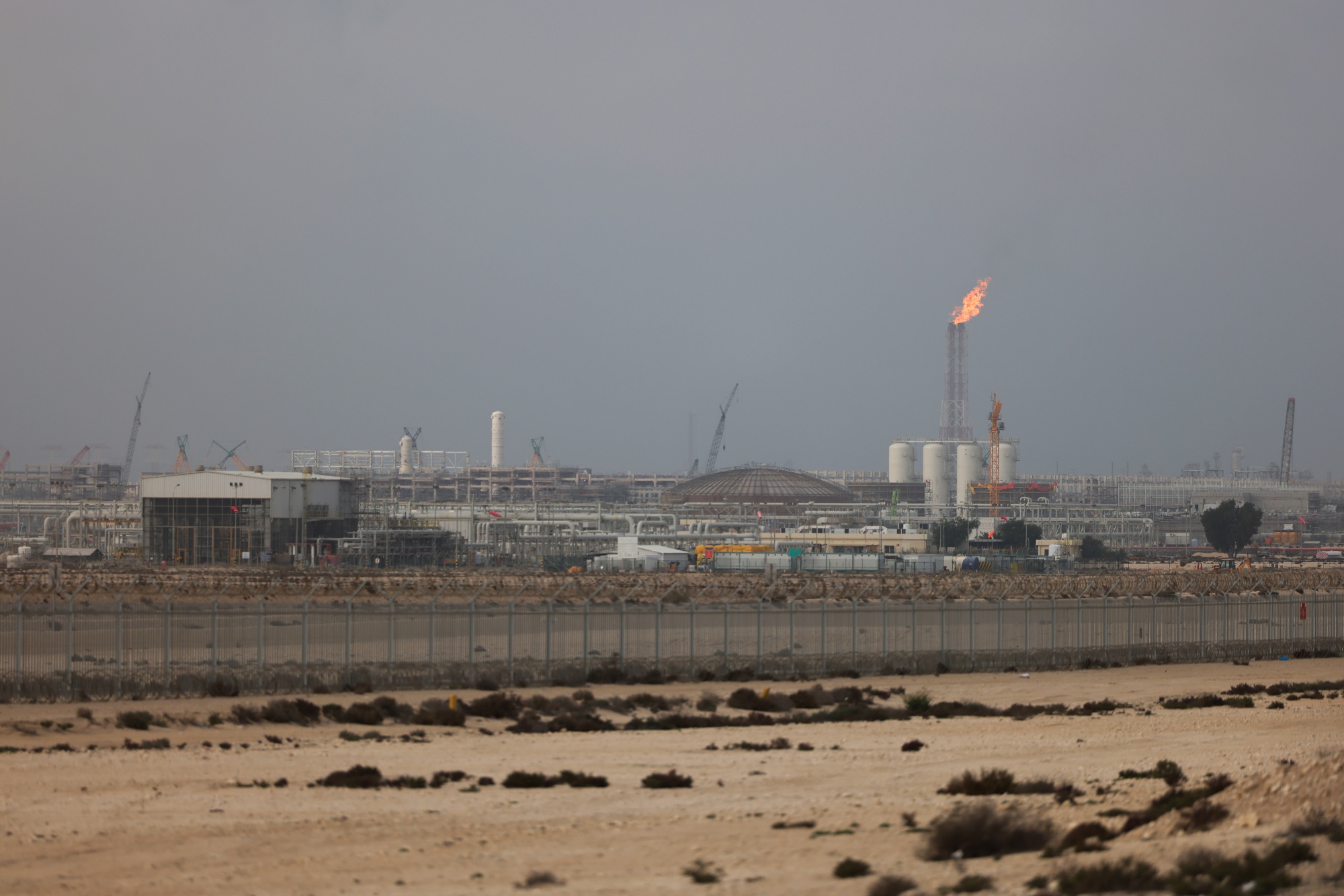
China has authorised state oil refiners to draw on commercial crude reserves as the Middle East war enters its sixth week, a move that points to mounting concern in Beijing over supply security, refinery operations and fuel stability in the world’s biggest crude importer. The decision marks a notable shift after reporting in March indicated that access to such reserves had been denied, underscoring how sharply the market backdrop has changed.

The policy adjustment comes as the conflict centred on Iran has disrupted flows through the Strait of Hormuz, a route that handled about 20 million barrels a day of crude and oil products in 2025 and remains one of the most critical chokepoints in global energy trade. The International Energy Agency said in March that the war had created the biggest supply disruption in oil market history, with flows through Hormuz falling from around 20 million barrels a day before the war to only a trickle.

For China, the timing is especially sensitive. State refiners have already been grappling with higher feedstock costs, disrupted shipping routes and a scramble for replacement barrels from outside the Gulf. Reuters reported in late March that Sinopec, the country’s largest refiner by capacity, had sought access to state reserves after deciding against buying Iranian crude, while also trimming refinery runs. Earlier reporting in mid-March said China had been building inventories rather than drawing them down, suggesting Beijing initially preferred to preserve stocks.

That stance now appears to have softened. Bloomberg reported on April 10 that authorities had given state refiners the green light to tap commercial reserves. While the precise volume and duration were not publicly disclosed, the move is significant because it signals Beijing is willing to use part of the country’s stock cushion to smooth supplies for domestic processing rather than rely solely on the spot market at a time of exceptional volatility.

The wider market has been under intense pressure even as talk of a ceasefire has briefly cooled futures prices. Reuters reported that physical crude markets in Europe and Africa remained extremely tight despite a temporary truce, with buyers in Asia and Europe competing aggressively for non-Middle East barrels. Another Reuters report said U. S. crude premiums had surged to record highs as importers sought alternatives to Gulf supplies. That matters for China because replacing lost or delayed Middle East cargoes has become more expensive just as refining margins in parts of Asia remain fragile.

Supply conditions deteriorated further this week after attacks on Saudi energy infrastructure cut output capacity by around 600,000 barrels a day and reduced throughput on the East-West Pipeline by about 700,000 barrels a day, according to Saudi state media cited by Reuters. The pipeline is vital because it allows exports to bypass Hormuz via the Red Sea. Damage there narrowed one of the few remaining alternative routes for Gulf producers trying to keep oil moving to Asian customers.

Asian refiners have already felt the strain. Reuters reported that seaborne crude imports into Asia in April were estimated at 19.22 million barrels a day, sharply below the three-month average of 25 million barrels a day. Although refined fuel prices eased after hopes of a truce, the same report said the market was still stressed and that it could take months for normality to return even if shipping improves. For Beijing, releasing commercial stocks is therefore less a dramatic emergency measure than a tactical effort to bridge a period of dislocation.

The decision also reflects China’s domestic balancing act. Authorities have been trying to keep fuel output steady even as weak underlying demand and higher crude costs squeeze refiners. Reuters reported on April 2 that officials had pressed independent refiners to maintain production despite the surge in oil prices and wartime disruption. That suggests Beijing is seeking to avoid sharp swings in fuel availability or industrial costs while preserving broader economic stability.

There is also a geopolitical layer. China has opposed any overtly force-based international response around Hormuz and has pushed for de-escalation at the United Nations, according to Reuters reporting on Security Council negotiations. At the same time, the reserve release shows that Beijing is preparing for a conflict that may not be resolved quickly and for shipping conditions that may remain uncertain even if diplomatic language softens.

Air travellers in Germany faced widespread disruption on Friday after Lufthansa cabin crew staged a one-day strike that the airline and airport officials said would force the cancellation of more than 520 flights and affect about 90,000 passengers, hitting the carrier’s Frankfurt and Munich hubs during a busy holiday return period. The walkout, called by the UFO cabin crew union, ran from 00:01 to 22:00 local time […]

Bitcoin Depot, one of the biggest operators in the crypto ATM business, has disclosed that hackers stole about 50.903 Bitcoin, valued at roughly $3.665 million, after gaining access to parts of its internal technology systems and taking control of credentials linked to its digital asset settlement accounts. The Atlanta-based company said the intrusion was discovered on March 23 and later judged material on April 6, before being […]

STX RAT, a newly identified remote access trojan, has drawn attention in the cyber-security sector after researchers tied it to an attempted intrusion against a financial-services environment and linked it to broader opportunistic delivery campaigns that include trojanised software and script-based loaders. The malware stands out because it combines hidden remote control with data theft, while delaying some of its most suspicious behaviour until it has an […]

Attackers have planted a stealthy Magecart credit-card skimmer on nearly 100 Magento-based online shops by hiding the malicious code inside an invisible SVG image, according to incident findings published this week, in what security specialists describe as another sign that payment-page attacks are becoming harder for merchants and scanners to detect. The operation was identified on April 7 and affected 99 stores, with stolen payment data sent […]

VISHNU RAJA
RYO YAMADA
HITORI GOTOH
IKUYO KITA