Just in:
Cyberport Venture & Capital Forum 2026 Grand Opening // Asia Left Behind: Ten international companies have yet to report delivering on their cage-free egg pledges across the region // Vance attributes Republican midterm defeats to Iran conflict // APT29-linked campaign exploits outdated Apple and Android software // After Reaching 7 Million Users in the Philippines, Skyro Launches Transparent Cash Loans in Malaysia // xCube Access Welcomes Entrust Capital Limited  Expanding Access to Professional Portfolio Management // Anthropic to prohibit persistent abuse of Claude chatbot // Oil and chip shares retreat after Democratic victories // CR Longdation Aethereal Cybersecurity × Global Cybersecurity Alliance (GCSA) Join Hands to Establish the “AI and Cybersecurity Research Centre” // As AI Reshapes Education, Singapore Convenes Global Dialogue on the Future of Early Childhood Education // UK air traffic outage inflicted £33m financial losses // ADIA and partners establish $1.4 billion aviation venture // SC to examine students’ exam plea today // The “1st Greater Bay Area Health and Longevity Summit & Awards Ceremony” concludes successfully in Macao // Fast Just Got Fastest: STING Energy Boost™ Celebrates Kimi Antonelli’s Formula 1® World Championship and the Fan Energy Behind It // Pinarayi faults UDF over mounting road crashes // e-Crime Bureau Signs Cybersecurity Partnership With Smart Africa, Reinforcing Its Global Expansion // Dubai boat show confirms international shipyard line-up for November // Emirates Group records AED 4.1 billion half-year profit // OpenAI identifies 948 Linux privilege escalation flaws using AI //

News related to
fall

The stock market may grab all the headlines, but behind the scenes, savvy investors are making serious moves into corporate bonds. Once seen as the dull cousin to equities, corporate bonds are having a moment as a growing number of investors recognize their ability to deliver attractive returns, stability, and a tactical hedge against volatility. If you’re not paying attention, you’re missing out on what could be […]

By Aditi Jha The tragic death of Prakriti Lamsal, a Nepali B.Tech student at Kalinga Institute of Industrial Technology (KIIT), a private engineering college in Bhubaneswar, Odisha, in February 2025, exposed serious problems of institutional incompetence and poor management. Prakriti’s death was followed by protests by Nepali students who claimed that the university administration had […]

On February 26, 2025, spot Bitcoin exchange-traded funds experienced significant outflows, with close to $940 million being withdrawn, as the cryptocurrency saw a sharp decline, dropping below $88,000. This marks its lowest value since November 2024, sparking a wave of investor concern.

The latest data reveals that Bitcoin’s sudden drop sent shockwaves through the ETF market, causing investors to pull back. The vast outflow from spot Bitcoin ETFs represents a major shift in sentiment, highlighting the growing uncertainty surrounding the cryptocurrency’s future performance. Investors seem to have become increasingly risk-averse, with fears about Bitcoin’s short-term volatility playing a role in their decisions.

The sudden downturn in Bitcoin’s value has been attributed to a variety of factors. Experts point to a series of negative developments in both the macroeconomic environment and the cryptocurrency sector. The tightening of global monetary policies has put pressure on high-risk assets, and Bitcoin, often considered a speculative investment, has not been immune. Additionally, regulatory concerns and heightened scrutiny from government bodies have increased investor anxiety, particularly in major markets like the United States and Europe.

The sharp drop in Bitcoin’s price also coincides with a decline in broader market sentiment. Global equity markets have been experiencing their own challenges, with growing concerns over inflation, interest rates, and geopolitical tensions, leading investors to seek safer assets. Bitcoin, traditionally seen as a hedge against inflation, has not lived up to this reputation in the face of broader economic pressures.

Despite these challenges, Bitcoin still retains a strong following among long-term investors and institutional players. However, the massive outflows from spot Bitcoin ETFs suggest that some investors are recalibrating their positions in response to the volatile market conditions. ETF providers, particularly those offering exposure to Bitcoin, have faced significant headwinds as a result of the turbulence in the cryptocurrency market.

In the wake of the outflows, some analysts suggest that Bitcoin’s current price could stabilise as a result of the selling pressure being alleviated. Others, however, warn that the cryptocurrency remains highly vulnerable to further downward price movements. With Bitcoin’s value being particularly sensitive to both macroeconomic and regulatory shifts, many investors are adopting a wait-and-see approach, unwilling to commit more capital until the market finds more clarity.

Bitcoin’s price fluctuation has had ripple effects across the broader cryptocurrency ecosystem. Other digital assets, particularly altcoins, have followed Bitcoin’s downward trajectory. Investors, particularly those involved in the broader crypto market, are keenly watching Bitcoin’s price action, as it has historically been a barometer for the health of the entire market.

The broader impact of Bitcoin’s slide on the cryptocurrency market has raised concerns about the viability of some smaller cryptocurrencies. While Bitcoin remains the dominant player, the fall in its price has reminded many of the inherent risks in the market, particularly for investors who had hoped for sustained growth. Analysts warn that the volatility seen in Bitcoin’s price could spill over into the altcoin sector, potentially exacerbating the losses across the board.

The massive outflows from spot Bitcoin ETFs have also raised questions about the long-term prospects of Bitcoin ETFs as a financial product. While they have offered investors a more accessible route to exposure in the past, the current downturn could lead to a reevaluation of their appeal. Some experts believe that the volatility in Bitcoin’s price could ultimately limit the growth potential of Bitcoin ETFs, especially if the cryptocurrency continues to experience sharp price swings. In contrast, others argue that the evolution of Bitcoin and cryptocurrency regulations will likely determine the future growth of these investment products, regardless of short-term market fluctuations.

Bitcoin miners’ share of total on-chain transaction volume has fallen to 2.4%, the lowest level since May 2023, according to data from IntoTheBlock. This decline suggests a significant shift in miner behavior and its potential impact on the broader cryptocurrency market. Historically, miners have contributed between 3% to 4% of Bitcoin’s on-chain volume. The recent drop to 2.4% indicates a notable reduction in their activity. Several factors […]

The cryptocurrency market is experiencing significant volatility, with Bitcoin’s value dropping below $90,000 and the Crypto Fear and Greed Index falling to levels indicative of heightened investor anxiety.

Bitcoin, the leading cryptocurrency by market capitalization, has seen a substantial decline, trading at $88,420, a decrease of approximately 3.9% from the previous close. This downturn is part of a broader market sell-off affecting various digital assets.

The Crypto Fear and Greed Index, a tool that gauges market sentiment by analyzing factors such as volatility, market momentum, and social media trends, has dropped to 25, categorizing the current sentiment as “Extreme Fear.” This marks a significant shift from the previous day’s neutral position at 49.

Several factors have contributed to this decline in market confidence. A notable incident is the $1.5 billion hack of Ether from the Bybit exchange, which has raised concerns about the security of digital assets and the robustness of trading platforms. Additionally, global economic uncertainties, including potential shifts in U.S. economic policies and impending tariffs on imports from Canada and Mexico, have added to investor apprehension.

The impact of this sentiment is evident across various cryptocurrencies. Ethereum is currently trading at $2,476.08, reflecting a 1.2% decrease. Other major cryptocurrencies such as Solana , XRP, and Dogecoin have also experienced declines, with SOL plunging 14% and both XRP and DOGE down by over 8% in the past 24 hours.

Market analysts suggest that the current bearish sentiment may be overextended. They emphasize the importance of macroeconomic decisions in influencing market trajectories and caution against reactionary trading based solely on short-term market movements.

In response to the growing institutional interest in cryptocurrencies, Citadel Securities, under the leadership of Ken Griffin, has announced plans to enter the cryptocurrency market-making sector. This move aims to provide liquidity for cryptocurrencies on global exchanges, signaling a shift from the firm’s previously cautious stance on digital assets.

Despite the prevailing market downturn, some industry leaders remain optimistic about the long-term prospects of cryptocurrencies. Cathie Wood, CEO of ARK Investment Management, highlighted that institutional adoption of Bitcoin is still in its early stages. She anticipates a significant increase in Bitcoin’s value as more institutions engage with the cryptocurrency, suggesting that the current market consolidation is a healthy phase before potential growth.

Conversely, the rapid proliferation of meme-based cryptocurrencies has introduced additional volatility into the market. These meme coins, often driven by speculative trading and lacking fundamental value, have led to financial losses for many investors. High-profile endorsements and subsequent failures of such coins have underscored the need for clearer regulations to protect investors and maintain market integrity.

The recent downturn has also led to significant liquidations across the market, with over $1.5 billion in positions being liquidated within a 24-hour period. This wave of liquidations has further exacerbated the downward pressure on cryptocurrency prices, contributing to the prevailing atmosphere of fear and uncertainty among investors.

Bitcoin’s value has experienced a significant decline, falling below the $90,000 threshold for the first time since November 2024. The cryptocurrency reached a low of $86,000, marking a substantial drop from its peak of $109,225 observed on January 20, 2025. This downturn has led to widespread market repercussions, including over $1.6 billion in liquidations within the past 24 hours.

The recent sell-off has been attributed to a confluence of factors, notably escalating geopolitical tensions and internal challenges within the cryptocurrency ecosystem. President Donald Trump’s administration has introduced new tariffs on Mexico and Canada, measures perceived as inflationary and potentially detrimental to economic growth. These policies have contributed to a broader risk-averse sentiment among investors, leading to a retreat from volatile assets such as cryptocurrencies.

In addition to geopolitical concerns, the security of cryptocurrency platforms has come under scrutiny. A significant breach occurred on February 21, 2025, when Bybit, a prominent Dubai-based crypto exchange, suffered a hack resulting in the loss of approximately $1.5 billion. This incident has exacerbated apprehensions regarding the safety of digital assets, prompting further sell-offs in the market.

The cascading effect of these events has led to substantial liquidations across the cryptocurrency market. Data indicates that over 362,000 traders have been affected, with total liquidations surpassing $1.3 billion in the past day. Bitcoin alone accounted for $523 million of these liquidations, underscoring the volatility and heightened risk associated with leveraged trading positions.

Market analysts are closely monitoring key support levels for Bitcoin. The breach of the $90,000 support has raised concerns about potential further declines. Technical analysis suggests that if Bitcoin fails to maintain support at $86,000, it could test lower thresholds, with significant support anticipated around the $80,400 and $74,000 levels. Conversely, resistance levels are identified at $98,500 and $106,000, which Bitcoin would need to surpass to signal a potential reversal of the current downward trend.

The broader cryptocurrency market has mirrored Bitcoin’s downturn. Major altcoins such as Ether and XRP have experienced notable declines, with Ether dropping 8.5% to $2,416 and XRP falling by 5% to $2.24. The overall market capitalization has contracted significantly, reflecting the pervasive uncertainty and risk aversion among investors.

Investor sentiment has been further dampened by unmet expectations regarding regulatory support for cryptocurrencies. The initial optimism surrounding a crypto-friendly stance from the current U.S. administration has not materialized into concrete policy changes. This lack of regulatory clarity, coupled with economic challenges, has contributed to the recent sell-off and the erosion of confidence in the market.

In response to the heightened volatility, traders are advised to exercise caution, particularly those engaged in leveraged positions. The current market environment underscores the importance of risk management and the need for a thorough understanding of the factors influencing cryptocurrency valuations.

https://www.census.gov/foreign-trade/balance/c5700.htmlhttps://www.census.gov/foreign-trade/balance/c5700.htmlBy Dr. Nilanjan Banik The US-China trade war has been a focal point of economic discussions for a significant period, as the world’s two largest economies have imposed tariffs on each other’s goods. The Trump administration imposed 10% tariffs on Chinese imports, while China, in turn, levied 15% tariffs on US liquid natural gas (LNG) […]
Advertisements
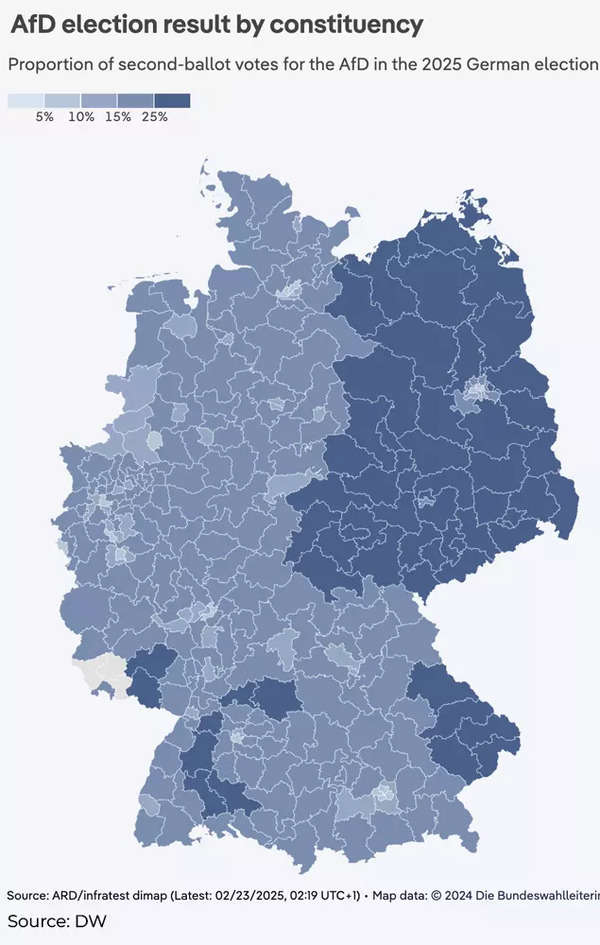
By Nitya Chakraborty The final results of Germany’s national elections held on February 23 are being debated intensively in the global media, especially in the European media about the upsurge of the far right party AFD which virtually doubled its voting percentage in the 2025 elections compared to the 2021 national elections. The ruling Social […]

Stellar’s native cryptocurrency, XLM, is confronting a significant downturn, with technical analyses indicating a potential 35% price drop. Currently trading at approximately $0.298598, XLM has experienced a downward trajectory, influenced by prevailing bearish market sentiments and specific chart patterns.

Technical indicators have identified the formation of a ‘death cross’ on XLM’s daily chart, where the 50-day moving average crosses below the 200-day moving average. This pattern is traditionally viewed as a strong bearish signal, suggesting potential for further declines. Analysts project that if this trend persists, XLM’s price could descend to around $0.22, marking a 35% decrease from its current value.

Further compounding the bearish outlook, the Relative Strength Index for XLM has fallen below the neutral 50.00 threshold, indicating increased selling pressure. The RSI’s decline reflects a shift towards bearish momentum, raising concerns among investors about the cryptocurrency’s near-term performance.

Market sentiment surrounding XLM has also been adversely affected by a broader decline in the cryptocurrency sector. Over the past week, XLM’s price has decreased by approximately 9.74%, aligning with a general downturn observed across various digital assets. This trend suggests that macroeconomic factors and investor caution are contributing to the current market dynamics.

Despite the prevailing bearish indicators, some analysts advise caution before making definitive conclusions about XLM’s future trajectory. While technical patterns like the death cross and declining RSI provide insights into potential trends, they do not guarantee specific outcomes. Investors are encouraged to consider a range of factors, including market volatility and external economic influences, when evaluating their positions in XLM.

In response to the current market conditions, some investors are exploring alternative cryptocurrencies that may offer resilience against the downturn affecting XLM. Assets such as Chainlink and Dogecoin have demonstrated relative stability, prompting market participants to diversify their portfolios in an effort to mitigate potential losses associated with XLM’s decline.

In an unprecedented security breach, cryptocurrency exchange Bybit has fallen victim to a sophisticated cyberattack, resulting in the theft of approximately $1.5 billion worth of Ethereum . The notorious North Korean hacking collective, Lazarus Group, has been identified as the primary suspect behind this monumental heist. In the wake of the attack, industry leaders, including billionaire investor Mike Novogratz, have voiced strong opposition to proposals for an Ethereum hard fork as a remedial measure, instead calling for coordinated international efforts to combat such cyber threats.

The breach occurred during a routine transfer of funds from Bybit’s cold wallet to its hot wallet, a process intended to enhance security by keeping the majority of assets offline. However, attackers managed to intercept this transfer, redirecting 401,000 ETH—valued at approximately $1.5 billion—to an unknown address. This incident now stands as the largest cryptocurrency theft on record, surpassing previous high-profile hacks in the digital asset sector.

Bybit’s CEO, Ben Zhou, promptly addressed the situation, assuring clients that their assets remain secure despite the breach. Zhou emphasized that the company possesses sufficient reserves to cover the losses, stating that even if the stolen funds are not recovered, Bybit’s solvency remains intact. The exchange has initiated measures to restore its Ethereum reserves, securing 446,870 ETH through strategic acquisitions and loans, thereby ensuring all assets are backed on a one-to-one basis. Additionally, Bybit is collaborating with law enforcement agencies and cybersecurity experts to track and recover the stolen assets, while also offering a 10% bounty for information leading to the successful retrieval of the funds.

In response to the theft, some members of the cryptocurrency community have suggested implementing a hard fork in the Ethereum blockchain to invalidate the stolen funds. A hard fork involves creating a divergent path in the blockchain, effectively reversing specific transactions. This approach was previously employed in 2016 following the DAO hack, leading to the creation of Ethereum Classic. However, such a measure is contentious, as it challenges the principle of blockchain immutability and could undermine trust in the network’s integrity.

Mike Novogratz, CEO of Galaxy Digital and a prominent figure in the crypto industry, has publicly rejected the notion of an Ethereum hard fork as a solution to the Bybit hack. Novogratz argues that altering the blockchain’s history sets a dangerous precedent and could erode confidence in decentralized systems. Instead, he advocates for a unified global response to address the root cause of such attacks. Novogratz emphasizes the necessity for world leaders to take decisive action against state-sponsored hacking groups like Lazarus, which have been implicated in numerous cybercrimes aimed at destabilizing financial systems and funding illicit activities.

The Lazarus Group, linked to the North Korean government, has a notorious history of executing elaborate cyberattacks, particularly targeting financial institutions and cryptocurrency platforms. Their operations are believed to generate significant revenue used to support North Korea’s nuclear weapons program. The group’s involvement in the Bybit hack underscores the escalating threat posed by state-sponsored cybercriminals to the global financial ecosystem.

The Bybit incident has reignited discussions about the security vulnerabilities inherent in centralized cryptocurrency exchanges. While cold wallets are designed to offer enhanced protection by keeping assets offline, the process of transferring funds to hot wallets introduces potential attack vectors. This event highlights the critical need for exchanges to implement robust security protocols and for the industry to develop more resilient infrastructure to safeguard digital assets.

In the aftermath of the hack, Bybit has pledged to bolster its security measures to prevent future breaches. The exchange is conducting a comprehensive review of its internal processes and has engaged third-party cybersecurity firms to audit its systems. Bybit’s swift response aims to restore user confidence and set a precedent for how cryptocurrency platforms should address and manage security incidents.

The broader cryptocurrency market has also felt the impact of the Bybit hack. Following the news, Ethereum’s price experienced a temporary decline, reflecting investor concerns over the security of digital assets. Market analysts suggest that while such incidents can cause short-term volatility, the long-term implications depend on the industry’s ability to enhance security measures and prevent similar occurrences in the future.

In a staggering blow to the cryptocurrency industry, Dubai-based exchange Bybit has fallen victim to a cyberattack resulting in the theft of approximately $1.5 billion in Ethereum tokens. This incident, occurring during a routine transfer between digital wallets, is now considered the largest digital heist in history.

The breach transpired as Bybit conducted a standard operation, moving assets from a cold wallet—offline storage designed to safeguard funds—to a warm wallet used for daily transactions. During this process, malicious actors manipulated the transfer, seizing control of the cold wallet and diverting 401,000 Ethereum tokens to an unidentified address. Blockchain analytics firms, including Arkham Intelligence, have traced the stolen funds, revealing that $1.36 billion in Ethereum was swiftly liquidated from associated accounts.

Bybit’s CEO, Ben Zhou, addressed the crisis, assuring clients that the exchange remains solvent and that all customer assets are backed on a one-to-one basis. He emphasized that unaffected wallets and withdrawal processes continue to operate normally. To mitigate the impact on users, Bybit has implemented bridge loans to cover any unrecovered funds and has launched a recovery bounty program, offering up to 10% of the reclaimed amount to ethical hackers assisting in the retrieval efforts.

The magnitude of this theft has prompted a surge in withdrawal requests, with over 350,000 submissions flooding the platform. While this influx has the potential to cause processing delays, Zhou noted that the rate of withdrawals has begun to decelerate. In response to the breach, Bybit is collaborating with law enforcement agencies and cybersecurity experts to trace the perpetrators and enhance its security infrastructure to prevent future incidents.

Speculation regarding the identity of the attackers has intensified, with some experts pointing towards North Korea’s notorious Lazarus Group. This collective has been implicated in previous high-profile cryptocurrency thefts, including the pilfering of $1.7 billion in 2022 and $800 million in 2024. While these allegations remain unconfirmed, the pattern of large-scale crypto heists attributed to state-sponsored actors raises significant concerns about the security of digital assets on global trading platforms.

In a related development, cybersecurity firm CertiK has identified another suspicious transfer involving approximately $49.5 million from an unverified Ethereum contract. The recipient address has been observed converting these funds into the stablecoin DAI. The community speculates that this incident may be connected to the Infini platform, a stablecoin digital bank, though official confirmation is pending.

These consecutive breaches underscore the vulnerabilities inherent in the rapidly evolving cryptocurrency landscape. As digital assets become increasingly mainstream, the imperative for robust security measures and regulatory oversight grows more pressing. The Bybit hack serves as a stark reminder of the potential risks investors face and the necessity for exchanges to implement stringent protective protocols to safeguard user funds.

In the wake of these events, the cryptocurrency market has experienced notable fluctuations. Ethereum’s value witnessed a temporary decline of approximately 4%, reflecting investor apprehension following the breach. Market analysts advise stakeholders to exercise caution and remain informed about security practices employed by exchanges to mitigate exposure to such risks.

Bybit’s commitment to reimbursing affected users and bolstering its security framework aims to restore confidence among its clientele. However, the broader implications of this unprecedented theft continue to reverberate throughout the digital currency ecosystem, prompting a reevaluation of security standards and the adoption of more resilient measures to combat the escalating threat of cyberattacks targeting cryptocurrency platforms.

As investigations proceed, the collaboration between cryptocurrency exchanges, cybersecurity firms, and regulatory bodies will be crucial in addressing the challenges posed by increasingly sophisticated cyber threats. The lessons gleaned from the Bybit incident are poised to inform future strategies aimed at fortifying the security of digital assets and ensuring the integrity of the burgeoning cryptocurrency market.

Dubai-based cryptocurrency exchange Bybit has successfully replenished its Ethereum reserves following a massive security breach that resulted in the theft of approximately $1.5 billion worth of Ether . CEO Ben Zhou announced that the exchange has “fully closed the ETH gap,” ensuring all client assets are backed 1:1.

The unprecedented hack occurred during a routine transfer from Bybit’s cold wallet to a warm wallet. Hackers exploited vulnerabilities in the process, gaining control of the cold wallet and siphoning 401,000 ETH to an unknown address. This incident is considered the largest cryptocurrency theft to date, surpassing previous records.

In response to the breach, Bybit took immediate action to secure its platform and reassure its users. The company collaborated with blockchain forensic experts to trace the stolen funds and launched a recovery bounty program, offering up to 10% of the recovered amount to ethical hackers assisting in the retrieval efforts. Despite the scale of the theft, Zhou emphasized that Bybit remains solvent, with unaffected wallets and withdrawals operating normally.

To address the shortfall caused by the hack, Bybit obtained approximately 446,870 ETH through a combination of loans, large investor deposits, and direct purchases. Notably, the exchange acquired 157,660 ETH from crypto investment firms Galaxy Digital, FalconX, and Wintermute via over-the-counter transactions. An additional $304 million in ETH was purchased through centralized and decentralized exchanges.

Bybit plans to publish a new audited proof-of-reserves report to verify that client assets are fully backed on a 1:1 basis. This move aims to restore user confidence and demonstrate the exchange’s commitment to transparency and security.

The hack has raised concerns within the cryptocurrency community, particularly regarding the potential involvement of North Korea’s Lazarus Group, a state-backed hacking organization known for previous cyberattacks on financial institutions. While blockchain analytics firms Arkham Intelligence and Elliptic have traced the hack to the Lazarus Group, official confirmation is still pending.

Following the incident, Bybit experienced a surge in withdrawal requests, processing over 350,000 transactions as users reacted to the news. The exchange assured customers that all assets are safe and that it has the necessary reserves to cover the losses.

This event highlights the ongoing security challenges faced by cryptocurrency exchanges. In 2024 alone, over $2.2 billion was stolen from crypto platforms, underscoring the need for robust security measures and industry-wide cooperation to combat cyber threats.

Bybit’s swift response and proactive measures to address the breach demonstrate its resilience and commitment to user security. As the exchange continues to enhance its security infrastructure, it remains focused on maintaining trust within the cryptocurrency community.

The broader market impact of the hack has been relatively contained. Ethereum’s price experienced a temporary decline of approximately 4% following the news but has since shown signs of recovery. Analysts attribute this resilience to the prompt actions taken by Bybit and the overall maturity of the cryptocurrency market.

As investigations continue, the incident serves as a stark reminder of the importance of security in the rapidly evolving digital asset landscape. Exchanges and users alike are urged to remain vigilant and adopt best practices to safeguard against potential threats.

Bybit’s efforts to restore its reserves and enhance security protocols are steps toward reinforcing trust and stability in the cryptocurrency ecosystem. The exchange’s commitment to transparency and user protection will be closely monitored by industry stakeholders in the coming months.

In the aftermath of the hack, Bybit has also engaged with international law enforcement agencies to aid in the investigation and potential recovery of the stolen funds. The collaboration aims to bring the perpetrators to justice and deter future attacks on cryptocurrency platforms.

While the incident has undoubtedly posed significant challenges, Bybit’s decisive actions reflect a broader industry trend toward strengthening security measures and fostering a culture of accountability. As the cryptocurrency sector continues to grow, such incidents underscore the critical need for continuous improvement in safeguarding digital assets.

Bybit’s experience serves as a case study for other exchanges, highlighting both the vulnerabilities inherent in digital asset management and the effective strategies that can be employed to mitigate risks and protect user interests.


By K Raveendran The term disruption has undergone a significant transformation in meaning over the years. Traditionally, it carried a negative connotation, indicating disorder or interruption. However, in the contemporary technological setting, disruption is celebrated as a driver of innovation, progress, and problem-solving. Companies like Uber, Airbnb, and Tesla have all disrupted their respective industries, […]

Bavaguthu Raghuram Shetty, the founder of the UAE’s largest private healthcare chain, has been ordered by the Dubai International Financial Centre Court to pay $106 million to ICICI Bank. This ruling pertains to personal guarantees Shetty allegedly provided for loans taken by his now-insolvent company, NMC Healthcare.

The judgment, delivered on February 17, 2025, mandates Shetty to fulfill his obligations as a personal guarantor for loans extended to NMC Healthcare. ICICI Bank had sought claims exceeding $125 million after NMC Healthcare and another related entity, Modular Concepts, defaulted on their loan repayments. While the court upheld the claims concerning NMC Healthcare, it dismissed those related to Modular Concepts.

In response to the verdict, Shetty expressed his intention to challenge the decision. He stated, “I am definitely filing an appeal against this judgment, and I’m very confident that this judgment will be overturned by the appeal court. Ultimately, truth will prevail, and I will get justice.”

Central to Shetty’s defense is his assertion that the signatures on the loan documents were forged. Despite his claims, handwriting experts from both ICICI Bank and Shetty’s legal team testified that the signatures matched Shetty’s. Shetty contended, “Looks like my signature, but maybe it’s a fake. Maybe signature expert can check… I’m sure there’s a fraud in this.”

This legal battle is the latest development in the dramatic rise and fall of Shetty’s business empire. Originating from Udupi, Karnataka, Shetty migrated to the UAE in the 1970s and established a conglomerate that included NMC Healthcare, which was listed on the London Stock Exchange in 2012, raising £117 million. In 2018, he joined The Giving Pledge, committing to donate a significant portion of his wealth to philanthropic causes.

However, in 2019, the American short-seller firm Muddy Waters raised concerns about NMC Healthcare’s financial practices, describing its profitability as “too good to be true.” This scrutiny led to revelations of undisclosed debts exceeding $6.6 billion across 75 debt facilities from more than 80 financial institutions. Consequently, NMC Healthcare entered administration in 2020, and Shetty returned to India amid ongoing legal and financial challenges.

Cryptocurrency exchange Bybit has suffered a significant security breach, resulting in the theft of approximately $1.5 billion in digital assets. The incident has prompted a substantial number of users to withdraw their funds, testing the platform’s liquidity and operational resilience.

The breach involved the unauthorized transfer of over 400,000 Ether from one of Bybit’s cold wallets, which are typically offline and considered more secure than hot wallets. The stolen funds were moved to multiple unidentified addresses, complicating immediate recovery efforts. Bybit’s co-founder and CEO, Ben Zhou, addressed the situation, assuring customers that the exchange remains solvent and that all user assets are safe and backed on a one-to-one basis. He emphasized that the company is taking all necessary measures to investigate the breach and enhance security protocols to prevent future incidents.

In the hours following the hack, Bybit experienced a surge in withdrawal requests, processing more than 350,000 within a ten-hour window. Despite the high volume, Zhou reported that 99.9% of these requests were completed promptly, with only larger transactions undergoing additional security verifications. To address the immediate shortfall caused by the theft, Bybit secured a bridge loan from undisclosed partners, covering approximately 80% of the lost Ether. Zhou noted that purchasing such a large amount of Ether on the open market was not feasible due to liquidity constraints and potential market impact.

The hack has raised concerns within the cryptocurrency community, highlighting ongoing security challenges in the industry. Analysts have pointed out that while cold wallets are generally more secure, they are not immune to sophisticated attacks. The incident has prompted discussions about the need for enhanced security measures and regulatory oversight to protect investors and maintain trust in digital asset platforms.

In response to the breach, Bybit has initiated a comprehensive security review, collaborating with blockchain experts to trace the stolen funds and identify the perpetrators. The exchange has also committed to updating its security infrastructure, including implementing multi-signature protocols and enhancing user authentication processes. Zhou expressed confidence in the platform’s ability to recover from the incident, stating that user funds remain fully backed and that operations will continue without interruption.

The broader cryptocurrency market has shown resilience in the face of the hack, with major assets like Bitcoin and Ether experiencing only slight declines in value. Industry observers suggest that while such incidents can shake investor confidence, the market’s overall stability indicates a maturation of the digital asset ecosystem. However, the event serves as a stark reminder of the vulnerabilities that persist in the space and the continuous need for robust security practices.

Oil prices experienced a decline on Friday, with Brent futures decreasing by 73 cents, or 0.95%, to $75.75 per barrel, and U.S. West Texas Intermediate crude falling by 73 cents, or 1%, to $71.75 per barrel. Despite this downturn, both benchmarks were poised for a weekly gain, influenced by supply disruptions in Russia and ongoing uncertainty surrounding potential peace negotiations in Ukraine.

The market has been reacting to recent events impacting supply dynamics. Ukrainian drone strikes targeted a key pumping station on a major international pipeline in southern Russia, disrupting oil supplies from Kazakhstan. This incident has heightened concerns over the stability of oil exports in the region, contributing to price volatility.

In the United States, oil refiners are expected to shut in about 1.25 million barrels per day of capacity in the week ending February 21, increasing available refining capacity by 258,000 bpd. Offline capacity is projected to fall to 893,000 bpd in the week ending February 28. These adjustments in refining operations reflect the industry’s response to current supply and demand conditions.

Global oil demand growth is projected to average 1.1 million bpd in 2025, up from 870,000 bpd in 2024. This increase is primarily driven by emerging Asian economies, with China remaining a significant contributor due to its petrochemical sector. However, the pace of China’s expansion is expected to slow, and OECD demand is forecast to return to a structural decline following a modest increase last year.

World oil supply experienced a decline of 950,000 bpd to 102.7 million bpd in January, influenced by seasonally colder weather affecting North American production, as well as output decreases in Nigeria and Libya. Despite this reduction, supply remains 1.9 million bpd higher than a year ago, with gains led by the Americas. Projections indicate that global oil supply will increase by 1.6 million bpd to 104.5 million bpd in 2025, assuming OPEC+ voluntary cuts remain in place.

The Energy Information Administration forecasts that Brent crude oil prices will average $74 per barrel in 2025, before declining to $66 per barrel in 2026. This outlook considers factors such as increasing production and relatively weak global oil demand growth, leading to a rise in global oil inventories and exerting downward pressure on prices.

Market participants are closely monitoring geopolitical developments, particularly the potential for peace negotiations between Russia and Ukraine. The outcome of these discussions could significantly impact global oil supply and demand dynamics, influencing price trajectories in the near term.

Matein Khalid My mystical vegan-pivot makes Christmas goose tab​oo for the rest of my life but my quest for those rare geese that lay golden eggs for me ​on the stock exchanges continues unabated. Alibaba (BABA) was despised/dissed by everyone I respected, from CNBC honcho Jim Cramer to my Indian luminati (but never Illuminati) friends in the DIFC and even hedgies in New York and London who […]

By Girish Linganna US President Donald Trump has raked up a hornets’ nest in New Delhi by claiming that $21 million in US aid to India—from the United States Agency for International Development (USAID), an independent US government agency responsible for administering civilian foreign aid and development assistance, approved earlier by Joe Biden, was used […]

Global oil prices have experienced a significant decline, with West Texas Intermediate crude falling nearly 3% to $70.40 per barrel, marking a two-month low. This downturn is attributed to a combination of U.S. policy changes under President Donald Trump and evolving geopolitical dynamics in the Middle East. President Trump’s recent energy policies have introduced substantial volatility into the oil market. His administration’s focus on bolstering fossil fuel […]

The United Arab Emirates is set to experience a period of unstable weather conditions over the coming days, influenced by the convergence of low-pressure systems and upper-air disturbances. According to the National Centre of Meteorology , these atmospheric changes are expected to bring fluctuations in temperature, increased humidity, and a likelihood of rainfall across various regions. On Saturday, 22nd February 2025, the NCM reported fair to partly […]

By Arun Srivastava Saffron ecosystem, especially the BJP leadership always strives to turn a Hindu festival into a political controversy. Every dispute adds to its membership and helps widen its support base. This time too they have succeeded in their move to politicize Maha Kumbh Mela. Notwithstanding stampede and death of large number of pilgrims […]


In the arid expanses of Chile’s Atacama Desert, scientists are pioneering fog-harvesting techniques to combat severe water shortages. Utilizing fine mesh nets, these systems capture moisture from the air, providing a sustainable water source for communities facing prolonged droughts. Alto Hospicio, a rapidly developing urban area in northern Chile, exemplifies the potential of this technology. With annual rainfall often less than 1 millimeter, traditional water sources are […]

Burjeel Holdings, a prominent super-specialty healthcare provider in the MENA region, has announced that its Board of Directors has authorised management to explore a share buyback programme of up to 10% of the group’s share capital. This initiative is pending approval from shareholders and the Securities and Commodities Authority. The company plans to execute the buyback through open market purchases, fully funded by its operating cash flow. […]

Solana , once a darling of the cryptocurrency world, is currently navigating a series of challenges that have significantly impacted its market performance. Over the past month, SOL’s value has plummeted by more than 40%, a decline attributed to a confluence of factors including meme coin scams, impending token unlocks, and a general downturn in trading volumes.

A notable incident exacerbating Solana’s woes involves the LIBRA token, which garnered attention after promotion by Argentine President Javier Milei. Following his endorsement, the token’s value surged, only to collapse shortly thereafter. Blockchain analysis firms Chainalysis and Nansen reported that approximately $99 million worth of cryptocurrency was withdrawn by wallets linked to LIBRA’s creator, leading to significant investor losses and a federal investigation into Milei’s involvement. This scandal not only undermined confidence in the LIBRA token but also cast a shadow over the Solana network, which hosted the token.

The proliferation of meme coins on the Solana blockchain has further strained its reputation. Platforms like Pump.fun have facilitated the creation of numerous meme coins, leading to network saturation and an influx of speculative assets. This environment has been fertile ground for scams, with the LIBRA incident serving as a prime example. The rapid rise and fall of such tokens have left many investors wary, contributing to a decline in trust and participation within the Solana ecosystem.

Adding to the downward pressure on SOL’s price is the scheduled release of over 15 million SOL tokens, valued at more than $2.5 billion, set for March 1. This significant token unlock has raised concerns about potential sell-offs, as investors anticipate increased supply in the market. The combination of these factors has led to a 19% decrease in Solana’s decentralized finance total value locked and a notable contraction in decentralized exchange trading volumes, indicating waning network engagement.

In stark contrast, Rollblock is experiencing a surge in user adoption and market interest. Rollblock, operating within the GambleFi sector, has introduced a deflationary revenue-sharing model that has captivated investors. The platform allocates up to 30% of its profits to buy back RBLK tokens from the open market. Of these repurchased tokens, 60% are permanently burned, reducing the overall supply and creating scarcity, while the remaining 40% are distributed as staking rewards, offering up to 30% annual percentage yield to long-term holders. This mechanism not only incentivizes holding but also fosters a sustainable increase in token value.

Rollblock’s ecosystem is further bolstered by its efficient transaction processes, allowing instant deposits and withdrawals in major cryptocurrencies such as Bitcoin, Ethereum, and Solana. This user-friendly approach has attracted a diverse investor base, including significant interest from holders of other cryptocurrencies like Polkadot. During its presale phase, RBLK’s price experienced a remarkable 420% increase, with the project raising over $10 million and attracting more than 45,000 investors.

The contrasting trajectories of Solana and Rollblock underscore the dynamic and rapidly evolving nature of the cryptocurrency landscape. While Solana grapples with challenges stemming from meme coin scams and market saturation, Rollblock’s innovative approach and robust ecosystem have positioned it as a promising contender in the crypto space.

VISHNU RAJA
RYO YAMADA
HITORI GOTOH
IKUYO KITA
Just in: