Chief executives must take direct responsibility for artificial intelligence transformation rather than leave it to technology departments, Keystone chief executive Jeff Marowits has argued, as the advisory firm expands its international operations and investment in executive AI capabilities. His emphasis on leadership comes as businesses confront a widening gap between experimenting with AI tools and changing how their organisations operate. Keystone is positioning its advisory services around […]
Bitcoin and US stock futures climbed on Monday after China’s economy expanded faster than expected in the third quarter, while falling oil prices helped improve investor sentiment across global financial markets.
China’s gross domestic product grew 4.5% year on year during July to September, exceeding economists’ forecast of 4.4% and accelerating from 4.3% in the preceding quarter, according to the National Bureau of Statistics.
Bitcoin briefly climbed towards $82,500 as cryptocurrency traders responded to the stronger economic figures and improving conditions in traditional financial markets. Nasdaq futures also advanced, reflecting renewed demand for technology shares following a difficult period for companies associated with artificial intelligence.
The market recovery was uneven, however. South Korea’s Kospi faced selling pressure after an initial improvement, highlighting continuing concerns about technology valuations and the substantial financing requirements of artificial intelligence development.
US Nasdaq futures gained approximately 1% during Asian trading, while contracts tracking the broader S&P 500 advanced around 0.7%. Lower energy prices provided additional support as investors assessed their implications for inflation, corporate earnings and borrowing costs.
China’s economic figures offered a measure of reassurance about activity in the world’s second-largest economy. Quarterly output increased 1.2% from the preceding three months, exceeding expectations for a 1.1% expansion and improving from 0.9% growth during April to June.
The stronger performance was supported by exports and industrial production, although weaknesses in household consumption and property investment continued to complicate the economic outlook.
Official figures showed industrial production increasing 5.5% year on year in September, compared with 5.2% in August. Retail sales grew 1.1%, indicating modest improvement in consumer spending despite persistent pressure on household confidence.
China’s government has established an annual economic growth target of approximately 4.5% to 5%, making the third-quarter performance significant for policymakers considering whether further stimulus measures are necessary.
Growth during the first nine months reached 4.6%, according to official estimates, keeping the economy within reach of the government’s full-year objective.
Financial markets nevertheless remained sensitive to concerns that China’s expansion depends heavily on exports and industrial investment rather than sustained improvements in domestic demand.
The property sector remained a particular concern, with investment continuing to contract despite measures intended to support homebuyers and stabilise developers.
Oil markets supplied another important influence on trading. Brent crude futures declined approximately 1.7% to $107.95 a barrel, while US crude futures slipped 0.8% to $100.62.
The decline followed developments surrounding Washington’s sanctions policy towards Russia. President Donald Trump indicated that restrictions could be eased, potentially allowing additional Russian energy supplies into international markets, although the administration had not finalised its position.
US Secretary of State Marco Rubio indicated that the administration could take up to 60 days to assess the economic consequences of changing sanctions arrangements.
Lower crude prices helped ease immediate concerns about inflation, particularly because energy costs influence transport, manufacturing and household expenditure across major economies.
US government bonds strengthened as yields declined. The benchmark 10-year Treasury yield fell approximately four basis points to 5.0525%, providing some relief to financial markets concerned about elevated borrowing costs.
Expectations surrounding Federal Reserve policy remained important for cryptocurrency investors. Lower inflation could eventually create additional room for monetary easing, although policymakers face competing pressures from energy markets and economic activity.
The Federal Reserve’s benchmark interest rate currently stands between 4.75% and 5%, with financial markets expecting policymakers to leave borrowing costs unchanged at their next meeting.
Across Asian equities, the initial advance reflected bargain hunting following substantial losses in technology stocks. Japan’s Nikkei and South Korea’s Kospi both experienced volatile trading as investors reassessed exposure to semiconductor manufacturers.
Concerns about artificial intelligence spending remained prominent. Goldman Sachs estimates that five major technology companies could increase their combined capital expenditure to approximately $1.2 trillion next year, raising questions about investment returns.
China’s currency strengthened against the dollar, with the yuan reaching approximately 6.6828, its strongest level since July 2022.
Gold traded around $4,181 an ounce, supported by declining bond yields, while the dollar remained under pressure against several currencies.
Elsewhere, European equity futures weakened amid political uncertainty in France, demonstrating the differing regional influences on international investment flows.
Chinese blue-chip shares edged lower after initially benefiting from the economic figures, with investors continuing to assess whether stronger industrial activity would translate into a sustained improvement in domestic consumption.
French President Emmanuel Macron has promised tougher security measures and prosecutions after nationwide demonstrations over living costs descended into arson, looting and clashes with police, intensifying political confrontation ahead of next year’s presidential election. Macron condemned the destruction following an emergency meeting on Sunday, while stopping short of imposing a state of emergency. His intervention came as police confronted fresh disturbances in Paris and municipal authorities assessed […]
Signing of strategic collaboration agreement deepens collaboration on PCIM Asia Shanghai, opening international opportunities for microelectronics companies
HONG KONG SAR – Media OutReach Newswire – 19 October 2026 – From efficient power supply for artificial intelligence (AI) data centres to precision control in smart robotics, power electronics is enabling the next wave of industrial innovation. Hong Kong Science and Technology Parks Corporation (HKSTP) and PCM Asia Shanghai signed a strategic collaboration agreement at Hong Kong Science Park to strengthen their collaboration on PCIM Asia Shanghai, Asia’s premier exhibition for power electronics exhibition.
Together, the two organisations also co-hosted the “Power Electronics Innovation Across Asia” seminar, bringing together international technology companies, academics from local universities, innovators and investors to explore advances in power electronics and power semiconductors, as well as trends and opportunities shaping Asia’s industrial future.
Deepening Cross-Boundary Collaboration to Expand International Market Access
The partnership aims to extend professional exchange into sustained collaboration across the innovation and technology (I&T) ecosystem. By combining the corporate networks, industry platforms, and regional strengths of HKSTP and PCIM Asia Shanghai, the partnership will foster knowledge exchange and industry collaboration across power electronics, semiconductors, electrification and renewable energy.
Through annual cross-boundary exchange activities, coordination meetings, and showcasing opportunities for start-ups, innovative solutions and ecosystem participants, the two parties plan to raise the international profile of emerging technologies and ventures, and help companies to build vital market connections.
The collaboration will also strengthen Hong Kong’s role as a hub for strategic partnerships and bring together international research institutions, integrated circuit (IC) design houses, technology developers and investors, while providing access to the manufacturing capabilities in the Greater Bay Area (GBA) and the Chinese Mainland, driving technologies from R&D, device design and prototyping, and pilot production to market adoption.
Mr Terry Wong, Chief Executive Officer of HKSTP, said: “We are entering an era where AI is ubiquitous, embedded in vehicles, factories, power grids, communications networks and smart devices. None of these systems can function without efficient power conversion, power control and power management. That is why power electronics is becoming one of the most important enabling technologies of the next industrial era. With Hong Kong’s strengths in design-led electronics and the manufacturing capabilities of the Greater Bay Area, HKSTP provides an end-to-end pathway from research and prototyping to pilot production, manufacturing and market adoption. Through our partnership with Messe Frankfurt on PCIM Asia, we can help innovators raise their international profile, connect with new partners and expand into global markets. Together, we aim to build Hong Kong into a leading centre for research, design and system integration in power semiconductors, and strengthen its role as a regional gateway for global power microelectronics collaboration.”
Mr. Richard Li, Executive Director of Messe Frankfurt (HK) Ltd cum Chairperson of the Board of Management, Guangzhou Guangya Messe Frankfurt Co Ltd, said, ‘With 25 years of history, the PCIM Asia series of events has consistently brought together power electronics companies, engineers, and researchers from Asia and around the world. After having held in Shanghai and Shenzhen, PCIM Asia has built a professional exchange platform focusing on power semiconductors, intelligent motion control, renewable energy, and energy management. Meanwhile, Hong Kong possesses outstanding R&D capabilities and global business network, backed by the robust manufacturing base of the Guangdong-Hong Kong-Macao Greater Bay Area. HKSTP has attracted over 300 micro-e companies and has been equipped with comprehensive infrastructure for R&D, prototyping and pilot production. Leveraging Messe Frankfurt’s global exhibition resources as well as the local industrial ecosystem of HKSTP, this strategic collaboration aims to connect Hong Kong’s research capabilities with the Asian power electronics industry. It will elevate the industry exposure of the city’s innovative technologies, and promote long-term sustainable partnerships among industry partners in the Chinese mainland, Hong Kong, and the world”
Connecting Research with Industry Needs in AI and Advanced Energy Applications
The event attracted representatives from industry, academia and the wider I&T ecosystem. Through keynote presentations, expert discussions, technology demonstrations, company pitches and talent networking session, the event explored opportunities to bring power electronics innovations to market.
Experts from international technology leaders, including Mitsubishi Electric, Infineon Technologies, Bosch, STMicroelectronics, Murata, SMC and Vtech, as well as scholars from four local universities discussed AI data centre power supply, smart robotics and advanced energy applications. Discussions focused on translating power semiconductor and intelligent control technologies into integrated, market-ready solutions.
On-site showcases featured gallium nitride (GaN) motor drives, silicon carbide (SiC) chips and power modules, and advanced packaging solutions for AI data centres, intelligent robots and energy systems. The exhibits highlighted how microelectronics can improve energy efficiency and support emerging industries, while creating opportunities for researchers, technology companies and industry partners to collaborate.
Strengthening the Pathway from Research to Pilot Production
HKSTP is home to more than 300 microelectronics companies. Its facilities—including the Hardware Lab, Sensor Packaging and Integration Lab, Heterogeneous Integration Lab and Pilot-Scale Manufacturing Lab—support companies across design, prototyping, and trial production.
Located at the Microelectronics Centre in Yuen Long InnoPark within the Northern Metropolis, the Hong Kong Microelectronics Research and Development Institute (MRDI) supports semiconductor product development and trial production through its pilot lines, helping accelerate the translation of research into practical applications.
HKSTP is also advancing the Microelectronics Centre expansion project (MECX), which will provide approximately 7,500 square metres of additional floor space to attract and support companies across the semiconductor value chain, fostering industry clustering and collaboration.
Hashtag: #HKSTP #PCM
The issuer is solely responsible for the content of this announcement.
Technology companies, start-ups and financial technology ventures could help lift India-UAE bilateral trade to $200 billion, a diplomat told a Dubai forum, identifying opportunities beyond established trade.
Vishnu Vardhan Reddy, Consul General of India in Dubai and the Northern Emirates, said innovation, renewable energy, defence and space technology could contribute to the next phase of economic expansion. He was addressing the Innovators and Investors Series organised by the Indian People’s Forum on October 16.
The proposal comes as both governments pursue a target of $200 billion in bilateral trade by 2032. Trade reached $101.25 billion during India’s 2025-26 financial year, exceeding $100 billion for a second consecutive year, according to official figures.
Reddy urged businesses and investors to establish partnerships capable of taking emerging enterprises into international markets. Investment in technology businesses, he argued, could create additional commercial activity while linking the UAE’s capital providers with enterprises developing products and services in India.
His remarks were an assessment, not a new government commitment or forecast backed by contracts. Achieving the target would require substantial expansion across multiple sectors, including those already accounting for the largest share of bilateral commerce. The $200 billion figure is a bilateral merchandise trade ambition, not a valuation of technology investments or start-up fundraising.
India’s exports to the UAE totalled approximately $37.36 billion in 2025-26, while imports were about $63.89 billion. The UAE remained India’s third-largest trading partner and second-largest export destination. India was the UAE’s second-largest trading partner, according to diplomatic trade data.
The technology emphasis follows a September meeting of the UAE-India High Level Joint Task Force on Investments, where officials agreed to advance work on local-currency settlement, payment-system integration and central-bank digital currencies. Those initiatives are intended to make financial transactions and cross-border commerce more efficient. Officials also discussed cooperation in financial infrastructure, an area where payment interoperability could lower friction for businesses operating in both markets.
The task force also examined investment proposals involving manufacturing, food processing and logistics. Projects discussed included an integrated aluminium complex proposed for Odisha, a food park in Gujarat and opportunities for aviation and logistics development at Dholera.
At the Dubai forum, speakers called for greater participation by UAE investors in start-ups seeking financing, commercial partnerships and access to international customers. The gathering connected entrepreneurs with businesses and potential financial backers.
Two enterprises, JE Plus Healthcare and University Living, presented their business models. JE Plus Healthcare focuses on distribution and logistics for healthcare products, while University Living provides accommodation services for students studying away from home. Both were seeking investment to expand their operations. Their presentations illustrated the range of businesses seeking support, from physical supply chains to digital services for international customers.
Actor and investor Vivek Oberoi told participants that unsuccessful investments were part of entrepreneurship and that investors needed to recognise the lessons associated with business failures. He said he had invested in 35 companies, with mixed results across his portfolio.
Jitendra Vaidya, national president of the Indian People’s Forum, said stronger two-way investment could support commercial ties between the countries. The organisation’s business representatives encouraged investors to examine opportunities in technology, artificial intelligence, machine learning and robotics.
Mahesh Advani, convenor of the forum’s business council, urged UAE investors to consider start-up financing. Piyush Jhunjhunwala, co-convenor of its business and professional council, identified technology-led businesses as a potential destination for private capital.
Figures circulated at the event described a substantial start-up and venture investment ecosystem in India, including companies operating in financial services and advanced technology. However, the figures covered different categories of businesses and financing activity, making direct comparisons difficult without consistent definitions and reporting periods.
The bilateral trade framework rests on the Comprehensive Economic Partnership Agreement, which entered into force in May 2022. It reduced trade barriers across numerous product categories and provided a platform for wider business cooperation. Trade volumes nevertheless remain sensitive to energy prices, demand conditions and changes in the composition of imports and exports.
Government initiatives now include Bharat Mart, intended to support access to markets, and a Virtual Trade Corridor designed to simplify trade processes. Both form part of efforts to improve the movement of goods and information between the two economies.
The Dubai forum was organised by the Indian People’s Forum, a community organisation that also conducts business and professional networking activities in the UAE.
By K Raveendran The Bharatiya Janata Party’s increasingly aggressive response to the agitation against Chief Election Commissioner Gyanesh Kumar reveals a political anxiety that its leaders are struggling to conceal. Behind the familiar display of confidence, accusations of opposition conspiracies and warnings about attempts to destabilise the government lies an uncomfortable reality: a movement that […]
Vietnam has set a target of at least 10% economic growth in 2027, with Prime Minister Le Minh Hung outlining an ambitious development programme aimed at accelerating investment, raising productivity and maintaining macroeconomic stability.
Addressing the National Assembly in Hanoi on Saturday, Hung presented the government’s economic objectives for next year, including inflation of approximately 4.5%, gross domestic product per capita of $6,100 and labour productivity growth of 8.6%.
The proposed targets form part of 45 socioeconomic indicators submitted to lawmakers as the government seeks to sustain rapid expansion while addressing structural weaknesses, administrative bottlenecks and pressures on public finances.
Hung said achieving double-digit growth would require stronger coordination between fiscal and monetary policies, more effective mobilisation of investment resources and substantial improvements in the business environment.
The government intends to make science, technology, innovation and digital transformation central drivers of economic expansion, alongside institutional reforms designed to improve productivity and encourage private investment.
The announcement follows an earlier parliamentary resolution establishing average annual GDP growth of at least 10% as the national objective for 2026-2030. The 2027 proposal translates that broader ambition into specific annual targets and policy priorities.
Vietnam’s economy expanded by an estimated 9.01% during the first nine months of 2026, according to figures cited in a government resolution issued this month. The performance provides a foundation for next year’s target but also underlines the additional acceleration required.
The government has identified infrastructure development, industrial modernisation and improvements in investment procedures as essential to sustaining expansion. Hung emphasised that economic growth must be accompanied by inflation control and stability in the country’s principal financial balances.
Authorities plan to accelerate public investment disbursement, particularly for strategic infrastructure projects, while addressing delays in project approvals and implementation. Greater efficiency in allocating public resources is expected to support the government’s development priorities.
Private enterprise is also expected to assume a larger role. The administration wants to remove regulatory obstacles, improve access to productive resources and create more favourable conditions for businesses operating across different sectors.
The policy programme places considerable emphasis on improving the quality of growth rather than relying exclusively on expanding investment. Productivity gains are expected to become increasingly important as Vietnam pursues higher economic output and stronger competitiveness.
Hung’s presentation identified institutional reform as a central requirement for implementing the government’s objectives. Ministries and provincial administrations will be expected to translate national targets into specific responsibilities, implementation schedules and measurable outcomes.
The government also intends to strengthen coordination across administrative levels, improve public-sector accountability and address persistent obstacles affecting investment and business operations.
Maintaining price stability represents another important element of the programme. The proposed consumer price inflation target of approximately 4.5% reflects the administration’s intention to balance expansionary economic measures against the need to protect purchasing power.
Fiscal policy will consequently face competing demands from infrastructure investment, public services and social welfare commitments. Monetary authorities will also need to support productive activity without undermining financial stability.
The government’s economic programme includes measures to strengthen domestic production, improve supply chains and encourage technological adoption. These priorities are intended to support industrial competitiveness and reduce constraints on productivity.
Digital transformation features prominently in the development strategy, with authorities seeking broader application of technology across public administration and economic activity. The approach links improvements in government efficiency with efforts to modernise businesses.
The prime minister also stressed the importance of mobilising resources more effectively, including investment capital, land and other productive assets. Better allocation of these resources is expected to help overcome barriers to growth.
Social development remains part of the proposed framework. The government aims to reduce the multidimensional poverty rate by between one and 1.5 percentage points during 2027, while improving living standards and maintaining essential public services.
The targets were presented during the opening of the second session of the 16th National Assembly, which is examining the government’s assessment of economic performance in 2026 and its proposed development programme for the following year.
The broader policy framework also covers environmental protection, national security and international economic integration, alongside measures to strengthen the country’s administrative institutions.
A Communist Party Central Committee decision governing the 2027 budget framework calls for state budget revenue to increase by approximately 9.1% compared with the estimated 2026 outcome.
It also provides for savings of 5% from public investment allocations and 10% from specified recurrent expenditure categories, directing additional resources towards priority projects and social welfare programmes.
By Ashok Nilakantan Ayers NEW YORK: New York’s recurring airport chaos is not simply a problem of bad weather or overcrowded terminals. It is the result of several vulnerabilities converging in one of the world’s most consequential aviation regions: limited airspace, enormous passenger demand, aging and complex infrastructure, construction risks, and a highly interconnected air-traffic-control […]
Dubai Investments Park (DIP) could move closer to a stock market listing next week, with industry sources indicating that a formal announcement on the proposed initial public offering may be imminent. The potential announcement would mark an important step towards a transaction that parent company Dubai Investments PJSC has been preparing throughout 2026. However, the anticipated timetable remains unconfirmed, and the company has not publicly announced a […]
BEIJING, CHINA – Media OutReach Newswire – 16 October 2026 – In response to President Xi Jinping’s initiative to invite 100,000 young Americans to China over the next five years, a China-US youth exchange event was held from Oct 12 to 14 in Beijing, bringing together more than 200 students from both countries to engage in cross-cultural dialogues.
European Union leaders backed Ukrainian President Volodymyr Zelenskyy at a Brussels summit on Friday while debating further financial assistance, as a renewed dispute with US President Donald Trump complicated Kyiv’s efforts to sustain its defence against Russia. Zelenskyy appealed for air defence systems, energy support and funding before winter, warning that Russian attacks on Ukrainian infrastructure continued despite Washington’s attempts to broker a halt to strikes on […]
Xiaomi has begun distributing the stable version of HyperOS 4 to selected smartphones and tablets in China, introducing changes to memory management, application performance and the underlying software architecture. The rollout started on October 15, following a beta programme launched in August, and is being conducted in batches rather than through a simultaneous release to every eligible device. Owners may therefore receive the update on different dates […]
Arabian Post Staff -Dubai Saudi Arabia’s next Media Forum will take place in Riyadh from February 1 to 3, 2027, under the patronage of King Salman bin Abdulaziz Al Saud, organisers have confirmed. Mohammed bin Fahad Al-Harthi, president of the Saudi Media Forum, reiterated the dates during a reception on the sidelines of MIPCOM, the international television and entertainment industry market in Cannes, France. The gathering brought […]
Federal Reserve chairman Kevin Warsh reinforced expectations of an October pause in US interest rates on Friday, declining to signal another increase despite inflation remaining above the central bank’s target. Speaking during the International Monetary Fund and World Bank annual meetings in Bangkok, Warsh said policymakers remained committed to price stability but would not announce their decisions before the Federal Open Market Committee meets on 27 and […]
By Arun Srivastava Increased aggressiveness and confrontationist attitude of Union home minister Amit Shah —musing police and state machinery, even denying the Supreme Court’s directive to maintain restraint — to curb students’ protests, has caused immense worry in the social and political circles. Apparently, it is being perceived as a sign of the saffron ecosystem […]
BANGKOK, THAILAND – Media OutReach Newswire – 16 October 2026 – Access to nutritious food remains a critical part of food security. In Thailand, around one in 10 children under five lives in severe child food poverty, while national data show that 13% of children under five are stunted and 7% are underweight, underscoring that food security is not only about having enough food, but also about ensuring consistent access to safe and nutritious diets.
Against this backdrop, Charoen Pokphand Foods Public Company Limited (CPF), in partnership with the Charoen Pokphand for Rural Lives’ Development Foundation, is expanding the “Eggs for Next Gen” program, a long-running school nutrition initiative, to 1,030 schools across Thailand, with 12 new schools joining this year. The expansion builds on nearly four decades of efforts to help children gain regular access to fresh eggs as a source of quality protein, while enabling schools to establish sustainable food production.
Launched in 1989, the program goes beyond providing food for school lunches. Participating schools receive support including poultry houses, equipment, laying hens and feed, together with technical knowledge in animal health, farm management, sanitation, production planning and egg management. Students and teachers gain practical agricultural skills, while schools can use eggs for meals and manage surplus production to generate revolving income that helps sustain future production cycles.
The initiative had reached 1,030 schools across 74 provinces, benefiting more than 229,502 students, 17,447 academic staff and2,690 communities. More than523 persons with disabilitieshave also participated in the programme, which targets approximately28 million eggs per production cycle.
Eggs for Next Gen reflects CPF’s broader view that food security depends not only on producing enough food, but on making nutritious food consistently available, accessible and sustainable over time. By helping schools produce fresh eggs locally, the programme brings quality protein closer to children, supports healthier diets, and builds practical knowledge and capabilities that allow schools to maintain food production beyond a single cycle. In this way, the initiative moves beyond short-term food support toward stronger food self-reliance at the school and community level.
As a global integrated agro-industrial and food company with operations and investments across 17 countries and products distributed in more than 50 countries, CPF advances its “Kitchen of the World” vision by placing food security at the heart of its sustainability strategy. Its global presence helps expand access to food for consumers worldwide, while its approach goes beyond producing sufficient food to strengthen quality and food safety, nutrition, responsible production and sustainable supply chains. Together, these efforts support a more resilient and sustainable food system capable of serving people over the long term.
Kobboon Srichai, Head of Corporate Affairs and Investor Relations at CPF, said:
“For CPF, food security means ensuring that people can access food that is safe, traceable and affordable today and in the future. To achieve this, we need to strengthen the entire food system, from production to access. By combining technology and automation, strong partnerships, and advances in biotechnology and nutrition, we can improve both the quality and resilience of the food system. Eggs for Next Gen demonstrates how these capabilities can be translated into practical impact, improving children’s access to quality nutrition while helping schools and communities build greater food self-reliance over the long term.”
With the program now expanding to 1,030 schools, CPF continues to translate its food expertise into practical action. Supporting healthier children, stronger communities and a more resilient and sustainable food system.
SINGAPORE – Media OutReach Newswire – 15 October 2026 – Held on 11 October 2026 at Shangri-La Rasa Sentosa in Singapore, AIMCONNECT 2026 gathered industry leaders from 11 countries under the theme “Where Mobility Meets the Future.” Organised by X Star Technology and Aimotion, the event welcomed representatives from more than 100 automotive organisations, over 60 financial institutions and around 20 technology companies to explore how collaboration across industries can create a more connected mobility ecosystem.
The event was opened by Tin Pei Ling, Member of Parliament, and Dato’ Tony Khor Chong Boon, President of the Federation of Motor and Credit Companies Associations of Malaysia (FMCCAM). Through keynote presentations, panel discussions and live technology demonstrations, participants examined how AI-driven solutions can improve customer experiences while ensuring transparency, security and responsible decision-making.
AIMCONNECT 2026 Highlights the Shift Towards Connected Mobility
During the keynote address, “The Next Mobility Economy: Intelligence, Connection, Trust,” X Star Technology CEO Shawn Yang highlighted the growing gap between consumers’ digital engagement and completed automotive transactions.
Shawn Yang noted that consumers increasingly begin their vehicle purchase journey online, with research showing strong demand for AI-supported decision-making. According to figures shared during the keynote, 90% of car buyers conduct online research before visiting dealerships, 63% expect to use AI during their next vehicle purchase and 67% believe AI will influence their financing decisions.
However, the automotive journey remains fragmented. Customers often move between dealerships, financing providers and multiple systems, creating unnecessary friction during purchasing and ownership processes.
“Customers are not lost in one stage; they are lost to the friction between them,” Yang said. Yang said. The CEO explained that the next stage of mobility innovation requires closer cooperation between automotive companies, financial institutions and technology providers. Rather than improving isolated parts of the journey, the industry must create connected experiences that allow information, decisions and services to move more efficiently between stakeholders.
During AIMCONNECT 2026, technology demonstrations showcased emerging solutions designed to address these challenges. X Star Technology presented its Xport platform, demonstrating one-click lead-to-loan matching and real-time approval capabilities. Aimotion, MStar, AI Wingman and MK.X also introduced their latest innovations, highlighting the potential of AI-enabled tools across the automotive value chain.
Building Trust as AI Takes a Greater Role in Decision-Making
A key theme throughout AIMCONNECT 2026 was the importance of trust as artificial intelligence becomes increasingly involved in customer-facing processes.
While AI can improve speed and efficiency, industry leaders emphasised that technology must operate within clear boundaries. Decisions involving financing, customer eligibility and financial commitments require transparency, human oversight and accountability.
Yang introduced X Star Technology’s proprietary Harness framework, which combines AI operating boundaries, human supervision and traceable data management. The framework is designed to ensure that AI systems operate within authorised parameters while allowing complex cases to be escalated for human review.
“In auto finance, a single flawed decision risks customer harm and regulatory non-compliance. For AI to operate across the customer journey with true autonomy, trust cannot be an afterthought; it must be engineered into the architecture from day one,” Yang said.
The discussions also highlighted the importance of balancing personalisation with privacy. While consumers increasingly expect services tailored to their needs, excessive automation or unnecessary intervention may reduce trust. Effective AI solutions must therefore combine intelligence with appropriate restraint.
Strengthening Connections Across the Auto Finance Ecosystem
Another major discussion at AIMCONNECT 2026 focused on how stronger collaboration between automotive companies, financial institutions and technology providers can create a more efficient and trusted financing experience.
During the panel discussion “Building a Connected Auto Finance Ecosystem,” moderated by MStar CEO Zhang Peng, industry representatives explored the role of data connectivity, cybersecurity and responsible technology adoption in shaping the future of automotive finance.
Speakers from Deloitte, Deutsche Bank, The CEO Circle and JWT Bespoke examined how financial institutions and mobility businesses can use technology to improve decision-making while maintaining customer confidence.
“Better data infrastructure and connectivity can help the industry make more informed financing decisions, but technology must go hand in hand with trust,” Zhang said.
The discussion emphasised that connectivity is not simply about collecting more data. A truly integrated ecosystem requires organisations to establish clear principles for how information is shared, protected and used. Customers must also understand what information they provide and how it contributes to a better service experience.
Matthew Duncan, Director and CEO of JWT Bespoke, highlighted the importance of balancing innovation with consumer protection, drawing from Australia’s experience in automotive and financial regulation.
“Regulation works best when it protects customers and still gives the industry room to improve how people buy and finance their cars,” Duncan said.
Exploring the Future of Vehicle Ownership
Beyond financing and transactions, AIMCONNECT 2026 also examined a broader question facing the mobility industry: how will consumers define vehicle ownership in the future?
The rise of leasing, subscription services, car-sharing and ride-hailing has expanded consumer choices, creating new possibilities beyond traditional ownership models.
During the panel “The Future of Owning a Car,” moderated by Shawn Yang, industry leaders discussed how changing consumer expectations may influence future mobility behaviour.
An audience poll showed a closely divided perspective. While 54% of participants believed flexible mobility solutions could become the preferred choice within the next decade, 46% expected vehicle ownership to remain the dominant preference.
The result reflected the complexity of future mobility trends. Rather than replacing ownership completely, emerging mobility models may provide consumers with more options depending on their lifestyle, financial situation and travel needs.
James Ng, Managing Director of BYD Singapore and President of BYD Philippines, shared insights into BYD’s technology development journey.
“BYD’s first phase was electrification, delivering performance. The second phase is intelligence, using AI to enhance the customer experience. The third phase will focus on integration,” Ng said.
Xiao Ting, CEO of MK.X, noted that increasingly capable AI assistants could change how consumers approach mobility decisions.
“The decision may increasingly be less about owning a car and more about finding the right mobility solution for each journey,” noted the CEO.
Ng also highlighted the broader applications of BYD’s technology beyond vehicles, including Battery Energy Storage Systems (BESS) and renewable energy solutions that contribute to a wider technology ecosystem.
These developments suggest that the future mobility landscape will involve not only automakers, but also dealers, financial institutions and technology platforms adapting their services to meet changing consumer expectations.
AI Is Expanding the Vehicle Experience Beyond the Point of Sale
The role of artificial intelligence throughout the vehicle ownership lifecycle was another key focus at AIMCONNECT 2026.
During the panel “How Is AI Reshaping Mobility?” moderated by X Star Chief Technology Officer Michael Jia, industry experts discussed how AI can support consumers beyond vehicle selection and purchase.
Panel participants included Carson Zhang of Aimotion, Connor Liu of Google Cloud, Dr Harold Teng of MK.X Technology and Bryan Tan of Carro.
When delegates were asked where AI would create the greatest impact, personalised ownership services ranked ahead of vehicle selection, automotive financing and in-car intelligence. The results suggested that industry participants see significant opportunities in improving the ownership experience after purchase.
Bryan Tan, Chief Scientist at Carro Group and CEO of Carro Indonesia, explained that vehicle value assessment is becoming increasingly influenced by new data sources. For electric vehicles, factors such as battery condition and charging history are becoming important considerations alongside traditional indicators such as mileage.
Tan also noted that markets such as Singapore have unique considerations, including the impact of the Certificate of Entitlement (COE) system on vehicle value.
These examples demonstrate how advances in automotive technology are influencing areas beyond driving performance, extending into finance, resale value and long-term ownership decisions.
However, industry leaders agreed that AI adoption must remain focused on practical benefits.
“The focus must remain on delivering practical benefits, enhancing safety and making mobility more intuitive for consumers,” Dr Teng said.
Collaboration Will Define the Next Stage of Mobility Innovation
Across the discussions at AIMCONNECT 2026, one common message emerged: the future of mobility will be shaped by collaboration.
Automotive manufacturers and dealers must better understand customer needs and reduce unnecessary friction throughout the ownership journey. Financial institutions must improve efficiency while maintaining responsible lending practices. Technology providers must develop solutions that meet operational, regulatory and customer expectations.
For policymakers and industry stakeholders, the challenge will be encouraging innovation while maintaining public confidence.
“No single company can transform the entire mobility journey on its own,” Xiao Ting said.
Zhang highlighted that the success of future mobility solutions should be measured not only by speed and efficiency, but also by how effectively the industry works together to serve customers.
“Progress should be measured not only by how quickly a loan can be approved, but by how well the industry works together to serve the customer,” Zhang said.
AIMCONNECT 2026 demonstrated that artificial intelligence will play an increasingly important role in mobility, but technology alone will not define the future. The next phase of automotive transformation will depend on building systems that are intelligent, transparent and connected — supported by stronger partnerships across the mobility ecosystem.
Hashtag: #XStar
The issuer is solely responsible for the content of this announcement.
About AIMCONNECT 2026
AIMCONNECT 2026 brings together automotive leaders, dealers, original equipment manufacturers (OEMs), financial institutions, technology innovators and industry decision-makers to explore the future of automotive commerce and mobility.
Through industry dialogue, thought leadership sessions and live technology demonstrations, AIMCONNECT provides a platform for stakeholders to exchange insights and collaborate on the next generation of connected mobility solutions.
Asia-Pacific economic growth is expected to slow over the next two years despite a powerful boost from artificial intelligence investment, the International Monetary Fund warned on Thursday.
The IMF forecast regional expansion of 4.8 per cent in 2026, compared with 5 per cent last year, followed by a further slowdown to 4.4 per cent in 2027. Its latest estimate for this year nevertheless represents a substantial upgrade from the 4.4 per cent projected in April.
The revised outlook reflects sharply contrasting pressures across Asia. Demand for semiconductors, data centres and other technology equipment has strengthened exports and investment, while higher energy costs linked to the Middle East conflict have squeezed economies dependent on imported fuel.
The fund warned that a reversal in AI investment or technology share valuations could undermine growth disproportionately because Asian manufacturers occupy central positions in global electronics supply chains. Higher sovereign borrowing costs and prolonged disruption to energy supplies present additional threats.
Emerging and developing Asian economies are projected to grow 5.1 per cent this year, down from 5.6 per cent in 2025, before slowing to 4.9 per cent next year. Advanced regional economies are expected to expand 3.2 per cent in 2026, compared with 2.5 per cent last year, then moderate to 2 per cent in 2027.
The IMF upgraded forecasts for South Korea, Taiwan and Hong Kong, where demand linked to AI infrastructure has lifted manufacturing and exports. China and India also received upward revisions, although countries facing higher inflation without equivalent technology gains have experienced weaker growth projections.
Krishna Srinivasan, director of the IMF’s Asia and Pacific Department, said at the fund’s annual meetings in Bangkok that technology exports had accelerated sharply during the first half of 2026. Demand for chips and investment in data centres were important contributors, alongside stronger trade within the region.
He said economies had responded to energy disruptions by diversifying fuel suppliers, reducing consumption, increasing alternative energy use and drawing down inventories. Governments had also introduced measures intended to contain inflation, protect incomes and prevent supply shortages.
Those adjustments have not eliminated the unequal effects of the energy shock. Bangladesh, Cambodia and Laos are among the fuel-importing economies with limited direct exposure to the AI investment boom and comparatively restricted financial resources to absorb further pressure.
The IMF urged monetary authorities to maintain price stability as expensive energy threatens to push inflation expectations higher. It cautioned that central banks could face difficult decisions if weaker growth coincides with persistent price pressures, particularly where currencies and capital flows respond to changes in global interest rates.
Fiscal policy should focus on vulnerable households and businesses rather than costly blanket subsidies, the fund indicated. Elevated public debt and higher bond yields reduce governments’ ability to sustain broad support programmes without increasing financial risks.
The regional assessment comes as investors reassess the durability of spending on AI infrastructure. Asian technology shares suffered steep losses on Thursday, with South Korea’s benchmark stock index falling nearly 8 per cent and Japan’s Nikkei dropping about 5 per cent amid concerns over US inflation and borrowing costs.
The fund also identified concentrated stock market valuations and increased investor leverage as potential sources of instability. A sharp repricing could affect financing conditions and confidence even in economies where orders for technology products remain comparatively strong.
Separately, the IMF expects China’s growth to slow from 5 per cent in 2025 to 4.5 per cent this year and 4 per cent in 2027. It has called for stronger domestic demand and fiscal measures to counter deflationary pressures, rather than continued reliance on external sales.
Beyond financial markets, the fund highlighted employment challenges associated with technological change. Srinivasan said its research found employer demand for jobs more exposed to AI had declined by 10 per cent, although that effect appeared to have stabilised as employers sought workers with relevant skills.
The IMF recommended addressing youth unemployment and skills mismatches, strengthening social protection and improving energy security through diversification and renewable supplies. It also supported deeper regional trade integration as governments seek to preserve access to markets despite tariff barriers.
The regional outlook additionally identified a severe El Niño episode as a potential disruption to agriculture, fisheries and hydropower generation, with possible consequences for food and electricity prices across vulnerable economies, particularly in countries heavily reliant on imported energy.
Copper prices fell for a third consecutive session on Thursday as stronger-than-expected US inflation intensified expectations of further Federal Reserve interest rate increases, triggering selling across industrial metals. The decline followed Wednesday’s consumer price report, which showed inflation accelerating in September and reinforced concerns that borrowing costs could remain elevated. A stronger dollar and rising US Treasury yields added pressure to commodities priced in the American currency. […]
When Abbie Dibbert and Francoise Albrando took over the day-to-day running of Stay® Property Management, the region was in the middle of a conflict. They chose to keep building. “We saw an opportunity to grow, to expand, and to believe even harder in the UAE and its ability to rise within the chaos,” the directors explain. Over the six months following their March takeover, the live portfolio […]
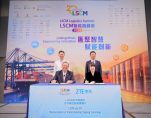
The MoU was signed at the LSCM Logistics Summit 2026 at Hong Kong Science Park
The two parties will collaborate on ICT infrastructure, AI, general computing, operating systems and cyber resilience
HONG KONG, CHINA – Media OutReach Newswire – 15 October 2026 – ZTE Corporation (0763.HK / 000063.SZ), a global leading provider of integrated information and communication technology solutions, announced that its wholly owned subsidiary ZTE (Hong Kong) Limited (“ZTE Hong Kong”) and The Logistics and Supply Chain MultiTech R&D Centre (“LSCM”) today officially signed a Memorandum of Understanding (MoU) at Hong Kong Science Park during the LSCM Logistics Summit 2026.
The signing ceremony was attended by representatives of both parties. Ir Prof Alan Lam, Chairman of the Board of Directors of LSCM, and Mr. Mei Zhonghua, Senior Vice President of ZTE, jointly witnessed the signing; Mr. Simon Wong, Chief Executive Officer of LSCM, and Ms. Wang Huan, Managing Director of ZTE Hong Kong Representative Office, signed the MoU on behalf of both parties..
In accordance with the principles of complementary strengths, equality and mutual benefit, and win-win cooperation, both parties reached a consensus on cooperation focusing on Hong Kong’s digital and intelligent development, enhancing e-government information services, and promoting the local application of secure and reliable diversified technologies in Hong Kong. They also agreed to jointly cultivate a digital and intelligent industry ecosystem suited to Hong Kong’s actual needs.
The Logistics and Supply Chain MultiTech R&D Centre (LSCM) was established in 2006 with funding from the Innovation and Technology Fund of the Hong Kong Special Administrative Region Government. Since its establishment, LSCM has been committed to researching and developing various technologies that promote the development of industries related to logistics and supply chains, and to assisting industries across Hong Kong and mainland China in adopting relevant technologies.
ZTE (Hong Kong) Limited was incorporated in Hong Kong in 2000 and is a wholly-owned subsidiary of ZTE Corporation. ZTE Hong Kong has been deeply rooted in the Hong Kong market for many years, serving local operators over the long term. It has a strong localized service team and delivery capability, enabling it to respond quickly to customer needs, as well as full-stack locally developed products and IT application innovation solutions, which have been widely implemented. With a deep understanding of the Hong Kong market and rich project experience, ZTE Hong Kong has achieved breakthroughs and established a presence in key industries such as the public sector and finance, providing safe and reliable ICT solutions to customers across various industries. In the future, ZTE Hong Kong will continue to leverage its localized service advantages to support the digital transformation of industries in Hong Kong.
Under the MoU, cooperation between the two parties covers areas including ICT infrastructure, artificial intelligence, general computing, operating systems, and cybersecurity. Both parties will also actively promote technology and talent exchange, fully leverage their respective R&D strengths, comprehensively carry out joint innovation in areas such as general computing and artificial intelligence, and jointly develop and incubate a digital and intelligent ecosystem suited to Hong Kong. Focusing on the C86 next-generation computing platform, the two parties will carry out in-depth cooperation in areas such as locally developed computing infrastructure development and the digital transformation of government and enterprises, jointly promoting the high-quality development of industries in Hong Kong and the Greater Bay Area.
The signing of this MoU marks the official launch of the strategic cooperation between the two parties in promoting Hong Kong’s digital and intelligent development and the application of secure and reliable technologies. Both parties will take this opportunity to deepen cooperation and complement each other’s strengths, jointly contributing to Hong Kong’s innovation and technology development and enhancements in trusted public-sector digital capabilities.
Hashtag: #ZTE
The issuer is solely responsible for the content of this announcement.
Global diesel supplies are expected to remain severely constrained well into 2027, threatening to sustain inflation and weaken economic growth as conflicts disrupt refinery operations and fuel exports from the Middle East and Russia, the International Energy Agency has warned. The Paris-based agency said in its October oil market report that recovering refinery production would be insufficient to replenish depleted inventories before the second half of next […]
US Treasury bonds fell sharply on Wednesday after stronger than expected inflation figures drove yields higher and prompted traders to increase bets on further Federal Reserve interest rate rises. The sell-off followed government data showing consumer prices rose 3.7% in September from a year earlier, accelerating from 3.4% in August and exceeding economists’ expectations of 3.6%. The figures complicated the Federal Reserve’s assessment of whether additional monetary […]
TAIPEI, TAIWAN – Media OutReach Newswire – 15 October 2026 – The Siraya National Scenic Area Administration of the Taiwan Tourism Administration (MOTC) has unveiled its latest international tourism campaign in collaboration with EVA Air, major online travel platforms, and international creators, rolling out travel perks and incentives valued at over NT$10 million to welcome visitors from around the world.
The Southern Tourism Union combines the rich tourism resources of four major National Scenic Area Administrations: Southwest Coast, Siraya, Maolin, and Dapeng Bay. Designed to cater to diverse international traveler segments, the campaign spotlights romantic getaways for couples, breathtaking natural scenery, engaging cultural handcraft workshops, and rich cultural heritage sites.
International travelers can immerse themselves in stunning coastal salt fields and lagoons, embark on relaxing lake cruises at Zengwen Reservoir, cycle along scenic coastal paths, and explore indigenous culture in the lush mountains of Maolin.
To make self-guided trips seamless and rewarding, the initiative partners with travel platforms like Klook and airlines including EVA Air to offer exclusive promo codes, direct discounts on localized tours, and complimentary attraction experience vouchers for eligible flight-and-hotel packages. With diverse landscapes, rich local gastronomy, and value-added travel perks, Southern Taiwan invites global holidaymakers to plan their next unforgettable getaway.
Hashtag: #MOTC
The issuer is solely responsible for the content of this announcement.







 https://x.com/ChinaDaily