Google’s AI texting assistant is moving ordinary phone messages closer to machine-assisted conversation, offering Android users suggested replies and tone changes while intensifying scrutiny over privacy, consent and whether digital communication is becoming less human. Magic Compose, built into Google Messages, uses Gemini technology to suggest replies, start conversations and rewrite drafts in styles ranging from formal to casual. On supported Android devices using AICore, the message-suggestion […]
Amazon has unveiled an upgraded version of its Proteus warehouse robot that can take plain-language instructions from workers, marking a major step in the company’s push to automate heavier tasks across its European fulfilment network. The next-generation Proteus was shown at Amazon’s Dartford fulfilment centre east of London as part of a wider investment programme of more than €10 billion, equal to about $11.6 billion, aimed at […]
Mastercard is moving deeper into blockchain-based settlement by adding regulated stablecoins and the XRP Ledger to a wider upgrade of its global payments infrastructure, marking a significant step in the effort to make card settlement operate beyond conventional banking hours. The payments group has outlined plans to expand settlement options for issuers and acquirers, including intraday, weekend and holiday processing in fiat currencies and on-chain card settlement […]
HONG KONG SAR – Media OutReach Newswire – 5 June 2026 – On June 4, 2026, Money20/20 Europe—the premier global fintech event—officially concluded at the RAI Amsterdam Convention Centre.
Epay Captures Global Spotlight at Money20/20 Europe
As an innovative driver of global payment solutions, Epay made a powerful international impression by showcasing its robust product matrix and vertical industry solutions. Amidst this prestigious gathering of top-tier global decision-makers, Epay emerged as a focal point of the event, drawing significant industry attention with its specialized sector expertise and deep compliance capabilities.
Connecting Finance, Shaping the Future
Throughout the event, the Epay booth buzzed with high-energy discussions as a steady stream of industry leaders and representatives gathered for consultations. Against the backdrop of an evolving global trade landscape, the strategic synergy and bidirectional flow between high-growth markets in Europe and the Asia-Pacific region emerged as a primary focus for many attending businesses.
On the floor, Epay’s expert team provided in-depth, tailored consultations for fintech peers, social media platforms, digital marketing agencies, and B2B trading enterprises. Addressing complex pain points such as global pan-entertainment payouts and cross-border supply chain fund flows, the team demonstrated Epay’s core global collection and payout capabilities alongside its flexible API solutions, precisely empowering businesses to expand internationally.
Furthermore, the Epay team engaged in deep-dive strategic dialogues with local commercial banks, international clearing organizations, and financial experts from various countries. Moving forward, Epay remains dedicated to expanding robust local payment networks, leveraging its forward-looking vision to power the global digital economy.
Hashtag: #EPay
The issuer is solely responsible for the content of this announcement.
About Epay
Forging Ahead, Driving Digital Growth The curtain has fallen, but a new journey has just begun. For Epay, the conclusion of this international expedition marks the starting point for a new chapter in empowering global growth.
Standing at the forefront of the global digital economy, Epay remains committed to security as its foundation and innovation as its driving force, continuously building a compliant and rock-solid fintech infrastructure. Looking ahead, Epay will continue to dissolve geographical and financial barriers, marching alongside visionaries worldwide. We look forward to leveraging an even more forward-looking ecosystem to safeguard the global expansion of cross-border enterprises.
With past milestones honored and the future ahead, we look forward to seeing you at our next stop—ChinaJoy in Shanghai!
TAIPEI, TAIWAN – Media OutReach Newswire – 5 June 2026 – The global demand for AI computing power continues to experience a massive construction boom. At the highly anticipated exhibition COMPUTEX 2026 in Taipei, Karrie, a globally leading server mechanical engineering solutions provider, showcased its latest advancements in AI server chassis and rack-scale mechanical solutions. Observing the latest dynamics from the recently concluded NVIDIA GTC 2026 conference to this year’s COMPUTEX, it is evident that AI hardware infrastructure is rapidly evolving from the server level to rack-scale deployment, placing higher demands on high-density mechanical design, modular configuration, and liquid-cooling readiness. Driven by this evolution, Karrie has expanded its footprint from traditional server chassis manufacturing into the global AI hardware ecosystem, encompassing early engineering involvement, precision mechanical component development, and volume manufacturing execution.
Since its official inclusion in NVIDIA’s approved and recommended vendor lists for server chassis and rack components in September 2025, Karrie has continually advanced its collaborations based on the NVIDIA MGX architecture and DGX-related platforms. During COMPUTEX this year, Karrie’s relevant server products and mechanical solutions have been featured prominently across the booths of major technology giants, showcasing its milestone achievements spanning from front-end R&D and collaborative design to back-end precision manufacturing. As highlighted by Karrie’s official statement during the exhibition: “We are proud to support NVIDIA MGX™ and be part of the ecosystem shaping the next generation of AI factories.”
Mechanical Technology Upgrade: Transitioning from Traditional Chassis to Full-Scale AI Mechanical Integration to Accelerate Hardware Deployment
As the industry undergoes this generational technological shift, mechanical engineering has become a critical part of system readiness. Behind every advanced AI computing platform is a robust, precise, and production-ready mechanical foundation—from rack-level structures and server chassis to key brackets, frames, and other precision assemblies that support system integration, serviceability, and large-scale deployment.
Leveraging decades of experience in server chassis, precision metal and plastic components, tooling development, automation, and high-volume manufacturing, Karrie consistently turns complex AI server and rack-level requirements into practical, production-ready, and deployment-flexible mechanical solutions. These capabilities support customers in accelerating their infrastructure rollouts based on the NVIDIA MGX architecture and the next-generation NVIDIA Vera Rubin platform.
Deeply Aligned with the Core Supply Chain: Early Engineering Involvement Empowers Tech Leaders Toward Volume Deployment
At COMPUTEX 2026, in addition to NVIDIA, multiple system integrators and ODM partners also showcased Karrie’s 1U, 2U, and 6U series AI chassis and rack-related products developed based on the MGX architecture. This extensive display fully demonstrates Karrie’s executive capability in delivering comprehensive engineering solutions and rapid prototyping, solidifying its position as a highly engaged mechanical engineering partner in the global AI supply chain.
Strategic Positioning for the Future of Intelligent Computing: Serving as a Trusted Mechanical Partner to Build the Physical Foundation for Accelerated Computing
As AI factories continue to scale worldwide, Karrie is committed to serving as a trusted mechanical engineering strategic partner for global technology leaders. The Group will continue to deepen its collaboration with world-class chipmakers, server brands, and cloud service providers to build the ultimate physical foundation for the accelerated computing ecosystem.
Karrie — A Leading Mechanical Partner for Global AI Computing Infrastructure.
The issuer is solely responsible for the content of this announcement.
Karrie International Holdings Limited
Established in 1980 and listed on the Stock Exchange of Hong Kong in 1996, Karrie International Holdings Limited (1050.HK) is a leading global provider of server mechanical engineering solutions. The Group specializes in server chassis, rack-scale mechanical components, and related precision metal and plastic parts. It delivers fully integrated, one-stop solutions, encompassing engineering design, rapid prototyping, tooling manufacturing, automated production, assembly, quality validation, and global delivery, to world-leading technology brands, server customers, and cloud service providers.
As AI servers and data center infrastructure accelerate their development, server mechanical components are evolving toward higher precision, enhanced reliability, and more complex rack-scale systems. Leveraging over four decades of manufacturing expertise, strong vertical integration capabilities, and a dual-production footprint in China and Thailand, Karrie continuously participates in the development of next-generation AI server platforms and rack-level solutions, providing global customers with scalable, agile, high-quality, and supply-chain-resilient manufacturing support.
Synology used COMPUTEX 2026 in Taipei to set out a wider enterprise data strategy built around the next generation of DiskStation Manager, AI-assisted administration, expanded backup appliances and a larger surveillance and private cloud portfolio, positioning the company more directly in the market for secure, on-premises data intelligence. The showcase, held at Taipei Nangang Exhibition Centre from June 2 to 5, placed DSM at the centre of […]
Japan is preparing to replace as many as 14 ageing nuclear reactors by the 2050s, marking one of its clearest moves yet towards restoring atomic power as a central pillar of national energy security after more than a decade of post-Fukushima restraint.
The Ministry of Economy, Trade and Industry has set out a policy proposal calling for the rebuilding of between two and five reactors by the 2040s and up to 14 by the 2050s. The plan would add about 16 gigawatts of nuclear capacity, helping the country meet rising electricity demand from artificial intelligence, data centres, advanced manufacturing and wider electrification.
The proposal reflects a major shift in Japan’s energy strategy. After the Fukushima Daiichi disaster in March 2011, Japan shut all 54 operating reactors, leaving the world’s third-largest economy more dependent on imported liquefied natural gas, coal and oil. Only 15 of the 33 remaining operable reactors have returned to service, while many units face retirement pressure as they approach or exceed their permitted 60-year operating life.
Tokyo’s latest energy plan targets nuclear power at around 20 per cent of electricity generation by fiscal 2040, while renewables are expected to provide 40 to 50 per cent. Thermal power, which still accounts for a large share of supply, is expected to decline but remain important for grid stability and emergency backup. The policy removes earlier language about reducing reliance on nuclear power, replacing it with a call to maximise the use of both renewables and atomic energy.
The renewed push is driven by a combination of economic and geopolitical pressures. Japan imports most of its energy, leaving households and industry exposed to volatile fuel prices, shipping risks and currency swings. The war in Ukraine, instability in the Middle East and tighter global gas markets have strengthened the case within government for expanding domestic low-carbon baseload power.
Electricity demand, which had been broadly flat for years, is also expected to turn higher. The spread of AI computing, semiconductor plants, battery factories and digital infrastructure has increased concern that inadequate power supply could weaken Japan’s ability to attract investment. Officials view nuclear energy as a way to provide stable, large-scale electricity without increasing carbon emissions.
The plan is likely to benefit major utilities including Tokyo Electric Power, Kansai Electric Power, Kyushu Electric Power and Chubu Electric Power, although the sector still faces high regulatory, financial and social hurdles. Reactor replacement requires local consent, safety approval, heavy capital spending and long construction timelines. Japan has not built a new reactor since before Fukushima, and public trust remains fragile.
Safety concerns remain the central political obstacle. The Fukushima disaster, triggered by the March 2011 earthquake and tsunami, forced mass evacuations and left deep scepticism about official oversight of the nuclear industry. Questions over seismic risk, evacuation planning, spent fuel storage and operator transparency continue to shape public debate, particularly in communities near existing plants.
Controversies have added to the challenge. Chubu Electric has faced scrutiny over falsified seismic risk assessment data at the Hamaoka nuclear plant, a facility long viewed as sensitive because of its location in an earthquake-prone area. Incidents of that kind reinforce concerns among critics who argue that Japan should prioritise renewables, storage, grid upgrades and efficiency rather than committing to another generation of nuclear infrastructure.
Supporters counter that renewables alone will not meet Japan’s industrial needs quickly enough, given land constraints, permitting delays and the intermittency of solar and wind power. Offshore wind has long-term potential, while next-generation solar technologies such as perovskite cells are being promoted, but large-scale deployment will take time. Nuclear advocates argue that replacing old reactors with advanced designs could improve safety and reliability while supporting climate targets.
The government’s approach is to rebuild reactors at existing or decommissioned nuclear sites rather than open entirely new locations, a strategy designed to reduce political resistance and use established grid infrastructure. Next-generation reactors are expected to incorporate stronger passive safety systems and improved resilience against natural disasters, although costs and construction schedules remain uncertain.
Microsoft’s unveiling of its Majorana 2 quantum chip has intensified debate over how quickly Bitcoin and other digital assets must prepare for a post-quantum security era. The chip, presented at the company’s Build conference in San Francisco, marks the next stage of Microsoft’s long-running push to develop a fault-tolerant quantum computer based on topological qubits. Microsoft says the new processor delivers a sharp improvement over Majorana 1, […]
Asia and MENA’s video games market is on course to expand from $88.9 billion in 2025 to $103.6 billion by 2030, a 16.5% rise that underlines the region’s growing weight in the global games industry as publishers, platforms and investors look beyond slower mature markets for new growth. The latest market model points to revenue growth of 3.4% in 2026 to $91.8 billion, with the five-year compound […]
Goldman Sachs has joined Apex Group and Archax in launching a blockchain-native real estate fund, marking a fresh institutional test of whether tokenised structures can bring greater efficiency, transparency and transferability to a traditionally illiquid asset class without moving outside regulated fund frameworks. The Luxembourg-domiciled fund has been developed with LRC Group and Ownera, combining established alternative investment fund structures with on-chain issuance of fund units. The […]
Elon Musk will probably get the $86 billion he wants from the SpaceX IPO. The harder question is whether investors will still be as enthusiastic about the company a year from now. Seeking a valuation of $1.78 trillion, SpaceX is attempting something unprecedented. If successful, the offering will become the largest IPO in history and instantly rank among the biggest corporate fundraising events ever seen. Many investors […]
Romanian President Nicușor Dan is preparing to nominate Eugen Tomac as prime minister, seeking to break a month-long political deadlock and restore fiscal direction in one of the European Union’s most strained economies. Tomac, a member of the European Parliament and leader of the People’s Movement Party, has emerged as the presidency’s preferred option after talks among mainstream parties failed to produce a stable governing formula. His […]
Amazon MGM Studios and Amazon Games are set to take a larger role in future James Bond video games, shifting the franchise away from the self-publishing model used by IO Interactive for 007 First Light and placing the next stage of Bond’s gaming strategy more firmly under Amazon’s expanding entertainment empire. The move follows Amazon MGM Studios’ acquisition of creative control over the James Bond franchise in […]
Arabian Post Staff -Dubai Microsoft has tested a wearable AI badge for office workers as part of a wider effort to move artificial intelligence agents beyond laptops, phones and traditional software applications. The device was shown at Microsoft Build 2026 in San Francisco under Project Solara, a new chip-to-cloud platform designed for hardware that runs AI agents instead of conventional apps. The badge concept resembles a workplace […]
Strategic alliance to drive headline concerts, sports events and premium travel experiences for international audiences, accelerating Macau’s push to become a global “City of Performing Arts.”
MACAU SAR – Media OutReach Newswire – 3 June 2026 – Galaxy Macau, the world-class luxury integrated resort, has entered into a landmark three-year strategic partnership with Trip.com Group, the global leading one-stop travel services platform, spanning 2026 to 2029. Anchored in the fast-growing convergence of live entertainment, sports and premium travel, the alliance signals an ambitious push to reshape Asia’s high-value tourism and events landscape.
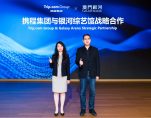
Galaxy Macau and Trip.com Group formulate a three-year strategic partnership that focuses on scaling live events and unlocking value through integrated membership ecosystems. Pictured at the Galaxy Auditorium (trom right) Mr Jeffrey Jiang, Executive Vice President of Entertainment Services of Galaxy Entertainment Group, and Ms Echo He, Vice President of Trip.com Group, marking the collaboration.
At the core of the collaboration lies a shared commitment to scale world-class live experiences, leveraging Trip.com Group’s expansive global membership ecosystem alongside Galaxy Macau’s proven expertise in venue operations and large-scale event execution. This includes the flagship Galaxy Arena, a premier destination for international concerts, sporting spectacles and marquee entertainment programming.
Celebrating 15th Anniversary in 2026, Galaxy Macau cements its position as Asia’s market-leading leisure and entertainment hub.
Through this partnership, both parties will deepen integration across event curation, execution and distribution, while unlocking new layers of value through cross-platform membership privileges. The result is designed to deliver a more seamless, diversified and elevated experience for audiences — from ticket access and travel planning to on-ground entertainment delivery.
The agreement marks a pivotal step forward in advancing the integration of culture and tourism, a priority theme shaping the next phase of regional tourismdevelopment. By combining digital reach with physical destination excellence, Galaxy Macau and Trip.com Group are positioned to explore a broader spectrum of co-branded initiatives, immersive event formats and destination-led campaigns that extend beyond conventional travel offerings.
As the collaboration evolves, Galaxy Macau and Trip.com Group will jointly shape emerging trends at the intersection of luxury tourism and cultural entertainment, injecting fresh momentum into Macau’s ambition to strengthen its standing as a world centre of tourism and leisure.
The issuer is solely responsible for the content of this announcement.
ABOUT GALAXY MACAU INTEGRATED RESORT
Galaxy Macau, world-class luxury integrated resort, delivers the “Most Spectacular Entertainment and Leisure Destination in the World”. Developed at an investment of HK$43 billion, the property covers 1.1 million-square-meter of unique entertainment and leisure attractions that are unlike anything else in Macau. Nine award-winning world-class luxury hotels provide close to 5,000 rooms, suites and villas. They include Banyan Tree Macau, Galaxy Hotel™, Hotel Okura Macau, JW Marriott Hotel Macau, The Ritz-Carlton, Macau, Broadway Hotel, Raffles at Galaxy Macau, Andaz Macau, and Capella at Galaxy Macau. Unique to Galaxy Macau, the 75,000-square-meter Grand Resort Deck features the world’s longest Skytop Adventure Rapids at 575 metres, the largest Skytop Wave Pool with waves up to 1.5-metre high and 150-metre pristine white sand beach. Two five-star spas from Banyan Tree Spa Macau and The Ritz- Carlton Spa, Macau help guests relax and rejuvenate.
As the dining destination in Asia, Galaxy Macau offers a wide variety of gastronomic delights, exquisite experiences and ingredients of the finest quality with over 120 dining options from Michelin dining to authentic delicacies; Galaxy Promenade is the hottest shopping destination featuring the latest in fashion and curated experiences in Macau. Spanning over 100,000-square-meter, luxury flagship stores, lifestyle boutiques and our selection of labels are among the more than 200 world-renowned brands for a world-class shopping journey; Galaxy Cinemas, immersive thrills and luxurious comfort go hand in hand at Galaxy Cinemas. All 10 theatres are equipped with the latest audio-visual technology; CHINA ROUGE, one-of-a-kind deluxe lounge that evokes the glitz and glamor of Shanghai’s golden era with entertainment in luxury and style; and Foot Hub presents the traditional art of reflexology to make you feel more relaxed and revitalized. For Authentic Macau Flavours & Vibrant Asian Experiences, Broadway Macau – just a 90-second walk via a bridge from Galaxy Macau, has over 35 Authentic Macau & Asian Flavours at its Broadway Food Street. The 2,500-seat Broadway Theatre plays host to world-class entertainers and a diverse array of cultural events. Meeting, incentive and banquet groups are also well looked after with a portfolio of unique venues in Galaxy Macau and a professional service staff.
Galaxy International Convention Center (GICC) is the latest addition to the Group’s ever-expanding integrated resort precinct and will usher in a new era for the MICE industry in Macau. GICC is a world- class event venue featuring 40,000-square-meter of total flexible MICE, and a 16,000-seat Galaxy Arena – the largest indoor arena in Macau.
Persistent dollar strength pushed the yen back towards 160 per US dollar on Wednesday, reviving concern that Tokyo may step into the foreign exchange market as renewed Gulf hostilities drove investors towards the US currency.
The yen traded near 159.92 per dollar in Asian dealings, close to the level widely viewed by traders as a possible trigger for official action. The move erased much of the currency’s rebound after Japan’s ¥11.7 trillion intervention campaign earlier this year, leaving markets alert to fresh warnings from the Ministry of Finance.
Dollar demand strengthened after renewed fighting in the Gulf raised fears of wider disruption to energy supplies and trade routes. The US currency benefited from its reserve status, while risk-sensitive currencies came under pressure. The dollar index held around 99.27, supported by geopolitical uncertainty and firm US labour indicators that have reduced expectations of near-term monetary easing by the Federal Reserve.
Japan’s authorities have intensified verbal warnings as the yen weakens. Finance Minister Satsuki Katayama has said the government is ready to respond appropriately to excessive currency moves, language that traders typically read as a signal that intervention remains on the table. Officials have also stressed coordination with the United States, a politically sensitive point because unilateral currency action can draw scrutiny from trading partners.
The yen’s slide reflects a combination of external pressure and domestic policy constraints. Japan remains heavily dependent on imported energy, much of it priced in dollars. Higher oil prices therefore worsen the trade position and add pressure to household costs, while a weaker yen raises import bills further. Brent crude climbed towards $95 a barrel as Gulf tensions fed concerns over supplies, adding another layer of strain for Japan’s economy.
Attention is now focused on Bank of Japan Governor Kazuo Ueda, whose next policy signals will be watched closely ahead of the June 15-16 policy meeting. Markets have increased bets that the central bank could raise interest rates from 0.75% to 1%, especially as imported inflation pressures build. Any move would mark a further step away from the ultra-loose policy framework that kept Japan’s rates far below those of other major economies for years.
Still, the Bank of Japan faces a difficult balance. A rate increase could support the yen and help restrain inflation expectations, but policymakers remain cautious about tightening too sharply while domestic demand stays uneven. Wage growth has improved, yet household purchasing power remains vulnerable to higher energy and food costs. A premature tightening cycle could hurt consumption just as companies pass on higher input costs.
The interest-rate gap with the United States remains central to the yen’s weakness. US policy rates are still high by comparison, keeping dollar assets attractive to global investors. Stronger US jobs data has strengthened the argument that the Federal Reserve may keep policy restrictive for longer, or even consider further tightening if inflation risks intensify. That has limited any relief for currencies trading against the dollar.
Other major currencies also softened. The euro slipped as investors assessed rising energy-driven inflation in the eurozone and the possibility of a European Central Bank rate increase at its June 11 meeting. Sterling edged lower, while the Australian and New Zealand dollars were weighed down by weaker risk appetite. Cryptocurrency markets also came under pressure as investors moved away from volatile assets.
For Japan, the 160 level carries market and political significance. Authorities intervened when the yen breached similar levels in 2024 and again used large-scale buying this year to slow the currency’s decline. The effectiveness of intervention, however, depends on whether monetary policy and global market conditions move in the same direction. Without a narrower yield gap or a broader fall in the dollar, direct yen purchases can lose impact quickly.
Arabian Post Staff -Dubai UAE non-oil private sector activity strengthened in May, but weaker demand, falling export orders and higher transport and material costs kept growth below its long-term trend, signalling a more cautious phase for businesses exposed to regional trade disruption. The headline Purchasing Managers’ Index rose to 52.6 in May from 52.1 in April, remaining above the 50 mark that separates expansion from contraction. The […]
Kioxia Holdings has moved within striking distance of Toyota Motor’s market value, underscoring how the artificial intelligence boom is reshaping Japan’s corporate hierarchy and lifting a memory-chip maker that listed in Tokyo less than two years ago into the country’s market elite.
The Tokyo-based maker of NAND flash memory and solid-state drives has become one of the most closely watched stocks on the Tokyo Stock Exchange after a sharp rally tied to demand for data-centre storage, AI servers and high-performance memory systems. Its market capitalisation has climbed into the tens of trillions of yen, placing it near Toyota and behind SoftBank Group in a reshuffled ranking that would have seemed unlikely when Kioxia priced its initial public offering at 1,455 yen a share in December 2024.
The shift marks a wider challenge to the long-standing dominance of Japan’s manufacturing champions. Toyota, the global carmaker that symbolised the strength of Japan Inc. for decades, has been displaced from the top position by SoftBank during the latest AI-led surge, while Kioxia has risen rapidly from a former Toshiba memory unit backed by Bain Capital into a central player in the market’s technology rotation.
Kioxia’s climb reflects investor expectations that memory will remain a bottleneck in AI infrastructure. Generative AI systems require vast amounts of storage and high-speed data movement, pushing demand beyond the older cycle driven mainly by smartphones and personal computers. Data-centre operators, cloud companies and chip designers are competing for components needed to train and run large AI models, giving memory producers stronger pricing power after years of volatility.
The company’s earnings have strengthened sharply. Kioxia has projected operating profit of about 1.3 trillion yen for the April-June quarter, a figure that puts it among the most profitable listed companies in Japan. Its latest annual results showed strong momentum in revenue, margins and cash generation, helping ease earlier concerns about debt and cyclicality. Rating upgrades to investment grade have added to the perception that the balance sheet is improving at a time when investors are rewarding semiconductor exposure.
Kioxia’s origins give its rise broader industrial significance. The company traces its roots to Toshiba’s memory business, which was sold to a Bain-led consortium in 2018 after Toshiba’s financial crisis. The group was renamed Kioxia in 2019, drawing on the Japanese word for memory and the Greek word for value. Its public listing in 2024 valued it below 800 billion yen, after earlier IPO attempts were delayed by weak valuation conditions and pressure in the memory market.
That cautious debut contrasts sharply with its current status. Shares have multiplied as investors reassessed the role of NAND flash in AI systems, especially as large-scale data centres require higher storage density, faster access and more energy-efficient hardware. Kioxia has also been developing advanced BiCS FLASH technology and promoting next-generation SSDs for AI storage infrastructure.
The rally has also lifted questions over valuation risk. Memory chips remain one of the semiconductor industry’s most cyclical segments, with prices exposed to shifts in capital spending, inventory levels and customer demand. A sharp rise in market value leaves Kioxia vulnerable if hyperscaler investment slows, if competitors add capacity faster than expected, or if customers push back against higher pricing.
Competition is intense. Samsung Electronics, SK Hynix, Micron Technology and SanDisk remain key players across memory markets, with SK Hynix holding a dominant position in high-bandwidth memory used in AI accelerators. Kioxia’s strength is more closely tied to NAND flash and SSDs, where demand from AI infrastructure has broadened the market but does not eliminate the risk of oversupply once new capacity comes on stream.
Toyota’s relative decline in the rankings does not point to operational weakness alone. The carmaker remains one of the world’s largest manufacturers by sales and a major profit generator, but investors have been rotating away from traditional industrial leaders towards companies with direct AI exposure. Concerns over electric-vehicle competition, currency movements and the cost of future technologies have weighed on auto valuations, even as Toyota continues to command global scale in hybrid vehicles and supply-chain management.
SoftBank’s ascent has further highlighted the changing market narrative. Its exposure to Arm and AI-related investments has drawn investors seeking Japan-based access to global AI infrastructure. Together, SoftBank and Kioxia now represent a market story centred on chips, data centres, software platforms and computing capacity rather than the export-led industrial model that long defined Japan’s equity market.
Foreign investor flows have amplified the shift. Japan’s equity market has benefited from corporate-governance reforms, stronger capital returns and renewed interest in companies linked to the AI supply chain. The Nikkei 225 has reached record territory, though the rally has been uneven, with gains concentrated in a limited group of technology-linked names while broader market performance has been more mixed.
Kioxia’s next test will be whether it can convert favourable pricing and sold-out capacity into durable earnings. Investors will look for clearer shareholder-return plans, disciplined capital expenditure and evidence that AI storage demand can remain strong beyond the current investment wave. The company’s contemplated US share listing would widen access to global technology investors and could further raise its profile if market conditions remain supportive.
SINGAPORE – Media OutReach Newswire – 3 June 2026 – Handshake Finance, the Singapore-based fintech company building escrow-as-a-service infrastructure for high-trust service industries, has closed a S$500,000 pre-seed funding round. The capital will accelerate the company’s expansion across its beachhead renovation and interior design market in Singapore, with longer-term ambitions to extend its platform across other service industries where payment trust remains a structural problem.
Handshake Finance Founders Christopher Chan (Left) and Lee Jun Xian (Right)
Born From Personal Experience
Handshake Finance launched in September 2025, founded by Christopher Chan and Lee Jun Xian. Both had seen the trust gap up close.
Jun’s close friend lost S$80,000 in pre-payments to a renovation company that collapsed mid-project. At the same time, Christopher’s friend paid a deposit on a rental home she had never viewed, only to discover the listing was fraudulent. Both incidents pointed to the same structural failure: in service industries, someone always carries the risk, and when trust breaks down, there is little recourse on either side.
The two founders met as university classmates in London and returned to the problem with complementary backgrounds. Christopher Chan had spent his career in fintech, designing compliant payment flows on regulated infrastructure. Lee Jun Xian came from venture capital, with experience scaling early-stage companies from zero to one.
Trust as the foundation, not the feature
Handshake operates on bank-grade payment infrastructure provided by MAS-regulated partners. All payment flows are fully MAS regulated, and funds are held with DBS in segregated escrow accounts. For the founders, this is not a checkbox — it is the entire foundation of the business.
“We are trying to solve a structural trust gap in service industries. But before any of that, our users have to trust us,” said Christopher Chan, Co-Founder of Handshake Finance. “Making sure every fund flow is fully compliant, and that our users feel completely assured handing us money in what are often life-changing transactions, is our number one priority. Everything else is built on top of that.”
Closing the Trust Gap Across Service Industries
Every high-trust service transaction carries the same structural flaw: either the customer pays before work is done, or the provider works before getting paid. Someone always carries the risk. Across industries — from renovation and interior design to event planning, creative agencies, and professional services — that risk falls entirely on one side, and when trust breaks down, there is little recourse for either party.
Handshake Finance was built to close that gap. The platform holds customer funds in escrow and releases them to service providers against agreed milestones, giving buyers protection from pre-payment risk while giving service providers the confidence to deliver. The model is designed to work across any service industry where the payment trust problem exists.
Why Renovation and Interior Design Is Handshake’s Beachhead Market
Renovation was where the structural failure ran deepest. The industry operates with no mandatory licensing or regulatory framework. Anyone can set up as an interior designer with no accreditation required, leaving homeowners with no reliable way to assess accountability before signing a contract.
There is no standard payment framework either. Homeowners routinely pay up to 50% of the total project value upfront, with funds going directly to the interior designer before any work begins. If a project stalls or a firm shuts down, there is limited protection and recourse. At the other end of the project, interior designers face the opposite problem: the final handover payment, where homeowners hold most of the leverage, can be withheld over disputes that wipe out up to half a project’s margin.
Eight Months of Listening Before a Single Line of Code
Before writing any software, the Handshake team spent eight months speaking with more than 80 interior designers and homeowners across Singapore to understand the real frictions on both sides of the transaction. What they found reinforced the decision to start here: high transaction values, a broken payment norm, an unregulated supply side, and no existing platform that protected both parties.
That research shaped how the product was built. After a renovation contract is signed, Handshake’s AI automatically generates the transaction structure with line items, payment schedules, and sub-milestones set out clearly to remove ambiguity. Homeowners place funds into escrow rather than paying upfront directly to the interior designer.
Payment releases to the designer as work progresses against agreed milestones, with sub-milestone releases providing faster cashflow access without compromising homeowner protection. The platform also replaces the manual spreadsheet-based back-office admin most interior design firms still run, and offers complimentary mediation and independent assessments in the event of a dispute.
More than 40 Interior Design Companies Onboarded and 2 Major Partnerships Signed
Handshake now has more than 40 interior design companies onboarded. The company has signed partnerships with Renonation.sg and Network SG, two of Singapore’s most established renovation marketplaces, to drive awareness and adoption across the broader ecosystem.
“It is an incredible feeling to see this much support behind us, and we are excited about what is ahead,” said Lee Jun Xian, Co-Founder of Handshake Finance. “We are industry-agnostic by design, but we are laser-focused on fixing renovation first. The scams that are still everyday occurrences in this space need to go, and the transactional experience for everyone involved needs to be better before we turn our attention to the next industry or market.”
Homeowners and interior designers can learn more or request access athandshake.finance.
Hashtag: #HandshakeFinance
The issuer is solely responsible for the content of this announcement.
About Handshake Finance
Handshake Finance is a Singapore-based fintech building escrow-as-a-service infrastructure for high-trust service industries. The platform holds customer funds in segregated escrow accounts and releases them against agreed milestones, protecting buyers from pre-payment risk while giving service providers the confidence to deliver. All payment flows are fully MAS regulated. Funds are held with DBS. Handshake is currently focused on Singapore’s renovation and interior design market as its beachhead, with plans to expand across other service industries and Southeast Asia.
Sui’s mainnet disruptions over May 28 and May 29 have put renewed pressure on the Layer-1 blockchain’s engineering controls after three separate halts were traced to bugs connected with its v1.72 software release and the handling of gas payments, validator restarts and on-chain randomness. The network has since returned to operation, but the episode has sharpened scrutiny of Sui’s upgrade process because the outages occurred in close […]
Spiro has raised $215 million in equity financing to expand its electric motorcycles, battery-swapping network and energy infrastructure across Africa, marking one of the largest funding rounds for the continent’s clean mobility sector. The Nairobi-based electric mobility platform said the investment was backed by institutional investors from Europe and Africa, including Impact Fund Denmark and Equitane, alongside continuing support from long-standing partners such as FEDA. The company […]
FOMO Pay merchants in Singapore will soon be able to accept DuitNow QR payments, enabling Malaysian travellers and visitors to pay using familiar home-country banking and payment applications.
The rollout comes ahead of the Johor Bahru–Singapore RTS Link, expected to carry up to 40,000 passengers daily upon launch in January 2027.
SINGAPORE – Media OutReach Newswire – 3 June 2026 – FOMO Pay, a leading Singapore-headquartered payment institution, will launch DuitNow QR acceptance in Singapore, enabling Malaysian travellers and visitors to make payments using familiar banking and payment applications while merchants receive settlement in Singapore Dollars (SGD).
The rollout comes ahead of the opening of the Johor Bahru–Singapore Rapid Transit System (RTS) Link in January 2027, a landmark infrastructure project expected to carry up to 40,000 passengers daily. The rail link is expected to further strengthen travel and consumer activity between Singapore and Malaysia.
Supporting Singapore Merchants with Growing Malaysian Visitor Traffic As travel between Singapore and Malaysia continues to increase, merchants are seeing a growing demand for payment experiences that are frictionless to regional consumers.
By enabling DuitNow QR acceptance in Singapore, FOMO Pay allows Malaysian visitors to pay using their local banking and payment apps in Malaysian Ringgit (MYR), while Singapore merchants receive full settlement in SGD. The rollout will simplify payment acceptance for merchants, removing the need for separate payment setups or manual foreign currency handling.
As cross-border consumer traffic continues to grow, seamless payment experiences are expected to play an increasingly important role in shaping consumer confidence and purchase behaviour, particularly in retail, dining, and lifestyle environments.
Enhancing Cross-Border Payment Experiences
“Cross-border commerce is no longer limited to large enterprises or international brands. Increasingly, everyday businesses are serving consumers who move frequently across markets,” said Rose Wang, Head of Digital Payments at FOMO Pay. “As travel and consumer movement across Southeast Asia becomes increasingly fluid, real-time payment rails like DuitNow are fast becoming part of the infrastructure powering everyday regional commerce. Enabling DuitNow QR acceptance in Singapore helps merchants better connect with Malaysian consumers in ways that feel natural to how they already transact in their daily lives.”
The rollout marks another step in FOMO Pay’s broader efforts to help merchants access Asia’s growing network of national instant payment systems through a unified multi-rail, multi-currency platform, better supporting increasingly cross-border consumer spending across the region.
The issuer is solely responsible for the content of this announcement.
About FOMO Pay
Founded in 2015, FOMO Pay is a payment institution licensed in Singapore, Hong Kong and the Middle East. The firm has become a leading one-stop digital payment, digital banking, and digital asset solution provider. It is currently building Asia’s fully licensed financial platform, helping institutions and businesses connect between traditional and next-generation financial services. The firm offers its three flagship products:
* FOMO Payment – One-stop digital payment solution for merchants, corporates and financial institutions
Oil markets are heading towards a possible August inflection point as constrained flows through the Strait of Hormuz, recovering seasonal demand and disrupted supply chains combine to keep upward pressure on crude prices. Philippe Khoury, executive vice-president for sales and trading at ADNOC, told the Middle East Petroleum and Gas Conference in London that prices could move sharply higher if demand strengthens while the Iran war supply […]
By T N Ashok The dust may have settled on the 2026 West Bengal Assembly election, but the political war has only intensified. Defeated former Chief Minister Mamata Banerjee has launched perhaps the most serious challenge yet to the legitimacy of the Bharatiya Janata Party’s sweeping victory, alleging that the saffron party manipulated electoral rolls, […]





 http://www.karrie.com/
 https://www.linkedin.com/company/karrie-industrial-co–ltd-/
 https://www.youtube.com/@karrieinternational8734




 https://x.com/FOMOPayOfficial





