News related to
next

India’s push to build an artificial intelligence ecosystem that is both strategically independent and culturally grounded is gathering pace, as policymakers, startups and large enterprises converge around a shared question: how to create AI systems that are secure enough for national priorities and rich enough to reflect the country’s languages, knowledge traditions and institutional memory.

That debate has sharpened after comments by Arun Subramaniyan, founder and chief executive of Articul8, who argued that India’s AI trajectory should not be framed as a choice between sovereign control and cultural depth, but as a need for both. His view comes at a time when the public and private sectors are moving from broad enthusiasm around generative AI to harder questions of ownership, trust, utility and scale.

The timing is notable. Under the IndiaAI Mission, the government has been expanding support for domestic compute, foundational models, datasets, skills and applications, while official messaging at the India AI Impact Summit in February cast sovereign AI as a strategic capability rather than a branding exercise. Government-backed efforts such as BharatGen have also been positioned as multilingual, multimodal systems designed around the country’s linguistic diversity and socio-cultural context. Together, those moves show that the argument for AI sovereignty in India is no longer limited to who owns the model or where the servers sit. It is increasingly about whether AI built for India can understand how people speak, work and make decisions across vastly different regions and sectors.

Subramaniyan’s intervention adds another layer to that discussion. He has suggested that sovereignty on its own can become too narrow if it is treated only as a matter of defence, infrastructure or control. In his framing, heritage matters because AI systems that ignore local language, history and context risk becoming technically impressive but socially shallow. That point has growing resonance as global concern rises over English-heavy training data, cultural blind spots and the danger that smaller languages may become underrepresented in the next generation of digital tools.

For India, the heritage argument carries practical as well as symbolic importance. A country with hundreds of languages, wide variations in literacy and deep differences in economic activity cannot rely on AI products optimised only for Western datasets or metropolitan users. Voice interfaces, translation layers, domain-specific copilots and public-service tools all perform better when they are trained on the speech patterns, terminology and workflows of the people expected to use them. This is why multilingual model development has moved from a niche research issue to a core policy concern.

At the same time, the enterprise case is becoming clearer. Many companies have discovered that generic large language models can help with drafting, summarising and coding, but struggle when deployed in regulated or mission-critical environments without access to internal knowledge. The more valuable opportunity lies in turning proprietary documents, engineering manuals, transaction records, legal archives and operational know-how into structured intelligence that can support decisions. That is the commercial logic behind domain-specific AI, and it helps explain why firms such as Articul8 are pitching secure, enterprise-grade systems built around private data rather than public internet corpora alone.

This shift also reflects a broader global pattern. Corporate surveys and advisory research have shown that many organisations remain stuck between pilot projects and real productivity gains, largely because governance, data quality and workflow integration have lagged behind excitement over model capabilities. In practice, companies tend to get stronger returns when AI is tied to specific functions and high-value use cases rather than treated as a general-purpose novelty. For banks, manufacturers, energy groups and healthcare providers, that often means models that can work inside tightly controlled environments and understand sector language with precision.

India’s opportunity may lie in combining these two strands. One is sovereign capability: domestic compute, public datasets, local model development and policy oversight. The other is heritage depth: linguistic coverage, cultural nuance and knowledge systems that reflect the country’s own realities. The third, emerging alongside them, is institutional depth inside enterprises, where AI can turn decades of accumulated expertise into a working asset instead of leaving it trapped in silos.

There are, however, risks in the current moment. A strong sovereign AI narrative can drift into protectionism or technological duplication if it becomes a race to mimic every frontier model at any cost. Heritage-focused rhetoric can also become vague if it is not matched by usable datasets, benchmark standards and transparent governance. Enterprises face a different danger: spending heavily on AI assistants that are poorly connected to business processes, weak on accuracy and difficult to audit.

Beijing has pushed its reusable space programme a step further with the launch of an experimental spacecraft that state media described as a technology-verification mission, underlining how the country is trying to cut launch costs, raise flight tempo and broaden the range of missions it can carry out in orbit. The spacecraft was launched on 7 February aboard a Long March-2F rocket from the Jiuquan Satellite Launch Center in northwest China, in what was the fourth publicly disclosed mission of this type since 2020.

Chinese authorities released only a brief account of the flight, saying the spacecraft would verify reusable-spacecraft technologies and support the peaceful use of space. No official duration was given, and no details were provided on the systems being tested, the orbit reached or the vehicle’s configuration. That secrecy has become a hallmark of the programme and makes it difficult to judge exactly how far the technology has advanced, but the pattern of repeated flights suggests a sustained effort rather than a one-off demonstration.

Chronology matters here. China’s first disclosed flight in September 2020 lasted about two days. A second spacecraft launched in August 2022 stayed in orbit for 276 days before landing in May 2023. A third mission, launched in late 2023, returned in September 2024 after 268 days in orbit. Those longer flights point to growing confidence in long-duration autonomous operations, recovery procedures and mission endurance. Outside observers have often compared the craft with the United States’ X-37B-style approach to reusable uncrewed orbital vehicles, though Beijing has not publicly confirmed such comparisons.

This mission also fits into a much wider acceleration in Chinese space activity. On 7 April, China used a Long March-8 rocket from the Hainan commercial launch site to place 18 internet satellites into orbit for the Qianfan constellation. On 11 April, it carried out a sea launch using a Smart Dragon-3 rocket from waters off Guangdong, sending up a test satellite aimed at supporting satellite internet technology. Taken together, those launches show a programme expanding on several fronts at once: reusable vehicles, commercial launch infrastructure and large low-Earth-orbit communications networks.

Beyond low-Earth orbit, China is tying these advances to a broader national space agenda. Beijing is aiming for a crewed lunar landing by 2030 and is developing the Long March-10 rocket, the Mengzhou spacecraft and the Lanyue lunar lander for that effort. At the same time, the Chang’e-7 lunar probe is scheduled for launch in the second half of 2026. That means the reusable-spacecraft programme should be viewed less as an isolated experiment than as one part of an expanding architecture that spans launch systems, spacecraft design, lunar exploration and space-based connectivity.

Money and industrial policy are also shaping the picture. Reuters has reported that Beijing is funnelling more support towards private launch companies as it tries to build capacity for large satellite constellations and reduce reliance on state-owned providers alone. CAS Space has targeted fresh capital for reusable rocket research, while LandSpace and other firms are also turning to capital markets. Separate policy changes have given reusable-rocket developers a faster route to listing, provided they meet technical milestones, showing how closely commercial launch activity is now aligned with national strategic goals.

Yet the programme’s momentum should not be mistaken for mastery. China is advancing, but it is still chasing a lead established by SpaceX in frequent booster recovery and reflight. On 3 April, Space Pioneer said the maiden flight of its Tianlong-3 reusable rocket had failed, and Reuters reported that no Chinese firm had yet demonstrated the ability to recover and reuse a rocket’s main stage. LandSpace plans another recovery test for its Zhuque-3 rocket this year, while the Long March-12B reusable rocket completed a static firing test in January ahead of later flight missions. Progress is visible, but so are the engineering gaps.

GitHub Copilot Chat has been shown to carry a serious prompt-injection weakness that allowed a researcher to demonstrate how secrets, private source code and other sensitive repository data could be siphoned out of trusted development workflows without planting malware in the victim’s environment. The issue, dubbed CamoLeak, was disclosed by Legit Security researcher Omer Mayraz after he said he found it in June 2025, reported it through […]

Bitcoin and other major cryptocurrencies fell on Saturday after high-level talks between the United States and Iran in Islamabad ended without an agreement, puncturing a bout of market optimism that had followed a temporary ceasefire and hopes of a broader diplomatic settlement. U. S. Vice President J. D. Vance said the American delegation was leaving Pakistan after about 21 hours of negotiations without a breakthrough. Markets reacted […]

Kamala Harris has said she is considering another run for the White House in 2028, offering her clearest public signal yet that she may seek a political comeback after losing the 2024 presidential election to Donald Trump. Speaking on Friday at the National Action Network convention in New York, the former vice-president responded to a question from Rev. Al Sharpton by saying, “I might, I might. I’m […]

Arabian Post Staff -Dubai Abu Dhabi will bring back its flagship infrastructure gathering in a larger format next month, with organisers casting the 12-14 May event as a platform to push smart, sustainable and people-centred urban development at a time when the emirate is moving ahead with one of the region’s biggest public project pipelines. The Abu Dhabi Infrastructure Summit, hosted by the Abu Dhabi Projects and […]

Amazon’s Sparrow robot is moving the company’s automation drive beyond lifting shelves and sorting parcels into one of warehouse robotics’ hardest jobs: selecting individual products of different shapes, sizes and surfaces from bins and placing them into totes for the next stage of fulfilment. Introduced as an AI-enabled picking arm, Sparrow marked a notable step in Amazon’s effort to automate item handling while keeping human workers in […]

Advertisements

The U.S. State Department in April 2026 indicates that demand for passports is still at an all-time high, with Consular Affairs estimating an all-time high of 24.6 million passport applications. The sudden surge in applications surpasses a record 23,308,976 applications filed in 2025. Highlights of Changes The application volume for a U.S. passport in the State Department’s recent budget narrative is forecast at an unprecedented 24.6 million. […]

US unemployment benefit claims rose last week but stayed at levels that still point to a labour market holding together, even as investors and policymakers brace for a March inflation reading that could complicate the Federal Reserve’s next move. Initial claims for state unemployment benefits increased by 16,000 to 219,000 in the week ended April 4, according to Labor Department data released on Thursday. The prior week’s […]

CoreWeave has expanded its artificial intelligence infrastructure relationship with Meta to $21 billion, extending a partnership that underlines how the biggest technology groups are leaning on specialist cloud providers to secure the computing power needed for the next phase of AI development. The enlarged agreement, announced on April 9, runs through December 2032 and builds on a prior deal valued at about $14 billion struck in September. […]

Tokenised perpetual swaps tied to commodities and equities have surged into a new phase of growth, with weekly trading volume reaching about $31 billion as oil volatility and broader macro uncertainty pulled traders towards round-the-clock synthetic exposure. Oil contracts accounted for roughly $6.9 billion of that weekly turnover after geopolitical tensions rattled energy markets, while stock perpetual swaps climbed 908% to around $4.9 billion, underscoring how quickly […]

By Nitya Chakraborty All nations in the globe except perhaps Israel have welcomed the ceasefire agreement for two weeks between U.S. and Iran announced by President Donald Trump on April 7 evening US time and later endorsed by the Iranian government. The ceasefire is fragile – Israel has bombed Lebanon killing 254 persons on Wednesday […]

The article Ceasefire Agreement Is Fragile But Islamabad Talks Must Be Used For Stable Peace appeared first on Latest India news, analysis and reports on Newspack by India Press Agency).

Greenlogue/AP Abu Dhabi’s 2PointZero Group has moved deeper into the renewable energy market in India through a new joint venture between its subsidiary ePointZero RSC and Adani Green Energy, extending a relationship between the two business groups and underscoring continued Gulf interest in large-scale clean power assets on the subcontinent. The venture will be executed through Minerva Holding, ePointZero’s renewable development platform in India, according to statements […]

Embedded banking is moving financial services out of the bank branch and bank app and into the software people and companies already use, reshaping how accounts, cards, payments and credit are distributed across the economy. What began as an extension of embedded payments has matured into a broader model in which regulated banks provide the licensed infrastructure while technology platforms control the customer experience, a shift that […]

HO CHI MINH CITY, VIETNAM – Media OutReach Newswire – 9 April 2026 – Within the context of a new global growth cycle, Vietnam is cementing its position as a strategic hub for global institutional capital. At the ‘Inbound Capital Flows’ forum, analysts underscored that Vinhomes is making a significant contribution to shaping the next generation of urban development and also addressing critical mass challenges in the Asian property sector. Through ‘urban marvels’ like Vinhomes Green Paradise, Vietnam is effectively repositioning itself as a leader in large-scale, infrastructure-led real estate on the world map.

Experts at the 'Inbound Capital Flows' forum discuss Vietnam’s growing resilience and its strategic role as a hub for global institutional capital, underpinned by political stability, legal reforms, and massive infrastructure investment.
Experts at the ‘Inbound Capital Flows’ forum discuss Vietnam’s growing resilience and its strategic role as a hub for global institutional capital, underpinned by political stability, legal reforms, and massive infrastructure investment.

Vietnam’s Macroeconomic Resilience Amid Global Volatility

Amid global volatility, geopolitical fragmentation, and monetary tightening cycles, Vietnam has distinguished itself as a rare convergence of macroeconomic stability and long-term growth potential. International analysts now recognize the country as a strategic hub for institutional capital.

Political consistency is the bedrock of Vietnam’s appeal. The country’s high-growth trajectory is underpinned by strong governance coherence, with a unified government that minimizes execution risk. Over the past five years, a series of legal reforms have strengthened land valuation transparency, financial discipline, and environmental compliance. These regulatory improvements systematically align Vietnam’s real estate market with international institutional standards.

Infrastructure investment serves as another structural catalyst. With public investment reaching approximately 7% of GDP, Vietnam is undertaking one of the region’s most aggressive infrastructure expansion programs. Flagship projects such as Long Thanh International Airport, Cai Mep deep-sea port, and metropolitan ring roads are not merely improving connectivity, they are fundamentally reshaping spatial economics and unlocking new real estate frontiers.

Urbanization further amplifies this trajectory. Unlike many regional peers that have reached saturation, Vietnam remains in an early-to-mid stage of urban transformation, creating a sustained demand pipeline for residential, commercial, and mixed-use developments. From a capital markets perspective, Vietnam demonstrates stronger growth across key indicators compared to neighboring countries, with robust FDI inflows and a favorable demographic profile positioning it as a top-tier emerging market in Asia’s real estate investment landscape.

Vinhomes Green Paradise (Can Gio): A New Urban Wonder of Asia

As global investor preferences shift from fragmented, single-asset developments toward integrated urban ecosystems, Vinhomes has emerged as a master developer capable of delivering internationally competitive megaprojects. At the center of this evolution is Vinhomes Green Paradise in Can Gio, a coastal development that international experts describe as unmatched in Asia.

Infrastructure plays a catalytic role in unlocking such projects. The transformation driven by Long Thanh Airport and Cai Mep Port significantly improves accessibility to Can Gio, redefining peripheral land into high-value development corridors. Vietnam’s coastal real estate, long overlooked, now offers a unique opportunity to develop globally competitive destinations, provided they are master-planned and executed at scale.

The defining factor is achieving critical mass. A large-scale integrated development that combines education, healthcare, entertainment, and residential zones within a single master plan is what truly differentiates a project. This philosophy is embedded from inception in Vinhomes’ development model. From an international vantage point, investors are increasingly looking for “urban wonders”, destinations that act as economic engines and catalysts for regional development. Vinhomes Green Paradise is regarded as truly a wonder, featuring world-class infrastructure and amenities.

Stephen Higgins, representing Cushman & Wakefield, emphasized the project’s unique positioning: “There is currently nowhere else in Asia delivering a project like Vinhomes Green Paradise in Can Gio, located adjacent to an existing major city.”

When benchmarked against global icons such as Marina Bay Sands and Palm Jumeirah, the project signals Vietnam’s emergence as a new frontier for landmark urban developments. In this paradigm, Vinhomes transcends the role of a conventional developer, positioning itself as a place-maker that engineers destination ecosystems, an increasingly critical concept in global real estate investment strategy.

Competitive Advantages of Scale, Pricing, and a Strategic Entry Point

A defining characteristic of Vietnam’s real estate market is the rare combination of high growth potential and relatively attractive pricing at scale. With a population of 100 million and a median age of 32, ideal within the region, Vietnam benefits from a demographic dividend that underpins long-term housing demand, absorption rates, and market liquidity.

Vietnam’s strategic geographic positioning near major economic hubs such as China, Singapore, and Hong Kong enhances its role within regional supply chains and capital flows. Importantly, the country can deliver world-class developments at a much more competitive price point. This pricing arbitrage creates significant upside potential as the market continues to mature and converge toward regional benchmarks.

Scale is another decisive factor. Mega-scale developments exceeding 1,000 hectares provide a rare opportunity to design entirely new urban environments. Globally, such large contiguous land parcels are increasingly scarce, making Vietnam one of the few markets capable of delivering next-generation master-planned cities. Within this landscape, Vingroup stands out as a dominant force, with Vinhomes at the forefront of executing these large-scale visions. By integrating residential, commercial, and smart-city infrastructure within a unified master plan, Vinhomes is not merely supplying real estate, it is institutionalizing a new asset class for global investors.

Highlighting the requirements for market competitiveness, Troy Griffiths from Savills stated: “Vietnam must compete through pricing, quality, and the value delivered within a master-planned estate.“ When these three pillars converge, real estate evolves from a transactional asset into a long-term value platform.

With global capital increasingly reallocating toward markets with structural growth and scalable opportunities, Vietnam is transitioning from an emerging destination to a strategic investment hub.

As a central figure in this transition, Vinhomes is playing a significant role in evolving Vietnam’s urban landscape and elevating the nation’s standing within the global real estate sector.

Hashtag: #Vinhomes

The issuer is solely responsible for the content of this announcement.

South Africa is drawing a broader mix of overseas visitors who are staying longer, travelling with more intention and looking beyond checklist tourism, as global travel habits tilt towards slower, experience-led holidays and the country posts record inbound numbers. Official data show South Africa welcomed about 10.5 million international tourists in 2025, the highest annual total on record and above pre-pandemic levels. Statistics South Africa separately said […]

Lumen Technologies has used its latest letter from chief executive Kate Johnson to sharpen a message it has been building for more than a year: the company wants investors, customers and partners to see it less as a legacy telecom carrier and more as a high-capacity digital networking platform built for artificial intelligence workloads. In the letter, Johnson said 2025 was a “pivotal year”, set out plans […]

Commercial Bank of Dubai will redeem $600 million of perpetual additional tier 1 securities on April 21 and seek to cancel their listings on Euronext Dublin and Nasdaq Dubai once the repayment is completed, marking the planned exit of a capital instrument the lender issued in 2020 as Gulf banks were strengthening balance sheets during a volatile funding period. The securities were issued on October 21, 2020 […]

S&P Global Ratings has lowered the Philippines’ outlook to stable from positive, while affirming its long-term sovereign credit rating at BBB+, saying the war in the Middle East has raised the risks facing the country’s external accounts and public finances. The move keeps the nation within investment-grade territory but signals that a near-term upgrade is now less likely as higher energy costs, inflation pressure and a weaker peso complicate the policy outlook.

The ratings agency said elevated oil prices are likely to widen the current-account deficit this year and weaken external buffers, even as it still expects the economy to expand at a healthy pace and the fiscal deficit to narrow over the next two years. S&P projected growth of 5.8% in 2026 after the economy expanded 4.4% in 2025, with softer momentum in the first half and a rebound later in the year.

The decision lands at a delicate moment for Manila. The Bangko Sentral ng Pilipinas warned this week that higher fuel costs were already feeding into broader prices after March inflation accelerated to 4.1%, above the central bank’s 2% to 4% target band and sharply higher than February’s 2.4%. Transport costs were the main driver, with diesel prices up 59.5% from a year earlier and gasoline up 27.3%, while core inflation also edged higher, suggesting second-round effects may be starting to build.

That inflation pulse helps explain why S&P has become more cautious. A country that depends heavily on imported fuel is especially exposed when conflict disrupts Middle East energy flows, and the Philippines has been among the Asian economies hit hardest by the latest oil shock. Reuters reported that Brent crude had risen 55% since the Iran war began on February 28, while the Philippine peso slid to record lows against the dollar, adding another layer of imported inflation pressure.

The external vulnerability is not new, but the conflict has made it harder to ignore. Philippine officials have been scrambling to secure energy supplies, including seeking assurances over safe passage for Philippine-flagged ships and fuel cargoes through the Strait of Hormuz. Manila has also explored alternative sources of crude and emergency measures to protect domestic supply, underlining how quickly a geopolitical crisis can turn into a ratings issue for an energy-importing economy.

For investors, the key point is that S&P did not cut the rating itself. The agency kept the BBB+ grade in place, indicating that it still sees underlying strengths in the economy, including growth potential, remittance support and expectations of gradual fiscal repair. That distinction matters. An outlook change signals rising risk over the medium term, but it is not the same as a downgrade, and it leaves room for the sovereign to stabilise if external pressures ease and macroeconomic management holds firm.

Still, the downgrade in outlook will sharpen attention on the government’s fiscal path. The Philippines has already lowered its medium-term growth targets to reflect the impact of Middle East tensions and shifts in US trade policy. Official forecasts now put 2025 growth at 5.5% to 6.5%, down from 6% to 8%, while targets for 2026 to 2028 have been narrowed to 6% to 7%. That softer growth backdrop makes deficit reduction harder, particularly if the state is forced to spend more on fuel relief, transport support or other measures to cushion households and businesses.

There are signs, however, that the fiscal picture is not uniformly worsening. Treasury data showed the budget deficit in February narrowed marginally from a year earlier, while year-to-date figures improved sharply because of stronger revenues and earlier remittance of dividends. S&P’s own statement suggests it still expects fiscal metrics to improve, even if the war has made that path more vulnerable to setbacks.

Beyond the government balance sheet, the social cost of the energy spike is becoming harder to miss. Reuters reported that some farmers in Benguet province were abandoning harvests because higher fuel, labour and transport costs made it uneconomic to bring produce to market. That kind of strain matters for credit analysis because it shows how an oil shock can move from shipping lanes and currency markets into household spending, food supply chains and political pressure for intervention.

Anthropic has launched Project Glasswing, a controlled cybersecurity programme that gives a select group of large technology, finance and security organisations access to its unreleased Claude Mythos Preview model to identify and help fix serious software vulnerabilities in widely used systems. The company says the model has already uncovered thousands of significant flaws across operating systems, browsers and other foundational software, but has stopped short of making […]

Arabian Post Staff -Dubai Abu Dhabi University said an associate professor and a former student have been granted a patent for an artificial-intelligence application designed to translate between sign language and spoken or written language in real time, marking a push by the institution into assistive technology with a clear accessibility focus. The university identified the inventors as Dr Modafar Ati, associate professor of computer science and […]

Alchemy, the blockchain infrastructure company often described in the sector as a crypto equivalent of cloud back-end provider AWS, has launched AgentPay, a new tool aimed at solving a fast-emerging problem in machine commerce: AI payment systems are being built on different rails and often cannot work with one another. The company says AgentPay gives merchants and service providers a single integration layer so they can accept […]

Targets Over 30% Profit from Non-Residential Businesses by 2030
Strong Backlog Supports 2026 Revenue Target of THB 25.5 Billion

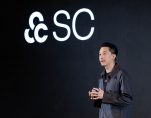
BANGKOK, THAILAND – Media OutReach Newswire – 8 April 2026 – SC has announced its first major rebrand in 20 years, repositioning the brand as “Beyond Residential”. The company is moving forward with the strategy “Reform to Perform” to rebalance its business portfolio through three business engines, diversifying revenue sources, increasing recurring income, and building new S-curves for future growth. SC has set a total revenue target of THB 25.5 billion for 2026 and aims to achieve a new profit high by 2030.

SC Unveils Bold Rebrand, Shifts “Beyond Residential” to Three-Engine Growth Model

Mr. Nuttaphong Kunakornwong, Chief Executive Officer of SC Asset Corporation Public Company Limited or SC, said that the fragile global economic environment has prompted the company to proactively adapt over the past two to three years. These efforts include organizational restructuring, financial discipline, expanding joint investment partnerships, and initiating new businesses in line with its risk diversification strategy. The company has gradually reshaped its business structure into a portfolio built around three business engines. These include Engine 1 Residential Property, Engine 2 Recurring Income Property, and Engine 3 New Businesses for a Better Future.

SC is also targeting to increase the profit contribution from Engine 2 and Engine 3 to more than 30 percent in order to drive the company’s overall profit to reach a new high again by 2030, while ensuring that all businesses continue to create value for people and the planet.

In 2026, the company will implement a comprehensive rebrand, including a new logo and refreshed corporate identity, marking its first such transformation in 20 years. The move reinforces SC’s position as “Beyond Residential,” supported by a more flexible and diversified portfolio, enabling the company to engage more effectively with customers, employees, partners, investors, and stakeholders.

2026 Business Targets and Plans

  • SC targets total revenue of THB 25.5 billion in 2026, representing 21% growth year-on-year, with a capital expenditure budget of THB 8 billion to drive all three business engines. The Interest-Bearing Debt to Equity ratio (IBD/E) is expected to decline to below 1.2 times.
  • Engine 1: Residential Property, targeting sales of THB 27 billion, up approximately 33% from 2025, and transfers of THB 23 billion, with backlog of more than THB 18.5 billion as of end-2025, of which around 40% is expected to be recognized in 2026.

– Low-rise housing: Revitalizing of eight single-detached home series across 17 projects under a concept focused on deeply understanding life needs.
– Condominium: Launch of a new ultra-luxury branded residence and a new riverside project, with a combined value of THB 25.5 billion across two projects.

– Introduction of “GenSCription” (Living Subscription Program by SC), responding to the growing shift toward renting instead of homeownership among younger generations, increasing accessibility and flexibility in housing.

  • Engine 2: Recurring Income Property, covering operations across hotels, warehouses, office buildings, and rental apartments in the U.S. The business targets revenue growth of around 70 percent to THB 2 billion.

– Expansion of hospitality portfolio by 450 rooms in key seaside destinations such as Pattaya and Phuket.
– Development of an additional 170,000 square meters of warehouse space in the Bangna–EEC zone.
– Investment in alternative energy businesses to support data center growth under SCX 360.

  • Engine 3: New Businesses for a Better Future, covering after-sales services, digital platforms, and health related businesses. The company targets revenue of THB 400 million this year, representing growth of around 60 percent from 2025.

– After-sales services will expand from 150 projects to 260 projects, alongside the launch of LINTON, a concierge service designed for ultra luxury residents.
– SC has allocated an investment budget of THB 1 billion over the next three years to support the growth of this business segment.

  • SC also introduced “SC Green Mark,” a green building development standard encompassing environmental performance and residents’ quality of life. The standard will be applied across all engines and projects to ensure sustainable growth aligned with long-term environmental responsibility.
  • Sustainable business operations

– The company continues to operate in accordance with international sustainability assessment standards of FTSE Russell.
– SC is advancing its greenhouse gas reduction efforts in line with its five-year target of reducing 100,000 tons of carbon emissions from 2025 to 2030.
– The company is also introducing SC Green Mark, a green building development standard covering environmental performance and residents’ quality of life, which will be applied across all engines and projects.

“Brands are like living things. They survive through evolution, and brands that fail to adapt will eventually become extinct. SC therefore continues to evolve. Rebranding and organizational reform are part of that evolution. A more flexible and diversified business portfolio will enable SC not only to survive but to grow sustainably in the highly volatile and challenging real estate industry, while creating greater value for people more broadly,” Nuttaphong said.
Hashtag: #SC #SCisQuality #SCBusinessDirection2026 #ReformtoPerform

The issuer is solely responsible for the content of this announcement.

Afreximbank has been confirmed as a partner for African Energy Week 2026, due to run from October 12 to 16 in Cape Town, in a move that places one of the continent’s most active trade financiers at the centre of discussions over how African-led capital can support oil, gas, power and infrastructure projects. The partnership also signals how the event is seeking to position itself less as […]

VISHNU RAJA
RYO YAMADA
HITORI GOTOH
IKUYO KITA