Investors should be seeking advice on a possible US stock market correction as surging bond yields driven by the ongoing war in Iran pose a near-term risk to stock gains. Wall Street spent the past year treating artificial intelligence as a force powerful enough to overwhelm inflation, war, deficits and interest rates simultaneously. Markets rewarded that conviction spectacularly. Nvidia added more than $2tn in market value in […]
HONG KONG SAR – Media OutReach Newswire – 20 May 2026 – Phancy Group Co., Ltd. (Stock Code: 6682.HK), a leading Artificial General Intelligence (AGI) company, today announced that it has entered into a strategic cooperation and joint venture framework agreement with Huanxi Media Group Limited (“Huanxi Media”, stock code: 1003.HK), a prominent player in film and television entertainment.
By combining Phancy’s comprehensive full-stack AI capabilities with Huanxi Media’s extensive film and television data, intellectual property (IP) assets, and production expertise, the two companies aim to drive the entertainment industry’s shift from digitalization to true intelligence.
Under the framework agreement, the parties plan to set up a joint venture as the collaboration platform. They will pursue in-depth cooperation across several key areas, including data collaboration, development of large models and Agents for film and television, exploration of AI applications in new entertainment scenarios, AI-powered joint production and content creation, IP derivative development, and broader resources collaboration.
In addition, the two parties have signed a framework agreement for large model API services. Huanxi Media intends to adopt Phancy’s advanced large model and API services, with a targeted cumulative service value of no less thanUS$200 million through Token consumption over the next three years. The substantial long-term commitment highlights strong market confidence in the reliability and commercial strength of Phancy’s AI Platform, and is expected to provide the Company with stable, recurring revenue streams.
Dr. Dai Wenyuan, Founder and CEO of Phancy, said: “The entertainment sector is one of the most valuable and promising application scenarios for AI. This in-depth strategic partnership with Huanxi Media represents a strong alliance between our two companies and our shared vision to build a new industry ecosystem. As a leader in full-stack AI infrastructure and technical services, we at Phancy will fully leverage our core strengths in large model development, Agentic AI, heterogeneous computing power scheduling, and our Token ecosystem to empower the entire value chain of the entertainment industry. Moving forward, we will work closely with Huanxi Media, combining our respective technological advantages and industry resources to unlock new growth potential in the AI-powered entertainment sector.”
Strategic Significance of the Partnership
Phancy’s full-stack AI capabilities have taken a major step forward, moving from general platform services into deep vertical integration within the entertainment ecosystem. By embedding its self-developed AI technologies into Huanxi Media’s rich data, production environments, and IP assets, Phancy can integrate cutting-edge tools directly into content creation and daily operations, turning advanced technology into real business impact.
The film and television industry is going through a fundamental transformation. From assisted creation to intelligent production, and from virtual actors to interactive film and gaming experiences, AI is reshaping the entire content production process. The two parties will collaborate on frontier areas such as co-productions, digital human actor development, AI-generated realistic dramas, and interactive film-game projects. This partnership will move AI beyond a supporting tool and make it a core driver of content creation. Leveraging Phancy’s strengths in domestic computing power adaptation and integrated hardware-software solutions, the collaboration will significantly reduce the barriers and costs of using AI in the entertainment industry and speed up its adoption in actual productions.
This strategic alliance is an important move for Phancy as it expands its presence in real-world AI applications and deepens its industry impact. It is also expected to set a new benchmark for intelligent transformation in the entertainment sector. The two companies will continue to explore innovative ways to integrate AI with entertainment, create high-quality intelligent content, and help drive the industry into a new stage of high-quality intelligent development.
Hashtag: #PhancyGroup
The issuer is solely responsible for the content of this announcement.
About Phancy Group
Phancy Group (6682.HK) is a leading full-stack AI cloud services platform, providing comprehensive solutions for the AI 2.0 era. Our offerings include SageAIOS, HAMi vGPU and ModelHub XC, delivering efficient and scalable AI infrastructure with end-to-end capabilities. We provide a complete solution from heterogeneous compute resource management and optimization to the deployment of intelligent agent models. These solutions empower digital transformation across a wide range of industries, supporting our vision of building a large-scale and efficient “Token Factory.”
Guided by the mission of “AI for Everyone” and positioned as the “Navigator of AI,” Phancy Group is committed to becoming a global leader in Artificial General Intelligence.
Washington moved closer to another military escalation with Tehran after President Donald Trump warned that the United States could resume strikes within days if Iran fails to accept terms for ending the war. Trump said he had called off a planned attack shortly before a final decision, presenting the delay as a narrow opening for diplomacy rather than a retreat from military pressure. “I hope we don’t […]
Arabian Post Staff -Dubai Senior ministers, diplomats and business leaders from the UAE and India used a Dubai forum on Monday evening to sharpen a shared push for bilateral trade to reach $200 billion by 2032, building on the momentum generated by the Comprehensive Economic Partnership Agreement. The high-level gathering, hosted by the UAE India Business Council’s UAE chapter under the theme “Strength in Resilience”, brought together […]
Greenlogue/AP Global building emissions rose again in 2024, underscoring how rapid urban expansion is outpacing efficiency gains and slowing the sector’s shift towards a net-zero pathway. Operational emissions from buildings increased 1 per cent to 9.9 gigatonnes of carbon dioxide last year, even as energy intensity improved across parts of the global building stock. The latest Global Status Report for Buildings and Construction 2025-2026, released on 19 […]
SINGAPORE – Media OutReach Newswire – 19 May 2026 – Genetron Corp., a provider of test and measurement equipment in Singapore, has introduced Deminars, a regional initiative to help engineers strengthen practical measurement and troubleshooting capabilities. Combining the concepts of “Demonstration” and “Seminar,” these technical training seminars integrate technical education with live equipment demonstrations, helping engineers connect theoretical concepts with real-world testing and validation applications across industries.
Genetron Introduces Regional “Deminars” to Bridge the Gap Between Test Theory and Real-World Application
Addressing Growing Complexity in Modern Engineering Validation
As industries adopt emerging technologies such as wide bandgap power devices and high-speed digital interfaces, engineering teams are facing increasingly complex validation, debugging, and compliance challenges. Signal integrity, power integrity, and measurement accuracy have also become more critical across modern product development environments, particularly as systems operate at higher speeds and tighter tolerances.
Despite wider access to advanced test equipment, many teams may still rely on legacy measurement approaches or have limited exposure to newer testing methodologies and tools. At the same time, accurately interpreting measurement results and identifying root causes continue to require strong application knowledge and practical measurement experience.
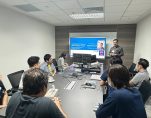
In response to these evolving challenges, Genetron introduced its Deminar programme to provide engineers with a more application-focused learning environment. Unlike conventional training seminars that focus primarily on theory, Genetron’s Deminars integrate technical education with live demonstrations using real equipment and practical application scenarios.
Combining Technical Education with Real-World Demonstration
Genetron’s Deminars are primarily designed for engineers and technical teams involved in research and development, product validation, debugging, and system development. Rather than focusing purely on product features or theoretical discussions, the sessions are structured around practical engineering challenges commonly encountered during development and testing processes.
A typical Deminar begins with an overview of the technology trend or validation challenge being discussed, including the industry drivers behind the adoption of newer technologies and the measurement implications that follow. From there, the sessions move into live demonstrations using actual test and measurement equipment within application-based setups.
Currently, the Deminars cover topics such as:
Testing methodologies for emerging technologies, including SiC and GaN wide bandgap power applications
Signal integrity challenges in high-speed serial communications
Practical probing techniques and measurement best practices aimed at improving signal fidelity and ensuring more reliable test results
Participants may also take part in guided hands-on exercises or structured measurement activities designed to reinforce technical concepts through direct application. Each session concludes with result analysis, discussions on common testing pitfalls, and practical recommendations that engineers can apply within their own development environments.
Expanding Technical Knowledge Across Southeast Asia
Currently, Genetron has conducted Deminars across several countries in the region, including Singapore, Malaysia, Thailand, Vietnam, and The Philippines.
Rather than tailoring sessions according to geography alone, Genetron customises each Deminar based on the industries, engineering applications, and technical challenges relevant to participating organisations. This allows the sessions to remain highly application-focused and directly aligned with the practical requirements faced by engineering teams in different sectors.
The programme is developed and led internally by Genetron’s engineering team. While the company works closely with technology principals and equipment manufacturers to incorporate current test and measurement solutions into demonstration setups, the seminar content, workflows, and technical demonstrations are independently developed by Genetron’s engineers to ensure practical relevance and technical accuracy.
Supporting Long-Term Engineering Development
According to Mr John Ong Moh Taur, the Managing Director of Genetron Corp, feedback from participants has been highly positive.
“Many engineers appreciate the combination of technical training seminars with practical demonstrations, as it helps them better understand both the capabilities and limitations of modern test and measurement tools,” Mr Ong shared. “The sessions have also helped customers improve confidence in measurement accuracy, troubleshooting workflows, and preparation for future validation requirements.”
As test and measurement requirements continue evolving alongside next-generation electronics and digital systems, Genetron plans to expand the Deminar programme with additional topics covering advanced debugging techniques, compliance testing methodologies, signal integrity analysis, and future power electronics applications.
“At Genetron, we believe that engineering excellence comes from combining the right tools with deep application knowledge,” said Mr Ong. “The Deminar initiative reflects our commitment to supporting the engineering community through practical technical education, application expertise, and real-world measurement experience.”
By helping engineers better understand modern test challenges and methodologies, the company aims to become a trusted technical partner for our customers’ current and future development needs.
The issuer is solely responsible for the content of this announcement.
About Genetron Corp
Genetron Corp is a Singapore-based provider of test and measurement solutions supporting engineers, researchers, and innovators across Asia. The company offers a range of equipment and application-focused solutions, including oscilloscopes, protocol analysers, and power analysis systems designed for precision, reliability, and integration into complex development environments. In addition to supplying equipment, Genetron provides technical consultations, application expertise, and practical engineering education initiatives for comprehensive post-sales support.
AI Financial has warned that it may not remain viable over the next year after a steep fall in the value of its World Liberty Financial token holdings exposed the fragility of a balance sheet built around a volatile crypto treasury. The Nasdaq-listed company, formerly known as ALT5 Sigma, disclosed that it held 7,283,585,650 WLFI tokens at the end of its first quarter, carrying them at a […]
A chance photograph taken on a remote Queensland property has returned Ptilotus senarius to scientific view after 58 years without a confirmed record, turning a plant long treated as presumed extinct into a live test case for smartphone-powered biodiversity discovery. The small, slender shrub, a member of the Amaranthaceae family, had not been collected since 1967 and was known only from preserved herbarium specimens before horticulturalist and […]
Ultra-light gaming laptops are moving from niche showpieces to a mainstream performance category as chipmakers, display suppliers and PC brands push more power into thinner machines without abandoning battery life or portability. The shift is being driven by a convergence of faster mobile graphics processors, AI-assisted rendering, high-efficiency CPUs, brighter OLED displays and more sophisticated cooling systems. Models weighing around 1.5kg to 2kg are now targeting users […]
Ukrainian state bodies are facing a sustained phishing campaign by the Russia-linked Gamaredon group, with attackers using weaponised WinRAR archives to deploy GammaDrop and GammaLoad malware in a multi-stage espionage operation aimed at government networks. The campaign, active since September 2025 and still evolving, has targeted Ukrainian state institutions through spoofed messages and compromised government email accounts. The emails are written in Ukrainian and designed to resemble […]
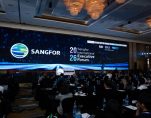
BANGKOK, THAILAND – Media OutReach Newswire – 18 May 2026 – Sangfor Technologies successfully hosted the Sangfor Executive Forum 2026 in Bangkok, bringing together CIOs, IT leaders, and cybersecurity decision-makers to explore how organizations can modernise IT infrastructure, accelerate AI adoption, and reduce reliance on legacy virtualisation environments.
Held under the theme “Run · Build · Protect: Driving the Future with the Power of AI,” the forum showcased how enterprises across Asia Pacific are rethinking traditional infrastructure strategies and adopting integrated cloud platforms designed to simplify operations, strengthen security, and support long-term AI-driven growth.
A major focus throughout the event was the growing market demand for VMware alternatives following industry-wide changes to licensing and infrastructure costs. Sessions explored how organizations are seeking more flexible, cost-efficient virtualization platforms that can support both traditional enterprise workloads and future AI-driven operations. Discussions also highlighted SCMT (Sangfor Cloud Management Tool), designed to support seamless VMware migration to Sangfor Cloud.
During the forum, Sangfor showcased its integrated cloud infrastructure platform, combining compute, storage, networking, organization , and built-in cybersecurity into a unified architecture designed to reduce operational complexity and simplify migration from legacy virtualization environments.
The event also highlighted Sangfor’s AI-ready infrastructure capabilities, including support for virtual machines, containers, AI workloads, and integrated storage management through a single platform.
Keith Lee, Cloud Business Director, Sangfor Technologies, said: “Across the region, organizations are reassessing legacy virtualization strategies and looking for platforms that can provide greater flexibility, operational simplicity, and long-term scalability. Businesses today need infrastructure that combines cloud, security, AI readiness, operational efficiency and friendly licensing policies within a single platform. This is driving growing interest in next-generation VMware alternatives that can support both current enterprise requirements and future AI-driven growth.”
Lee added that Sangfor continues to expand investment across Southeast Asia, with Thailand identified as one of the company’s fastest-growing markets in the region.
The forum also featured discussions around infrastructure resilience, cloud-native applications, Zero Trust security strategies, and AI-powered operations, alongside customer case studies and live demonstrations showcasing enterprise transformation initiatives across both public and private sectors.
Sarayut Siragulthiraphong, Presales Consultant, Sangfor Thailand, added: “Successful AI adoption requires more than just AI applications themselves. Organizations also need infrastructure that is secure, scalable, and capable of supporting evolving workloads.”
Sangfor was joined by partners including Cohesity, Veeam, Sundray, IT Green, VR Comm, VST ECS, and TechHub, highlighting a collaborative ecosystem supporting enterprise transformation across Asia Pacific.
Sangfor will continue the Executive Forum series across key markets in the region, with upcoming events planned:
The issuer is solely responsible for the content of this announcement.
ABOUT SANGFOR TECHNOLOGIES
Sangfor Technologies is a global provider of cloud infrastructure and cybersecurity solutions, headquartered in Shenzhen (China). Founded in 2000, the company serves over 100,000 customers worldwide across 22+ countries and regions. Sangfor delivers AI-enabled cloud infrastructure that integrates compute, storage, network and built-in security into a unified platform, helping organizations simplify digital and AI transformation.
With a strong focus on innovation and customer success, Sangfor is also recognized as a proven VMware alternative, offering enterprise-grade solutions for infrastructure modernization, migration, and operational efficiency.
Japan’s government bond market has become the centre of a global debt selloff as higher oil prices, stubborn inflation and expectations of tighter monetary policy push borrowing costs across major economies to levels not seen for years.
The sharpest pressure has fallen on long-dated Japanese government bonds, where the 30-year yield has climbed above 4 per cent, reaching a record since the maturity was introduced in 1999. The 10-year yield has also risen to around 2.8 per cent, its highest level in nearly three decades, marking a decisive break from the low-yield era that defined Japan’s markets for much of the post-deflation period.
The selloff has rippled across global debt markets. US Treasury yields have moved higher, with the 30-year yield testing levels above 5 per cent, while Germany’s benchmark bonds and UK gilts have also weakened. Bond prices move inversely to yields, meaning the surge in yields reflects heavy selling by investors who are demanding greater compensation for inflation, fiscal risk and uncertain central bank policy.
Rising oil prices are the immediate catalyst. Brent crude has moved above $100 a barrel as geopolitical tensions in the Middle East disrupt energy flows and heighten concerns over import costs for major economies. For Japan, which relies heavily on imported energy, the oil shock carries a particularly direct inflationary threat. A weaker yen has amplified the impact, increasing the local-currency cost of fuel, food and other imported goods.
Japan’s inflation backdrop has become more difficult for policymakers. Consumer prices have remained above the Bank of Japan’s 2 per cent target for an extended period, while corporate goods prices have shown persistent pressure from energy, raw materials and logistics costs. Investors are now pricing in a greater chance that the central bank will raise interest rates again, possibly as early as its next policy meetings, after years of extraordinary accommodation.
Fiscal concerns are adding to the strain. Tokyo is preparing additional spending to cushion households and businesses from rising fuel and utility costs, but fresh borrowing could worsen concerns over debt sustainability. Japan’s public debt is already among the highest in the developed world, making long-term bond investors more sensitive to any increase in issuance. The prospect of larger supply has hit demand for longer maturities, where insurers, pension funds and banks traditionally played a stabilising role.
The Bank of Japan faces a delicate balance. Raising rates too quickly could unsettle growth and worsen losses in bond portfolios held by financial institutions. Moving too slowly could allow inflation expectations to become entrenched and place further pressure on the yen. The central bank has already scaled back its dominance of the bond market compared with the period of yield-curve control, leaving prices more exposed to market forces.
Global investors are also reassessing the role of government bonds as a safe asset. During earlier market shocks, US Treasuries, German Bunds and Japanese government bonds often rallied as investors sought protection. The current episode is different because the shock is inflationary rather than deflationary. Higher energy prices reduce household purchasing power, raise business costs and complicate the task of central banks that had hoped to cut rates or keep policy steady.
The selloff has implications beyond financial markets. Higher sovereign yields raise funding costs for governments already facing pressure from defence spending, ageing populations, energy subsidies and climate-related investment. They also affect mortgage rates, corporate borrowing and equity valuations. Technology shares and other growth-sensitive assets tend to come under pressure when long-term yields climb, because future earnings are discounted more heavily.
Japan’s shift is especially important because its low yields long encouraged domestic investors to buy overseas bonds. As yields rise at home, insurers and pension funds have less incentive to take currency risk abroad, potentially reducing demand for US and European debt. That repatriation effect could intensify volatility in global markets if Japanese institutions continue to rebalance portfolios.
Scientists have found radioactive iron from exploded stars locked inside Antarctic ice, offering fresh evidence that Earth is moving through a cloud of ancient supernova debris while the material continues to fall on the planet today. The findings, published on May 13 in Physical Review Letters, centre on traces of iron-60, a rare isotope produced inside massive stars and scattered across space when they die in supernova […]
Dubai’s Roads and Transport Authority has completed 80 per cent of the Al Khaleej Street Tunnel Project, advancing a major part of the Al Shindagha Corridor programme designed to cut journey times from 104 minutes to 16 minutes by 2030. Spanning 1,650 metres, the tunnel extends from the end of the Infinity Bridge ramp in Deira to the intersection of Al Khaleej Street and Al Wuheida Street. […]
Arabian Post Staff -Dubai Saudi Arabia’s main security, safety and fire protection trade platform is set for its biggest edition as demand accelerates across critical infrastructure, smart cities, commercial property, industrial sites and large-scale development projects. Intersec Saudi Arabia 2026 will run from 16 to 18 November at Riyadh Front Exhibition & Conference Center, shifting into a larger venue format and expanding exhibition space by 40 per […]
Qatar Science & Technology Park has launched a $30 million Tech Venture Fund to back early-stage deeptech companies headquartered in Qatar, positioning the initiative as a new capital channel for founders working in artificial intelligence, robotics, biotechnology, advanced materials and clean technology. The fund, unveiled by the Qatar Foundation member in Doha, will invest in startups with measurable social or climate impact and will operate alongside a […]
Arabian Post Staff -Dubai Manama has gained another marker in its shift towards cash-light commerce as stc Bahrain became the first telecommunications provider in the kingdom to introduce Mastercard’s Click to Pay, adding a faster checkout option for customers making digital payments. The launch places the telecom operator deeper into Bahrain’s expanding financial technology ecosystem, where mobile wallets, instant transfers and tokenised card payments are becoming part […]
Revolut has offered employees across its global workforce a £1,000 payment for helping bring new business customers to the digital bank, signalling a sharper push into corporate banking as Chief Executive Officer Nik Storonsky seeks to sustain rapid growth ahead of a planned public listing. The incentive, communicated to staff on Friday, places business customer acquisition at the centre of the London-based fintech’s next phase. Employees across […]
By Nitya Chakraborty Now that the U.S. President Donald Trump is back to Washington DC. After his two day summit talks in Beijing on May 14 and 15, it is appropriate to decode the gains of the summit. There were four major issues– Taiwan, Iran war, trade deals and facilitating more business for the American […]
Sri Lanka has imposed a temporary 50 per cent surcharge on customs import duty for imported vehicles, aiming to slow demand for foreign exchange as higher oil prices and Middle East tensions put pressure on the rupee.
The measure, effective from 16 May for three months, applies to selected motor vehicles including passenger cars, jeeps, vans, buses, goods transport vehicles, ambulances, electric vehicles and hybrids. Vehicles for which letters of credit were opened on or before 15 May are exempt, limiting the immediate disruption for importers who had already committed payments before the order took effect.
The surcharge is levied on the applicable customs import duty, rather than directly on the total value of a vehicle. For many private vehicles, the customs import duty had stood at 30 per cent, meaning the added surcharge raises that component to 45 per cent. Other taxes and levies, including excise duties, value-added tax and sector-specific charges, mean the final tax burden on imported cars can be far higher than the headline customs duty figure.
Deputy Finance Minister Anil Jayantha Fernando said the step was designed to encourage buyers to delay vehicle imports rather than halt the trade outright. He said the government was responding to a sharp rise in import expenditure and added pressure on foreign reserves. “Given the current pressure on foreign exchange, we want people to delay their imports by three months,” he told reporters in Colombo.
The decision marks a swift policy adjustment by President Anura Kumara Dissanayake’s administration as Sri Lanka attempts to balance consumer demand, revenue needs and currency stability after years of severe economic strain. Vehicle imports were heavily restricted after the island’s 2022 financial collapse, when the country ran short of foreign exchange and struggled to pay for fuel, food and medicines. The gradual reopening of imports was seen as a sign of economic normalisation, but it has also revived concerns about the pressure placed on the balance of payments.
Sri Lanka remains dependent on imported fuel, leaving the economy exposed to swings in global crude prices. Tensions across the Middle East have pushed energy costs higher, forcing authorities to reassess import priorities. Fuel prices have already climbed sharply this year, adding to the cost of transport, electricity generation and logistics. The government is trying to prevent higher oil bills from draining reserves at a time when the country remains under a $2.9 billion International Monetary Fund programme.
The rupee has weakened against the US dollar this year, with official figures showing a fall of about 4.5 per cent since January. Central Bank Governor Nandalal Weerasinghe has warned lawmakers that the currency could remain under pressure unless global oil prices ease or the country reduces energy imports. That warning sharpened the policy case for curbing non-essential import demand, particularly in high-value categories such as vehicles.
Vehicle importers and consumers are likely to face a tougher market over the next quarter. The surcharge may delay purchases, reduce showroom availability and raise prices for buyers who choose to proceed. Importers with confirmed letters of credit before the cut-off date may have a temporary advantage, while new buyers could defer orders until the surcharge expires, provided the government does not extend it.
The policy also carries revenue implications. Vehicle imports are a lucrative source of tax income, and Sri Lanka has relied on trade-related levies to support public finances during its recovery. A surcharge may increase tax collected on each imported vehicle, but lower import volumes could offset that gain if buyers hold back. The government’s calculation appears to prioritise currency defence and reserve management over short-term market expansion.
Jeff Fowler has signalled a major step forward for Sonic the Hedgehog 4, confirming that filming has wrapped and offering fans an early glimpse of Metal Sonic, the robotic rival whose arrival is expected to reshape the next chapter of Paramount’s fast-growing video game film franchise. The director, who has steered all three previous Sonic the Hedgehog films, marked the end of principal photography with a production […]
Seoul’s benchmark Kospi crossed 8,000 for the first time on Friday, powered by a surge in artificial intelligence-linked shares that has turned South Korea into one of the world’s strongest equity markets this year.
The Korea Composite Stock Price Index touched 8,001.40 in early trade at about 9.15am, extending a rally that has accelerated since early May as investors crowded into semiconductor, memory-chip and data-centre supply chain stocks. The move marked another symbolic milestone for a market that only passed 7,000 seven trading sessions earlier, reflecting the speed with which capital has moved into companies expected to benefit from the AI infrastructure boom.
Traders at Hana Bank’s dealing room in Seoul marked the 8,000-point breakthrough with a ceremony, underscoring the psychological importance of the level for domestic investors. Yet the celebration was tempered by sharp volatility later in the session, as profit-taking and foreign selling hit several of the same technology and auto counters that had led the advance.
Samsung Electronics and SK Hynix remain at the centre of the rally. The two chipmakers have benefited from global demand for high-bandwidth memory, advanced storage and server components used in artificial intelligence training and inference. SK Hynix has strengthened its position in high-bandwidth memory supplied to leading AI chip platforms, while Samsung has drawn renewed investor attention as it pushes to close the gap in next-generation memory products and expand foundry capacity.
The broader appeal of South Korean equities has also been reinforced by expectations that the country’s corporate governance reforms will improve shareholder returns. Measures aimed at narrowing the long-standing valuation discount on local shares, including stronger pressure for dividends, buybacks and more transparent capital allocation, have encouraged investors to look beyond chipmakers into financials, industrials and holding companies.
Market participants said the scale of the advance has created a difficult balance for policymakers and investors. Strong earnings momentum and the AI investment cycle provide support for valuations, but the pace of gains has left the Kospi vulnerable to sudden reversals whenever global technology sentiment weakens. Concerns over crowded positioning, high expectations for AI-related revenue and the concentration of gains in a small group of heavyweight stocks have grown more visible as the index moved through successive records.
The Kospi’s rise has unfolded against a favourable global backdrop. Wall Street’s major indices advanced overnight, led by technology shares, while investor confidence was helped by signs of diplomatic engagement between Washington and Beijing. South Korea’s export-driven economy remains closely tied to global electronics demand, making its equity market highly sensitive to sentiment around chips, cloud computing, smartphones and consumer electronics.
Foreign flows have played a decisive role. Overseas investors have treated Seoul as a liquid way to gain exposure to AI infrastructure without relying solely on US-listed software and chip-design companies. That has lifted trading volumes and strengthened the won at times, although the currency remains exposed to shifts in US interest-rate expectations and geopolitical risks in the Middle East.
Domestic retail investors have also returned to the market in force. The rapid climb has revived comparisons with earlier speculative cycles, but the current rally is more closely tied to corporate earnings upgrades in semiconductors and technology hardware. Brokerages have raised target prices for key chip stocks, citing memory pricing, AI server demand and stronger capital expenditure by global technology companies.
Still, risks are building. A sharp fall after the 8,000-point breach showed how quickly sentiment can turn when valuations look stretched. Heavy foreign selling, particularly in technology and auto shares, pointed to caution after months of gains. Analysts have warned that any slowdown in AI spending, weaker guidance from major US technology firms or delays in high-bandwidth memory certification could trigger further volatility.
Prime Minister Narendra Modi and UAE President Sheikh Mohamed bin Zayed Al Nahyan have agreed to widen cooperation on strategic crude and gas reserves, giving New Delhi a larger buffer against supply shocks at a time of heightened volatility across West Asia and global energy markets.
The agreement, reached during Modi’s official visit to Abu Dhabi on 15 May 2026, includes a strategic collaboration between Indian Strategic Petroleum Reserves Limited and Abu Dhabi National Oil Company to expand the UAE’s participation in India’s strategic petroleum reserves to 30 million barrels. Both sides will also work on establishing strategic gas reserves, a move that signals a broader shift from emergency crude storage towards a more diversified energy security framework.
The pact places ADNOC at the centre of New Delhi’s stockpiling strategy. The UAE became the first country to partner with India in strategic petroleum storage when ADNOC stored crude in the Mangaluru cavern under an earlier arrangement. The new framework is substantially larger and comes as India seeks to reduce exposure to sudden disruptions in the Strait of Hormuz, sanctions-driven shifts in trade flows, shipping risks, and sharp swings in spot fuel prices.
India, the world’s third-largest oil consumer, imports more than 85 per cent of its crude requirement and nearly half of its natural gas needs. Its existing strategic petroleum reserve system has underground rock caverns at Visakhapatnam, Mangaluru and Padur, with a combined capacity of about 5.33 million tonnes, equivalent to roughly 39 million barrels. These reserves are separate from commercial inventories held by refiners and oil marketing companies.
The current reserve base covers only a limited number of consumption days, making expansion a long-standing policy priority. Phase-two plans have included additional capacity at Padur and a new facility at Chandikhol in Odisha, while officials have explored public-private partnership models to bring in foreign oil producers and trading firms. The UAE arrangement is likely to support that model by tying storage capacity to assured supply and commercial flexibility.
The energy package also includes a long-term LPG supply arrangement between Indian Oil Limited and ADNOC. The UAE is already the largest source of LPG for India, meeting about 40 per cent of its import requirement. A deeper supply contract is significant for household energy security, as LPG remains a politically sensitive fuel linked to cooking gas access, subsidy management and inflation expectations.
Gas cooperation is another important element. New Delhi has been trying to raise the share of natural gas in its energy mix, but price volatility and limited storage have slowed progress. Strategic gas reserves could help shield fertiliser plants, city gas distributors, power producers and industrial users from abrupt supply constraints. The concept remains more complex than crude storage because gas requires specialised infrastructure, including LNG terminals, underground storage or converted reservoirs, but the agreement shows that both governments see gas security as part of the next phase of their partnership.
The Abu Dhabi talks also build on a wider hydrocarbons relationship. The UAE was among India’s top crude suppliers last year and has become a central partner in LNG, LPG, upstream investment and petroleum product trade. State-backed companies from India hold stakes in Abu Dhabi oil assets, including the Lower Zakum concession and Onshore Block 1, marking a rare upstream footprint for New Delhi in the Gulf.
The timing gives the agreement strategic weight. West Asian tensions have renewed concern over maritime chokepoints and insurance costs for energy cargoes. Any prolonged disruption near the Gulf would affect Asia’s largest consuming economies first, particularly import-dependent buyers such as India, Japan, South Korea and China. Larger stockpiles do not remove that vulnerability, but they give policymakers more room to manage price spikes, refinery supply schedules and emergency releases.
For the UAE, the pact strengthens its role as a long-term energy partner beyond crude sales. ADNOC has been widening its international storage, trading, LNG and downstream footprint as Abu Dhabi positions itself as both a reliable supplier and a capital partner. Participation in overseas strategic reserves gives the company access to storage optionality while reinforcing diplomatic ties with major demand centres.
The Modi-Sheikh Mohamed meeting also covered defence, investment, infrastructure and regional security, underscoring the shift in bilateral ties from labour, remittances and trade towards a broader strategic partnership. The UAE hosts a large expatriate community from India and remains one of New Delhi’s most important Gulf economic partners, with strong links in logistics, ports, food security, renewable energy and financial services.
Bitcoin traders are positioning for a possible push towards $90,000 after the CLARITY Act cleared a key Senate committee vote, giving digital asset markets their strongest regulatory signal from Washington this year. The largest cryptocurrency traded near $80,600 on Friday after briefly testing the $82,000 area, with market participants watching whether legislative momentum in the United States can extend a rally that has already lifted sentiment across […]





 https://genetroncorp.com/