News related to
AI trade

RIYADH, SAUDI ARABIA – Media OutReach Newswire – 1 April 2025 – Recently, at JINGDONG Logistics’ warehouse in Riyadh, goods were being efficiently processed, destined not only for Middle East countries but also for parts of North Africa. Currently, JINGDONG Logistics operates five warehouses in the Middle East, including Saudi Arabia Warehouse No. 1. Last year, JINGDONG Group also established a strategic partnership with Saudi Electricity Company […]

Emails falsely claiming to be from the cryptocurrency exchange Gemini are circulating, sparking concerns of a growing scam targeting its users. The fraudulent messages allege that the company has filed for bankruptcy and urge recipients to click on a link to confirm account details or withdraw their funds before an impending shutdown. Experts warn that this is part of an ongoing wave of phishing schemes aimed at […]

A significant move has been made by a prominent Japanese hotel company, as it secured a 15.5% weighting in a crypto-focused exchange-traded fund . This marks an unexpected yet strategic shift towards the digital currency market by a company traditionally rooted in the hospitality sector. The hotel firm’s investment decision signals a broader trend of diversification and innovation within established industries, as more companies explore the potential of cryptocurrencies and blockchain technology.

The ETF, which predominantly focuses on digital assets, has attracted attention due to its potential to bridge the gap between traditional industries and the rapidly expanding cryptocurrency market. The hotel firm’s acquisition is particularly notable given the ongoing volatility in the cryptocurrency space, which often deters conservative investors. However, its decision reflects a calculated risk in pursuit of higher returns and the possibility of capturing the growing interest in decentralized finance systems.

Experts suggest that the firm’s move could serve as a signal to other companies in Japan and beyond, encouraging them to consider digital assets as part of their portfolios. Japan has historically been one of the more crypto-friendly nations, with a progressive regulatory approach that has supported the growth of the digital currency market. The country’s financial authorities have acknowledged the benefits of blockchain technology and the role it could play in shaping the future of global finance.

The hospitality sector, much like many others, has felt the pressure to adapt in the face of technological advancements. The COVID-19 pandemic has forced businesses to reimagine their operations and explore innovative avenues for growth. For the hotel company, investing in a crypto-focused ETF represents a forward-thinking approach to ensuring long-term sustainability in an increasingly digital world.

The decision comes as institutional interest in cryptocurrencies continues to rise, with major financial players such as investment firms and pension funds gradually incorporating digital currencies into their strategies. However, many experts caution that while the allure of crypto assets is undeniable, they remain a high-risk investment due to their volatility and regulatory uncertainty.

Despite these challenges, the hotel firm’s stake in the crypto ETF is seen as part of a broader trend of traditional companies seeking to capitalise on digital currencies. This move is not isolated; several other firms have either publicly stated their intention to invest in blockchain-based projects or have already made similar investments. The diversification of investment portfolios is a strategy being adopted by businesses looking to stay ahead in a fast-evolving financial landscape.

One of the driving factors behind this shift is the growing acceptance of cryptocurrency as a legitimate asset class. Bitcoin and Ethereum, two of the most well-known cryptocurrencies, have gained significant traction among both retail and institutional investors. Their increasing mainstream acceptance is pushing companies to reconsider their positions on digital currencies.

The hotel company’s move also comes at a time when the global financial markets are experiencing increased interest in crypto-related products. ETFs, which allow investors to gain exposure to various assets without directly purchasing them, have become one of the most popular investment vehicles for retail and institutional investors alike. The crypto ETF, in particular, has garnered significant attention for offering a more regulated and transparent way to invest in digital assets compared to direct investment in cryptocurrencies.

While the potential for growth within the crypto market is substantial, analysts continue to advise caution. The fluctuating nature of digital currencies, along with the regulatory uncertainties surrounding them, makes it a challenging environment for both investors and companies alike. Still, for businesses like the hotel firm, the potential rewards may outweigh the risks, especially as blockchain technology continues to demonstrate its utility beyond just financial transactions.

The investment also highlights the evolving role of hospitality companies in the broader tech landscape. As more businesses in traditional industries engage with the digital economy, the line between sectors becomes increasingly blurred. The integration of cryptocurrencies into established business models could pave the way for future innovations that bring added value to customers and stakeholders alike.

The hotel company’s shift into crypto represents a bold step in its ongoing transformation. Although the move might seem unorthodox, it is aligned with a growing trend of corporate diversification. The company’s leadership has expressed confidence in its ability to manage the risks associated with the crypto market, focusing on long-term growth prospects and positioning the company at the forefront of digital innovation.

The United States has witnessed a dramatic decline in cryptocurrency trading volumes, with figures dropping over 80% since mid-March. On March 14, US exchanges recorded $3.22 billion in trading volume; by April 2, this had fallen to $621 million, marking a significant contraction in market activity.

This downturn aligns with a broader global trend. In January 2025, global cryptocurrency exchange spot volumes experienced a 19.5% decrease, falling to $1.73 trillion from December 2024’s record-breaking $2.14 trillion. Factors contributing to this decline include increased regulatory scrutiny and market volatility.

Coinbase, a major US-based cryptocurrency exchange, has seen its market share diminish as smaller exchanges gain ground. This shift reflects a changing landscape where traders are exploring alternative platforms, possibly due to varying fee structures, user experiences, or perceptions of security.

Despite these challenges, the global cryptocurrency market maintains substantial activity. As of now, the total market capitalization stands at $2.72 trillion, with Bitcoin dominating at $1.61 trillion, representing 59.34% of the market. Stablecoins collectively hold a market cap of $237 billion, accounting for 8.72% of the total crypto market cap.

The decline in US trading volumes may also be influenced by recent events affecting major exchanges. For instance, in February, a significant security breach resulted in the theft of $1.5 billion from Bybit, the world’s second-largest crypto exchange. Such incidents underscore the vulnerabilities within the crypto industry and may contribute to reduced trading activity as investors reassess risks.

Global Footprint and B2C-B2B Synergies Drive Long-term Development Results Highlights Revenue surged by 71.7% to historical high of US$345.78 million. Net profit hit historical high and grew by 151.5% to US$19.04 million, net profit margin improved by 1.7 percentage points to 5.5%. The Board of Directors has recommended a final dividend of HK7.5 cents per share. The Business-to-Customer (B2C) YesStyle Platforms recorded revenue of US$265.64 million, up […]

Blackstone, the US-based private equity firm, has agreed to acquire a 22% stake in AGS Airports, the operator of Aberdeen, Glasgow, and Southampton airports, for £235 million. The remaining 78% stake will continue to be held by AviAlliance, a subsidiary of the Canadian pension investor PSP Investments.

AGS Airports serves over 11 million passengers annually. The investment by Blackstone is aimed at supporting the growth of the UK’s travel and tourism industries. Greg Blank, CEO of Blackstone Infrastructure Strategies, highlighted that transportation remains a key focus area for the firm, citing the strong global growth in leisure travel.

AviAlliance, known for its investments in airports such as those serving Athens, Düsseldorf, Hamburg, and San Juan in Puerto Rico, acquired AGS last year from Ferrovial and Macquarie at an enterprise value of £1.5 billion. Sandiren Curthan, PSP’s global head of infrastructure investments, emphasized that both PSP and Blackstone are like-minded investors with long-term patient capital to support the development of AGS.

In a related development, Qatar’s Lesha Bank has indirectly acquired a stake in Edinburgh Airport through an investment in an infrastructure-focused fund managed by a renowned infrastructure fund manager. This move marks Lesha Bank’s entry into the global infrastructure investment market and aligns with its strategic focus on resilient asset classes.

These transactions reflect a broader trend of increased private investment in UK transport infrastructure. Private investors currently back several of the UK’s leading airports, including London’s Heathrow and Gatwick. Last year, Ferrovial agreed to sell the majority of its stake in Heathrow … .

The UK’s aviation sector has witnessed a surge in private investments, with firms like Blackstone and Lesha Bank seeking to capitalize on the burgeoning travel industry. Blackstone’s infrastructure unit has also invested internationally … , and the airport manager behind Rome … airports.

Lesha Bank’s investment in Edinburgh Airport is structured through a Shari’a-compliant financing arrangement, reinforcing its commitment to expanding its aviation and infrastructure portfolio. This acquisition follows Lesha Bank’s recent successful acquisition of several aircraft leased to a leading airline.

The influx of private capital into the UK’s airport infrastructure is expected to drive enhancements in airport operations and passenger experiences. AGS Airports, for instance, is implementing changes to accommodate larger aircraft and open new routes, aiming to boost traffic and connectivity.

Industry analysts suggest that such investments could lead to increased competition among airports, potentially resulting in better services and facilities for travelers. However, they also caution that the involvement of private equity firms may prioritize profitability, which could impact pricing structures and accessibility.

The UK’s aviation industry plays a crucial role in the nation’s economy, facilitating trade, tourism, and business travel. The recent investments by Blackstone and Lesha Bank underscore the sector’s attractiveness to global investors and its potential for growth in the coming years.

As these developments unfold, stakeholders will be keenly observing how the infusion of private capital influences the operational strategies and performance of these airports. The balance between profitability and public service will be a critical factor in determining the long-term success of these investments.

The aviation sector’s recovery post-pandemic has been marked by a resurgence in passenger numbers and an increased appetite for travel. Investments such as these are indicative of confidence in the industry’s rebound and its capacity to adapt to evolving market dynamics.

While the financial details of Lesha Bank’s stake in Edinburgh Airport have not been disclosed, the move signifies a strategic expansion into the UK market. Lesha Bank CEO, Mohammed Ismail Al Emadi, stated that the investment marks a significant milestone, aligning with the bank’s focus on infrastructure investments with robust growth potential.

The collaboration between established infrastructure investors like AviAlliance and new entrants such as Blackstone and Lesha Bank is expected to bring diverse perspectives and expertise to the UK’s airport operations. This could lead to innovative approaches in managing airport assets and enhancing passenger experiences.

As the landscape of airport ownership in the UK evolves, the emphasis will likely be on balancing commercial interests with the need to provide efficient, accessible, and high-quality services to the public. The involvement of private investors brings both opportunities and challenges in achieving this equilibrium.

The UK’s airports are vital hubs connecting the nation to the rest of the world. The recent investments signal a recognition of their importance and a commitment to their development and modernization. How these investments translate into tangible benefits for passengers and the broader economy remains to be seen.

The trend of private investment in airport infrastructure is not unique to the UK. Globally, investors are increasingly viewing airports as attractive assets, offering stable returns and opportunities for growth. The UK’s experience may serve as a case study for other nations considering similar investment strategies.


Dr Imran Khalid The winds of uncertainty are sweeping through Europe as the continent grapples with the stark reality of a diminished U.S. commitment to its security. The handling of the Ukraine crisis by the Trump administration has rightly sent shockwaves through European capitals, unearthing a reality that policymakers have long feared but often failed to address head-on: the United States, under its current leadership, is no […]

Advertisements

BLOCK71 Tokyo, its second office in Japan, opens at TAKANAWA GATEWAY CITY, the country’s latest global innovation hub. NUS collaborates with Japanese partners, who will invest about ¥1 billion to spur global venture creation. SINGAPORE – Media OutReach Newswire – 28 March 2025 – NUS Enterprise, the entrepreneurial arm of the National University of Singapore (NUS), is expanding its presence in Japan with the launch of its […]

Greenlogue/AP Saudi Arabia’s Acwa Power is intensifying its collaboration with Chinese enterprises, undeterred by escalating global trade disputes. The energy giant has formalized agreements exceeding $1.78 billion, focusing on renewable energy, battery storage, and research and development initiatives across regions including the Gulf, China, Central Asia, and North Africa. These deals, announced at the Future Investment Initiative conference in Riyadh, encompass a $54 million investment dedicated to […]

Gold prices have surged to a historic high, reaching $3,077 per ounce on March 28, 2025, marking a significant milestone in the precious metal’s valuation. This ascent comes just two weeks after gold surpassed the $3,000 threshold on March 14, 2025, reflecting a 15.76% increase year-to-date.

The imposition of a 25% tariff on auto imports by U.S. President Donald Trump has intensified fears of a global trade war, prompting investors to seek refuge in safe-haven assets like gold. The tariffs have particularly impacted the auto industries in Japan and South Korea, leading to notable declines in their stock markets. Japan’s Nikkei index dropped over 2%, while South Korea’s benchmark index fell to a two-week low. In contrast, Hong Kong’s Hang Seng index remained relatively stable, rising by 0.6%. The auto sector, vital to both South Korea and Japan, faces significant challenges, with some manufacturers considering production relocations or price adjustments.

The escalating trade tensions have heightened investor anxiety, leading to increased demand for gold as a safe-haven asset. Analysts attribute the surge in gold prices to factors such as U.S. trade and fiscal policies, slowing economic growth, and geopolitical conflicts. Financial analyst Kyle Rodda emphasized that these elements collectively bolster gold’s appeal. Additionally, gold tends to benefit in low-interest-rate environments and during periods of political and economic uncertainty.

In response to the rising gold prices, Goldman Sachs has revised its year-end forecast for the metal from $3,100 to $3,300 per ounce. Analysts Lina Thomas and Daan Struyven cited higher-than-expected inflows into gold exchange-traded funds and robust central bank demand, particularly from large Asian central banks, as key drivers for the upward revision. They anticipate that these central banks will continue aggressive gold purchases over the next three to six years. The analysts also suggested potential entry points for investors, including a resolution to the Russia-Ukraine conflict or a significant equity market downturn.

The surge in gold prices has led to a notable increase in the sale of old jewelry and coins in major markets across Asia and the Middle East. Consumers in countries like India, China, and the United Arab Emirates are capitalizing on the high prices to liquidate their gold holdings, potentially reducing imports and tempering the gold rally. In India, domestic gold prices have risen more than 32%, prompting many to sell rather than purchase new jewelry. Similar trends are observed in Dubai and China, where high prices have led consumers to sell or hold onto their gold assets.

​ KUALA LUMPUR, MALAYSIA – Media OutReach Neswire – 28 March 2025 – As of March 2025, Brent crude oil prices have experienced fluctuations: its price traded between $68.30 and slightly above $73 per barrel. This volatility reflects evolving macroeconomic factors and geopolitical dynamics. OPEC+ has announced plans to gradually increase oil production starting in April 2025, aiming to unwind 2.2 million barrels per day of previous […]

Matein Khalid It took Trump 2.0 to finally dethrone King Dollar. The US Dollar Index has fallen from 110 to 104 as Planet Forex has finally concluded that aggressive tariffs on Canada, Mexico, China and the EU, coupled with stagflation risk in the US and Powell’s dovish take on a potential dual mandate pivot to easy money at a time when Germany ramps up defense spending by […]

By Nitya Chakraborty Prime Minister Narendra Modi is known as the super salesman of jumlas. Beginning from Jan Dhan account of Rs. 15 lakh for everyone to generating two crore jobs for youth every year, all the hyped up propaganda of the BJP led government since 2014 have turned into a big flop. Even in […]

President Donald Trump has announced the imposition of a 25% tariff on all imported automobiles and specific auto parts, a move set to take effect on April 3. The administration asserts that this measure aims to bolster domestic manufacturing and is projected to generate approximately $100 billion in annual tax revenue.

The tariffs will apply to passenger vehicles, including sedans, SUVs, crossovers, minivans, and light trucks, as well as key components such as engines, transmissions, powertrain parts, and electrical systems. Vehicles imported under the United States-Mexico-Canada Agreement may receive exemptions based on their U.S. content, with a certification process to determine the value of non-U.S. content subject to tariffs.

The automotive industry has expressed significant concern over the potential repercussions of these tariffs. Industry group Autos Drive America has criticized the move, warning that it could lead to higher prices for consumers and a reduction in manufacturing jobs. Cox Automotive estimates that the tariffs could add $3,000 to the cost of U.S.-made vehicles and $6,000 to those produced in Canada or Mexico, potentially causing substantial disruptions to production.

Automakers with operations in North America are bracing for the impact. General Motors, Ford Motor, and Stellantis, which have manufacturing facilities in Canada and Mexico, may face increased costs due to their reliance on imported components. Shares of these companies, along with those of Asian manufacturers like Toyota, Honda, and Hyundai, experienced declines following the announcement. Tesla, despite manufacturing vehicles domestically but utilizing some imported parts, also saw its stock value decrease.

The United Auto Workers union has expressed support for the tariffs, anticipating a resurgence in domestic auto manufacturing jobs. Conversely, Canadian Prime Minister Mark Carney has condemned the tariffs as a “direct attack” on Canadian autoworkers and has pledged to defend their interests.

Economists and industry analysts are divided on the potential outcomes of the tariffs. While the administration emphasizes the goal of strengthening the U.S. automotive sector, critics argue that the increased costs could be passed on to consumers, potentially dampening demand in an already high-priced market. The average cost of a new vehicle in the U.S. stands at approximately $49,000, and additional tariffs may exacerbate affordability concerns for middle and working-class buyers.

The tariffs are also expected to disrupt the highly integrated North American supply chain. Decades of free trade agreements have resulted in a manufacturing ecosystem where components often cross borders multiple times during production. The new tariffs could necessitate a significant restructuring of these supply chains, with potential production impacts estimated at up to 20,000 units per day within a week of implementation.

In response to concerns about affordability, President Trump has proposed allowing a tax deduction for interest on auto loans for American-made vehicles. This initiative aims to offset some of the increased costs resulting from the tariffs and encourage consumers to purchase domestically produced cars.

The international community has reacted with apprehension to the announcement. Foreign leaders have voiced concerns about the potential for a broader trade war, with significant resistance from Canada and the European Union. The tariffs have the potential to strain diplomatic relations and may prompt retaliatory measures from affected countries.

The collaboration supports Esyms’s focus on medication delivery, enhancing accessibility and convenience for government hospital and clinic patients across Malaysia KUALA LUMPUR, MALAYSIA – Media OutReach Neswire – 27 March 2025 – Esyms, a leading online pharmacy and health solutions provider, is collaborating with DHL eCommerce, a domestic parcel delivery service provider, to transform how medication is dispersed from hospitals and clinics to patients in Malaysia. Esyms […]

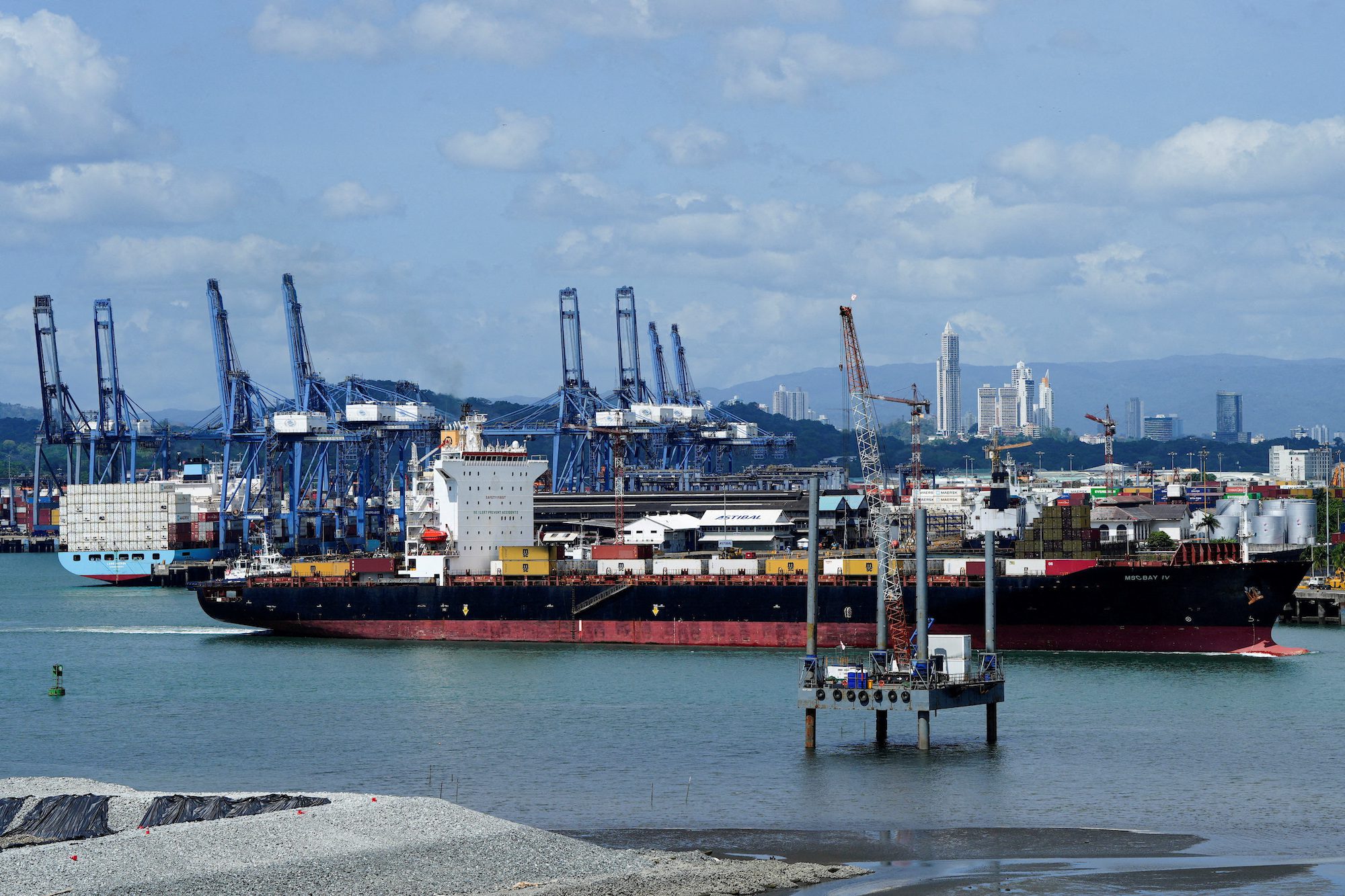
Chinese authorities have initiated a review of CK Hutchison Holdings Ltd.’s agreement to divest its port assets near the Panama Canal to a consortium led by BlackRock Inc., expressing dissatisfaction with the Hong Kong-based conglomerate’s decision.

The deal, valued at approximately $22.8 billion, encompasses the sale of 43 ports across 23 countries, notably including the Balboa and Cristobal terminals situated at either end of the Panama Canal. CK Hutchison asserts that the transaction is purely commercial and does not involve its port operations in Hong Kong or mainland China.

Beijing’s reaction has been notably severe. The Hong Kong and Macau Affairs Office, representing China’s central government, has publicly criticized the sale, describing it as a “betrayal of all Chinese people.” State-affiliated media have echoed this sentiment, labeling the move as “spineless” and accusing CK Hutchison of yielding to foreign pressure.

This development occurs amid heightened geopolitical tensions between China and the United States. U.S. President Donald Trump has lauded the acquisition, interpreting it as a strategic move to reclaim American influence over the Panama Canal, a vital maritime passage constructed by the U.S. in the early 20th century and transferred to Panamanian control in 1999.

In response to the sale, Chinese officials are contemplating the application of anti-monopoly laws to scrutinize the transaction further. Legal experts suggest that while Beijing’s jurisdiction over CK Hutchison’s overseas operations is limited, potential leverage could be exerted through the conglomerate’s substantial investments within China.

Hong Kong’s Chief Executive, John Lee, has also weighed in, denouncing coercive tactics by foreign governments without directly naming the United States or addressing the specifics of the port deal. He emphasized the importance of fair international trade practices and the need to resist external pressures.

By Nitya Chakraborty Europe, which has always been vocal about its past history and civilization as well its contribution to the making of the modern world, has never faced such humiliation in the hands of its transatlantic ally the USA in the last eighty years since the end of the Second World War in 1945.The […]


Matein Khalid If ever any investor needed a real time lesson in emerging markets risk, the timebombs in Ankara, Jakarta and Bogotá to provided it. President Erdogan ordered the arrest of his top rival Istanbul Mayor Ekrem İmamoğlu and triggered a 10% plunge in the lira against the US dollar, an exodus of offshore money from the local T-bill market and a horrific meltdown in Istanbul bank […]

BlackRock, the world’s largest asset manager, has launched its inaugural Bitcoin exchange-traded product in Europe, marking a significant expansion into the continent’s cryptocurrency investment landscape. The iShares Bitcoin ETP is now trading on Xetra and Euronext Paris under the ticker IB1T, and on Euronext Amsterdam as BTCN.

This strategic move follows the firm’s notable success in the United States, where its iShares Bitcoin Trust has amassed over $50 billion in net assets since its debut in January 2024. The European launch underscores BlackRock’s commitment to meeting the growing demand for cryptocurrency exposure among both institutional and retail investors across diverse markets.

To encourage adoption, BlackRock is offering a temporary fee waiver of 10 basis points, effectively reducing the expense ratio to 0.15% until the end of the year. This competitive pricing positions the iShares Bitcoin ETP as one of the most cost-effective options for European investors seeking direct exposure to Bitcoin’s price movements.

Manuela Sperandeo, BlackRock’s Head of iShares Product for Europe and the Middle East, highlighted the significance of this development, stating that the launch represents a “tipping point” for the industry as institutional and retail demand for crypto investment products continues to rise.

The European cryptocurrency ETP market, while smaller than its U.S. counterpart, has been steadily growing. Over 160 crypto ETPs are currently trading on European exchanges, collectively commanding over $13 billion in net assets. BlackRock’s entry is poised to significantly influence this market, potentially enhancing liquidity and attracting a broader investor base.

Coinbase, a leading cryptocurrency exchange, will serve as the custodian for the physical Bitcoin backing the ETP, ensuring institutional-grade security for investors. Bank of New York Mellon has been appointed as the administrator, further underscoring the product’s robust operational framework.

The introduction of the iShares Bitcoin ETP aligns with BlackRock’s broader strategy to expand its $1 trillion European market share and increase its customer base from 9 million to 19 million over the next three years. This initiative also reflects the firm’s responsiveness to evolving investor interests and its commitment to providing diverse investment solutions.

GUANGYUAN, CHINA – Media OutReach Newswire – 24 March 2025 – On March 12, marking the 47th Arbor Day of China, the “Shu Road Cuiyun Corridor Ancient Cypress Conservation Handover Ceremony” was held in Jian’ge County, Guangyuan City, Sichuan Province. More than a hundred town and township cadres, forest rangers and villagers witnessed this special handover event, who gathered to witness the transfer of responsibility for the […]

President Donald Trump has declared that, effective April 2, the United States will impose a 25% tariff on all imports from countries purchasing oil or gas from Venezuela. This measure, announced via his Truth Social platform, is aimed at penalizing nations that continue energy trade with Venezuela, which the administration accuses of covertly sending violent criminals into the U.S.

The President’s decision introduces a “secondary tariff” targeting nations engaging in energy transactions with Venezuela. He asserted that Venezuela has “purposefully and deceitfully” sent “tens of thousands” of high-level criminals, including members of the Tren de Aragua gang, into the United States. This gang has been designated as a Foreign Terrorist Organization by the U.S. government.

The impending tariffs are set to affect major importers of Venezuelan oil, notably China and India. India’s significant corporations, such as Reliance Industries Limited and Indian Oil Corporation , which have resumed importing Venezuelan crude following the easing of previous U.S. sanctions, may now face substantial economic repercussions.

This development marks a significant escalation in the U.S.’s economic measures against Venezuela. In August 2017, the Trump administration imposed sanctions targeting Venezuela’s petroleum industry by restricting the trading of Venezuelan bonds in U.S. markets. Further sanctions in January 2019 aimed to pressure President Nicolás Maduro to resign, freezing $7 billion of PDVSA’s U.S. assets and preventing U.S. firms from exporting naphtha to Venezuela.

The President’s announcement has already influenced global oil markets, with Brent crude prices rising by 1% following the news. This surge reflects concerns over potential disruptions in the global oil supply chain and the broader implications of the new tariffs.

The administration’s stance is that these measures are necessary to protect national security and address the alleged threats posed by Venezuela. However, critics argue that such broad tariffs could strain diplomatic relations and have unintended economic consequences for U.S. allies. The lack of detailed implementation plans has also raised questions about the practical enforcement of these tariffs and their impact on ongoing energy contracts.

Six Greater China cities are ranked in the top 20 most expensive office fit out markets in Asia Pacific Hong Kong moves up four places to rank as fifth most expensive fit out market in Asia Pacific, remains most costly in Greater China HONG KONG SAR – Media OutReach Newswire – 24 March 2025 – The cost to fit out an office in key locations across Asia […]

By Nitya Chakraborty Is the Bangladesh Army going to take over control of their politically turbulent country, either from front or behind, to precipitate the holding of early elections? This question is being raised by the seasoned political observers in Dhaka, as the whole of last week was dominated by highly controversial posts on Facebook, […]


Coinbase Global Inc., the largest U.S.-based cryptocurrency exchange, is in advanced discussions to acquire Deribit, a leading platform for Bitcoin and Ether options trading. The potential acquisition has been communicated to regulators in Dubai, where Deribit holds a license.

Deribit, founded in 2016 and headquartered in the Netherlands, has established itself as a dominant force in the cryptocurrency options market, particularly for Bitcoin and Ether contracts. In 2024, the exchange’s options notional trading volume surged 99% year-over-year to $743 billion, with total trading volume nearing $1.2 trillion. This growth underscores the increasing adoption of options and futures among institutional traders seeking risk management tools and leverage in crypto markets.

The potential acquisition aligns with Coinbase’s strategic push to expand its institutional offerings and underscores the growing importance of derivatives in the digital asset space. By integrating Deribit’s robust derivatives platform, Coinbase aims to enhance its product suite for institutional clients and strengthen its position in the competitive cryptocurrency exchange landscape.

While Coinbase’s interest has progressed to advanced stages, it is noteworthy that Kraken, another major U.S. cryptocurrency exchange, has also been in talks with Deribit regarding a potential acquisition. Contrary to earlier reports suggesting that Kraken had withdrawn from negotiations, sources indicate that discussions between Kraken and Deribit are ongoing. This simultaneous interest from two prominent exchanges highlights Deribit’s significant value proposition in the crypto derivatives market.

Deribit’s valuation has been a focal point in these discussions. In January, reports estimated the company’s worth to be between $4 billion and $5 billion. However, with the recent surge in crypto market activity and the heightened interest from major exchanges, the valuation could potentially be higher. Despite the advanced nature of the talks, it remains unclear if Coinbase has reached a final agreement with Deribit, and the discussions may not necessarily result in a deal.

The potential acquisition has been communicated to regulators in Dubai, as Deribit holds a license in the city. This license would be transferred to the acquiring entity, in this case, Coinbase. This regulatory aspect adds a layer of complexity to the negotiations, as compliance with international financial regulations is paramount for both entities.

The cryptocurrency industry has witnessed a surge in mergers and acquisitions, reflecting a maturation of the market and a drive towards consolidation. Exchanges are increasingly seeking to diversify their offerings to cater to a broader clientele, particularly institutional investors who demand sophisticated trading instruments like options and futures. By potentially acquiring Deribit, Coinbase would not only expand its product offerings but also solidify its position as a comprehensive platform for various trading strategies.

For Deribit, integration with a major exchange like Coinbase could provide access to a wider user base and additional resources, potentially accelerating its growth and innovation in the derivatives market. However, such an acquisition would also entail significant integration efforts, including aligning technological infrastructures, compliance protocols, and corporate cultures.

VISHNU RAJA
RYO YAMADA
HITORI GOTOH
IKUYO KITA