News related to
Partnerships

A token linked to the brand of popular creator-entrepreneur Jimmy Donaldson — known globally as MrBeast — saw price gains of nearly 900 per cent in 24 hours, reflecting growing investor speculation around the newly filed fintech trademark by his corporate group. The rally has thrust the unofficial memecoin spotlit by social-media buzz, despite clear warnings that the currency remains unauthorised and unconnected to any official launch.

The underlying spark appeared after his firm, Beast Holdings, submitted a trademark application in October 2025 for a brand called MrBeast Financial. The filing outlines services ranging from mobile banking, crypto payment processing, exchange and decentralized-trading tools to loans, credit cards and financial-education offerings.

Soon after media and investor attention picked up, the BEAST token’s trading volume soared — a pattern analysts attribute to a mix of hype, confusion with other meme coins referencing MrBeast, and overbought technical indicators that often precede sharp reversals.

Insiders at Beast Industries, including CEO Jeffrey Housenbold, have confirmed that financial-services expansion is part of a broader diversification strategy. At the summit event where the plan was publicly discussed, Housenbold said the company aims to package banking, fintech and creator economy functions under one umbrella — potentially offering fans access to financial services via a recognised brand.

Beast Industries’ market valuation has reportedly reached around US $5 billion. That, combined with MrBeast’s social-media reach, fuels investor optimism that “MrBeast Financial” — if realised — might attract millions of users instantly. This visibility helps explain why speculative investors clung to BEAST token amid the buzz.

Yet experts caution over regulatory and structural hurdles before any fintech project materialises. A US trademark filing does not equate to regulatory clearance; launching banking or crypto-exchange services would require compliance with complex licensing regimes, including money-transmitter permits, anti-money-laundering protocols and possibly oversight by financial authorities.

This is not the first time the MrBeast brand has floated multiple trademarks without launching full-fledged products. Past filings — ranging from burgers to gaming to snacks — have produced mixed results, with some evolving into real ventures and others quietly fading. That casts ambiguity over whether “MrBeast Financial” will ever become a functioning platform.

Despite that, investor appetite for BEAST appears to remain driven by two forces: the fear of missing out characteristic of crypto cycles, and hope that a fintech rollout tied to a globally recognised creator could upend traditional financial models. Until regulators weigh in or Beast Industries announces concrete partnerships, however, BEAST remains a speculative asset — its value tied more to branding buzz than fundamentals.

Matein Khalid When the rats scramble to escape a sinking ship as hungry sharks circle the blood red water, the end is near. 100 insider Johnnies sold $6.5 billion in OpenAI shares in a recent employee tender. Why bailout now at $500 billion if OpenAI is a slam dunk for a trillion dollar IPO next year? Simp​le. The 100 newly minted decamillionaires know that OpenAI can no […]

Global asset manager BlackRock has indicated it is willing to partner with sovereign wealth funds from the Gulf Cooperation Council to channel more capital into Asian markets. The company’s Chief Investment Strategist for Middle East and Asia-Pacific, Ben Powell, described the firm as “very open minded” about co-investment opportunities with SWFs in the region. This marks a notable strategic shift by the world’s largest asset manager, which […]

Japan is intensifying its economic engagement with Gulf partners as policymakers and corporate leaders seek to counter global uncertainty and reduce exposure to shifting geopolitical priorities under evolving US policy. The recalibration marks a notable acceleration in Tokyo’s outreach to the Middle East’s major sovereign investors, energy exporters, and technology funds, reflecting a sense within government and industry that the country must widen access to capital and secure strategic partnerships as global supply chains face persistent strain.

A growing number of senior officials and executives have argued that Japan’s longstanding reliance on the US as an anchor for both economic and security stability now requires broader support. Their stance reflects concerns generated by the more transactional orientation of the US under the America First framework, which has amplified debates in Tokyo on the need for diversified alliances. That reassessment has coincided with unprecedented liquidity flows across the Gulf, where sovereign wealth funds are expanding global portfolios in sectors ranging from clean energy and advanced manufacturing to semiconductors, logistics and emerging technologies.

Prime Minister Fumio Kishida’s government has moved to strengthen ties with the region’s largest investment authorities, including Abu Dhabi’s Mubadala Investment Company and Saudi Arabia’s Public Investment Fund. Japanese ministries have encouraged joint projects that align with national priorities such as chip resilience, hydrogen supply chains, carbon management, and infrastructure modernisation. Officials familiar with the discussions say the focus extends beyond energy security to long-term industrial cooperation, with Tokyo exploring ways to integrate Middle Eastern capital into Japan’s domestic renewal.

Several major companies have already positioned themselves to capture the shift. Trading houses such as Mitsui & Co. and Mitsubishi Corp. have expanded partnerships in clean fuels and petrochemicals, while Japan’s leading automakers are examining opportunities linked to Gulf diversification strategies, particularly in battery supply, autonomous mobility, and advanced materials. Banks including MUFG and SMBC are increasing their presence in the region to support outbound investment, project finance, and corporate advisory mandates requested by Gulf entities looking to deploy capital in Asia.

Analysts observe that the evolving dynamic is not one-sided. Middle Eastern investors have signalled interest in stable, technologically advanced economies as part of their long-term diversification plans. Japan’s strong intellectual property base, advanced industrial ecosystem, and predictable regulatory environment have become increasingly attractive to funds seeking alternatives to higher-risk markets. Executives have also pointed to the convergence of strategic priorities, including shared urgency around food security, energy transition, and digital infrastructure development.

The country’s semiconductor revival has emerged as a key area of alignment. As Japan attempts to rebuild its chip manufacturing footprint with government-backed projects involving firms such as Rapidus and partnerships with global foundries, Gulf investors have explored opportunities to participate in upstream and downstream components of the supply chain. Officials tracking the conversations describe growing interest from Middle Eastern funds in Japan’s materials science know-how and next-generation fabrication technologies, which they view as long-term assets capable of supporting their broader industrial programmes.

Energy cooperation remains central to the relationship. Japan continues to depend heavily on the Gulf for crude oil and liquefied natural gas, but the nature of that relationship is shifting toward co-investment in renewable energy, hydrogen production, and carbon capture projects. Tokyo’s efforts to secure stable supplies of blue and green hydrogen align closely with the decarbonisation roadmaps of Saudi Arabia and the United Arab Emirates, which are positioning themselves as future exporters of low-carbon fuels. Japanese companies have signed multiple memoranda with Gulf partners to test supply chains that could support both nations’ energy transition targets.

Technology collaboration is also gathering momentum. Gulf sovereign funds have expanded their allocations to late-stage venture investments and tech infrastructure, creating new openings for Japanese firms in fields such as robotics, clean-tech, mobility software, and advanced manufacturing systems. Executives from several technology conglomerates have confirmed that discussions are under way to establish joint R&D facilities, venture co-investment platforms, and industrial clusters that could operate across Asia and the Middle East.

Diplomatic signalling has reinforced the economic shift. Visits by senior Japanese officials to Riyadh, Abu Dhabi, Doha and Manama have highlighted Tokyo’s intent to deepen ties not only through energy partnerships but also through digital transformation initiatives, defence industrial cooperation, and food-supply agreements. These engagements complement Japan’s broader Indo-Pacific strategy, which emphasises stability, open trade routes, and resilience in critical sectors.

YouTube has moved to strengthen its presence in the UAE’s digital health landscape by developing programmes that place licensed medical professionals at the forefront of its educational content, signalling a determined push to make verified advice more accessible across the platform. The company’s strategy targets growing demand for trustworthy health information online, as concerns over misinformation continue to shape global discussions around digital media governance.

Executives overseeing the initiative said the platform aims to build a space where users can reliably distinguish expert-led guidance from unverified commentary, a challenge amplified by the scale and diversity of YouTube’s audience. The expansion forms part of a wider effort to elevate authoritative creators working in fields where accuracy is critical, particularly as the Gulf region deepens its investment in digital transformation of public services, including healthcare, teleconsultation and patient education tools.

YouTube’s managing teams have pointed to the UAE as a priority market due to its strong uptake of digital services, rapid population growth and the increasing role of online platforms in shaping consumer behaviour. Company representatives noted that the health programme supports licensed doctors and specialists in producing explanatory content on topics ranging from chronic disease management to preventative care, with a focus on clarity and cultural relevance. The aim is to ensure that users searching for guidance on everyday health queries encounter information grounded in established medical understanding.

The regional rollout also follows the platform’s broader global commitment to responsible content curation, which includes labelling health sources, collaborating with regulatory bodies and strengthening partnerships with hospitals and academic institutions. Executives highlighted that user trust depends not only on removing harmful material but also on amplifying credible voices. This shift reflects wider trends across major technology firms, which are under increasing pressure to address misinformation while supporting creators who offer value through expertise.

During discussions about the programme, YouTube’s leadership emphasised that the future of digital platforms lies in empowering diverse creator communities. A senior executive cited the example of a Dutch knitting creator whose channel grew from a small personal project into a global community hub, illustrating how storytelling and authenticity can generate engagement across borders. The reference underscored the platform’s belief that healthcare content, too, should be driven by relatable human narratives, not only clinical explanations.

Doctors participating in the UAE initiative have described the programme as a chance to reach audiences who might hesitate to seek medical advice through traditional channels. Specialists working in fields such as cardiology, paediatrics and mental health say that video content enables them to clarify misconceptions, guide viewers toward evidence-based treatment options and encourage early intervention. Several practitioners have noted that the platform provides a unique opportunity to communicate complex issues in a visually engaging format, which can support better understanding among younger users.

Market analysts observing YouTube’s strategy say the platform’s focus aligns with the UAE’s national priorities, particularly its long-term digital health agenda. Authorities across the Gulf have invested in AI-enabled diagnostics, electronic health records and telemedicine infrastructure, creating a parallel demand for trusted educational material that helps residents navigate an evolving healthcare environment. Analysts also point to the competitive landscape, where global platforms are working to differentiate themselves through credible content partnerships.

The company’s decision to bring more clinical professionals onto the platform reflects research showing that users often rely on video explanations when confronted with health queries. Executives acknowledge that this behaviour carries both opportunities and risks, as misinformation can spread rapidly when content appears authoritative. To address this, YouTube has been refining its ranking systems to elevate licensed practitioners and institutions, ensuring visibility for creators whose credentials and communication standards have been verified.

Creators involved in the new initiative have stressed the responsibility that accompanies such visibility. Several participants noted that working on the platform requires balancing accessibility with professional rigour, avoiding oversimplification while keeping content digestible for general audiences. These doctors have described the process as an extension of public health education, albeit through a digital medium that demands nuanced storytelling and sensitivity to cultural context.

Amazon’s efforts to scale its Prime Air drone service have come under intensified scrutiny after a delivery aircraft struck a cable in Texas earlier this year, prompting renewed questions over the programme’s operational readiness, regulatory compliance, and ability to challenge competitors that have gained ground in autonomous logistics. The incident, which damaged the drone and forced safety investigations, underscored the complexities of expanding unmanned aerial deliveries in […]

Abu Dhabi’s ascent as a core pillar of Alan Howard’s hedge fund strategy gained fresh momentum as the billionaire founder detailed how the emirate has rapidly become one of his firm’s most influential trading and investment hubs. The expansion, initiated when Howard established a permanent base in the city in 2023, has evolved into a defining feature of the firm’s global footprint, positioning Abu Dhabi alongside London […]

Advertisements

Trailblazed Hong Kong-EU opportunities across AI, life and health, and smart city technologies HONG KONG SAR – Media OutReach Newswire – 8 December 2025 – Hong Kong Science and Technology Parks Corporation (HKSTP) showcased a dynamic presence at the “Think Business, Think Hong Kong” (TBTHK) symposium organised by the Hong Kong Trade Development Council (HKTDC) held in Milan on 27 November 2025, spotlighting Hong Kong’s strategic role […]

SINGAPORE – Media OutReach Newswire – 7 December 2025 – As Singaporean families plan for higher education, tuition costs often dominate the conversation. However, the more critical consideration lies in understanding the relationship between cost and value. This article provides an in-depth understanding of the financial implications of pursuing studies at local public universities, private institutions such as SIM, and overseas universities, while highlighting SIM’s distinctive proposition […]

Netflix is set to take control of Warner Bros. Entertainment’s core studio and streaming assets through a landmark transaction valued at about $72 billion in equity, marking one of the largest media takeovers in decades and reshaping the balance of power across Hollywood. The agreement follows months of industry speculation over the future of Warner Bros. Discovery, which had been under pressure to stabilise debt while navigating […]

By Nitya Chakraborty The India-Russia joint statement issued on December 5 after two days of talks between President Vladimir Putin and the Indian Prime Minister Narendra Modi is more a vindication of India’s renewed exercise of its geopolitical status defying the pressure from the USA and the other western powers rather than a document on […]

The article Modi-Putin Summit Reinforces India’s Geopolitical Identity Amidst Headwinds appeared first on Latest India news, analysis and reports on Newspack by India Press Agency).

Greenlogue/AP Backed by British International Investment, Egypt’s first utility-scale hybrid solar and battery development has taken a decisive step forward as the country works to accelerate its transition towards a more resilient renewable power system. The 1.1-gigawatt Obelisk project, led by Norway’s Scatec, is positioned to become one of the largest integrated solar and battery energy storage schemes in Africa, strengthening prospects for grid stability and long-term […]

By T N Ashok NEW DELHI: Russian President Vladimir Putin arrived in India Thursday evening for a two-day state visit that has become a diplomatic flashpoint, testing New Delhi’s ability to maintain strategic independence amid mounting pressure from Washington and European capitals. The arrival marks Putin’s first trip to India since the Ukraine war began […]

The article Putin’s India Visit: A Stress Test Of Strategic Autonomy Amid Global Pressure appeared first on Latest India news, analysis and reports on Newspack by India Press Agency).

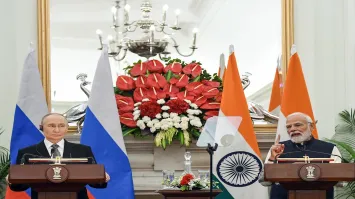
Crowds and cameras gathered at the Delhi airport as Vladimir Putin stepped off his aircraft and was received by Narendra Modi with a firm embrace that signalled the weight both leaders attach to a relationship tested by shifting global alignments. The state visit, framed by Moscow and New Delhi as an effort to reinforce political and economic cooperation, comes at a moment when both sides are seeking predictable partners amid geopolitical uncertainty.

Putin’s arrival on Thursday marked his first trip to the country in more than a year, timed to draw attention to long-standing strategic ties that have endured pressure from global sanctions on Russia and growing competition among major powers for influence in Asia. Modi’s greeting, captured widely by broadcasters, highlighted the government’s intention to maintain a working partnership with Moscow even as it deepens cooperation with Western governments on defence, technology and energy.

The two leaders are expected to focus on trade flows, defence equipment support, energy security arrangements and joint manufacturing proposals that have gained momentum since early 2024. Officials familiar with the agenda have pointed to Moscow’s push for expanded settlements in national currencies, aiming to mitigate complications arising from sanctions that have disrupted traditional payment channels. New Delhi has been looking for greater clarity on oil supply commitments, pricing transparency and long-term contracts, following fluctuations in global markets that prompted domestic refiners to diversify purchases.

Defence cooperation remains central to the partnership, though the balance has shifted over the past decade as New Delhi has widened procurement from the United States, France and other suppliers. Russia continues to service and upgrade a significant share of the armed forces’ equipment, and ongoing discussions cover spare-parts support, maintenance of legacy systems and joint development pathways that may offer greater flexibility than standalone purchases. Analysts tracking the talks say Moscow is keen to retain its foothold in the defence market while showcasing its willingness to adapt to collaborative production models.

Energy will feature prominently during the discussions as Russia seeks greater investment in its upstream projects and hopes to secure broader participation from New Delhi in pipeline and liquefied natural gas initiatives. Indian refiners have emerged as important buyers of Russian crude despite logistical and payment challenges, and both sides are expected to address delivery mechanisms that would reduce delays and improve predictability. Officials have also been reviewing possibilities for expanding cooperation in nuclear energy, where previous agreements have laid the groundwork for additional reactor units at existing sites.

Bilateral trade has risen sharply over the past two years, driven largely by energy imports, but New Delhi has expressed concerns about the wide imbalance, with exports to Russia trailing significantly. Commerce officials have been pushing for easier access for pharmaceuticals, agricultural goods and engineering products, arguing that a more balanced structure would strengthen the sustainability of the economic relationship. Russian representatives arriving with the delegation have proposed expanded use of logistics corridors passing through Central Asia, which they say would ease transport costs for exporters on both sides.

Regional security dynamics form another layer of the discussions, particularly Moscow’s role in Eurasia and its ties with Beijing. Diplomats note that New Delhi continues to walk a delicate line, maintaining cooperation with Russia while strengthening its partnerships across the Indo-Pacific. Strategic analysts caution that both sides must navigate sensitive points, including Moscow’s position on territorial disputes and broader alignments that could shape regional balances over the coming decade.

Putin’s schedule includes a ceremonial welcome, delegation-level talks and a review of key agreements under negotiation. Officials have indicated that deliverables may include frameworks on energy cooperation, updated defence industrial collaboration and initiatives supporting educational exchanges and technological research. Cultural diplomacy also features prominently, with both governments emphasising people-to-people connections that have historically underpinned the relationship.

The optics of the visit carry domestic significance for both leaders. Modi’s government seeks to project continuity in foreign policy through engagement with all major powers, underscoring its commitment to strategic autonomy. For Putin, the reception in New Delhi offers an opportunity to demonstrate that Russia retains influential partners beyond Europe and North America, reinforcing narratives about its engagement with Asia’s leading economies.

Analysts observing the visit note that the personal rapport between the two leaders has helped maintain channels of communication through periods of global stress. Their discussions routinely touch on multi-year strategic frameworks covering defence, energy, industrial cooperation and regional diplomacy, areas where incremental progress continues despite broader geopolitical complications.

A new specialised laboratory for testing and certifying sustainable aviation fuel is being set up in Fujairah, marking a significant expansion of the UAE’s ambitions to become a leading hub for low-carbon aviation fuels across the Middle East and North Africa. The project, developed by MENA Biofuels in partnership with Saybolt, is positioned as the first facility of its kind in the country dedicated to sustainable aviation fuel testing and is expected to strengthen the supply chain for carriers adopting cleaner fuel blends.

The laboratory will be located within the Fujairah Oil Industry Zone, one of the region’s key energy storage and logistics centres. According to the developers, the facility will operate under internationally recognised standards and provide independent verification and certification services for SAF produced in the UAE and the wider region. This will allow aviation fuel suppliers to meet the stringent quality and sustainability benchmarks required by global regulators and airlines, many of which are targeting large-scale SAF adoption over the coming decade.

MENA Biofuels and Saybolt have indicated that the lab is being designed to serve both domestic producers and international clients moving fuel through Fujairah’s terminals. Industry analysts note that Fujairah’s strategic location on the global maritime route linking the Gulf to Asia and Europe gives the new testing operation considerable potential to influence regional fuel flows. The developers said the initiative reflects growing demand among airlines for certified SAF, which is viewed as one of the most immediate pathways to reducing aviation emissions.

The UAE has been expanding investments in biofuels as part of its broader decarbonisation strategy, with several aviation stakeholders stepping up procurement of SAF blends for commercial flights. Etihad Airways and Emirates have both trialled SAF operations, while Abu Dhabi and Dubai authorities have emphasised the need for stronger regional production capacity. Industry data indicates that SAF supply remains constrained worldwide, making certification infrastructure a critical component for scaling up output. The new Fujairah lab aims to close a gap in regional capabilities by offering end-to-end testing that aligns with international requirements established by organisations such as ASTM International, which governs SAF specifications.

Saybolt, an inspection and testing group with long-standing operations in global energy markets, is expected to lead the technical management of the laboratory. Its role will involve implementing fuel-testing protocols, quality assurance systems and sustainability verification frameworks. Executives familiar with the arrangement said the partnership combines Saybolt’s technical expertise with MENA Biofuels’ regional network and logistics access. Market observers believe this gives the venture a strong foundation to support both emerging SAF producers and established energy companies evaluating diversification into aviation biofuels.

The decision to anchor the lab within the Fujairah Oil Industry Zone aligns with local authorities’ push to broaden the zone’s portfolio beyond crude and refined products. The zone already hosts significant tank storage, bunkering and refining infrastructure, and expanding into sustainable fuels aligns with the UAE’s national energy transition commitments. Investors and analysts have pointed to Fujairah’s ability to handle large volumes of fuel as an advantage for SAF certification, particularly for producers that require rapid turnaround on testing to meet airline delivery schedules.

Aviation industry figures have highlighted that the move addresses a structural bottleneck in the SAF market. Certification processes are often conducted in Europe or the United States, adding cost and delay for producers operating in the Gulf. By offering testing capacity locally, the Fujairah lab is expected to reduce lead times and encourage investment in regional SAF manufacturing. Some analysts say the initiative may draw interest from energy companies in neighbouring Gulf states exploring SAF pathways as part of their decarbonisation agendas.

Airline industry targets have accelerated demand for SAF, with global carriers collectively aiming for significant emissions reductions by 2030. Several Gulf-based airlines, including those operating through Abu Dhabi, Dubai and Sharjah, have pledged to expand their use of sustainable fuel blends once supply becomes more stable. SAF production in the region remains at an early stage, but energy firms have been evaluating waste-to-fuel pathways, renewable feedstocks and partnerships with technology providers to scale output. The establishment of credible certification capacity is viewed as an essential precursor to commercial production.

A fully digital escrow service for vehicle ownership transfers has been introduced through a partnership between SlashData and the Integrated Transport Centre, marking a significant shift in how transactions between buyers and sellers are executed in the UAE. The rollout of the platform known as Shary signals an effort to reduce paperwork, lift administrative burdens, and strengthen confidence in a market where used-car transactions continue to expand. […]

SINGAPORE – Media OutReach Newswire – 4 December 2025 – Pursuing higher education abroad represents a significant financial commitment. According to a report by The Straits Times, annual tuition fees at top global universities can range from US$30,000 to US$50,000. Total expenditure for a four-year programme, including accommodation and living costs, exceeding S$500,000 in destinations such as the United States, United Kingdom and Australia. In comparison, international […]

SINGAPORE – Media OutReach Newswire – 3 December 2025 – As Singapore’s economy continues to evolve, the pursuit of education is no longer a linear journey. For many learners, choosing between full-time and part-time study has become a pivotal decision, one that shapes long-term career prospects, financial planning, and personal development. At the Singapore Institute of Management (SIM), flexibility is a core commitment. Offering over 140 full-time […]

Concerns over Oracle Corporation’s massive borrowing to fund its artificial-intelligence ambitions have pushed its debt instruments into territory unseen since the 2008 financial crisis. The company’s bonds have sold off, yields on maturing notes have climbed, and its credit default swap spreads have surged — signalling growing investor anxiety about the sustainability of its heavy spending on cloud and AI infrastructure. The sell-off follows disclosure that Oracle […]

Greenlogue/AP New Murabba, the massive urban redevelopment project in Riyadh, has formalised a partnership with the US Green Building Council to embed global sustainability standards into its design, construction and operations. The memorandum of understanding signed between the two organisations establishes a framework to explore how international systems such as LEED — including its latest LEED v5 as well as LEED for Communities — can be applied […]

Qatar and the United States have moved to cement their military cooperation with high-level commitments that signal a recalibration of regional security dynamics. The Qatari Prime Minister and Foreign Minister, Sheikh Mohammed bin Abdulrahman bin Jassim Al-Thani, met with the Commander of the US Central Command, Admiral Charles Bradford Cooper, to discuss expanding bilateral defence cooperation. The talks pointed to broad agreement on enhancing joint military readiness, intelligence sharing and coordination on regional security challenges.

The defence discussions follow a backdrop of heightened tensions after an airstrike on Qatari territory by Israel targeting Hamas political leaders. The strike led to strong condemnation across Gulf states and sparked a broader reassessment of the security framework anchoring US presence in the Gulf. The United States responded by reaffirming its commitment to Qatar’s sovereignty.

An executive order signed by US leadership has committed Washington to defending Qatari territory and infrastructure if subjected to external attack, including by military means if necessary. This formal guarantee elevates Qatar’s strategic importance in the US security architecture.

Concurrently, Washington and Doha have arranged deeper integration of military infrastructure. An agreement has been finalised to build a facility at a US Air Force base in Idaho to host a contingent of Qatari F-15QA fighter jets and associated personnel. The facility aims to enhance combined training, preparedness and interoperability under US command — though ownership and command remain US-controlled, eliminating concerns about a permanent foreign base on US soil.

These developments follow multiple engagements aimed at strengthening mutual defence ties. The November meeting between the Qatari Prime Minister and CENTCOM’s commander underscored mutual interest in “support and strengthen” shared strategic goals in defence domains.

Observers interpret this phase as part of a broader US strategy to reinforce alliances in a volatile Middle East. The enhanced cooperation offers Qatar increased security assurances and greater leverage in regional diplomacy, while offering the US a more secure and integrated network of partnerships to project influence and stability. Critics, however, warn that such deepening military ties may further entangle Gulf states in US-led strategic rivalry and increase regional polarization.

OceanX has completed its first research mission in Timor-Leste, carrying out fourteen days of integrated science and exploration across the northern coast and Atauro Island region. Dili, Timor-Leste – Media OutReach Newswire – 2 December 2025 – The mission brought together scientists from KAUST, the University of Florida, the University of Western Australia, and Timorese counterparts to investigate biodiversity, whale ecology, and seafloor structure in one of […]

Showcasing Tech Innovation Businesses that Address Healthcare, Industrial Production and Environmental Pain Points HONG KONG SAR – Media OutReach Newswire – 2 December 2025 – The University of Hong Kong Techno-Entrepreneurship Core (HKU TEC) will organise 30 developing startups to participate in the HKTDC Entrepreneur Day, an entrepreneurial event to be held on 4th and 5th December 2025 at the Hong Kong Convention and Exhibition Centre. Of […]

Technology brand CUKTECH brings two innovative products to Filipino consumers: its first car charger and a dual-cable power bank, designed to meet diverse local charging needs through advanced technology and user-focused design. MANILA, PHILIPPINES – Media OutReach Newswire – 1 December 2025 – CUKTECH recently launched two products in the Philippine market: the 10 Car Charger with retractable cable and the CP24 Power Bank with built-in cables. […]

VISHNU RAJA
RYO YAMADA
HITORI GOTOH
IKUYO KITA