News related to
Partnerships

Etihad Rail has confirmed that passenger services will begin operations in 2026, ushering in a new era of high-speed connectivity across the UAE. At the Global Rail 2025 exhibition in Abu Dhabi, the company revealed the first public visuals of its passenger rolling stock and detailed plans for its network, integration efforts, and operating partnerships. Azza Al Suwaidi, deputy CEO of Etihad Rail Passenger Services, stated that […]

PHNOM PENH, CAMBODIA – Media OutReach Newswire – 1 October 2025 – Cambodia’s climate resilience efforts gained fresh momentum with the signing of a memorandum of understanding between the Ministry of Environment and the Chen Zhi Climate Action Challenge, a nationwide initiative led by Neak Oknha Chen Zhi that empowers young Cambodians to lead scalable, community-based climate solutions. Memorandum of Understanding (MoU) Signing Ceremony with Ministry of […]

0.1 percent of first-year regular premium equivalent from Family Takaful products launched after 1 August 2025 will be donated to the Community Chest of Singapore SINGAPORE – Media OutReach Newswire – 30 September 2025 – Etiqa Insurance Singapore, the insurance arm of Maybank Group, today announced a charity pledge linked to the launch of its latest Takaful products. Invest purpose, a new Shariah-compliant investment-linked plan designed for […]

Dubai has secured a position among the world’s top four FinTech centres, according to the latest Global Financial Centres Index published on 25 September, signalling a pivotal shift in the emirate’s financial technology trajectory.

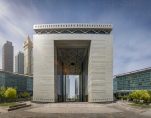
The GFCI report places Dubai at 11th globally in the overall ranking of financial centres, but underscores its standing as one of the most dynamic hubs for FinTech innovation. The Dubai International Financial Centre has played a central role in driving this transformation.

DIFC now houses over 1,500 companies focused on AI, FinTech, and innovation, making it the region’s largest cluster of its kind. These firms have collectively raised more than US$4.2 billion in funding, strengthening the UAE’s appeal as a destination for growth-stage tech ventures. Sheikh Maktoum bin Mohammed bin Rashid Al Maktoum, First Deputy Ruler of Dubai and Minister of Finance, credited the rise to the strategic goals of the Dubai Economic Agenda D33 and to Dubai’s business-friendly infrastructure and regulatory regime.

Essa Kazim, Governor of the DIFC, stressed that the momentum reflects long-term planning and deep investment. He noted that positioning Dubai among the top global FinTech players has required calibrated incentives, robust legal frameworks, and international partnerships. Arif Amiri, Chief Executive Officer of the DIFC Authority, said the locale’s success stems from synergy among institutional support, talent attraction, and ecosystem-building efforts.

Dubai’s ascent in the FinTech league emerges amid intensifying global competition. Traditional financial centres such as London, Singapore, and Hong Kong continue to maintain strong footholds, leveraging established networks, global institutions, and mature regulatory systems. Yet Dubai’s rapid rise indicates that newer hubs with nimble regulation and aggressive incentives can leapfrog in the tech-driven financial services landscape.

The GFCI 38 ranking shows Dubai overtaking several peers in the Gulf and Asia, with the city gaining one rank to 11th place overall and closing gaps in score metrics used to assess competitiveness, such as human capital, reputation, and business environment. The GFCI emphasises that “expected future significance” is one of the domains in which Dubai leads globally—an indication that market participants foresee further growth in its influence.

Dubai’s Roads and Transport Authority has revealed a 15-kilometre Dubai Autonomous Zone, an integrated corridor designed to link driverless land and water transport modes. The zone will stretch from Creek Station on the Metro Green Line through Al Jaddaf toward Dubai Creek Harbour and Festival City. The plan aims to weave Metro, RoboTaxis, RoboBuses, self-driving shuttles, autonomous abras, driverless logistics vehicles and street-sweeping bots into one seamless […]

Fortescue has sealed a flurry of contracts to deploy 300 to 400 zero-emission haul trucks at its Pilbara operations and to bolster its renewable energy capacity with the full acquisition of a Spanish wind tech company. The shifts represent a decisive scaling of its “Real Zero by 2030” ambition.

Under the new agreements, Chinese manufacturer XCMG will supply up to half of the electric 240-tonne haul truck fleet, with deliveries phased between 2028 and 2030. The remaining trucks will be produced by Liebherr, under an amended version of an earlier deal. The contracts build on an earlier framework signed in 2024 for battery-electric ancillary mining equipment.
XCMG itself refers to the Fortescue order as the largest export order for green mining equipment from China to date. The trucks may include autonomous features and use advanced software, similar to those operating in China’s open-pit mines.
Fortescue is also finalising its full takeover of Nabrawind, a Spanish wind tower and turbine technology company in which it held a minority stake since 2023. With full ownership, Fortescue plans to integrate Nabrawind’s self-lifting tower designs with turbines supplied by Envision Energy, aiming to deploy up to 2.1 GW of installed wind capacity in its Pilbara “East Pilbara generation hub.” The first wind energy is expected online by 2028, pending regulatory approval.

To support its Decarbonisation roadmap, Fortescue has signed supply agreements with several other Chinese clean-tech firms: BYD will supply energy storage systems; LONGi will provide photovoltaic modules; and Envision will deliver turbines and smart energy solutions. Fortescue describes the partnerships as a “multilateral collaboration” to access the best manufacturing capacity globally.
Andrew Forrest, the company’s Executive Chairman, emphasised that China’s ability to scale green technologies rapidly makes it a key partner in Fortescue’s strategy. He remarked that industry should “glue back” international cooperation through practical alliances rather than mere rhetoric. The company also continues to operate its R&D arm, Fortescue Zero, which is tasked with integrating and optimising power systems across its fleet and operations.

However, the pivot towards Chinese suppliers has already prompted adjustments to the Liebherr arrangement. Fortescue has scaled back Liebherr’s role to supplying at minimum half the haul trucks, down from its originally envisaged share, reallocating greater share to XCMG. Analyses suggest the move is intended to diversify risk, ensure supply chain resilience, and meet aggressive deployment timelines.
The decision also appears to reflect broader challenges in the green hydrogen sector: Fortescue has walked away from planned hydrogen projects in Arizona and Queensland, absorbing write-downs, and is now emphasizing electrification and green iron production instead. Internal restructuring and leadership turnover at Fortescue Zero have raised questions about execution, but the company underscores that the new strategy remains intact.

Kuwait Petroleum International and payments provider WEX have launched a joint fuel card in Italy, called CartissimaQ8-WEX, offering business customers access to a network of more than 3,400 service stations, including Q8, Q8easy, and authorised partners.

Under the partnership, WEX cardholders will be able to refuel across Italy’s Q8 network and partner sites, gaining visibility over fuel consumption and simplified billing. KPI said the initiative is part of its strategy to deepen its footprint in the Italian market by introducing a new sales channel in collaboration with a payments specialist.

The agreement provides WEX customers access to a broad distribution system spanning Q8, Q8easy and authorised stations across Italy. KPI’s network in the country already includes several hundred stations, and this card linkage aims to consolidate its reach by leveraging WEX’s fleet and payments infrastructure.

WEX has been actively expanding its European fuel network via partnerships in countries such as France and the Netherlands, tying up with Carrefour and Sakko to broaden its acceptance footprint. That expansion effort dovetails with this new agreement, enabling cross-market leverage.

While KPI is the local operating arm of Kuwait Petroleum Corporation, WEX is a US-based payments and fleet services firm. The alliance represents a fusion of upstream fuel retailing and downstream payments infrastructure. It also reflects a broader trend in the energy sector: fuel retailers seeking to strengthen customer retention through integrated payment and fleet management services.

Stakeholders in the Italian fuel and mobility markets view the move as a response to intensifying competition from independent fleet card providers and mobility fintechs. By embedding payments into its fuel ecosystem, KPI hopes to capture a larger share of corporate fleet spend and lock in recurring usage.

Industry analysts note that acceptance scale is key to fleet card uptake; the more stations that accept a given card, the more attractive it becomes for fleet operators. With 3,400 stations accessible under CartissimaQ8-WEX, the offering is immediately competitive.

Advertisements

TOKYO, JAPAN – Media OutReach Newswire – 26 September 2025 – Azbil Corporation (Tokyo Stock Exchange Code: 6845) announced its participation as a Gold sponsor and exhibitor at Data Centre World Asia (DCWA) 2025. As Asia’s largest data center show, part of Tech Week Singapore, DCWA will take place on October 8 and 9, 2025 at the Marina Bay Sands Expo & Convention Centre. The event is […]

HONG KONG SAR – Media OutReach Newswire – 25 September 2025 – Southco Asia Limited proudly celebrated the grand opening of its new state-of-the-art manufacturing facility, Southco Manufacturing and Technology (Foshan) Co., Ltd., located in the Plainvim Intelligent Industrial Park in Gaoming, Foshan, China. The event marked a major milestone for Southco, showcasing its commitment to innovation, operational excellence, and strengthening its presence in the Asian market. […]

A high-profile gathering scheduled for 29 September in Singapore will convene health professionals, AI innovators and medtech entrepreneurs to examine the evolving intersection of artificial intelligence and clinical care. Titled CliniConnect: AI X Healthcare SG Edition, the event aims to catalyse collaboration across disciplines and continents.

Organisers say the agenda will include interactive panels, pitch sessions, and roundtable debates focused on real-world adoption of AI in diagnostics, hospital systems, and patient care. They expect participation from clinicians, researchers, startup founders and regulatory stakeholders alike. The event is expected to coincide with TOKEN2049, a major AI & blockchain gathering, offering cross-domain exposure and synergy.

CliniConnect has hosted several prior editions in Singapore and other regional hubs, with past speakers including Dr Adam Chee, founding lead of Singapore’s Centre for AI-Enabled Health. These gatherings have emphasised bridging the gap between algorithm development and clinical deployment, with attention to ethics, data governance and system integration.

One central topic will be how hospitals and health systems can scale AI solutions beyond pilot phase. Many institutions struggle to integrate point-solutions into legacy electronic health records or workflows. Executives and innovation leads at the event will share strategies for deploying AI at scale without fragmenting operations.

Another critical strand will explore trust, explainability and regulatory oversight. While AI is making strides in pathology, radiology and triage, clinicians often resist “black-box” models. Some speakers plan to advocate hybrid approaches combining model outputs with human oversight or modular interpretability frameworks.

Regulatory perspectives are expected to feature heavily. Several jurisdictions are updating medical device rules to account for adaptive algorithms. Singapore’s Health Sciences Authority has begun consultations on AI frameworks, and regional alignment across ASEAN markets remains a challenge. CliniConnect hopes to provide a forum for convergence on standards, data privacy and cross-border validation.

On the entrepreneurship front, medtech startups will pitch innovations aimed at workflow automation, predisposition risk modeling, remote patient monitoring, and imaging augmentation. Organisers have indicated that venture capital and hospital innovation arms will be present, seeking collaborations or early investments.

The event also intends to showcase case studies from institutions that have begun deploying AI in clinical settings. Narratives are expected from hospitals in Singapore, South Korea, India and Dubai on how they piloted decision-support tools, performance-monitoring systems or diagnostic assistants, and the bottlenecks they encountered in scaling. These stories will help attendees assess trade-offs, resource requirements and institutional readiness.

Observers note CliniConnect’s growing ambition: it now brands itself not just as a regional meetup but as a bridge between Asia’s health tech communities and global AI networks. By aligning with TOKEN2049 and leveraging cross-sector partnerships, it hopes to attract more international participants and raise its influence in defining health AI standards.

Arada has acquired a 75 percent stake in London-based residential developer Regal as part of a Dhs 2.5 billion investment that marks its first UK foray and second international expansion after Australia. The UK business will be rebranded as Arada London, with an ambition to turbocharge Regal’s pipeline from 10,000 units across 11 projects to over 30,000 within three years.

The acquisition was formalised in a ceremony attended by Sheikh Sultan bin Ahmed bin Sultan Al Qasimi, Chairman of Arada. Arada’s Group CEO, Ahmed Alkhoshaibi, said that more than half of the capital will be channelled into accelerating development and securing new land parcels. He described the London market environment as one presenting “right opportunities to acquire the right sites at the right price”.

Regal’s chief executive, Jonathan Seal, and the existing executive team will remain in post after the transaction. Seal remarked that Arada’s alignment with Regal’s strategic values and long-term vision made it a fitting partner to lead the next phase of growth.

The deal gives Arada an immediate platform in London, tapping into Regal’s diversified portfolio, which spans for-sale residential units, purpose-built student accommodation, and mixed-use regeneration schemes. Among ongoing developments is the Fulton & Fifth project in Wembley, comprising 876 homes of which 40 percent are designated as affordable housing, and Orchard Wharf in Tower Hamlets, which recently secured approval for 1,365 student beds and 200 homes.

Analysts see strategic logic in entering London via acquisition rather than greenfield development, citing the complexities and regulatory friction in the UK housing sector. Arada’s move follows a wave of Gulf-based developers expanding into London, including Damac, Aldar, and Modon, often via partnerships or subsidiaries.

However, entering the London residential market is not without risk. Regal’s 2024 accounts showed £252 million in short-term debt, contrasted against £196 million of investment property, reflecting potential balance-sheet stress. The UK housing sector continues to face headwinds from construction inflation, planning delays, and demand volatility.

Arada has defended the timing. Alkhoshaibi stated that entering markets when sentiment is subdued allows for acquiring desirable assets at lower cost, positioning for upside when conditions recover. He noted that Arada’s approach is to maintain momentum in its UAE operations while layering growth abroad.

Beyond the UK, Arada is also contemplating further regional expansion. The company is reportedly in discussions with Saudi Arabia’s Public Investment Fund about a large mixed-use project in the kingdom. In the UAE itself, Arada plans a Dhs 3 billion development project in Ras Al Khaimah next year, reinforcing its domestic footprint.

Leading Financial Institutions, Regulators, and Tech Innovators Converge to Accelerate Hong Kong’s AI Readiness and Global Leadership HONG KONG SAR – Media OutReach Newswire – 24 September 2025 – Citi Hong Kong, in collaboration with Mastercard and the FinTech Association of Hong Kong (FTAHK), successfully co-hosted the “Creating an AI Ready Economy” forum yesterday. Riding on the success of last year, this flagship event, now in its […]

Electric vehicle insurance policies in the UAE are commanding about 72 per cent higher premiums than those for comparable petrol or diesel cars, largely because of elevated repair costs, limited workshop capacity, and parts supply chain challenges. Such figures, derived from data compiled by leading insurance and automotive analysts, shed light on systemic pressures across the market. Average comprehensive EV insurance is being priced at approximately AED […]

More than 180 UAE government Chief AI Officers gathered in Washington under the aegis of the US-UAE Business Council to build partnerships with US tech firms and experts, intensifying the country’s drive in AI governance and cybersecurity. The event leveraged sessions with global business leaders and government officials to share expertise in advanced technology, highlighting the AI Chief Executives Model as a catalyst for digital governance reforms.

Engineer Mohamed bin Taliah, Chief of Government Services, underscored that AI adoption across UAE government remains a top priority, anchored in strategic goals to elevate digital governance globally. He asserted that engaging directly with leading technology companies offers vital exposure to best practices, and that empowering local talent via high-level training is essential to establishing an innovative and “smarter” digital future.

Dr Mohamed Al Kuwaiti, heading the Cybersecurity Council for the UAE Government, flagged an increase in complexity and frequency of cyber threats, saying that international cooperation is now non-negotiable. He described protection of critical infrastructure, data privacy, and AI-driven defence as areas requiring urgent collaboration, emphasising building resilience through national expertise and shared knowledge.

Dr Abdulrahman Al Mahmoud of the Artificial Intelligence, Digital Economy, and Remote Work Applications Office explained that the purpose of the visit is to position the UAE as a global node for innovation. He said the delegation’s exchanges aim at unlocking joint innovation opportunities, shaping practical AI solutions, and reinforcing the UAE’s digital transformation strategy.

Participants included leaders from SmartCohort, Dell Technologies, PwC, and organisations like Cisco, Google, IBM, Oracle, Applied AI, Akamai, Core42 and Cloudflare, among others.

Record trade worth AED 336 billion from the Dubai Integrated Economic Zones Authority across its three free zones marked a 19% increase over 2023, with the zone authority accounting for 13.7% of Dubai’s non-oil foreign trade—the highest share recorded.

Dubai Airport Free Zone, Dubai Silicon Oasis and Dubai CommerCity together processed trade volumes of 444,300 tonnes, representing a rise of over 28% compared with 346,700 tonnes the year prior. Sector-wise, machinery, electrical and electronics led the growth, making up about 72% of total trade and increasing by approximately 17%. Precious stones, metals, jewellery and ornaments grew by 33% and contributed about 22%. Combined, both sectors accounted for nearly 94% of total trade activity.

Sheikh Hamdan bin Mohammed bin Rashid Al Maktoum, Crown Prince of Dubai and Chairman of the Executive Council, stated that these outcomes reflect Dubai’s ambition under the Economic Agenda D33, enhancing its role as a global hub through innovation and competitiveness. Sheikh Ahmed bin Saeed Al Maktoum, Chairman of DIEZ, affirmed this was the fourth year of sustained growth, noting increasing investor confidence and strengthened global trade partnerships.

Volume growth and value growth were supported by improved infrastructure and “integrated services” across the three zones, which reduced friction in supply chains. DIEZ’s performance coincided with Dubai as a whole achieving record highs in non-oil foreign trade.

While machinery, electronics and precious materials drove most of the expansion, other sectors are underrepresented, indicating a dependency on high-value goods. The focus now may turn to diversification to prevent vulnerabilities to sector-specific global headwinds. Economists suggest sustaining infrastructure investment and expanding trade ties beyond traditional markets will be critical for maintaining momentum.

Chill Lab has positively impacted 146,161 people across Hong Kong 187 secondary schools were engaged via augmented reality (AR) and virtual reality (VR) sessions, creative workshops and capacity building for students, teachers and parents The latest student-led “We Can” program trained 40 youth leaders who delivered 17 projects benefiting 17,005 members of the public Z Zurich Foundation youth mental wellbeing white paper urges school‑based youth interventions, where […]

United Arab Emirates holds between 40 and 45 per cent share of the Middle East and Africa space market, which is estimated at US$18 billion, according to a report from the Boston Consulting Group. The UAE invested approximately US$443 million in civil space activities in 2024—nearly half of all government space spending across MEA.

Saudi Arabia and Qatar follow with civil space investments of about US$220 million each. Saudi Arabia accounts for an estimated 20–25 per cent of MEA government space spending, while Qatar contributes about 5 per cent.

Downstream services—such as satellite communications, navigation, and Earth observation—comprise roughly 70 per cent of the global space industry. The UAE is positioned to capture more than half of the downstream services market within MEA, while Saudi Arabia aims for over 20 per cent. Qatar’s role remains modest in downstream services, at just under 5 per cent.

All three countries are expected to grow at or above the global space economy’s compound annual growth rate of 5 per cent through 2033.

The report identifies several flagship programmes in the UAE—MBZ-SAT, the Hope Probe, and Arab 813—that are likely to generate returns of roughly 3-4 times the investment. These initiatives illustrate how long-term strategic planning, public-private partnerships, risk-tolerant policy frameworks, and global cooperation are central to the UAE’s leadership in the sector.

Saudi Arabia is expanding its international partnerships, including with NASA and Axiom, while Qatar’s Es’hailSat is strengthening its role in regional satellite communications. Digital policy integration—especially in satellite broadband, low Earth orbit constellations, and Earth observation—is emerging as a key success factor.

Dubai Health has forged numerous strategic partnerships with leading academic, technology, and government institutions to supercharge healthcare innovation, research and education under its integrated academic health system model. These agreements were unveiled during WHX Tech 2025, held at the Dubai World Trade Centre. A memorandum of understanding between Dubai Health and Siemens Healthineers was unveiled. Its scope includes co-developing innovation programmes, notably the Design4Change Innovation Week scheduled […]

Dubai Opera has unveiled its 2025–26 season, featuring over 50 international productions and more than 150 performances spanning opera, ballet, musicals, concerts, Arabic music, theatre and comedy. The programme brings together in excess of 1,000 artists from around the world, reinforcing Dubai’s ambition to position itself as a leading global cultural centre. The season opens in September with a remarkable trilogy: Puccini’s La Bohème, Beethoven’s Fifth Symphony […]

HONG KONG SAR – Media OutReach Newswire – 19 September 2025 – Speeding up the large-scale Northern Metropolis development was a central theme of the 2025 Policy Address announced by Hong Kong’s Chief Executive, John Lee, on September 17, including measures to reduce construction costs and time, promote market participation, encourage enterprises to set up and invest in the area, and reduce the cost of land premiums […]

Governments across the Gulf Co-operation Council are expanding their civil space programmes, driving the Middle East and Africa space market to a valuation of about $18 billion, with one nation commanding 40-45 per cent of regional government spending in this sector.

Boston Consulting Group’s latest analysis shows that the UAE, Saudi Arabia, and Qatar are at the heart of civil space investment across MEA. The UAE led with roughly $443 million committed for civil space in 2024, capturing nearly half of governmental spending in the region. Saudi Arabia and Qatar followed with approximately $220 million each.

The report highlights downstream services—satellite communications, earth observation—as the fastest-growing segments. UAE is projected to grab over 50 per cent of that downstream services market, while Saudi Arabia is set to hold over 20 per cent, and Qatar remains just under 5 per cent.

In the upstream sphere, where spacecraft design, launch facilities, and ground operations are concentrated, the Gulf countries are boosting capacity. Saudi Arabia has stepped up partnerships with foreign agencies such as NASA and commercial firms like Axiom, and domestic players including Neo Space Group are increasingly involved. Qatar’s Es’hailSat is cited as a key actor in satellite communications. The UAE’s Hope Mars Probe is named as an example of both international cooperation and technical achievement.

Growth rates projected through to 2033 are in line with, or exceed, the expected global compound annual growth rate for the space economy, which BCG estimates at about 5 per cent. Analysts point to policy support, institutional frameworks, public-private partnerships, and investment in human capital as enablers.

Opportunities in downstream services are being amplified by trends in artificial intelligence and cloud computing. These are reshaping data collection, processing and applications for earth sensing, environmental monitoring, agritech, and disaster response. The Gulf states are working to consolidate their roles not only as financiers but as centres of innovation and regional service provision.

The report also situates the MEA region’s space efforts within broader economic diversification agendas, particularly in the Gulf. For the UAE, Saudi Arabia and Qatar, space is not merely symbolic ambition but a sector being leveraged to build scientific ecosystems, boost high-tech employment and attract international collaboration.

HONG KONG SAR – Media OutReach Newswire – 18 September 2025 – On the occasion of the 100-day countdown to the island-wide special customs operations of the Hainan Free Trade Port (FTP), the Hainan FTP Promotion and Policy Interpretation Conference was organized at the Hong Kong Convention and Exhibition Center on Sept. 9th. On Sept. 9th, enterprises from Hainan and Hong Kong signed agreements at the Hong […]

Government officials in New Delhi have unveiled a secure integrated circuit solution, fully developed within India, designed to underpin future digital identity systems including e-passports. All intellectual property is said to reside domestically, marking a significant milestone in the nation’s tech self-sufficiency drive.

The secure IC is embedded with a “smart OS”, enabling secure authentication, encryption, and identity verification. It is intended for deployment in identity credentials issued by federal authorities. Verification features include tamper resistance, cryptographic protection of stored data, and interoperability with global identity verification standards. The OS is modular, allowing updates and extension of features such as biometric modules, NFC, and remote authentication.

The development is part of the broader India Semiconductor Mission and Semicon India Programme, with an investment outlay of ₹76,000 crore supporting chip fabrication, assembly, display fabs, and design projects. The pilot line for this secure chip is being hosted in Gujarat at an OSAT facility.

Sources indicate that ten semiconductor manufacturing projects have been approved across six states—Gujarat, Assam, Uttar Pradesh, Punjab, Odisha, and Andhra Pradesh—with total investment commitments exceeding ₹1.60 lakh crore. These projects include multiple fabs, ATMP/OSAT facilities, and chip design initiatives.

Among recent achievements is the development of Vikram-3201, a 32-bit space-grade processor by the ISRO Semiconductor Laboratory, presented to the Prime Minister at Semicon India 2025. It has been validated in the PSLV-C60 mission and is said to be robust under extreme launch-vehicle conditions. It was fabricated using a 180 nm CMOS process.

The secure IC is expected to be somewhat different in specifications from Vikram-3201: targeted more towards identity and citizen services rather than space applications. Performance metrics are likely less extreme, but security requirements—such as resistance to physical tampering, side-channel attack mitigation, secure boot, and cryptographic module certification—are being prioritised. Implementation of secure OS standards is underway.

In tandem with hardware development, the government has accelerated IP and design ecosystem support. Under the Design Linked Incentive scheme, 23 design projects have been approved to foster startups, MSMEs, and academic participation. Skill development in VLSI design, packaging, EDA tools, and fab-operations is being emphasised.

Policy observers note that global supply-chain disruptions and geopolitical shifts have provided a backdrop that intensifies India’s push for technological sovereignty. External partnerships—for example in materials, equipment, packaging technologies—are being pursued to fill gaps in the domestic ecosystem.

Challenges remain. Process node maturity is one area—while the 180 nm node is proven and reliable for many applications including space, more advanced nodes dominate consumer electronics and high-performance identity solutions globally. Also, certifications for security standards, supply of trusted materials, secure hardware lifecycle management, and scaling production to volumes needed for national identity issuance will test capacity. Ensuring interoperability with international identity verification frameworks will also be essential.


Johannesburg – MTN Group has moved to broaden Africa’s AI infrastructure by initiating plans to build a network of data centres across its 16 markets, partly self-financed and partly through collaborations with U. S. and European technology firms. CEO Ralph Mupita told Bloomberg the company aims to finalise these partnerships before year-end. The first facility under this rollout is a $240 million, 9-megawatt data centre in Nigeria, […]

VISHNU RAJA
RYO YAMADA
HITORI GOTOH
IKUYO KITA