New targets outlined for 2030 following the successful conclusion of the 25×25 sustainability targets
HONG KONG SAR and SHANGHAI, CHINA – Media OutReach Newswire – 12 January 2026 – Hang Lung Properties Limited (SEHK stock code: 00101) (“Hang Lung” or the “Company”) today announces a new phase in its sustainability journey, unveiling 20 refreshed 2030 targets that build on its success in achieving its 25 x 25 Sustainability Targets.
Launched in 2021, the 25 x 25 targets defined Hang Lung’s agenda to the end of 2025 across four priorities: Climate Resilience, Resource Management, Wellbeing, and Sustainable Transactions. The Company has achieved its earlier ambitions, and exceeded targets related to greenhouse gas emissions reduction, renewable energy, and energy efficiency. Establishing such a concrete and robust set of targets also helped the Company develop practices in sustainability innovation and continual improvement.
Building on this success, now with expanded data, greater organizational maturity, and heightened ambition, Hang Lung’s refreshed 2030 targets reflect its position as an industry leader in sustainability.
The 20 targets for 2030 continue to be organized under the four priorities that define Hang Lung’s approach to sustainability, including the below highlights:
Climate Resilience: Among the first real estate companies in Asia to have near- and long-term targets fully aligned with the Science Based Target initiative’s Buildings Criteria and its emission reduction pathway (1.5°C). Also, Hang Lung is the first real estate company in Asia to establish a Climate Value-at-Risk target.
Resource Management: The first real estate company in Asia to formulate a target for biodiversity net gain (10%) on all new development projects and major renovations, supporting urban ecosystems and enhancing green spaces.
Wellbeing: Generate at least HK$40 million in social value through community investments.
Sustainable Transactions: Collaborate with tenants representing 25% of our leased floor area through our sustainability partnerships program.
Collaboration across the value chain remains central to Hang Lung’s approach, extending beyond traditional metrics. Hang Lung aims to partner with suppliers and tenants through quantifiable targets to drive progress upstream and downstream. In addition, the Company is committed to supporting innovation in standards development to facilitate impactful sustainability initiatives across sectors and jurisdictions.
Mr. Adriel Chan, Chair of Hang Lung Properties and Chair of the Sustainability Steering Committee, commented: “We are excited to embark on this next phase of our sustainability journey, reflecting Hang Lung’s growing role not just as a leader in sustainability action, but also in sustainability thought leadership. By working closely with partners across our value chain, we are confident that we can deliver on these commitments and continue to foster excellence in sustainable development in Asia.”
Mr. John Haffner, Deputy Director – Sustainability, added: “Over the past several years, we have seen how ambitious targets focus our efforts and help develop a culture of innovation. Building on our achievements and lessons learned, our 2030 targets are sharper and more data-driven, and will help us achieve greater impact in our communities.”
Full details of the 25 x 25 wrap-up and the new 2030 targets will be shared in Hang Lung’s 2025 Sustainability Report to be released in March. The report will provide further insights into the Company’s achievements, lessons learned, and emerging plans to support the refreshed 2030 targets, inviting partners and the wider public to join forces in shaping a sustainable future.
Appendix Overview of 2030 Sustainability Goals and Targets
Priority
2030 Goals
2030 Targets
Climate Resilience
Reduce carbon footprint in line with science and adapt to a changing climate
1. In-use operational emissions: 56.1% per m2 reduction in scope 1, 2 and 3 in-use operational GHG emissions of owned and leased buildings from a 2023 base year.
2. Upfront embodied emissions: 42% reduction in upfront embodied emissions from a 2023 base year.
3. Renewable electricity: 70% of our landlord’s electricity consumption across the portfolio provided by renewable electricity.
4. Adaptation: 10% reduction in our Climate Value-at-Risk compared to the absence of implemented adaptation measures.
Resource Management
Drive efficient and circular use of natural resources and help regenerate nature
5. Energy Use Intensity: 10% reduction in the landlord’s energy use intensity from a 2023 base year.
6. Operational Waste: 35% recycling of municipal solid waste generated from operating properties.
7. Construction Waste: 90% recycling of construction waste generated from construction sites.
8. Water: 8% reduction in freshwater intensity from a 2023 base year.
9. Biodiversity: 10% biodiversity net gain on all new development projects and major renovations with landscape renovation.
Wellbeing
Foster safe, inclusive and healthy spaces that enhance quality of life for all stakeholders
10. Health and safety: Maintain zero work-related fatalities, serious injuries, and occupational diseases for employees and contractors. Maintain a Lost Time Injury Rate of 1.5 or below for employees and contractors.
11. Indoor air quality: Maintain, more than 90% of the time, PM2.5, TVOC and CO2 levels below levels defined in the RESET Air standard.
12. Employee engagement: Maintain an employee engagement survey rating greater than or equal to the 75th percentile.
13. Diversity: At least 5% of our workforce across the portfolio is comprised of people from diverse backgrounds.*
14. Diversity: Maintain Female-to-Male pay ratio of 1:1; maintain gender balance in management positions.
15. Social impact: Create at least HK$40 million in social value through our community investments.
Sustainable Transactions
Collaborate with key stakeholders across our value chain to advance our sustainability priorities
16. Tenant electricity intensity: Benchmarking provided to 100% of tenants across the Chinese Mainland portfolio and work with tenants towards a 10% reduction in their electricity intensity from a 2023 base year.
17. Tenants: Tenants representing 25% of our leased floor area in applicable Chinese Mainland and Hong Kong properties participate in our tenant sustainability partnerships program.
18. Suppliers: Regularly conduct ESG risk screening for 100% of active suppliers and provide ESG assessments for suppliers covering 50% of spending.
19. Procurement: 15% of spending on operational procurement qualifies as sustainable procurement.
20. Standards development: Undertake at least three innovative initiatives in standards development to help accelerate learning and sustainability impact.
* Our definition of diverse background includes people with disabilities and ethnic minorities.
Hashtag: #HangLungProperties
The issuer is solely responsible for the content of this announcement.
About Hang Lung Properties
Hang Lung Properties Limited (SEHK stock code: 00101) creates compelling spaces that enrich lives. Headquartered in Hong Kong and Shanghai, the Company manages a portfolio of over 3.5 million square meters of retail, office, residential, and hotel properties across Hong Kong and mainland China.
The Company’s diverse portfolio in Hong Kong includes office towers and malls in prime districts, as well as luxury residential developments in prestigious areas. In mainland China, under the signature “66” brand, the Company’s mixed-use and retail developments are regarded as premium landmarks, strategically located in the hearts of key cities of Shanghai, Shenyang, Jinan, Wuxi, Tianjin, Dalian, Kunming, Wuhan, and Hangzhou.
The Company is recognized for pioneering sustainability in the real estate industry, with an MSCI ESG rating of AA and inclusion on CDP “A List” for Climate Change. The Company powers 80% of its operating properties in the Mainland with renewable energy, with a net zero commitment by 2050.
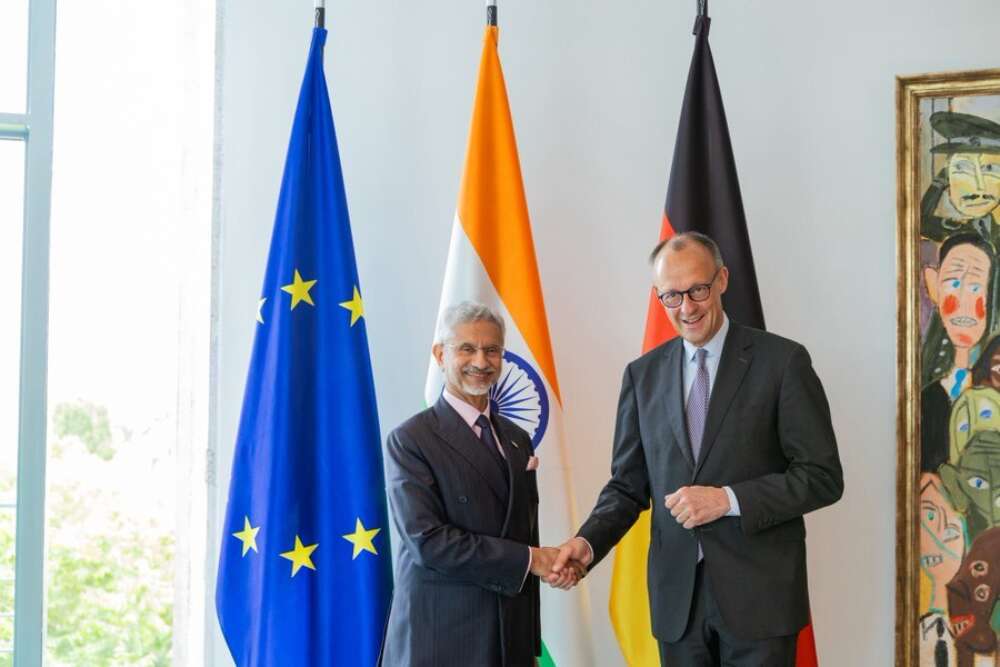
Germany’s opposition leader Friedrich Merz has suggested that a long-stalled trade agreement between the European Union and India could be clinched by the end of January, injecting momentum into negotiations that Brussels and New Delhi have struggled to close for more than a decade as global supply chains remain under strain from geopolitical frictions.
Speaking at a policy forum, Friedrich Merz said the bloc and India were “closer than many assume” to resolving key differences, adding that the economic case for a deal had sharpened after prolonged disruptions linked to strategic competition between major powers. His comments come as European manufacturers continue to grapple with uneven access to critical inputs following China’s tightening of export controls on minerals vital for electric vehicles, electronics and defence applications.
Negotiations for an EU–India free trade agreement were relaunched in 2022 after an eight-year hiatus, with both sides aiming to expand trade that exceeded €120 billion in goods and services last year. Officials involved in the talks say progress has been made on tariff reductions and rules governing digital trade, though sensitive areas such as agriculture, labour standards and intellectual property remain contentious. Merz’s remarks underscore a growing sense in Berlin and other capitals that the agreement has moved from a strategic aspiration to an economic necessity.
Germany, Europe’s largest economy, has been among the strongest advocates of diversifying trade ties beyond China, particularly after export controls imposed by Beijing on gallium, germanium and graphite created months of bottlenecks for automotive and renewable energy firms. Those controls, introduced amid the broader U. S.–China trade dispute, highlighted vulnerabilities in Europe’s dependence on a narrow set of suppliers for critical raw materials.
Executives in the auto sector say shortages of battery-grade materials last year forced production adjustments and delayed investment decisions. While some supply has since stabilised, industry groups argue that long-term resilience requires deeper partnerships with alternative producers and manufacturing hubs. India, with its expanding industrial base and policy push to attract foreign investment, has emerged as a central pillar of that strategy.
European officials note that the proposed agreement would not only cut tariffs—currently as high as 60 per cent on some vehicles entering India—but also establish clearer rules for public procurement and data flows. For India, the deal promises greater access to the European market for pharmaceuticals, textiles and IT services, while also encouraging technology transfer and skills development.
Trade analysts caution that closing the pact by late January would require political compromises on both sides. European negotiators have pressed for stronger environmental and labour commitments, while Indian counterparts have sought flexibility to protect small farmers and domestic manufacturers. Still, the geopolitical context is shifting calculations. The European Union has accelerated its “open strategic autonomy” agenda, seeking to balance openness with security of supply, and India has signalled willingness to align more closely with Western economies without abandoning its strategic independence.
Merz’s intervention also reflects domestic pressures within Germany, where exporters are seeking new growth markets as demand in China cools. German industry groups have repeatedly urged policymakers to prioritise agreements with fast-growing economies, arguing that delays risk ceding ground to competitors from East Asia and North America.
The broader backdrop includes intensifying scrutiny of China’s role in global supply chains. Beijing has defended its export controls as legitimate measures to safeguard national security and manage resources, but the ripple effects have reinforced calls in Europe for diversification. The European Commission has already launched initiatives to secure access to lithium, cobalt and rare earths through partnerships in Africa, Latin America and Asia, with India seen as both a market and a manufacturing partner.
Diplomats familiar with the EU–India talks say technical chapters are largely drafted, leaving political decisions to bridge remaining gaps. Any agreement would still need approval from member states and the European Parliament, a process that could extend beyond the negotiating deadline even if a political deal is struck.
Qatar and the United Arab Emirates are set to join a United States–led initiative aimed at securing global artificial intelligence and semiconductor supply chains, signalling a widening of Washington’s technology diplomacy into the Gulf and underlining the strategic importance of advanced computing hardware to future economic and security policy. The planned inclusion of the two Gulf states was outlined by Jacob Helberg, the US undersecretary of state […]
Chainlink’s token LINK is showing signs of technical strain as chart patterns point to a bearish pennant forming against a backdrop of fading institutional demand for exchange-traded crypto products tied to the oracle network. The setup has drawn attention across digital-asset desks at a time when broader crypto markets remain sensitive to shifts in liquidity, regulatory signals and risk appetite. LINK has spent several weeks consolidating after […]
A high-profile dispute within the XRP online community has spilled into federal court, with crypto entrepreneur Jake Claver filing a $30 million defamation lawsuit against influencer Zach Rector, alleging a sustained smear campaign that damaged his reputation, commercial relationships and earning capacity. Court records show the complaint was lodged on January 9, 2026, in the U. S. District Court for the Western District of Washington. Claver’s filing […]
Electronic Arts and the creative leadership behind The Sims franchise moved to steady community concerns after confirmation that the US games publisher is in talks over a potential $55 billion transaction involving Saudi Arabia’s Public Investment Fund, Jared Kushner’s Affinity Partners and private equity firm Silver Lake. While the proposed deal remains subject to regulatory approval and has not been finalised, unease has spread among players […]
Arabian Post Staff -Dubai Price cuts on a Donkey Kong-themed wireless controller are drawing attention across the Nintendo accessories market, as retailers deepen discounts on officially licensed hardware designed for both current and next-generation consoles. The promotion centres on the Turtle Beach Rematch Wireless Controller: Donkey Kong Edition, now selling for $41.61, down from $60, with select shoppers able to apply an additional coupon that lowers the […]
Arabian Post Staff -Dubai Dubai is positioning itself as a magnet for global content creators, with the Dubai Chamber of Digital Economy setting out the emirate’s pitch as a base where talent, technology and market access converge. The chamber says Dubai’s ability to attract specialised creative professionals, alongside its digital infrastructure and business-friendly regulation, has become a decisive advantage for creators who depend on high-end production teams […]
Meta has secured access to as much as 6.6 gigawatts of nuclear power through a cluster of agreements with established utilities and advanced reactor developers, underscoring how the energy demands of artificial intelligence are rewriting the investment playbook for Big Tech and the power sector alike. The arrangements, involving power supply and development pathways with Vistra, Constellation, TerraPower and Oklo, aim to underpin Meta’s expanding network of […]
Crypto exchange OKX has cut a significant portion of staff from its institutional business as part of a wider global restructuring, people familiar with the matter said, marking one of the most substantial internal overhauls at the company since it began expanding beyond retail trading. According to one source with knowledge of the changes, roughly one-third of the institutional sales team has exited, either through redundancies or […]
Riyadh is moving to sideline Abu Dhabi’s influence in Yemen as strains deepen between the two Gulf neighbours, according to people familiar with the matter, marking a sharper turn in a rivalry that has simmered alongside years of cooperation. The push centres on bringing armed factions backed by the Emirates under Saudi control while reshaping the balance of power along vital shipping lanes stretching from the Red […]
Nvidia chief Jensen Huang has dismissed concerns over California’s proposed billionaire tax, signalling that the potential personal cost would not alter his commitment to building the company’s artificial-intelligence business in the state where it was founded. Speaking in public remarks this week, Huang said he was “perfectly fine” with the idea of paying higher taxes, framing the debate as secondary to access to talent and the long-term […]
Abu Dhabi National Insurance Company occupies a pivotal place in the UAE’s insurance sector, combining longevity with scale as it navigates a market shaped by regulatory tightening, rising claims costs and growing demand for specialised cover. Founded in 1972 and headquartered in the capital, the company was the first insurer licensed in the emirate, a distinction that continues to inform its market stature more than five decades […]
Arabian Post Staff -Dubai Abu Dhabi Fund for Development has unveiled a new financing push aimed at reshaping how water projects are funded and delivered across developing economies, signalling a shift towards larger-scale capital mobilisation and technology-led solutions. The initiative, branded as the Abu Dhabi Global Water Platform, sets out to mobilise $2 billion from domestic and international financiers to back projects that improve water access, […]
Cocos, the long-running developer of cross-platform game technology, has moved its Cocos 4 game engine from a proprietary model to full open source, a step that reshapes its relationship with developers and signals a strategic shift in the competitive middleware market. The company confirmed that the entire Cocos 4 engine codebase is now available under an open-source licence, allowing studios and independent developers to inspect, modify and […]
ADNOC Drilling has formally entered Oman’s onshore drilling services sector, marking a strategic expansion beyond its core home market after completing the purchase of a controlling stake in a land-rig joint venture with SLB that operates six rigs in the sultanate. The move positions the company to participate more directly in Oman’s upstream development plans at a time when regional producers are prioritising operational efficiency, drilling intensity […]
BlueFive Capital has been appointed as the first General Partner for a newly established fund-of-funds created by CICC Capital, marking a strategic partnership that brings together global asset management expertise with Chinese industrial capital. The mandate also reflects the involvement of HBIS Group, one of the world’s largest steelmakers, whose industrial priorities will shape the investment direction of the vehicle. The fund-of-funds structure is designed to deploy […]
SINGAPORE – Media OutReach Newswire – 8 January 2026 – MOONTON Games, the international video game company behind Mobile Legends: Bang Bang (MLBB), has announced a multi-year strategic partnership with 1Play, a rising brand in youth-focused cultural collectibles. As the Official Trading Card Partner of the M7 World Championship (M7), 1Play will roll out a multi-year lineup of M Series collectible cards that pays homage to the tournament’s qualified teams. Featuring M Series teams, players, key competitive moments and more, the launch aims to enrich the MLBB Esports experience by allowing fans to relive the tournament’s legacy through physical collectibles.
1Play and MOONTON Games Introduce First Official M Series Trading Card Collection in Multi-Year Strategic Partnership
Designed to bring fans closer to the competitive action, the partnership extends MLBB Esports engagement beyond viewership. Through the collectible cards, the title’s passionate fanbase will be able to connect with the M Series, its teams, and its players both during and outside of tournament periods.
According to Esports Charts, MLBB emerged as 2024’s most popular mobile esports title with over 475 million Hours Watched (HW). At the heart of the MLBB Esports circuit stands the M Series, the title’s flagship international tournament. Uniting players and fans from across the world, the M Series has become the main competitive stage for the world’s best MLBB teams and a driver of the game’s global esports ecosystem. In previous editions, the M6 and M5 reached 4.13 million and 5.06 million Peak Concurrent Viewers (PCV) respectively. The tournaments ranked ninth and sixth amongst the most-watched esports events of all time, according to Esports Charts. Backed by millions of viewers and a seven-year legacy of competitive excellence, the M Series has established itself amongst the biggest names in global sports and entertainment.
Just as trading cards have been a cornerstone of fan culture in traditional sports such as the National Basketball Association (NBA), English Premier League (EPL), and the FIFA World Cup—the MLBB Official Trading Card collection brings this longstanding tradition to MLBB Esports. It celebrates the game’s competitive excellence while giving fans a tangible way to connect with the M Series, commemorate iconic moments, and honour the players who define its legacy. Its launch also extends a global, time-honoured collectibles tradition into MLBB Esports, creating a new avenue for the community to engage with the tournament beyond the screen.
Through this partnership, MOONTON Games and 1Play will introduce the M Series’ first official trading card system, which includes:
All 22 participating teams and all players competing at the M7
A premium lineup of Player Signature Cards, Jersey & Materials Cards, and Match Moments Cards
Two flagship product lines for the M7: the Super Series and the Elite Series
Fans will be able to purchase the collections through 1Play’s official platforms and participate in offline retail experiences, pop-up events, card-trading sessions, exclusive onsite drops, and other interactive activities at future M Series editions. By integrating digital touchpoints with offline engagement, the partnership aims to strengthen the presence of MLBB Esports in global mainstream culture through an immersive collectibles experience for fans.
At the same time, as 1Play’s key strategic retail and offline experience partner across Southeast Asia and other core markets, OH!SOME will establish a long-term and stable collaboration framework with 1Play, playing a deep role in the overall planning and ongoing development of offline showcasing, retail infrastructure, and fan engagement experiences for the official M Series esports trading card collection. 1Play and OH!SOME will work closely across product presentation, spatial design, and user experience, jointly defining new standards for esports collectibles within offline consumer and cultural spaces.
With over 180 stores across Asia—including Indonesia, Singapore, Thailand, Hong Kong of China, Malaysia, Vietnam, Cambodia, and the Philippines—OH!SOME has developed into a beloved and widely recognized regional retail brand. Leveraging OH!SOME’s established regional retail network and its strategic presence in major urban consumer hubs, 1Play will collaborate with OH!SOME to advance the rollout of offline experiences. Fans will be able to purchase, showcase, and engage with official 1Play card packs and trading cards at selected OH!SOME locations, achieving an explosive market presence for M Series collectibles across core cities.
Adrian Cher, Global Head of Partnerships, MLBB Esports at MOONTON Games, said: This partnership with 1Play marks a strategic step in how we extend MLBB Esports beyond the screen and into the everyday lives of our fans. As trading cards gain renewed traction among younger audiences, this partnership allows us to connect with the next generation through an avenue that reflects their interests and self-expression. By bringing the M Series into physical collectibles, we’re not only enriching the M7 experience, but also reinforcing MLBB’s place alongside traditional sports ecosystems where memorabilia plays a central role in fan culture. The upcoming collectibles launch reflects our long-term commitment to building MLBB Esports as a global sports and entertainment IP.”
AnJie, Founder & CEO of 1Play, said: “1Play is dedicated to creating collectible items that resonate with young audiences and express cultural identity. Our partnership with MOONTON Games represents a milestone in the development of esports collectibles. We aim to build a defining collectible ecosystem for this era—one that allows every fan to record their passion, celebrate their heroes, and collect the moments that matter.”
The 1Play × M Series Official Trading Card Collection is scheduled to launch during the M7, with its first edition dedicated to the tournament. Additional experiences—including team collaborations, onsite exclusives, signing sessions, and community-driven fan events—will be rolled out to further expand the cultural reach of MLBB esports.
Aldar Properties PJSC, Abu Dhabi’s largest property developer and real estate asset manager by total assets, has appointed a syndicate of global and regional banks for a planned US dollar-denominated hybrid notes issuance, a move that underscores the company’s intention to strengthen its capital structure while retaining balance-sheet flexibility. The company, which carries a Baa2 rating with a Stable outlook from Moody’s, has mandated Citi as sole […]
Tackle rising business costs and trade barriers with a unified digital platform for Free Trade Agreements as well as build stronger economic partnerships.
Bridge AI adoption gaps by co-funding shared data pools and introducing a regional “Trusted AI” mark to drive innovation and governance.
Future-proof the workforce with targeted work visas for global experts, job transformation roadmaps, and advanced leadership programmes.
SINGAPORE – Media OutReach Newswire – 7 January 2026 – KPMG in Singapore and the Singapore Institute of Directors (SID) are pleased to announce the release of a joint Budget 2026 Proposal, titled “Prospering in a New Global Landscape”.
From Left to Right: Yong Jiahao, Partner, Infrastructure, Government & Healthcare (IGH) & Industrial Manufacturing, Tax, KPMG; Ajay Kumar Sanganeria, Partner and Head of Tax, KPMG; Lee Sze Yeng, Managing Partner, KPMG; Max Loh Khum Whai, Vice-Chair, Singapore Institute of Directors; Edwin Lee, Deputy CEO, Singapore Institute of Directors
By fostering resilient economic linkages, embedding digital trust, and cultivating world-class talent and leadership with cross-domain expertise, Singapore can ensure its businesses and economy remain secure, innovative, and competitive in an uncertain global landscape.
This Proposal outlines strategies to position Singapore as a critical hub for global flows, covering three crucial areas:
A new global order: Resilience as a pivotal growth strategy
The Intelligent Age: Smart solutions for an innovative era
The recommendations in the proposal are also supported by data-driven insights from a survey recently conducted by KPMG and SID. More than 1,000 professionals, managers, executives and technicians (PMETs) and business owners were surveyed on the challenges they face and the kinds of Budget 2026 support they hoped to see. [For more information, please refer to the deck with the full survey results: https://kpmg.com/sg/en/campaigns/kpmg-singapore-budget.html ]
Empowering businesses to leverage Singapore’s trusted role as a global connector
Global commerce is rapidly transforming amid rising protectionism, shifting trade rules, evolving tax regimes, and geopolitical tensions. Singapore’s long-term prosperity in the new global order depends on its ability to lead as a trusted connector and aggregator of the flows of goods, capital, data, and talent.
Singapore must strengthen its economic linkages, build secure and interoperable digital platforms, cultivate a workforce equipped with cross-domain expertise, and equip boards with essential skills to navigate emerging risks and opportunities. Trusted and resilient economic linkages will ensure the seamless movement of goods, services, and investments, while interoperable digital platforms will play a critical facilitation role in enabling cross-verification of information, streamlining compliance, and fostering trust across borders. These efforts are especially important in helping businesses cope with shifting regulations. KPMG and SID’s survey found that 51 percent of respondents identified increased business costs as the main challenge to cross-border expansion, followed by higher tariffs (26 percent) and supply chain difficulties (25 percent). To address these challenges, 43 percent of respondents want stronger economic and trade partnerships to overcome trade barriers.
KPMG and SID recommend:
a) Developing a unified digital platform for Free Trade Agreement (FTA) management (page 7) to help businesses navigate complex procedures and unlock the full benefits of FTAs. This would be seamlessly integrated with government systems, making it more seamless and cost-effective for businesses to comply with FTA requirements. This would enable firms to leverage Singapore’s extensive FTA network to gain footholds in new markets, further enhancing Singapore’s regional and global competitiveness.
b) Increasing access to working capital to accelerate local enterprises’ strategic transformation and implementing industry-specific governance frameworks (page 7). With geopolitical shifts driving a more complex regulatory landscape, increased and dedicated funding would enable businesses to transform for the future while responding effectively to evolving governance standards. Such funding should be complemented by industry-specific governance playbooks to equip boards with essential tools to strengthen agility and resilience.
c) Enhancing Singapore’s government-backed trade platform with blockchain and AI (page 6). The global economy has seen an increase in supply chain disruptions amid geopolitical and trade uncertainties. An enhanced Government-backed trade platform would enable Singapore to further facilitate the flow of trusted payments, making it even easier for businesses to validate transactions and act on smart recommendations to elevate supply chain efficiency. Amid a more fragmented world, the enhanced platform would also reinforce Singapore’s position as a reliable hub for global commerce, by promoting increased supply chain transparency for critical industries like semiconductors, pharmaceuticals, and advanced manufacturing.
d) Introducing progressive carbon taxes to reward decarbonisation and establish performance-based pathways for large emitters (page 9). Singapore’s carbon taxes must evolve to consider unique business needs and companies’ decarbonisation plans. Progressive carbon tax rates post-2030 – based on facility emissions volume, emissions per unit of output, and sectoral abatement potential – could be accompanied by permanent conditional tax rebates for energy-intensive, trade-exposed sectors. These rebates could be based on set criteria such as verified year-on-year reductions in carbon intensity and investments in low-carbon technology. To strengthen these efforts, Singapore could also establish an ASEAN Environmental Data Exchange to facilitate the sharing of standardised and interoperable environmental data between Singapore and its regional trade partners (page 8). The exchange would improve the flows of green trade and green capital, enabling Singapore to be a regional hub for environmental data harmonisation. Organisations like the Singapore Institute of Directors could play a catalytic role by building board-level capability, aligning disclosure expectations and promoting best practices through director education, guidance frameworks and peer learning on a regional scale, helping boards to lead initiatives like progressive carbon taxation.
Fostering an ecosystem of Trusted AI in the Agentic Era
The rise of artificial intelligence (AI) is reshaping global competitiveness, with agentic AI—capable of autonomous decision-making—introducing both transformative opportunities and significant challenges. While agentic AI can drive innovation, optimise operations, and unlock new efficiencies, it also raises critical concerns around accountability, ethical deployment, and governance.
A critical enabler of AI’s potential is data sharing, yet this often proves difficult due to competition, concerns over intellectual property, and a lack of trust between organisations. Businesses—particularly smaller enterprises—also face cost constraints in accessing high-quality data, and many also lack the strategic clarity and workforce competencies to identify where AI can augment their operations.
KPMG and SID’s poll found that 54 percent of respondents cited talent and skills gaps as the top challenge for adopting AI, followed by high costs of technology adoption (52 percent) and a lack of clear AI adoption strategies (48 percent). By addressing these concerns, Singapore will be able to fully leverage the vast potential of AI and data to reinforce its status as a hub across various sectors.
KPMG and SID recommend:
a) Co-funding sector-specific shared data pools in partnership with trade associations and industry stakeholders (page 15). These shared, anonymised data pools would enable businesses to access high-quality datasets without incurring prohibitive costs. Tailored to specific sectors such as logistics and retail, these pools would facilitate benchmarking, model training, and experimentation under a trusted framework that safeguards data privacy and protects intellectual property. Shared data initiatives should be paired with guided AI adoption support to help businesses understand how AI can enhance specific parts of their value chain. For example, targeted support could help logistics firms optimise supply chains or assist retailers in leveraging AI to personalise customer experiences. This dual approach would enable broader AI adoption and accelerate innovation across industries.
b) Enhancing the public-private partnership (PPP) framework to accelerate AI adoption (page 15). As firms navigate high costs and limited guidance around AI adoption, there is an opportunity for the Government to provide greater access to infrastructure to lower barriers for AI experimentation and deployment. The enhanced framework would create positive spillover effects from existing AI initiatives, as government agencies, academia and industry stakeholders collaborate to strategically integrate AI solutions into business strategies. The framework could also promote cross-sector collaboration in key industries, fostering a culture of open innovation in AI. To bolster digital trust, Singapore could also establish a regional “Trusted AI” mark to drive harmonisation and innovation (page 12). Although Singapore’s Model AI Governance Framework provides a strong foundation for responsible AI deployment, there is still a largely untapped opportunity for Singapore to champion an assurance label that shows firms have AI controls aligned with recognised AI governance standards. By pushing regionalrecognition of this mark, Singapore could accelerate cross-border innovation and trade. The mark would build on initiatives like AI Verify and Project Moonshot, which have helped to promote Trusted AI in Singapore.
c) Supporting hands-on AI governance training for board members and executives (page 13) through a dedicated fund. This would complement existing SkillsFuture programmes which focus primarily on AI awareness, by expanding the emphasis to address strategic and operational gaps at the leadership level – covering ethical deployment, change management and cross-domain applications.
Building globally relevant leaders with cross-domain skills
To fulfil its role as a hub for global flows, Singapore must enable its businesses to navigate a complex web of governance requirements, trade rules, tax policies, and tariffs. While compliance with governance standards will bring higher upfront costs, it also provides a foundation for businesses to lead in innovation and competitiveness. For instance, businesses that embrace sustainability compliance can innovate in areas like green finance, carbon accounting, and environmental data exchange.
Yet, none of this is possible without specialised talent and leadership. Singapore needs professionals and board leaders with expertise in areas such as supply chain management, AI governance, and sustainability strategy. These individuals must be able to connect the dots across domains, such as linking data governance with trade compliance or integrating sustainability goals into business operations. The need for enhanced talent development also emerged from KPMG and SID’s survey findings. Forty-nine percent of respondents want more skills development and upskilling courses. Meanwhile, 42 percent hope for more support for workforce transformation and job redesign, such as higher grants. In addition, 37 percent of respondents want more leadership and management development initiatives, especially in the areas of mentorship and coaching for emerging leaders and advanced leadership programmes.
KPMG and SID recommend:
a) Creating a dedicated work-pass category for “master trainers” and mentors (page 18). The work-pass would encourage international professionals to join local companies, public agencies and training institutions to lead structured upskilling or leadership development programmes. This would accelerate skills transfer, expose workers to global best practices, and build a robust pipeline of talent capable of driving strategic transformation and competitiveness in a rapidly evolving global landscape. Structured leadership development programmes could also include peer-sharing platforms (page 21) aimed at promoting transformation training among C-suite leaders. Backed by the public sector and industry stakeholders, such platforms could foster the exchange of best practices, promote collective learning on key sustainability capabilities and empower leaders to proactively redesign roles and workflows ahead of market shifts.
b) Setting up job transformation roadmaps with co-funded training and certification initiatives (page 19) tied closely to sector-specific needs. As rapid technological developments shape industry demand for skills, job transformation roadmaps would be beneficial in outlining sector-specific disruptions, challenges and opportunities. These roadmaps could be accompanied by industry-recognised certification, and programmes backed by both the public and private sectors. Tailored to sectoral needs, certifications could help to assess whether workers have acquired the necessary skills to perform in transformed roles, especially in fast-evolving sectors where traditional qualifications may no longer suffice.
c) Establishing a $100 million fund to advance social impact reporting (page 9). As Singapore pursues long-term resilience, it must also ensure that economic growth is sustainable and inclusive. The fund could be used to train professionals and board directors in the reporting of social metrics, support academic modules in social sustainability and certify social auditors and advisers. It could also be complemented by broader efforts to enhance environmental, social and governance (ESG) competencies among businesses’ top leadership. Singapore could establish a national registry of certified sustainability committee members (page 20) who can be matched to boards and committees across sectors. This would help to expand access to qualified board resources, especially for local enterprises.
Lee Sze Yeng, Managing Partner, KPMG in Singapore, said:
“Leadership today isn’t just about mastering AI or acquiring specialised skills—it’s about navigating the intersections of cross-border trade, technology, and sustainability. To remain competitive, leaders must move beyond the basics, using AI and data to drive real business outcomes while building governance frameworks that inspire trust. At the same time, they need the courage to take calculated risks and collaborate across ecosystems to unlock new opportunities. Initiatives like co-funding sector-specific shared data pools and guided AI adoption support are critical to overcoming barriers and equipping leaders with the tools to thrive. As disruptions grow increasingly cross-border and cross-domain, Singapore’s ability to cultivate leaders who can turn complexity into opportunity will define its success as a global flows hub.”
Ajay Kumar Sanganeria, Partner, Head of Tax, KPMG in Singapore, said:
“Singapore’s position as a global hub—connecting trade, data, and capital—offers businesses significant opportunities to grow and compete globally. Grants and platforms are vital enablers, but they must be part of a broader solution that simplifies complexities and empowers businesses to focus on innovation. Future-ready approaches, such as managing governance and compliance in a more consolidated or ‘as-a-service’ mode, can reduce burdens on enterprises. A unified digital platform for Free Trade Agreement (FTA) management, enhanced with blockchain and AI, could streamline compliance and unlock the full benefits of Singapore’s FTA network. Co-funded training programmes and shared governance frameworks can further help businesses pool resources and build capabilities. By combining grants, platforms, and smarter ways of working, Singapore strengthens its role as a trusted global connector and equips businesses to lead with confidence in an evolving world.”
Yeoh Oon Jin, Chair, Singapore Institute of Directors, said:
“Singapore’s future as a global hub for connectivity and commerce will be shaped by how boards of directors evolve to lead with resilience and trust. Budget 2026 is an opportunity to strengthen governance frameworks that embed sustainability, cyber trust and accountability into every organisation’s agenda. By empowering directors to champion innovation, sustainability and digital assurance, organisations can grow with confidence while reinforcing Singapore’s position as a secure and trusted connector for goods, capital, data and talent in an increasingly complex global landscape.” Hashtag: #KPMG #SID
The issuer is solely responsible for the content of this announcement.
About KPMG in Singapore
KPMG in Singapore is part of a global organization of independent professional services firms providing Audit, Tax and Advisory services. We operate in 142 countries and territories with more than 275,000 partners and employees working in member firms around the world. Each KPMG firm is a legally distinct and separate entity and describes itself as such. KPMG International Limited is a private English company limited by guarantee. KPMG International Limited and its related entities do not provide services to clients.
About SID
The Singapore Institute of Directors (SID) is Singapore’s national association for company directors. Established in 1998, our mission is to transform boards and empower board directors to be champions of good governance. SID works with regulators and partners to serve as the voice for directors and facilitates consultations and feedback sessions on regulatory matters. In advocating for good governance, SID advances thought leadership and benchmarking research and indices on corporate governance and directorship issues.
SID builds competencies and capabilities to enhance boardroom skills of directors for informed decision-making. An accreditation programme serves to set standards for and showcase best practices of good governance. The organisation supports members on their directorship journey with courses, workshops, advanced masterclasses, forum discussions and pit-stops. SID connects and strengthens the ecosystem with initiatives such as mentoring and networking. The Governance for Good Alliance is an initiative by SID to bring together key stakeholders who help advance our vision for every board director to be a champion of good governance.
RAKBANK has secured in-principle approval from the Central Bank of the UAE to issue an AED-backed payment token, marking one of the clearest signals yet that regulated stablecoins are moving from concept to execution within the federation’s banking system. The Ras Al Khaimah-based lender said the approval allows it to proceed with development and testing of a dirham-denominated digital token designed for payments and settlement, subject to […]
Arabian Post Staff -Dubai Motorola used the Lenovo Tech World Showcase alongside CES 2026 to outline a sharpened strategy for premium smartphones, unveiling a new Razr foldable and a broader flagship portfolio designed to embed artificial intelligence deeper into everyday mobile use. The announcements signal a renewed attempt by the Lenovo-owned brand to regain momentum in the high-end segment, where competition from Samsung, Apple and fast-rising Chinese […]
Integrity is often spoken of as though it were universal: one definition, one standard, one moral yardstick by which trust is measured everywhere. In reality, integrity is deeply shaped by culture. What one society considers faithfulness, another may experience as rigidity. What one views as flexibility, another may interpret as unreliability. These differences are not signs of moral deficiency; they are reflections of distinct histories, social structures, […]
United Arab Emirates will assume the presidency of the Middle East and North Africa Financial Action Task Force in 2026, placing the country at the centre of regional efforts to strengthen safeguards against money laundering, terrorist financing and the proliferation of illicit funds. The appointment comes at a time when the bloc is seeking tighter coordination among member states as cross-border financial flows grow in scale and complexity.
MENAFATF brings together 21 jurisdictions across the Middle East, North Africa and neighbouring regions, representing a combined gross domestic product estimated at more than $3 trillion. The organisation functions as the regional body aligned with the global Financial Action Task Force standards, conducting peer reviews, issuing guidance and supporting members as they implement international rules designed to protect financial systems from abuse.
The decision for the UAE to lead the organisation follows its expanding role in financial regulation and enforcement across the region. Federal authorities have invested heavily in strengthening supervision of banks, exchange houses, designated non-financial businesses and professions, while also expanding cooperation with international counterparts. Officials involved in the process describe the presidency as recognition of the country’s progress in aligning domestic frameworks with global benchmarks and its capacity to convene consensus among diverse economies.
During its term, the UAE is expected to steer MENAFATF’s strategic agenda, including the scheduling of mutual evaluations, thematic studies and capacity-building programmes. These initiatives are central to helping member states address gaps identified in national risk assessments and respond to emerging typologies such as the misuse of virtual assets, trade-based money laundering and complex ownership structures.
Regulatory specialists say the presidency carries influence beyond administrative oversight. The chair country plays a pivotal role in shaping discussions on policy priorities, coordinating technical assistance and representing the region in dialogue with global standard-setters. This places added scrutiny on how effectively the bloc can balance the varied economic structures and legal systems of its members while maintaining consistent application of standards.
The UAE has signalled that cooperation and practical implementation will be key themes of its tenure. Policymakers have spoken about deepening information-sharing among financial intelligence units, enhancing public-private partnerships and supporting jurisdictions that face capacity constraints. Such measures are viewed as essential for raising overall compliance levels and reducing vulnerabilities that can be exploited across borders.
MENAFATF members span hydrocarbon-rich Gulf economies, large consumer markets in North Africa and smaller states with developing financial sectors. This diversity has historically posed challenges in achieving uniform progress. Analysts note that leadership will need to balance ambition with pragmatism, ensuring that reforms are realistic and tailored to local contexts while still meeting international expectations.
The presidency also coincides with broader shifts in the region’s financial landscape. Digital payments, fintech platforms and virtual assets have expanded rapidly, creating new opportunities for inclusion but also new risks. Addressing these developments requires updating supervisory tools, training regulators and fostering dialogue with technology providers. Observers expect the UAE to push for clearer regional guidance in these areas, building on its own experience in regulating emerging financial services.
Another area likely to feature prominently is the effectiveness of enforcement. While many jurisdictions have strengthened legal frameworks, translating laws into successful investigations and prosecutions remains uneven. MENAFATF’s peer review process increasingly emphasises outcomes, not just technical compliance. Under UAE leadership, the organisation is expected to encourage members to demonstrate tangible results in asset recovery, sanctions and international cooperation.
Diplomats familiar with the process say the appointment also reflects confidence in the UAE’s ability to engage constructively with both regional partners and global institutions. The country has positioned itself as a bridge between markets, hosting multinational financial institutions and acting as a hub for trade and investment. That role brings responsibilities, particularly in ensuring that financial openness is matched by robust controls.



 www.hanglung.com.