News related to
Partnerships

FluidCloud, a startup dedicated to addressing one of the most pressing challenges in enterprise cloud computing, has announced its emergence from stealth mode with a seed funding round of $8.1 million. The funding will allow the company to expand its efforts in solving the longstanding issue of cloud vendor lock-in, which has long hindered businesses from achieving flexibility and efficiency in their digital infrastructure. The funding round, […]

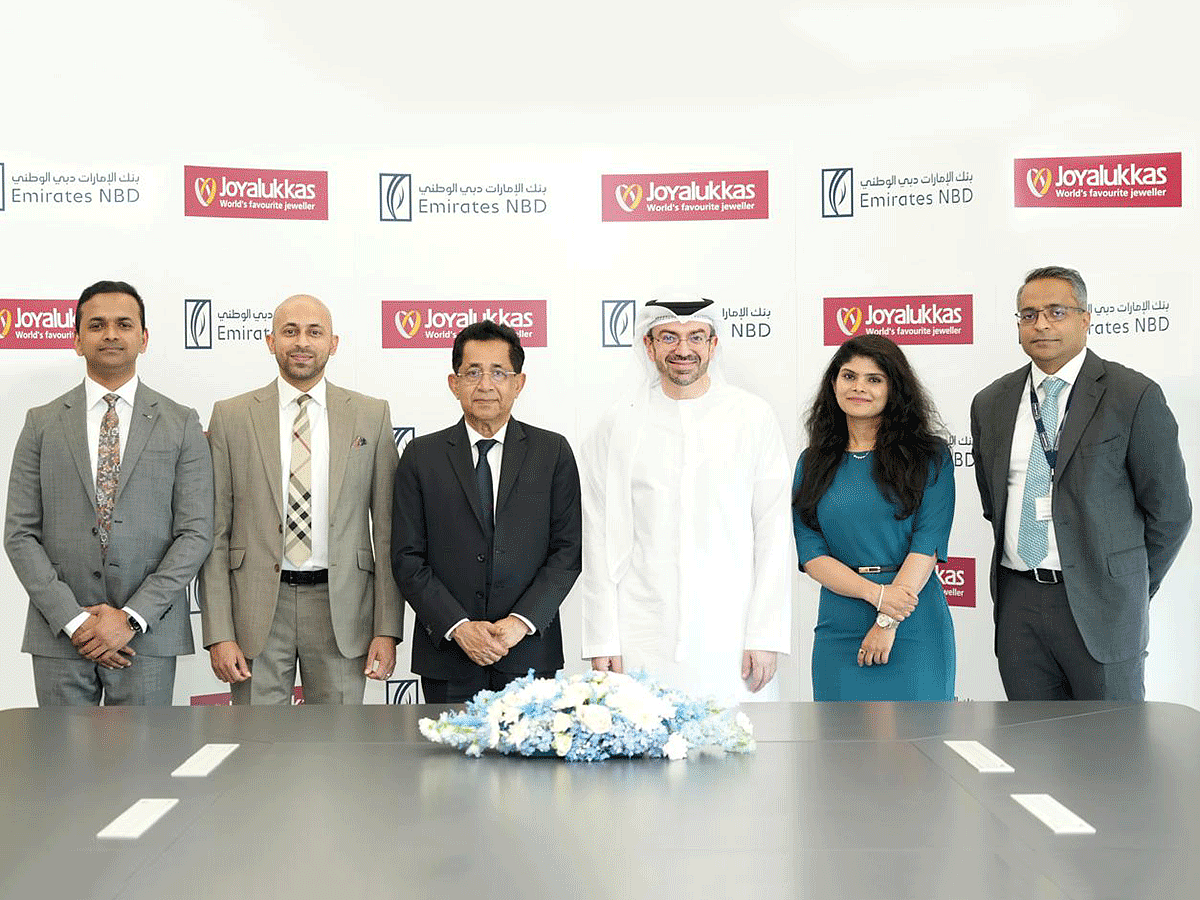
Emirates NBD has entered into a landmark partnership with global jewellery retailer Joyalukkas, providing a substantial AED 500 million working capital facility. This agreement marks a crucial step in the expansion of Joyalukkas’ operations across the UAE, as well as its key international markets, including the UK, USA, Canada, and Australia.

The deal, announced today, highlights the growing collaboration between the two entities, cementing Emirates NBD’s role as a key financial partner in Joyalukkas’ global growth strategy. The working capital facility will allow Joyalukkas to bolster its operations, meet the increasing demand for luxury jewellery, and enhance its retail presence in multiple regions.

Joyalukkas, a household name in the jewellery industry with a vast network of outlets worldwide, is known for its exquisite designs and premium products. Founded in 1987, the retailer has rapidly expanded its footprint, particularly in the GCC region, India, and other high-potential international markets. This new facility from Emirates NBD enables Joyalukkas to navigate challenges associated with working capital and supply chain management while facilitating its growth in a highly competitive market.

The strategic decision to offer this significant financial support underscores Emirates NBD’s commitment to supporting leading UAE-based businesses with ambitious expansion plans. The partnership will also contribute to the local economy, enabling job creation and boosting the retail sector. With an extensive portfolio of services tailored for high-growth industries, Emirates NBD is positioning itself as a critical player in the UAE’s business ecosystem.

For Joyalukkas, the agreement reflects its robust financial health and operational readiness for a broader international reach. As luxury consumption in markets such as the UK, USA, and Australia continues to rise, the retailer is well-placed to capitalise on this growing demand. Furthermore, the working capital facility will enhance its ability to manage large-scale projects and optimise its inventory across regions.

With an extensive network of over 160 showrooms worldwide, Joyalukkas is keen to capitalise on its established reputation while strengthening its presence in key markets. The financial backing from Emirates NBD offers the flexibility required to support large-scale retail operations and secure further growth.

Analysts see this collaboration as a strong endorsement of Joyalukkas’ expansion strategy, particularly its targeted approach towards diversifying into high-potential international markets. As global luxury retail trends shift towards online platforms and omnichannel experiences, Joyalukkas has already begun adapting to these changes, with plans to enhance its digital presence alongside its physical stores.

Emirates NBD, one of the leading banks in the region, has long been known for its strategic partnerships with key players in the retail and manufacturing sectors. By offering tailored financial solutions, the bank has proven to be a crucial enabler of growth for businesses with global aspirations. This latest deal with Joyalukkas adds to the bank’s already impressive portfolio of financial support for companies looking to expand their market reach.

As both organisations look ahead, the partnership represents a shared vision for long-term growth, with Joyalukkas planning to increase its retail footprint in the coming years. The bank’s backing will facilitate Joyalukkas’ ability to expand both in terms of physical retail locations and in the digital domain, where it is likely to see increasing competition.

The deal is also a testament to the UAE’s growing position as a global hub for business and finance, with local institutions playing a pivotal role in helping regional businesses scale internationally. Emirates NBD’s deep involvement with international brands and retailers reflects the increasingly interconnected nature of global trade and commerce.

While the facility’s exact terms remain undisclosed, industry experts suggest that this could be one of many similar deals to follow, as both local banks and international businesses continue to seek mutually beneficial partnerships. The growing demand for high-end jewellery and the increasing prominence of luxury markets globally position this partnership as a key milestone in both organisations’ development.

Rediscover the Joy of Reading This Summer at LANDMARK, Featuring an Engaging Book Stop Pop-Up, Exclusive Promotional Offers, and Curated Literary Experiences for All Ages. HONG KONG SAR – Media OutReach Newswire – 29 July 2025 – Celebrating the timeless allure of storytelling, LANDMARK unveils ‘Find Your Chapter’, a vibrant reading hub in the heart of Central designed to take the community on a literary journey this […]

JAKARTA, INDONESIA – Media OutReach Newswire – 29 July 2025 – In collaboration with Human Initiative, Finex, an A+++ status Indonesian broker, hosted the Edu Trip program — a day of outdoor learning and play for 100 underprivileged children. The program strengthens the broker’s commitment to education, empowerment, and social impact. The event took place at Rivera Outbound and Edutainment in Bogor, Indonesia. The Edu Trip is […]

Etihad Airways is re-evaluating its timeline for launching its long-awaited initial public offering, with reports suggesting a deferral to the first quarter of 2026. The decision could mark a significant shift for the UAE-based airline, which had initially aimed to list within the next two years.

The move comes as Etihad seeks to maximise the impact of its evolving partnerships and strengthen its financial position in the face of a dynamic global aviation market. According to sources close to the matter, the airline intends to capitalise on a series of strategic alliances it has forged in recent months, which could increase its market appeal ahead of the IPO.

Etihad’s parent company, the Mubadala Investment Company, has yet to officially confirm the updated timeline, but it is understood that the decision to delay is driven by the desire to enhance Etihad’s valuation. The airline’s partnerships, particularly with global carriers and emerging markets, have been viewed as critical to its future success.

This re-evaluation comes at a time when the aviation sector is seeing a rapid recovery from the pandemic-induced slump. While many airlines worldwide have witnessed a surge in demand, Etihad is aiming to position itself for sustainable growth by leveraging its network and partnerships.

Etihad’s recent agreements with international carriers such as Air India and Lufthansa have bolstered its route network and strengthened its competitive position. These partnerships have also facilitated joint ventures and codeshare agreements, creating synergies that could prove beneficial as the airline looks to attract investor interest in its IPO. Analysts believe that these moves could help improve Etihad’s long-term profitability, making the company a more appealing prospect for potential investors.

Despite these efforts, the airline remains mindful of the market’s volatility. Experts suggest that the delay is also a response to ongoing economic uncertainties that could impact investor sentiment, particularly in a sector still grappling with post-pandemic challenges. The global airline industry is also facing heightened competition, fluctuations in fuel prices, and geopolitical instability, all of which make it crucial for Etihad to position itself strategically.

Etihad’s plans for the IPO are seen as a significant development in the UAE’s broader push to diversify its economy. The listing would not only serve as a major milestone for the airline but also align with the nation’s ambitions to bolster its financial markets. A successful IPO could provide a much-needed boost to the UAE’s efforts to attract global investment and further solidify its status as a key player in the Middle Eastern aviation sector.

However, the deferral also reflects a cautious approach. Rather than rushing to list, Etihad appears to be taking time to ensure that the offering meets the expectations of investors. Sources suggest that the airline is exploring various options, including potential mergers and acquisitions, to enhance its value proposition in the lead-up to the IPO. This may involve a careful assessment of its operations, investments in fleet expansion, and the optimisation of its business model to address the changing dynamics of the aviation industry.

JAKARTA, INDONESIA – Media OutReach Newswire – 26 July 2025 – VinFast, the Vietnamese Nasdaq-listed pure-electric vehicle manufacturer, today announced the signing and implementation of strategic cooperation agreements with leading Indonesian service workshop partners. This strategic move significantly expands VinFast’s after-sales network, demonstrating its commitment to providing maximum convenience for customers transitioning to electric vehicles. Mr. Kariyanto Hardjosoemarto – CEO of VinFast Indonesia (fourth from the left) […]

JAKARTA, INDONESIA – Media OutReach Newswire – 26 July 2025 – VinFast, the Vietnamese Nasdaq-listed EV manufacturer, has officially signed agreements with 20 new dealership partners during the Gaikindo Indonesia International Auto Show (GIIAS) 2025. These agreements will bring VinFast closer to its goal of operating 100 dealership showrooms this year. This marks a strategic advancement for VinFast in its journey to conquer the Indonesian market, and […]

Advertisements

Cryptocurrency markets are in a constant state of flux, where tokens that once seemed promising can easily lose their edge while others rise to prominence. Ruvi AI, a token that has gained substantial attention, is emerging as a noteworthy competitor in the blockchain space. With a solid foundation built on audited technology, strategic partnerships, and a utility-driven approach, RUVI is positioning itself as a serious player that could challenge the dominance of long-established tokens like Cardano.

Ruvi AI stands apart from the many volatile coins and tokens in the cryptocurrency landscape due to its thorough audit and the robust technology underpinning its ecosystem. Unlike many projects that rely heavily on speculative interest, RUVI’s development has been focused on creating a genuinely useful product. The token leverages AI-driven solutions to bring enhanced functionality to blockchain applications, with its goal being to optimize the efficiency and accuracy of blockchain networks. This focus on practical, utility-driven innovation has already caught the attention of both investors and developers, making the token an attractive proposition.

At the core of RUVI’s strategy is its commitment to delivering a platform that offers scalable and secure AI solutions across various industries. Unlike other tokens that focus on speculative trading, Ruvi AI is designed to integrate artificial intelligence with blockchain to create a decentralized ecosystem. This combination has the potential to revolutionise sectors such as finance, healthcare, and supply chain management by making transactions more secure, transparent, and efficient. By focusing on AI-driven decentralisation, Ruvi AI is positioning itself as more than just another cryptocurrency – it is presenting itself as a long-term technological innovation.

A key feature that differentiates Ruvi AI from its competitors is the token’s transparency. The platform has been subjected to a thorough audit process, ensuring that its codebase and underlying infrastructure meet the highest standards of security. This is crucial in a market where trust and transparency are often in short supply, and projects that fail to adhere to rigorous auditing processes can fall victim to hacking or mismanagement. Ruvi AI’s commitment to transparency not only boosts its credibility but also instills confidence in investors who are wary of the risks associated with less-regulated tokens.

Ruvi AI’s strategic partnerships further enhance its prospects. By aligning itself with established players in the tech and blockchain industries, the token has gained credibility and access to vital networks. These partnerships are vital for any emerging blockchain project, as they offer a pathway to mass adoption and use cases that extend beyond speculation. Through these collaborations, Ruvi AI has been able to tap into a broader market, positioning itself as a token with real-world utility rather than just a speculative asset.

The token’s utility-driven approach has already set it apart from major players like Cardano, which has long been a frontrunner in the blockchain space. Cardano’s focus on creating a secure and scalable platform for decentralised applications has made it a popular choice among investors, but its primary appeal lies in its technical capabilities rather than the tangible applications of its technology. In contrast, Ruvi AI’s emphasis on providing AI-powered solutions that solve practical problems across various industries makes it a more attractive proposition for those seeking long-term utility in blockchain technology.

In terms of market performance, Ruvi AI has shown impressive growth, and its increasing adoption among developers and businesses further solidifies its potential. While Cardano remains a strong contender in the crypto market, the AI-driven nature of Ruvi AI gives it a significant edge, particularly as industries across the globe continue to embrace artificial intelligence. With AI expected to play a critical role in the next phase of blockchain’s evolution, Ruvi AI’s focus on leveraging this technology positions it ahead of many of its competitors, including Cardano, which has yet to fully integrate AI into its platform.

The broader crypto community has taken note of Ruvi AI’s innovative approach, and its potential to disrupt the market is becoming more widely recognised. The token has gained a strong following among developers and investors who see the long-term value in its utility-focused approach. As the blockchain ecosystem continues to evolve, tokens like Ruvi AI that prioritise practical applications and technological advancements will likely be the ones that thrive.

BANGKOK, THAILAND – Media OutReach Newswire – 25 July 2025 – In a rapidly evolving world marked by unprecedented technological advancements, shifting consumer behaviors, and unpredictable global economic changes, relying on outdated thinking is no longer viable. Adaptability and creativity have become essential attributes for every country seeking to thrive in the modern era. Dr. Krithpaka Boonfueng, Executive Director of the National Innovation Agency (NIA) Today, ‘innovation’ […]

Abu Dhabi-based Multiply Group has concluded the acquisition of a 67.91% majority stake in Spanish fashion retailer Tendam, valued at AED 5.6 billion. This move marks a significant leap into the European retail market for the UAE-listed conglomerate, solidifying its position in the global apparel industry. The deal with Tendam, which operates several prominent fashion brands including Cortefiel, Pedro del Hierro, and Springfield, will elevate Multiply Group’s […]

Dubai Land Department has formalised a groundbreaking partnership with Masdar City, paving the way for companies operating within Abu Dhabi’s prominent free zones to acquire land plots and properties under the freehold ownership system in Dubai. This strategic memorandum of understanding aims to provide these companies with a more expansive and regulated pathway to invest in the Dubai real estate market, in line with the emirate’s broader vision to bolster its economic landscape.

The MoU was signed by Majid Al Marri, CEO of the Real Estate Registration Sector at DLD, and Ahmed Baghoum, CEO of Masdar City, during an official event in Dubai. The agreement marks a significant step in enhancing Dubai’s real estate market, which is actively adapting to new investor demands and aims to remain a competitive player on the global stage.

This collaboration is part of a wider effort to increase the attractiveness of the Dubai property market, with a focus on aligning with the Dubai Real Estate Strategy 2033. As part of this strategy, the city aims to enhance its status as a global hub for investment, business, and residential opportunities. By granting companies in Masdar City the ability to own land and property in Dubai, the DLD is encouraging greater foreign investment and further integration of the free zone’s economic sectors with the emirate’s broader financial ecosystem.

The development comes as part of Dubai’s commitment to expanding its investment opportunities across various sectors. This MoU reflects the UAE’s ambition to tap into innovative and sustainable business models, especially in green and technology-driven industries. Masdar City, which has long been recognised as a leader in sustainable urban development, is expected to play a pivotal role in further shaping the region’s real estate future. The partnership also signals a convergence of real estate and green innovation, capitalising on both sectors’ growth trajectories.

Masdar City, known for its focus on sustainability, is home to a growing number of businesses and startups involved in renewable energy, environmental solutions, and green technologies. By facilitating real estate ownership for these companies in Dubai, the DLD is fostering an environment that encourages companies operating in these industries to expand and deepen their investments in the UAE’s economic framework.

For Masdar City, the agreement opens up new opportunities for its tenants, creating a more expansive environment in which businesses can thrive, with the potential for significant capital appreciation as Dubai’s real estate market remains one of the most stable and profitable in the region. This move is also expected to elevate the city’s global competitiveness by promoting a broader base of businesses, both within Masdar and the UAE at large.

The impact of the collaboration extends beyond just Masdar City, as it could set a precedent for similar partnerships with other free zones across the UAE. By allowing companies established in these zones to acquire freehold properties in Dubai, the deal may become a template for expanding the emirate’s real estate portfolio to a wider range of international businesses. This would further diversify Dubai’s economy, making it more resilient to external market fluctuations and better positioned for future growth.

The MoU is also aligned with the Dubai Land Department’s efforts to provide a comprehensive regulatory framework that ensures transparency and ease of investment. By streamlining the process for companies seeking to buy real estate in Dubai, the agreement simplifies procedures that may have previously been perceived as barriers to entry, thereby improving the investment climate in the city.

As global markets continue to shift and adapt to new economic realities, Dubai remains at the forefront of innovation in property ownership models. With its unique approach to offering a blend of residential, commercial, and industrial opportunities, the city continues to cater to a wide range of investors, both local and international.

The collaboration between Dubai Land Department and Masdar City reinforces the UAE’s strategy of creating an attractive and dynamic environment for business, while also ensuring sustainable growth. With the expanding role of free zones in driving the nation’s economy, this move is expected to provide tangible benefits for both Masdar City tenants and the wider Dubai real estate market, positioning the emirate as a leader in global real estate investment.

JAKARTA, INDONESIA – Media OutReach Newswire – 25 July 2025 – VinFast officially announced its membership in the Association of Indonesia Automotive Industries (GAIKINDO), marking a significant milestone in its journey to strengthen its position in the local market and demonstrate its long-term commitment to accompanying Indonesia on its path toward greener mobility. GAIKINDO membership provides VinFast with the opportunity to accelerate electric vehicle (EV) adoption, get […]

A landmark federal framework for stablecoins became law on 18 July 2025, when President Donald Trump signed the Guiding and Establishing National Innovation for U. S. Stablecoins Act. The legislation mandates that stablecoins — digital currencies pegged one‑to‑one to the U. S. dollar or short‑term Treasury bills — must be fully backed by liquid reserves, publicly disclose holdings monthly, and comply with anti‑money laundering and consumer protection rules.

The Act clears a path for both banks and approved non‑bank entities to issue payment stablecoins under a dual licensing system, encompassing federal and state oversight. It also creates a formal category for such assets, offering legal clarity that had eluded stablecoin issuers until now.

Despite bipartisan support in Congress — with Senate approval on 17 June and House passage on 17 July — the new law has drawn criticism. Some lawmakers and experts argue it falls short on stricter anti‑money laundering measures and allows big tech firms to issue stablecoins with fewer regulatory hurdles than traditional banks.

Trump lauded the Act during the White House signing ceremony, calling it “a hell of an act” and asserting it will solidify American crypto leadership and support the dollar’s global primacy. He noted the GENIUS Act “creates a clear and simple regulatory framework” capable of unleashing innovation and enhancing payment systems.

Stakeholders across finance and fintech are re-evaluating their strategies. Traditional banks are preparing pilot programmes and exploring partnerships to issue or facilitate stablecoins, while crypto firms like Circle and Coinbase, which have backed U. S. stablecoin issuance earlier, have seen share prices rise following the law’s enactment.

In parallel, the law aims to channel demand into U. S. Treasuries, reinforcing the dollar’s global role. Treasury Secretary Scott Bessent highlighted that requiring asset backing in government debt would deepen Treasury markets. Financial institutions are bracing for increased reserve purchases and adjustments in asset allocation strategies.

The Act introduces rigorous governance: stablecoin issuers must implement reserve audits, adhere to marketing restrictions—such as avoiding government endorsement claims—and prioritise redeeming customer claims ahead of other creditors in insolvency scenarios. It also extends anti‑money laundering obligations under the Bank Secrecy Act, granting treasury authorities power to freeze illicit funds.

Though heralded as a milestone, implementation remains complex. Regulators are expected to issue detailed rules within a year, and the Act’s “effective date” is projected for late 2026, contingent on final regulatory actions or an 18‑month grace period.

Global central banks and fintech players are watching closely. Some expect U. S. leadership in regulated digital currencies could spur innovation overseas, while others warn that insufficient guardrails may encourage regulatory arbitrage. Foreign issuers may enter the U. S. market if they meet rigorous Treasury approval, including comparable home‑jurisdiction oversight and U. S.-based reserve management.

Market response has been immediate: global crypto valuations have surged past $4 trillion, led by strong gains in bitcoin and ether amidst expectations of broader stablecoin integration. Industry experts suggest stablecoins may soon become mainstream payment tools, with major retailers and tech giants like Google, Uber and Apple exploring adoption.

However, voices of caution persist. Critics say the framework could permit big tech to bypass stricter banking regulations, heightening systemic risks, and that consumer safeguards remain inadequate. Transparency International warned the law might provide loopholes exploitable by criminals or hostile regimes.

As rule‑making proceeds and industry adapts, the GENIUS Act marks a fundamental shift in U. S. crypto policy — ushering stablecoins from regulatory limbo into a legalised, structured, but contested future.

DP World Trade Finance has crossed the $1 billion threshold in working capital provided to businesses in emerging markets, marking a significant milestone just four years after launching its integrated logistics-finance platform. The achievement reflects growing momentum behind digital trade finance solutions aimed at bridging the $2.5 trillion global trade finance gap, which continues to weigh heavily on small and medium-sized enterprises in developing economies. The platform, […]

HONG KONG SAR – Media OutReach Newswire – 23 July 2025 – The Faculty of Engineering at The Chinese University of Hong Kong (CUHK) continues to strengthen its position in global engineering education and research, with notable achievements across multiple engineering disciplines including Computer Science, Information Engineering, Electronic Engineering, Biomedical Engineering, Mechanical and Automation Engineering, Systems Engineering and Engineering Management. Recent rankings highlight the Faculty’s research excellence, […]

Fintech firm Qlub has raised $30 million in a funding round aimed at accelerating its global expansion and deepening its technological capabilities. The Dubai-based startup, known for digitising the dining experience, has drawn strong investor interest as it scales operations across Asia, the Middle East, and other international markets. The funding round was co-led by UAE-headquartered Shorooq Partners and Berlin-based Cherry Ventures, marking a cross-border vote of […]

Titan Company has struck a deal to acquire a 67% stake in Dubai-headquartered luxury jeweller Damas from Qatar-based Mannai Corporation in a transaction valued at 1.04 billion dirhams, or approximately $283.2 million. The move is poised to significantly strengthen Titan’s footprint in the Gulf region, positioning the Tata Group company among the largest subcontinent-origin jewellery players operating in the Middle East.

The acquisition agreement, announced on Monday, marks a pivotal expansion for Titan beyond its current presence in the UAE, where it has operated under the Tanishq brand since October 2020. The transaction is expected to close by 31 January 2026, subject to regulatory approvals and customary closing conditions. Titan will also retain an option to purchase the remaining 33% equity in Damas after 31 December 2029, effectively laying the groundwork for full ownership over time.

The deal will give Titan direct access to Damas’ well-established network of 146 outlets across the six Gulf Cooperation Council nations — United Arab Emirates, Saudi Arabia, Qatar, Oman, Kuwait, and Bahrain. With only seven Titan-operated Tanishq stores currently open in the region, the acquisition presents a strategic leap in scale, market share, and regional brand visibility for the Bengaluru-based jeweller.

Damas, founded in 1907, is one of the most recognisable names in the Middle East’s luxury jewellery market. It has developed a reputation for catering to the region’s taste for high-end gold and diamond jewellery, and is known for its broad in-house product range and partnerships with international luxury brands. Mannai Corporation, which has owned Damas since 2012, has been looking to streamline its portfolio, prompting the divestment.

For Titan, the acquisition offers both a fast-track into the premium Gulf retail market and an opportunity to accelerate synergies across procurement, branding, and customer experience. The company is expected to retain Damas’ brand identity and existing management structure, allowing the Dubai-based business to continue leveraging its established reputation while benefitting from Titan’s supply chain and operational expertise.

The Middle East has been a target market for Titan’s international ambitions, driven by the strong presence of the South Asian diaspora and a deep-rooted cultural affinity for gold. The GCC region’s jewellery market is estimated to be worth over $10 billion, with gold accounting for a large share of consumer demand. Analysts view Titan’s acquisition of Damas as a strategically sound move in an environment where cross-border consolidation is becoming increasingly common in luxury retail.

Titan has grown to become one of the most dominant jewellery retailers in South Asia through its flagship brand Tanishq, which is positioned as an accessible luxury label offering a blend of traditional and contemporary designs. The company also operates sub-brands such as Mia and Zoya, each catering to specific consumer segments. Over the past decade, Titan has expanded into new domestic categories and entered select global markets, but the Damas deal marks its most ambitious international push yet.

The acquisition is being viewed by market observers as a significant play within the broader Tata Group strategy of boosting global brand equity across consumer-facing businesses. Following the group’s international expansions in hospitality, automotive, and technology, Titan’s move consolidates Tata’s multi-sectoral presence in the Gulf and taps into a region with rising demand for premium lifestyle offerings.

Financial analysts have underscored the deal’s strategic value, citing Damas’ established customer base and premium positioning, which could drive faster break-even timelines than greenfield expansion. Furthermore, the GCC’s favourable demographic trends and consistent gold demand have added to investor optimism around the deal’s long-term prospects.

Despite geopolitical uncertainty and fluctuations in gold prices, jewellery retail in the Gulf continues to enjoy high volumes due to cultural norms and steady tourist inflows, especially in the UAE. Titan’s increased footprint through Damas will place it in a better position to cater not just to residents but also international shoppers across the region’s major commercial and tourist hubs.

Titan has confirmed that the acquisition will be funded through internal accruals and debt, with no equity dilution expected in the near term. The company’s board has approved the investment, and the transaction is aligned with its long-term capital allocation strategy.

Executives at Titan have expressed confidence in Damas’ future growth trajectory and have indicated that the company will invest further in marketing, store refurbishment, and digital initiatives to modernise the customer journey. Damas’ product portfolio, which includes bridal sets, heritage pieces, and limited-edition designs, will remain intact as Titan aims to preserve the local flavour while infusing global best practices.


Greenlogue/AP ACWA Power has forged multi-party preliminary agreements with European energy giants to assess exporting renewable energy and green hydrogen from Saudi Arabia to Europe via the India–Middle East–Europe Economic Corridor. The accords aim to explore large-scale project feasibility and develop cross-border transmission corridors. The MoUs were signed in Riyadh on 20 July during a Renewable Energy and Green Hydrogen Export Workshop presided over by the Ministry of Energy. […]

Al‑Futtaim Retail has agreed to acquire a 49.95 per cent stake in Cenomi Retail from major shareholders for about SAR 2.52 billion, signalling a major strategic shift in Saudi Arabia’s retail sector. The agreement, unveiled through a statement on Tadawul today, July 20, 2025, also includes a conditional shareholder loan to boost Cenomi’s balance sheet.

Under the share purchase agreement signed on July 18, Al‑Futtaim would purchase approximately 57.33 million shares from the Alhokair family, Saudi FAS Holding and FAS Real Estate at SAR 44 per share. Completion hinges on regulatory clearance and execution of a parallel SAR 1.3 billion loan agreement aimed at shoring up working capital.

Al‑Futtaim, a UAE conglomerate with a broad portfolio spanning franchising, automotive, real estate and financial services, brings deep retail expertise and a strong track record with global brands. Its investment is expected to stabilise Cenomi’s liquidity, support operational continuity and bolster its capacity for expansion.

Cenomi Retail, part of Fawaz Abdulaziz Alhokair Co., has navigated a challenging turnaround. It holds the largest brand portfolio in Saudi Arabia, operating over 800 stores across eight countries and managing more than 85 international brands, including Zara under a long-term agreement with Inditex. The firm successfully launched a landmark Zara concept store in Riyadh in December 2024, integrating digital and physical retail channels.

Despite these strengths, Cenomi has suffered persistent financial strain. It reported a SAR 1.1 billion net loss in 2023 amid deteriorating margins, asset write-downs and weakening equity. Total assets collapsed by 36 per cent to SAR 4.6 billion by end‑2024, while shareholder equity turned negative – warning signs that triggered restructuring efforts in 2024.

In response, Cenomi embarked on an aggressive restructuring: disposing of non-core brands and outlets, offloading 16 franchises in early 2024, divesting five further brands with 121 stores to Abdullah Al Othaim Fashion Co. in October, and appointing Salim Fakhouri as CEO. The divestments, totalling SAR 2 billion, aimed to streamline operations around “champion” brands like Zara. By mid‑2024, losses had mounted to SAR 1.5 billion.

Earlier this month, Cenomi confirmed it was in talks to bring in a strategic investor for nearly half its capital, accompanied by a shareholder loan. Today’s announcement reveals that investor as Al‑Futtaim, although final terms on the loan are still under discussion.

The deal aligns with broader growth trends in Saudi Arabia’s retail sector, which is projected to expand at roughly 7.1 per cent CAGR through 2029. Economic diversification under Vision 2030, expanding consumer spending and rising tourism are driving omnichannel retail innovation. Cenomi’s launch of cenomi. com and its O2O model position it to capitalise on these trends, though profitability remains a concern.

Analysts have flagged Cenomi as a high-risk, high-reward prospect. With a forward P/E of around 14.3x and a weak operating margin, its distressed balance sheet raises concerns over equity dilution. However, sustained operational cash generation—SAR 1.3–1.4 billion annually—suggests underlying business viability.

Al‑Futtaim’s entry provides a critical capital injection that could stabilise Cenomi’s finances and underpin its digital expansion. Industry observers note that Majid Al Futtaim and Emaar have successfully executed omni-channel models in the region; Al‑Futtaim’s deep supply chain know-how and brand partnerships could replicate that success in Saudi markets.

Following deal closure, which remains subject to approvals, Al‑Futtaim will command nearly half of Cenomi’s share capital and will have extended a substantial shareholder loan. The injecting of both capital and expertise is expected to bolster Cenomi’s capability to restore profitability and reclaim market leadership.

Anthropic will extend its data processing infrastructure on 19 August 2025 to include servers across the United States, Europe, Asia and Australia. This expansion applies to Anthropic API and Claude for Work customers, aiming to enhance operational reliability through geographic redundancy. The company emphasises that data storage will remain strictly within the US. Customers requiring data processing solely within US-based servers must opt out of international regions by the […]

M A Hossain It is easy to overlook the quiet revolutions in geopolitics, especially when the headlines are dominated by wars in Ukraine and Gaza, tensions in the Indo-Pacific, or the perennial drama of U.S.-China rivalry. Yet, beneath the surface of global power struggles, there is a subtler but equally consequential shift unfolding across Central Asia and the South Caucasus. And it is not Moscow, Beijing, or […]

Bahrain’s Crown Prince Salman bin Hamad Al Khalifa has secured a deal for Gulf Air to acquire 18 Boeing 787 Dreamliner aircraft fitted with General Electric engines, marking a departure from the carrier’s previous reliance on Rolls‑Royce engines. At a meeting held in Washington with U. S. President Donald Trump, the agreement was signed alongside a broader $17 billion suite of investments from Bahrain in the United States. […]

Salama has partnered with digital insurance broker Policybazaar. ae to expand access to Life Takaful coverage in the UAE, aiming to bridge protection gaps through a fully Shariah-compliant digital platform. The move brings Salama’s suite of Takaful life insurance products to Policybazaar. ae’s online marketplace, a platform already known for simplifying access to financial services through regulatory-compliant digital tools. This collaboration is being positioned as a strategic […]

Dubai Chamber of Digital Economy and Dubai Finance have entered into a strategic partnership to bolster the emirate’s ambitions of becoming a fully cashless economy. A Memorandum of Understanding signed between the two bodies outlines a coordinated framework that targets improved governance, fintech innovation, and wider digital payment adoption, in line with the objectives of the Dubai Cashless Strategy.

The agreement was formalised during a ceremony attended by H. E. Abdulrahman Saleh Al Saleh, Director General of Dubai Finance, and H. E. Mohammad Ali Rashed Lootah, President and CEO of Dubai Chambers. Representing the respective institutions, Saeed Al Gergawi, Vice President of Dubai Chamber of Digital Economy, and Ahmad Ali Meftah, Executive Director of the Central Accounts Sector at Dubai Finance, signed the document on behalf of their organisations.

This collaboration underscores Dubai’s growing emphasis on integrating digital solutions across public and private sector transactions, as the emirate positions itself as a global fintech and smart governance hub. The new agreement aims to accelerate digital payments across government services while enhancing efficiency, security, and accessibility.

Under the framework of the MoU, both entities will establish joint task forces, undertake regular progress evaluations, and implement technology-driven initiatives to modernise financial infrastructure. The emphasis will be on enabling end-to-end digital transactions for individuals and businesses interacting with government entities.

Officials involved in the signing highlighted the strategic relevance of the initiative, citing the pivotal role of digital transformation in achieving Dubai’s broader economic diversification goals. Saeed Al Gergawi remarked that this step would unlock new economic potential and reinforce Dubai’s reputation as a leader in digital innovation. He noted that the Chamber aims to promote the use of cashless technologies across all levels of society, particularly among small businesses and startups.

Ahmad Ali Meftah echoed similar sentiments, noting that the DOF views this partnership as an opportunity to develop governance models that leverage real-time payment data and analytics to improve decision-making and transparency. He added that it marks a milestone in the effort to optimise public sector financial management through advanced digital tools.

The Dubai Cashless Strategy, announced previously by the Dubai Government, focuses on transforming the way residents and businesses conduct financial transactions. Its three-pillar approach—governance, innovation, and the shift towards a cashless society—provides the structural foundation for this latest collaboration. The strategy also aligns with the UAE Digital Government Strategy 2025, which aims to foster a holistic digital ecosystem nationwide.

Dubai has already made significant strides towards cashless integration. Key government services, including health, transport, and municipal utilities, have seen widespread uptake of digital payments. A growing number of private sector entities—particularly in retail, hospitality, and real estate—have also moved to offer fully contactless payment options.

Data from payment solutions providers and financial regulators suggest that consumer behaviour in Dubai is increasingly shifting towards digital modes. Contactless transactions, QR-code payments, and mobile wallet usage are seeing double-digit growth, reflecting both convenience and trust in digital platforms. E-commerce platforms and delivery services in the city have reported a significant drop in cash-on-delivery usage, replaced by integrated payment gateways.

Despite the surge in adoption, challenges remain. Concerns over cybersecurity, digital exclusion among certain demographics, and interoperability between platforms continue to demand coordinated attention. Experts believe that public-private partnerships, like the one signed this week, are vital to addressing these gaps. The joint initiative between Dubai Finance and Dubai Chamber of Digital Economy aims to prioritise inclusive design and data security in all future systems.

Digital finance specialists have observed that the commitment from high-level institutions such as DOF and Dubai Chambers is an indication of long-term policy backing. The formalisation of this cooperation may lead to more unified regulatory frameworks, making it easier for startups and global fintech players to operate in Dubai’s ecosystem.

The agreement is also expected to boost investor confidence, particularly among digital-first businesses exploring Middle East expansion. Analysts note that initiatives aimed at institutionalising digital payments often serve as catalysts for broader technology adoption, including AI-driven financial services and decentralised finance platforms.

VISHNU RAJA
RYO YAMADA
HITORI GOTOH
IKUYO KITA
Just in: