News related to
Partnerships

SINGAPORE – Media OutReach Newswire – 25 Nov 2025 – Watch Exchange has secured a coveted spot in Singapore’s Enterprise 50 Awards. This accolade goes beyond business performance. It reflects Watch Exchange’s belief that true excellence is built on credibility and trust. The award places the company alongside some of the country’s most respected enterprises, recognised for innovation, resilience and sustained growth, while affirming Watch Exchange’s commitment […]

By Dr. Nilanjan Banik With the long-awaited trade deal with the US delayed, India is deepening engagement with other developed partners such as the European Union (EU) and New Zealand to secure free trade agreements (FTAs). This shift reflects New Delhi’s intent to diversify its trade relationships and reduce dependency on any single major economy. […]

The article India’s Strategic Shift Toward Diversified Trade And Green Commitments appeared first on Latest India news, analysis and reports on Newspack by India Press Agency).

Youths recognise the need for crucial soft skills to succeed in the future workforce At the Gen2050 Youth Action Forum, the 3P (public, private, people) sectors bring together their expertise to provide mentorship and uplift youths in realising their aspirations SINGAPORE – Media OutReach Newswire – 25 Nov 2025 – At the Gen2050 Youth Action Forum, KPMG, the National Youth Council (NYC), and the Institute of Public […]

Greenlogue/AP Riyadh – Tanmiah Food Company, one of Saudi Arabia’s largest vertically integrated poultry and food producers, has signed three strategic memoranda of understanding and launched what it calls the region’s first geothermal-cooled poultry facility, marking a significant move in its sustainability and decarbonisation drive. The agreements were unveiled during the inaugural Saudi Agri‑Food Tech Alliance Forum at the headquarters of the Ministry of Environment, Water and […]

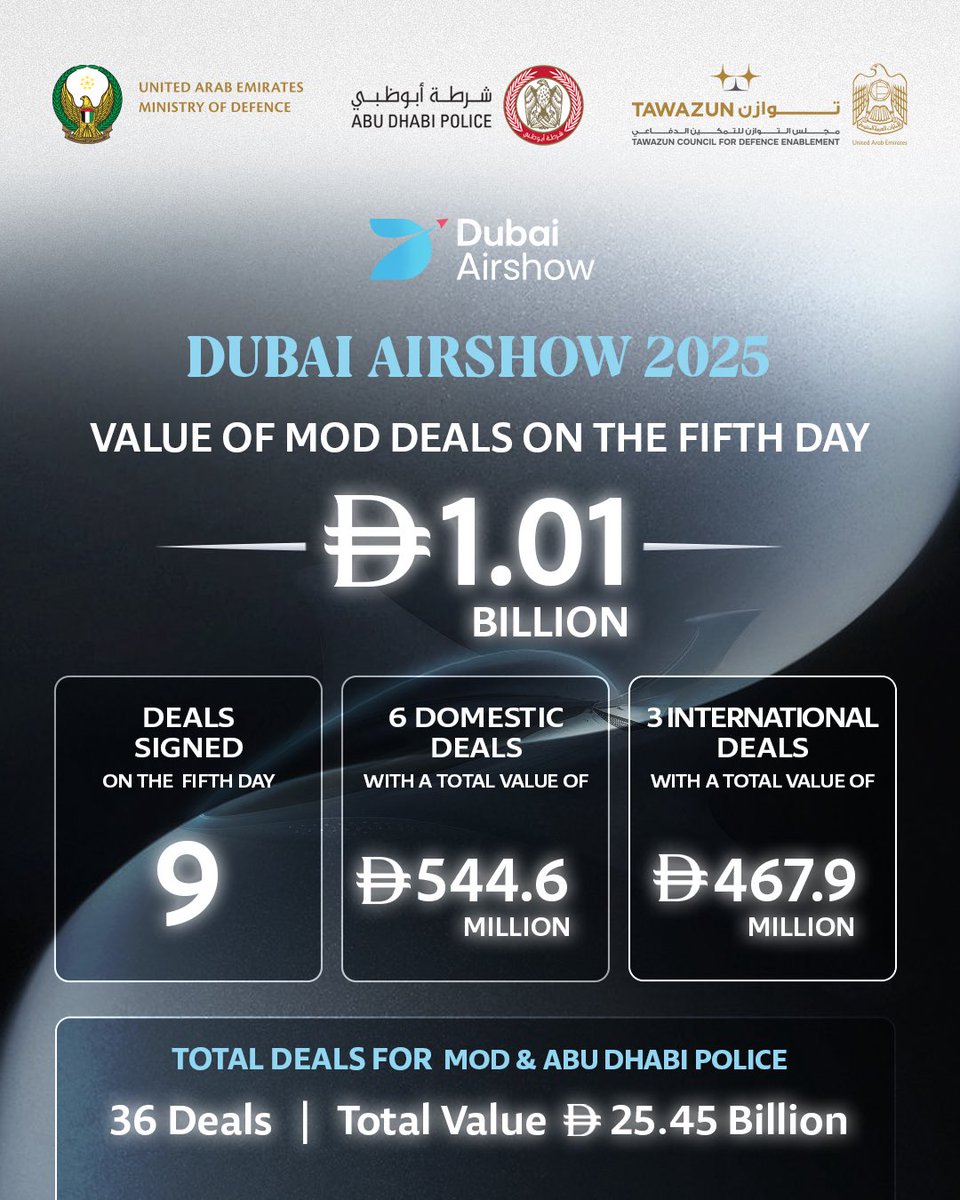
The Tawazun Council for Defence Enablement recorded nine new contracts worth AED 1.012 billion on behalf of the Ministry of Defence on the fifth and final day of the Dubai Airshow 2025, elevating the event’s five-day total to 36 agreements with a cumulative value of AED 25.455 billion.

At a press conference in Dubai attended by spokespersons Majed Ahmed Al Jaberi, Abdulla Ahmed Al Saeedi and Manea Abdulkarim Al Mansoori, the council detailed that six of the final-day contracts, sized at AED 544.675 million, were with local firms, while the balance, AED 467.913 million, involved international companies.

Among the domestic deals, two contracts with the Abu Dhabi-based M4 Trading comprised a AED 57.636 million order for a Grand Control Station and a AED 161.634 million deal for aircraft procurement. A AED 29 million contract went to Al Taif Technical Services Company for cooling-equipment and power-generator maintenance, while MP3 Company secured a AED 154.5 million agreement for aerial-rescue systems and spare parts. International Golden Group received AED 65.905 million for aerial drop systems and AED 76 million went to Abu Dhabi Autonomous Systems Investments for drone procurement.

On the global front, two agreements with Lockheed Martin amounted to AED 184 million and AED 63.551 million respectively for maintenance and spare-parts support. A third contract with Raytheon Technologies was valued at AED 220.362 million for friendly-force identification systems.

Across the event, earlier announcements show the council had already signed 20 contracts worth AED 18.01 billion during the first three days of the airshow. This underlines a consistent pace of deal-making spanning both national and international industrial partners.

The contract portfolio highlights the UAE’s emphasis on building a robust domestic defence-and-security-industrial ecosystem, spanning aircraft systems, drones, radars, simulation and service-support infrastructure. Analysts note this reflects a shift from traditional procurement towards localisation, technology transfer and national capability building.

Tawazun’s officials emphasised that the partnerships frame more than incremental orders; they represent structural steps toward embedding industry in sovereign defence strategy. Ms Mansoori observed that the council “continues to foster a competitive and enabling environment for the private sector” and that the outcomes achieved through the airshow “reflect the UAE’s vision of developing an integrated, innovative and strategically driven defence and security sector.”

While the headline figure of AED 25.455 billion positions Dubai Airshow 2025 among the region’s most commercially active defence gatherings, some independent observers caution that the true measure of success will rest on execution, delivery timelines and domestic-industry uptake. Questions remain about how many contracts include meaningful offsets, R&D components and long-term local value-creation versus straightforward procurement.

Nevertheless, the event’s records reinforce Dubai’s growing role as a hub for aerospace-defence engagement, with deals touching both military and dual-use capabilities. Compared with earlier editions, this year’s flow involves a higher proportion of contracts that combine hardware, maintenance-services and technology-transfer features — signalling deeper industrial ambition rather than purely kit acquisition.

The spread of contract-values — from tens of millions of dirhams for niche specialised systems to multi-hundred-million agreements with global primes — reveals a multipronged strategy. Domestic SMEs are being drawn into the supply chain alongside major established defence-sector players, thereby diversifying participation and reducing reliance on external supply.

As the UAE moves ahead with its national defence-industrial roadmap, the final-day flurry of deals from Tawazun brings the focus firmly onto the implementation phase of those agreements and the strategic partnerships that will underpin them over the coming years.

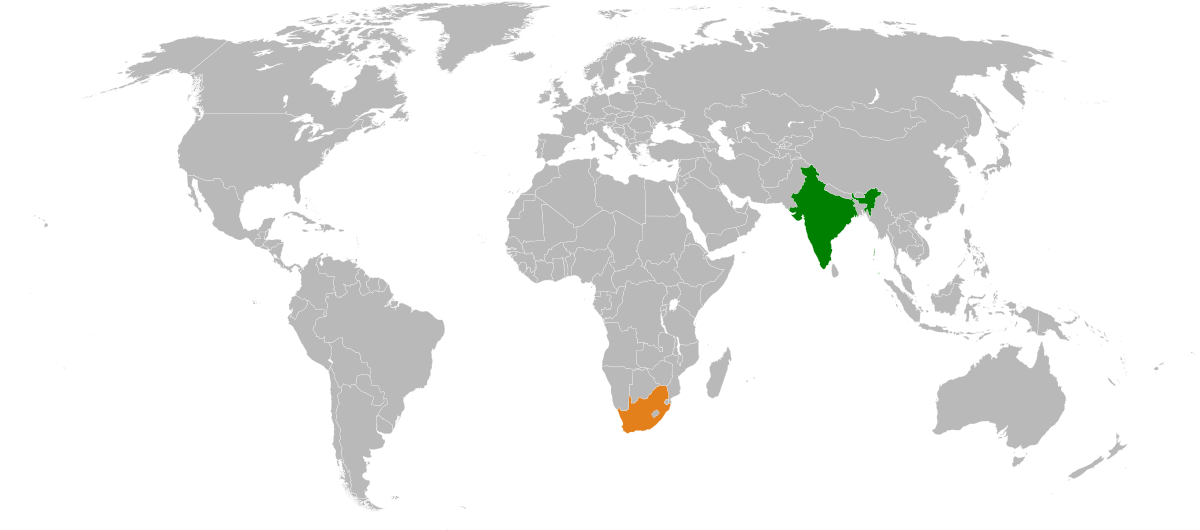
Leaders of India and South Africa affirmed a joint commitment to amplify the resonance of the Global South during a bilateral meeting on the margins of the G20 summit in Johannesburg. India’s Prime Minister met South African President Cyril Ramaphosa to review an expanding partnership that now encompasses trade, digital infrastructure and critical-minerals cooperation.

The leaders emphasised the historical foundation of bilateral ties, tracing back to shared anti-colonial struggles and longstanding people-to-people links. They identified emerging sectors of collaboration, including artificial intelligence and digital public platforms, as well as enhanced investment flows across innovation, infrastructure and mining sectors.

India expressed gratitude to South Africa for its role in relocating cheetahs to India and extended an invitation for South Africa to join the International Big Cat Alliance. At the G20 held in Johannesburg, which is the first summit of its kind hosted on African soil, South Africa has sought to spotlight issues of development, sustainability and Global South equity.

The two countries signalled their readiness to facilitate mutual investments, noting the growing footprint of Indian firms in South Africa and a shared interest in deepening bilateral ties in mining, start-ups, technology and infrastructure. They agreed to enhance support frameworks for these sectors.

In the domain of digital transformation, the meeting explored ways in which India’s Digital Public Infrastructure experience could be shared with South Africa, with the leaders discussing a roadmap for cooperation in those digital arenas that support transparency, inclusion and scalability.

On critical minerals—the backbone of technologies from electric vehicles to renewable energy systems—the dialogue underscored the strategic convergence of India’s growth ambitions and South Africa’s resource endowment. Both governments emphasised sustainable extraction, value-chain development and mutual investment as priorities.

The meeting also took place against the backdrop of global institutional reform debates, where developing countries increasingly seek to adjust frameworks such as the IMF and development banks. South Africa, as serving G20 chair, has framed its presidency around the themes of solidarity, equality and sustainability, particularly as representative of countries in the Global South.

While the two leaders concentrated on bilateral priorities, they also discussed multilateral coordination and collective platforms. They welcomed South Africa’s initiative to convene the IBSA leaders meeting and affirmed cooperation ahead of India’s upcoming chairship of BRICS in 2026.

Observers note that India–South Africa ties have evolved from traditional trade and diplomacy to a more strategic convergence around technology, investment, and global governance. According to experts, this shift reflects the changing priorities of middle powers in a multipolar world, where alignment on development and technological sovereignty is rising.

However, there remain practical challenges. For South Africa, translating resource-rich endowments into sustainable, inclusive growth has long been a domestic policy hurdle. For India, ensuring that digital partnerships respect both sovereignty and local capacity presents implementation risks. Critics argue that while high-level pledges are valuable, they must be matched by concrete mechanisms, regulatory clarity and project-level follow-through.

In trade terms, the two countries’ discussions come at a time when global supply-chain realignments and technology competition are raising the stakes for investment in emerging markets. Indian companies entering South Africa will need to navigate regulatory complexity, local participation requirements and the country’s infrastructure bottlenecks. South Africa, for its part, will have to ensure that its mining and start-up ecosystem attract and retain investment while meeting environmental and community benchmarks.

The diplomatic messaging also signals a broader orientation for both nations. India’s engagement with Africa has increasingly focused on capacity-building and infrastructure, while South Africa has positioned itself as a voice for Africa in global forums. Their joint push to amplify the Global South suggests an intention to influence agendas around debt relief, climate finance, digital equity and reform of global institutions.


Abu Dhabi’s infrastructure expansion enters an ambitious phase with the Abu Dhabi Projects and Infrastructure Centre announcing a capital-projects pipeline valued at US$54 billion over the next five years, and ambitions to double the size of this programme by 2040. Officials described the initiative as a broad invitation to overseas and regional contractors to engage in major new developments spanning housing and social infrastructure. During a road-show […]

Advertisements

Valetax marked a major milestone with a powerful presence at Jeddah Fintech Week 2025, held on 16 and 17 November at the Jeddah Hilton Hotel. As the Official Sponsor, the company delivered an impactful showcase that strengthened its relationships with traders, partners, and fintech professionals while reaffirming its long-term commitment to innovation, transparency, and partnership-driven growth across the MENA region.   This year’s edition of Jeddah Fintech […]

Production at the Volkswagen Group Africa facility in Kariega, Eastern Cape, has surpassed two million units of the Volkswagen Polo, marking a significant achievement for the plant and the region’s automotive sector. The milestone vehicle, a smoky-grey model destined for Australia, rolled off the production line earlier this month, underlining the global scope of manufacturing at the site. The factory, known as the “Home of Polo”, began […]

JAKARTA, INDONESIA – Media OutReach Newswire – 20 November 2025 – Tune Protect Re (“Tune Protect”), a leading Travel & Lifestyle reinsurance subsidiary of Tune Protect Group Berhad, has extended its partnership with Ticket2U, Southeast Asia’s premier ticketing platform, to Indonesia with the launch of Ticket Refund Protection and Sports Personal Accident (PA). This milestone aligns with Tune Protect’s regional expansion plan across Southeast Asia, bringing Indonesia […]

Abu Dhabi based investment firm Lunate has escalated its global ambitions after deploying roughly US$13.5 billion and signalling plans to raise even larger funds for 2026 launches. Founded in 2023 and backed by the emirate’s investment ecosystem, Lunate raised about US$17 billion in 2024 for its flagship funds and has invested around 80 per cent of that amount, according to individuals familiar with its operations. The firm […]

Nairobi-based electric mobility firm Roam Electric Ltd has begun talks to monetise carbon-offset credits generated by its motorcycles while launching a global crowdfunding campaign to raise working capital. Each machine sold by Roam is designed to offset around three tonnes of CO₂ annually; with about 4,000 units currently in circulation, the company estimates roughly 12,000 tonnes of emissions reduction per year—equivalent to the output of some 2,600 […]

  Papio Consulting recently launched an AI-powered ESG platform. As Steven Jansen, Founder of Papio Consulting, states MENA is one of the fastest-evolving regions for ESG transformation, with a long-term vision where transparent ESG performance becomes a competitive advantage. Governments are increasingly advancing sustainability agendas and innovation, and companies are ready to integrate smart tools. “Our Papio Sustainability Manager helps reduce the time and cost of ESG reporting by up […]

Ukraine’s drone-manufacturer SkyFall unveiled its latest unmanned aerial system, the P1-SUN interceptor, on the opening day of the Dubai Airshow. The P1-SUN marks the company’s first public display outside Ukraine and is designed specifically to neutralise enemy drones such as the Iranian-designed Shahed, a frequent threat in the conflict with Russia. A company representative said production runs into the thousands of units per month.

SkyFall has built a reputation with systems such as the Shrike FPV strike drone and the Vampire rotary-wing model, both widely used by Ukraine’s armed forces. The P1-SUN uses a modular architecture and a 3D-printed airframe, enabling rapid manufacturing and deployment. According to the representative, the ‘plug-and-play’ design allows for quick reconfiguration to meet evolving threats.

The broader context of this launch lies in Ukraine’s intensified efforts to counter drone swarms and asymmetric aerial threats. Ukrainian defence-sector officials estimate that Russian forces have been deploying Shahed-type loitering munitions in high numbers across multiple fronts. Earlier assessments placed the cost of Ukrainian-built interceptor drones at as low as US $300 to US $500 per unit, compared with US $35,000 for some adversary systems. SkyFall’s move thus signals a shift from purely offensive drone designs to dedicated counter-drone capabilities.

At the airshow, SkyFall’s exhibit drew attention from international defence-industry attendees. One senior visitor commented that modular interceptors like the P1-SUN could fill a gap between point-defence systems and networked air-defence layers. Ukraine’s defence-industry consortium has been actively seeking partnerships with foreign firms, and meetings held on the sidelines of the show reportedly included discussions with major aerospace and defence contractors.

While SkyFall did not disclose customers or specific contracts at the event, analysts believe that the demo aims to position Ukraine as a supplier of cost-effective UAV and counter-UAV systems. The company’s advertising emphasises “combat-proven” status in the Ukrainian conflict, enhancing its export appeal. Kiev-based industry sources note that local firms are now transitioning from ad-hoc war-time manufacturing to serial production with export-orientation in mind.

However, challenges remain. Experts caution that scaling production of complex interceptor drones demands robust supply chains, quality assurance and integration into broader air-defence networks. SkyFall’s claim of thousands-per-month output will likely be tested by logistical realities such as 3D-printing capacity, component sourcing in a war-economy and export-licensing hurdles. Additionally, while cost-effective interceptors are attractive, they must be supported by detection and command-and-control systems—which are more costly and slower to deploy.

On the defensive front, Ukraine is not relying solely on lightweight interceptors. Systems such as the Rheinmetall Skyranger 35, a self-propelled anti-aircraft gun system mounted on a Leopard 1 tank chassis, are being delivered to bolster protection across multiple fronts. The combination of high-end systems and low-cost interceptors indicates a layered approach is under development.

BEIJING, CHINA – Media OutReach Newswire – 18 November 2025 – On November 12, 2025, the thematic investment promotion event “Synergy Between Beijing and Hong Kong, Connecting the World – Towards a Brighter Future with Chaoyang” was successfully held at the Hong Kong Convention and Exhibition Centre. Jointly hosted by the Chaoyang District People’s Government and the Beijing Investment Promotion Service Center, and organized by the Chaoyang […]

A significant consultative meeting aimed at addressing Africa’s veterinary medicine regulation challenges is taking place in Nairobi from 17 to 19 November 2025. The event, led by AU-IBAR, AU-PANVAC, GALVmed, the Veterinary Medicines Directorate, and several key partners, has brought together national regulatory authorities, Chief Veterinary Officers, regional bodies, manufacturers, and technical organisations. The central focus of the discussions is the long-standing issues that hinder access to […]

GE Aerospace has reached significant milestones at the Dubai Airshow 2025, signing major engine agreements with two of the UAE’s most prominent carriers—Emirates and flydubai. The deals highlight the ongoing growth and resilience of the UAE’s aviation sector, which continues to see robust demand for both commercial aircraft and high-performance engines, despite the global challenges facing the industry.

The first of these landmark agreements was signed with Emirates, the world-renowned airline based in Dubai. Under the terms of the agreement, GE Aerospace will supply advanced engines for a number of Emirates’ new aircraft, including both narrowbody and widebody models. The deal underscores the airline’s commitment to expanding its fleet with cutting-edge technology to enhance fuel efficiency, performance, and sustainability.

For flydubai, the agreement is equally important as it continues its rapid growth trajectory. Flydubai, known for its extensive network across the Middle East, Africa, and Asia, will also integrate GE engines into its fleet expansion plans. The airline’s strategic focus on upgrading its fleet with advanced engine technology aims to improve operational efficiency while reducing carbon emissions—an essential move in line with global environmental goals.

GE Aerospace’s role in both of these agreements solidifies its position as a leader in the global aviation industry, especially in the Middle East, a region that has become a critical hub for air travel. These deals are seen as a testament to GE’s cutting-edge engineering capabilities, which align perfectly with the UAE’s ambitious aviation growth plans. The country’s major airlines, particularly Emirates, have long been at the forefront of technological advancements in the aviation industry, pushing the envelope on fuel efficiency and operational performance.

The Dubai Airshow itself has served as a vital platform for aerospace companies to showcase new technologies and forge strategic partnerships. The agreements with Emirates and flydubai are a clear indication of the UAE’s ongoing investments in its aviation infrastructure, which is poised to continue its rapid expansion over the coming years. Aviation experts suggest that these deals are also part of a broader trend in the region, where carriers are increasingly prioritising the integration of more fuel-efficient and environmentally sustainable technologies into their fleets.

In addition to fleet expansion, both Emirates and flydubai are working to increase their market share, not only within the Gulf region but also globally. With air travel demand rebounding in many parts of the world, the strategic importance of the UAE’s aviation sector cannot be overstated. Emirates, with its vast global reach, remains a key player in international air travel, while flydubai has emerged as a critical part of the UAE’s broader air transport network, offering affordable travel options to key regional destinations.

GE Aerospace’s engine technology plays a crucial role in supporting both airlines’ efforts to stay competitive and sustainable in the evolving air travel market. The next-generation engines provided by GE offer improved fuel economy and significantly lower emissions, aligning with international targets for reducing aviation’s environmental footprint. In addition to offering operational benefits, these engines will provide long-term economic advantages, ensuring that both Emirates and flydubai remain agile in a highly competitive market.

AccuKnox, a prominent player in Zero Trust Cloud-Native Application Protection Platforms, has entered into a strategic partnership with Frentree, a cybersecurity solutions provider based in South Korea. This collaboration seeks to enhance the security of cloud, container, and AI workloads for businesses across the region.

The integration of AccuKnox’s innovative security technologies with Frentree’s established presence in the South Korean market will enable enterprises to better defend against emerging cyber threats, particularly those targeting cloud-native environments. As businesses increasingly rely on cloud infrastructures and AI-driven workloads, the need for robust security frameworks that can scale and adapt to new vulnerabilities has never been more critical.

AccuKnox’s Zero Trust model, which operates on the principle of verifying every request within a network, regardless of origin, is designed to provide continuous protection against both internal and external threats. By requiring strict authentication and authorisation for all access requests, this security approach eliminates traditional trust models that have proven vulnerable in today’s dynamic digital landscape. This model is particularly effective in safeguarding complex cloud-native environments, where assets may be spread across multiple platforms and locations.

Frentree, with its local expertise and established relationships in South Korea, is poised to play a pivotal role in implementing these advanced security measures within the region. Their deep understanding of local enterprise needs, regulatory frameworks, and operational challenges positions them as an ideal partner for AccuKnox. By leveraging Frentree’s on-the-ground presence, AccuKnox aims to accelerate the adoption of Zero Trust security models, providing South Korean businesses with the tools necessary to meet their cybersecurity requirements in the face of increasing cloud adoption.

The collaboration between the two companies also highlights a broader trend in the cybersecurity industry, where regional partnerships are becoming more prevalent. With cyber threats becoming more sophisticated, businesses are increasingly looking for tailored solutions that not only address global challenges but also account for specific local risks and regulations. By working with a trusted regional partner like Frentree, AccuKnox can ensure that its Zero Trust CNAPP solutions are delivered in a way that meets the unique needs of the South Korean market.

South Korea, which has seen rapid digital transformation in recent years, is a particularly fertile ground for this kind of security innovation. As industries such as finance, telecommunications, and manufacturing embrace cloud computing and AI technologies, the country has become a prime target for cyberattacks. With high-profile breaches making headlines, there is growing pressure on organisations to improve their security postures. The Frentree-AccuKnox partnership is thus timely, as it provides local enterprises with a comprehensive security solution to mitigate these risks.

The partnership is also a response to the rising complexity of cyber threats. The increasing use of cloud-native applications and AI workloads introduces new vulnerabilities, which traditional security models struggle to address. Zero Trust security frameworks, with their focus on micro-segmentation and continuous monitoring, offer a promising solution to these challenges. By focusing on verifying every access attempt rather than trusting devices or users, these systems offer a much higher level of assurance against cyber threats.

Looking ahead, both AccuKnox and Frentree are committed to expanding their reach and impact in the region. This partnership is just the beginning, as the two companies plan to work closely to refine and enhance their offerings based on the specific needs of South Korean enterprises. With the cybersecurity landscape continuing to evolve rapidly, they aim to stay ahead of emerging threats by continuously innovating their security models.

Cybersecurity breaches are becoming an increasingly costly issue for Indian enterprises, with nearly a quarter of organisations reporting losses exceeding $1 million over the past three years. This has prompted a sharp uptick in cybersecurity spending, especially in artificial intelligence and cloud security solutions, as businesses aim to protect themselves from sophisticated cyber threats. However, the sector still faces significant challenges, particularly in securing skilled talent to manage the growing complexity of cyber risks.

A recent report by PricewaterhouseCoopers highlights that 23% of Indian businesses have incurred losses of over $1 million due to cyber incidents, underscoring the severity of the issue. These breaches range from data theft and ransomware attacks to more advanced persistent threats targeting critical infrastructure. PwC’s findings suggest that the financial impact on Indian firms is only likely to rise as cybercriminals become more organised and capable, exploiting vulnerabilities in emerging technologies and systems.

The shift towards digital transformation and cloud adoption has undoubtedly exposed businesses to greater risk, with sensitive data being increasingly stored and accessed online. According to PwC, the cloud is now seen as both a critical business enabler and a potential vulnerability. As cloud infrastructures evolve, they are often targeted by cybercriminals seeking to exploit misconfigurations and inadequate security protocols.

In response, Indian businesses are ramping up their cybersecurity investments. Spending on AI-driven security solutions is one of the key focus areas. These technologies allow businesses to proactively identify and neutralise threats in real-time, enabling a faster response to evolving attack patterns. AI is particularly useful for detecting abnormal behaviour and potential risks that traditional security systems might miss. It is also being leveraged for predictive analytics to foresee potential vulnerabilities before they can be exploited by malicious actors.

However, despite the increased allocation of funds towards cybersecurity, the shortage of skilled professionals remains a significant roadblock. The demand for cybersecurity experts far outweighs the supply, with firms struggling to recruit individuals with the necessary expertise in areas such as AI, cloud security, and threat intelligence. The PwC report indicates that many organisations are forced to rely on third-party vendors to manage their cybersecurity needs, further driving up costs.

Experts suggest that to address the talent gap, Indian firms must invest in long-term solutions, such as upskilling existing employees and forging partnerships with educational institutions to nurture the next generation of cybersecurity professionals. The government has also been urged to play a more proactive role by fostering public-private collaborations to enhance the country’s overall cybersecurity ecosystem.

The rise of AI and cloud technologies has, however, brought additional complexities. While these tools can greatly improve security, they also introduce new attack vectors. Cloud environments, if not managed properly, can expose businesses to significant risks, including data breaches and unauthorised access. Moreover, the increased use of AI-driven solutions can create new challenges, such as ensuring the ethical deployment of AI and protecting against adversarial AI attacks.

Despite these hurdles, the Indian cybersecurity landscape is expected to see significant improvements over the coming years. As businesses continue to embrace AI and cloud technologies, security budgets are likely to increase, with a stronger emphasis on automated security measures and real-time threat detection. Additionally, as the global cyber threat landscape evolves, businesses are expected to collaborate more closely with government agencies and international organisations to stay ahead of cybercriminals.

Snapchat has launched its internal Valdi framework to the public, marking a significant shift in the competitive landscape for user interface frameworks. Initially used exclusively within the company for eight years, Valdi is now available to external developers, expanding the tools and resources that could influence UI design and development across digital platforms. Valdi, which was first conceived to streamline Snapchat’s app development process, has been a […]

Ebury, a leading financial services provider, has confirmed its role as a key sponsor for the upcoming Scotland London Africa Week in 2025. The event, organised by the Scottish Africa Business Association, aims to foster stronger economic ties between Scotland and the African continent, highlighting the role of trade, investment, and business opportunities in the region.

The partnership with Ebury, renowned for its expertise in global trade finance and foreign exchange solutions, underscores the growing importance of financial services in facilitating cross-border business relationships. The firm’s sponsorship will be centred around the Scotland Africa Networking Reception, which will take place at Dover House in London. This reception serves as a key platform for Scottish businesses, entrepreneurs, and investors to engage with African counterparts and explore new avenues for collaboration.

Scotland London Africa Week is a prominent event that brings together leaders from both public and private sectors to discuss and promote the growing potential of the African market. Through networking sessions, panel discussions, and targeted events, the week-long celebration will provide an opportunity for businesses to forge partnerships, tap into new markets, and discover emerging opportunities within Africa.

Ebury’s involvement with the event highlights the company’s commitment to supporting the economic relationship between Africa and the UK, especially Scotland, which has increasingly sought to expand its international trade network. The company’s expertise in cross-border payments and currency exchange is expected to add valuable insights to the discussions around enhancing financial inclusivity and reducing barriers for businesses in Africa and the UK.

Scotland, with its strong international trade links and vibrant financial services sector, continues to be a key player in fostering relationships with Africa. The country’s emphasis on promoting innovation, sustainable development, and investment in emerging markets aligns well with the strategic goals of the Africa Week.

With the backing of Ebury, the networking reception will focus on addressing critical issues such as trade finance, investment flows, and economic partnerships. The reception will also offer an invaluable networking opportunity for delegates from across the continent and beyond to exchange ideas and explore avenues for collaboration. This sponsorship comes at a time when both the UK and African nations are looking to bolster trade relations and deepen economic cooperation.

EVIQ, a leading electric vehicle technology firm, has entered into a Memorandum of Understanding with NAVA, a prominent player in electric mobility solutions, marking a significant step forward in the development of electric vehicles and related infrastructure. This strategic partnership aims to bolster the electric vehicle sector, focusing on the exchange of technical knowledge, talent development, and the expansion of advanced EV technologies across the country. The […]

The Dubai International Financial Centre Authority has reported that US companies account for approximately 7% of the financial services firms operating within the DIFC, a landmark financial hub that has been active since its inception in 2004. This data highlights the increasing influence of US-based businesses in the Middle East’s burgeoning financial sector, with a noticeable presence of American institutions across various finance-related services. Arif Amiri, CEO […]

Saudi Crown Prince Mohammed bin Salman arrived in Washington on Tuesday for his first official visit since 2018, marking a significant milestone in US-Saudi relations. The visit is set against the backdrop of a complex diplomatic landscape, one that has seen fluctuating ties between the two nations in recent years. The Crown Prince’s return to the White House follows a period of tension under President Joe Biden’s administration, which had openly criticised the Kingdom’s human rights record and distanced the US from the Saudi leadership.

Under Biden’s presidency, relations between Washington and Riyadh reached a nadir, especially after the murder of journalist Jamal Khashoggi in 2018, a crime widely attributed to the Crown Prince, though he denies any personal involvement. Biden’s stance was clear: he aimed to reassess US relations with Saudi Arabia, placing emphasis on human rights and security policies. However, the trajectory of US-Saudi relations changed dramatically with the arrival of President Donald Trump in 2017.

During Trump’s tenure, the US-Saudi relationship experienced a marked shift, primarily driven by shared strategic and economic interests. In 2018, Trump’s visit to Riyadh helped to reset relations, with the Kingdom committing to invest $600 billion in the US over a four-year period. This pledge included investments in infrastructure, technology, and energy projects, bolstering the economic ties between the two nations and reaffirming the strength of their partnership.

The current visit by the Crown Prince is seen as a continuation of this reset, highlighting the importance of economic collaboration and security coordination between the US and Saudi Arabia. In particular, the two countries share key interests in the Middle East, such as counterterrorism efforts and stability in the region, particularly concerning Iran’s increasing influence and its nuclear ambitions.

During his visit, Crown Prince Mohammed is expected to meet with President Joe Biden, along with other senior officials, to discuss a range of issues. While human rights will likely remain a topic of conversation, the focus of the visit is expected to be on strategic cooperation in areas such as energy, defence, and regional security. A key part of the talks is likely to centre around energy policy, particularly as the world grapples with rising oil prices and energy security concerns exacerbated by the war in Ukraine.

Energy is a central pillar of the relationship between the two countries. Saudi Arabia, as one of the world’s largest oil producers, has long played a crucial role in global energy markets. The Kingdom’s ability to influence oil production levels has made it an indispensable partner for the US, which continues to rely on energy imports and stability in the oil market. As the world moves toward cleaner energy solutions, Saudi Arabia has also signalled its intention to diversify its economy and reduce its dependence on oil exports. In this context, discussions about investment in renewable energy projects and technological partnerships are likely to be on the agenda.

Security cooperation, too, will be high on the list of priorities during the Crown Prince’s visit. Saudi Arabia’s security concerns, particularly regarding Iran’s nuclear ambitions and the ongoing conflict in Yemen, are central to the Kingdom’s foreign policy. The US has been a key ally in providing military support, including arms sales and joint military exercises. However, the Biden administration has expressed concerns about the scale of arms deals with Saudi Arabia, especially in light of the war in Yemen and the humanitarian crisis it has caused. Despite these concerns, the strategic necessity of maintaining a strong defence relationship remains a key point of discussion.

The meeting comes at a pivotal moment in global geopolitics. The US and Saudi Arabia are both facing the challenge of navigating a shifting world order, characterised by growing tensions with China and Russia, and increasing instability in the Middle East. While Biden’s administration has sought to balance human rights with strategic concerns, the importance of the US-Saudi relationship cannot be overlooked. The outcome of this visit could lay the foundation for the future of US-Saudi ties, particularly as the global energy landscape continues to evolve and new geopolitical challenges emerge.

VISHNU RAJA
RYO YAMADA
HITORI GOTOH
IKUYO KITA