News related to
Partnerships

Falcon Finance has reached a new milestone as the circulating supply of its decentralized stablecoin, USDf, climbs to an all-time high of $1.5 billion, signalling sharply increased adoption and confidence in its DeFi infrastructure. The expansion tracks a surge from $1.12 billion over approximately one month, a performance driven by a blend of yield innovation, enhanced transparency, and risk-mitigation frameworks.

The $10 million on-chain insurance fund plays a pivotal role in strengthening institutional trust. Seeded initially with USD1 and replenished via protocol fees, the fund is structured to act as a financial buffer during market stress—supporting yield commitments, offsetting rare instances of negative returns, and serving as a fallback bidder for USDf to uphold its peg. Premium collateral strategies further bolster systemic resilience.

Yield generation remains a cornerstone: the yield-bearing counterpart of USDf, sUSDf, has delivered a standout 30-day APY of 9.30 per cent as of 30 August, outperforming notable competitors such as Ethena’s sUSDe, Maple’s SyrupUSDC, Sky’s sUSDS, Ondo’s OUSG, and BlackRock’s BUIDL.

To deepen engagement and expand utility, Falcon Finance launched the frxUSD–USDf Curve liquidity pool, which offers participants more than 20 per cent APR and rewards denominated as “40× Miles.” The community-oriented Yap2Fly campaign—run in partnership with Kaito—distributed $50,000 in rewards to its top 50 users in August, further stimulating active participation.

Transparency remains central to the protocol’s ethos. Falcon now publishes full reserve breakdowns and supports these with weekly third-party attestations. As per the latest reporting, USDf reserves amount to $1.29 billion—comprising $640.16 million in bitcoin, $375.65 million in stablecoins, with remaining allocation across Dogecoin, Fetch. ai, TRON, TON, and Ethereum. Custody spreads across Fireblocks, Ceffu, and multisignature setups, with 72.2 per cent held under multisig, fostering verifiable security.

These developments are underpinned by earlier strategic investments and roadmap expansions. A $10 million funding from World Liberty Financial in July accelerated technical integration with the fiat-backed USD1 stablecoin, facilitating liquidity sharing and conversion infrastructure. By mid-2025, USDf had already breached the $1 billion supply threshold, demonstrating steady growth ahead of its latest benchmark.

Falcon portrays USDf as more than a synthetic dollar; it is positioned as a global liquidity solution. The protocol’s architecture permits any custody-ready asset—including crypto, stablecoins, and real-world tokenised assets—to be turned into USD-pegged on-chain liquidity. This dual-token model is geared towards unlocking yield while safeguarding against volatility, effectively merging traditional risk frameworks with DeFi innovation.

Market observers note that USDf’s climb to $1.5 billion is emblematic of a broader shift in DeFi: users and institutions are increasingly seeking stable, yield-bearing alternatives to both fiat and traditional stablecoins. Falcon’s layered risk-management systems, institutional-grade safeguards, and developer partnerships appear to answer that demand with growing credibility.


Abu Dhabi will host the BRIDGE Summit from 8 to 10 December 2025 at the ADNEC Centre, uniting heads of state, media executives, policymakers, technologists and content creators in an ambitious bid to redefine the global media landscape. Announced in Washington by Abdulla bin Mohammed bin Butti Al Hamed, chairman of the National Media Office, alongside Dr Jamal Mohammed Obaid Al Kaabi, director-general of the NMO, the summit pledges to foster dialogue, innovation and sustainable growth across the sector. Attendance is expected to exceed 5,000 participants, underpinning its status as a global media landmark.

Preparatory efforts have extended worldwide. In June, a roundtable in London convened Al Hamed and Al Kaabi with media experts during London Tech Week to reinforce the summit’s commitment to transparency, accountability and cross-sector collaboration in an increasingly digital era. In Asia, the BRIDGE roadshow landed in Shanghai, following stops in New York, London and Osaka, each event contributing insights to shape the summit’s agenda. A mission to Seoul in August further advanced partnerships with technology and media firms, including I-ON Communications on AI and data storytelling; Dentons on regulatory frameworks; Lotte Caliverse on immersive media; and SM Entertainment on cultural collaboration. These discussions cemented shared goals around content credibility, technology ethics and investment in creative startups.

The BRIDGE Summit is embedded within a broader ecosystem spearheaded by the National Media Office. Alongside the summit lies the BRIDGE Foundation, a non-profit body dedicated to empowering media professionals, funding research and supporting startups. This aligns with the UAE’s pursuit of media as a force for societal development and economic progress. A recently published fact sheet outlines the summit’s six thematic zones—Academy, Diplomacy, Forum, Marketplace, Impact and Spotlight—designed to foster skills, policy engagement, tech innovation, social impact and cultural exchange across a three-day programme.

AI and ethics feature prominently among the summit’s themes. Organisers emphasise human values in storytelling amid accelerating digital disruption and algorithmic influence. Al Hamed has characterised media as a humanitarian force that must uphold integrity and cohesion, not merely chase clicks. The summit will address responsible AI’s potential and pitfalls, ethical journalism, and media business models fit for the digital age.

Beyond content and tech, BRIDGE seeks to bridge policy and practice. With roundtables and forums designed to foster international dialogue, policymakers, creators and academics will collaborate on frameworks that safeguard credibility while embracing innovation.

The summit’s global scope is reflected in its steady itinerary of international engagements. From Washington to London, Shanghai to Seoul, each stop has contributed regional perspectives and partnerships that will inform the summit’s structure, themes and participant networks.

SHENZHEN, CHINA – Media OutReach Newswire – 5 September 2025 – On September 3, ASIA FRUIT LOGISTICA opened at AsiaWorld-Expo in Hong Kong. BGY Fruits, China’s leading fruit retail chain, participated alongside its subsidiary Jin Chengtai, continuing its annual presence at the event. Through consistent participation, BGY Fruits showcases its strengths in supply chain integration and brand development to global partners and potential clients—further advancing its strategy […]

Beautyworld Middle East will run from 27 to 29 October 2025 at the Dubai World Trade Centre, drawing an extensive global delegation of beauty professionals to explore innovations across the full spectrum of the industry. Organised by Messe Frankfurt Middle East, the event has become the region’s preeminent platform for unveiling trends, forging partnerships, and showcasing global brands and breakthrough technologies. Projected attendance data highlights the scale […]

Northern Ireland stands to benefit significantly from growing economic and technological ties with India, as boosted trade, tariff relief, and joint research initiatives begin to materialise. A free-trade agreement between India and the United Kingdom promises a settlement that could deliver a multi-million-pound boost to Northern Ireland’s economy, particularly in advanced engineering, technology, and services. At the same time, enhanced academic and innovation partnerships are expanding the region’s opportunities.

Northern Ireland’s technology, services and manufacturing sectors are especially poised for growth under the new trade agreement, which includes substantial tariff reductions and near-elimination on key exports such as medical devices and engineering goods. Analysis shows that the deal is expected to generate around £50 million in economic benefit for the province. The agreement also unlocks access to India’s growing services market, opening new pathways for Northern Irish firms to scale internationally and enhance competitiveness.

Simultaneously, India and the UK have elevated their broader strategic engagement, having signed the Comprehensive Economic and Trade Agreement on 24 July 2025. This landmark deal opened India’s government procurement market—worth £38 billion annually—to UK businesses for the first time, offering additional opportunities for Northern Ireland firms in technology, infrastructure and innovation services sectors. Negotiations had culminated in May 2025, after extensive rounds that resolved issues including visas, whisky, automobiles and pharmaceuticals.

Beyond trade, there is growing momentum in research collaboration. Imperial College London has launched a global science hub in Bengaluru, aiming to deepen its research alliances across AI, climate resilience, food security and antimicrobial resistance. Such initiatives highlight the intensifying India–UK scientific partnership, which Northern Ireland research institutions could tap into—particularly given the province’s established strengths in digital innovation and software engineering, with major global tech firms like Microsoft, Nvidia and SAP already present.

The launch of a joint India–Ireland Joint Economic Commission, as agreed by Indian External Affairs Minister S Jaishankar and Irish counterparts, further sets the stage for elevated economic and tech engagement involving Northern Ireland. The commission aims to enhance trade, investment and technology linkages; discussions have also included cybersecurity, artificial intelligence, fintech, semiconductors and higher education cooperation. Moreover, a new Indian consulate in Belfast reflects deepening diplomatic and commercial engagement with the region.

Northern Ireland benefits not only economically but also in innovation ecosystems. The UK–India Technology and Security Initiative, launched in July 2024, emphasises strategic collaboration across seven core areas including semiconductors, AI, quantum, biotech and advanced materials. The initiative is being overseen and reviewed by senior officials from both nations, reinforcing a structured framework for bilateral tech partnerships and supply-chain resilience; Northern Irish tech organisations with capabilities in cybersecurity, data analytics and smart infrastructure are well-positioned to participate.

These developments dovetail with the broader UK-wide free-trade agenda and strategic dialogues. India is the United Kingdom’s fastest-growing trade partner, with goods trade up to £17.8 billion in 2024 and services trade exceeding £24 billion—both substantial increases from pre-pandemic levels. Yet, awareness among UK firms, including in Northern Ireland, remains low, with only a small fraction actively exporting to India, despite high willingness among Indian consumers to pay premiums for UK products. Areas such as advanced engineering, manufacturing, and innovation services remain ripe for expansion.

Northern Ireland’s existing attributes further reinforce its readiness. The region hosts a cluster of world-class tech operations, supported by local firms such as Kainos and FD Technologies, and connectivity to universities and innovation centres. Access to India’s large and diverse markets—combined with policy support under the free-trade agreement—sets the scene for emerging partnerships in fintech, med-tech, smart infrastructure, and green technologies.

Finally, though not specific to Northern Ireland, institutions such as the UK India Business Council provide advisory networks and policy advocacy that can help local businesses navigate market entry, regulatory frameworks, and collaboration models with Indian partners across sectors including digital innovation, life sciences and advanced manufacturing.

Centrus Energy Corp has delivered 900 kilograms of high‑assay low‑enriched uranium to the Department of Energy, marking the completion of its second phase under a demonstration contract and validating the United States’ ability to produce this critical fuel domestically. This achievement opens the path for expanded reactor fuel supply amid growing demand for advanced nuclear technologies. The enrichment took place at Centrus’s American Centrifuge Plant in Piketon, Ohio, […]

Prince Alwaleed bin Talal is negotiating with the Public Investment Fund over a potential acquisition of approximately 75 per cent of Al Hilal Football Club, marking what may become a landmark transaction in the kingdom’s football privatisation agenda. The discussions remain preliminary; financial details and final ownership structure have yet to be finalised, and there is a possibility that negotiations might not reach completion. The Public Investment […]

Advertisements

Only one-third of insurers in China provide mental health services, despite rising demand Fifty percent of insurers see personalisation as key to the success of health and wellbeing programs SINGAPORE – Media OutReach Newswire – 3 September 2025 – Aon plc (NYSE: AON), a leading global professional services firm, released insights from its inaugural 2025 Insurer Wellbeing Benchmarking Report offering a comprehensive analysis of the health and […]

Nigeria has launched a bold initiative to position itself at the forefront of artificial intelligence on the African continent. The Government Leadership & AI Summit held in Abuja on 1 September brought together policymakers, private‑sector leaders and global tech executives. Minister of Communications, Innovation and Digital Economy, Dr Bosun Tijani, delivered a sharp keynote, warning of the widening productivity gap if Africa fails to collaborate on AI infrastructure and governance. “If […]

HONG KONG SAR – Media OutReach Newswire – 2 September 2025 – ZHUOYU Technology (ZYT), a leading advanced driver-assistance systems (ADAS) brand, officially announced its European debut at the (IAA Mobility 2025), opening on September 8, 2025. As a crucial step in its global strategy, ZYT will showcase its full-stack integrated hardware-software proprietary technologies, unveil business plans in Europe, and host technical salons under the theme “Intelligence […]

By T N Ashok NEW YORK: For the first time since 2018, Indian Prime Minister Narendra Modi landed in China in late August 2025, greeted warmly by President Xi Jinping for the annual Shanghai Cooperation Organisation (SCO) Summit. Alongside Russian President Vladimir Putin, the trio projected a striking image of solidarity—three leaders from the world’s […]

PLYMOUTH, MINNESOTA; CHICAGO, ILLINOIS; BONN, GERMANY – Newsaktuell – 2 September 2025 – The Seeding The Future Foundation (STF), the Institute of Food Technologists (IFT), and Welthungerhilfe (WHH) today announced the next chapter of the Seeding The Future Global Food System Challenge (GFSC). With the conclusion of its fourth cycle, operations will transition from IFT to WHH, an international leader in food systems transformation and the fight […]

Canada is advancing its Arctic security and defence strategy by expanding collaborations with NATO’s newest members—Finland and Sweden. As the geopolitical landscape shifts, Ottawa is actively moving beyond traditional reliance on the United States to forge deeper military, industrial and technological ties with Nordic allies, reinforcing its sovereignty and resilience in the High North. The Honourable Anita Anand, Minister of Foreign Affairs, has formalised a Canada–Finland strategic […]

A colossal leap in infrastructure development is underway as OpenAI pursues the establishment of a data centre in India with a striking capacity of at least one gigawatt. The project, integral to its Stargate initiative, ushers in a new era of AI infrastructure expansion across Asia.

OpenAI is actively exploring partnerships with Indian firms to bring this gigawatt-scale facility to life, though the precise location and timeline remain unspecified. The effort aligns with its Stargate programme—an expansive, multibillion-dollar venture in collaboration with SoftBank, Oracle and MGX to develop next-generation AI infrastructure.

The planned facility stands among the largest of its kind in the region and may be formally introduced by OpenAI’s chief executive, Sam Altman, during his anticipated visit to India in September. OpenAI has already gained legal footing by registering as an entity in India and is gearing up to open its first office in New Delhi later in the year, reflecting the nation’s importance as the company’s second-largest market by user base.

Financial implications of such mega‑scale AI infrastructure are enormous. According to Jensen Huang, chief executive of Nvidia, constructing a singular gigawatt-class facility could cost around $50 billion—$35 billion directed towards Nvidia’s hardware and $15 billion for supplementary systems. OpenAI’s ambitions also include similar “AI super‑factories” in Abu Dhabi and across the United States, all under the banner of Stargate.

This enormous investment is forecast to have ripple effects across the global AI ecosystem. With Stargate estimated at up to $500 billion, it underscores OpenAI’s strategic ambition to lead in AI infrastructure and the mounting demand for AI-optimised processing capabilities. Nvidia, for example, projects AI infrastructure spending could soar to the $3‑4 trillion mark annually by 2030, bolstered by commitments like those under Stargate.

Locally, establishing such a facility in India can offer tangible advantages. A dedicated data centre promises to reduce latency for Indian users while satisfying regulatory demands for local data storage, a critical consideration for enterprise clients and government services. The endeavour complements OpenAI’s earlier move to enable local data residency for services such as ChatGPT Enterprise and its API offerings, aligning with India’s regulatory framework.

India’s data centre ecosystem is expanding rapidly. From an installed capacity of approximately 950 megawatts in 2024, projections currently estimate that figure to nearly double—approaching 2 gigawatts by 2026. However, even with such growth, the nation still accounts for just a fraction of global data centre capacity despite generating a significant portion of worldwide data streams. The arrival of a gigawatt-scale project like OpenAI’s would mark a profound increase in both capacity and technological capability.

Environmental sustainability and energy demands also emerge as critical considerations. Hyperscale data infrastructure requires vast power and cooling resources, raising pressing questions about energy sourcing, water usage, and ecological impact—matters India is progressively addressing through green data centre policies and incentives.

OpenAI’s move echoes broader trends among global tech giants expanding their Indian footprints. For instance, Reliance Industries is planning a three‑gigawatt data centre in Jamnagar; Microsoft, Amazon, and Google are investing heavily in cloud infrastructure; and India’s government continues to support initiatives through Digital India and localisation mandates.

A new digital platform, the Flight Operations Centralised Unified System, has been unveiled by the General Civil Aviation Authority to drastically streamline how both foreign and national air operators seek operational approvals across the UAE. The system consolidates key regulatory links and information into a single, user‑friendly gateway, promising faster processing, greater transparency, and reduced bureaucracy. Saif Mohammed Al Suwaidi, Director‑General of the GCAA, described F. O. C. U. S. […]

WorldShards has revealed that its Token Generation Event will take place on 5 September 2025, aligned with its debut listing on Bybit’s Spot market. The collaboration has been formalised through a partnership with Bybit, the world’s second‑largest cryptocurrency exchange by trading volume, setting the stage for the $SHARDS token to embrace broader market accessibility.

The partnership entails a Bybit Megadrop promotion, offering participants opportunities to stake USDT or MNT and earn from a 60 million SHARDS prize pool. This initiative runs from 5 to 9 September and is intended to support early liquidity and user engagement.

WorldShards is a downloadable Web3 MMORPG developed by Lowkick Studio, rooted in a fantasy sandbox universe filled with crafting, exploration, and dynamic role‑playing. It blends blockchain elements such as NFT‑authenticated content into its interactive gameplay. The $SHARDS token adheres to a “fair launch” model, with no allocations reserved for the development team or early investors—enhancing perceived transparency and community ownership.

Ahead of its TGE, WorldShards will offer a 30‑day free access period to new players. Those who remain active for at least 25 days within that window will unlock full and permanent access to the game at no additional cost. This incentive is limited to new accounts and is designed to accelerate early engagement.

WorldShards operates on a fixed total supply model, capped at 5 billion tokens. Tokenomics are structured to distribute 60 percent for player rewards and 25 percent for ecosystem liquidity, with the remainder supporting broader community initiatives; remaining tokens are vested over six years to safeguard economic equilibrium.

Industry observers note that Bybit’s participation brings critical market exposure, offering access to its global user base—which exceeds 70 million accounts—and enhancing $SHARDS’ market liquidity and visibility. This positions $SHARDS amid the growing momentum of GameFi, where blockchain technology merges with immersive gaming economies.

While specific user metrics for WorldShards remain undisclosed, broader gaming industry data suggests a robust opportunity: in 2025, there are an estimated 3.43 billion active online gamers, with mobile gaming accounting for more than half of platform usage. Regions such as the Middle East, North Africa and Turkey have displayed notable growth in mobile gaming revenue, signalling favourable markets for adoption.

Lowkick Studio, the developer based in Abu Dhabi and founded in 2022, comprises industry veterans formerly involved in games such as World of Tanks and Allods Online. The studio’s trajectory includes partnerships with Abu Dhabi Gaming and OpenLoot, rapid community expansion exceeding half a million members, $8.6 million in NFT sales during 2024, and over 600,000 unique active wallets prior to TGE.

Within the WorldShards ecosystem, $SHARDS serves multiple functions—including item upgrades, rarity enhancements, rift processing, stat re‑rolling, and external trade—solidifying ties between in‑game progression and broader market dynamics.

StuDIYo Lab, a design‑technology and woodworking centre for young learners based in Dubai, has entered into a five‑year memorandum of understanding with the Bhubaneswar City Knowledge Innovation Cluster Foundation, under the Office of the Principal Scientific Adviser to the Government of India. The agreement sets a clear trajectory for rolling out maker‑based education, inclusive workshops, bootcamps and vocational training across India and the UAE.

The collaboration begins by launching School Innovation Labs in targeted Indian states. Over the next six months, the partners plan to establish up to four pilot labs, train some 20 educators, and engage over 500 learners. The agenda emphasizes accessibility for underserved groups, including tribal communities and neurodiverse participants, aiming to extend the reach of creative, skill‑based education beyond urban centres.

As part of the initiative, vocational programmes will be tailored specifically for women and youth, while inclusive workshops will cater to special‑needs learners. Innovation and entrepreneurship bootcamps are also planned to nurture student‑led startups and ideas.

This partnership represents a strategic convergence of StuDIYo Lab’s international pedagogical expertise and BCKIC’s deep grassroots network in India, reflecting a commitment to equitable and experiential learning. Capt. G. S. R., Adviser to the foundation, and Lina Sadek, founder and CEO of StuDIYo Lab, were present during the signing of the MoU in August 2025.

StuDIYo Lab has earned the Certified Autism Center™ designation, a mark of its dedication to inclusive environments and creative engagement for sensory‑sensitive individuals. The CAC accreditation underscores the lab’s commitment to accessibility and may enhance the quality and inclusivity of programmes deployed under the new agreement.

BCKIC has a track record of forging multi‑sector partnerships to support innovation, sustainable livelihoods, and inclusive growth across communities. Its ecosystem‑building efforts have previously included collaborations with educational institutions, startups, NGOs and research organisations.

This latest MoU follows a pattern of strategic alliances BCKIC has been cultivating. Earlier in August 2025, BCKIC signed a pact with AIIMS Bhubaneswar and KIIT‑TBI to support healthcare innovation, start‑up incubation and the development of joint Centres of Excellence. The new partnership with StuDIYo Lab signals an expansion of its mandate into design-oriented and maker-based learning pathways.

The timing reflects growing attention to bridging practical skill development with innovation ecosystems. By emphasising maker labs, vocational training, and inclusion across demographic and geographic lines, the pact contributes to a broader agenda of democratizing access to creative and technological learning.

This alliance also opens doors for corporate social responsibility initiatives from Middle Eastern and philanthropic partners, creating a channel for investment into inclusive educational infrastructure and innovation in India.

With its applied learning model and certified inclusivity, StuDIYo Lab brings a distinctive approach that complements BCKIC’s innovation cluster framework. The aim is to replicate scalable, equitable education solutions across diverse Indian regions—encompassing tribal, rural, urban and neurodiverse communities alike.

The experimental nature of the pilot labs and the focused goals for learner and teacher engagement indicate a test-and-scale strategy. If successful, this could form a template for expanding maker-based, design-driven learning nationwide.

By linking UAE’s expertise in accessible, hands-on learning with a credible Indian innovation ecosystem actor, the partnership may serve as a model of cross-border collaboration in education—a bridge between global pedagogy and local implementation at scale.

Greenlogue/AP The United Arab Emirates is elevating its contribution to the global clean‑energy shift through an ambitious expansion of solar generation capacity, backed by major state and private entities, spanning domestic projects and international initiatives. Domestically, the Al Dhafra Solar PV project near Abu Dhabi, boasting a capacity of 2 GW, remains one of the world’s largest single‑site solar power plants and significantly bolsters the UAE’s installed solar capacity […]

Mastercard and Circle have deepened their collaboration to enable settlement of transactions in USDC and EURC stablecoins for acquirers and merchants across Eastern Europe, the Middle East and Africa. Arab Financial Services and Eazy Financial Services are among the first institutions to access this capability, which integrates stablecoin payments into Mastercard’s established global network.

The initiative marks a clear shift towards tokenised money. Mastercard’s President for EEMEA, Dimitrios Dosis, emphasised the ambition to bring stablecoins into mainstream finance by investing in infrastructure, governance and partnerships, while leveraging the company’s longstanding expertise in security and compliance. Kash Razzaghi, Chief Business Officer at Circle, framed the move as a step towards “borderless, real‑time commerce,” seeking to make USDC as ubiquitous as traditional payments.

Arab Financial Services highlighted the tangible value of the new model: improved liquidity, operational efficiencies and dramatically reduced friction in high‑volume reconciliations. Eazy Financial Services underscored how the expanded settlement option aligns with its mission to offer faster, more secure, and efficient payment solutions, setting a fresh standard for digital settlements in EEMEA.

This development builds on existing collaborations such as crypto payment card solutions with the likes of Bybit and S1LKPAY, which already use USDC for settlement in the region. Mastercard further extends its stablecoin portfolio beyond USDC and EURC, already supporting USDG, FIUSD and PYUSD across various use‑cases spanning remittances, B2B, and payouts via platforms like Mastercard Move and the Multi‑Token Network, underpinned by its Crypto Credential and Crypto Secure frameworks.

Financial infrastructure experts view the rollout as particularly meaningful for emerging markets. World Bank data indicates cross‑border transfer costs remain high—around 8% on average—far exceeding the UN’s Sustainable Development Goal threshold of 3%. Introducing stablecoin settlement is expected to trim costs, accelerate transfers, and bolster working capital and currency resilience for small and medium businesses.

Analyses point to early adopters witnessing significant gains: settlement speeds up by 30%, and liquidity costs drop around 20%, according to some reports. Mastercard’s compliance infrastructure, combined with evolving regulatory frameworks like the European MiCA and US GENIUS Act, fosters institutional trust in this digital settlement evolution.

Circle is working to fortify USDC’s global footprint beyond this initiative. Its broader strategy includes partnerships with Finastra to plug USDC into traditional payment hubs, OKX for zero‑fee USDC conversions, and ventures with SBI Group and Ripple in Asia—all aimed at building liquidity, interoperability and widespread adoption.

By K Raveendran There are increasing signals that Trump’s weaponised tariffs will most likely be his nemesis. A US court of appeals has thrown out his tariffs against other nations, ruling that he exceeded his authority in declaring an emergency to justify the draconian measures. The development is more than a legal setback; it strikes […]
Stellar’s native token, XLM, slumped to roughly $0.36—a drop from $0.39—prompted by heightened institutional selling and wider unease among corporate investors. Trading volumes soared beyond 41 million XLM as large holders trimmed positions, yet the token managed to recover from intraday lows thanks to renewed institutional interest.

Despite the volatility, adoption on the Stellar network continues to advance. The Stellar Development Foundation reports that the network is approaching 10 million registered accounts, bolstered by an influx of 5,000 to 6,000 new corporate wallets added every day. Partnerships with payment giants such as MoneyGram and Circle remain instrumental, underpinning the network’s increasing relevance in cross‑border and blockchain‑based payments infrastructure.

Institutional activity remains a double‑edged sword. While selling pressure drove the price lower, it was also institutional buyers who provided critical support during the final trading hours. Analysts observing the movement between US and European market hours noted a sharp intraday decline followed by a swift rebound, suggesting opportunistic accumulation among corporate participants.

These market fluctuations align with broader patterns. Just a day earlier, XLM had floated between $0.38 and $0.39—posting a 3 % intraday gain amid unusually high volumes, interpreted as evidence of institutional accumulation and rebounding sentiment.

Looking ahead, several on-chain and technical indicators suggest that the token’s trajectory will hinge on whether supportive fundamentals can withstand market turbulence. The momentum in account growth and network partnerships points to robust infrastructure development, but the path to renewed price strength may depend on whether XLM can reclaim levels above $0.38–$0.40 on sustained institutional demand.

This pattern of decline followed by recovery highlights the tension between short-term volatility and enduring network utility. XLM’s immediate price response may be driven by sentiment, yet the underlying metrics suggest steady progress toward adoption and financial infrastructure resilience—terms of increasing importance in a shifting regulatory and institutional landscape.

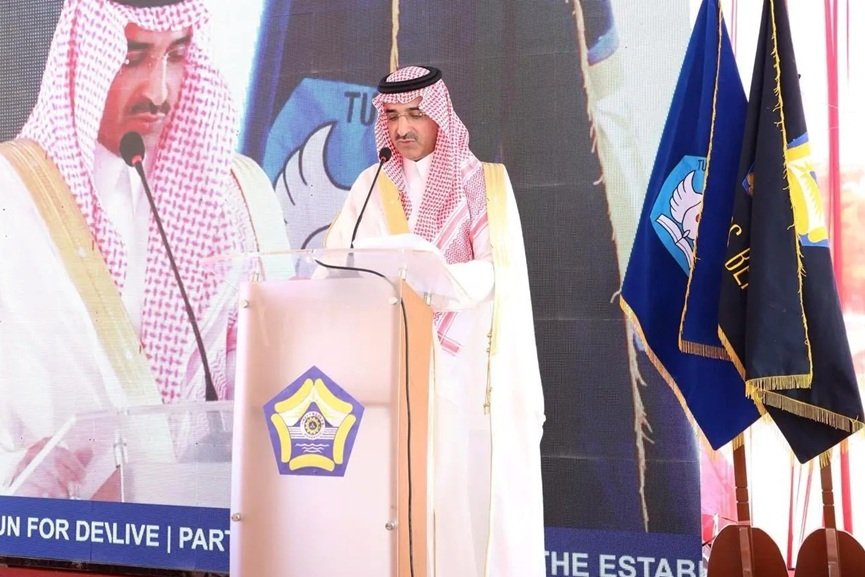
A new teaching and research hospital at the University of Bengkulu opened its doors this week, backed by a $22 million concessional loan from the Saudi Fund for Development. The facility is expected to bolster healthcare delivery and medical training in the region, reinforcing nearly five decades of strategic collaboration between SFD and Indonesia.

Sultan bin Abdulrahman Al-Marshad, Chief Executive Officer of SFD, presided over the inauguration on Friday, joined by Dr Retno Agustina Ekaputri, Rector of the University of Bengkulu, and Ir H Mian, Vice-Governor of Bengkulu Province. The hospital promises expanded healthcare access for local communities while serving as an academic hub for medical students and professionals.

At the ceremony, Al-Marshad emphasised that the facility represents “an important milestone in strengthening healthcare services for the people of Bengkulu and beyond,” highlighting the nearly 49-year trajectory of cooperation between SFD and Indonesia and affirming their mutual commitment to advancing the Sustainable Development Goals.

Functioning as both a medical facility and a teaching and research institution, the hospital is poised to enhance the region’s health system resilience, improve community health outcomes, and deliver hands-on training for new generations of medical staff.

Since its initial engagement in Indonesia in 1976, SFD has financed 12 development projects through over $396 million in loans, spanning healthcare, education, infrastructure and other vital sectors.

These initiatives illustrate a model of long-term development partnerships, tailored to local priorities while reinforcing broader global development objectives.

Al-Marshad’s visit also recalls a prior milestone when he laid the foundation stone for the hospital as part of a cluster of projects, including educational campuses in Jakarta and East Java, during his 2022 trip—an early indicator of the project’s eventual realisation. That plan had projected serving over 328,000 beneficiaries annually across Indonesia.

The Ministry of Economy and Tourism has signed a Memorandum of Understanding with Dubai Science Park to reinforce legal and technical assistance for patent registration and intellectual property protection. The agreement is set to ease processing procedures and support businesses across TECOM Group’s business districts.

Support will extend to companies located in Dubai Science Park and other hubs such as Dubai Internet City, Dubai Media City, and Dubai International Academic City. The collaborative framework introduces expert guidance and streamlined mechanisms for innovators, aiming to enhance patent registration and commercialisation both locally and internationally.

Dr Abdulrahman Al Muaini, Assistant Undersecretary for the Intellectual Property Sector at the Ministry, emphasised a sustained commitment to fostering the national innovation ecosystem through partnerships that bolster IP protection capabilities. Marwan Abdulaziz Janahi, Senior Vice‑President of Dubai Science Park along with Dubai Knowledge Park and Dubai International Academic City, described the pact as a catalyst for accelerating research and innovation with global resonance.

Growth in patent activity underscores the impetus for such a partnership. From January to July 2025, the Ministry recorded 1,221 patents, up from 466 for the equivalent period in the prior year. Meanwhile, patent applications rose to 2,430 from 1,996 in the same timeframe. This solid year‑on‑year increase signals both institutional and societal recognition of the strategic importance of intellectual property.

Dubai Science Park serves as a key component of the UAE’s innovation infrastructure, hosting over 500 entities—including global firms such as AstraZeneca, BeiGene, and Pfizer—and facilitating the work of more than 6,500 professionals in the life sciences, energy and environmental sectors. Facilities include Grade‑A offices, LEED‑certified laboratories, and sophisticated logistics infrastructure.

The MoU also introduces outreach initiatives—for instance, workshops, training sessions, and awareness campaigns—designed to enhance IP literacy among business owners and innovators across TECOM’s network of districts.

This agreement aligns with the UAE’s long‑term strategy to transform into a knowledge‑based economy by 2031. It reflects a broader ambition to position the nation as a global centre for innovation and research by providing creators with robust protections for their intellectual property.

The new MoU follows earlier initiatives such as the Accelerated Patent Grant agreement with the United States Patent and Trademark Office, which aimed to speed up UAE patent approvals for inventions granted in the United States. Furthermore, the Ministry’s ‘Green IP Roadmap’ introduced accelerated registration for sustainable and eco‑friendly innovations—pushing to reduce registration timelines from 42 months to six and increasing patent numbers to 6,000 by 2026.

By T N Ashok NEW YORK: Trump’s 50% tariffs on Indian exports took effect from Wednesday as there has been no resolution to the dispute over Russian oil buys in by India. In a move that has stunned global markets and rattled one of America’s most strategically important partnerships, President Donald Trump on Wednesday imposed […]

VISHNU RAJA
RYO YAMADA
HITORI GOTOH
IKUYO KITA