News related to
financial

Ethiopia has introduced its first malaria vaccine programme in Turmi, South Omo Zone, delivering the vaccine in tandem with a large-scale distribution of insecticide-treated bed nets across 58 high-burden districts. The dual approach aims to strengthen protection for children against malaria in areas of intense transmission. At the launch on 18 September 2025, the federal Ministry of Health, regional health bureaus, the Malaria Consortium, WHO and other […]

Turkish authorities reaffirmed their commitment to maintaining energy ties with Russia, dismissing US appeals to cut off Moscow from the country’s gas supply network. The Turkish Energy Minister, Alparslan Bayraktar, emphasised that existing contracts and technical dependencies render any abrupt withdrawal impractical. Bayraktar told CNNTurk that “we cannot tell our citizens: We have run out of gas,” adding that Turkey must ensure continuous supply from Russia, Azerbaijan, […]

Governments and utility providers are exploring a blockchain-based incentive scheme dubbed “IncentiveChain” aimed at moderating agricultural electricity and water consumption by rewarding farmers with cryptocurrency. The system allocates crypto-ether from utility company accounts directly to farmers via smart contracts, thereby eliminating intermediaries, bolstering data integrity and reducing centralised risks. At its core, IncentiveChain combines distributed storage, edge computing nodes, and integrations with regional agricultural agencies and utility […]

Dubai Aerospace Enterprise has enlisted a consortium of international and regional banks to host a series of fixed income investor calls beginning 6 October 2025, with the aim of gauging demand for a potential benchmark 5-year senior unsecured US dollar sukuk issuance. The mandate positions Emirates NBD Capital, First Abu Dhabi Bank, Goldman Sachs International and HSBC as active bookrunners, while Abu Dhabi Commercial Bank, Ajman Bank, […]

Sammaan Capital will sharply expand its affordable housing lending operations after Abu Dhabi’s International Holding Company invested $1 billion for a controlling stake, the non-banking lender’s CEO, Gagan Banga, told Reuters. The infusion is expected to accelerate the drive toward an assets-under-management goal of ₹1 trillion by fiscal 2027. To underpin its expansion, Sammaan plans to launch about ten new branches monthly, concentrating on tier-4 and tier-5 […]

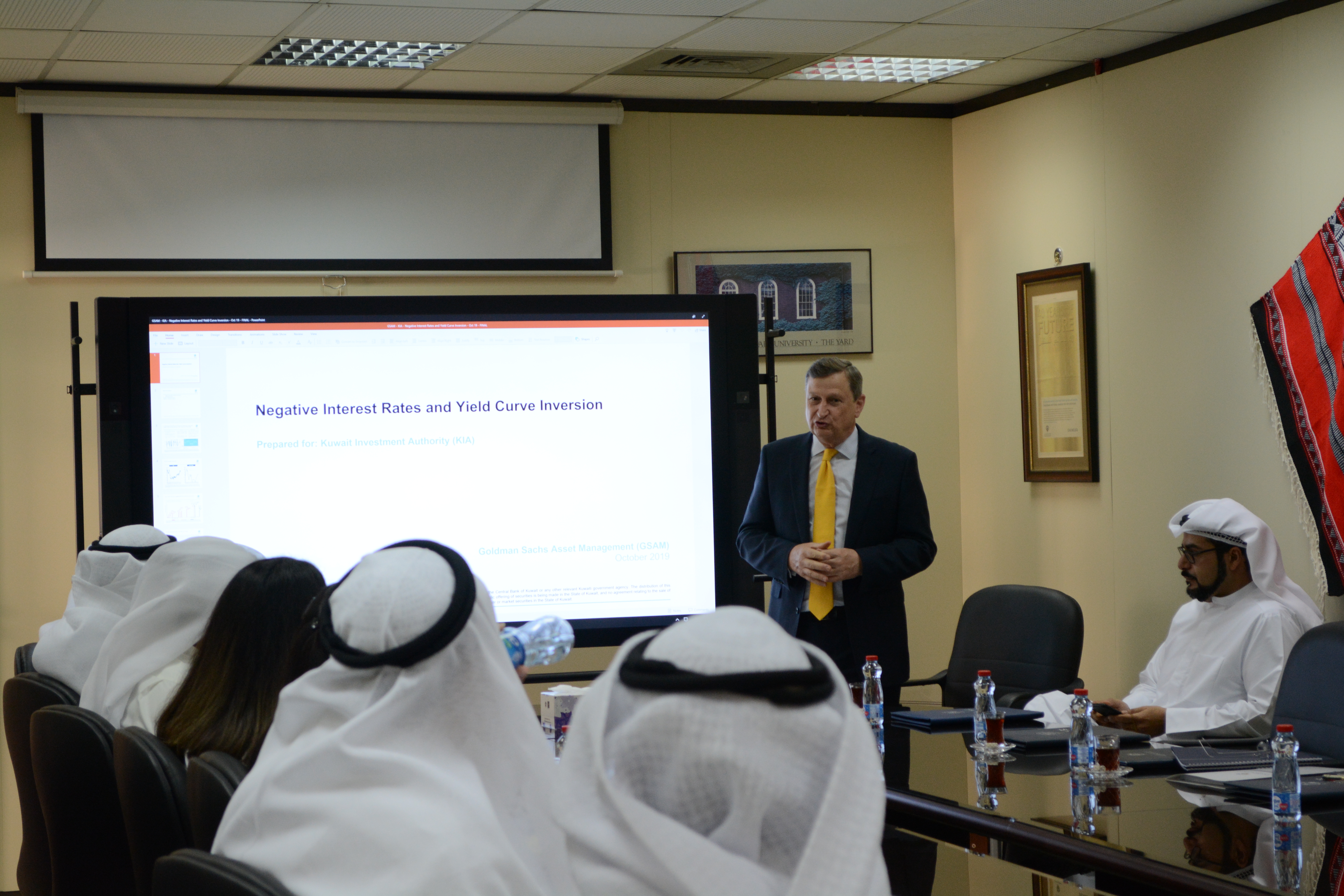
Goldman Sachs has launched a new office in Kuwait, asserting a significant push to enhance its reach across the Middle East and deepen its ties with Gulf-region clients under fresh leadership.

The New York-based investment bank said its role over five decades in Kuwait spans investment banking, capital markets and asset management. As part of its latest expansion, Goldman has tapped Mohammad Almatrouk as managing director of the Kuwait office, pending regulatory green light, while Fahad Alebrahim has been appointed managing director of the firm’s private wealth business in Kuwait.

David Solomon, Goldman Sachs’s Chairman and Chief Executive, framed the move as a commitment to “grow our capabilities across the Middle East and better serve our clients,” emphasising Kuwait’s economic vision as a catalyst for the firm’s expansion.

Goldman Sachs points to a long-standing capacity-building partnership in Kuwait that includes a professional training scheme designed to nurture talent at institutions such as the Kuwait Investment Authority, the Public Institution for Social Security and the Kuwait Fund. That programme, the bank says, will continue to play a central role in integrating local human capital into its global operations.

The choice of Kuwait underscores a growing focus on the Gulf’s institutional capital. Kuwait, host to one of the world’s largest sovereign wealth funds, has attracted global financial firms looking to align with its diversification and investment ambitions. Goldman Sachs’s decision follows earlier regional expansions, such as establishing a presence in Abu Dhabi and securing a banking licence in Saudi Arabia.

Kuwait’s Director General of the Direct Investment Promotion Authority, Sheikh Dr. Meshaal Jaber Al-Ahmad Al-Sabah, praised the move as aligned with Kuwait’s economic diversification and global integration goals. He stressed that opening the office supports national priorities including talent development and sustainable growth.

Regional analysts view Goldman’s Kuwait office as part of a broader recalibration by global banks to embed themselves closer to Gulf capital sources. Over the past two years, deal activity in sovereign and quasi-sovereign asset structures has exploded, prompting major firms including Lazard, JPMorgan and Deutsche Bank to expand in the Gulf with new leadership hires.

Inside Goldman Sachs, the timeline coincides with a leadership transition: the firm’s co-head for the Middle East and North Africa, Fadi Abuali, is slated to retire after nearly 28 years of service. His departure is expected to reshape the firm’s regional hierarchy just as Kuwait becomes a new hub.

Some observers caution the move carries execution challenges. Regulatory approvals in Kuwait must be secured, and Goldman must integrate the new office into its broader Gulf operations without duplicating functions. Success will depend on maintaining local relationships while delivering global platform advantages.

Port Louis: MCB Capital Markets has advised CIEL Limited in issuing a MUR 1.45 billion sustainability-linked bond, marking a milestone in African sustainable finance as the first time a diversified investment holding company has tapped this structure on the continent. The issuance was oversubscribed by 1.5 times and is credited with bringing foreign investors into the Mauritian local currency debt market for the first time through the […]

Advertisements

Arabian Post Staff -Dubai Dubai has become home to Emirates’ new Centre of Hospitality Excellence, a sophisticated training facility aimed at enhancing service standards across its fleet of nearly 25,000 cabin crew. The development underscores the airline’s pivot toward immersive hospitality training rooted in luxury-hotel culture. At launch, the centre offers an array of high-end amenities: a fine dining restaurant and lounge that can host up to […]

Robinhood’s platform is showing no signs of disruption after earlier reports emerged of a service breakdown affecting user access to its trading tools.

The company’s official status portal now declares “All Systems Operational,” even as its legacy status page has been retired. Meanwhile, independent monitors such as StatusGator and Uptime report no active outages.

Accounts of platform failure surfaced earlier today, with multiple users posting screenshots of login failures, trading delays and “app frozen” errors. Robinhood’s support centre responded with standard troubleshooting advice: update the app, check network connectivity, and switch to cellular data if needed.

Analysts and platform watchers say the timing of such incidents often elevates anxiety in retail trading communities, particularly when broader market volatility is feeding uncertainty. Past disruptions at Robinhood have been linked to temporary liquidity shifts and skewed price responses in thinly traded stocks. A study published in a financial markets journal suggests that outages on digital trading platforms tend to reduce order imbalances—but only until normal service resumes.

The brokerage has faced similar failures before, most notably during the meme-stock frenzy and other high-volume trading periods. In 2020, service breakdowns prompted class-action lawsuits, claiming users lost money because orders could not be processed. The company later agreed to settle those lawsuits and paid penalties to state regulators.

Regulators have continued to scrutinise Robinhood’s operations. In March, the company agreed to pay $29.75 million to settle a FINRA probe over inadequate supervision, lax anti-money laundering controls, and failures in handling order execution policies. Under that settlement, $26 million is assigned as a fine and $3.75 million as customer restitution. The firm did not admit wrongdoing.

Market observers say this backdrop intensifies scrutiny over any glitch at Robinhood. Trust in digital brokerages hinges on uninterrupted service, especially for retail investors who often enter or exit positions during sharp market moves.

Robinhood recently announced moves to expand in the UK, directly challenging legacy platforms like Hargreaves Lansdown and AJ Bell. Its planned British entry includes proposals for a no-fee stocks and shares ISA and prediction market offerings, pending discussions with the UK’s Financial Conduct Authority.

Internal sources suggest the company is investing heavily in backend resilience and redundancy to mitigate future downtime risks. Whether today’s incident will spur formal review or regulatory inquiry remains to be seen.

Unlocking Africa’s Growing Payment Corridors for UAE Enterprises UAE now has a payment partner that unlocks Africa’s growing economic opportunity Verto today announced its official launch in the UAE. With over $25 billion processed annually for clients such as Unilever, and Maersk, the company’s platform is designed to address the unique challenges of cross-border payments between UAE and emerging market currency corridors (particularly in Africa), offering businesses […]

Rania Gule Over the past few months, silver prices have witnessed a strong rally — not only as a safe-haven asset alongside gold, but also due to fundamental factors rooted in industrial supply and demand dynamics. As of early October 2025, silver is trading around $48.65 per ounce in spot market data, while ETFs such as iShares SLV show a slightly lower net asset value (NAV), reflecting […]

HANOI, VIETNAM – Media OutReach Newswire – 6 October 2025 – This November, for the very first time, Vietnamese audiences will be immersed in an unprecedented music event: the global superstar G-DRAGON’s world tour, landing right on the Eastern bank of Hanoi. Few realize that securing the nod from G-DRAGON required 8Wonder, the mega-festival brand of Vingroup, to overcome the incredibly stringent standards set by this S-tier […]

A major cross-border deal is underway as Abu Dhabi’s International Holding Company will invest about ₹8,850 crore to acquire a 43.5 per cent stake in Sammaan Capital, formerly Indiabulls Housing, making IHC the company’s key promoter and granting it control over board appointments. Sammaan Capital, a publicly listed non-bank financial company specialising in mortgage lending, will issue 330 million equity shares and 306.7 million convertible warrants to […]

More than 640,000 companies have registered under the UAE’s corporate tax scheme as the Federal Tax Authority reported strong uptake in tax returns and payments. The filings cover entities whose financial year ended 31 December 2024, and the FTA credited its digital infrastructure and awareness efforts for high compliance rates. Khalid Ali Al Bustani, Director-General of the FTA, announced that “hundreds of thousands” of corporate tax returns […]

Annual leadership business series by Canon Singapore equips business leaders with strategies and a resilience-ready toolkit to navigate global and economic shifts impacting Singapore SINGAPORE – Media OutReach Newswire – 6 October 2025 – Canon today announced the return of the highly-anticipated annual Think Big Leadership Business Series in Singapore, designed to help businesses tackle challenges in an era of global uncertainty and technological disruption. This year’s […]

 by Mahboob Subuhani, Regional Director, IT Solutions – MEA & APAC at Sigma Software Group Dubai stands as a global benchmark for government digitalisation. In 2025, 99.5% of its services are digitised (120+ gov apps), with over 173 million digital transactions processed across 1400+ services, serving 57 million beneficiaries.    Today, Dubai ranks 4th globally in the IMD Smart City Index 2025, and 1st in the GCC, […]

The Ai Everything Global Supernova Challenge concluded in Dubai with Pulsar. ml crowned champion among 30 startups from 15 nations vying for a USD 60,000 prize pool. The event drew over 150 global investors representing some USD 50 billion in assets under management, who watched founders pitch AI solutions across sectors including robotics, fintech, e-commerce and healthcare. Pulsar. ml, based in Canada and led by founder Mohamed […]

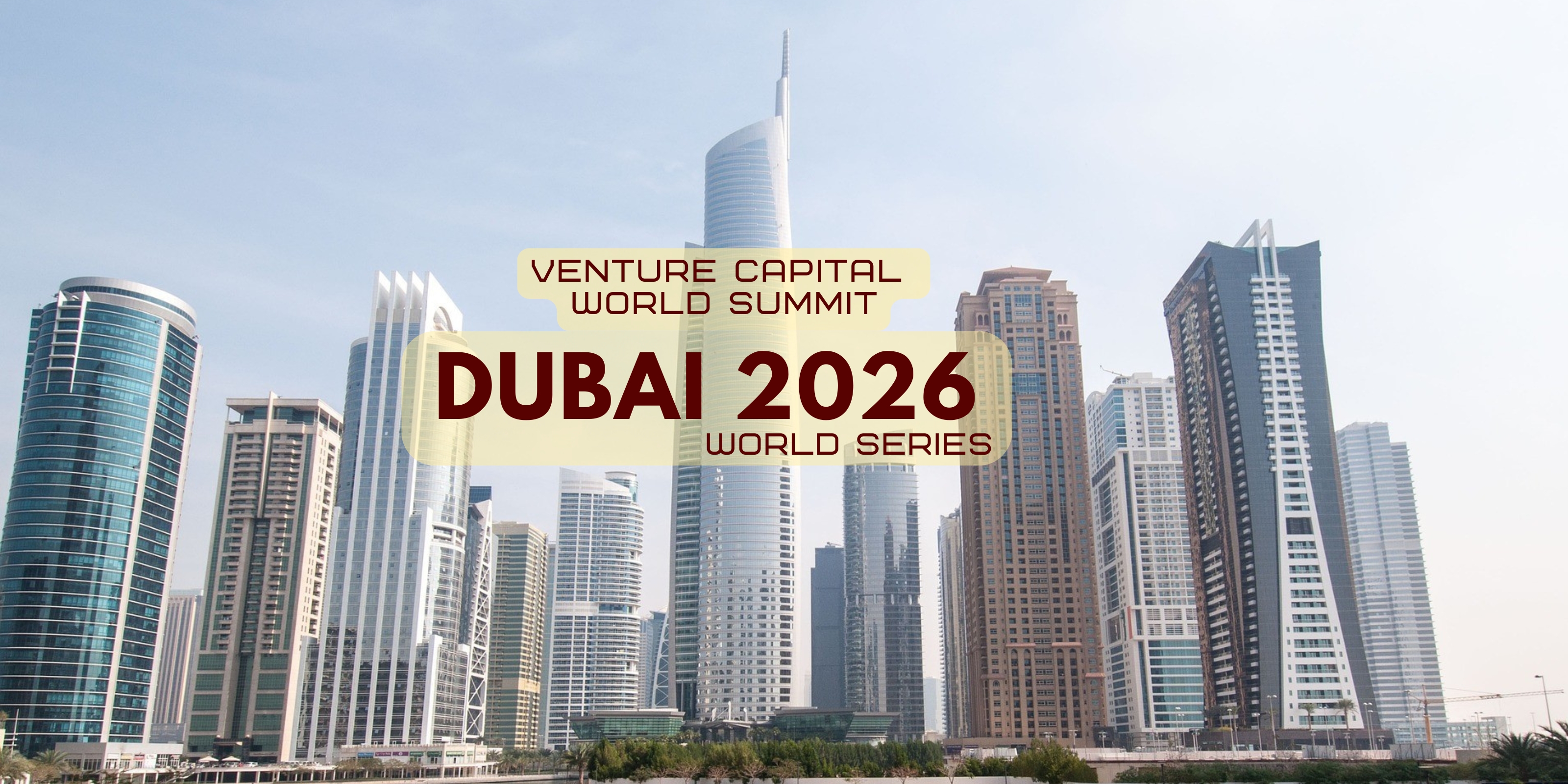
Strong demand and constrained inventory have pushed Dubai’s residential rents upward for several years. However, multiple indicators now suggest that 2026 will bring slower growth—perhaps even declines—in many segments of the market.

Headline figures already point to a deceleration. Yearly rental growth across residential properties in Dubai fell to about 8.5 percent by May 2025, down from 14.3 percent at the start of the year and 21.1 percent a year earlier. The long-term rental sector is under pressure as new supply enters the market: in the second quarter of 2025, long-term rental contracts fell 6.3 percent year on year, new contracts dropped nearly 8.9 percent, and overall rents declined 12.9 percent in quarterly comparison.

Analysts attribute the cooling largely to a surge in forthcoming housing supply. Some 150,000 new homes are expected to be completed between 2025 and 2027, representing a stock increase of nearly 20 percent in many parts of the market. Fitch Ratings projects residential property values could pull back by as much as 15 percent during late 2025 and into 2026, citing that the volume of handovers will likely outpace demand.

In the mid- and affordable segments, the impact may be most visible. Experts expect that communities with heavy handovers—such as Jumeirah Village Circle, Al Furjan, Dubai South, and surrounding areas—will experience downward pressure on asking rents. Nevertheless, prime areas like Downtown Dubai and Palm Jumeirah are forecast to continue seeing double-digit rent growth, buoyed by scarcity and sustained demand for luxury housing.

A tale of two markets is emerging. In central, premium sectors, landlords maintain leverage, while suburban and emergence zones will offer more negotiation room for tenants. Springfield Properties’ chief executive, Farooq Syed, observes that the large transaction volume and development pipeline into 2026 will provide tenants greater choice—especially in the apartment segment. Cushman & Wakefield Core’s head of research, Prathyusha Gurrapu, describes the trend as “clear signs of stabilisation,” especially outside the top-tier districts.

Beyond supply and demand dynamics, shifts are occurring in tenant preferences. Short-term and flexible lease arrangements continue to gain popularity, particularly among transient professionals and investors seeking yield. In Q2 2025, short-let occupancy remained strong—AirDXB, a key player in Dubai’s short-term rental market, achieved 90 percent occupancy compared to citywide averages around 63 percent. Technology trends are also creeping into real estate: blockchain-based platforms are being tested to automate rent payments and maintenance workflows.

On the investor side, yields remain attractive. Knight Frank reports residential yields are holding in the 5–7 percent range for apartments and 4.5–6 percent for villas and townhouses. But concerns are rising about overleveraged speculative investment, especially in lower-end segments. The Financial Times recently noted that many flippers—investors hoping to resell properties quickly for a profit—are already struggling to offload unfinished units as competition mounts.

Regulatory efforts may also temper volatility. Dubai’s Real Estate Regulatory Agency continues to push for transparency and consistent valuation practices, while the broader Dubai Land Department is moving toward digital registration and enhanced oversight. For tenants, the requirement to declare all occupants in Ejari contracts—an enforcement step introduced in 2025—tightens accountability in co-living arrangements.

Macro-economic fundamentals still support the market, albeit with caution. The emirate’s population passed 3.8 million in 2025, reflecting steady migration and growth—fuelling housing demand. Moreover, Dubai continues to attract global capital, drawn by tax benefits, infrastructure, economic diversification, and a relatively stable environment across the Gulf region.

Pressures are evident however. UBS’s 2025 index flagged Dubai at “bubble risk,” warning that rapid appreciation may not be sustainable without moderation. If large-scale oversupply hits the market at once, correction cycles may deepen in specific micro-markets.


South African equities climbed to unprecedented levels on Thursday, driven by buoyant momentum in mining and financial sectors. The benchmark FTSE/JSE All-Share Index rose past its prior peak, cementing the capital market’s status as one of the continent’s top performers this year. The rally has been underpinned by a strong commodity backdrop: iron ore, platinum, and gold all posted gains, boosting mining stocks across the board. The […]

The Bifrost subsea cable system has been certified as Ready for Service, paving the way for commercial data traffic between Singapore and the western United States.

Stretching more than 20,000 km, Bifrost charts a novel route via Indonesia—across the Java Sea and Celebes Sea—enabling the first direct subsea connection between Singapore and the U. S. West Coast. Its design supports over 260 Tbps of capacity, and the round-trip latency between Singapore and the U. S. is projected at under 165 milliseconds, approximately 10 ms faster than many alternative routes.

Keppel Ltd holds five of the total 12 fibre pairs in Bifrost, through a 40-60 joint venture with private fund co-investors. The cable system’s landing stations include Grover Beach, Winema, Guam, Singapore, and branching units to Jakarta, Manado, and Davao in the Philippines.

Manjot Singh Mann, CEO for Connectivity at Keppel, described Bifrost as a “landmark project” that will “bolster digital connectivity between Southeast Asia and the USA” and reinforce Singapore’s status as a regional digital hub. Alcatel Submarine Networks handled the cable’s construction; its CEO, Alain Biston, noted that reaching readiness reflects “the hard work of ASN teams working hand in hand with our client.”

In the Philippines, Converge ICT serves as the landing party at Davao. Dennis Anthony Uy, Converge’s CEO, said that the cable will “not only boost the company’s international bandwidth capacity, but for the Philippines, it will mean redundancy and diversity in network infrastructure.”

The significance of Bifrost lies not only in its raw capacity and speed but also in route diversification. By crossing via Indonesia, the cable offers an alternate path independent of existing transpacific systems, lowering the risk of congestion or outages on established corridors. Analysts view its timing as aligned with surging demand for bandwidth, driven by growth in AI workloads, real-time applications, cloud services, and digital transformation across Asia.

Bifrost enters a competitive environment of subsea infrastructure expansion. Projects such as Echo, Apricot, Hawaiki Nui, and others vie for roles in connecting Asia with the Americas and the Pacific islands. Echo is expected to link Singapore to Guam and onward to Eureka, California. Apricot, largely intra-Asia in scope, is ramping up deployments across Japan, Taiwan, the Philippines, and Indonesia.

Market commentators point out that Bifrost’s success will hinge on uptake from global cloud providers, telcos, and hyperscalers. Keppel’s stake reflects a confidence in long-term returns. Some financial analyses anticipate internal rates of return exceeding 30 percent, with projected revenue from operational and maintenance fees per fibre pair exceeding S$200 million over 25 years.

Because Keppel and its partners delayed the original launch schedule, the push to achieve RFS signals a resolve to catch up with escalating infrastructure demand.

Brazil has become Latin America’s dominant crypto market after logging $318.8 billion in cryptocurrency transaction volume between July 2024 and June 2025, accounting for about one-third of the region’s total crypto activity. That figure represents a year-on-year surge of 109.9 per cent, according to the 2025 Geography of Cryptocurrency report by Chainalysis.

No other country in Latin America comes close to Brazil’s scale: Argentina recorded $93.9 billion, Mexico $71.2 billion, Venezuela $44.6 billion, and Colombia $44.2 billion. The region as a whole pushed close to $1.5 trillion in crypto flows over the three-year span from mid-2022 to mid-2025, underscoring the growing importance of digital assets in Latin America’s financial ecosystem.

Stablecoins now dominate Brazil’s market, making up over 90 per cent of all transactions. This shift suggests that crypto is being used increasingly as a means of payment, remittance and hedge against currency volatility, rather than purely for speculative trading. Institutional and retail transfers both contributed to the growth, with institutional transfers alone more than doubling within the year.

Brazil’s regulatory framework has evolved in tandem. The 2022–2023 Brazilian Virtual Assets Law established compliance obligations for virtual asset service providers and made the central bank the authority for anti-money-laundering oversight in the crypto sector. Authorities are now finalising consultations that could yield further rules by end-2025.

Mainstream financial institutions are leveraging this clarity. Banks such as Itaú and digital platforms like Nubank and Mercado Pago are bridging traditional finance with crypto offerings. Global stakeholders have taken notice: in May 2024, Circle launched USDC services in Brazil to facilitate lower-cost and instant transfers.

Brazil’s ranking in the global crypto adoption picture has also strengthened. In Chainalysis’s 2025 Global Crypto Adoption Index, Brazil advanced to fifth globally, climbing from 10th in 2024. The methodology change that year introduced a new institutional activity sub-index and removed the retail DeFi sub-index, giving greater weight to large transfers while maintaining focus on broad adoption.

Brazil’s digital payments infrastructure—anchored by the Pix instant payments system—has eased the on-ramp to crypto. More than half of financial transactions in Brazil are now conducted over Pix, enabling users to move funds into crypto platforms seamlessly. Surveys suggest that between 18 and 19 per cent of Brazilians hold cryptocurrency, a rate second only behind Argentina in the region.

Still, challenges remain. Brazil’s macroeconomic environment is volatile: inflation pressures, depreciation of the real, and tax burdens could suppress retail demand. The central bank’s Drex project—a blockchain-based settlement platform—is under trial and could support on-chain finance, but integration with existing systems is complex. Some analysts warn that regulatory overreach or tax crackdowns may stifle innovation.

Baku, Azerbaijan — Cüzdan LLC has launched a nationwide payment orchestration platform built on the technology of PayTabs Group, aiming to streamline payments for merchants and consumers across Azerbaijan. The new infrastructure enables live pay-in and pay-out transactions and seeks to boost digital inclusion by offering enhanced speed, security and flexibility in payment processing.

The platform is designed to allow merchants to onboard quickly, route payments intelligently across multiple payment service providers, and offer consumers a broader choice of payment methods. Cüzdan says the system is live and integrated with the country’s major acquiring banks. The partnership combines Cüzdan’s local network in sectors such as retail, manufacturing and consumer finance with PayTabs’ proprietary orchestration backbone.

Mustafa Baltacı, Chief Executive Officer of Cüzdan, described the launch as a pivotal moment in Azerbaijan’s shift toward a digital economy. He said the platform “serves the full spectrum of our economy — from neighbourhood shopkeepers to growing SMEs to major enterprises — with modern, secure payment solutions that drive growth and financial inclusion.” PayTabs’ growth-and-development officer, Hany Soliman, added that the firm is “proud to power Cüzdan’s payments journey” by supplying the technological architecture underpinning the rollout.

This launch marks PayTabs’ entry into Azerbaijan, extending its operational footprint beyond the GCC, Levant, North Africa and Central Asia regions into the Caucasus. Abdulaziz Al Jouf, CEO and founder of PayTabs, affirmed that this “hallmark partnership” reinforces the group’s goal to support digital transaction infrastructure across wider geographies.

Industry observers see this move as timely. Azerbaijan’s economy is pushing to modernise its payments infrastructure, support small and medium enterprises in digital adoption, and reduce friction in cross-border and domestic e-commerce flows. The flexibility offered by orchestration platforms — which manage routing, fallback, reconciliation, fraud checks and settlement across multiple payment providers — is now viewed as essential in markets with fragmented banking and payments systems.

Yet challenges remain. Success will depend on how quickly local merchants adopt the platform, the reliability of the supporting payments infrastructure, and the alignment of regulatory oversight. Ensuring interoperability with regional and international payment rails will also be vital if Cüzdan aims to facilitate cross-border commerce.

World Liberty Financial, the crypto venture tied to Donald Trump’s family, has announced it will issue a debit card enabling users to spend digital assets as conventional currency, with a pilot slated next quarter and full deployment targeted by late 2025 or early 2026.

At Singapore’s TOKEN2049 conference, CEO Zach Witkoff stated that the underlying aim is to “bridge crypto assets with everyday spending,” forecasting that the card could go live in the fourth quarter or first quarter of 2026. Co-founder Donald Trump Jr. joined the presentation, underscoring the project’s ambition to integrate cryptocurrency more deeply into consumer payments.

Beyond payments, World Liberty is advancing a plan to tokenise real-world commodities, aiming to use blockchain infrastructure to trade assets like oil, gas, timber and cotton. Witkoff described these as “really interesting” domains for on-chain trading, pointing to what the company sees as excess transactional inefficiency in traditional markets. The firm also launched its governance token, WLFI, earlier this month, and has introduced USD1, a dollar-pegged stablecoin backed by U. S. Treasuries and other cash equivalents to cut dependency on conventional banking rails.

World Liberty has secured a high-profile institutional backer: the UAE-based Aqua 1 Foundation invested USD 100 million in WLFI tokens, becoming the venture’s largest public investor. The strategic pact aims to fuel World Liberty’s expansion in South America, Europe and Asia, and to jointly incubate blockchain initiatives.

The governance token WLFI currently is non-transferable, granting holders voting rights rather than direct tradeability; World Liberty has said it is “working behind the scenes” to make WLFI transferable in the future. A large portion of WLFI’s supply remains held by the Trump family and affiliated entities.

The stablecoin USD1 gained traction after a major crypto exchange deal: World Liberty was among the early adopters when the funds backed by an Abu Dhabi entity were routed through USD1 to a major crypto platform, helping to elevate USD1’s market position in the stablecoin ecosystem.

Regulatory and ethical concerns already shadow the venture. Critics argue the project blurs lines between private enterprise and public office, noting that much of the Trump family’s wealth could become entangled with policy outcomes. Donald Trump Jr. has dismissed conflict-of-interest allegations as “complete nonsense,” but scrutiny over the convergence of politics and crypto is intensifying.

WLFI has exhibited wide volatility since launch, riding speculative momentum across global exchanges. Meanwhile, competing crypto card offerings already exist, with established fintechs and digital-asset platforms offering crypto-linked cards in partnership with Visa and Mastercard. Witkoff contends World Liberty’s version will differentiate through tighter integration with its stablecoin and tokenisation strategy.

Global investment firm KKR has acquired a minority stake in ADNOC Gas Pipeline Assets LLC, reinforcing its commitment to Middle East energy infrastructure. ADNOC retains full operational control and ownership of the pipelines. KKR’s move builds on longstanding ties with Abu Dhabi’s national energy group. In 2019, KKR and BlackRock acquired a portion of ADNOC’s oil pipeline business in a landmark deal; that investment was later sold […]

VISHNU RAJA
RYO YAMADA
HITORI GOTOH
IKUYO KITA