News related to
financial

Feenie Khan didn’t set out to disrupt an industry. She set out to make a plate for her daughter and for anyone who wanted to see their way of eating represented. It began with a practical fix: a plate that keeps textures true and meals composed. From that small decision came Feenie’s Table, a design that reads as simple at first glance and quietly questions what “standard” […]

HONG KONG SAR – Media OutReach Newswire – 18 October 2025 – Joyful Alliance, a Singapore-headquartered investment firm, today announced it will propose the development of the Wakayama Integrated Onsen Resort to the Wakayama City Government. The two parties officially signed the memorandum of cooperation on October 17. Joyful Alliance will propose an Integrated Onsen Resort development in Wakayama City, Japan, projected to attract millions of visitors […]

Gold surged past $4,300 per ounce this week, setting fresh records as investors turned decisively to safe-haven assets amid mounting geopolitical strain and expectations of forthcoming U. S. rate cuts. The run has intensified scrutiny over gold’s role in modern portfolios—and reopened questions about the value of what critics label a “sterile” asset. Spot gold climbed about 2.5 per cent to $4,316.99, while December futures peaked at […]

Hyderabad-based Megha Engineering & Infrastructures Ltd has clinched a $225.5 million contract from Kuwait Oil Company to build, operate and maintain a gas sweetening and sulphur recovery facility in Kuwait’s oilfields. The deal spans engineering, procurement and construction, followed by a five-year operations and maintenance phase, with an option for KOC to buy back the facility. Under the agreement, MEIL must complete construction within 790 days, after […]

Abu Dhabi’s MDGH GMTN priced a one-billion dirham Reg S five-year bond at par, carrying a coupon of 4.20 per cent. The issuer tightened guidance from an initial 4.45 per cent, and book orders surpassed AED 4.7 billion, not counting joint lead manager interest, signalling strong investor demand.

The unsecured bond is guaranteed by Mamoura Diversified Global Holding, with settlement set for 23 October and a planned listing on the London Stock Exchange Main Market. Fitch is expected to assign an “AA” rating in line with Mamoura’s sovereign backing. The issuance was led by a syndicate including Abu Dhabi Commercial Bank, Bank of China, Citi, Emirates NBD Capital, First Abu Dhabi Bank, Goldman Sachs International, HSBC, Industrial and Commercial Bank of China, National Bank of Kuwait and Standard Chartered.

This city-currency issue follows a $750 million ten-year dollar bond issued less than ten days earlier by MDGH, priced at about 55 basis points over U. S. Treasuries under the same guarantee structure. That transaction underlined the group’s growing presence in global markets.

MDGH is wholly owned by Mubadala Investment Company and plays a central role in Abu Dhabi’s strategy to diversify its economic base. In its 2024 financials, the company reported revenues of AED 39,528 million and a net profit attributable to owners of AED 37,376 million, with total assets reaching AED 596,168 million.

Credit agencies currently align Mamoura’s rating with the sovereign, with Fitch affirming an “AA” rating and stable outlook in late 2023. Moody’s and S&P assign comparable ratings of Aa2 and AA respectively.

Analysts note that the new issue shows how Abu Dhabi-linked issuers are able to tap demand for high-grade Gulf debt amid tighter global credit markets. The bond’s tight pricing and oversubscription point to strong appetite among fixed-income investors for Gulf credits backed by sovereign guarantees.

HONG KONG SAR – Media OutReach Newswire – 17 October 2025 – DL Holdings Group Limited (HKEX: 1709) today announced a comprehensive strategic partnership with Antalpha, a global leader in digital asset financial services. The collaboration—valued at up to US$200 million—covers tokenised gold assets and Bitcoin mining infrastructure, establishing a dual-track strategy that bridges traditional and digital finance. On the gold-asset side, DL Holdings is in the […]

SINGAPORE – Media OutReach Newswire – 16 October 2025 – Primech Holdings Ltd. (“Primech” or the “Company”), a leader in AI-powered hygienic robotics, today announced the signing of a strategic Memorandum of Understanding with GAIB, the economic layer for AI infrastructure. The partnership establishes a framework to tokenize Primech’s HYTRON autonomous cleaning robots and enable next-generation AI Robotics-as-a-Service (ARaaS) business models that open new capital pathways and […]

Advertisements

By Girish Linganna The prisoner-hostage exchange between Israel and Hamas has been completed successfully, and many are calling it a major victory for peace. Twenty Israeli hostages returned home in exchange for about 2,000 Palestinian prisoners, aid started flowing back into Gaza, and guns fell silent after months of devastating conflict. But anyone familiar with […]

The article A House Built On Sand: The Fault Lines In Trump’s 20 Point Gaza Peace Plan appeared first on Latest India news, analysis and reports on Newspack by India Press Agency).

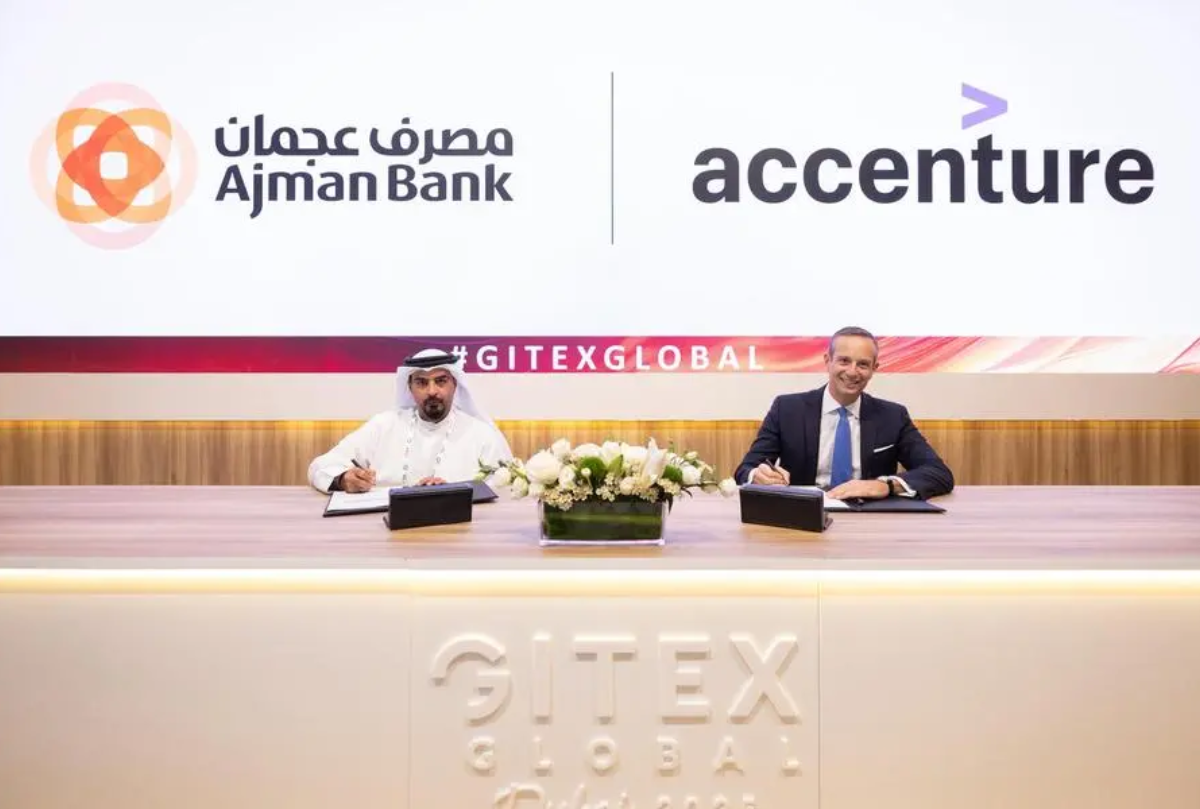
The Ajman Department of Finance unveiled a suite of smart payment services at GITEX Global 2025, signalling its bid to position the emirate at the forefront of digital government finance solutions. The offerings include integration of the UAE’s national payment card “Jaywan”, a buy-now-pay-later option via its AjmanPay portal, and a unified financial management platform dubbed “Estidama system”.

Marwan Ahmed Al Ali, Director General of the Department of Finance in Ajman, said the new services aim to provide “flexible payment options” tailored to “all segments of society” and boost the emirate’s digital transformation agenda. The launch was attended by senior government and private-sector officials during the event.

The Jaywan card—launched by the Central Bank of the UAE to reduce reliance on global card networks—has now been linked with AjmanPay, allowing users to make payments via ATMs, e-commerce platforms and point-of-sale terminals. The Department also launched a zero-interest instalment option to facilitate fee payments and transactions in instalments or deferred payments.

The Estidama system is presented as a next-generation cloud-based platform comprising four interconnected modules that manage budgeting, initiative planning, financial execution and reporting. It promises to unify financial operations across the Ajman government, enhancing transparency and control over public spending.

Officials emphasised that these steps align with broader national efforts to digitise financial infrastructure. By integrating Jaywan into Ajman’s government payments, the emirate is tapping into the UAE’s goal of financial sovereignty and reducing dependence on foreign card networks.

Partnership with First Abu Dhabi Bank underpins the linking of Jaywan with AjmanPay, showcasing public–private collaboration in driving fintech infrastructure. The Department described the move as a qualitative addition to its digital ecosystem, reflecting its commitment to “innovation in government payment systems”.

During GITEX, Ajman’s government platform is also showcasing AI, data analytics, and other advanced technologies in financial resource management. The participation underscores the emirate’s aim to benchmark itself in the regional competition over smart city and digital government credentials.

South Korea’s Financial Intelligence Unit has authorised a change in GOPAX’s executive leadership, clearing the way for Binance’s acquisition of 67 per cent of the local exchange and formally restoring its presence in the country. The decision comes after over two years of regulatory review and internal scrutiny.

The executive registration approval by the FIU establishes Binance as the controlling shareholder of GOPAX, resolving a key hurdle that had delayed the deal since its initiation in early 2023. By acquiescing to the change, South Korean authorities have allowed Binance’s re-entry into one of Asia’s most active cryptocurrency ecosystems.

When Binance first acquired the majority stake in GOPAX in February 2023, it sought to stabilise the exchange following a liquidity crisis tied to frozen customer deposits connected to the GoFi yield product. That crisis was traced to exposure to Genesis Global Capital, whose own collapse triggered withdrawals being halted. Binance undertook a capital injection to support GOPAX’s recovery while awaiting formal regulatory sign-off on executive changes.

The FIU’s prior hesitancy centred on concerns that Binance’s international compliance record could clash with South Korea’s anti-money laundering oversight. Legal pressure from U. S. authorities, including enforcement actions and substantial fines, had raised red flags among domestic regulators. But the FIU’s acceptance now signals that uncertainties over Binance’s compliance credentials have been sufficiently addressed.

Under South Korean law, exchanges must report changes in executive or representative roles to the FIU, which effectively acts as a gatekeeper in approving foreign capital in the local crypto sector. No separate screening mechanism exists for major shareholders, making the executive registration process a de facto test of suitability. Delays in this case were reportedly driven by repeated demands for supplemental documentation by regulators.

GOPAX is one of only five exchanges in South Korea authorised to conduct cash-crypto transactions under strict regulatory norms. With Binance now in control, GOPAX could compete more aggressively against dominant local players such as Upbit and Bithumb. Yet entrenched banking relationships and compliance frameworks will still pose barriers to market share gains.

The approval reflects a shift in Korea’s regulatory posture toward greater openness—especially for exchanges that have resolved international legal disputes. Binance’s own settlements regarding AML and market conduct issues appear to have alleviated domestic regulatory apprehension. The acceptance also underscores the FIU’s judgment that Binance’s structural changes and compliance assurances now align with South Korea’s regulatory expectations.

CME Group has launched its first physical base in the Middle East with an office at the Dubai International Financial Centre, to serve as its hub for the region under a licence from the Dubai Financial Services Authority. Sharif Jaghman, relocated from London, will head the new Middle East and Africa operations. The move follows a 16 per cent rise in average daily trading volumes from the […]

U. S. President Donald Trump declared that Indian Prime Minister Narendra Modi has pledged to halt India’s purchases of Russian crude oil, a shift that would significantly upend global energy flows if implemented. Trump told reporters that Modi made the commitment during their conversation, stating that phasing out Russian imports would not happen overnight but would take place “within a short period of time.” The Indian embassy […]

A new wave of supply-chain assaults has seen North Korean hackers publish more than 300 malicious npm packages, infecting developer systems with sophisticated malware that steals credentials and crypto assets. The campaign, known as “Contagious Interview,” exploits the trust developers place in open-source tools by cloaking malware inside packages mimicking legitimate ones.

The Socket Threat Research Team disclosed that attackers uploaded 338 malicious npm modules, collectively downloaded over 50,000 times, many featuring a newly observed loader named XORIndex. About 27 of them remain active in the npm registry. Within those packages, XORIndex collects host metadata and downloads a second-stage payload, BeaverTail, which in turn leverages a backdoor called InvisibleFerret to maintain persistence and exfiltrate data. This expansion follows a preceding June surge of 35 malicious modules using a HexEval loader.

Researchers emphasise that Contagious Interview is not a static campaign but a dynamic interplay between defenders and adversaries. As packages are taken down, attackers quickly reissue variants under fresh aliases or change loader techniques. The latest 67-package load pushed last month illustrates this cat-and-mouse escalation: the new modules alone exceeded 17,000 downloads. Attackers have mixed XORIndex and HexEval in parallel deployments, suggesting modular development and adaptability.

The campaign’s social engineering backbone remains key. Actors pose as recruiters or HR contacts on platforms like LinkedIn, targeting software engineers or job-seekers. They offer interview assignments that require cloning a GitHub or Bitbucket repository, with the malicious npm module embedded deep in the project. Because many developers run these projects outside sandboxed environments, the malicious loader quietly executes and bridges the gap to full system compromise.

Analysts attribute Contagious Interview to DPRK-aligned threat groups tracked under names such as CL-STA-0240, DeceptiveDevelopment, Tenacious Pungsan and Void Dokkaebi. The methodology aligns with patterns shown by the Lazarus Group and its affiliates, as attackers continue to weaponise open source ecosystems for espionage and financial theft. XorIndex and HexEval share infrastructure and tactics, including encrypted communication with command-and-control servers. In several cases, submitters of the malicious packages have crafted repository names containing “interview,” reflecting the campaign motif.

Beyond npm, the campaign’s reach extends: some modules reference Bitbucket repositories, and similar tactics have appeared in PyPI package attacks. The broader goal appears dual: accessing developer environments to steal intellectual property or credentials and siphoning cryptocurrencies from wallets detected on compromised machines.

Security firms and registry maintainers have responded with takedown requests and account suspensions. Socket reported removing six live HexEval-based modules earlier this year, and the npm security team has collaborated to suspend associated accounts. But defenders admit the reactive posture is fragile; attack waves resurface within hours.

HONG KONG SAR – Media OutReach Newswire – 15 October 2025 – Prudential plc (‘Prudential’), a leading life and health insurer and asset manager, today hosted the Prudential NextGen Aces, an event that champions the next generation by uniting tennis legends and rising stars. The event featured a thought-provoking panel series and an exclusive on-court session with tennis legend Andre Agassi, and Women’s Tennis Association (WTA) World […]

Multiply Group, the Abu Dhabi investment holding firm, will acquire 2PointZero and Ghitha Holding via a share-swap deal, creating a combined enterprise with an estimated valuation of AED 120 billion. The transaction involves issuing around 23.36 billion new shares, lifting Multiply’s share capital from AED 2.8 billion to AED 8.64 billion and expanding the total shares to 34.56 billion. Approval from shareholders and regulators is pending.

The decision follows board sanction and aligns with a broader move by IHC to consolidate its leading portfolio companies—Multiply, 2PointZero, and Ghitha—into a unified listed entity under the name 2PointZero Group PJSC. The merger is pitched as an effort to streamline governance, deepen synergies across sectors, and accelerate growth. The transaction is slated for completion by mid-November 2025, contingent on formal clearances.

Under the proposed structure, Multiply will absorb full ownership of 2PointZero and a majority of Ghitha Holding. The merged entity will retain its listing on the Abu Dhabi Securities Exchange. With combined operations across energy, mining, financial services, agrifood, consumer goods, media, logistics, and related verticals, the new 2PointZero Group aims to harness diversification and integrated scale.

2PointZero brings to the table AI, energy transition, mining and financial services capabilities. Its role as a facilitator in cleantech and future resource assets is central to the logic of the merger. Ghitha Holding contributes a robust agriculture, food production, processing and distribution footprint—one of the UAE’s key players in national food security. Multiply already has stakes in sectors including mobility, media & communications, retail/apparel, packaging, and beauty.

Syed Basar Shueb, Chairman of Multiply, called the deal “a natural evolution of our portfolio strategy,” emphasising the aim to “optimise scale and strengthen the platforms we have built.” Samia Bouazza, Group CEO and Managing Director, framed the merger as aligning capital with megatrends, stating the unified entity would “grow bottom line both organically and inorganically, unlock value through AI, and deliver consistent long-term returns.” The new group will operate across more than 85 countries and target service to one billion people globally.

IHC’s own communications parallel Multiply’s narrative. The parent firm describes the merger as a means to craft a “next-generation investment powerhouse” anchored in a dual focus on energy and consumer sectors, intended to enhance operational efficiency and strategic scale. Sheikh Tahnoon bin Zayed Al Nahyan, IHC Chairman, cited the move as reaffirming IHC’s role as a catalyst of transformation, leveraging AI and value networks. Sheikh Zayed bin Hamdan bin Zayed Al Nahyan, Chairman of 2PointZero, said the consolidation would further the mission of driving energy transition, enabling AI, and empowering communities.

South Africa’s township economy, long relegated to the informal fringes of growth, is now drawing deliberate attention from government, corporates and fintech innovators alike as a pivotal engine for broad-based development. The sector is increasingly viewed not as a peripheral “slack” market but as a strategic frontier offering scale, resilience and social inclusion. Analysts estimate that the township economy could be worth between R900 billion and over R1 trillion, […]

ASML’s blowout third-quarter orders tell the real story of the global economy right now. The world is not slowing down — it’s retooling itself for the AI age. The Dutch company, which makes the advanced lithography machines needed to produce the most powerful AI chips, reported €5.4 billion in new bookings for the quarter, well above forecasts. This figure matters far beyond Europe’s borders. It signals that […]

BlackRock chief executive Larry Fink asserted that cryptocurrencies carry a role akin to gold in investment portfolios, calling Bitcoin “a decent tool for diversification” while warning that it should not form a major slice of one’s holdings.

Speaking on 60 Minutes on CBS, Fink said: “There is a role for crypto in the same way there is a role for gold … For those looking to diversify, it is not a bad asset, but I don’t believe that it should be a large component of your portfolio.”

Fink’s remarks mark a notable shift from earlier positions. In the past, he dismissed Bitcoin as a facilitator of money laundering, stating that none of his clients expressed interest in crypto. The evolution of his thought underscores how digital assets have moved further into mainstream investment discourse.

His comments come amid rising institutional engagement with digital asset markets, with BlackRock among firms championing the development of spot Bitcoin ETFs. The firm has also begun pushing into tokenization, envisioning the conversion of traditional financial products such as equities, bonds or real estate into digital token formats. Fink described tokenization of all assets as “the next wave of opportunity” over the coming decades.

Analysts view Fink’s balanced tone—acknowledging both potential and restraint—as calibrated for the climate of heightened volatility and regulatory uncertainty in crypto markets. He is signalling openness without forfeiting caution.

Some investors welcomed the endorsement as validation from one of finance’s most influential figures, though sceptics note that Fink’s insistence on limiting crypto to a small portfolio slice reflects enduring reservations.

Crypto proponents point out that Bitcoin’s often low correlation with equities or bonds—and its non-sovereign character—make it attractive as a diversification instrument. BlackRock itself in earlier internal research has characterised Bitcoin as a “unique diversifier,” citing its tendency to behave differently from traditional assets during episodes of macro stress.

Yet the environment remains fraught. Price swings, regulatory fragmentation across jurisdictions, and infrastructure challenges continue to deter widespread adoption. For instance, debates persist around how to regulate digital assets, custody risks, taxation, and classification.

OwlTing, a Taiwan-based fintech focussed on stablecoin infrastructure, is set to begin trading its Class A common shares on the Nasdaq via direct listing on 16 October under the ticker “OWLS”. The move marks what the company calls a milestone in its evolution from hospitality and e-commerce into a compliance–led blockchain payments firm.

In its public filings, OwlTing reported revenue of US 7.6 million in 2024 and a payment volume across its platforms of approximately US 218 million. Though still unprofitable, the listing underscores growing confidence in the fragmented stablecoin infrastructure space.

The listing comes at a moment when several high-profile developments are shaping the stablecoin and payments ecosystem. Stripe’s Bridge unit is reportedly preparing to apply for a federal banking charter, aiming to navigate evolving U. S. stablecoin regulation. Meanwhile, major financial and technology firms are said to be in advanced talks to acquire BVNK, a London-based stablecoin platform.

OwlTing’s pivot from hospitality and blockchain traceability to payments and stablecoin services has been underway for some years. Its OwlPay platform enables businesses to accept stablecoins or fiat and settle globally. The company has obtained money transmitter licences in multiple U. S. states and holds themselves out as a “compliance-first” operator in a space that often struggles with regulatory uncertainty.

By listing via direct listing rather than a traditional IPO, OwlTing seeks to avoid dilution of existing shares and allow market-based price discovery. The company will ring the Nasdaq opening bell on 16 October to commemorate the debut. Analysts view the listing as Asia’s first fintech with a pure direct listing on Nasdaq, positioning OwlTing as a regional trailblazer in blockchain payments.

In parallel, Stripe’s ambitions in stablecoin continue to intensify. Its Bridge arm, acquired earlier this year, is now seeking a national trust charter to get ahead of U. S. regulation on digital assets and stablecoins. The charter would permit holding deposits and issuing stablecoins more directly under U. S. oversight.

Davidson Kempner Capital Management has inaugurated an office at the Abu Dhabi Global Market, marking its first physical presence in the Gulf and becoming the latest global hedge fund to deepen its footprint in the United Arab Emirates. The new office will be led by partner Chris Krishanthan together with managing director Naveen Sabharwal.

The firm, which manages approximately $37 billion in assets, aims to tap deeper into regional capital flows and align more closely with sovereign and institutional investors across the Gulf Cooperation Council. Tony Yoseloff, managing partner and chief investment officer, described the move as a step to “further expand our investable universe” and strengthen “local relationships in a highly dynamic market.”

For years, Abu Dhabi has steadily worked to position itself as a rival to Dubai in financial services. Its strategy has included tailoring tax incentives, loosening regulatory constraints, and courting global asset managers to relocate or open branches there. As part of this wave, major hedge funds such as Brevan Howard and Marshall Wace have already established bases in ADGM; Davidson Kempner joins their ranks in what is being viewed as a consolidation of the emirate’s appeal to global capital.

The timing dovetails with a broader uptick in cross-regional trading. The CME Group recently reported a 16 percent rise in average daily trading volumes from the Middle East, with hedge fund activity surging nearly 30 percent this year. The firm’s commercial officers noted the region has become its fastest-growing market. Many attributers point to favourable time zones, regulatory allure, and close proximity to sovereign wealth capital as key drivers.

Internally, the ADGM office is intended both as a regional sourcing hub and a local relationship engine. Krishanthan and Sabharwal have previously overseen Davidson Kempner’s Middle Eastern investment activity, so the new base is meant to formalise and deepen ongoing operations. The firm describes its core strategy as rooted in credit and event-driven investing, spanning public and private markets globally.

This expansion comes amid headwinds in certain corners of the firm. In 2024, Davidson Kempner moved to shutter its Distressed Opportunities fund — once managing around $2 billion — as evolving market conditions rendered that strategy less compelling in a constrained restructuring environment. The firm indicated it would reorient distressed allocations into closed-end and multi-strategy vehicles.

Observers see the firm’s Abu Dhabi entry as both adaptive and opportunistic. By embedding itself in ADGM, Davidson Kempner seeks proximity to capital allocators, deal flow, and regional intelligence — all of which matters in markets where local networks and relationships often play outsized roles.

Competition in the region is intensifying. Abu Dhabi’s Lunate recently acquired a minority stake in Brevan Howard, launching a joint investment platform with an initial commitment of $2 billion. Regional investors have also targeted global fund firms for partnerships or co-investment models. That push underscores Abu Dhabi’s ambition to evolve into a globally competitive asset management hub, alongside regulatory hubs like London, Singapore, and Hong Kong.

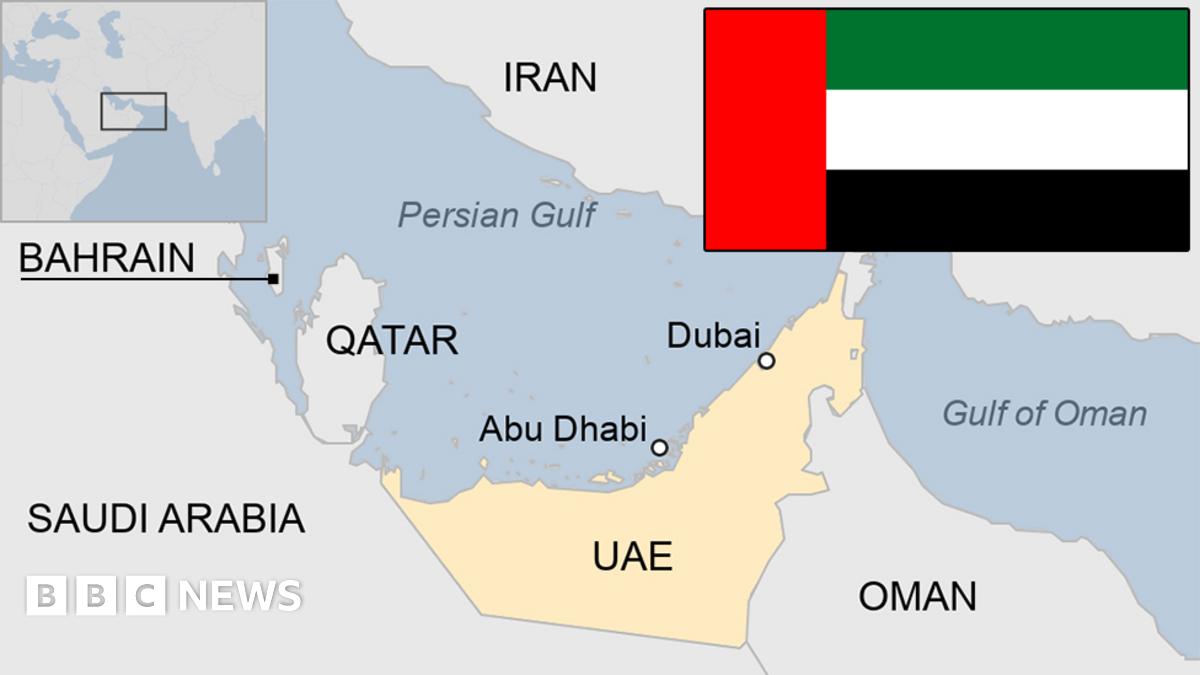
The International Monetary Fund has lifted its projection for the United Arab Emirates’ economic expansion to 4.8 per cent in 2025 and sees 5.0 per cent growth in 2026, citing accelerating non-hydrocarbon activity and a rebound in oil output.

Stronger-than-expected performance in tourism, construction, trade and financial services is underpinning the upward revision. The IMF attributes resilience to the country’s diversified strategy and structural reforms such as enhanced trade agreements and sustained investment in infrastructure.

Analysts say the revision contrasts sharply with broader regional downgrades. The IMF now expects growth across the Middle East and North Africa to expand by only 2.6 per cent in 2025, constrained by policy uncertainty, volatile energy markets and geopolitical tensions.

Within the UAE, central bank data reinforce the narrative of dual expansion. The non-hydrocarbon sector is forecast to grow by around 4.5 per cent annually in both 2025 and 2026, while the hydrocarbon segment is expected to rebound more sharply—by 5.8 per cent in 2025 and 6.5 per cent in 2026—on increased output as OPEC+ quotas are relaxed.

When IMF staff visited the UAE in January 2025, they noted that domestic demand remained robust amid modest oil production, forecasting real GDP growth at about 4 per cent for the year. They projected that fiscal and external surpluses would remain comfortable, helped by elevated non-oil revenues and cautious fiscal management.

Still, risks linger. The UAE’s banking sector, while well capitalised, faces exposure to real estate, and high house prices pose concerns for asset quality. In mid-2025, exposure to property in banks’ portfolios stood at around 18 to 19 per cent of risk-weighted assets. A sudden shift in investor sentiment or capital flows could test the stability of credit markets.

On the external front, the current account surplus is projected at about 7.5 per cent of GDP, supported by stronger non-oil exports and moderating import growth. Liquidity buffers remain healthy, with international reserves covering more than eight months of imports.

Kigali has become the launchpad for the Rwanda chapter of the Africa Trade Gateway, a comprehensive digital trade ecosystem developed by the African Export-Import Bank in partnership with the African Continental Free Trade Area Secretariat. The rollout aims to accelerate uptake of the platform across the nation and integrate Rwandan firms more closely into Africa’s digital trade networks. The ATG combines five integrated modules—including PAPSS, MANSA, ATEX, […]

What first inspired you to pursue your current industry or professional path? Was there a defining moment or influence that shaped your direction? My journey into financial technology began during my early days at Banque Misr, Egypt’s second-largest bank, where I witnessed firsthand the inefficiencies of traditional paperbased banking systems. The defining moment came when I was tasked with spearheading the digital transformation initiative, converting traditional transactions […]

The Bank of North Dakota and payments firm Fiserv have unveiled plans for a dollar-backed digital token dubbed “Roughrider,” to be deployed among banks and credit unions in 2026 as a new instrument for interbank settlement. The token, restricted initially to participating financial institutions, aims to accelerate and modernise bank-to-bank transactions within the state.

Under the agreement, Roughrider will be built on Fiserv’s digital asset infrastructure, leveraging the platform’s framework to interoperate with other stablecoins. The Bank of North Dakota becomes the first U. S. state bank to issue a stablecoin on Fiserv’s platform. The initiative targets enhanced liquidity, streamlined payments, and potential expansion into merchant adoption.

Governor Kelly Armstrong cast the move as bold institutional innovation, positioning the state as a testing ground for blockchain-enabled finance. “We’re entering a new era,” he said, emphasising that North Dakota financial institutions must embrace evolving money-movement tools. Fiserv’s COO Takis Georgakopoulos described Roughrider as merging the stability of traditional banking with the agility of distributed ledger technology.

State officials say the Industrial Commission, which oversees the bank, must approve the pilot plan. Once greenlit, the rollout will begin with a small cohort of local institutions. BND President and CEO Don Morgan noted that any costs from development will rest on the bank’s balance sheet rather than state taxpayer funding. The legal team of Troutman Pepper Locke has advised the bank in structuring the deal.

The federal legislative environment played a crucial role: in July, Congress passed the GENIUS Act, providing stablecoin issuers with a national regulatory framework requiring full backing by high-quality assets, transparency rules, and audit requirements. North Dakota’s scheme is built to align with those standards.

While Wyoming’s Frontier Stable Token launched in August and is available for public use, North Dakota’s strategy is more conservative. Roughrider will begin as a wholesale instrument; public or consumer-facing use is not part of the first phase. Some stakeholders view it as a deliberate step to mitigate operational and financial risks before broader deployment.

Analysts say North Dakota offers a lower-complexity environment for experimentation. With BND being the only state-owned bank in the U. S., the state provides a more controlled setting to work through technical, legal, and compliance challenges. If successful, the model could be scaled beyond North Dakota’s borders or adopted by others.

Banks and credit unions participating in the pilot stand to benefit from faster settlement, reduced settlement costs, and simpler liquidity management. But industry voices warn of potential downsides: deposit flight is a concern if stablecoins siphon off customer balances, and state regulators may need more capacity to oversee digital assets.

Fiserv, which serves roughly 10,000 financial institutions and 6 million merchants globally, sees this as an opportunity to embed stablecoin rails within its ecosystem. It launched its own white-label stablecoin platform earlier this year, with FIUSD as its internal token, and views Roughrider as a use case within that infrastructure.


VISHNU RAJA
RYO YAMADA
HITORI GOTOH
IKUYO KITA