News related to
financial

A significant portion of employee interactions with generative AI tools is inadvertently leaking sensitive corporate data, posing serious security and compliance risks for organisations worldwide. A comprehensive analysis by Harmonic Security, involving tens of thousands of prompts submitted to platforms such as ChatGPT, Copilot, Claude, Gemini, and Perplexity, revealed that 8.5% of these interactions contained sensitive information. Notably, 45.77% of the compromised data pertained to customer information, […]

Bitcoin reserves on centralized exchanges have declined to approximately 2.5 million BTC, marking the lowest level since 2018, according to data from CryptoQuant. This significant reduction indicates a growing trend of long-term holding, as investors increasingly transfer their assets to cold storage solutions.

Over the past month, more than 51,000 BTC have been withdrawn from major exchanges, reflecting a shift towards self-custody among both retail and institutional investors. This movement suggests a strategic approach to asset management, with a focus on long-term value preservation.

Institutional interest has surged, particularly with the advent of spot Bitcoin exchange-traded funds . These ETFs have been accumulating Bitcoin at a rate significantly outpacing new mining output, contributing to the depletion of exchange reserves. Analysts note that this trend could lead to a supply shock, potentially driving prices higher if demand continues to rise.

The United States has further influenced the market by establishing a Strategic Bitcoin Reserve, capitalized with over 200,000 BTC seized by federal agencies. This move underscores the growing recognition of Bitcoin’s role in national financial strategies.

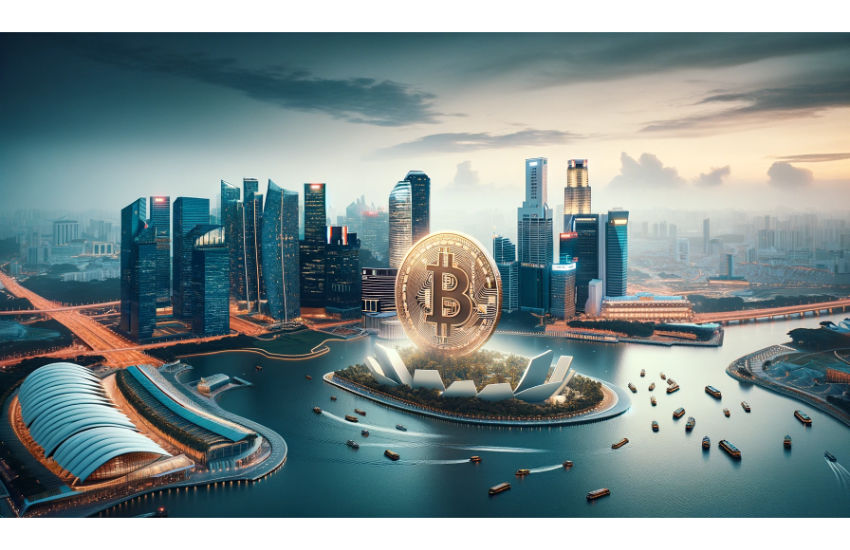
The Monetary Authority of Singapore has mandated that all locally based digital token service providers without a valid license must cease offering services to overseas clients by 30 June 2025. This directive, issued without a transitional grace period, underscores Singapore’s commitment to aligning with global anti-money laundering and counter-terrorism financing standards.

Under the Financial Services and Markets Act , entities operating from Singapore and providing digital token services abroad are required to obtain a DTSP license. This regulation applies to both individuals and corporations, regardless of whether they are already licensed under the Payment Services Act or the Securities and Futures Act . The MAS has clarified that exemptions are limited, primarily for technical service providers that do not handle client funds or digital tokens.

The licensing process is stringent, with the MAS indicating approvals will be granted only in exceptional cases. Applicants must demonstrate a sound business model and provide valid reasons for operating from Singapore while serving overseas markets. Minimum requirements include a base capital of SGD 250,000 for companies and partnerships, or a cash deposit of the same amount for individuals. Additionally, firms must have at least one local resident director or partner and maintain a physical office in Singapore with staff present for a minimum of 10 days per month.

Licensed DTSPs are subject to ongoing regulatory obligations, including comprehensive AML/CFT measures such as customer due diligence, transaction monitoring, and compliance with value transfer requirements. They must also adhere to standards for technology risk management, cyber hygiene, and business continuity planning. Regular submission of regulatory returns and clear disclosure of risk warnings to customers are mandatory.

The MAS has emphasized that there will be no transitional arrangements for firms currently operating without a license. Entities must halt all overseas digital token services immediately unless they secure the necessary authorization. Failure to comply will result in regulatory penalties.

This move by the MAS reflects a broader effort to prevent regulatory arbitrage and ensure that digital asset service providers operating from Singapore adhere to international standards. By enforcing strict licensing requirements and eliminating transitional leniency, Singapore aims to bolster its reputation as a secure and compliant hub for digital financial services.

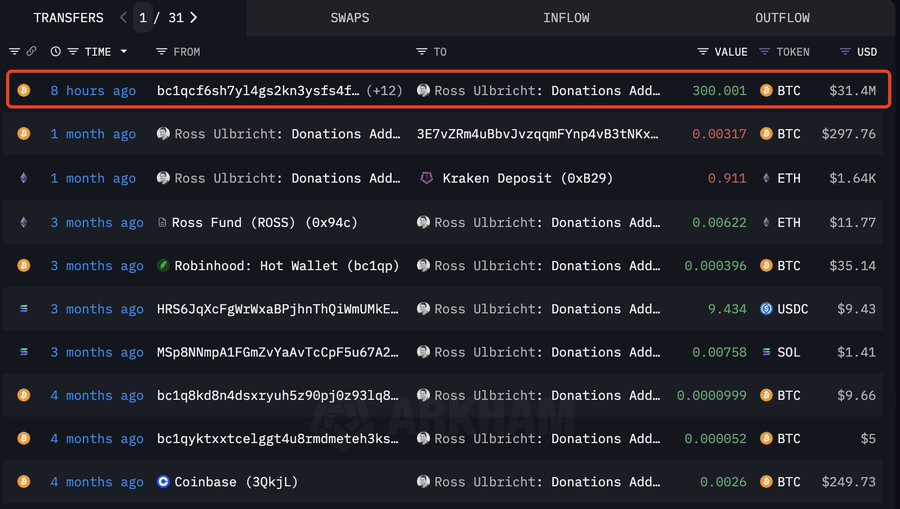
Ross Ulbricht, the founder of the Silk Road darknet marketplace, has received an anonymous donation of 300 Bitcoin, valued at approximately $31.4 million, sent to his official Bitcoin address. This substantial contribution follows his release from prison after a full pardon by former U.S. President Donald Trump in January 2025.

The donation was made to the Bitcoin address listed on freeross.org, a website dedicated to supporting Ulbricht. The identity of the donor remains unknown, and there has been no public acknowledgment from Ulbricht or his representatives regarding the transaction.

In addition to this significant donation, an auction of Ulbricht’s personal belongings has reportedly raised nearly $1.3 million in Bitcoin. The auction, organized to support Ulbricht’s reintegration into society, featured items such as personal writings, artwork, and other memorabilia.

Ulbricht’s financial situation has been a topic of interest since his release. Coinbase executive Conor Grogan identified approximately 430 BTC, worth around $47 million, in wallets associated with Ulbricht that had remained untouched for over 13 years. However, it remains unclear whether Ulbricht has access to the private keys required to control these funds.

The cryptocurrency community has shown considerable support for Ulbricht since his release. Crypto exchange Kraken donated $111,111 in Bitcoin to assist with his transition back into society. Additionally, various fundraising efforts, including merchandise sales, have contributed to a growing fund aimed at supporting Ulbricht’s post-incarceration life.

Ulbricht was arrested in 2013 and later sentenced to double life imprisonment plus 40 years without the possibility of parole for his role in operating the Silk Road marketplace. The platform facilitated the trade of illegal goods and services, primarily using Bitcoin for transactions. His sentence was commuted by President Trump, who cited support from the Libertarian movement and concerns over the severity of the punishment.

South Korea’s cryptocurrency industry appears poised for continued expansion despite uncertainties surrounding the upcoming presidential election. Analysts and market insiders suggest that while the election outcome may influence regulatory approaches, the overall trajectory for crypto adoption and innovation in the country remains largely positive. The nation, known for its advanced digital infrastructure and high rate of technology adoption, continues to be a key global hub for cryptocurrency trading and blockchain development.

Voters are set to choose their next president amid growing public interest in digital assets, a sector that has become deeply embedded in South Korea’s financial landscape. The outgoing administration has maintained a cautious but constructive stance on crypto, emphasising investor protection and regulation to curb speculative risks. However, there is widespread anticipation that the new leadership, regardless of political affiliation, will aim to strike a balance between fostering innovation and ensuring financial stability.

The South Korean crypto market ranks among the world’s largest, with retail investors accounting for a significant share of trading volumes. According to market data, the country’s exchanges handle billions of dollars in daily transactions, reflecting robust participation despite bouts of global market volatility. Industry experts highlight that the presence of a tech-savvy population and extensive mobile connectivity continues to drive demand for cryptocurrencies and related services such as decentralized finance and non-fungible tokens .

Recent policy discussions have centred on enhancing regulatory clarity without stifling growth. Authorities have been moving toward implementing stricter anti-money laundering measures and introducing licensing regimes for crypto exchanges. These steps are designed to increase transparency and build trust among investors, especially after high-profile hacks and fraud cases shook confidence in past years. Nonetheless, crypto entrepreneurs argue that overly rigid rules could hinder South Korea’s competitive edge in the fast-evolving digital economy.

The election campaign itself has seen varying perspectives on how best to approach the burgeoning crypto sector. Some candidates advocate for a more innovation-friendly environment, proposing incentives for blockchain startups and easing certain regulatory burdens. Others emphasise the need for rigorous oversight, citing concerns about market manipulation and consumer protection. This diversity of viewpoints underscores the complexity of integrating crypto assets into mainstream financial systems while safeguarding public interests.

South Korea’s financial regulators are also coordinating with international bodies to align standards and promote cross-border cooperation. This global approach aims to mitigate risks associated with illicit finance and to support legitimate crypto ventures. Moreover, collaboration with major markets like the United States and European Union seeks to harmonise regulatory frameworks, which could facilitate smoother operations for South Korean crypto firms on the world stage.

Despite occasional regulatory headwinds, venture capital funding in South Korea’s blockchain and crypto technology startups has surged. Investments are being channelled into innovative projects that range from smart contract platforms to digital identity solutions and tokenisation of real-world assets. This capital influx is driving research and development, helping local firms compete with international giants in areas such as security, scalability, and user experience.

Market participants also point to South Korea’s well-established IT infrastructure and educational emphasis on STEM disciplines as critical factors supporting the crypto ecosystem’s growth. The country’s universities and research institutions are actively engaging in blockchain research, producing talent that feeds into both the private sector and regulatory agencies. This synergy between academia, government, and industry forms a backbone for sustainable technological advancement.

Consumer attitudes toward cryptocurrencies have evolved significantly, with increasing acceptance among younger demographics. Surveys indicate that digital assets are now viewed not only as speculative tools but also as legitimate instruments for payments, savings, and investment diversification. This cultural shift has encouraged mainstream financial institutions to explore crypto-related products, including custody services, exchange-traded funds , and blockchain-based payment networks.

However, risks remain inherent in the sector, with price volatility, regulatory uncertainty, and cybersecurity threats continuing to challenge market stability. Industry leaders have called for ongoing dialogue with policymakers to ensure that emerging regulations are well-informed and adaptable. Transparency and investor education are emphasised as vital to fostering a resilient market capable of weathering shocks and sustaining public confidence.

The intersection of cryptocurrency and South Korea’s broader economic policy objectives is also under scrutiny. The government aims to position the country as a global innovation hub, leveraging digital technologies to boost productivity and competitiveness. Cryptocurrency and blockchain are seen as integral components of this strategy, with potential to revolutionise areas such as supply chain management, finance, healthcare, and public administration.

Global geopolitical tensions and financial market fluctuations have added layers of complexity to South Korea’s crypto landscape. Supply chain disruptions and inflation concerns worldwide have driven some investors toward digital assets as alternative stores of value. Yet, the international nature of cryptocurrencies requires regulatory frameworks that can keep pace with rapid technological changes and evolving market dynamics.


Emirates has confirmed plans to operate its fleet of Airbus A380 double-decker aircraft until the close of the 2030s, signalling a strategic decision to extend the service life of the very planes that propelled the airline to global prominence. The Dubai-based carrier intends to introduce one final upgrade to the A380’s first-class cabins as part of its commitment to maintaining the aircraft’s appeal and competitive edge on […]

Emaar Development has secured a significant land acquisition in Ras Al Khor, marking a strategic expansion amid Dubai’s robust property market. The construction subsidiary of Emaar Properties, the emirate’s largest publicly listed real estate firm, completed the purchase of the plot from Amlak Property Investment for 2.9 billion dirhams , alongside associated transaction costs. This move enhances Emaar Development’s land portfolio, positioning the company to capitalise on […]

Advertisements

The U.S. Securities and Exchange Commission has expressed reservations regarding two proposed exchange-traded funds that seek to provide investors with exposure to staked Ethereum and Solana . The ETFs, introduced by REX Financial and Osprey Funds, are under scrutiny for potentially not meeting the legal definition of investment companies as stipulated by the Investment Company Act of 1940.

The SEC’s concerns center on the structure of these ETFs, which aim to offer returns derived from staking rewards—a process where cryptocurrency holders participate in network operations in exchange for additional tokens. The regulatory body has questioned whether the funds are primarily structured to invest in securities, a requirement under federal law.

Despite the initial registration of these funds becoming effective on May 30, the SEC has indicated that this does not equate to an endorsement or approval of the funds’ compliance with legal standards. The agency has highlighted that the disclosures in the registration statements may be potentially misleading regarding the funds’ status as investment companies.

REX Financial has responded by stating that it will not proceed with the launch of these ETFs until the compliance issues raised by the SEC are resolved. Greg Collett, general counsel at REX, acknowledged the SEC’s concerns and emphasized the company’s commitment to addressing them.

The introduction of staking-based ETFs represents a novel approach in the financial markets, aiming to bridge traditional investment vehicles with the decentralized finance sector. However, the SEC’s apprehension underscores the complexities and regulatory challenges associated with integrating such innovative financial products into the existing legal framework.

Dubai Residential REIT’s debut on the Dubai Financial Market marked a significant milestone, closing nearly 14% higher at AED 1.25 per unit from its offer price of AED 1.10. The $584 million offering, backed by Dubai Holding, attracted overwhelming demand, with the IPO oversubscribed 26 times, reflecting strong investor confidence in Dubai’s residential real estate sector. The REIT, focusing exclusively on residential leasing, launched with a market […]

Saudi Aramco has successfully raised $5 billion through a three-part dollar-denominated bond issuance, marking its return to the international debt market. The offering comprises five-year, ten-year, and thirty-year tranches, with the longest maturity attracting nearly half of the total proceeds.

The 30-year tranche, amounting to approximately $2.5 billion, was priced at a spread of 185 basis points over U.S. Treasuries, reflecting strong investor demand despite prevailing market uncertainties. The five-year and ten-year tranches were priced at spreads of 80 and 130 basis points over Treasuries, respectively. These tighter spreads indicate robust confidence in Aramco’s creditworthiness and the broader appeal of long-dated corporate debt.

Aramco’s bond sale comes amid a backdrop of heightened volatility in the U.S. Treasury market, with 30-year yields fluctuating due to concerns over fiscal policy and rising national debt. Despite these challenges, investors have shown a keen interest in long-term corporate bonds, as evidenced by similar issuances from Alphabet, Siemens, and Snam, which have also been well-received.

The success of Aramco’s bond offering underscores a broader trend where investors are seeking higher yields through long-duration corporate debt, even as government bond yields remain volatile. This shift is partly driven by the search for stable returns in a low-interest-rate environment and concerns over inflation and fiscal sustainability.

Aramco’s move aligns with its strategic objectives under Saudi Arabia’s Vision 2030 plan, aiming to diversify the kingdom’s economy beyond oil. The funds raised are expected to support Aramco’s international expansion and investment in non-oil sectors, reinforcing its commitment to long-term growth and diversification.

The bond issuance also reflects Aramco’s proactive approach to capital management, leveraging favourable market conditions to secure funding at competitive rates. By tapping into the global debt market, Aramco demonstrates its financial resilience and adaptability in navigating complex economic landscapes.

First Abu Dhabi Bank , the largest lender in the United Arab Emirates by assets, is set to raise approximately $480 million through a secondary share offering. The transaction involves the sale of around 113 million shares at a fixed price of 15.5 dirhams per share, representing a 3.7% discount to the bank’s closing price of 16.1 dirhams on the Abu Dhabi Securities Exchange. Citi, acting as the bookrunner, confirmed that the offering was fully subscribed, with demand surpassing the number of shares available.

The identity of the selling shareholder remains undisclosed. FAB’s largest stakeholder is Mubadala Investment Company, Abu Dhabi’s sovereign wealth fund, which manages assets exceeding $330 billion. As of the end of March, FAB reported total assets of 1.31 trillion dirhams, underscoring its dominant position in the region’s banking sector.

The oversubscription of the share sale indicates robust investor confidence in FAB’s financial health and strategic direction. The bank has been actively pursuing growth opportunities beyond the Gulf region. Two years ago, FAB explored a potential acquisition of London-listed Standard Chartered, signaling its ambition to expand its international footprint.

Under the leadership of Group CEO Hana Al Rostamani since 2021, FAB has undergone significant restructuring to enhance operational efficiency and shareholder returns. The bank reorganized its operations into four new divisions and appointed Linos Lekkas, a veteran from Citi, as the head of its investment banking division. This strategic realignment aims to strengthen FAB’s position in the Gulf and support its expansion plans.

FAB’s strong financial performance further bolsters investor sentiment. In the first quarter, the bank reported a 23% increase in net profit, driven by growth in non-interest income from fees and commissions. This performance exceeded analysts’ expectations and reflects the bank’s diversified revenue streams and effective cost management.

KUALA LUMPUR, MALAYSIA – Media OutReach Newswire – 2 June 2025 – June 2025 is shaping up to be one of the most eventful months of the year for global markets. For traders, this means opportunity—but also volatility. The economic calendar is packed with macroeconomic data releases and central bank meetings, while geopolitical risks remain close to the surface. Beyond the usual inflation prints and interest rate […]

The World Bank has launched its first open-source software tool, the Metadata Editor, marking a significant step in its commitment to data transparency and open science. This web-based application is designed to assist data curators in documenting various types of data, including statistical indicators, survey microdata, geographic datasets, documents, images, videos, and scripts, in compliance with international metadata standards. By releasing this tool under the MIT License, […]

Dubai-listed Gulf Navigation Holding PJSC has secured shareholder approval for a AED 3.2 billion acquisition of Brooge Energy Ltd.’s assets, marking a significant expansion into the midstream oil and gas sector. The transaction, involving cash, newly issued shares, and mandatory convertible bonds , is expected to close in the second quarter of 2025, pending regulatory approvals. The acquisition encompasses Brooge Petroleum and Gas Investment Company FZE, Brooge […]

In the dynamic real estate market of the UAE, the collaboration between property developers and international luxury brands has emerged as one of the defining trends of the past decade. Branded residences—homes created in partnership with names known for fashion, jewelry, hospitality, or design—are transforming not only the architectural landscape but also the way residents and investors think about living in the region. From private beachfronts to […]

KUALA LUMPUR, MALAYSIA – Media OutReach Newswire – 30 May 2025 – Traders and investors alike are unnerved by the recent turbulence in the bond markets. After Moody’s—a major rating agency—downgraded U.S. government debt on 16 May, and Japanese long-term bond yields soared to multi-decade highs, some market participants started to fear that the world may be on the verge of a major debt crisis. Meanwhile, the […]

A sweeping crackdown on international students under President Donald Trump’s administration has triggered a global realignment in higher education, as universities across Europe and Asia move swiftly to attract displaced talent and research funding. The United States, long considered the premier destination for international scholars, is witnessing a sharp decline in its appeal. A survey by the Keystone Education Group indicates that 42% of prospective international students […]

Sberbank, Russia’s largest lender, has introduced structured bonds tied to Bitcoin’s performance, offering investors exposure to cryptocurrency price movements without direct ownership. These bonds, denominated in rubles and compliant with Russian law, are currently available to qualified investors through over-the-counter markets, with plans for future listings on the Moscow Exchange.

The initiative follows the Bank of Russia’s recent decision to permit financial institutions to offer crypto-linked financial instruments to accredited investors. Under the new guidelines, banks can provide derivatives, securities, and digital financial assets whose returns are linked to cryptocurrency prices, provided there is no actual delivery of the underlying crypto assets. This move aims to offer regulated exposure to digital assets while mitigating associated risks.

Sberbank’s Deputy Chairman of the Executive Board, Anatoly Popov, stated that the bank’s new product provides a convenient and secure way for investors to gain exposure to cryptocurrency assets without direct ownership, ensuring full compliance with regulatory requirements on Russian infrastructure. The structured bonds are designed to cater to investors seeking returns linked to cryptocurrency dynamics within a regulated framework.

In addition to Sberbank’s offerings, the Moscow Exchange has announced plans to launch a cash-settled Bitcoin futures contract on its derivatives market in June. The SPB Exchange has also outlined intentions to introduce cryptocurrency-linked futures trading, signaling a broader acceptance of crypto-related financial products within Russia’s regulated financial markets.

The Bank of Russia’s decision to allow crypto-linked financial instruments comes amid increasing interest in digital assets among Russian investors. The central bank reported a 51% increase in crypto asset inflows by Russian residents in the first quarter of 2025, totaling 7.3 trillion rubles . To manage potential risks, the central bank has mandated that banks and credit institutions fully back these products with capital, apply conservative risk assessments, and set individual exposure limits.

Sberbank’s move to offer structured bonds tied to cryptocurrency price movements represents a significant step in bridging traditional finance with digital assets in Russia. By providing regulated investment products linked to cryptocurrencies, the bank aims to meet growing investor demand while adhering to the country’s cautious regulatory stance on digital assets.

Huatai Securities has continuously expanded its international presence since its H-share listing a decade ago. Over the past ten years, Huatai Securities has facilitated nearly 600 domestic and international financing deals for enterprises globally, with a total fundraising volume of approximately USD 280 billion. HONG KONG SAR – Media OutReach Newswire – 30 May 2025 – As Huatai Securities approaches the 10th anniversary of its H-share listing, […]

Tether’s USDT stablecoin has experienced significant expansion over the past year, with its market capitalisation rising by 37% to surpass $150 billion. Daily transfer volumes have increased by 90%, and the estimated user base has grown by 51%, according to CEO Paolo Ardoino.

These figures underscore USDT’s dominant position in the $238 billion stablecoin market, where it accounts for over 60% of the total market share. The surge in daily transfer volumes, now exceeding $90 billion, reflects heightened activity across both decentralised finance platforms and centralised exchanges.

The user base has expanded notably, with an estimated 46 million new wallets added in the first quarter of 2025 alone. This growth is attributed to increased adoption among retail and institutional investors seeking stable, dollar-pegged assets for trading and cross-border transactions.

Tether’s strategic initiatives have played a role in this expansion. The company’s acquisition of a 70% stake in Latin American agriculture and energy firm Adecoagro aims to integrate stablecoins into commodity trading, extending USDT’s utility beyond digital assets. This move aligns with Tether’s broader strategy to embed stablecoins into real-world financial ecosystems.

In terms of reserves, Tether has reported holding over $120 billion in U.S. Treasuries, positioning it among the largest holders globally. The company also holds more than 100,000 bitcoins and over 50 tons of gold, reinforcing its commitment to backing USDT with substantial assets.

Regulatory developments have also influenced Tether’s operations. The U.S. Senate’s advancement of the GENIUS Act, which introduces stricter oversight for stablecoin issuers, has prompted Tether to enhance its compliance measures. The act includes provisions for audits, prohibitions on yield offerings, and strengthened anti-money-laundering protocols.

Gridora, a new infrastructure platform supported by ADQ, the Investment Holding Company , and Modon Holding, has formalised its first major collaboration by signing a memorandum of understanding with the Abu Dhabi Projects and Infrastructure Centre . This partnership aims to streamline the planning and execution of key transport infrastructure projects within the emirate. The MoU sets a strategic framework for cooperation, enabling Gridora and ADPIC to […]

Akshay Dosaj and Asif Rashid  The UAE’s small and medium-sized enterprises (SMEs) sector is poised for substantial expansion, with projections estimating nearly one million businesses by 2030. As these enterprises navigate a competitive and dynamic environment, mergers and acquisitions (M&A) have become essential strategies for sustainable growth. To maximize these opportunities, SMEs need tailored solutions and expert guidance to achieve their growth ambitions and align with the […]

Messaging platform Telegram has successfully raised $1.7 billion through a convertible bond issuance, aiming to refinance existing debt and bolster its financial position. The five-year notes offer a 9% annual coupon and include a provision allowing bondholders to convert their holdings into equity at a 20% discount if Telegram proceeds with an initial public offering before maturity.

A significant portion of the proceeds, approximately $955 million, is earmarked to repurchase outstanding bonds from a 2021 issuance set to mature in March 2026. Telegram had previously repurchased around $400 million of this debt using internal funds. The remaining funds from the new bond sale will support the company’s operational expansion and strategic initiatives.

The bond offering attracted substantial interest from institutional investors. Existing backers like BlackRock and Abu Dhabi’s Mubadala Investment Company participated, alongside new entrants such as hedge fund Citadel. The high yield and potential for equity conversion made the bonds particularly appealing to investors seeking both income and growth opportunities.

Telegram’s financial performance has shown marked improvement. In 2024, the company reported a profit of $540 million on revenues of $1.4 billion, a significant turnaround from a loss of $173 million on $342 million in revenue the previous year. Projections for 2025 indicate a profit exceeding $700 million on revenues of $2 billion, driven by diversified income streams including advertising, in-app purchases, and premium subscriptions.

A notable contributor to Telegram’s revenue growth is a $300 million partnership with Elon Musk’s artificial intelligence firm, xAI. Under this agreement, Telegram will distribute xAI’s chatbot, Grok, within its platform, receiving compensation in both cash and equity. This collaboration signifies Telegram’s foray into integrating advanced AI technologies to enhance user engagement and service offerings.

Despite these financial strides, Telegram faces legal challenges. CEO Pavel Durov is currently under investigation in France for allegedly failing to cooperate with authorities probing illegal activities on the platform. Durov, who has been released on bail, is restricted from leaving France without official permission. His request to travel to the United States for investor meetings was denied by French prosecutors, citing insufficient justification. Durov maintains that Telegram has complied with all legal obligations and expresses uncertainty over the basis of the charges.

These legal issues have not deterred investor confidence. The successful bond issuance reflects a strong belief in Telegram’s growth trajectory and financial stability. The company’s user base continues to expand, with over 1 billion monthly active users and a doubling of paid subscribers to more than 15 million in the past year.

HONG KONG SAR – Media OutReach Newswire – 29 May 2025 – Rail leaders of global sustainable development consultancy Arup from across the Asia Pacific region shared their insights into the future of rail at Asia Pacific Rail 2025, ranging from the role of transit-oriented development in funding rail infrastructure, the use of the latest green and smart technology in transit systems, station transformation, and customer journey […]

VISHNU RAJA
RYO YAMADA
HITORI GOTOH
IKUYO KITA