News related to
financial

World Liberty Financial, the crypto venture tied to Donald Trump’s family, has announced it will issue a debit card enabling users to spend digital assets as conventional currency, with a pilot slated next quarter and full deployment targeted by late 2025 or early 2026.

At Singapore’s TOKEN2049 conference, CEO Zach Witkoff stated that the underlying aim is to “bridge crypto assets with everyday spending,” forecasting that the card could go live in the fourth quarter or first quarter of 2026. Co-founder Donald Trump Jr. joined the presentation, underscoring the project’s ambition to integrate cryptocurrency more deeply into consumer payments.

Beyond payments, World Liberty is advancing a plan to tokenise real-world commodities, aiming to use blockchain infrastructure to trade assets like oil, gas, timber and cotton. Witkoff described these as “really interesting” domains for on-chain trading, pointing to what the company sees as excess transactional inefficiency in traditional markets. The firm also launched its governance token, WLFI, earlier this month, and has introduced USD1, a dollar-pegged stablecoin backed by U. S. Treasuries and other cash equivalents to cut dependency on conventional banking rails.

World Liberty has secured a high-profile institutional backer: the UAE-based Aqua 1 Foundation invested USD 100 million in WLFI tokens, becoming the venture’s largest public investor. The strategic pact aims to fuel World Liberty’s expansion in South America, Europe and Asia, and to jointly incubate blockchain initiatives.

The governance token WLFI currently is non-transferable, granting holders voting rights rather than direct tradeability; World Liberty has said it is “working behind the scenes” to make WLFI transferable in the future. A large portion of WLFI’s supply remains held by the Trump family and affiliated entities.

The stablecoin USD1 gained traction after a major crypto exchange deal: World Liberty was among the early adopters when the funds backed by an Abu Dhabi entity were routed through USD1 to a major crypto platform, helping to elevate USD1’s market position in the stablecoin ecosystem.

Regulatory and ethical concerns already shadow the venture. Critics argue the project blurs lines between private enterprise and public office, noting that much of the Trump family’s wealth could become entangled with policy outcomes. Donald Trump Jr. has dismissed conflict-of-interest allegations as “complete nonsense,” but scrutiny over the convergence of politics and crypto is intensifying.

WLFI has exhibited wide volatility since launch, riding speculative momentum across global exchanges. Meanwhile, competing crypto card offerings already exist, with established fintechs and digital-asset platforms offering crypto-linked cards in partnership with Visa and Mastercard. Witkoff contends World Liberty’s version will differentiate through tighter integration with its stablecoin and tokenisation strategy.

Global investment firm KKR has acquired a minority stake in ADNOC Gas Pipeline Assets LLC, reinforcing its commitment to Middle East energy infrastructure. ADNOC retains full operational control and ownership of the pipelines. KKR’s move builds on longstanding ties with Abu Dhabi’s national energy group. In 2019, KKR and BlackRock acquired a portion of ADNOC’s oil pipeline business in a landmark deal; that investment was later sold […]

Valetax, a leading global provider of trading services, is proud to announce its participation as an Elite Sponsor at Forex Expo Dubai 2025, one of the world’s most prestigious financial events. The expo will take place on 6–7 October 2025 at the Dubai World Trade Centre, drawing traders, partners, and industry experts from across the globe. As an Elite Sponsor, Valetax is set to make a remarkable […]

Perplexity has opened access to its AI-powered Comet browser for all users, eliminating its previous paywall and casting the browser as a direct challenger to Google Chrome’s dominance. Comet integrates Perplexity’s AI search engine with a built-in assistant designed to automate user tasks and summarise content across browsing sessions. The company emphasises that the browser is now free indefinitely, with a paid “Comet Plus” tier offering premium […]

Samsung is deepening its collaboration with Coinbase to integrate cryptocurrency services directly into its Wallet app. Users with Galaxy devices in the U. S. will now be able to make crypto purchases using Samsung Pay, and enjoy enhanced access to Coinbase’s premium offerings.

Wallet users will gain special access to a three-month subscription to Coinbase One, and early users may receive a $25 credit after placing their first trade. The alliance bridges Samsung’s digital wallet ecosystem with Coinbase’s crypto infrastructure to simplify onboarding for mainstream consumers.

The rollout begins with U. S. Galaxy customers, where Samsung says more than 75 million device owners could benefit. Samsung executives have signalled plans to extend the integration to other markets globally.

This isn’t the first foray for the two companies. The integration was first announced in July, enabling Samsung Pay within the Coinbase app, allowing users to fund crypto purchases without leaving the app or switching payment methods.

Under the new details, Samsung Wallet becomes a conduit not just for payments and identity, but also crypto trading, staking, and portfolio oversight. The partnership emphasises security, leveraging Samsung’s Knox platform and tokenisation to protect user assets and data.

Shan Aggarwal, Coinbase’s Chief Business Officer, said the tie-up aligns with the firm’s mission to bring “more than a billion people on chain” by meeting them on devices they already use. Drew Blackard, Senior Vice President at Samsung, noted that Galaxy users already rely on their phones for payments, identity verification and digital storage—and crypto access is a natural extension.

The push is part of Coinbase’s broader strategy of embedding crypto capabilities across consumer channels. In August, the company disclosed $1.5 billion in Q2 revenue and underscored its ambition to become what it calls “the everything exchange” — a unified gateway to trading, payments, and on-chain finance.

In parallel, Coinbase has struck partnerships with financial institutions. Notably, it is collaborating with JPMorgan Chase to let customers link their bank accounts to Coinbase wallets, enabling crypto trading and the conversion of credit card points into digital assets.

Industry observers view the Samsung integration as one of the most ambitious consumer-level crypto distribution moves to date. By embedding exchange functionality directly into a widely used mobile wallet, Coinbase and Samsung seek to lower structural barriers that often frustrate new crypto users.

That said, challenges remain. The U. S. regulatory environment around crypto remains volatile, with the SEC and other agencies scrutinising exchanges, token listings, and taxation. Skeptics warn that bundling crypto into everyday apps could expose users to market risk without full awareness.

Meanwhile, the phased rollout in the U. S. and Canada will test adoption rates, user behaviour, cross-border compliance, and competition from rival wallets like Apple Pay or Google Wallet, some of which may pursue their own crypto plans.

Matein Khalid Will we still be dancing when the music stops as Citigroup and UBS were in the autumn of 2007. Even my friends dissed me when I predicted a global financial crash as early as January 2007, but I track credit cycles like a bloodhound and it flashed the mother of all distressed SOS’s as it does now. In 2007, the trillion dollar daisy chain of […]

China’s largest state banks have committed over $3.75 billion in debt financing to Saudi Aramco’s Jafurah gas project, while Chinese investment funds have declined to take equity stakes in the venture, sources told Reuters.

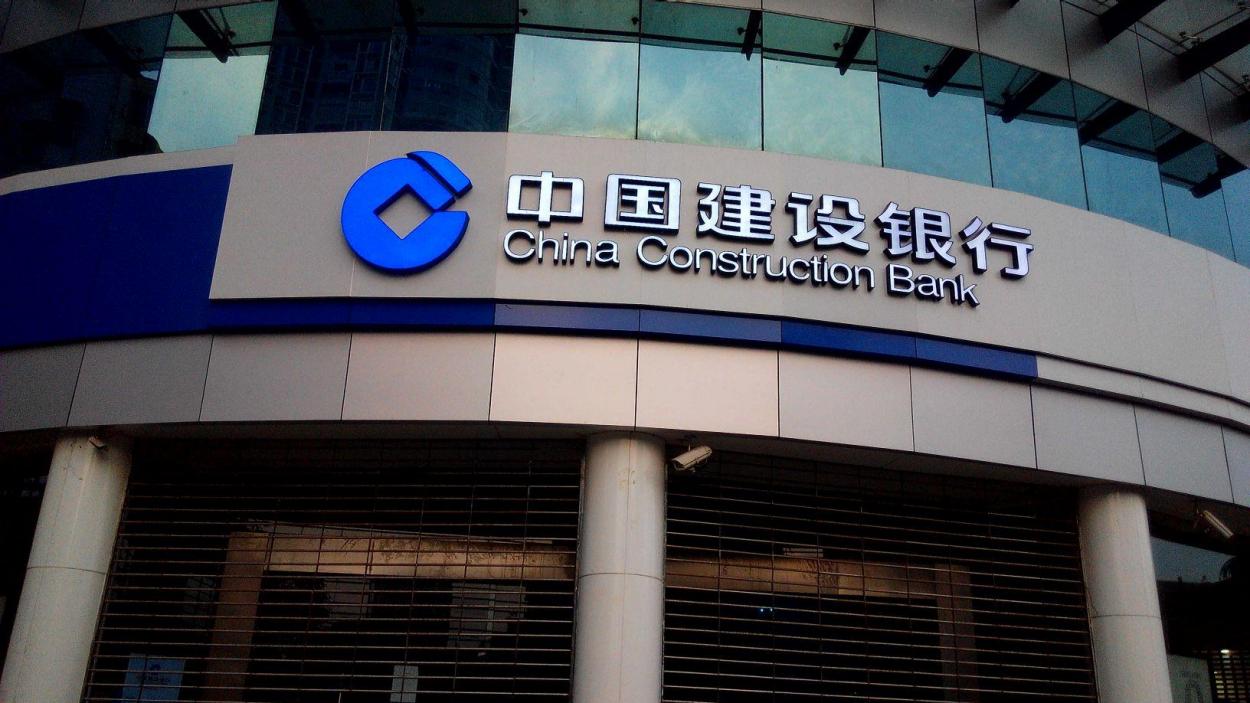
The bulk of this funding comes from Bank of China, ICBC and China Construction Bank, each contributing around $1 billion, and Agricultural Bank of China adding roughly $750 million. This debt financing accounts for more than one-third of the total capital sought for what is expected to be the largest shale gas development outside the United States.

Aramco’s deal involves an $11 billion lease-and-leaseback agreement signed in August with a consortium led by Global Infrastructure Partners, an arm of BlackRock. Under the arrangement, a new entity called Jafurah Midstream Gas Company will lease processing assets to Aramco for 20 years. Aramco retains a 51 per cent stake, while the consortium holds the remaining 49 per cent.

Despite the opportunity to join the equity syndicate, several Chinese state-linked funds declined to participate, a move that sources attribute to heightened U. S.–China tensions. Beijing is said to have discouraged fund-level engagement with U. S.-affiliated private capital firms, even when such firms do not have overt U. S. exposure.

The Chinese banks’ decision to provide senior debt but avoid equity signals a calibrated strategic posture: backing the project financially without direct governance alignment with U. S.-linked investors.

Aramco’s broader ambition is to expand its gas production capacity by 60 per cent over 2021 levels by 2030. The Jafurah basin is estimated to contain 229 trillion standard cubic feet of raw gas and 75 billion stock tank barrels of condensate.

The BlackRock-led consortium is also negotiating additional capital of around $10.3 billion with a mix of debt instruments; participants in those talks include JPMorgan and Sumitomo Mitsui Banking Corporation. Those financial structures are intended to support the lease-and-leaseback model without ceding control of core infrastructure assets to external parties.

Within the Gulf, Chinese lenders’ prominent involvement in Jafurah’s financing echoes a broader trend. Analysts note that China is repositioning its role in Gulf energy infrastructure by leveraging its strengths in project debt and export credit rather than co-investment in U. S.-sponsored equity schemes.

Saudi Arabia is concurrently expanding its gas network. It has signed over $25 billion in contracts for the second phase of Jafurah development and further gas-network enhancements, including pipeline extensions of 4,000 km to increase capacity by 3.2 billion standard cubic feet per day. Chinese firms, such as Sinopec, are among the contractors participating in these projects.

For Aramco, the dual approach of securing large-scale debt from Chinese banks while partnering with international investors via the leaseback model helps it mobilise capital without relinquishing decisive control. The arrangement offers investors predictable tariff-based returns.

Chinese banks’ exposure gives them influence over covenant terms, loan pricing and repayment schedules. That leverage, without the burdens or political friction associated with equity, aligns with Beijing’s financial diplomacy toward strategic energy corridors.

The full constellation of debt and equity deals around Jafurah—and the dynamics among Gulf producers, Chinese state capital, and U. S.-linked private investors—will be among the key nodes shaping the next wave of energy infrastructure financing.

Advertisements

Citi has revised its cryptocurrency outlook with a bold projection that Bitcoin will reach $181,000 within the next 12 months, while lowering its year-end 2025 target to $133,000 amid macro headwinds. The bank’s analysts emphasise that sustained inflows from exchange-traded funds and institutional adoption will serve as the key drivers behind this forecast.

In its latest note to clients, Citi outlined a base case assuming roughly $7.5 billion of inflows into Bitcoin through ETFs and corporate digital treasuries. In its bullish scenario, that figure could accelerate, boosting the upper bound estimate to $156,000 by year-end 2025. On the other hand, if recessionary pressures intensify, the bear case puts Bitcoin as low as $83,000.

Citi trimmed its near-term outlook slightly, revising the 2025 year-end Bitcoin target downward from $135,000 to $133,000. The bank cited factors such as a stronger U. S. dollar and softer gold prices as constraining forces even as demand remains intact. Ethereum’s forecast was upgraded: the bank now expects it to close 2025 at $4,500 and rise to $5,440 over 12 months. The increased optimism for Ethereum stems from its yield-producing features, staking potential and growing institutional interest.

These adjustments came amidst a backdrop of accelerating ETF inflows across asset classes. U. S.-listed ETFs have now amassed roughly $917 billion this year alone, following on from a record $1.1 trillion in the prior year. Bitcoin‐linked ETFs such as BlackRock’s IBIT have contributed meaningfully to that tally, while ETFs offering derivative strategies or income-oriented profiles have also drawn substantial capital.

Market commentators point out that ETFs offer a more accessible, regulated path for institutional investors and financial advisors to gain crypto exposure. That ease of entry, combined with the liquidity and scale of Bitcoin as the “digital gold” play, underpins Citi’s conviction that Bitcoin remains poised to absorb a disproportionate share of new capital entering the crypto sector.

Still, Citi emphasises that its bullish scenario depends heavily on flow continuity. Should macro conditions deteriorate—whether through tighter monetary policy, weaker risk appetite, or geopolitical stress—those inflows could slow or reverse. In such a scenario, Citi’s downside targets become relevant.

Other analysts echo a cautiously bullish tone. Some foresee Bitcoin reaching $160,000 to $200,000 by year-end, citing seasonal patterns and regulatory tailwinds, especially developments in U. S. crypto policy. Others warn that high valuations and volatility could invite sharper pullbacks if sentiment weakens.

The tension between macro headwinds and structural drivers is particularly evident in Ethereum’s case. Unlike Bitcoin, Ethereum supports staking and decentralized finance activity, making it more sensitive to adoption metrics and usage growth. Citi believes that those features make Ethereum increasingly appealing to yield-seeking institutions, especially as its ecosystem matures.

Crypto markets have responded positively to the outlook. Bitcoin has recently moved past $120,000 levels, reaching two-month highs, while Ethereum’s price has also climbed steadily. Some of this momentum, analysts say, appears driven by ETF allocations and strong demand from institutional flows.

A plunge of nearly 90 percent in blockchain-related job postings across Europe underscores a stark contraction in the sector, even as industry leaders plan to rally through the 11th European Blockchain Convention in Barcelona. By one estimate, Europe went from over 100,000 jobs referencing “blockchain” in 2022 to roughly 10,000 in 2025, representing the dramatic erosion in demand. Analysts cite regulatory complexity, high energy costs, and capital […]

The US Commerce Secretary has warned that reliance on DeepSeek’s artificial intelligence models is “dangerous and shortsighted,” amid findings that they are more vulnerable to hacking and underperform against US systems. An evaluation by the Center for AI Standards and Innovation within NIST compared DeepSeek’s R1, R1-0528 and V3.1 models with leading US systems—including OpenAI’s GPT-5 series and Anthropic’s Opus 4—on 19 performance and safety benchmarks. The […]

Visitors in Saudi Arabia will be able to open local bank accounts using their “Visitor ID,” following a decision by the Saudi Central Bank to accept the identification document issued by the Ministry of Interior. This marks a major regulatory shift in how non-residents can access financial services in the Kingdom.

SAMA’s directive mandates that banks recognise the Visitor ID—traditionally used for immigration and internal tracking—as a valid identity document for account onboarding, provided it is digitally verifiable through government-authorised platforms. According to SAMA, this adjustment will enable banks to reach new customer segments without altering their existing account-opening rules.

This change aligns with Saudi Arabia’s push under Vision 2030 to expand financial inclusion and improve the visitor experience. By lowering barriers to formal banking, the Kingdom aims to reduce dependence on cash, support digital payments, and draw more tourists, business travellers and pilgrims into regulated financial channels.

Banks will be required to adjust verification systems and compliance protocols to integrate the new policy. Many are expected to link the Visitor ID to local digital check platforms and mobile wallets, allowing holders to conduct everyday transactions. Some limitations may apply: banks may restrict access to credit, loans or other advanced banking services until further identification or residency status is established.

Under existing SAMA account rules, banks already require robust customer identification steps for all new accounts. These include verifying identity documents, screening for anti-money laundering, and collecting customer contact and address details. The updated regulation does not eliminate those checks but changes the baseline identity document accepted for visitors.

Observers see this as one of several steps in a broader regional movement. While Gulf states have long required residence permits or more rigid documentation to open standard accounts, the Saudi reform may test whether similar access models are feasible elsewhere. Already, financial technology and tourism stakeholders are evaluating the competitive edge this gives Saudi Arabia.

Critics caution that implementation risks must be managed carefully. Allowing visitor-based accounts introduces potential anti-money laundering and fraud vulnerabilities. Banks will need to balance user convenience with real-time monitoring, transaction limits, and strong identity verification safeguards.

From the visitor standpoint, the reform reduces friction in accessing local banking: new arrivals will no longer have to rely solely on foreign banks, prepaid cards or cash. Pilgrims and business travellers handling local payments, donations, or services should benefit directly.

SAMA emphasised that the change came through its periodic policy review, intended to keep regulations in line with evolving financial technology trends and market needs. The central bank said it expects the reform to reinforce the Kingdom’s cashless payments infrastructure and strengthen the banking ecosystem’s responsiveness to global customer expectations.

The policy rollout may occur in phases, as banks update internal systems, train staff, and obtain approvals from compliance units. Over the coming weeks, banks are likely to issue guidelines explaining account features, permissible transaction types, and validity periods tied to the Visitor ID status.

HONG KONG SAR – Media OutReach Newswire – 2 October 2025 – Henderson Sunlight Asset Management Limited (the “Manager“) is pleased to announce that Sunlight REIT has attained the highest five-star rating in the 2025 GRESB Real Estate Assessment (“GRESB Assessment“), as well as a Grade A rating in Public Disclosure for the third consecutive year. GRESB Assessment is a worldwide recognized environmental, social and governance (“ESG“) […]

OpenAI has surged past its prior valuation to reach an estimated $500 billion after current and former employees sold approximately $6.6 billion worth of shares to a consortium of investors. The deal, structured as a secondary share transaction, elevates OpenAI to the top of private tech valuations globally. Buyers in the transaction include Thrive Capital, SoftBank, Dragoneer Investment Group, Abu Dhabi’s MGX and T. Rowe Price. Although […]

Global investment giant KKR has acquired a minority stake in the entity leasing Abu Dhabi National Oil Company’s gas pipeline assets, bridging further into the Gulf’s energy infrastructure sphere. The financial terms were undisclosed; key rights and management powers remain with ADNOC. This marks a continuation of KKR’s partnership with ADNOC: in 2019, it invested in the oil pipeline business—then among the first foreign institutional investments into […]

Electronic Arts, creator of blockbuster franchises like “Battlefield” and “Madden NFL,” has agreed to be acquired by a consortium led by Saudi Arabia’s Public Investment Fund, private equity firm Silver Lake, and Jared Kushner’s Affinity Partners, in what would be the largest leveraged buyout in history. Under the terms, EA shareholders will receive $210 per share in cash, valuing the company at roughly $55 billion. The transaction […]

Kuwait has issued $11.25 billion in sovereign bonds split across three maturities, marking its first successful US dollar debt sale since 2017 and signalling a renewed re-entry into global capital markets. The offering drew strong investor demand, allowing the country to secure attractive pricing even as it seeks to diversify its funding amid mounting fiscal pressures.

The issuance comprised $3.25 billion in three-year bonds at 40 basis points over US Treasuries, $3 billion in five-year bonds also at 40 bps, and $5 billion in ten-year bonds at 50 bps. Order books reached as high as $28 billion—roughly 2.5 times oversubscribed—enabling Kuwait to tighten guidance from initial levels. Over two-thirds of the allocations went to investors outside the Middle East and North Africa, with significant participation from the United States, Europe, the United Kingdom and Asia.

Acting Finance Minister Subaih Al-Mukhaizeem described the deal as “historic”, citing that it reflects “global markets’ confidence in Kuwait’s financial strength, prudent policies, and solid reserves.” He added that this issuance reinforces Kuwait’s reputation as a credible sovereign issuer while supporting the New Kuwait 2035 vision of economic transformation.

Analysts noted that the spreads achieved in this issuance are significantly tighter than Kuwait’s inaugural dollar bond sale in 2017, underscoring market optimism about its credit metrics and macro outlook. Its low debt burden—currently less than 10 percent of GDP—offers the space for measured borrowing, even while the International Monetary Fund projects that the ratio may rise toward 25 percent by 2030 as deficits widen.

The path to this issuance was opened in March with the passage of a long-delayed public debt law, which raised the borrowing ceiling from KD 10 billion to KD 30 billion and permitted longer maturities. That law had been stalled for years due to clashes between the appointed government and the elected parliament; in response, the emir dissolved parliament for up to four years, clearing the way for reform.

Kuwait is the latest Gulf sovereign to take advantage of favourable global interest rates and strong investor appetite, joining others such as Saudi Arabia, the United Arab Emirates and Bahrain in tapping dollar markets to address fiscal gaps and finance diversification programmes.

While the bond sale delivers fresh funding, questions remain about Kuwait’s strategy for deploying the proceeds. Its economy remains heavily dependent on hydrocarbon revenues, which accounted for nearly 90 percent of government income in the most recent fiscal year. Previous reporting indicates that proposed projects include infrastructure upgrades such as a new port and airport expansion, intended to generate non-oil revenue streams.

GlobalSource Partners had speculated earlier that Kuwait’s general deficit could rise to between 7 and 8 percent of GDP in the current year, with this issuance expected to cover a large portion of the shortfall. The country has also tapped local debt markets, issuing about $5 billion in domestic bonds before turning to international markets.

Shared services hub to build on early momentum and further enhance all-in-one platform to empower financial advisory firms SINGAPORE – Media OutReach Newswire – 2 October 2025 – PROPEL with Singlife, the one-stop shared services hub for financial advisory firms, announces today that it has onboarded over 1,300 financial adviser representatives (FARs), just nine months after its official launch. PROPEL continues to solidify its position as the […]

HONG KONG SAR – Media OutReach Newswire – 2 October 2025 – In 2025, Hong Kong has already issued 51 rainstorm warnings, including four top-tier black rainstorm signals, highlighting the city’s increasing vulnerability to extreme weather. These severe weather events have not only disrupted daily life but also significantly impacted travel plans for many residents. As a leading travel insurance provider, Chubb Insurance Hong Kong (“Chubb Insurance”) […]

London-based CoinShares, a leading European digital asset manager with about US$10 billion in assets under management, has struck a deal to acquire FCA-regulated Bastion Asset Management. The transaction, which must clear approval from the UK Financial Conduct Authority, is intended to bolster CoinShares’ actively managed crypto offerings and accelerate its push into the US institutional market.

Under the agreement, Bastion’s strategies, quantitative team and leadership, including CEO Philip Scott and CIO Fred Desobry, will be integrated into CoinShares. Bastion is known for deploying market-neutral and systematic investment strategies tailored for institutional clients. The acquisition allows CoinShares to complement its existing passive exposure products with alpha-oriented solutions.

CoinShares is already positioning for expansion across the Atlantic. It is in the process of going public in the United States via a definitive business combination with SPAC Vine Hill Capital Investment Corp, valuing the firm at roughly US$1.2 billion on a pro forma basis. CoinShares currently holds a dominant 34 percent share of the EMEA crypto ETP market and ranks as the fourth largest global digital asset ETP manager after BlackRock, Grayscale and Fidelity.

With Bastion’s integration, CoinShares aims to fuse its Investment Advisor registration in the US with new actively managed strategies targeting institutional investors. By combining quantitative alpha models with its distribution infrastructure, the firm seeks to differentiate itself from both traditional asset managers entering the crypto space and crypto-native infrastructure providers.

Jean-Marie Mognetti, CEO and Co-Founder of CoinShares, described the acquisition as closely aligned with the firm’s goal of offering comprehensive digital asset solutions to its global clientele. Bastion’s team brings extensive expertise: Fred Desobry has over 17 years’ experience in systematic investing and quantitative research; Philip Scott brings more than 25 years in financial services.

The acquisition takes shape against evolving regulatory backdrops. In Europe, CoinShares recently secured Markets in Crypto-Assets authorisation for its French subsidiary, making it the only continental European asset manager to hold all three major regional licenses. The US regulatory environment is also shifting: the Securities and Exchange Commission’s adoption of generic listing standards for commodity-based exchange traded products is shortening approval timelines from roughly 240 days to 75 days. This regulatory clarity is viewed as conducive to faster rollout of actively managed crypto funds.

The U. S. Securities and Exchange Commission’s Division of Investment Management has issued a no-action stance confirming that registered advisers and regulated funds may use state-chartered trust companies for custody of crypto assets without fear of enforcement under certain conditions.

Under the letter released on 30 September, the SEC staff stated it “would not recommend enforcement action” against advisers or funds that treat state trust companies as a “bank” for purposes of holding digital assets and related cash, provided they adhere to strict safeguards and eligibility requirements. The letter stops short of legal advice, but marks a shift in how crypto custody might evolve under federal oversight.

While the no-action relief does not carry the force of a rule, it addresses long-standing ambiguity over whether state trust companies qualified as custodians under the Investment Advisers Act and the Investment Company Act. The guidance is conditional on advisers performing due diligence to confirm the trust’s authority, maintaining audited financial statements, segregating client assets, restricting rehypothecation without client consent, and verifying internal controls.

The SEC’s letter was precipitated by a request from law firm Simpson Thacher & Bartlett on behalf of financial advisers seeking formal assurances about using state trust entities for crypto custody. This marks the second such no-action letter from the agency in short order, reflecting a trend towards regulatory clarity in crypto frameworks.

Proponents argue the move broadens the pool of eligible custodians beyond a small set of federally chartered institutions. Many prominent crypto custodians already operate under state trust charters, including affiliates of Coinbase, Paxos, and others. Under previous regulatory interpretations, these firms faced uncertainty about whether they satisfied the “qualified custodian” requirement.

SEC Commissioner Hester Peirce applauded the letter, saying it ends the “guessing game” that advisers confronted in choosing custody providers. She suggested the guidance could pave the way for future reforms of custody rules that are more flexible and technology-aware. However, Commissioner Caroline Crenshaw dissented, warning that the agency’s move bypasses formal rulemaking and could undermine trust in the regulatory process by favouring state trust firms over applicants seeking national charters.

Market observers welcomed the clarity. James Seyffart, an ETF analyst, described the letter as “a textbook example of more clarity for the digital asset space.” Institutional participants, previously wary of custody risk, may now consider deeper allocations to crypto. The move may also prompt competition from new entrants able to operate under state trust frameworks.

Vanguard, the formidable asset manager overseeing over $9 trillion in assets, is reported to be preparing to permit its U. S. brokerage clients access to crypto exchange-traded funds offered by third parties, marking a notable departure from its previously cautious stance.

According to insiders, the firm has initiated internal evaluations and external consultations as demand from clients for exposure to digital assets has intensified. The move would not involve Vanguard issuing its own crypto products, but rather offering access to selected ETFs managed by external providers.

Vanguard’s transformation of its policy comes amid evolving regulatory signals. The Securities and Exchange Commission has recently approved a generic listing standard designed to streamline the approval process for new ETFs, including those that track cryptocurrencies. That change is credited with spurring wider institutional interest in crypto products.

At the centre of speculation is Vanguard’s CEO, Salim Ramji, who played a pivotal role in the development of BlackRock’s Bitcoin ETF. While Ramji has publicly reiterated that Vanguard has no immediate plans to launch proprietary crypto products, his background has heightened expectations that the firm’s strategic direction may be shifting.

Industry observers note that Vanguard’s entry into the crypto ETF space could provoke competitive pressures. Firms such as BlackRock and Fidelity have already embraced digital asset offerings; BlackRock’s Bitcoin ETF has attracted substantial inflows since its launch. This push by Vanguard suggests it is seeking to retain client engagement and not fall behind in the financial innovation race.

Despite momentum, significant uncertainties remain about the roadmap. There is currently no public timeline for the rollout, no confirmation on which crypto ETFs may be made available, and little clarity on eligibility criteria or platform integration. Some sources caution that regulatory, operational and compliance hurdles could delay or scale back the plans.

Sceptics argue that Vanguard’s caution is warranted. The inherent volatility of crypto markets, ongoing regulatory scrutiny, and custody risks for digital assets represent real challenges. For clients accustomed to Vanguard’s historically conservative and low-cost approach, the shift may raise questions about risk exposure and fee structures.

Still, proponents contend that the move is a logical evolution. With growing client appetite for digital exposure and a maturing ecosystem of regulated crypto products, access via established financial infrastructure may help reduce barriers and integrate crypto more deeply into mainstream investing.

By K Raveendran Bill Gates’ recent revelation about how a critical recruitment drive of fifteen Indian engineers had once saved Microsoft from slipping into irrelevance comes at a time when the United States under Donald Trump is imposing restrictive visa measures that are designed to block the very talent pool that had proven indispensable for […]

The article Trump’s Visa Tariff May Be Blessing In Disguise For India’s Talent Reservoir appeared first on Latest India news, analysis and reports on Newspack by India Press Agency).

Global private equity heavyweight KKR has acquired a minority share in the company that leases Abu Dhabi National Oil Company’s gas pipelines, deepening its commitment to the UAE’s energy infrastructure. The financial terms and precise percentage of the stake were not disclosed. The deal gives KKR exposure to ADNOC Gas Pipeline Assets LLC, which holds the lease rights for a network of 38 pipelines across the UAE, […]

DoBeGo announces the launch of its all-in-one digital platform designed to transform the way cars are purchased, leased, financed, and resold in the UAE and beyond. Built to serve both individual drivers and automotive businesses, DoBeGo integrates every step of the vehicle journey — from acquisition to resale — into a single, seamless ecosystem. A Connected Ecosystem for Smarter Mobility DoBeGo bridges key stages of car ownership […]

VISHNU RAJA
RYO YAMADA
HITORI GOTOH
IKUYO KITA