News related to
next

Cisco will unveil its latest innovations at GITEX GLOBAL 2025 in Dubai, aiming to equip enterprises across the Middle East and broader region with infrastructure built specifically for the AI era. The showcase focuses on AI-ready data centres, resilient network architectures, and strengthened security frameworks designed to support advanced workloads in data-intensive environments.

By joining the AI Infrastructure Partnership alongside BlackRock, Microsoft, NVIDIA, xAI and others, Cisco has committed to accelerating capital flows into datacentre and infrastructure projects. The partnership expects to unlock $30 billion in initial funding, scaling up to $100 billion including debt financing. Cisco brings its network, security and systems expertise to support the platform’s mission of secure, at-scale AI infrastructure.

At the heart of Cisco’s push is its new Cisco Data Fabric, launched in integration with Splunk, which provides federated data access across systems such as Amazon S3, Iceberg, Delta Lake and Snowflake, routing workloads intelligently to the best analytics or storage engine. This architecture is intended to reduce data movement, shorten analysis latency, and enable enterprises to transform machine data into AI-ready intelligence.

To support retrieval-augmented generation and agentic AI deployments, Cisco introduced the Secure AI Factory solution with NVIDIA and VAST Data. This validated architecture accelerates data extraction and retrieval at scale while enforcing security guardrails for every token processed. AI PODs built under this architecture offer pre-validated, high-performance building blocks for enterprise AI.

Networking and security are being redefined for the AI workload environment. At Cisco Live 2025, the company launched a next-generation network architecture for campus, branch and industrial environments, delivering unified management and devices purpose-built to support AI traffic patterns. It also introduced Hybrid Mesh Firewall and Universal Zero Trust Network Access to embed security into network fabric across hybrid and distributed environments. These features aim to simplify policy enforcement, improve visibility, and reduce complexity in securing both human users and AI agents.

Cisco CEO Chuck Robbins disclosed that fiscal year 2025 saw record AI infrastructure orders. In its final quarter, the company secured over $800 million from webscale clients, bringing total AI-focused orders to more than $2 billion—more than double its initial target. He described the pipeline as steadily growing into “hundreds of millions” as enterprises demand scalable, secure solutions.

In the Middle East, Cisco plans to demonstrate the regional relevance of its technologies under the theme “Make AI Work for You.” According to Cisco’s new AI Readiness Index, a vast majority of organisations in the UAE expect to expand their data centre capacity for AI within five years. The company will also present its work with Splunk on security and observability platforms at the event.

Cisco’s collaboration with Saudi Arabia’s HUMAIN is intended to build out an open, scalable AI infrastructure ecosystem aligned with Vision 2030. The multi-year programme includes deployment of cloud-based AI infrastructure, joint research initiatives, and efforts to grow local talent and innovation. The partnership underscores Saudi ambitions to position itself as a global AI hub.

Cisco sees accelerating demand for network modernisation. Its internal research reports that 97 percent of IT leaders view modernised networks as critical to deploying AI, cloud and IoT workloads, and 98 percent rate secure networking as essential for growth. However, the same study notes that only 40 percent of organisations have begun deploying advanced segmentation or intelligent control, illustrating an execution gap.

To strengthen its AI strategy, Cisco also expanded its presence in Indonesia by signing a Letter of Intent with BRIN to develop AI and cybersecurity capabilities via its Country Digital Acceleration programme. The plan includes building an AI Centre of Excellence and delivering training in AI, security and networking to 500,000 Indonesians by 2030.

Splunk’s observability portfolio itself is being reworked to embrace agentic AI, deploying AI agents to automate tasks such as root cause detection, alert correlation and issue resolution. This is intended to lighten the operational burden on IT and engineering teams while driving real-time insight.


Filestack has launched a sweeping upgrade to its core platform, introducing a fully integrated Digital Asset Management system, a comprehensive Event Logger, and a revamped Filepicker 4.0 with advanced upload control features. The move is aimed at giving developers stronger tools to manage file workflows, versioning, and audit trails—all without building these systems from scratch. At the heart of the update is the DAM, which allows users […]

HANOI, VIETNAM – Media OutReach Newswire – 7 October 2025 – The mega concert G-DRAGON 2025 WORLD TOUR [Übermensch] will take place on November 8 at 8Wonder Ocean City, with tickets officially opening for sale on October 7, 8, and 9. Prices range from VND 2 million to VND 8 million, offering a variety of exclusive benefits. With such anticipation, ticket sales are expected to spark an […]

Logitech will unveil a range of AI-enabled collaboration tools at GITEX Global 2025 in Dubai from 13 to 17 October, aiming to show how hardware and software can merge to support hybrid and human-centred work environments.

Under its “AI-Enabled Collaboration” theme, the company plans live demonstrations of its next-generation video conferencing, audio, and workspace peripherals. These products are designed to deliver equitable meeting experiences, seamless plug-and-play deployment, and sustainability throughout the product lifecycle.

Murad Ali, Head of GCC for Logitech for Business, says GITEX offers a stage to highlight innovations in “smart collaboration” that address evolving work trends in the Middle East, and that the company is committed to sustainable design practices. Logitech will host customers and partners at its Hall 3-C30 booth to showcase these developments.

A key highlight is the Rally Board 65, an all-in-one mobile conferencing device tailored to simplify complex meetings. The system combines a 65-inch touchscreen with built-in AI features such as RightSight 2 auto-framing, Depth Blur to reduce visual distractions, and sensors that measure occupancy and room health parameters. When unused, it can automatically shift into a lower power state to conserve energy—part of Logitech’s drive to embed sustainability into its hardware.

Logitech’s approach is underscored by statements from Moninder Jain, VP & Head of Global Emerging Markets. He notes that Logitech views AI not merely as a productivity tool, but as a means to deliver “more equitable collaboration experiences.” According to him, AI is embedded in features that equalise participation between in-room and remote contributors, including consistent audio/video quality, auto framing, and cloud-based device management that lets users carry settings across devices.

In recent months, Logitech has pushed AI integration further across its product lines. It has expanded its portfolio of Intel Evo-verified peripherals, reinforcing its strategy to support high-performance, low-latency user experiences. The company continues to evolve its Rally and video bar offerings, embedding AI to enhance meeting dynamics and reduce friction for IT teams managing hybrid environments.

Logitech’s sustainability credentials also receive attention in its corporate activities. The company’s “Future Positive” programme continues to support innovation in circular design. Past initiatives include collaborations on AI-powered e-waste recycling bins and exploration of alternative magnet materials to reduce reliance on rare earth elements.

Annual leadership business series by Canon Singapore equips business leaders with strategies and a resilience-ready toolkit to navigate global and economic shifts impacting Singapore SINGAPORE – Media OutReach Newswire – 6 October 2025 – Canon today announced the return of the highly-anticipated annual Think Big Leadership Business Series in Singapore, designed to help businesses tackle challenges in an era of global uncertainty and technological disruption. This year’s […]

OpenAI chief executive Sam Altman is leading a high-stakes campaign across East Asia and the Middle East to secure investment and bolster chip supply for the company’s AI infrastructure push. He has held talks since late September in Taiwan, South Korea and Japan with leading hardware suppliers to prioritise OpenAI’s orders and expand capacity.

Altman has met with Taiwan Semiconductor Manufacturing Company and Foxconn, as well as Samsung and SK Hynix, pressing them to accelerate production and give OpenAI preferential access. In South Korea, Samsung and SK Hynix have signed letters of intent to supply memory chips for OpenAI’s data centres. Meanwhile, OpenAI plans further fundraising discussions in the United Arab Emirates.

The urgency of Altman’s mission reflects the intensifying global competition for advanced computing resources. OpenAI projects it will spend around US$16 billion this year on renting computing servers, with long-term forecasts stretching to US$400 billion by 2029 as AI models grow ever more complex.

Industry analysts note that the semiconductor supply chain remains highly constrained. TSMC dominates GPU chip production, and memory manufacturing is largely concentrated in East Asia, creating significant strategic leverage for the manufacturers approached by Altman.

As part of his tour, Altman is also pressing Japanese firms to contribute to infrastructure support. Hitachi has entered discussions to provide power transmission and distribution systems for OpenAI’s data centres, while sharing technical resources under joint development agreements.

Sources familiar with the process say Altman pushed for direct prioritisation in chip delivery schedules, asking that OpenAI receive top-tier production slots. In some cases, he proposed co-investment or co-development of next-generation AI hardware to bind partner incentives more closely.

In South Korea, early architecture proposals include planned data centres of 20 megawatts in collaboration with Samsung and SK Hynix. Altman is reportedly exploring “floating” data centre designs to manage land constraints and cooling demands.

The UAE leg of his mission is expected to involve negotiations with sovereign investment firms such as MGX and Mubadala, with the aim of funding both OpenAI’s expansion and joint infrastructure ventures in the region. In past rounds, UAE investors have already taken part in funding OpenAI operations.

Challenges remain significant. The sheer scale of chips and memory required for stacked AI model training is pushing the boundaries of global wafer fabrication capacity. Market watchers point to the high capital expenditure and long lead times in the semiconductor industry as obstacles to rapid scaling. Some of Altman’s proposals—for example, co-development of bespoke ASICs—are still in preliminary stages and face technical risk.

OpenAI’s valuation and investor backing give the company leverage. Earlier this year, it closed deals that valued it at about US$500 billion, with new capital injections from investors including SoftBank and UAE entities. Those moves have fortified its position in negotiating upstream deals with manufacturers.

 by Mahboob Subuhani, Regional Director, IT Solutions – MEA & APAC at Sigma Software Group Dubai stands as a global benchmark for government digitalisation. In 2025, 99.5% of its services are digitised (120+ gov apps), with over 173 million digital transactions processed across 1400+ services, serving 57 million beneficiaries.    Today, Dubai ranks 4th globally in the IMD Smart City Index 2025, and 1st in the GCC, […]

Advertisements

Google Quantum AI has confirmed that the Atlantic Quantum team is joining its organisation—a move widely interpreted as an acquisition—bringing with it a modular superconducting hardware design aimed at accelerating progress toward error-corrected quantum computers. Atlantic Quantum, an MIT-origin spin-out focused on integrating qubits with cryogenic control electronics, will have its chip stack and engineering talent absorbed into Google’s quantum division. Google says this integration will streamline […]

World Liberty Financial, the crypto venture tied to Donald Trump’s family, has announced it will issue a debit card enabling users to spend digital assets as conventional currency, with a pilot slated next quarter and full deployment targeted by late 2025 or early 2026.

At Singapore’s TOKEN2049 conference, CEO Zach Witkoff stated that the underlying aim is to “bridge crypto assets with everyday spending,” forecasting that the card could go live in the fourth quarter or first quarter of 2026. Co-founder Donald Trump Jr. joined the presentation, underscoring the project’s ambition to integrate cryptocurrency more deeply into consumer payments.

Beyond payments, World Liberty is advancing a plan to tokenise real-world commodities, aiming to use blockchain infrastructure to trade assets like oil, gas, timber and cotton. Witkoff described these as “really interesting” domains for on-chain trading, pointing to what the company sees as excess transactional inefficiency in traditional markets. The firm also launched its governance token, WLFI, earlier this month, and has introduced USD1, a dollar-pegged stablecoin backed by U. S. Treasuries and other cash equivalents to cut dependency on conventional banking rails.

World Liberty has secured a high-profile institutional backer: the UAE-based Aqua 1 Foundation invested USD 100 million in WLFI tokens, becoming the venture’s largest public investor. The strategic pact aims to fuel World Liberty’s expansion in South America, Europe and Asia, and to jointly incubate blockchain initiatives.

The governance token WLFI currently is non-transferable, granting holders voting rights rather than direct tradeability; World Liberty has said it is “working behind the scenes” to make WLFI transferable in the future. A large portion of WLFI’s supply remains held by the Trump family and affiliated entities.

The stablecoin USD1 gained traction after a major crypto exchange deal: World Liberty was among the early adopters when the funds backed by an Abu Dhabi entity were routed through USD1 to a major crypto platform, helping to elevate USD1’s market position in the stablecoin ecosystem.

Regulatory and ethical concerns already shadow the venture. Critics argue the project blurs lines between private enterprise and public office, noting that much of the Trump family’s wealth could become entangled with policy outcomes. Donald Trump Jr. has dismissed conflict-of-interest allegations as “complete nonsense,” but scrutiny over the convergence of politics and crypto is intensifying.

WLFI has exhibited wide volatility since launch, riding speculative momentum across global exchanges. Meanwhile, competing crypto card offerings already exist, with established fintechs and digital-asset platforms offering crypto-linked cards in partnership with Visa and Mastercard. Witkoff contends World Liberty’s version will differentiate through tighter integration with its stablecoin and tokenisation strategy.

Rain, Ekin Cheng, Hins Cheung and other music icons brought on the festival energy as part of Grand Prix™ Season Singapore 2025 SINGAPORE – Media OutReach Newswire – 3 October 2025 – JAM OFF 2025 roared back into Singapore last weekend, igniting Resorts World Sentosa with two unforgettable days of star-studded performances, dynamic competitions, and festival cheer. Organised by Destinations Network Tourism and Leisure Marketing Ltd., a […]

Oil prices are sliding as traders cite mounting unsold Middle Eastern crude and weakening demand from key importers. This shift raises prospects of a global oversupply even as OPEC+ debates its next policy move.

Estimates from trading houses place unsold crude cargoes for November loading in the Middle East between 6 million and 12 million barrels. These volumes represent a departure from usual patterns where discount-seeking buyers quickly absorb surplus cargoes. Market participants point to a combination of subdued Chinese demand and logistical bottlenecks as contributing factors.

Spot premiums on benchmark grades such as Oman, Dubai and Murban have plunged below $2 per barrel, reflecting the discounts sellers are forced to offer to entice buyers. One trading analyst noted that the drop in premiums signals heightened desperation amid a buyer’s market for Middle Eastern crude.

China, a traditional backstop for surplus exports, is showing signs of pulling back. In May, China recorded a crude surplus of 1.4 million barrels per day—indicating that imports significantly outpaced refinery throughput. That accumulated surplus suggests refiners are prioritising inventory building over active processing, perhaps in anticipation of future market volatility.

Iran adds another layer of complexity. Tanker-tracking firms estimate that between 23 million and 33 million barrels of Iranian crude are currently held in floating storage. While Iran’s oil minister has denied any unsold inventory, satellite and maritime data paint a different picture. Analysts say the discrepancy reflects the country’s use of ship-to-ship transfers and “ghost fleet” operations to obscure the origin and movement of crude, especially in shipments headed for China.

These movements coincide with a broader recalibration in OPEC+ strategy. Some member states, notably Iraq, have increased destination-free exports, signalling an intent to saturate markets and regain influence with trading partners. Iraq’s shipment of Basrah Medium crude is projected to rise significantly in the coming month, following a period in which pledged output increases by coalition members have lagged deliveries.

Many analysts believe that OPEC+ will proceed cautiously in its production decisions. A sudden output cut might stoke accusations of market manipulation, while continued supply expansion could exacerbate falling price trends. Ahead of its upcoming meeting, the group faces the dilemma of balancing the need to safeguard revenue against the risk of triggering a price collapse.

Meanwhile, U. S. domestic supply is contributing to uncertainty. The Energy Information Administration reports that U. S. output has strengthened marginally, offset by curtailed imports of Russian crude under tightened sanctions. But some industry observers warn that U. S. production may have peaked. One petroleum engineer pointed to a 12 percent decline in output from October 2024 to June 2025, citing state-level data that may undercut EIA projections.

Oil futures reflect growing anxiety. Brent crude and West Texas Intermediate have posted their steepest weekly drops since June, falling over 8 percent in some benchmarks amid concerns that global inventories will build significantly. Traders increasingly view OPEC’s next move as critical in determining whether markets stabilise or cede ground to excess supply.

In this environment, floating storage becomes a more active tool. The accumulation of oil held offshore is not just a symptom of imbalance but a way to temporally manage supply pressure. Floating oil reserves enable sellers to delay deliveries until market conditions improve—or until buyers return.

Refiners in Asia and Europe are approaching capacity constraints. Some are cutting processing rates or entering maintenance periods, reducing appetite for new crude. Because many surplus cargoes are being offered on destination-free terms, they face competition across regions—and the lack of clear demand is forcing suppliers to lengthen delivery offers or scale back premiums.

If the pricing squeeze deepens, some producers may respond by cutting output unilaterally. Others might seek to promote further cooperation on coordinated supply restraint, though such moves carry reputational risk if markets judge them as manipulative. Meanwhile, importers in developing markets—particularly in Africa and Southeast Asia—could benefit from cheaper crude. But those gains may not offset pressure on oil-producing economies that rely heavily on export revenue to fund budgets and social programmes.

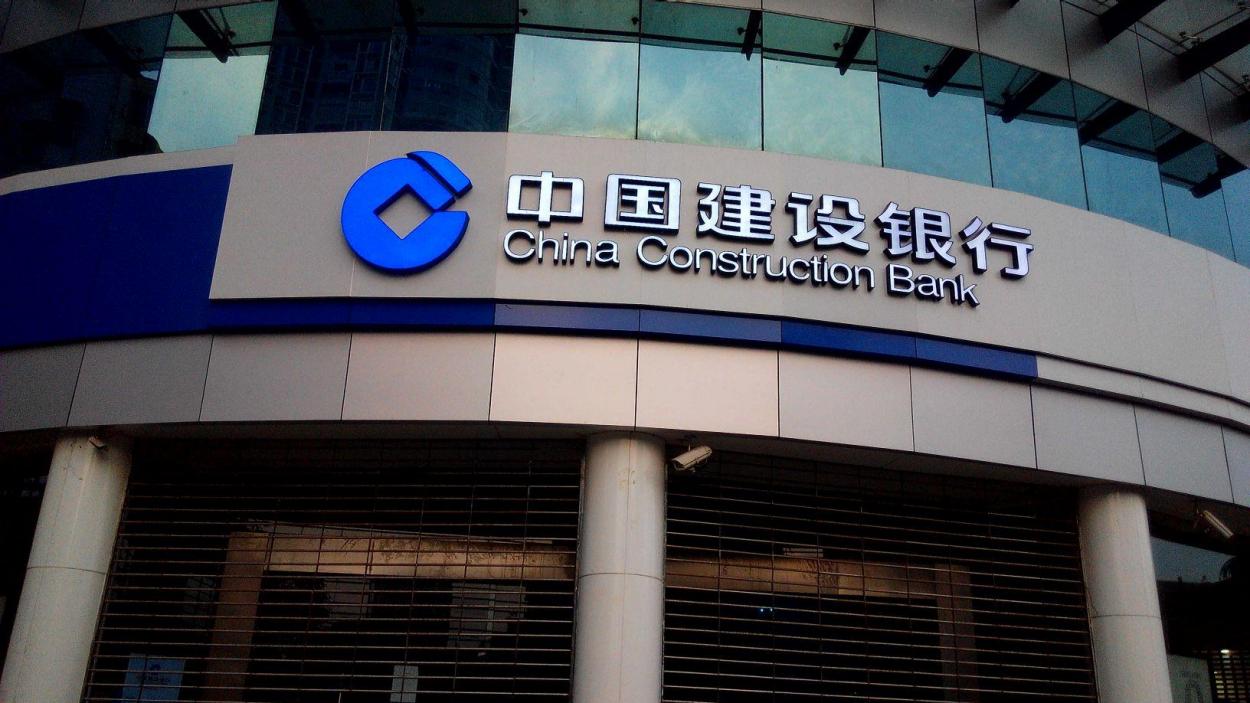
China’s largest state banks have committed over $3.75 billion in debt financing to Saudi Aramco’s Jafurah gas project, while Chinese investment funds have declined to take equity stakes in the venture, sources told Reuters.

The bulk of this funding comes from Bank of China, ICBC and China Construction Bank, each contributing around $1 billion, and Agricultural Bank of China adding roughly $750 million. This debt financing accounts for more than one-third of the total capital sought for what is expected to be the largest shale gas development outside the United States.

Aramco’s deal involves an $11 billion lease-and-leaseback agreement signed in August with a consortium led by Global Infrastructure Partners, an arm of BlackRock. Under the arrangement, a new entity called Jafurah Midstream Gas Company will lease processing assets to Aramco for 20 years. Aramco retains a 51 per cent stake, while the consortium holds the remaining 49 per cent.

Despite the opportunity to join the equity syndicate, several Chinese state-linked funds declined to participate, a move that sources attribute to heightened U. S.–China tensions. Beijing is said to have discouraged fund-level engagement with U. S.-affiliated private capital firms, even when such firms do not have overt U. S. exposure.

The Chinese banks’ decision to provide senior debt but avoid equity signals a calibrated strategic posture: backing the project financially without direct governance alignment with U. S.-linked investors.

Aramco’s broader ambition is to expand its gas production capacity by 60 per cent over 2021 levels by 2030. The Jafurah basin is estimated to contain 229 trillion standard cubic feet of raw gas and 75 billion stock tank barrels of condensate.

The BlackRock-led consortium is also negotiating additional capital of around $10.3 billion with a mix of debt instruments; participants in those talks include JPMorgan and Sumitomo Mitsui Banking Corporation. Those financial structures are intended to support the lease-and-leaseback model without ceding control of core infrastructure assets to external parties.

Within the Gulf, Chinese lenders’ prominent involvement in Jafurah’s financing echoes a broader trend. Analysts note that China is repositioning its role in Gulf energy infrastructure by leveraging its strengths in project debt and export credit rather than co-investment in U. S.-sponsored equity schemes.

Saudi Arabia is concurrently expanding its gas network. It has signed over $25 billion in contracts for the second phase of Jafurah development and further gas-network enhancements, including pipeline extensions of 4,000 km to increase capacity by 3.2 billion standard cubic feet per day. Chinese firms, such as Sinopec, are among the contractors participating in these projects.

For Aramco, the dual approach of securing large-scale debt from Chinese banks while partnering with international investors via the leaseback model helps it mobilise capital without relinquishing decisive control. The arrangement offers investors predictable tariff-based returns.

Chinese banks’ exposure gives them influence over covenant terms, loan pricing and repayment schedules. That leverage, without the burdens or political friction associated with equity, aligns with Beijing’s financial diplomacy toward strategic energy corridors.

The full constellation of debt and equity deals around Jafurah—and the dynamics among Gulf producers, Chinese state capital, and U. S.-linked private investors—will be among the key nodes shaping the next wave of energy infrastructure financing.

Citi has revised its cryptocurrency outlook with a bold projection that Bitcoin will reach $181,000 within the next 12 months, while lowering its year-end 2025 target to $133,000 amid macro headwinds. The bank’s analysts emphasise that sustained inflows from exchange-traded funds and institutional adoption will serve as the key drivers behind this forecast.

In its latest note to clients, Citi outlined a base case assuming roughly $7.5 billion of inflows into Bitcoin through ETFs and corporate digital treasuries. In its bullish scenario, that figure could accelerate, boosting the upper bound estimate to $156,000 by year-end 2025. On the other hand, if recessionary pressures intensify, the bear case puts Bitcoin as low as $83,000.

Citi trimmed its near-term outlook slightly, revising the 2025 year-end Bitcoin target downward from $135,000 to $133,000. The bank cited factors such as a stronger U. S. dollar and softer gold prices as constraining forces even as demand remains intact. Ethereum’s forecast was upgraded: the bank now expects it to close 2025 at $4,500 and rise to $5,440 over 12 months. The increased optimism for Ethereum stems from its yield-producing features, staking potential and growing institutional interest.

These adjustments came amidst a backdrop of accelerating ETF inflows across asset classes. U. S.-listed ETFs have now amassed roughly $917 billion this year alone, following on from a record $1.1 trillion in the prior year. Bitcoin‐linked ETFs such as BlackRock’s IBIT have contributed meaningfully to that tally, while ETFs offering derivative strategies or income-oriented profiles have also drawn substantial capital.

Market commentators point out that ETFs offer a more accessible, regulated path for institutional investors and financial advisors to gain crypto exposure. That ease of entry, combined with the liquidity and scale of Bitcoin as the “digital gold” play, underpins Citi’s conviction that Bitcoin remains poised to absorb a disproportionate share of new capital entering the crypto sector.

Still, Citi emphasises that its bullish scenario depends heavily on flow continuity. Should macro conditions deteriorate—whether through tighter monetary policy, weaker risk appetite, or geopolitical stress—those inflows could slow or reverse. In such a scenario, Citi’s downside targets become relevant.

Other analysts echo a cautiously bullish tone. Some foresee Bitcoin reaching $160,000 to $200,000 by year-end, citing seasonal patterns and regulatory tailwinds, especially developments in U. S. crypto policy. Others warn that high valuations and volatility could invite sharper pullbacks if sentiment weakens.

The tension between macro headwinds and structural drivers is particularly evident in Ethereum’s case. Unlike Bitcoin, Ethereum supports staking and decentralized finance activity, making it more sensitive to adoption metrics and usage growth. Citi believes that those features make Ethereum increasingly appealing to yield-seeking institutions, especially as its ecosystem matures.

Crypto markets have responded positively to the outlook. Bitcoin has recently moved past $120,000 levels, reaching two-month highs, while Ethereum’s price has also climbed steadily. Some of this momentum, analysts say, appears driven by ETF allocations and strong demand from institutional flows.

A newly devised artificial intelligence system dubbed Diag2Diag is poised to reshape how physicists observe and control the seething plasma inside fusion reactors. The tool generates synthetic diagnostic data to compensate for gaps left by conventional sensors, particularly at the plasma’s elusive edge, enhancing stability control and reducing hardware demands. Diag2Diag emerges from a cross-institutional effort led by Princeton University and the Princeton Plasma Physics Laboratory, with […]

Shared services hub to build on early momentum and further enhance all-in-one platform to empower financial advisory firms SINGAPORE – Media OutReach Newswire – 2 October 2025 – PROPEL with Singlife, the one-stop shared services hub for financial advisory firms, announces today that it has onboarded over 1,300 financial adviser representatives (FARs), just nine months after its official launch. PROPEL continues to solidify its position as the […]

HONG KONG SAR – Media OutReach Newswire – 2 October 2025 – In 2025, Hong Kong has already issued 51 rainstorm warnings, including four top-tier black rainstorm signals, highlighting the city’s increasing vulnerability to extreme weather. These severe weather events have not only disrupted daily life but also significantly impacted travel plans for many residents. As a leading travel insurance provider, Chubb Insurance Hong Kong (“Chubb Insurance”) […]

Bitcoin’s price has flirted with the $115,000 mark, only to pull back and settle into a tight range between about $108,750 and $112,000 as buying momentum weakens. Traders and analysts now await a decisive move in either direction to signal the next major trend.

After a breakout attempt stalled just above $115,000, liquidity cooled and buyers began to step aside, according to on-chain data and sentiment analysis. The 30-day momentum index on CryptoQuant dropped to –2 per cent from +1 per cent earlier in the week, underlining a loss of conviction behind the rally. The price action now shows descending highs, suggesting bulls are losing early ground. Resistance sits in the $111,000–$112,000 zone; only a sustained move here could re-ignite upward pressure. Failure to defend support around $108,600 could expose the market to a slide toward $106,000–$105,000.

Technical analysts point to a pattern of consolidation following the failed breakout above $115,000. While buyers attempted to push through, they lacked follow-through, leaving the market stuck in a neutral to slightly bearish posture. Axel Adler, whose work with CryptoQuant is cited in analyses, observed that sellers are stepping in at lower highs, limiting upside attempts. Market structure is now tilted toward volatility unless fresh demand emerges.

Institutional behaviour adds nuance. Whale wallets—those holding between 100 and 1,000 BTC—have accumulated roughly 65,000 BTC in recent sessions, bringing their aggregate holdings to an all-time high of about 3.65 million BTC. That accumulation suggests structural demand remains under the surface. At the same time, analysts note that technical indicators like moving averages have formed bullish signals—for instance, a “golden cross” between the 50-day and 100-day exponential moving averages on shorter timeframes is seen as supportive. Some forecasts even project a path toward $150,000 should momentum revive.

Macro drivers are also in focus. ETF inflows in the United States are injecting liquidity into the market and are widely regarded as a catalyst for continuation moves. Bitcoin has reclaimed its 100-day moving average, which had acted as resistance and is now a support anchor. RSI readings have turned positive, and the broader sentiment has shifted from outright bearish to cautiously optimistic as institutional capital flows reappear.

Still, not everyone is confident. Some analysts argue that despite price strength, the upside is structurally vulnerable. A technical review on Seeking Alpha has rated Bitcoin a “Sell” over the next 12 months, citing weaker momentum and divergence as signals that gains may not sustain without external catalysts.

Crucially, macroeconomic uncertainty looms. Market bets converge around expectations of U. S. Federal Reserve interest rate cuts in the final quarter. Should stimulus emerge, risk-assets including Bitcoin might rally; if inflation surprises or central banks hold firm, volatility could reverberate downward.

PHNOM PENH, CAMBODIA – Media OutReach Newswire – 1 October 2025 – Cambodia’s climate resilience efforts gained fresh momentum with the signing of a memorandum of understanding between the Ministry of Environment and the Chen Zhi Climate Action Challenge, a nationwide initiative led by Neak Oknha Chen Zhi that empowers young Cambodians to lead scalable, community-based climate solutions. Memorandum of Understanding (MoU) Signing Ceremony with Ministry of […]

DoBeGo announces the launch of its all-in-one digital platform designed to transform the way cars are purchased, leased, financed, and resold in the UAE and beyond. Built to serve both individual drivers and automotive businesses, DoBeGo integrates every step of the vehicle journey — from acquisition to resale — into a single, seamless ecosystem. A Connected Ecosystem for Smarter Mobility DoBeGo bridges key stages of car ownership […]

Hong Kong startups and business leaders join renowned entrepreneur on his first Asia tour to explore the mindset behind successful founders HONG KONG SAR – Media OutReach Newswire – 30 September 2025 – Hong Kong Science and Technology Parks Corporation (HKSTP) and Tatler called on the innovation community to “Keep Up with Steven Bartlett”, at an exclusive breakfast dialogue with the world-renowned entrepreneur and host of the […]

HONG KONG SAR – Media OutReach Newswire – 30 September 2025 – KPMG celebrated its 80th anniversary in Hong Kong last Friday, reaffirming its enduring commitment to the city’s growth and its role as a leading international financial centre. The milestone event, held at the Hong Kong Convention and Exhibition Centre, was graced by The Honourable John KC Lee, The Chief Executive of Hong Kong Special Administrative […]

BANGKOK, THAILAND – Media OutReach Newswire – 29 September 2025 – Siam Paragon, a legendary landmark in the heart of Bangkok, Thailand, and a must-see destination for local and international visitors, will unveil three world-class attractions later this year. With an investment of over THB 1.25 billion (approximately US$39 million) and a marketing budget of THB 200 million (US$6 million), this bold initiative underscores Siam Paragon’s commitment […]

Washington’s plan to sharply raise the cost of H-1B visas—the key route for skilled overseas professionals into the United States—has consequences far beyond immigration policy. It signals a potential reallocation of talent, capital and innovation that could redefine where the next wave of technology growth takes place. If the US prices out the world’s top engineers, data scientists and entrepreneurs, those individuals will gravitate toward regions offering […]

By Nitya Chakraborty In Nepal, following the tumultuous developments on September 8, 9 and 10 as a result of Generation Z uprising, the 2.9 crore nation is crawling back to normalcy . Under the leadership of interim Prime Minister Sushila Karki, the new administration is making sincere efforts to ensure law and order to prepare […]


The article Nepal’s Political Course Till March 5 Elections Gripped In Uncertainties appeared first on Latest India news, analysis and reports on Newspack by India Press Agency).

VISHNU RAJA
RYO YAMADA
HITORI GOTOH
IKUYO KITA
Just in: