News related to
Capital

U. S. spot exchange-traded funds tied to major cryptocurrencies saw a marked shift in capital flows on 26 January 2026, with Ethereum-linked products attracting the largest net inflows while Bitcoin, XRP and Solana ETFs drew comparatively lower interest. Data compiled from fund-flow trackers and trading platforms shows the spot Ethereum ETFs posted approximately $117m of net inflows during the session, overturning a streak of prior redemptions, and […]

ByteDance is accelerating its expansion into enterprise cloud services as artificial intelligence reshapes demand across China’s technology sector, positioning the social media and content platform owner as a more serious challenger to long-established players in the domestic cloud market. The company has stepped up investment in AI infrastructure, enterprise tools and developer services, signalling ambitions that go well beyond its consumer-facing applications. The move comes as businesses […]

Waabi Innovation has secured a sizeable capital package to accelerate commercial deployment of its autonomous driving software, widening ambitions beyond long-haul freight into passenger mobility as competition intensifies across the self-driving sector. The Toronto-based company said the financing totals up to $1 billion in committed capital, combining equity, strategic investments and long-term commercial backing, giving it the balance-sheet strength to scale its technology across multiple vehicle platforms. […]

Large institutional investors are signalling a strong appetite to accumulate digital assets during market pullbacks, according to a survey indicating that four out of five professional participants would either hold steady or increase exposure even if prices slide by 10%. The finding underscores a shift in how major allocators view volatility, treating declines as entry points rather than exit signals. Major investors show readiness to buy downturns […]

Nairobi has been chosen to host the first Gulfood360 Africa in May 2027, marking a significant expansion of the global food and beverage platform into a continent whose food economy is valued at about $567 billion. The decision, announced on the sidelines of Gulfood 2026 in Dubai, formalises Kenya as the official African host and positions the East African hub at the centre of a strategy to […]

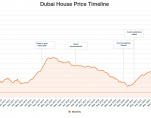
Dubai’s real estate market has been on a historic bull run. For the past five years, it has been a story of soaring property prices in Dubai, record-breaking foreign investment, and skyrocketing rental rates. However, a new market driver is set to define the Dubai property market 2026–2028: a massive influx of new housing supply largely from off-plan properties, many of which haven’t reached completion yet. Understanding […]

HONG KONG SAR – Media OutReach Newswire – 28 January 2026 – The Asian Financial Forum (AFF), Asia’s flagship annual financial event, successfully wrapped up its 19th edition yesterday (January 27), following two days of high-powered discussions and intelligence sharing involving more than 4,000 business leaders and officials from over 60 countries and regions.

Jointly organised by the Hong Kong Special Administrative Region (HKSAR) Government and the Hong Kong Trade Development Council (HKTDC) under the theme of “Co-creating New Horizons Amid an Evolving Landscape”, the AFF welcomed more than 150 distinguished speakers from around the world.

image-1.jpeg

A new Global Business Summit was held throughout day-two of the AFF yesterday, to further integrate finance with key industries and drive innovation and economic development.

Co-organised by the Financial Services and the Treasury Bureau of the HKSAR Government, the HKTDC, and the Office for Attracting Strategic Enterprises, the summit explored how finance empowers businesses. It also examined how Hong Kong can support Chinese Mainland enterprises to “go global”, and the prospects for foreign enterprises entering the Mainland market.

In his opening remarks at the summit, Paul Chan, Financial Secretary of the HKSAR Government, highlighted trade, finance and innovation and technology as the three principal drivers of future economic growth.

“Hong Kong is not just a platform that connects capital, market, projects, talent and opportunity. Hong Kong is willing to be a strategic partner to help you grow, scale up and go global,” Mr Chan said.

On building a more vibrant tech ecosystem, Mr Chan said the HKSAR Government is determined to attract the world’s leading frontier-technology enterprises to establish a presence in Hong Kong.

“We welcome technology and industrial enterprises to establish a presence in the Northern Metropolis. Where justified, we are prepared to tailor incentive packages, which may include land grants, premium concessions, tax incentives and other facilitation measures. Everything is negotiable,” he said.

image-1.jpeg

Prof Frederick Ma, Chairman of the HKTDC, in his welcome remarks at the summit, said: “In these unpredictable times, working together on shared goals adds to the agility and resilience of our economies, our industries and businesses, and our communities. Hong Kong, under the ‘one country, two systems’ arrangement, is perfectly suited to host these conversations and promote cross-sector collaboration, as a super connector, super value-adder and super collaborator.”

A series of plenary sessions held during the summit included the Business Plenary I – Chinese Mainland Enterprises Going Global, and Business Plenary II – Strategic Collaboration for Shared Growth, focusing on the latest opportunities in global market expansion and inbound foreign investment.

The Global Business Summit also featured a series of discussion sessions covering high‑growth, high‑value sectors, including biomedicine and healthcare, green energy, new consumer trends, artificial intelligence and robotics.

Speakers included representatives of prominent enterprises in the respective fields, such as Banking Circle, Infineon AG, Investcorp, JP Morgan, Revolut, Triton Partners, Amgen, Merck, DexForce Technology, JD.com, Pictet Group, AI² Robotics, Galbot and Tencent.

Paul Polman, a business leader, investor and philanthropist who is dedicated to advocating for systemic change, climate action, and social equality, delivered the Keynote Luncheon speech (January 27). He shared his “Net Positive” corporate sustainability strategy, which he has championed in recent years, focusing on advancing sustainable development.

Meanwhile, this year’s AFF Deal-making session, co-organised by the HKTDC and the Hong Kong Venture Capital and Private Equity Association, attracted over 280 investors and over 600 investment projects, resulting in more than 800 one-on-one meetings that successfully connected global capital with investment opportunities.

The AFF also marked the start of this year’s International Financial Week, featuring14 industry events that span a wide range of globally watched financial and business topics, including ASEAN opportunities, digital finance, green finance, family offices, private equity and alternative investments. Together, these events underscore Hong Kong’s unique role as the region’s most comprehensive and diversified international financial centre.

Hashtag: #hongkong #brandhongkong #AFF #Finance #Business #Economic


The issuer is solely responsible for the content of this announcement.

Advertisements

AI-related Attacks and Supply Chain Risks Emerge as Top Concerns Nearly 30% of Enterprises Lack Dedicated Cybersecurity Personnel

HONG KONG SAR – Media OutReach Newswire – 28 January 2026 – The Hong Kong Computer Emergency Response Team Coordination Centre (HKCERT), under the Hong Kong Productivity Council (HKPC), today hosted a media briefing to officially release the annual “Hong Kong Cybersecurity Outlook 2026”. The report reveals that cyberattacks have become more automated, targeted, and destructive with the rapid proliferation of Artificial Intelligence (AI) technologies, posing significant threats to business operations and information security. A record high 15,877 cybersecurity incidents were recorded in Hong Kong in 2025, marking a 27% year-on-year increase. The report also highlights five key cybersecurity risks expected to emerge in 2026, mainly under AI-related threats and supply chain vulnerabilities.

HKCERT also released the findings of the “Hong Kong Enterprise Cybersecurity Landscape”, which analyses the current state of local enterprises’ cybersecurity defences and resource allocation in the face of cyber risks. The study covered 622 enterprises (including 544 SMEs and 78 large enterprises) and interviewed 50 cybersecurity service providers to assess the key factors businesses consider when selecting cybersecurity services. The findings reveal that nearly 70% of enterprises have dedicated cybersecurity personnel, showing the increasing importance local businesses place on cybersecurity. Many SMEs have also begun strengthening their security measures, demonstrating a proactive awareness of cyber threats. However, they were behind large enterprises in terms of technology deployment and resource allocation. Moreover, around 35% of businesses using AI would enter corporate data into AI tools, suggesting that there is still room for improvement in local overall defence capabilities and AI governance awareness.

Mr Edmond LAI, Chief Digital Officer of HKPC, stated, “The proliferation of AI can drive innovation, but it can also become a powerful tool for hackers, making cyber threats stealthier and more scalable. Our report indicates a lack of governance in corporate use of AI tools. In particular, the limited resources and knowledge of SMEs may limit their full understanding of the potential risks involved. Moreover, supply chain attacks have become the weakest link in enterprise security, where a single vendor’s vulnerability can trigger a chain reaction of crises, even if the enterprises have robust protective measures. To address these challenges, enterprises must shift from passive response to proactive deployment, starting with establishing clear AI usage guidelines and audit mechanisms, and deeply integrating them into the overall cybersecurity strategy”.

Overview of Cybersecurity Incidents in 2025:

Phishing Accounts for Nearly 60% – Record-High Number of Cases

According to the latest statistics from HKCERT, a total of 15,877 cybersecurity incidents were reported in 2025, marking a new record high. Among them, phishing attacks remained the most prominent threat, accounting for nearly 60% (57%) of total cases. The rise of generative AI has made phishing messages increasingly realistic and harder to detect, further amplifying the associated risks. Attack delivery methods have expanded beyond traditional email to social media or instant messaging platforms (such as WhatsApp) (34%) and cryptocurrency platforms (18%).

In parallel, cases involving vulnerable systems also saw a sharp increase, with 2,328 incidents (15%), representing a more than 3.5-fold rise compared to the previous year. This suggests that attackers are actively exploiting misconfigurations and unpatched system vulnerabilities. Meanwhile, botnet-related incidents remained steady at 18%. While stable in number, botnets are notoriously difficult to eradicate completely, representing a long-term latent threat.

Top 5 Cybersecurity Risks in 2026

Based on industry expert analysis and HKPC’s ongoing research into the local business environment, and considering industry trends and technological developments, HKCERT predicts that the following five cybersecurity risks will pose significant challenges to businesses in 2026:

  1. AI-Driven Attacks and Agentic AI Risks
  2. Weak AI Governance of Enterprises Increases Data Leakage Risks
  3. Supply Chain Vulnerabilities and Third-Party Security Gaps
  4. Over-Reliance on Cloud Infrastructure Creates Single Points of Failure
  5. Emerging Threats from AI-Enabled Devices

30% of Enterprises Lack Dedicated Cybersecurity Staff, SMEs Lag in Defense and Investment

“The Hong Kong Enterprise Cybersecurity Landscape” reveals nearly 70% of enterprises have dedicated cybersecurity personnel, showing the increasing importance place on cybersecurity. By company size, 67% of SMEs have personnel responsible for cybersecurity, and 95% of large enterprises do. Among them, 26% of SMEs have dedicated cybersecurity personnel, which is lower than the 59% of large enterprises, reflecting different challenges in resource allocation and professional support for companies of different sizes.

Many SMEs have already implemented basic protective measures, such as 48% of SMEs have adopted email security, but there is still room for improvement when compared to the 79% of large enterprises. For Privileged Access Management (PAM), 29% of SMEs are employed, which is still lower than 60% of large enterprises. The figure on using Advanced cybersecurity practices, such as Remote Access Security Measures (SMEs 31% vs 67%), also reflects that SMEs still need support in promoting technological upgrades, especially when data security is increasingly important today, the protection of SMEs of all sizes cannot be ignored.

Regarding investment and resource allocation, SMEs are generally cautious in their investment, but some companies have gradually increased their investment in cybersecurity and training. In the past year 13% of SMEs increased cybersecurity-related resources (including staff and tools), and 12% invested more resources in cybersecurity training. In comparison, the proportions for large enterprises were 41% and 50%, respectively. Looking ahead to the next 12 months, SMEs are relatively conservative in their plans for increasing resources — no matter in recruitment of cybersecurity personnel (SMEs 5% vs 15%), training (SMEs 13% vs 38%) and budget (SMEs 13% vs 36%). However, as cyber threats evolve, it is believed that enterprises will gradually increase their related investments to strengthen their overall defense capabilities.

HKCERT’s Five Key Recommendations: Helping Enterprises Build Effective Cyber Defenses

HKCERT has outlined five key recommendations to help enterprises strengthen their cybersecurity posture:

  1. Assigning Personnel for Cybersecurity: Enterprises should assign employees with basic cybersecurity knowledge to be responsible for daily monitoring and response work, with clear division of responsibilities to ensure timely response to emergencies.
  2. Promoting AI Governance and Regulation: As the application of AI tools and third-party platforms becomes increasingly widespread, enterprises should formulate relevant policies and operational guidelines, clearly specifying the available tools and scope of data input, as well as procedures for responding to third-party incidents, to minimise operational and reputational risks.
  3. Collaborative Efforts of All Staff to Prevent Phishing Attacks: Enterprises should adopt both technical measures (such as email filtering and multi‑factor authentication) and an organisation‑wide security culture to jointly defend against phishing attacks. This helps enhance each employee’s ability to identify suspicious emails and links, thereby reducing the risk of data leakage.
  4. Enhance Cybersecurity Awareness and Training across all Staff: Cybersecurity is a shared responsibility across the entire organisation. Enterprises should regularly provide targeted security training for different departments—especially for roles that handle sensitive data—and strengthen incident response capabilities through simulation exercises and case‑based learning to reduce human error.
  5. Strengthen Technical Protection Measures: Enterprises should implement essential cybersecurity technologies, including:
    • Email security and access‑rights control
    • Data protection measures (such as encryption and backup)
    • Remote access security measures mechanisms (such as VPNs and identity authentication)
    • Proactive security solutions (such as intrusion detection and firewall monitoring)

As cyber threats grow increasingly complex and attack techniques become more advanced, enabling SMEs to effectively deploy cybersecurity defences has become a shared responsibility across society. In addition to operating a 24-hour incident reporting and supporting hotline, HKCERT continuously monitors local online activities. When cyberattacks targeting Hong Kong are detected, it proactively traces and disrupts the source and issues timely public alerts. In recent years, HKCERT has also leveraged self‑developed AI systems to take down phishing websites in advance, preventing incidents before they occur. To strengthen preventive measures and promote education among SMEs, HKCERT has published multiple security guidelines addressing emerging technology risks, helping technical personnel understand and adopt appropriate protection strategies. At the same time, HKCERT actively promotes cybersecurity awareness through a dedicated webpage on in‑depth analysis of major phishing and ransomware attacks, as well as by organising large‑scale public events and participating in over 30 seminars annually.

Since last year, HKCERT further acted as a bridge between SMEs and cybersecurity service providers to launch the Cybersecurity Service Providers Connect Programme with Digital Policy Office. The Programme offers a one-stop platform that brings together 21 vetted cybersecurity service providers, covering four key areas, including Internet Security Solutions, Cybersecurity Assessment Services, Managed Security and Incident Response Services, and Cybersecurity Training Services. It helps SMEs quickly identify suitable solutions and strengthen their cyber defence capabilities. The Programme will continue to enhance its services, promote resource sharing, and collaborate with the industry to build a safer digital business environment.

Hashtag: #HKCERT

The issuer is solely responsible for the content of this announcement.

About Hong Kong Computer Emergency Response Team Coordination Centre

Managed by the Hong Kong Productivity Council (HKPC), Hong Kong Computer Emergency Response Team Coordination Centre (HKCERT) is the centre for coordination of computer security incident response for local enterprises and Internet Users. Its missions are to facilitate information disseminating, provide advices on preventive measures against security threats and to promote information security awareness.

HKCERT collaborates with local bodies to collect and disseminate information, and coordinate response actions. HKCERT is also a member of the Forum of Incident Response and Security Teams (FIRST) and the Asia Pacific Computer Emergency Response Team (APCERT). We exchange information with other CERTs and act as a point of contact on cross-border security incidents.

About the Hong Kong Productivity Council
The Hong Kong Productivity Council (HKPC) is a statutory body established in 1967, dedicated to enhancing the productivity and competitiveness of Hong Kong enterprises through world-class applied R&D, innovative technology services, and integrated manufacturing solutions. As a market-oriented, international R&D organisation, HKPC leverages its deep expertise and extensive industry experience in key areas such as AI, advanced manufacturing, life and health technology, green technology and new energy to drive new industrialisation and support the growth of emerging and future industries.

HKPC focuses on addressing businesses challenges and industrial technology needs, promoting the full integration between technological and industrial innovation. Through technology transfer, product innovation, intellectual property protection and commercialisation of R&D outcomes, the Council fosters collaboration with the local business community as well as top global R&D institutions, delivering added value to industries and advancing the development of new productive forces. HKPC’s world-class R&D achievements have been widely recognised over the years, winning an array of local and overseas accolades, reinforcing Hong Kong’s role as an international innovation and technology centre and a smart city.

To help enterprises capitalise on Hong Kong’s strengths in international connectivity to expand into global markets, HKPC offers comprehensive overseas expansion services tailored to critical areas including product development, technology, manufacturing, and management, enabling businesses to successfully go global from Hong Kong.

HKPC is also committed to providing timely and practical support to SMEs and startups with timely and practical , assisting them in accessing Government funding programmes. Through its FutureSkills training initiatives, HKPC helps both industry and academia stay ahead in latest digital and STEM technologies, nurturing a future-ready talent pool for Hong Kong.

For more information, please visit HKPC’s website:

Fidelity Investments, the global asset manager overseeing about $6 trillion in client assets, is preparing to enter the fast-evolving stablecoin market with plans to issue its own digital token, signalling a deeper push by traditional finance into blockchain-based payments and settlement infrastructure. People familiar with the matter say the Boston-based firm has been working on the technical and regulatory framework for a dollar-linked stablecoin that would be […]

Arabian Post Staff -Dubai Dubai has unveiled a landmark expansion of its international financial hub, launching a $27 billion development designed to scale the city’s role in global finance as demand from overseas firms pushes existing capacity to its limits. The project, known as the DIFC Zabeel District, will extend the Dubai International Financial Centre across a substantial new area and is slated to reshape the emirate’s […]

Intel’s fourth-quarter and full-year 2025 results point to a company that has steadied its core operations after several turbulent years, even as its ambition to reposition itself as a competitive force in artificial intelligence and advanced manufacturing remains largely untested. The numbers indicate improving execution and cost discipline, but they stop short of demonstrating a clear and durable return to growth in the markets now driving the […]

Dollar-pegged digital tokens are moving from trading desks into everyday payments, payrolls and cross-border transfers as financial institutions and consumer apps expand support for stablecoins, reshaping how value is stored and moved in the crypto economy. Stablecoins now account for a growing share of on-chain activity, reflecting demand for price stability amid swings in other digital assets. Market capitalisation has climbed sharply over the past year, crossing […]

By K Raveendran Gold pushing decisively past the $5,000-a-troy-ounce threshold at the same moment the US dollar slides to a four-month low is not just a dramatic coincidence of charts. It marks a psychological rupture in global markets, challenging assumptions that have underpinned portfolio construction and macroeconomic thinking for decades. What once belonged to the […]

The article When Gold Breaks Five Thousand And Dollar Blinks appeared first on Latest India news, analysis and reports on Newspack by India Press Agency).

Bangkok will host Wiki Finance Expo Thailand 2026 in April, positioning the Thai capital as a focal point for discussions on financial technology, digital assets and Web3 innovation across Southeast Asia. The event is scheduled to take place at the Bangkok Marriott Marquis Queen’s Park, bringing together industry executives, policymakers, investors and technology developers at a time when the region’s digital finance ecosystem is expanding at pace.

The expo is expected to draw thousands of participants from Asia, the Middle East and Europe, reflecting Bangkok’s growing role as a neutral convening hub for global fintech dialogue. Organisers have indicated that the programme will centre on payments innovation, decentralised finance, blockchain infrastructure, digital asset regulation and the integration of artificial intelligence into financial services. These themes mirror broader shifts in global finance, where traditional institutions and technology-driven platforms are increasingly intersecting.

Thailand’s selection as host underscores the country’s strategic importance within Southeast Asia’s fintech landscape. Bangkok already serves as a base for regional operations of banks, digital payment firms and cryptocurrency exchanges, supported by a large consumer market with high smartphone penetration and rising adoption of cashless payments. Regional analysts note that Southeast Asia’s fintech sector has moved beyond experimentation, with platforms scaling rapidly across borders in areas such as e-wallets, buy-now-pay-later services and tokenised assets.

Wiki Finance Expo has established itself as a travelling forum, with earlier editions held in cities including Dubai, Hong Kong and Singapore. The Thailand edition is expected to build on that track record by offering a mix of keynote addresses, panel discussions and business matchmaking sessions. Industry leaders from blockchain firms, digital asset custodians, payment processors and trading platforms are likely to outline strategies for navigating regulatory complexity while pursuing growth in emerging markets.

A central focus of the Bangkok gathering will be Web3, an area attracting increasing interest from both venture capital and established financial institutions. Developers are using blockchain-based architectures to reimagine trading, lending and data ownership, while governments across Asia are assessing how to balance innovation with consumer protection. Participants are expected to debate how decentralised technologies can coexist with existing financial systems rather than replace them outright.

Regulation is set to be another major thread. Southeast Asian jurisdictions have taken varied approaches to digital assets, ranging from proactive licensing frameworks to tighter restrictions on retail participation. Thailand has introduced structured oversight for digital asset businesses, aiming to reduce systemic risk while allowing innovation to continue. Discussions at the expo are expected to explore how clearer regulatory pathways can attract institutional capital and encourage responsible product development.

The event also comes as cross-border payments remain a priority for the region. High remittance flows, driven by labour mobility and trade, have highlighted inefficiencies in legacy systems. Fintech firms are increasingly promoting blockchain-based settlement and real-time payment networks as solutions. Panels in Bangkok are expected to examine whether these technologies can achieve scale while meeting compliance and security requirements.

Beyond policy and technology, the expo is positioned as a commercial platform. Start-ups will have opportunities to pitch to investors, while established companies can seek partnerships or market entry strategies. Organisers have emphasised the importance of connecting global capital with Southeast Asian innovation, particularly as funding patterns shift towards projects with clearer revenue models and regulatory alignment.

Tourism and hospitality stakeholders in Bangkok are also expected to benefit from the influx of international delegates. Large-scale business events have become an important segment of the city’s post-pandemic recovery strategy, complementing leisure tourism. Hosting a high-profile fintech expo aligns with efforts to brand Bangkok not only as a travel destination but also as a regional business and technology centre.

Arabian Post Staff -Dubai Saudi Arabia is broadening its hunt for funding by engaging some of the kingdom’s wealthiest families, a move aimed at easing pressure on public finances while underwriting an ambitious pipeline of economic transformation projects. The approach marks a shift from a strategy that has leaned heavily on state balance sheets and foreign investors, signalling a desire to mobilise domestic private wealth alongside sovereign […]

Arabian Post Staff -Dubai UAE-based conglomerate Al Habtoor Group said on Monday it will pursue legal action against Lebanese authorities to recover about $1.7bn in investments it says were lost during the country’s banking crisis, a move that risks complicating Beirut’s efforts to rebuild confidence among Gulf investors. The group said the losses stem from funds trapped in the Lebanese banking system after the financial meltdown that […]

Arabian Post Staff -Dubai Mubadala Capital, the alternative asset management arm of Abu Dhabi’s sovereign investor Mubadala Investment Company, has unveiled a new co-investment vehicle aimed at scaling its exposure to private markets, with the fund closing at $554 million after being increased beyond its initial target. The Abu Dhabi-based firm said the Mubadala Capital Co-Investment Fund I was upsized from a $500 million hard cap following […]

Emirates NBD, Dubai’s largest bank by assets, posted a four per cent rise in full-year net profit on Monday, underpinned by record lending growth as borrowing demand strengthened across domestic and international markets. The lender said net profit reached 24 billion dirhams for the year, surpassing market expectations of about 22.8 billion dirhams based on analyst estimates tracked by LSEG. The performance was driven by what the […]

Arabian Post Staff -Dubai Kuwait has cancelled nine upstream oil tenders with a combined value approaching $10 billion after bids submitted by overseas contractors exceeded the approved budget by a wide margin, signalling a pause in the country’s near-term expansion plans and a reset of procurement expectations across the energy sector. The tenders were issued by the state-owned Kuwait Oil Company, the upstream investment arm tasked with […]

South Africa’s vast grasslands have become the testing ground for what is being described as a global first in community-led carbon markets, as farmers and pastoral groups begin to earn tradable carbon credits through regenerative land management verified under a new international standard. The initiative centres on Verra’s recently approved methodology for Improved Agricultural Land Management, which allows greenhouse gas reductions and soil carbon gains from grazing […]

HONG KONG SAR – Media OutReach Newswire – 26 January 2026 – The 19th Asian Financial Forum (AFF), opened this morning (January 26) at the Hong Kong Convention and Exhibition Centre with more than 3,600 influential leaders from over 60 countries and regions joining the two-day summit, the region’s first major international financial event of 2026.

Co-organised by the Hong Kong Special Administrative Region (HKSAR) Government and the Hong Kong Trade Development Council (HKTDC), this year’s AFF, themed “Co-creating New Horizons Amid an Evolving Landscape”, takes on added significance being the first such event of China’s 15th Five-Year Plan period (2026-2030).

“Featuring more than 150 prominent speakers, from Hong Kong, throughout the Asian region and around the world, the Forum will inspire insight and innovation, create partnerships and explore fresh business opportunities,” John Lee, Chief Executive of the HKSAR, said in his opening remarks at the Forum.

Mr Lee also spoke of the boundless opportunities for Hong Kong under the unique principle of “one country, two systems”, that assures Hong Kong of the unwavering support of China, while continuing to expand its global markets and reach.

“This unparalleled positioning solidifies our institutional strengths: the rule of law, a judiciary that exercises its power independently, an open and transparent market, the free flow of capital and a low and simple tax regime,” Mr Lee said.

Mr Lee later witnessed the signing of a co-operation agreement between the Financial Services and the Treasury Bureau and the Shanghai Gold Exchange, marking a new milestone in deepening co-operation between the gold markets of Hong Kong and Shanghai.

image-1.jpeg

The agreement was signed by the Secretary for Financial Services and the Treasury, Christopher Hui, and the Chairman of the Shanghai Gold Exchange, Yu Wenjian.

“The agreement just now signed is far more than a formal document,” said Mr Hui.

“It represents a resolute commitment to advancing the synergistic development of Hong Kong and Shanghai as premier international financial and gold markets. It reflects our joint determination to deepen the integration and complementary strengths of Hong Kong and Shanghai, so that together we can expand our share and influence in the global gold market, and better support Renminbi internationalisation.”

Mr Hui outlined the strategic significance of the agreement and the overall development blueprint for Hong Kong’s gold market.

“In recent years, amid heightened geopolitical uncertainty, inflationary pressures, and ongoing restructuring of the international monetary system, the strategic importance of gold has become even more pronounced,” Mr Hui said.

The agreement covers two major forward-looking areas of co-operation: establishing a high-level, collaborative governance structure for Hong Kong’s new gold central clearing system; and opening new avenues for physical infrastructure synergy and market interconnectivity.

“The signing of this agreement with the Shanghai Gold Exchange marks the dawn of a new chapter—one in which Hong Kong and Shanghai join forces to shape the future of global gold markets,” Mr Hui said.

A discussion session on gold trading themed “Global Spectrum – Gold Exchange” features expert panelists invited to examine recent market developments and share insights on Hong Kong’s role, potential and opportunity as a world-class gold trading centre. Speakers include overseas experts James Emmett, Chief Executive Officer, MKS PAMP SA and David Tait, Chief Executive Officer, World Gold Council.

Other highlights on day one of the AFF include a keynote luncheon speech by Dr José Manuel Barroso, former President of the European Commission, former Prime Minister of Portugal, and current Chairman of Goldman Sachs International Advisory Board, to share his insights on the current global landscape and macro‑level challenges.

Other notable speakers today include Zou Jiayi, President of Asian Infrastructure Investment Bank; Scott Morris, Vice-President (East and Southeast Asia, and the Pacific) of the Asian Development Bank; Mehmet Şimşek, Minister of Treasury and Finance of Türkiye; Klemen Boštjančič, Deputy Prime Minister and Minister of Finance of Slovenia; H.E. Waleed Saeed Abdul Salam Al Awadhi, Chief Executive Officer of Securities and Commodities Authority of United Arab Emirates; Burkhard Balz, Member of the Executive Board of the Deutsche Bundesbank; Rhee Chang-yong, Governor of the Bank of Korea; and Gokul Laroia, Chief Executive Officer Asia of Morgan Stanley.

The AFF serves as the opening event of the International Financial Week in Hong Kong, featuring over 10 partner activities covering a range of global financial and business topics, including ASEAN opportunities, asset and wealth management, and artificial intelligence.


Hashtag: #hongkong #brandhongkong #AFF #HKTDC #FSTB #finance


The issuer is solely responsible for the content of this announcement.

HONG KONG SAR – Media OutReach Newswire – 26 January 2026 – The 2025 Hong Kong & Shenzhen Bi-City Biennale of Urbanism Architecture (Hong Kong) (UABBHK 2025) officially concluded on 24 January 2026 with its Closing Ceremony held at the Oil Street Art Space (Oi!), bringing to a close the two-months of exhibitions, public programmes, and cross-disciplinary dialogue under the theme “TECHFORMANCE: Technology, Platform and Performance”, organised by The Hong Kong Institute of Architects Biennale Foundation, and co-organised by The Hong Kong Institute of Architects, The Hong Kong Institute of Planners, and The Hong Kong Designers Association. The Biennale is proudly supported by the Cultural and Creative Industries Development Agency (CCIDA) as Lead Sponsor.

UABBHK 2025 transformed traditional architectural exhibitions into a dynamic civic performance, positioning artificial intelligence (AI) not as a tool, but as a platform to co-create ethical, inclusive, and human-centred futures. Through immersive installations, public workshops, and experimental formats, UABBHK 2025 invited audiences to participate in the design of the city — in real time.

“The Biennale has not only showcased the possibilities of design in the AI era, but also activated a civic platform where architecture, technology and public imagination intersect,” said Ar. Allen Poon, Chairman of The Hong Kong Institute of Architects Biennale Foundation, during the ceremony. “Today’s conclusion marks both a milestone and a beginning — a new phase of creative exploration among Hong Kong, Shenzhen and the world.”

Exhibition Highlights: Tech Meets Imagination

UABBHK 2025 unfolded across two venues, Oil Street Art Space (Oi!) and the newly opened East Kowloon Cultural Centre (EKCC), showcasing 25 curated exhibits by architects, artists, researchers, and technologists from Hong Kong and beyond. Teams from 10+ regions, including Chinese Mainland, Hong Kong, Taiwan, as well as Australia, Austria, Italy, Japan, Singapore, the Netherlands, the UK, and the USA, explored how AI can be integrated into architectural thinking, spatial storytelling, and participatory design. Among the highlights were 4 video screening works that extended the exhibition’s themes through cinematic and documentary perspectives, addressing topics such as displacement and homecoming, the entanglement of code and culture, and speculative futures shaped by collective memory and student-led design fictions. Interactive installations like Prompt[Pond]ering, Sentient Mirror, and Collaborative Ephemeral Pavilion invited audiences to co-design spaces through AI-driven interactions. Works such as LANdLine Project and Flower Market Imaginaries grounded these future-facing visions in Hong Kong’s unique community and cultural context.

“In curating UABBHK 2025, we imagined AI not as a threat, but as a collaborator — a partner in rehearsing the future of our cities,” shared by Dr. Jimmy Ho and Ar. Aron Tsang, Lead Curators of UABBHK 2025. “We are proud to have created a platform that enables technology to be tangible, and civic imagination visible.”

Extending Impact: Public Programmes on Innovation & Collaboration

To extend the UABBHK 2025’s engagement beyond the galleries, two flagship public programmes were launched to bring AI and urban thinking into action: the ArchiTech Hackathon and the Hetao Vision: AI Video Competition.

ArchiTech Hackathon: Bridging Architecture and AI

Held earlier on the 24 January morning and co-hosted with Google Developer Group Hong Kong (GDGHK), the ArchiTech Hackathon was a first-of-its-kind 3-hour collaborative event that brought together 40 architects, developers and students — half from the HKIA Young Architects Group (YAG) and half from GDGHK — to explore how AI can support architectural workflows. The participants learned to use Google’s Gemini model and no-code platforms to build AI agents for architectural design code compliance.

Led by Mr. Frankie Wu from GDGHK, Ms. Adeline Chan and Ar. Owen Lam, Executive Curators of UABBHK 2025, the event embodied UABBHK’s vision by fostering cross-disciplinary collaboration between the tech and design communities, showcasing AI as a practical and imaginative tool for the built environment.

The winning team is Mr. Eric Chan and Ar. Toby Chiu. They successfully built the AI ​​agent for the competition in an astonishing time of 3 minutes, 56.32 seconds within a 60-minute timeframe, and was able to answer 10 questions, as required by the competition, completing the complex professional architect exam questions with 90% accuracy under four minutes.

Hetao Vision: Innovative AI Video Competition

Also announced during the ceremony were the winners of the Hetao Vision AI Video Competition, which invited creators to imagine the future of the Hetao Shenzhen-Hong Kong Science and Technology Innovation Co-operation Zone (HSITP). All entries were required to be fully AI-generated — both visually and aurally — using tools such as Runway, Pika Labs, Suno, and Udio.

The competition explored how AI can democratise futurology, letting creators of all backgrounds envision interconnectivity, innovation, and inclusiveness across the “one river, two banks” vision of Hetao.

The winning video,titled 深港河脈:一河兩岸的科創樞紐宏圖(Shenzhen-Hong Kong River Network: A Grand Vision for a Science and Technology Innovation Hub Across Both Banks) by Mr. Zhang Xiaoshan, was praised for utilising AI to create a convincing narrative of a cross-border innovation hub, demonstrating a profound understanding of the development of the Hetao area. Two additional finalists were also recognised for their distinctive storytelling and technical creativity.

A public screening of the shortlisted videos will be held in the Hetao Science and Technology Innovation Centre, in February 2026, allowing the public to reflect on the role of AI in imagining future urban life.

What’s Next: Visit UABBSZ and Explore the Living Archive

UABBHK 2025 will continue its journey in the Shenzhen & Hong Kong Bi-City Biennale of UrbanismArchitecture (Shenzhen) (UABBSZ) from January to March 2026. Whether you participated in the Hong Kong Edition or missed it, we warmly welcome you to visit the parallel venue of UABBSZ, at the Shenzhen Hetao Science and Technology Innovation Centre. Come and view the selection of UABBHK 2025 exhibits, continuing the creative dialogue and collaboration between Hong Kong and Shenzhen.

In addition, UABBHK 2025’s ideas and output will remain accessible through a dedicated digital gallery website and a forthcoming archive booklet, both will preserve the curatorial vision, exhibited works, and public interactions from this edition. These resources will serve as an open, living archive — a springboard for future conversations across architecture, AI, and urban futures.

Hashtag: #UABBHK

The issuer is solely responsible for the content of this announcement.

About The Hong Kong Institute of Architects Biennale Foundation

The Hong Kong Institute of Architects Biennale Foundation is a non-profit making organisation established and incorporated in 2014 for charitable purposes. The objects for which the Biennale Foundation is established are:

  • To promote creativity and advance the understanding, appreciation and interest of architectural and design excellence
  • To encourage cross-border and cross-disciplinary dialogue and collaboration among creative professionals from Hong Kong, other parts of the Greater China region and overseas
  • To support art, design, architectural and cultural education for students and youth, the community, and policy makers
  • To create a favourable environment for study, research and experimentation of design, art and architectural works in an exhibition scale
  • To energise and revitalise specific sites of interests by introduction of cultural and creative events


About the Cultural and Creative Industries Development Agency

The Cultural and Creative Industries Development Agency (CCIDA), formerly known as Create Hong Kong (CreateHK) since 2009, was established in June 2024. CCIDA is a dedicated office under the Culture, Sports and Tourism Bureau of the Government of the Hong Kong Special Administrative Region (HKSAR Government) to provide one-stop services and support to the cultural and creative sectors with a mission to foster a conducive environment in Hong Kong to facilitate development of the arts, culture and creative sectors as industries. CCIDA’s strategic foci are nurturing talent and facilitating start-ups, exploring markets, promoting cross-sectoral and multi-disciplinary collaboration, promoting industrialisation of the arts, culture and creative sectors under the industry-oriented principle, and fostering a creative atmosphere in the community, thereby reinforcing Hong Kong as Asia’s creative capital and our positioning as the East-meets-West centre for international cultural exchange.

Digital assets now form the foundation of almost every business operation. Michael Jordan, the CEO of Gem Soft, promotes data sovereignty as a necessary element for organizational strength and strategic freedom. He brings over thirty years of experience in investment banking and six years of leadership at Gem Soft, first as Chief Investment Officer and now as CEO. Jordan emphasizes that real control over data involves privacy, […]

Harare’s local authorities have escalated flood warnings and emergency preparations across the capital following prolonged heavy rainfall that has overwhelmed drainage infrastructure and triggered flash floods in multiple low-lying suburbs. Officials have urged residents and motorists to adjust travel plans, heed evacuation guidance where issued and monitor weather conditions as water levels continue to rise across a city whose ageing systems have struggled under intensifying storms. City […]

VISHNU RAJA
RYO YAMADA
HITORI GOTOH
IKUYO KITA