News related to
Capital

Abu Dhabi is now home to over US$758.79 billion worth of active development projects, industry reports show, as the capital’s property, construction and investment sectors receive considerable investor attention at the International Real Estate & Investment Show. Urban construction projects lead the charge at roughly $221.56 billion, followed by transportation ventures valued at $238.01 billion, industrial projects totalling $151.36 billion, utilities at $130.29 billion, and oil & […]

Memecoins have surged across cryptocurrency markets as traders shift bets toward a probable interest-rate cut by the Federal Reserve and the possibility of U. S. altcoin ETF approvals. Bitcoin’s market share has declined by about 3.5% over the past month, while indexes comparing altcoin performance versus Bitcoin have entered so-called “altseason” territory.

Expectations that the Federal Reserve may reduce rates by 25 basis points later this month are currently priced in at over 90% by market observers using tools such as Polymarket and the CME’s FedWatch. A rate cut is widely seen as a trigger boosting risk-assets by lowering the comparative appeal of fixed-income securities.

The CoinDesk Memecoin Index rose roughly 7.1% over 24 hours, led by tokens like SHIB and BONE. These gains came despite Shiba Inu’s layer-2 network, Shibarium, being hit by a flash-loan exploit, which did not dampen investor enthusiasm.

Analysts point out that falling Bitcoin dominance, which reflects a shrinking slice of total crypto market capitalisation for the biggest token, often heralds a shift into altcoins. Indexes from providers including CoinMarketCap and CoinGlass have signalled this rotation of capital away from Bitcoin toward altcoins.

Institutional momentum is also tightening around altcoin exchange-traded funds; proposals for ETFs covering DOGE and TRUMP tokens are reportedly under consideration for U. S. markets in the final quarter of the year. Approval of such funds could draw both retail and institutional capital into memecoin-adjacent assets.

Quadrille Capital has completed a €500 million capital raise aimed at funding technology ventures in Europe and the United States. The firm has allocated €285 million for direct investments, €70 million for its primary fund backing VC and growth funds, and €150 million for a secondary fund focused on later-stage opportunity. The fundraising elevates its assets under management to approximately €1.8 billion. Jérôme Chevalier, CEO, noted that […]

Singapore is witnessing a sharp decline in wealthy mainland Chinese individuals relocating to the city-state, driven by stricter financial regulation, tougher compliance requirements, and more burdensome permanent residence and family-office rules. The flow is shifting instead toward Hong Kong, Japan and the Middle East.

Applications from wealthy Chinese seeking family office status or residency in Singapore have dropped by about 50 per cent compared to 2022, according to legal advisers involved in vetting such clients. One lawyer noted that platforms offering cryptocurrency, tokenised equity or stablecoins must now obtain licensing even when serving clients outside Singapore, and approval will be rare. Minimum capital thresholds have been introduced, along with anti-money laundering, technology-risk and conduct obligations.

The Fujian money-laundering scandal of 2023 is widely cited as a turning point. Following that case, Singapore’s financial institutions and regulators re-screened clients and intensified know-your-customer processes. Some family office applications have taken over a year to process; others have been rejected or delayed because of stricter background checks, including detailed disclosures about dependents and family relationships that many find invasive.

Hong Kong has responded by making entry and residency procedures easier. Earlier this year, its Capital Investment Entrant Scheme was reformed so that applicants need only six months of asset holding instead of two years, and family-held wealth or investments via family companies are now accepted. Dubai and Japan are similarly pulling ahead with more streamlined family office incentives.

Henley & Partners projects that only 1,600 millionaires will move to Singapore in 2025, less than half the number projected in the previous year. Meanwhile, many Chinese family offices already based in Singapore are relocating their operations back to Hong Kong or setting up in the Middle East or Japan.

Regulation focusing on crypto activity has been particularly discouraging. New rules require licensing for platforms offering crypto or tokenised financial products even to clients outside Singapore; approvals are expected to be rare and compliance burdens steep. Some crypto firms have already departed because of the regulatory regime.

Binghatti Holding Ltd, a Dubai-based developer, has initiated steps toward an initial public offering in the United Arab Emirates, as it looks to harness momentum from a strong real estate market climb. The company is in discussions with banks to assist in going public, according to persons with knowledge of the matter who spoke under condition of anonymity. A spokesperson declined to comment, calling the IPO talk “market rumour and speculation.”

Earnings performance is underpinning the move. For the first half of 2025, Binghatti reported a net profit of AED 1.82 billion, up 172 percent year-on-year. Total sales rose 60 percent to AED 8.8 billion, while revenue jumped about 189 percent to AED 6.3 billion. These figures reflect strong demand for its residential offerings.

Non-resident buyers are accounting for a growing share of Binghatti’s business, with about 61 percent of sales in H1 2025 coming from outside the UAE. That shift underscores Dubai’s continued appeal to international investors.

This potential IPO follows recent capital market activity by Binghatti. It issued a USD 500 million Sukuk under its USD 1.5 billion Trust Certificate Issuance Programme; the offering was oversubscribed by five times, with orders exceeding USD 2.5 billion from regional and global investors.

In June, Binghatti launched an asset management arm, Binghatti Capital, based in Dubai International Financial Centre and regulated by the DFSA. The new entity is targeting roughly USD 1 billion in assets under management, focused on Sharia-compliant real estate investment and private credit strategies.

Several analysts view the IPO bid as a strategic move to broaden funding sources beyond debt and sukuk, enable more institutional investment in the company, and leverage its rising profile. Real estate analysts note that the surge in demand—both domestic and foreign—is creating a favourable window for property players to tap equity markets. Oversupply concerns persist in some segments of Dubai’s housing market, but differentiated developers like Binghatti, known for branded luxury residences and fast construction delivery, appear well positioned.

Eshraq Investments has struck sale and purchase agreements totalling AED 264 million with Blue Lake Properties and Al Ain Properties to dispose of several land plots on Al Reem Island. The move forms part of its strategy to monetise land holdings and respond to mounting financial losses.

The sale takes place in prime zones of Al Reem Island adjacent to Al Maryah Island and inside the jurisdiction of the Abu Dhabi Global Market, locations particularly attractive to developers seeking centrality and regulatory stability. The agreements bolster Eshraq’s land monetisation drive, which has become a priority as the company seeks to improve its financial footing.

Financial filings show that accumulated losses for the first half of 2025 reached AED 484.85 million, equal to 18.05% of Eshraq’s capital. That marks an improvement from a loss of AED 526.55 million at the end of 2024, helped by gains from independent valuations of assets held by Goldilocks Investments, which rose by AED 55.14 million during the same period.

Goldilocks, a key non-core investment, had its net investment value boosted to AED 827.70 million as at 30 June 2025, up from AED 772.56 million in December 2024, offering some cushion against Eshraq’s operating losses.

In its first quarter of 2025, Eshraq reported a net loss of AED 27.03 million, a sharp decline from AED 306.05 million in the same period of 2024. Revenue across its portfolio has faltered, prompting management to accelerate the disposal or development of under-utilised land.

Industry observers note that investor appetite for Al Reem Island remains strong, driven by its proximity to key business hubs, relatively favourable regulatory environment, and demand for residential and mixed‐use projects. The sale with Blue Lake and Al Ain Properties underscores that even amidst financial pressure, prime real estate in central Abu Dhabi retains market confidence.

Wema Bank Plc has exceeded the Central Bank of Nigeria’s minimum capital requirement for commercial banks with national authorisation by raising its qualifying capital to ₦214.7 billion, following a ₦150 billion rights issue and a ₦50 billion special placement. The rights issue, which ran from 14 April to 21 May 2025, secured the necessary approvals from both the Central Bank of Nigeria and the Securities and Exchange […]

Advertisements

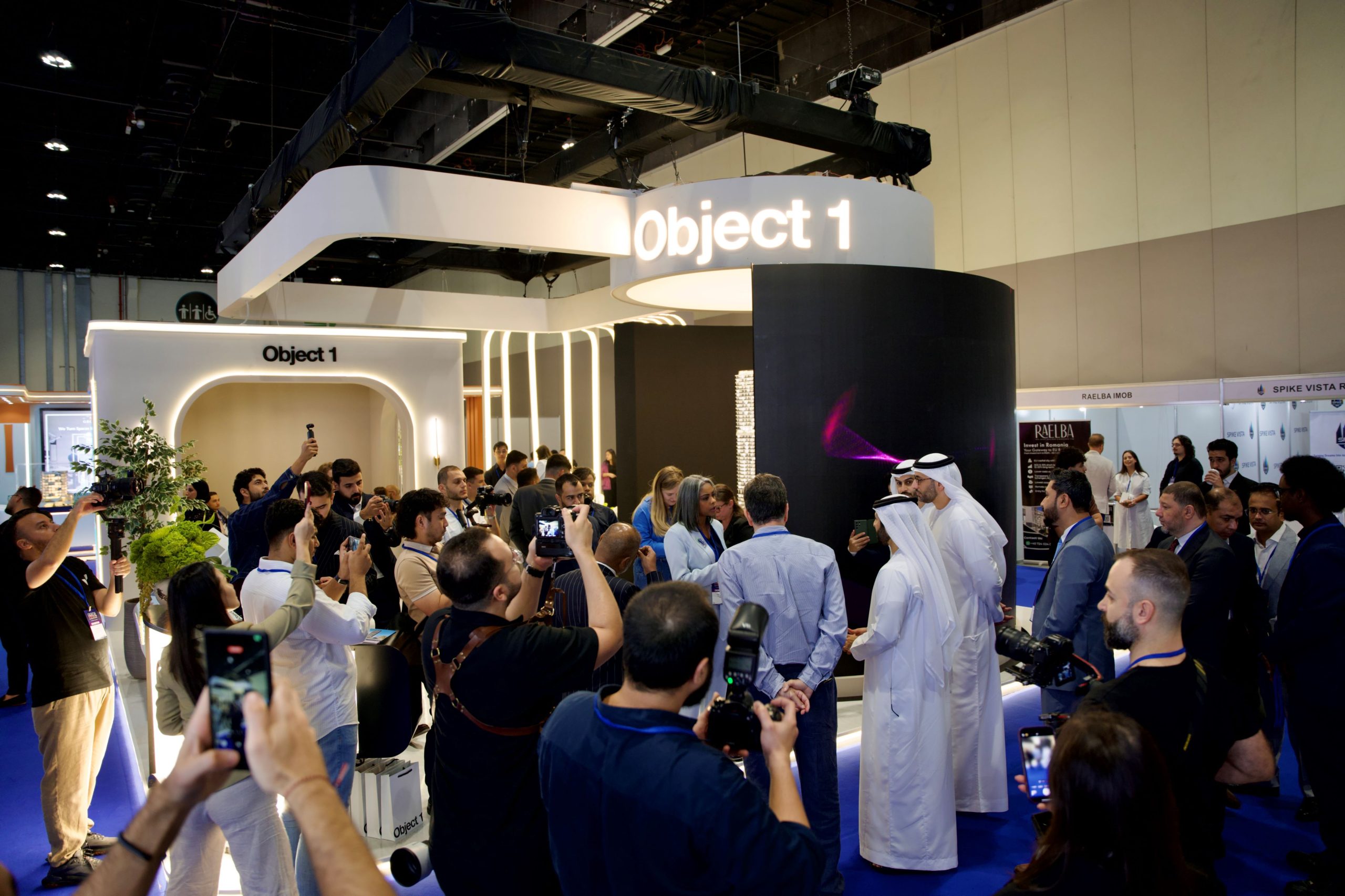
Abu Dhabi-based developer Object 1 is accelerating its expansion into the capital, using the platform of the International Real Estate & Investment Show at ADNEC to roll out its latest developments and strategic vision. Head of Business Development, Ismail Gasanov, will speak on panels addressing investment prospects for foreign nationals, sustainability, and intentional design.

The company is opening its first sales gallery in Abu Dhabi to serve investors, brokers, and homebuyers. Sales figures for Abu Dhabi’s wider real-estate sector demonstrate strong performance: Abu Dhabi Real Estate Centre reported Dh25.3 billion worth of transactions in the first quarter of 2025, a year-over-year increase of 34.5 %, with demand shifting toward lifestyle, waterfront, and premium residences.

Object 1’s growth in Abu Dhabi builds on its rapid ascendance in Dubai. With over 17 active projects, the developer has become a top-ten player in Dubai’s development landscape within just a few years. The company claims sales value jumped 188 % in the first half of 2025 compared to the same period in 2024, while transaction volume rose 157 %. Its development pipeline now exceeds 4.5 million square feet, including ALTA V1EW, its newest tower slated to rank among the tallest in Jumeirah Village Circle.

At IREIS 2025, with more than 35 exhibitors and over 2,000 investors expected, Object 1 joins Gold Sponsors such as Reportage Properties, Danube Properties, and Dugasta Properties. The show features an Investment Conference that will examine foreign investment, property law reforms, new ownership models, and how proptech, smart cities, and sustainability are reshaping the market.

Tatiana Tonu, CEO of Object 1, said that Abu Dhabi’s stable economy, high-quality infrastructure, and affluent communities continue to draw discerning investors seeking both capital growth and lifestyle excellence. The expansion into the capital reflects the firm’s long-term confidence in Abu Dhabi as a hub for design-led, sustainable developments that combine community living and investment value.

Abu Dhabi’s active development pipeline is considerable. A report by BNC Network puts the total value of active projects at about US$758.79 billion, with the urban construction component contributing some US$221.56 billion. Residential supply is increasing, with around 2,400 units already delivered in Abu Dhabi city this year; by year end, about 10,400 units are projected, and 11,000 more scheduled for delivery in 2026.


By D. Raja The coming to power of the BJP with an absolute majority in the 2014 general elections was not merely a routine transfer of power from one democratically elected government to another. It marked a qualitative shift in the very nature of our polity. The BJP is the political arm of the Rashtriya […]


An Israeli airstrike in Doha targeting Hamas leaders and a large drone incursion by Russian forces into Poland have severely challenged the United States’ standing among allies and adversaries alike. These events have intensified debates over Washington’s influence and reliability in preserving international norms and regional security. The Doha attack struck a compound used by senior Hamas political figures, including some negotiating with Qatar over a proposed […]

Infosys Ltd cleared a share buyback plan worth ₹18,000 crore, its biggest to date, offering ₹1,800 per share under a tender‐route offer. The price represents a 19% premium over closing levels on the BSE and NSE.

The company intends to repurchase roughly 10 crore shares, amounting to about 2.41% of its equity. Approval came through a board resolution disclosed in regulatory filings.

Infosys’s share price had been under pressure, falling more than 1% on the day prior. The buyback announcement triggered mixed reactions: U. S.‐listed ADS shares edged up marginally, while shares in Mumbai closed lower, reflecting investor caution.

Company financials show free cash flow at ₹7,533 crore for the quarter ending 30 June, down about 17.7% year-on-year, though still exceeding net profit by a small margin. The firm held cash and investments totalling ₹45,204 crore at that date.

Analysts view the buyback as a signal of confidence in long-term cash flows, but also warn that slowing revenue growth in some verticals could weigh on future performance. The move follows pressure from investors for IT companies to not just return capital but also step up investments in cloud, AI, and product development.

At least 19 people have died and hundreds have been injured amid escalating protests, as Nepal rescinds its recent ban on social media platforms. Thousands of young demonstrators—largely students—took to the streets in Kathmandu and other cities to oppose the ban on 26 online services, including Facebook, Instagram, WhatsApp, X and YouTube, imposed for failing […]

BEIJING, CHINA – Media OutReach Newswire – 11 September 2025 – Against the backdrop of repurposed blast furnaces and industrial relics of Shougang Park in western Beijing, the 2025 China International Fair for Trade in Services (CIFTIS) opened on Wednesday, striking a tone of open markets and digital innovation. People visit a booth of Pop Mart during the 2025 China International Fair for Trade in Services (CIFTIS) […]

China has seen financial flows totalling about US$4.5 trillion, a figure that many analysts believe marks a turning point in how its markets are engaging with the world. The scale of cross-border investment—both inbound and outbound—is now surpassing trade in many respects, reflecting Beijing’s accelerating liberalisation efforts and a growing confidence among foreign and domestic investors.

The financial sum comprises equity, bond, and other capital movements, and corresponds with recent policy moves designed to reduce restrictions and open up China’s capital markets. One key driver is the Stock Connect programme, which allows mainland Chinese investors to purchase eligible Hong Kong–listed stocks and gives international investors access to A-shares. Southbound flows—money moving from mainland China into Hong Kong—have been especially significant, gathering close to US$100 billion within the first half of 2025. That alone matched the total stock in 2024 via that channel.

Yields on Chinese government bonds have hit highs not seen since late 2024, suggesting investors are now demanding greater returns, but also that they perceive risks such as inflation and currency pressures to be easing. The 10- and 30-year yields climbing indicates that institutions expect stabilization in key macro indicators, even if headline economic growth remains uneven. The bond market, however, has also become more volatile, driven by leveraged buying of equities and speculative pressure in certain sectors.

Another contributing factor is the behaviour of domestic institutional investors. With over 160 trillion yuan in household savings, China’s policy makers are encouraging pension funds, insurance companies, and sovereign funds to shift more capital into domestic equities. These kinds of flows reinforce the internal market strength, even as external capital enters or exits depending on global risk appetite.

Hong Kong’s IPO market has benefited greatly. Several major mainland firms—including tech and battery makers—have either listed in Hong Kong or signalled plans to do so. This has helped Hong Kong reclaim its spot among the world’s most active IPO hubs in 2025. The changes to listing rules, including shorter approval times for eligible mainland firms, have been essential in this revival.

General Catalyst has led a Pre-Series A funding round in PRYPCO, marking its first investment in a proptech venture in the Middle East. PRYPCO, a UAE-based property technology startup, has so far facilitated over AED 10 billion in mortgages, helped more than 3,000 people obtain UAE Golden Visas, and attracted upwards of 50,000 users to its platforms. PRYPCO was founded in 2022 by Amira Sajwani, who previously […]

European regulators are finalising a set of remedies with Abu Dhabi-based oil major ADNOC for its €14.7 billion bid to acquire chemical manufacturer Covestro, adjustments that aim to satisfy concerns under the EU’s Foreign Subsidies Regulation.

ADNOC is expected to convert a planned €1.2 billion capital increase into a shareholder loan bearing market terms. The move seeks to counter claims by the European Commission that the proposed capital equity injection could constitute unfair foreign aid under EU rules. In addition, ADNOC will likely address issues around an alleged unlimited state guarantee and commit to keeping Covestro’s intellectual property and technology within Europe.

The EU launched its formal investigation in July to assess whether UAE-based government support might distort competition in the internal market. Scrutiny has focused on whether ADNOC’s offer price, bolstered by state subsidies such as guarantees and capital injections, created an unlevel playing field. A regulatory deadline of 2 December looms for the European Commission’s final decision.

ADNOC has expressed frustration with the breadth of information requests from the Commission, describing them as “disproportionate and invasive.” The company warned that such demands could threaten the viability of its acquisition bid if not managed carefully.

Negotiations involve high level officials: ADNOC CEO Sultan Ahmed Al Jaber spoke with EU antitrust chief Teresa Ribera about the remedy proposals. ADNOC will likely mirror similar steps taken by UAE telecoms group e&, which recently prevailed in an EU review by eliminating an unrestricted state guarantee and following domestic bankruptcy statutes more closely.

Covestro, which produces materials used in insulation, automotive parts and consumer goods, would be one of the biggest acquisitions of an EU firm by a Gulf state if the deal proceeds. The transaction, announced in October, has drawn close attention for being ADNOC’s largest ever and for raising questions about foreign capital’s role in European markets.

Matein Khalid Klarna hits the IPO hit parade in New York on Wednesday and the grapevine suggests that the Swedish fintech IPO is oversubscribed by at least 10X. The investment bankers priced Klarna last night at $40, even above the 35-37 range where Sequoia capital, Silver Lake and lesser grandees on Sand Hill Road, Dai Nippon, Sing and Oz will now pocket a multi-billion dollar paydirt as […]

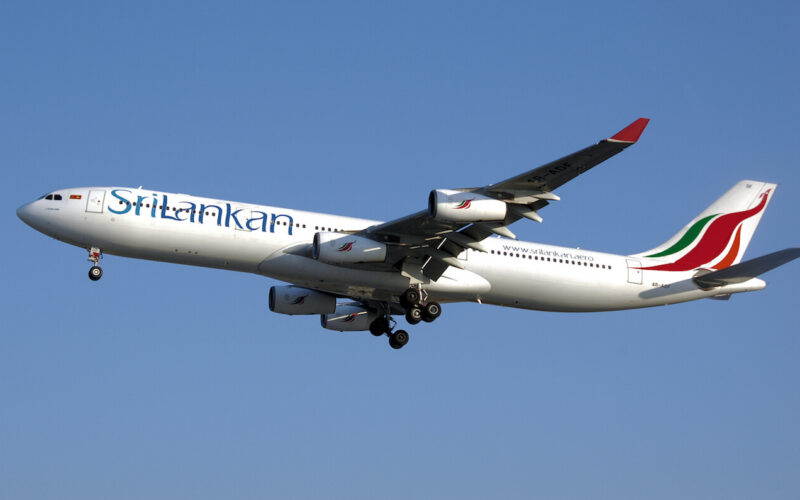
SriLankan Airlines has suspended services to Kathmandu after authorities closed Tribhuvan International Airport amid nationwide unrest, forcing cancellations on the Colombo–Kathmandu route and disrupting onward travel plans.

Airport officials said flight operations at Kathmandu would remain shut until the evening as security forces moved to stabilise the capital, while armoured patrols and curfews kept streets largely empty following two days of violent demonstrations. Airline pauses Kathmandu services amid escalating unrest.

Protests that began over corruption and economic grievances have turned deadly, with soldiers guarding parliament and key government buildings after arson attacks and clashes. Reuters reported at least 19 fatalities over 48 hours and said the turmoil prompted a nationwide shutdown affecting aviation, retail and public services.

Knock-on effects spread across regional air corridors. Multiple Kathmandu-bound flights were diverted to India, including four routed to Lucknow as the closure took effect, while IndiGo extended a temporary halt of services to and from Kathmandu to the early evening. Other carriers announced cancellations through the day as they assessed security and operational risks.

SriLankan confirmed the cancellation of flights UL181 and UL182 on Wednesday and advised ticketed passengers to contact their booking channels. Local news outlets in Colombo said the airline’s suspension would remain until further notice, aligning with guidance to monitor official updates as authorities reviewed conditions at the airport.

Regional governments urged caution for travellers. India advised its citizens to defer trips to Nepal and for those already in the country to remain indoors, as curfews and transport disruptions left tourists and business travellers stranded across Kathmandu Valley and beyond.

Live updates from Kathmandu indicated authorities were weighing phased resumptions of essential services alongside crowd-control measures. Airports and transport links were prioritised for restoration once security agencies deemed conditions manageable, with the army coordinating road clearance and fire response in affected districts.

Airlines across South Asia adjusted schedules through the afternoon, with Indian and regional carriers cancelling or retiming Kathmandu rotations while offering waivers. Public statements from operators noted the situation remained fluid and that customer notifications would follow as airspace and airport status changed.

SriLankan’s decision underscores how quickly a single-airport closure can ripple through a network heavily reliant on narrow time buffers and daylight slots into high-altitude hubs. For passengers booked to or through Kathmandu, carriers advised monitoring flight status pages and staying in contact with travel agents as curfew orders and airport operating hours evolve.

Galaxy Macau’s dynamic lifestyle hotel Andaz Macau marks its 2nd anniversary by reviving the celebrated “Sino-Luso Gastronomic Bazaar” on September 13 – an epicurean fête blending Portuguese flair and Cantonese verve, curated with local Macanese savoire-faire. MACAU SAR – Media OutReach Newswire – 10 September 2025 – Macau – In a city famed for its seamless fusion of East and West, where Chinese and Portuguese cultures have […]

Bitcoin reclaimed the $112,000 level as markets remain focused on the week ahead, with investors balancing caution against emerging momentum across select digital assets. Solana and Dogecoin have seen notable uplift as traders reallocate positions amid mounting anticipation of U. S. macroeconomic releases and Federal Reserve developments.

Bitcoin traded in a tight range near $111,500 to $112,300 as market participants paused, waiting for fresh cues from upcoming Consumer Price Index, Producer Price Index and central bank announcements. This positioning reflects prudence amid heavier macroeconomic noise.

Solana climbed to around $218 to $220, marking a multi-month high as renewed interest drew capital from more established tokens. Meanwhile, Dogecoin extended a weekly gain to approximately $0.24, buoyed by optimism surrounding the imminent debut of the first U. S. memecoin exchange-traded fund.

SignalPlus head of insights Augustine Fan noted that crypto markets have been relatively flat recently, with Bitcoin underperforming both its major peers and traditional assets such as equities and spot gold. That underperformance accompanied weaker inflows into digital asset trusts and reduced activity on centralised exchanges.

Economists have also dialled back inflation and recession worries following revisions to U. S. labour data, prompting some rebound in market sentiment. Bitcoin, alongside European equities, saw support as experts downplayed fears of stagflation.

Prediction markets suggest that a rate cut from the Federal Reserve is increasingly likely, with sentiment split between a further cut or a hold in October. Gold reached record levels in anticipation of looser monetary policy, even as U. S. equity indices pushed higher.

Positioning remains defensive, but the rotation into altcoins signals willingness among traders to explore higher-beta opportunities. Reflecting this, the phrase Traders Push Bitcoin Above $112K captures the shifting dynamic in crypto allocations—but notably, attention remains fixed on upcoming U. S. data releases shaping the next phase of the market.

Liquidity has stayed modest. Reference points in the $110K–$112K zone appear increasingly important as support amid a backdrop of uncertainty.

du is offering up to 342 million shares—equating to 7.55 per cent of its share capital and roughly three-quarters of Mamoura’s holding—to the public under a secondary offering that boosts liquidity and investor access. The shares are priced between AED 9.00 and AED 9.90, with the final offer price announced via a book-building process set for 15 September. This sale, orchestrated entirely by Mamoura Diversified Global Holding, […]

Greenlogue/AP Construction on the expansive NEOM green hydrogen development has passed the eighty-percent mark at the outset of the first quarter of 2025, the NEOM Green Hydrogen Company has confirmed. This achievement spans the green hydrogen plant itself, the wind garden, the solar farm and the transmission network. Equipment delivery and installation are progressing apace, with wind turbines, hydrogen storage vessels, electrolysers, a cold box and pipe […]

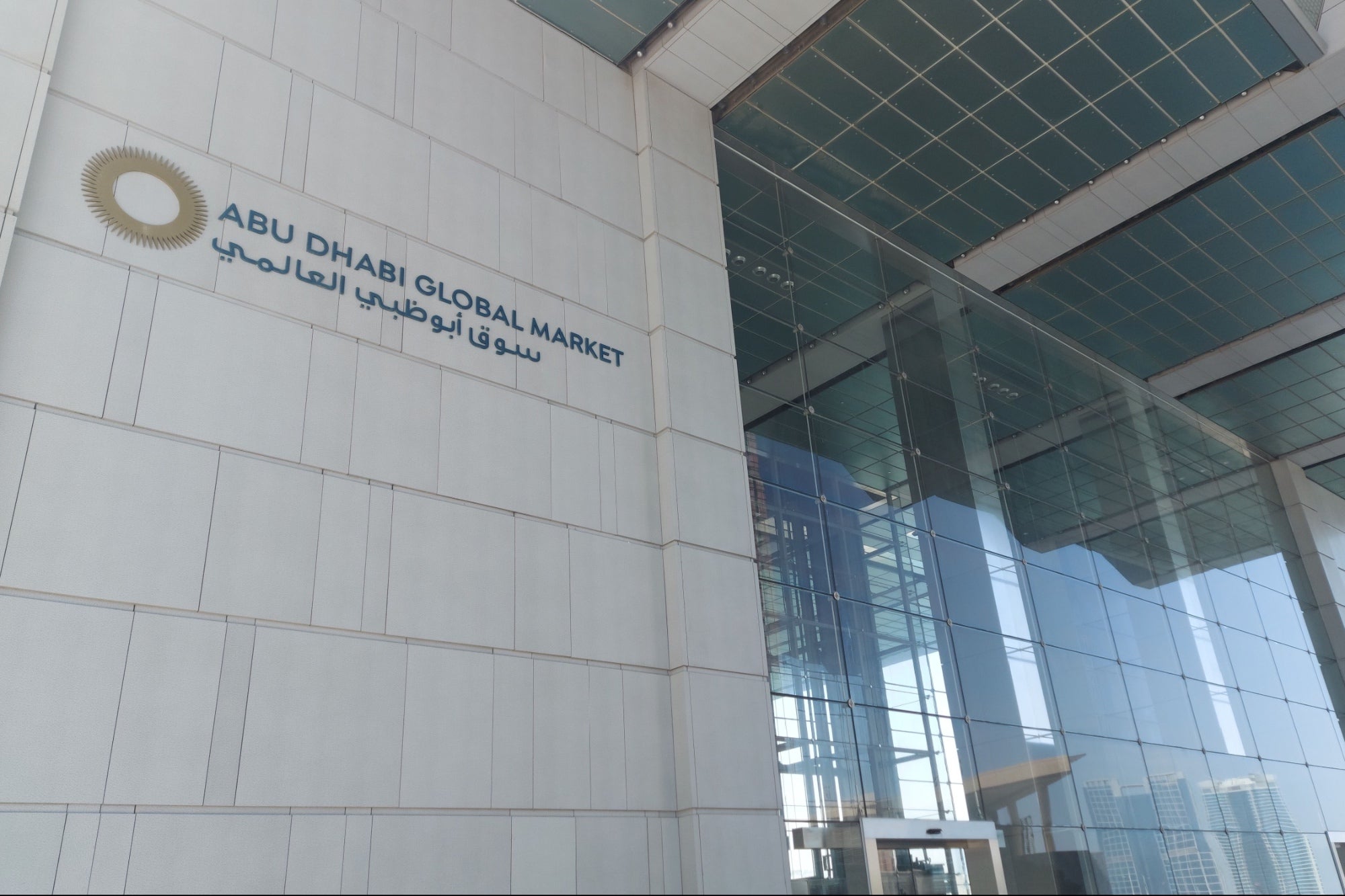
Abu Dhabi Global Market recorded more than 11,000 active licences and a striking 42 per cent rise in assets under management in the first half of 2025, underpinning its emergence as the Middle East and North Africa region’s leading international financial centre. ADGM Exceeds 11,000 Licences, AUM Surges 42 %.

The expansion sees ADGM surpass AED 500 billion in market capitalisation of its listed entities on the Abu Dhabi Securities Exchange, reflecting its pivotal role in strengthening the emirate’s non-oil economy, which grew to 9.1 per cent in the first quarter of 2025.

More than 2,970 firms—comprising 308 financial and 2,664 non-financial entities—are now operating from ADGM, marking a 42 per cent year-on-year increase. The centre issued 1,869 new licences during the period, the highest ever in a half-year span, up by 47 per cent from the previous year.

Asset management continued to thrive: ADGM is now home to 154 fund and asset managers overseeing 209 funds, driving AUM up by 42 per cent over the year to June 2025.

Powerful global partnerships fuelled the centre’s momentum. Fortress Investment Group set up an office in ADGM and joined a US$1 billion co-investment venture with Mubadala. Kimmeridge opened its ADGM branch and inked an MoU with Mubadala Energy to develop natural gas and LNG projects. Meanwhile, IHC, BlackRock and ADGM-based Lunate launched an AI-native reinsurance platform worth over US$1 billion. A private credit joint venture between Mubadala and Alpha Dhabi scaled to US$2.5 billion—all anchored at ADGM.

ADGM’s increasing workforce reflects its expanding influence: by end-June 2025, nearly 36,000 professionals were working across Al Maryah and Al Reem Islands.

ADGM’s achievements are underpinned by enhanced regulatory frameworks. The Financial Services Regulatory Authority issued 52 In-Principle Approvals and 45 new Financial Services Permissions. The Registration Authority implemented improvements such as the AccessRP digital platform for property interest verification, Commercial Permit Regulations to support non-financial businesses, and revised fees to simplify market entry. Mutual recognition of digital platforms with Astana International Financial Centre and a 223 per cent increase in supervision assessments further underscore ADGM’s commitment to governance and global alignment.

International engagement has also grown: ADGM participated in CityWeek 2025 in London, held roadshows in China and Japan, and concluded MoUs with regulators in Azerbaijan, Bhutan, Hong Kong and Sweden. These moves have promoted cross-border regulatory collaboration, innovation in capital markets, and sustainable finance initiatives.

Greenlogue/AP Sobha Realty has achieved a milestone with its largest-ever issuance of a $750 million green sukuk, marking the highest such issuance by any real estate developer globally. The five-year Islamic bond, issued under a $1.5 billion Trust Certificate Issuance Programme, attracted orders worth approximately $2.1 billion—nearly 2.8 times the issue size—allowing pricing to tighten by 50 basis points from initial guidance. The sukuk carries a profit […]

VISHNU RAJA
RYO YAMADA
HITORI GOTOH
IKUYO KITA