News related to
Capital

Cisco will unveil its latest innovations at GITEX GLOBAL 2025 in Dubai, aiming to equip enterprises across the Middle East and broader region with infrastructure built specifically for the AI era. The showcase focuses on AI-ready data centres, resilient network architectures, and strengthened security frameworks designed to support advanced workloads in data-intensive environments.

By joining the AI Infrastructure Partnership alongside BlackRock, Microsoft, NVIDIA, xAI and others, Cisco has committed to accelerating capital flows into datacentre and infrastructure projects. The partnership expects to unlock $30 billion in initial funding, scaling up to $100 billion including debt financing. Cisco brings its network, security and systems expertise to support the platform’s mission of secure, at-scale AI infrastructure.

At the heart of Cisco’s push is its new Cisco Data Fabric, launched in integration with Splunk, which provides federated data access across systems such as Amazon S3, Iceberg, Delta Lake and Snowflake, routing workloads intelligently to the best analytics or storage engine. This architecture is intended to reduce data movement, shorten analysis latency, and enable enterprises to transform machine data into AI-ready intelligence.

To support retrieval-augmented generation and agentic AI deployments, Cisco introduced the Secure AI Factory solution with NVIDIA and VAST Data. This validated architecture accelerates data extraction and retrieval at scale while enforcing security guardrails for every token processed. AI PODs built under this architecture offer pre-validated, high-performance building blocks for enterprise AI.

Networking and security are being redefined for the AI workload environment. At Cisco Live 2025, the company launched a next-generation network architecture for campus, branch and industrial environments, delivering unified management and devices purpose-built to support AI traffic patterns. It also introduced Hybrid Mesh Firewall and Universal Zero Trust Network Access to embed security into network fabric across hybrid and distributed environments. These features aim to simplify policy enforcement, improve visibility, and reduce complexity in securing both human users and AI agents.

Cisco CEO Chuck Robbins disclosed that fiscal year 2025 saw record AI infrastructure orders. In its final quarter, the company secured over $800 million from webscale clients, bringing total AI-focused orders to more than $2 billion—more than double its initial target. He described the pipeline as steadily growing into “hundreds of millions” as enterprises demand scalable, secure solutions.

In the Middle East, Cisco plans to demonstrate the regional relevance of its technologies under the theme “Make AI Work for You.” According to Cisco’s new AI Readiness Index, a vast majority of organisations in the UAE expect to expand their data centre capacity for AI within five years. The company will also present its work with Splunk on security and observability platforms at the event.

Cisco’s collaboration with Saudi Arabia’s HUMAIN is intended to build out an open, scalable AI infrastructure ecosystem aligned with Vision 2030. The multi-year programme includes deployment of cloud-based AI infrastructure, joint research initiatives, and efforts to grow local talent and innovation. The partnership underscores Saudi ambitions to position itself as a global AI hub.

Cisco sees accelerating demand for network modernisation. Its internal research reports that 97 percent of IT leaders view modernised networks as critical to deploying AI, cloud and IoT workloads, and 98 percent rate secure networking as essential for growth. However, the same study notes that only 40 percent of organisations have begun deploying advanced segmentation or intelligent control, illustrating an execution gap.

To strengthen its AI strategy, Cisco also expanded its presence in Indonesia by signing a Letter of Intent with BRIN to develop AI and cybersecurity capabilities via its Country Digital Acceleration programme. The plan includes building an AI Centre of Excellence and delivering training in AI, security and networking to 500,000 Indonesians by 2030.

Splunk’s observability portfolio itself is being reworked to embrace agentic AI, deploying AI agents to automate tasks such as root cause detection, alert correlation and issue resolution. This is intended to lighten the operational burden on IT and engineering teams while driving real-time insight.

A consortium led by Saudi Arabia’s Public Investment Fund, with Silver Lake and Jared Kushner’s Affinity Partners, has struck a deal to acquire Electronic Arts for approximately $55 billion, taking the iconic game publisher private. Under the agreement, EA’s shareholders will receive $210 per share, a 25 percent premium over the share price before the deal emerged, as the consortium combines fresh equity with a leveraged debt […]

Port Louis: MCB Capital Markets has advised CIEL Limited in issuing a MUR 1.45 billion sustainability-linked bond, marking a milestone in African sustainable finance as the first time a diversified investment holding company has tapped this structure on the continent. The issuance was oversubscribed by 1.5 times and is credited with bringing foreign investors into the Mauritian local currency debt market for the first time through the […]

Primark will launch three flagship stores in Dubai in early 2026, marking its first retail foray in the UAE under a franchise partnership with Alshaya Group. The outlets are slated for Dubai Mall, Mall of the Emirates and City Centre Mirdif. Under the alliance, the company is also targeting the GCC market more broadly, beginning with a store in Kuwait later this year at The Avenues. The […]

Goldman Sachs Bank Europe Se-ODI has sold 8.1 crore shares in Eternal Limited, parent company of Zomato, in a block transaction worth about ₹266.1 crore, marking its fourth offloading in a month.

The shares were priced at ₹328.45 each, roughly 2 per cent below the stock’s prior closing. The buyer was BofA Securities Europe SA, which absorbed the entire block.

Earlier in October, Goldman Sachs sold 8.2 crore shares to Morgan Stanley for ~₹266.9 crore, and executed a ₹355.3-crore deal—offloading 1.08 crore shares at ₹329 apiece—to BofA. Prior to that, it disposed of 9.52 lakh shares in September for ₹31.6 crore. From these four block transactions, the firm has realised over ₹900 crore.

The continuous divestment follows a rally in Eternal’s share price. Over the past three months, the stock surged by approximately 26 per cent, reaching a high of ₹343.95 in late September, and has clocked an 18 per cent gain year to date.

Despite the strong top-line momentum, Eternal’s profitability has come under significant strain. In the first quarter of fiscal year 2025–26, consolidated net profit plunged over 90 per cent to ₹25 crore, while operating revenue rose 70 per cent to ₹7,167 crore.

Goldman Sachs’ repeated stake reductions evoke questions over motive, especially as its own brokerage arm continues to maintain a bullish stance. In September, it reaffirmed a “Buy” rating on Eternal and raised the price target to ₹360 from ₹340, citing the growth potential of its quick-commerce vertical Blinkit.

The buyer, BofA Securities, could be positioning itself on expectations of long-term value, absorbing these large blocks. The handling of these blocks at slight discounts suggests a balance between exit urgency and price discipline.

Analysts are watching closely for further block deals from Goldman Sachs, and whether these are timed to capitalise on current valuations or signal a recalibration of confidence. The broader investor community may interpret the continuous divestment, despite favourable stock momentum, as a nuanced signal regarding risk, liquidity or internal reshuffling.

The Labour Fund, Tamkeen, has confirmed it will organise the Kingdom of Bahrain’s pavilion at GITEX Global 2025 in Dubai, featuring 14 Bahraini technology start-ups and small and medium enterprises alongside the Economic Development Board and ARRAY Innovations.

The event, scheduled from 13 to 17 October 2025, promises to provide the participating firms with access to global investors, partners and industry networks. The pavilion’s aim is explicit: to boost the international visibility of Bahrain’s ICT ecosystem and facilitate business growth.

Tamkeen’s announcement places it firmly in a leadership role for the pavilion’s curation and operations. The decision aligns with its 2025 strategic priorities, which emphasise supporting enterprise growth, promoting digitalisation, strengthening private-sector competitiveness and fostering sustainability.

Officials from Tamkeen and the Economic Development Board have highlighted that the selection of the 14 entities spans multiple subsectors within ICT, including software, data analytics, cybersecurity, and emerging technologies. They say the mix is intended to reflect both Bahrain’s current strengths and its ambitions for diversification.

In past editions of GITEX, Bahrain’s pavilion drew attention from regional and international delegations. During GITEX Global 2024, the pavilion was credited with facilitating multiple memoranda and partnership discussions. Tamkeen’s continued involvement signals its belief that sustained pavilion presence is critical to maintaining momentum in Bahrain’s tech diplomacy.

Some observers note that Bahrain’s tech infrastructure and regulatory environment are increasingly seen as competitive in the Gulf region. Over the past few years, the kingdom has liberalised foreign ownership rules in certain sectors and introduced incentives for startups and innovation funds. This pavilion engagement is viewed by analysts as part of a broader soft-power strategy to position Bahrain as a hub for digital investment.

However, challenges remain. For many Bahraini startups, scaling beyond domestic markets continues to be difficult. Access to international capital, navigating cross-jurisdictional regulation, and building brand recognition are persistent hurdles. Critics caution that pavilion exposure does not always translate into long-term market entry, and that stronger post-exhibition support is needed to ensure sustained growth.

Tamkeen has stated that it plans to accompany pavilion exposure with mentorship, investor matchmaking and export facilitation services for participating firms. The hope is that a combination of showcase visibility and structural support will help convert leads into lasting collaborations.

Already, the pavilion has generated interest among regional stakeholders. Several Gulf regional delegations and venture capital firms have expressed intent to engage with Bahrain’s teams during the event. The EDB is reportedly coordinating bilateral sessions between Bahrain’s entrants and visiting foreign trade missions.

For the 2025 edition, organisers have introduced a more structured schedule for pitch sessions, one-on-one meetings and thematic forums. This signals learning from past editions, where informal networking sometimes overshadowed targeted client engagement. Tamkeen officials have emphasised tighter alignment of startup offerings with investor interest sectors like fintech, AI and cloud services.

Within Bahrain’s domestic ecosystem, private sector associations and incubators have welcomed the announcement. Some have pushed for better curation, arguing that selecting firms with proven traction or clear roadmaps increases the chance that pavilion participation yields concrete contracts or investment.

Organisers have confirmed that Future Blockchain Summit x Fintech Surge will take place at Dubai Harbour from 12 to 15 October 2025, positioning the event as a central nexus for blockchain, digital assets, and fintech innovation across the MENA region. The four-day gathering, held alongside Expand North Star and powered by GITEX GLOBAL, aims to attract regulators, investors, entrepreneurs and technologists to shape emerging frameworks for finance.

Attendance is expected to exceed 70,000, with over 1,200 investors and more than 225 speakers scheduled to participate, alongside 150 exhibitors showcasing new products and solutions. A feature highlight is the Digital Assets Forum, which brings regulators, banks, and innovators together for intensive discussions on topics such as CBDCs, stablecoins, tokenised capital markets, cross-border regulation and the role of AI in compliance.

Speakers confirmed include Jimmy Su, Lily Liu, Eric Piscini, Oliver Stauber, Helen Liu and Kevin Lee. The event also features the Supernova Challenge, a startup pitch competition offering equity-free prizes totalling US$214,000 to finalists presenting to global judges and investors. Corporations such as Ruya, OKX and DKK Partners anchor the sponsorship tiers, while YPAY backs the Digital Assets Forum.

Dubai has been steadily reinforcing its position in the digital asset ecosystem. Earlier this year, the DAMAC Group signed a $1 billion contract with blockchain platform MANTRA to tokenise its real-world assets, a move aligned with the UAE’s aspirations to become a global digital assets hub. The country has been actively implementing regulatory frameworks, particularly in free zones like ADGM and DMCC, to attract blockchain firms and promote tokenisation of assets.

Investment momentum in the broader crypto and fintech sphere in the UAE has been robust. In the first quarter of 2025, global venture capital funding into cryptotech startups reached $5.4 billion, its highest quarterly total since 2022. Dubai has hosted major conferences such as TOKEN2049, drawing tens of thousands of participants and signalling regional leadership, though industry sentiment currently balances optimism with caution amid regulatory uncertainty and macro-economic pressures.

Technology trends driving this year’s agenda include the convergence of AI and blockchain, regulatory clarity for digital assets, tokenised infrastructure, and embedded finance. A newly published academic framework proposes integrating blockchain with Zero Trust security models to improve protection against insider threats in fintech ecosystems — a demonstration of how research is intersecting with commercial deployment.

Organisers emphasise that the event’s format is more than a conference: it is designed to enable deal-making, pilot launches and real partnerships. One-to-one investor matchmaking, live product demonstrations, and structured labs are scheduled to convert ideas into actionable projects. Startups exhibiting at Expand North Star receive automatic inclusion in the Supernova Challenge, deepening integration between the startup and blockchain-fintech community.

Regulators from the MENA region and beyond are expected to engage at the forum. Discussions will centre on harmonising cross-border rules, interoperability of digital asset legislation, and pathways for institutional adoption of tokenised assets. Several central banks may share updates on central bank digital currency explorations.

Advertisements

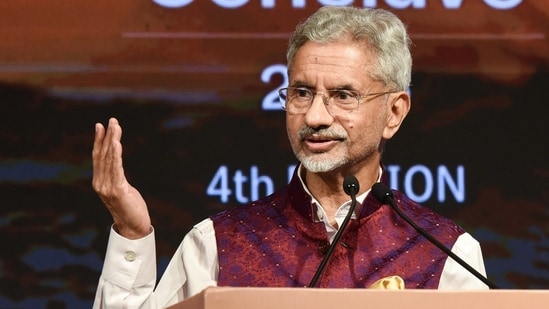
By Nitya Chakraborty Indian foreign policy makers have at last showing some mature understanding of the geopolitics of the post-Trump.2 months if the external affairs minister Dr. S Jaishankar’s observations at the concluding session of Kautilya Economic Conclave in New Delhi on Sunday, are any indication. The minister was quite candid in explaining the complexity […]

The article EAM Jaishankar Is Right: Trump Has To Respect India’s Red Lines appeared first on Latest India news, analysis and reports on Newspack by India Press Agency).

DP World has signed a memorandum of understanding with PayPal to roll out a digital payments solution meant to accelerate cross-border trade, bringing settlement times down from days to minutes. The agreement is part of DP World’s broader Digital Payments programme, targeting merchants, shippers, exporters, importers and marketplaces with a more transparent, lower-cost infrastructure. Under the deal, DP World will not itself act as a regulated payments […]

A major cross-border deal is underway as Abu Dhabi’s International Holding Company will invest about ₹8,850 crore to acquire a 43.5 per cent stake in Sammaan Capital, formerly Indiabulls Housing, making IHC the company’s key promoter and granting it control over board appointments. Sammaan Capital, a publicly listed non-bank financial company specialising in mortgage lending, will issue 330 million equity shares and 306.7 million convertible warrants to […]

OpenAI chief executive Sam Altman is leading a high-stakes campaign across East Asia and the Middle East to secure investment and bolster chip supply for the company’s AI infrastructure push. He has held talks since late September in Taiwan, South Korea and Japan with leading hardware suppliers to prioritise OpenAI’s orders and expand capacity.

Altman has met with Taiwan Semiconductor Manufacturing Company and Foxconn, as well as Samsung and SK Hynix, pressing them to accelerate production and give OpenAI preferential access. In South Korea, Samsung and SK Hynix have signed letters of intent to supply memory chips for OpenAI’s data centres. Meanwhile, OpenAI plans further fundraising discussions in the United Arab Emirates.

The urgency of Altman’s mission reflects the intensifying global competition for advanced computing resources. OpenAI projects it will spend around US$16 billion this year on renting computing servers, with long-term forecasts stretching to US$400 billion by 2029 as AI models grow ever more complex.

Industry analysts note that the semiconductor supply chain remains highly constrained. TSMC dominates GPU chip production, and memory manufacturing is largely concentrated in East Asia, creating significant strategic leverage for the manufacturers approached by Altman.

As part of his tour, Altman is also pressing Japanese firms to contribute to infrastructure support. Hitachi has entered discussions to provide power transmission and distribution systems for OpenAI’s data centres, while sharing technical resources under joint development agreements.

Sources familiar with the process say Altman pushed for direct prioritisation in chip delivery schedules, asking that OpenAI receive top-tier production slots. In some cases, he proposed co-investment or co-development of next-generation AI hardware to bind partner incentives more closely.

In South Korea, early architecture proposals include planned data centres of 20 megawatts in collaboration with Samsung and SK Hynix. Altman is reportedly exploring “floating” data centre designs to manage land constraints and cooling demands.

The UAE leg of his mission is expected to involve negotiations with sovereign investment firms such as MGX and Mubadala, with the aim of funding both OpenAI’s expansion and joint infrastructure ventures in the region. In past rounds, UAE investors have already taken part in funding OpenAI operations.

Challenges remain significant. The sheer scale of chips and memory required for stacked AI model training is pushing the boundaries of global wafer fabrication capacity. Market watchers point to the high capital expenditure and long lead times in the semiconductor industry as obstacles to rapid scaling. Some of Altman’s proposals—for example, co-development of bespoke ASICs—are still in preliminary stages and face technical risk.

OpenAI’s valuation and investor backing give the company leverage. Earlier this year, it closed deals that valued it at about US$500 billion, with new capital injections from investors including SoftBank and UAE entities. Those moves have fortified its position in negotiating upstream deals with manufacturers.

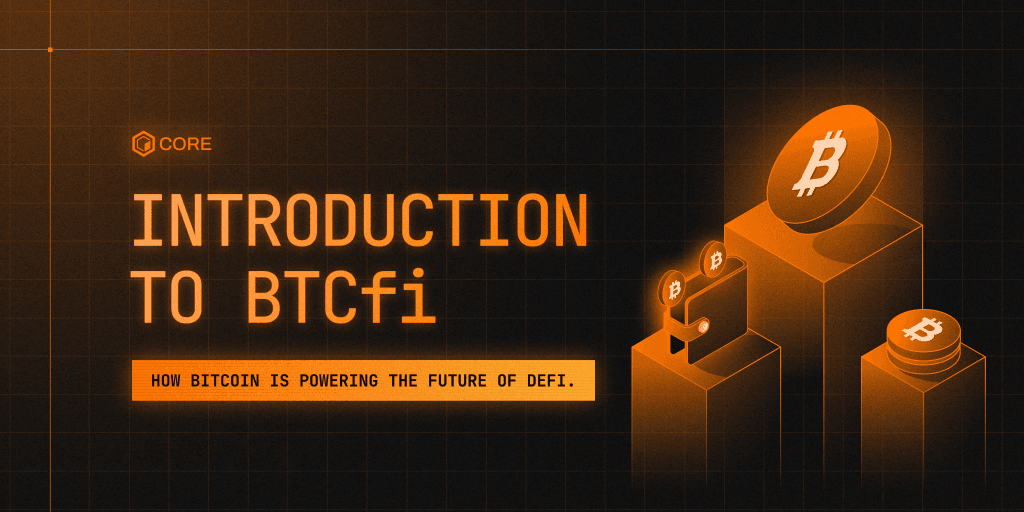
A GoMining-commissioned survey of over 700 Bitcoin holders across North America and Europe reveals that 77 percent of respondents have never engaged with any BTCFi platform. Only around 8 percent say they actively use BTCFi services for lending, staking or yield generation.

The data exposes a striking contradiction: while the BTCFi sector is receiving strong investment and attention, its reach among actual Bitcoin holders remains minimal. Over 65 percent of those surveyed could not name a single BTCFi protocol, pointing to a significant awareness gap in the industry. Roughly 40 percent of respondents say they would allocate less than 20 percent of their Bitcoin to DeFi products—underscoring cautious attitudes steeped in mistrust or lack of comprehension.

GoMining CEO Mark Zalan argues the survey reflects a mismatch in product design: “There’s an enormous appetite for these opportunities, but the industry has built products for crypto natives, not for everyday Bitcoin holders.” He cautions that BTCFi platforms must prioritise simplicity, trust and education over technical sophistication if they are to attract a broader base.

Despite limited adoption, interest in BTCFi is not absent. Some 73 percent of respondents express a desire to earn yield on their Bitcoin through lending or staking, while 42 percent would like access to liquidity without selling. Yet for now those desires largely remain theoretical.

The survey publication coincides with a sharp rise in BTCFi venture capital activity. Data from industry trackers show that in the first half of 2025, funding to Bitcoin-related infrastructure, custody, and DeFi projects reached US$175 million, spread across 32 funding rounds—20 of which targeted consumer-facing applications. Total value locked in BTCFi has also climbed, hitting US$6.6 billion by mid-2025, up from modest levels just a year earlier.

Industry analysts see this as a pivotal moment. BTCFi is theoretically well-positioned: Bitcoin holders collectively control over US$1 trillion in assets, and unlocking even a small portion into yield markets would shift capital flows substantially. But bridging the adoption chasm requires more than protocol robustness—it demands user trust, transparent security models, and intuitive onboarding.

Several projects are experimenting with custodial BTCFi models that reduce user friction, essentially merging decentralised finance with familiar wallet experiences. These hybrids aim to lower the barrier to entry for mainstream holders who are wary of self-custody risks. Others are focusing on streamlined education and marketing campaigns to bring awareness of BTCFi’s value proposition to non-tech audiences, rather than relying exclusively on high-end technical features.

Skeptics argue the reliance on Ethereum’s DeFi archetype may be a poor fit for Bitcoin’s more conservative base. BTCFi protocols often demand bridging, wrapping or interacting with smart contracts—actions that alienate users comfortable with simpler vehicles like ETFs and custodial wallets. A portion of Bitcoin holders remain risk-averse by nature, preferring regulated, custodial holdings and avoiding experimental protocols.

Some in the industry suggest a phased approach: target early adopters first, establish trust metrics, then gradually roll out to mainstream holders. Others urge a revisit to design philosophy itself: ensuring BTCFi can deliver yield, liquidity and composability while behaving in a way Bitcoin users find intuitive and safe.

The Ai Everything Global Supernova Challenge concluded in Dubai with Pulsar. ml crowned champion among 30 startups from 15 nations vying for a USD 60,000 prize pool. The event drew over 150 global investors representing some USD 50 billion in assets under management, who watched founders pitch AI solutions across sectors including robotics, fintech, e-commerce and healthcare. Pulsar. ml, based in Canada and led by founder Mohamed […]

Strong demand and constrained inventory have pushed Dubai’s residential rents upward for several years. However, multiple indicators now suggest that 2026 will bring slower growth—perhaps even declines—in many segments of the market.

Headline figures already point to a deceleration. Yearly rental growth across residential properties in Dubai fell to about 8.5 percent by May 2025, down from 14.3 percent at the start of the year and 21.1 percent a year earlier. The long-term rental sector is under pressure as new supply enters the market: in the second quarter of 2025, long-term rental contracts fell 6.3 percent year on year, new contracts dropped nearly 8.9 percent, and overall rents declined 12.9 percent in quarterly comparison.

Analysts attribute the cooling largely to a surge in forthcoming housing supply. Some 150,000 new homes are expected to be completed between 2025 and 2027, representing a stock increase of nearly 20 percent in many parts of the market. Fitch Ratings projects residential property values could pull back by as much as 15 percent during late 2025 and into 2026, citing that the volume of handovers will likely outpace demand.

In the mid- and affordable segments, the impact may be most visible. Experts expect that communities with heavy handovers—such as Jumeirah Village Circle, Al Furjan, Dubai South, and surrounding areas—will experience downward pressure on asking rents. Nevertheless, prime areas like Downtown Dubai and Palm Jumeirah are forecast to continue seeing double-digit rent growth, buoyed by scarcity and sustained demand for luxury housing.

A tale of two markets is emerging. In central, premium sectors, landlords maintain leverage, while suburban and emergence zones will offer more negotiation room for tenants. Springfield Properties’ chief executive, Farooq Syed, observes that the large transaction volume and development pipeline into 2026 will provide tenants greater choice—especially in the apartment segment. Cushman & Wakefield Core’s head of research, Prathyusha Gurrapu, describes the trend as “clear signs of stabilisation,” especially outside the top-tier districts.

Beyond supply and demand dynamics, shifts are occurring in tenant preferences. Short-term and flexible lease arrangements continue to gain popularity, particularly among transient professionals and investors seeking yield. In Q2 2025, short-let occupancy remained strong—AirDXB, a key player in Dubai’s short-term rental market, achieved 90 percent occupancy compared to citywide averages around 63 percent. Technology trends are also creeping into real estate: blockchain-based platforms are being tested to automate rent payments and maintenance workflows.

On the investor side, yields remain attractive. Knight Frank reports residential yields are holding in the 5–7 percent range for apartments and 4.5–6 percent for villas and townhouses. But concerns are rising about overleveraged speculative investment, especially in lower-end segments. The Financial Times recently noted that many flippers—investors hoping to resell properties quickly for a profit—are already struggling to offload unfinished units as competition mounts.

Regulatory efforts may also temper volatility. Dubai’s Real Estate Regulatory Agency continues to push for transparency and consistent valuation practices, while the broader Dubai Land Department is moving toward digital registration and enhanced oversight. For tenants, the requirement to declare all occupants in Ejari contracts—an enforcement step introduced in 2025—tightens accountability in co-living arrangements.

Macro-economic fundamentals still support the market, albeit with caution. The emirate’s population passed 3.8 million in 2025, reflecting steady migration and growth—fuelling housing demand. Moreover, Dubai continues to attract global capital, drawn by tax benefits, infrastructure, economic diversification, and a relatively stable environment across the Gulf region.

Pressures are evident however. UBS’s 2025 index flagged Dubai at “bubble risk,” warning that rapid appreciation may not be sustainable without moderation. If large-scale oversupply hits the market at once, correction cycles may deepen in specific micro-markets.

Botswana has become the target for a bold new data infrastructure initiative after U. S. operator ChillMine and Netherlands-based AAAS Energy inked a memorandum of understanding to develop a solar-plus-storage data centre campus near Palapye. The proposed facility, intended to support AI workloads, hyperscale operations and energy-intensive computing, will be integrated into the Leupane Energy Hub and Industrial Park. The energy backbone of the hub is planned […]

South African equities climbed to unprecedented levels on Thursday, driven by buoyant momentum in mining and financial sectors. The benchmark FTSE/JSE All-Share Index rose past its prior peak, cementing the capital market’s status as one of the continent’s top performers this year. The rally has been underpinned by a strong commodity backdrop: iron ore, platinum, and gold all posted gains, boosting mining stocks across the board. The […]

Google Quantum AI has confirmed that the Atlantic Quantum team is joining its organisation—a move widely interpreted as an acquisition—bringing with it a modular superconducting hardware design aimed at accelerating progress toward error-corrected quantum computers. Atlantic Quantum, an MIT-origin spin-out focused on integrating qubits with cryogenic control electronics, will have its chip stack and engineering talent absorbed into Google’s quantum division. Google says this integration will streamline […]

Hub71, Abu Dhabi’s global technology ecosystem, has inked its first partnership in the US with the New Jersey Economic Development Authority, opening pathways for startups to scale across continents. The memorandum of understanding was signed at the Abu Dhabi Investment Forum in New York, signalling the start of reciprocal support between the two innovation hubs. The agreement enables joint programming, market visits and curated introductions to investors, […]

Global investment firm KKR has acquired a minority stake in ADNOC Gas Pipeline Assets LLC, reinforcing its commitment to Middle East energy infrastructure. ADNOC retains full operational control and ownership of the pipelines. KKR’s move builds on longstanding ties with Abu Dhabi’s national energy group. In 2019, KKR and BlackRock acquired a portion of ADNOC’s oil pipeline business in a landmark deal; that investment was later sold […]

Saudi Arabia confronts mounting fiscal headwinds as oil revenues falter and large-scale investments under its Vision 2030 agenda intensify strain on the state’s budget, a fresh analysis by Fitch Ratings warns. Fiscal consolidation efforts are threatened by rising expenditures, volatile energy markets and valuation setbacks to flagship development projects.

Fitch anticipates the kingdom will record a fiscal deficit equivalent to 5.3 percent of GDP in 2025—more than double earlier forecasts of 2.3 percent—and projects a narrowing to 3.3 percent in 2026. That trajectory, the ratings agency argues, rests on fragile assumptions about revenue rebound and disciplined spending cuts. The downgrade in oil income, combined with persistent capital outlays, introduces high risk to Saudi’s consolidation plans.

The Public Investment Fund, corner-stone of Vision 2030, channels vast investment into infrastructure, technology, tourism and real estate. But it has also borne losses: in 2024, the PIF recognised an $8 billion writedown of its “gigaprojects,” including NEOM, reflecting cost overruns and market volatility. That impairment eroded some of the cushion these high-profile ventures were meant to provide.

Fitch treats PIF as a government-related entity, equating its credit profile with that of the sovereign given its central role in state economic strategy and the expectation of ongoing state support. However, Fitch cautions that heavy spending commitments in the pre-budget statement expose weaknesses in the consolidation path. The agency notes that worsening oil market dynamics and delays in translating megaprojects into stable returns heighten exposure.

Saudi Arabia’s finance ministry projects 2026 revenues of 1.14 trillion riyals against expenditures of 1.31 trillion, signalling an ambition to shrink deficit to 3.3 percent. The government anticipates revenue growth of 5.1 percent and spending reductions of 1.7 percent relative to 2025 projections. But achieving that will depend heavily on improved non-oil income and restrained capital outlays.

Crude price downturns have compounded pressure. With oil income constituting roughly 60 percent of Saudi’s state revenue, any softness in the energy market imposes acute stress. Analysts say the kingdom is caught in a bind: it must maintain investment momentum to stay on track with Vision 2030, yet it must also restrain spending lest debt and deficits spiral.

Investors and economists point to NEOM as a test case. Massive in scale and ambition, NEOM has come under scrutiny following the substantial writedown. Critics suggest that the project’s capacity to generate returns fast enough to justify its cost is increasingly in question. That, in turn, weakens one of the main pillars of the kingdom’s diversification rationale.

To mitigate risks, Saudi authorities are leaning on non-oil revenue sources, including taxes, fees and state levies, which remain robust. Public consumption and private sector growth also play supportive roles. But these revenue streams may not suffice to offset deep slippage in oil proceeds.

Stock market information for Bitcoin
Bitcoin is a crypto in the CRYPTO market.
The price is 122782.0 USD currently with a change of 1997.00 USD from the previous close.
The intraday high is 123928.0 USD and the intraday low is 119360.0 USD.

Bitcoin cleared the $120,000 mark on Friday, marking its strongest move in months as inflows into U. S. spot Bitcoin exchange-traded funds and fears of U. S. political gridlock spurred investor appetite.

The sharp rally saw Bitcoin rise toward levels not seen since August, with price action driven by mounting demand from institutional channels and growing speculative interest in its safe-haven appeal. Observers link the surge to accelerating purchases via ETFs, as well as elevated yields on derivative positions betting on further strength.

Citigroup this week trimmed its year-end Bitcoin forecast to $133,000, citing headwinds from a strengthening U. S. dollar and weak gold prices, while lifting expectations for Ethereum to $4,500 on the back of increasing inflows. The contrasting moves reflect a recalibration of expectations amid shifting capital flows in crypto markets.

Analysts tracking ETF inflows suggest that institutional adoption remains the catalyst for upward momentum. Bitwise reiterated a $200,000 target for Bitcoin in 2025, emphasising sustained demand from endowments, corporates, and sovereign treasuries. Meanwhile, Coindesk’s mid-year forecast placed a $150,000–$160,000 range as a probable zone should monetary policy ease.

Technical indicators show the path is not without resistance. Price models project a critical threshold at $117,000–$120,500: surpassing it decisively would confirm a bullish breakout, while failure to hold could trigger pullbacks toward $110,000 or lower support zones. Analysts caution that leveraged long positions may be vulnerable to liquidation should sentiment cool.

On-chain data shows accumulation by so-called “whales” has intensified over recent weeks, reinforcing the theory that major players are driving the advance. Machine-learning forecasting studies underscore that low, high, and opening price series remain the most informative variables for trend prediction, though the authors note models still struggle with sudden macro shocks.

MicroStrategy, a prominent corporate Bitcoin holder, has slowed its acquisitions. Its latest SEC filing disclosed a modest $22 million purchase, significantly down from earlier, more aggressive buys. That shift reflects a degree of caution in managing dilution risk and capital allocation.

Around the political landscape, speculation over a potential U. S. government shutdown elevated demand for non-traditional assets, while weak private sector job data has stoked hopes of a future rate cut by the U. S. central bank. Market participants are watching whether rate expectations shift further in favour of growth-assets like Bitcoin.

Bitwise has launched a new exchange-traded product on Deutsche Börse Xetra under the ticker AVNB, offering regulated exposure to Avalanche’s native token AVAX along with integrated staking rewards.

The ETP is physically backed and domiciled in Germany, aiming to deliver price-tracking performance plus yield, while eliminating the need for investors to manage staking infrastructure or custody themselves. Staking rewards are credited daily and automatically reinvested. The product references the “CF AVAX Staked Return Index” as its benchmark.

Bitwise positions the AVAX staking ETP as part of its growing European suite of institutional crypto products. Earlier offerings in its staking line-up include Ethereum and other digital assets. The firm emphasizes that this launch addresses demand from institutional and professional investors seeking yield-bearing digital asset exposure within regulated frameworks.

Under the terms, the ETP carries a total expense ratio of 0.85 per cent annually. Bitwise retains roughly one-third of the staking rewards generated, as a staking service fee to cover operational costs including validator services and infrastructure. The remainder is passed to investors, net of protocol fees and slashing risk.

Bradley Duke, Head of Europe at Bitwise, stated that AVNB “opens the door for investors to access price movements in AVAX coupled with staking rewards through an exchange-traded total return product.” He noted that its regulated structure and transparency aim to bridge the traditional capital markets with crypto infrastructure. John Wu, President of Ava Labs, welcomed the development, saying that offering access through established market systems expands participation in Avalanche’s ecosystem.

Avalanche has gained traction as a scalable, energy-efficient layer-1 blockchain capable of supporting subnetworks tailored for compliance, governance and performance. Its adoption extends across tokenisation, decentralised finance, gaming and payment systems. The ability to stake AVAX is an integral feature of the network’s consensus, making yield products a natural extension for investors.

Matein Khalid Will we still be dancing when the music stops as Citigroup and UBS were in the autumn of 2007. Even my friends dissed me when I predicted a global financial crash as early as January 2007, but I track credit cycles like a bloodhound and it flashed the mother of all distressed SOS’s as it does now. In 2007, the trillion dollar daisy chain of […]

The Middle East and North Africa are experiencing a wave of sovereign bond issuance as governments tap global debt markets to meet financing needs, even though oil prices have held in the mid-$60s per barrel and credit spreads remain compressed. Kuwait re-entered the international capital markets after an eight-year hiatus, successfully issuing $11.25 billion in three, five and ten-year bonds at spreads of 0.40 to 0.50 percentage […]

VISHNU RAJA
RYO YAMADA
HITORI GOTOH
IKUYO KITA